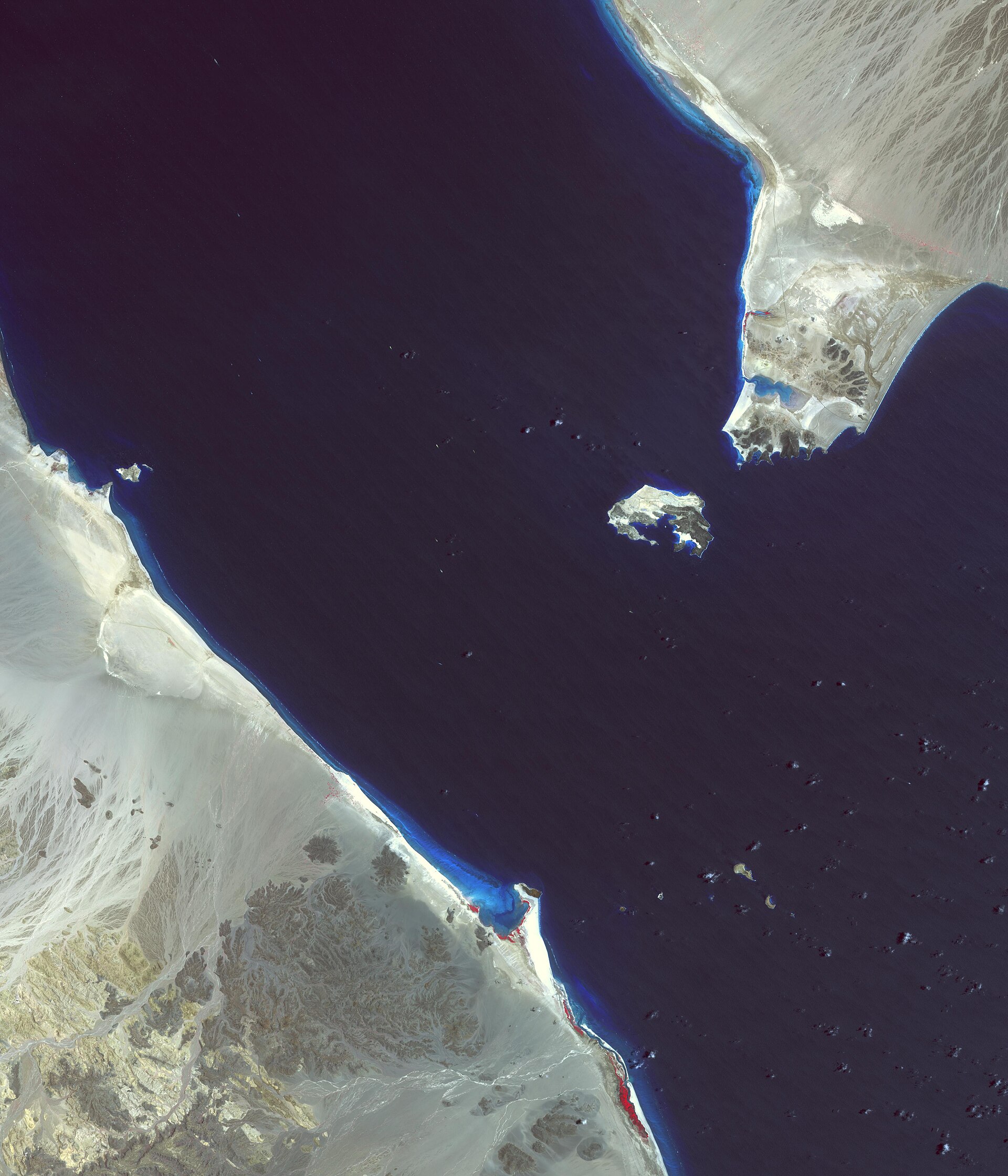
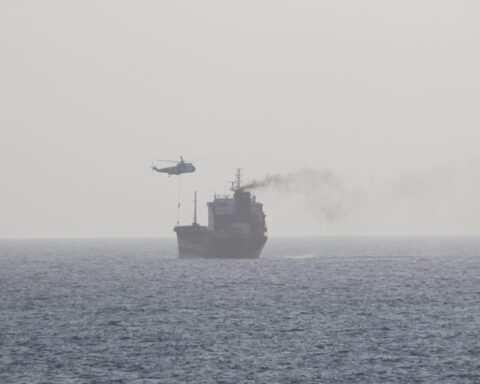
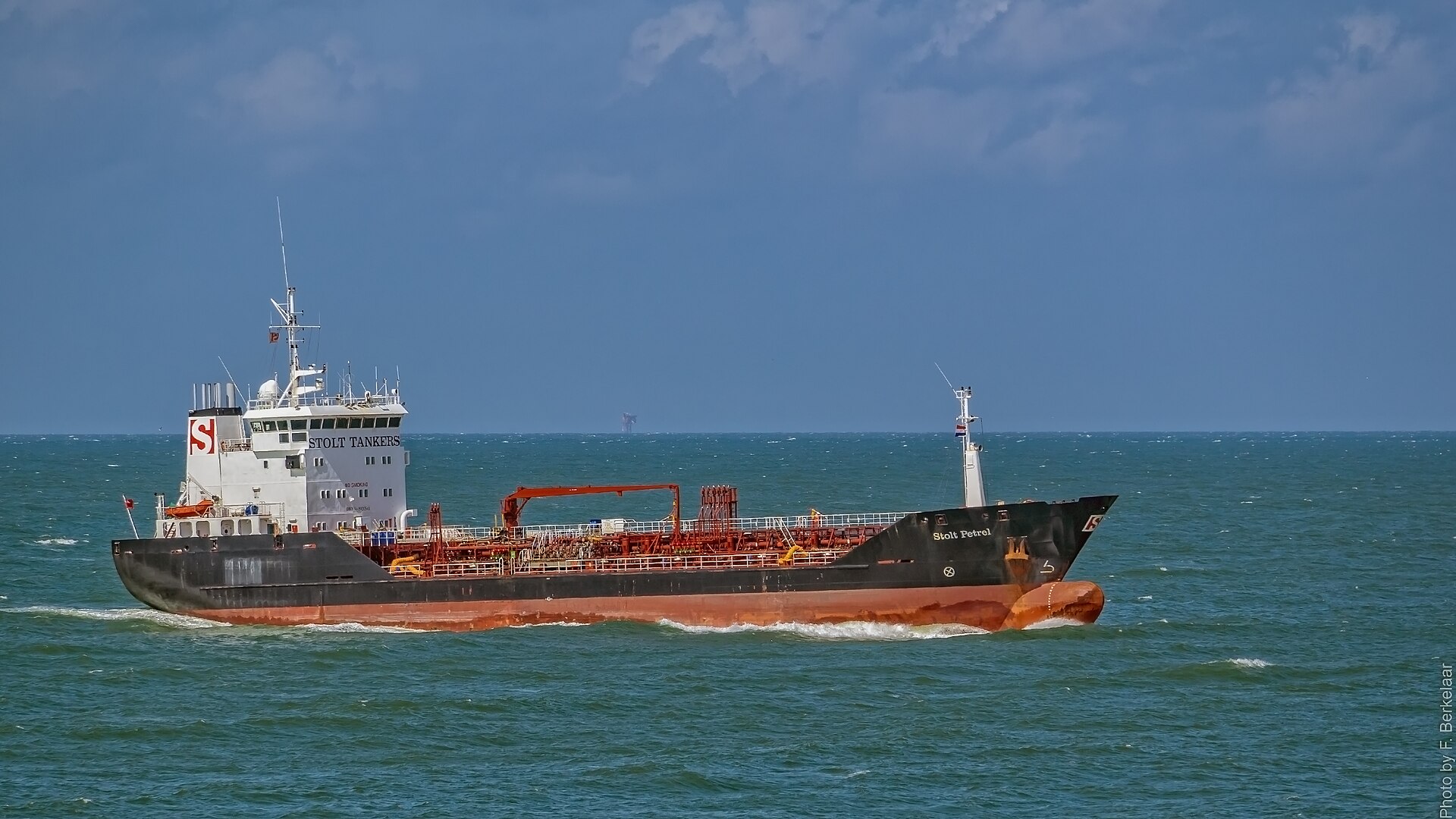
DUBAI — A sanctioned Chinese tanker carrying 250,000 barrels of methanol sailed through the Strait of Hormuz overnight on the first day of America’s blockade, and the US Navy did nothing. The Rich Starry — owned by a company OFAC blacklisted three years ago for helping Iran evade energy sanctions, flying a flag from a country that doesn’t maintain a maritime registry — completed its transit unchallenged because the cargo was loaded at a UAE port, not an Iranian one. That single detail exposes a gap in the blockade’s design that 1,100 dark fleet tankers are now positioned to exploit.
CENTCOM’s own language is the problem. The April 12 blockade order states that US forces “will not impede freedom of navigation for vessels transiting the Strait of Hormuz to and from non-Iranian ports.” No cargo-origin verification. No screening for Iranian commodities transshipped through Emirati free zones. No provision for interdicting sanctioned vessels in transit. The Rich Starry met the letter of the rule — UAE port of departure, non-Iranian flag — while violating its spirit so thoroughly that the exercise felt less like evasion and more like a public demonstration of what comes next.
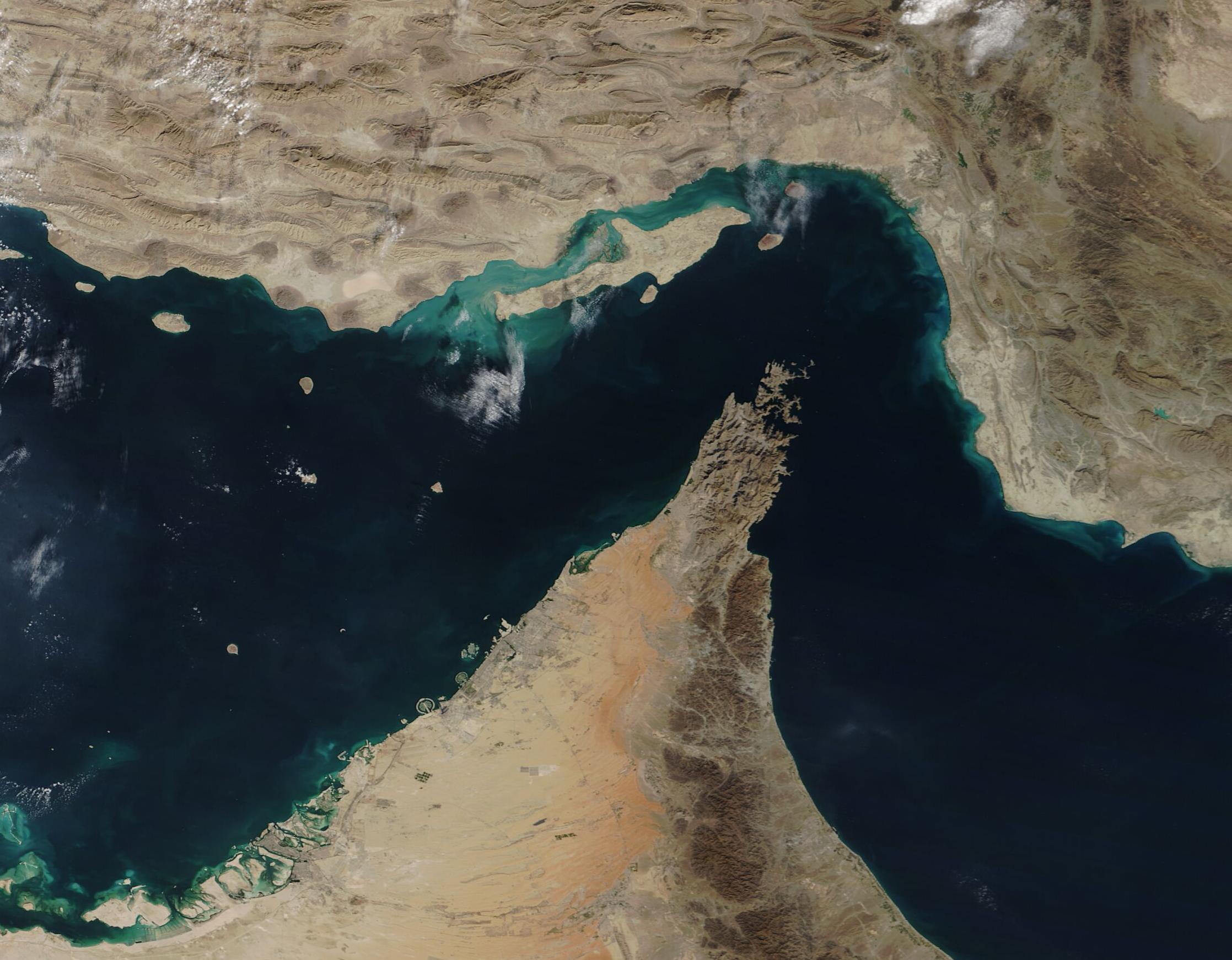
Table of Contents
- The Transit: Two Attempts, One Message
- What Does CENTCOM’s Blockade Actually Prohibit?
- The UAE Transshipment Machine
- How Does a Single Transit Become a System?
- China’s Answer Was the Ship Itself
- What Does This Mean for Saudi Arabia’s Market-Share Bet?
- Why Couldn’t the Navy Board It?
- Can an Ineffective Blockade Remain Legal?
- Frequently Asked Questions
The Transit: Two Attempts, One Message
Rich Starry is a 36,000 dwt chemical and oil tanker, built in 2015, owned by Full Star Shipping Ltd — a front for Shanghai Xuanrun Shipping Company Limited, which OFAC sanctioned in March 2023 for facilitating Iranian petroleum exports. The vessel had been anchored off Sharjah for roughly ten days before CENTCOM’s blockade took effect at 10:00 AM Eastern on April 13. It was waiting, and it was watching.
The first attempt came on April 13. Rich Starry moved toward the Larak-Qeshm chokepoint — the narrowest navigable channel of the strait — then turned back around 12:47 UTC. Whether this was a probe of US positioning, a response to IRGC communications, or simple caution is unclear. What is clear is that the vessel tried again overnight, and this time it sailed straight through. By early morning on April 14, Rich Starry was in the Gulf of Oman, heading east with 250,000 barrels of methanol loaded at Hamriyah, a port in the emirate of Sharjah.
Lloyd’s List reported the tanker sailed “apparently unchallenged.” Reuters confirmed the transit via LSEG and Kpler tracking data. No US Navy vessel hailed it, boarded it, or diverted it. The first ship through the blockade was a sanctioned vessel on a fraudulent flag — Malawi has publicly stated it does not maintain a registry for oceangoing vessels — and the US let it pass because the paperwork said UAE.
Rich Starry was not alone. A second sanctioned tanker, Murlikishan, entered the strait on April 14 heading for Iraq to load fuel oil. A third vessel — Elpis, a Comoros-flagged tanker sanctioned in 2025 for Iranian petroleum transport — moved into the Gulf of Oman as the blockade took effect. Within 24 hours of CENTCOM’s announcement, three sanctioned vessels had tested the perimeter, and the blockade’s loophole was already in use.
The Middle East briefing 3,000+ readers start their day with.
One email. Every weekday morning. Free.
What Does CENTCOM’s Blockade Actually Prohibit?
The blockade order, released April 12, targets two categories: vessels calling at Iranian ports, and vessels collecting Iranian tolls — the IRGC’s $2 million per-transit fee, payable in Chinese yuan via Kunlun Bank, which Iran’s Parliament formalized in legislation on March 31. Everything else, according to CENTCOM’s own words, transits freely. The order contains no cargo-origin verification requirement, no mechanism for screening Iranian commodities that have been relabeled through UAE free trade zones, and no language authorizing interdiction of OFAC-sanctioned vessels that happen to be carrying non-Iranian-port cargo.
This is not an oversight born of haste. The language was crafted to avoid exactly the kind of confrontation Rich Starry’s transit would have required — stopping a Chinese-linked vessel in international waters on the basis of sanctions designation rather than blockade violation. Jason Chuah, a maritime law professor at City St George’s University of London, framed the constraint precisely: domestic sanctions alone “don’t authorize stopping foreign ships in international waters without UN Security Council backing.” CENTCOM wrote rules it could enforce within existing legal authority, and in doing so, wrote rules that a sanctioned vessel with a UAE bill of lading could satisfy.
The cargo itself tells the story. Iran is the world’s largest methanol exporter by volume — 5.2 million tons shipped in 2024, worth $1.5 billion, with over 93% of total production going to export markets. China is the world’s largest methanol consumer at roughly 13 million tons per year. The UAE sits between them, geographically and commercially, as a documented transshipment corridor for Iranian-origin methanol. Rich Starry’s 250,000 barrels of “UAE-origin” methanol traveled a supply chain that OFAC has sanctioned entities for operating — but CENTCOM’s blockade order does not reference supply chains at all.
The UAE Transshipment Machine
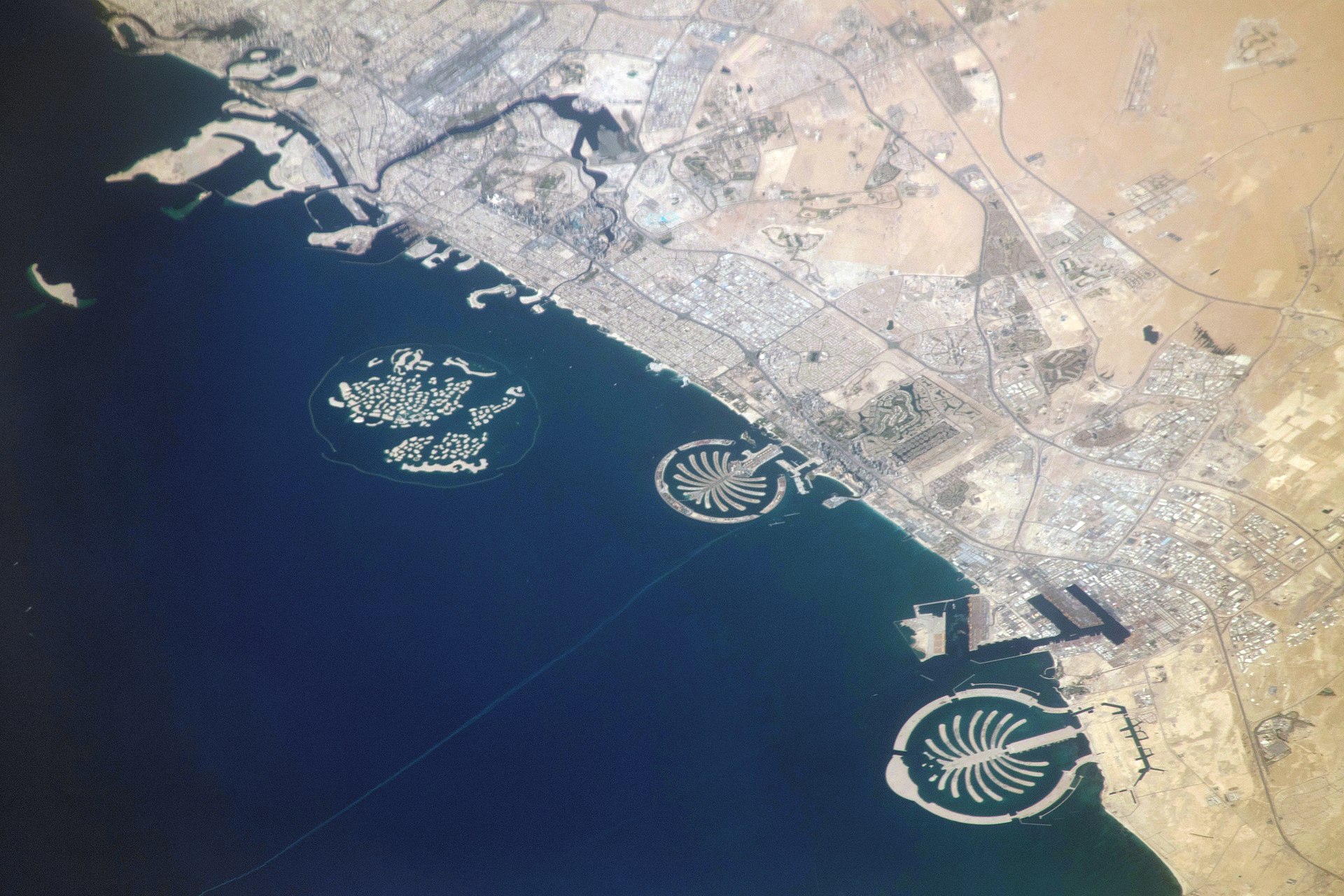
The pipeline from Iranian petrochemical plants to UAE-flagged export terminals is not a theory. It is a sanctions enforcement record. OFAC has designated at least five UAE-based entities in the past two years alone for moving Iranian-origin petrochemicals through Emirati ports — SOLVENT ORGANICS FZE for over $300 million in Iranian petrochemicals, Bitubiz FZE in Sharjah for $200 million rerouted through Jebel Ali, ALSEERAH TRADING L.L.C for $150 million, BAB AL BARSHA TRADING L.L.C for $6.4 million between January 2024 and February 2025, and the Triliance Petrochemical network, whose designation froze $80 million in assets tied to Iranian methanol smuggling via UAE hubs.
These are the entities that got caught. The designation pattern tells you two things: the volume moving through UAE ports is large enough to sustain multiple independent networks simultaneously, and the enforcement mechanism — OFAC secondary sanctions — operates on a timeline of months to years, not hours. A vessel loading at Hamriyah today carries a bill of lading that says UAE. Whether the methanol originated at an Iranian plant in Assaluyeh or a legitimate UAE producer is a question that takes forensic accounting to answer, not a visual inspection from a destroyer’s bridge.
Rich Starry loaded at Hamriyah, a free trade zone port in Sharjah that handles chemicals, petroleum products, and general cargo. Hamriyah sits roughly 200 kilometers from Iran’s Bandar Abbas across the Gulf — close enough for dhow traffic, small tanker shuttles, and the kind of ship-to-ship transfers that Windward’s maritime intelligence unit has documented repeatedly near Fujairah. The methanol that went aboard Rich Starry may have been Iranian, Emirati, or some blend of the two. CENTCOM’s blockade does not ask.
| Entity | Location | Volume | Designation Year |
|---|---|---|---|
| SOLVENT ORGANICS FZE | UAE | $300M+ | 2024 |
| Bitubiz FZE | Sharjah | $200M+ | 2024 |
| ALSEERAH TRADING L.L.C | UAE | $150M+ | 2024 |
| Triliance Petrochemical | UAE | $80M frozen | 2024 |
| BAB AL BARSHA TRADING L.L.C | UAE | $6.4M | 2024-2025 |
The combined documented value across just these five entities exceeds $736 million. And these are the ones OFAC caught, named, and sanctioned — a fraction of the throughput that US Treasury officials have described as a persistent enforcement challenge. The UAE’s free trade zones were designed to move goods quickly with minimal customs friction. That design is now the blockade’s structural weakness.
How Does a Single Transit Become a System?
The global dark fleet — vessels engaged in sanctions evasion, flag fraud, AIS manipulation, and undisclosed ownership — numbers approximately 1,100 ships, representing 17-18% of all liquid cargo tankers worldwide, according to Windward’s maritime intelligence data. On April 13, the day the blockade took effect, Windward identified 91 dark fleet vessels operating in the Gulf, with 20 running without AIS transponders. Of 89 Iranian tankers tracked, 57 were not broadcasting their positions at all.
Rich Starry demonstrated a template: load at a UAE port, carry documentation showing Emirati origin, transit the strait under CENTCOM’s non-Iranian-port exemption, and sail east. The vessel was sanctioned, its flag was fraudulent, and its ownership traced to a blacklisted Chinese shipping company — none of which mattered under the blockade’s operational rules. Every dark fleet operator in the Gulf watched this transit happen. Charles Edward Gehrke, deputy division director of wargame design at the US Naval War College, has described the shadow fleet’s regulatory environment as one “built on voluntary participation” — a system that participants can leave whenever the incentive structure changes.
The incentive structure changed on April 13. Before the blockade, dark fleet operators moved Iranian crude and petrochemicals through established evasion networks — AIS shutdowns, ship-to-ship transfers off Fujairah, false bills of lading. The blockade was supposed to add a kinetic enforcement layer on top of the financial sanctions architecture. Instead, CENTCOM’s carve-out for non-Iranian ports created a new, simpler pathway.
A dark fleet tanker no longer needs to go dark and dodge patrols. It needs a UAE loading receipt.
“The United States faces a shrunken surface fleet and an untested and transitional mine countermeasures capability.”
— Mark Nevitt, Emory University; retired US Navy JAG Commander
The numbers make the enforcement gap vivid. Admiral James Stavridis has estimated that an effective Hormuz blockade requires two full aircraft carrier strike groups and at least a dozen destroyers. On April 13, Windward counted 732 cargo and tanker vessels present in the Persian Gulf — a fleet the US Navy would need to hail, inspect, and adjudicate in real time to enforce cargo-origin verification. The Rich Starry precedent makes that task harder, because it established that a sanctioned vessel with UAE documentation falls outside the blockade’s scope.
The tanker departing Kharg Island on April 13 while broadcasting a false Saudi Arabian AIS origin signal — documented in Windward’s daily intelligence report — shows that cargo-origin laundering is already operating at the technical level. False AIS positions, false flag registrations, and false bills of lading compose a layered evasion system that Rich Starry’s transit has now validated at the operational level.
China’s Answer Was the Ship Itself
In the hours after the blockade began, viral social media posts attributed a warning to China’s Defense Minister Admiral Dong Jun: “Chinese ships will continue transiting through agreements with Iran.” The Beijing Channel Newsletter confirmed these quotes were entirely fabricated — no such statement exists from China’s Defense Ministry. The posts gained millions of views across platforms, and their spread revealed how badly observers wanted a dramatic Chinese declaration to match the dramatic American one.
Beijing’s actual communication strategy — the Xinhua English-wire amplification and the Rich Starry transit working in tandem — was more sophisticated than any declaration. China’s simultaneous signalling on Day One of the blockade is analyzed as a coordinated dual-signal designed to undermine the blockade’s coercive logic before Washington had completed its first 24 hours of enforcement.
China’s actual response was the Rich Starry. No press conference, no foreign ministry statement, no military posturing — a sanctioned Chinese-owned tanker sailing through the blockade zone with UAE-origin cargo that the US had already said it would not stop. The message was communicated in vessel movements, not words, and it was far more effective than any diplomatic statement could have been. A quote can be walked back. A completed transit cannot.
The structural motivations are not ambiguous. CNPC and Sinopec hold 8 million tons per annum in contracted offtake from Qatar’s North Field East, plus 5% equity stakes — giving China direct financial interest in keeping Hormuz open for non-Iranian traffic. The 2021 China-Iran 25-year cooperation agreement, valued at $400 billion, gives Beijing a parallel interest in maintaining Iranian export flows. As of April 13, Windward data showed approximately 157.7 million barrels of Iranian oil on water, with 97.6% destined for China. Iran maintained average daily throughput of roughly 2.04 million barrels per day across the February-April war period — a volume that represents billions in Chinese refinery feedstock.
Beijing’s position is that the blockade is someone else’s problem, and Rich Starry proved it can be. Chinese-linked vessels load at UAE ports, carry Emirati paperwork, transit under CENTCOM’s non-Iranian-port exemption, and deliver to Chinese refineries. The permanent mechanism Iran has declared for Hormuz and the blockade Washington has imposed exist in parallel — and Chinese-owned shipping operates in the gap between them.
What Does This Mean for Saudi Arabia’s Market-Share Bet?
Saudi Arabia set its May Official Selling Price for Arab Light to Asia at a $19.50 per barrel premium above the Oman/Dubai benchmark — a number calibrated when Brent was trading around $109. By April 13, Brent had fallen to the $95-100 range, which means the May OSP now sits $11 to $19 above the prevailing spot price. Saudi crude exports to Asia collapsed 38.6% in a single month, from 7.108 million barrels per day in February to 4.355 million in March. The blockade was supposed to create the scarcity conditions that would justify that premium by removing Iranian barrels from the market.
Rich Starry’s transit suggests those barrels are not going anywhere. If sanctioned vessels can move Iranian-origin petrochemicals through UAE ports without triggering the blockade’s enforcement provisions, the supply disruption the May OSP pricing assumed becomes a supply rerouting that leaves Iranian volumes intact. Dan Pickering, founder of Pickering Energy Partners, has warned of “5 million barrels a day of demand destruction because of a lack of availability” if Hormuz stays disrupted for months — but the disruption Rich Starry demonstrated is selective, not total.
The allocation system compounds the problem. South Korea confirmed on April 12 that it secured 80% of its May crude needs through direct government-to-government GCC commitments. But Sinopec, CNPC, India’s IOC, and BPCL — the major Asian buyers whose demand Saudi Arabia needs to capture — cannot access Saudi barrels at the headline May OSP. These are the same buyers whose refineries process Iranian crude, whose trading desks manage dark fleet logistics, and whose governments have the least incentive to enforce a blockade that raises their input costs.
The blockade was supposed to redirect their purchases toward Saudi supply. Instead, it may have demonstrated that Iranian supply can reach them anyway.
Aramco’s pricing position depends on a binary the Rich Starry transit just complicated. Either the blockade removes Iranian barrels from Asian markets — justifying the premium — or it doesn’t, and Saudi Arabia is charging $19.50 above benchmark for crude that competes with Iranian supply still flowing at 2 million barrels per day.
Why Couldn’t the Navy Board It?
Under customary international law — including UNCLOS provisions that function as custom even for non-signatories — ships on the high seas are subject exclusively to the jurisdiction of the flag state under whose banner they sail. Rich Starry flies a Malawi flag, which is fraudulent, but that fraud creates a legal paradox rather than resolving one. A vessel with no legitimate flag state has no state to grant boarding consent, and without flag-state consent, a belligerent’s right to board depends on the vessel being engaged in activities the blockade specifically prohibits.
CENTCOM’s blockade order says it “will not impede freedom of navigation for vessels transiting the Strait of Hormuz to and from non-Iranian ports.” Rich Starry departed a UAE port. Under the blockade’s own terms, it was exempt. The OFAC sanctions against Shanghai Xuanrun Shipping create secondary financial penalties for entities that transact with the vessel — banks, insurers, port operators — but they do not grant the US Navy authority to physically intercept the ship in transit. Financial sanctions and naval blockades operate on different legal foundations, and CENTCOM’s April 12 order did not merge them.
Andreas Krieg, a senior lecturer at King’s College London’s School of Security Studies, described what actual enforcement would require: “identify, track, hail, divert and maybe even board vessels linked to Iranian ports, all while operating in one of the most crowded and politically sensitive waterways in the world.” He added that “a blockade is one of the most escalatory tools a state can use at sea, and its legality depends on context, proportionality, discrimination and the underlying state of armed conflict.” The US is at war with Iran but not with China, the UAE, or Malawi — and Rich Starry’s transit sits at the intersection of all four jurisdictions.
“We now have two governments both claiming they control the right to enter and exit the strait, and essentially, I don’t think we have any idea yet how this is going to play out.”
— Dan Pickering, Pickering Energy Partners
Mark Nevitt, an associate professor at Emory and retired Navy JAG commander, has framed the blockade as “not a law enforcement action” but “a wartime action” — meaning ships that refuse to comply could theoretically be met with “warning shots or disabling fire aimed at critical systems.” But firing on a Chinese-owned vessel carrying UAE-loaded cargo that complies with the blockade’s stated exemptions would transform a sanctions enforcement problem into a military confrontation with Beijing. That is a threshold no one in CENTCOM or the Pentagon has signaled willingness to cross, and Rich Starry’s operators appear to have known it.
The damage the blockade does to Washington’s own freedom of navigation doctrine deepens with every sanctioned vessel that transits unchallenged. The US has spent decades insisting that Hormuz is an international strait subject to transit passage rights that no coastal state can restrict. A blockade that selectively enforces against Iranian-port traffic while allowing sanctioned vessels through on a technicality is not the kind of consistent, principled enforcement that sustains a legal doctrine.
Can an Ineffective Blockade Remain Legal?
Mark Nevitt’s five-element test for blockade legality, published in Just Security, includes a requirement that a blockade must be effective — “an ineffective blockade is an illegal blockade.” This is not a theoretical concern. The 1856 Declaration of Paris, which codified blockade law for maritime conflict, established effectiveness as a foundational requirement precisely because an announced-but-unenforced blockade is simply a threat that imposes costs on neutral shipping without delivering military results.
The Rich Starry transit, the Murlikishan transit, and the Elpis approach all occurred within 24 hours of the blockade’s announcement. Bridget Diakun, a senior risk and compliance analyst at Lloyd’s List Intelligence, has confirmed nine dark transits since the conflict began — and that count preceded the blockade’s formal declaration. If sanctioned vessels can transit with UAE documentation, and dark fleet vessels can transit without AIS, the blockade’s effectiveness depends entirely on its ability to interdict Iranian-port traffic, which is the one category Iran itself has already disrupted through its own toll architecture and selective-exemption system.
The 1962 Cuban quarantine offers the closest operational precedent, and the parallel is uncomfortable. The Soviet tanker Bucharest was allowed to pass without boarding because it carried petroleum, not offensive weapons — the quarantine’s target category. The Lebanese freighter Marucla was boarded, inspected, and released when its cargo proved non-contraband. President Kennedy’s quarantine succeeded because it had a narrow, enforceable objective — keep missiles out of Cuba — and the US Navy had the assets and legal clarity to execute it. CENTCOM’s blockade has a broader objective — deny Iran economic benefit from Hormuz traffic — but narrower enforcement tools, because the carve-out for non-Iranian ports exempts exactly the category of traffic that sustains Iran’s export revenue through transshipment.
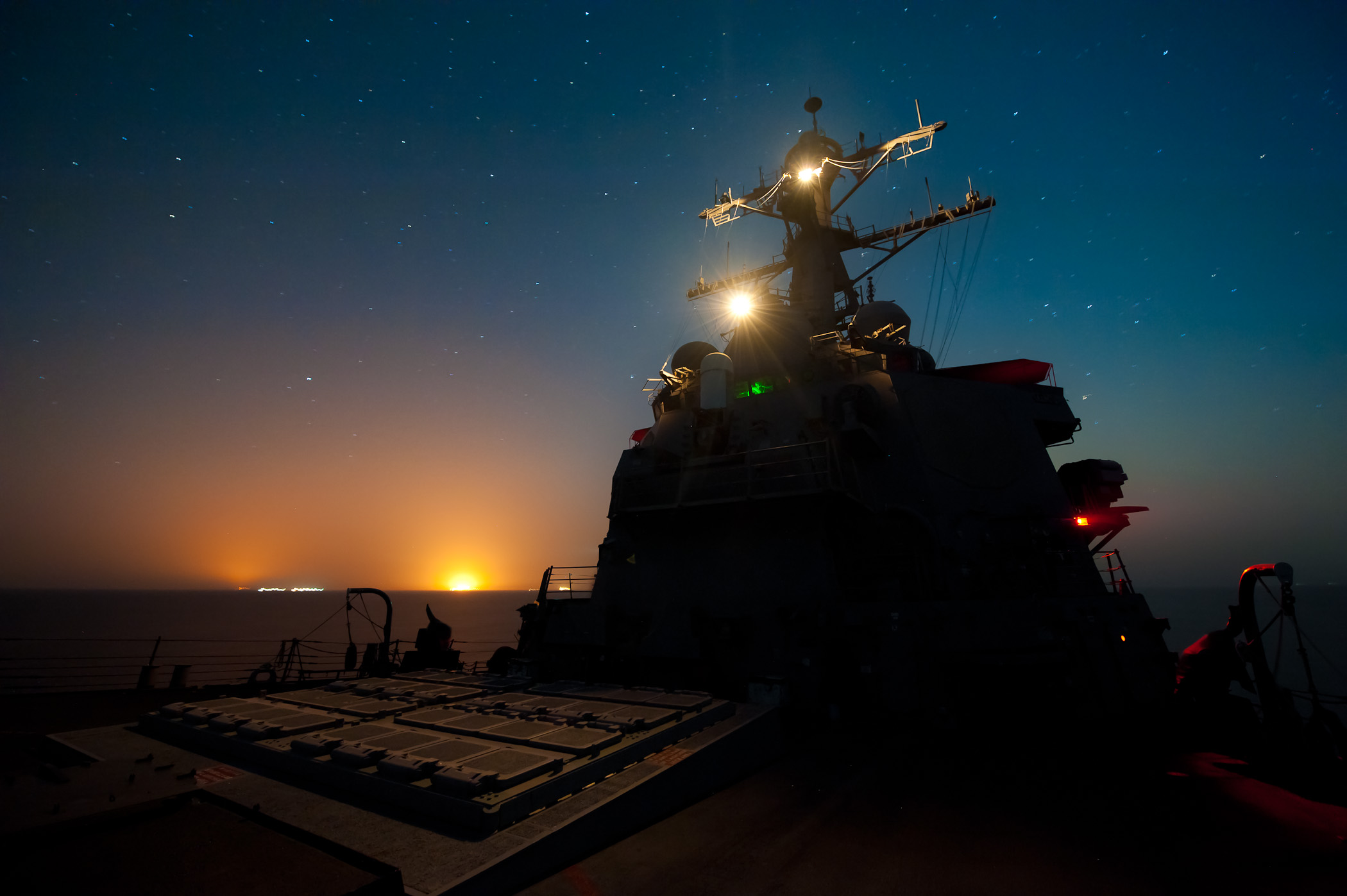
The surface fleet gap is not theoretical. The US Navy’s mine countermeasures capability in the Gulf is depleted — the four Avenger-class MCM ships formerly based in Bahrain were decommissioned in September 2025. Enforcing cargo-origin verification for every one of the 732 vessels in the Gulf on April 13 would require boarding capacity the US does not currently have in theater.
| Metric | Figure | Source |
|---|---|---|
| Vessels in Persian Gulf | 732 | Windward |
| Dark fleet vessels in Gulf operations | 91 | Windward |
| Iranian tankers not transmitting AIS | 57 of 89 | Windward |
| Dark fleet vessels globally | ~1,100 | Windward |
| Iranian oil on water (barrels) | 157.7M | Windward |
| Share destined for China | 97.6% | Windward |
| Iran daily throughput (Feb-Apr avg) | ~2.04M bpd | Windward/Kpler |
| Sanctioned vessels transiting Day 1 | 3 | Reuters/Lloyd’s List |
The Arhimeda incident — a Russian VLCC caught in the blockade zone — already tested CENTCOM’s willingness to enforce against non-Iranian-flagged vessels. Rich Starry tested a different boundary: whether sanctions designation alone triggers interdiction when the cargo documentation satisfies the blockade’s stated exemptions. The answer, delivered in vessel movements rather than press statements, was no. Every dark fleet operator from Fujairah to Dalian now knows the rules of the game, and the game has a hole in it large enough to sail a 36,000-ton tanker through.
Frequently Asked Questions
What flag does Rich Starry actually fly, and why does it matter?
Rich Starry is registered under Malawi’s flag, but Malawi — a landlocked country in southeastern Africa — has publicly stated that it does not maintain a registry for oceangoing vessels. This makes the flag registration fraudulent under international maritime law. In practice, a fraudulent flag creates enforcement ambiguity rather than clarity: boarding a stateless vessel requires different legal justification than boarding a flagged one, and the absence of a legitimate flag state means there is no government to request or consent to inspection. At least 30 Iranian-flagged NITC vessels tracked by Windward on April 13 operate under legitimate registrations; Rich Starry’s Malawi flag represents a more extreme form of regulatory evasion that exploits gaps in the flag-state system the International Maritime Organization administers.
Could the US close the cargo-origin loophole by amending the blockade order?
Technically, yes — CENTCOM could issue a revised order requiring cargo-origin certification or extending interdiction authority to OFAC-sanctioned vessels regardless of port of departure. Practically, this would transform the blockade from a targeted anti-Iran measure into a general maritime inspection regime covering all Gulf traffic, which would require flag-state consent for every boarding, provoke diplomatic confrontation with the UAE (whose ports would effectively be declared suspect), and demand surface fleet assets the US does not currently have deployed. It would also create a direct collision with China, since Chinese-owned vessels comprise the majority of Iran’s oil-on-water fleet. The Biden-era OFAC enforcement model kept sanctions financial; making them kinetic against Chinese shipping would be a different order of escalation.
How much Iranian methanol moves through UAE ports annually?
Precise figures are unavailable because the transshipment networks are designed to obscure origin, but the scale implied by OFAC enforcement actions is substantial. The five UAE-based entities sanctioned in 2024-2025 alone account for documented flows exceeding $736 million — and these represent only the networks that were identified, investigated, and designated. Iran exported 5.2 million tons of methanol in 2024, with the vast majority moving to China. Industry analysts at IndexBox estimate that a meaningful share of this volume — possibly 20-35% — transits through UAE and Omani intermediary ports before reaching end buyers, though the blending of Iranian and non-Iranian product at transshipment points makes precise attribution impossible without access to production-facility records.
Has the US Navy ever boarded a Chinese-owned vessel in a sanctions enforcement context?
No. US sanctions enforcement against Chinese-linked shipping has operated exclusively through financial channels — OFAC designations, secondary sanctions threats against banks and insurers, and pressure on port states to deny entry. The legal framework for maritime interdiction requires either flag-state consent, a UN Security Council resolution authorizing boarding, or the vessel’s engagement in activities that a declared blockade specifically prohibits. Since Rich Starry’s transit satisfied CENTCOM’s stated exemption for non-Iranian-port traffic, and since China would not consent to boarding of a Chinese-owned vessel, physical interdiction would have required the US to either revise its blockade terms in real time or act outside its own declared rules — either of which would have created legal and diplomatic consequences far exceeding the value of one methanol cargo.
What is the Cuba 1962 parallel, and where does it break down?
The Cuban Missile Crisis quarantine is the closest modern precedent for a selective naval blockade by the United States, and its success depended on three conditions the Hormuz blockade does not share. Kennedy’s quarantine had a narrow, binary objective — offensive weapons were contraband, everything else was not — that made enforcement decisions straightforward. It had overwhelming naval superiority concentrated in a single theater. And it had a cooperative adversary: the Soviet Union chose to turn its ships around rather than test the line.
At Hormuz, the objective is broader (deny Iran economic benefit, not just weapons), the enforcement capacity is thinner (Nevitt cites a “shrunken surface fleet”), and the adversary is not a single state but a distributed network of flag-fraud operators, transshipment entities, and sovereign governments with divergent interests. The Bucharest — the Soviet tanker allowed through because it carried only petroleum — is Rich Starry’s direct ancestor, and the lesson is the same: a blockade that exempts a category of cargo creates a pathway that adversaries will use.
Rich Starry is east of Hormuz now, in the Gulf of Oman, under way toward a Chinese refinery with 250,000 barrels of UAE-origin methanol that may or may not have started life in Iran. The US Navy knows where it is. It also knows the answer to the question that cargo raises — and has decided, for reasons of law and escalation calculus, not to ask it.