MUSCAT — Iran’s Foreign Ministry spokesman Esmaeil Baqaei told Tasnim News Agency that “the Strait had nothing to do with the US” and that Tehran was engaging with Oman — “which lies across the waterway” — to decide what happens there, a declaration issued within hours of President Trump’s May 29 Situation Room meeting ending without a decision on the Iran deal. The statement, paired with a legal drafting team already in Muscat and an IRGC-affiliated Fars News confirmation that Hormuz “would remain under Iranian management” regardless of any agreement, completes a doctrinal architecture that excludes Saudi Arabia from the waterway carrying roughly 2.5 million barrels per day of its crude — not through confrontation, but through the quiet construction of a bilateral governance regime Saudi diplomacy helped make possible.
Riyadh now faces a triple exclusion from every track that could determine the post-war status of the Strait of Hormuz. Iran says the United States has no standing there. Iran and Oman are drafting the governance framework together, with no third-party seat. And the UK-France coalition operating from Northwood protects transit but holds no settlement authority and has no Saudi participation at any level. The kingdom’s foreign minister, Prince Faisal bin Farhan, called on May 20 to “restore Hormuz to the state prior to February 28, 2026” — a position that is implicitly anti-toll, explicitly unenforceable, and structurally irrelevant to every negotiation actually underway. On May 31, MBS used a call with President Macron — the only power that simultaneously co-leads the coalition, holds a Tehran channel, and is deepening an $8 billion defense relationship with Riyadh — to route Saudi Arabia’s Hormuz position through French diplomatic infrastructure, the one architecture that touches all three tracks from which the kingdom is formally excluded.
The triple exclusion from every Hormuz track acquired a new dimension on June 2, when Secretary of State Rubio named the PGSA toll as one of four explicit US conditions for reopening the Strait in open Senate testimony — placing Saudi Arabia’s eighty-one days of toll payments on the congressional record as a price Riyadh has absorbed without being a party to the negotiation that will determine whether the toll survives. Rubio Named the Counterparty and the Price. Saudi Arabia Cannot Respond to Either.
Table of Contents
- What Baqaei Actually Said and Why the Timing Matters
- The Oman Bilateral Is Already Being Drafted
- How Does Iran’s Legal Reframe Bypass UNCLOS?
- Three Tracks, Zero Saudi Seats
- Why Did Saudi Arabia’s Own Back-Channel Build the Cage?
- What Does Hormuz Exclusion Cost Saudi Arabia?
- Velayati’s Doctrine and the Permanence Thesis
- The PGSA Map That Swallowed the UAE
- Frequently Asked Questions
What Baqaei Actually Said and Why the Timing Matters
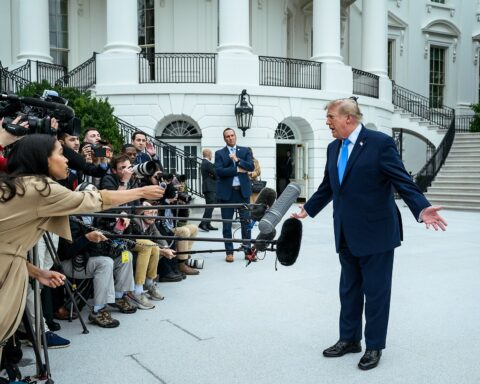
Baqaei’s statement to Tasnim was not a general policy briefing or a routine press conference answer — it was a direct rebuttal delivered within a single news cycle of Trump’s Situation Room convening on May 29, and one day after the president had posted on Truth Social describing the Iran deal as “largely negotiated” and “mandatory.” The spokesman’s formulation was precise in what it excluded: the Strait “had nothing to do with the US,” and Iran was engaging with Oman, “which lies across the waterway,” to decide its future. That geographical qualifier — “which lies across the waterway” — did the diplomatic work of the entire sentence, because it identified Oman’s legitimacy as territorial and every other claimant’s as irrelevant.
Fars News, the IRGC-affiliated outlet, ran a parallel line on the same day: even in the event of a possible agreement, the Strait of Hormuz “would still be under Iranian management.” Fars dismissed Trump’s “largely negotiated” characterisation as “incomplete and inconsistent with reality.” What made this coordination matter was its institutional breadth — the Foreign Ministry spokesman and an IRGC-affiliated news agency delivering the same governance doctrine simultaneously, which meant Baqaei was not freelancing a diplomatic position the Revolutionary Guards might later undercut. The FM and the IRGC were, for once, reading from the same page, and the constitutional split between Araghchi’s negotiating authority and the IRGC’s operational control had converged on a single territorial claim.
Trump’s own position — “We want it open, we want it free, we don’t want tolls,” as he told Bloomberg on May 21 — was the specific demand Iran was rejecting. Baqaei also insisted the United States “must take steps to end” its blockade of Iranian ports and vessels as part of any deal, calling it “completely contrary to international law.” The framing inverted the premise of the US negotiating position entirely: Washington was not the party offering access to a global waterway, but a party obstructing Iranian sovereignty that needed to withdraw before governance could be discussed.
The Middle East briefing 3,000+ readers start their day with.
One email. Every weekday morning. Free.

The Oman Bilateral Is Already Being Drafted
The reason Baqaei’s statement carried weight beyond rhetoric is that the bilateral governance framework he described already has a legal drafting team. On May 13, a delegation led by Abbas Baqerpour, Director General for International Legal Affairs at Iran’s Foreign Ministry, met Omani counterparts in Muscat to continue work on a framework requiring advance permits from both Iran and Oman for every vessel transiting the Strait. This was not an exploratory meeting — it was a continuation of drafting sessions that had been running since the PGSA’s establishment, with the permit architecture already at the level of operational detail.
Iran’s Ambassador to France, Mohammad Amin-Nejad, gave the clearest public articulation of the framework’s logic on May 21, in comments carried by Bloomberg: “Iran and Oman must mobilize all their resources both to provide security services and to manage navigation in the most appropriate manner. This will entail costs, and it goes without saying that those who wish to benefit from this traffic must also pay their share.” He described the system as “transparent” — a word doing considerable work, since the fee structure involves approximately $2 million per transit payable in yuan or Bitcoin, and the transparency Amin-Nejad invoked applied to the fee schedule, not to who set it or who benefits from the revenue.
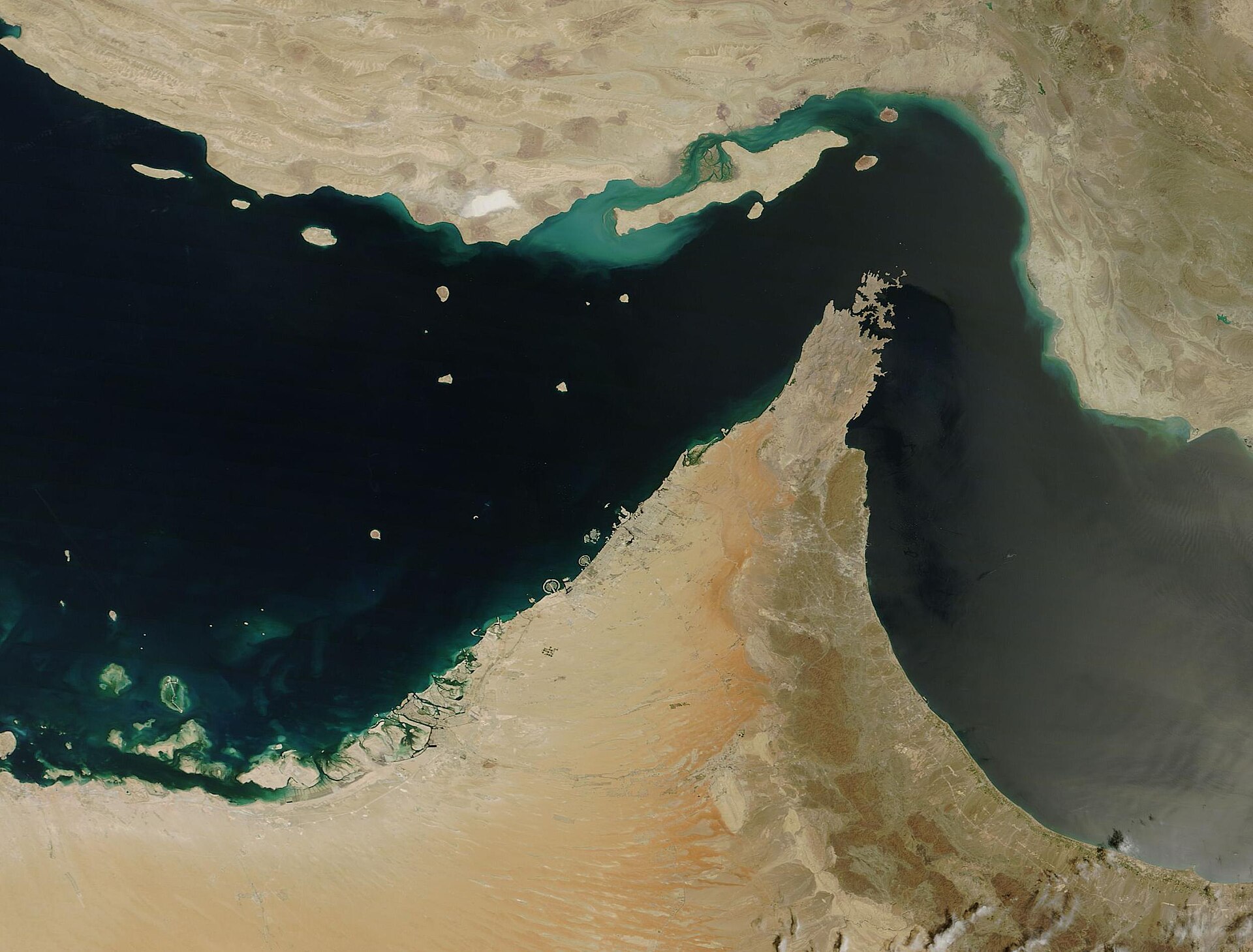
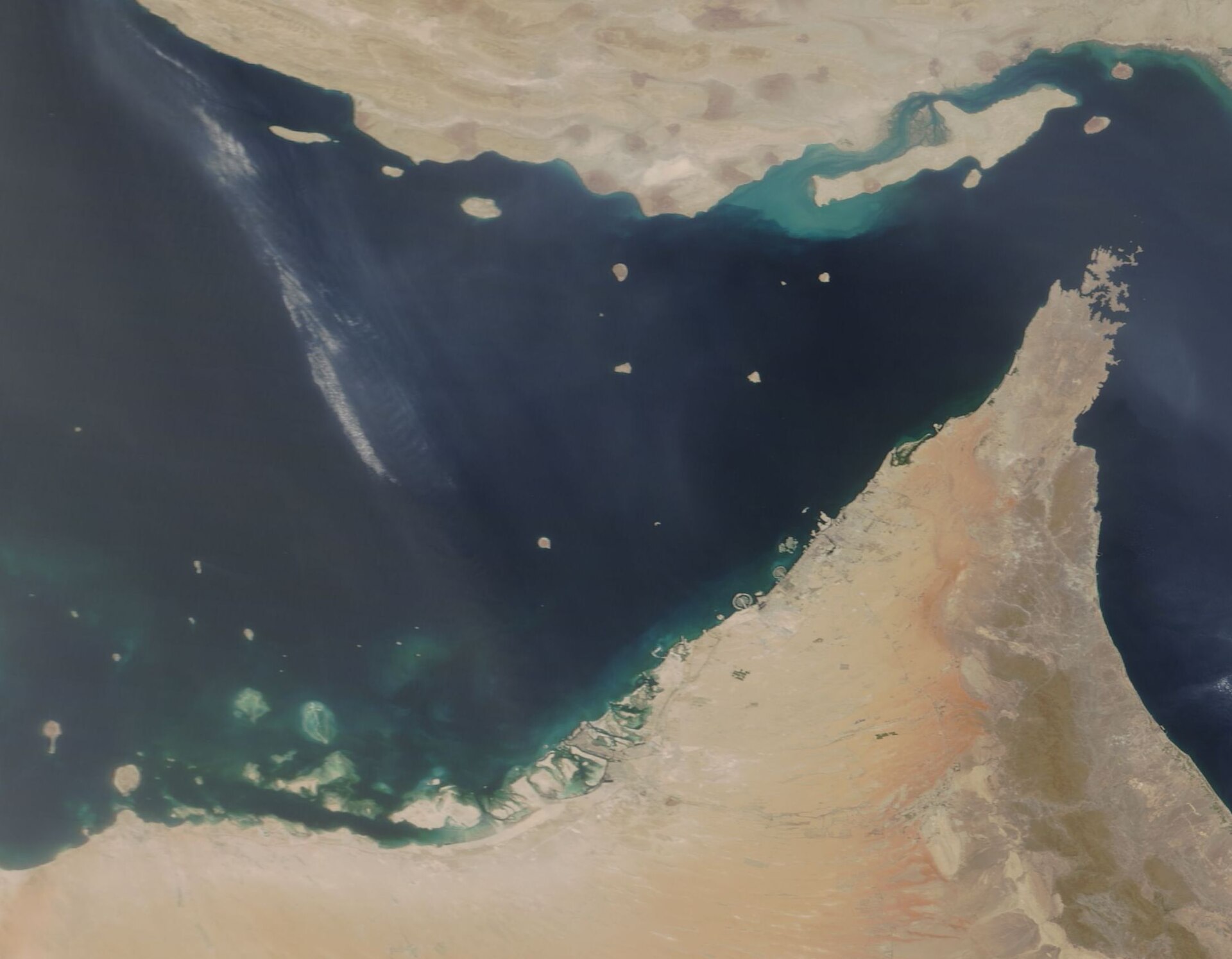
The geography makes the bilateral legally complete in a way no multilateral arrangement can replicate. The Strait of Hormuz is 21 nautical miles wide at its narrowest point — entirely within Iranian and Omani territorial seas under the 1974 Iran-Oman Continental Shelf and Maritime Boundary Treaty, delineated in US State Department Limits in the Seas No. 67. The mandatory Traffic Separation Scheme inbound shipping lane — used by every tanker entering the Persian Gulf — falls within Omani territorial waters; the outbound lane falls within Iranian waters. There are zero international waters in the transit corridor.
Without both states’ consent, legal transit of the full TSS is structurally impossible, which means any bilateral agreement between Tehran and Muscat is, by definition, a complete governance regime for the waterway. No third party — not the United States, not Saudi Arabia, not the UK-France coalition — can construct an alternative legal architecture without either Iran’s or Oman’s participation, and both have made clear they are constructing theirs together. The stress on that framework became physical on May 30 when Oman’s Maritime Security Centre reported a suspected mine in the inbound TSS lane — the specific corridor the bilateral is designed to govern — without attributing it to any party.
How Does Iran’s Legal Reframe Bypass UNCLOS?
On May 25, Iran officially rebranded what the world had been calling a toll as fees for “navigational services, security provision, and environmental management.” The language was not accidental — it mirrors Article 26 of the United Nations Convention on the Law of the Sea, which permits coastal states to levy charges for “specific services rendered to the ship” during passage. The pivot from extortion framing to services framing was a deliberate legal move designed to survive challenge at The Hague, and the underlying $2 million per transit remained unchanged.
Iran’s legal escape hatch is its non-ratification of UNCLOS. Tehran signed the convention in 1982 but never ratified it, and its 1993 Marine Areas Act selectively incorporated certain provisions while preserving Iran’s right to assert innocent passage — which is suspendable at the coastal state’s discretion — rather than transit passage, which under UNCLOS Article 38 is non-suspendable and explicitly prohibits fees. If transit passage applies, Iran’s entire fee structure collapses under international law. If innocent passage applies, as Iran insists, then “services” charges can be rationalised within the framework Iran has chosen to recognise, and the PGSA becomes a fee-for-service provider rather than a blockade administrator.
The rebranding also created a compliance problem for states and insurers that had been treating the PGSA as an illegal toll regime. “Navigational services” is the language maritime insurers use in their own policy structures — P&I clubs charge for pilot services, port fees, and environmental levies routinely. By adopting the vocabulary of legitimate maritime commerce, Iran forced every insurer, flag state, and shipping company to engage with the fee structure on its own legal terms rather than dismiss it as piracy.
Three Tracks, Zero Saudi Seats
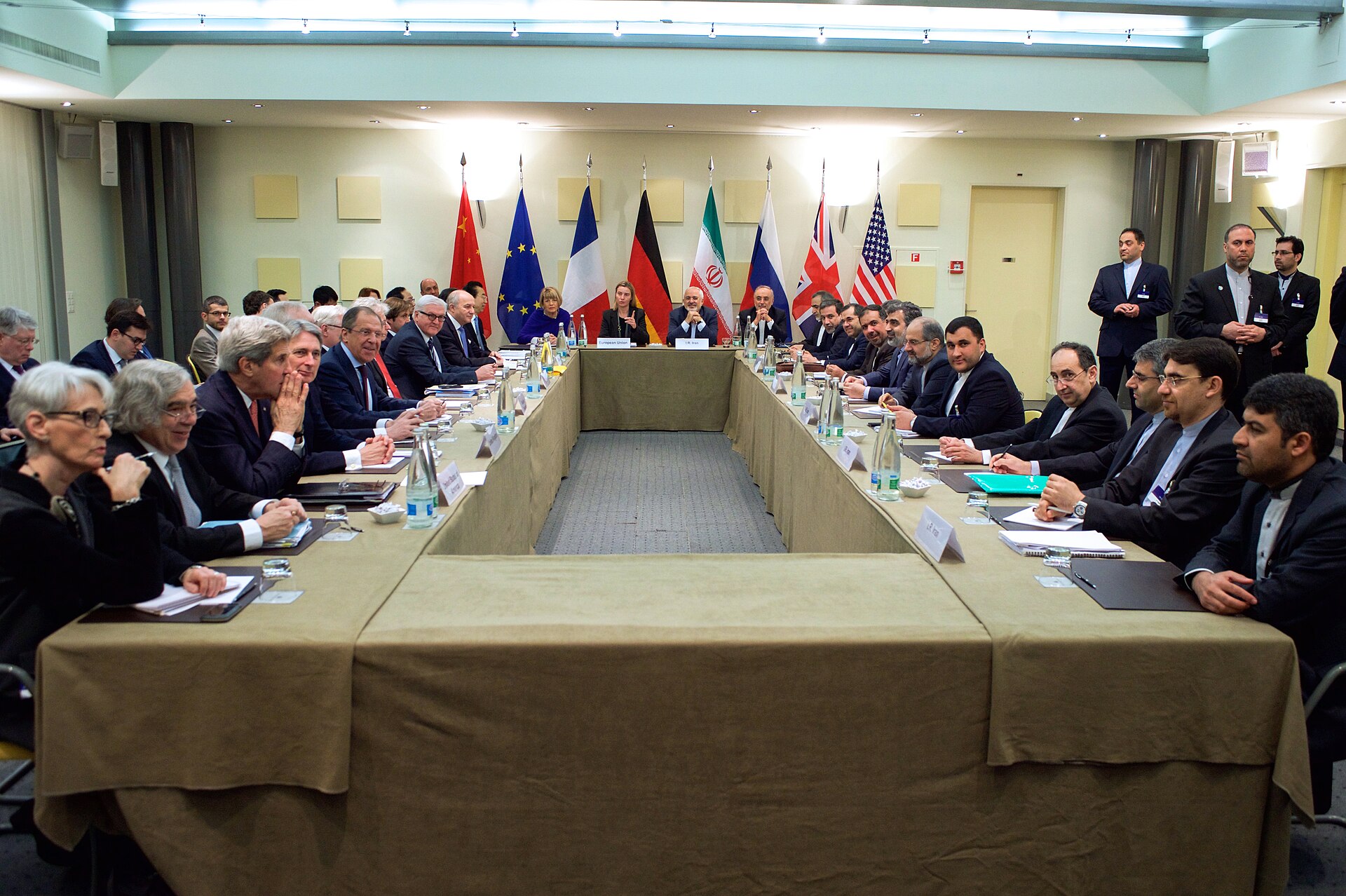
Saudi Arabia’s exclusion from Hormuz governance is not a single diplomatic failure — it is a structural condition produced by the simultaneous operation of three separate tracks, none of which includes Riyadh, and none of which can be entered without the consent of parties that have no incentive to extend an invitation. The first track is the US-Iran negotiation, which has run for five rounds and 106 days with zero Saudi participation. Baqaei’s declaration that the Strait “had nothing to do with the US” eliminates this track as a vehicle for Hormuz governance entirely — Iran is telling Washington that even if a deal is signed, the waterway is not America’s to negotiate over.
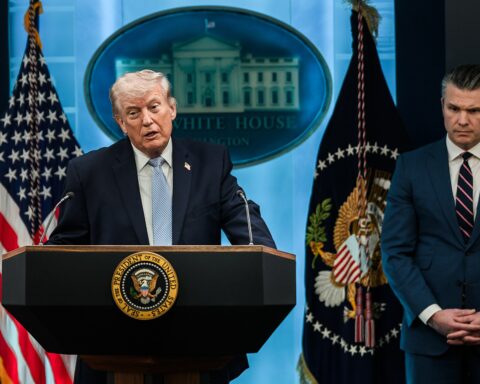
Trump’s Situation Room meeting on May 29 ended without a decision, and his own 72-hour arc — from “mandatory” on Truth Social to “I don’t know” in the same Cabinet session — confirmed that the US track is stalled on domestic politics, not Hormuz governance. For Saudi Arabia, which has no seat at these talks and whose foreign ministry has not issued a substantive public statement on the negotiations in over ten days, this track was already inaccessible. Baqaei made it irrelevant. Hours after the Situation Room closed without a result, Hegseth told reporters in Singapore that the US naval blockade was “very much still in place” — performing the deterrence posture Trump had declined to formalise, 8,000 miles from the Strait, at a forum designed for US-China signalling. The Saudi veto of Project Freedom — why Riyadh vetoed Trump’s Hormuz escort mission — added a fourth dimension to this exclusion: Saudi Arabia cannot facilitate American force projection in the Strait without triggering the Iranian escalation its bilateral track is designed to prevent.
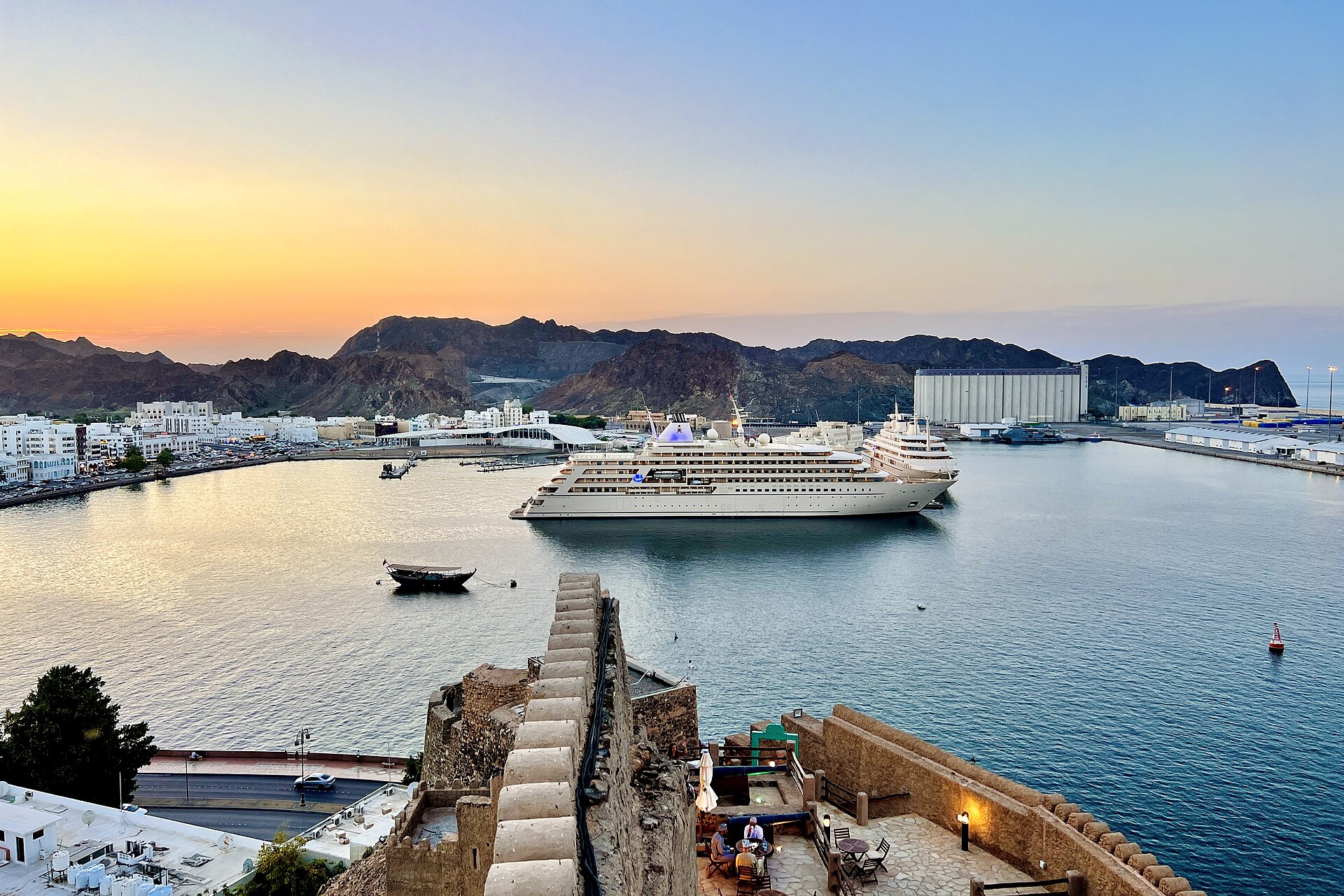
The second track is the Iran-Oman bilateral, where the legal drafting is already underway in Muscat. This is the track that will determine the operational reality of Hormuz for every Gulf state, and it operates on a simple principle: the two states whose territorial waters contain the Strait have the right to govern it. Oman’s positioning has been deliberate and consistent — sole non-signatory to IMO Circular Letter 5028 on May 20, absent from the five-state GCC protest letter to the IMO, and host to the legal drafting sessions. Ambassador Amin-Nejad’s “transparent” fee system and Baqerpour’s permit architecture are the bones of a governance regime that requires no additional parties. Saudi Arabia cannot enter this track without Oman’s invitation, and Oman has made clear — through silence and absence from every multilateral protest — that no invitation is forthcoming.
The third track is the UK-France coalition operating from Northwood, which has attracted 40-plus nations and 27 signatories as of May 12. Saudi Arabia is absent at every level — political, military, and operational. The coalition’s mandate is transit protection, not settlement authority; it can escort vessels through the Strait but cannot negotiate the governance terms under which those vessels transit. Even if Saudi Arabia joined tomorrow, the coalition has no mechanism to override the Iran-Oman bilateral, because the bilateral controls the legal framework and the coalition controls nothing but convoy schedules. The Carnegie Endowment captured the structural reality in April: “The GCC has no seat at the table, despite its entreaties, for negotiations that will shape the bloc’s economic and security environment for years to come.” That assessment has only sharpened since — the table now has a drafting team, a fee schedule, a legal rebranding, and a map.
Why Did Saudi Arabia’s Own Back-Channel Build the Cage?
The deepest irony of Saudi Arabia’s Hormuz exclusion is that Riyadh spent years cultivating the very relationship that now constructs its confinement. Oman served as Saudi Arabia’s primary back-channel to Tehran during the 2023 normalisation — the Beijing-brokered deal that restored diplomatic relations after seven years — and again during the early months of the 2026 war, when Muscat carried messages between capitals that had no other means of communication. Sultan Haitham’s Oman was, in Riyadh’s diplomatic architecture, the reliable intermediary: close enough to Iran to be trusted, aligned enough with the GCC to be predictable.
What Saudi Arabia failed to account for was that Oman’s intermediary role was a function of its geography, not its solidarity, and that the same geographical position that made Muscat a useful messenger — sitting directly across the Strait from Iran — made it the only possible co-sovereign of Hormuz governance. The back-channel has been structurally absorbed by the bilateral instrument. Oman is no longer carrying Saudi messages to Tehran; it is drafting governance frameworks with Tehran that apply to Saudi crude. The Oman diplomatic track that once served Riyadh’s interests now serves Muscat’s institutional interests, and those interests — Oman’s $1.2–1.5 billion gas pipeline with Iran, its port infrastructure at Salalah and Duqm, its deliberate non-alignment within the GCC — have always pointed toward co-management rather than confrontation.
Bin Farhan’s May 20 statement — calling for Hormuz’s “restoration to the state prior to February 28, 2026” — illustrated the trap perfectly. The formulation was implicitly anti-toll, which aligned Saudi Arabia with the US position that Iran has explicitly rejected. But Saudi Arabia cannot credibly pressure Oman to abandon the bilateral framework without severing the one relationship that gives Riyadh any indirect access to Tehran. The kingdom is caught between opposing the governance architecture and maintaining the diplomatic relationship through which it might — theoretically — influence that architecture. In practice, it can do neither effectively, because opposing Oman on Hormuz means losing the back-channel, and maintaining the back-channel means accepting Oman’s role as Iran’s co-governor.
The MBS-Pezeshkian Eid al-Adha phone call in late May demonstrated how Tehran manages this bind. Baqaei described the call as “purely bilateral” — a phrase that explicitly bounded Saudi Arabia’s role to diplomatic pleasantries rather than substantive negotiation on nuclear terms, Hormuz governance, or the Lebanon clause embedded in the MOU. Saudi Arabia is bilaterally warm-managed on the phone and structurally excluded from the room where decisions are made.
What Does Hormuz Exclusion Cost Saudi Arabia?
The fiscal arithmetic of exclusion is brutal and getting worse. Saudi Arabia produces approximately 7.76 million barrels per day, and the East-West Pipeline (Petroline) to Yanbu on the Red Sea carries a maximum of roughly 5 million barrels per day, leaving approximately 2.5 million barrels per day structurally dependent on Hormuz transit. At the PGSA’s $2 million per transit fee, every Saudi crude tanker passing through the Strait pays a toll to an entity that Riyadh has protested at the IMO but cannot prevent from collecting revenue — revenue that flows to Iran and, presumably under the bilateral framework, partly to Oman.
The broader fiscal picture compounds the exposure. Brent crude closed at $91.37 on May 29, which sits $17–20 per barrel below Saudi Arabia’s PIF-inclusive fiscal breakeven of $108–111 per barrel. The kingdom’s Q1 2026 deficit reached SAR 125.7 billion — 76 percent of the full-year SAR 165 billion target consumed in 90 days. Aramco’s Q1 dividend of $21.9 billion is payable June 9 with an eligibility date of June 1, and the base dividend commitment of $87.6 billion annually faces mounting pressure if oil prices remain at current levels through the year. Goldman Sachs has projected a full-year deficit of 6–6.6 percent of GDP.
| Metric | Figure | Source |
|---|---|---|
| Brent close (May 29) | $91.37/bbl | Bloomberg |
| Saudi PIF-inclusive breakeven | $108–111/bbl | Bloomberg consolidated |
| Q1 2026 deficit | SAR 125.7B ($33.5B) | MoF quarterly report |
| Q1 deficit as % of full-year target | 76% | Calculated (SAR 125.7B / SAR 165B) |
| Aramco base dividend (annual) | $87.6B | Aramco filings |
| Aramco Q1 dividend (payable June 9) | $21.9B | Aramco filings |
| Hormuz-dependent production | ~2.5M b/d of 7.76M b/d | Petroline capacity constraint |
| PGSA fee per transit | ~$2M (yuan or BTC) | HOS / industry sources |
| Goldman full-year deficit forecast | 6–6.6% of GDP | Goldman Sachs |
The fiscal exposure is not simply a matter of lower oil prices — it is the compound effect of price decline, production constraints, PGSA tolls on the crude that must transit Hormuz, and the structural loss of Asian market share as Chinese refiners shift to Russian ESPO crude (Saudi exports to China have fallen from 1.6 million to 600,000 barrels per day since February). Chatham House framed the long-term risk directly: “Now that Hormuz has been closed once, there will always be the risk that it could happen again. This poses a long-term threat to Saudi Arabia’s trade flows and economic transformation plans.”
The Chatham House assessment understates the problem. The threat is not that Hormuz “could close again” — it is that Hormuz has been reopened under a governance regime Saudi Arabia did not negotiate, cannot influence, and must pay to use. The risk is not reclosure but permanent subordination to a bilateral toll authority that treats Saudi crude as a revenue source and Saudi diplomacy as a courtesy call.
Velayati’s Doctrine and the Permanence Thesis
Ali Akbar Velayati, Ayatollah Khamenei’s senior adviser on foreign affairs — a role that sits above the foreign ministry in Iran’s constitutional hierarchy — articulated the permanence thesis on May 28: “Papers and signatures are not guarantees. The objective guarantee for preserving any agreement is the Strait of Hormuz.” The statement made explicit what Baqaei’s declaration implied: Hormuz governance is not a bargaining chip to be traded in the MOU negotiations but a permanent structural condition that exists independent of any deal’s outcome.
This is the doctrinal framework that explains why Fars News could dismiss Trump’s “largely negotiated” claim while simultaneously confirming that Hormuz would remain under Iranian management “even in the event of a possible agreement.” The two positions are not contradictory — they describe a world in which the MOU and Hormuz governance operate on separate tracks, with the waterway serving as the enforcement mechanism for whatever the agreement contains, and the agreement containing no mechanism to alter the waterway’s governance. Mojtaba Khamenei’s ratification authority over any MOU makes this architecturally durable: the man who must approve any deal from an underground bunker via motorcycle couriers has no incentive to trade away the enforcement mechanism that gives his approval its weight.
For Saudi Arabia, the permanence thesis transforms the fiscal calculation from cyclical to structural. If the PGSA toll system persists regardless of whether an MOU is signed — and Velayati’s doctrine, Baqaei’s declaration, and Fars News’s parallel statement all confirm that Iran intends it to persist — then the $2 million per transit is not a wartime measure to be negotiated away but a permanent cost of doing business through a waterway Saudi Arabia cannot bypass for 2.5 million barrels per day. The Atlantic Council’s assessment — that “a security architecture designed to reassure the Gulf also increased its exposure once deterrence broke down” — applies with equal force to the diplomatic architecture: the back-channel designed to reassure Riyadh has become the mechanism through which its exposure is institutionalised.
The PGSA Map That Swallowed the UAE
On May 22, Iran published an expanded jurisdictional map for the PGSA that extended its claimed authority well beyond the Strait’s chokepoint. The new boundaries run from Kuh Mobarak on the Iranian coast to southern Fujairah on the UAE’s east coast, and from the end of Qeshm Island west to Umm al Qaiwain — deep into Emirati territorial waters that have nothing to do with the Strait’s navigational corridor. The map was not a cartographic exercise; it was a jurisdictional claim that placed the entirety of the lower Persian Gulf’s eastern approaches under the PGSA’s fee authority. The upper-Gulf dimensions of the PGSA framework became live on June 1, when the IRGC struck the MSC Sariska V near Umm Qasr — raising unresolved questions about whether Iraq’s bilateral exemption covers vessel movements inside the Gulf proper, or only Hormuz transit.
The expansion created a specific problem for the five GCC states — Bahrain, Kuwait, Qatar, Saudi Arabia, and the UAE — that had sent a joint protest letter to the IMO warning against PGSA compliance. Their protest concerned the original toll architecture; the expanded map rendered even that protest incomplete, because the PGSA now claimed authority over waters the five states had not specifically addressed. Oman’s absence from the protest letter — the sixth GCC state, conspicuously aligned with Iran on every Hormuz governance question — left the five-state bloc without the one member whose territorial waters actually intersect with the Strait’s shipping lanes.
The PGSA’s OFAC SDN designation on May 28 was the US Treasury’s response to this expansion, placing the entity on the Specially Designated Nationals list and creating a binary compliance choice for every shipping company, insurer, and flag state: comply with OFAC sanctions and refuse to pay the PGSA, or comply with the PGSA’s “navigational services” fee structure and risk secondary sanctions. The compliance fork affects Saudi crude directly — tankers carrying Saudi oil through the Strait must choose between paying $2 million to a sanctioned entity or refusing to transit, and neither choice is one Riyadh can make for the vessel operators, insurers, and flag states that control the decision.
Iran’s legal rebranding of the toll as “navigational services” on May 25 — three days after the map expansion and three days before the OFAC designation — now looks like sequencing rather than coincidence. The expanded map established jurisdictional claims, the services rebranding provided the legal vocabulary, and the OFAC designation forced every market participant to engage with both on compliance terms rather than dismiss them as extortion. Saudi Arabia protested at the IMO and was sanctioned into solidarity by OFAC, but neither institution governs the Strait, and the entity that does — the Iran-Oman bilateral — is drafting its own rules in Muscat.
The “Purely Bilateral” Doctrine Applied to Water
The phrase “purely bilateral” has become Iran’s primary instrument for managing Saudi Arabia’s diplomatic aspirations without confrontation. When Baqaei used it to describe the MBS-Pezeshkian Eid call, the phrase bounded the phone call’s significance — warmth without substance, congratulations without consultation. What Baqaei’s Hormuz declaration accomplished was the application of the same doctrine to the waterway itself: the Strait is a bilateral matter between Iran and Oman, and Saudi Arabia’s relationship to it is that of a user, not a governor.
The parallel is precise and likely intentional. Saudi Arabia’s diplomatic relationship with Iran is “purely bilateral” — meaning Riyadh can call Tehran for Eid greetings but cannot participate in nuclear negotiations, Hormuz governance, or Lebanon clause discussions. Saudi Arabia’s commercial relationship with Hormuz is also now “purely bilateral” in the opposite direction — meaning the Strait’s governance is a bilateral matter between Iran and Oman that Saudi Arabia can use but not shape. In both cases, “purely bilateral” functions as a polite exclusion mechanism, and in both cases, the exclusion is structural rather than personal.
The 1974 Iran-Oman maritime boundary treaty provides the legal foundation for this doctrine, and its durability is not contingent on the current war or any deal that might end it. The treaty predates the Islamic Revolution, predates UNCLOS, and predates the GCC itself. It established a median line through the Strait that places the two states’ territorial waters in direct contact, with no international waters intervening. Any governance framework built on this treaty has a legal pedigree that no American executive order, no GCC protest letter, and no UN Security Council resolution can override without the consent of both signatories. Iran has no intention of consenting, and Oman — sitting across the waterway with a gas pipeline, port revenues, and a deliberate non-alignment strategy — has no incentive to ask.
Five rounds of US-Iran talks across 106 days, a 40-nation UK-France coalition at Northwood, a five-state GCC protest at the IMO, a Saudi foreign minister’s public demand for restoration of the pre-war status quo, and an Eid phone call between crown prince and president — and through all of it, the two states whose territorial waters contain the Strait have been quietly drafting permits in Muscat, setting fees in yuan and Bitcoin, and publishing maps that extend their authority into waters belonging to neighbours who were not consulted. The constitutional design that splits Iran’s diplomacy from its military operations has produced, on Hormuz, the rarest of outcomes — a position on which both tracks agree, and from which neither has any reason to retreat.
Frequently Asked Questions
What legal basis does Iran claim for charging transit fees at Hormuz?
Iran relies on its non-ratification of UNCLOS to assert innocent passage rights — which are suspendable at the coastal state’s discretion — rather than transit passage, which under UNCLOS Article 38 is non-suspendable and prohibits fees. Tehran’s 1993 Marine Areas Act selectively incorporated UNCLOS provisions while preserving this distinction. The May 25 rebranding of the toll as “navigational services, security provision, and environmental management” mirrors UNCLOS Article 26’s language permitting charges for “specific services rendered,” creating a legal argument designed to survive an International Court of Justice challenge even though Iran does not recognise the court’s compulsory jurisdiction on maritime matters. The $2 million per transit in yuan or Bitcoin remains unchanged regardless of what the fee is called.
Could Saudi Arabia build additional pipeline capacity to bypass Hormuz entirely?
The East-West Pipeline (Petroline) to Yanbu already carries approximately 5 million barrels per day against Saudi production of 7.76 million, leaving 2.5 million barrels per day Hormuz-dependent. Expanding Petroline capacity or building new Red Sea terminal infrastructure would require multi-year construction timelines and billions in capital expenditure at a moment when Saudi Arabia is running a Q1 deficit of SAR 125.7 billion (76 percent of its full-year target), PIF liquid cash has fallen to $15 billion (a six-year low at 1.6 percent cash-to-asset), and NEOM alone has seen over $8.45 billion in project terminations. The fiscal environment that makes Hormuz bypass most urgent is the same one that makes infrastructure investment least affordable.
Why hasn’t the GCC Joint Defence Agreement been invoked against the PGSA?
The GCC JDA operates on a consensus model with no enforcement mechanism — any member can effectively veto collective action. Oman’s structural alignment with Iran on Hormuz governance, evidenced by its absence from the IMO protest letter and its non-signature of IMO Circular Letter 5028, means the one GCC member whose territorial waters are relevant to the Strait would block any collective response. The JDA was designed for external threats to the bloc, not for situations where one member is actively co-governing the threat with the adversary. Kuwait’s individual UNSC 2817 Article 51 invocation — the first individual GCC self-defence notice — demonstrated that member states have begun routing around the JDA rather than attempting to activate it.
What is the PGSA’s OFAC SDN designation and how does it affect Saudi oil exports?
The US Treasury placed the PGSA on the Specially Designated Nationals list on May 28, 2026, creating a binary compliance choice for vessel operators: pay the PGSA’s $2 million fee and risk US secondary sanctions, or refuse to transit and divert to alternative routes. For Saudi crude specifically, tankers loading at Ras Tanura or Ju’aymah in the Persian Gulf must transit the Strait to reach Asian markets — the destination for the majority of Saudi exports — and cannot use the Yanbu Red Sea alternative without physical pipeline rerouting. The OFAC designation forces the compliance decision onto ship operators, P&I clubs, and flag states rather than on Saudi Arabia itself, meaning Riyadh bears the commercial consequences of a sanctions architecture it did not design and a fee structure it cannot prevent.
Has any state formally recognised the PGSA’s authority over the Strait?
No state has formally recognised the PGSA, but Oman’s behaviour constitutes de facto recognition through participation in the bilateral governance framework — hosting legal drafting sessions, refusing to sign the IMO circular letter warning against PGSA compliance, and absenting itself from the five-state GCC protest. India’s exemption from PGSA fees, negotiated through a Foreign Ministry track separate from the IRGC, represents functional engagement with the fee structure even without formal recognition. The gray fleet — vessels operating with opaque ownership and insurance — has been paying the $2 million fee since its imposition, establishing commercial precedent. Iran’s own legal rebranding of the toll as “navigational services” on May 25 was designed to make formal recognition unnecessary by framing the fees within existing maritime commercial vocabulary that states and insurers already accept in other contexts.