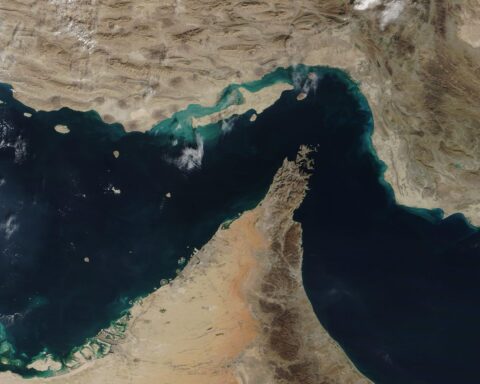
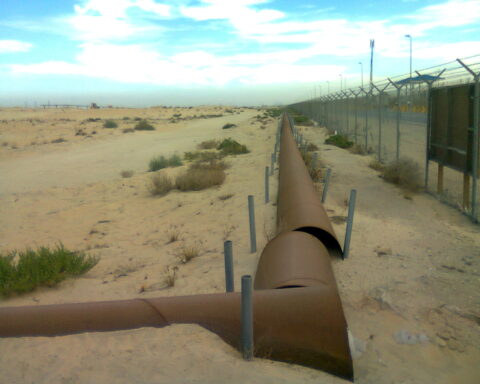
JEDDAH — Saudi Arabia’s formal request that Washington lift the Iran blockade is not a diplomatic gesture toward Tehran. It is a fiscal survival calculation built on one fact: the kingdom now exports virtually all its crude through a single port on the Red Sea, and that port only functions if Bab al-Mandeb stays open. The US blockade, which took effect on April 13, directly increases the probability that it does not.
Riyadh pressed Washington through what the Wall Street Journal described as unnamed “Arab officials” — the standard Saudi channel for messages too sensitive for attribution but too urgent to leave unsaid. The White House response, delivered by spokeswoman Anna Kelly, addressed Hormuz. It did not mention Bab al-Mandeb, Yanbu, or the Red Sea. That gap between the Saudi concern and the American answer is where the risk sits.
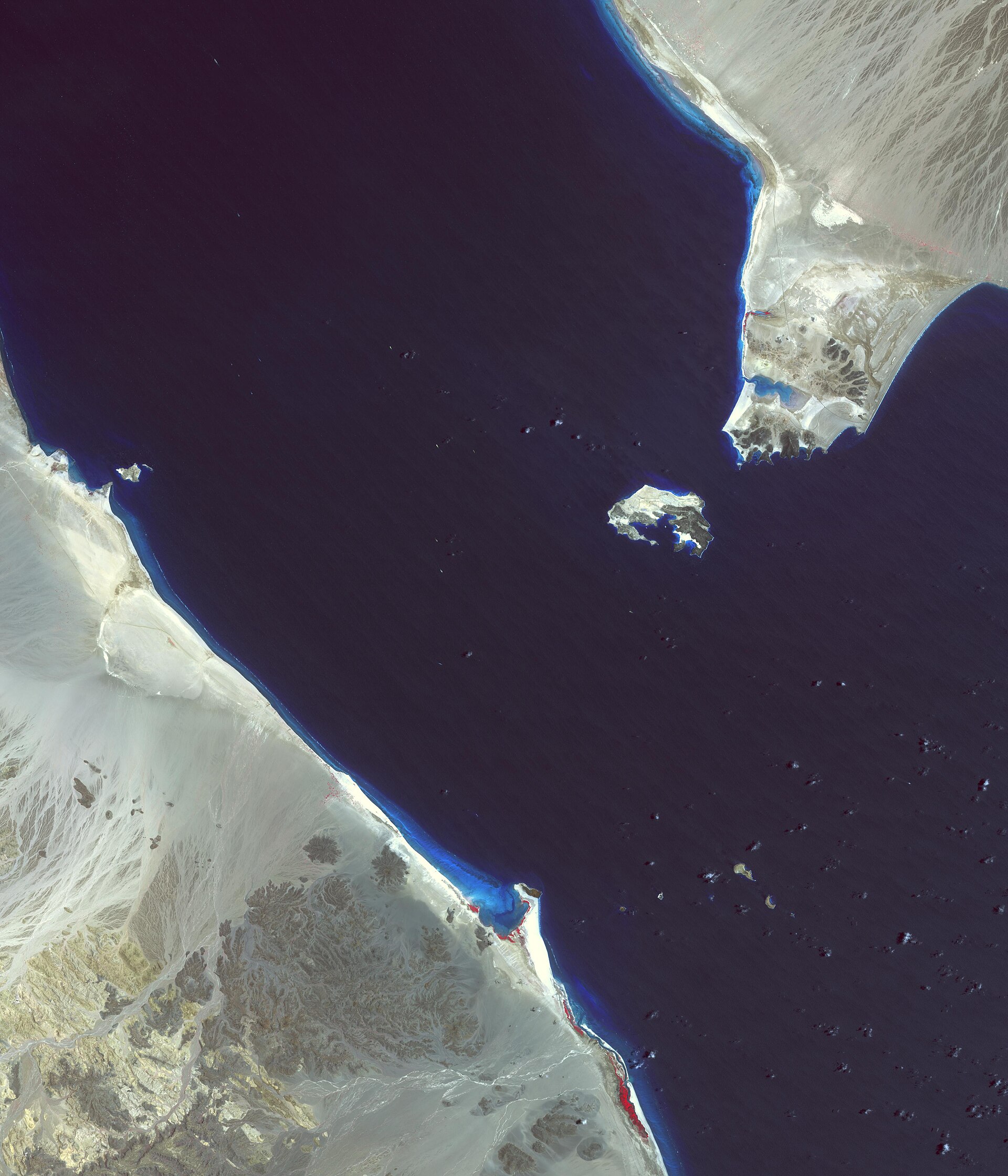
Table of Contents
- The Yanbu Load: 285 Percent in Ten Weeks
- Why Does Bab al-Mandeb Matter More Than Hormuz Right Now?
- Iran’s “No Port” Declaration and the Activation Chain
- What Would a Houthi Escalation at Bab al-Mandeb Look Like?
- The Ceasefire’s Houthi Gap
- Can Saudi Arabia Survive Dual Chokepoint Closure?
- The Deterrence Vacuum in the Red Sea
- Why Did Washington Ignore the Bab al-Mandeb Question?
- The Pipeline That Cannot Be Hit Twice
- Frequently Asked Questions
The Yanbu Load: 285 Percent in Ten Weeks
In January 2026, Yanbu loaded approximately 1.3 million barrels per day — roughly 18-19 percent of Saudi Arabia’s total crude exports. The rest moved through Ras Tanura, Ju’aymah, and other Eastern Province terminals on the Persian Gulf, all of which depend on the Strait of Hormuz.
By early April, Yanbu was handling approximately 5 million barrels per day of crude, plus 700,000 to 900,000 bpd of refined products. That is a 285 percent surge in throughput over ten weeks, enabled by the 1,200-kilometer East-West Pipeline running from Abqaiq to the Red Sea coast. Bloomberg reported the crude figure on March 25 and updated it on April 10. Fortune confirmed the trajectory on March 28. Argus Media provided refined product volumes.
The pipeline’s total capacity is 7 million bpd. Its effective export ceiling — accounting for domestic refinery feedstock, operational tolerances, and port infrastructure — is approximately 5.9 million bpd. Pre-war Saudi exports through Hormuz ran between 7 and 7.5 million bpd. The arithmetic produces a structural gap of 1.1 to 1.6 million bpd that cannot be replaced even at maximum pipeline utilization.
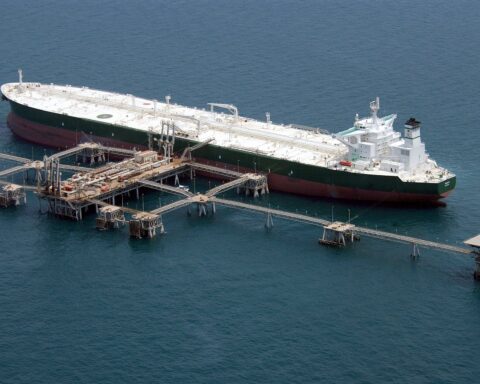
Approximately 30 tankers were waiting offshore Yanbu in early April, according to shipping sources. Every one of them must transit Bab al-Mandeb to reach Asian buyers.
The Middle East briefing 3,000+ readers start their day with.
One email. Every weekday morning. Free.
Why Does Bab al-Mandeb Matter More Than Hormuz Right Now?
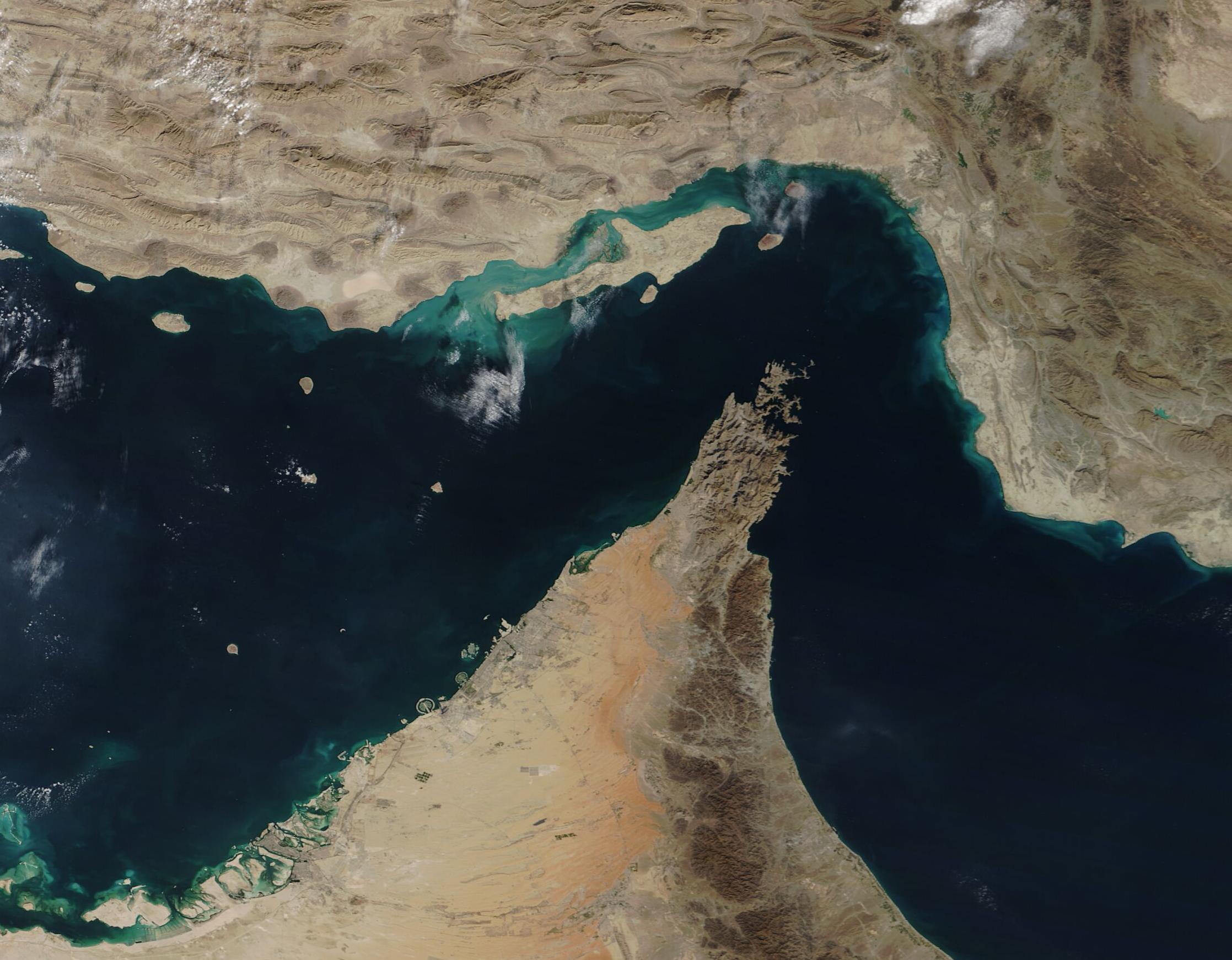
Bab al-Mandeb is 29 kilometers wide at its narrowest point. The eastern shipping channel — the one tankers use — is 3 kilometers across. Yemen, Djibouti, and Eritrea hold the three coastlines. The Houthis hold de facto control of the Yemeni shore and Perim Island, which sits in the center of the strait.
Pre-Houthi disruption, Bab al-Mandeb carried approximately 8.7 million barrels per day of crude and products in 2023, according to the US Energy Information Administration. During 2024, under sustained Houthi attacks on commercial shipping — more than 130 attacks, 178 vessels targeted, four ships sunk, nine seafarers killed — throughput fell to an average of 4.0 million bpd. A 54 percent reduction.
By March 2026, Kpler data showed 3.97 million bpd moving through the strait. Nearly all of it was Saudi crude loaded at Yanbu.
The structural dependency is unprecedented. Saudi Arabia designed the East-West Pipeline in the late 1980s as a Hormuz bypass — a hedge against exactly the kind of Persian Gulf disruption now underway. But the hedge was never designed to function while Bab al-Mandeb was simultaneously threatened. The pipeline substitutes one chokepoint for another. When Iran’s IRGC declared Hormuz a “danger zone” and forced vessels into a 5-nautical-mile corridor off Qeshm and Larak islands, the bypass activated. It worked. But it works only as long as the exit remains open.
Iran’s “No Port” Declaration and the Activation Chain
On April 13 — the day the US blockade took effect — the Iranian armed forces and Revolutionary Guards issued a unified statement: “Security in the Persian Gulf and the Sea of Oman is either for everyone or for NO ONE. NO PORT in the region will be safe.”
Mohsen Rezaei, former IRGC commander and current Secretary of the Expediency Council, said Iran had “major untouched levers” to counter the blockade. Fortune reported both statements on April 13.
The phrase “no port” is not rhetorical. Iran has two mechanisms to deliver on it. The first is direct: missile and drone strikes on Gulf terminal infrastructure, which Iran demonstrated at Ras Tanura on March 2 and at the East-West Pipeline pumping station on April 8. The second is indirect: Houthi activation at Bab al-Mandeb. The indirect mechanism is more dangerous because it does not require Iran to expend its own munitions, does not trigger direct US-Iran military escalation, and collapses Saudi export capacity at the insurance and commercial layer before any physical damage occurs.
Ali Akbar Velayati — former Iranian foreign minister and senior adviser to Supreme Leader Khamenei — stated the framework explicitly on April 5: “The unified command of the Resistance front views Bab al-Mandeb as it does Hormuz. If the White House dares to repeat its foolish mistakes, it will soon realize that the flow of global energy and trade can be disrupted with a single move.”
Ahmed Nagi, senior Yemen analyst at the International Crisis Group, traced the operational logic: “If the US moves to impose a blockade on Iranian ports and Iran starts feeling the pain, the Houthis are very likely to escalate in the Bab el-Mandeb.” In a separate interview with Al Jazeera on March 29, Nagi described the current Houthi restraint as “a calculated move coordinated with Iran…keeping the Houthis in reserve” as “an important card that can be played later.”
The blockade activated on April 13. The card is now in play.
What Would a Houthi Escalation at Bab al-Mandeb Look Like?
Not a naval battle. A commercial insurance crisis.
Nabeel Khoury, former US Deputy Chief of Mission in Yemen and now an Atlantic Council fellow, described the threshold in an Al Jazeera interview on March 29: “All they have to do is fire at a couple of ships coming through, and that would lead to the arrest of all commercial shipping through the Red Sea.”
The 2024-2025 precedent confirms the model. More than 2,000 ships rerouted around the Cape of Good Hope during the Houthi Red Sea campaign, not because the strait was physically impassable but because war-risk insurance premiums made transit commercially unviable. The same mechanism would apply to Saudi crude leaving Yanbu. Tankers that cannot obtain affordable insurance do not load.
Mohammed Mansour, the Houthi Deputy Information Minister, stated in late March and early April that closing Bab al-Mandeb was “among our options” should aggression against Iran and Lebanon escalate. He forecast oil prices at $200 per barrel in that scenario and confirmed the Houthis were discussing a “common action plan” with Iran.
No Houthi attacks on commercial shipping have occurred since October 2025, following the US-Houthi ceasefire of May 2025. But Houthis resumed strikes on Israel from March 28, 2026 — eight barrages as of mid-April. The US Maritime Administration’s advisory 2026-006 remains active. Capability is intact. The pause is political, and the politics are now changing.
On August 31, 2025, Houthis targeted the Israeli-owned tanker Scarlet Ray approximately 40 nautical miles southwest of Yanbu. The strike demonstrated that Yanbu itself — not just the southern strait — is within Houthi weapons range. The Jerusalem Post and The National both reported the incident.
The Ceasefire’s Houthi Gap
The Pakistan-brokered ceasefire that nominally took hold in early April names no Houthi obligations. It sets no conditions on Yemen. The Houthis are not party to any Iran ceasefire arrangement, as the Washington Times reported on April 9.
This is not an oversight. The ceasefire was negotiated between Iran and the United States, with Pakistan as mediator, and focused on Hormuz, nuclear enrichment, and bilateral military de-escalation. The Houthi theater was excluded because including it would have required a separate negotiation with a non-state actor that the United States does not recognize as a government and Saudi Arabia considers a hostile militia. The Houthis themselves have shown no interest in being included — their operational freedom depends on remaining outside the framework while retaining the ability to act.
The exclusion creates a structural gap. Even if the ceasefire holds — and it is under severe strain, with Iran demanding a permanent Hormuz management mechanism and the US imposing a blockade in apparent violation of ceasefire terms — no diplomatic constraint prevents Houthi action at Bab al-Mandeb. Iran can authorize escalation there without violating any agreement it has signed. The ceasefire’s legal perimeter stops at the Gulf of Oman. The Red Sea is outside it.
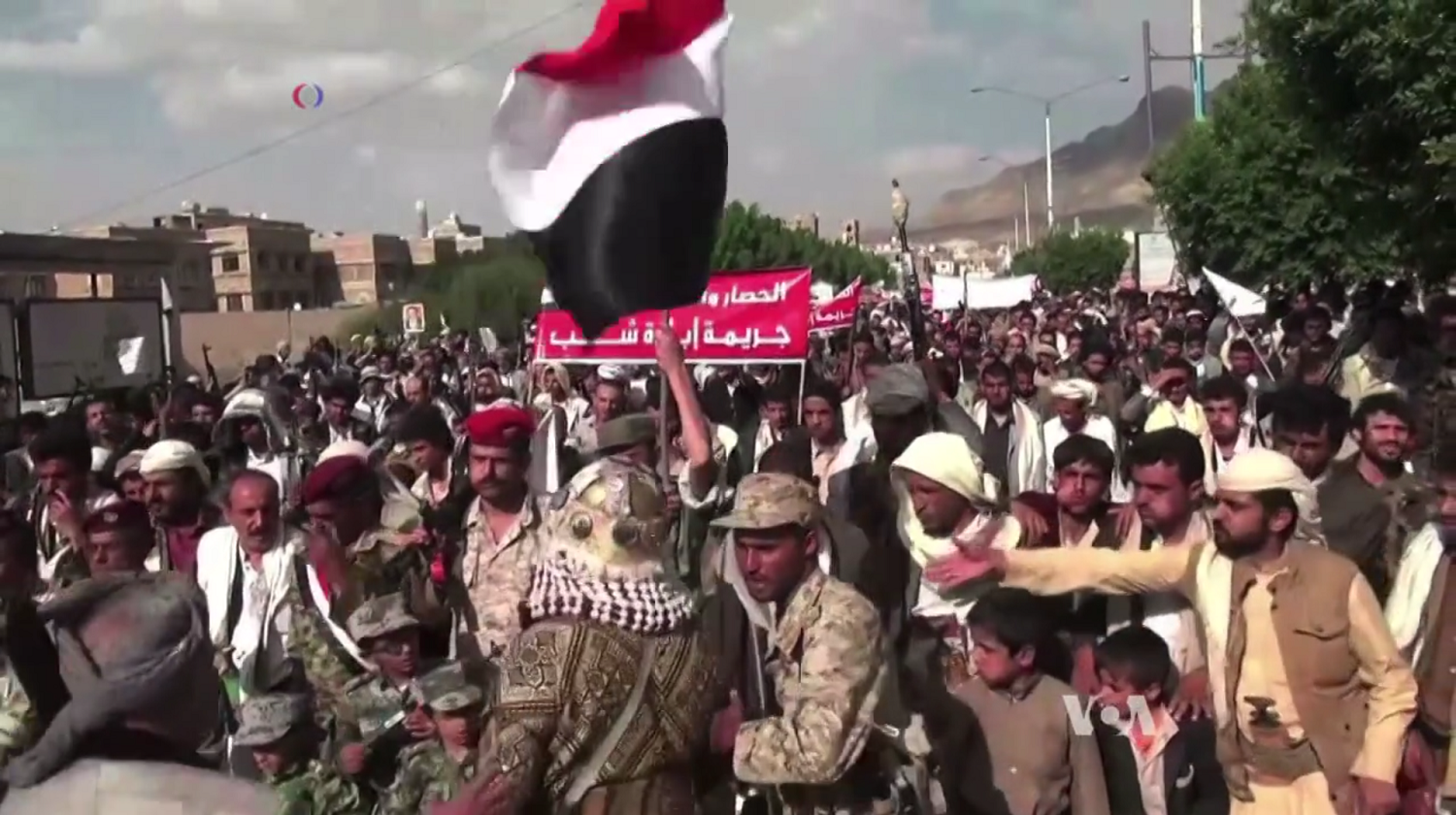
Joaquin Matamis of the Stimson Center described the Houthi decision as a “pivotal choice” between “deepening alignment with Iran’s regional conflict strategy” and “pursuing independent, inward-focused objectives.” As of March 3, when Matamis wrote, the choice had not been made. A naval blockade of Iranian ports forces it: Deputy Information Minister Mansour explicitly named escalation against Iran as the Houthi trigger condition, and the blockade meets that definition by any reading.
Can Saudi Arabia Survive Dual Chokepoint Closure?
The arithmetic says no.
If both Hormuz and Bab al-Mandeb close simultaneously, approximately 25 percent of global seaborne oil supply is blocked, according to Al Jazeera and IEA estimates. Saudi Arabia’s position is worse than the global average because it depends on both chokepoints sequentially: crude moves through the East-West Pipeline to avoid Hormuz, then exits the Red Sea through Bab al-Mandeb. A dual closure does not halve Saudi exports. It eliminates them.
Elisabeth Kendall, the Cambridge University Middle East specialist, described the dual closure as a “nightmare scenario” for European trade in an Al Jazeera interview on April 6. For Saudi Arabia, it is not a scenario for European trade modelers. It is the specific risk that Riyadh’s démarche to Washington was designed to prevent — a risk that Saudi planners can quantify because they built the pipeline system, they know its capacity limits, and they can see the tankers stacked at Yanbu.
The rerouting math compounds the damage. Saudi crude from Yanbu to Asian buyers currently transits Bab al-Mandeb and the Indian Ocean — a journey of roughly two to three weeks depending on destination. Rerouting around the Cape of Good Hope extends that to approximately 50 days, according to EIA data. Persian Gulf to Rotterdam via the Cape takes 35 days versus 19 days through Suez. The additional transit time locks up tanker capacity, raises freight costs, and delays revenue. For a kingdom running a fiscal break-even oil price of $108 to $111 per barrel — Bloomberg’s PIF-inclusive estimate — and facing Brent at $98.05 on April 14, the margin is already negative. Extended voyage times make it worse.
| Metric | Pre-War (Jan 2026) | Current (April 2026) | Dual Closure Scenario |
|---|---|---|---|
| Yanbu crude exports (bpd) | ~1.3 million | ~5.0 million | 0 (if Bab al-Mandeb closes) |
| Hormuz crude exports (bpd) | ~5.7-6.2 million | ~0 (blockade/disruption) | 0 |
| Bab al-Mandeb throughput (bpd) | ~4.0 million (2024 avg) | ~3.97 million (March) | 0 |
| Export structural gap vs. pre-war | N/A | 1.1-1.6 million bpd | Total |
| Tanker transit to Asia (Yanbu) | ~14-21 days (Red Sea) | ~14-21 days (Red Sea) | ~50 days (Cape reroute) |
| Brent crude price | ~$78-82 | $98.05 | Est. $150+ (Earth.org) |
| Saudi fiscal break-even | $108-111/bbl | $108-111/bbl | $108-111/bbl |
The Deterrence Vacuum in the Red Sea
The naval architecture that partially contained the 2024-2025 Houthi campaign no longer exists in its original form. The deterrence structure has been dismantled at the precise moment that the threat it was designed to contain is re-emerging.
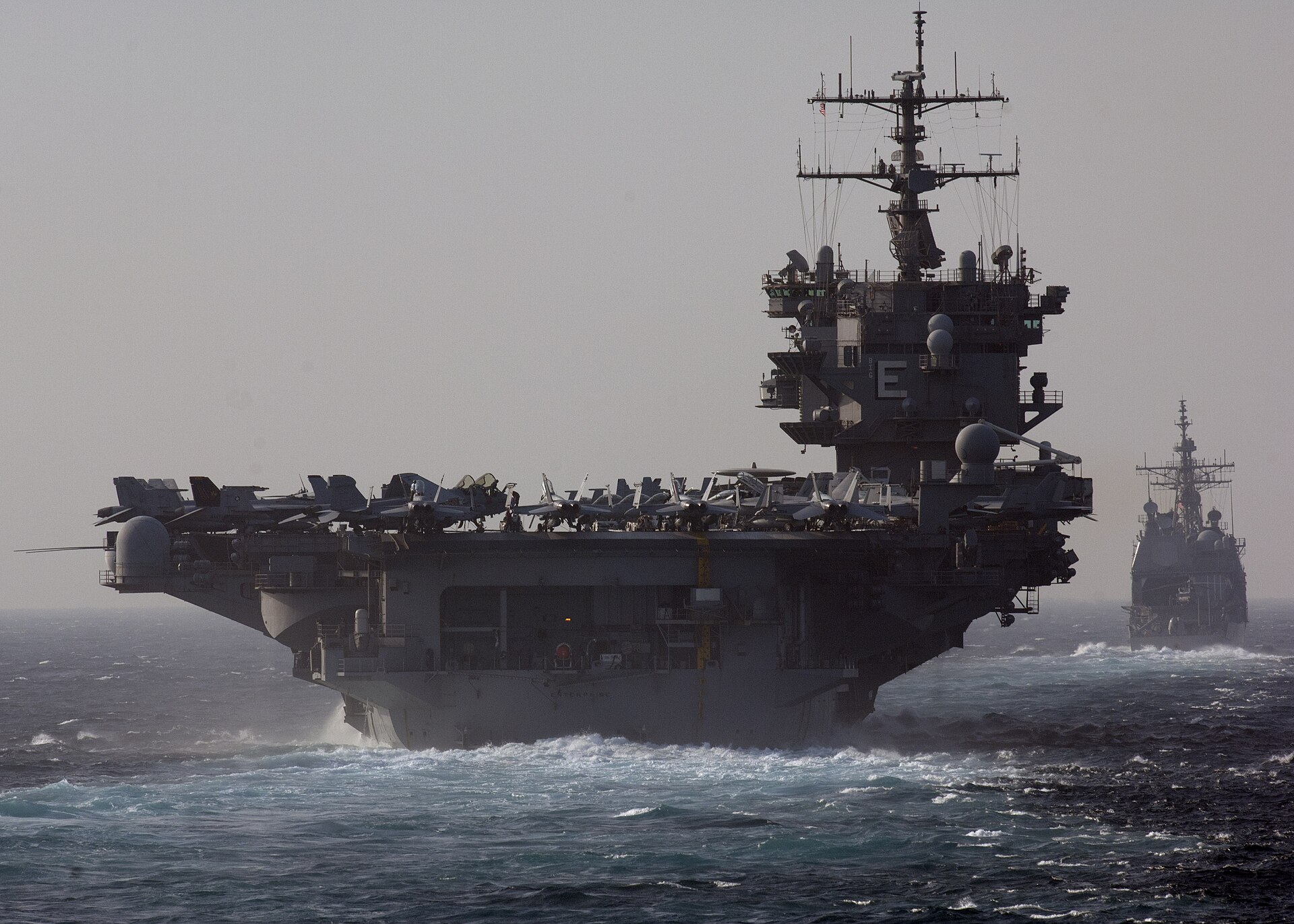
Operation Prosperity Guardian — the US-led multinational force assembled in December 2023 to escort commercial shipping through the Red Sea — was effectively retired following the US-Houthi ceasefire of May 2025. US naval assets have since been redeployed to the Hormuz theater, where the blockade enforcement mission now demands them. The US Navy cannot enforce a blockade at Hormuz and patrol the southern Red Sea simultaneously — the force structure does not support it, and the distances involved (approximately 2,400 kilometers from the blockade zone to Bab al-Mandeb) make rapid redeployment impractical.
The EU’s Operation Aspides remains active through February 2027. It is defensive only — authorized to intercept incoming missiles and drones but not to strike Houthi launch sites on Yemeni territory. Its budget is €15 million. For reference, a single Houthi anti-ship ballistic missile costs an estimated $5,000 to $50,000 to produce; the Standard Missile-2 or Aster 30 used to intercept it costs $1 million to $4 million. The cost asymmetry that defined the 2024 campaign — Iran-backed forces spending thousands per attack while Western navies spend millions per intercept — has not changed.
The Houthis screen Red Sea vessels by political identity. The National reported on April 8 that Houthi forces use AIS-based nationality and affiliation screening to determine which ships to target and which to allow passage. During the 2024 campaign, this screening produced a selective blockade — certain flag states and cargo owners were targeted while others, particularly Chinese-flagged and Russian-flagged vessels, were allowed through. A resumed campaign would likely follow the same pattern, but with Saudi-loaded tankers as the primary target set.
Adam Baron, a fellow at New America, put the capability assessment plainly in an interview cited by the Wall Street Journal on April 14: “If Iran does want to shut down Bab al-Mandeb, the Houthis are the obvious partner to do it, and their response to the Gaza conflict demonstrates that they have the capacity to do it.”
Why Did Washington Ignore the Bab al-Mandeb Question?
The White House response to Saudi Arabia’s démarche addressed Hormuz exclusively. Anna Kelly’s full statement: “President Trump has been clear that he wants the Strait of Hormuz to be fully open to facilitate the free flow of energy. The administration is in frequent contact with our Gulf allies, who the President is helping by ensuring that Iran cannot extort the United States or any other country.”
The statement treats the blockade as a tool to open Hormuz. Saudi Arabia’s concern is that the blockade, by pressuring Iran, activates the mechanism that closes the Red Sea. These are not competing diplomatic positions. They are competing threat models.
Washington’s threat model appears to be sequential: apply maximum pressure on Iran via the blockade, force Tehran to reopen Hormuz under acceptable terms, and deal with secondary escalation if and when it materializes. The Saudi threat model is simultaneous: the blockade produces Hormuz pressure and Red Sea pressure at the same time, because Iran has pre-positioned the Houthi option and publicly declared its intent to use it.
The gap matters because the two governments are optimizing for different chokepoints. The United States is focused on the chokepoint where its naval force is concentrated. Saudi Arabia is focused on the chokepoint where its revenue flows. Since February 28, those are not the same place.
There is a second dimension to the disconnect. The blockade’s stated purpose is to force Iran to reopen Hormuz. But even if it succeeds — even if Iran capitulates and Hormuz reopens — the Houthi threat activated during the blockade period does not automatically deactivate. Houthi operations in the Red Sea during 2024 continued for months after the immediate trigger (the Gaza conflict) had faded from headlines.
The Houthis have institutional momentum, domestic political incentives to maintain a confrontational posture, and weapons stockpiles that do not expire when a ceasefire is signed in a different theater. A blockade that succeeds at Hormuz but triggers Bab al-Mandeb leaves Saudi Arabia worse off than before: it recovers one export route while losing the backup.
“Security in the Persian Gulf and the Sea of Oman is either for everyone or for NO ONE. NO PORT in the region will be safe.” — Iranian armed forces and IRGC unified statement, April 13, 2026
The Pipeline That Cannot Be Hit Twice
On April 8 — after the nominal ceasefire — the IRGC struck an East-West Pipeline pumping station, reducing throughput by 700,000 barrels per day. Fortune and AGBI reported the restoration by April 12-13. The bypass was the hedge; the hedge was threatened.
The strike demonstrated that the pipeline is targetable. The 1,200-kilometer route crosses open desert with pumping stations at regular intervals. Saudi air defenses cannot cover the entire route — the PAC-3 MSE inventory is concentrated around terminal and population targets, not pipeline infrastructure. The IRGC struck the pipeline using the same logic it applied to Ras Tanura, SABIC Jubail, and the SAMREF refinery at Yanbu: if Saudi Arabia profits from the war by filling the supply gap created by Iranian disruption, the infrastructure enabling that profit becomes a legitimate target under IRGC co-belligerence doctrine.
A second pipeline strike during a Bab al-Mandeb closure would eliminate not just the Red Sea export route but the pipeline feeding it. Saudi Arabia would have no functioning export corridor of any kind. The kingdom’s entire fiscal model — the $108-111 break-even, the PIF spending commitments, the Aramco dividend — depends on crude revenue that depends on the pipeline that depends on the strait that depends on Houthi restraint that depends on Iran not feeling sufficient pain from the blockade to play its reserve card.
That is four dependencies in series. Saudi Arabia’s démarche to Washington is an attempt to remove the first one — the blockade — before the chain breaks.
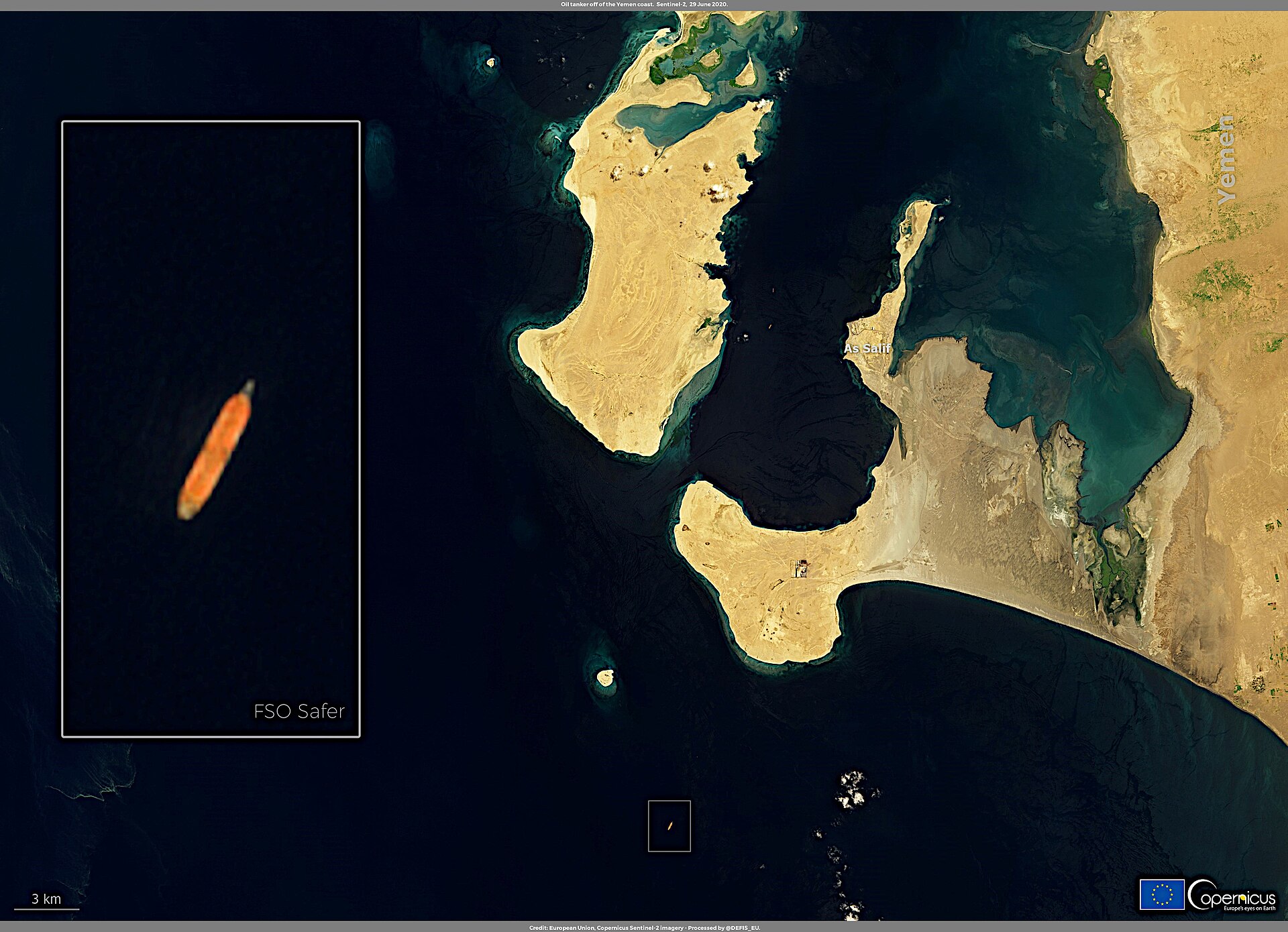
The historical parallel is May 2019, when the IRGC attacked the East-West Pipeline with explosive drones — the first time the bypass had been targeted. Saudi Arabia repaired the damage within days, but the 2019 strike hit a pipeline carrying 1.3 million bpd to a port handling a fraction of the kingdom’s exports. The April 2026 context is qualitatively different: the pipeline now carries the entire export load, Yanbu is the sole functioning terminal, and the repair window occurs under active threat of a second strike. The 2019 attack was a warning. A repeat, synchronized with Bab al-Mandeb disruption, would be a knockout.
Frequently Asked Questions
Has Saudi Arabia publicly opposed US military operations against Iran before during this conflict?
Riyadh has avoided direct public criticism of US strikes, including both Kharg Island operations and the April 7 “Power Plant Day and Bridge Day” campaign. The blockade démarche is the first reported instance of Saudi Arabia formally pressing Washington to reverse a specific military posture during the current war. The channel — unnamed “Arab officials” via the Wall Street Journal rather than an on-record statement — reflects the standard Saudi method for delivering sensitive messages while maintaining plausible deniability if the request is ignored.
Could Saudi Arabia export crude overland instead of through either chokepoint?
Saudi Arabia has no operational overland crude export pipeline to any port outside the Red Sea or Persian Gulf. The Trans-Arabian Pipeline (Tapline) to Sidon, Lebanon, was decommissioned in 1990. The Iraqi Pipeline in Saudi Arabia (IPSA), which ran to Mu’ajjiz near Yanbu, was repurposed for domestic use. Jordan has discussed a pipeline from Basra via Aqaba, but no Saudi-origin overland route exists. The only alternative is trucking refined products to neighboring states — a method that cannot substitute for seaborne crude exports at any meaningful scale.
What is the insurance mechanism that makes Bab al-Mandeb closure effective without physical blockade?
Lloyd’s Joint War Committee designates conflict zones for shipping insurance purposes. When an area is listed, war-risk premiums apply — typically 0.5 to 2.0 percent of hull value per transit. For a VLCC valued at $120-150 million, that adds $600,000 to $3 million per voyage. During the 2024 Houthi campaign, some insurers refused coverage entirely for Red Sea transit, and premiums for vessels that did transit spiked above 1.5 percent. At those rates, rerouting around the Cape of Good Hope becomes cheaper despite the additional fuel, time, and crew costs. The commercial blockade precedes the physical one.
Does Saudi Arabia have any direct channel to the Houthis that could prevent Red Sea escalation?
Saudi Arabia and the Houthis conducted direct talks in Sanaa in April 2023, brokered by Oman, which led to a prisoner exchange and extended truce. The China-brokered Saudi-Iran normalization of March 2023 implicitly covered Houthi restraint toward Saudi territory — and held through the end of 2024. But that back-channel ran through Tehran, not Sanaa. With Iran now under a US naval blockade and publicly declaring “no port safe,” Riyadh’s indirect leverage over Houthi behavior via Tehran is precisely what the blockade is dismantling. The channel exists; the blockade is severing it.
What oil price would dual chokepoint closure produce?
Estimates vary widely. Earth.org projected prices exceeding $150 per barrel based on the simultaneous removal of approximately 25 percent of global seaborne oil supply. Houthi Deputy Information Minister Mohammed Mansour forecast $200 per barrel. The 2008 all-time high of $145.29 per barrel occurred without any physical chokepoint closure — it was driven by demand expectations and speculation. A simultaneous Hormuz-plus-Bab-al-Mandeb closure would remove physical supply on a scale never tested in oil-market history, making precise forecasting unreliable. The 1973 Arab oil embargo removed approximately 7 percent of global supply and quadrupled prices; 25 percent removal has no modern precedent. Abdollahi’s Red Sea doctrine — Iran’s April 15 declaration naming the Persian Gulf, Sea of Oman, and Red Sea simultaneously — and its implications for Saudi Arabia’s no-contingency position at Yanbu, is analyzed in Abdollahi’s Three-Sea Doctrine Leaves Saudi Arabia With No Export Contingency.