
ISLAMABAD — Pakistani officials announced a “major breakthrough” on Iran’s nuclear programme on April 16, 2026, with Army Chief Asim Munir leading a high-level delegation in Tehran carrying what Pakistani state media described as “a new message from the US to the Iranian leadership.” The breakthrough, if it holds, solves the narrowest of Washington’s problems — what to do with 440.9 kg of uranium enriched to 60% U-235 — and defers everything else.
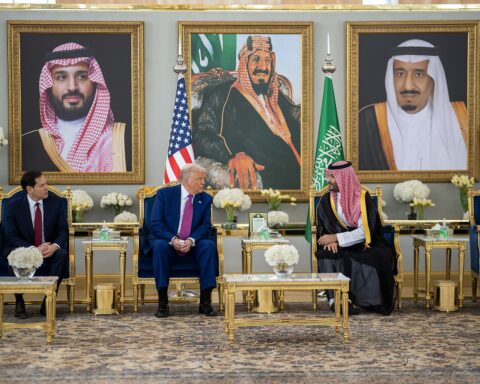
For Saudi Arabia, this is the shape of the defeat it has been paying to avoid. White House Press Secretary Karoline Leavitt told reporters hours before the Tehran meeting that “Pakistan is the only mediator in this negotiation, although many countries around the world have offered their help.” Riyadh was not mentioned. The three Saudi demands that have governed Gulf diplomacy since the war began — Hormuz sovereignty, war reparations, IRGC conventional posture — are nowhere in the framework. MBS bought a mediator. Pakistan sold the service to Washington.
Table of Contents
- What Pakistan’s Tehran Breakthrough Actually Contains
- The Three HEU Options and the One Problem They Solve
- Why Is Saudi Arabia Excluded From a Deal It Financed?
- The SMDA Inversion — Cash for Deterrence, Deterrence for Washington
- What Does Phase Two Look Like Without a Convening Mechanism?
- The Blockade Leverage Saudi Arabia Is About to Lose
- Does Any Nuclear Surrender Precedent Fit Iran in April 2026?
- The May 5 OSP Calendar Now Runs Faster Than Phase Two
- Frequently Asked Questions
What Pakistan’s Tehran Breakthrough Actually Contains
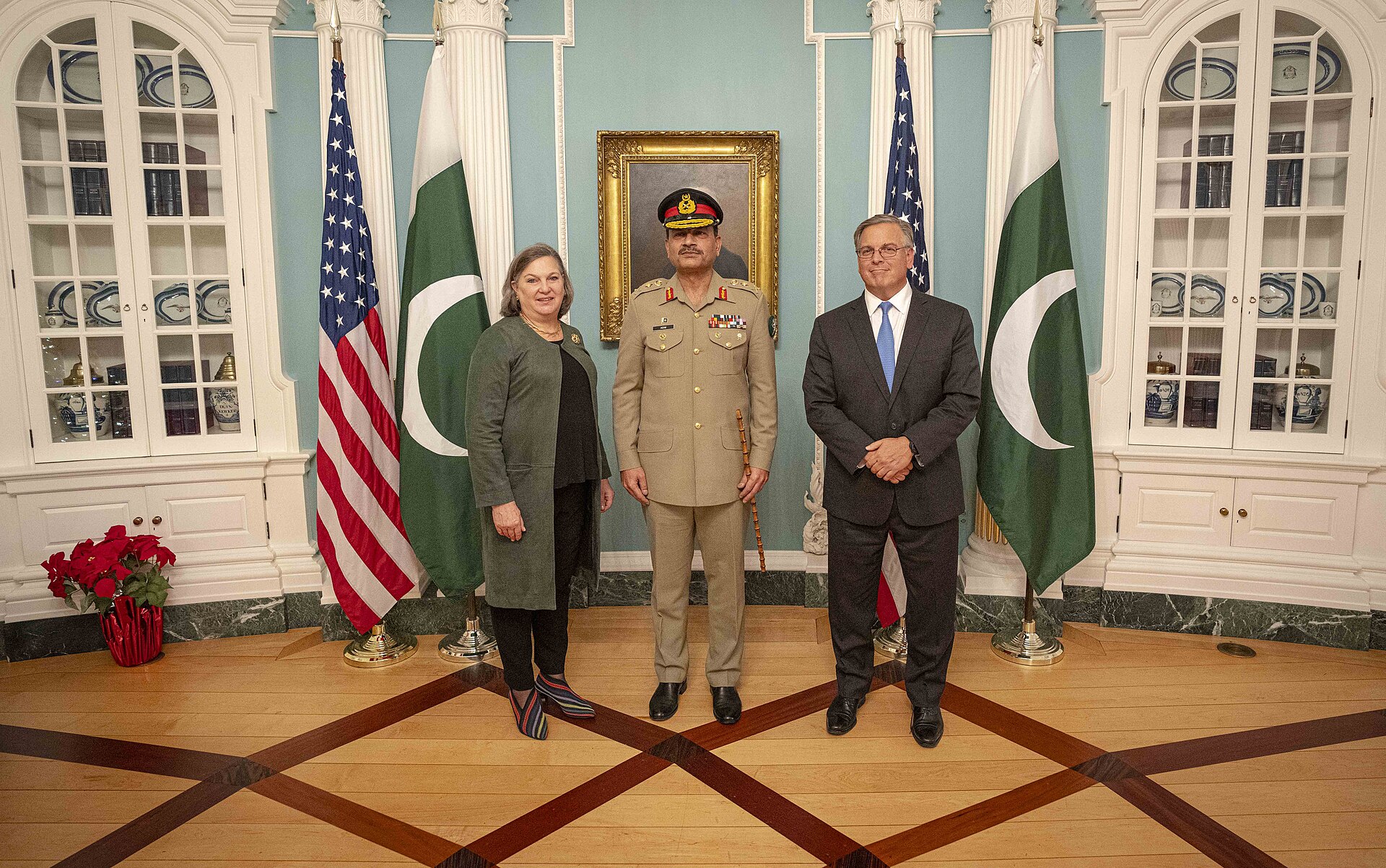
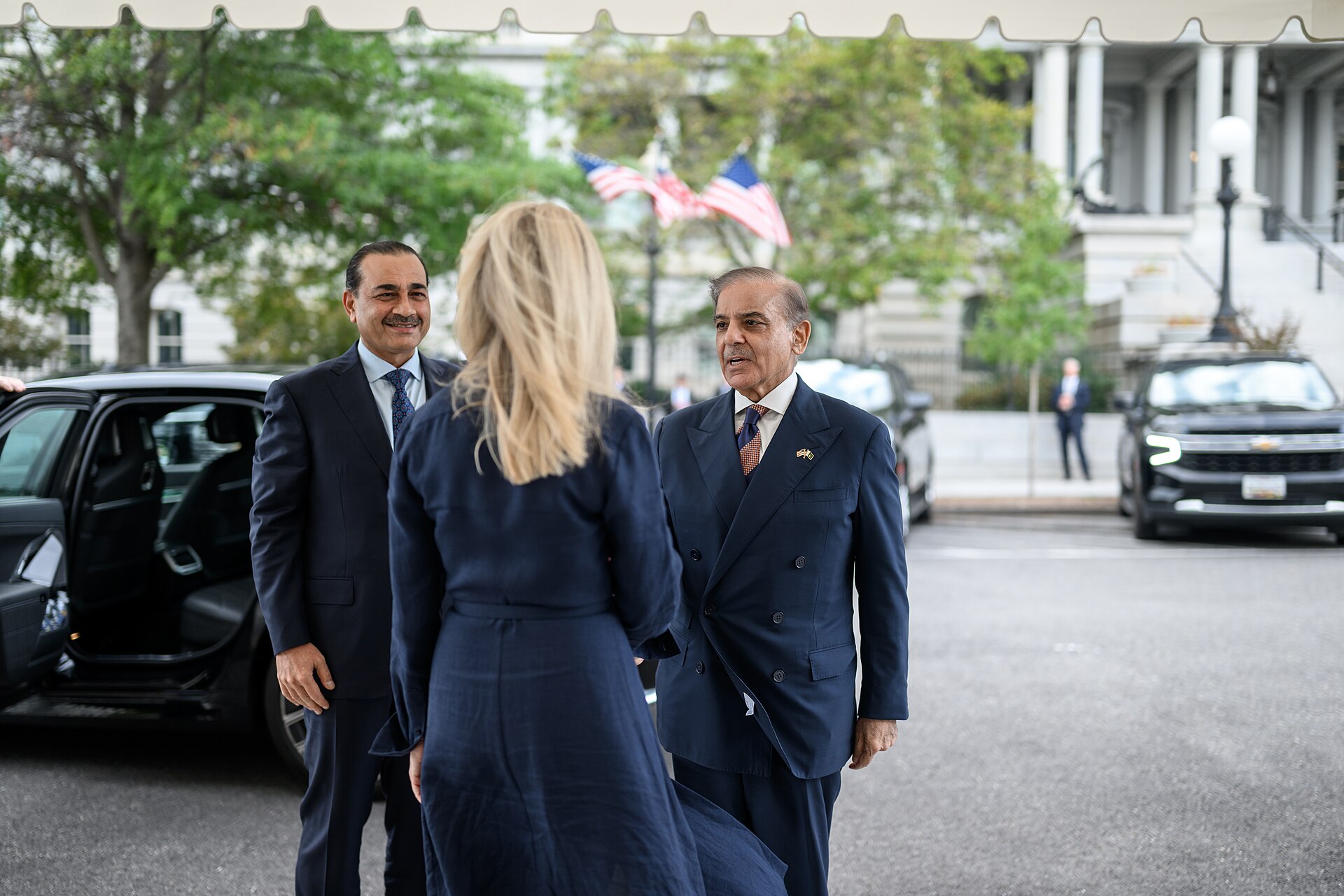
The Pakistani readout is careful. Munir’s delegation — Ishaq Dar, Foreign Secretary Amna Baloch, and ISI Director General Asim Malik — landed in Tehran on the 63rd day of the war and the 93rd day since the IAEA lost all access to Iran’s declared facilities. The framework presented to Ali Larijani, Supreme National Security Council Secretary, runs to three HEU disposition options and a phased structure in which every other contested item is marked for later.
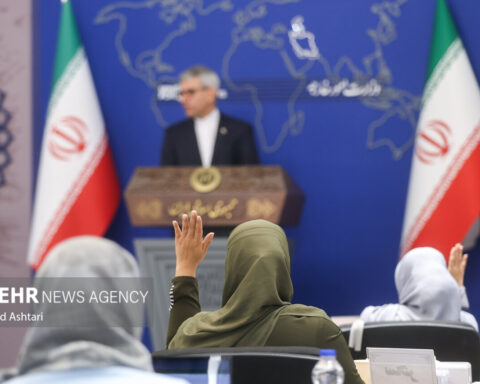
Abbas Araghchi, Iran’s Foreign Minister, confirmed to state broadcasters that “several messages have been exchanged through Pakistan” and that Iranian “positions expressed in those exchanges” had narrowed to the uranium question. A White House official told Al Jazeera: “We feel good about the prospects of a deal.” That is the sum of the announced progress. The word “Saudi” does not appear in any readout from either capital.
Rafael Grossi, the IAEA Director General, issued the only public caveat of substance. “Iran has an ambitious and extensive nuclear programme,” he told ABC News on April 15, “and this reality necessarily requires the permanent and effective presence of IAEA inspectors. Without this oversight, there will be no real agreement; you will only have the illusion of one.” The phrase “illusion of one” is the operational description of what Pakistan delivered.
The sequence matters. On February 28, 2026, Iran terminated all IAEA access — cameras disabled, seals removed, inspectors expelled within 72 hours. The last verified figure, from IAEA GOV/2026/8, stood at 432.9 kg of UF6 at 60% enrichment. Between February 28 and April 16 the centrifuges at Fordow and Natanz have been, as far as any external body can establish, operational. Pakistan’s breakthrough concerns a stockpile nobody has counted for seven weeks.
The Middle East briefing 3,000+ readers start their day with.
One email. Every weekday morning. Free.
The Three HEU Options and the One Problem They Solve
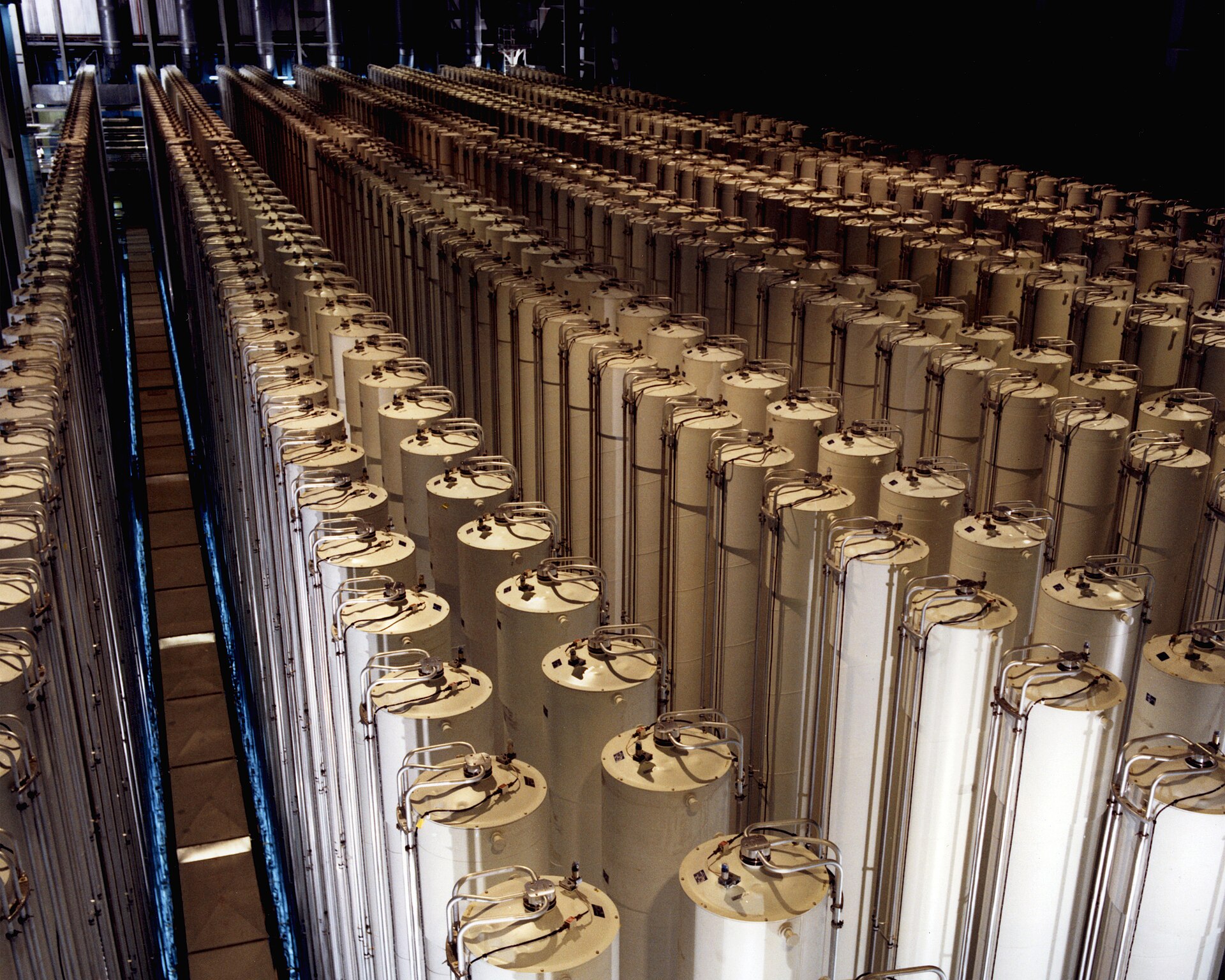
The three options on the Tehran table, per Al Jazeera and ProPakistani reporting on April 16: transfer the full HEU stockpile to a third-country custodian; down-blend to natural uranium at 0.7% U-235; or down-blend to 3% enriched — reactor-grade, the level consistent with Iran’s stated civilian programme.
| Option | Technical Effect | Breakout Time After Implementation | Reversibility | Saudi Equities Addressed |
|---|---|---|---|---|
| Third-country transfer | Removes verified 440.9 kg 60% HEU from Iranian soil | 12-18 months | Centrifuge cascades intact; can re-enrich | None |
| Dilution to natural uranium | Reduces U-235 concentration to 0.7% | 18-24 months | Industrial re-enrichment possible | None |
| Dilution to 3% reactor-grade | Reduces to LEU consistent with civilian fuel | 6-9 months | Rapid — 3% to 90% is faster than 0.7% to 90% | None |
| Verified weapons-grade trajectory (status quo) | Stockpile unchanged | 1-3 months | Immediate | None |
All three options address the same American problem: public breakout time. Ron Dermer’s working papers during the Geneva track in March — the texts Axios sourced to four negotiators — anchored Washington’s minimum demand at a breakout horizon longer than a single US electoral cycle. Option one delivers that. Options two and three deliver less. None addresses the 19,000 IR-6 and IR-8 centrifuges now spun up across Fordow, Natanz, and the unnamed third site Israeli intelligence has publicly referenced since March.
Iran’s four stated non-negotiable conditions, published by Al Jazeera on April 12 and restated by Araghchi through Pakistani intermediaries the following week: recognition of Hormuz sovereignty; full war reparations; unconditional release of frozen assets; durable ceasefire across all Resistance fronts. Three of the four concern the physical security of the Gulf. None appears in the HEU framework Munir delivered.
Why Is Saudi Arabia Excluded From a Deal It Financed?
Saudi Arabia has no seat at the Tehran table because the US has designated Pakistan as the single recognised channel. The White House ratified the exclusion when Washington routed Vance’s April 11 Islamabad delegation through Munir rather than through Crown Prince Mohammed bin Salman. Every subsequent round has moved through Pakistani military and foreign-office channels, not Saudi ones.
The structural answer to the exclusion is visible in the cash flows. Saudi Arabia holds more than $5 billion in State Bank of Pakistan deposits, with a fresh $3 billion tranche announced on April 15 — the day before Munir flew to Tehran. A Pakistani military source told Drop Site News on April 14 that the arrangement had inverted. Munir is running the negotiation with Saudi money and an American brief.
Two Pakistani Air Force Il-78MP tankers and three C-130H transports landed at King Abdulaziz Air Base in Dhahran on April 11, the same day Vance departed for Islamabad. Azeema Cheema of Verso Consulting read the deployment as evidence of “significant restraint shown by the Saudis” and as “likely pre-agreed” before the talks began. Pre-agreed meaning: Saudi Arabia paid for the assets, received the assets, then watched Pakistan’s commander fly to Tehran to negotiate without it.
Umer Karim of the King Faisal Center for Research and Islamic Studies warned on April 14 that Pakistan’s dual-role strategy — Iran’s interlocutor and Saudi Arabia’s contracted military auxiliary — may collapse “in case hostilities restart.” The warning understates the present condition. The dual role has already collapsed. Pakistan is the interlocutor. It is not the auxiliary, except on paper.
The SMDA Inversion — Cash for Deterrence, Deterrence for Washington
The Strategic Mutual Defence Agreement was signed on September 17, 2025 by Mohammed bin Salman and Shehbaz Sharif. The text has never been published. It was never submitted to Pakistan’s parliament, which under Articles 70 and 73 of the Constitution would normally have ratified a treaty of this scope. The operational language Pakistani officials used during the signing — that “an attack on one is an attack on both” — has not been repeated by any senior Saudi official since the war began.
“The Saudi pact is becoming a problem for us. It was supposed to be cash for deterrence. But we’ve not gotten any new Saudi investments, and deterrence failed.”
— Pakistani military source, Drop Site News, April 14, 2026
The inversion is in the source’s last three words. Deterrence failed. Ras Tanura was struck March 2. King Fahd Causeway closed April 7 during a seven-missile barrage on the Eastern Province. The Pakistani tankers and transports landed April 11 — after the deterrent purpose of the SMDA had already been disproved by events, after Iran had prosecuted the war at Saudi territory, and at a moment when their presence could no longer deter anything. Their function was diplomatic, not military.
Asim Munir told a delegation of Pakistani Shia clerics, according to Drop Site News, “If you love Iran, go to Iran.” The quote is useful because it reveals the operational register in which Munir is working: a domestic Pakistani political message, not a Gulf security message. The man running Iran-US backchannel diplomacy on Saudi Arabia’s tab is managing his own sectarian calculus first, Washington’s objectives second, and Riyadh’s equities only to the extent they overlap with the prior two. They do not, in April 2026, substantially overlap.
The $5 billion figure is the visible tip. Reuters reported in March that total Saudi-to-Pakistan financial commitments across the fiscal year now exceed $8.2 billion when deferred oil payments, sovereign-guaranteed Eurobond support, and IMF standby co-financing are included. MBS is paying for a mediator that is mediating in a room with no Saudi chair.
What Does Phase Two Look Like Without a Convening Mechanism?
The 45-day framework, sourced by Axios on April 6 to four negotiators, separates nuclear questions in Phase One from everything else in Phase Two — Hormuz sovereignty, IRGC conventional posture, war reparations, frozen assets. The framework names no Phase Two parties, no timeline, no convening authority. Mohammad Zolghadr, Iran’s most plausible Phase Two lead, is US-sanctioned — a procedural problem the framework ignores.
Under Article 110 of the Iranian Constitution, as the Soufan Center noted in its April 10 memo, the president has no authority over the IRGC or the nuclear programme. Khamenei has been absent from public life for 44 days. Mojtaba Khamenei has appeared only in audio clips, none of which have been independently authenticated. The authorisation ceiling for any Phase Two commitment runs through an office that is not currently issuing commitments.
Iran’s IRGC-affiliated Fars News Agency put the hardliner position in the record on April 12: “Iran did not accept America’s ambitious conditions on the Strait of Hormuz, peaceful nuclear energy and several other issues.” Tasnim — the IRGC’s second outlet — framed the talks as American overreach and suggested Washington was trying to sow division within Iran by proposing talks with “only part of its political establishment.” The hardline objection is structural: any Phase Two that touches Hormuz touches IRGC Navy equities. Any Phase Two that touches IRGC Navy equities requires a Khamenei ratification that cannot currently be issued.
The absence of a convening mechanism is the Saudi-specific problem. Phase One is running on a Pakistani-brokered, White House-recognised bilateral channel. Phase Two, if it ever convenes, will run on what? The framework does not say. The Iranian hardliner press has already rejected the substantive demands that would have to be on the Phase Two table. Saudi Arabia is not in Phase One and has no named entry point into Phase Two. In both frameworks on the table, its interests are marked for later — with no mechanism that makes later obligatory.
The Blockade Leverage Saudi Arabia Is About to Lose
The US blockade of Iranian ports, active since April 13, is the leverage that produced this week’s breakthrough. The Council on Foreign Relations cited a Treasury expert estimate of roughly $13 billion per month in direct losses to Iran. That number is why Araghchi authorised Pakistan to transmit new positions through Islamabad. It is also why MBS, on April 14, formally asked the United States to lift the blockade — a request that publicly contradicted Washington’s maximum-pressure strategy, and that has not been granted.
| Metric | Pre-War (January 2026) | April 16, 2026 | Change |
|---|---|---|---|
| Saudi Asia crude exports (bpd) | 7,108,000 | 4,355,000 | -38.7% |
| Total Saudi production (bpd) | 10,100,000 | 7,800,000 | -22.8% |
| Hormuz daily vessel transits | 138 | 15-20 | -86% |
| Brent spot ($/bbl) | 82.40 | 96.83 | +17.5% |
| Aramco May OSP Arab Light premium ($/bbl) | +1.20 | +19.50 | +$18.30 |
| Iran estimated monthly blockade losses ($B) | 0 | 13 | +$13B |
The MBS request to Trump carried its own contradiction. Saudi Arabia needs Hormuz reopened — the 38.7% Asia-export collapse is the pressure point on its fiscal calendar — but the US coercive instrument that produced the nuclear breakthrough is the same instrument keeping Hormuz closed to Iranian toll-vessel transits. Lift the blockade to restore Saudi exports, and Iran’s incentive to concede on Phase Two evaporates. Maintain the blockade, and Saudi Arabia remains the largest loser from a war Washington is now solving on terms that do not address Riyadh’s losses.
An Iranian hardline commentator, speaking on state television this month and quoted by the Times of Israel, laid out the ideological ceiling: “After this war, Iran will be recognized as a global superpower… We must take measures to produce or possess nuclear weapons.” That sentiment is not a negotiating position. It is the register in which the domestic IRGC audience is being addressed while the foreign-ministry delegation talks dilution ratios with Pakistani intermediaries. Phase One can proceed on one track while the domestic political economy is prepared for the opposite outcome.
Saudi Arabia’s coercive utility to Washington diminishes the moment Phase One is initialled. Through mid-April, Riyadh has mattered to American strategy because US bases in Saudi Arabia, the Patriot interceptors Saudi Arabia has expended at a rate of roughly 2,800 down to 400 PAC-3 MSE rounds, and the Saudi economic pressure on Tehran through OPEC+ output discipline have all contributed to the coercive package. Once the HEU question is resolved, the coercive package is disassembled. The Saudi instruments become costs without corresponding benefit.
Does Any Nuclear Surrender Precedent Fit Iran in April 2026?
Three cases are customarily cited. Kazakhstan in 1994: Project Sapphire airlifted 600 kg of weapons-grade HEU to Oak Ridge National Laboratory for approximately $30 million in compensation. The material moved because Kazakhstan had no state security apparatus guarding it, no IRGC equivalent, and a government actively pursuing Western integration. Iran has all three.
Libya in 2003: Gaddafi renounced weapons of mass destruction on December 19, 2003; the IAEA subsequently described Libya’s programme as “in the very initial stages.” Eight years later, NATO-backed forces overthrew and killed him. The Libya case is the precedent every Iranian hardliner cites, and has cited without interruption since the first Geneva round. Mojtaba Khamenei’s office is believed to have circulated a classified memo on the Libya comparison in the week before his father’s public absence began.
Ukraine and the Budapest Memorandum of 1994: Ukraine surrendered the world’s third-largest nuclear arsenal in exchange for security “assurances” — the term was used instead of “guarantees” because the United States refused to commit militarily. Russia violated the assurances in 2014 and again in 2022. The case is now canonical proof that assurances without enforcement are worthless. Iran’s negotiators have referred to Budapest in at least two of the messages Pakistan has relayed to Washington in the past month, per one Al Jazeera source.
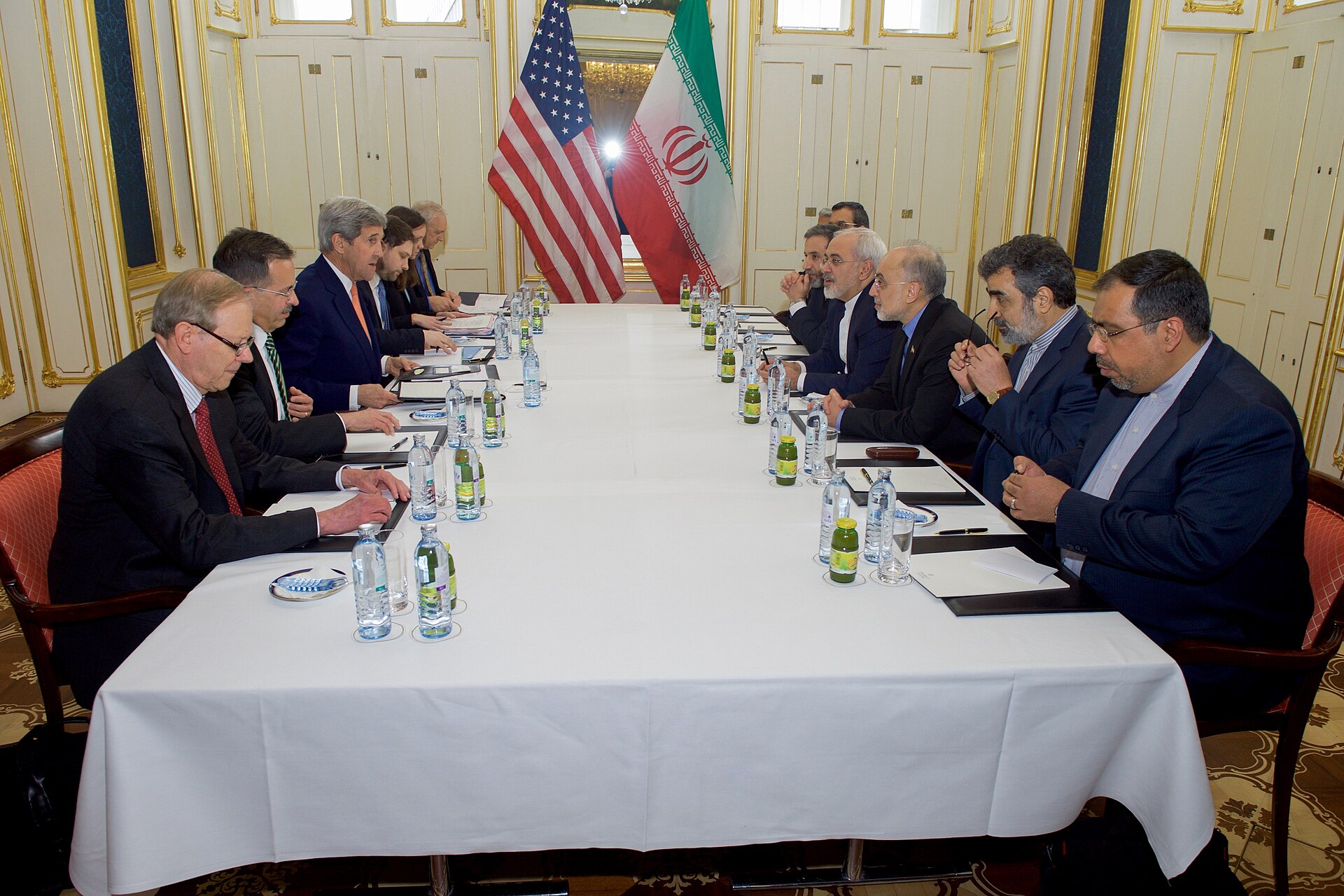
None of the three cases maps cleanly. Iran’s programme is a 20-year threshold programme that has survived two Israeli sabotage campaigns, US air strikes in June 2025, and the February 28, 2026 termination of IAEA access. Any transfer mechanism requires a third-country custodian that neither Washington nor Israel will accept: Russia is unacceptable to the US; China is unacceptable to Israel; the IAEA itself requires re-established snap inspections that Iran has given no public sign of permitting. The physical question — where does 440 kg of UF6 at 60% enrichment actually go — has no resolved answer in the Pakistani framework as of April 16.
Dilution to 3% reactor-grade, the lowest-effort of the three options, is also the one with the shortest re-escalation horizon. Breakout from 3% to 90% is mathematically faster than breakout from 0.7% to 90%, because most separative work is expended at the low-enrichment end of the curve. A Phase One that settles on Option Three is a Phase One that Iran can reverse in six to nine months. Saudi Arabia’s June OSP calendar does not allow six to nine months.
The May 5 OSP Calendar Now Runs Faster Than Phase Two
Aramco’s June OSP repricing decision is due approximately May 5, 2026, based on the standard monthly cycle. Brent closed at $96.83 on April 15. The May OSP, set at +$19.50 per barrel Arab Light to Asia in early April, was calibrated to a $109 Brent environment that has since corrected. The gap between the current Brent print and the OSP anchor is approximately $15 per barrel — a gap that, if the June pricing decision does not absorb it, transfers directly to Aramco’s margins on term-contract tonnage.
Two pricing paths converge on May 5. Path one: raise June OSP by $10-12 per barrel to compensate for accumulated spread, accepting the near-certain buyer defection that Korean, Japanese, and Indian term refiners have already signalled in private. Path two: raise by $6-8 per barrel, which signals pricing uncertainty and invites spot-market arbitrage that accelerates the same defection.
The sequencing collision is precise. Phase One’s implementation window — the time required to physically transfer or dilute the HEU — cannot be completed inside the 19 days between April 16 and May 5. Hormuz vessel transits will remain at 15-20 per day through the OSP decision. Saudi Asia exports will remain at 4.355 million bpd through the OSP decision. The fiscal consequence will crystallise before Phase One produces its physical result, and certainly before Phase Two produces anything.
The inversion is complete at that point. The deal Saudi Arabia financed through $5 billion in Pakistani deposits is scheduled to resolve the HEU question on a Washington-driven timeline, while the OSP question resolves itself on a calendar Aramco cannot move. Saudi Arabia paid for a mediator that is delivering an outcome for the United States on a schedule that leaves Riyadh’s fiscal calendar unprotected.
“Iran has an ambitious and extensive nuclear programme, and this reality necessarily requires the permanent and effective presence of IAEA inspectors. Without this oversight, there will be no real agreement; you will only have the illusion of one.”
— Rafael Grossi, IAEA Director General, ABC News, April 15, 2026
Saudi Arabia’s exclusion from Phase One is the visible loss. The invisible loss is the one Grossi described. A Phase One that the IAEA cannot verify is a Phase One that does not actually close the nuclear question — it closes the political appearance of the nuclear question. Washington gets its domestic headline. Pakistan gets its mediator-of-record status. Iran gets its sanctions relief on a sub-stockpile basis while keeping the centrifuge infrastructure intact. Saudi Arabia gets the OSP crisis and the Phase Two file.
The line between this week’s announced breakthrough and the outcomes MBS sought from his initial $5 billion commitment to Pakistan runs through exactly that inversion. The deal Saudi Arabia paid to enable will be used, in the months after its signature, as the basis for removing US coercive pressure from the only problem Saudi Arabia actually needed pressure applied to. For a fuller accounting of the Saudi seat at the table MBS is financing, see MBS Has No Seat at the Table He Is Paying For. For the specific fiscal arithmetic that May 5 will enforce, see The $50 Crude Gap Saudi Arabia Has to Fix Before May 5. For the structural backstory on how Pakistan became the sole enforcement mechanism of a ceasefire Saudi Arabia is not party to, see Pakistan as ceasefire’s sole enforcement mechanism.
Munir’s Tehran visit, situated inside the longer arc of Pakistani diplomacy since the ceasefire framework was drafted, is the subject of Asim Munir’s Tehran Gamble. The initial Saudi financial commitment that underwrote Pakistani mediation capacity is examined in Shehbaz Sharif’s Riyadh Visit: Saudi Arabia Bought Pakistan’s Mediation for $5 Billion. The coercive logic of the blockade that produced this week’s opening is analysed in The US Blockade of Iran Is Coercive Diplomacy, Not a Strategic Walkaway. The status of the ceasefire extension question Saudi Arabia must plan around is treated in Agreed in Principle, Denied on CNN. And the programme-level nuclear timeline Pakistan is now attempting to interrupt is reconstructed in Twenty Years and Five Years and No One Who Counts.
Frequently Asked Questions
Who physically signs Phase One if it is finalised?
The likely signatories on the US side are Steve Witkoff and JD Vance, consistent with the April 11 Islamabad composition. On the Iranian side, Ali Larijani for the Supreme National Security Council and Abbas Araghchi for the Foreign Ministry. Pakistan’s role as “mediator” does not include signature authority, but Ishaq Dar is expected to witness. No Saudi official is scheduled to attend.
What happens to the uranium physically if Option One is chosen?
The 440.9 kg of UF6 would need to move by road to Bandar Abbas, by ship under third-party flag to a custodian port, and by rail or road to a secure IAEA-designated storage facility. Oak Ridge is logistically plausible but politically impossible for Iran. The one candidate informally floated in Pakistani readouts is the IAEA’s Seibersdorf laboratory complex in Austria; Pakistani officials have not addressed how the facility’s existing capacity would accommodate a stockpile of this size.
Does Saudi Arabia have any procedural mechanism to object to Phase One?
Not formally. Saudi Arabia is not a party to the JCPOA’s successor framework, is not named in the Pakistani-brokered channel, and has no standing at the IAEA Board of Governors beyond its observer rotation. The most recent option — a GCC joint communiqué expressing concerns — was debated at the Riyadh foreign ministers’ meeting on April 13 and shelved after Qatar and Oman dissented, both having their own bilateral equities with Tehran. Saudi Arabia’s structural exclusion from the nuclear track mirrors its parallel exclusion from the Lebanon ceasefire architecture — yet in the Lebanon case, Riyadh managed to engineer its demand into the April 16 text through British and French intermediaries. That proxy victory and the liability it creates are examined here.
The exclusion pattern itself has eleven years of precedent: how the 0 billion Iran deal repeats the JCPOA Gulf exclusion — and why Saudi Arabia is weaker now across eight measurable dimensions — maps the structural degradation from 2015 to 2026 in comparable data points.
How does Israel respond to a Phase One that defers the centrifuge question?
Avi Dichter, speaking to the Knesset Foreign Affairs and Defence Committee on April 14, said Israel “reserves the right to independent action on infrastructure that remains a threat.” The phrasing is deliberate — it leaves open continued covert sabotage of the centrifuge cascades regardless of a HEU deal. The post-June 2025 Israeli targeting inventory has not been publicly updated since February.
What is the next procedural step after April 16?
The Pakistani delegation is scheduled to return to Islamabad on April 17, followed by a cross-briefing with US officials — the format has not been disclosed. Araghchi is expected to travel to Moscow on April 19 for a pre-announced bilateral. Any formal Phase One signature before ceasefire expiry on April 22 would require a convening in a third location. Doha, Muscat, and Geneva have all been mentioned in Pakistani readouts. Riyadh has not.