
ISLAMABAD — The fifteen-year gap between Washington’s demand for a twenty-year Iranian enrichment moratorium and Tehran’s offer of five years is not a negotiating range — it is a structural incompatibility that markets, mediators, and optimistic headline writers are systematically mispricing. The two sides are answering fundamentally different questions: the United States is calculating how long Iran needs to lose its reconstitution capability, while Iran is calculating how long it must wait before sanctions lift permanently and its enrichment rights are internationally ratified. Neither number moves toward the other because neither side is bidding on the same commodity.
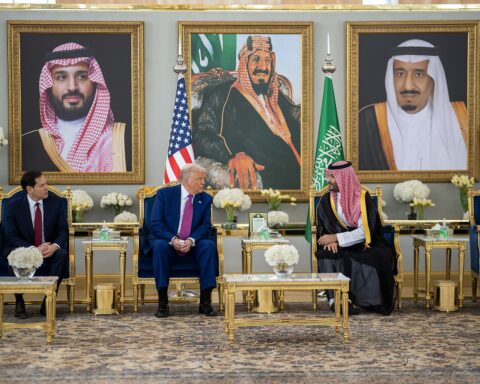
Saudi Arabia — the state with the most at stake in whatever nuclear architecture emerges — has no seat at the Islamabad table, no formal channel into the process, and no veto over outcomes that will define its security environment for a generation. Riyadh must accept whatever enrichment framework two adversaries negotiate in a Pakistani conference room, while simultaneously pursuing its own nuclear cooperation agreement with the very power demanding Iran disarm. The result is a three-body problem in which the most exposed party is the only one not in the room.
- The Duration Gap: Why Twenty and Five Are Not on the Same Axis
- What Does a Five-Year Moratorium Actually Buy?
- The IR-6 Problem: Why Duration Is Secondary to Feedstock
- Who Can Deliver Iran’s Signature — and Can They Enforce It?
- Saudi Arabia’s Absence: The Most Consequential Seat Left Empty
- The 123 Agreement Paradox: Demanding Disarmament While Offering Enrichment
- The UAE Clause and the Regional Proliferation Cascade
- Pakistan’s Dual Role: Mediator at the Table, Deterrent Outside It
- What Is the Market Actually Pricing?
- Can Round Two Close the Gap?
The Duration Gap: Why Twenty and Five Are Not on the Same Axis
The Islamabad talks lasted twenty-one hours across April 11-12, 2026, and produced exactly one piece of clarity: the United States wants Iran to suspend enrichment for twenty years, and Iran is willing to suspend for five. The gap was first reported by Axios on April 13 and confirmed by multiple outlets within hours. Vice President JD Vance, who led the US delegation, stated afterward that the American side “made very clear what our red lines are…and they have not chosen to accept our terms.”
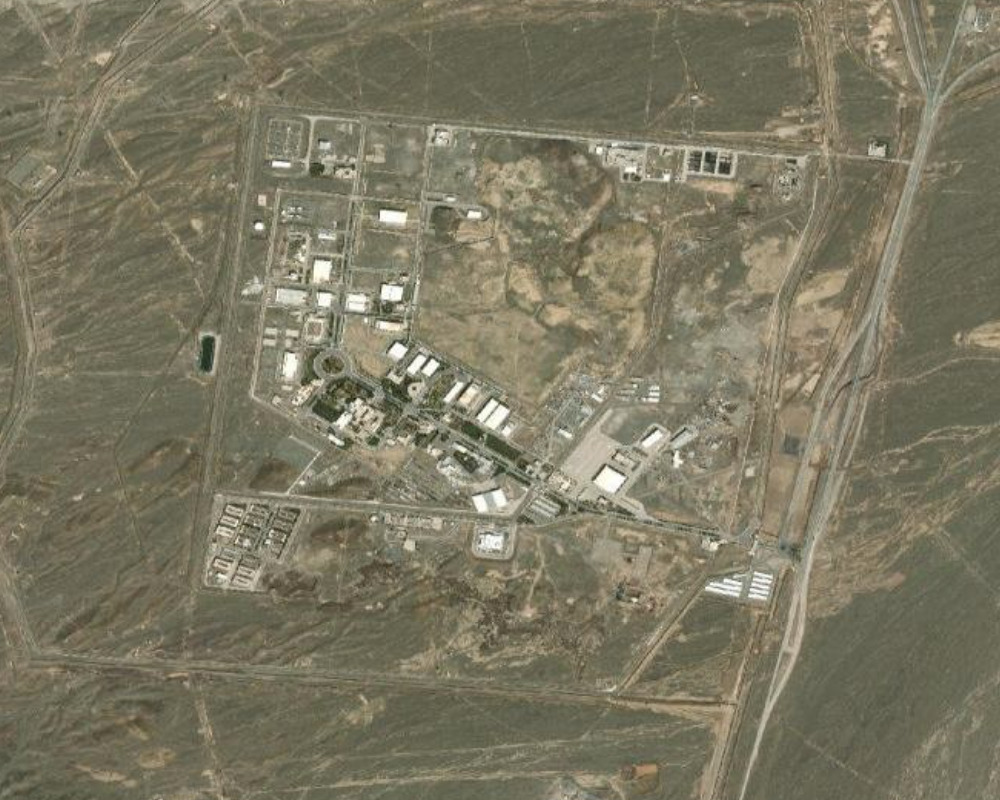
The twenty-year figure was itself a retreat. Washington’s opening position — communicated through back channels before Islamabad and reported by Haaretz on April 13 — was permanent, complete dismantlement of all enrichment facilities at Natanz, Fordow, and Isfahan, plus transfer of Iran’s full stockpile to a third country. The shift from “permanent dismantlement” to “twenty-year moratorium” was framed by US officials as flexibility. Iran’s delegation saw it differently.
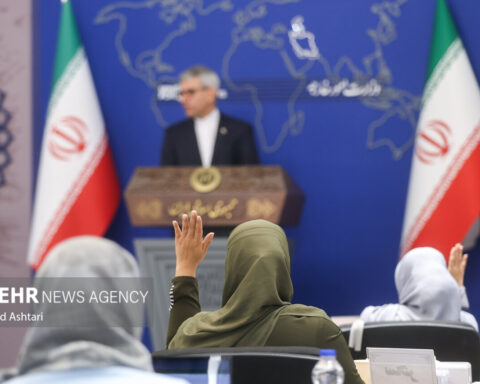
Foreign Minister Abbas Araghchi characterized Iran’s five-year offer and willingness to down-blend its 60% enriched stockpile as “a big concession.” From Tehran’s perspective, the United States rejected a meaningful confidence-building measure and substituted a demand that no Iranian government — reformist, hardline, or any shade between — could survive accepting. The gap is not fifteen years. It is the distance between two incompatible theories of what enrichment represents: a proliferation risk to be constrained by time, or a sovereign right to be ratified by treaty.
The Middle East briefing 3,000+ readers start their day with.
One email. Every weekday morning. Free.
MV Ramana of the University of British Columbia captured the technical emptiness of both numbers: “Both the US and Iranian governments have staked a lot of political capital on Iran’s enrichment programme…I cannot discern any technical reasons for either 20 or five years.” Neither figure derives from physics. Both derive from politics — and the politics on each side make compromise structurally inaccessible.
What Does a Five-Year Moratorium Actually Buy?
A five-year enrichment suspension with Iran’s current infrastructure intact would be a reconstitution-ready pause, not disarmament. The arithmetic is unforgiving. Iran holds 440.9 kilograms of uranium enriched to 60% U-235 as of the last IAEA-verified count in June 2025 — enough feedstock for nine to ten nuclear weapons when further enriched to 90%. The IAEA has been unable to verify the current status of this stockpile since Iran terminated all inspector access on February 28, 2026, the most significant verification blackout in the agency’s history with Iran.
Only 564 separative work units are required to take the existing 60% stockpile to weapons-grade. That figure represents roughly one percent of the enrichment work already completed. A single IR-6 centrifuge cascade can produce enough weapons-grade material for one device every twenty-five days. Conversion from highly enriched uranium hexafluoride to weapons components takes one to three weeks.
Chris Featherstone of the University of York has argued that “the longer that Iran goes without enriching uranium, the more difficult it is to restart the process.” This is true for a twenty-year moratorium — centrifuge expertise degrades, supply chains atrophy, tacit knowledge dissipates. It is not meaningfully true for five years. Iran’s centrifuge engineers, many of whom trained under sanctions far more restrictive than any plausible post-deal regime, would retain full operational capability over a five-year window. The suspension would be administrative, not technical.
Robert Einhorn of the Brookings Institution critiqued even the original JCPOA’s timeline, warning that its expiring restrictions on enrichment after ten and fifteen years “would enable Iran to build up enrichment capacity without restriction and shorten the time to produce enough highly enriched uranium for a nuclear bomb to a matter of weeks.” A five-year deal expires faster, with more feedstock in hand, and with a more advanced centrifuge fleet than the JCPOA ever contemplated.
The IR-6 Problem: Why Duration Is Secondary to Feedstock
The most consequential technical fact absent from nearly all diplomatic coverage of the Islamabad gap is this: re-imposing JCPOA-equivalent quantitative limits on Iran’s enrichment program today would yield a breakout timeline of only four to five months — not the twelve months the original deal was engineered to produce. The reason is centrifuge generation. The JCPOA was built around Iran’s IR-1 centrifuges. Iran now operates fleets of IR-6 machines with output more than four times greater per unit.
This means the entire framing of the Islamabad talks — duration of moratorium as the central variable — is addressing the wrong parameter. Even if Iran accepted a ten-year suspension, the binding constraint is not how long Iran pauses but what it retains when the pause ends. If the 440.9 kilograms of 60% enriched uranium remain under Iranian custody, and if Iran’s IR-6 cascades remain installed even if disconnected, the breakout timeline on Day One after any moratorium expires collapses to weeks, not months.
Ian Lesser of the German Marshall Fund noted that Trump himself considered the JCPOA’s ten-year horizon too short, and that “both sides pursue presenting a better deal from their perspectives.” But the original JCPOA purchased twelve months of breakout time by constraining a slower centrifuge fleet. The same quantity-based constraints applied to IR-6 machines purchase roughly one-third of that time. Duration is a secondary variable. Feedstock disposition and centrifuge dismantlement are primary. Neither appears in the public framing of either side’s Islamabad position.
The pre-strike breakout estimate, accounting for damage from US military operations since February 28, is approximately twelve weeks to produce enough weapons-grade HEU for one device — a figure that reflects destroyed infrastructure, not diminished intent. Before the strikes began, Iran could have produced enough material for five to six weapons in under two weeks. The war has imposed a physical delay that no diplomatic framework under discussion would match.
Who Can Deliver Iran’s Signature — and Can They Enforce It?
Even if the duration gap closed, a structural question would remain: who on the Iranian side has the authority to sign and the power to enforce? The Islamabad delegation was led by Foreign Minister Araghchi and Parliamentary Speaker Ghalibaf. IRGC Commander Ahmad Vahidi — the man who controls Iran’s military nuclear-adjacent infrastructure — was not in the room.
Under Iran’s Article 110 constitutional structure, the president has zero command authority over the Islamic Revolutionary Guard Corps. The Supreme National Security Council, chaired by Vahidi’s ally Zolghadr, sets nuclear and defense policy. Supreme Leader Khamenei, who holds ultimate authority over the IRGC, has been absent from public life for over forty-four days — the longest disappearance in his thirty-seven-year tenure.
Araghchi told reporters after the talks collapsed that Iran was “inches away from an MoU” before the US “moved the goalposts.” But an MoU initialed by Araghchi and Ghalibaf without Vahidi’s endorsement would require ratification from an IRGC command structure that was publicly hostile to any concession. Vahidi had demanded that Zolghadr — a US-sanctioned IRGC commander — be included in the Islamabad negotiating team, a demand that would have torpedoed the talks before they began. The internal conflict between the Ghalibaf-Araghchi faction and the Vahidi bloc, documented by The Guardian and the Soufan Center, means that Iran’s negotiating delegation may not have been empowered to accept terms even if the terms were acceptable.
Iran’s nuclear chief Mohammad Eslami, speaking two days before Islamabad, declared: “The claims and demands of our enemies to restrict Iran’s enrichment programme are merely wishes that will be buried.” Foreign Ministry spokesman Baghaei went further: “As long as you are a member of the NPT, abandoning this right would render continued membership meaningless.” These are not negotiating positions. They are doctrinal statements from officials who answer to the IRGC’s chain of command, not the Foreign Ministry’s.
Saudi Arabia’s Absence: The Most Consequential Seat Left Empty
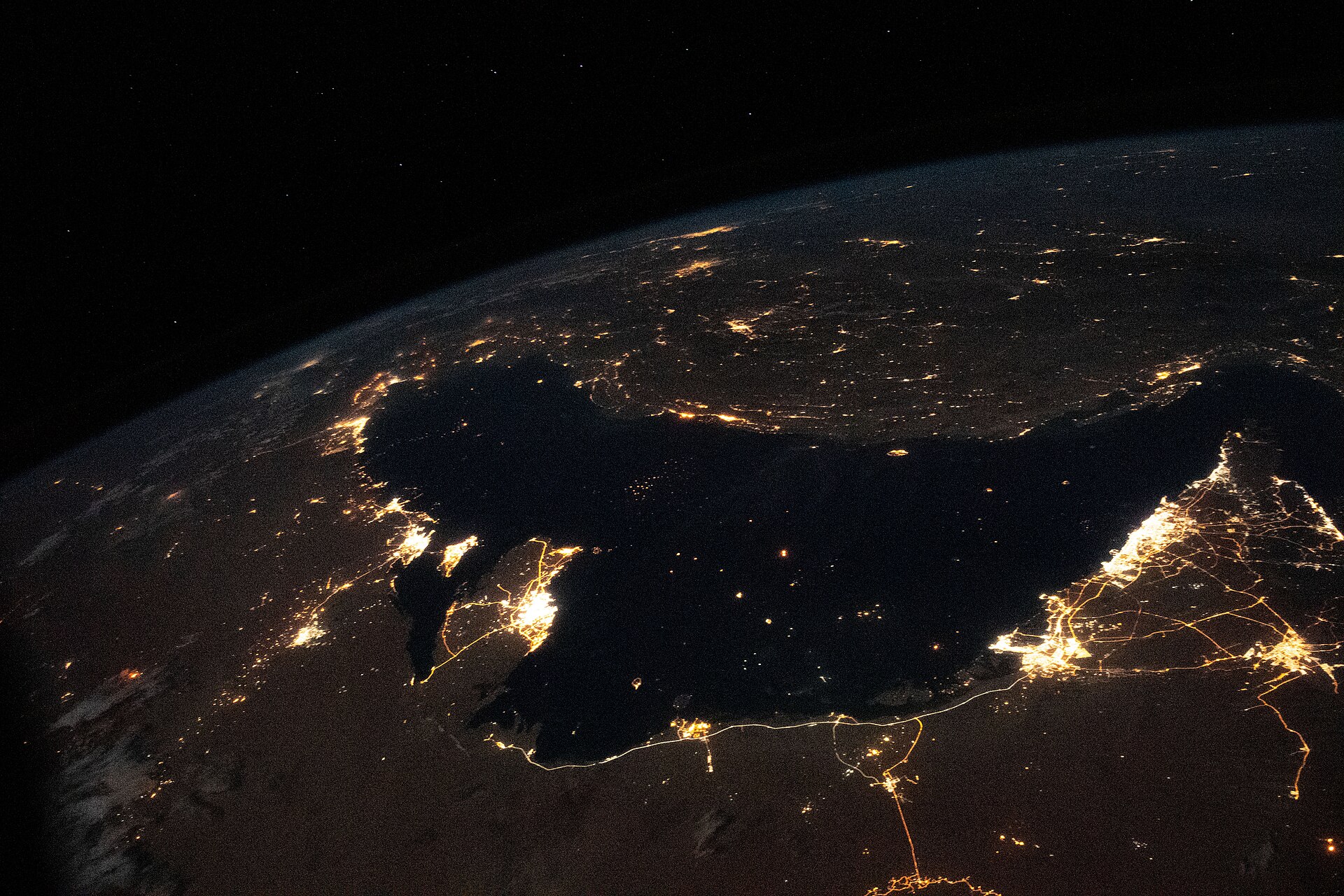
Saudi Arabia routes the majority of its crude exports through the Strait of Hormuz. It hosts US military bases that Iran’s ten-point plan demands be vacated. It funded the air defense infrastructure, the petrochemical complexes, and the desalination plants that have been struck repeatedly since February 28. Its fiscal break-even oil price — $108-111 per barrel on a Bloomberg PIF-inclusive basis — is hostage to whatever Hormuz arrangement emerges from any deal. And it has no representative at the Islamabad table.
This is not an oversight. It is a structural feature of the negotiating architecture. The Islamabad Process is a bilateral US-Iran track mediated by Pakistan, with Egypt and Turkey in supporting roles. Gulf Arab states are absent by design — Iran rejected their inclusion, the US did not insist, and Saudi Arabia made no public demand for a seat. Gustavo Aristegui of Atalayar argued on April 13 that the GCC must demand inclusion as “parties — not observers” in future negotiations, but no such demand has materialized.
A structural comparison of what Saudi Arabia lost when the JCPOA was signed without it in 2015 — and how its position has degraded across every measurable dimension since — is documented in the JCPOA Gulf exclusion pattern and the $20 billion deal.
The consequence is that Riyadh must accept whatever nuclear architecture two adversaries construct in a process Riyadh cannot shape. If the US accepts a five-year moratorium, Saudi Arabia inherits a neighbor with a reconstitution-ready nuclear program and a ticking clock. If the US holds firm on twenty years and Iran walks away, Saudi Arabia inherits an unconstrained nuclear program and an expired ceasefire. In neither scenario does Saudi Arabia’s security calculus improve on its current position — and in neither scenario was Saudi Arabia consulted. Pakistan’s April 16 breakthrough in Tehran — a nuclear deal Saudi Arabia financed but cannot veto — is precisely this scenario arriving on schedule: the HEU problem resolved, Hormuz and reparations deferred, and Riyadh informed rather than consulted.
Riyadh’s response has been characteristically indirect. Rather than demanding a seat at a table it was not offered, Riyadh has pursued a parallel track: a nuclear cooperation agreement with the United States that preserves Saudi enrichment optionality. This is hedging — and the hedge reveals exactly how much confidence Riyadh places in the Islamabad Process to produce a durable outcome.
The 123 Agreement Paradox: Demanding Disarmament While Offering Enrichment
The Trump administration submitted a draft Section 123 nuclear cooperation agreement to Congress in late February 2026. The agreement does not expressly prohibit Saudi uranium enrichment. It does not require Saudi Arabia to sign the IAEA Additional Protocol. US Energy Secretary Chris Wright confirmed publicly that “there will definitely be a 123 agreement” with Saudi Arabia, with formal proliferation safeguards — though what those safeguards exclude is more notable than what they include.
The United States is simultaneously demanding that Iran cease all enrichment for twenty years and offering Saudi Arabia — Iran’s principal regional adversary — a nuclear cooperation framework that leaves enrichment rights on the table. From Tehran’s perspective, this is not hypocrisy to be debated; it is proof that the twenty-year demand is not about nonproliferation but about strategic advantage. Iran’s negotiators at Islamabad would have been aware of the 123 agreement’s terms, and those terms would have confirmed every hardliner’s argument that American nonproliferation demands are selectively applied.
Kelsey Davenport of the Arms Control Association warned that “the devil is in the details” regarding the 123 agreement’s proliferation implications. The details are already visible. The agreement’s structure permits — without explicitly authorizing — Saudi enrichment. This matters because of what it triggers downstream.
Congressional opposition exists but lacks blocking power. Senator Markey and Congressman Brad Sherman introduced the “No Nuclear Weapons for Saudi Arabia Act of 2026,” requiring affirmative congressional approval before the 123 agreement takes effect. The legislation reflects genuine concern but faces arithmetic: it would need sixty Senate votes to override an executive-branch agreement already submitted under the Atomic Energy Act’s review framework. The 123 agreement is, for practical purposes, on track — and its implications for the Islamabad Process are being ignored by every party except Iran.
The UAE Clause and the Regional Proliferation Cascade
The United Arab Emirates’ 2009 Section 123 agreement with the United States is held up as the “gold standard” for nuclear cooperation because Abu Dhabi explicitly renounced enrichment and reprocessing. The UAE accepted this constraint for a specific reason and with a specific safeguard: the agreement includes a clause stating that Abu Dhabi may seek enrichment rights “if any other countries in the region are granted that right.”
If Saudi Arabia’s 123 agreement enters force without an enrichment prohibition — as the current draft permits — the UAE clause activates. Abu Dhabi would have legal and contractual grounds to seek enrichment capability. This transforms a bilateral US-Saudi agreement into a regional proliferation trigger. The cascade does not stop at the UAE. Turkey, Egypt, and other regional powers with nuclear ambitions would face a new strategic environment in which two Gulf states possess enrichment rights and Iran possesses enrichment capability regardless of any Islamabad outcome.
This cascade risk is absent from public Islamabad Process discussions. It is absent from Vance’s post-talks statements. It is absent from Araghchi’s characterization of the gap. But it is the structural consequence of pursuing bilateral nonproliferation demands against Iran while extending enrichment-permissive frameworks to Iran’s neighbors. The Islamabad Process cannot produce a durable nonproliferation outcome if the parties outside the room are acquiring the very capability the parties inside the room are negotiating to restrict.
Kaitlyn Hashem of the Stimson Center captured the dynamic precisely: “Saudi Arabia’s evolving nuclear calculus reflects not only Iran’s program but also eroding U.S. security guarantees.” The 123 agreement is Riyadh’s insurance policy against an Islamabad failure — but the existence of the insurance policy makes Islamabad failure more likely by confirming Tehran’s argument that nonproliferation demands are strategically motivated.
Pakistan’s Dual Role: Mediator at the Table, Deterrent Outside It
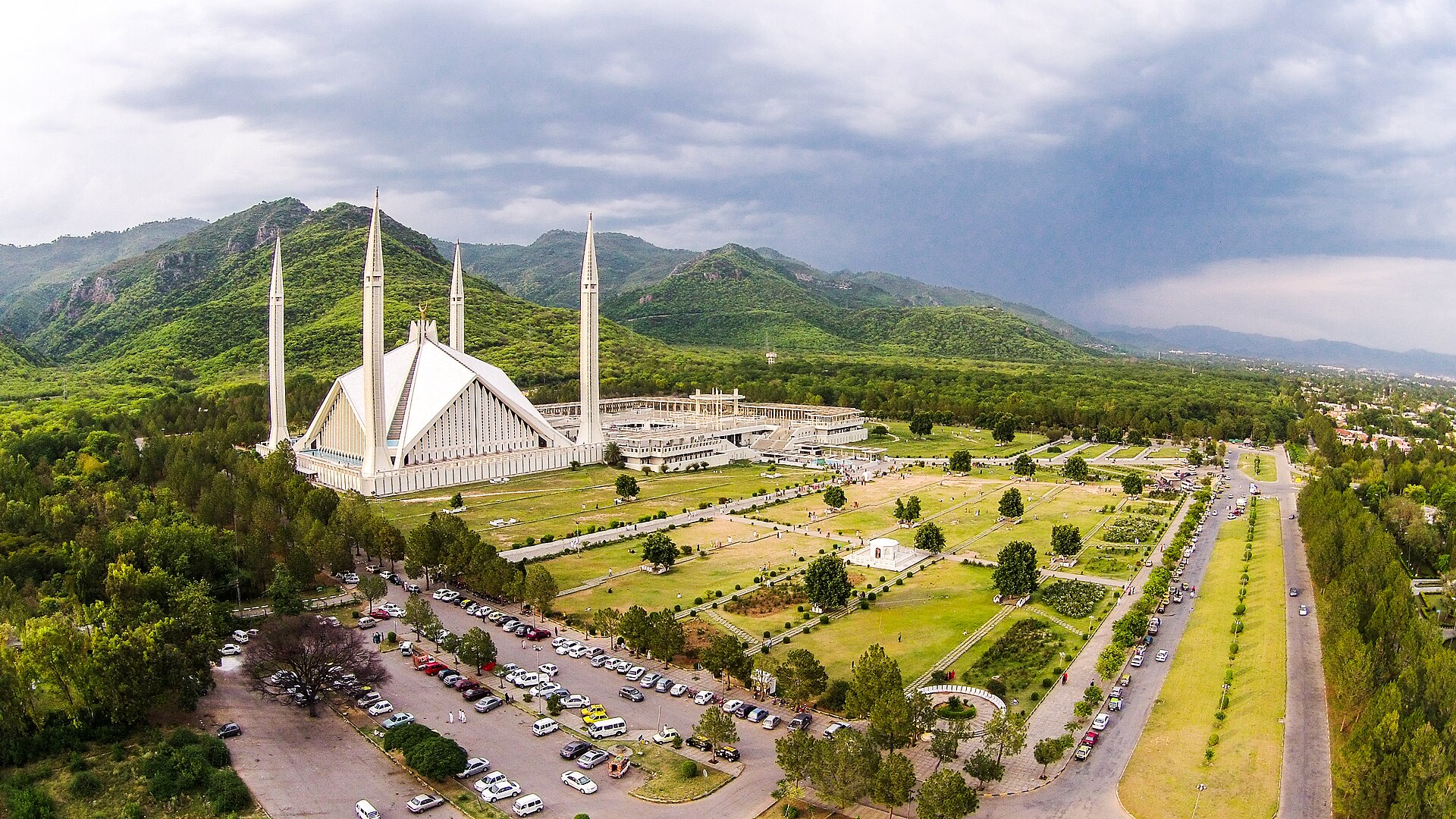
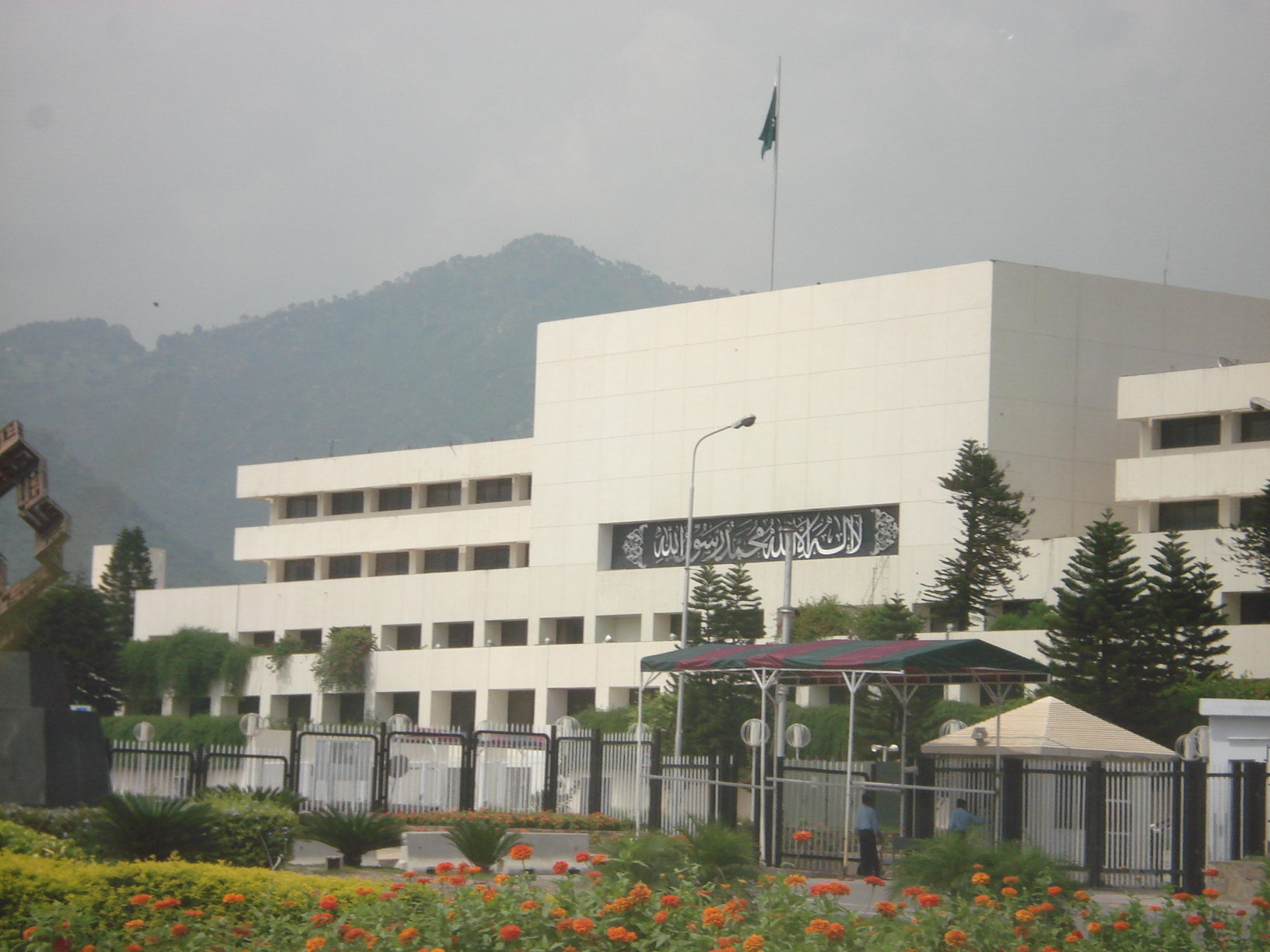
Pakistan hosts the Islamabad talks, provides the venue and the diplomatic cover, and serves as the primary mediator between Washington and Tehran. Pakistan also maintains the September 2025 Strategic Mutual Defence Agreement with Saudi Arabia — an arrangement that, according to analysis by the Stimson Center and PBS NewsHour, includes assertions that Pakistan’s nuclear program “will be made available” if Saudi Arabia faces existential threats.
These two roles are not in tension — they are in direct conflict. Pakistan is mediating a negotiation whose failure would activate Pakistan’s own deterrence commitment to one of the parties affected by that failure. If Islamabad produces a deal that leaves Iran with reconstitution capability, Saudi Arabia’s nuclear hedging intensifies, and the SMDA becomes more operationally relevant. If Islamabad fails entirely, the same logic applies with greater urgency. Pakistan’s incentive to produce a deal is genuine, but its structural position guarantees that it cannot be a neutral broker — and every party at the table knows it.
The SMDA operates entirely outside the Islamabad Process. It is not on the agenda. It is not subject to the verification frameworks being discussed. It represents a de facto nuclear deterrence extension to Saudi Arabia that exists independent of whatever enrichment moratorium duration the US and Iran might eventually agree on. For Iran, the SMDA is proof that the nuclear threat from the Gulf is not limited to enrichment programs — it includes extended deterrence arrangements that no bilateral US-Iran agreement can constrain.
Mohammed bin Salman’s 2018 statement remains the clearest articulation of Saudi nuclear policy: “Saudi Arabia does not want to acquire any nuclear bomb, but if Iran developed a nuclear bomb, we will follow suit as soon as possible.” The SMDA is the operational mechanism by which “as soon as possible” could mean weeks rather than years. It is the most consequential nuclear arrangement in the Middle East that is not being discussed in the Middle East’s most consequential nuclear negotiation.
What Is the Market Actually Pricing?
Brent crude dropped 13.3 percent in the days surrounding the initial ceasefire, and Polymarket gave 64 percent odds of normal Hormuz transit by May 31. These prices reflect an assumption that the Islamabad Process is producing convergence — that Round 1 established positions, Round 2 will narrow them, and a framework will emerge before the April 22 ceasefire expiration.
The assumption is wrong on every count. Round 1 did not establish a negotiating range; it revealed that the two sides are operating on different axes. The US is pricing security — how long until Iran can reconstitute — and Iran is pricing sovereignty — how long until sanctions end permanently. A fifteen-year gap on the same axis would be a negotiable distance. A gap between two different variables is not a range; it is an incompatibility that shuttle diplomacy cannot split.
The Hormuz throughput data tells the physical story: 15-20 ships per 24 hours versus the pre-war rate of 138 per day. Over 800 vessels remain trapped. The ceasefire has reduced kinetic risk but has not reopened the strait in any commercially meaningful sense. Markets pricing “Round 2 = progress” are pricing hope against a technical reality in which the two sides have not agreed on what they are negotiating, let alone where to compromise.
The April 22 ceasefire expiration introduces a hard deadline with no confirmed extension mechanism. Round 2 of the Islamabad talks has been described as possible “as early as this week” but with no structural changes to either side’s position. If the ceasefire expires without an enrichment framework — the most probable outcome given the axis incompatibility — markets will reprice simultaneously on Hormuz risk, nuclear risk, and the realization that diplomatic optimism was substituting for diplomatic progress.
Can Round Two Close the Gap?
For Round 2 to produce meaningful convergence, at least one of four structural conditions would need to change. None shows signs of changing.
First, Iran would need to accept that enrichment duration is the primary variable — abandoning its position that enrichment rights recognition must precede any temporal framework. Araghchi’s UN Conference on Disarmament speech in February — “this right is inherent, non-negotiable, and legally binding…not conditional upon political considerations” — is not the language of a negotiator preparing to make enrichment conditional on a timeline.
Second, the United States would need to accept that a five-to-seven-year moratorium, combined with down-blending of the 60% stockpile and intrusive verification, constitutes an adequate security guarantee. The IR-6 arithmetic makes this impossible to defend: even with down-blending, Iran’s installed centrifuge capacity means breakout timelines after any moratorium under ten years would be measured in months, not the year-plus Washington requires.
Third, Vahidi or his proxy would need to be in the room — or Khamenei would need to resurface and explicitly authorize the Araghchi-Ghalibaf track. Kayhan editor Hossein Shariatmadari publicly attacked the Islamabad delegation for participating at all, calling for “war until victory,” according to the Soufan Center’s April 10 IntelBrief on the talks. The IRGC faction that controls Iran’s nuclear-adjacent military infrastructure views the talks as a threat, not an opportunity.
Fourth, Saudi Arabia would need to be brought into the process — either as a direct participant or through a parallel track that gives Riyadh input into the enrichment architecture. Without Saudi buy-in, any deal that leaves Iran with reconstitution capability will accelerate, not constrain, regional proliferation. The April 18 Hajj cordon raises the kinetic threshold for military action, but it does not create diplomatic space for inclusion of parties that have been structurally excluded.
Russia’s reported offer to take custody of Iran’s enriched uranium — a potential face-saving mechanism that would address the feedstock problem without requiring Iran to formally renounce enrichment — represents the only creative structural proposal that has surfaced. The offer is sourced to a single outlet (WARYATV, April 13) and has not been confirmed by Moscow or Tehran. It requires Iranian trust in Russian custodianship, which the war has not enhanced, and American trust in Russian compliance, which does not exist.
The gap between twenty years and five years is not a gap that splits. It is the visible surface of an incompatibility that runs through every layer of the negotiation: what enrichment means, who can authorize constraints on it, who bears the consequences of those constraints, and who is absent from the room where the consequences are decided. Round 2 will likely occur. It will not likely close.
Frequently Asked Questions
Why did the US soften from demanding permanent dismantlement to a 20-year moratorium?
The shift reflected domestic political calculation rather than nonproliferation logic. The Trump administration’s original maximum-pressure position — complete dismantlement of Natanz, Fordow, and Isfahan plus third-country stockpile transfer — was a demand designed to be rejected, providing justification for continued military pressure. The twenty-year moratorium emerged once the Islamabad Process created diplomatic momentum that made outright rejection of talks politically costly. Congressional pressure from both parties to show “progress” before the April 22 ceasefire expiration further incentivized what could be presented as flexibility. The softening created headlines but did not move the structural math: Iran still views any moratorium as a concession on a right it considers non-negotiable.
Could Iran build a nuclear weapon during a five-year moratorium?
A moratorium with adequate verification would prevent overt enrichment to weapons-grade during the suspension period. The risk is not what happens during the five years but what happens on Day One after expiration. With 440.9 kg of 60% enriched uranium retained — even if down-blended and then re-enriched — and IR-6 cascades preserved, post-moratorium breakout time would be measured in weeks. The JCPOA purchased twelve months of breakout time with IR-1 centrifuges; the same limits applied to IR-6 machines yield four to five months. A five-year moratorium that preserves Iran’s centrifuge infrastructure is a pause button, not a delete key — and the pause ends with Iran closer to weapons capability than when the JCPOA was signed in 2015.
What leverage does Saudi Arabia have if it is excluded from the talks?
Saudi Arabia’s primary leverage is economic rather than diplomatic. The kingdom holds significant spare production capacity and has demonstrated willingness to use oil pricing as a strategic tool — the May OSP restraint at +$19.50/barrel rather than the $40 Bloomberg expected showed pricing discipline designed to maintain Asian buyer loyalty. Riyadh’s secondary leverage is the 123 agreement itself: by pursuing enrichment-permissive nuclear cooperation with Washington, Saudi Arabia creates a proliferation pressure that makes any Iran-only enrichment restriction inherently unstable. The SMDA with Pakistan provides a third layer — a deterrence arrangement that operates regardless of the Islamabad outcome.
What happens if the ceasefire expires on April 22 without an enrichment deal?
Ceasefire expiration without a nuclear framework would trigger three simultaneous repricing events. Hormuz transit, currently at 15-20 ships per day versus the pre-war 138, would face renewed IRGC interdiction risk — particularly given the IRGC Navy’s April 5 and April 10 declarations of “full authority to manage the Strait.” Oil markets would reprice the loss of diplomatic cover that has held Brent below $95; Goldman Sachs deficit estimates of $80-90 billion for Saudi Arabia’s fiscal position would become operative. The nuclear track would decouple entirely from the military track, with the US blockade — effective April 13 — becoming the primary coercive instrument rather than a complement to diplomacy.
Has Iran ever accepted enrichment restrictions of this magnitude before?
Under the 2015 JCPOA, Iran reduced its enriched uranium stockpile by 97 percent — from approximately 10,000 kilograms to 300 kilograms — capped enrichment at 3.67 percent, cut installed centrifuges from 19,000 to 5,060 enriching, and accepted the most intrusive IAEA verification regime ever imposed on any state. That agreement lasted three years before the US withdrew in May 2018. Iran began exceeding limits in May 2019, crossed the 300 kg stockpile cap on July 1, 2019, and reached 60 percent enrichment by 2021. Tehran’s institutional memory of having made — and been punished for — historic concessions is the single largest obstacle to any new enrichment restriction, regardless of duration.