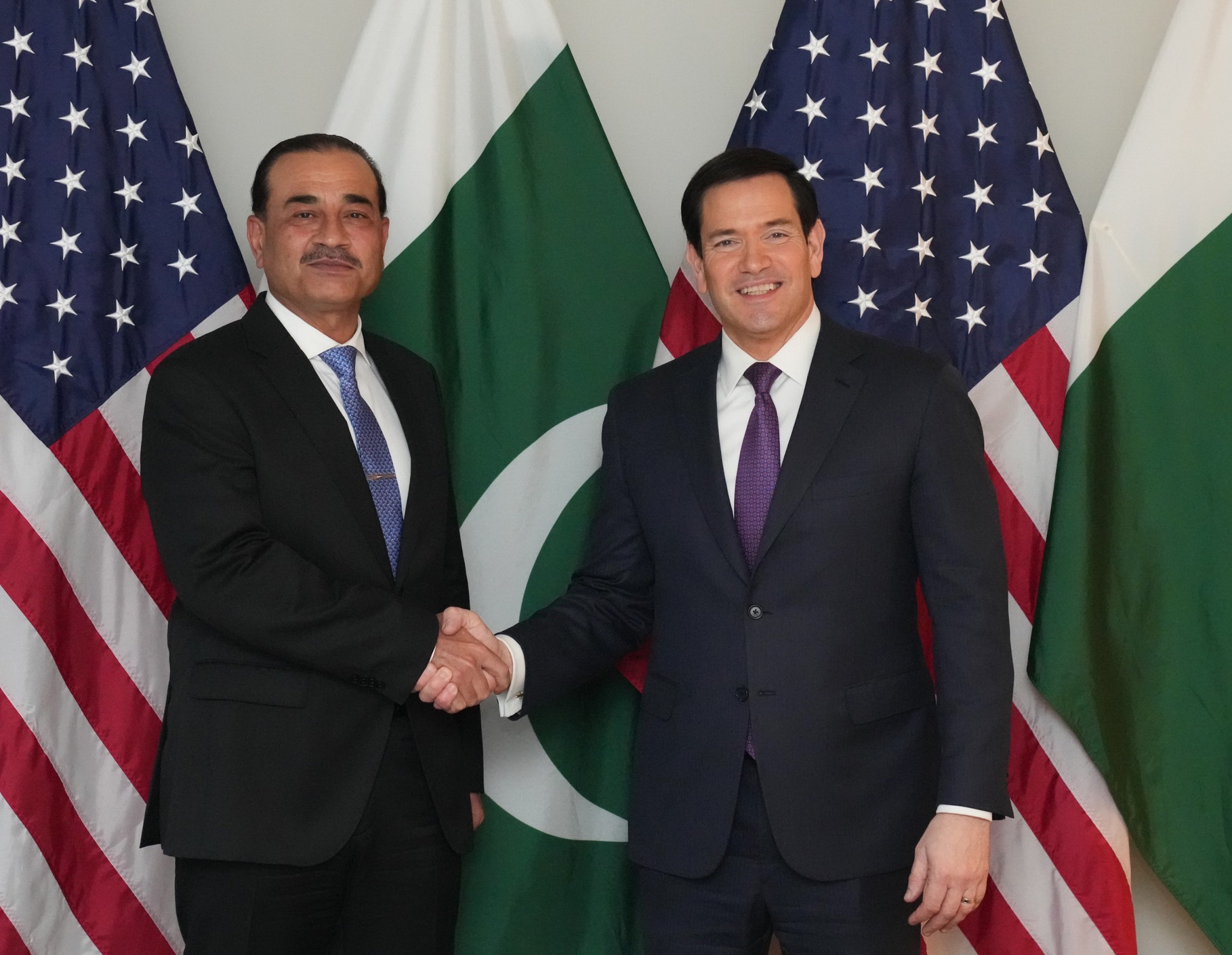

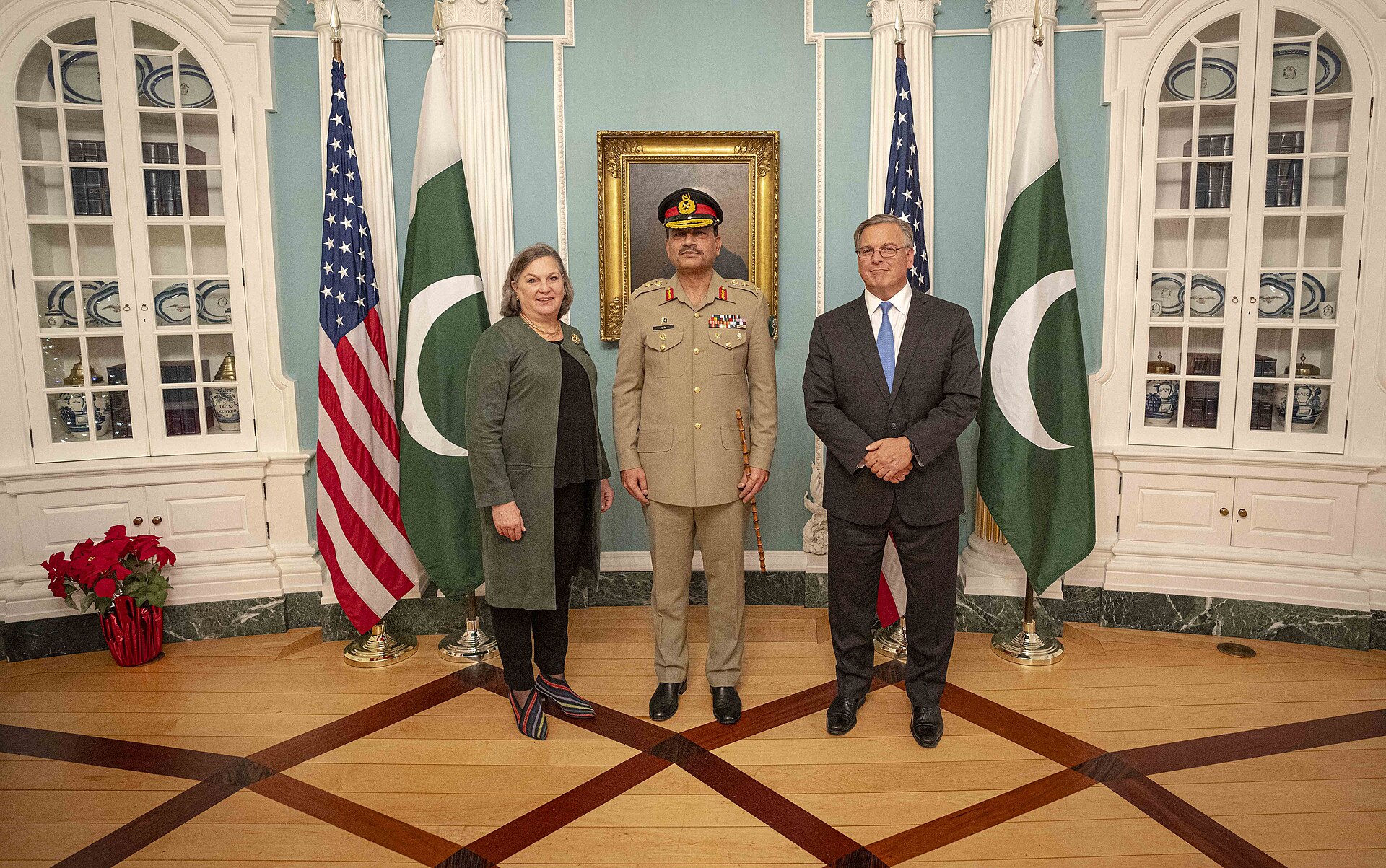
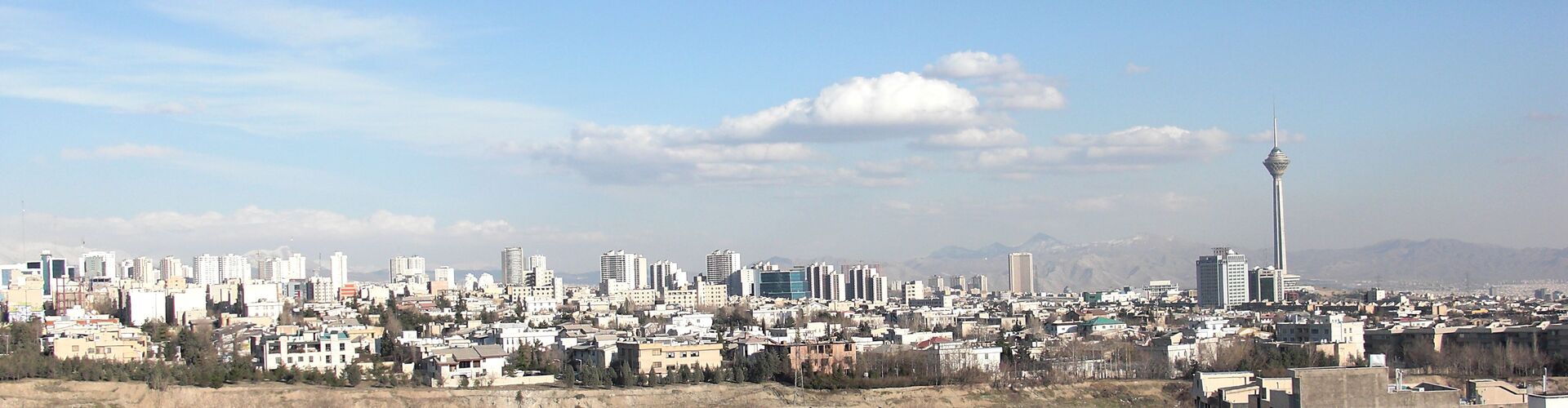
TEHRAN — Pakistan’s Field Marshal Asim Munir landed in Tehran on April 15, 2026, carrying what Al Jazeera described as “a new message from the US” and heading a delegation that included Interior Minister Mohsin Naqvi, Foreign Ministry officials, and technical experts — the first visit by a Pakistani military chief to Iran since the war began forty-seven days ago. The visit is an attempt to break the authorization ceiling that has killed every previous ceasefire effort: the chain running from Ahmad Vahidi through the Supreme National Security Council to a supreme leader who has been unconscious in Qom for more than six weeks. What makes Munir’s presence in Tehran structurally different from every diplomat who preceded him is that thousands of his troops are simultaneously deployed in Saudi Arabia’s Eastern Province under a mutual defense treaty he personally signed seven months ago.
Table of Contents
The Man With Two Mandates
Pakistan has served as Iran’s protecting power in the United States since March 1992, when Algeria withdrew the role after Iranian support for Algeria’s Islamic Salvation Front. For thirty-four years, Iran’s Interests Section has operated inside the Pakistani Embassy in Washington — a diplomatic arrangement so old that it predates the Taliban, predates the Iraq War, predates September 11. Switzerland performs the mirror function, representing American interests in Tehran. The arrangement is not ceremonial. When the United States needs to communicate something to Iran through a channel that is neither a back channel nor an open one, the message passes through Islamabad.
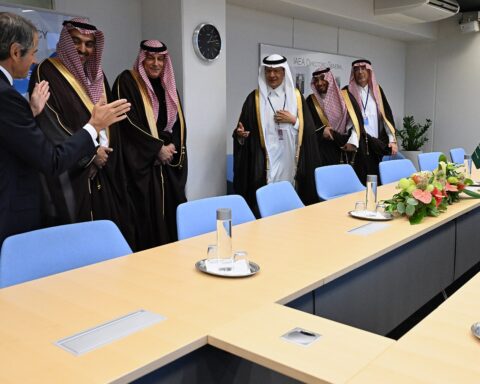
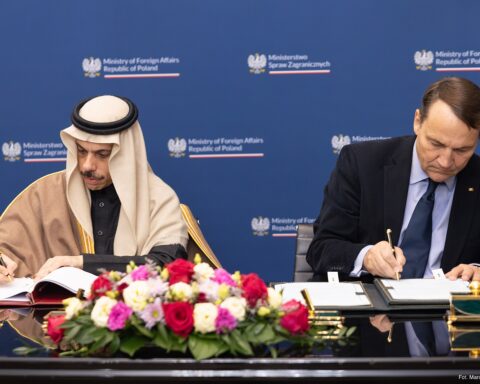
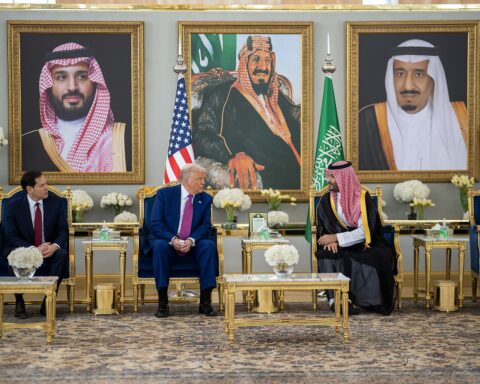
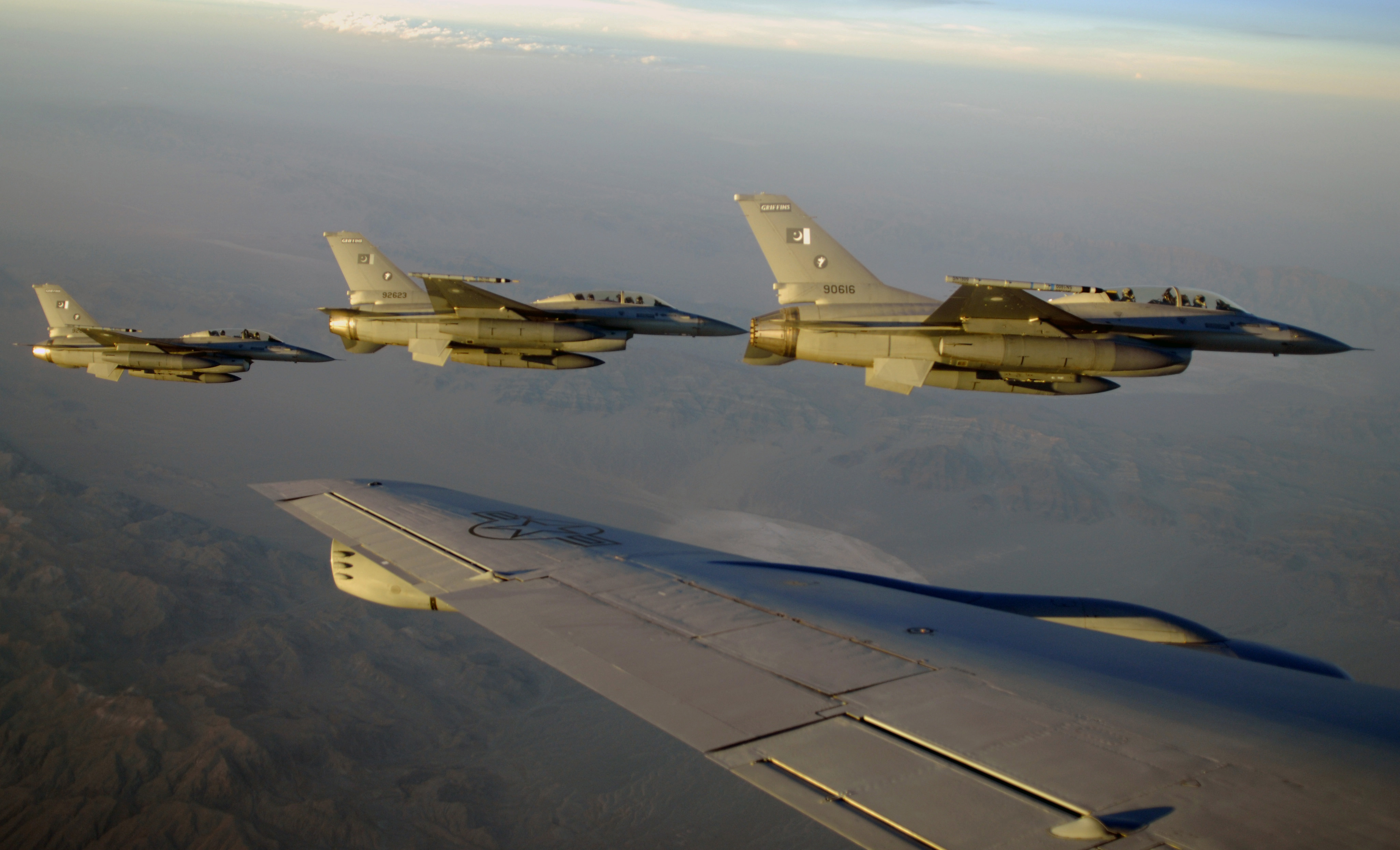
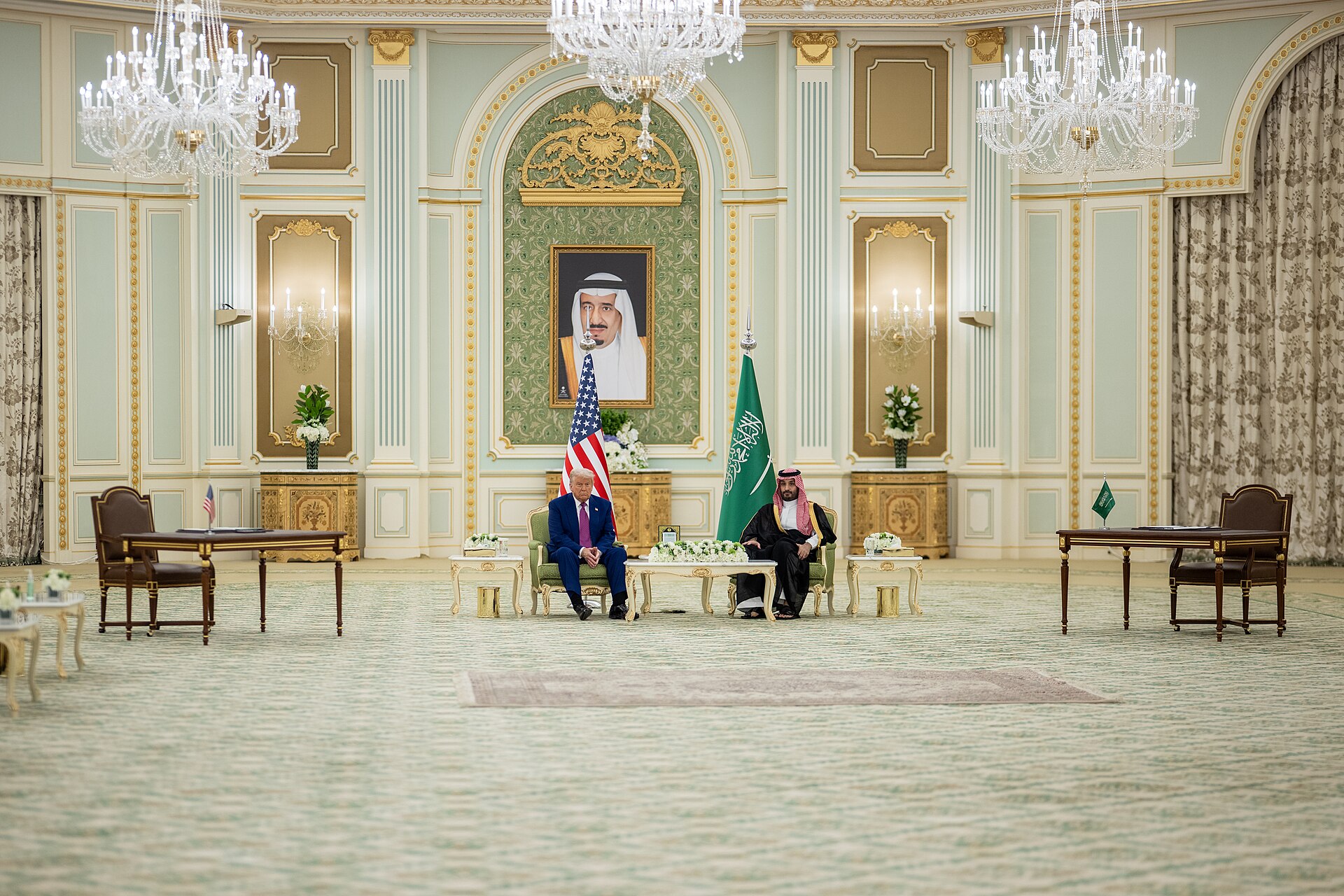
On September 17, 2025, Munir stood at Al-Yamamah Palace alongside Crown Prince Mohammed bin Salman and Pakistani Prime Minister Shehbaz Sharif to sign the Strategic Mutual Defense Agreement — a treaty committing each party to treat an attack on the other as an attack on itself. Seven months later, he activated that commitment. On April 11, 2026, Saudi Arabia’s Ministry of Defense announced via the Saudi Press Agency that approximately 13,000 Pakistani ground troops and at least ten fighter jets had deployed to King Abdulaziz Air Base in the Eastern Province, the region most exposed to Iranian ballistic missile strikes.
Four days after his troops arrived in Saudi Arabia, Munir himself arrived in Tehran. Iranian Foreign Minister Abbas Araghchi received the delegation and, in a post on X, “expressed gratitude for Pakistan’s gracious hosting of dialogue, emphasizing that it reflects our deep and great bilateral relationship.” The language was warm, collegial, and made no mention of the 13,000 soldiers.
Why Has Every Ceasefire Effort Failed?
The Iran war’s ceasefire problem is not about terms. It is about who in Tehran has the authority to accept them. The authorization chain runs through three nodes, and all three are blocked. Ahmad Vahidi — the IRGC Commander-in-Chief appointed March 1, 2026, and the subject of an Interpol red notice for the 1994 Buenos Aires bombing that killed 85 people — holds effective operational control of Iran’s war apparatus. Mohammad Bagher Zolghadr, the SNSC Secretary installed by Vahidi and himself under US sanctions, controls the formal advisory body that ratifies security decisions. At the apex sits Mojtaba Khamenei, appointed Supreme Leader on March 9 after a US-Israeli strike killed his father Ali Khamenei on February 28. According to a US-Israeli intelligence memo shared with Gulf allies and reported by the Times of Israel on April 7, Mojtaba remains unconscious in Qom and “unable to be involved in any decision-making.”
The result is a command structure that can wage war but cannot stop it. President Masoud Pezeshkian publicly accused Vahidi and Abdollahi of wrecking ceasefire efforts and warned that Iran’s economy would “collapse in 3-4 weeks” — a statement reported by The National in March 2026 that was either a desperate bid for public leverage or an admission that the civilian government has already lost the internal argument. Under Article 110 of Iran’s constitution, the president has zero authority over the IRGC. Pezeshkian can plead. He cannot order.
The Middle East briefing 3,000+ readers start their day with.
One email. Every weekday morning. Free.
The Vance-Ghalibaf face-to-face meeting in Islamabad on April 11-12 — the first direct US-Iran talks since 1979 — demonstrated the ceiling in practice. Speaker Ghalibaf, himself a former IRGC Aerospace Force commander, led a 71-member delegation. Vahidi was not in the room. The talks collapsed when the authorization problem reasserted itself: Ghalibaf could discuss but could not commit, because the man who could commit was either unconscious in Qom or refusing to engage from IRGC headquarters. As Araghchi later told reporters, Iran was “inches away” from a memorandum of understanding before the US side walked out.
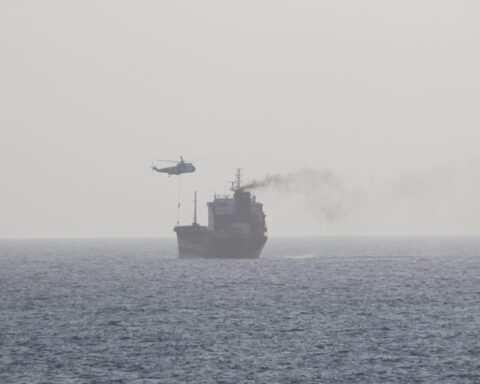
The IRGC Navy’s declaration of “full authority to manage the Strait” on April 5 and again on April 10 — issued while Araghchi was in Islamabad negotiating — captured the dysfunction in a single contradiction. The diplomatic arm offered talks while the military arm seized the chokepoint. IRGC Navy commander Rear Admiral Tangsiri was killed on March 30 and has no named successor, making the command simultaneously headless and operationally autonomous. Under Article 176, SNSC orders require the Supreme Leader’s ratification to override IRGC commanders. The Supreme Leader is unconscious.
Why a Military Chief May Succeed Where Diplomats Cannot
Every previous interlocutor Iran has faced in this war has been a civilian. US Special Envoy Steve Witkoff — a real estate executive. Araghchi’s counterparts at the Islamabad round — foreign ministry professionals. Even Vance, though he carried the weight of the vice presidency, arrived as a political figure. The IRGC’s institutional culture, documented across decades of scholarship on Iran’s dual-state structure, treats civilian diplomats as functionaries of a system it views as subordinate to the revolutionary military apparatus. Vahidi does not answer to Pezeshkian. There is no structural reason he would answer to Pezeshkian’s foreign minister, or to a foreign civilian emissary relaying Pezeshkian’s preferred terms.
Munir is a different category of visitor. He commands the sixth-largest military on earth. He has troops in the theater. He holds the rank of Field Marshal — promoted on May 20, 2025, following Operation Bunyan-um-Marsoos, the India-Pakistan conflict, making him only the second person in Pakistani history to hold the rank after Ayub Khan. His 27th Constitutional Amendment authorities give him unified command over all three services and operational control of the Strategic Plans Division, Pakistan’s nuclear command. He is, in IRGC terms, a military peer — perhaps the only one willing to fly to Tehran.
The IRGC’s institutional logic treats military rank as a form of credibility that diplomatic title cannot substitute. The threshold at which this negotiation operates is not a diplomatic formula. It is a military judgment about intent, capability, and the physical disposition of forces. Munir can speak that language because he controls the forces in question.
The three sticking points under active negotiation — Iran’s nuclear program, control of the Strait of Hormuz, and wartime damage compensation, as reported by Al Jazeera — are each problems that sit at the intersection of military and diplomatic authority. The nuclear program is guarded by the IRGC, not the foreign ministry. Hormuz is patrolled by the IRGC Navy. Damage compensation requires an accounting of military destruction. A civilian diplomat discussing these issues with the IRGC is, structurally, a customer asking to speak to the manager. Munir is the manager of a different store, but he is at least a manager.
The SMDA Contradiction
The Strategic Mutual Defense Agreement signed at Al-Yamamah Palace on September 17, 2025, contains an Article 5-style commitment: an attack on one party is an attack on both. Saudi Arabia has been under sustained Iranian attack since February 28 — the IRGC’s Abdollahi Three-Sea Doctrine has struck Aramco facilities, military bases, and civilian infrastructure across the Eastern Province. By the SMDA’s plain text, Pakistan is already in a state of triggered obligation. The 13,000 troops at King Abdulaziz Air Base are the partial fulfillment of that obligation.
Munir’s body in Tehran, then, is the physical expression of a structural impossibility. He is simultaneously the commander of forces deployed to defend Saudi Arabia against Iran and the carrier of a US message to the Iranian government. Azeema Cheema of Verso Consulting told Al Jazeera that the troop deployment represents “the price of the significant restraint shown by the Saudis,” and that Iran recognizes Pakistan’s preference for mediation over combat. The formulation is precise: Saudi restraint — not Saudi indifference — is what creates the space for Pakistan to play both sides. If Saudi Arabia demands activation of the SMDA’s offensive provisions, the dual role evaporates.
Umer Karim of the King Faisal Center for Research put the fragility more directly: “This strategy may work while US-Iran talks continue, but if hostilities restart, Pakistan may get fully involved in the conflict.” The word “may” does significant work in that sentence. The SMDA does not contain a “may.” It contains a “shall.”
Sina Azodi of George Washington University offered a different reading to Al Jazeera, suggesting the Saudi partnership targets Israel more than Iran, given Pakistan’s religious and ethnic ties to Iran. The argument has a surface logic — Pakistan’s Shia minority is substantial, its border with Iran is long, and its intelligence services have maintained working relationships with Iranian counterparts for decades. But it underestimates the SMDA’s structural weight. Treaties are not mood boards. The troops are not in Saudi Arabia to send a signal to Tel Aviv. They are there because Ras Tanura was struck on March 2 and the Eastern Province remains under active missile threat. The specific formation deployed — the 25th Mechanised Division, with T-80 UD tanks and M109A2 howitzers positioned at the Saudi-Yemen border — completed its movement on the same day Munir landed in Tehran; the simultaneity of that deployment and this visit is examined in detail here.
Who Pays for Pakistan’s Dual Role?
On the same day Munir landed in Tehran — April 15, 2026 — Bloomberg reported that Saudi Arabia committed a new $3 billion deposit to Pakistan’s State Bank during a bilateral meeting between Prime Minister Sharif and Crown Prince Mohammed bin Salman in Jeddah. Simultaneously, the existing $5 billion Saudi facility, previously subject to annual rollover, was extended to 2028, giving Pakistan two years of certainty on a debt that had required annual diplomatic renegotiation. ProPakistani and The National confirmed the terms. On April 17, the financial architecture was formalised further: Saudi Arabia extended the total package to $11 billion at the IMF Spring Meetings in Washington, converting the arrangement into a structural commitment through 2028.
The timing is not subtle. Pakistan’s external debt servicing calendar is relentless. A $3.5 billion repayment to the UAE comes due by the end of April 2026. The IMF’s Extended Fund Facility, secured in 2024, comes with conditionality that limits Pakistan’s fiscal flexibility. The $3 billion Saudi deposit arrives at the precise moment when Pakistan needs liquidity to avoid a cascading default — and at the precise moment when Munir’s Tehran mission requires the appearance of independence from Riyadh. The full transaction — including the April 17 formal signing ceremony at the IMF Spring Meetings while Munir was in Tehran, the IMF reserve floor Pakistan cannot meet without Saudi deposits, and the structural significance of converting from annual to multi-year terms — is documented in Saudi Arabia Rolled Over $3 Billion to Pakistan Five Days Before the Ceasefire Expires.
This is the financial architecture of Pakistan’s role as ceasefire enforcer: Saudi money underwrites the economic stability that allows Munir to project diplomatic autonomy, while the SMDA underwrites the military commitment that makes that autonomy structurally fictional. Tehran is not unaware of this. Iranian officials have maintained, through PressTV and IRNA, a public posture of welcoming Pakistani mediation. A Pakistani source told IRNA that Pakistan “is determined to continue mediation efforts despite failed negotiations over the weekend.” The warmth is tactical. Iran needs a channel to Washington, and Pakistan is the only one still standing after the Islamabad collapse.
Trump’s own framing reinforced Pakistan’s centrality. He praised Munir’s “great job” moderating talks and said negotiators would “likely return to Pakistan,” according to Al Jazeera’s live coverage on April 15. The praise is itself a form of leverage — public American endorsement makes Munir’s mediation harder for Iran to reject without appearing to reject the peace process entirely.
The Constitutional Architecture Behind Munir
Munir’s capacity to operate in both Riyadh and Tehran simultaneously is not merely a function of diplomatic agility. It is a function of constitutional design. Pakistan’s 27th Constitutional Amendment, passed by the National Assembly on November 12, 2025, created the post of Chief of Defence Forces and made Munir simultaneously CDF and Chief of Army Staff. The amendment gave him unified command over all three services — army, navy, air force — and operational control of the Strategic Plans Division, the body that manages Pakistan’s nuclear arsenal.
Article 243(9), inserted by the amendment, grants five-star officers lifelong immunity from arrest and all criminal and civil proceedings. As reported by Dawn, Geo News, and analyzed by Foreign Policy in November 2025, the provision means Munir cannot be legally constrained by Pakistan’s civilian judiciary. The practical effect is that Munir’s Tehran mission does not require parliamentary approval, judicial authorization, or even the prime minister’s operational consent. Sharif was in Jeddah collecting the $3 billion deposit while Munir was in Tehran delivering the American message. The division of labor is tidy. It is also constitutionally novel — the amendment is barely five months old, and its provisions have never been tested against a crisis of this magnitude.
The 27th Amendment makes Munir’s ceasefire diplomacy his operation, not the elected government’s. The distinction matters because Iran’s own authorization crisis is a mirror image: Pezeshkian, the elected president, cannot command the IRGC, and Munir, the military chief, does not need to be commanded by Sharif. The two men most likely to sit across from each other in any resumed negotiation — Munir and whoever Vahidi designates — are both operating outside their respective civilian chains of command. The symmetry is instructive. It may also be the only configuration that produces a result, precisely because it removes the civilians whose authority neither military establishment recognizes.
How Tehran Reads the Visit
PressTV’s coverage of Munir’s arrival was revealing in its omissions. The headline — “Araghchi thanks Pakistan for hosting Iran-US talks as he receives army chief Asim Munir” — framed the visit entirely through the lens of Iran-Pakistan bilateral warmth. No mention of the SMDA. No mention of the 13,000 troops. No mention of King Abdulaziz Air Base. A separate PressTV article published the same day declared Iran “not blockadable” and insisted that “all means of pressure will fail” — maintaining the defiant posture even as Munir sat with Araghchi discussing the terms of a framework the United States had drafted.
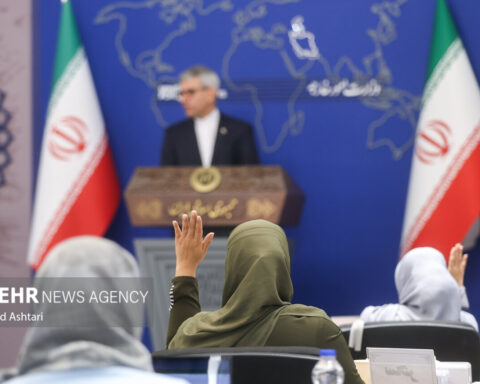
The bifurcation tracks with Iran’s split institutional voice. The foreign ministry, through spokesman Esmail Baghaei, confirmed the visit and said “our views have been conveyed and heard.” The language is procedural, bureaucratic, designed to signal engagement without commitment. The IRGC, through its own media ecosystem, continued to issue declarations of Hormuz sovereignty and military readiness. Neither arm contradicted the other. Both operated as though the other’s position was someone else’s problem.
For Tehran, the question is whether Munir’s military credentials carry enough weight to reach Vahidi’s decision-making layer. Araghchi can receive Munir. Araghchi cannot authorize a ceasefire. The US blockade imposed on April 13, applying to Iranian ports and toll-collecting vessels, adds pressure but does not change the authorization structure. The FDD estimates the blockade inflicts $435 million per day in economic damage. Iran holds 440.9 kilograms of HEU enriched to 60%, requiring only 564 separative work units to reach weapons-grade. The nuclear dimension gives Vahidi a card that no blockade can confiscate and no mediator can negotiate away without the Supreme Leader’s seal — a seal that currently has no hand to press it.
Whether Munir met or will meet Mojtaba Khamenei — or, more operationally, whether he met with IRGC leadership directly — remains unconfirmed. NewsX, an Indian outlet, was the only major publication to pose the question explicitly. The answer matters more than any other detail of the visit. If Munir spoke only with Araghchi, the trip is a diplomatic courtesy — substantive in atmospherics, empty in authorization. If he reached someone in the IRGC’s command structure, even informally, the visit becomes the first direct military-to-military contact between a Pakistani field marshal and the Iranian revolutionary command since the war began.
Seven Days to April 22
The ceasefire negotiated at Islamabad expires on April 22, 2026 — seven days after Munir’s landing in Tehran. There is no extension mechanism. The Soufan Center’s analysis of the Islamabad Accord noted the absence of any procedural framework for renewal, a gap that becomes a cliff on April 22. The Antalya Diplomacy Forum quad meeting on April 17 was designed to fill exactly that gap — but Iran’s own delegation at Antalya simultaneously rejected extension and threatened escalation, exposing the enforcement gap Munir’s Tehran visit was meant to close. The Hajj arrival window opens on April 18, and the Umrah cordon seals the same day. Indonesia’s 221,000 pilgrims begin departing on April 22 — the day the ceasefire expires. Pakistan’s 119,000 pilgrims arrive starting April 18. The convergence of Saudi Arabia’s sacred and strategic calendars compresses every timeline.
Munir’s delegation included not only Interior Minister Naqvi and Foreign Ministry representatives but also security officials and “technical experts,” per Al Jazeera’s description. The inclusion of technical experts suggests the delegation is prepared to discuss implementation details — verification mechanisms, withdrawal protocols, enforcement structures — not merely to relay a message and leave. The “new message from the US” that Munir carried reportedly outlines a framework for a second round of negotiations following the Islamabad collapse. If the framework addresses the three sticking points — nuclear program, Hormuz, damage compensation — it represents an attempt to package what the Vance-Ghalibaf round could not: a single document comprehensive enough that the IRGC’s authorization ceiling becomes a question of yes or no, not a question of which provisions to negotiate further.
The structural difficulty is that the three sticking points are not three separate problems. They are one problem expressed three ways. Iran’s nuclear program gives the IRGC its ultimate insurance policy against regime change. Hormuz gives the IRGC its revenue mechanism and its coercive leverage over Gulf states. Damage compensation requires an admission that the war caused damage — which, in the IRGC’s framing, means admitting that Iran was damaged more than it damaged others. Vahidi’s incentive structure runs in the opposite direction on all three points. The nuclear program is leverage. Hormuz is leverage. And the war, in the IRGC’s public narrative, was a defensive victory regardless of infrastructure losses.
The unnamed former Pakistani three-star general who spoke to Al Jazeera defined the threshold with a precision that read like a warning: Pakistan can hold both roles only if deployment remains “strictly defensive, time-bound, and transparently limited — the moment the theatre shifts to offensive operations or the perception of offensive coordination emerges, the dual role collapses. Iran’s perception, not Pakistan’s intent, will determine whether trust survives.” The word “perception” does as much work as “may” did in Karim’s assessment. Munir is in Tehran asking Iran to trust a man whose soldiers are positioned to fight Iran. The ask is not impossible. But it has a shelf life, and that shelf life expires in seven days. Munir returned from Tehran on April 16 with what Pakistani state media called a “major breakthrough” on Iran’s nuclear programme — a deal that solves Washington’s immediate HEU problem while deferring the three demands Saudi Arabia financed the mediation to secure. Whether any such breakthrough can survive Iran’s constitutional void is analyzed in depth in Trump’s nuclear dust claim versus Iran’s authorization ceiling: the IRGC’s rejection of the negotiating process and Khamenei’s 48-day silence make ratification structurally impossible under Article 110.
FAQ
What is Pakistan’s protecting power role and how does it function day-to-day?
As Iran’s protecting power since 1992, Pakistan’s Embassy in Washington houses Iran’s Interests Section — a small consular office staffed by Iranian diplomats operating under Pakistani diplomatic cover. The section handles routine consular matters for Iranian nationals in the US (visa processing, document authentication, emergency assistance) and serves as a low-level communications relay between Washington and Tehran outside of formal negotiation channels. Switzerland performs the reciprocal function, hosting the US Interests Section in Tehran. The arrangement survived the Trump maximum-pressure campaign, the Soleimani assassination, and every other crisis in the 34-year interim.
Has a Pakistani military chief ever visited Iran during an active conflict before?
No Pakistani Chief of Army Staff has visited Tehran during a conflict in which Pakistan was simultaneously treaty-bound to Iran’s adversary. General Raheel Sharif visited Tehran in November 2015 while commanding the Islamic Military Counter Terrorism Coalition — headquartered in Riyadh — but that coalition was directed at non-state actors, not at Iran. The SMDA’s Article 5-style commitment creates a categorically different structural context. Munir’s visit is the first in which a Pakistani military chief enters Tehran while his troops are deployed on the opposing side’s territory under a mutual defense obligation.
What happens if the April 22 ceasefire expires without renewal?
The Islamabad Accord contains no renewal clause, extension mechanism, or automatic rollover provision. Expiry returns both sides to the pre-ceasefire legal status — active hostilities without a framework. The CENTCOM naval blockade imposed April 13 would continue regardless, as it operates under US executive authority independent of the ceasefire. The Hajj calendar creates an additional constraint: with 119,000 Pakistani and 221,000 Indonesian pilgrims arriving between April 18 and April 22, any resumption of hostilities would place millions of foreign nationals inside Saudi Arabia’s most exposed regions during the Kingdom’s most sensitive religious obligation.
Could Munir’s visit trigger SMDA obligations against Pakistan’s own mediation?
The SMDA’s mutual defense clause is triggered by an attack, not by diplomatic engagement. Munir’s presence in Tehran does not, by the treaty’s text, conflict with Pakistan’s obligations to Saudi Arabia. The tension is perceptual, not legal. If Iran launched a strike on Saudi territory while Munir was in Tehran, the SMDA would obligate Pakistan to respond — potentially while its army chief was still on Iranian soil. The scenario is unlikely but not impossible, given the IRGC’s demonstrated pattern of launching strikes while diplomatic talks are active, including the East-West Pipeline attack on the nominal first day of the ceasefire on April 8.
What is the Field Marshal rank and why does it matter for Munir’s diplomatic authority?
Field Marshal is the highest rank in the Pakistan Army, held previously only by Ayub Khan, who received it in 1965 while serving as president. Munir was promoted on May 20, 2025, following Operation Bunyan-um-Marsoos. The rank carries symbolic weight — it signals that the holder has been elevated above the normal military hierarchy — but its practical significance lies in the 27th Constitutional Amendment’s provisions. The amendment tied the CDF post and its unified command authorities to the five-star rank, making Munir’s promotion the constitutional prerequisite for his current powers, including operational control of the Strategic Plans Division and lifetime judicial immunity under Article 243(9).
While Munir was in Tehran, Prime Minister Sharif was simultaneously in Jeddah collecting $3 billion in fresh Saudi financing — the same-day architecture that puts MBS outside both conversations, and which the 27th Amendment made structurally possible. When Sharif sat with MBS in Jeddah on April 16 while Munir was simultaneously in Tehran, the structural fragility of Saudi Arabia’s proxy diplomacy was visible in real time.