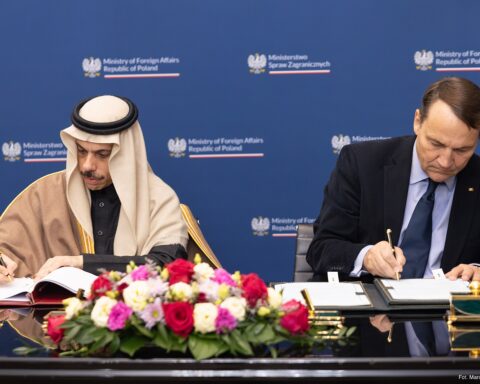
WASHINGTON — Pakistan and Saudi Arabia on Thursday signed a formal agreement extending a $3 billion Saudi Fund for Development deposit with the State Bank of Pakistan, converting what had been an annually renewed lifeline into a multi-year commitment through 2028. The signing — by SBP Governor Jameel Ahmed and SFD CEO Sultan bin Abdulrahman Al-Marshad, witnessed by Finance Minister Muhammad Aurangzeb — took place at the sidelines of the World Bank-IMF Spring Meetings in Washington, five days before the Iran ceasefire expires on April 22.
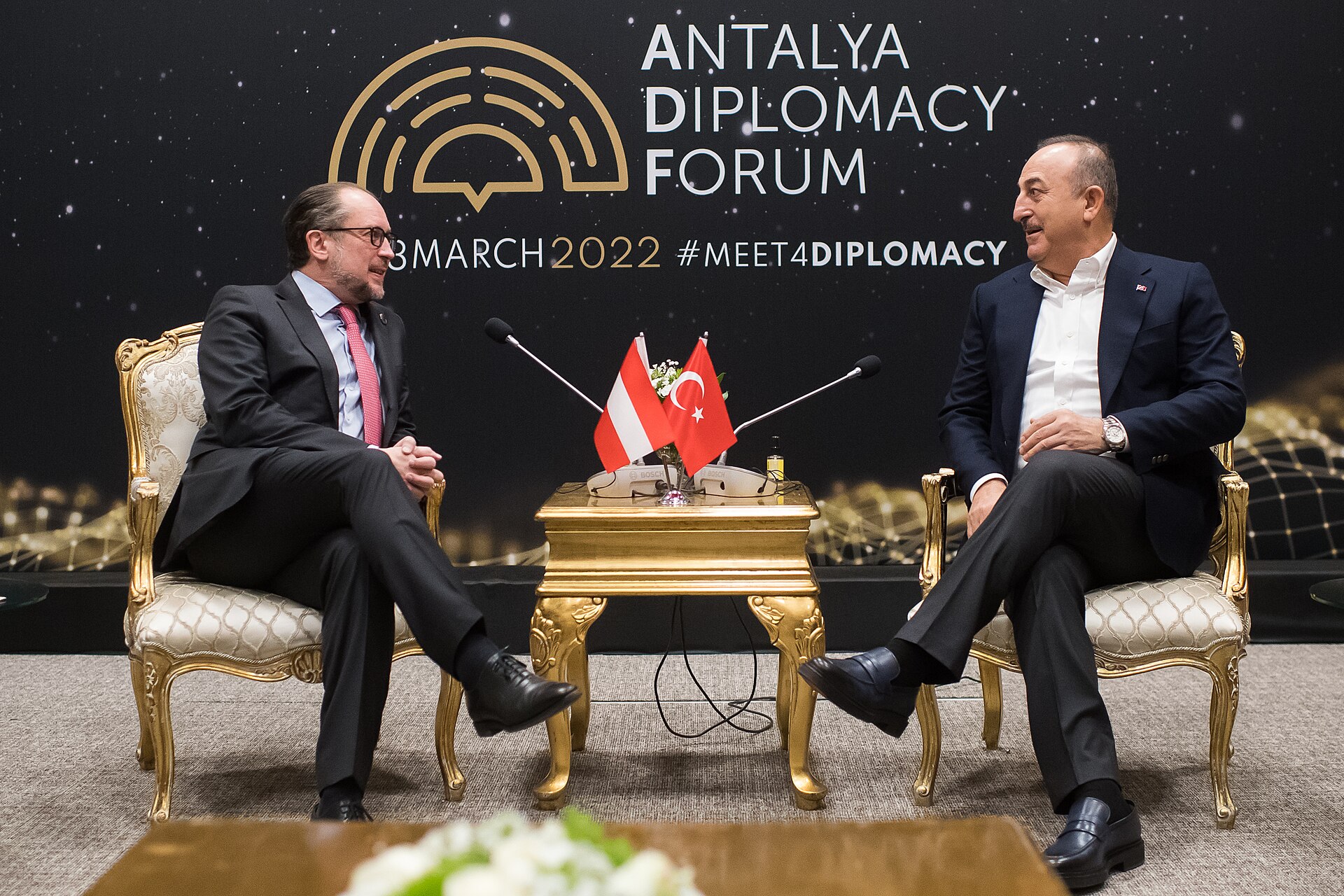
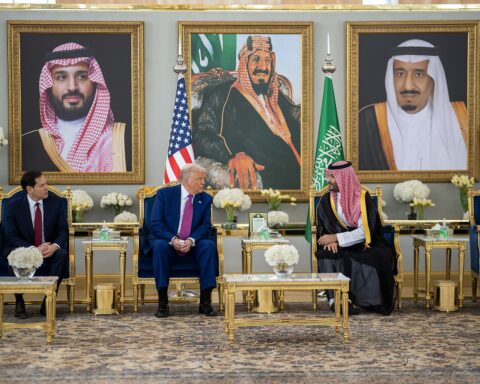
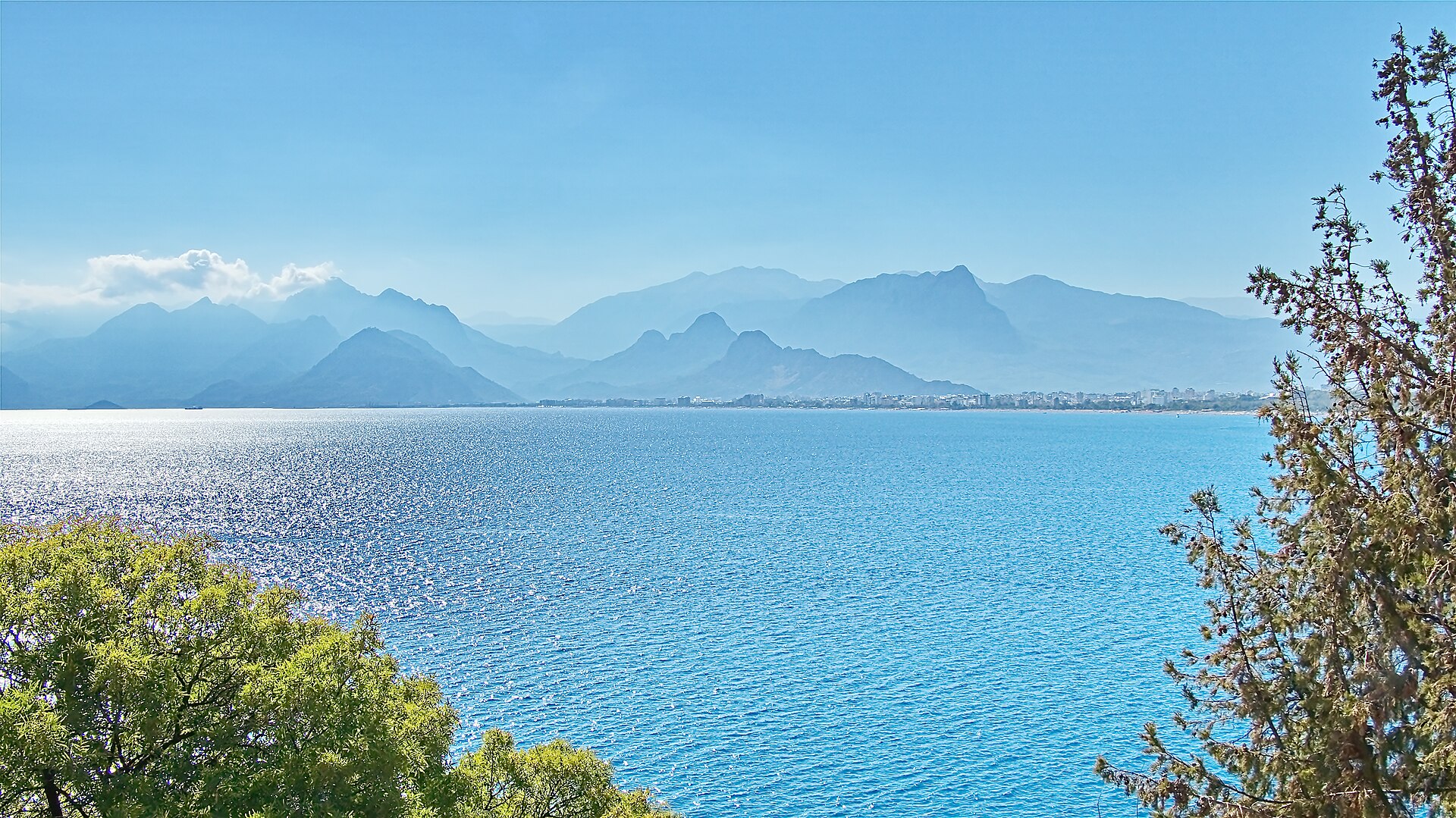
The same day, in Antalya, Pakistan’s Foreign Minister Ishaq Dar sat opposite Saudi FM Prince Faisal bin Farhan, Turkish FM Hakan Fidan, and Egyptian FM Badr Abdelatty in a quadrilateral meeting to discuss the ceasefire’s extension. The financial ceremony in Washington and the diplomatic session in Turkey ran in parallel — one formalising $11 billion in Saudi exposure to Pakistan’s balance sheet, the other deploying Pakistan as the ceasefire’s neutral broker. No major outlet connected the two events.
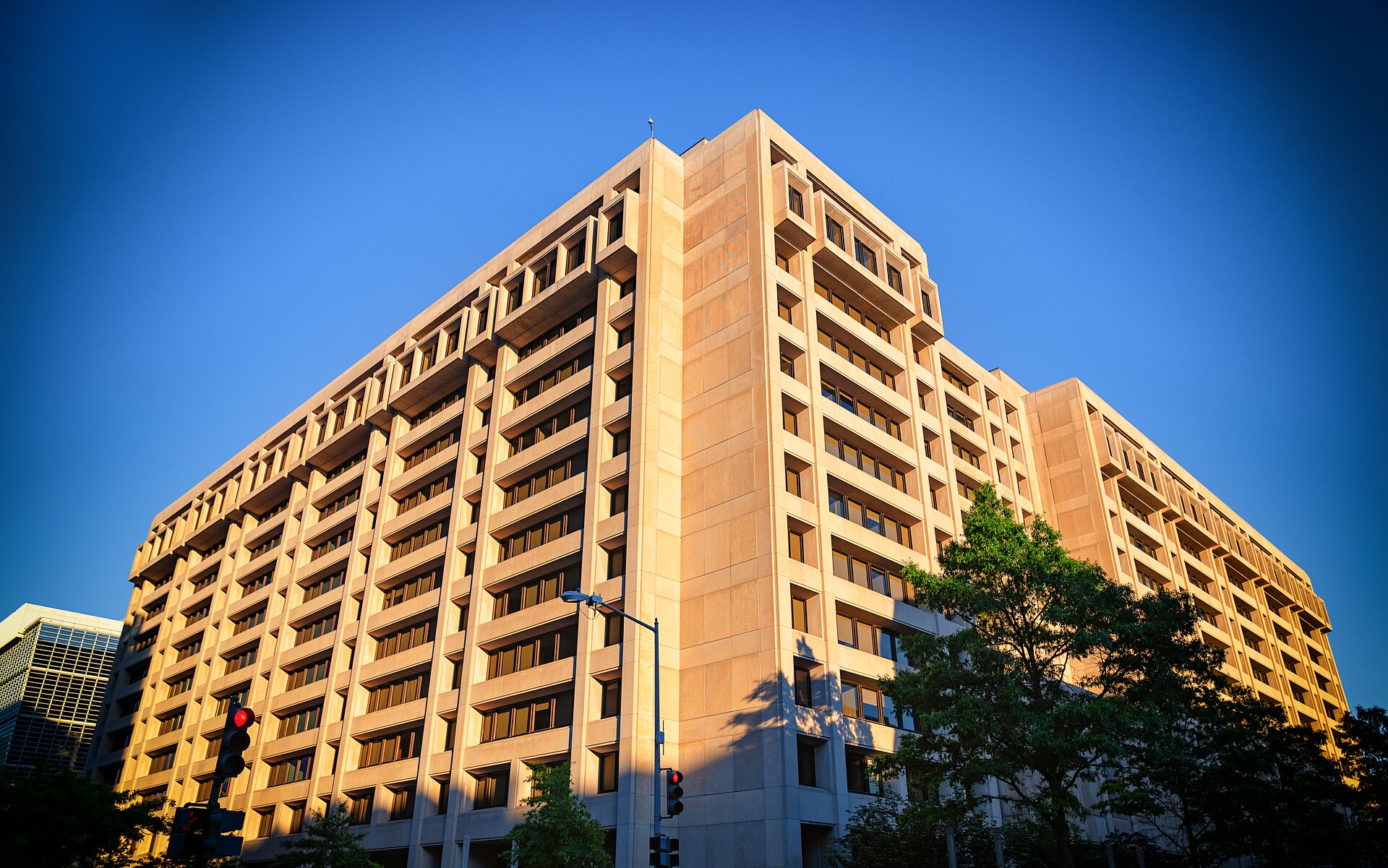
Table of Contents
The Deal: $11 Billion in Three Tranches
The total Saudi financial commitment to Pakistan now stands at $11 billion across three instruments. The first is the existing $3 billion SFD deposit, originally placed in 2021 and rolled over annually in 2022, 2023, 2024, and December 2025. Thursday’s agreement converts it from an annual renewal to a fixed multi-year term through 2028 — a structural upgrade that removes Saudi Arabia’s ability to withhold renewal as a discrete annual pressure point.
The second is a $5 billion facility, also fixed through 2028, with the annual rollover condition eliminated entirely. The third is a new $3 billion deposit, with disbursement expected “in the coming week,” according to the Express Tribune. The SBP had already received $2 billion of this tranche on April 15 — two days before the formal signing ceremony — according to a State Bank statement confirmed by Geo.tv and the Pakistan Observer.
The conversion from annual to multi-year terms is the element that separates this from routine rollovers. Between 2021 and 2025, Riyadh held the option to decline renewal each December. Extending through 2028 removes five potential veto points from the calendar — or, read differently, pre-pays for Pakistani cooperation through the end of the current ceasefire crisis and whatever follows it. A granular breakdown of how the April 17 signing was structured — including the UAE deposit exit that makes the Saudi dependency nearly total, the IMF reserve floor that Saudi deposits alone can satisfy, and the timeline of the $2 billion pre-signing wire — is available in Saudi Arabia Rolled Over $3 Billion to Pakistan Five Days Before the Ceasefire Expires.
Why Did the SBP Receive $2 Billion Before the Signing?
The $2 billion that arrived at the State Bank on April 15 preceded the formal agreement by 48 hours. The sequencing matters. Pakistan’s foreign reserves stood at approximately $16.4 billion in mid-April, against an IMF programme target of $18 billion by fiscal year-end. Simultaneously, Pakistan faced a $3.5 billion repayment obligation to the UAE that it was unable to service, according to Organiser on April 16.
The Middle East briefing 3,000+ readers start their day with.
One email. Every weekday morning. Free.
The Saudi injection stabilised reserves without requiring Pakistan to make the UAE payment — in effect, Riyadh bridged a gap that Abu Dhabi’s repayment demand had opened. The IMF’s current programme for Pakistan explicitly requires Saudi Arabia, China, and the UAE to maintain their financial exposure throughout the programme’s duration, making the Saudi commitment a condition of Pakistan’s macroeconomic stability rather than a gift.
That the money moved before the ceremony suggests the financial urgency could not wait for the diplomatic staging. Crown Prince Mohammed bin Salman met Prime Minister Shehbaz Sharif in Jeddah on April 16 — the day between the $2 billion transfer and the Washington signing — and, according to the Associated Press of Pakistan, “appreciated the constructive role of Prime Minister Shehbaz Sharif and Field Marshal Syed Asim Munir in the peace process.” The financial formalisation followed 24 hours later.
Aurangzeb Says the Quiet Part
Finance Minister Aurangzeb, speaking to media in Washington on April 16, described the package as “recognition of the country’s diplomatic role in facilitating dialogue in the Middle East,” according to Economy.pk. It was the first time a Pakistani official publicly linked the Saudi financial package to Pakistan’s ceasefire mediation role.
He added that Pakistan was receiving “unprecedented appreciation from the IMF, World Bank, institutional investors, and counterparts” specifically tied to its ceasefire facilitation, according to Pakistan Today. Aurangzeb was not describing a bailout. He was describing a fee.
The statement broke what had been an unspoken fiction: that Pakistan’s financial dependency on Saudi Arabia and its role as neutral ceasefire mediator between Iran, the United States, and Saudi Arabia itself existed in separate compartments. Aurangzeb merged them on the record, in Washington, at the IMF Spring Meetings, a day before his foreign minister sat across from the Saudi foreign minister in Antalya to discuss the war’s next phase.
At the same Washington meetings, Aurangzeb thanked China for its IMF programme support. Beijing maintains separate financial exposure to Pakistan through BRI debt management and CPEC-related obligations that predate the Iran war. China’s interest in Pakistani stability is structural; Saudi Arabia’s, announced on the same day as a ceasefire deadline, is transactional.
The Antalya Quadrilateral
On April 17, as the SBP-SFD signing took place in Washington, Foreign Minister Ishaq Dar joined the quadrilateral meeting at the Antalya Diplomacy Forum with Saudi Arabia’s Prince Faisal bin Farhan, Turkey’s Hakan Fidan, and Egypt’s Badr Abdelatty. A senior officials’ preparatory meeting had taken place in Islamabad on April 14, according to Pakistan’s Ministry of Foreign Affairs.
The quadrilateral is the diplomatic format through which the ceasefire’s extension — or collapse — will be negotiated before the April 22 expiry. Pakistan holds a particular position within it. Dar is not simply one of four foreign ministers. He represents the country that hosted the Islamabad Accord, that serves as Iran’s protecting power in the United States (a role Pakistan has held since 1992), and that — as of the morning’s Washington ceremony — carries $11 billion in Saudi financial obligations on its central bank’s books.
The Stimson Center’s Kaitlyn Hashem assessed on April 9 that “Pakistan’s initiative is undermined by its own political limitations vis-à-vis both Iran and the United States.” The April 17 financial signing added a third limitation that Hashem’s analysis predated: Pakistan’s initiative is also constrained by the country that holds $11 billion of its reserves.
Saudi Arabia is not a party to the ceasefire talks in the way the United States or Iran are. MBS has no envoy at the table. But through Pakistan’s balance sheet, Riyadh purchased what amounts to a 2028 option on the mediator’s alignment. Dar cannot advocate positions that damage Saudi interests while the $5 billion facility clock runs — not because anyone issued an instruction, but because the structural incentive makes defection irrational.
Can Pakistan Mediate a War It Has Joined?
The financial entanglement is not the only complication. Under the Strategic Mutual Defense Agreement signed on September 17, 2025 — leaked documents obtained by Dropsite News revealed that the pact was never presented to Pakistan’s parliament — Pakistan deployed its 25th Mechanised Division to the Saudi-Yemen border. The force comprises approximately 10,000 troops equipped with T-80 UD tanks and M109A2 howitzers.
The SMDA’s text, per Dropsite News, states that “the second party [Pakistan] is obligated to send its forces to the Kingdom of Saudi Arabia upon a request of the first party.” The deployment is operational. The same institutional chain of command that controls those troops — running through Field Marshal Asim Munir under Pakistan’s 27th Constitutional Amendment, which concentrated security decision-making in the military — is simultaneously managing the Iran ceasefire phone relay.
Azeema Cheema of Verso Consulting in Islamabad told Al Jazeera on April 14 that “the invocation of the SMDA is the price of the significant restraint shown by the Saudis.” Umer Karim of the King Faisal Center for Islamic Research described Pakistan as “walking a tightrope” between mediation and Saudi defence obligations, warning that the strategy collapses “if hostilities restart.”
An anonymous Pakistani general, also speaking to Al Jazeera, said the military deployment must remain “strictly defensive, time-bound, and transparently limited,” adding that “Iran’s perception, not Pakistan’s intent, will determine whether trust survives.”
Iran chose Pakistan as mediator not out of naivety about the Saudi relationship but because Pakistan “lacks US bases and Israeli diplomatic ties,” as Cheema noted. Tehran’s calculation was that Pakistan’s structural position — Shia minority, shared border, protecting-power role since 1992 — made it the least compromised available channel. The $11 billion package and the SMDA deployment test that calculation.
Sina Azodi of George Washington University told Al Jazeera that Pakistan is unlikely to jeopardise Iran ties due to “religious and ethnic affinity.” Affinity is a sentiment. Eleven billion dollars is a balance sheet entry. The question is which one governs when the ceasefire negotiations reach a point where Saudi and Iranian interests cannot be simultaneously served.
That balance-sheet logic extends to the nuclear file. When Munir departed Tehran for Washington carrying Iran’s in-principle agreement to a four-country nuclear monitoring framework, Saudi Arabia — which wrote the cheque that kept the mediation solvent — had no seat in the room where Iran’s nuclear posture on its border was being shaped. How Pakistan became Iran’s nuclear guarantor while cashing Riyadh’s $11 billion is examined here.
Tehran’s Silence
Iran has not publicly objected to the financial package or flagged Pakistan’s Saudi dependency as a credibility problem for the mediation. Shia-aligned Shafaqna Pakistan covered the deal as a neutral financial report. Araghchi called the Saudi foreign minister directly on April 13 — the day the US announced its blockade of Iranian ports — indicating that Tehran maintains a direct channel to Riyadh independent of the Pakistani relay.
The silence may reflect a pragmatic assessment. Iran’s options for alternative mediators are limited. Turkey has its own complications — Ankara’s NATO membership and Bayraktar sales to Ukraine give Tehran reasons for caution. Egypt’s Abdelatty represents a government that normalised relations with Israel. Pakistan, even with $11 billion in Saudi deposits and 10,000 troops on Saudi soil, may still be the least compromised broker available to Tehran.
Or the silence may reflect the fact that Tehran has not yet needed Pakistan to choose. The ceasefire, however fragile, has held. The quadrilateral at Antalya is discussing extension, not collapse. If the April 22 expiry passes without renewal, and if the question shifts from managing a ceasefire to assigning blame for its failure, Pakistan’s structural position — simultaneously Saudi Arabia’s debtor, military ally, and Iran’s diplomatic channel — becomes untenable in a way it has not yet been tested.
Background
Saudi financial support for Pakistan dates to a $6 billion emergency package in 2018, comprising a $3 billion deposit and $3 billion in deferred oil payments, which helped Islamabad avoid an immediate IMF programme. The $3 billion SFD deposit has been renewed annually since 2021, with each rollover representing a discrete Saudi decision. Thursday’s conversion to a fixed multi-year term through 2028 is the first time the deposit has been structured as anything other than an annual commitment.
Pakistan has served as Iran’s protecting power in the United States since 1992, managing Iranian consular affairs and serving as a diplomatic back-channel. The role predates the current war by three decades. The SMDA, signed in September 2025, created a formal military obligation to Saudi Arabia that did not exist during any previous period of Pakistani regional mediation.
The Iran-US ceasefire, brokered through the Islamabad Accord, expires on April 22. The Antalya quadrilateral on April 17 is the most senior diplomatic engagement before that deadline. Pakistan’s 27th Constitutional Amendment, passed in 2025, consolidated security and foreign policy decision-making under Field Marshal Munir’s authority, making him — rather than elected officials — the operational decision-maker in both the ceasefire negotiations and the SMDA military deployment.
FAQ
What is the total Saudi financial exposure to Pakistan?
As of April 17, 2026, the total is $11 billion: an existing $3 billion SFD deposit (extended to 2028), a new $3 billion deposit (disbursement imminent, with $2 billion already transferred on April 15), and a $5 billion facility (annual rollover eliminated, fixed through 2028). This does not include military assistance or arms sales under the SMDA, which are tracked separately.
Has Pakistan ever mediated between Iran and another party while simultaneously deploying troops for that party?
No. Pakistan’s 2025 SMDA deployment to Saudi Arabia is the first time Islamabad has maintained an active military deployment supporting one party while mediating a conflict involving that party’s adversary. During the 1980-88 Iran-Iraq War, Pakistan maintained relations with both sides but did not deploy forces for either. The 25th Mechanised Division’s presence on Saudi soil represents a structural departure from Pakistan’s traditional mediation posture.
Why did the IMF require Saudi Arabia to maintain financial exposure to Pakistan?
The IMF’s Extended Fund Facility for Pakistan, agreed in 2024, includes bilateral financing assurances from Saudi Arabia, China, and the UAE as conditions of the programme. These assurances ensure that Pakistan’s reserve position — and therefore its ability to service external debt and maintain import cover — does not collapse if any single bilateral creditor withdraws. Saudi Arabia’s April 17 extension satisfies this condition through 2028, effectively tying IMF programme compliance to the Saudi bilateral relationship.
What happens if the ceasefire expires on April 22 without extension?
The Islamabad Accord contains no automatic extension mechanism, according to the Soufan Center. Renewal requires a fresh agreement negotiated through the same format that produced the original ceasefire. That format runs through Pakistan — meaning the country most structurally compromised by the breakdown is also the one responsible for managing the negotiation to prevent it. The SMDA obliges Pakistani military support for Saudi Arabia “upon request,” and a return to active hostilities would force Islamabad to choose between its defence commitment to Riyadh and its diplomatic relationship with Tehran in a way the ceasefire has so far deferred. The specific legal and sanctions barrier that makes procedural extension impossible is the subject of The Islamabad Accord Was Built to Expire.
Is China also financing Pakistan’s ceasefire role?
China maintains separate financial exposure to Pakistan through bilateral deposits and IMF programme support. Aurangzeb thanked Beijing at the same Washington Spring Meetings where the Saudi deal was signed. However, China’s financial engagement with Pakistan predates the Iran war and is primarily driven by Belt and Road Initiative debt management and CPEC-related obligations, not ceasefire diplomacy. Beijing’s interest in Pakistani stability is structural rather than transactional — though China also brokered the Al Daayen LNG tanker transit through Hormuz in early April, demonstrating its own operational role in the conflict’s maritime dimension.
The structural ceiling that $11 billion cannot buy became explicit on April 16 when Trump announced a personal visit to Islamabad to sign the deal — Saudi Arabia’s exclusion from the signing ceremony it financed is the subject of this follow-on editorial.
The parallel security architecture Turkey unveiled at Antalya on April 19 — positioning Saudi Arabia as the anchor of a four-nation post-war platform that the $11 billion Pakistan deal helped make possible — is analysed in Turkey’s Antalya Security Pact: A Post-War Middle East Architecture Without Iran or Israel.