
ISLAMABAD — Pakistan’s army chief Asim Munir is heading to Washington carrying Iran’s in-principle agreement to a four-country nuclear monitoring framework — a trip paid for, in every sense that matters, by $11 billion in Saudi money committed since the war began. Saudi Arabia, which absorbs roughly 90 percent of the conflict’s economic damage and signed a mutual defence treaty with Pakistan six months ago, has no seat at the table where Iran’s nuclear posture on its border will be decided.
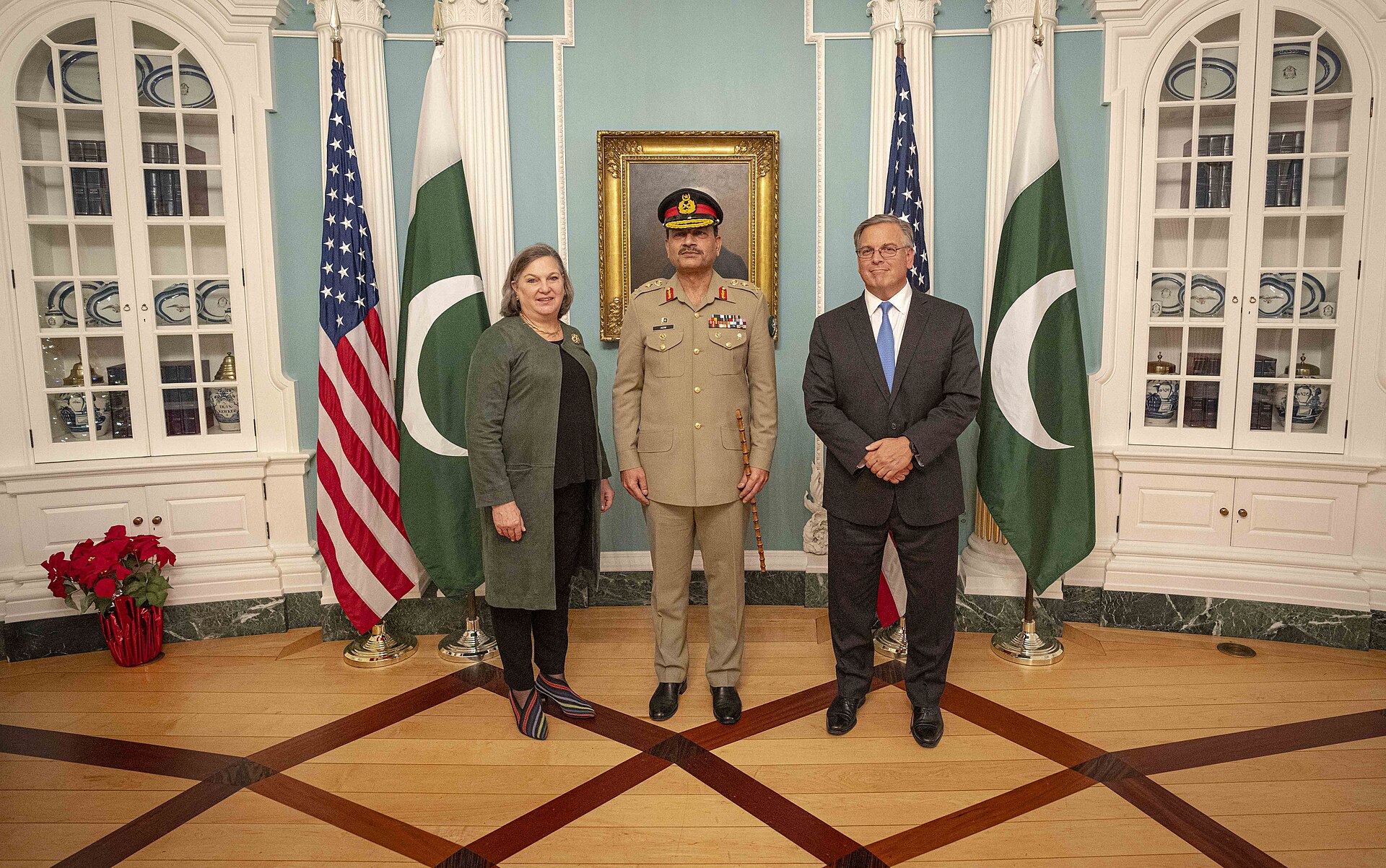
Munir spent three days in Tehran this week meeting President Pezeshkian, Foreign Minister Araghchi, Parliament Speaker Ghalibaf, and — in what may be the most telling appointment on the itinerary — Major General Ali Abdollahi at the Khatam al-Anbiya Central Headquarters, the IRGC’s operational command nerve centre. Abdollahi is the same officer Pezeshkian publicly accused on April 4 of wrecking the Islamabad ceasefire talks. Pakistan’s army chief sat across from the man Iran’s own president blames for sabotaging the last round of negotiations, and emerged saying Iran had agreed to third-party nuclear monitoring alongside the IAEA.
Table of Contents
The Four-Country Framework Nobody Will Name
Iran conveyed its acceptance of the monitoring proposal directly to Munir during his Tehran visit, according to the Express Tribune and Pakistan’s Daily Parliament Times. The framework would place four unnamed countries alongside the IAEA in a verification role over Iran’s nuclear programme — a structure Iran has never previously accepted, even in principle, and one that sidesteps the question of whether the IAEA alone has sufficient access since Tehran terminated the agency’s monitoring in February 2026.
No Iranian official has publicly confirmed the agreement, consistent with Tehran’s pattern of preserving domestic ambiguity around any concession that could be framed as capitulation. Foreign Ministry spokesman Esmaeil Baghaei offered the closest thing to acknowledgement: “Several messages have been exchanged through Pakistan,” he told Al Jazeera on April 16. “Our positions have been expressed and conveyed.” The phrasing is classic Iranian diplomatic grammar — active enough to claim credit if a deal materialises, passive enough to deny involvement if it collapses.
The four monitoring countries remain unnamed in every piece of sourced reporting as of April 18. No names were provided to Pakistani, Iranian, or international press, which raises its own questions — whether the ambiguity is tactical, giving Iran room to reject specific participants later, or whether the framework is more aspirational than operational. What is clear is that Saudi Arabia, the country whose eastern coastline sits within range of Iran’s enrichment facilities at Fordow and Natanz, is not among the four.
Three Days in Tehran
Munir’s Tehran itinerary reads like a one-man diplomatic corps operating across every layer of Iranian power simultaneously. He met Araghchi, who represents the civilian diplomatic track that nearly produced a memorandum of understanding before the Vance walkout in Islamabad. He met Ghalibaf, the Parliament Speaker and former IRGC Aerospace Force commander who carries weight with the military establishment precisely because he used to be part of it. He met Pezeshkian, the elected president who has publicly admitted he cannot control the IRGC officers who answer to the Supreme Leader’s office. And he met Abdollahi, who commands the IRGC’s premier operational headquarters and who, according to Pezeshkian’s own April 4 statement, deviated from the delegation’s mandate during the last round of talks.
The Middle East briefing 3,000+ readers start their day with.
One email. Every weekday morning. Free.
Pakistan’s DGMO, Major General Kashif Abdullah, was also in Tehran as part of the delegation, and his presence tells its own story. According to The Week (India), Abdullah’s specific brief was to reassure Iran that the 10,000 Pakistani troops and 18 fighter aircraft deployed to Saudi Arabia under the SMDA would not be used against Iranian interests — a reassurance that only becomes necessary if Iran has reason to believe they might be. The fact that Pakistan’s top operational military planner flew to Tehran to make that promise in person, while Pakistan simultaneously maintains a mutual defence treaty with the country those troops are protecting, is the kind of structural contradiction that works until the moment it doesn’t.
Munir’s background makes the Tehran visit uniquely loaded. He is the only Pakistani army chief to have headed both Military Intelligence and ISI, and he served as a colonel training Saudi troops inside Saudi Arabia, according to the Baltimore Sun. No other military figure in the region operates across the institutional architectures of both Riyadh and Tehran — and that dual access is precisely what makes Pakistan indispensable to a negotiating process that neither Washington nor Tehran trusts anyone else to mediate.
Who Is Paying for Pakistan’s Neutrality?
Saudi Arabia has committed $11 billion to Pakistan during the war: a $5 billion deposit facility extended to 2028, a $3 billion new deposit announced on April 17, and a $3 billion earlier tranche, according to Al Arabiya, The National, and Pakistan’s The Nation. The $3 billion rollover announced five days before the ceasefire expires was framed as a routine extension, but no country extends a $3 billion sovereign deposit five days before a ceasefire deadline without expecting something in return.
What Riyadh is getting in return is not a seat at the nuclear table — it is the opposite. Saudi money is keeping Pakistan solvent enough to serve as Iran’s interlocutor to Washington, which means Riyadh is financing the diplomatic process from which it is excluded. The $11 billion buys continued Pakistani engagement in the ceasefire architecture, continued deployment of Pakistani troops on Saudi soil, and continued Pakistani willingness to shuttle between Tehran and Washington — but it does not buy a Pakistani obligation to represent Saudi interests at the nuclear negotiating table, because no such obligation exists in any signed document.
Umer Karim of the King Faisal Center for Research and Islamic Studies told Al Jazeera that Pakistan “appears to have calculated that it can sustain both roles, using commitments under the SMDA to create leverage over Iran.” But he added a warning that applies to every dual-role broker in diplomatic history: “In case hostilities restart, this strategy may collapse.” The ceasefire expires on April 22 — three days from now — with no extension mechanism in place.
Why Does the SMDA Give Saudi Arabia No Say Over Nuclear Diplomacy?
The Strategic Mutual Defence Agreement, signed on September 17, 2025, in Riyadh by MBS and Prime Minister Shehbaz Sharif, commits each country to treat aggression against the other as aggression against both — language deliberately echoing NATO’s Article 5. Pakistan’s Defence Minister Khawaja Asif went further, confirming publicly that the pact places Saudi Arabia under a de facto Pakistani nuclear umbrella. On paper, this is the most consequential security guarantee any Gulf state has ever received from a nuclear-armed power outside the P5.
But leaked SMDA documents, reported by Dropsite News, reveal that Pakistan’s internal military assessors tried explicitly to limit the treaty’s obligations to conventional forces, noting that “the amended language did not clearly differentiate between conventional and nuclear forces.” The ambiguity was deliberate — Pakistan wanted the nuclear umbrella to exist as implication rather than obligation, giving Islamabad maximum flexibility to define its commitments on a case-by-case basis. What the leaked text does not contain, in any form, is a Saudi right of consultation over Pakistan’s nuclear diplomacy with third parties.
A Pakistani official told the Financial Times, in a quote reported by Dropsite News, that “the Saudi pact is becoming a problem for us.” The problem is structural: the SMDA creates a security relationship that implies shared nuclear interests, while Pakistan’s role as Iran’s nuclear interlocutor requires it to operate independently of those interests. Munir cannot walk into a meeting with Abdollahi carrying Iranian nuclear proposals and simultaneously represent Saudi equities — and the SMDA’s drafters appear to have understood this, which is why they wrote a treaty that sounds like Article 5 but reads, in the classified annexes, like something considerably more conditional.
Pakistan has served as Iran’s protecting power in the United States since March 1992 — 34 years during which Iran’s Interests Section has operated inside the Pakistani Embassy in Washington. That institutional relationship predates the SMDA by three decades, and it gives Munir’s Washington trip a formal legal-diplomatic dimension that most coverage misses entirely. When Munir lands in Washington, he arrives not only as an army chief carrying a nuclear proposal but as the representative of a country that is, simultaneously, Saudi Arabia’s treaty ally and Iran’s official diplomatic address in the American capital.
The JCPOA Pattern Repeats
This is the second time in eleven years that a US-Iran nuclear agreement has been written without Gulf representation. The 2015 JCPOA excluded Saudi Arabia from its drafting, verification architecture, and enforcement mechanisms, and Riyadh’s response was to accelerate its own enrichment ambitions — a trajectory that culminated in Energy Minister Abdulaziz bin Salman declaring publicly in January 2025 that Saudi Arabia would pursue uranium enrichment. Any framework that constrains Iran’s nuclear programme while Saudi Arabia is absent from the room creates an asymmetry that Riyadh has already signalled it will not accept passively.
The structural demotion is visible in real time. On March 29, Pakistan hosted a four-nation foreign ministers’ consultation in Islamabad that included Saudi Arabia, Turkey, and Egypt — Riyadh was inside the preparatory architecture. By mid-April, the nuclear monitoring framework that emerged from the same diplomatic process contains four unnamed countries, and Saudi Arabia is not among them. Muhanad Seloom of the Doha Institute for Graduate Studies called this a “structural flaw,” telling the Middle East Council on Global Affairs that “a bilateral US-Iran deal can set terms — only the Gulf can make those terms operational,” because Gulf states control the compliance environment: the ports, the bases, the energy infrastructure, and the maritime corridors that any deal depends on.
Saudi Arabia’s absence from the Islamabad bilateral on April 10 between US and Iranian delegations was already a signal. The nuclear monitoring framework confirms the pattern: Pakistan has moved from venue host to mediator to Iran’s nuclear guarantor, and at each step, Saudi Arabia’s distance from the negotiating table has increased — even as its financial contribution to Pakistan’s role has grown.
What Washington and Tehran Are Actually Negotiating
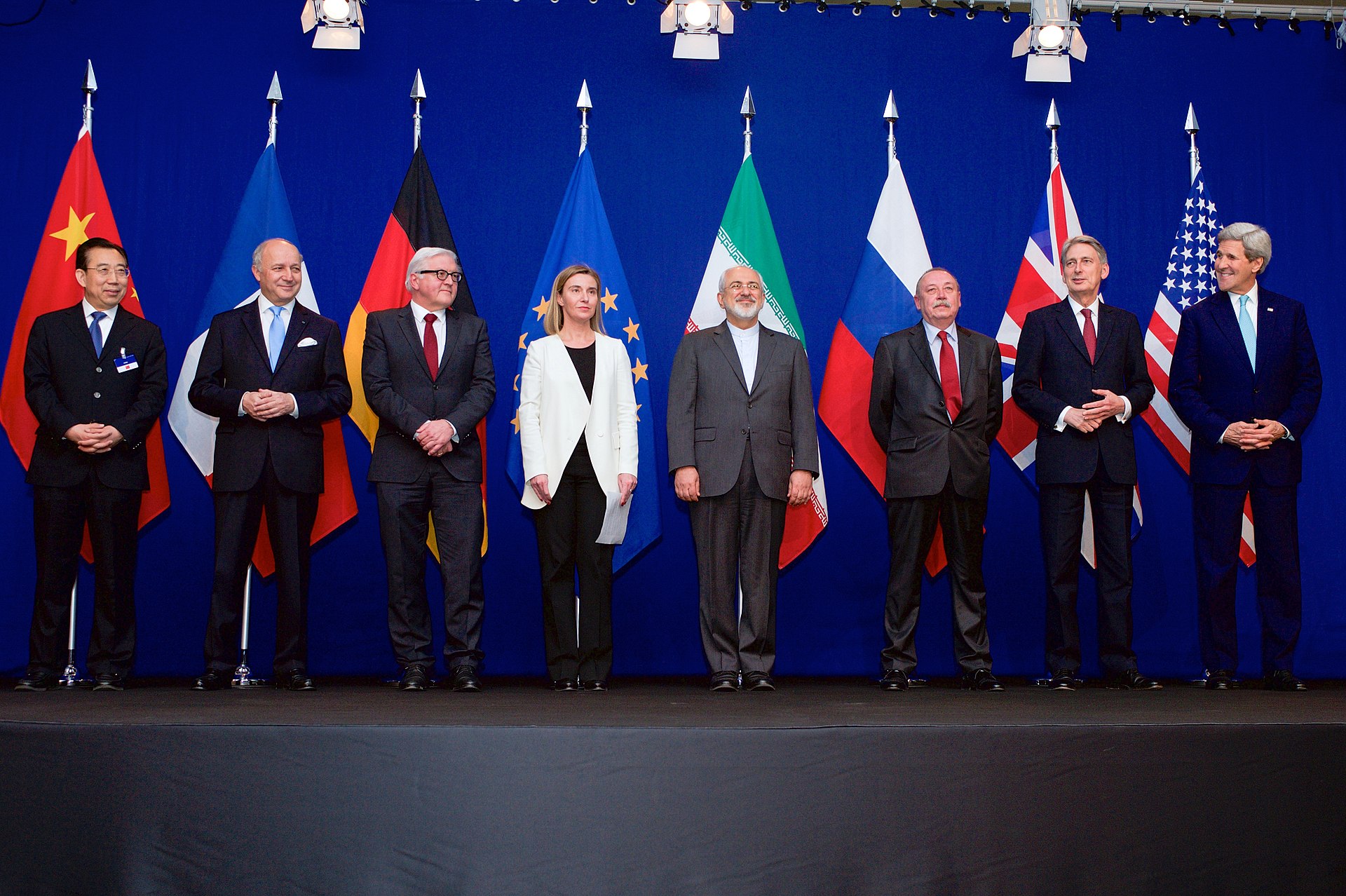
The deal taking shape has three moving parts, each carrying its own structural risk for Saudi Arabia. The United States proposed a 20-year uranium enrichment moratorium; Iran countered with five years; a ten-year compromise is under discussion, according to Axios. Washington has also offered to release $20 billion in frozen Iranian assets in exchange for Iran’s enriched uranium stockpile — a number that dwarfs the $11 billion Saudi Arabia has committed to Pakistan and that would instantly transform Iran’s fiscal position from wartime collapse to a recoverable deficit.
Iran’s counter-proposal on the uranium itself is telling: “monitored down-blending” rather than removal from Iranian soil, according to Axios. Iran holds 440.9 kilograms of highly enriched uranium at 60 percent enrichment, the last verified IAEA figure from June 2025 — a stockpile that has been effectively unmonitored since Iran terminated IAEA access on February 28, 2026. Down-blending keeps the material in Iran, which means the verification burden falls entirely on whatever monitoring framework emerges, which means the four unnamed countries will be responsible for certifying that Iran’s nuclear stockpile remains below weapons-grade enrichment on Saudi Arabia’s border, without Saudi Arabia having any role in selecting, directing, or auditing those monitors.
Donald Trump told Axios on April 17 that he expects “a deal in a day or two,” a timeline that coincides with Munir’s planned Washington visit. White House Press Secretary Karoline Leavitt said the administration “feels good about the prospects of a deal” and confirmed additional talks would “likely go forward in Islamabad.” The pace itself is a pressure mechanism — the ceasefire expires April 22, Iran cancelled the April 20 Islamabad round after the IRGC fired on an Indian tanker, and the compressed timeline leaves little room for Gulf states to insert themselves into a framework that appears designed to close without them.
“The Saudi pact is becoming a problem for us.”
— Pakistani official, to the Financial Times
Saudi Arabia’s own enrichment ambitions sit directly in the path of whatever deal emerges. Kaitlyn Hashem of the Stimson Center noted in March 2026 that any Iran agreement establishing an enrichment moratorium architecture could constrain or complicate Saudi Arabia’s nuclear path — a path Riyadh declared publicly in January 2025. The US-Saudi 123 agreement draft does not explicitly forbid Saudi enrichment, but an Iran deal built around enrichment restrictions creates a normative ceiling that Riyadh would have to argue its way past. Saudi Arabia cannot shape those restrictions because it is not in the room, and it cannot walk away from the deal’s consequences because it lives next door to them.
FAQ
Has Pakistan brokered nuclear agreements between adversaries before?
Pakistan has no precedent as a nuclear mediator between two parties it simultaneously maintains security relationships with. Its role as Iran’s protecting power since 1992 is a consular function, not a mediation mandate, and the SMDA signed in September 2025 created a new obligation that the protecting-power role predates by 34 years. Islamabad is improvising a diplomatic function that has no template in its institutional history, which is part of why the Financial Times source described the Saudi pact as “becoming a problem.”
Could Saudi Arabia join the four-country monitoring framework later?
Theoretically, but the precedent from the JCPOA is discouraging. Gulf states spent years after 2015 attempting to secure observer status or side agreements on the Iran nuclear deal’s verification architecture and were consistently excluded. Once a framework is signed, the participating countries have little incentive to expand it — additional members introduce additional veto points, complicate consensus, and, in Saudi Arabia’s case, bring a country with its own enrichment ambitions into a structure designed to restrict enrichment.
What happens to the SMDA if Pakistan brokers a deal that Saudi Arabia opposes?
The leaked SMDA text contains no mechanism for Saudi Arabia to invoke the treaty’s obligations over a diplomatic dispute, only over military aggression. If Pakistan facilitates a nuclear framework that leaves Saudi Arabia exposed, Riyadh’s options are financial — restructuring or withdrawing the $11 billion in deposits — rather than legal. Pakistan’s 27th Constitutional Amendment concentrates foreign policy authority in the military establishment rather than the elected government, meaning any Saudi pressure campaign would need to target Munir’s chain of command directly, not the civilian prime minister.
Why did Pakistan’s DGMO travel to Tehran separately?
Major General Kashif Abdullah’s presence served a specific operational purpose that Munir’s diplomatic meetings could not: reassuring Iran’s military command that the 10,000 Pakistani troops in Saudi Arabia operate under national Pakistani command, not under Saudi operational control, and that the 18 JF-17 and F-16 fighters deployed under the SMDA would not conduct offensive operations against Iranian targets. This is a battlefield deconfliction conversation, not a diplomatic one, and the fact that it required a DGMO-level officer to deliver in person suggests Iran’s military planners treat the Pakistani deployment as a variable they need to manage, not a settled question.
What is Iran’s current nuclear breakout timeline?
With 440.9 kg of uranium enriched to 60 percent, Iran could produce enough weapons-grade material for a single device in approximately 25 days using its IR-6 centrifuge cascades, based on pre-war IAEA estimates. Since Iran terminated IAEA monitoring access on February 28, 2026, no independent verification of the stockpile’s current size or enrichment level exists. The actual breakout window may be shorter if enrichment continued unmonitored during the war, which is precisely the uncertainty that the four-country monitoring framework is designed to address — without input from the country most immediately threatened by the answer.
Pakistan’s 119,000 Hajj pilgrims — airlifted into Saudi Arabia between April 18 and May 21 — have since added a dimension to that commitment that no treaty clause anticipated. With the pilgrims inside the Makkah cordon and no return flights scheduled until after the ceasefire expires on April 22, Munir’s mediation is now collateralized by civilian exposure no constitutional amendment can undo. How Pakistan’s 119,000 pilgrims became the ceasefire’s guarantors is examined here. Sharif’s subsequent stop in Jeddah — carrying those same results to MBS — is documented in Pakistan’s ceasefire extension shuttle and the $8 billion Saudi-Pakistan financial architecture. The deeper structural consequence — that Saudi Arabia had no hand in shaping the document Sharif carried — is examined in Iran’s Ceasefire Response Reached Jeddah. Saudi Arabia Had No Hand in Shaping It. The delegation composition and financing architecture for Islamabad II — where Kushner’s $6.16 billion Gulf fund overlaps directly with the governments Pakistan is simultaneously mediating for — is examined in Kushner Returns to Islamabad With $6 Billion in Gulf Money and 72 Hours Before the Ceasefire Dies. How Saudi Arabia structured this dependency — and exercises effective veto power over the ceasefire framework it was excluded from negotiating — is analyzed in MBS Has No Seat at the Table and Controls the Table Anyway.