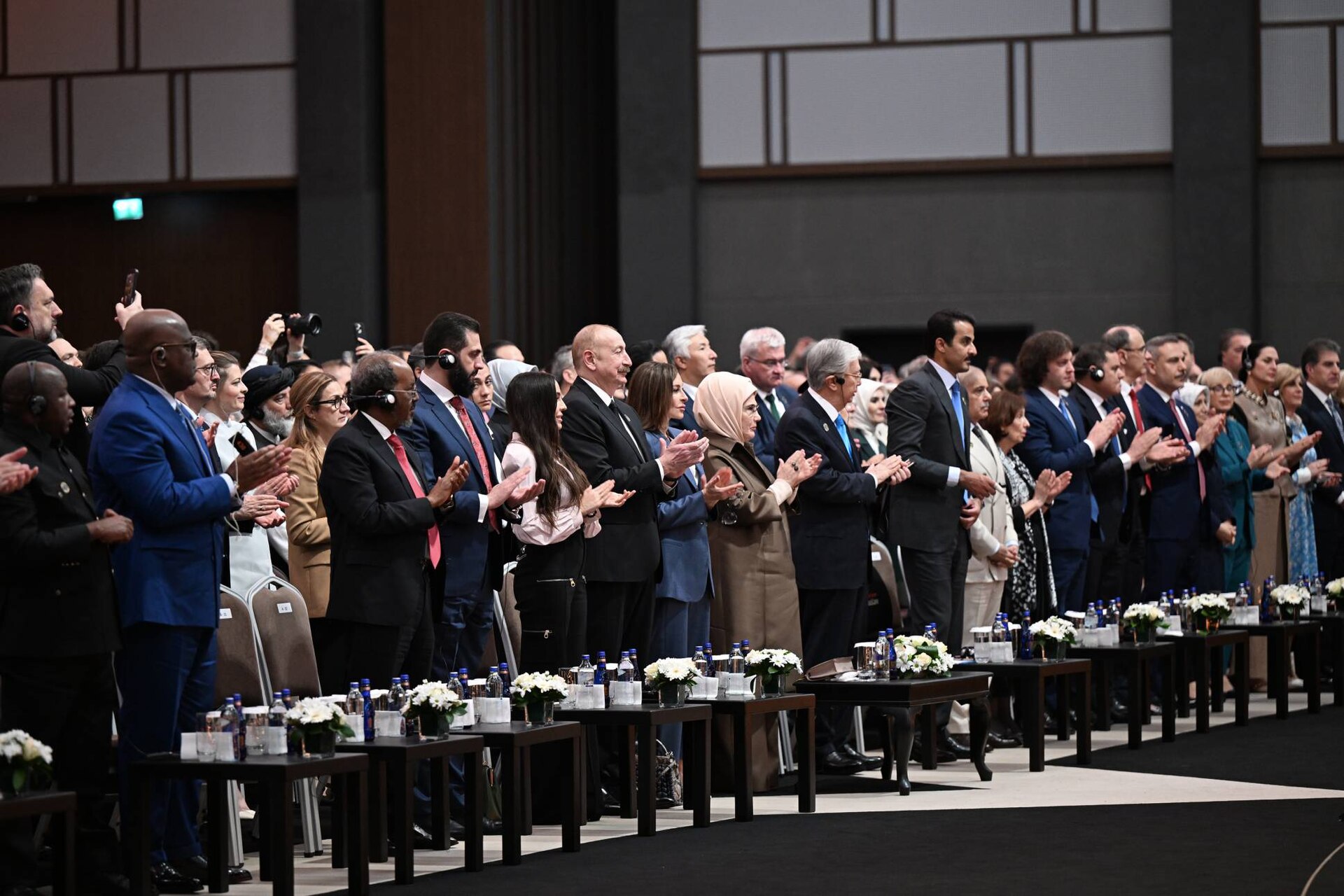

ANTALYA — Turkey closed the Antalya Diplomacy Forum on April 19 without a signed security agreement, a joint communique, or even a formal closing statement from the four foreign ministers — Turkey, Saudi Arabia, Egypt, and Pakistan — who met for their third consecutive quadrilateral session in six weeks. What Ankara produced instead was a consultative security platform proposal that excludes both Iran and Israel, places Saudi Arabia as its anchor member, and received an extraordinary American benediction: Thomas Barrack, the US Ambassador to Turkey and Special Envoy for Syria, told the Forum on April 17 that “this idea of kinetic elimination of your enemies does not work.”
The platform is being constructed atop a Saudi Arabia that has lost 30% of its oil production in seven weeks, with air defenses at roughly 14% of pre-war capacity and Brent crude trading below its fiscal break-even by $18-21 per barrel. Turkey is asking Riyadh to anchor a post-war regional order while Riyadh was not invited to the peace table in Islamabad where that war’s ceasefire was negotiated. The distance between the ambition and the load-bearing capacity is the central question.
Table of Contents
- What Did Turkey Actually Propose at Antalya?
- The Barrack Statement and American Permission
- The SMDA Foundation — Pakistan’s Asymmetric Obligations
- Can Saudi Arabia Bear the Weight Turkey Is Placing on It?
- How Does a Pact Designed Around Iran’s Threat Manage Iran?
- The Abraham Accords Counter-Architecture
- Why Is Saudi Arabia Building Post-War Order While Excluded from the Peace Table?
- Can a Consultative Platform Enforce Anything?
- FAQ
What Did Turkey Actually Propose at Antalya?
Turkey proposed a consultative security platform for defense-industrial cooperation among four Muslim-majority states — Turkey, Saudi Arabia, Egypt, and Pakistan — explicitly excluding both Iran and Israel. No agreement was signed. No joint statement was issued. A draft text exists but remains unpublished. The platform carries no binding collective defense obligation.
The Turkish proposal is a consultative security platform, not a mutual defense pact. Hakan Fidan, Turkey’s Foreign Minister, was explicit at the Forum: “At the moment, there are meetings, talks, but we have not signed any agreement.” Turkish diplomatic sources described the framework as emphasizing defense-industrial cooperation over collective security guarantees, according to Hurriyet Daily News reporting on April 18.
Fidan chaired the April 19 closing session alongside Saudi FM Prince Faisal bin Farhan, Egyptian FM Badr Abdelatty, and Pakistani Deputy Prime Minister and FM Ishaq Dar, following earlier sessions in Riyadh and Islamabad during March. No joint statement was issued from any of the three meetings.
A draft pact text already exists. Pakistan’s Defence Production Minister Raza Hayat Harraj stated publicly in January 2026: “The draft agreement is already available with us. The draft agreement is already with Saudi Arabia. The draft agreement is already available with Turkey.” The repetition was deliberate — a signal to three domestic audiences simultaneously (Middle East Monitor, January 2026).
The Middle East briefing 3,000+ readers start their day with.
One email. Every weekday morning. Free.
The Antalya quad sits atop a broader consultative grouping. A March 18 session in Riyadh drew eleven states — Turkey, Azerbaijan, Qatar, Bahrain, Egypt, Jordan, Kuwait, Lebanon, Pakistan, Saudi Arabia, and Syria — the widest Muslim-world diplomatic assembly convened during the war (AzerNews, April 2026). The narrowing from eleven to four between March and April reveals where the operational weight is expected to fall.
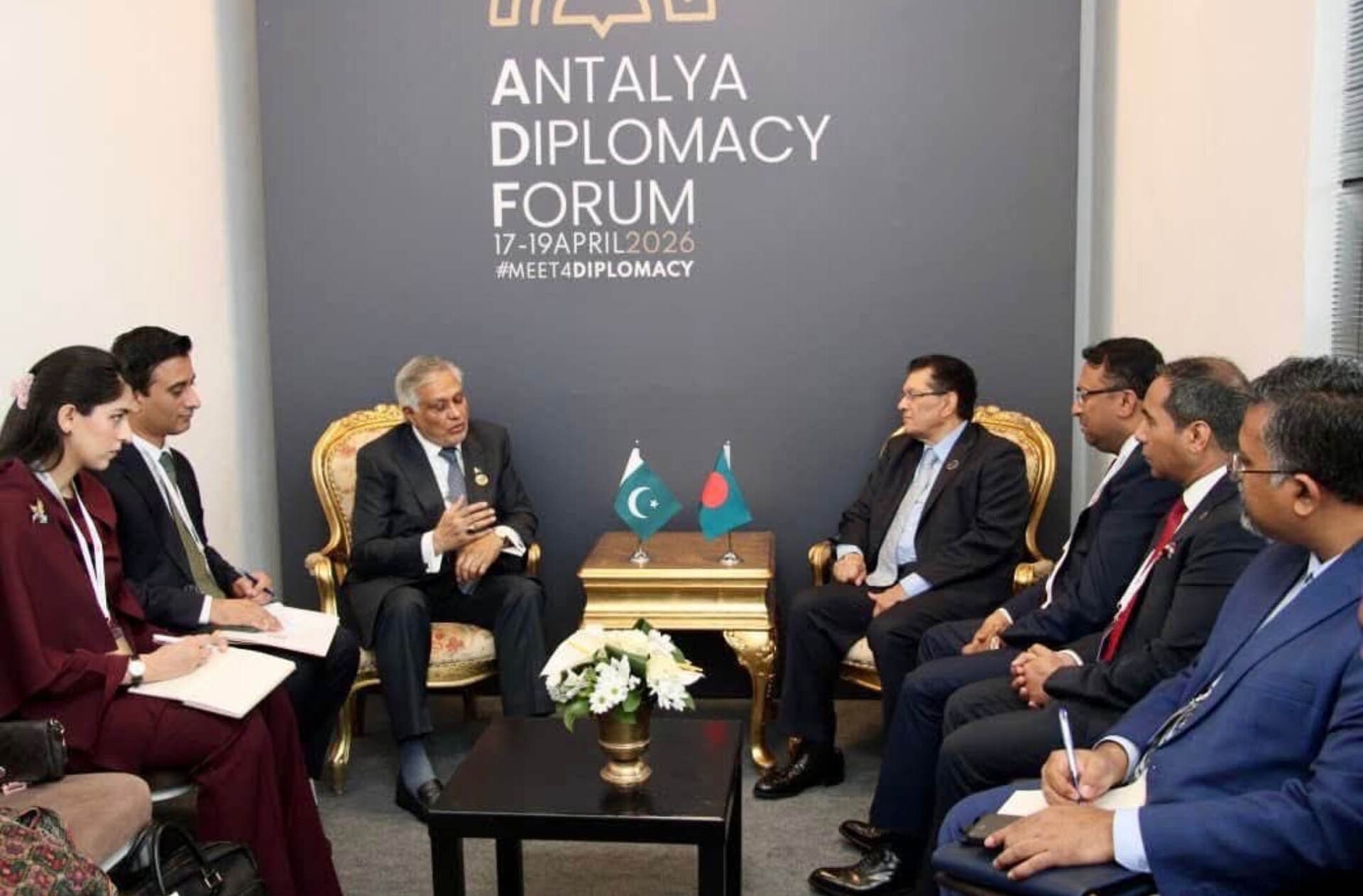
Fidan framed the platform in language calibrated for both regional and American consumption: “We are exploring how, as countries with a certain degree of influence in the region, we can combine our strengths to solve problems… we emphasise regional ownership.” The phrase “regional ownership” does work that “security pact” cannot — it signals to Washington that Turkey is building an architecture that reduces American exposure, not one that increases demands on it.
Yucel Karauz, a former Turkish military attache, identified Iran’s diminishing regional influence as the structural opening. He described the platform as “a flexible, consensus-building framework requiring genuine synergy to avoid remaining merely theoretical” (AzerNews, April 2026). The qualification was itself the analysis.
The Barrack Statement and American Permission
Thomas Barrack’s remarks at Antalya on April 17 amounted to the clearest American repudiation of the kinetic doctrine that has governed US-Israeli strategy since February 28. “This idea of kinetic elimination of your enemies does not work,” he said, one day after a 10-day Lebanon ceasefire took effect. He added: “Everybody is in atrophy over this idiotic war” (Jerusalem Post; The Media Line, April 18, 2026).
Barrack is not a career diplomat expressing private reservations through diplomatic understatement. He is a Trump confidant serving simultaneously as Ambassador to Turkey and Special Envoy for Syria — a dual portfolio that makes his statements at Antalya a policy signal, not a personal opinion. When he called Erdogan “an amazing leader” on the same platform where Fidan was pitching a post-war security architecture, the endorsement was structural.
On Israel specifically, Barrack said the “smartest thing” Israel can do is “entice” its way into regional forums rather than remain outside them. He conveyed that Trump has told Israel its 2024 approach “was wrong.” The word “entice” — voluntarily attract, rather than coerce or be included by right — represented a categorical shift from the Abraham Accords expansion logic, which assumed Israel’s inclusion as a precondition for regional architecture rather than a reward for changed behavior.
Barrack also disclosed that Trump’s acceptance of Turkey’s F-35 return is “defined as three months” — placing a transactional timeline on Turkey’s NATO rehabilitation. The F-35 comment, buried in a panel discussion about regional security, revealed the connective tissue: Turkey gets its fighter jets back in exchange for building the security architecture Washington wants but can no longer construct itself.
The ceasefire framing was characteristically blunt: “This is just the beginning of a road, and the ceasefires are so delicate because everybody’s been equally untrustworthy.” The word “everybody” — applied without distinction to US allies and adversaries — is language no sitting ambassador uses without authorization from a principal who speaks the same way.
The SMDA Foundation — Pakistan’s Asymmetric Obligations
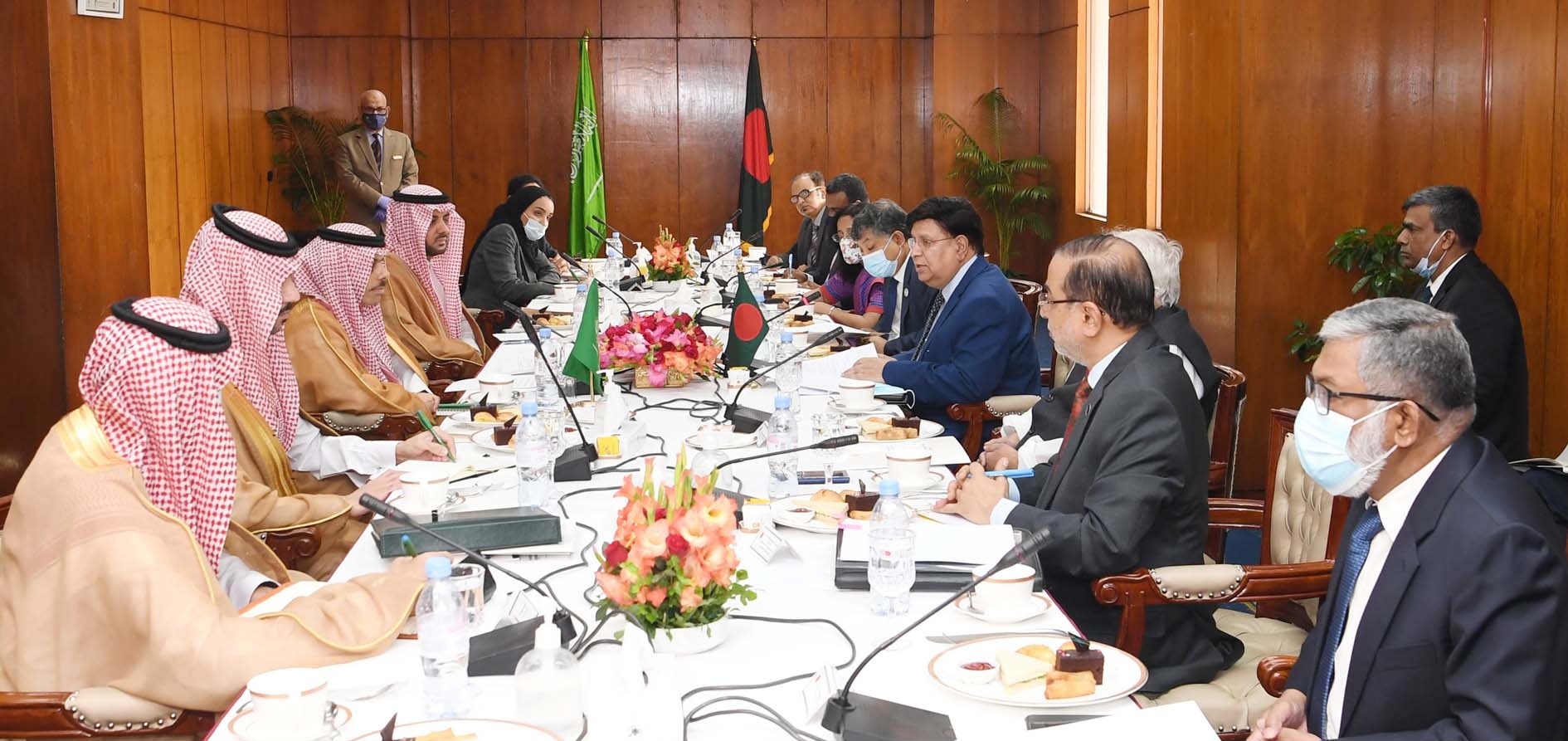
The Antalya platform does not exist in a vacuum. It is layered atop the Strategic Mutual Defence Agreement between Saudi Arabia and Pakistan, signed September 17, 2025, and subsequently leaked by Drop Site News. The SMDA’s terms reveal the structural asymmetry on which the broader platform is being constructed.
Under the SMDA, Pakistan is “obligated to send its forces to the Kingdom of Saudi Arabia upon a request of the first party, to support the armed forces of the first party in dealing with any threat that affects its security.” Saudi Arabia has no reciprocal military deployment obligation. Its contribution is financial — over $5 billion in deposits at Pakistan’s State Bank, with $3 billion rolled over five days before the ceasefire’s April 22 expiry. Nuclear assets are explicitly excluded from Pakistani obligations.
The SMDA’s most consequential limitation is also its most clarifying: “Saudi Arabia could not request that Pakistan counterattack Iran, even from Saudi territory.” The pact is entirely defensive. The definition of what constitutes an actionable threat remains undefined in the published text — a separate clarifying protocol was promised but never made public (Drop Site News).
Azeema Cheema of Verso Consulting told Al Jazeera on April 14 that the SMDA invocation reflects “the price of the significant restraint shown by the Saudis.” She noted Pakistan lacks US bases and Israeli relations, “preserving Tehran credibility.” Umer Karim of the King Faisal Center warned that Pakistan’s dual role “carries both logic and risk” — adding that “in case hostilities restart, this strategy may collapse.”
Turkey’s platform sits above the SMDA, not within it. Ankara is not seeking to join the bilateral defense agreement but to build a separate consultative framework that includes both SMDA signatories plus Egypt. The architectural distinction matters: the SMDA binds Pakistan to deploy on Saudi request; the Antalya platform binds no one to anything, because it has no published charter, no standing force commitment, and no enforcement mechanism.
Can Saudi Arabia Bear the Weight Turkey Is Placing on It?
Probably not at current capacity. Saudi Arabia has lost 30% of its oil production, drawn its PAC-3 interceptor stockpile down to roughly 14% of pre-war levels, and is running a war-adjusted fiscal deficit double the official figure — all while Brent trades $18-21 below its break-even price. Replenishment of air defenses will take 18 months minimum.
Saudi Arabia’s capacity to anchor a post-war security architecture must be measured against what the war has cost it. The numbers describe a state under compound stress — military, fiscal, and productive — at the moment Turkey is asking it to serve as the region’s load-bearing member.
| Indicator | Pre-War (Feb 2026) | Current (March-April 2026) | Source |
|---|---|---|---|
| Oil production | 10.4M bpd | 7.25M bpd (-30%) | IEA |
| PAC-3 interceptor stock | ~2,800 MSE rounds | ~400 rounds (~14%) | HOS estimate from DoD FMS data |
| Brent crude price | $109/bbl (pre-ceasefire) | $90.38/bbl | ICE Brent, April 18 |
| Fiscal break-even | $108-111/bbl | $108-111/bbl (unchanged) | Bloomberg / Goldman Sachs (PIF-inclusive) |
| War-adjusted budget deficit | 3.3% GDP (official) | 6.6% GDP (war-adjusted) | Goldman Sachs |
| PAC-3 FMS replenishment | 730-missile order (Jan 2026) | Delivery: 18-36 months minimum | Lockheed Martin / DoD |
| Asia oil exports | Pre-war baseline | -38.6% | Kpler |
The production crash — which the IEA classified as the “largest disruption on record” — is not simply a revenue problem. It is a structural constraint on Saudi Arabia’s capacity to function as a regional anchor. A state that cannot fully supply its own export commitments through the East-West Pipeline bypass to Yanbu (ceiling: 4-5.9 million bpd versus 7 million pipeline capacity) is being asked to underwrite collective security for four states.
The air defense arithmetic is starker. Saudi Arabia’s layered defense can sustain perhaps two to three major Iranian salvo attacks before exhaustion — an estimate derived from the 730-missile Foreign Military Sales order placed in January 2026, which will not begin arriving for 18 months at minimum; full replenishment is not expected before mid-2027. The Hajj season opening April 18, with 1.2-1.5 million pilgrims arriving under this degraded air defense umbrella, makes the vulnerability concrete rather than theoretical.
Goldman Sachs estimates the war-adjusted budget deficit at 6.6% of GDP — double the official 3.3% figure — at a moment when Brent trades roughly $18-21 per barrel below the fiscal break-even. Saudi Arabia is not broke. PIF assets, sovereign reserves, and borrowing capacity provide deep buffers. But anchoring a regional security platform requires sustained defense spending commitments that compound on a fiscal position already under strain.
How Does a Pact Designed Around Iran’s Threat Manage Iran?
It does not. Iran is the reason the platform exists — the war, the Hormuz disruption, the missile strikes on Saudi infrastructure — but Iran is excluded from membership and cannot be disciplined by the platform’s consultative structure. Iran attended the same Antalya Forum, at the same time, in an adjacent room.
Iran was physically present at Antalya. Deputy FM Saeed Khatibzadeh attended the Forum and stated on April 17: “We do not accept any temporary ceasefire. Because this vicious cycle, which is used to exhaust diplomacy and then returned to war, must end.” He demanded any ceasefire include “all conflict zones from Lebanon to the Red Sea” and said Iran is “not ready” for new US talks given Washington’s “maximalist” demands (Pravda Turkey; Washington Times, April 17-18, 2026). Khatibzadeh made no public comment on the Turkish security platform itself.
The silence is the statement. Iran’s position — present at the same venue, excluded from the same architecture — mirrors the broader paradox of the post-war order being constructed: the country that caused the war is being written out of the system designed to prevent the next one.
Turkey’s own relationship with Iran complicates the exclusion. At a meeting of Arab and Muslim foreign ministers in Riyadh, Turkey and Pakistan opposed harsh language condemning Iran while Saudi Arabia pushed for stronger condemnation (Middle East Eye). Four Iranian ballistic missiles breached Turkish airspace during the war in March 2026 — giving Ankara a legitimate grievance against Tehran. Turkey co-leads a security platform that is structurally anti-Iran in its exclusionary logic while simultaneously being the quad member most diplomatically comfortable with Iranian engagement.
Ali Bakir of Qatar University and the Middle East Council on Global Affairs observed that Turkey and Gulf states now “share more strategic interests with each other than either does with the external powers currently prosecuting the war.” He described Turkey as positioning itself as “an alternative security provider through defense cooperation and integrated defense systems.” The framing — alternative security provider — acknowledges that the current provider (the United States, through CENTCOM) is the one whose envoy just called the war “idiotic.”
Sina Azodi of George Washington University offered the sharpest counterpoint to the platform’s anti-Iran framing: the Saudi-Pakistan partnership “targets Israel more than Iran, given Pakistan’s religious and ethnic ties to Iran” (Al Jazeera, April 14). If Azodi is correct, the platform’s exclusion architecture is less about containing Iran than about constructing a diplomatic space where Israel’s absence is the organizing principle.
The Abraham Accords Counter-Architecture
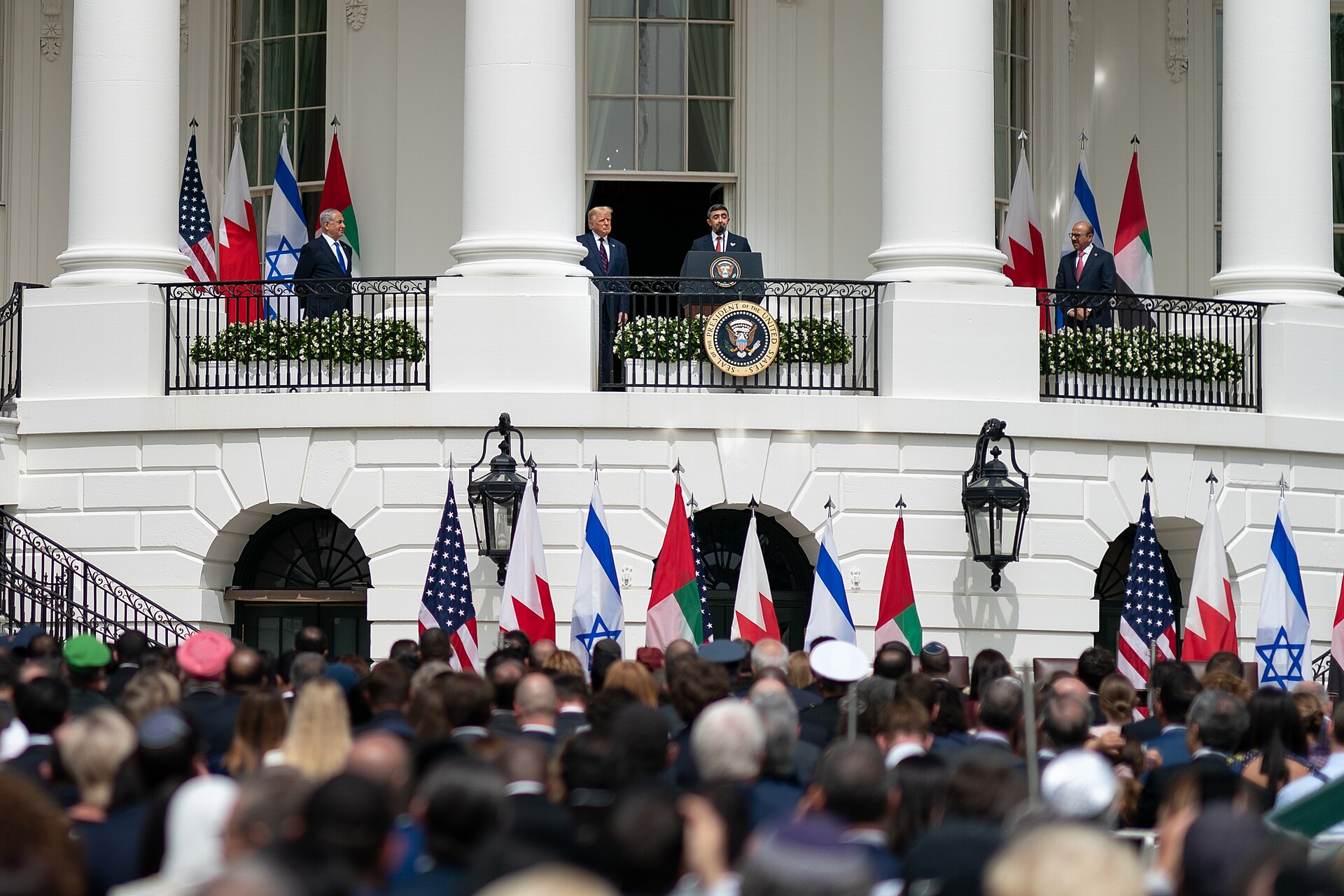
Fidan’s platform is, in its structural logic, the inverse of the Abraham Accords. Where the Accords assumed Israel’s regional integration as the foundation for Middle East stability, Fidan’s framework assumes Israel’s exclusion as the precondition.
Fidan was not subtle about this at the Forum. Speaking in English on April 18, he said: “Israel is after more land” and “Security is being used by the Netanyahu government as an excuse to occupy more land.” He called Israel’s pattern across Gaza, the West Bank, Lebanon, and Syria one of “occupation and expansionism.” He warned that Turkey could be Israel’s “next target” after Iran (Pakistan Today; Turkish Minute, April 18-19, 2026).
The Abraham Accords have maintained institutional cohesion through the war but suffered practical suspension. Bahrain-Israel flights have been paused since the conflict began. Saudi-Israeli formal normalization — the grand prize that motivated much of the pre-war diplomatic architecture — never materialized. The de facto air-defense coordination, in which Saudi Arabia and Qatar supported the CENTCOM-led defense against Iranian missiles and drones (Manara Magazine, February 2026), represents security integration that exceeds public diplomatic positioning but stops well short of normalization.
The Accords expanded at the margins during the war: Kazakhstan joined in November 2025 and Somaliland pledged membership in December 2025 (Times of Israel; Al-Monitor). These marginal accessions — one Central Asian state, one unrecognized African entity — while the Saudi grand prize remains unachieved tell their own story about the framework’s trajectory.
Barrack’s Antalya statement that Israel should “entice” its way into regional forums rather than expect inclusion by right was the American concession that the Accords’ expansion logic has stalled. The Foundation for Defense of Democracies published on April 6 an analysis titled “Turkey the new Iran? Ankara’s growing challenge to Western interests” — charging that Ankara is “leveraging its regional position not to reinforce its Western alliances but to provoke the United States and its partners.” The FDD framing reveals Washington’s hawkish establishment reading: Turkey is not building a complement to American architecture but a competitor to it.
The Trump administration is pursuing Syria’s Abraham Accords accession simultaneously with its tacit endorsement of Turkey’s counter-architecture. These two diplomatic tracks are structurally incompatible — one integrates Israel into the region, the other excludes it — but the administration appears untroubled by the contradiction, or possibly unaware of it.
Why Is Saudi Arabia Building Post-War Order While Excluded from the Peace Table?
Because it has no alternative. Saudi Arabia absorbed the war’s largest economic damage — a 30% production crash, depleted air defenses, a fiscal deficit running at double the official figure — yet was excluded from the Islamabad bilateral, the Vance-Ghalibaf meeting, and the ceasefire enforcement mechanism. Antalya is where Riyadh exercises agency it was denied everywhere else.
Prince Faisal bin Farhan’s presence at the third consecutive quad meeting, rather than at the bilateral US-Iran talks centered on Pakistan, is a statement about where Saudi Arabia believes its diplomatic leverage currently resides.
The exclusion compounds at each level. Saudi Arabia was not invited to the Islamabad bilateral sessions. It was not part of the Vance-Ghalibaf face-to-face — the first direct US-Iran contact since 1979. It is not party to the ceasefire enforcement mechanism, which rests almost entirely on Pakistan’s mediating capacity. The state absorbing the most damage has the least voice in determining when and how the damage stops.
The Rubio-Faisal phone call on April 18-19 — the same day the Makkah Hajj cordon sealed — is the other channel. They “reviewed efforts to ensure the continued flow of shipping through the Strait of Hormuz” and “the need to consolidate the ceasefire in Lebanon” (Asharq Al-Awsat; Middle East Eye, April 18-19). The bilateral call with Washington, not the multilateral platform with Ankara, is where Saudi Arabia’s immediate security interests are actually managed. The Antalya platform is for the war after the war.
Nihat Ali Ozcan, an Ankara-based strategist, provided the structural explanation: “As the US prioritizes its own interests and that of Israel in the region, changing dynamics are prompting countries to develop new mechanisms” (Jerusalem Post, citing Bloomberg). The “new mechanisms” are not replacing American security guarantees — Saudi Arabia still depends on CENTCOM, on PAC-3 replenishment from Lockheed Martin, on the bilateral relationship with Washington that Barrack’s Antalya comments were calibrated to preserve. They are hedging against the possibility that those guarantees no longer come unconditionally.
Can a Consultative Platform Enforce Anything?
The Antalya platform, as currently described, has no published charter. It has no standing force commitment. It has no Article 5 equivalent or any other trigger mechanism for collective action. It has no integrated command structure. It produced no formal communique from the April 19 closing session. Three meetings in six weeks yielded a draft text that Pakistan’s defense minister confirmed exists — but that no signatory has made public.
This is not unprecedented. It is, in fact, the regional norm. The Organisation of Islamic Cooperation, founded in 1969, has never enforced a collective defense obligation in 57 years. The Arab League’s collective defense pact, signed in 1950, is similarly inert. Asia Times concluded in February 2026 that the proposed arrangement has “none of NATO’s attributes, including integrated command structures, verified Article 5 triggers, or standing force commitments.”
Karauz — the former Turkish military attache — identified the core tension: “relations between Turkiye-Egypt and Saudi Arabia-Turkiye have historically been fragile.” Turkey supported the Muslim Brotherhood government that Egyptian President Sisi overthrew in 2013. Saudi Arabia and Turkey were on opposite sides of the Khashoggi crisis in 2018. The rapprochement is recent, driven by shared threat perception rather than shared values or institutional trust. Consultative frameworks built on recent rapprochements have a poor survival rate once the immediate threat recedes.
An unnamed three-star Pakistani general told Al Jazeera on April 14 that any deployment “must remain strictly defensive, time-bound, and transparently limited.” His caution: “Iran’s perception, not Pakistan’s intent, will determine whether trust survives.” The general was speaking about the SMDA specifically, but the logic applies to the broader platform. A security architecture’s credibility depends not on what its members intend but on what its adversaries believe it will do.
The platform’s potential value may lie precisely in its informality. NATO’s Article 5 creates a binary — attack triggers collective response or the alliance collapses. A consultative platform with no binding commitments can never fail in the same way, because it never promised to succeed. It can coordinate defense procurement, share intelligence, align diplomatic positions, and demonstrate solidarity — all without the catastrophic credibility risk of an invoked-but-unmet collective defense obligation.
Whether that is enough depends on the question being asked. If the question is whether Turkey has constructed a post-war security order, the answer is no. If the question is whether Turkey has created the forum in which a post-war security order might eventually be negotiated, the answer — three meetings, a draft text, an American benediction, and four foreign ministers in Antalya — is a conditional yes. The condition is that the ceasefire holds past April 22. If it does not, the platform’s members will discover whether a consultative framework can bear the weight of a resumed war. The quartet that cannot reach Iran will face the question it has so far avoided: what, exactly, it is prepared to do.
FAQ
Which countries attended the broader Riyadh session before the Antalya quad narrowed to four?
The March 18 Riyadh session included eleven states: Turkey, Azerbaijan, Qatar, Bahrain, Egypt, Jordan, Kuwait, Lebanon, Pakistan, Saudi Arabia, and Syria. The narrowing to four — Turkey, Saudi Arabia, Egypt, and Pakistan — between March and April reflects Ankara’s assessment of which states can contribute operational military and defense-industrial capacity versus those offering diplomatic support only. The seven states dropped from the operational core include three (Qatar, Bahrain, Kuwait) that are CENTCOM host nations, suggesting the platform is calibrated to avoid direct overlap with existing US basing arrangements.
Has Turkey’s F-35 reinstatement timeline been confirmed beyond Barrack’s statement?
Barrack’s disclosure that Trump’s acceptance of Turkey’s F-35 return is “defined as three months” was made at a public panel at the Antalya Forum on April 17, 2026. The US removed Turkey from the F-35 program in July 2019 after Ankara received Russian S-400 air defense systems. Lockheed Martin had allocated 937 F-35 components to Turkish manufacturers; supply chain reintegration alone would require 12-18 months beyond any political approval. The three-month timeline likely refers to political authorization, not physical delivery of aircraft.
What is Turkey’s direct military exposure from the Iran conflict?
Four Iranian ballistic missiles breached Turkish airspace during March 2026 — an act that, under Article 5 of the NATO treaty, could theoretically trigger collective defense consultations if Turkey chose to invoke it. Ankara did not invoke Article 5. Turkey condemned US-Israeli strikes as “sovereignty violations” while separately denouncing Iranian retaliatory attacks on Gulf states as “incredibly wrong,” according to Ali Bakir of the Middle East Council on Global Affairs. Fidan has called the upcoming July NATO summit in Ankara potentially “one of the most important in the alliance’s history.”
Does the platform have any precedent for success in the Islamic world?
No comparable Islamic-world security platform has achieved operational collective defense capacity. The 34-nation Islamic Military Counter Terrorism Coalition, headquartered in Riyadh since 2015 and led by former Pakistani Army chief Raheel Sharif, has conducted joint exercises but never deployed forces collectively. The D-8 Organisation for Economic Cooperation (founded 1997, including Turkey, Egypt, Pakistan, and Iran) remains primarily a trade forum. The Antalya platform’s focus on defense-industrial cooperation rather than collective defense obligations may reflect lessons from these predecessors’ failures to operationalize binding commitments.
How does the Antalya quad relate to Pakistan’s role as ceasefire mediator?
Pakistan occupies a structurally contradictory position: it is simultaneously Iran’s ceasefire interlocutor through the Islamabad track (where Deputy PM Dar hosted the Vance-Ghalibaf meeting) and Saudi Arabia’s treaty-bound defense partner under the SMDA. Pakistan has served as Iran’s protecting power in the United States since 1992, maintaining diplomatic back-channels that no other quad member possesses. The Antalya platform’s viability depends partly on Pakistan maintaining Iranian trust while building a security architecture Iran perceives as directed against it — a balance that Umer Karim of the King Faisal Center warned “may collapse” if hostilities restart.