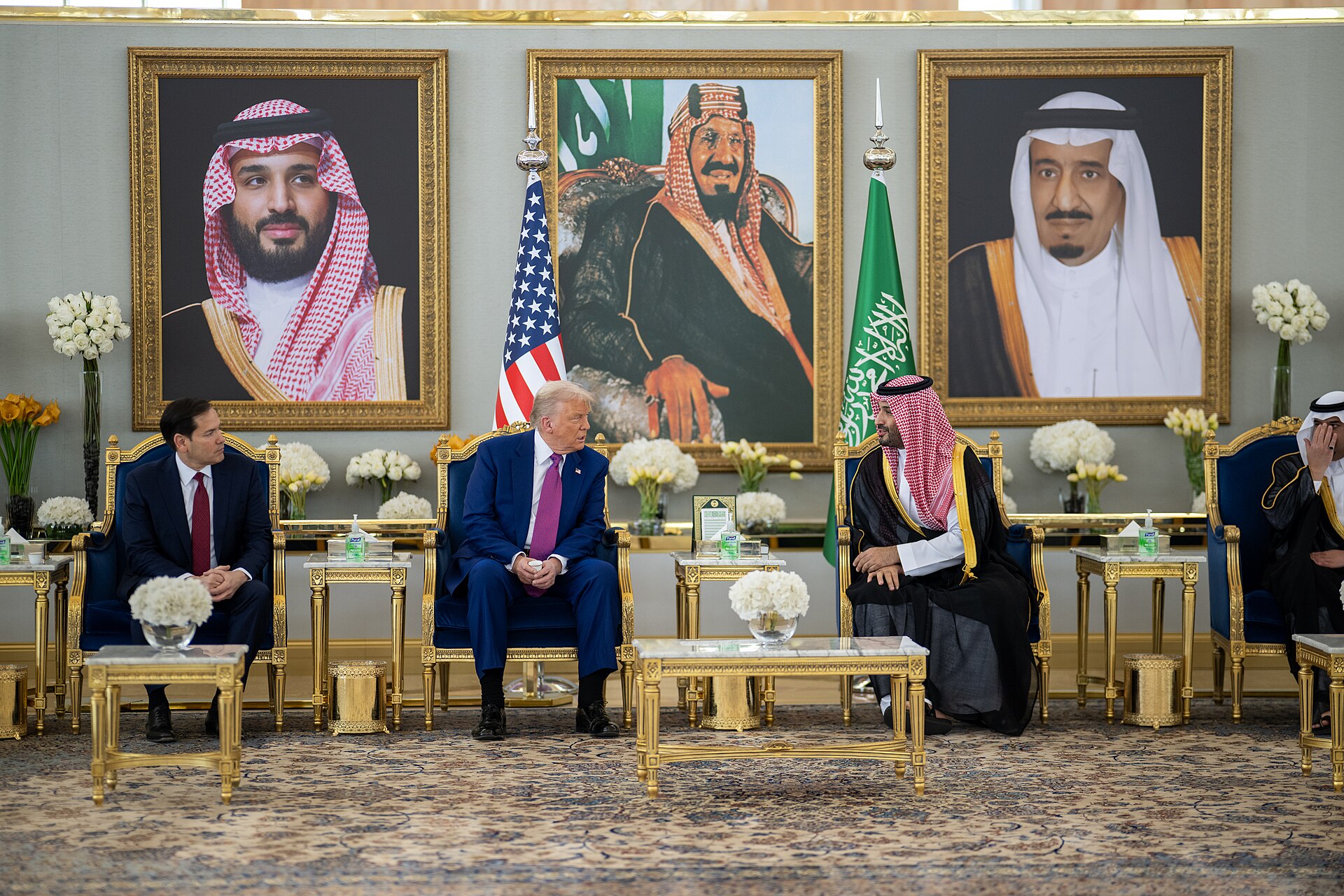

RIYADH — Saudi Arabia killed America’s Hormuz escort mission in early May by suspending US access to Prince Sultan Air Base and closing its airspace to American military aircraft. The unilateral veto — coordinated simultaneously with Kuwait — grounded an operation the White House had announced on Truth Social without consulting either ally. A phone call between Trump and Crown Prince Mohammed bin Salman did not resolve the impasse. Trump paused Project Freedom days later.
What circulated on social media afterward — a nine-component offer allegedly made by MBS, including $100 billion in war financing and eventual normalization with Israel — remains unverified by any major news organization. But the confirmed story matters on its own terms. Under Wood Mackenzie’s “Quick Peace” scenario, a reopened Strait of Hormuz would send Brent crude to $80 per barrel by year-end, costing the Kingdom roughly $152 million per day in lost revenue against current prices. At the 2027 Quick Peace floor of $65, the shortfall against Saudi Arabia’s $108–111 fiscal breakeven widens to more than $310 million daily. MBS did not ground Project Freedom because he wants war. He grounded it because peace — at least the kind that collapses the war premium — is structurally more expensive than the conflict Saudi Arabia is already struggling to finance.
What Happened to Project Freedom?
Trump announced Project Freedom on Truth Social on the evening of Sunday, May 3, 2026 — a US Navy escort mission to guide commercial ships through the Strait of Hormuz. He framed it as humanitarian. “This is a Humanitarian gesture on behalf of the United States, Middle Eastern Countries but, in particular, the Country of Iran,” he wrote. CENTCOM committed guided-missile destroyers, more than 100 aircraft, and approximately 15,000 service members.
He did not coordinate with Gulf allies before announcing it. Secretary Rubio described the mission as helping 23,000 civilians from 87 nations stranded in the Gulf — framing that masked the operational reality of guided-missile destroyers and combat aircraft moving through waterways Iran considers sovereign territory.
“The U.S. made an announcement and then coordinated with us,” a Middle Eastern diplomat told NBC News. Saudi officials feared the operation “could spur more Iranian attacks on Gulf allies and reignite the conflict,” NBC reported separately — a concern grounded in months of IRGC strikes on bases hosting American forces across Kuwait, Bahrain, and the UAE. Within 36 hours, Riyadh informed Washington that US military aircraft could no longer operate from Prince Sultan Air Base — the CENTCOM air hub southeast of Riyadh hosting roughly 2,300 American personnel — and could not transit Saudi airspace. Kuwait simultaneously suspended American basing and overflight rights, an independent action confirmed by Drop Site News through a US administration official.
The Middle East briefing 3,000+ readers start their day with.
One email. Every weekday morning. Free.
The geography made this lethal to the operation. “Because of geography, you need cooperation from regional partners to utilize their airspace along their borders,” a US official told NBC. Without Saudi and Kuwaiti airspace, the defensive umbrella required to protect ships transiting Hormuz could not be maintained.
Trump called MBS. “A call between Trump and Saudi Crown Prince Mohammed bin Salman did not resolve the issue,” NBC reported, citing two US officials, “forcing the president to pause Project Freedom in order to restore U.S. military access to the critical airspace.” By Tuesday, May 5, Trump announced the pause on Truth Social, saying it would last “for a short period of time to see whether or not the Agreement can be finalized and signed.” Three days later, he threatened escalation: “We may go back to Project Freedom if things don’t happen, but it would be ‘Project Freedom Plus.’”
A Saudi source told AFP that the NBC airspace report “isn’t true” — though two other Saudi sources told the same agency that “Saudi Arabia was against the operation because it felt it would just escalate the situation and would not work.” Rayed Krimly, Saudi Deputy Minister for Public Diplomacy, issued a statement on May 9 that the Kingdom “maintains its position supporting de-escalation and negotiations efforts.” The statement did not address the airspace question.
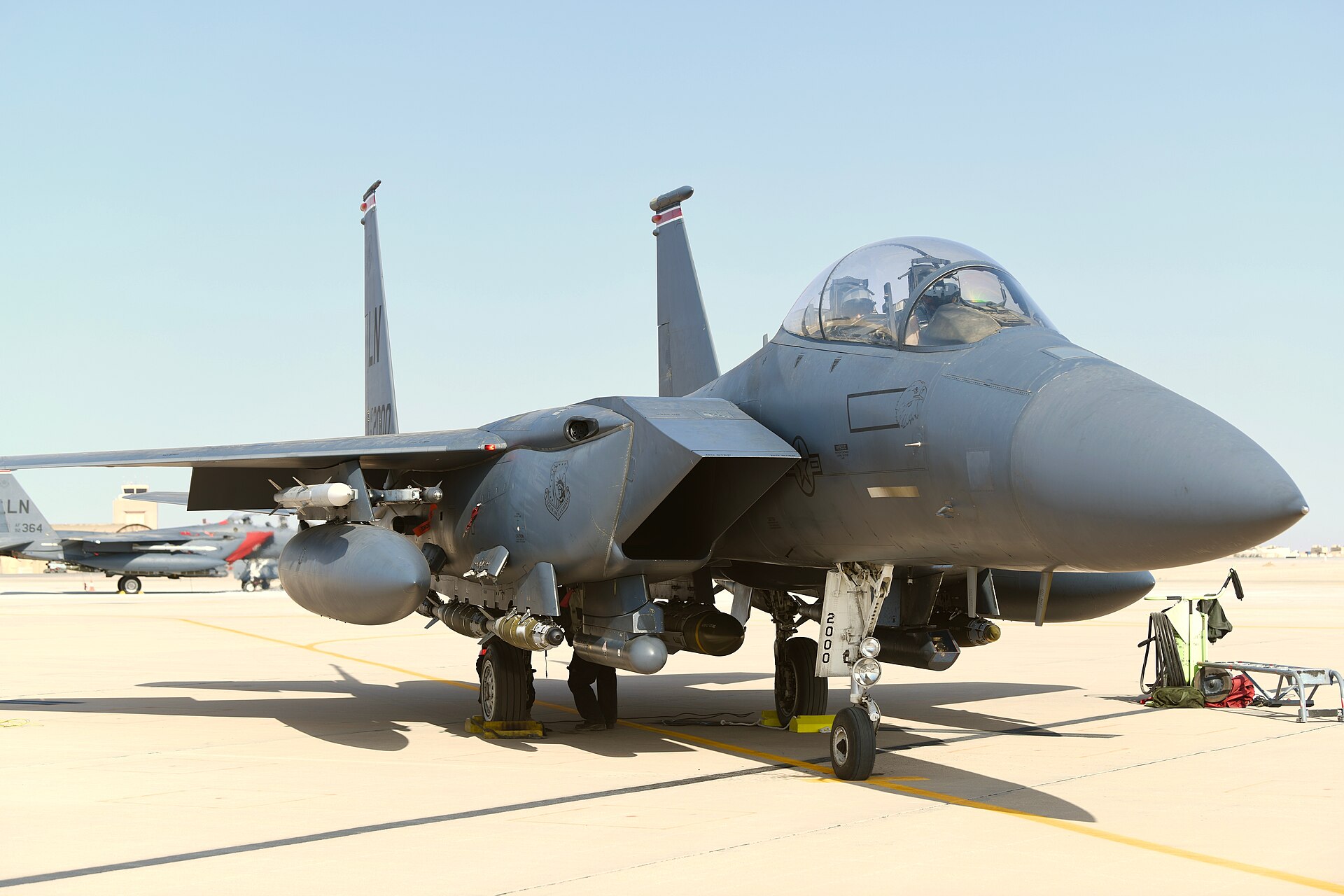
What is not disputed by any party is the outcome: the operation stopped. And it stopped because Saudi Arabia — a country without a Status of Forces Agreement governing US access to PSAB, where American presence exists by invitation rather than treaty — decided to revoke that invitation. No NATO ally has grounded an active US military operation through base-access denial. The precedent, as with France’s role as the Hormuz intermediary Saudi Arabia cannot be, is that the Kingdom’s geographic hold on US force projection is absolute and non-negotiable.
What Did Social Media Claim MBS Offered?
A post by @ImtiazMadmood on X, citing unnamed “White House sources,” claimed that MBS called Trump during the Project Freedom impasse and made a nine-component offer to continue the war against Iran. The post alleged MBS told Trump: “This is a historic opportunity — we must finish the job and weaken the Iranian regime once and for all.” None of this has been independently verified. The following table shows each claimed component against what major outlets reported about the same event.
| Claimed Component | Amount / Detail | Confirmed by NBC / JPost / Drop Site? |
|---|---|---|
| War financing transfer | $100 billion | No |
| Israel normalization | After fall of Iranian regime | No |
| Ashdod pipeline access | Saudi oil to Israeli Mediterranean port | No |
| US investment commitment | ~$1 trillion | No |
| Arms purchases | $500 billion | No |
| Regional defense alliance | Details unspecified | No |
| Joint Hormuz / Bab al-Mandab naval control | Saudi-US shared command | No |
| US base funding in Israel | Saudi-financed | No |
| Post-Iran reconstruction fund | Amount unspecified | No |
Imtiaz Mahmood is a social media commentator with roughly 462,000 X followers. He is not affiliated with any recognized news organization. NBC’s detailed account of the same phone call — sourced to two US officials — mentions none of these elements. JPost’s May 7 article by Goldie Katz confirms the airspace denial mechanism and failed call but reports no financial package. Drop Site News adds Kuwait’s independent corroboration and operational detail but no financial offer. The New Republic’s analysis confirmed Saudi Arabia forced the reversal without mentioning any package.
The sourcing gap is total. Every major outlet that covered the MBS-Trump interaction described it as an airspace dispute. None described a financial offer of any kind.
That does not mean the offer was not made. It means it cannot be treated as fact. What can be treated as fact is that MBS had already been lobbying Trump to continue the war. The New York Times reported on March 24, 2026, that MBS “has been pushing President Trump to continue the war against Iran, arguing that the U.S.-Israeli military campaign presents a ‘historic opportunity’ to remake the Middle East.” He pressed for attacks on Iran’s energy infrastructure and argued that the United States should consider deploying troops inside Iran. This was reported weeks before Project Freedom existed.
Why Is War Cheaper Than Peace for Saudi Arabia?
The war premium embedded in current oil prices — estimated by Goldman Sachs at approximately $14 per barrel — is the difference between a fiscal crisis Saudi Arabia can manage and one it cannot. Remove the premium and the arithmetic turns hostile.
Brent crude reached $101.36 per barrel intraday on June 3, 2026, according to Fortune — up $4.71 from the prior close and the first reading above $100 since the war began. Saudi Arabia’s fiscal breakeven, including PIF capital requirements, sits between $108 and $111 per barrel according to Goldman Sachs and Bloomberg Economics. The IMF’s standalone breakeven — excluding PIF — is $96 per barrel. At current prices, Saudi Arabia is already running a deficit. But the deficit is survivable.
Under Wood Mackenzie’s “Quick Peace” scenario, it is not.
| Scenario | Brent (end-2026) | Brent (2027) | Revenue Loss vs. Current ($101) | Shortfall vs. Breakeven ($108–111) |
|---|---|---|---|---|
| Current (war premium intact) | ~$101/bbl | — | — | ~$51–72M/day |
| Quick Peace (Wood Mac) | $80/bbl | $65/bbl | ~$152M/day (2026); ~$261M/day (2027) | ~$203–225M/day (2026); ~$311–333M/day (2027) |
| Extended Disruption (Wood Mac) | ~$200/bbl | Collapses below $50/bbl | +$717M/day (2026); –$370M/day (2027+) | Surplus then catastrophic deficit |
At current production of approximately 7.25 million barrels per day — constrained by the Hormuz closure, not by OPEC+ ministerial decision, and well below Saudi Arabia’s 10.291 million b/d quota — each dollar of Brent movement costs or earns Riyadh roughly $7.25 million daily. The Quick Peace scenario would erase $21 per barrel from current prices by December and $36 by mid-2027. The Extended Disruption scenario briefly generates windfall revenue but then collapses prices below $50, producing a deficit worse than anything in Quick Peace. The constraint is not limited to the strait: the Petroline’s 7 million barrel-per-day ceiling and Yanbu port’s 3–4 million barrel wartime loading capacity mean Saudi Arabia cannot reach quota-level exports even if Hormuz reopened tomorrow.
The war premium is a fiscal trap with no safe exit. Maintaining the conflict holds the premium in place — but production stays capped by Hormuz and the deficit widens slowly. Ending it collapses the premium and widens the deficit fast. Escalation briefly spikes prices, then demand destruction sends them below pre-war levels. Each path is worse than the last.
If the $100 billion offer reported by Mahmood is real, it would cover roughly 660 days — roughly 22 months — of the Quick Peace revenue gap. That would bridge Saudi Arabia from war-premium pricing to a hypothetical post-conflict price recovery. In pure fiscal terms, $100 billion is cheaper than absorbing $152 million per day in perpetuity. The offer, if it exists, is not generosity. It is an insurance premium against the collapse of the war premium itself.
This is the structural bind. MBS does not need to be a war hawk for war continuation to be his best available fiscal option. He needs only to be a finance minister — and Aramco’s dividend is already larger than its cash flow.
Who Pays for America’s Wars?
The precedent for Gulf allies financing American military operations is not speculative. It is the foundational model.
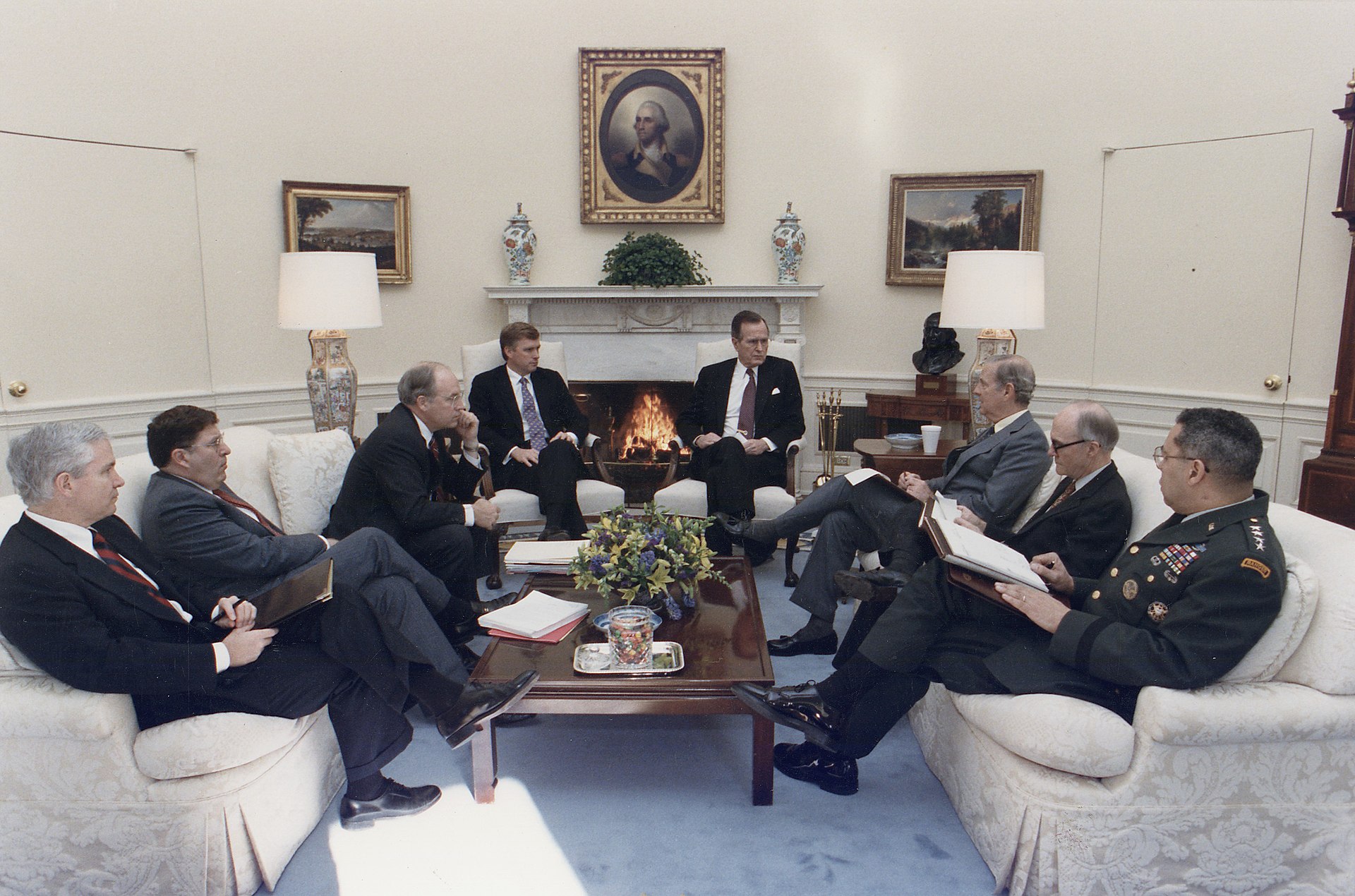
The 1991 Gulf War cost $61.1 billion. Allied states covered more than 80 percent. Saudi Arabia contributed $16.8 billion — 27 percent of the total. Kuwait paid $16 billion. Japan added $10 billion. Germany contributed $6.6 billion. The American share was $7.3 billion, roughly 12 percent. James Baker’s September 1990 trip to nine countries — the press called it “the Tin Cup Trip” — secured the financing before the first sortie flew. “We, of course, also did something that has never been done before,” Baker told PBS Frontline, “and that is fought a war which the United States did not itself have to totally pay for.”
Trump has explicitly invoked this template. The $142 billion arms agreement signed with Saudi Arabia in May 2025 required no normalization commitment, no SOFA, no binding security guarantee. Saudi Arabia obtained Major Non-NATO Ally status and the largest defense package in history without conceding anything on Israel. The transaction — as Secretary Rubio’s June 2 testimony made explicit — treats the Kingdom as a paying customer, not a treaty ally. Rubio’s enumeration of four US conditions for Hormuz reopening, including explicit naming of the PGSA toll, confirmed that the commercial architecture of the relationship is the relationship.
A $100 billion war-financing transfer, if offered, would fit this template precisely. It would not be unprecedented. It would be an escalation of an existing pattern — one in which Saudi Arabia pays for American force projection in exchange for operational outcomes that serve Saudi fiscal interests. The 1991 ratio was roughly 7:1 allied-to-American. A $100 billion transfer against total US war costs would represent a similar structure at a larger scale.
What would be unprecedented is the quid pro quo reportedly attached — normalization, pipeline access, reconstruction funds. The 1991 cost-sharing bought liberation of Kuwait. It did not buy diplomatic recognition of a third state. The Mahmood package, if real, bundles fiscal support with geopolitical concessions that Saudi Arabia has spent decades refusing to make.
Can MBS Deliver Normalization?
Even if MBS offered normalization with Israel — conditionally, after the fall of the Iranian regime — the offer contains a structural defect that no amount of money can fix. Saudi Arabia’s Basic Law, Article 70, requires any treaty to be authorized by Royal Decree. King Salman, who is 90 years old, must sign it. As long as King Salman is alive, MBS cannot unilaterally execute a normalization agreement regardless of his personal disposition.
“Do I care personally? I don’t, but my people do,” MBS told Secretary of State Blinken in January 2025. The statement was unusually candid about the domestic constraint. A Washington Institute survey from August 2025 found 99 percent of Saudi respondents opposed normalization with Israel. Support for the Abraham Accords in Saudi Arabia fell from 41 percent in 2020 to 13 percent by 2025, according to INSS and Washington Institute polling.
The Ashdod pipeline claim in the Mahmood package faces a parallel impossibility. The Trans-Israel pipeline — 254 kilometers from the Gulf of Aqaba to Ashkelon, with 1.2 million barrels per day of capacity — was built as a 50/50 joint venture between Israel and Iran under the Shah. Netanyahu revived the concept of a Saudi connection in March 2026, proposing a 700-kilometer extension from Yanbu through Jordan to Eilat. Israeli sources told Ynet that Washington “showed strong interest” but that Riyadh “responded coolly.” The pipeline’s legal status remains contested — a Swiss Federal Tribunal in 2016 ruled in Iran’s favor with a $1.1 billion award against EAPC in the post-revolutionary ownership dispute.
The normalization and pipeline components of the Mahmood package, even if offered, would be promissory. They could not be executed under current legal and political conditions. A conditional offer — “after the fall of the Iranian regime” — is an offer whose trigger condition MBS does not control, whose legal prerequisite he cannot satisfy, and whose domestic politics he has publicly acknowledged as prohibitive. The $142 billion arms deal signed in May 2025 demonstrated that Saudi Arabia can obtain everything it wants from Washington — including Major Non-NATO Ally status — without conceding anything on Israel. Offering normalization now would concede a card MBS has already proven he does not need to play.
The Kushner Channel
The financial architecture surrounding the Trump-MBS relationship operates through Jared Kushner’s Affinity Partners, which received a $2 billion commitment from the Saudi Public Investment Fund in 2021. PIF’s own screening panel recommended against the investment, citing Kushner’s “inexperience” and “excessive” fees. MBS overruled the committee.
Since 2021, Kushner has collected more than $110 million from Saudi Arabia in management fees, according to a Senate Finance Committee investigation led by Ranking Member Ron Wyden and House Oversight Ranking Member Robert Garcia, published March 19, 2026. The management fee — 1.25 percent of investment — yields $25 million annually. PIF separately financed a $7 billion Trump Organization development in Diriyah. Forbes reported that roughly 80 percent of the project’s revenue flows to Trump. Kushner served as Trump’s Iran negotiator, participating in the Geneva mediation session on February 26, 2026.
“The guy is literally on the payroll of the Saudi government and trying to take even more of their money while simultaneously hijacking U.S. foreign policy with his shadow State Department,” Wyden said. The committee demanded records of every foreign government meeting Kushner attended since January 20, 2025.
None of this proves that financial entanglements determined the outcome of the Project Freedom dispute. What it establishes is that the channel through which US-Saudi negotiations on the war are conducted is itself financially entangled with PIF — the same entity whose capital requirements push Saudi Arabia’s fiscal breakeven from the IMF’s $96 standalone figure to the $108–111 Goldman Sachs estimate. The negotiator’s private fund is capitalized by the institution whose spending needs make peace unaffordable. Washington has drained 58 million barrels of emergency oil while the man negotiating the war’s end collects fees from the government that benefits most from its continuation.
What Does the IMF See That Riyadh Cannot Admit?
The IMF’s Article IV consultation for Saudi Arabia, published June 3, 2026, cut the Kingdom’s 2026 growth forecast by 1.4 percentage points to 3.1 percent — down from 4.5 percent projected in January. Mission chief Azim Sadikov, after spending April 28 through May 13 in Riyadh, delivered the assessment in diplomatic language that mapped precisely onto the fiscal trap the Kingdom refuses to discuss publicly.
“The conflict and the ensuing curtailment of maritime traffic through the Strait of Hormuz have disrupted trade, weighing on the oil and non-oil sectors,” Sadikov said. PMI had recovered to 52.8 in May from 48.8 in March — barely above the 50 threshold separating expansion from contraction.
The fiscal numbers were worse. Saudi Arabia’s Q1 2026 deficit reached SAR 125.7 billion ($33.5 billion) — 76 percent of the full-year SAR 165 billion target consumed in 90 days. Goldman Sachs revised its full-year Saudi deficit estimate to SAR 300–330 billion ($80–90 billion), roughly 6–6.6 percent of GDP and double the official forecast. Aramco’s Q1 dividend of $21.89 billion, payable June 9, exceeded its Q1 free cash flow of $18.6 billion — a coverage ratio of 0.85x. The state is paying out more than it earns.
Sadikov’s warning about the medium term was the sentence Riyadh’s planning ministry cannot write in its own documents: “Beyond near-term effects, a prolonged conflict could erode investor confidence and weaken medium-term growth and diversification prospects.” This is IMF code for: the war is destroying Vision 2030. Saudi Arabia built a private de-escalation track with Iran because it knows this. The track has not produced results.
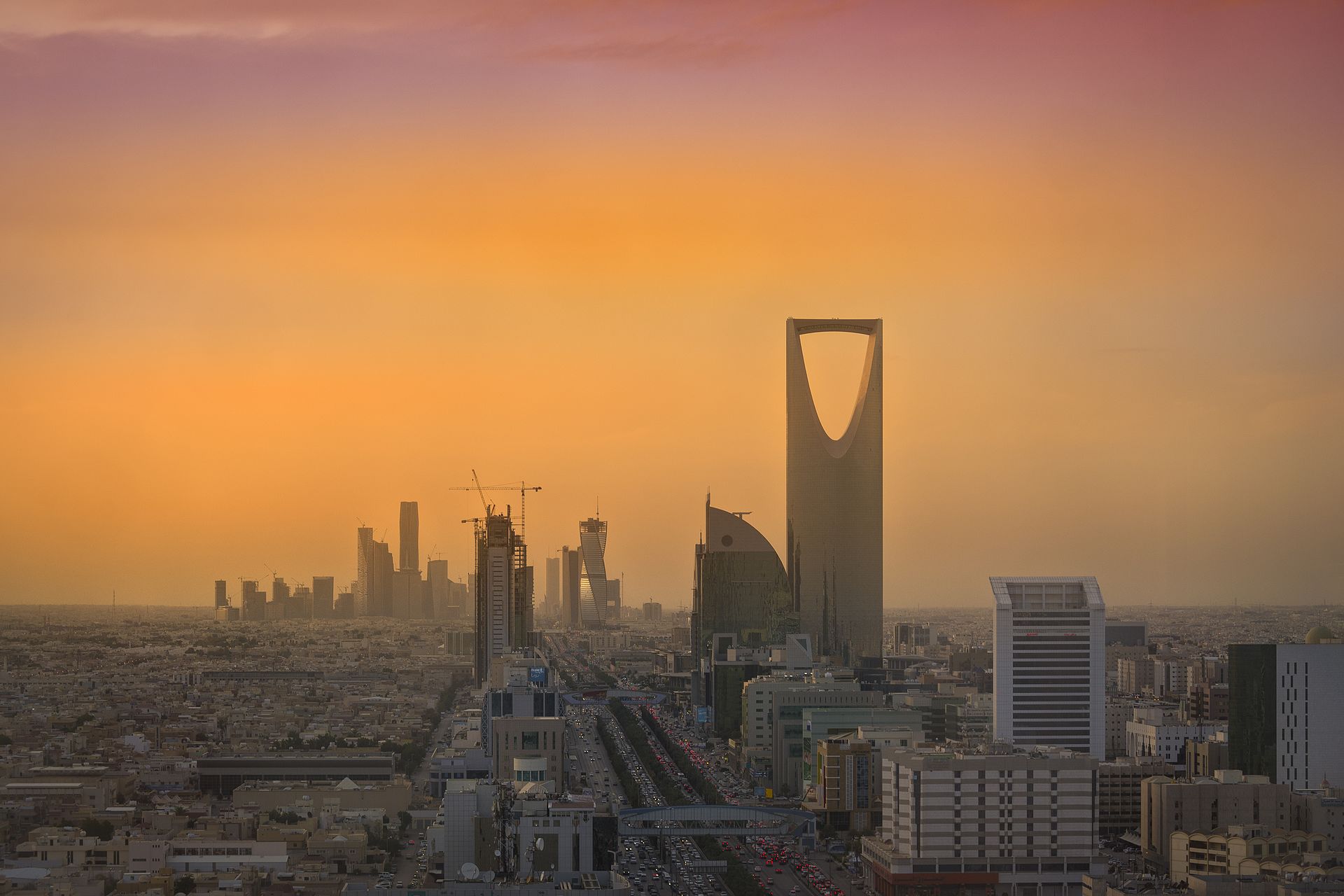
Iran’s UN Ambassador Iravani has added a separate pressure vector, formally demanding compensation from Saudi Arabia for “internationally wrongful acts” — providing US forces with bases, airspace, and logistics. “By their internationally wrongful acts, they have breached their international obligations owed to the Islamic Republic of Iran,” Iravani wrote to the Security Council in April 2026. The legal exposure is speculative. The political framing is not: Iran is constructing a public record that treats Saudi Arabia as a co-belligerent, not a bystander. Iran has already told the United States to leave Hormuz while inviting only Oman to stay — a framework that excludes Saudi Arabia from any role in the waterway’s future governance.
The IMF recommends “a modest reduction in the non-oil primary deficit in 2026, with spending reprioritization as the first line of action.” In practice, the only spending large enough to meaningfully reduce the deficit is the Aramco dividend — which funds PIF, which funds Vision 2030, which funds the legitimacy architecture on which MBS’s domestic position depends. The circular dependency is total. Cutting the dividend defunds the crown prince’s modernization program; maintaining it widens the fiscal hole; and the only price level that makes either option survivable is the war premium the Kingdom cannot afford to lose.
MBS grounded Project Freedom because he had to. Not because $100 billion was on the table — that may never have been offered. At $101 per barrel, Saudi Arabia is already running a deficit it can barely manage. A peace deal that drops Brent to $80 or $65 does not solve that problem — it detonates it. The airspace denial was not a negotiating tactic. It was fiscal self-defense by a country whose best available option is the continuation of a conflict it is, slowly, losing the capacity to finance. That same fiscal logic is driving Saudi Arabia to build lateral diplomatic architecture outside the US relationship: the quadrilateral security framework with Egypt, Pakistan, and Turkey institutionalised three ministers’ meetings in 31 days without a communiqué, assembling the coalition Saudi Arabia needs if the American umbrella continues to narrow.
Frequently Asked Questions
Has Saudi Arabia ever denied the US military airspace access before?
Saudi Arabia restricted US offensive air operations during the 2003 Iraq invasion, permitting only defensive sorties from Prince Sultan Air Base — a condition that contributed to the US relocating its primary Gulf air hub to Al Udeid in Qatar. The Kingdom also refused basing for the 1998 Operation Desert Fox strikes against Iraq. The Project Freedom denial in May 2026 was distinct in that it grounded an operation after it had been publicly announced, creating a visible reversal rather than a quiet pre-launch refusal.
What is Prince Sultan Air Base and why does it matter?
PSAB sits near Al Kharj, approximately 60 kilometers south of Riyadh. It was reopened for US forces in October 2019 after a 16-year closure — the period during which Qatar’s Al Udeid served as CENTCOM’s primary air hub. The 378th Air Expeditionary Wing operates from the base, flying F-22 Raptors and B-1B bombers alongside Patriot batteries. The prior closure, from 2003 to 2019, was driven by Saudi concerns about domestic political pressure following the Iraq invasion — the same political calculus now operating in reverse.
Could the US have conducted Project Freedom without Saudi or Kuwaiti airspace?
Theoretically, US aircraft could stage from carriers, Diego Garcia, or Omani bases. In practice, these alternatives impose severe operational limitations. Diego Garcia is more than 2,500 nautical miles from the Strait — beyond the combat radius of most tactical aircraft without extensive aerial refueling. Omani airspace covers only the southern approach to Hormuz. Without Saudi and Kuwaiti corridors, maintaining a continuous air defense umbrella over a multi-day convoy escort operation was assessed by US officials as operationally unfeasible.
What happened to the Eilat-Ashkelon pipeline after the Iranian Revolution?
Iran ceased using the pipeline in 1979 and initiated arbitration over its 50 percent ownership stake. The 2016 Swiss ruling (noted in the article) awarded $1.1 billion plus interest, but Israel has refused to pay and contested enforcement through Swiss courts, leaving the award in procedural limbo as of 2026. A practical complication: the pipeline runs through Israeli sovereign territory, meaning any Saudi oil would require Israeli government authorization for every transit — giving Jerusalem a veto over any Saudi energy corridor regardless of the ownership dispute.
The fiscal arithmetic was formalised by the IMF on the same date: the IMF Article IV conditionality document published June 3 conditions Saudi Arabia’s 2 percent GDP recovery baseline on Hormuz normalisation — the first time the Fund has made a Gulf state’s growth forecast explicitly contingent on an adversary-held strait reopening.
The normalization impasse is structural, not tactical: Saudi Arabia’s four-element precondition requires Palestinian statehood, and Rubio’s June 3 Senate testimony confirmed that Washington opposes annexation without committing to statehood — leaving the precondition unmet on both ends. That double constraint is documented in Rubio Opposed Annexation. Saudi Arabia Required Statehood.