
TEHRAN — Iran’s hardline establishment responded to President Trump’s open-ended ceasefire extension on April 22, 2026, not with diplomacy but with a Khorramshahr-4 ballistic missile paraded through Enghelab Square, two ships seized in the Strait of Hormuz, and a warning from Judiciary Chief Gholam-Hossein Mohseni-Ejei that “the enemy is not in a position to set a time for us.”
The coordinated display — military hardware rolling past the symbolic center of the 1979 revolution, the judiciary chief invoking prosecutorial authority from his seat on the Interim Leadership Council, and Khatam al-Anbiya commander Maj. Gen. Ali Abdollahi declaring his forces’ “fingers on the trigger” — was not aimed at Washington or Islamabad. It was aimed at President Masoud Pezeshkian and Foreign Minister Abbas Araghchi, the two men who have spent seven weeks trying to negotiate an end to the war within an authorization ceiling that tightened with every concession they attempted.
Table of Contents
- The Enghelab Square Parade and Its Audience
- Who Is Mohseni-Ejei and Why Does His Voice Matter More Than a General’s?
- Abdollahi’s “Fingers on the Trigger” and Khatam al-Anbiya’s Role
- The Absent Supreme Leader
- Can Pezeshkian Negotiate Against His Own Government?
- The Hormuz Seizures as Kinetic Punctuation
- Background: From Extension to Escalation
- FAQ
The Enghelab Square Parade and Its Audience
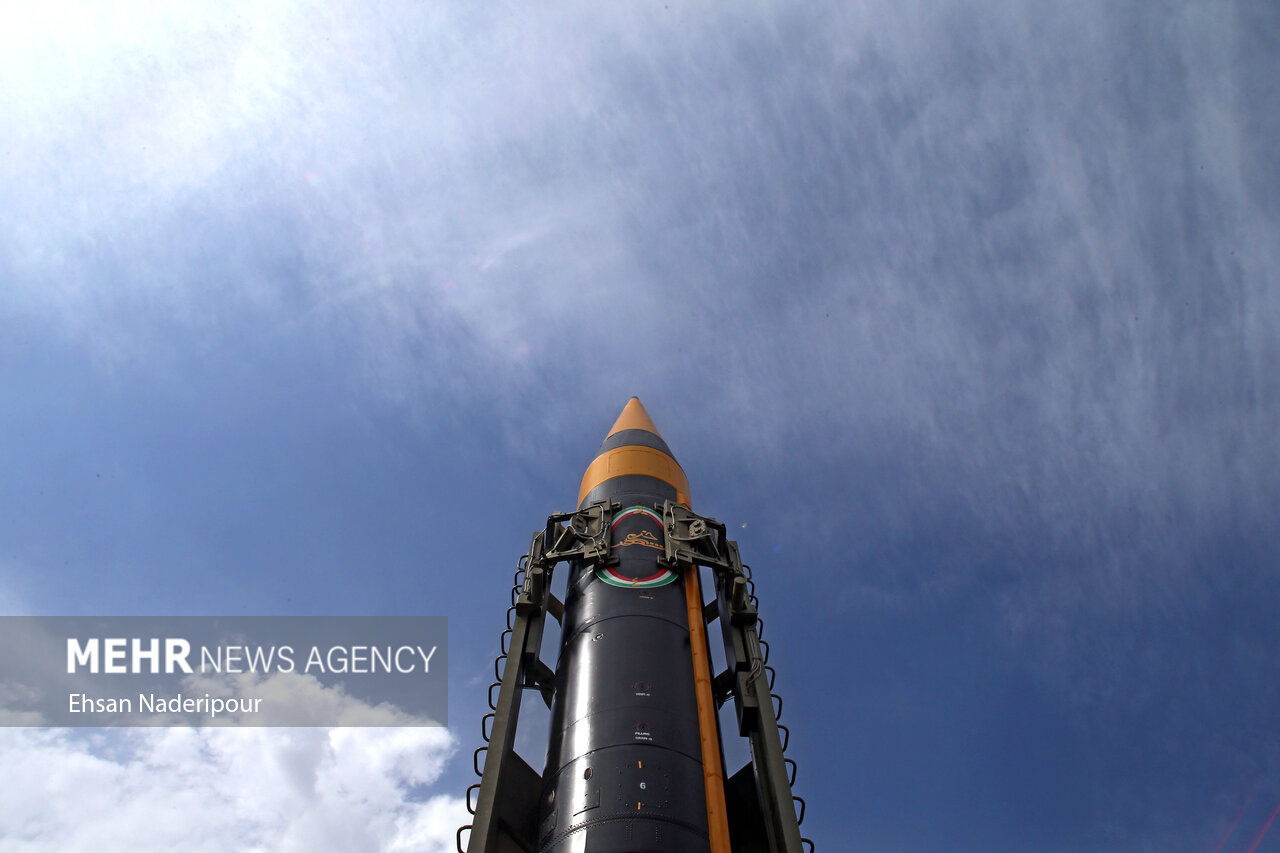
Hours after Trump posted on Truth Social that Iran’s government was “seriously fractured” and unable to produce a “unified proposal,” the IRGC answered by rolling a Khorramshahr-4 medium-range ballistic missile through central Tehran on a transporter-erector-launcher. The location was Enghelab Square — Revolution Square — the site where the Islamic Republic was born and where the 2009 Green Movement mounted its largest demonstrations against it.
The missile itself was selected for legibility. The Khorramshahr-4, publicly unveiled in May 2023 under the name Kheibar, carries the heaviest warhead in Iran’s known inventory: 1,500 to 1,800 kilograms. It is road-mobile, liquid-fueled, and equipped with a maneuverable reentry vehicle designed to defeat Patriot and THAAD interceptors. Its declared range of 2,000 kilometers — with estimates running to 4,000 — places every Gulf capital, every Saudi oil terminal, and every US base in the region inside its arc.
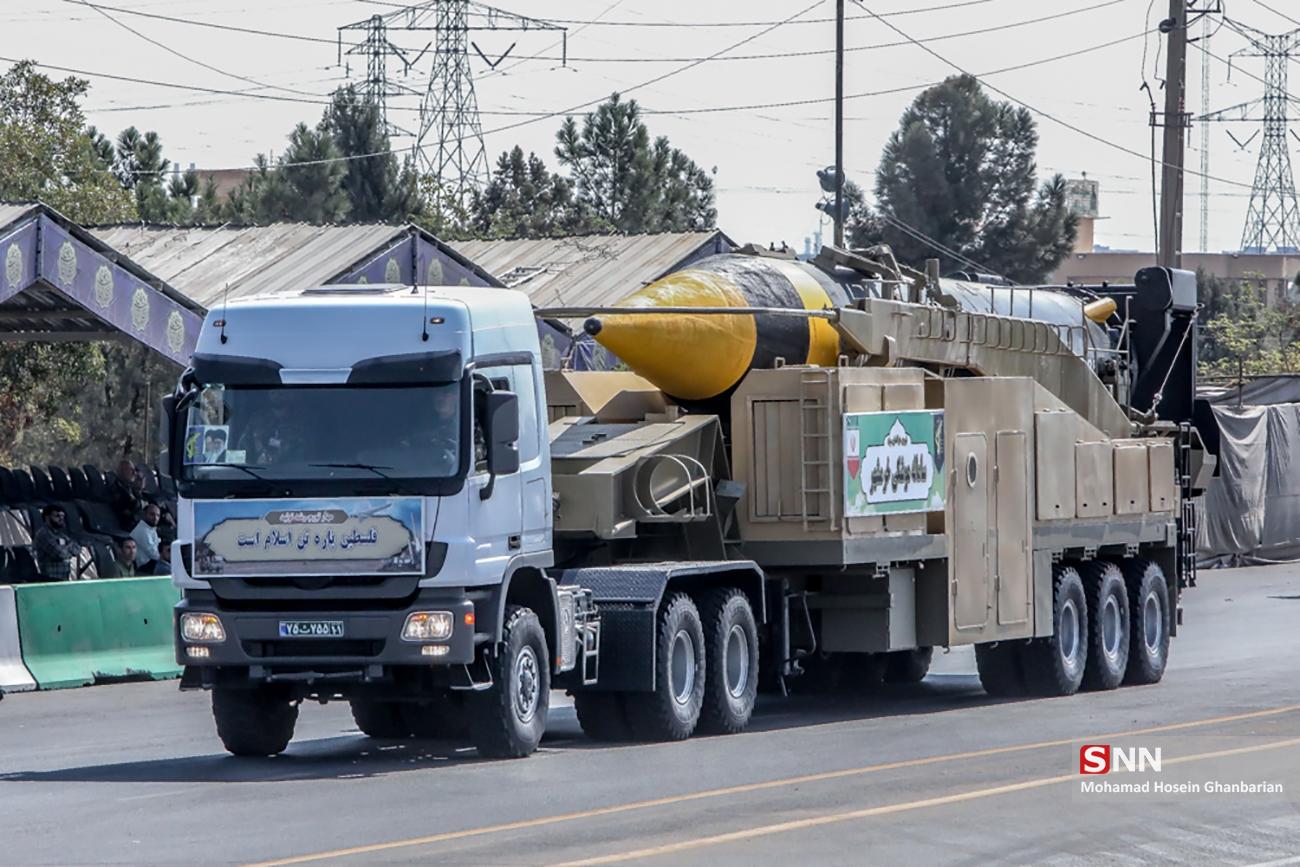
The weapon displayed in Enghelab Square was labeled with the coordinates of Qatar’s Ras Laffan liquefied natural gas complex, according to Army Recognition and Al Bawaba. This was not abstract. Iran struck Ras Laffan with ballistic missiles on March 18, 2026, during the war’s opening weeks. The label connected a weapon already used in combat to a target already hit — a reminder formatted as a threat.
Iranian state television broadcast the parade with commentary advocating “military strength in the face of threats and ultimatums from Trump,” Al Jazeera reported. Presenters and analysts maintained this editorial line throughout the day. The broadcast was domestic programming, in Farsi, for an Iranian audience watching its government answer an American president’s demand for unity by demonstrating a different kind of unity entirely.
The Middle East briefing 3,000+ readers start their day with.
One email. Every weekday morning. Free.
Who Is Mohseni-Ejei and Why Does His Voice Matter More Than a General’s?
Gholam-Hossein Mohseni-Ejei holds three positions simultaneously. He is Chief Justice of Iran, appointed by Ali Khamenei in July 2021 under Article 157 of the constitution. He is a member of the Assembly of Experts, which elected Mojtaba Khamenei as supreme leader on March 9. And since March 1, 2026 — the day after Khamenei’s assassination — he has served on the Interim Leadership Council that exercises supreme-leader-level authority while Mojtaba remains incapacitated.
His statement on April 22 carried weight that a military commander’s cannot. “The enemy is not in a position to set a time for us,” he told state media, adding that “Islamic Iran has not stepped back an inch from its demands” and that Tehran must “maintain 100 percent readiness” against possible renewed attacks. Generals threaten retaliation. A chief justice threatens prosecution.
The distinction matters because of what happened ten days earlier. Mohammad Bagher Zolghadr, secretary of the Supreme National Security Council, filed a formal complaint accusing Araghchi of having “deviated from the delegation’s mandate” by expressing flexibility on Iran’s support for the Axis of Resistance during the Islamabad talks. That complaint — using the specific language of mandate violation — created a legal paper trail. Mohseni-Ejei controls the institution that could act on it.
On April 12, Mohseni-Ejei had praised Iran’s negotiating team as “guardians of Iran’s war rights,” according to PressTV. Ten days later, his language shifted to “not one iota.” The shift tracks the SNSC complaint. What changed between April 12 and April 22 was not the external situation — it was the internal documentation of Araghchi’s alleged overreach.
Mohseni-Ejei’s career makes the implicit threat credible. Before becoming chief justice, he served as Minister of Intelligence from 2005 to 2009, oversaw the prosecutor’s office, and represented the judiciary in intelligence-related cases including the IRGC trial of Mehdi Hashemi. The United States, the European Union, Canada, and Switzerland have all sanctioned him for human rights abuses. There is no recorded precedent of Iran’s judiciary prosecuting diplomats for exceeding a ceasefire mandate. Mohseni-Ejei has spent his career creating precedents.
Abdollahi’s “Fingers on the Trigger” and Khatam al-Anbiya’s Role
Maj. Gen. Ali Abdollahi, commander of Khatam al-Anbiya Central Headquarters, stated on April 22 that the armed forces have their “fingers on the trigger” to respond with attacks “stronger than before.” Management of the Strait of Hormuz, he said, would not be “exploited by the lying and delusional U.S. President.” The statement was published by Mehr News Agency and cited by NBC News and Al Jazeera.
Abdollahi’s statement came after Trump’s April 21 extension announcement, establishing it as reactive rather than pre-scheduled. Khatam al-Anbiya is not a conventional military formation — it is the IRGC’s military-industrial conglomerate and its wartime coordination command. Pakistan’s national security coordinator Munir visited Khatam al-Anbiya headquarters on April 16, six days before Abdollahi’s statement, in what amounted to an acknowledgment that the command structure that matters is not in the foreign ministry.
Abdollahi’s language was amplified by Mahdi Mohammadi, strategic affairs adviser to Parliament Speaker Mohammad Bagher Ghalibaf, who posted on April 21: “Trump’s ceasefire extension means nothing, the losing side cannot dictate terms. The continuation of the siege is no different from the bombing and must be responded to militarily. The time for Iran to take the initiative has come.” Ghalibaf — himself a former IRGC Aerospace Force commander from 1997 to 2000 — has not publicly distanced himself from his adviser’s statement.
The Absent Supreme Leader
Mojtaba Khamenei was elected supreme leader by the Assembly of Experts on March 9, 2026. He has not appeared in public since. As of April 22, his absence has reached 53 days. CNN reported on April 21 that the regime has used AI-generated video statements attributed to him. State media has referred to him as “janbaz” — a term meaning disabled war veteran — which Ali Vaez of the International Crisis Group described as “a rare self-admission.”
“Mojtaba is not in a state where he can actually make critical decisions or micromanage the talks,” Vaez told CNN, “but the system is using him to get final approval for key broad decisions.” The formulation is precise: the system uses him. He does not use the system.
This vacancy is what makes Mohseni-Ejei’s position on the Interim Leadership Council operative rather than ceremonial. Under Article 110 of the constitution, the supreme leader holds authority over the armed forces, the judiciary appointment power, and the final say on foreign policy. With Mojtaba incapacitated, those powers have effectively migrated to the council — and Mohseni-Ejei is the member with the institutional tools to constrain diplomacy. A general can threaten an enemy. A chief justice on the leadership council can threaten his own government’s negotiators.
Can Pezeshkian Negotiate Against His Own Government?
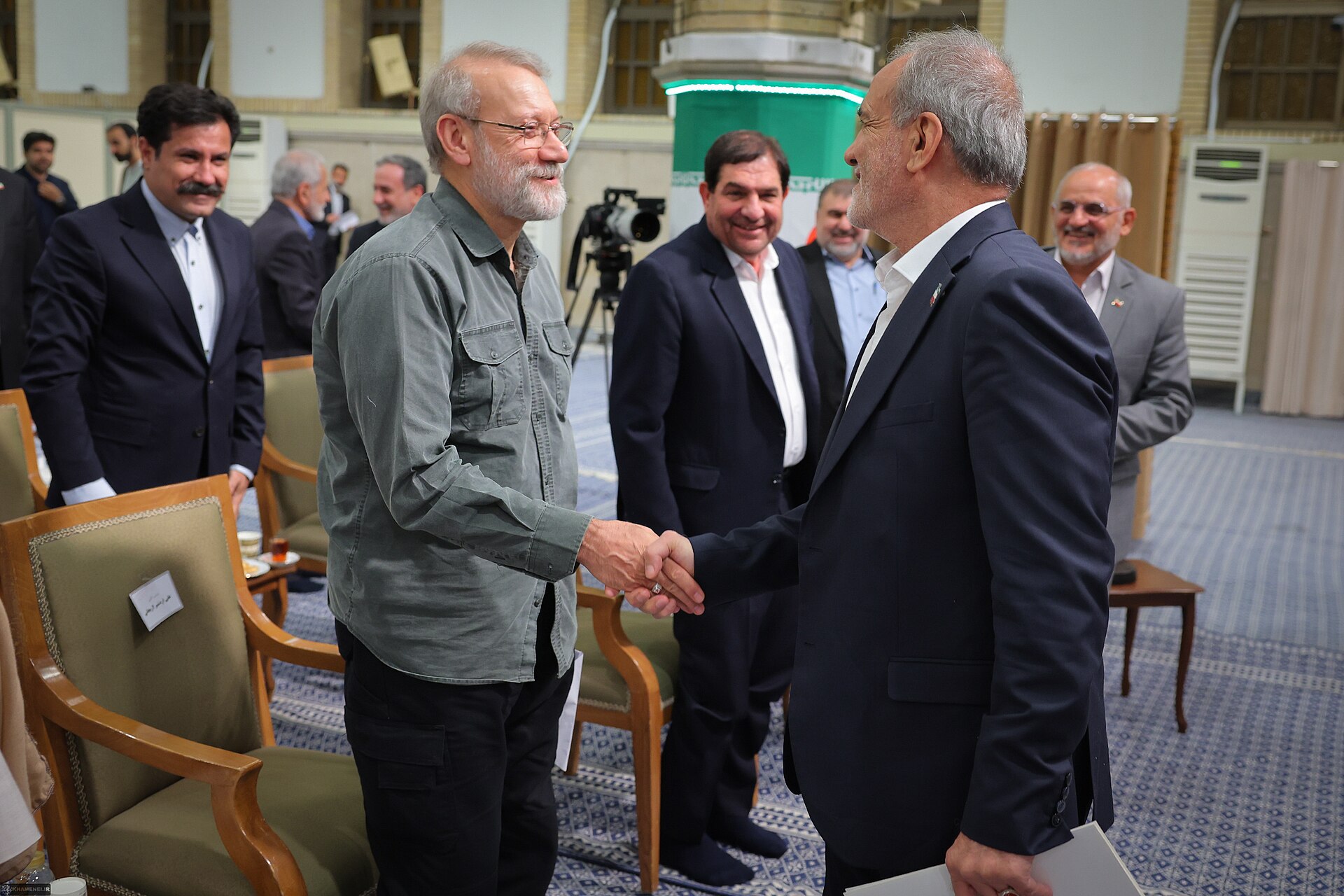
President Pezeshkian responded to the same events with different language. He stated that “the solution to the problems lies not in increasing tensions but in reason, dialogue, and avoidance of more destruction,” Al Jazeera reported on April 22. His deputy for communications, Mehdi Tabatabaei, rejected talk of divisions, claiming unity within the Iranian leadership was “unprecedented and exemplary.”
The claim was made on the same day that Mohseni-Ejei publicly warned against concessions, Abdollahi declared fingers on triggers, and a ballistic missile labeled with a Qatari gas facility rolled through central Tehran. Tabatabaei’s assertion of unity was itself evidence of disunity — you do not deny fractures that no one can see.
Pezeshkian’s structural problem is constitutional, not political. Under Article 110, the president has no authority over the IRGC. He cannot order a ceasefire, cannot direct Hormuz operations, and cannot overrule the SNSC. When Pezeshkian publicly accused Vahidi and Abdollahi on April 4 of sabotaging ceasefire negotiations, he was describing a chain of command in which he is not a link. Trump’s demand for a “unified proposal” asked Pezeshkian to deliver something the Iranian constitution does not allow him to produce.
The Zolghadr complaint deepens the trap. Araghchi’s alleged flexibility on Axis of Resistance support is now documented in an SNSC filing. Mohseni-Ejei’s April 22 statement, with its emphasis on not retreating “one iota,” reads as a warning that further flexibility will have consequences that originate not from Tehran’s enemies but from its judiciary. For Araghchi, the authorization ceiling is no longer just a metaphor for institutional resistance. It is becoming a legal architecture.
The Hormuz Seizures as Kinetic Punctuation
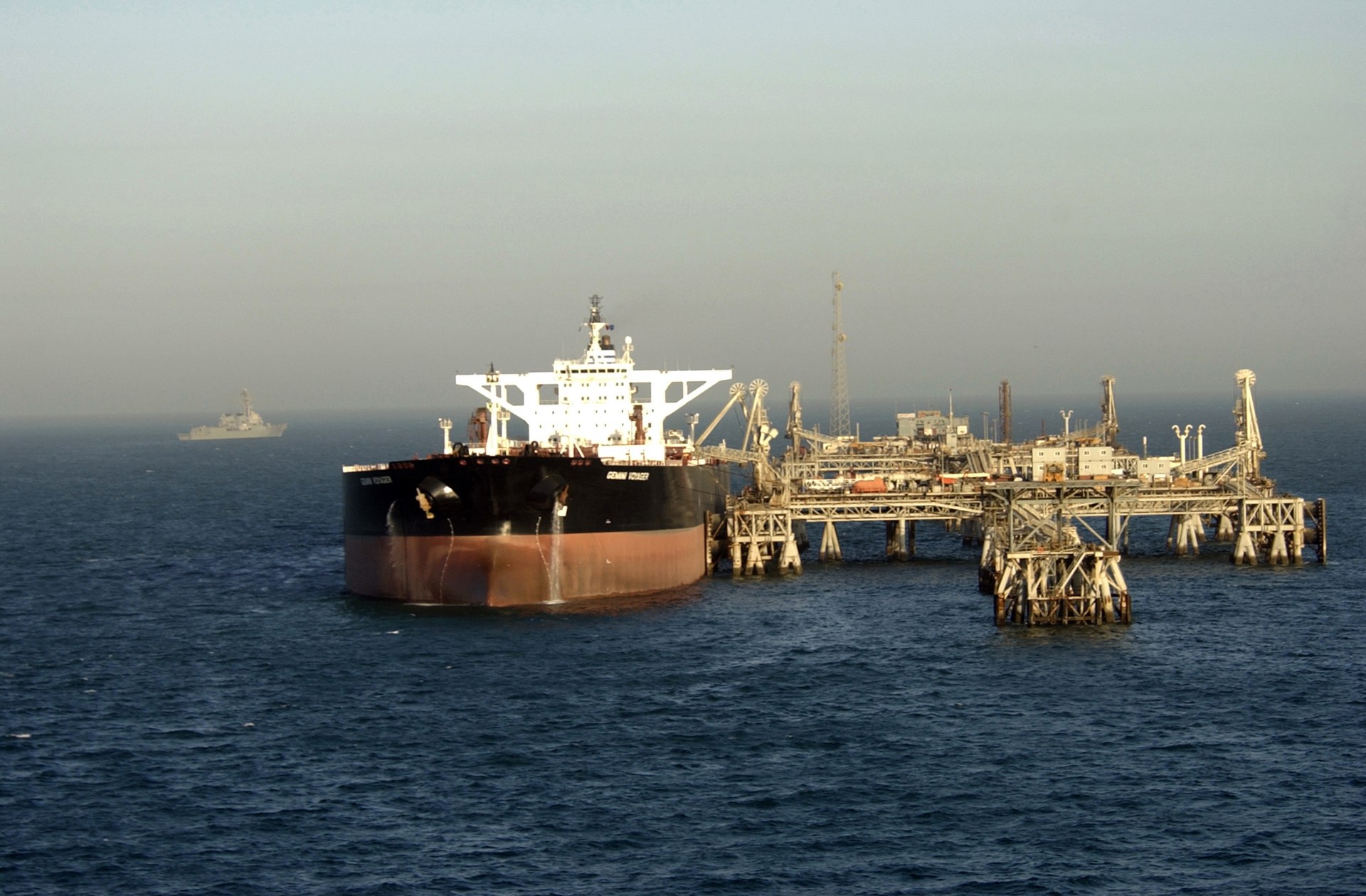
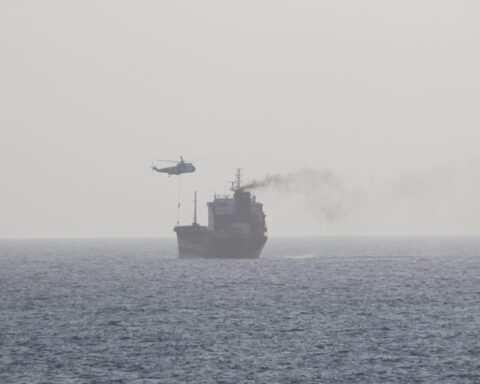
On the same day as the Enghelab Square parade and the hardliner statements, the IRGC seized two vessels in the Strait of Hormuz, continuing enforcement of the permit regime that Iran imposed after the war began. ABC7 and Al Jazeera confirmed the seizures on April 22.
The seizures followed the pattern established since March — Iran treating Hormuz transit as a sovereign licensing function rather than an international waterway. The timing, coinciding with the ceasefire extension, converted a routine enforcement action into a political statement. Trump extended the ceasefire; the IRGC seized ships. The juxtaposition required no commentary from Tehran.
The vessels were taken as the 30-nation Northwood coalition was assembling its Hormuz response and as the US Navy dispatched USS Pioneer and USS Chief to address the mine clearance gap left by the decommissioning of four Avenger-class MCM ships from Bahrain in September 2025. The IRGC’s Hormuz operations have continued without interruption through every ceasefire, every negotiation round, and every Trump deadline — a consistency that itself constitutes a policy position.
Background: From Extension to Escalation
Trump’s ceasefire extension, announced on Truth Social on April 21, cited a request from Pakistan and characterized Iran’s government as “seriously fractured.” He demanded a “unified proposal” from Tehran before talks could resume. The original ceasefire, brokered through the Islamabad Accord framework, had been set to expire at midnight on April 22.
The extension came as the war entered its 53rd day with no formal agreement beyond the initial ceasefire-in-place. Araghchi had labeled the US naval blockade — in effect since April 13 — an “act of war” and cancelled the latest round of Islamabad talks. Saudi oil revenues had fallen $93 million per day below pre-war baselines. Iran’s Central Bank had circulated an internal memo projecting 180 percent inflation and a 12-year economic recovery timeline.
The hardliner response on April 22 closed the space Trump had attempted to open. By extending the ceasefire without conditions, Trump offered Pezeshkian time to build internal consensus. The parade, the judiciary warning, and the Hormuz seizures ensured that consensus would not form around flexibility. Iran’s hardline faction answered Trump’s demand for a unified proposal by unifying — against one.
FAQ
What is the Interim Leadership Council and how does it differ from the Supreme Leader’s office?
The Interim Leadership Council exercises supreme-leader-level powers under Iran’s constitutional provisions for leadership transition. Because Mojtaba Khamenei remains incapacitated, the council retains effective decision-making authority in his name. The critical difference from the traditional Supreme Leader’s office is institutional: a supreme leader acts alone and informally through trusted subordinates. A multi-member council creates overlapping jurisdictions — and Mohseni-Ejei’s seat gives the judiciary direct input into military and foreign-policy decisions that would normally bypass it entirely.
Has Iran’s judiciary ever prosecuted diplomats or officials for exceeding their negotiating mandate?
No recorded precedent exists for prosecuting Iranian diplomats over ceasefire mandate violations. That absence cuts both ways: it means the threat has no established legal mechanism, but it also means there is no acquittal precedent to limit its reach. Iran’s legal system has historically been deployed against political figures retrospectively — the charge is identified after the political decision to prosecute is made, not before. The Zolghadr complaint creates documented grounds; whether the judiciary acts or simply holds the threat in reserve, the chilling effect on Araghchi’s negotiating room is the same.
Why was the Khorramshahr-4 specifically chosen for the Enghelab Square parade?
The selection was about verifiability. The Khorramshahr-4 is the only missile in Iran’s current inventory that combines the maximum warhead capacity, a reentry vehicle designed to defeat US and Israeli intercept systems, and confirmed combat use against targets in this war. Rolling a weapon already used in anger through the capital — labeled with a facility it previously struck — closes the gap between threat and capability. A missile that has never been fired is a deterrent. One that has is an instruction.
What does “janbaz” mean and why is its use for Mojtaba Khamenei significant?
Janbaz translates as “one who risks his life” and is the official honorific for disabled veterans of the 1980–1988 Iran-Iraq War. The term commands deep respect in the Islamic Republic’s foundational mythology — the war generation is venerated as the regime’s moral core. Applying it to the supreme leader is a double maneuver: it explains his absence in language that invokes sacrifice rather than incapacity, and it places him within the war-martyrdom tradition that legitimizes the IRGC’s autonomous authority. A janbaz does not run meetings. He provides spiritual sanction. That framing leaves operational decisions to those who are present — an extraordinary admission for a head of state who has held power for 53 days without a single public appearance.
How does the ceasefire extension affect the Hajj security situation?
The Hajj pilgrimage season opened on April 18 with the sealing of the Makkah cordon, and Indonesia’s 221,000 pilgrims began departing on April 22 — the same day as the ceasefire expiry and the Tehran parade. Saudi Arabia’s PAC-3 interceptor stocks have been depleted to approximately 400 rounds, or 14 percent of pre-war levels, while 1.2 to 1.5 million pilgrims gather under a five-layer air defense umbrella. The ceasefire extension reduces but does not eliminate the risk: Iran’s hardliner statements on April 22 explicitly called for military initiative, and the IRGC’s Hormuz operations continued without pause through the extension announcement. The authorization ceiling took its most direct form on April 18, when IRGC gunboats fired on Indian-flagged vessels that held Iranian FM clearances — examined in India’s Authorization-Ceiling Injury: The IRGC Fired on Ships That Held Iranian FM Clearance.
With PAC-3 MSE production at 620 rounds a year globally and Saudi Arabia’s stockpile at 14 per cent of pre-war levels, Riyadh signed 10-year defence cooperation agreements with Ukraine on March 27–30, bringing 201 Ukrainian anti-drone specialists into the Kingdom and opening negotiations on interceptor drones that cost ,000–,000 apiece against the same Shahed-pattern threats driving PAC-3 depletion.