JEDDAH — The ceasefire expired at midnight, the first Indonesian pilgrims boarded their Hajj flights from Jakarta, and the IRGC seized two commercial vessels in the Strait of Hormuz — all on April 22, 2026, a convergence so precise that calling it coincidence requires ignoring everything Iran has done for the past fifty-three days. Crown Prince Mohammed bin Salman now holds a title — Custodian of the Two Holy Mosques — that was invented in 1986 to answer one Iranian challenge and has become, forty years later, a trap built from two simultaneous crises he cannot solve independently: protecting 1.8 million pilgrims with a depleted missile shield, and funding that protection with oil revenue that has collapsed by a third even as Brent briefly touched $100.
The title was designed to project Islamic authority. In April 2026, it projects obligation — and the IRGC, which has zero Iranian pilgrims inside Saudi Arabia and therefore zero political cost if something goes wrong during Hajj, understands this asymmetry better than anyone in the region.
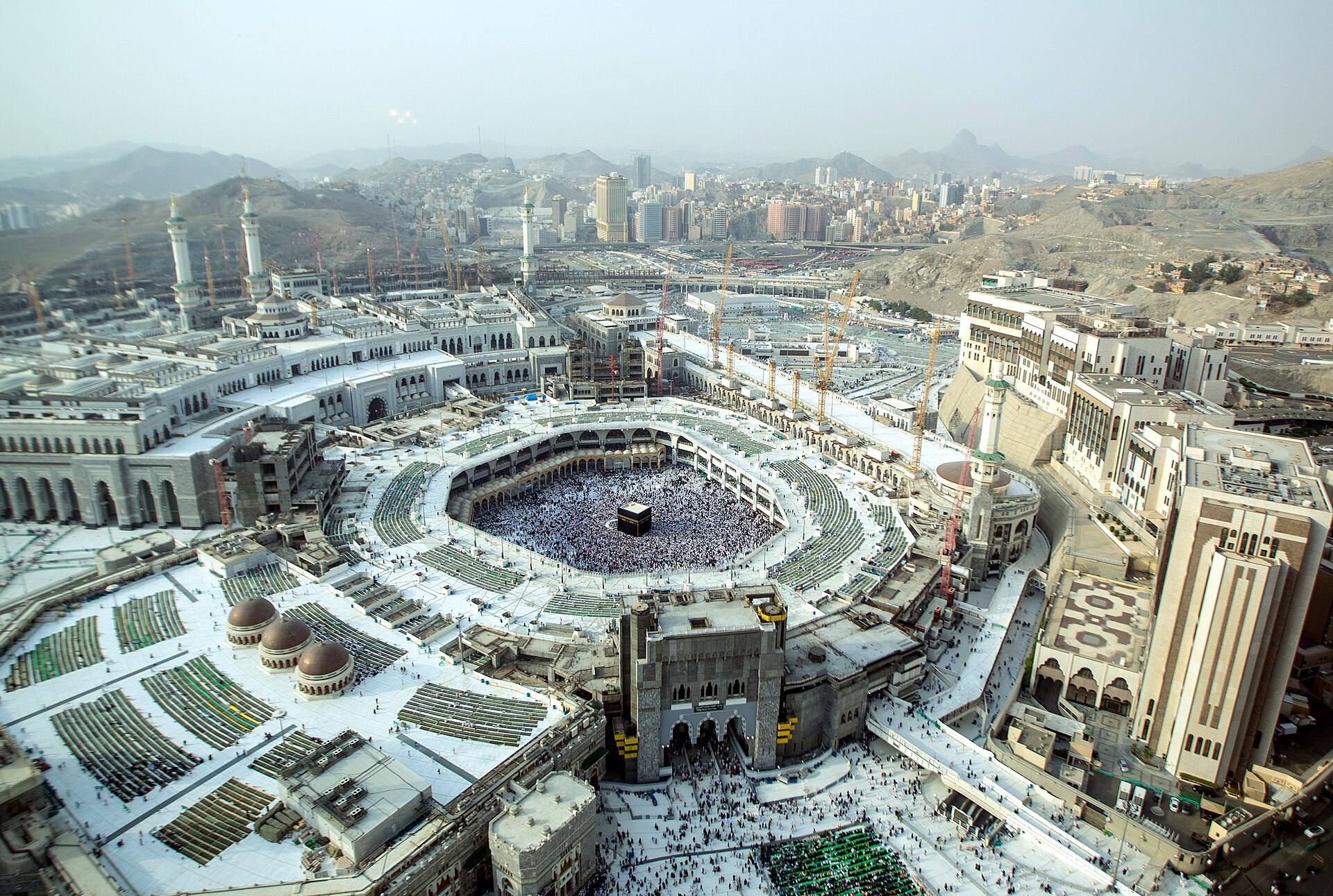
Table of Contents
The Title and What It Owes
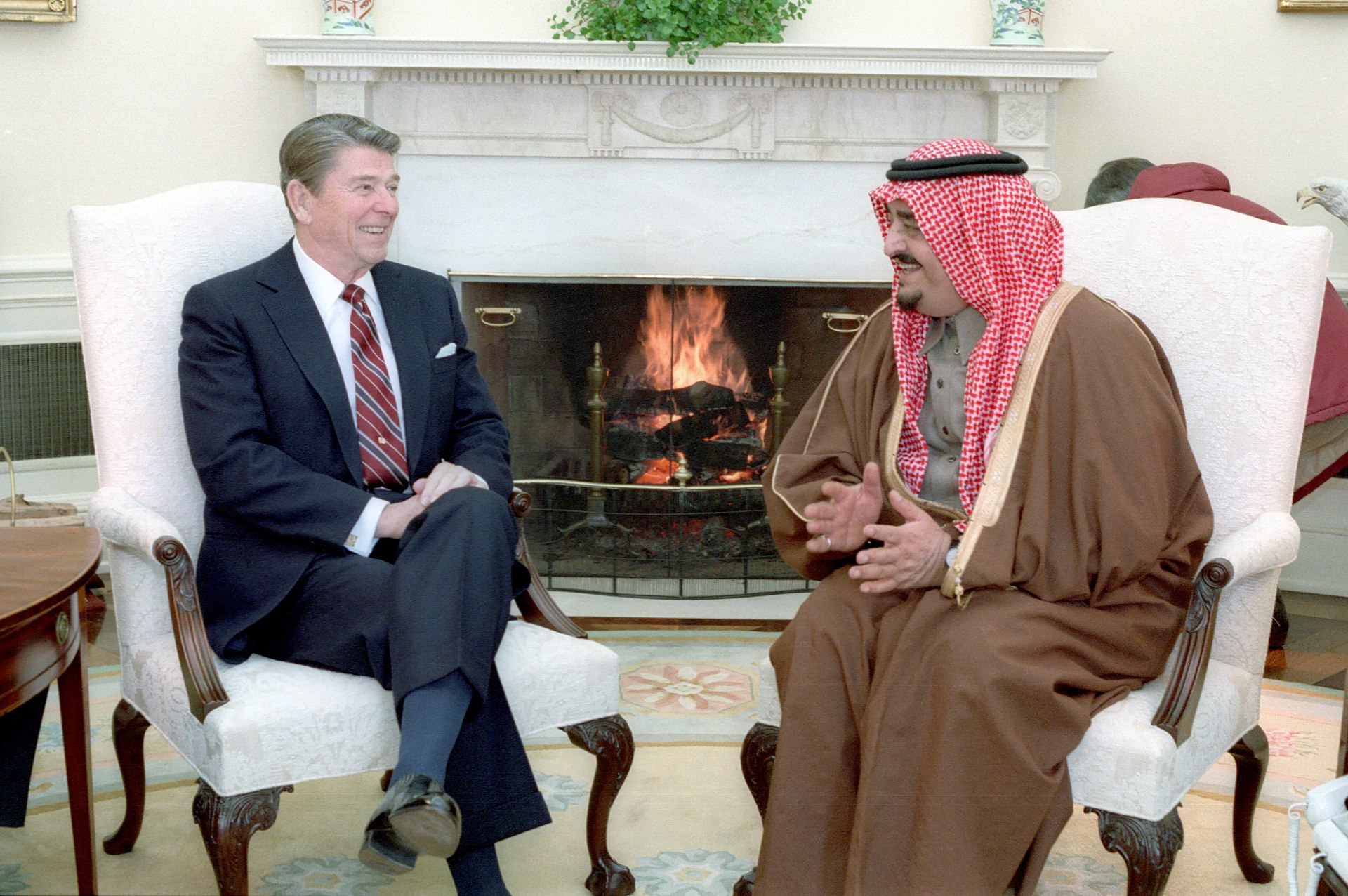
King Fahd did not adopt the title “Custodian of the Two Holy Mosques” because he was pious, or at least not primarily — he adopted it on October 27, 1986, at the inauguration of Madinah Television, because the House of Saud had spent seven years under siege from two directions at once, and the old title wasn’t holding. The word “His Majesty” carried secular weight, the weight of oil wealth and American partnership, but it carried nothing that could answer what Ayatollah Khomeini had been saying since 1979: that the Saudi monarchy was a corrupt Western client with no legitimate claim to stewardship of Islam’s holiest sites.
The twin shocks of 1979 made the problem existential. On November 20 of that year, Juhayman al-Otaybi — a former Saudi National Guard corporal with deep tribal connections in the Ikhwan tradition — seized the Grand Mosque in Mecca with as many as 600 militants, declared the House of Saud illegitimate, and forced Crown Prince Fahd to obtain a fatwa from the ulema permitting military force inside the holiest site in Islam. Sixty-three survivors were publicly beheaded. That same year, Khomeini’s revolution in Tehran opened a second front: not from within Sunni Islam but from a revolutionary Shia state that explicitly rejected the Saudi claim to custodianship as a colonial inheritance.
Fahd’s answer was to reframe the monarchy’s legitimacy around a single obligation — the protection and administration of the Hajj. The title made an implicit contract with the Muslim world: the Saudi king exists, in part, to guarantee that every Muslim who travels to Mecca will be safe. It worked because it was true, because Saudi Arabia’s wealth and infrastructure made it operationally credible, and because no rival Islamic authority could match the logistical commitment that running a two-million-person pilgrimage required every year.
The contract was tested eleven months after Fahd adopted the title, on July 31, 1987, when Iranian pilgrims — acting on Khomeini’s 1971 instruction that the Hajj should serve as a vehicle for political demonstration — staged protests inside the Grand Mosque compound that escalated into violence killing 402 people, including 275 Iranians and 85 Saudis. The Custodian survived the test, but only because Sunni consensus attributed the bloodshed to Iranian provocation, and because Tehran paid a political price: Iran’s Hajj quota was slashed by 87%, and a three-year boycott followed. The title was only a year old when it faced its first crisis, and it held — barely — because the cost of failure was distributed across both sides.
The Middle East briefing 3,000+ readers start their day with.
One email. Every weekday morning. Free.
What Day Is It, Exactly
April 22, 2026, is a single date carrying at least four separate crises, and the convergence is not a narrative device — it is the calendar as it actually fell. The ceasefire that Donald Trump extended “indefinitely” on April 21, at Pakistan’s request, citing Iran’s government as “seriously fractured,” formally expired at midnight. The extension itself is a diplomatic abstraction: Vance’s planned return to Islamabad was postponed, Iran refused to send a delegation, and the blockade of Iranian ports that Abbas Araghchi called “an act of war and a violation of the ceasefire” continues regardless of what either side calls the diplomatic framework, as the IRGC’s pattern of overriding its own foreign ministry has made clear since early April.
On the same morning, Saudia flight SV5807 departed Dhaka carrying 376 Bangladeshi pilgrims — the airline’s inaugural Hajj 2026 flight, part of a commitment to over one million seats across the season. Indonesia’s first departures began from Jakarta, drawing from a national quota of 221,000 pilgrims. Pakistan’s 179,210-strong allocation had already begun arriving on April 18, the day the Makkah Umrah cordon sealed. India’s confirmed quota stands at 175,025. In total, approximately 1.8 million pilgrims will flow into Saudi Arabia through six designated airports across 12,000 flights and 3.1 million airline seats between now and the arrival window’s close on May 21.
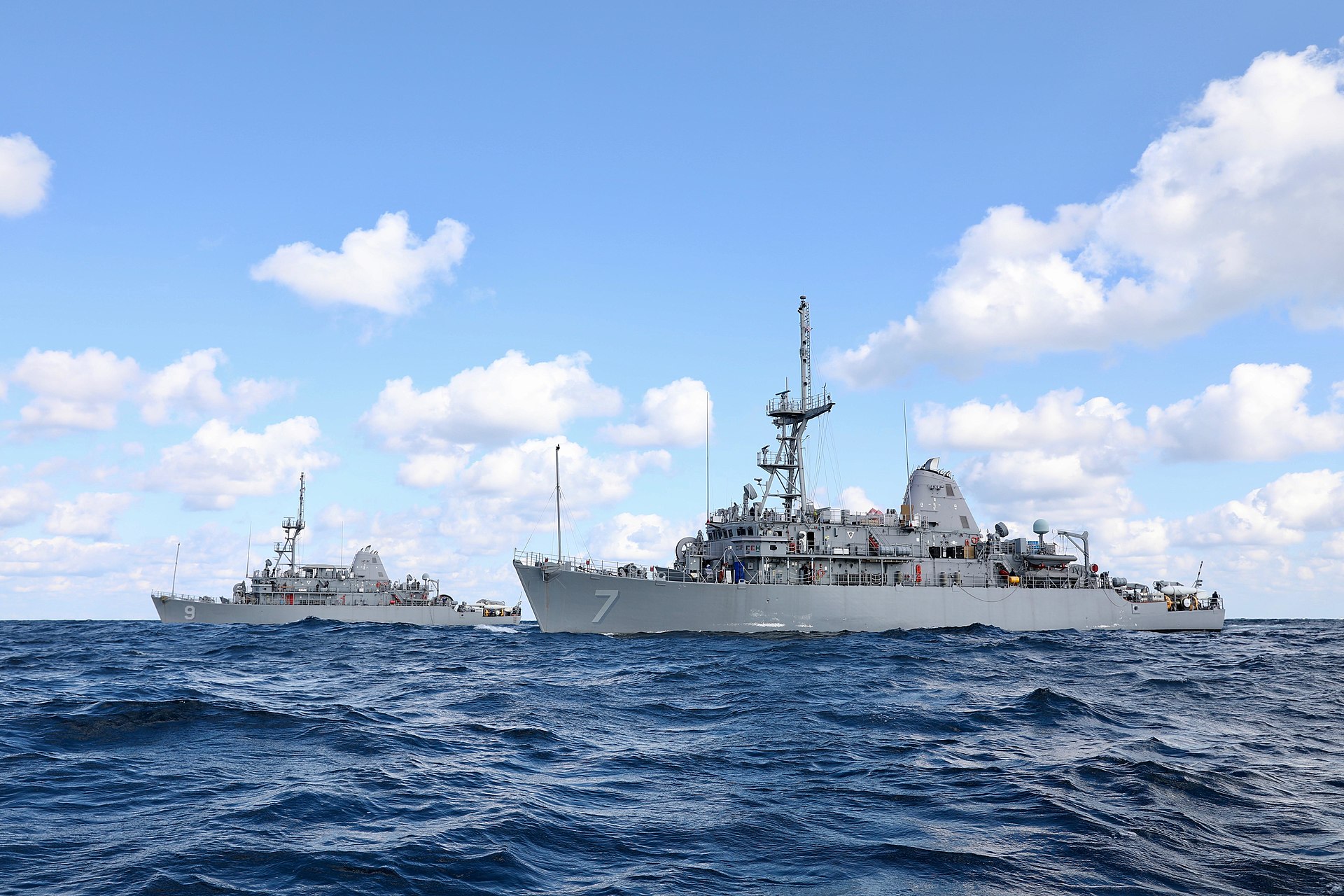
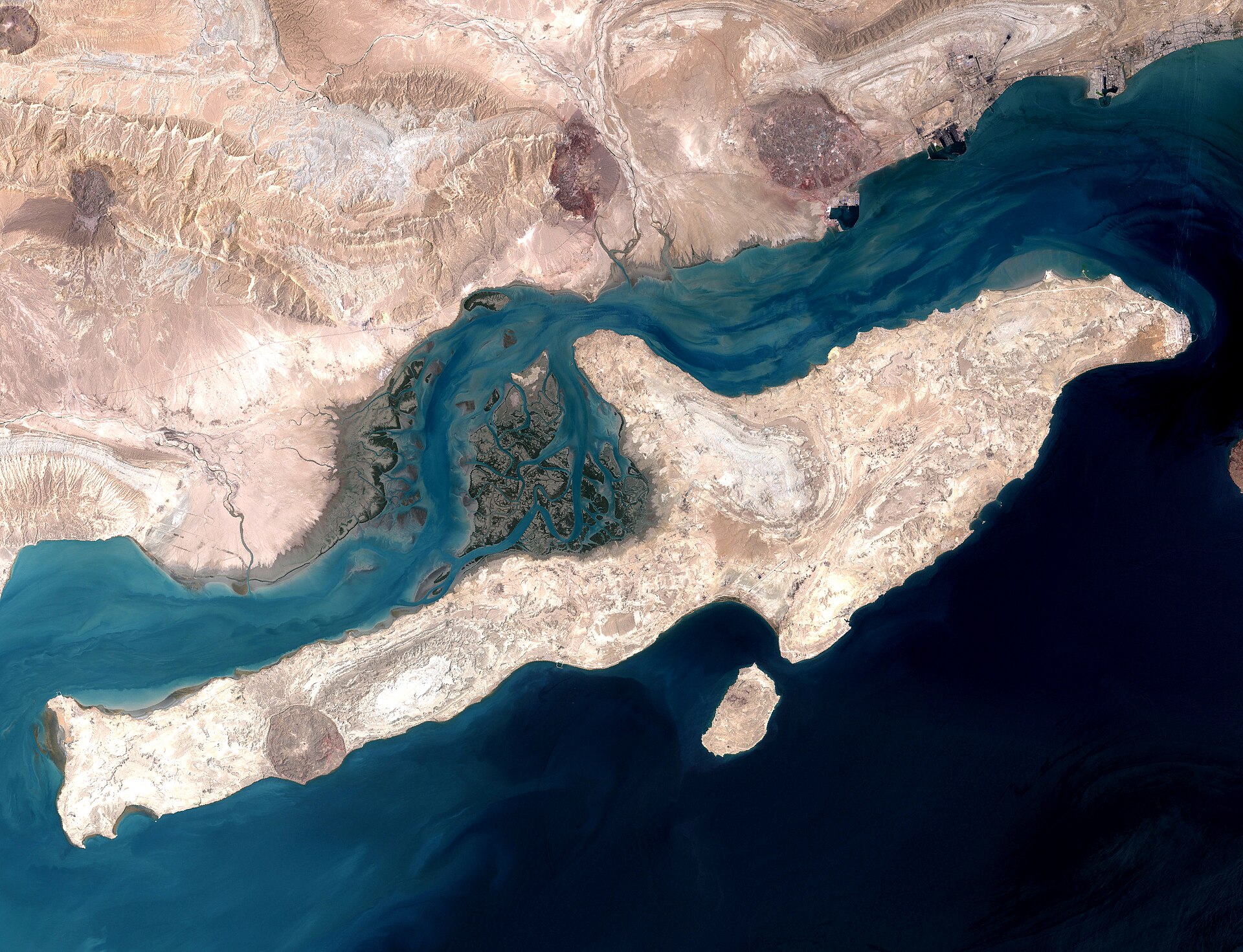
And in the Strait of Hormuz, the IRGC Navy seized the MSC Francesca — a Panama-flagged container vessel bound for Sri Lanka — and the Epaminondas, a Liberia-flagged ship carrying cargo toward India. A third vessel, the Greek-owned Euphoria, was fired upon and left stranded on the Iranian coastline, heavily damaged. The IRGC Navy command statement framed the seizures in administrative language, claiming the ships “had endangered maritime security by operating without the required authorization and by tampering with navigation systems” — the same regulatory-not-aggressive framing the IRGC has used in every previous boarding this war.
The seizure news pushed Brent above $100 intraday before settling in the $98–101 range, a number that sounds like relief until you understand what it actually buys Saudi Arabia at current production levels. The pilgrims, the expired ceasefire, and the ship seizures are not metaphorically connected — they are operationally concurrent, unfolding across the same twelve-hour window, binding MBS’s custodial obligation to his fiscal and military constraints in real time.
The arrival window runs from April 18 through May 21, with return flights from June 1 to June 30 — a ten-week corridor during which Saudi Arabia bears simultaneous responsibility for the physical safety of every pilgrim in the country and for the diplomatic and military situation that threatens them. Day of Arafah, the climactic gathering on the plain outside Mecca when every pilgrim must be present, falls on approximately May 26 — thirty-four days after the ceasefire’s expiry, deep inside the window of maximum vulnerability, and long before a single new interceptor from the Lockheed production line can reach the kingdom.
Why Doesn’t $100 Oil Help?
Brent at $100 should be the headline Saudi Arabia wants, and it would have been — in January, when Saudi production was running at 10.4 million barrels per day and every dollar of price increase translated directly into revenue. But the war has permanently shrunk the multiplier between price and income, and the mathematics is unforgiving. IEA data shows Saudi March 2026 production collapsed to 7.25 million bpd, a 30% drop from February, with exports averaging just 3.33 million bpd as the bypass through Yanbu hit its structural ceiling and Khurais remained offline with no restoration timeline announced.
The conversion paradox runs like this: at 3.33 million bpd in exports and $102 Brent, Saudi Arabia earns roughly $340 million per day. Before the war, at 6.7 million bpd and $75 Brent, the kingdom earned approximately $502 million per day. A 36% price increase has been more than offset by the volume collapse — current earnings are roughly $162 million per day below the pre-war baseline, meaning higher prices are masking a severe and ongoing revenue loss. Each barrel that doesn’t ship is a permanent fiscal loss, and at current Yanbu loading capacity of 4 to 5.9 million bpd against a pre-war Hormuz throughput of 7 million, there is a structural gap of 1.1 to 3 million bpd that cannot be closed by any means available during the war.
Bloomberg Economics places the PIF-inclusive fiscal break-even at $108 to $111 per barrel. With Brent settling at $98–101, Saudi Arabia sits $7 to $13 below that threshold — a daily structural deficit of $30 to $45 million that accumulates whether pilgrims are arriving or not. Goldman Sachs has revised its war-adjusted 2026 deficit estimate to 6.6% of GDP, somewhere between $73 billion and $90 billion, against a pre-war official forecast of 3.3%, or $44 billion. The gap between those two numbers — roughly $30 to $46 billion — is what the Hormuz closure has cost Saudi Arabia in fiscal capacity, and it arrives precisely when the kingdom needs to fund a Hajj security operation for nearly two million people under active threat.
How Long Can Saudi Air Defense Last?
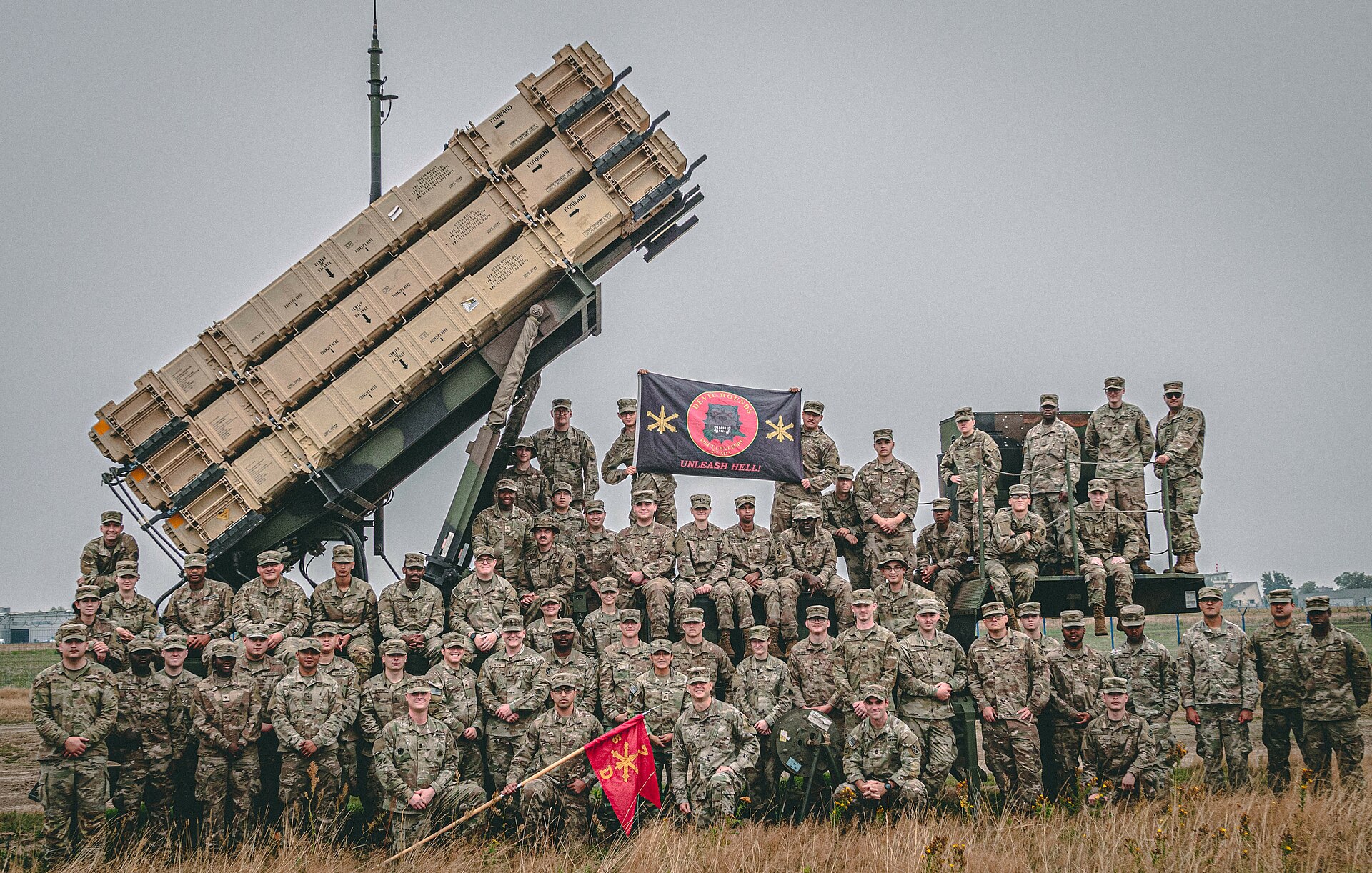
Saudi Arabia’s PAC-3 MSE inventory — the interceptor that has done the majority of the work keeping Iranian ballistic missiles from reaching populated areas — sits at approximately 400 rounds, which is 14% of the pre-war stockpile. In the first sixteen days of the conflict alone, Saudi forces fired 402 rounds, a number that happens to mirror the 402 people killed in the 1987 Mecca incident — coincidental, but a useful measure of the scale of consumption. At the rate this war has burned through interceptors, 400 rounds represents somewhere between two and three weeks of sustained defense against a full-scale barrage, depending on Iranian launch tempo and targeting discipline.
The 730-round foreign military sales order announced by the Defense Security Cooperation Agency on January 30, 2026 — valued at $9 billion — is under production at Lockheed Martin’s Camden, Arkansas facility, but the timeline offers no comfort for the Hajj window. Lockheed’s entire global PAC-3 MSE output in 2025 was approximately 620 rounds, meaning the Saudi order alone represents more than a full year of worldwide production. Zero rounds from the new contract will arrive before the Day of Arafah on May 26, which is the single most concentrated gathering in the Hajj calendar — every pilgrim currently in-country must remain through that date, thirty-four days after the ceasefire’s expiry.
The five-layer defense architecture — THAAD at the top, PAC-3 MSE in the middle, South Korea’s KM-SAM, and directed-energy and Skyguard systems at the lower tiers — remains technically intact, but each layer depends on ammunition that cannot be manufactured faster than physics and production lines allow, and the top two tiers have done the most work. Indonesian departures began April 22, return flights don’t start until June 1, and the Day of Arafah falls on May 26. For nearly six weeks, the Custodian’s obligation to protect pilgrims runs concurrently with an interceptor inventory that is depleting faster than it can be replenished by any contractor on earth.
Why Does the 1987 Precedent Run the Wrong Way?
The 1987 Mecca incident is the only precedent for large-scale violence during Hajj under the Custodian’s watch, and every analyst reaching for it as a template for 2026 should notice that the political accountability structure has inverted completely. In 1987, Iranian pilgrims were inside the perimeter — Khomeini’s handlers were present, Tehran’s fingerprints were on the provocation, and the violence that killed 402 people generated a political cost that Iran paid in lost access, reduced quotas, and a three-year boycott. The Custodian title survived because the Muslim world could attribute the crisis to Iranian aggression inside the Saudi system, and the system’s response — harsh, immediate, permanent — reinforced the idea that the Custodian was both willing and able to maintain order.
In 2026, Iran has been barred from the Hajj since 2016, following the execution of Nimr al-Nimr and the subsequent storming of the Saudi embassy in Tehran. Zero Iranian pilgrims will be present this season, which means the IRGC has no domestic constituency inside Saudi Arabia, no pilgrims whose safety constrains its behavior, and no political cost if something goes wrong — the internal authorization ceiling that has already overridden Iran’s own foreign ministry operates without any Hajj-related restraint. Martin Kramer, the Middle East historian at the Washington Institute who has documented Khomeini’s 1971 instruction that the Hajj should serve as a vehicle for political demonstration, has traced the institutional memory that makes Iranian Hajj disruption doctrinal rather than improvisational — but in 2026, the doctrine doesn’t require pilgrims to execute.
The asymmetry is structural, not incidental. Any incident at the Hajj — whether caused by an Iranian missile, a drone, a Houthi-launched projectile from Yemen, or even a defense-system malfunction — generates a political cost that falls entirely on the Custodian. MBS cannot attribute blame in the way Fahd could in 1987, because there is no Iranian presence inside the system to blame. The IRGC’s absence from the Hajj is not a limitation on its influence over the Hajj; it is the condition that makes its influence cost-free, and Iran’s clerical establishment, which has never accepted Saudi Arabia’s claim to Islamic custodianship since Khomeini’s explicit rejection after 1979, understands this inversion as well as anyone.
What Trap Has No Exit?
MBS faces three constraints that operate simultaneously, and the reason this constitutes a trap rather than merely a difficult situation is that resolving any one of them makes the other two worse. He cannot yield on Hormuz terms — accepting Iran’s toll architecture, recognizing IRGC “coordination” authority over the strait, or making concessions on the enrichment moratorium that the US proposed during the Islamabad talks — without appearing to capitulate to the same Iranian revolutionary state that the Custodian title was created to counter in 1986. The Islamic legitimacy dimension of the Hormuz dispute is not a sideshow to the energy economics; it is the original argument, the one Fahd answered by adopting the title, and any concession to Tehran on maritime sovereignty reads, in the grammar of intra-Islamic competition, as an admission that the Custodian’s authority has limits Iran can define.
Simultaneously, he cannot allow pilgrims to be endangered — by missile, by disrupted logistics, by the closure of Bab el-Mandeb that Iran threatened on April 20, or by the air defense gaps that the PAC-3 depletion has opened — without proving the title hollow. The return-flight window of June 1 through June 30 introduces a separate vulnerability: if Iran closes Bab el-Mandeb, Jeddah Islamic Port’s sea-return routes are compromised, and Gulf-hub airspace closures that have been in effect since February affect Southeast Asian routing for the tens of thousands of Indonesian, Malaysian, and Bangladeshi pilgrims whose journey home depends on transit corridors that cross contested airspace. No evacuation protocol has been publicly announced.
The third constraint is fiscal: MBS cannot force oil prices above the $108–111 break-even because production is physically constrained by the Yanbu bypass ceiling and the Khurais shutdown. The war has broken the mechanism by which higher prices translate into higher revenue — the multiplier is gone, the deficit is structural, and every day of the Hajj season costs money the kingdom doesn’t have at current margins. The $30–45 million daily deficit doesn’t pause for religious observance, and the PAC-3 order that would restore defensive capacity is measured in billions that the war-adjusted budget can barely absorb.
The diplomatic architecture that might have provided an exit has largely collapsed around him. Pakistan, which was positioned as the ceasefire’s sole enforcement mechanism, now holds a notional role: Foreign Minister Dar has spoken of “new dialogue in coming days,” but the dialogue has no Iranian delegation, no American envoy on the ground since Vance’s postponement, and no mechanism for enforcement even if terms were reached. Khamenei has been absent for over 44 days, communicating, if at all, through Mojtaba by audio only — and without a restraining signal from the Supreme Leader, the IRGC Navy’s declaration of “full authority to manage the Strait” operates as the de facto Iranian position, regardless of what Araghchi says to Western media or what Pezeshkian accuses his own security establishment of doing.
Trump’s indefinite extension of the ceasefire is, in operational terms, an acknowledgment that there is no ceasefire to extend — the blockade continues, the IRGC continues seizing vessels, and the word “ceasefire” now describes a diplomatic fiction that both sides reference for different purposes. The extension came with no new terms, no enforcement mechanism, no timeline, and no commitment from any Iranian authority that the IRGC recognizes. Trump himself framed Iran’s government as “seriously fractured, not unexpectedly so,” and said the extension would last “until such time as” Iran submits “a unified proposal” — a condition that presupposes a coherence in Tehran’s decision-making that the past fifty-three days have systematically disproved.
What MBS has, instead of a ceasefire, is 1.8 million pilgrims arriving under a title that promises their safety, a defense system consuming itself faster than it can be resupplied, and a revenue stream that has been disconnected from the price signal the market is sending. The OPEC+ quota for Saudi Arabia stands at 10.2 million bpd — three million above actual output — a gap that measures the distance between the diplomatic fiction of normalcy and the operational reality of a kingdom producing at wartime capacity through a single Red Sea bypass while hosting the largest annual religious gathering on earth.
Frequently Asked Questions
What happens to Hajj pilgrims if Bab el-Mandeb closes during the return window?
Return flights are scheduled June 1 through June 30 across six Saudi airports using 3.1 million allocated airline seats. If Iran follows through on its April 20 threat to close the Bab el-Mandeb strait, the primary impact falls on sea-based return logistics through Jeddah Islamic Port and on overflying routes for Southeast Asian carriers. Gulf-hub airspace — Bahrain, parts of Qatari and Emirati corridors — has been restricted or closed since February 28, and airlines serving Indonesia’s 221,000 pilgrims, Bangladesh’s quota, and Malaysia’s allocation already face circuitous routing through African or Central Asian corridors that add hours and costs to every return flight. Saudia’s one-million-plus seat allocation assumes normal airspace access that does not currently exist.
Has Saudi Arabia ever cancelled or restricted the Hajj for security reasons?
Saudi Arabia restricted Hajj access during the COVID-19 pandemic in 2020 and 2021, reducing attendance to as few as 1,000 domestic pilgrims in 2020 — the most dramatic reduction in modern history. The kingdom also imposed quota cuts after the 1987 incident and after the 2015 Mina stampede that killed over 2,400 people (Saudi official count: 769). However, no Saudi ruler has ever cancelled the Hajj entirely, and doing so under military threat would carry implications for the Custodian title that no pandemic-era precedent covers, because a pandemic is an act of God while a missile is an act of a state whose legitimacy challenge the title was specifically designed to answer.
Why can’t Saudi Arabia accelerate its PAC-3 MSE order?
The constraint is industrial, not financial. Lockheed Martin’s Camden, Arkansas facility — the sole global production site for the PAC-3 MSE — produced approximately 620 rounds in all of 2025 for every customer worldwide, including the United States, Israel, and multiple NATO allies. Saudi Arabia’s 730-round order represents more than 100% of one year’s global output. Even if Lockheed prioritized the Saudi contract above all others — which would require Pentagon authorization and would mean delaying deliveries to Israel during its own interceptor shortage — the production ramp cannot physically deliver interceptors before mid-to-late 2027 at the earliest. The factory runs at capacity, not at demand.
What is the IRGC’s legal basis for seizing vessels in the Strait of Hormuz?
The IRGC claims vessels are operating “without the required authorization” and have “tampered with navigation systems,” framing seizures as regulatory enforcement rather than military action. This framework has no basis in international maritime law: the United Nations Convention on the Law of the Sea (UNCLOS) Article 26 prohibits charges for transit passage, and the International Maritime Organization’s Secretary-General, Arsenio Dominguez, has called Iran’s toll and authorization regime “illegal.” The IRGC’s legal position treats Iranian territorial waters as if UNCLOS transit-passage rights do not apply — a position no other coastal state on a major international strait has attempted to enforce since the convention entered into force in 1994.
How does the Custodian title affect Saudi Arabia’s negotiating position differently from other oil-producing states?
No other OPEC member carries a religious obligation to 1.8 billion Muslims as a condition of its sovereignty claim. Kuwait, the UAE, and Iraq face economic damage from Hormuz disruption, but their governments derive legitimacy from national identity, not from custodianship of a global religious obligation. MBS cannot separate the Hormuz negotiation from the Islamic legitimacy contest with Iran because the Custodian title makes them structurally the same argument — conceding on maritime sovereignty to a state that has challenged Saudi Islamic authority since 1979 would undermine the religious legitimacy that the title is designed to project, a calculation that constrains Saudi flexibility in ways that do not apply to any other party at the negotiating table.
The last time this many pilgrims entered Saudi Arabia during an active military conflict was never — there is no precedent in the history of the modern Hajj, which is itself the history of the Saudi state. Saudia flight SV5807 landed in Jeddah on April 22 carrying 376 Bangladeshi pilgrims into a country that has 400 interceptor rounds, a $30-to-$45-million daily deficit, and a title that promises their safety. King Fahd adopted that title to answer Khomeini; his grand-nephew inherited it, and on the day the ceasefire expired, so did the assumption that the answer would always be enough.