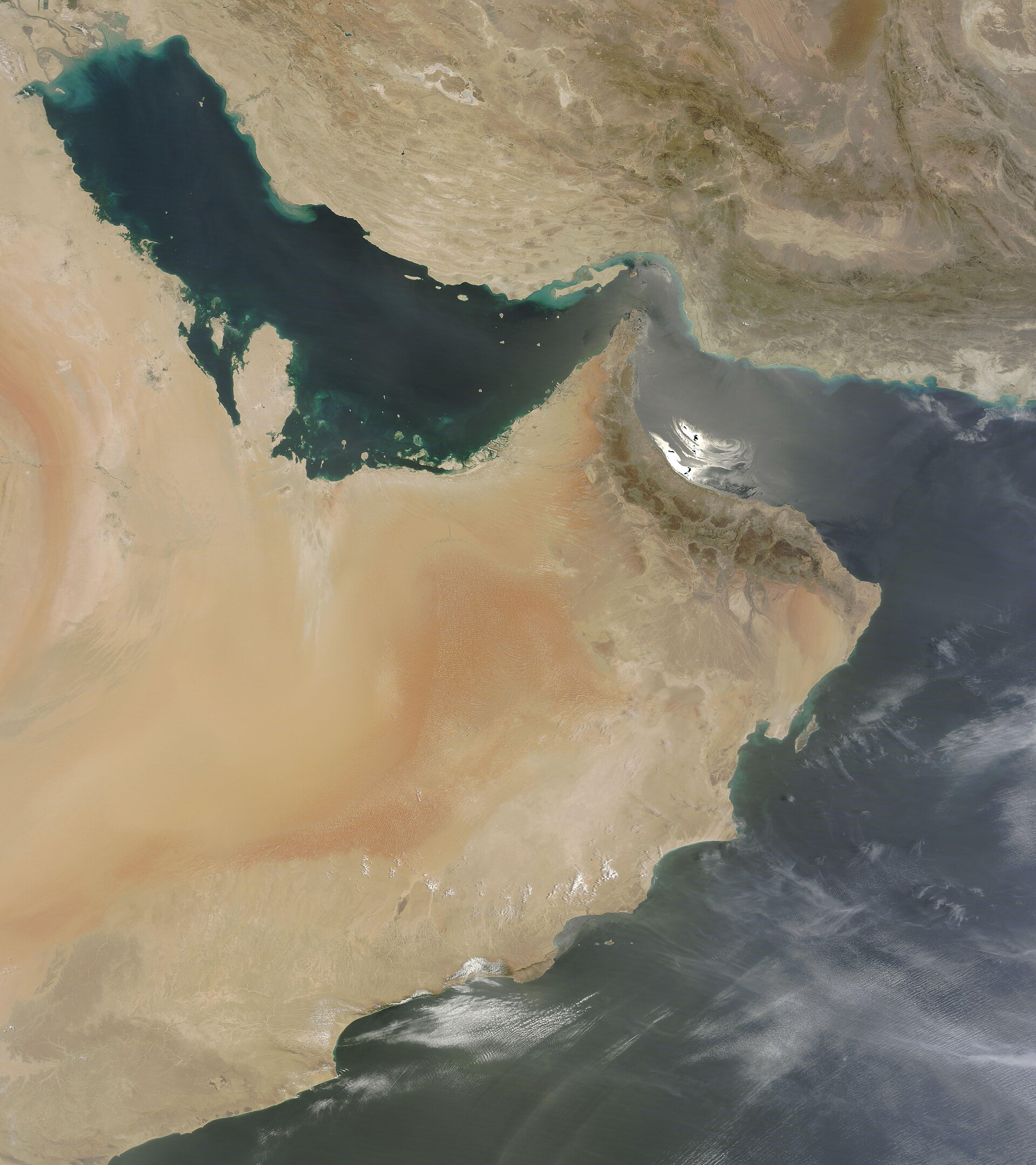

LONDON — Thirty nations sent military planners to Northwood on Tuesday, the first time a non-NATO command structure has been used to plan armed escort and mine-clearance operations for the Strait of Hormuz, and Saudi Arabia — the country with the most at stake — was not in the room. The conference at the UK’s Permanent Joint Headquarters, co-led by Britain and France across April 22-23, is translating the diplomatic consensus built through a 41-nation meeting on April 7 and a 51-nation Paris summit on April 17 into an operational military plan: warships, armed convoy escorts, mine-hunting drones, radar coverage, and intelligence-sharing protocols for the day the strait reopens.
The timing is not accidental, and the absence is not incidental. Saudi Arabia declined to sign the March 19 joint statement endorsed by 37 nations including its neighbors Bahrain and the UAE, skipped the April 7 pre-conference, issued no public comment on the Paris summit, and sent no delegation to Northwood. On the same day this conference opened, the IRGC seized two vessels and fired on a third 15 nautical miles northeast of Oman — a reminder that the military planning unfolding inside Northwood is not theoretical. Riyadh is navigating between two frameworks it did not design and neither of which it controls: the US-Iran direct track, which excluded Saudi Arabia at Islamabad, and a European institutionalized track that now has its own command-and-control architecture.
Table of Contents
- What Is the Northwood Conference Actually Planning?
- Why This Is Not EMASOH 2.0
- Why Is Saudi Arabia Absent from Northwood?
- The Co-Belligerency Trap
- The Mine Clearance Problem Nobody Has Solved
- Who Decides Whether Iran Fires on Coalition Ships?
- Saudi Arabia’s Parallel Track: Antalya, Not Northwood
- Can Saudi Arabia Stay Out and Still Shape What Comes After?
- FAQ
What Is the Northwood Conference Actually Planning?
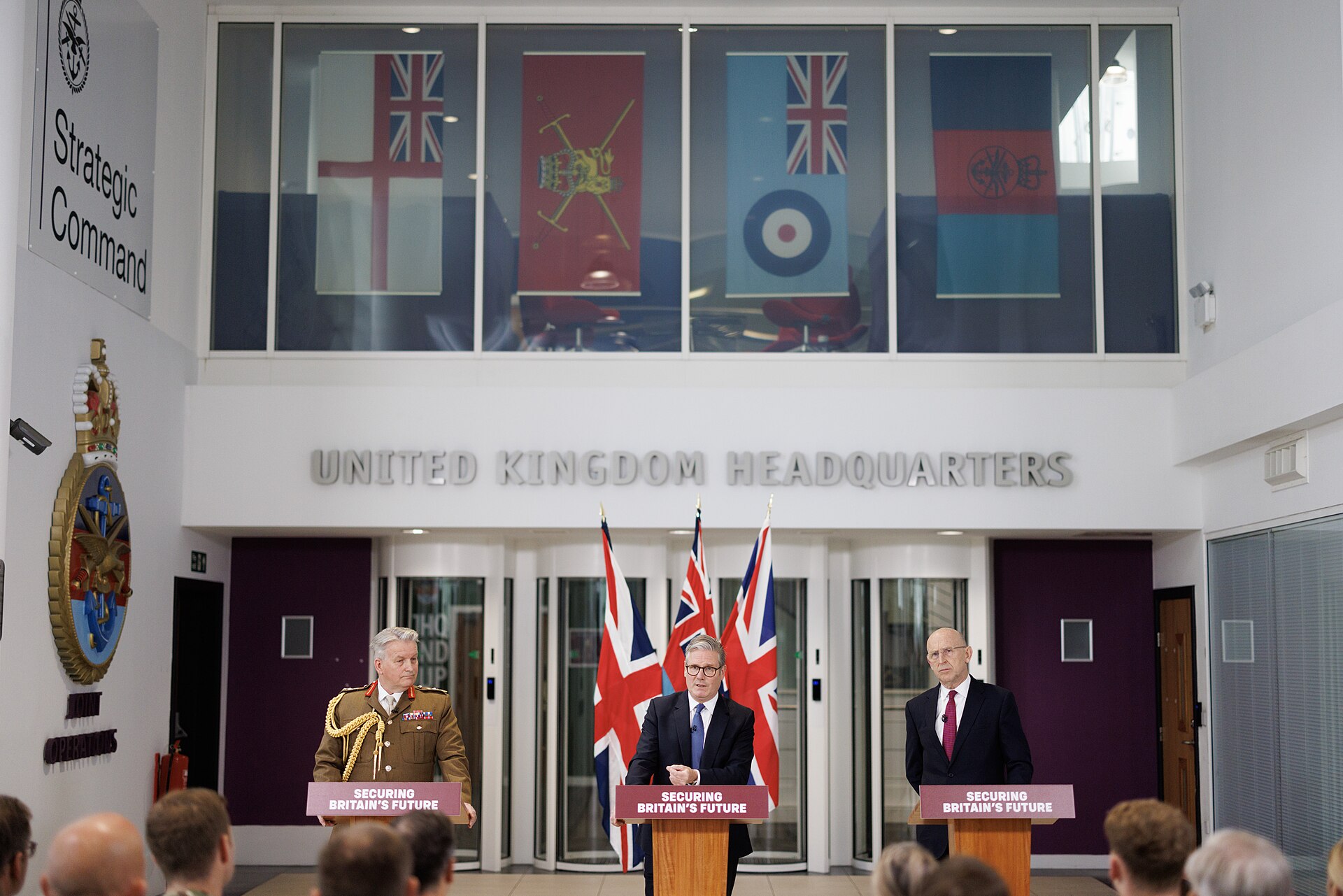
Northwood PJHQ is not a discussion forum — it is the facility that commanded Operation Telic in Iraq (46,000 peak UK personnel), Operation Corporate in the Falklands, and Operation Shader against ISIS. When Defence Secretary John Healey opened proceedings on April 22 saying “today’s multinational planning conference matters — the task, today and tomorrow, is to translate the diplomatic consensus into a joint plan,” he was speaking from a facility designed to produce executable military orders, not communiques. The distinction matters because every previous Western Hormuz initiative — EMASOH, Operation Sentinel — operated at the level of monitoring and situational awareness, not operational planning for armed escort and forcible mine clearance.
The conference mandate, as described in the UK-France joint statement of April 17, is explicitly conditional: deployment comes “as soon as conditions permit, following a sustainable ceasefire agreement.” The mission is characterized as “independent and strictly defensive.” But “defensive” in this context includes mine-hunting drones launched from RFA Lyme Bay, armed naval escorts through the Traffic Separation Scheme, and intelligence fusion across 30 contributing nations. An unnamed NATO source told Euronews the aim is to “move beyond planning, and preposition vessels in the region to be ready to act when the conflict subsides.” The Netherlands has already deployed frigates and personnel ahead of operations. Prepositioning is not planning — it is the step between planning and action.
The US is excluded from the coalition’s operational structure explicitly “due to America’s combatant status,” according to French officials cited by Euronews and Al Jazeera on April 17. A French official added a dual condition before deployment: “an Iranian commitment not to fire on passing ships AND a US commitment not to block any ships.” That second condition — requiring Washington to suspend its own blockade — means the coalition’s activation depends on two adversaries simultaneously de-escalating, a structural constraint that makes Northwood planning useful precisely because it can begin before either condition is met.
Why This Is Not EMASOH 2.0
The European-led Maritime Awareness in the Strait of Hormuz mission, known as EMASOH or by its military component Operation AGENOR, launched in January 2020 from France’s naval base in Abu Dhabi with nine participating nations. Over its operational life it logged 2,000-plus flight hours, 1,070 days at sea, and “reassured” 1,600 ships — but its mandate was monitoring and awareness, with no authority to physically intervene against IRGC vessel seizures or mining operations. IRGC harassment of commercial shipping continued throughout EMASOH’s deployment, because the mission was designed to observe and report, not to intercept or escort.
The Middle East briefing 3,000+ readers start their day with.
One email. Every weekday morning. Free.
Northwood differs from EMASOH in four structural ways that collectively represent a category change rather than a scale increase:
| Dimension | EMASOH/AGENOR (2020) | Northwood Coalition (2026) |
|---|---|---|
| Scale | 9 nations | 30-51 nations |
| Mandate | Monitoring, situational awareness | Armed escort, mine clearance, convoy operations |
| MCM capability | None | Explicit mission component (UK mine-hunting drones, German minehunters offered) |
| Command structure | French naval base Abu Dhabi | PJHQ Northwood — operational military HQ outside NATO |
| US role | Separate (Operation Sentinel ran in parallel) | Explicitly excluded as combatant |
| Activation trigger | Deployed during peacetime tensions | Post-ceasefire deployment conditional on dual de-escalation |
The decision to operate outside NATO command is itself telling — it was done to allow non-NATO states including Japan, South Korea, and Australia to participate without triggering Article 5 entanglements or requiring consensus from all 32 NATO members. The coalition is building a bespoke legal and command architecture that borrows NATO’s planning infrastructure (Northwood is a NATO-grade facility) while deliberately avoiding NATO’s political constraints. That architecture, once built, will persist regardless of whether the current crisis resolves quickly or slowly. Keir Starmer framed this durability explicitly on April 17: “It is very important that we build a coalition of countries around the principle that the ceasefire should be permanent.”
Why Is Saudi Arabia Absent from Northwood?
Saudi Arabia’s absence from every stage of the Northwood process — the March 19 joint statement (unsigned), the April 7 pre-conference (unattended), the April 17 Paris summit (unmentioned), and Northwood itself (no delegation) — is a deliberate strategic choice, not an oversight or scheduling conflict. Two of Riyadh’s closest security partners, the UAE and Bahrain, signed the March 19 statement and are engaged in the coalition process, which means Saudi Arabia had the invitation pathway and chose not to use it.
The reasons are layered, but the most immediate is operational. Saudi Arabia’s PAC-3 inventory stands at roughly 400 rounds — approximately 86% depleted from pre-war levels — and resupply depends on the United States. Any public alignment with a European-led coalition that explicitly excludes the US risks complicating the bilateral defense relationship on which Saudi Arabia’s air defense architecture depends at its most vulnerable moment. When Starmer visited MBS in Jeddah on April 8, the readout used what this site previously described as “informational rather than invitational language” — Starmer was updating the Crown Prince on a process underway, not asking him to co-lead it.
There is also the question of framing. Saudi Arabia joined the US-led Operation Sentinel/International Maritime Security Construct in 2019 without triggering Iranian retaliation, because the US was not then an active belligerent against Iran. The 2026 situation is categorically different: the US has been conducting strikes on Iranian territory since late February, and the Northwood coalition exists specifically because those strikes created the conditions requiring a Hormuz reopening mission. Joining a military coalition designed to undo the consequences of a war in which Saudi oil exports have already fallen 38.6% to Asia (Kpler data) creates an exposure that did not exist in the Sentinel precedent.
The Co-Belligerency Trap
On April 14, Iran filed a formal UN compensation demand against Saudi Arabia, Bahrain, Jordan, Qatar, and the UAE on co-belligerency grounds — a legal instrument asserting that these states facilitated the US-led military campaign through airspace access, basing, and logistics support. The filing is not a lawsuit with immediate enforcement power, but it creates a legal marker that can be reactivated and expanded. If Saudi Arabia were to join the Northwood coalition, Iran’s legal team would add a second layer of co-belligerency claims: not merely passive facilitation of US strikes, but active participation in a military mission designed to dismantle Iran’s Hormuz control infrastructure.
Iran’s Foreign Ministry spokesman Esmail Baghaei framed this argument on April 18 with deliberate legal precision: “No rule of international law forbids Iran, the coastal State, from taking necessary measures to stop the Strait of Hormuz being used for waging military aggression against Iran.” His broader attack on the coalition’s UNCLOS invocations went further — “Spare the sermons; Europe’s chronic failure to practice what it preaches has turned its ‘international law’ talk into peak hypocrisy” — but the legal substance is the claim that European nations that allowed their airspace and infrastructure to be used in attacks on Iran are not neutral parties under international law. They cannot, in Iran’s framing, invoke neutral rights to escort merchant shipping through waters they helped militarize.
This argument has obvious weaknesses under UNCLOS Articles 38 and 44, which establish transit passage as a non-suspendable right regardless of a coastal state’s security concerns. But legal merit is not the point — the political cost is. Hesham Alghannam of the Carnegie Endowment has identified Saudi Arabia’s core anxiety as the possibility that Trump may end up “tolerating some Iranian leverage over the strait in exchange for a fragile truce.” If Riyadh joins Northwood and the US-Iran track produces a deal that implicitly recognizes Iranian “coastal state” prerogatives over Hormuz, Saudi Arabia would find itself simultaneously branded as a co-belligerent by Tehran and abandoned by Washington — the worst of both frameworks.
The Mine Clearance Problem Nobody Has Solved
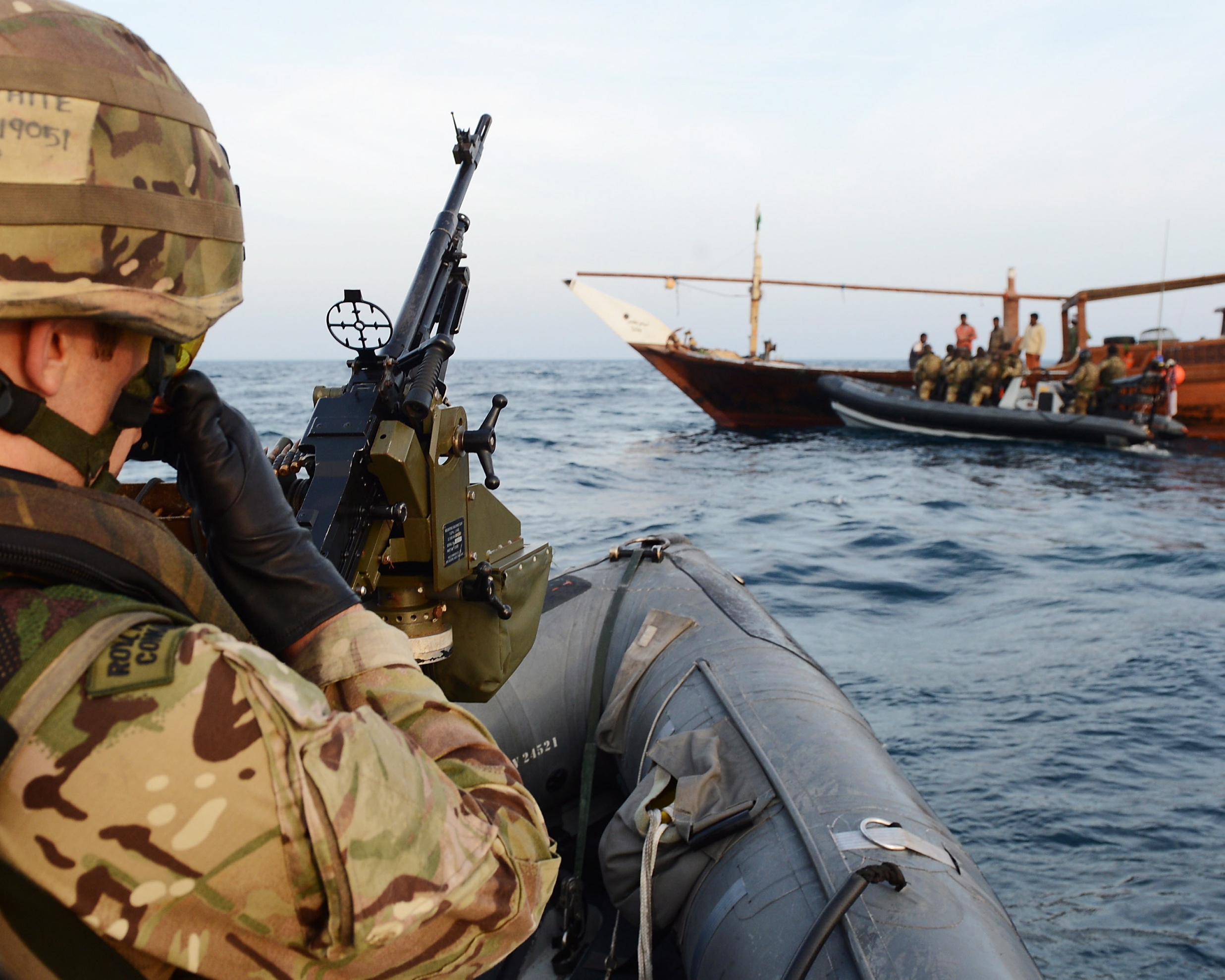
The single most consequential military task the Northwood coalition must address is mine countermeasures (MCM), and the gap between the mission requirement and available capability is severe. The IRGC published charts between late February and April 9 marking the standard shipping lanes through the Traffic Separation Scheme as a “danger zone,” redirecting commercial traffic into a 5-nautical-mile channel between Qeshm and Larak islands — inside Iranian territorial waters. Whether that danger zone reflects actual mining or merely the threat of it, any reopening operation must clear the standard lanes before insurance underwriters will cover commercial transits.
The benchmark is sobering: the 1991 post-Gulf War mine clearance of Kuwaiti waters took approximately 51 days to clear 200 square miles, using the full MCM capability of the US Navy and allies at a time when that capability was at its Cold War peak. The 2026 MCM picture is structurally worse. The four US Avenger-class mine countermeasure vessels previously homeported in Bahrain — USS Devastator, Sentry, Dextrous, and Gladiator — were decommissioned on September 25, 2025, and transported to Philadelphia for disposal, leaving the US reliant on Independence-class Littoral Combat Ships equipped with mine warfare mission packages that have never been tested in contested waters at the density the IRGC can deploy.
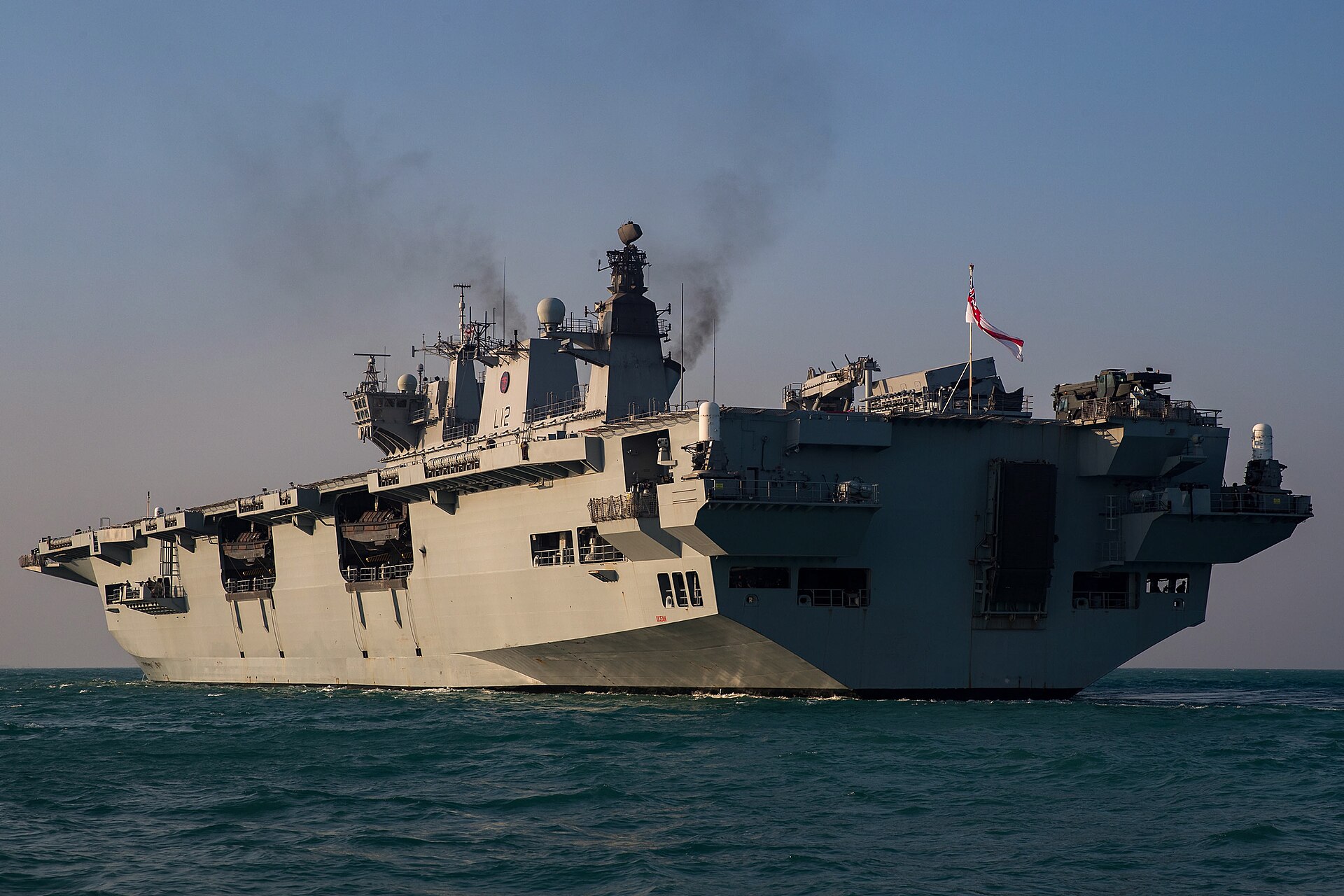
Germany offered minehunters — but conditioned participation on both a UN Security Council mandate and Bundestag parliamentary approval. The UNSC route is effectively blocked by Russian and Chinese vetoes, and the Bundestag process requires weeks of committee deliberation even under favorable political conditions. The UK is discussing mine-hunting drones deployed from RFA Lyme Bay, an aviation training ship converted for MCM trials — a capability that exists on paper but has not been proven at operational scale. Ukraine offered to send minehunters from the UK, an offer reported by the Kyiv Post on April 22 that raises questions about the coalition’s MCM bench depth when a nation at war on its own territory is volunteering surplus capability.
| MCM Asset | Status | Constraint |
|---|---|---|
| 4x US Avenger-class (Bahrain) | Decommissioned Sept 2025 | Shipped to Philadelphia, unavailable |
| US LCS mine packages | Operational (limited) | Untested in contested, dense-mine environment |
| German minehunters | Offered | Requires UNSC mandate (Russia/China veto) + Bundestag vote |
| UK mine-hunting drones (RFA Lyme Bay) | Development/trials | Not proven at operational scale |
| Netherlands frigates/MCM | Deploying | Pre-positioned but limited fleet size |
| Ukrainian minehunters | Offered from UK | Availability from a nation at war |
The MCM gap matters for Saudi Arabia because the timeline for Hormuz reopening directly determines the timeline for Saudi export normalization. The East-West Pipeline bypass through Yanbu has a practical loading ceiling of 4-5.9 million bpd against the 7 million bpd the pipeline can theoretically carry — a structural gap of 1.1-1.6 million bpd that no amount of bypass investment can close until the strait is clear. Every week of delay in mine clearance extends the period during which Saudi Arabia operates below fiscal break-even, which Bloomberg and Goldman Sachs estimate at $108-111 per barrel when PIF commitments are included — well above the current Brent price near $90.

Who Decides Whether Iran Fires on Coalition Ships?
The Northwood coalition’s deployment is conditional on “a sustainable ceasefire agreement,” but the structural problem is that the people who would have to honor such an agreement are not the people negotiating it. The authorization ceiling — the gap between Iran’s civilian diplomatic apparatus and the IRGC commanders who control Hormuz operationally — means that Foreign Minister Araghchi can sign commitments that IRGC Navy commanders may not observe.
The Institute for the Study of War assessed on April 19 that “the IRGC appears to be controlling Iranian decision-making instead of Iranian political officials.” Mehran Kamrava of Georgetown University has identified Khatam al-Anbiya headquarters as “the central key security decision making within the Revolutionary Guards,” adding that “the war footing continues as far as the Revolutionary Guard is concerned.” IRGC Navy commander Tangsiri was killed on March 30, and 23 days later no named successor has been announced — the force that controls Hormuz is operationally active but formally headless, issuing statements through institutional channels rather than named commanders.
On April 5, the IRGC Navy declared that “the Strait of Hormuz has undergone irreversible strategic changes and will never revert to its former status, particularly for the United States and the Israeli regime,” and that it had “reached the final stages of operational preparations for a comprehensive plan aimed at establishing a new, indigenous security architecture in the Persian Gulf.” On April 12, the IRGC Navy warned that “any miscalculation or hostile step in the strait will drag the enemy into deadly whirlpools.” On the day Northwood opened — April 22 — the IRGC seized two vessels and fired on a third off the Omani coast, a signal timed to the conference that required no interpretation.
Parliament Speaker Mohammad Baqer Ghalibaf, himself former IRGC Aerospace Force commander from 1997-2000, reinforced the hard line on April 22: “They failed to reach their objectives through military aggression, nor will they through bullying. The only solution is to accept the rights of the Iranian nation.” Ghalibaf’s language tracks with the IRGC position, not the Foreign Ministry’s, and his operational background gives his statements weight that a civilian politician’s would not carry. Ed Arnold, a security researcher at RUSI, told Euronews the quiet part: “There’s always the possibility we’ll be drawn into a broader conflict.” For Saudi Arabia, that possibility is not abstract — it is the reason Riyadh is not at Northwood.
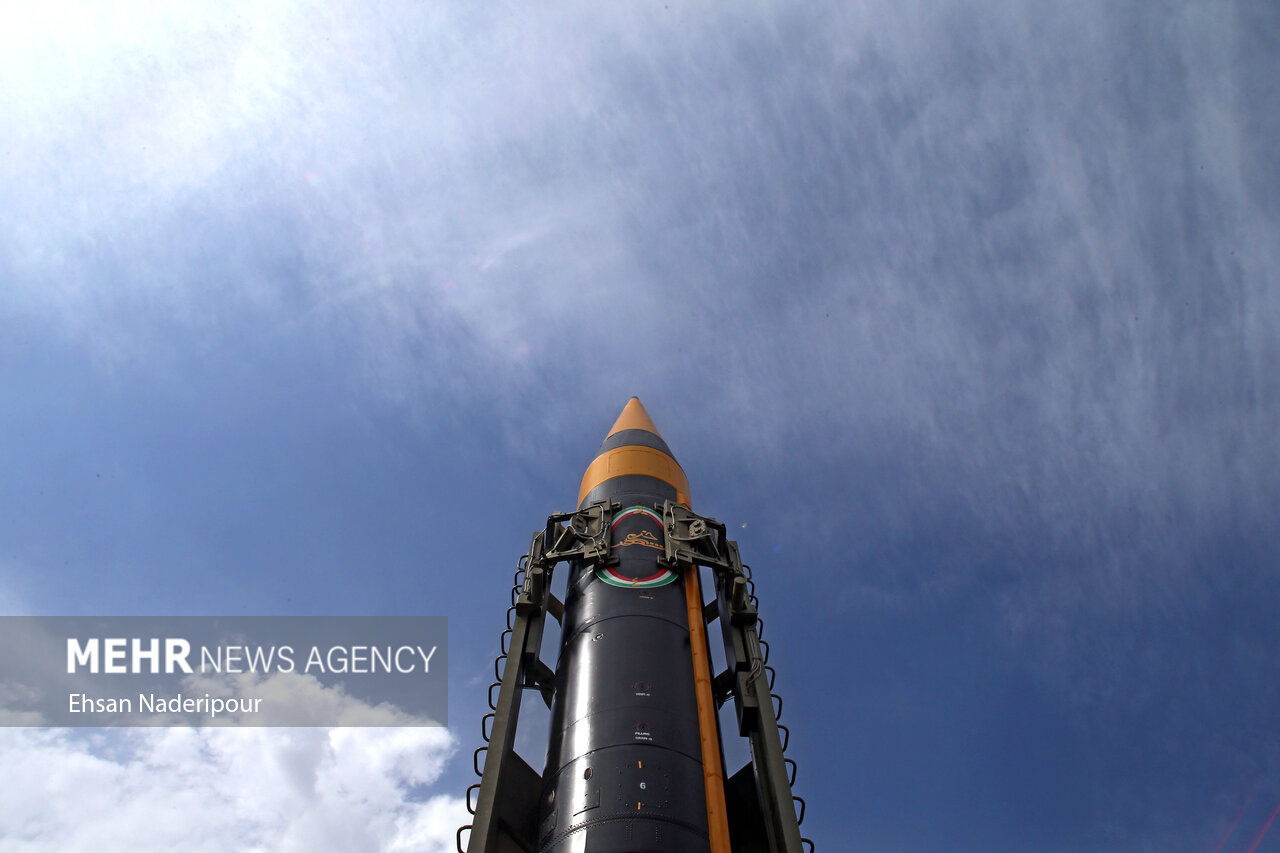
The same hardliner bloc — Ghalibaf, Mohseni-Ejei, and the IRGC command — delivered a coordinated response to Trump’s ceasefire extension on April 22, including a Khorramshahr-4 missile parade and a prosecution threat against any negotiator who compromised on core demands, as detailed in Iran’s Judiciary Chief and IRGC Answer Trump’s Ceasefire Extension with Missile Parade and Prosecution Threat.
Saudi Arabia’s Parallel Track: Antalya, Not Northwood
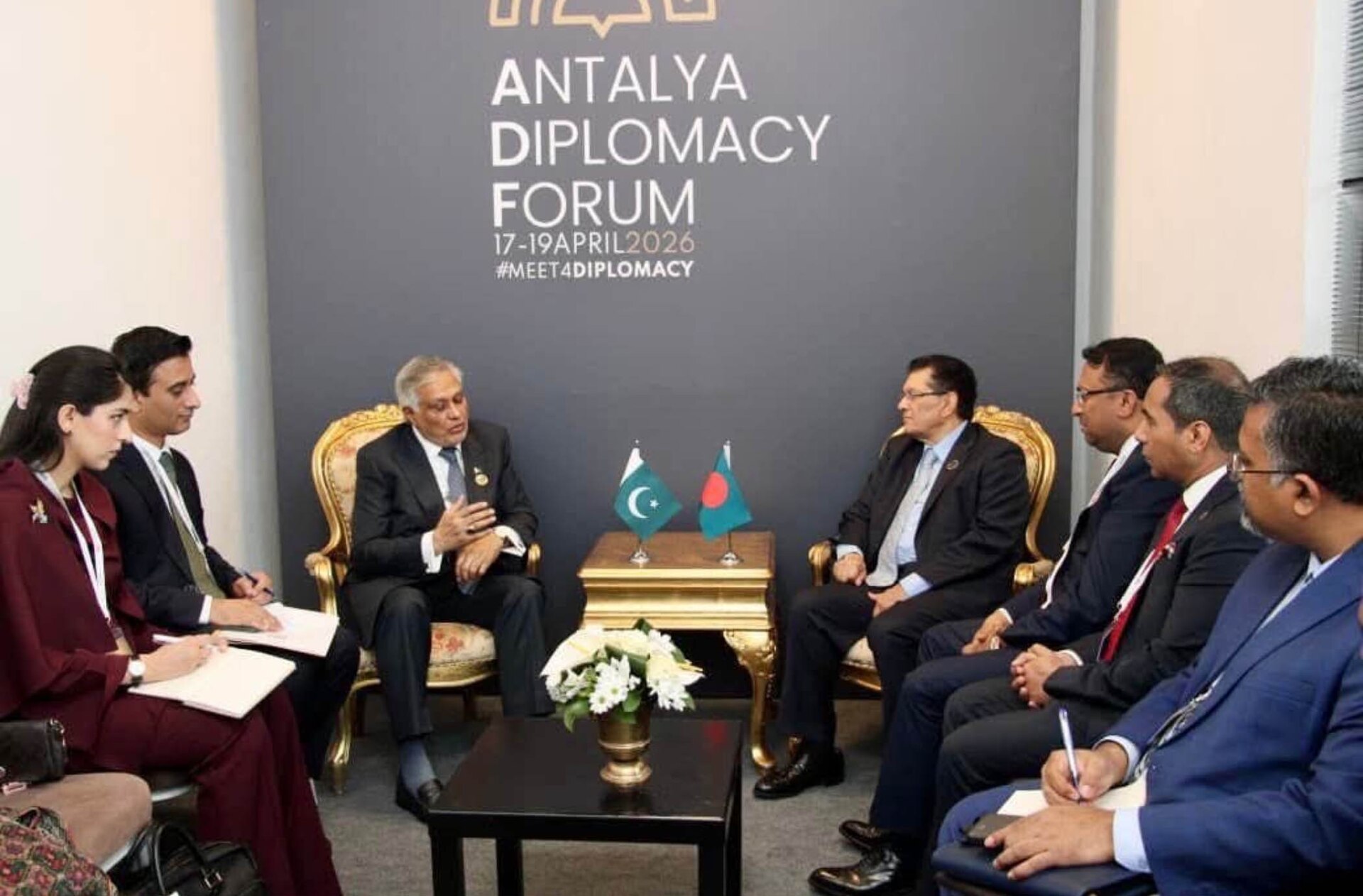
On April 18 — the same day 51 nations met in Paris to build the Hormuz coalition’s political framework — Saudi Arabia was in Antalya with Pakistan, Turkey, and Egypt, building a different kind of multilateral architecture. The Antalya quad is not a military planning body; it is a diplomatic coordination mechanism among Muslim-majority states with relationships on both sides of the conflict, and it represents Riyadh’s preferred vehicle for influencing the post-war settlement without joining a Western-led military structure. The April 24 Bahrain bilateral — the GCC’s touring-coordination pattern — provided fresh evidence of the architecture’s structural limits.
The parallel scheduling was not coincidental. Saudi FM Faisal bin Farhan called both UN Secretary-General Guterres and Russian Foreign Minister Lavrov on April 2 — the same day the first 41-nation Hormuz coalition met without Riyadh. The calls established Saudi Arabia’s position as engaged with the international diplomatic architecture (the UN, Russia as a Security Council permanent member) while maintaining distance from the operational military architecture being built at Northwood. Abdulaziz Sager of the Gulf Research Center captured the underlying tension: “Dialogue on its own is not enough if it is not backed by credible deterrence.” Saudi Arabia wants the deterrence that Northwood can provide but does not want its name on the manifest. That posture has now extended to direct outreach to Washington: Saudi Arabia is lobbying the United States to lift the Hormuz blockade, concluding that the cordon’s financial cost to Riyadh now outweighs whatever coercive leverage it applies to Tehran.
Hamad Althunayyan, a Saudi political analyst, articulated what amounts to the Gulf position: “The Gulf expects its interests to be represented, and included, in any deal with Iran.” The problem is that the two tracks — Northwood’s military planning and the Islamabad/Antalya diplomatic process — are being built by different architects with different assumptions about what “included” means. The Northwood coalition assumes a post-ceasefire environment in which Western navies guarantee freedom of navigation; the Antalya quad assumes a negotiated settlement in which Gulf states have a seat at the table. Saudi Arabia needs both outcomes but can only publicly affiliate with one process at a time, and it has chosen the diplomatic track — for now.
Can Saudi Arabia Stay Out and Still Shape What Comes After?
The strategic risk of Saudi Arabia’s absence from Northwood is not what happens during the conference — it is what happens after. The coalition being built will produce a standing operational framework: command relationships, basing agreements, intelligence-sharing protocols, rules of engagement, MCM procedures, and convoy scheduling systems. These are the institutional bones of the post-war Gulf maritime security architecture. If Saudi Arabia is not present when these structures are designed, it will face the choice of joining a framework built to someone else’s specifications or operating outside it.
The precedent of Operation Sentinel in 2019 is instructive in both directions. Saudi Arabia joined Sentinel without Iranian retaliation, but Sentinel was a US-led construct in which Saudi Arabia was a natural partner, not a European-led construct from which the US has been deliberately excluded. Joining Northwood’s successor architecture would position Saudi Arabia inside a framework where the UK and France hold command authority — a fundamentally different power relationship from the US-Saudi bilateral defense architecture that has defined Gulf security since the 1990 deployment of US forces to defend the Kingdom.
The fiscal dimension compounds the dilemma. Saudi Arabia’s war-adjusted budget deficit, estimated by Goldman Sachs at 6.6% of GDP once PIF commitments are included, is being driven primarily by the collapse in export volumes through Hormuz. The 1.1-1.6 million bpd gap between Yanbu’s practical ceiling and pre-war Hormuz throughput represents revenue that cannot be recovered until the strait reopens — at current prices, approximately $100-145 million per day in lost export revenue that funds both the defense establishment and the Vision 2030 transformation program. The faster the Northwood coalition can clear mines and establish escort operations, the faster Saudi revenue normalizes, which means Riyadh has a direct financial interest in the coalition’s success even as it maintains political distance from its structure.
Iranian Foreign Minister Araghchi, speaking on April 22 as the conference opened, framed the coalition’s legal basis as illegitimate: “The current situation in the Strait of Hormuz stems directly from US lawlessness and its illegal military strikes against a sovereign UN member.” Iran has implemented, he said, “measures under international law to safeguard its security” as a coastal state. The argument is a legal stretch under UNCLOS — transit passage rights exist independent of the coastal state’s security situation — but it provides the framework for Iranian objections to any coalition deployment, and by extension to any Gulf state that participates.
For MBS, the calculation reduces to a question of timing and sequencing. Saudi Arabia cannot join Northwood today without risking the co-belligerency designation that Iran has already leveled at the UN, triggering IRGC escalation during the most vulnerable period of the Hajj pilgrimage season, and potentially complicating the US resupply pipeline on which its depleted air defenses depend. But Saudi Arabia cannot afford to be absent from the post-war maritime architecture permanently, because the alternative is dependence on a security framework designed and commanded by Europeans with different strategic priorities. The window between these two constraints — too early to join, too costly to stay out forever — is where Saudi foreign policy lives for the next several weeks, and the calendar is not generous: the ceasefire expired today, Hajj arrivals are underway, and the IRGC is seizing ships within sight of Oman. One signal of how that gap might close came on April 20, when Xi Jinping called MBS and publicly demanded Hormuz remain open — the first presidential-level Chinese statement contesting Iran’s control of the waterway, and a form of legitimacy pressure that no European coalition framework can replicate.
FAQ
Has Saudi Arabia publicly commented on the Northwood coalition?
No. As of April 22, Saudi Arabia has issued no official statement regarding the March 19 joint statement (which it did not sign), the April 7 pre-conference (which it did not attend), the April 17 Paris summit (at which it was not mentioned), or the Northwood planning conference itself. The Saudi Foreign Ministry’s public communications during this period focused on the Antalya quad meeting with Pakistan, Turkey, and Egypt on April 18, and on bilateral calls between FM Faisal bin Farhan and counterparts including Guterres and Lavrov. The silence is the statement — Riyadh is declining to engage with the European-led track on the record while maintaining diplomatic activity on parallel channels.
Could Saudi Arabia join the coalition later without the risks it faces now?
The risk profile changes substantially once a ceasefire is in place and IRGC operational tempo decreases, which is precisely the condition the coalition itself requires before deployment. A post-ceasefire Saudi accession to the coalition’s escort and MCM framework would look closer to the 2019 Sentinel precedent — joining a stabilization mission after hostilities have ended — than to wartime alignment with a belligerent bloc. The ongoing US-Saudi 123 nuclear cooperation negotiations also provide a bilateral channel through which Washington could encourage or discourage Saudi participation, depending on the state of the US-Iran track at the time of accession.
What happens if the coalition deploys and Saudi Arabia is not a member?
Saudi Arabia would benefit from Hormuz reopening without bearing the political costs of coalition membership — a free-rider position that works only if the coalition succeeds without Saudi logistical support. In practice, the coalition would need access to Saudi port facilities, airspace, and intelligence cooperation to operate effectively in the southern Gulf, which means Riyadh would likely negotiate bilateral support agreements with the UK and France outside the formal coalition structure. This approach mirrors the model Saudi Arabia used during Operation Desert Fox in 1998, when it provided basing access for US and UK strikes on Iraq without joining the operation’s formal command structure, keeping Saudi involvement at the level of bilateral facility agreements rather than multilateral coalition membership.
Why did the coalition exclude the US from its operational structure?
The exclusion reflects a legal and operational judgment, not a political snub. French officials specified the reason as “America’s combatant status” — the US has been conducting active military operations against Iran since late February 2026, which means US naval vessels in the strait would be legitimate targets under the law of armed conflict. Including US forces in escort operations would extend Iran’s legal justification for engaging coalition ships from a narrow “interference with coastal state security” argument to a broader “coalition includes an active belligerent” argument. The exclusion also serves a diplomatic function: a French official’s requirement for “a US commitment not to block any ships” before deployment means the coalition is implicitly positioning itself as a check on both Iranian and American uses of force in the strait — a neutrality posture that collapses if US forces operate within the structure.
What is the IRGC’s “indigenous security architecture” for the Gulf?
The IRGC Navy’s April 5 statement referenced “the final stages of operational preparations for a comprehensive plan aimed at establishing a new, indigenous security architecture in the Persian Gulf” — a formulation that goes beyond Hormuz control to describe a regional order in which Iran replaces the US Fifth Fleet as the dominant naval power in Gulf waters. The concept has roots in Iran’s 2011 “Hormuz Peace Plan” and Khamenei’s repeated calls for “regional security without foreign presence,” but the 2026 version incorporates operational realities that did not exist previously: the IRGC’s demonstrated ability to close Hormuz, the decommissioning of US MCM capability from Bahrain, and the exposure of Gulf states’ air defense depletion. Whether this architecture is achievable or merely aspirational, it represents a direct competitor to the Northwood coalition’s vision of a Western-guaranteed freedom of navigation regime — and Saudi Arabia will eventually have to decide which framework better serves its long-term security interests, or whether it can construct a third option through the Antalya process. That architecture question sharpened on April 18, when IRGC gunboats fired on vessels holding Iranian FM clearances — a case study in the authorization-ceiling problem analyzed in India’s Authorization-Ceiling Injury: The IRGC Fired on Ships That Held Iranian FM Clearance. For the parallel question of how China’s structural position as buyer of Saudi crude and creditor of Iran made it the only viable Hormuz mediator, see Beijing Didn’t Choose to Broker the Hormuz Crisis — the Crisis Chose Beijing. The coalition protection void deepened on April 22, when the White House confirmed its two-tier ceasefire ruling — meaning every European, Asian, and Gulf-flagged vessel in the strait operates without ceasefire cover regardless of the escort architecture assembled at Northwood. Ukraine’s response to the Gulf’s air-defence depletion — deploying 201 specialists and signing 10-year defence deals with Saudi Arabia, the UAE, and Qatar — represents one non-Northwood tier being built independently of the coalition architecture.