
DUBAI — Iran’s Islamic Revolutionary Guard Corps fired on a third commercial vessel in the Strait of Hormuz on Wednesday morning and, within hours, released a professionally edited boarding video of its seizure of MSC Francesca the day before — turning a 48-hour escalation cycle into something more dangerous than the ship seizures themselves: an information-warfare campaign designed to make every shipping company on earth watch its vessels get boarded in real time.
The M/V Euphoria, a Panama-flagged container ship operated by Dubai-based Sitmar Shipping, took fire at 0638 UTC on April 23 approximately eight nautical miles west of Iranian-controlled waters while transiting eastbound toward Jeddah. The vessel sustained no damage and reached Fujairah later that day. The IRGC, which has now seized two ships and fired on a third in barely 36 hours, claimed the Euphoria attempted to transit “without authorisation” — the same clearance-violation framing it used for MSC Francesca and the Epaminondas on April 22, and the same framing it used when it turned back the Selen on March 24.
Table of Contents
The Boarding Video Iran Wanted the World to See
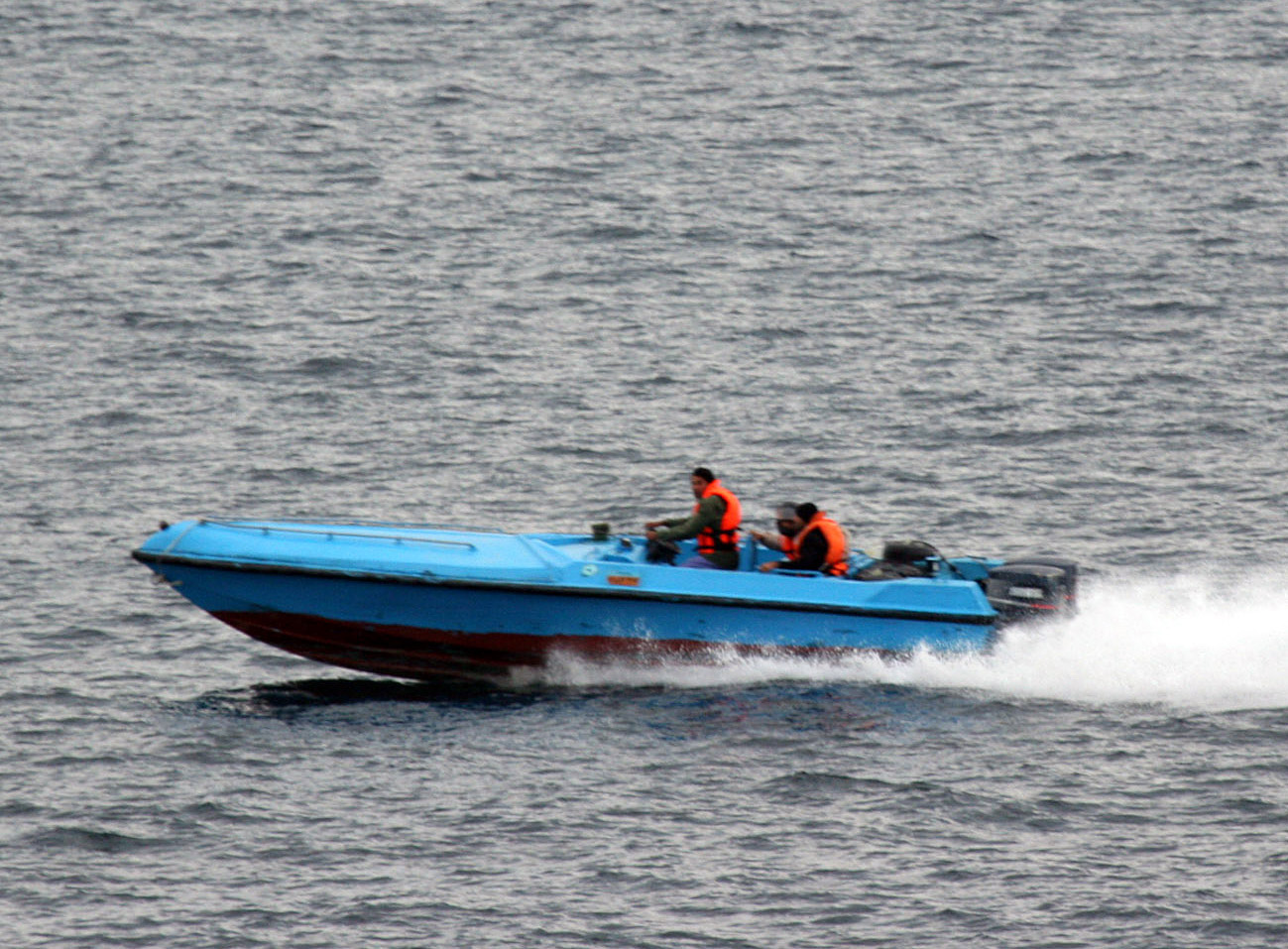
The shooting was not the main event on April 23 — the video was. Iranian state television broadcast IRGC footage on April 23 showing masked troops arriving alongside MSC Francesca in a grey speedboat, climbing a rope ladder to a shell door in the hull, and boarding the vessel brandishing rifles. The footage, released by Press TV and circulated by Tasnim, Fars, and IRNA, was edited with an action-movie-style soundtrack and no commentary — a production choice that tells you everything about the intended audience, because Farsi-speaking domestic viewers don’t need a language-agnostic edit.
The video spread fast. Al Jazeera, Breitbart, CGTN, Tribune India, and ANI News all amplified the footage within hours of release, giving Iran distribution reach across Western, Chinese, Indian, and Arabic-language media ecosystems simultaneously. CGTN ran the footage alongside video of US troops boarding the M/T Majestic X in the Indian Ocean, framing the information war as symmetrical — which is itself a win for Tehran, because symmetry between the world’s largest navy and a force operating from speedboats is not something Iran’s military can achieve on the water.
The IRGC Naval Command’s official statement claimed MSC Francesca was “linked to the Zionist regime” and accused both ships of “tampering with navigation aid systems,” operating without required authorisation, and attempting to “secretly exit the Strait of Hormuz” (Al Jazeera, PressTV, April 22–23). The “Zionist regime” designation was not incidental — PressTV led its coverage with “IRGC seizes Israeli ship,” giving the seizure an ideological frame designed to pre-empt sympathy for the vessel’s operator in non-Western media markets.
Why Does the Video Deter More Than the Seizure?
A ship seizure is an incident report on a risk manager’s desk. A boarding video is a scene that plays in the head of every operations director at every shipping company deciding whether to route a vessel through Hormuz next week. The IRGC does not need to seize every ship transiting the strait if every shipping company watches the footage of masked gunmen climbing the hull of a vessel that looks exactly like theirs — and that is the logic driving Iran’s shift from physical interdiction to broadcast interdiction.
The Middle East briefing 3,000+ readers start their day with.
One email. Every weekday morning. Free.
The precedent is instructive. When Iran seized the UK-flagged Stena Impero in July 2019, it released video of the boarding within hours, and the Lloyd’s Market Association expanded its joint war committee listed area within days. The 2019 seizure involved a single vessel and Iran released a single video; the 2026 campaign involves three vessels in 36 hours and a video edited for global virality, distributed through five state-affiliated outlets simultaneously. The Maritime Executive reported on April 23 that Iran’s strategy is to sustain a drumbeat of attacks — seizing ships regularly enough that operators eventually decide running the gauntlet is preferable to the cost and delay of avoidance routing.
Tasnim, the IRGC-aligned news agency, stated on April 23 that the strait “would not return to pre-war levels of travel.” Fars News reported the Euphoria became “stranded on the Iranian coast” — language that frames Iranian territorial waters as an administrative jurisdiction rather than a conflict zone, and that is itself part of the information architecture.
Five Events on One Day
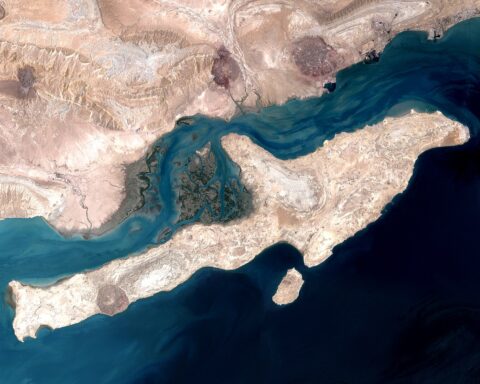
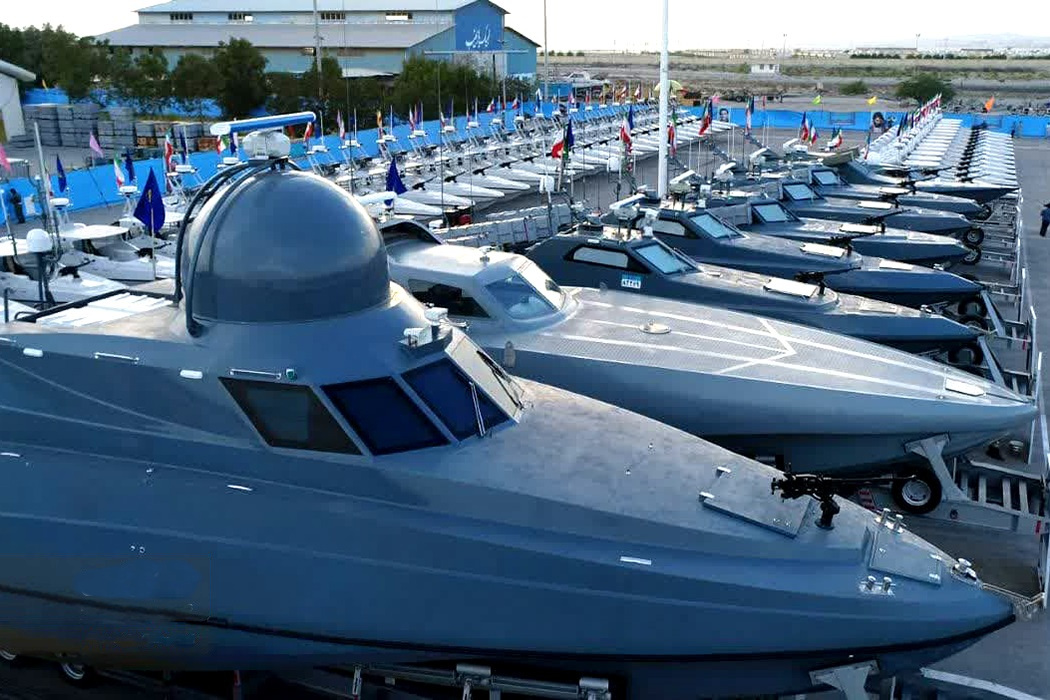
April 23 was not a single story — it was five stories arriving on the same morning, each one amplifying the others in a way that looked less like coincidence than like sequencing. The Euphoria was fired on at 0638 UTC. The MSC Francesca boarding video was released through state media. A senior Iranian parliament official confirmed, per Middle East Monitor and Gulf News, that Iran had — after 36 days of collecting nothing — received its first Hormuz toll payment. Donald Trump ordered the US Navy “to shoot and kill any boat” laying mines in the strait, adding “there is to be no hesitation” (NBC News, CNBC). And Sentinel-2 satellite imagery confirmed 33 IRGC fast-attack craft massed near the Kargan coast, per The Week India.
All of this landed on Day 1 of Trump’s indefinite ceasefire extension, announced April 21. The White House had ruled on April 22 that Iran’s ship seizures do not constitute ceasefire violations — a two-tier architecture that separated Hormuz operations from the ceasefire’s scope. An unnamed Iranian adviser dismissed the extension as “meaningless,” per Time. The IRGC’s actions on April 22–23 suggest it agreed with that assessment, because it seized two ships and fired on a third within the first 36 hours of the extension’s existence.
The convergence matters because each element reinforces a different audience. The video targets commercial shipping operators globally. The toll collection signals institutional permanence to Iran’s domestic bureaucracy. Trump’s shoot-on-sight order targets the American public and Iran’s military planners simultaneously. The 33 fast-attack craft signal operational readiness to CENTCOM. A single incident is an incident; five coordinated signals on the same day is a posture.
How Fast Is the IRGC Escalation Pattern Accelerating?
The tempo tells the story more clearly than any individual incident. On March 24, the IRGC turned back the Selen, a 6,800 dwt container feeder, at the traffic lane — an administrative act, no weapons involved, no video released. On April 19–20, the US seized the Iranian-flagged Touska near the strait, and Iran explicitly framed the MSC Francesca and Epaminondas seizures on April 22 as direct retaliation. On April 23, the IRGC fired on the Euphoria — the first live-fire incident against a commercial vessel in this cycle — and released a professionally produced boarding video within hours of the shooting.
The pattern is administrative control (March 24), retaliatory seizure (April 22), live fire plus information warfare (April 23). Each step raises the threshold, and each step compresses the interval — 29 days between Selen and Touska, three days between Touska and the two seizures, less than 24 hours between the seizures and the Euphoria firing. The IRGC is operating without a named naval commander — Rear Admiral Alireza Tangsiri was killed on March 30, and 24 days later no successor has been publicly identified — which means either a decentralised command structure is executing a coordinated escalation plan, or the escalation itself is emergent, driven by field commanders responding to the Touska seizure without central authorisation.
Mehran Kamrava of Georgetown University Qatar assessed on April 10 that “most likely Iran’s Hormuz Strait strategy and its broader strategy is shaped and influenced by the headquarters of Khatam al-Anbiya, which is the central key security decision-making within the Revolutionary Guards” (Euronews). If Kamrava’s assessment holds, the April 22–23 cluster was not reactive — it was the next phase of a campaign that was always going to escalate past administrative control into kinetic interdiction, and the Touska seizure gave it the pretext to accelerate the timetable.
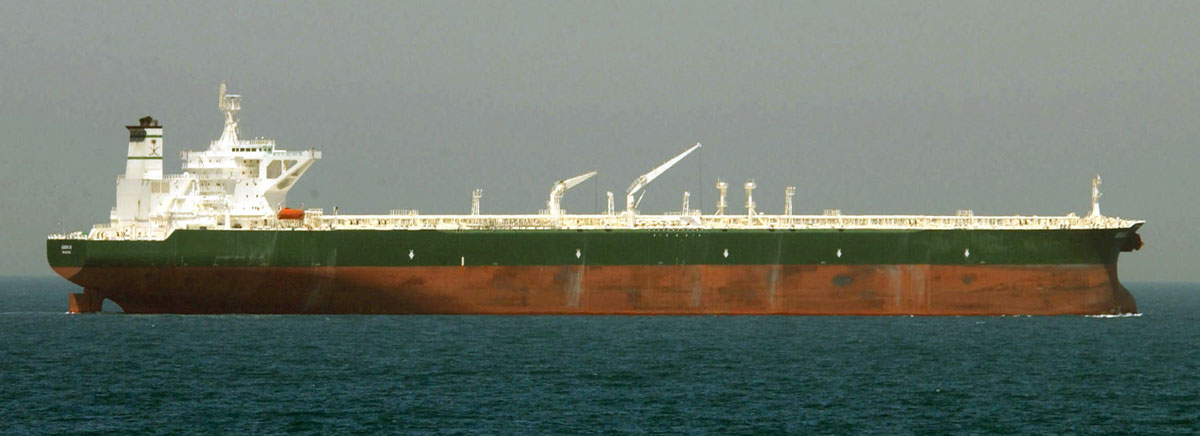
From Zero to Revenue on the Same Morning
The toll collection is a detail that landed quietly next to the video and the shooting, but it may be the most consequential signal of the five. Iran had collected zero revenue from its Hormuz toll system in the first 36 days after announcing it — 60 permits issued, eight payment requests sent, nothing paid. On April 23, a senior Iranian parliament official confirmed the first toll payment had been deposited into the Central Bank account, per Middle East Monitor and Gulf News. The amount was not disclosed.
The timing is not accidental. A toll that nobody pays is an embarrassment; a toll backed by footage of masked troops boarding non-compliant vessels is a fee schedule. The video and the first revenue arrived on the same day because one enabled the other — or, at minimum, because Iran’s information architects understood that announcing revenue collection on the same morning the world watched a boarding video would make the toll seem less like a diplomatic fiction and more like an operational reality. The IRGC did not need to seize the vessel that paid the toll; it only needed to seize a vessel that didn’t.
What Shipping Operators See Now
The commercial calculus has shifted in ways that the insurance market reflects but does not fully capture. War risk premiums for Hormuz transit have risen to 1.5–3% of hull value, with US-, UK-, and Israeli-nexus vessels facing surcharges of up to 5% — roughly ten to twenty times the pre-crisis baseline of 0.15–0.25%, according to Lloyd’s List Intelligence. For a hypothetical $138 million VLCC, that translates to $2–7 million in war risk insurance per voyage depending on flag and nexus designation. Hapag-Lloyd imposed a war risk surcharge of up to $3,500 per container on March 2 (Hapag-Lloyd advisory).
But the Lloyd’s Market Association made a distinction on April 23 that the video makes harder to sustain: “The reason ships are not moving is not through a lack of insurance; it is a question of the risk to crew and vessel safety being assessed by the ship masters and owners.” Eighty-eight percent of London marine insurers still have appetite to underwrite war risk, per LMA. The barrier is not price — it is the thing the video shows. Fifteen Filipino crew members are currently aboard the two seized vessels (five on MSC Francesca, ten on Epaminondas, per Times of Israel and The Week India), and every seafarer’s union representative in Manila watched the same footage the operations directors watched.
Panama’s Foreign Ministry called the Euphoria’s capture “a serious threat to maritime security and an unnecessary escalation” (ANI News, April 23). Panama flags roughly 16% of global shipping tonnage (UNCTAD), and the Euphoria and MSC Francesca are both Panama-flagged — making Panama’s response a proxy for how the world’s largest flag state absorbs the new risk environment. Brent crude closed at $103.67 on April 23, up 2% from $101.73 on April 22, a move that reflected the Euphoria shooting but not yet the full implications of the video’s global distribution.
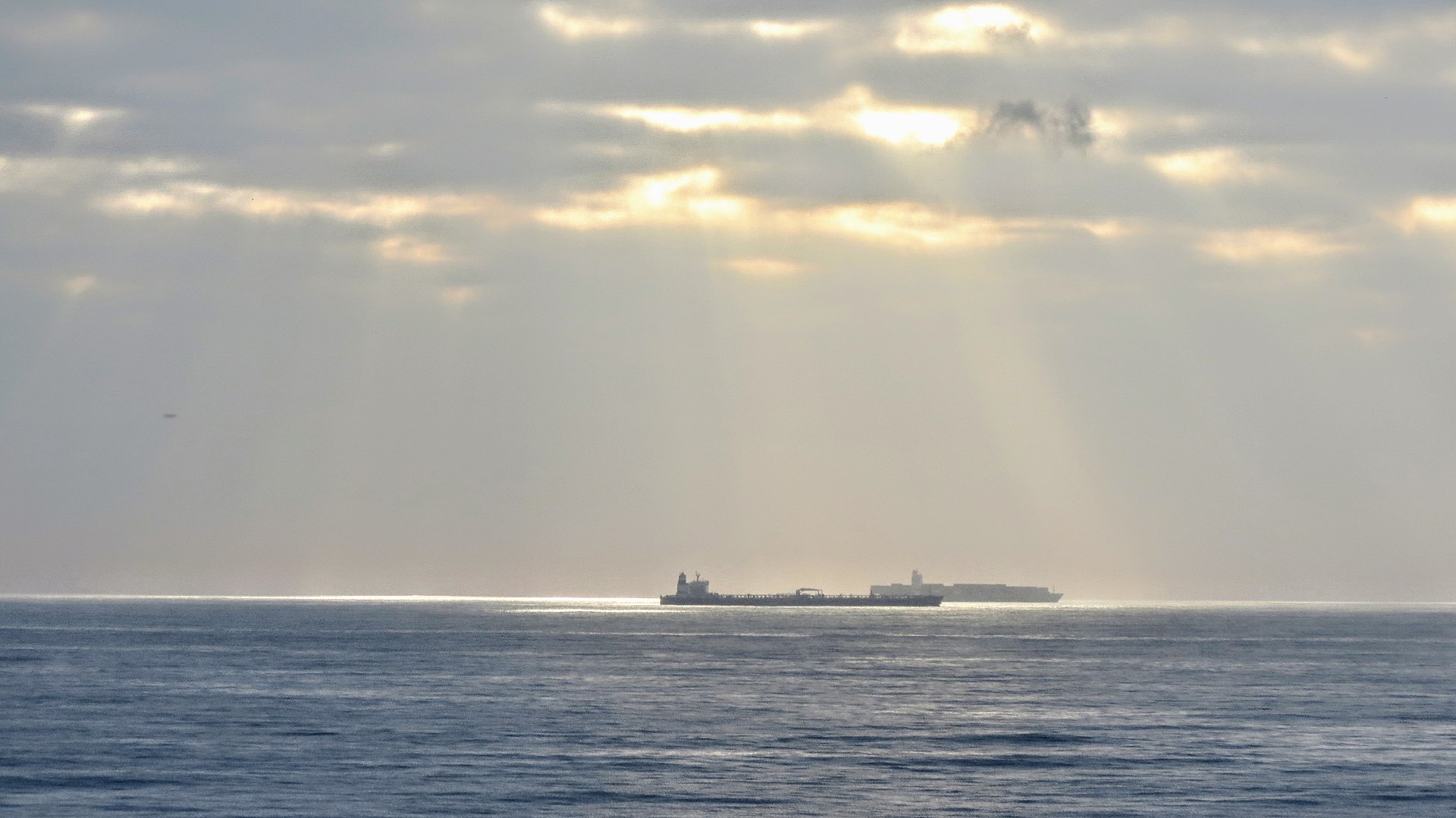
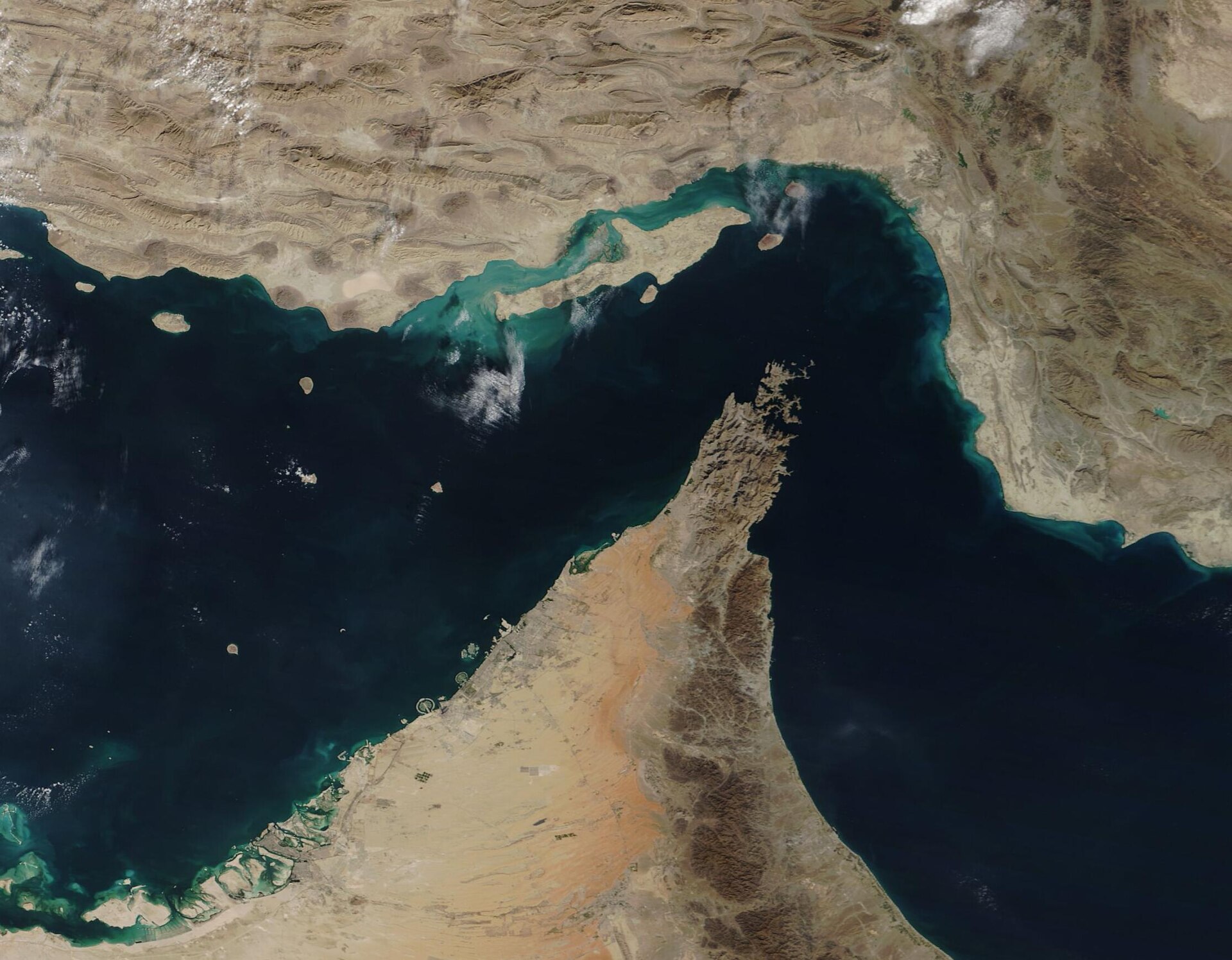
The Strait of Hormuz carries approximately 20% of global oil and LNG. The question facing every shipping operator routing vessels through it this week is not whether the IRGC will shoot at another ship — the pattern suggests it will — but whether the next boarding video will feature their vessel, their crew, and their flag.
FAQ
What is the MSC Francesca and who owns it?
MSC Francesca is a Panama-flagged container ship operated by Mediterranean Shipping Company, the world’s largest container line, owned by the Aponte family. Diego Aponte has been reported by Bloomberg (April 13, 2026) as making “inroads with Trump’s circle,” which adds a layer of political complexity to Iran’s decision to target an MSC vessel specifically — though the IRGC framed the seizure in ideological rather than commercial terms.
Has the US Navy responded to the IRGC’s Hormuz operations?
Trump’s April 23 order directed the Navy to “shoot and kill any boat” laying mines in the strait and to triple the pace of minesweeping. This is a mine-specific order, not a general engagement authorisation — it does not cover IRGC fast-attack craft conducting boardings or seizures, which creates a gap between the order’s language and the IRGC’s actual interdiction method of speedboat boarding rather than mine deployment.
How does the 2026 Hormuz campaign compare to the 2019 tanker crisis?
The 2019 crisis peaked with the Stena Impero seizure, after which the Lloyd’s Market Association expanded its joint war committee listed area and UK-flagged vessels added Royal Navy escorts. The 2026 campaign has produced a more compressed tempo — but the structural difference is that in 2019 Iran had no toll system, no satellite-visible fast-attack massing, and no ceasefire framework providing legal cover for Hormuz operations to be treated as a separate track from the broader conflict. The legal separation the White House granted on April 22 is the element the 2019 crisis lacked, and it is what gives the current campaign its staying power.
What happened to the M/V Touska that triggered the retaliation?
The US seized the Iranian-flagged container ship Touska near the Strait of Hormuz on April 19–20, 2026. Iran explicitly cited the Touska seizure as justification for boarding MSC Francesca and Epaminondas on April 22, framing its actions as reciprocal enforcement rather than unilateral aggression — a narrative frame designed to complicate the legal distinction between US sanctions enforcement and Iranian maritime interdiction.
Are any vessels still transiting Hormuz?
Some vessels continue to transit, particularly those with Chinese intermediation or pre-arranged IRGC clearance, but the volume remains far below pre-war levels. The deterrence environment has shifted the decision-making window: prior to the April 22–23 escalation, operators were reassessing routes on a weekly basis; after the live-fire incident on the Euphoria and the global distribution of the boarding video, the LMA indicated on April 23 that the barrier is no longer insurance availability — 88% of London marine underwriters retain appetite — but crew safety assessment by masters and owners, a calculation that tightens with each new video released.