
DUBAI — Iran laid fresh mines in the Strait of Hormuz during the week of April 21–23, while the ceasefire extension it nominally agreed to was still in force, and the Pentagon privately told Congress that clearing those mines could take up to six months. The contradiction is not a contradiction at all: it is the IRGC converting a diplomatic pause into physical infrastructure that will outlast any agreement, any signature, any handshake in Islamabad or anywhere else. Every negotiator in every capital is now measuring progress against the wrong clock, because even a perfect deal signed tomorrow does not reopen Hormuz — mine clearance does, and that process, according to the classified briefing first reported by the Washington Post on April 22, extends the effective closure of the world’s most important oil chokepoint through Q4 2026 at minimum.
Pentagon spokesman Sean Parnell denied the timeline publicly — “A six-month closure of the Strait of Hormuz is an impossibility and completely unacceptable to the Secretary” — but that sentence is a political aspiration, not an operational rebuttal, and no one in the building pretends otherwise. The U.S. Navy has exactly two mine countermeasures ships in theater, USS Pioneer and USS Chief, both Avenger-class vessels rushed from Japan — the four ships that existed specifically for this scenario were retired six months before the war began. The gap between what Washington says and what Washington can do has never been wider, and the mines do not care about the difference.
Table of Contents
- Mines During a Ceasefire: The Physical Veto
- What Did the Pentagon Actually Tell Congress?
- Iran Cannot Find Its Own Mines
- The Mine Countermeasures Gap the Navy Built
- How Long Will Hormuz Mine Clearance Actually Take?
- The Authorization Ceiling Made Kinetic
- Trump’s “Shoot and Kill” Order and Its Limits
- Why Can’t Ships Simply Transit a Cleared Channel?
- Three Legal Regimes Violated Simultaneously
- The Wrong Timeline: What Diplomats Are Missing
- Frequently Asked Questions
Mines During a Ceasefire: The Physical Veto
Axios confirmed on April 23 that the IRGC Navy laid additional mines in the Strait of Hormuz during the week of April 21–23, citing a U.S. official and a separate source with direct knowledge. The ceasefire extension announced on April 21 was, at that moment, nominally in force — conditional on Iran producing a “unified proposal” that has not materialised. The mine-laying and the ceasefire existed simultaneously, which tells you everything about what ceasefire means to the command structure that controls the strait.
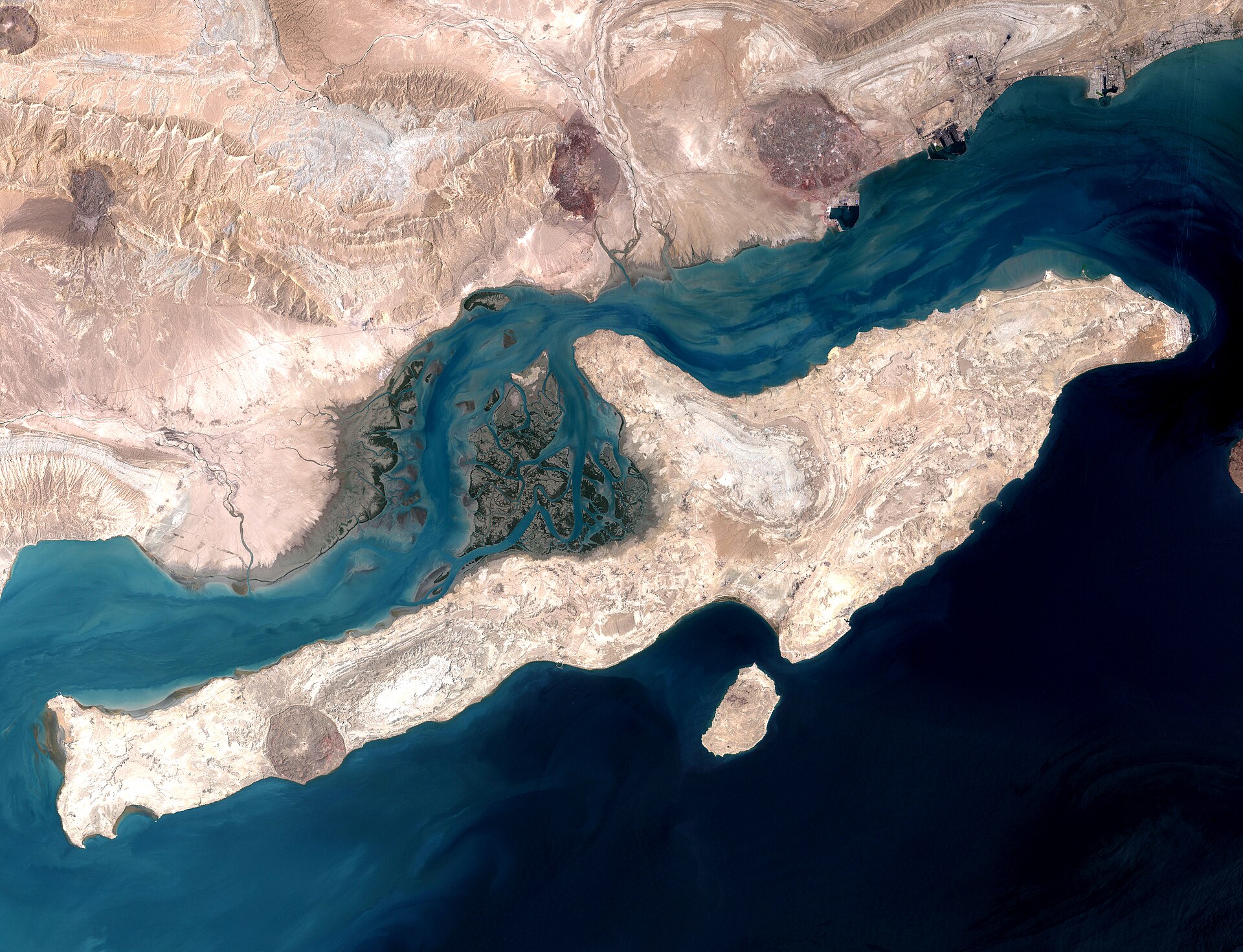
This is not sabotage from the margins. The IRGC Navy published a chart on April 9 marking the standard Hormuz traffic separation scheme as a “danger zone” and redirecting vessels into a five-nautical-mile corridor between Qeshm and Larak islands, inside Iranian territorial waters. It reversed Foreign Minister Araghchi’s declaration that the strait was “completely open” within hours of him making it on April 17. It declared “full authority to manage the Strait” on April 5 and again on April 10, while Araghchi was physically in Islamabad negotiating. Mine-laying during a ceasefire is the kinetic expression of a pattern that has been visible for weeks: the IRGC does not recognise the authority of any Iranian official who promises to open Hormuz, and it has now embedded that refusal in explosive ordnance on the seabed.
The Pentagon briefing to Congress, delivered April 22, put the confirmed count at “20 or more mines,” though intelligence assessments cited by Defence Express and U.S. naval analyses place the broader range at 1,000 to 3,000 across the strait and its approaches. Iran’s total stockpile is estimated at more than 2,000 contact mines, supplemented by Chinese-supplied EM-52 rocket-rising mines that standard mine countermeasures sonar cannot reliably detect. The technical reasons for that limitation are the editorial spine of the six-month clearance estimate.
What Did the Pentagon Actually Tell Congress?
The Washington Post reported on April 22 that the Pentagon privately briefed congressional leaders on a timeline of up to six months to clear the Strait of Hormuz. The figure was presented alongside the confirmed mine count and an assessment of available U.S. mine countermeasures capability, which is to say an assessment of how little capability exists. Parnell’s public denial the following day — calling a six-month closure “an impossibility” — was directed at markets, allies, and domestic politics, not at the operational reality described in the classified session. The Secretary of Defence may find the timeline unacceptable, but the mines are indifferent to his preferences.
The Middle East briefing 3,000+ readers start their day with.
One email. Every weekday morning. Free.
The six-month figure aligns with historical precedent. During the 1991 Gulf War, four Avenger-class ships cleared approximately 200 square miles of the northern Persian Gulf in 51 days — a rate of roughly two square miles per day per vessel. Iraq had laid 1,157 mines, a figure within the lower range of current Hormuz estimates. The northern Gulf was not declared mine-free for more than two years after that initial sweep, because mine clearance has a long tail: the seabed is uncooperative, currents shift ordnance, and the cost of a single missed mine was demonstrated in April 1988 when USS Samuel B. Roberts struck an Iranian contact mine and was put out of service for 13 months.
Iran Cannot Find Its Own Mines
The most consequential detail in the current crisis is not the mine count but the mine map — or rather, its absence. The IRGC laid mines using small fast boats at night, without systematic position logging, relying on commercial GPS and manual compass bearings in conditions where precision was secondary to speed and volume. Iran does not possess a complete chart of where its own mines are, and it has neither the mine countermeasures vessels nor the trained personnel to act on one if it did. The International Business Times reported that the IRGC’s approach was “haphazard,” a word that understates the operational reality: the organisation that mined the strait cannot unmined it.
Foreign Minister Araghchi acknowledged this obliquely in his ceasefire statement, saying the strait would remain open “with due consideration of technical limitations.” U.S. officials interpreted the phrase as a direct admission that Iran cannot quickly locate or clear its own mines, and they are almost certainly correct — the alternative interpretation does not survive contact with the evidence. President Pezeshkian’s own accusation on April 4 that Vahidi and Abdollahi deviated from the delegation’s mandate at Islamabad confirms that the civilian government understands it does not control the military operations that determine whether its diplomatic promises can be fulfilled. Araghchi can promise an open strait; the IRGC can mine it shut; and then neither side can reopen it, because the mines do not come with a recall function.
This creates a structural problem that no negotiation can solve on any timeline shorter than the clearance operation itself. A ceasefire, even a genuine one backed by every faction in Tehran, does not remove mines from the seabed. A signed agreement does not neutralise EM-52 rocket-rising mines sitting at 200 metres. The physical infrastructure of closure now exists independently of the political will to close or open the strait, which means that Iran has achieved something more durable than a blockade: it has created a condition that persists after the decision to create it has been reversed, if it ever is.
The Mine Countermeasures Gap the Navy Built
The U.S. Navy’s mine countermeasures capability is, by its own institutional admission, inadequate for the task it now faces. USNI Proceedings published an article in April 2026 titled “The Crisis in Mine Countermeasures” that described “the yawning gap in U.S. MCM capability, with the United States having three MCM-countermeasures ships, no dedicated MCM helicopters, and a limited number of LCS MCM modules.” The article appeared in the Navy’s own professional journal, which means the service is aware of the problem in writing, in public, at the precise moment the problem has become operationally decisive.
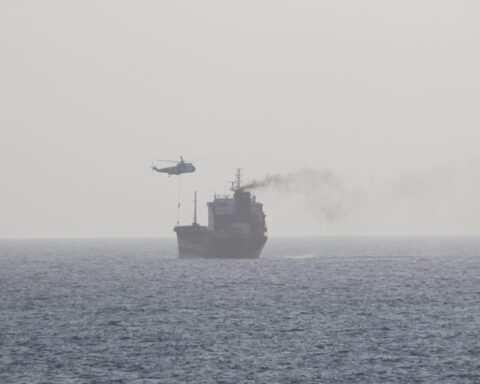
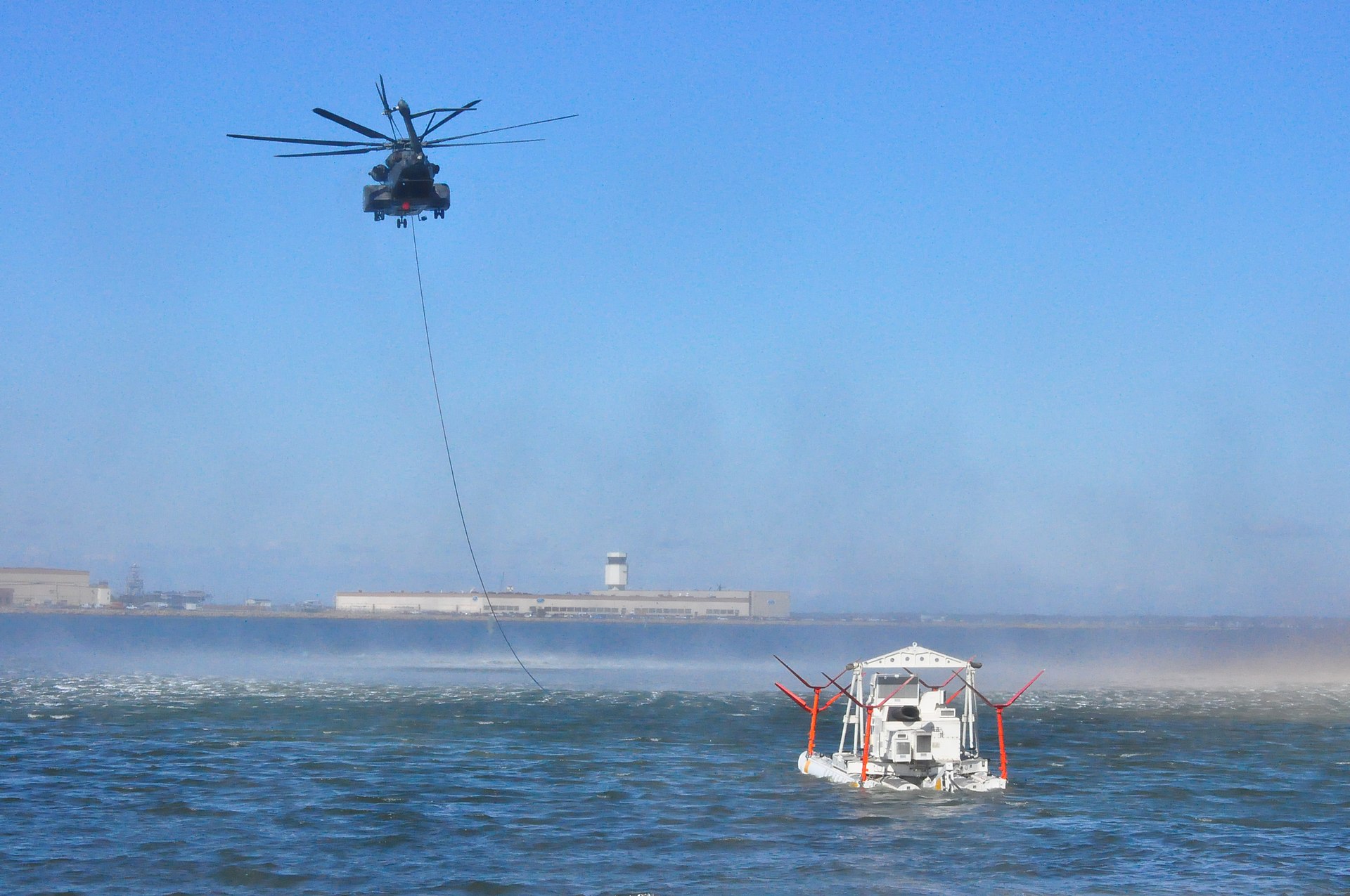
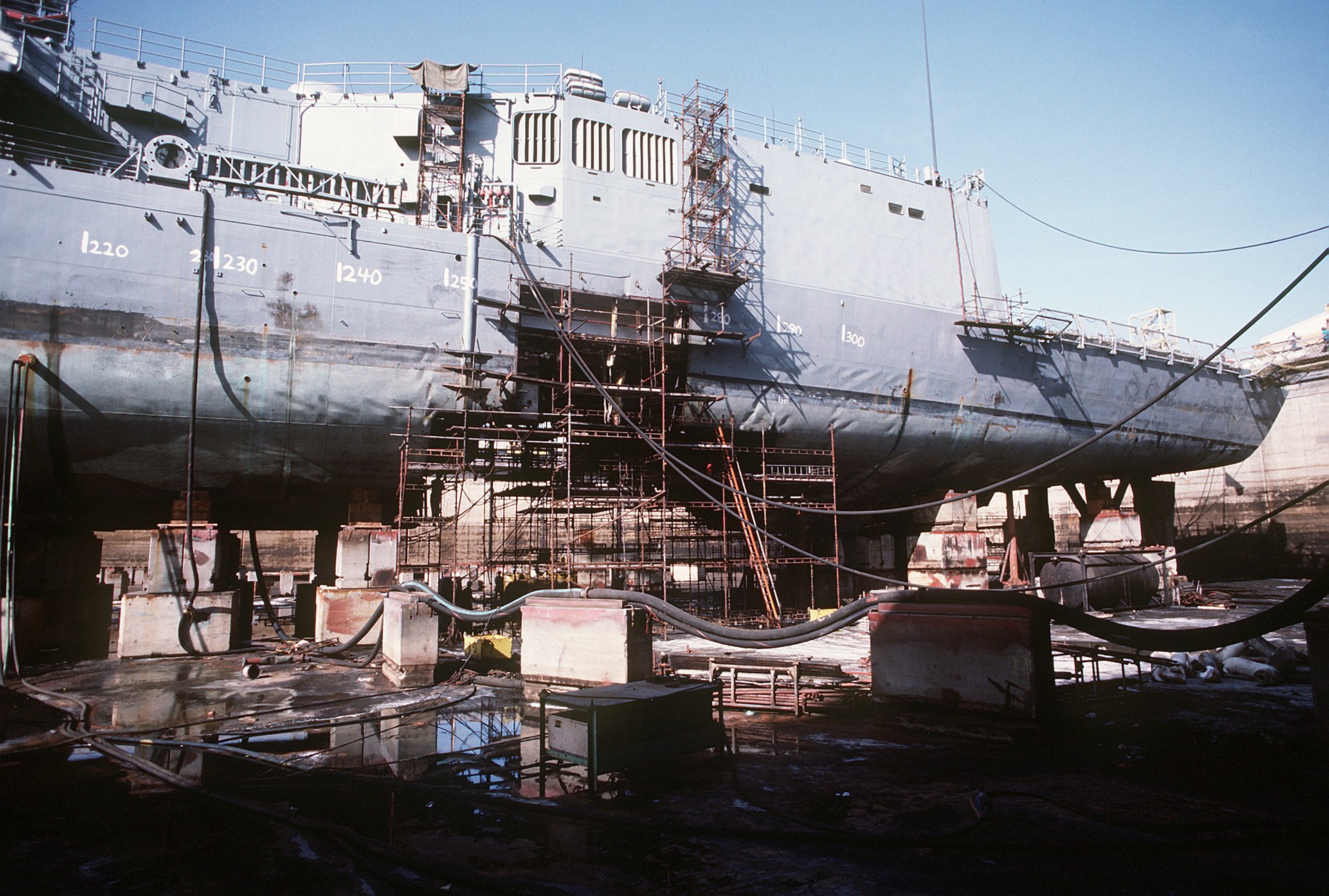
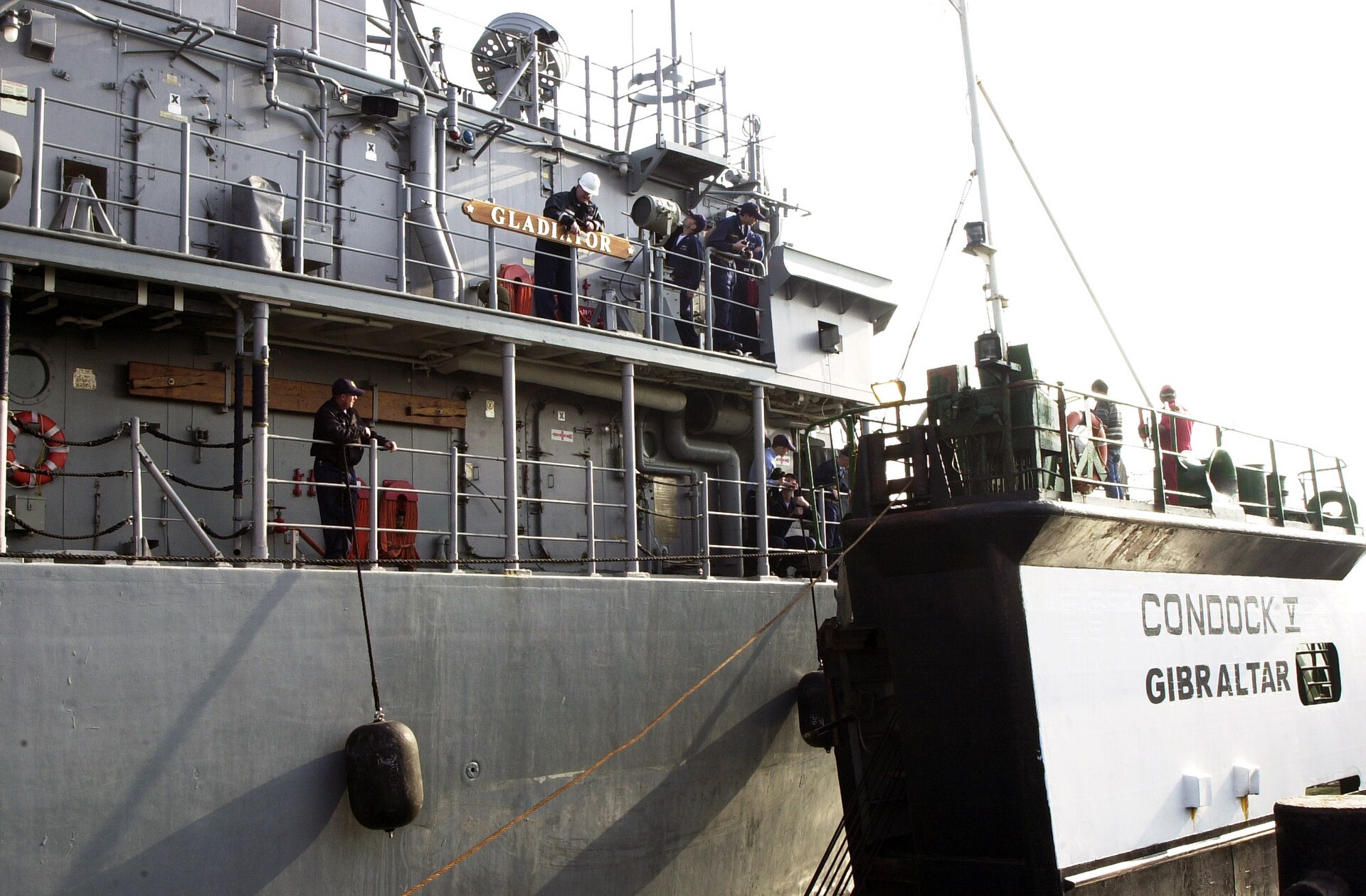
The specifics are damning. The four Avenger-class mine countermeasures ships based at Naval Support Activity Bahrain — the ships that existed specifically for this scenario — were decommissioned on September 25, 2025. Five months later, the war began. The Navy’s entire remaining Avenger-class inventory is four ships; USS Pioneer and USS Chief, two of them, were dispatched from Japan and arrived in theater around April 22 after a 4,000-nautical-mile transit from Singapore. CENTCOM has augmented them with MH-53E Sea Dragon helicopters, MH-60S helicopters fitted with airborne mine countermeasures systems, unmanned underwater vehicles, and surveillance aircraft, but the augmentation is a confession: the dedicated capability was retired, and the replacements are improvisations bolted onto platforms designed for other missions.
The Littoral Combat Ship was supposed to fill the MCM gap with modular mission packages. The LCS MCM module has been in development for over a decade, has never been operationally deployed at scale, and the three LCS ships currently in Asia are not in the Persian Gulf. The Navy bet on a technological future that did not arrive in time, decommissioned the present, and is now conducting mine clearance in the world’s most heavily mined waterway with two 1980s-vintage wooden-hulled ships and a collection of helicopters.
How Long Will Hormuz Mine Clearance Actually Take?
Apply the 1991 benchmark to the current situation and the arithmetic is unforgiving. Two Avenger-class ships operating at the historical rate of two square miles per day per vessel can clear four square miles daily. The Strait of Hormuz’s traffic separation scheme and surrounding approaches encompass an area that IRGC mine-laying has potentially contaminated across hundreds of square miles — the 2021 Navy estimate for the minimum clearance zone was approximately 200 square miles, but that assumed a conventional state-on-state mining pattern with known boundaries, not the haphazard dispersal pattern the IRGC has employed. At four square miles per day with two ships, 200 square miles takes 50 days in the most optimistic scenario, and the Pentagon’s classified six-month estimate suggests the actual area, depth complexity, and EM-52 challenge push the timeline far beyond that baseline.
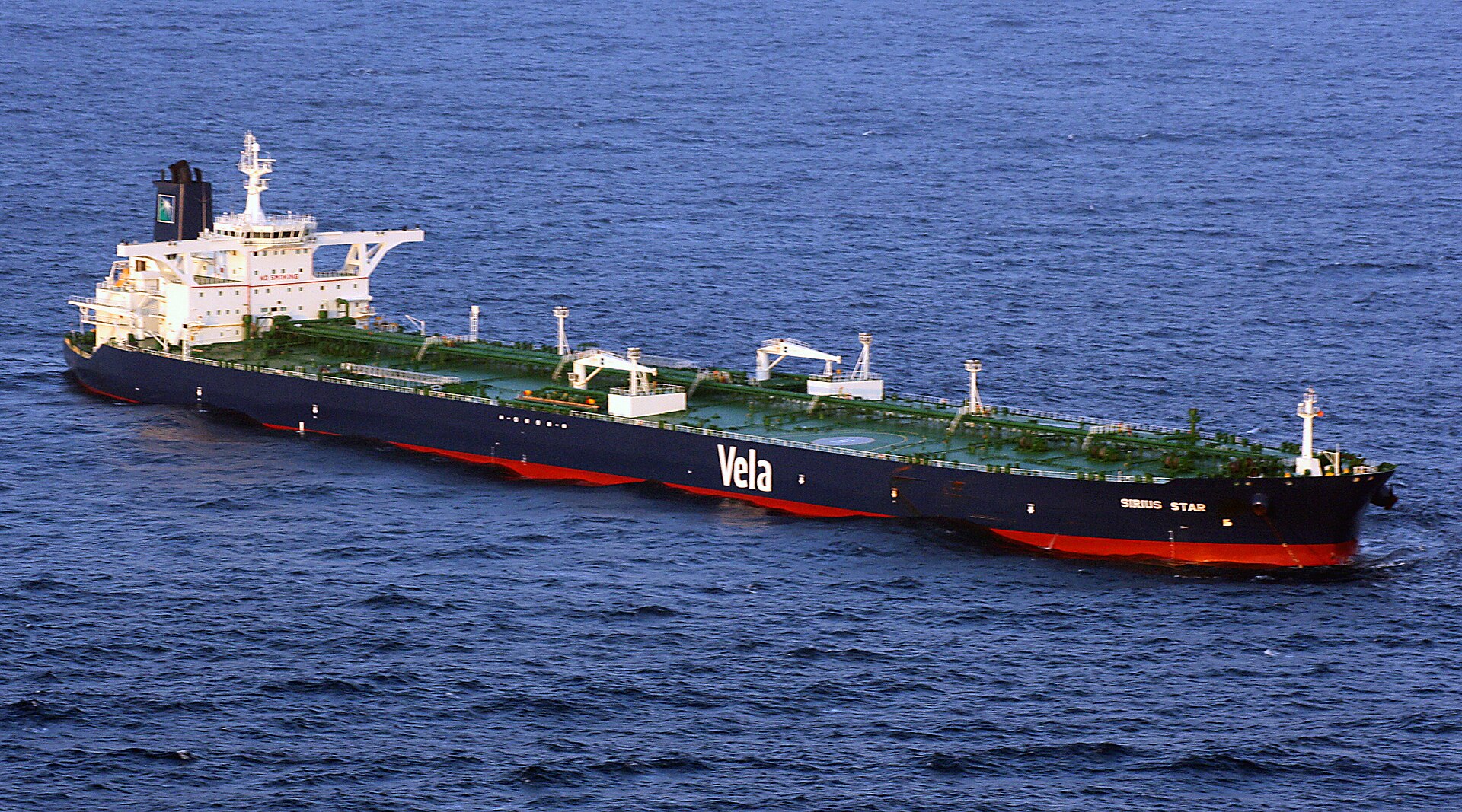
The EM-52 rocket-rising mine is the specific technical problem that elongates the clearance timeline. Conventional moored contact mines sit at known depths and can be detected by hull-mounted sonar or cut loose by mechanical sweeps. The EM-52 sits on the seabed at depths up to 200 metres — well below the operational depth of most MCM sonar systems — and is triggered by a combination of acoustic, magnetic, and pressure signatures that can be tuned to activate only for vessels above a certain tonnage threshold. Clearing an area of EM-52s requires either deep-water sonar sweeps that the Avenger-class was not designed for, or unmanned underwater vehicles that the Navy possesses in limited numbers and has not previously deployed at this scale in a contested environment. Every EM-52 that the sweep misses is a 600-pound warhead waiting for the first VLCC that transits the “cleared” channel.
The long tail matters as much as the initial sweep. Individual mines surface months and years after initial clearance — shifting with currents, burying in sediment, reappearing in areas already certified as clear. During the 1984 Red Sea mining attributed to Libya, mines proved far harder to locate and remove than anyone anticipated — a strategic parallel to the “lost mines” problem Iran has created by declining to record where its ordnance went. Lloyd’s and the London insurance market will not reduce war-risk premiums until the clearance is certified complete, which means the commercial closure of Hormuz extends well beyond the military clearance timeline.
The Authorization Ceiling Made Kinetic
The authorization ceiling — the structural inability of any Iranian official below Khamenei to bind the IRGC to a commitment — has been a recurring feature of this crisis since Day 1, but mine-laying converts it from a diplomatic abstraction into a physical fact. Markets have already priced the authorization ceiling above any official denial, and with good reason: Sanam Vakil of Chatham House stated plainly that Mojtaba Khamenei “is not yet in full command or control” and that IRGC generals “have led key wartime decisions, including attacks on Israel, the closure of the Strait of Hormuz, and engagement in ceasefire and diplomatic talks.” Ali Vaez of the International Crisis Group was blunter — “Mojtaba is subservient to the Revolutionary Guards.” The mines are what subservience looks like when it touches the seabed.
IRGC Navy commander Tangsiri was killed on March 30. As of April 24, 25 days have passed without a named successor, which means the mine-laying operations that continued through the ceasefire extension were authorised by a command structure that has no formally designated head. Operational decisions have been pushed down to unit commanders or laterally to Vahidi’s general staff — the same Vahidi who carries an INTERPOL red notice for the 1994 AMIA bombing, who demanded that Zolghadr join the Islamabad negotiating team, and who refused to include missile capabilities in any ceasefire framework. The IRGC has captured Iran’s wartime decision-making, and the mines are the most tangible proof that capture produces outcomes no civilian authority can reverse.
The Iranian Parliament’s National Security and Foreign Policy Committee advanced a 12-article motion — “The Law on Establishing Iran’s Sovereignty over the Strait of Hormuz” — to codify toll collection and “security coordination” requirements, giving legal form to the IRGC’s operational reality. PressTV frames this as defensive sovereignty; the rest of the world sees a state attempting to legalise what its military has already imposed by force. The mines do not wait for parliamentary votes. They are already there, already armed, and already unmappable by the state that laid them.
Trump’s “Shoot and Kill” Order and Its Limits
President Trump’s April 23 order — “I am ordering the U.S. Navy to shoot and kill any boat that is laying mines in the Strait of Hormuz” — addresses the symptom while the disease has already metastasised. Deterring future mine-laying is operationally sensible if you can distinguish a mine-laying fast boat from the hundreds of IRGC patrol boats, fishing dhows, and small craft that populate the strait on any given day. The IRGC’s mine-laying platform is primarily small boats under 25–30 feet, nearly impossible to distinguish from routine patrol activity until the moment ordnance goes over the side, and shoot-on-sight rules that cannot reliably identify the target create escalation risks that the three carrier strike groups now converging on Hormuz were not positioned to manage.
Trump also ordered minesweepers to continue “at a tripled up level,” but tripling the effort of two ships produces the output of six, and the 1991 benchmark required four ships working for 51 days to clear 200 square miles in comparatively benign conditions. Political will does not add ships to a fleet. CENTCOM has confirmed mine clearance operations are underway, augmented by the helicopter and UUV assets described in the previous section, and has separately confirmed 31 vessels turned back since the April 13 blockade began. Pre-war traffic was 178 ships per day. The current reduction is approximately 95%, according to Lloyd’s Market Association and S&P Global. The strait is functionally closed regardless of what any president orders, because the mines are already in the water.
The seizure of MSC Francesca and Epaminondas on April 22 — two container ships taken to Bandar Abbas hours after Trump announced the ceasefire extension — demonstrates that the IRGC treats presidential announcements as background noise, not operational constraints. The U.S. had seized an Iranian vessel three days earlier, establishing a tit-for-tat pattern that mines render asymmetric: the U.S. can seize ships, but only the U.S. is clearing the mines that threaten all ships, which means America bears the cost of restoring a commons that Iran has poisoned and from which Iran pays no cleanup price.
Why Can’t Ships Simply Transit a Cleared Channel?
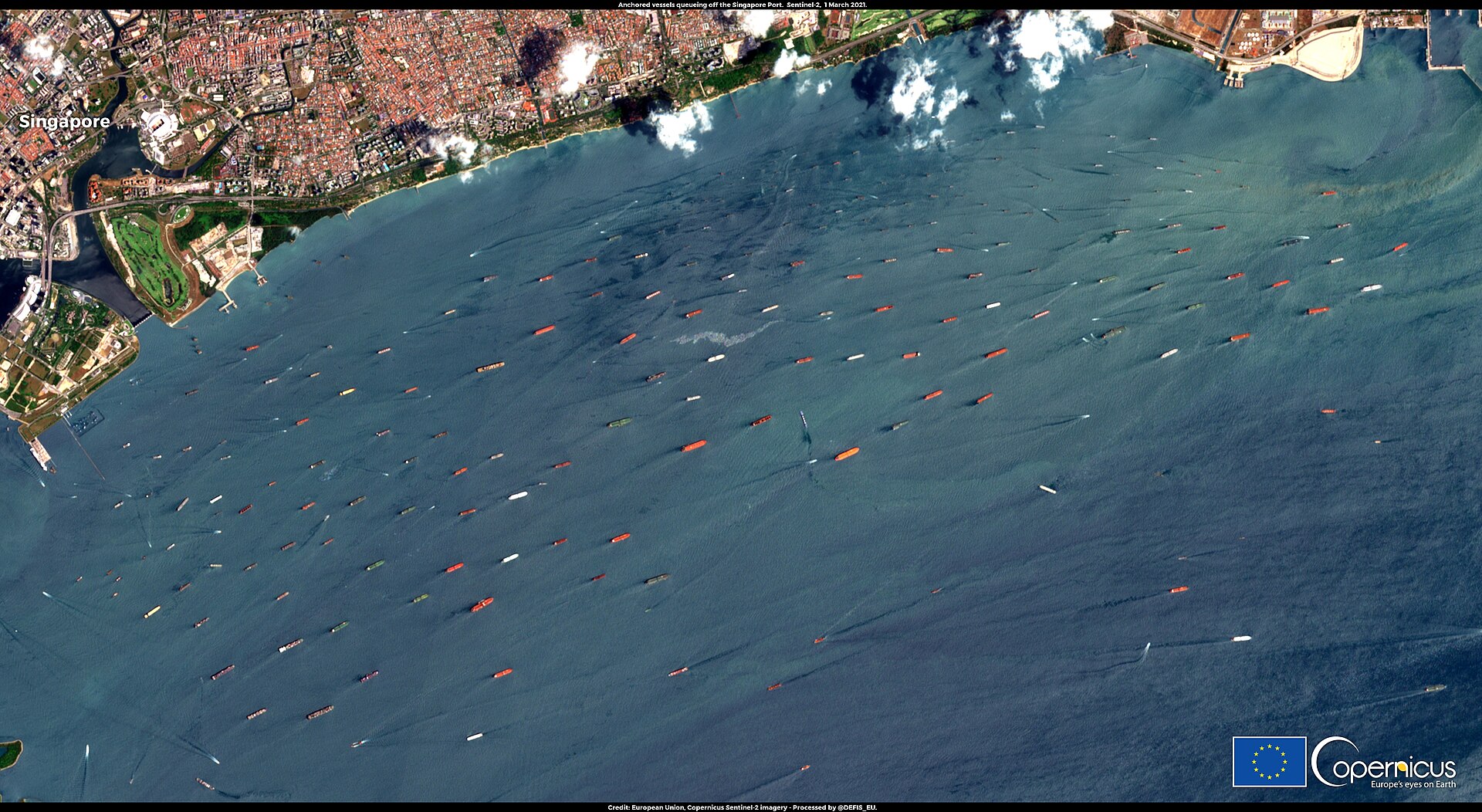
Lloyd’s Market Association war-risk premiums for a single VLCC voyage through Hormuz now stand at $10–14 million per trip. Beazley launched a $1 billion marine war consortium in the London market to provide coverage at those rates, which means insurance has become a sovereign-level backstop function — the kind of thing that used to be handled by navies and is now priced by actuaries. The LMA stated the quiet part clearly: “The reason ships are not moving is not through a lack of insurance; it is a question of the risk to crew and vessel safety being assessed by the ship masters and owners.” Ship masters will not transit a strait where mines may be present, regardless of what the insurance policy covers, because a $14 million premium does not resurrect a crew. The exception is sanctioned Iranian crude: on April 24, the US-sanctioned VLCC Yuri — carrying two million barrels of Iranian crude from Kharg Island — halted east of Larak Island inside the IRGC-designated corridor, demonstrating that Iran’s shadow fleet attempts transit even as compliant commercial shipping stands off. That halt, its IRGC corridor mechanics, and its timing on the eve of Witkoff–Kushner Islamabad talks are analyzed here.
This creates a second timeline that runs parallel to the military clearance operation and extends beyond it. Even after the Navy certifies a swept channel — if and when it does — commercial traffic will not resume at pre-war volumes until insurers reduce premiums to levels that make transit economically rational, and insurers will not reduce premiums until the clearance is comprehensive enough to satisfy their actuarial models, which require a higher confidence threshold than military “clear enough” certifications typically provide. Saudi Arabia’s production has already crashed to 7.25 million barrels per day in March, down 3.15 million bpd from February, and the Yanbu bypass through the East-West Pipeline has a practical loading ceiling of 4–5.9 million bpd — a structural gap of 1.1–1.6 million bpd even if the pipeline operates at maximum capacity.
Brent crude sat at $105.73 on the morning of April 24, which prices in the blockade but does not yet price in the six-month clearance timeline, because the Pentagon’s public denial has given markets permission to ignore the classified figure. A Dallas Federal Reserve survey of 116 oil executives published April 24 found that 80 per cent do not expect normal Hormuz shipping to resume until August at the earliest — the first time industry’s own forward pricing has aligned with the classified clearance estimate rather than the public denial. Full analysis: $106 Brent and the Dallas Fed’s August timeline. When that denial collapses — and it will collapse, because the mine clearance rate will be observable by commercial satellite imagery within weeks — the repricing will be sudden, and Saudi Arabia’s fiscal arithmetic, already stretched past Goldman’s war-adjusted 6.6% GDP deficit estimate, will face a Q3 and Q4 in which Hormuz remains physically closed while the bypass pipeline runs at capacity limits that cannot substitute for full strait throughput.
Three Legal Regimes Violated Simultaneously
The mine-laying violates three separate legal frameworks simultaneously, a distinction that matters less for its deterrent effect — Iran is not a party to two of the three — than for the post-conflict liability architecture it creates. Hague Convention VIII of 1907 prohibits indiscriminate mining that affects neutral shipping and requires states to notify mariners and remove mines after conflict. Iran is not a party to Hague VIII, but the International Court of Justice’s 1949 Corfu Channel ruling established that the prohibition on mining international straits is customary international law, binding on all states regardless of treaty membership. Albania was held liable for British warships damaged by mines in the Corfu Channel even though Albania claimed it had not laid them — the ICJ found that Albania’s knowledge of the mines and failure to warn was sufficient.
UNCLOS Part III establishes transit passage rights through international straits. Iran signed but never ratified UNCLOS and formally disputes the transit passage regime, arguing historical sovereignty under the 1958 Geneva Convention on the Territorial Sea instead. PressTV’s framing — “Iran’s legal command replaces US bluff in Strait of Hormuz” — rests on the claim that the strait’s narrowest point is 21 nautical miles, placing the entire waterway within overlapping Iranian and Omani territorial seas, and that coastal state authority to “establish safety corridors, designate routes, and require coordination” overrides the transit passage right. Just Security’s April 2026 legal analysis called the mining “a compounding international law violation with consequences that will far outlast any ceasefire and complicate ongoing negotiations.” IMO Secretary-General Dominguez called the entire access regime “illegal” under SOLAS requirements for notification of navigational hazards, of which no credible notification has been made.
The most consequential legal dimension is the one least discussed: mine-laying during a declared ceasefire constitutes a material breach under customary laws of armed conflict, which can justify resumption of hostilities by the opposing party. Iran’s toll regime has collected zero revenue in 36 days — 60 permits issued, 8 payment requests, zero paid — and the mine-laying during the ceasefire extension provides the legal basis for the United States to declare the ceasefire void and resume kinetic operations without the diplomatic cost of being the party that walked away. Whether Trump uses that legal basis depends on calculations that have nothing to do with international law and everything to do with domestic politics, but the option now exists because the IRGC handed it to him on the seabed.
The Wrong Timeline: What Diplomats Are Missing
Every diplomatic effort currently underway — the Islamabad framework, the ceasefire extension, Pakistan’s enforcement architecture, Turkey’s mediation offer — operates on a timeline defined by political events: the ceasefire expiry, the Hajj cordon, the next round of talks. None of them operates on the timeline that actually determines when Hormuz reopens, which is the mine clearance timeline, and that timeline is measured in months, not days or weeks. The ceasefire extension demanded that Iran produce a “unified proposal.” Iran has not produced one. Even if it had, a unified proposal does not remove mines from the water. A signed agreement does not deactivate an EM-52 sitting at 180 metres. A handshake does not reduce Lloyd’s war-risk premiums.
The diplomatic class has been negotiating the political conditions for reopening Hormuz while the IRGC has been establishing the physical conditions for keeping it closed, and the physical conditions now dominate because they cannot be reversed by any decision made in any room. The six-month Pentagon estimate — which Parnell’s denial has temporarily suppressed from public discourse — means that Hormuz remains effectively closed through Q4 2026 even under the most optimistic scenario: an immediate, genuine, fully enforced ceasefire followed by unimpeded mine clearance operations with full Iranian cooperation in locating the ordnance. Since Iran cannot locate the ordnance, full cooperation is meaningless. Since the IRGC does not recognise the civilian government’s authority to cooperate, full cooperation is also unavailable. The clearance timeline is therefore the floor, not the ceiling.
Araghchi’s “technical limitations” phrase will be remembered as the moment an Iranian official inadvertently told the truth about the strategic endgame the IRGC has constructed. The mines are not a bargaining chip to be traded in negotiations. They are not a threat to be withdrawn in exchange for concessions. They are a physical reality that converts the Strait of Hormuz from a diplomatic question into an engineering problem, and engineering problems are solved by equipment, personnel, time, and money — of which the United States has limited quantities of the first two, cannot compress the third, and will spend enormous amounts of the fourth. The IRGC’s strategic achievement is not closing the strait. It is ensuring the strait stays closed after the IRGC itself has been ordered, pressured, sanctioned, blockaded, or bombed into stopping. The mines are the war’s most durable weapon, and they were laid by men in small boats who did not bother to write down where they put them.
Frequently Asked Questions
What types of mines has Iran deployed in the Strait of Hormuz?
Iran’s arsenal includes three categories: Soviet and Western-origin moored contact mines from Cold War–era stockpiles, estimated at 2,000-plus units; Chinese-supplied EM-52 rocket-rising mines that deploy from the seabed at depths up to 200 metres with a 600-pound warhead triggered by acoustic, magnetic, and pressure signatures; and domestically produced Maham-3, Maham-7, and Sadaf-series mines, the latter of which were supplied to Houthi forces in the Red Sea, where the Saudi-led coalition found and destroyed more than 170 of them between 2015 and 2023. The Sadaf series uses influence fuzing rather than contact detonation, meaning it can be tuned to ignore small vessels and activate only for tanker-tonnage targets.
Has any country offered to assist with Hormuz mine clearance?
The United Kingdom maintains two Sandown-class MCM ships in the Gulf — HMS Bangor and HMS Chiddingfold — as part of the standing UK Mine Countermeasures Force based in Bahrain, a deployment that predates the current crisis. France has historically contributed to Gulf MCM operations through its base in Abu Dhabi and could deploy Tripartite-class hunters. Japan’s Maritime Self-Defence Force operates the world’s largest MCM fleet outside the United States — 25 ships including Awaji-class ocean minesweepers — but constitutional constraints and domestic politics have so far prevented deployment. The absence of a multinational MCM coalition, 55 days into the crisis, is itself a data point about allied appetite for operational risk in a strait where new mines are being laid during a nominal ceasefire.
Could Iran clear its own mines if a deal were reached?
Iran’s navy possesses no dedicated mine countermeasures vessels capable of deep-water operations, and the IRGC Navy — the entity that laid the mines — is a separate service from the regular Iranian Navy (IRIN) with separate command chains, equipment inventories, and operational doctrine. Even if a political decision to clear were made and transmitted to both services without IRGC obstruction, the absence of systematic coordinate logging means Iran would face the same blind-search problem as the U.S. Navy, but with inferior sonar, no UUV capability, and no airborne MCM platforms. The 1988 Iran Ajr incident — in which the U.S. Navy caught an Iranian vessel laying mines and boarded it — revealed that even then, Iran’s mine-laying record-keeping was minimal. Thirty-eight years of IRGC institutional culture have not improved it.
What is the financial cost of a six-month Hormuz closure to Saudi Arabia?
Saudi Arabia’s March production of 7.25 million bpd, down from 10.4 million bpd in February, already represents a revenue loss of approximately $330 million per day at current Brent prices. The Yanbu bypass can handle 4–5.9 million bpd of the remaining output, but Saudi fiscal break-even requires $108–111 per barrel according to Bloomberg’s PIF-inclusive estimate, and the war-adjusted deficit is already at 6.6% of GDP per Goldman Sachs — roughly double the official 3.3% projection. A six-month closure would compound these losses through Q4 2026, potentially requiring drawdowns from PIF reserves or additional sovereign debt issuance, at a moment when the Kingdom’s OPEC+ quota of 10.2 million bpd sits 3 million barrels above actual output.
What happened the last time Iran mined the Strait of Hormuz?
During the Iran-Iraq War’s “Tanker War” phase (1987–88), Iran deployed mines across Gulf shipping lanes using the military vessel Iran Ajr and IRGC small boats. On April 14, 1988, the frigate USS Samuel B. Roberts struck an M-08 contact mine, suffering a 15-foot hull breach that broke the keel and injured ten sailors. The Navy retaliated four days later with Operation Praying Mantis, sinking or damaging six Iranian vessels in the largest U.S. surface naval engagement since World War II. The mine that hit Roberts was matched by serial number to ordnance seized from the Iran Ajr the previous September — evidence that proved Iranian responsibility and was later cited in the ICJ’s Oil Platforms case (2003). The 1988 episode involved fewer than 200 mines. Current estimates run to thousands. The command-level reason why those mines cannot be cleared on a political timeline — IRGC Navy’s headless structure since Tangsiri’s death and the absence of any authority empowered to authorize mine-position disclosure — is examined in Iran’s mine warfare command vacuum. That same command vacuum also constrains Iran’s diplomacy: the Oman back-channel — the route through which Iran’s revised paper reached Washington within minutes of Araghchi’s Islamabad departure — operates precisely because it bypasses the IRGC authorization layer that stalls every formal channel, a structural dynamic examined in Iran’s Revised Paper Reached Washington Through Oman, Not Pakistan.