
Saudi Arabia does not sell alcohol. The Kingdom enforces one of the strictest prohibition laws in the world, rooted in Islamic jurisprudence, with penalties ranging from fines to deportation. But what visitors discover quickly is that Saudi Arabia has developed one of the most sophisticated non-alcoholic drinks cultures on the planet. From saffron-laced Arabic coffee poured from a brass dallah to world-class specialty roasters, Ramadan cordials, and mocktail bars that rival anything in London or New York, the Kingdom’s beverage scene is genuinely worth exploring. If you are planning a trip to Saudi Arabia, understanding what to drink — and where — will transform your experience of the country.
Best Time to Visit: October to March (cooler months ideal for hot drinks; Ramadan for Vimto and traditional beverages)
Getting There: Riyadh (RUH), Jeddah (JED), and Dammam (DMM) all have thriving cafe scenes
Visa Required: Yes — tourist e-visa available online
Budget: $2–$8/day for drinks at local cafes; $15–$50 at upscale hotel bars
Must-Try: Arabic coffee with dates, Saudi Champagne, Vimto at iftar
Avoid: Attempting to bring alcohol into the country — customs X-rays all luggage
Why Saudi Arabia’s Drinks Culture Matters
In a country where alcohol has been banned since 1952 — when King Ibn Saud prohibited it following a diplomatic incident — an entire parallel beverages economy has emerged. Saudi Arabia consumes roughly 80,000 tonnes of coffee annually, half the entire Gulf region’s consumption. The Kingdom has over 61,000 licensed cafes, including 27,000 traditional coffee shops. The non-alcoholic beverages market is valued at approximately $10.3 billion and is projected to reach $14.5 billion by 2030. This is not a market making do without alcohol. This is a market that has built something better.
The drinks you will encounter fall into three broad categories: traditional Arabian beverages with centuries of heritage, a booming specialty coffee scene driven by Vision 2030 investment, and a new wave of sophisticated mocktail bars inside the Kingdom’s luxury hotels and restaurants.
Arabic Coffee: The Drink That Defines Saudi Hospitality
Arabic coffee — qahwa — is not a beverage. It is a social institution. In 2015, UNESCO added the preparation and serving of Arabic coffee to its Intangible Cultural Heritage list, recognising a tradition that predates the modern Saudi state by centuries.
What Qahwa Tastes Like
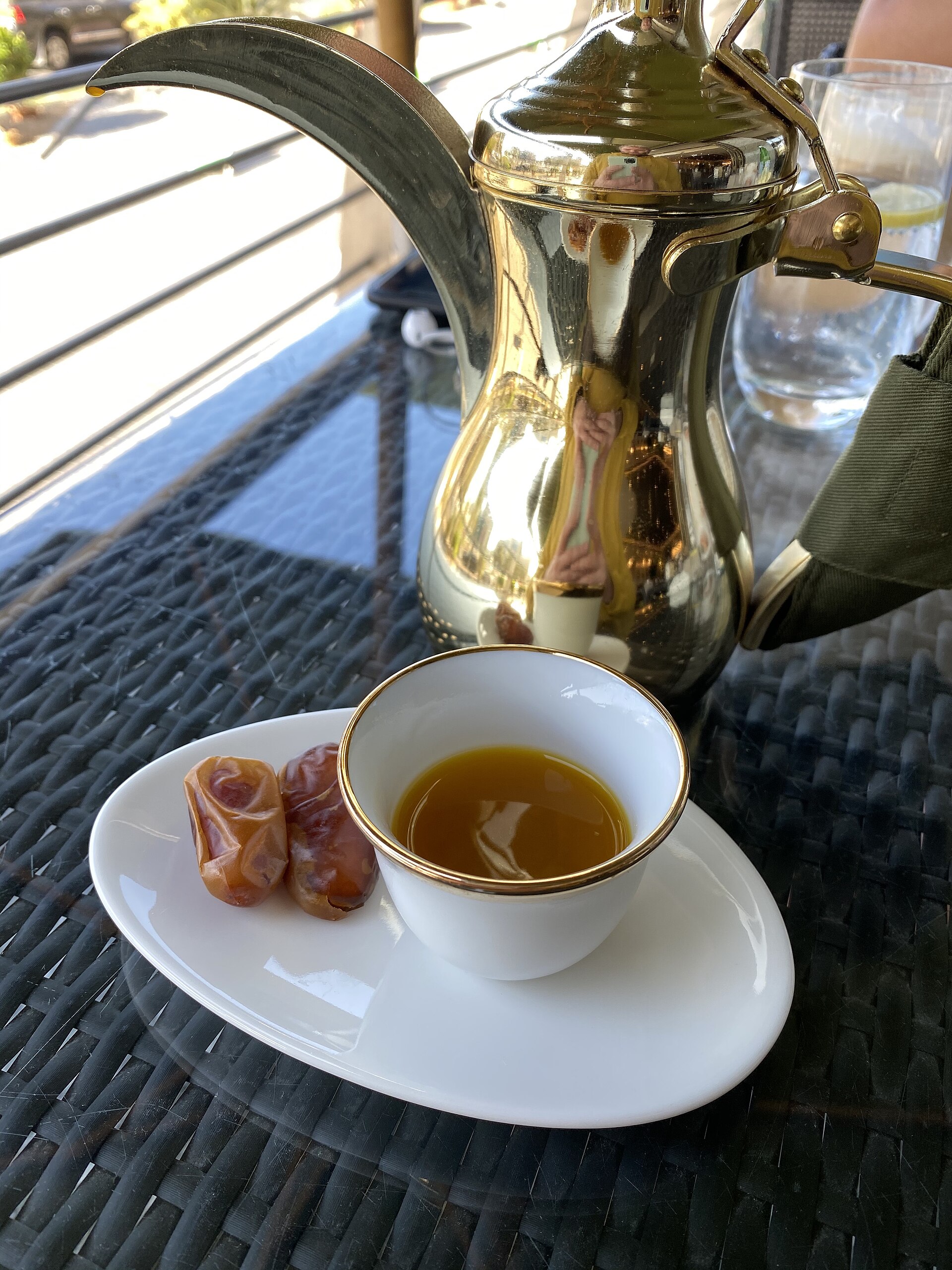
Forget espresso. Saudi qahwa is made from lightly roasted beans brewed with cardamom, and sometimes saffron or cloves. The result is a pale gold liquid, fragrant and slightly bitter, served in small handleless cups called finjaan from a long-spouted brass pot called a dallah. It is always served with dates — typically ajwa or sukkari varieties.
Etiquette You Must Know
- Always accept when offered. Refusing qahwa is considered rude in Saudi culture. You will be offered it in hotel lobbies, offices, shops, and private homes.
- Take at least one cup. The host will keep refilling until you signal you have had enough.
- To decline a refill, gently tilt or shake the empty cup side to side. This is the universal Gulf signal that you are finished.
- Take a date when one is offered alongside the coffee. This is part of the hospitality ritual.
- Barn’s — 800+ outlets, the largest Saudi-born coffee chain
- Starbucks — 450+ locations
- Dunkin’ — 600+ locations
- Kyan Cafe — 270+ locations
- Coffee Address — 234 locations
- Dr. Cafe — 100+ outlets
- Brew92 — Al Nada district, Uthman Ibn Affan Road. Named after the ideal brewing temperature. Uses 100% specialty-grade Arabica beans. Open Sat–Wed 6 AM–midnight, Thu 6 AM–12:30 AM, Fri 8 AM–12:30 AM.
- Elixir Bunn Coffee Roasters — Pioneering Riyadh specialty coffee since 2014. Multiple locations including Makkah Al Mukarramah Road and An Nakhil District. Known for kalita wave pour-over and iced matcha.
- Camel Step — Anas Ibn Malik Rd, Al Malqa. Saudi brand with its own roastery. Open 24 hours.
- Draft Cafe — Modern, consistent. Known for flat whites and matcha lattes.
- Amber Specialty Coffee — Al Malqa district. Roastery-led, experimental brews.
- Yamm Coffee Roasters — Al Malqa. Exclusive bean offerings from single-origin farms.
- Cup & Couch — Blends comfort and craftsmanship with a cozy, stylish interior
- Hemi Cafe & Roastery — In-house roasting with a modern aesthetic
- Camel Step — Multiple locations across the city
- Urban Roastery — Industrial-inspired design with a strong specialty focus
- Tonic Bar at the Four Seasons Riyadh (Kingdom Centre) — Dedicated non-alcoholic drinks hub. Serves signature mocktails and zero-proof gin and tonics using Beefeater 0.0%.
- Meraki at Al Faisaliah Tower, Riyadh — Serves non-alcoholic Mykonos Mules and Mediterranean-inspired mocktails.
- A12 Cafe on Tahlia Street, Riyadh — Pub-style setting serving Warsteiner 0.0% on draught.
- International hotel chains — Marriott, Hilton, Four Seasons, Ritz-Carlton, St. Regis, and Rosewood all maintain serious mocktail programmes.
- Barbican — The most popular, available in peach, pomegranate, and strawberry flavours
- Moussy — A long-standing Gulf favourite
- Holsten 0.0, Heineken 0.0, Budweiser Zero, Bavaria 0.0 — International brands widely stocked
- 50 Fruits — One of the oldest juice bars in Riyadh, still popular
- Juice Day — Budget-friendly fresh juice from SAR 5 (~$1.30)
- Power Juice — Quick energy pick-me-ups
- Farghaly Juices — Found across Saudi Arabia. Fresh blends from natural fruits and vegetables.
- Cleanse and Glow — Entirely plant-based, gluten-free. Raw cold-pressed juices since 2013.
- Juice Time — Build-your-own or try signature mixes
- Juice World — Known for the classic Saudi combo of shawarma + fresh juice
- The Shaker — Juices, smoothies, and milkshakes with gathering boxes for groups
- Almarai — Market leader. Premium “Farm’s Select” range. Also dominant in laban and flavoured milk.
- Al Rabie (Rabie) — Second-largest juice company. Wide range of juice boxes and cartons at every store.
- Suntop — Popular single-serve juice boxes, especially with children
- Always accept qahwa when offered. One cup minimum. Shake the cup side to side when finished.
- Coffee comes with dates. Take one. This is not optional — it is part of the ritual.
- Do not ask for alcohol or joke about the ban in public. This is a legal matter, not a cultural suggestion.
- Dinner is late. Expect 10–11 PM. Cafes stay open until 1–2 AM. Plan your evening drinks accordingly.
- During Ramadan, do not eat or drink in public during daylight fasting hours (sunrise to sunset). This applies to all visitors, regardless of religion.
- Sharing is valued. Saudi Champagne, Vimto, and juice are often served in large communal pitchers. If you are visiting during Hajj or extending your trip after pilgrimage, communal iftar meals are a highlight.
- Saudi Arabia Travel Guide 2026 — The complete guide to visiting the Kingdom
- Best Kabsa Restaurants in Saudi Arabia — Where to eat the national dish, city by city
- Camel Milk and Camel Products Guide — Everything you need to know about Saudi camel dairy
- Saudi Arabia Spice Shopping Guide — Souq guide for foodies exploring the Kingdom’s markets
- Jeddah After Dark — Restaurants, events and entertainment in Saudi Arabia’s coastal city
- Saudi Arabia Visa Guide — Every visa type explained
Where to Drink Qahwa
Everywhere. Every hotel lobby, every traditional restaurant, every souk, every social gathering. At traditional cafes, expect to pay SAR 5–15 (~$1.30–$4). At many hotels and shops, it is complimentary. If you are exploring Jeddah’s traditional souqs, you will be offered qahwa by shop owners as a matter of course. The same applies to heritage areas across restaurants serving kabsa and other Saudi dishes.
Karak Tea: The Gulf’s Favourite Brew
Karak chai — strong black tea simmered with evaporated milk, sugar, cardamom, and sometimes saffron, ginger, or cinnamon — originated in South Asia but has become as deeply embedded in Gulf culture as qahwa. It is the everyday drink of Saudi Arabia, consumed at all hours.
Street-side tea stalls sell karak for as little as SAR 3–10 (~$0.80–$2.70). The Saudi-born chain ALKARAK, which started in Dammam in 2017, has expanded across the Kingdom and serves reliably good versions. You will find karak at virtually every cafe, petrol station, and corner shop. It is the ideal companion for a Saudi road trip.
Traditional Saudi Drinks Every Visitor Should Try
Laban
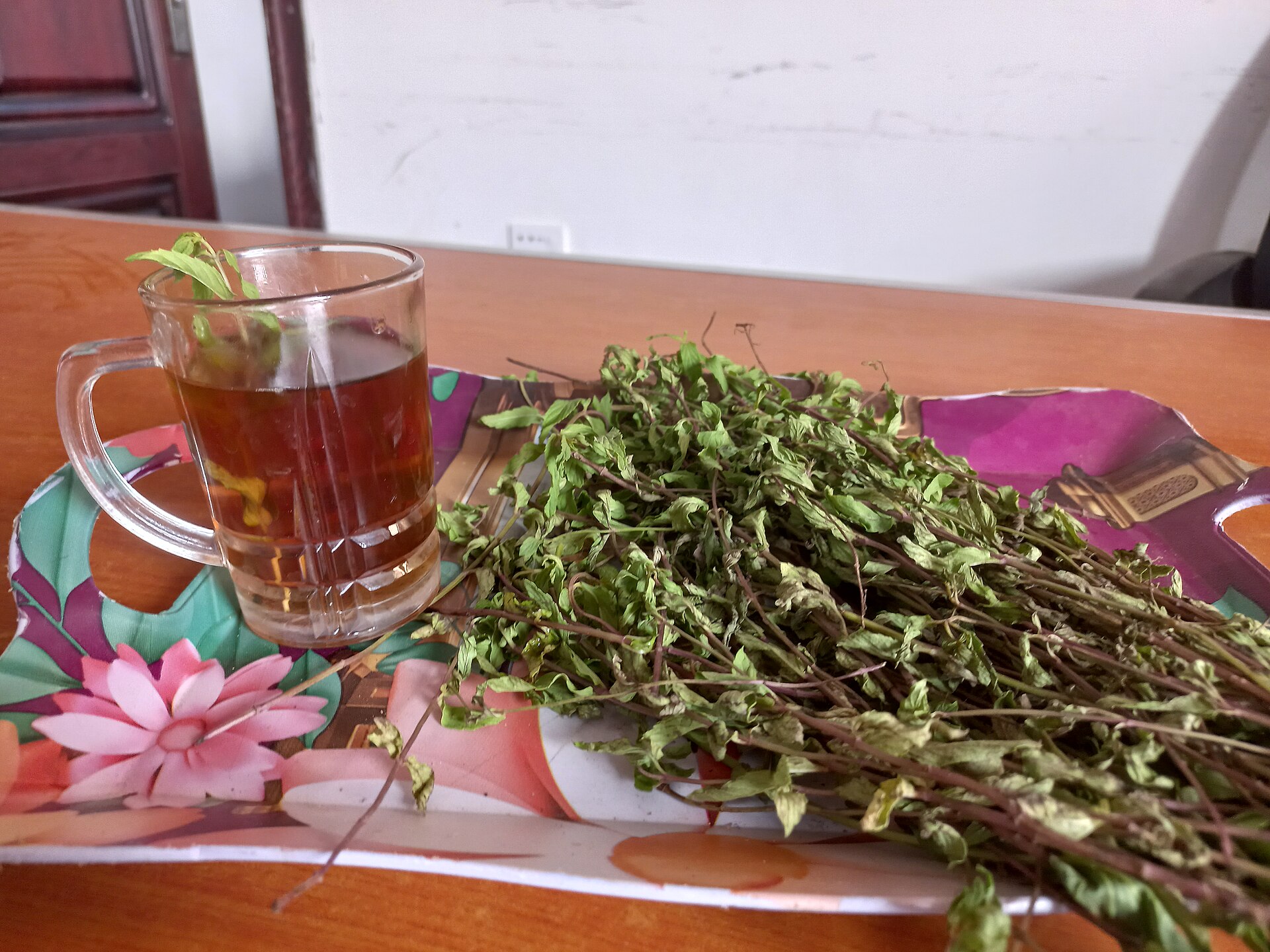
A chilled yogurt-based drink, slightly tangy and savory, sometimes seasoned with salt or dried mint. Similar to Turkish ayran. Laban is the standard accompaniment to grilled meat dishes across the Kingdom. Almarai is the dominant brand, available at every grocery store for SAR 2–5 (~$0.50–$1.30). If you are eating kabsa, machboos, or any Saudi rice-and-meat dish, laban is the correct pairing. It is also available at dairy counters alongside camel milk products.
Jallab
Made from date syrup, grape molasses, and rose water, served over crushed ice and topped with pine nuts and golden raisins. Jallab is common at traditional restaurants, Ramadan markets, heritage cafes, and night souqs. The combination of sweet dates and floral rose water makes it unlike anything most Western visitors have tasted. Expect to pay SAR 10–20 (~$2.70–$5.30) at restaurants.
Tamar Hindi (Tamarind Juice)
Made by steeping tamarind pulp in water and sweetening with sugar. Dark, tangy, and extremely refreshing in Saudi heat. You will find it at juice bars, traditional restaurants, street vendors, and on every Ramadan iftar spread. SAR 8–15 (~$2.10–$4) at juice bars.
Qamar al-Din (Apricot Nectar)
A thick apricot juice made from dried apricot paste dissolved in water. Especially popular during Ramadan, when it appears on iftar tables across the Kingdom. Available at grocery stores and Ramadan markets year-round.
Camel Milk
Fresh or pasteurized camel milk is slightly saltier than cow’s milk and has a distinctive flavour that divides visitors. Available at supermarkets under the Camelicious and Almarai brands for SAR 10–25 (~$2.70–$6.70) per litre. For the full experience, read our complete guide to camel milk and camel products in Saudi Arabia.
Saudi Champagne
The Kingdom’s signature celebratory mocktail. The core recipe is simple: apple juice, sparkling water (traditionally Perrier), sliced apples, oranges, and fresh mint, refrigerated for at least two hours and served ice-cold. Variations include Sprite, pomegranate seeds, strawberries, or rose water. Saudi Champagne is the standard drink at weddings, parties, and festive gatherings. Most restaurants serve it for SAR 15–35 (~$4–$9.30). It is sweet, refreshing, and entirely non-alcoholic despite the name.
Vimto: The Purple Icon of Ramadan
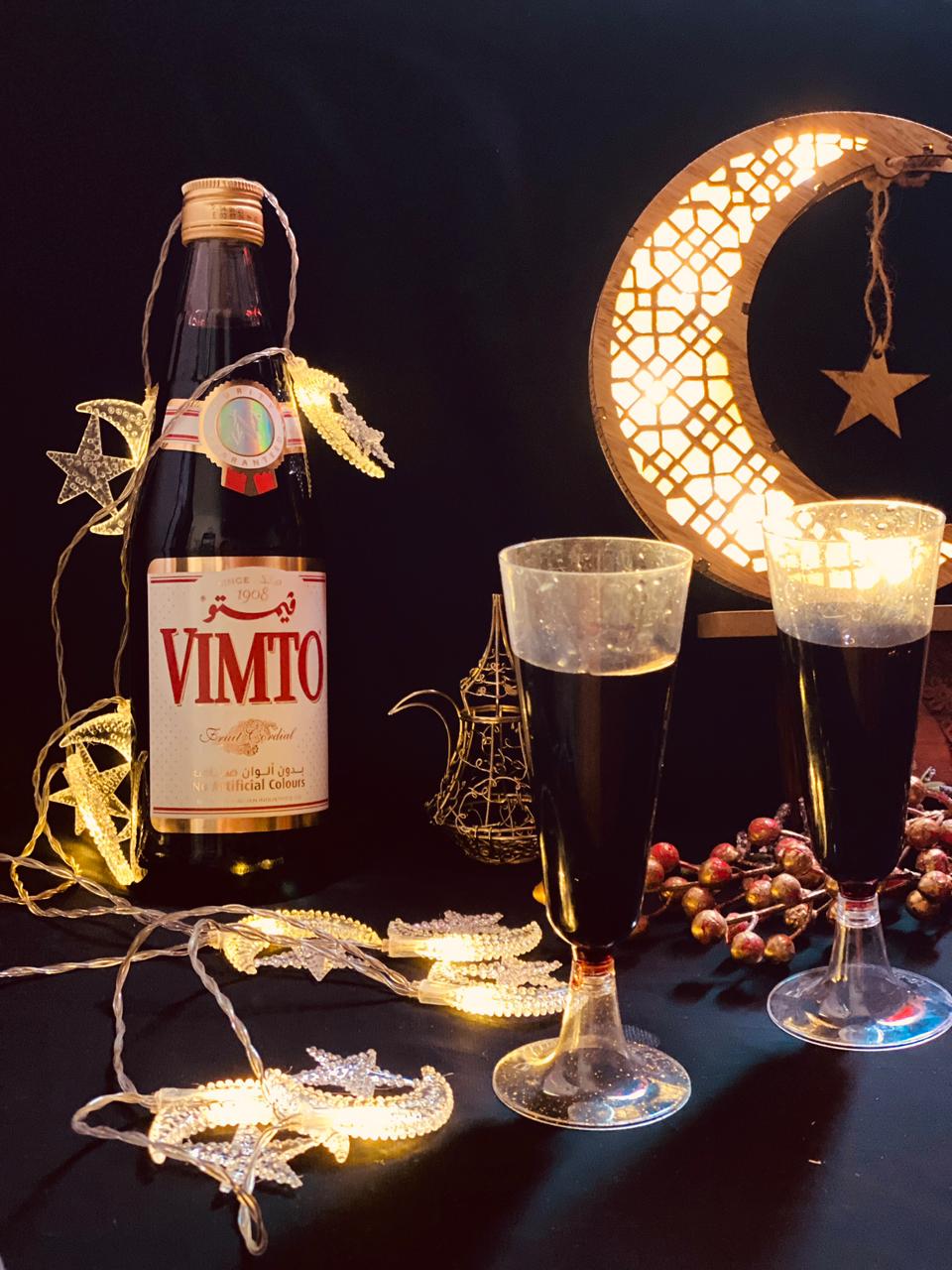
Vimto is a British berry cordial that was introduced to Saudi Arabia in 1927 by the Aujan family. What happened next is one of the most improbable brand stories in consumer history. Vimto became the unofficial drink of Ramadan across the Gulf.
The numbers tell the story: Saudis consume 52 million bottles per year. Vimto holds a 90% share of Saudi Arabia’s concentrated drinks market. Over 25 million bottles are sold across the Gulf during Ramadan alone. Its high sugar content provides a quick energy boost at iftar, and sharing Vimto has become a cherished family ritual.
Vimto is diluted with cold water (it is a cordial concentrate), served over ice, and available in cordial, ready-diluted, and fizzy forms. You can buy it at every supermarket and grocery store for SAR 10–25 (~$2.70–$6.70) per bottle. If you visit during Ramadan, Vimto will find you before you find it. For visitors attending Hajj 2026 or combining Umrah with a holiday, experiencing iftar with Vimto is part of the cultural immersion.
Saudi Arabia’s Specialty Coffee Revolution
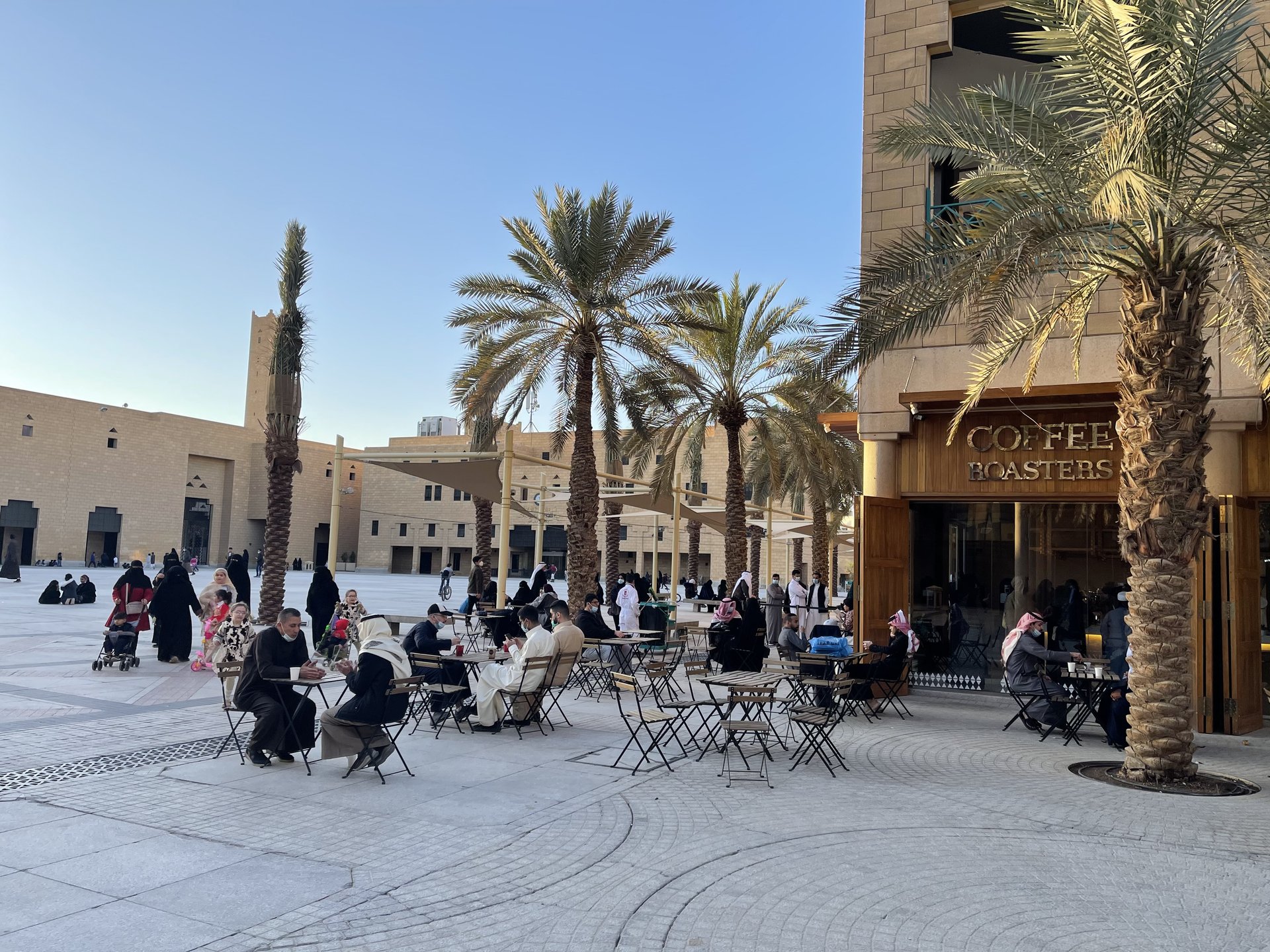
Saudi Arabia’s third-wave coffee scene has exploded. The coffee market is valued at SAR 5–7 billion, and with over 61,000 licensed cafes, the Kingdom now rivals Melbourne and Tokyo for specialty coffee density. Cafes stay open until 1–2 AM, reflecting a culture where dinner is typically at 10–11 PM and the cafe is the centre of social life.
What to Order and What to Pay
| Drink | SAR | USD (approx.) |
|---|---|---|
| Espresso | 2 | $0.55 |
| Americano | 7 | $1.80 |
| Latte | 12 | $3.20 |
| Cappuccino | 14 | $3.80 |
| Flat White | 15 | $4.00 |
| Cold Brew | 18 | $4.70 |
| Mocha | 21 | $5.70 |
| Cortado (boutique) | 25 | $6.70 |
Tip: Prices vary significantly between chains and independent roasters. A latte at Barn’s or Dunkin’ will cost less than half of what you would pay at a boutique specialty roaster.
Major Chains
Best Specialty Coffee in Riyadh
Riyadh’s specialty coffee scene is concentrated in the northern districts. These are the roasters and cafes that serious coffee drinkers should seek out:
Many of these cafes are within easy reach of Riyadh Boulevard and the city’s main entertainment districts.
Best Specialty Coffee in Jeddah
For an evening out combining coffee with entertainment, see our guide to Jeddah after dark.
The Mocktail Scene: Hotel Bars and Upscale Lounges
Saudi Arabia’s luxury hotels have invested heavily in non-alcoholic beverage programmes. Seasoned mixologists have relocated from cities like Dubai, London, and Berlin to serve the Kingdom’s deep-pocketed clientele. The result is a mocktail scene that is genuinely world-class — not an afterthought, but the main event.
Where to Go
What to Expect
Crafted mocktails at upscale hotel bars typically cost SAR 30–70 (~$8–$19). You can order non-alcoholic versions of virtually every classic cocktail: Negronis, Mojitos, Piña Coladas, Aperol Spritzes, and more. The presentation and quality match what you would find at a high-end bar anywhere in the world. The only difference is the absence of alcohol.
Non-Alcoholic Beers
Several 0.0% beer brands are widely available across Saudi Arabia:
Non-alcoholic beers run SAR 5–15 (~$1.30–$4) at grocery stores and restaurants.
Juice Bars: Fresh, Cheap, Everywhere
Saudi Arabia’s juice bar culture is prolific. Fresh juice is cheap, available on virtually every commercial street, and is often paired with shawarma or grilled meats as a standard meal combo.
Riyadh Juice Bars
Jeddah Juice Bars
Supermarket Brands
For self-catering or a quick grab from a convenience store:
Drinks Etiquette: What Every Visitor Should Know
Saudi hospitality revolves around food, conversation, and hot drinks. Understanding the etiquette will make your trip significantly smoother, particularly if you are navigating business meetings or attending social gatherings.
Price Guide: What Drinks Cost in Saudi Arabia
| Drink | SAR | USD | Where to Find |
|---|---|---|---|
| Arabic coffee (qahwa) | 5–15 | $1.30–$4 | Traditional cafes, hotels (often free) |
| Karak tea | 3–10 | $0.80–$2.70 | Street stalls, ALKARAK chain |
| Laban (bottle) | 2–5 | $0.50–$1.30 | Grocery stores, restaurants |
| Fresh juice (juice bar) | 10–25 | $2.70–$6.70 | Juice bars citywide |
| Specialty latte / cappuccino | 12–25 | $3.20–$6.70 | Coffee shops |
| Cold brew (specialty) | 18 | $4.70 | Specialty roasters |
| Saudi Champagne | 15–35 | $4–$9.30 | Restaurants, hotel events |
| Vimto (concentrate) | 10–25 | $2.70–$6.70 | Supermarkets |
| Jallab | 10–20 | $2.70–$5.30 | Traditional restaurants |
| Tamar Hindi | 8–15 | $2.10–$4 | Juice bars, street vendors |
| Non-alcoholic beer | 5–15 | $1.30–$4 | Stores, restaurants |
| Mocktail (upscale hotel) | 30–70 | $8–$19 | Hotel bars, lounges |
Budget tip: A full day of drinks at local cafes and juice bars — a morning qahwa, afternoon karak, fresh juice with lunch, and an evening specialty coffee — will cost under SAR 50 (~$13). Only the hotel mocktail scene pushes into premium territory.