WASHINGTON — Iranian strikes across eleven US military installations in seven countries have caused up to $5 billion in infrastructure damage — a figure that explicitly excludes destroyed radar systems, weapons platforms, and aircraft either impaired or rendered unsalvageable, according to assessments by the American Enterprise Institute and reporting by NBC News. The number itself is staggering, but the real problem for Riyadh is simpler and more dangerous: Saudi Arabia’s entire security architecture depends on a patron whose actual combat losses have been systematically hidden from the US Congress, from America’s own public, and therefore from the allied governments whose survival depends on an accurate reading of American military capability.
Iran, by contrast, knows exactly what it destroyed. Tehran’s Chinese-built TEE-01B satellite delivered post-strike battle damage assessments within days. The IRGC’s intelligence picture of American military readiness in the Gulf is now measurably better than what the US Senate Armed Services Committee has received in classified briefings. That asymmetry is not a footnote; it is the variable that will determine whether Saudi Arabia’s hedging strategy — from the Pakistan defense pact to the South Korean air defense deal to the Ukrainian drone integration — arrives in time, or arrives at all.
Table of Contents
- The Damage Map: 11 Bases, 7 Countries, One Pattern
- What Does the $5 Billion Figure Actually Exclude?
- Iran’s Targeting Doctrine: Blind, Ground, Starve
- The Satellite Advantage: Iran’s BDA vs. Congress’s Briefings
- Why Does the Ayn al-Asad Precedent Matter?
- What Has Congress Actually Been Told?
- How Does This Change Saudi Arabia’s Security Calculus?
- The Hedging Architecture
- Iran Knows — And Is Pricing It In
- FAQ
The Damage Map: 11 Bases, 7 Countries, One Pattern
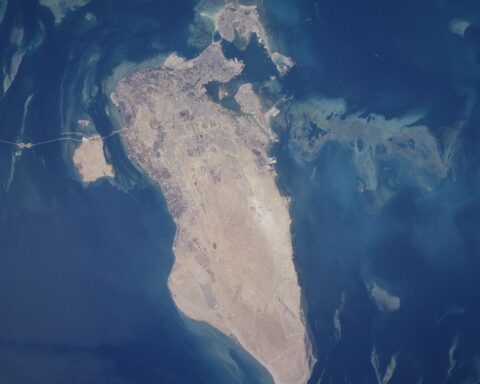
The geography of the strikes reads like a systematic audit of American forward-deployed infrastructure across the Middle East. Camp Buehring and Camp Arifjan in Kuwait. Ali Al Salem Air Base, also Kuwait. Shuaiba Port, Kuwait — four installations in a single country that hosts roughly 13,000 US troops. Al Dhafra Air Base and Al Ruwais in the UAE. Prince Sultan Air Base in Saudi Arabia. Muwaffaq Salti Air Base in Jordan. Al Udeid Air Base in Qatar. NSA Bahrain — home of the US Fifth Fleet. Munitions storage in northern Iraq.
Each facility was struck not at random but along functional lines that reveal a deep understanding of how American airpower operates in the Gulf theater. Radar and communications infrastructure at Camp Arifjan. SATCOM terminals at NSA Bahrain, hit on February 28 — the opening day of the war. Fuel depots, hangars, and barracks at Al Dhafra. The runway at Al Udeid, which serves as the primary hub for CENTCOM air operations in the region. The AN/TPY-2 radar at Muwaffaq Salti, the forward-deployed component of the THAAD missile defense system in Jordan, apparently destroyed.
NSA Bahrain alone carries an estimated $200 million in repair costs, and the facility’s SATCOM destruction on day one meant that the Fifth Fleet’s communications architecture was degraded before the first Iranian missile reached a second target. Kelly Grieco of the Stimson Center was direct about the pattern: “Each is a critical enabler of U.S. air operations. That’s not random. That’s a target set derived from an understanding of how U.S. airpower functions.”
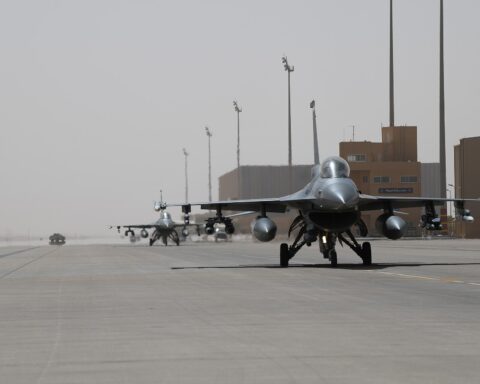
The Camp Buehring strike introduced a dimension that defense planners had not seriously war-gamed for the Gulf theater. An Iranian Northrop F-5 fighter jet — a 1960s-era airframe, originally sold to the Shah — penetrated multi-layered air defenses by exploiting the saturation window created by simultaneous missile and drone attacks, and struck an American military base. It was the first time an enemy fixed-wing aircraft had hit a US installation in years, and the platform that did it cost less than a single Patriot interceptor.
The Middle East briefing 3,000+ readers start their day with.
One email. Every weekday morning. Free.
| Installation | Country | Primary Damage | Functional Category |
|---|---|---|---|
| Camp Buehring | Kuwait | F-5 fixed-wing strike | Force protection / air defense gap |
| Camp Arifjan | Kuwait | Radar infrastructure | ISR / communications |
| Ali Al Salem Air Base | Kuwait | Base infrastructure | Logistics / airlift |
| Shuaiba Port | Kuwait | Port facilities | Maritime logistics |
| Al Dhafra Air Base | UAE | Fuel depots, hangars, barracks | Air operations / sustainment |
| Al Ruwais | UAE | Facility damage | Support infrastructure |
| Prince Sultan Air Base | Saudi Arabia | E-3G AWACS destroyed, 5 KC-135s struck | Airborne early warning / refueling |
| Muwaffaq Salti Air Base | Jordan | AN/TPY-2 THAAD radar apparently destroyed | Missile defense sensor |
| Al Udeid Air Base | Qatar | Runway struck | CENTCOM air hub |
| NSA Bahrain | Bahrain | SATCOM terminals destroyed ($200M) | Fifth Fleet communications |
| Munitions storage | Northern Iraq | Ammunition depot | Forward-deployed ordnance |
What Does the $5 Billion Figure Actually Exclude?
The $5 billion estimate, drawn from AEI senior fellow Mackenzie Eaglen’s assessment published in The Hill on April 26, covers the cost of repairing, reconstructing, replacing, or decommissioning American military infrastructure across the Gulf. It is the largest single-conflict infrastructure damage estimate for US overseas bases since the post-9/11 construction boom — and it is, by the Pentagon’s own framing, incomplete. Eaglen was explicit: the figure does not include “radar systems, weapons systems, aircraft either impaired or rendered unsalvageable.”
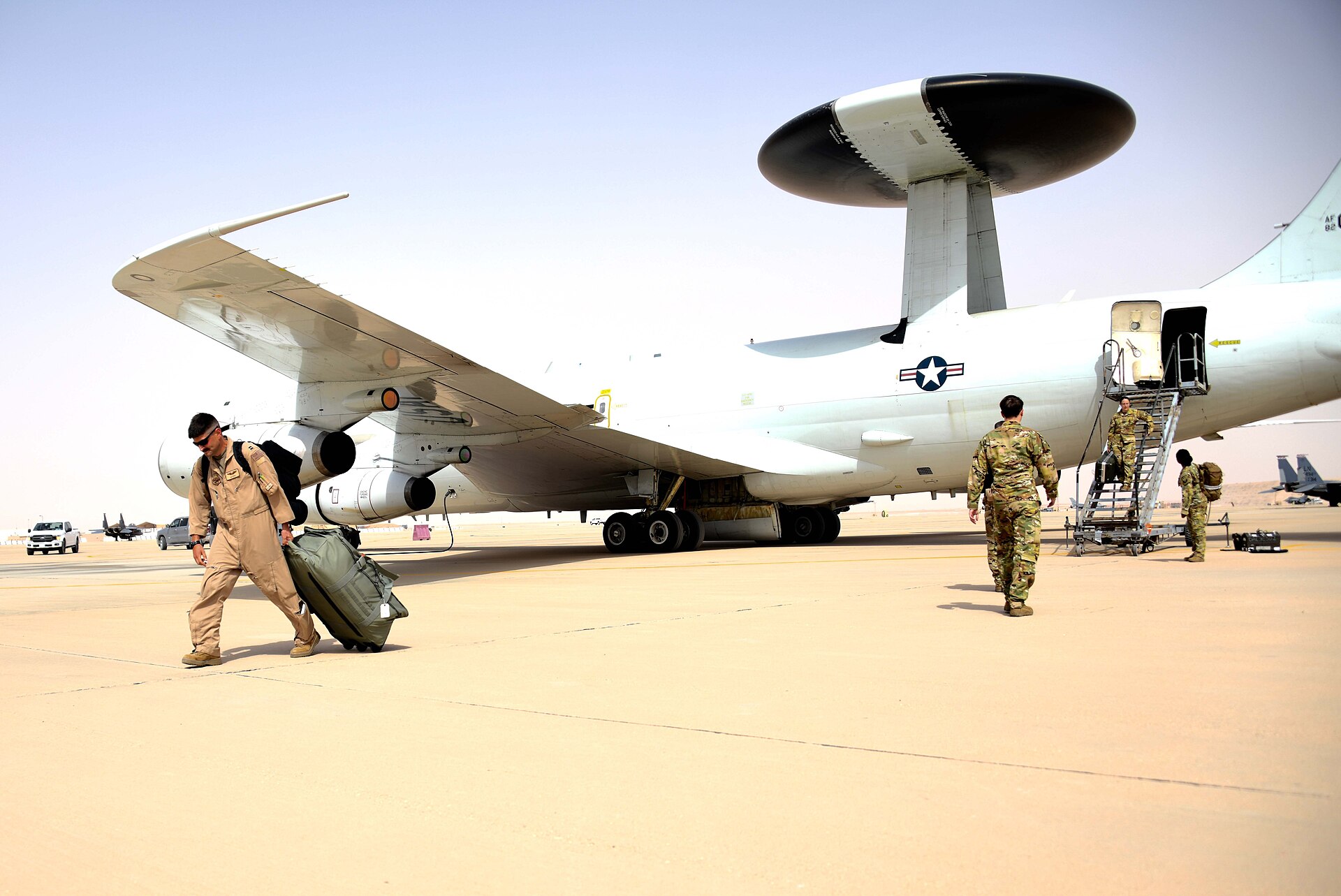
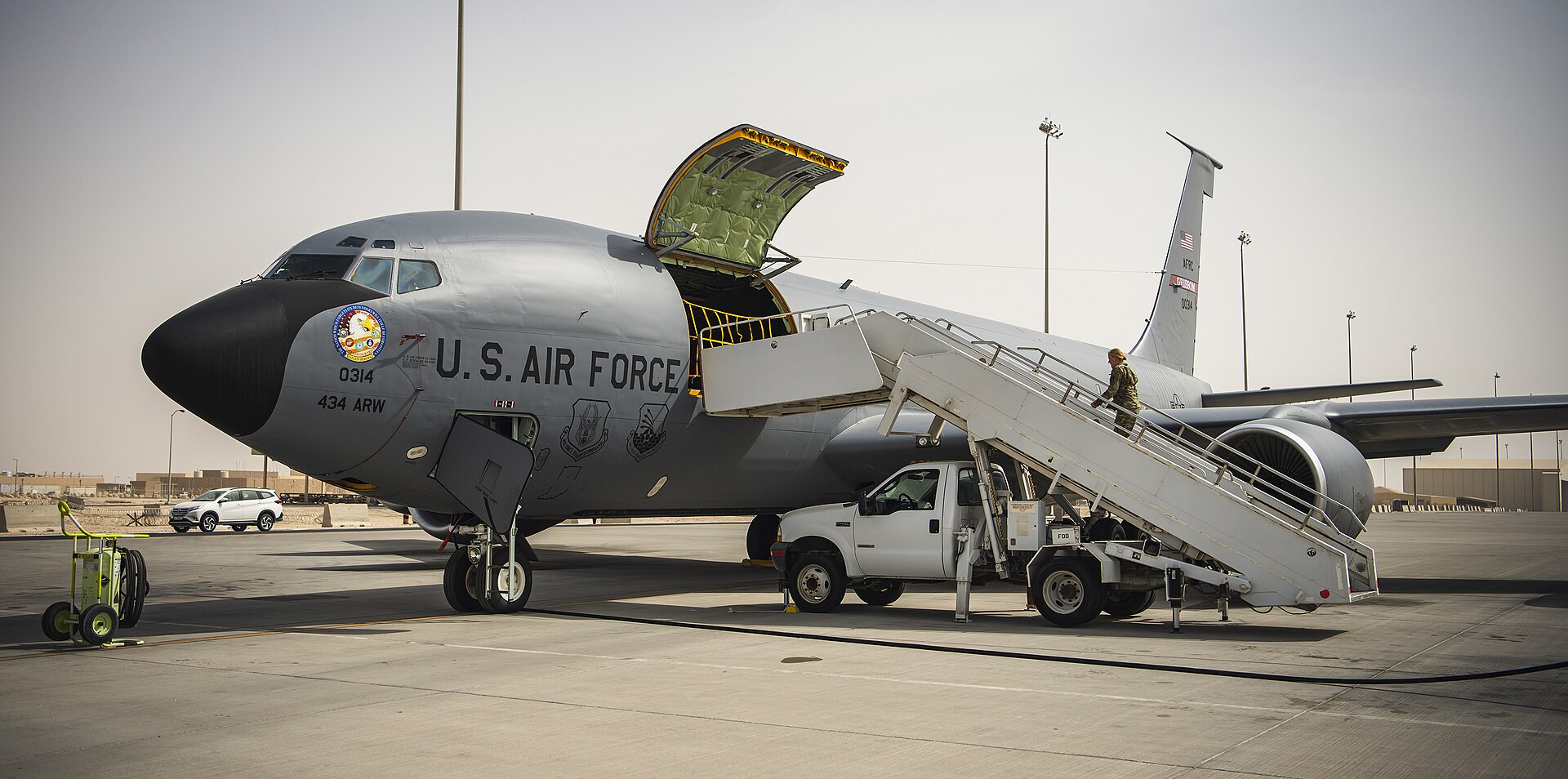
Consider what that exclusion covers. At Prince Sultan Air Base in Saudi Arabia, an E-3G Sentry AWACS — serial number 81-0005, one of only sixteen in the entire US Air Force inventory — was confirmed destroyed and irreparable. The E-3G is not a commodity airframe; each aircraft represents decades of institutional knowledge embedded in its mission systems, and the fleet was already operating at a 55.68% mission capability rate before the war. The E-7 Wedgetail replacement program will not deliver operational aircraft until the early 2030s, meaning the loss of a single E-3G has created a gap in airborne early warning coverage that cannot be filled for roughly four to five years, at minimum.
Five KC-135 Stratotankers were struck at Prince Sultan on March 27. A sixth KC-135 crashed over Iraq on March 12, killing all crew members aboard — the only confirmed US aircrew fatalities of the conflict that the Pentagon has acknowledged. The KC-135 fleet provides the aerial refueling backbone for every US air operation in the Gulf; without tankers, fighter aircraft cannot maintain combat air patrols at the distances required to cover the Strait of Hormuz, Saudi oil infrastructure, or forward-deployed naval assets. Philip Sheers of the Center for a New American Security assessed that the E-3 losses alone “highlight the need for DoD and Congress to resource a real solution,” but the tanker losses compound the problem in a way the infrastructure bill does not capture.
Joe Costa of the Atlantic Council framed the exclusion in terms that should concern every Gulf capital: “The real cost is the cumulative impacts this operation will have on long-term readiness for other U.S. priorities.” That is diplomatic language for a brutal arithmetic — every destroyed radar array, every unsalvageable tanker, every wrecked SATCOM terminal represents capability that the United States will not have available for Saudi Arabia, for Taiwan, for NATO’s eastern flank, for years to come.
Iran’s Targeting Doctrine: Blind, Ground, Starve
The pattern across all eleven installations resolves into three functional categories that reveal Iran’s operational theory of victory against American airpower — not to kill Americans, but to systematically degrade the enabling architecture that makes US air operations possible. First: blind the network, by destroying SATCOM terminals at NSA Bahrain and radar infrastructure at Camp Arifjan and the AN/TPY-2 at Muwaffaq Salti. Second: ground the fleet, by hitting the E-3G that provides airborne command and control and the KC-135 tankers that extend fighter range. Third: starve the logistics chain, by striking fuel depots at Al Dhafra, the runway at Al Udeid, the port facilities at Shuaiba, and munitions storage in Iraq.
NBC News reporting on April 25 summarized the doctrine with unusual clarity for American media: “Iran was not trying to kill Americans, but to blind them, ground them, and cut off their fuel.” The restraint was not humanitarian; it was strategic. A mass casualty event at a Gulf base would have forced an American escalation that Iran could not survive conventionally. A precision degradation campaign that avoids body bags but imposes billions in infrastructure costs and years of capability gaps achieves something far more useful from Tehran’s perspective — it demonstrates to every Gulf state that the American military presence, however large in terms of personnel, is fragile in terms of the systems those personnel depend on.
Mark Cancian, the CSIS senior adviser, drew the comparison that Gulf defense ministries are almost certainly making in private: “Iran has done to the U.S. Navy what Ukraine did to the Russian navy” — controlling the Strait of Hormuz without a conventional fleet capable of challenging American surface combatants directly. The parallel is imperfect in important respects, but the operational logic is identical: you do not need to sink a carrier strike group if you can destroy the tankers that refuel its air wing, blind the radar that guides its missiles, and crater the runways its aircraft operate from.
The Satellite Advantage: Iran’s BDA vs. Congress’s Briefings
In late 2024, the IRGC Aerospace Force acquired the TEE-01B — marketed as Earth Eye 1 — a Chinese-built reconnaissance satellite with 0.5-meter panchromatic resolution, ten times better than Iran’s domestically produced Noor-3. The purchase cost $36.6 million, roughly the price of a single F-35 engine. The satellite, launched June 6, 2024, gave Iran something it had never possessed in any previous confrontation with the United States: the ability to conduct post-strike battle damage assessment from space, within 24 to 48 hours of each attack, without relying on human intelligence or signals intercept.
According to reporting by the Financial Times and Army Recognition on April 15, the TEE-01B monitored multiple Gulf installations — including Prince Sultan Air Base, Muwaffaq Salti Air Base, NSA Bahrain, Camp Buehring, and Ali Al Salem — and conducted post-strike surveillance of installations beyond the Gulf theater. Imagery of Prince Sultan confirmed the destruction of “five US Air Force refuelling aircraft and an E-3G AWACS.” Iran published some of this imagery through IRGC-aligned media channels before the Pentagon had acknowledged the losses to members of Congress.
The intelligence asymmetry this creates is not abstract. Tehran’s war planners knew, within days, exactly which American capabilities they had degraded, which targets needed re-striking, and which facilities had been repaired. Congress, by contrast, received what a congressional aide described to NBC News as “sparse” briefings: “No one knows anything. And it’s not for lack of asking. We have been asking for weeks and not getting specifics, even as the Pentagon is asking for a record-high budget.” Iran’s satellite intelligence picture of American military capability in the Gulf is now measurably more complete than the picture available to the US Senate Armed Services Committee — a body with constitutional oversight authority over the military whose installations were destroyed.
The satellite advantage did not operate in isolation. The Washington Post reported on March 6 that Russia had been providing Iran with the locations of US military assets — warships and aircraft — since February 28, citing three US officials. Moscow’s real-time targeting data combined with Beijing’s orbital BDA capability means that Iran’s operational intelligence architecture for this conflict was trilateral: Iranian targeting, Russian cueing, Chinese verification. The $36.6 million satellite and the Russian intelligence feed together gave Tehran a kill chain that cost less than one percent of the damage it inflicted.
No one knows anything. And it’s not for lack of asking. We have been asking for weeks and not getting specifics, even as the Pentagon is asking for a record-high budget.
Congressional aide, NBC News, April 25, 2026
Why Does the Ayn al-Asad Precedent Matter?
On January 8, 2020, Iran launched ballistic missiles at Ayn al-Asad Air Base in Iraq — a retaliatory strike for the US killing of IRGC Quds Force commander Qasem Soleimani. Within hours, President Trump declared from the White House: “No Americans were harmed.” The statement was false. The Pentagon revised its casualty count five times over the following six weeks — from zero to 11, then 34, then 50, then 64, and finally 109 traumatic brain injuries. A Department of Defense Inspector General investigation in November 2021 found that CENTCOM had improperly tracked the TBIs. Trump dismissed the injuries publicly as “headaches.” One of the TBI recipients, 22-year-old Jason Quitugua, died by suicide in November 2021.
The pattern — executive suppression of Iran-related military damage, gradual disclosure under congressional pressure, institutional complicity in undercounting — is not a historical analogy for what is happening now. It is the operating precedent. The same administration that revised the Ayn al-Asad casualty count five times is now presiding over a conflict in which $5 billion in base infrastructure has been destroyed, an unknown number of aircraft rendered unsalvageable, and congressional briefings have been “sparse” on specifics eight weeks into the war.
The Ayn al-Asad case involved a single strike on a single base with a final casualty count of 109. The 2026 campaign involves sustained strikes across eleven installations in seven countries over two months, with a damage bill that excludes the most expensive categories of loss. If the 2020 precedent required five revisions and an Inspector General investigation to arrive at an accurate number from one incident, the 2026 accounting — whenever it arrives — will be measured in years and tens of billions.
There is an older precedent that Gulf capitals should find equally instructive. After the June 1996 Khobar Towers bombing in Saudi Arabia — an Iranian-linked attack that killed 19 Americans — FBI Director Louis Freeh later alleged that the Clinton administration had suppressed evidence of Iranian involvement because it would “imperil diplomatic initiatives.” The executive branch has a documented institutional reflex, across administrations and across decades, to manage the disclosure of Iran-related military damage when diplomatic equities are at stake. In April 2026, with a ceasefire that expired on April 22 and Islamabad negotiations in varying states of collapse, those diplomatic equities have never been higher.
What Has Congress Actually Been Told?
Senator Chris Murphy, Democrat of Connecticut, emerged from a classified briefing on the conflict and told Time magazine on March 11 that “the strategy is totally incoherent.” Senator Chris Van Hollen used nearly identical language after the same briefing cycle: “Complete incoherence” with “constantly shifting narratives.” These are not partisan critics looking for political advantage — they are members of the Senate Foreign Relations Committee describing what the executive branch told them in a classified setting, under conditions where the incentive to disclose is at its maximum and the information provided should be at its most complete.
Eight weeks later, the situation has not improved. The NBC News report of April 25 described congressional briefings on combat damage as “sparse,” and the unnamed congressional aide’s frustration — weeks of asking, no specifics, even as the Pentagon requests a record-high defense budget — suggests that the information asymmetry between the executive branch and Congress is structural, not accidental. The Pentagon is simultaneously telling Congress that it needs more money than ever and refusing to tell Congress what happened to the money already spent on the bases that are now rubble.
Eaglen’s AEI assessment, published in The Hill, put the dynamic in budget terms that Congress understands: the costs “may include repair, reconstruction, outright replacement, or even abandonment/decommissioning of locales.” The word “abandonment” is doing extraordinary work in that sentence. It means that some of the eleven installations struck may not be rebuilt — that the US military footprint in the Gulf could physically shrink as a result of Iranian strikes, and that this shrinkage would arrive not through a policy decision debated in Congress but through a damage assessment presented after the fact.
Whether the full picture proves as stark as analysts fear will depend on the classified damage assessment that Congress is still, as of late April, fighting to obtain.
How Does Saudi Arabia’s Security Calculus Change?
Saudi Arabia’s defense posture since the 1945 Quincy Compact has rested on a single structural assumption: that the United States possesses overwhelming military superiority in the Gulf region, that this superiority deters Iranian aggression against the Kingdom, and that the American commitment to deploy it is credible. Each of those three pillars has been damaged in 2026, but the damage to the first — the assumption of overwhelming capability — is uniquely corrosive because it cannot be assessed from Riyadh when Washington itself is withholding the accounting.
The Saudi defense establishment knows, from Prince Sultan Air Base alone, that an E-3G AWACS was destroyed and five KC-135 tankers were struck on Saudi soil. Saudi radar operators, Saudi base personnel, Saudi emergency responders were present for the aftermath. But Prince Sultan is one installation out of eleven; the damage picture at Camp Arifjan, at Al Dhafra, at NSA Bahrain, at Muwaffaq Salti — the facilities that constitute the operational backbone of the American security guarantee in the Gulf — is available to Saudi planners only to the extent that the Pentagon shares it. And the Pentagon is not sharing it with the US Congress.
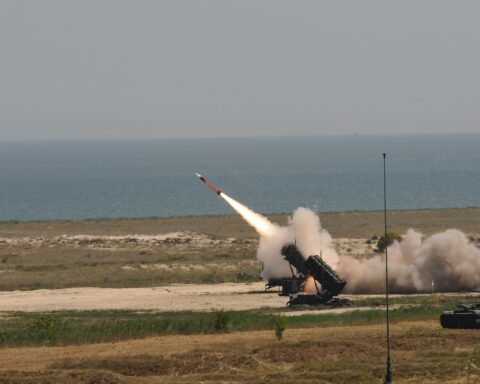
The Kingdom’s own defensive capacity compounds the problem. Saudi Arabia entered 2026 with approximately 2,800 PAC-3 MSE interceptors, roughly 400 of which remain — an 86% depletion rate that leaves approximately 17 days of coverage at current threat levels. A $9 billion PAC-3 MSE sale was approved on January 30, 2026, but Raytheon’s global production capacity runs to approximately 620 rounds per year across all customers worldwide, and delivery will take at least 18 months. During that gap, Saudi air defense depends on a combination of depleted stockpiles and the residual American capability that Iran has spent two months systematically degrading.
The 2019 Abqaiq attack — when Iranian-linked strikes knocked out roughly 50% of Saudi oil production and the Trump administration’s response was, in the assessment of multiple Gulf analysts, tepid — was the original wound in Saudi confidence. The 2026 war has reopened it with a broader blade. Aziz al-Ghashian captured the Saudi institutional fear: “By definition, this is what the Saudis don’t want: a short-term measure where the Saudis inherit long-term ramifications.”
The Hedging Architecture
Saudi Arabia’s response to the widening gap between American capability and American credibility has been a diversification campaign that predates the 2026 war but has accelerated sharply since February. The September 2025 Saudi-Pakistan Strategic Mutual Defense Agreement — the first bilateral defense pact of its kind for the Kingdom — established a framework in which Pakistani military capability, including its nuclear deterrent by implication, is formally linked to Saudi security. A $3.2 billion South Korean air defense deal signed in 2023 brought KM-SAM systems that are now part of the five-layer defense architecture protecting Hajj pilgrims and critical oil infrastructure.
In late March 2026, Saudi Arabia signed a drone technology integration deal with Ukraine — a country whose experience in defeating Russian air defenses and adapting to degraded communications environments is directly applicable to the Iranian threat profile the Kingdom now faces. Four-nation framework discussions involving Saudi Arabia, Egypt, Turkey, and Pakistan have moved from theoretical to operational, driven by the recognition that no single bilateral relationship can substitute for the American umbrella if that umbrella has holes in it that Washington refuses to measure publicly.
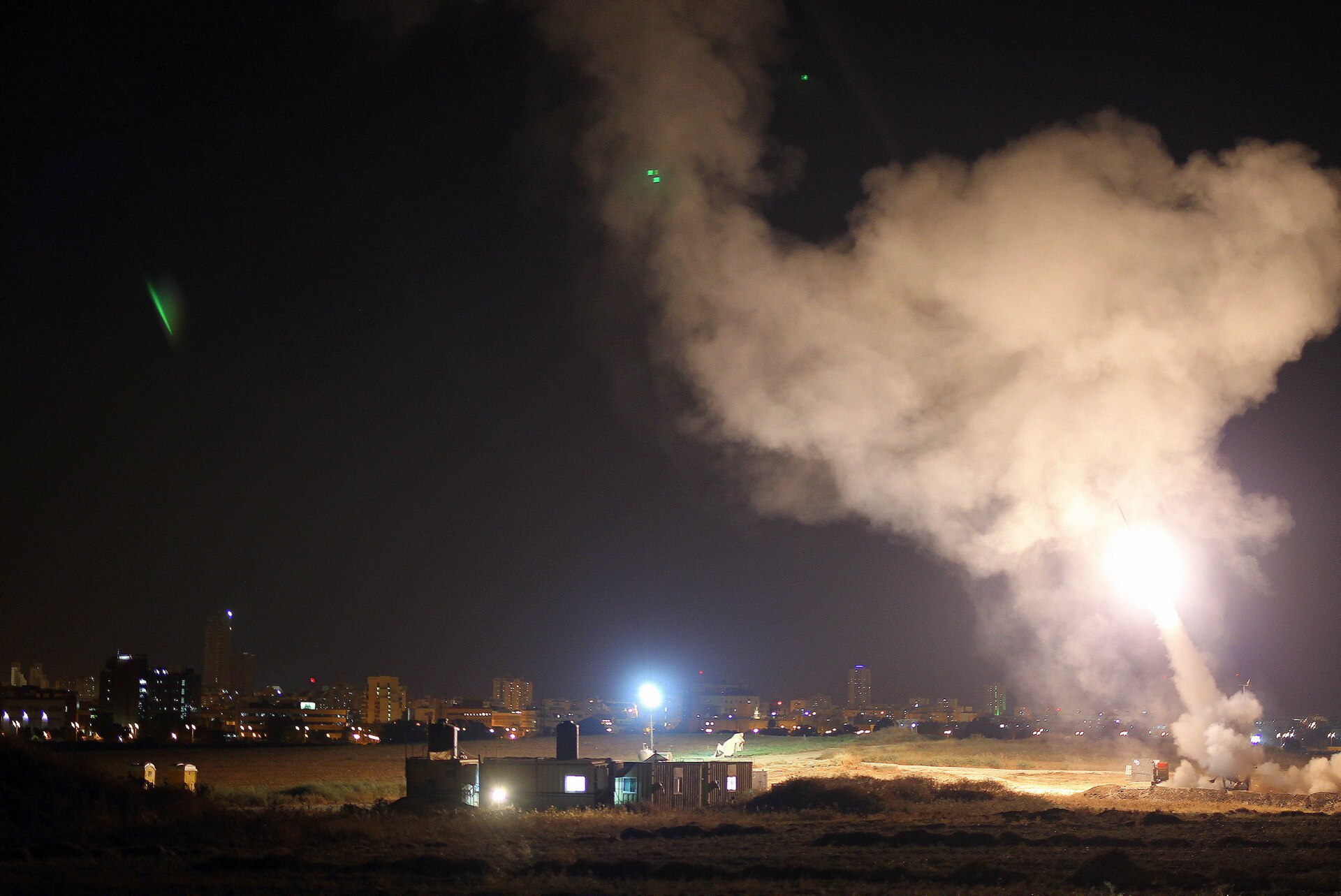
Israel’s covert deployment of an operational Iron Dome battery and IDF troops to the UAE during the conflict — the first-ever overseas operational deployment of the system, reported by Axios and Eurasian Times — reveals that the Emirates’ own layered THAAD/Patriot/Barak-8 combination proved insufficient against sustained Iranian salvos. If the UAE, with arguably the most sophisticated integrated air defense in the Gulf outside Saudi Arabia, required Israeli emergency reinforcement, the implications for Saudi Arabia’s 17 days of remaining PAC-3 coverage are not encouraging.
The hedging is real, but it is also slow. The KM-SAM integration is ongoing. The PAC-3 restocking pipeline, with an 18-month delivery horizon and a global production queue that includes the United States military itself, will not close the gap before the current threat cycle resolves. The Ukrainian drone deal will take months to produce operational capability. The Pakistan defense pact has no precedent for activation and no established command structure for combined operations. Saudi Arabia is building a supplementary security architecture, but the Iranian campaign against US bases has advanced the timeline for when that architecture is needed while doing nothing to accelerate when it will be ready.
| Hedging Initiative | Partner | Date | Capability | Operational Timeline |
|---|---|---|---|---|
| Strategic Mutual Defense Agreement | Pakistan | September 2025 | Bilateral defense pact (nuclear-capable partner) | Framework active; no activation precedent |
| KM-SAM air defense deal | South Korea | 2023 | Medium-range air defense layer | Integration ongoing |
| $9B PAC-3 MSE sale | United States | January 30, 2026 | ~620 rounds/year global production | 18+ months to delivery |
| Drone technology integration | Ukraine | Late March 2026 | Counter-drone / ISR technology | Months to operational capability |
| Four-nation framework | Egypt, Turkey, Pakistan | 2026 (discussions) | Multilateral security coordination | No formal structure yet |
| Iron Dome deployment (UAE) | Israel | 2026 | Short-range intercept | Operational (UAE only) |
Iran Knows — And Is Pricing It In
Iran’s ten-point negotiating proposal, tabled through mediators during the Islamabad process, includes as Point 7 a demand for IRGC “coordination” over the Strait of Hormuz as a formal treaty requirement. That is a condition that only a party confident in its own bargaining position would table. The double blockade mechanism — where the US controls the Arabian Sea entry and the IRGC controls the Gulf of Oman exit, reducing Hormuz transits to 3.6% of pre-war baseline — functions as a physical demonstration of the capability gap that the $5 billion figure only partially captures.
Tehran’s negotiating posture has been shaped by intelligence that Washington’s allies do not possess. The TEE-01B imagery confirmed, from orbit, which American aircraft were destroyed at Prince Sultan before the Pentagon told Congress. Russian real-time cueing data revealed which US naval assets were where, and when, allowing Iran to plan strikes against moving targets. The Russia-Iran intelligence axis and Beijing’s orbital contribution mean that Iran entered the Islamabad negotiations knowing, with satellite-verified precision, how much American capability it had removed from the theater — while the American negotiating team operated under public messaging constraints that prevented them from acknowledging the same information.
The split within Iran’s own government — with President Pezeshkian publicly accusing IRGC figures Vahidi and Abdollahi of wrecking the ceasefire — does not diminish what the damage assessment means for the region. Pezeshkian’s confession that the civilian government cannot control the IRGC is itself a negotiating variable that Tehran has weaponized: the message to Washington and Riyadh is that even if a deal is signed, only the IRGC can deliver compliance at Hormuz, and the IRGC’s price will be set by what it knows it has accomplished against American bases.
Saudi Arabia, as the Kingdom’s production crash has demonstrated, is absorbing the economic costs of a conflict in which its primary security guarantor’s losses are classified and its primary adversary’s intelligence is orbital. The structural position is one in which Riyadh must make defense procurement decisions worth tens of billions of dollars based on an American capability picture that the American government itself will not disclose. Iran, by contrast, is making escalation and negotiation decisions based on a capability picture it has verified from space. That gap does not close with a ceasefire or a negotiated framework — it closes when the bases are rebuilt and the satellite stops flying, neither of which is imminent.
FAQ
How does the $5 billion compare to previous US military base damage in the Middle East?
The $5 billion infrastructure estimate — excluding weapons systems, radar, and aircraft — exceeds the combined cost of all base repairs from the 2003-2011 Iraq War mortar and rocket attacks on US installations, which cumulatively caused an estimated $1.2-1.8 billion in infrastructure damage over eight years. Iran achieved a higher damage threshold in approximately two months, concentrated against hardened facilities rather than the temporary forward operating bases that dominated the Iraq insurgent target set. The compressed timeline and the targeting of enablers rather than personnel is the structural difference — Baghdad-era attacks degraded individual facilities; the 2026 campaign degraded functional categories of capability across the theater simultaneously.
Could Saudi Arabia purchase the destroyed US capabilities independently?
The short answer is that some capabilities cannot be purchased at any price within a relevant timeframe. Saudi Arabia has no pathway to acquiring E-3G AWACS or its E-7 replacement, as neither is available for export, and the Kingdom’s own airborne early warning program relies on aging E-3A aircraft with Saudi-specific modifications. KC-135 tankers are also not available for foreign military sale in their current configuration, though Saudi Arabia operates its own KE-3A tanker variant. The AN/TPY-2 THAAD radar is an FMS item, but production lead times exceed three years and the US military’s own replacement demand now competes directly with allied orders.
What role did the Gulf states’ airspace restrictions play in limiting the US response?
Saudi Arabia, Qatar, Kuwait, and the UAE all stated as of January 2026 that they would not allow US forces to use their airspace for offensive strikes against Iran — a restriction that forced American air operations into longer, less efficient routing over international waters and Iraqi airspace. The restriction explains, in part, why aerial refueling tankers were so critical to the US operational concept and therefore why Iran’s targeting of KC-135s at Prince Sultan was so damaging: the tankers were not a luxury but a structural necessity created by the host nations’ own political constraints on American basing rights.
Has Iran demonstrated this kind of precision targeting capability before?
Iran’s September 2019 Abqaiq-Khurais attack demonstrated precision strike capability against Saudi oil infrastructure, with cruise missiles and drones hitting specific processing units within the Abqaiq facility. The 2026 campaign represents an order-of-magnitude escalation in complexity — simultaneous strikes across seven countries, targeting functional categories rather than individual installations, with post-strike satellite verification. The TEE-01B acquisition in late 2024 gave Iran the BDA loop it lacked in 2019, when Tehran relied on media reporting and signals intelligence to assess the Abqaiq damage rather than its own orbital imagery.
What happens to the US military footprint in the Gulf if some bases are abandoned rather than rebuilt?
Eaglen’s AEI assessment explicitly includes “abandonment/decommissioning” as one of the options being evaluated for damaged installations, a possibility that would represent the first involuntary contraction of the US military presence in the Gulf since the 2003 withdrawal from Prince Sultan Air Base — which was itself a policy decision, not a damage-driven one. If NSA Bahrain’s $200 million repair bill or Muwaffaq Salti’s destroyed THAAD radar lead to consolidation rather than reconstruction, the geographic coverage of the American deterrent shrinks permanently. For Saudi Arabia, any base that is not rebuilt is a vector that is not covered, and the Kingdom would need to fill that gap with its own assets or accept the exposure.