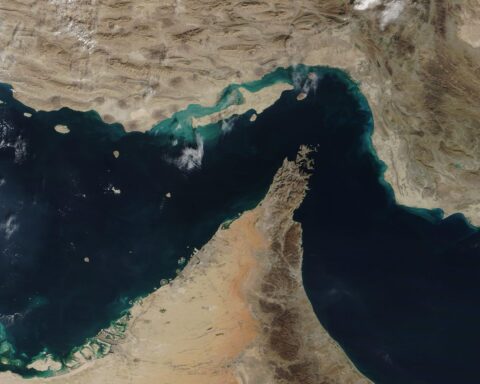
DHAHRAN — Saudi Arabia has lost its status as the world’s swing producer of crude oil — the single most consequential asset underpinning Vision 2030’s entire funding model — and the war that destroyed it was one Riyadh privately encouraged. With Saudi production crashing 30% to 7.25 million barrels per day in March 2026, Hormuz functionally closed, and US shale operators sitting on $45–53 per barrel margins at current prices, the structural conditions that made Saudi Arabia the marginal supplier for half a century have been permanently disqualified. What remains is not a clean transfer of the crown to the United States but something worse for Riyadh: a world in which no single producer controls the marginal barrel, and the one country that came closest to doing so can no longer guarantee delivery.
The disqualification is not temporary. Every barrel Saudi Arabia produces east of the Hejaz now carries a risk premium that negates the very concept of swing supply. The question for Riyadh is no longer how to reclaim the role but whether it can survive the fiscal consequences of losing it.
Table of Contents
- The Asset That Took Fifty Years to Build
- What Happened to Saudi Arabia’s Swing-Producer Status?
- The War Riyadh Wanted
- Does the United States Inherit the Crown?
- The Yanbu Ceiling and the Bypass That Cannot Replace Hormuz
- Can Vision 2030 Survive Without Swing-Producer Revenue?
- Iran’s Revenue Paradox
- Why Disqualification Is Permanent
- Frequently Asked Questions
The Asset That Took Fifty Years to Build
Saudi Arabia became the world’s swing producer between 1967 and 1973, filling the gap as the United States exhausted its own surplus capacity. The role was never merely about volume. It was about credibility — the market’s belief that a single supplier could add or subtract millions of barrels at will, absorb the costs of restraint, and guarantee delivery through secure export channels. During the 1973 OAPEC embargo, Riyadh demonstrated the coercive potential of that leverage, contributing to a 300% oil price increase from $3 to roughly $12 per barrel. The role carried costs. In 1985–86, Saudi Arabia bore the swing function alone, absorbing losses while most OPEC members free-rode, before King Fahd abandoned price support and flooded the market in a move that cratered prices but reasserted Saudi centrality.
The swing-producer function rested on three pillars: spare capacity (the physical ability to ramp production up or down by 1.5–3 million barrels per day within weeks), fiscal resilience (the sovereign wealth to absorb short-term revenue losses), and secure export routes (the guarantee that barrels produced could reach buyers). By February 2026, all three pillars were intact. Saudi Arabia held an estimated 3 million barrels per day of spare capacity, the Public Investment Fund managed assets exceeding $900 billion, and Hormuz — through which roughly 20 million barrels per day transited — had not been closed in the strait’s modern history.
Within five weeks of the Iran war’s outbreak, all three were compromised simultaneously.
What Happened to Saudi Arabia’s Swing-Producer Status?
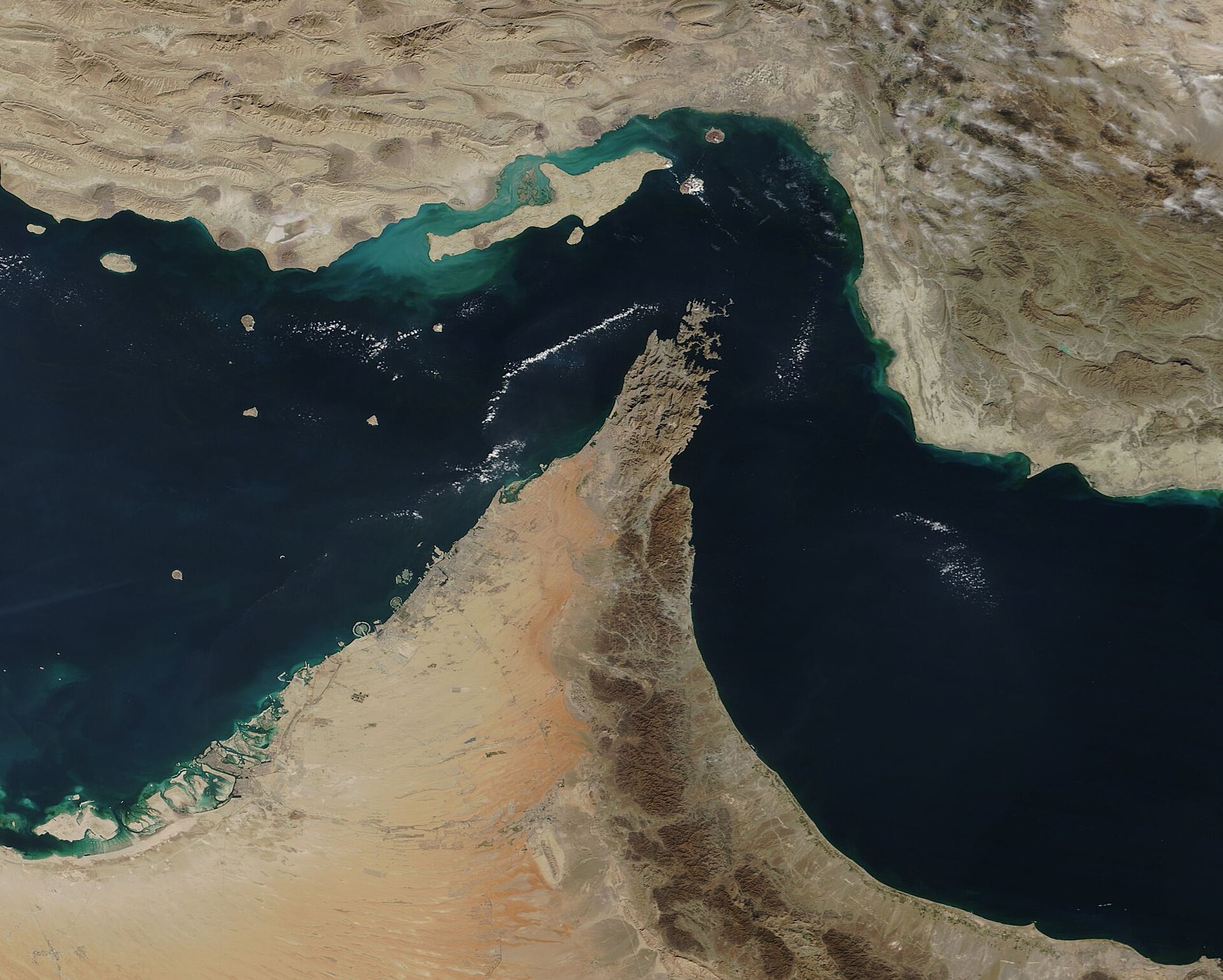
Saudi Arabia’s swing-producer status collapsed because the Iran war simultaneously destroyed spare capacity, blocked the primary export route, and imposed fiscal costs that eliminate the sovereign cushion needed to absorb market-management losses. The IEA reported Saudi crude production fell to 7.25 million barrels per day in March 2026, down from 10.1–10.4 million bpd before the conflict — a 30% crash that represents the steepest single-month decline in the kingdom’s oil history.
The Middle East briefing 3,000+ readers start their day with.
One email. Every weekday morning. Free.
The damage is both physical and logistical. IRGC strikes knocked Khurais offline — 300,000 barrels per day, still under repair with no restoration timeline announced. Manifa lost another 300,000 bpd, only partially restored. These are production losses. The export losses are larger. With Hormuz under dual blockade — the IRGC controlling the Gulf of Oman exit since March 4, CENTCOM controlling the Arabian Sea entry since April 13 — Saudi crude exports fell 50% in March, and year-on-year export volumes dropped 26% to 4.39 million bpd even as elevated prices added only $558 million in value, according to Bloomberg and Reuters.
OPEC’s collective production dropped 27% month-on-month, from 28.7 million to 20.8 million barrels per day. The cartel voted to hike output by 206,000 bpd in early April — a gesture Al Jazeera described as “largely symbolic” because Saudi Arabia, the UAE, Kuwait, and Iraq physically cannot produce the incremental barrels while Hormuz remains closed. The IEA’s Fatih Birol called it “the biggest energy security threat in history,” noting 13 million barrels per day offline globally as of April 23 — exceeding the 1973 and 1979 oil shocks combined.
Samantha Gross, director of the Energy Security and Climate Initiative at Brookings, delivered what may be the most consequential analytical verdict: “It’s difficult to imagine Saudi Arabia continuing to be the secure marginal supplier of oil so long as Iran can harass traffic through the strait.” The operative word is “secure.” Saudi Arabia retains the underground reserves. It retains the infrastructure, damaged but repairable. What it cannot restore is the market’s belief that those barrels will reach buyers. The institutional dimension of that credibility loss — why three consecutive 206,000 bpd paper-barrel votes have made OPEC’s forward guidance functionally irrelevant — is analysed in OPEC+’s May quota vote: the market that didn’t blink.
The War Riyadh Wanted
The structural irony is documented, not speculative. The Washington Post reported on February 28, 2026, citing four sources, that Crown Prince Mohammed bin Salman privately framed the conflict as a “historic opportunity” and pressed the Trump administration for US ground troops and regime change in Iran. MBS urged attacks against Iran’s energy infrastructure — the very escalation pathway that invited Iranian retaliation against Saudi energy infrastructure. The kingdom pre-positioned 7.3 million barrels per day of export capacity in February, a logistical hedge that suggests Riyadh anticipated disruption but believed it could be contained. Princeton’s Bernard Haykel described the Saudi posture as “constrained not detonated” — MBS wanted the war fought with American firepower on Iranian soil, not Iranian missiles on Saudi soil.
What Riyadh got instead was the opposite. Saudi Arabia bears the highest cumulative war cost of any non-combatant party — infrastructure damage, export collapse, fiscal hemorrhage — while holding no seat at the negotiation table. The kingdom was excluded from the April 10 Islamabad bilateral between Vance and Ghalibaf. When Saudi Foreign Minister Prince Faisal bin Farhan called Araghchi on April 13, the day the US blockade took effect, it was an act of parallel diplomacy from a country with no formal role in ending the war it helped start.
The pre-war calculus was straightforward. A quick, decisive American intervention would eliminate Iran’s nuclear program and its capacity to threaten Gulf shipping. That would permanently secure the export routes that underwrote Saudi Arabia’s oil leverage. The actual outcome — a grinding, unresolved conflict that has closed Hormuz for 58 days and counting — represents the precise inversion of that bet. MBS traded the certainty of swing-producer revenue for the uncertainty of a war whose duration and endpoint remain unknown.
Does the United States Inherit the Crown?
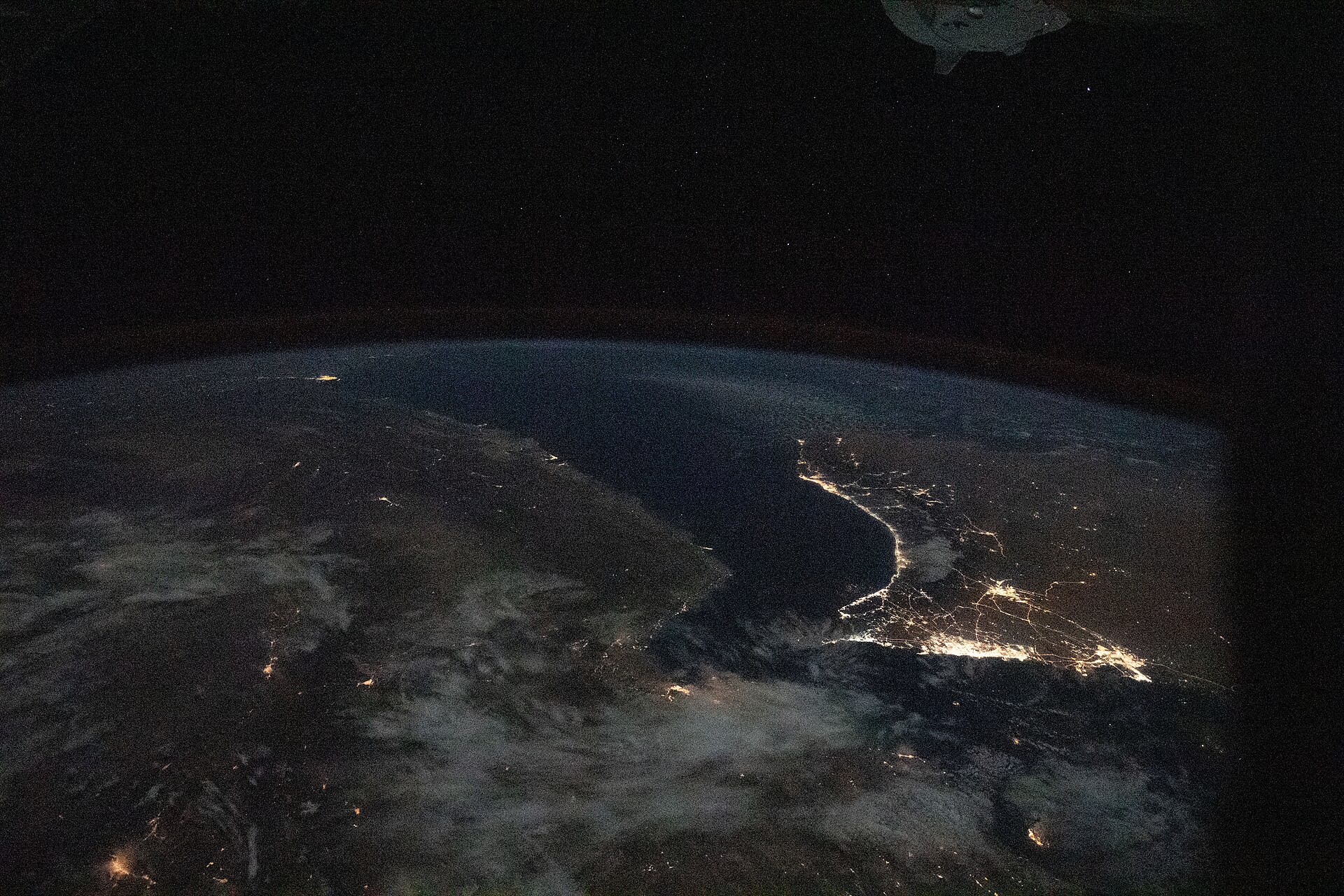
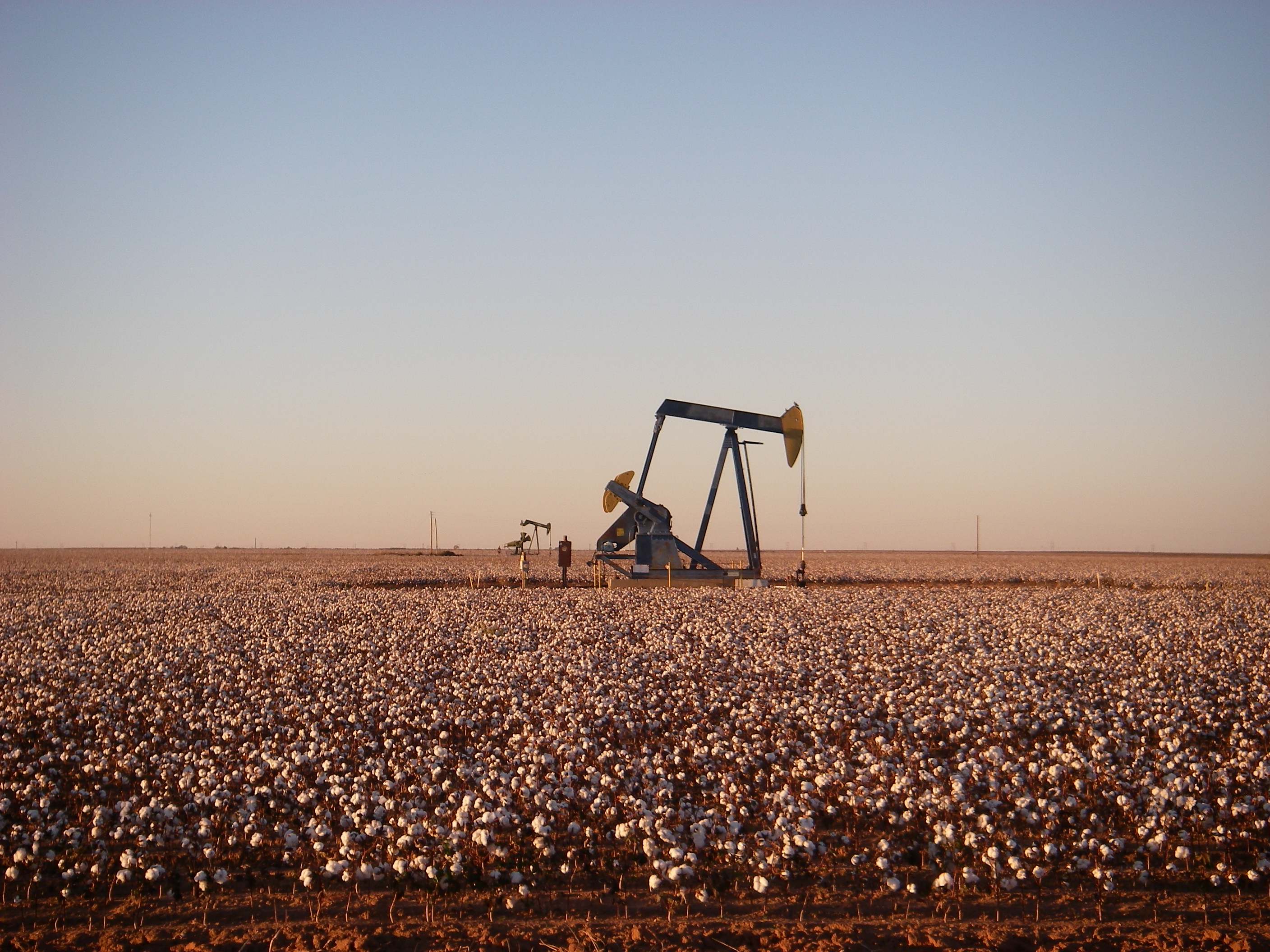
The United States does not cleanly inherit the swing-producer role, but it has become the only major producer capable of adding marginal barrels to the global market while Hormuz remains contested. US crude output is forecast at 13.5 million barrels per day for 2026, with the Permian Basin alone producing 7.12 million bpd — 52.7% of total US output, according to the EIA. Shale breakeven costs sit between $62 and $70 per barrel (Federal Reserve Bank of Dallas), against WTI prices near $115 in early April, creating a $45–53 per barrel margin incentive that is pulling capital back into the field.
Enverus projects an additional 240,000 bpd in 2026, pushing US output to a record 13.9 million barrels per day. Citigroup forecasts 815,000 bpd of incremental production through 2028. Harold Hamm’s Continental Resources was the first major operator to commit publicly to increased output and capital spending in response to war-era pricing. Alex Ljubojevic of Enverus noted that operators would accelerate drilled-but-uncompleted wells to bring volumes online faster with sustained high prices.
The response is real but structurally slow. The rig count rose from 550 to 553 in two weeks — a 0.5% increase despite Brent above $120. Matthew Bernstein of Rystad explained the lag: operators needed confidence in sustained high prices before committing capital to new drilling. The lead time from drilling decision to first oil is approximately nine months for a new Permian well. Mike Sommers of the American Petroleum Institute acknowledged the gap between price signal and production response: “Elevated prices are certainly going to increase production in the United States… over the course of the next few months.”
Goldman Sachs first declared that US shale had replaced OPEC as the leading swing producer in October 2014, a thesis that remained contested through the 2015–16 price war and the pandemic demand collapse. The 2026 Iran war is its empirical confirmation — not because US shale gained new capabilities, but because Saudi Arabia lost the preconditions that defined the role. The distinction matters. A textbook swing producer adjusts output rapidly and deliberately. US shale adjusts output gradually and in response to price. The two mechanisms produce different market dynamics: Saudi Arabia could talk a price into existence at an OPEC meeting; the Permian Basin moves in nine-month increments driven by capital allocation decisions at hundreds of independent operators.
Neil Quilliam of Chatham House flagged the timing mismatch: “It would take months for companies to increase production to take advantage of conditions, and by then the crisis may well be over.” That observation cuts both ways — it means the US cannot stabilize a sudden disruption the way Saudi Arabia once could, but it also means the structural shift persists beyond any individual crisis. US shale will be larger when Hormuz eventually reopens than it was when Hormuz closed.
The Yanbu Ceiling and the Bypass That Cannot Replace Hormuz
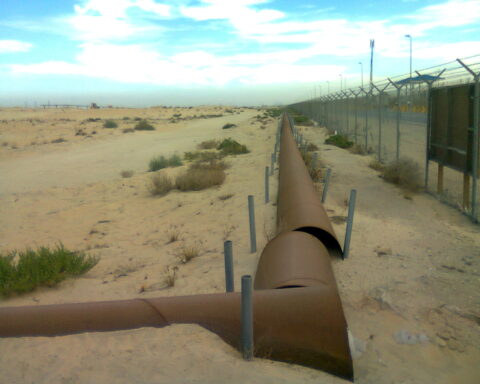
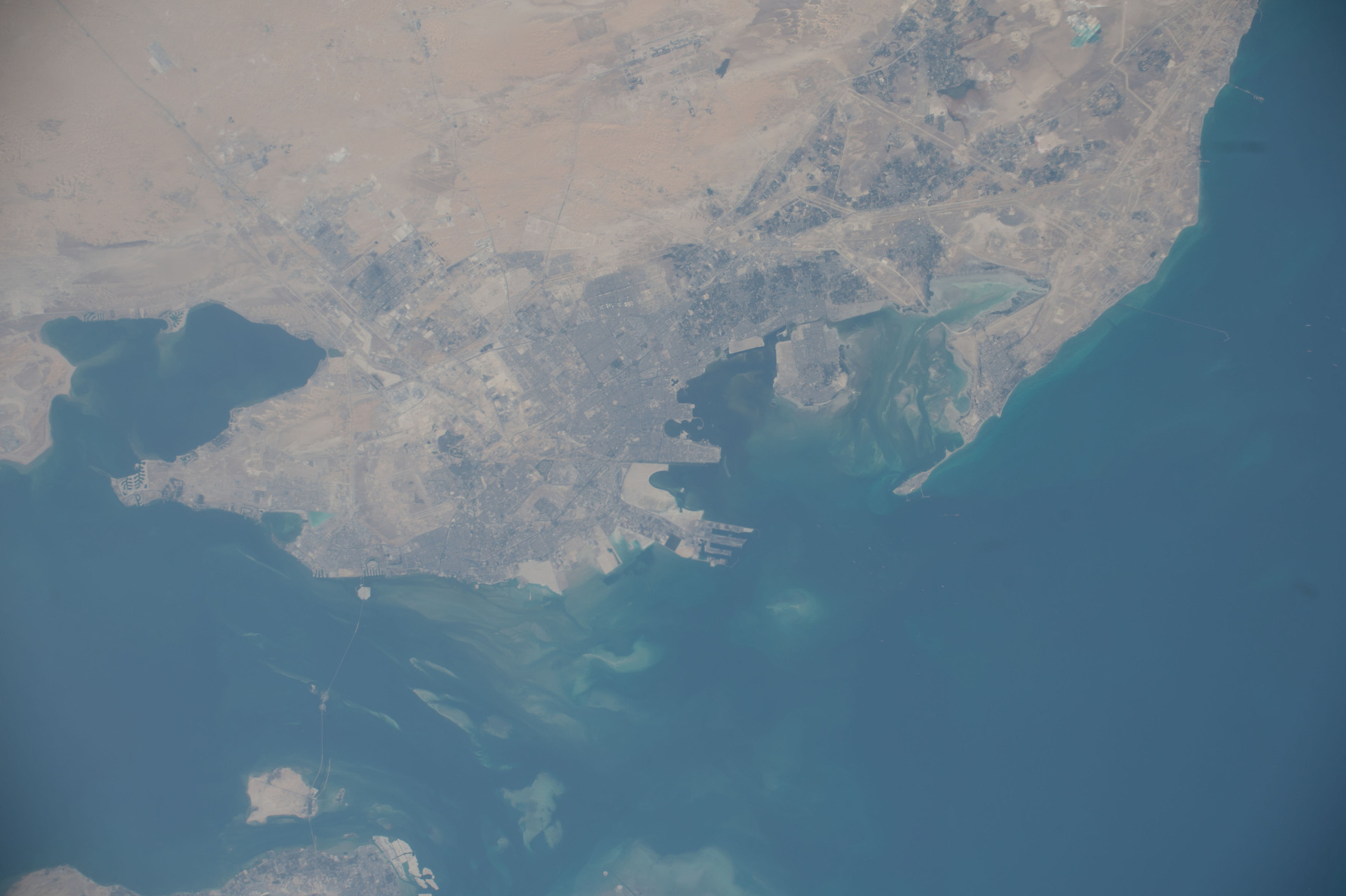
Saudi Arabia’s East-West pipeline — the 1,200-kilometer conduit from Abqaiq to the Red Sea terminal at Yanbu — was designed as a strategic bypass for exactly this scenario. Its maximum throughput is 7 million barrels per day. At full capacity, it could theoretically replace a substantial share of the 7–7.5 million bpd Saudi Arabia exported through Hormuz before the war. In practice, the ceiling is lower. Yanbu’s loading infrastructure can handle 4.6–5.9 million bpd, according to Chatham House and Reuters. The structural gap between pipeline capacity and terminal loading capacity means 1.1–1.6 million barrels per day that can reach Yanbu have nowhere to go.
The gap widened further after the IRGC struck a pipeline pumping station on April 8 — the same day the ceasefire nominally took effect — cutting throughput by 700,000 bpd for four days. The pipeline was restored to full capacity by April 12, but the vulnerability was demonstrated. The East-West pipeline runs through open desert, and its pumping stations are fixed, identifiable targets. The 2019 precedent — when the IRGC struck the same pipeline in May of that year — was treated as a one-off. The 2026 strike, arriving during an active conflict with Iranian missile ranges well-established, made the pipeline’s vulnerability a permanent market variable.
The result is that Saudi Arabia’s maximum export capacity with Hormuz closed sits between 4.6 and 5.9 million barrels per day — roughly 65–80% of pre-war exports. That is enough to prevent total revenue collapse but not enough to play swing producer. The role requires surplus — barrels available to be added or withheld at will. Every barrel reaching Yanbu is a barrel Riyadh needs to sell, not a barrel it can choose to hold back. Survival throughput and swing capacity are incompatible functions.
Can Vision 2030 Survive Without Swing-Producer Revenue?
Vision 2030 cannot survive without swing-producer revenue in its current form. The plan’s entire funding model rested on monetizing oil reserves from the position of the world’s most reliable, lowest-cost producer — a premise the war has falsified. Oil still accounts for 43% of Saudi GDP and 75% of government revenues. By 2025, the kingdom was more dependent on oil than it had been in 2016 when the plan launched. Diversification generated new sectors — entertainment, tourism, technology — but none at a scale that replaced hydrocarbon revenue. The fiscal break-even price sat at $96 per barrel before the war, rising to $108–111 when PIF spending commitments were included, according to Bloomberg.
The war’s fiscal damage is severe. Goldman Sachs estimated the 2026 deficit at 6.6% of GDP — $80–90 billion against an official projection of 3.3% ($44 billion). Saudi Arabia’s fiscal deficit was already 5.3% of GDP in 2025, before a single missile was fired, per Chatham House. The combination of production losses, export disruption, and infrastructure repair costs has compressed the timeline for fiscal distress from years to months.
Goldman’s April 27 revision pushed Q4 2026 Brent to $90 — the bank’s fourth upward revision in two months — while simultaneously confirming that Saudi Arabia’s fiscal position worsens with every delay in Hormuz normalisation. Goldman’s $90 Q4 Brent forecast is $18 below Saudi Arabia’s PIF-inclusive break-even of $108–111, a margin that no combination of price improvement and quota restoration can close while the kingdom produces at 7.25 million barrels per day. The full paradox is visible in the physical market: on April 13, when Brent futures sat at $97, physical crude traded at $148.87 — a $47 spread that Physical Crude at $150 While Futures Say $97 analyses as the difference between futures traders pricing a ceasefire and physical buyers pricing next week’s delivery.
PIF construction commitments were cut from $71 billion to $30 billion — a $41 billion reduction. The Line, the 170-kilometer mirror-clad city that was Vision 2030’s signature megaproject, has been suspended. NEOM’s 2030 population target was slashed from 1.5 million to under 300,000. These cuts predate the war; they were announced in January 2026 as a fiscal reality check. The war has made the remaining commitments harder to fund and the revenue model they depended on structurally unsound.
Stefanie Hausheer Ali of the Atlantic Council framed the reputational damage: “The perception of the Gulf Arab states as safe havens in a tough region is shattered and will be challenging to reverse for some time… They likely will have a higher risk premium in the eyes of most investors and companies.” Michael Ratney, a former US Ambassador to Saudi Arabia now at CSIS, warned that direct Saudi military involvement risks “far greater Iranian retaliation, potentially causing long-lasting damage to the Saudi economy and its reputation as a safe destination for investors and tourists.” Vision 2030’s tenth anniversary arrived with its funding model in tatters and its underlying assumption — that oil revenue would bridge the diversification gap — falsified by the war its architect helped set in motion.
Iran’s Revenue Paradox
The most disorienting data point in the war’s energy economics belongs to Tehran. Iran’s oil revenues rose 37% in March 2026 — the only OPEC member to gain revenue during the Hormuz closure, according to Reuters. The arithmetic is simple: Iran controls the chokepoint through which its competitors’ oil must pass, while its own exports — already operating through sanctions-circumventing channels via ship-to-ship transfers and dark fleet operations — face no additional logistical constraint from the strait’s closure. Iran’s crude moves through channels that were already outside the formal maritime system.
The revenue asymmetry across OPEC members is brutal. Iraq’s revenues collapsed 76% to $1.73 billion. Kuwait’s fell 73% to $864 million. Saudi Arabia’s rose a nominal 4.3% — volume down 50%, partially offset by price increases. Iran’s 37% gain came on stable volumes and higher prices, a structural windfall from the chaos it created.
| Country | Revenue Change | Primary Cause |
|---|---|---|
| Iran | +37% | Controls chokepoint; exports via dark fleet unaffected |
| Saudi Arabia | +4.3% | Volume -50%, partially offset by price |
| Iraq | -76% | Hormuz-dependent; no bypass pipeline |
| Kuwait | -73% | Hormuz-dependent; no bypass pipeline |
The table describes a structural inversion. For fifty years, Saudi Arabia’s control of marginal supply meant that any disruption benefited Riyadh through higher prices on maintained volumes. The Hormuz closure has reversed the polarity: disruption now benefits the disruptor while punishing the producers who depended on the strait’s openness. Vitol CEO Russell Hardy estimated at the FT Commodities Global Summit that one billion barrels of production would be lost to the war in total — six to seven hundred million already gone. Those lost barrels are overwhelmingly Saudi, Iraqi, Kuwaiti, and Emirati. Iran’s barrels kept flowing.
Why Disqualification Is Permanent
The permanence of Saudi Arabia’s disqualification does not depend on Hormuz remaining closed. It depends on Hormuz having been closed — on the demonstrated reality that a state actor with sufficient motivation and capability can shut the world’s most important oil transit corridor and sustain that closure for months. The market’s pricing of Saudi supply security changed on March 4, 2026, and no reopening of the strait reverses the precedent.
The historical parallel is the Suez crisis of 1956, after which tanker routes, insurance markets, and strategic petroleum reserves were permanently restructured around the assumption that Suez could close again. It did close again, for eight years from 1967 to 1975. The point is not that Hormuz will remain closed — it will eventually reopen, under some diplomatic or military resolution. The point, as Quilliam put it, is that the genie is out of the bottle. Every forward contract, every refinery sourcing decision, every sovereign energy strategy must now incorporate a Hormuz-closure scenario that was previously considered theoretical.
The IRGC is working to make the theoretical permanent. Iran’s parliament is advancing a 12-article Hormuz sovereignty law that would enshrine IRGC “management authority” over the strait as a matter of domestic legislation. Ghalibaf formally linked Hormuz reopening to the removal of the US blockade on April 22. The IRGC seized the MSC Francesca (11,660 TEU) and the Epaminodas (6,690 TEU) on the same day — the day the ceasefire expired — demonstrating that operational control persists regardless of diplomatic timelines. Only 45 transits have occurred since the April 8 ceasefire, 3.6% of the pre-war baseline.
The insurance and shipping markets have already priced the structural shift. Goldman Sachs’s fiscal modeling incorporates a permanent Hormuz risk premium. VLCC rates reached $423,000 per day at the peak of the closure — a record driven not by demand but by the rerouting of global tanker traffic away from the Persian Gulf. More than 75% of global spare production capacity sits in Middle East countries that export through Hormuz, according to the EIA. The war did not merely disrupt supply; it disqualified the geography that housed the world’s strategic reserve of production flexibility.
The 2014–16 price war offers a cautionary precedent for Riyadh’s capacity to recover lost ground. When Saudi Arabia flooded the market to squeeze US shale, Bakken breakeven costs fell from $59.03 per barrel in 2014 to $29.44 in 2016 (IMF Working Paper 16/131). The campaign gained Saudi Arabia roughly 1% of market share while permanently lowering shale’s cost floor — making the competitor it targeted more resilient, not less. The 2026 war has repeated the pattern at catastrophic scale: the conflict MBS encouraged has made US shale structurally larger, structurally cheaper relative to war-priced alternatives, and the only major supply source that does not transit a contested chokepoint.
Kate Gordon of California Forward identified the deeper structural truth beneath the geopolitical specifics: “The only way to have this not matter to us at all is to just dramatically reduce demand for oil. There’s no other policy mechanism that actually makes us independent of this system.” The observation applies with even greater force to Saudi Arabia. Riyadh cannot drill its way back to swing-producer status because the constraint is not geological — it is geographical. The reserves are there. The infrastructure, with time and money, can be repaired. What cannot be repaired is the fifty-year assumption that barrels produced in the Eastern Province would reach Asian refineries without interdiction. That assumption died on March 4, 2026, and no volume of production restores it.
The war that MBS wanted fought in Tehran came home to Dhahran, Khurais, and the pumping stations of the Eastern Province. The swing-producer crown that took fifty years to build and defended Saudi Arabia’s position in the global economic order was surrendered not to a superior competitor but to a demonstrated vulnerability. The United States did not seize the role. Saudi Arabia forfeited it — and the forfeiture was self-inflicted.
Frequently Asked Questions
How long would it take to clear mines from the Strait of Hormuz after a peace deal?
The 1991 Kuwait mine-clearance operation — the most recent large-scale precedent — required approximately 51 days to clear a comparable area of approximately 200 square miles. With US mine countermeasure capacity in the Gulf now at a fraction of the Cold War fleet, naval analysts estimate six months or longer for a full Hormuz clearance. Insurance premiums and tanker routing detours would persist for the duration of the operation, extending the economic disruption well past any diplomatic agreement.
Could Saudi Arabia build a second bypass pipeline to avoid Hormuz permanently?
A new pipeline to the Red Sea or the Gulf of Aqaba would take five to seven years to construct at current engineering timelines and cost $15–25 billion depending on the route and capacity. The existing East-West pipeline to Yanbu already represents the fastest available bypass. Oman and the UAE have explored pipeline routes to the Arabian Sea coast that would bypass Hormuz entirely, but none have progressed beyond feasibility studies. The fundamental constraint is that even a complete bypass network cannot replicate the loading capacity and tanker access of Ras Tanura and the Gulf terminals.
How does the 2026 disruption compare to the 2019 Abqaiq attack?
The September 2019 drone and missile attack on Abqaiq temporarily knocked out 5.7 million barrels per day of processing capacity — a larger single-event production impact than any individual 2026 strike. The difference is structural: Abqaiq was repaired within weeks and Hormuz remained open throughout. The 2026 disruption combines physical infrastructure damage with a sustained export-route blockade, creating a compounding effect that makes restoration of pre-war export volumes impossible regardless of repair timelines. Brent spiked 15% after Abqaiq and returned to pre-attack levels within two weeks; the 2026 war has sustained Brent above $90 for eight consecutive weeks.
What crude grades do US refineries need, and can US shale substitute for Saudi oil?
US Gulf Coast refineries are configured primarily for medium-sour crude — the grade Saudi Arabia and Iraq export in large volumes (Arab Light, Arab Medium, Basrah Medium). Permian Basin shale produces light-sweet crude, which requires different refining configurations. US household gasoline costs rose $8.4 billion in a single month despite record domestic production, according to Inside Climate News, because domestic light-sweet barrels cannot substitute barrel-for-barrel for the lost medium-sour supply. The grade mismatch means the US is structurally insulated from a supply perspective but not from a price perspective.
Has OPEC+ taken any action to compensate for lost Saudi and Gulf output?
OPEC+ approved a 206,000 bpd output increase in early April 2026, but the decision was functionally meaningless — the members with available spare capacity (Saudi Arabia, UAE, Kuwait, Iraq) are the same members whose exports are blocked by the Hormuz closure. Sheikh Nawaf al-Sabah, CEO of Kuwait Petroleum Corporation, acknowledged that “it will take months for the Gulf Arab states to bring production back up to full capacity” even after the strait reopens. The only OPEC member producing above its pre-war baseline is Iran itself.
Saudi Arabia’s position within OPEC has since deteriorated further: the UAE’s formal withdrawal from OPEC and OPEC+ effective May 1, 2026 stripped Riyadh of its third-largest allied producer inside the bloc, compounding the erosion of Saudi swing-producer authority with a direct institutional challenge to its OPEC leadership. The diplomatic mechanics of that challenge — including why Abu Dhabi did not notify Riyadh before acting — are examined in The UAE Did Not Consult Saudi Arabia.