JEDDAH — Thirty-six thousand Bangladeshi pilgrims have reached Saudi Arabia. Iraqi families are crossing at Jadidat Arar. Indonesia’s first Hajj flights departed April 22 — the same day the ceasefire expired. The 2026 Hajj is no longer a planning scenario or a diplomatic variable. It is a live operation, with 1.2 to 1.8 million people converging on a geography that Saudi Arabia cannot fully defend. The PAC-3 MSE interceptor inventory stands at approximately 400 rounds, 14% of the pre-war stockpile, with zero new deliveries possible before mid-2027. The Day of Arafah falls on May 26 — twenty-nine days from today — when the largest single concentration of human beings in the Middle East will gather on an open plain twelve kilometers east of Makkah.
Every actor in this war now faces a constraint none of them chose and none of them can move. Iran cannot threaten the holy cities without destroying its Islamic legitimacy claim. Saudi Arabia cannot acknowledge the security gap without surrendering the title that undergirds Al Saud rule. The United States cannot extend its coercive pressure past the Day of Arafah without converting a bilateral nuclear dispute into a civilizational confrontation with 1.8 billion Muslims. And the IRGC’s autonomous field commanders in Iraq are not structurally required to care about any of these calculations.
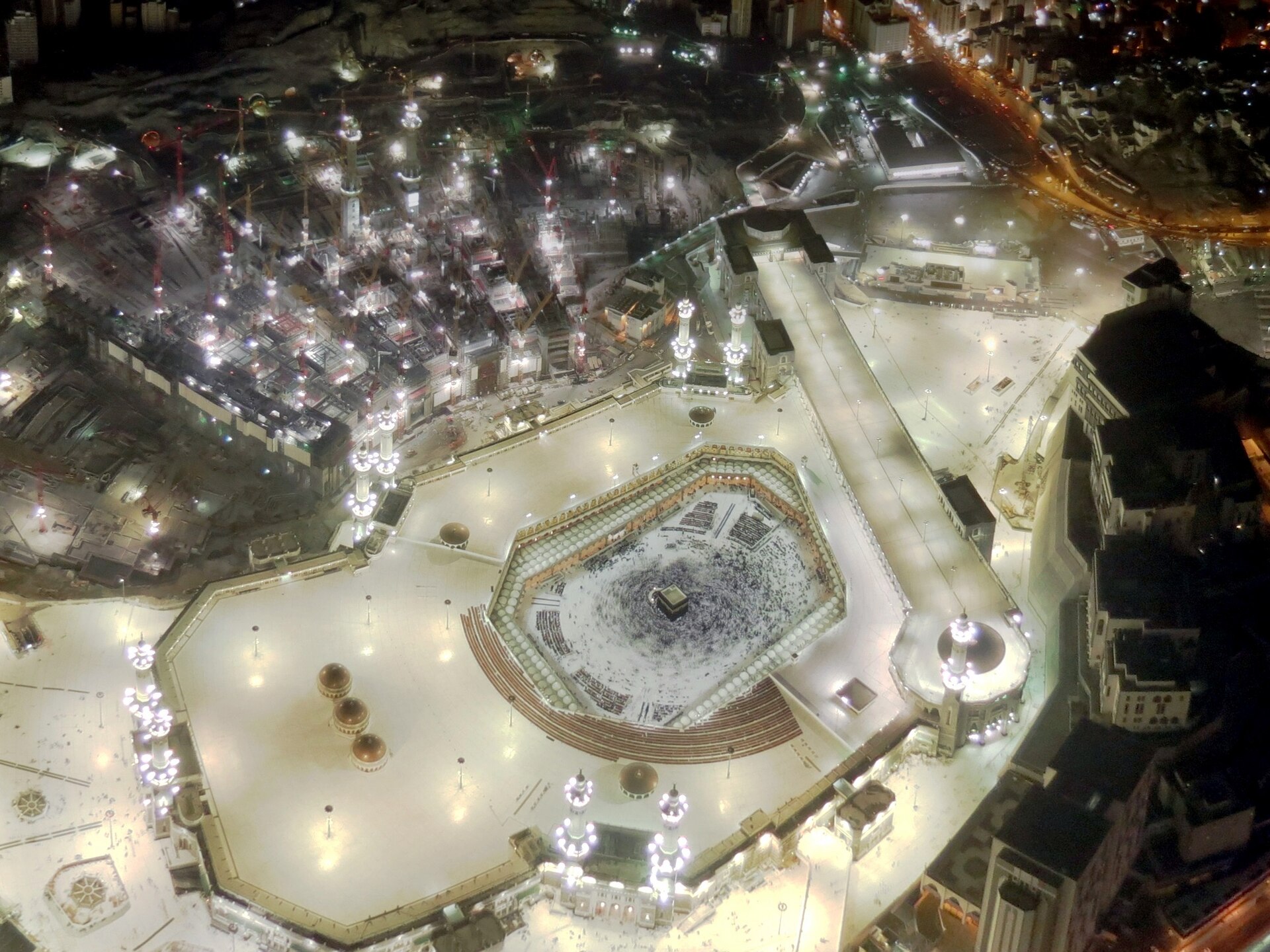
Table of Contents
- The Shield Math: 400 Rounds and No Resupply
- Why Saudi Arabia Cannot Cancel What It Cannot Defend
- The 1987 Inversion: Iran’s Hajj Calculus in 2026
- Who Controls the IRGC’s Trigger Finger?
- May 1: The Constitutional Deadline Washington Will Ignore
- What Happens on the Plain of Arafah?
- Hormuz, Hajj, and the Incompatible Timelines
- The Fiscal Trap Underneath the Security Trap
- The Thirty-Day Map
- FAQ
The Shield Math: 400 Rounds and No Resupply
Saudi Arabia entered this war with approximately 2,800 PAC-3 MSE interceptor rounds distributed across sixteen Patriot batteries and 108 M902 launchers. Between March 3 and the April 7 ceasefire, Saudi and coalition air defenses intercepted 894 aerial threats — 799 drones and 95 ballistic missiles, according to Army Recognition’s tracking of CENTCOM disclosures. The math is public. Roughly 400 rounds remain. The contrast with the UAE is stark: while Saudi Arabia’s shield drains toward zero, Israel secretly deployed an Iron Dome battery to the UAE during the war — a system Saudi Arabia has never had access to and was never offered.
At the pre-ceasefire average engagement rate of approximately 63 rounds per day during sustained combat, 400 rounds cover fewer than seven days. That number assumes every intercept succeeds on the first round. PAC-3 doctrine typically allocates two interceptors per incoming ballistic missile to achieve the system’s advertised 90%+ kill probability. Against a saturation attack mixing drones with ballistic threats — the Iranian pattern since Day 1 — the effective coverage window shrinks further.
Lockheed Martin’s Camden, Arkansas facility produced 620 PAC-3 MSE rounds for all global customers in 2025. Saudi Arabia’s January 2026 Foreign Military Sales notification requested 730 rounds — more than fourteen months of total global production. The $9 billion sale approved January 30 will not deliver a single interceptor before mid-2027. Congress was briefed on this timeline. The Kingdom’s Hajj security planners know it. Into that production gap, Saudi Arabia has embedded 228 Ukrainian counter-drone specialists across its air-defense networks, operating the Sting and Octopus interceptor systems alongside Sky Map command-and-control — lower-cost solutions that cannot replace PAC-3 against ballistic threats but are absorbing the drone workload that has consumed the bulk of Saudi Arabia’s interceptor expenditure since February 28.
The Middle East briefing 3,000+ readers start their day with.
One email. Every weekday morning. Free.
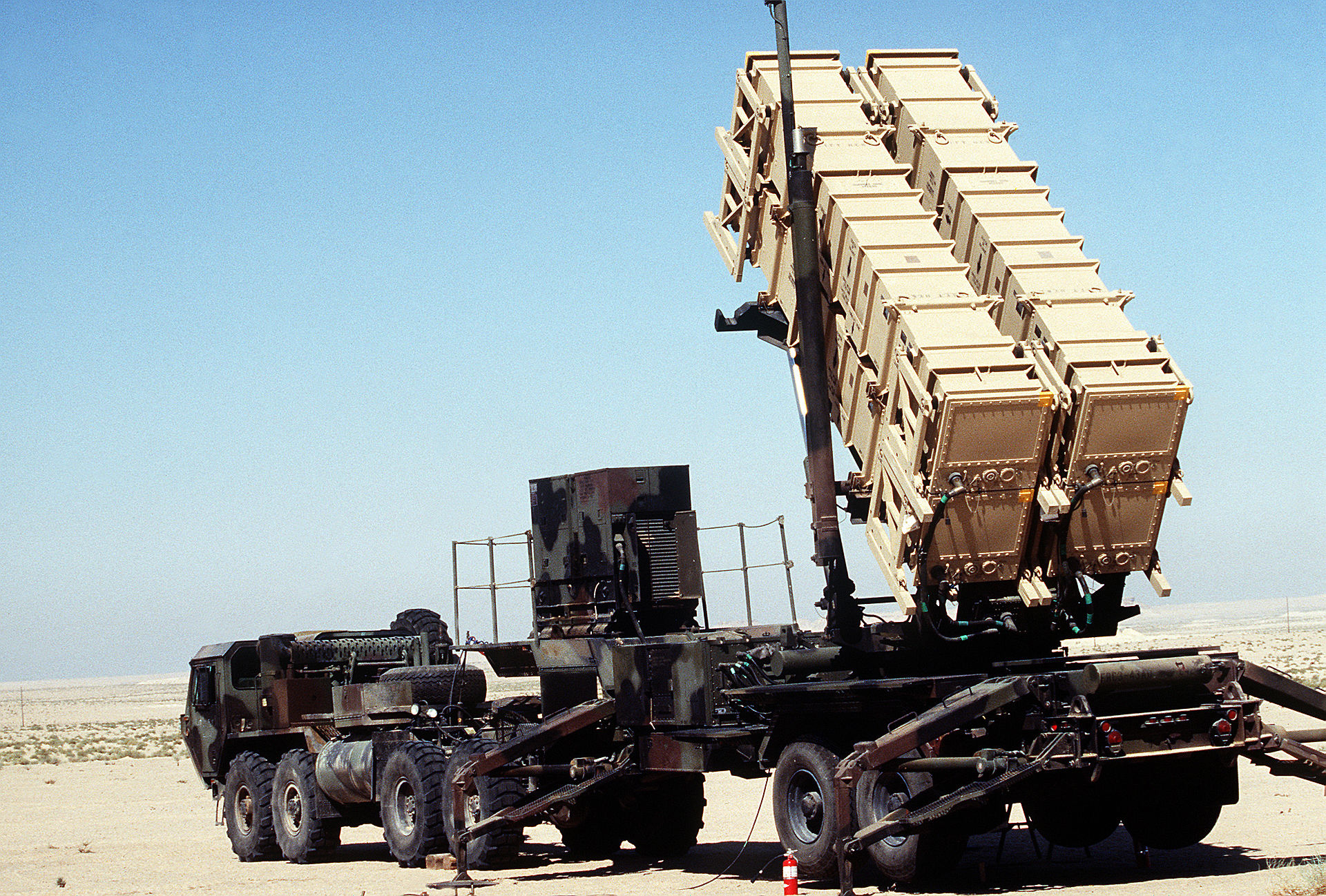
The gap is not theoretical. Pakistan has deployed up to eighteen JF-17 Thunder and F-16 Fighting Falcon fighters to King Abdulaziz Air Base under the Saudi-Pakistan Mutual Defence Pact. These aircraft can intercept cruise missiles and drones. They cannot shoot down ballistic missiles. Ukraine’s Sky Map integrated air defense architecture, which arrived at Prince Sultan Air Base in mid-April, adds coordination capacity — but coordination without interceptors is a command-and-control system watching threats it cannot kill.
Why Saudi Arabia Cannot Cancel What It Cannot Defend
On October 27, 1986, King Fahd bin Abdulaziz replaced his formal title. He stopped being “His Majesty” and became Custodian of the Two Holy Mosques — Khadim al-Haramayn al-Sharifayn. The timing was not incidental. Seven years after Khomeini declared the Al Saud unfit guardians of Islam’s holiest sites, and seven years after Juhayman al-Otaybi’s followers seized the Grand Mosque in an assault that required French commandos to resolve, Fahd made the protection of Makkah and Madinah the defining obligation of Saudi sovereignty.
The title is not ceremonial. It is the single claim that elevates the Al Saud above any other Gulf monarchy. The UAE has wealth. Qatar has Al Jazeera. Kuwait has a parliament. Saudi Arabia has the Haramain. Every legitimacy structure in the Kingdom — the religious establishment’s deference, the security forces’ mandate, the population’s social contract with an absolute monarchy — flows downstream from the promise that the Al Saud can protect what no one else can be trusted to protect.
Canceling Hajj, or publicly restricting it, would require Riyadh to state what the interceptor inventory already states: the Kingdom cannot guarantee the safety of pilgrims during sustained hostilities. That admission does not merely embarrass MBS. It validates the argument Khomeini made in 1979 and that Iranian state media has repeated in every decade since — that the Al Saud are custodians in name only.
The US Overseas Security Advisory Council issued a Level 3 “Reconsider Travel” advisory for Hajj 2026 on April 7 — the first time Washington has ever advised against Hajj attendance. Riyadh did not respond publicly. It has not adjusted pilgrim quotas. It has not issued supplementary security guidance to participating nations. The silence is the policy. Acknowledging the threat concedes the premise.
The 1987 Inversion: Iran’s Hajj Calculus in 2026
On July 31, 1987, Iranian pilgrims staged a political demonstration in Makkah. Saudi security forces responded. Two hundred and seventy-five Iranian pilgrims died, along with eighty-five Saudi nationals and forty-two other pilgrims — 402 dead in total. Riyadh slashed Iran’s Hajj quota from approximately 150,000 to 45,000, then imposed a full three-year ban. Diplomatic ties were severed. The Saudi Embassy in Tehran was attacked.
The 1987 crisis operated on a specific deterrence logic: Iran had 150,000 citizens inside Saudi Arabia’s holiest cities, and any Iranian military escalation risked their lives. The IRGC was structurally constrained by the presence of its own population in the target zone.
In 2026, that logic is inverted. Tasnim News Agency reported April 25 that approximately 30,000 Iranian pilgrims had been dispatched “in accordance with the command, approval, and viewpoint” of Ayatollah Mojtaba Khamenei. The phrasing is revealing. Iran is framing Hajj participation as a decision of the Supreme Leader, not a religious obligation fulfilled by individual citizens. The pilgrims are a diplomatic signal, not a hostage population.
Thirty thousand Iranians in Makkah constrains Riyadh — any Saudi security failure that harms Iranian pilgrims hands Tehran a propaganda victory that would echo for decades. But it does not constrain the IRGC in the way 150,000 did in 1987. Iran’s calculus has shifted from “we cannot escalate because our people are there” to “our people are there because it costs us nothing and constrains our adversary.” How the arrival of the first Iranian nationals on Saudi soil since February 28 inverted the deterrence calculus on Day 60 of the war is examined in full.
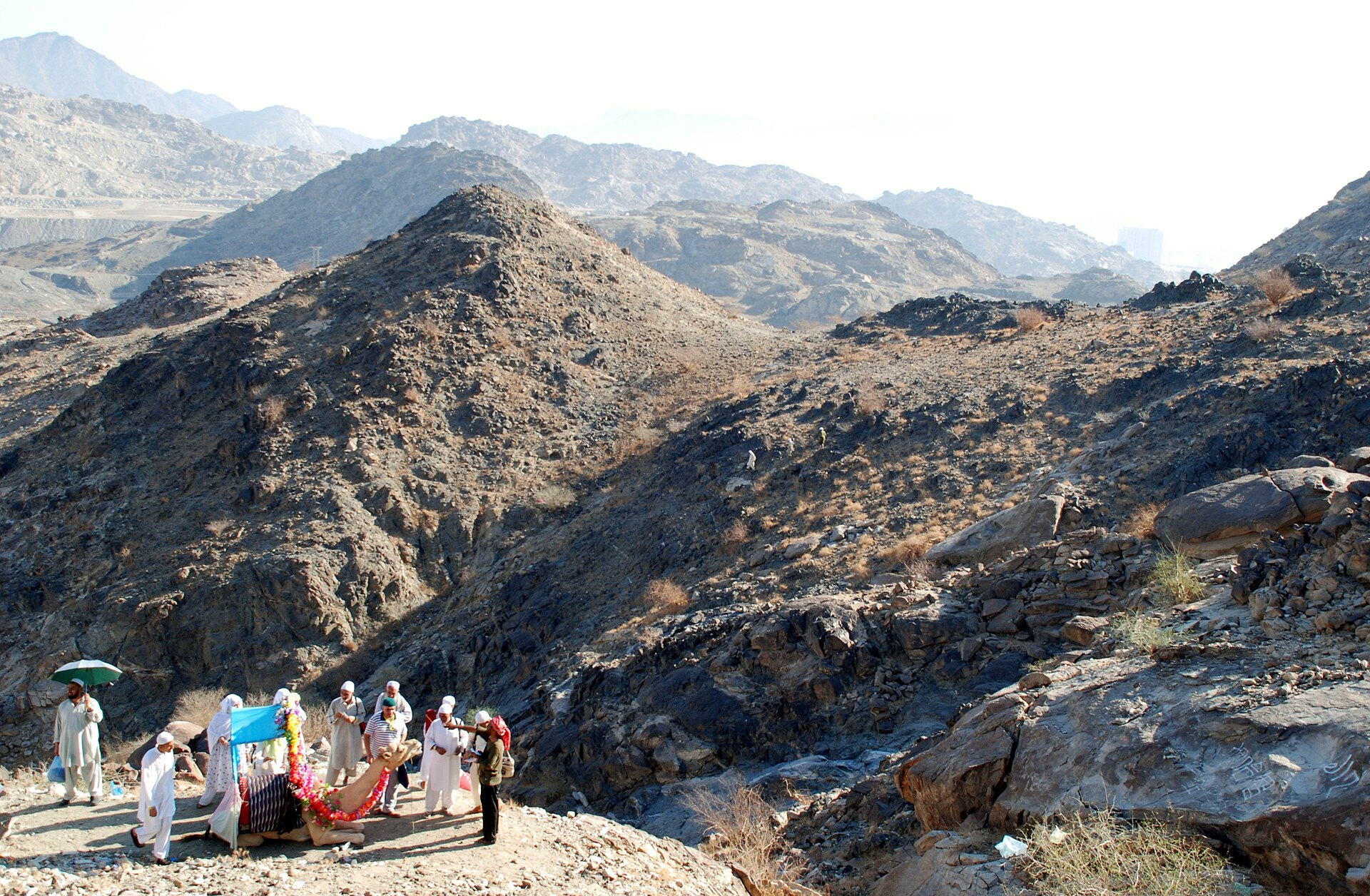
The doctrinal roots run deeper than 1987. Khomeini instructed followers to distribute political literature during Hajj as early as 1971 — six years before the Islamic Revolution. The politicization of pilgrimage is not a tactic. It is a foundational element of revolutionary Iranian foreign policy, and the current Supreme Leader’s explicit endorsement of the 2026 dispatch confirms the doctrine remains active.
Who Controls the IRGC’s Trigger Finger?
The question is not whether Tehran would order a strike on the Haramain. It almost certainly would not — the Islamic legitimacy cost is existential. The question is whether Tehran’s restraint orders reach the people who control the launchers.
IRGC field commanders operating through Iraqi militia networks have been granted autonomous strike authority, according to reporting by National Security News and Euronews. This delegation occurred during the war’s first weeks, when CENTCOM’s air campaign degraded IRGC command-and-control infrastructure inside Iran. The decentralization was a survival adaptation. It has become a structural problem.
Autonomous strike authority means an Iraq-based IRGC-aligned commander can authorize a drone or missile launch without clearing it through Tehran. The weapons exist — the IRGC has stated publicly that it possesses sufficient drone and missile supplies to sustain regional attacks for six months. The command structure that would transmit a restraint order from Mojtaba Khamenei to a militia commander in Anbar or Diyala province runs through the same networks that CENTCOM has spent fifty-seven days degrading.
| Level | Actor | Status (April 27) | Can Transmit Restraint? |
|---|---|---|---|
| Supreme Leader | Mojtaba Khamenei | Audio-only communications; 57+ days since public appearance | Uncertain |
| SNSC Secretary | Ali Akbar Ahmadian | Operational, Tehran | To IRGC HQ only |
| IRGC Commander-in-Chief | Hossein Salami | Operational, Tehran | To direct subordinates |
| IRGC Navy Commander | Vacant (Tangsiri killed March 30) | No named successor — 28 days | No |
| Iraq-based field commanders | Multiple, unnamed | Autonomous strike authority granted | Not structurally required to obey |
President Pezeshkian publicly accused SNSC Secretary Vahidi and Khatam al-Anbiya commander Abdollahi on April 4 of derailing ceasefire talks — a confession that the elected president cannot control the military organs that report to the Supreme Leader under Article 110 of the Iranian constitution. If Pezeshkian cannot restrain the IRGC through constitutional authority, the restraint mechanism for autonomous field commanders in a foreign country is thinner still.
May 1: The Constitutional Deadline Washington Will Ignore
President Trump notified Congress of hostilities on March 2, 2026. The War Powers Resolution’s sixty-day clock expires May 1 — four days from today. Under the statute, the president must either obtain congressional authorization for continued military operations or begin withdrawing forces within thirty days.
The Senate has blocked war powers resolutions five times on party-line votes since the conflict began. But the politics are shifting. Senators Susan Collins of Maine and Thom Tillis of North Carolina have both signaled potential willingness to join Democrats on a war powers resolution as the deadline approaches — the first Republicans to break from the White House position, according to reporting by The Hill.
The legal reality is less dramatic than the political optics suggest. CNN’s analysis of April 25 stated plainly: “There is no clear legal avenue for Congress to successfully force the president to abide by this termination requirement and, indeed, past presidents have refused to do so, claiming that this part of the War Powers Resolution is unconstitutional.”
“There is no clear legal avenue for Congress to successfully force the president to abide by this termination requirement.”
— CNN Politics analysis, April 25, 2026
Trump has a legally available thirty-day extension that requires written certification the extension is necessary for troop withdrawal. If invoked, the extension expires May 31 — five days after the Day of Arafah. The constitutional clock and the Islamic calendar are now overlapping in a way that compresses Washington’s decision space from both directions simultaneously.
The operational implication: any US escalation between May 1 and May 26 occurs under a contested legal authority that even sympathetic Republican senators have begun to question. Any US escalation after May 26 occurs during the Hajj rites themselves. The window for American coercive action that carries both domestic legal cover and international legitimacy is measured in days, not weeks.
What Happens on the Plain of Arafah?
On May 26, between 1.2 and 1.8 million pilgrims will gather on the plain of Arafah. The Day of Arafah (Wuquf) is the single non-negotiable ritual of Hajj. A pilgrim who misses it has not performed Hajj. There is no alternative date, no backup location, no virtual option.
This makes the Day of Arafah the most geographically compressed concentration of people in the Middle East on any single day of the year. The plain has no natural cover. The crowd is static for hours. The location is fixed and public years in advance.
Saudi Arabia’s layered air defense architecture — THAAD at the outer ring, PAC-3 MSE at medium range, South Korean KM-SAM, and point-defense systems including laser and Skyguard at the inner ring — was designed for this scenario. But the design assumed a full interceptor inventory. At 400 PAC-3 MSE rounds, the middle layer of the defense is operating at 14% capacity. THAAD batteries, which Saudi Arabia operates in smaller numbers, are optimized for high-altitude ballistic threats, not the mixed drone-and-missile swarms Iran has favored throughout the conflict.
The pilgrims arriving now will spend the next twenty-nine days in Saudi Arabia before the Day of Arafah. They are dispersed during this period — in Madinah, in Makkah, in hotels and tent cities. The security problem is manageable, if severe, while pilgrims are distributed across multiple cities. On May 26, it becomes singular. Every pilgrim in one place, under a shield that is 86% depleted.
Hormuz, Hajj, and the Incompatible Timelines
Three timelines are now running in parallel, and none of them can be reconciled with the others.
The first is the Hajj calendar. Pilgrims are arriving now. The Day of Arafah is May 26. This timeline is immovable — it is determined by the Islamic lunar calendar and was fixed centuries before this war began.
The second is the Hormuz reopening timeline. Congressional testimony on April 22 stated that full mine clearance of the Strait would require six months from the date of any agreement. Only two Avenger-class mine countermeasures ships remain in theater — the other four were decommissioned at Bahrain in September 2025 — and Trump’s April 23 order to triple clearing activity cannot change that arithmetic. Six months from today is October 27. The Strait cannot be cleared before the Hajj ends, and it almost certainly cannot be cleared before the next Hajj begins.
The third is the diplomatic timeline. On April 27, Foreign Minister Araghchi met Putin in St. Petersburg and presented Iran’s proposal: Hormuz reopening in exchange for lifting the US naval blockade, with nuclear negotiations deferred. Secretary Rubio rejected it within hours. “Still falls far short of Trump’s demands, which center around preventing Iran from obtaining a nuclear weapon,” Rubio said. Putin told Araghchi: “For our part, we will do everything that serves your interests, the interests of all the people of the region, so that peace can be achieved as soon as possible.”
| Timeline | Deadline | Days Remaining | Movable? |
|---|---|---|---|
| War Powers 60-day clock | May 1 | 4 | 30-day extension available (expires May 31) |
| Day of Arafah / Hajj peak | May 26 | 29 | No |
| War Powers 30-day extension | May 31 | 34 | No |
| Hormuz mine clearance (post-deal) | ~October 27 | ~183 | No — physical constraint |
| PAC-3 MSE resupply (first delivery) | Mid-2027 | ~420+ | No — production constraint |
The incompatibility is structural. Hormuz cannot reopen before the Hajj. The air defense shield cannot be replenished before the Hajj. The diplomatic process that might reduce the threat level has been rejected by Washington. The constitutional authority for US military operations expires during the Hajj. Each timeline’s logic demands action on a schedule that the other timelines make impossible.
The Fiscal Trap Underneath the Security Trap
Goldman Sachs revised its Q4 2026 Brent crude forecast upward to $90 per barrel on April 27, citing 14.5 million barrels per day of Middle East output losses and a record 11 to 12 million bpd global inventory draw in April. The bank projected the global oil market would swing to a 9.6 million bpd deficit in Q2 2026, compared to a 1.8 million bpd surplus in 2025.
Goldman’s analysts warned that “inventories could fall to the lowest levels since tracking began in 2018” and flagged “upside risk to estimated prices in the adverse and severely adverse scenarios because oil inventories are likely to reach very low levels, triggering non-linear price increases.”
The number that matters for Riyadh is the gap between Goldman’s $90 forecast and Saudi Arabia’s fiscal break-even of $108 to $111 per barrel (Bloomberg’s PIF-inclusive estimate). At $90 Brent, Saudi Arabia runs a war-adjusted fiscal deficit that Goldman separately estimated at 6.6% of GDP — roughly double the official 3.3% projection that assumed no conflict.
Saudi March production fell to 7.25 million bpd, according to the IEA — down from 10.4 million bpd in February, a 30% drop and 3.15 million bpd of lost output. The East-West Pipeline bypass through Yanbu has a loading ceiling of 4 to 5.9 million bpd against a pre-war Hormuz throughput of 7 to 7.5 million bpd. The bypass covers most but not all pre-war export capacity, and the IEA called the disruption “the largest on record.”
The fiscal trap compounds the security trap. Defending the Hajj at maximum alert for twenty-nine days costs money Saudi Arabia is hemorrhaging at rates the pre-war budget did not anticipate. The OPEC+ April quota of 10.2 million bpd sits 3 million bpd above Saudi Arabia’s actual output — a paper entitlement that generates no revenue. Every day the war continues without Hormuz reopening, the gap between Saudi Arabia’s obligations (Custodian security, PIF commitments, social spending) and its revenue widens.
The Thirty-Day Map
The next thirty days unfold along a sequence that no single actor controls.
May 1: the War Powers sixty-day deadline arrives. Trump either certifies a thirty-day extension, obtains congressional authorization, or — most likely — ignores the statute entirely, as Clinton did with Kosovo in 1999 and Obama did with Libya in 2011. Collins and Tillis may break from the Republican caucus. The votes likely still fall short.
Between May 1 and May 26, the pilgrims complete the Hajj preparatory rites. They move between Madinah and Makkah. The security perimeter expands. PAC-3 batteries that might otherwise be allocated to oil infrastructure or military bases must be concentrated around the Haramain. Every interceptor pointed at Makkah is an interceptor not pointed at Ras Tanura.
May 26: the Day of Arafah. Between dawn and sunset, 1.2 to 1.8 million people stand on an open plain. This is the day the 400 remaining PAC-3 rounds matter most and cover least. If the IRGC or an autonomous field commander launches a provocation — even one not aimed at Arafah — Saudi air defense must decide in real time whether to expend irreplaceable interceptors on the incoming threat or preserve them for a potential follow-on salvo targeting the pilgrims.
May 31: the War Powers thirty-day extension expires, if invoked. US military operations in the Persian Gulf would lack even the contested statutory authority they currently possess. The legal argument for continued strikes on Iranian targets thins to Article II commander-in-chief powers alone — sufficient for most constitutional scholars but politically corrosive in an election cycle.
June through October: Hormuz mine clearance, if a deal materializes. Six months of physical work. The pilgrims will have gone home. The interceptor shelves will still be empty. The fiscal deficit will have compounded through a full quarter of reduced exports at below-break-even prices.
Frequently Asked Questions
Has Saudi Arabia ever canceled or restricted Hajj during a military conflict?
Saudi Arabia suspended Hajj entirely in 2020 and 2021 due to COVID-19, limiting attendance to 1,000 and 60,000 respectively. But no Saudi ruler has ever canceled Hajj because of a military threat to the Kingdom itself. The closest precedent is the 1987 ban on Iranian pilgrims specifically, which was a targeted exclusion rather than a cancellation. During the 1990-91 Gulf War, Hajj proceeded with reduced numbers but was not formally restricted. The distinction matters: COVID was a global health emergency affecting every country equally, while a wartime cancellation would be an admission of Saudi-specific defensive inadequacy.
Can THAAD compensate for the PAC-3 MSE shortfall?
THAAD (Terminal High Altitude Area Defense) operates at a different altitude band than PAC-3 — it intercepts ballistic missiles in the upper atmosphere during their terminal descent phase. THAAD cannot engage cruise missiles, drones, or low-flying threats, which constituted 89% of the 894 aerial threats intercepted before the ceasefire (799 of 894 were drones). Saudi Arabia operates two THAAD batteries with a limited interceptor supply that Lockheed Martin has not publicly disclosed. THAAD and PAC-3 are complementary systems, not substitutes — losing PAC-3 capacity does not shift the burden to THAAD. It creates a gap.
What is Iran’s legal Hajj quota and how was it restored?
Iran’s Hajj quota was restored to approximately 86,500 pilgrims following diplomatic normalization brokered partly by Iraq and Oman — Iran had sent no pilgrims from 2016 onward after a stampede in Mina in September 2015 killed over 460 Iranian pilgrims (Iranian government figures claim 4,700 total dead across all nationalities), triggering a multi-year diplomatic rupture with Riyadh. The 2026 dispatch of approximately 30,000 pilgrims is well below Iran’s full quota — a deliberate choice by Tehran to send enough pilgrims to establish presence without the larger numbers that would create a genuine hostage-population dynamic constraining IRGC operations.
What happens to pilgrims already in Saudi Arabia if hostilities resume?
There is no established evacuation protocol for 1.2 to 1.8 million international pilgrims during active hostilities. Jeddah’s King Abdulaziz International Airport handled 1.7 million Hajj passengers over approximately six weeks in 2024 — roughly 40,000 per day at peak. Evacuating even a fraction of that population under wartime conditions, with Bahrain airspace closed since February 28 and commercial flights rerouting around the Persian Gulf, would require weeks. Land evacuation through Jordan or via the King Fahd Causeway to Bahrain (which was closed once already during the war) compounds the bottleneck. The pilgrims, once present, are functionally immovable until the Hajj rites conclude.
Could a new ceasefire be reached before the Day of Arafah?
The structural obstacles are the same ones that collapsed the Islamabad talks in April. Iran’s authorization ceiling — the gap between what Araghchi can negotiate and what Vahidi and the SNSC will accept — has not changed. Rubio rejected Iran’s April 27 Hormuz-first proposal within hours. Russia’s offer to mediate, delivered by Putin to Araghchi in St. Petersburg on the same day, reprises the Astana format that has produced process without outcomes in Syria for nine years. A ceasefire is arithmetically possible in twenty-nine days. The command structures, political incentives, and negotiating positions that have prevented one for fifty-seven days have not materially shifted.