ABU DHABI — The United Arab Emirates announced on Monday that it will withdraw from OPEC and OPEC+ effective May 1, 2026, ending 59 years of membership in the oil producers’ cartel and dealing the sharpest blow to Saudi Arabia’s energy diplomacy since the bloc’s founding. The decision, taken without direct consultation with Riyadh according to two people familiar with the matter, lands on the same day OPEC+’s +206,000 barrel-per-day May production increase was supposed to take effect — an increase that is now structurally void before it begins, because the UAE’s 18,000 bpd share no longer exists inside the framework.
Brent crude jumped to approximately $113 per barrel on the announcement, while WTI surpassed $100 for the first time since April 10, as traders priced in not just the departure of OPEC’s third-largest producer but the political fracture it represents inside the Gulf Cooperation Council at war. The exit transforms a long-simmering quota dispute into an open security ultimatum: Abu Dhabi is telling Riyadh, in the language of barrels and billions, that logistical solidarity during Iran’s air campaign is not the same as the military and political unity the UAE expected from its closest ally.
Table of Contents
Gargash’s Warning Shot, Twenty-Four Hours Early
The exit did not arrive without a signal, though you had to be paying attention to catch it. On April 27 — one day before the formal announcement — Anwar Gargash, Diplomatic Adviser to UAE President Sheikh Mohamed bin Zayed, stood at the Gulf Influencers Forum and delivered a statement so pointed that it reads, in retrospect, less like commentary and more like a final offer that had already been rejected.
“The Gulf Cooperation Council countries supported each other logistically, but politically and militarily, I think their position has been the weakest historically,” Gargash said, according to coverage of the remarks by The National. He went further, making the kind of distinction that diplomats deploy when they want no ambiguity about blame: “I expect this weak stance from the Arab League and I am not surprised by it, but I haven’t expected it from the Cooperation Council and I am surprised by it.”
That word — surprised — carries more weight than anything in the formal exit communiqué. The Arab League disappoints by default; it is an institution whose resolutions are famously non-binding and whose summits produce communiqués that nobody reads twice. But the GCC is supposed to be different, bound by geographic proximity, shared threat perception, and a founding charter that treats an attack on one as an attack on all. When Gargash says he is surprised by the GCC’s weakness, he is saying that the foundational bargain has failed — that the UAE absorbed hundreds of ballistic missiles, thousands of drones, and dozens of cruise missiles from Iran and found the collective response inadequate.
The timing matters as much as the words. Gargash spoke on Sunday evening; by Monday morning, the exit was public. No diplomatic process moves that fast by accident — the speech was not a lament, it was a preamble to an action already decided, delivered with enough lead time for Riyadh to understand what was coming and not enough time to stop it.
The Middle East briefing 3,000+ readers start their day with.
One email. Every weekday morning. Free.
The Math of Walking Out
The UAE’s official statement framed the departure in the anodyne language of corporate strategy: “The UAE’s decision to exit OPEC and OPEC+, effective 1 May 2026, reflects the UAE’s long-term strategic and economic vision and evolving energy profile, including accelerated investment in domestic energy production.” It added that “the time has come to focus our efforts on what our national interest dictates and our commitment to our investors, customers, partners and global energy markets.”
Strip away the diplomatic packaging and the economics are blunt. The Baker Institute for Public Policy calculated that OPEC quota restraint was costing Abu Dhabi approximately $3 billion every month at pre-war prices — money left on the table because the UAE was held to roughly 3.4 million barrels per day while ADNOC sat on expanding capacity, having invested $150 billion in infrastructure designed to produce far more. The target, which ADNOC has never wavered from, is 5 million bpd by 2027. Unconstrained and at scale, that exit is worth $50 to $70 billion per year by 2028 according to the Baker Institute’s modeling.
Those numbers explain why the quota dispute predates the war. In July 2021, the UAE walked away from OPEC+ extension talks, refusing to sign unless its baseline was raised — a standoff that temporarily froze the entire bloc’s deliberations before being papered over with a compromise that satisfied nobody. The expansion program continued regardless, a capital commitment that made the current rupture a question of when, not whether. What Iran’s air campaign provided was not the economic motive to leave — that already existed — but the political cover to make the departure irreversible.
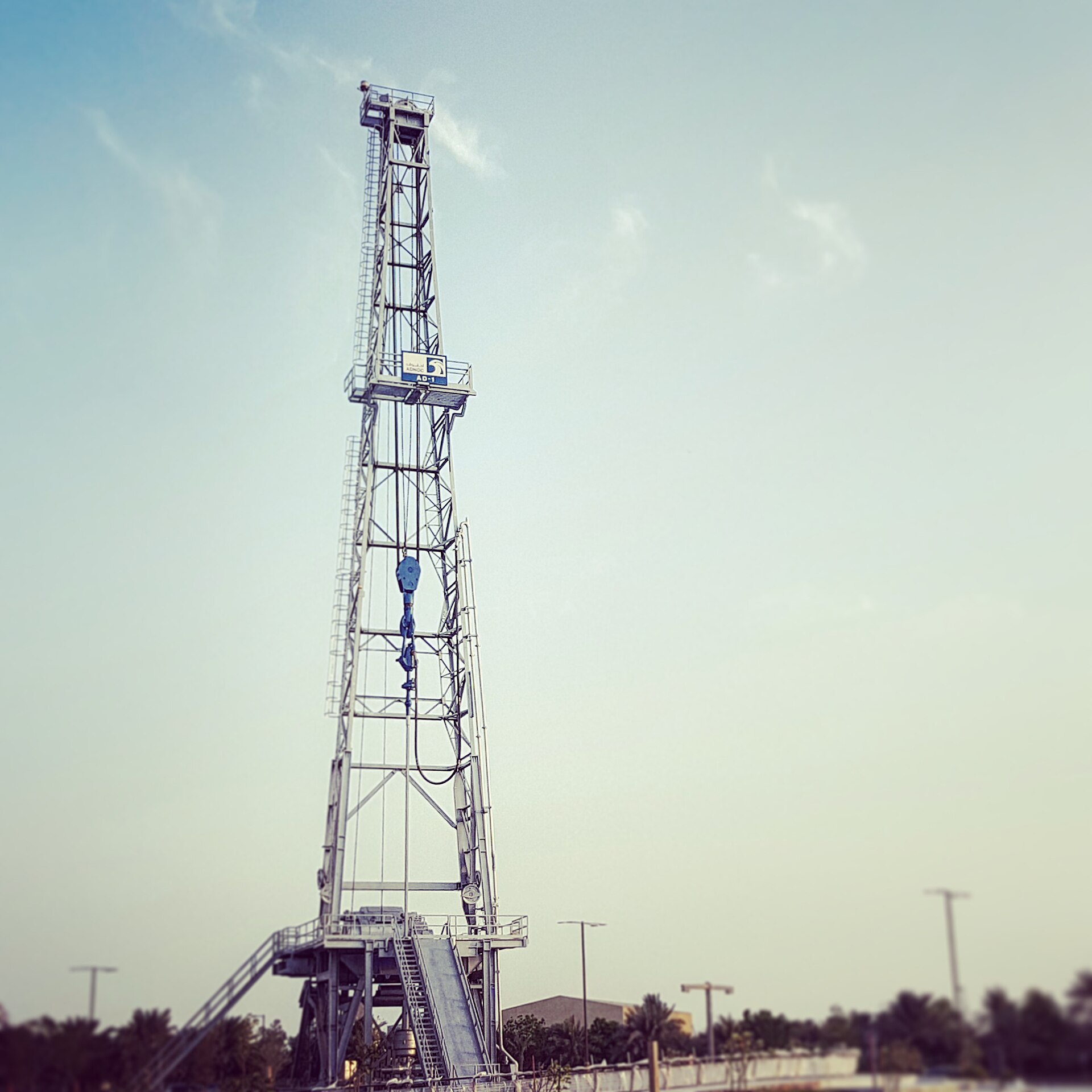
The damage to UAE energy infrastructure adds a bitter layer to the economics. Iran’s strikes shut ADNOC’s Ruwais Refinery West — a 417,000 bpd facility — entirely, and reduced Ruwais Refinery East, with its 400,000 bpd capacity, to 80-90 percent throughput. The two refineries together handle 817,000 bpd when fully operational, meaning Iran has knocked roughly 450,000 bpd of refining capacity offline or degraded in a country that was already being held below its production potential by the very organization that includes Iran as a member. Jebel Ali Port caught fire from intercept debris, Dubai International Airport’s Terminal 3 was struck, and the Burj Al Arab was hit.
The UAE’s implicit argument is straightforward: we absorbed the strikes, we are rebuilding, and we will not rebuild inside a framework that simultaneously constrains our output and provides institutional cover to the country attacking us. OPEC, in Abu Dhabi’s framing, became a cartel where the victim subsidized its own attacker’s membership benefits.
Why Does May 1 Matter Beyond Oil?
The choice of May 1 as the effective date is doing more work than it appears. On the energy calendar, it is the day OPEC+’s +206,000 bpd production increase — approved just yesterday in a vote that markets barely noticed — was supposed to take effect. The UAE’s 18,000 bpd share of that increase now evaporates automatically, because the country contributing it will no longer be bound by the agreement distributing it. The increase, already described by analysts as “largely symbolic” given the Hormuz blockade’s physical constraints on exports, becomes something less than symbolic — it becomes a number assigned to a member that has departed.
But the energy calendar is not the only one in play. The US War Powers Resolution imposes a 60-day clock on presidential military deployments without congressional authorization, and the Trump administration’s Iran operations face scrutiny under that framework around the same convergence point. The UAE’s exit does not formally interact with the WPR process, but the calendar overlap creates a dual forcing function: Washington and Riyadh face, on the same date, both a fractured energy bloc and a domestic legal constraint on the military campaign that caused the fracture.
For Saudi Arabia specifically, the math is punishing. The kingdom was already producing 7.25 million bpd in March — down from 10.4 million in February, a 30 percent crash that the IEA called “the largest disruption on record.” Its Yanbu bypass, routing exports around the Hormuz blockade through the East-West Pipeline, has a practical ceiling of 4 to 5.9 million bpd against pre-war Hormuz throughput of 7 to 7.5 million. OPEC+ cohesion was one of the few diplomatic tools Riyadh still controlled. That tool just broke.
What Happens When the Aggressor Stays and the Victim Leaves?
The structural absurdity that Gargash’s speech hinted at is now fully visible: Iran remains a member of OPEC while the UAE — the target of Iran’s most sustained conventional military campaign against a Gulf state in modern history — has left. The cartel now simultaneously contains the aggressor and has lost the victim, a configuration that no amount of communiqué language can normalize.
Iran has issued no formal response to the UAE’s departure, and that silence carries its own editorial weight. Tehran’s position inside OPEC was already anomalous — it contributes virtually nothing to coordinated production discipline, its exports are under US blockade since April 13, and its OPEC quota has been functionally meaningless since February. But membership provides institutional legitimacy and a seat at the table where Gulf production decisions are made, which is precisely the table the UAE has decided no longer serves its interests.
The GCC’s own 50th Extraordinary Ministerial Council had previously declared that “the security of GCC member states is indivisible, and any attack against any member state constitutes a direct attack against all GCC countries,” reserving the “legal right to respond” under UN Charter Article 51. That language, passed unanimously, sits awkwardly against a reality where the UAE clearly feels the collective response has not matched the collective rhetoric. Gargash was explicit: the GCC countries supported each other logistically. They did not, in Abu Dhabi’s assessment, support each other where it counted — politically and militarily.
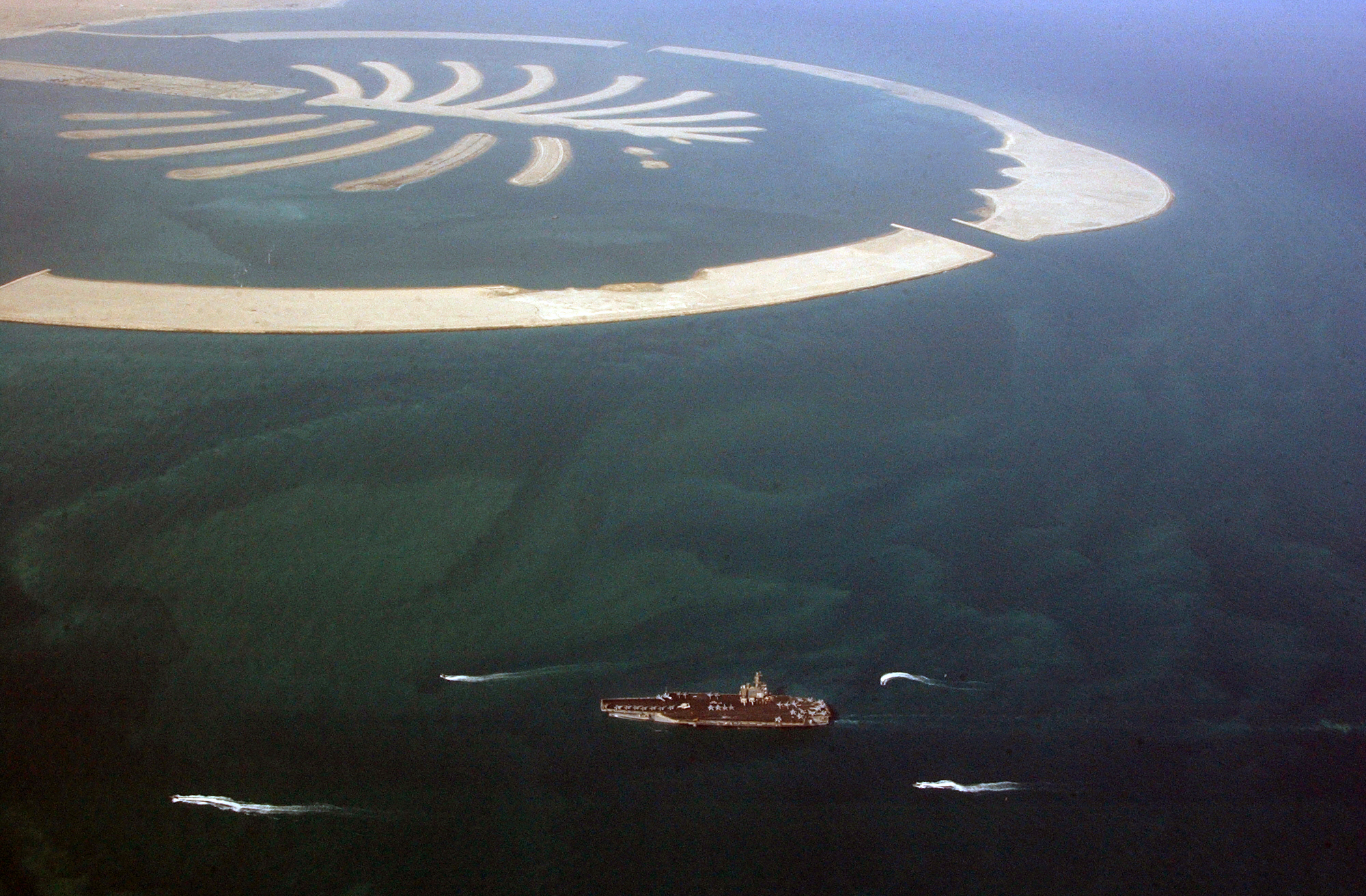
China, which has been operating as Hormuz’s de facto transit broker since brokering the Al Daayen LNG passage in early April, carried the exit as a straight news flash through Xinhua with no editorial framing — a restraint that tracks with Beijing’s careful positioning as the one power that can get vessels through the Strait. Russia, itself an OPEC+ member carrying a 691,000 bpd overproduction compensation obligation through June 2026 according to Interfax, has said nothing. The silence from both capitals suggests neither wants to accelerate a cascade of departures that could unravel the broader OPEC+ architecture they benefit from.
The Jeddah Summit That Nobody Planned
UAE Foreign Minister Sheikh Abdullah bin Zayed Al Nahyan flew to Jeddah on Monday for what is being described as an extraordinary GCC summit — the first in-person meeting of Gulf leaders since GCC states became a direct front in the Iran war. The summit was almost certainly triggered by the exit announcement, and its timing suggests that while Abu Dhabi made the decision without consulting Riyadh, it was prepared to face Riyadh immediately afterward.
The summit produced a result that sharpened the contradiction: the GCC’s Decisiveness Summit collective-defence declaration treated an attack on any member as an attack on all — even as the declaration was being finalised without the UAE president in the room.
The dynamic inside that room is difficult to overstate. Saudi Arabia has spent decades positioning itself as OPEC’s de facto leader, a role already under strain from its own production collapse and the Hormuz blockade’s physical constraints on Gulf exports. The UAE’s departure does not just remove a major producer from the bloc — it removes the Gulf’s most investment-forward national oil company from a quota framework that Saudi Arabia needs to maintain pricing discipline. Without the UAE inside the tent, every remaining Gulf member’s commitment to OPEC+ quota compliance becomes a question rather than an assumption.
There is a scenario in which the Jeddah summit produces enough of a security commitment — whether in defense cooperation, military coordination, or political solidarity — to bring Abu Dhabi back to the table before May 1. But the $150 billion ADNOC has already committed to capacity expansion, the monthly quota cost in foregone revenue, and the public nature of the departure all argue against a quick reversal. The UAE did not leak this decision through intermediaries or float it as a trial balloon — it announced it, with a date, through official channels. Walking it back would require Riyadh to offer something it has not offered in 59 years of shared OPEC membership.
Some Western analysts have framed the exit as, in the words of the Irish Times, “a big win for Trump,” who has repeatedly accused OPEC of “ripping off the rest of the world.” That framing captures the American angle but misses the Gulf one entirely. This is not Abu Dhabi doing Washington a favor — it is Abu Dhabi punishing Riyadh for a solidarity deficit during wartime, using the one instrument that hurts Saudi Arabia’s diplomatic position most directly. Trump’s gain is a byproduct. Mohammed bin Salman’s loss of influence over energy pricing is the intended outcome.
The Hormuz Paradox
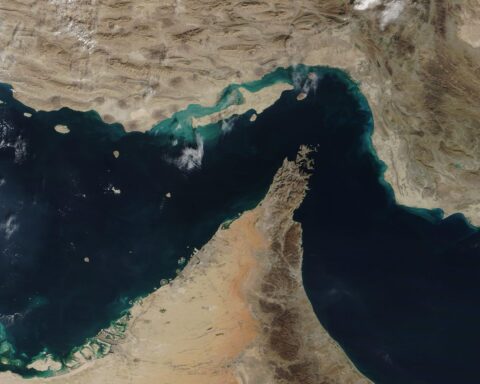
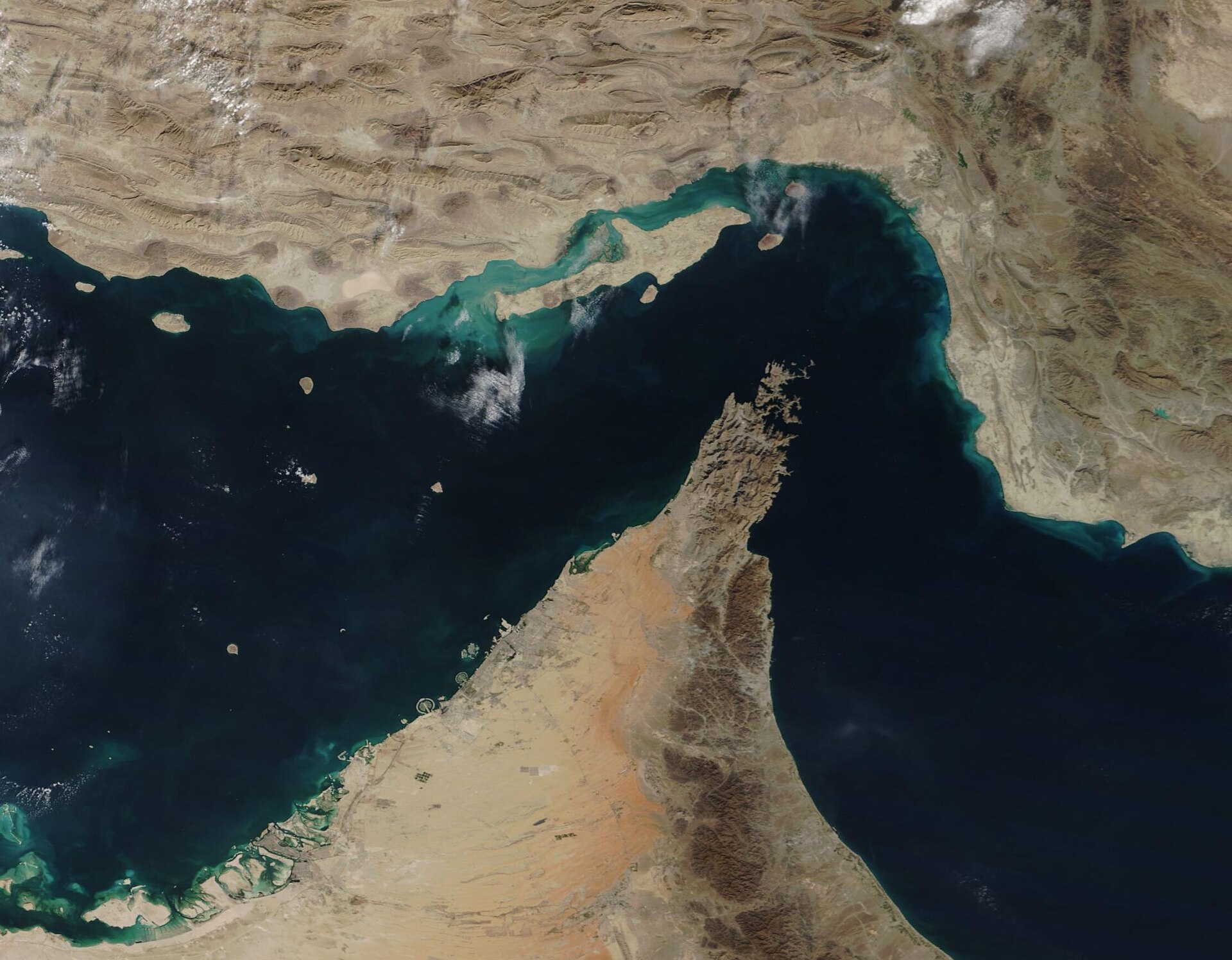
There is an irony embedded in the exit that no amount of production-target ambition can resolve immediately: the UAE cannot actually export its way to 5 million barrels per day while the Strait of Hormuz remains under what Bloomberg has called a “double blockade” — the US controlling the Arabian Sea entry since April 13, and the IRGC controlling the Gulf of Oman exit since March 4. As one OPEC analyst told Reuters, “With the Strait of Hormuz closed, it’s not clear how fast any increased production would be able to reach global markets.”
Only 45 tanker transits have passed through Hormuz since the April 8 ceasefire — 3.6 percent of pre-war baseline traffic — and those required navigating both the US blockade’s authorization framework and the IRGC’s own “danger zone” designations in the shipping lanes. Iran’s FM declared Hormuz “completely open” on April 24, but the IRGC seized the MSC Francesca and the Epaminodas just two days earlier, and Parliament Speaker Ghalibaf formally linked Hormuz reopening to the removal of the US blockade the same day. Mine clearance alone, even under a comprehensive deal, would require an estimated six months based on the 1991 Kuwait benchmark, with only two Avenger-class minesweepers currently in theater after four were decommissioned from Bahrain in September 2025.
The UAE’s bet, then, is not about tomorrow’s exports — it is about positioning for the post-blockade order. Abu Dhabi is building the production capacity now so that when Hormuz eventually reopens, whether through negotiation or military clearance, ADNOC can flood the market unconstrained by quotas that no longer apply. It is a long play dressed as an immediate exit, and the $113 Brent price on announcement day suggests the market understood the signal: the post-war oil order will not look like the pre-war one, because one of its three biggest Gulf producers has left the room.
Background
The GCC’s collective-defense architecture — anchored in the declaration that an attack on one member constitutes an attack on all — had never been tested by a conflict of this scale and duration before February 2026. Iran’s campaign against the UAE has killed civilians through intercept debris, shut major energy infrastructure, struck Dubai’s most iconic buildings, and closed or degraded multiple transport nodes. The UAE’s exit from OPEC is Abu Dhabi’s verdict on whether the GCC’s founding promise held when it was finally needed.
Frequently Asked Questions
Has any major Gulf state ever left OPEC before?
Qatar withdrew from OPEC in January 2019, but Qatar’s production was approximately 600,000 bpd at the time — a fraction of the UAE’s 3.4 million bpd quota. Ecuador and Indonesia have also exited and, in Indonesia’s case, re-entered and exited again. No departure has approached the UAE’s scale in terms of production volume, investment pipeline, or geopolitical significance. The closest historical parallel in terms of institutional disruption is not a departure but a price war — the 2020 Saudi-Russia production standoff that briefly sent oil prices negative.
Can the UAE actually reach 5 million bpd by 2027?
The obstacles are not geological or technical but logistical: Hormuz must reopen and the Ruwais complex must be fully restored before the capacity target becomes an export reality. Rystad Energy estimated in March that ADNOC could reach 4.5 million bpd within 12 months of quota removal if export routes are available, with the full 5 million bpd achievable by late 2027. Rystad’s modeling assumed Hormuz transit normalization by Q3 2026 — a timeline now under acute pressure given the mine-clearance requirement and the unresolved double-blockade architecture.
What happens to OPEC+ quota discipline without the UAE?
The immediate mechanical damage — losing the UAE’s quota share — is manageable in isolation, but the longer-term concern for Saudi Arabia is precedent: if the UAE can leave, produce at will, and suffer no economic penalty — particularly if post-blockade prices remain elevated — other members chafing under quotas may follow. Kazakhstan, which has consistently overproduced its OPEC+ allocation by 200,000-300,000 bpd, and Iraq, which has resisted cuts since 2023, are the most frequently cited candidates for quota defection. Neither has signaled intent to leave the organization outright, but both will be watching whether the UAE faces any retaliatory pricing from Riyadh in Asian markets — the mechanism Saudi Arabia used to discipline overproducers in 2020.
Could the UAE rejoin OPEC?
OPEC’s statute permits re-entry by any former member through a majority vote of the existing conference. Qatar’s 2019 departure and Indonesia’s multiple exits and re-entries establish that the door remains technically open. However, the conditions Abu Dhabi would likely demand for return — a baseline quota reflecting 5 million bpd capacity, formal security coordination mechanisms, and resolution of the Iran membership paradox — would require OPEC to restructure fundamentals it has never been willing to change. Re-entry is theoretically possible and practically unlikely in the near term.
Does this affect the price of oil for consumers?
Not immediately — the Hormuz blockade already constrains physical exports regardless of quota frameworks, so Monday’s price move reflects institutional concern rather than a supply change. Goldman Sachs noted on Monday that the exit “introduces a structural uncertainty into OPEC+ compliance modeling that will persist until the post-war production order is renegotiated.” The medium-term picture turns on two variables: whether Saudi Arabia responds with its own production increases to defend market share — reprising the 2020 price-war dynamic — or accepts a smaller bloc and supports prices through restraint. Consumers will feel the difference between those two paths more than anything the UAE itself produces in the near term.
The three-day sequence behind the withdrawal — the dollar swap line, the FM substitution, and the timing against MBS’s summit — is examined in detail in the analytical companion piece: The UAE Did Not Consult Saudi Arabia. The structural bind this creates for Saudi Arabia’s OPEC anchor role — sole swing-producer in a cartel whose third-largest member has just quit, while operating 30% below its own quota — is examined in Saudi Arabia Inherits an OPEC It Cannot Operate.