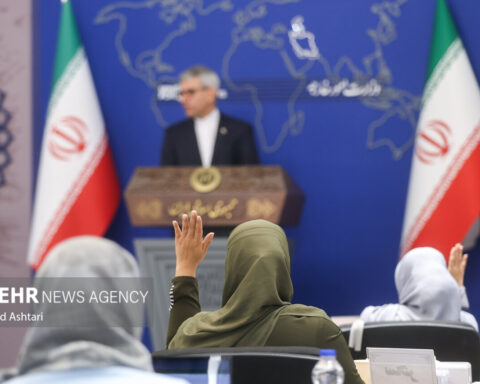

TEHRAN — Iran does not have a functioning supreme leader. It has three men — Hossein Taeb, Mohsen Rezaei, and Mohammad Bagher Ghalibaf — issuing directives from different institutional perches, with different objectives, and no constitutional mechanism to reconcile them. The authorization ceiling that has blocked every ceasefire attempt since March 30 has not been resolved by Mojtaba Khamenei’s election on March 9. It has been replaced by something worse: a diffuse command structure in which the person who holds Article 110 authority over the IRGC cannot exercise it, and the people who exercise power cannot constitutionally ratify anything.
For Saudi Arabia, which needs Hormuz reopened to restore roughly 1.1–1.6 million barrels per day of export capacity that the Yanbu bypass cannot cover, this is not an abstraction. It is the specific institutional reason no deal can be signed, sealed, or enforced — even if every other condition were met. The military alternative to a deal runs into an equivalent constraint on the Saudi side: CENTCOM’s three options briefed to Trump on April 30 all require Saudi basing and air defense the Kingdom has not agreed to provide.
Table of Contents
- What Happened to Mojtaba Khamenei?
- Who Are the Three Men Running Iran?
- Taeb: The Gatekeeper Who Killed the Islamabad Talks
- Rezaei: The Military Adviser Without a Military
- Why Did Ghalibaf Resign From Iran’s Negotiating Team?
- The Article 111 Gap: Why No One Will Declare Incapacity
- Vahidi as the Fourth Man
- Can Iran’s Troika Deliver a Hormuz Deal?
- What This Means for Saudi Export Recovery
- Frequently Asked Questions
What Happened to Mojtaba Khamenei?
Mojtaba Khamenei was injured in the February 28, 2026 US-Israeli airstrike that killed his father. An intelligence memo shared with Gulf allies — reported by the Times of London and Times of Israel on April 7 — described him as “unconscious” and “incapacitated,” receiving treatment in Qom. His mother, wife, and son also died in the strike. Iran’s state media has not acknowledged his condition. Every communication attributed to Iran’s supreme leader since late February has been written. No audio. No video. No public appearance.
Asharq Al-Awsat published a detailed assessment the same day: at least three surgeries on his leg, severe burns affecting his ability to speak, and a high likelihood of amputations, spinal cord damage, and brain injury. PressTV ran a piece on March 12 titled “Inside Iran’s leadership transition: How the mantle passed to Ayatollah Mojtaba Khamenei,” presenting the succession as orderly. Tasnim News Agency — IRGC-affiliated — published a statement attributed to the new leader pledging to keep the Strait of Hormuz closed. That Tasnim statement was the last substantive communication carrying his name.
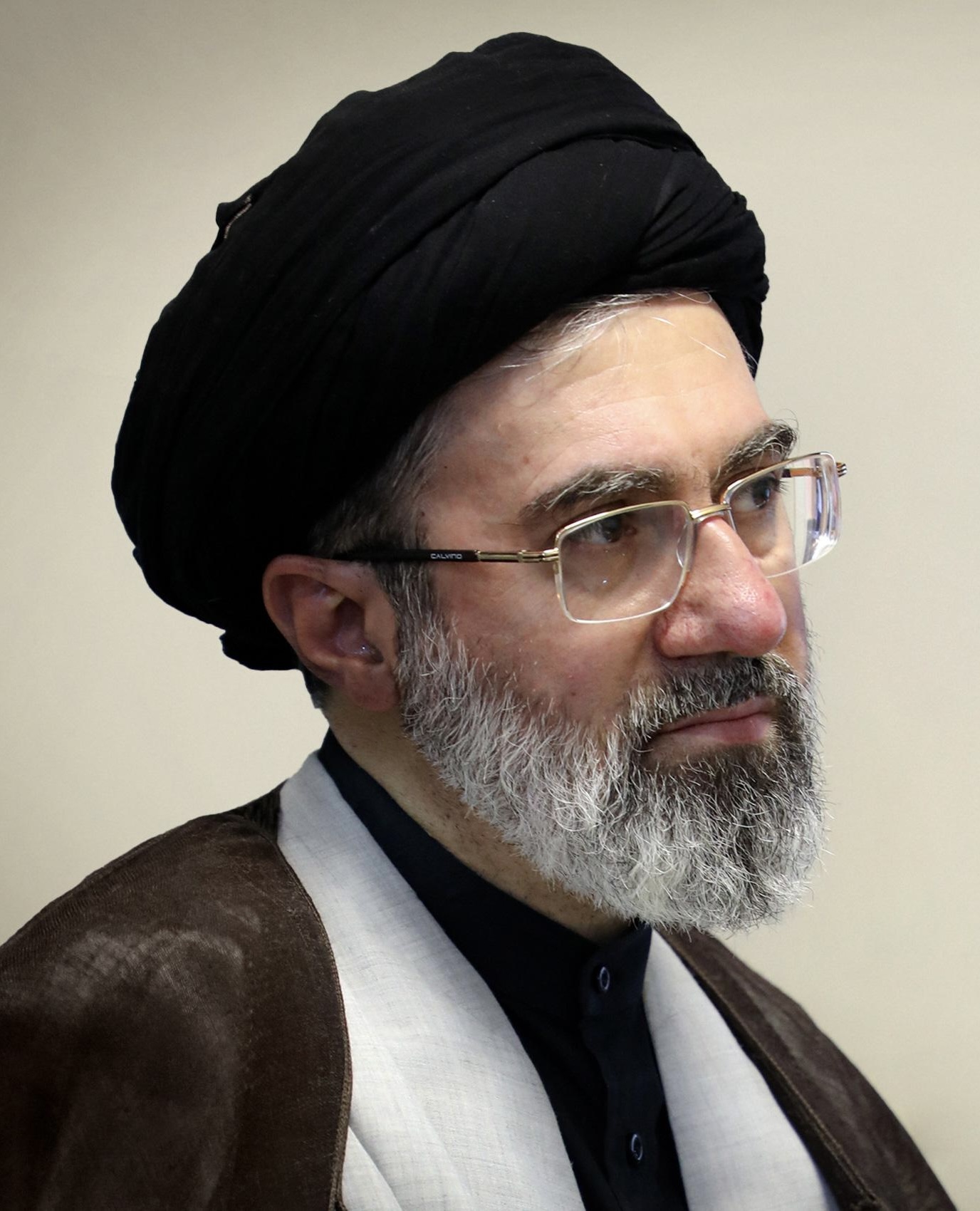
CNN’s April 21 analysis offered a counter-intuitive reading: Mojtaba’s invisibility “might be helping the regime survive,” because vacancy prevents a personalised target while the IRGC retains operational control. TIME Magazine’s headline the same day — “Iran’s Supreme Leader No Longer Reigns Supreme” — was blunter. Both were describing the same phenomenon from different angles. Neither addressed the structural consequence for deal-making.
Who Are the Three Men Running Iran?
Israel Hayom reported on April 23 that Iran is governed by a “triangle of power”: Hossein Taeb, Mohsen Rezaei, and Mohammad Bagher Ghalibaf. Each occupies a different node in Iran’s institutional architecture. None holds the constitutional authority of the supreme leader. Together, they do not add up to one.
The Middle East briefing 3,000+ readers start their day with.
One email. Every weekday morning. Free.
| Name | Current Role | IRGC Background | Institutional Base | Orientation |
|---|---|---|---|---|
| Hossein Taeb | Close confidant / adviser to Mojtaba | IRGC Intelligence chief (dismissed June 2022) | Supreme Leader’s office / intelligence networks | Hardline; controls information flow to Mojtaba |
| Mohsen Rezaei | Military adviser to Mojtaba (appointed ~March 17) | IRGC Commander-in-Chief 1981–1997 | Expediency Council / military advisory | Pragmatic hardliner; war-governance experience |
| Mohammad Bagher Ghalibaf | Parliament Speaker (resigned from negotiating team ~April 24) | IRGC Aerospace Force commander 1997–2000 | Majlis / legislative authority | Pragmatic; open to nuclear-inclusive negotiations |
The Politics & Society Institute’s March 18 analysis of Rezaei’s appointment captured the intended logic: “He understands the IRGC from within, is familiar with the clerical and political establishment, grasps both the logic of war and that of governance, and knows how settlements are managed inside the system.” The problem is that two other men with equally valid claims to insider knowledge are reaching different conclusions about what settlement means.
Taeb: The Gatekeeper Who Killed the Islamabad Talks
Hossein Taeb was dismissed as IRGC Intelligence Organization chief in June 2022 — a humiliation for a man who had held the post since 2009. His return to the power center is entirely a function of personal proximity to Mojtaba Khamenei. In the current arrangement, Taeb controls access to whatever remains of the supreme leader’s decision-making capacity. He is the gatekeeper.
His most consequential act so far: calling the negotiating delegation back to Tehran in April 2026 when Foreign Minister Araghchi exceeded what Taeb judged to be his mandate. This was the move that collapsed the diplomatic track that had been opened face-to-face between Ghalibaf and Vice President Vance in Islamabad on April 11 — the first direct US-Iran engagement since 1979. Taeb did not have constitutional authority to recall a delegation operating under presidential instruction. He had something more effective: the ability to claim he spoke for the supreme leader.
Sanam Vakil, director of the MENA Programme at Chatham House, described the resulting dynamic: Mojtaba Khamenei “is not yet in full command or control, and is largely presented with ‘fait accompli’ decisions.” The question this formulation leaves unanswered is who presents the fait accompli. In practice, it is Taeb who determines what reaches Mojtaba and what does not — and whether Mojtaba’s responses, if any, are relayed accurately.
Iran HRM reported on March 12 that Taeb had been moved to an “adviser” role after his 2022 dismissal. Adviser to what, precisely, was unclear at the time. It is less unclear now.
Rezaei: The Military Adviser Without a Military
Mohsen Rezaei commanded the IRGC for sixteen years, from 1981 through 1997 — the entirety of the Iran-Iraq War and its aftermath. His formal appointment as military adviser to Mojtaba Khamenei, reported by the Middle East Monitor on approximately March 17, restored him to the military-decision core after years on the Expediency Council, where his role was largely ceremonial.
The appointment was designed to provide Mojtaba with a senior military interlocutor who could interface with the IRGC command structure on the supreme leader’s behalf. The design has a flaw. Rezaei commanded a different IRGC. The force he led through the 1980s war was organizationally subordinate to the supreme leader in ways that Vahidi’s IRGC — which has spent two decades building autonomous economic, intelligence, and military capabilities — is not.
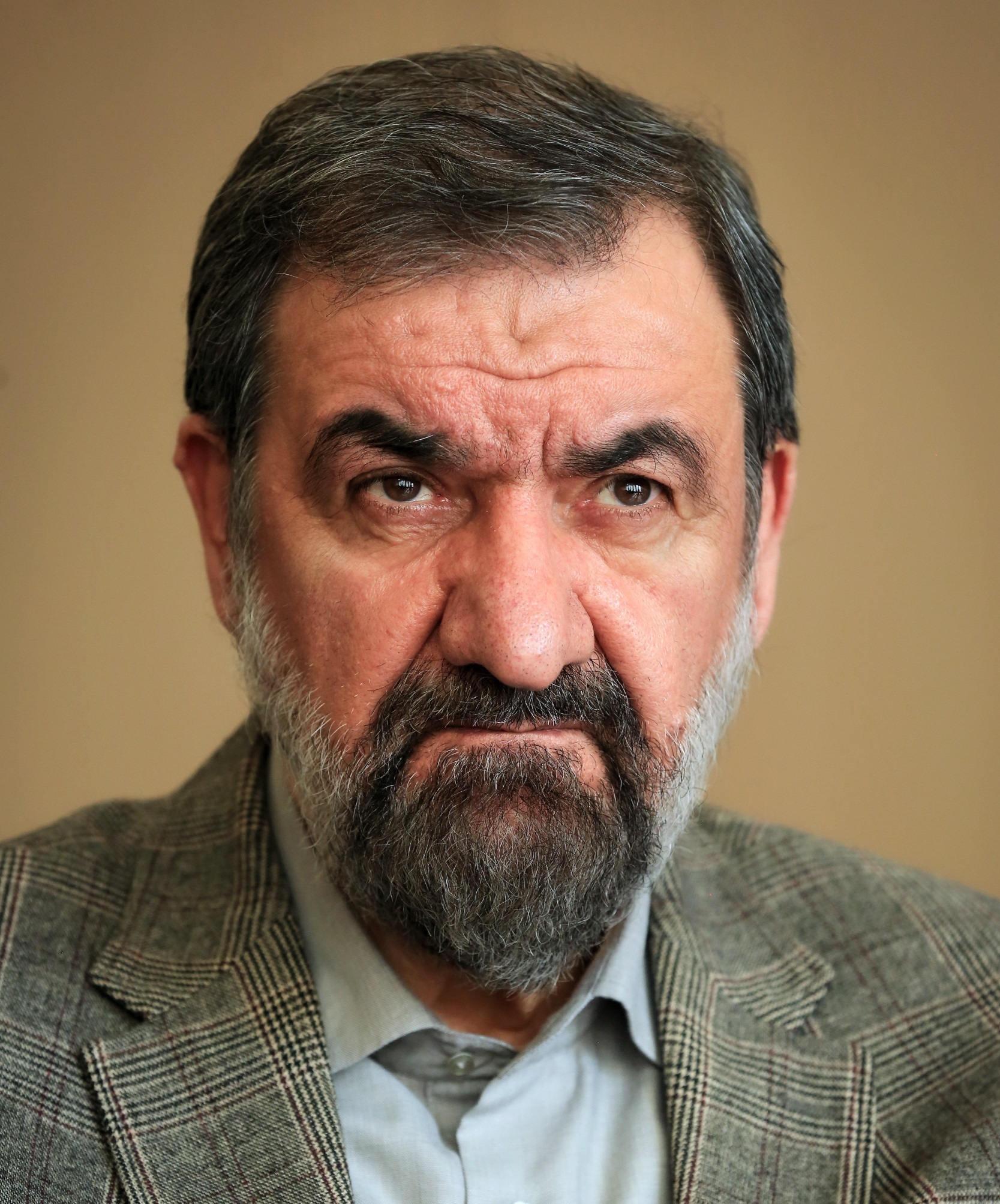
Rezaei’s institutional base is the Expediency Council, a body whose constitutional function is to mediate disputes between the Majlis and the Guardian Council. It has no command authority over armed forces. His advisory title gives him access but not orders-issuing power. When Vahidi compelled President Pezeshkian to install Mohammad Bagher Zolghadr as SNSC Secretary on March 24 — converting the Supreme National Security Council from a bridge between civilian and military authority into an IRGC instrument — Rezaei was not consulted. His advisory role did not prevent it.
The Politics & Society Institute’s assessment that Rezaei “knows how settlements are managed inside the system” is accurate as historical description. Whether the system he understood still exists is the operative question.
Why Did Ghalibaf Resign From Iran’s Negotiating Team?
Ghalibaf resigned from Iran’s negotiating team on or around April 24, 2026, after what Iran International described as IRGC intervention. The specific trigger: Ghalibaf had proposed including Iran’s nuclear program as a negotiation axis with the United States. He was reprimanded for it.
ISW’s Critical Threats Project assessed the resignation as “consistent with our assessment that Vahidi has emerged as the winner of the intra-regime rivalry.” The Institute for the Study of War added detail: Vahidi had “repeatedly blocked” attempts by Ghalibaf and pragmatists to reach a flexible negotiating position.
This was the man who had sat across from Vance in Islamabad thirteen days earlier, leading a 71-member Iranian delegation in what both sides understood to be a historic opening. Whatever authority he carried into that room — and it was considerable, given his background as IRGC Aerospace Force commander from 1997 to 2000 and his current position as Parliament Speaker — it was not enough to survive the system he returned to.
Ghalibaf’s departure from the negotiating track removed the only member of the troika with both the institutional standing and the apparent willingness to explore a comprehensive deal. ISW reported that Saeed Jalili is set to replace Ghalibaf as the lead on nuclear talks — a signal that the IRGC’s preferred approach is to separate the nuclear file from the Hormuz file and concede on neither.
The Article 111 Gap: Why No One Will Declare Incapacity
Iran’s constitution provides for this situation. Article 111 states that when the Supreme Leader is “temporarily unable to perform duties owing to illness or any other incident,” a three-member council assumes his responsibilities: the President, the Head of the Judiciary, and a senior cleric from the Guardian Council. In the current configuration, that would be Pezeshkian, Mohseni-Eje’i, and Arafi.
This mechanism operated briefly in the March 1–9 window between Ali Khamenei’s death and Mojtaba’s election by the Assembly of Experts. His election closed the formal constitutional path — even though his incapacitation renders him functionally equivalent to the pre-election vacuum. The Assembly of Experts, an 88-member body whose members are all vetted by the Guardian Council, would need to formally declare Mojtaba unable to serve. No faction wants to trigger this.
The IRGC does not want it because they already cannot get their orders ratified through the supreme leader’s office — but they also do not want the Article 111 council, which would include Pezeshkian, a president they have spent two months systematically stripping of authority. The pragmatists do not want it because a formal declaration of incapacity would force a new succession debate that the IRGC — which, as the Times of Israel reported, “effectively forced through” Mojtaba’s election, viewing him as “a more pliant version of his father” — would dominate again.
The New Lines Institute captured the broader dynamic in March: the supreme leader choice “shows the regime losing coherence.” What it has lost is the single node through which all factional disputes were resolved — not always well, but resolved. When Khomeini died in 1989, the Assembly of Experts explicitly debated whether to appoint a single leader or a collective leadership council before voting for the former. Iran is now operating under the rejected model, without having voted for it.
Vahidi as the Fourth Man
The troika framework obscures a fourth actor who is not part of the governing triangle but has veto power over everything it attempts. Ahmad Vahidi, the IRGC Commander, holds an INTERPOL red notice for the 1994 AMIA bombing in Buenos Aires that killed 85 people. He is the primary blocking mechanism for a Hormuz deal — an actor with an active international arrest warrant shaping the terms under which global maritime commerce might resume.
Vahidi’s institutional moves since late March trace a methodical consolidation. He compelled Pezeshkian to install Zolghadr at the SNSC — converting that body from a bridge between civilian and military authority into an IRGC instrument. He blocked Ghalibaf’s negotiating flexibility through April. When Pezeshkian publicly accused Vahidi and Abdollahi on April 4 of wrecking the ceasefire — “deviation from delegation’s mandate” was the phrase — the accusation confirmed what Article 110 of the constitution already makes explicit: the president has zero authority over the IRGC. That authority belongs exclusively to the supreme leader, who, according to intelligence assessments shared with Gulf allies, is unconscious in Qom.
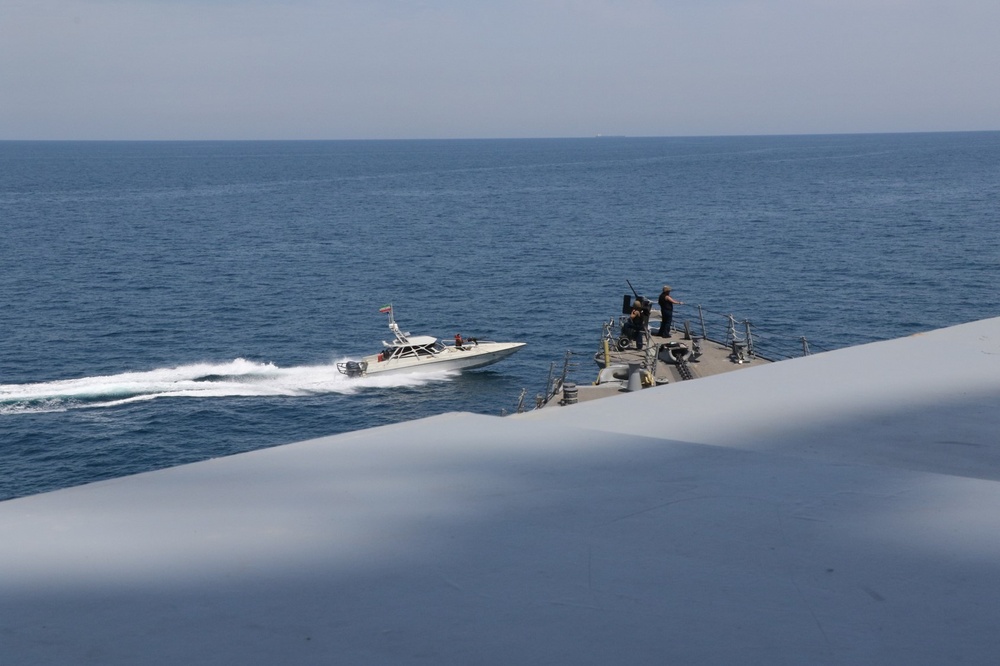
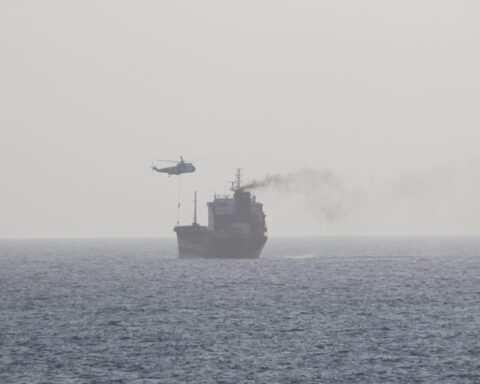
The SNSC formally accepted the April 8 ceasefire. The IRGC Navy seized the MSC Francesca — an 11,660 TEU container vessel — and the Epaminondas, a 6,690 TEU feeder, on April 22. That was four days after President Trump extended the ceasefire. The seizures were not a rogue operation. They were consistent with the IRGC Navy’s declaration of “full authority to manage the Strait,” issued on both April 5 and April 10 — the latter date while Araghchi was actively negotiating in Islamabad. The IRGC Navy has operated without a named commander since Rear Admiral Alireza Tangsiri was killed on March 30. It does not appear to need one.
Suzanne Maloney, Vice President for Foreign Policy at the Brookings Institution, recommended in March that the United States “reconsider its assumptions around eventual leadership change in Tehran, revive regime accountability efforts, prepare for opportunistic escalation by proxy groups.” The recommendation assumed a period of instability. What has materialised instead is a stable configuration of dysfunction — stable enough to sustain itself, dysfunctional enough to prevent any external agreement from binding.
Can Iran’s Troika Deliver a Hormuz Deal?
A Hormuz agreement requires three things that Iran’s current governance structure cannot provide simultaneously: a sovereign commitment (which requires the supreme leader’s authority under Article 110), IRGC compliance (which requires either the supreme leader’s direct order or the IRGC’s voluntary cooperation), and diplomatic continuity (which requires that the person negotiating can guarantee what they promise).
The troika fails on all three. Taeb can claim to relay Mojtaba’s wishes but cannot prove it. Rezaei can advise on military matters but cannot issue orders to Vahidi’s IRGC, an organization that has evolved far beyond what he commanded in the 1990s. Ghalibaf had the diplomatic standing but has now resigned from the negotiating team after IRGC reprimand.
Iran International reported on April 20 that “Iran diplomacy wobbles as factions compete to avoid looking soft on US.” The framing — factional competition — understates the structural problem. Factions can compromise. What cannot compromise is a system in which the sole ratification authority is a man who, by the best available intelligence, cannot speak.
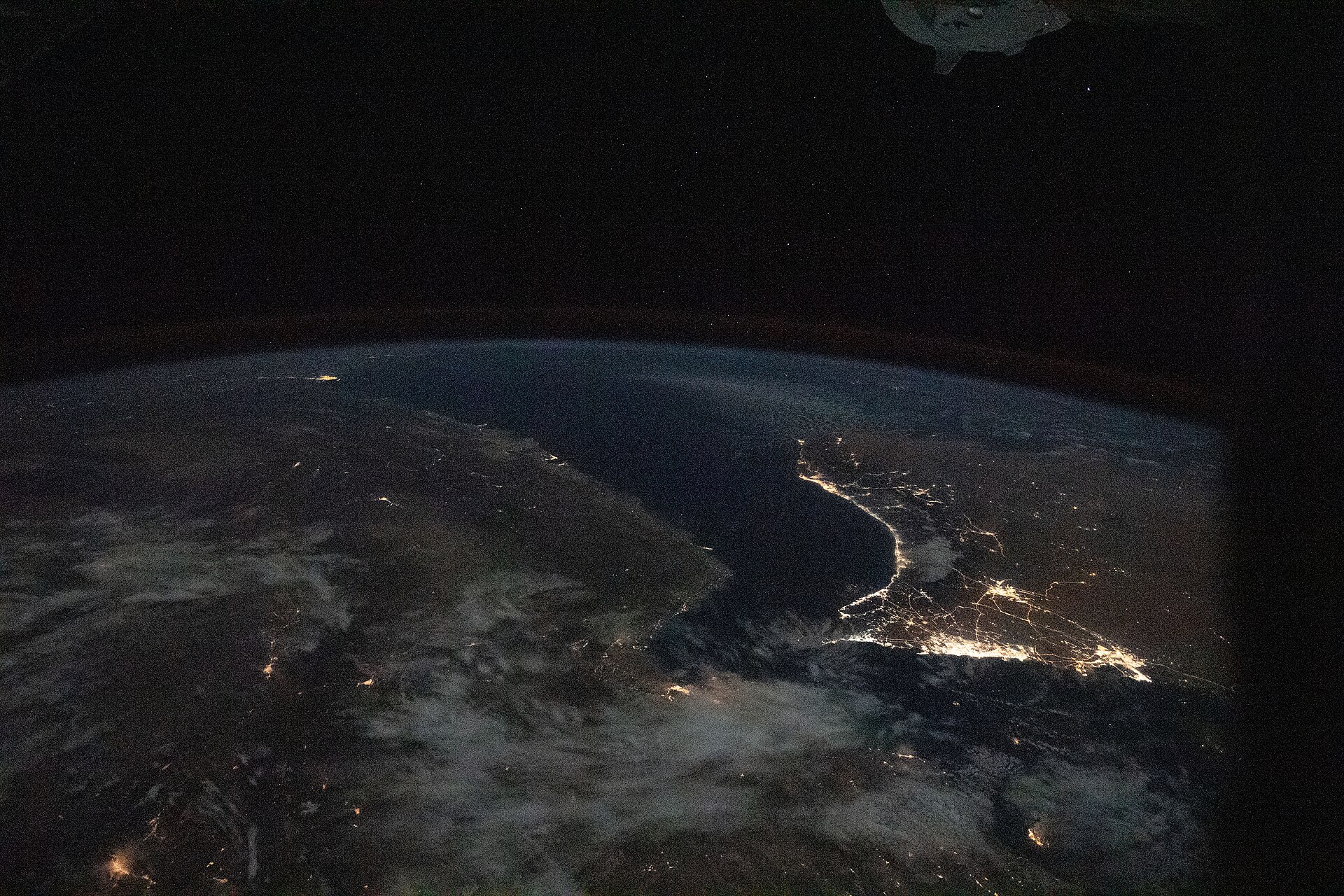
The Soufan Center’s April 28 IntelBrief assessed that the ceasefire’s enforcement mechanism has “no extension mechanism” and Iran has shown it “plans to outlast the US blockade.” The double blockade — US controlling Arabian Sea entry, IRGC controlling Gulf of Oman exit — has reduced Hormuz commercial transits to approximately 45 since the April 8 ceasefire, or 3.6 percent of the pre-war baseline, according to Bloomberg’s April 26 reporting.
Ghalibaf formally linked Hormuz reopening to US blockade removal on X on April 22 — the same day the IRGC seized two vessels. Rubio called Iran’s Hormuz offer “extortion.” These are not negotiating positions converging toward a deal. They are institutional outputs from a system that cannot produce a unified position, directed at a counterpart that has interpreted the disunity as evidence of bad faith. The troika’s structural inability to issue a binding commitment was made explicit on May 1, when the IRGC Navy formally adopted Mojtaba Khamenei’s April 30 Persian Gulf Day declaration as a “historic directive” — simultaneously with Iran submitting a 14-point peace proposal through Pakistan: Mojtaba’s dual-track architecture, and what it means for any agreement the troika might attempt to authorize, is analysed here.
What This Means for Saudi Export Recovery
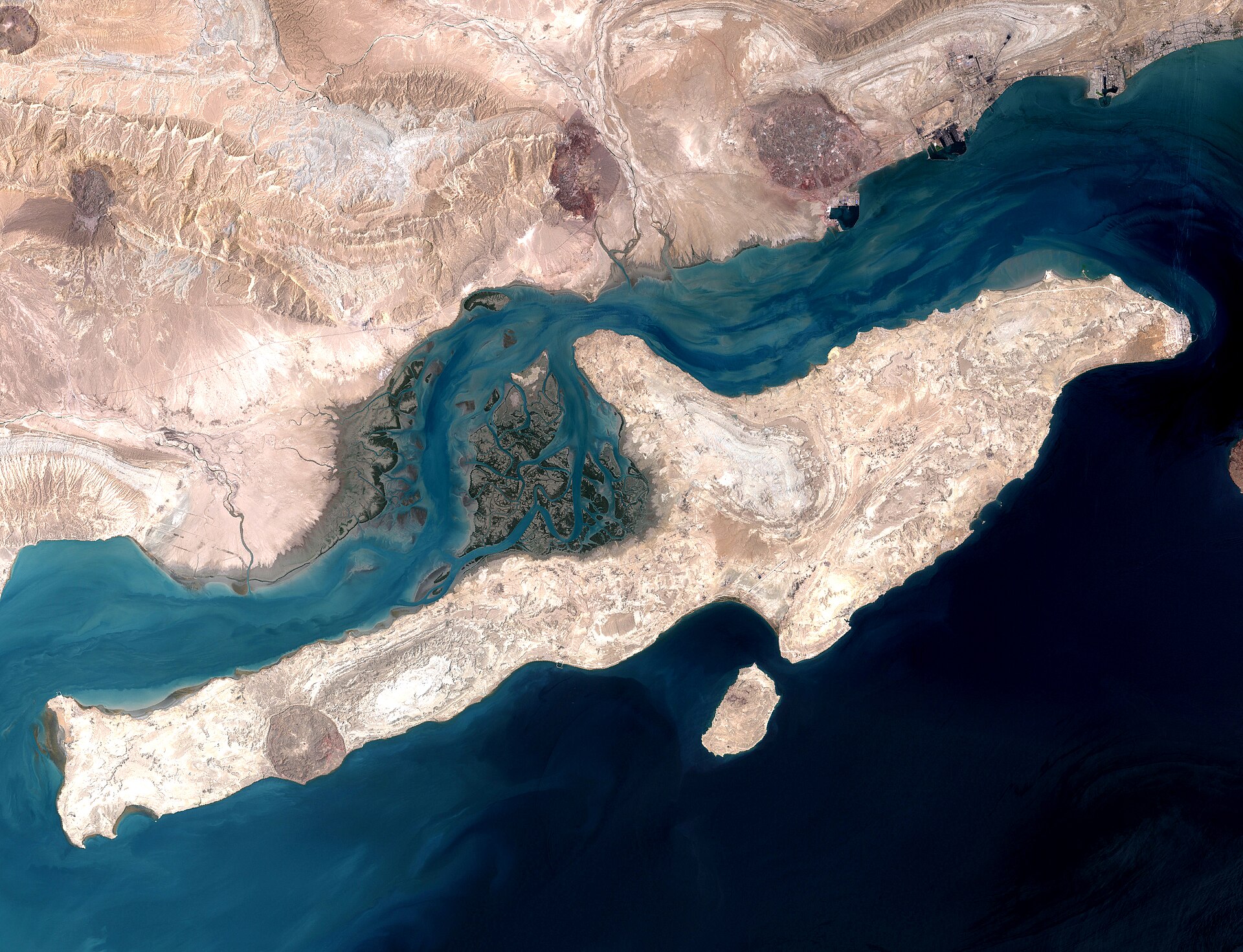
Saudi Arabia’s March production fell to 7.25 million barrels per day, according to the IEA — down from 10.4 million bpd in February, a 30 percent drop and the largest single-month decline on record. The Yanbu bypass via the East-West Pipeline provides a loading ceiling of 4–5.9 million bpd, against pre-war Hormuz throughput of 7–7.5 million bpd. The structural gap is 1.1–1.6 million bpd that cannot be exported without Hormuz.
| Metric | Figure | Source |
|---|---|---|
| Saudi March 2026 production | 7.25M bpd | IEA |
| February 2026 production | 10.4M bpd | IEA |
| Production decline | 3.15M bpd (30%) | Calculated |
| Yanbu loading ceiling | 4–5.9M bpd | Industry estimates |
| Pre-war Hormuz throughput | 7–7.5M bpd | EIA/IEA |
| Structural export gap | 1.1–1.6M bpd | Calculated |
| Saudi fiscal break-even | $108–111/bbl | Bloomberg (PIF-inclusive) |
| Goldman Q4 2026 Brent target | $90/bbl | Goldman Sachs |
| Goldman war-adjusted fiscal deficit | 6.6% GDP | Goldman Sachs |
| Iran HEU stockpile | 440.9 kg at 60% | IAEA (last verified pre-Feb 28) |
| IAEA access status | Terminated February 28, 2026 | IAEA |
| Post-ceasefire Hormuz transits | ~45 (3.6% of baseline) | Bloomberg, April 26 |
Goldman’s war-adjusted fiscal deficit estimate is double the official Saudi figure, driven by a PIF-inclusive break-even that sits roughly $18–21 above Goldman’s own Q4 2026 Brent target. The table above captures the arithmetic. The political consequence is that Riyadh’s tolerance window is not elastic: every quarter without Hormuz access accelerates the fiscal deterioration that the official budget projections were designed to conceal.
The UAE’s departure from OPEC compounds the timeline pressure. MBS needs a counterparty in Tehran who can sign a Hormuz agreement and make it stick across the IRGC’s naval, ground, and intelligence commands. The troika is not that counterparty. A troika cannot be a counterparty at all — it is three separate actors with three separate chains of accountability, none of which terminates in the constitutional authority that Article 110 vests exclusively in a supreme leader.
IEA Executive Director Fatih Birol told the IEA Ministerial in April that the disruption constitutes the “biggest energy security threat in history,” with 13 million bpd offline globally. The figure contextualises why OPEC+ production management has become largely academic: the volume stranded by the conflict exceeds any credible swing the cartel could engineer.
Mine clearance adds a physical constraint that no diplomatic timeline can compress. Based on the 1991 Kuwait benchmark — 200 square miles cleared over approximately six months — the arithmetic is incompatible with any near-term return to pre-war throughput. The theater currently has two Avenger-class mine countermeasure ships; four were decommissioned from Bahrain in September 2025.
The authorization ceiling — visible since the IRGC’s reversal of Foreign Minister Araghchi’s Hormuz declaration on April 18 — was originally a problem of competing authorities beneath a functioning supreme leader. With Mojtaba incapacitated, it has become something more fundamental: the absence of the authority itself. The troika is not failing to reach a deal because it disagrees on terms. It is failing because no combination of Taeb, Rezaei, and a now-sidelined Ghalibaf can produce the sovereign act that a deal requires.
Frequently Asked Questions
Has Iran officially acknowledged Mojtaba Khamenei’s incapacitation?
No. All Iranian state media — including PressTV, Tasnim, and Fars — continue to present written statements as direct supreme leader directives. Al Jazeera reported on March 9 the official institutional line: “the Islamic Republic is not reliant on individuals, its course does not stop with the absence or martyrdom of any Leader.” The gap between this messaging and the intelligence assessments shared with Gulf allies — which describe Mojtaba as unconscious and likely suffering brain injury — has not been bridged by any on-the-record Iranian government communication. Iran’s ambassador to the UN reiterated on April 15 that the supreme leader “continues to guide the nation,” without providing evidence of direct communication.
Could the Assembly of Experts remove Mojtaba Khamenei and appoint a new leader?
Article 111 empowers the Assembly to declare the supreme leader unable to serve, but the 88-member body — whose candidates are all vetted by the Guardian Council — has not convened for this purpose since the March 9 session that elected Mojtaba. A special session would require either a petition from one-third of members (approximately 30) or a call from the Assembly’s chairman. The 1989 precedent, when the Assembly appointed Khamenei the day after Khomeini’s death, involved a leader who was unambiguously deceased. Incapacitation is politically harder: it requires living factions to declare their chosen leader unfit while those factions disagree on what should follow. Euronews reported on April 22 that the IRGC has “tightened its grip on power” precisely to prevent this kind of institutional reset.
What is the difference between the troika and the Article 111 interim council?
The Article 111 council — President Pezeshkian, Judiciary Head Mohseni-Eje’i, and Guardian Council cleric Arafi — is the constitutionally prescribed mechanism for temporary supreme leader incapacity. It operated from March 1 to March 9 and was dissolved by Mojtaba’s election. The troika of Taeb, Rezaei, and Ghalibaf is an informal arrangement with no constitutional basis: three figures exercising influence through personal access (Taeb), advisory appointment (Rezaei), and legislative authority (Ghalibaf). The Article 111 council could constitutionally issue orders to the IRGC. The troika cannot — which is why Vahidi has been able to override it on every major decision since March.
What would a Hormuz deal require from Iran’s government that the troika cannot provide?
Under Article 110 of Iran’s constitution, only the supreme leader has command authority over the IRGC. A Hormuz deal requires: (1) a binding sovereign commitment — which only the supreme leader or the Article 111 council can issue; (2) enforceable IRGC compliance — which requires a direct order from the constitutional commander-in-chief; and (3) control over the IRGC Navy, which has operated without a named commander since Tangsiri’s death on March 30 and has twice seized commercial vessels after the SNSC accepted a ceasefire. The troika can negotiate, advise, and legislate, but it cannot constitutionally compel the IRGC to stand down from the Strait. Pakistan’s Prime Minister’s special envoy Munir visited Khatam al-Anbiya headquarters — Abdollahi’s command — on April 16, suggesting that even Iran’s mediating partners have recognised that the troika is not the relevant interlocutor for enforcement.
Is Saudi Arabia pursuing alternative diplomatic channels outside the troika?
Saudi Foreign Minister Prince Faisal bin Farhan called Araghchi on April 13 — the day the US blockade took effect — in what amounted to a direct outreach to the foreign ministry channel rather than the troika or IRGC command. This followed MBS’s parallel diplomatic track with Moscow, Beijing, and Tokyo on the same day (April 2) — an attempt to build multilateral pressure independent of the US-Iran bilateral. The UAE’s decision not to consult Saudi Arabia on its OPEC exit adds a GCC-coordination dimension: Riyadh is managing both the Iran governance vacuum and fractures within its own regional alliance simultaneously. The deeper structural risk is that Washington may close a nuclear deal through Araghchi that the troika cannot enforce — and that such a deal could still leave Hormuz unresolved on Saudi Arabia’s terms: how Rubio’s “better than expected” framing creates a deal window that excludes Saudi Arabia’s economic conditions from the negotiating text.