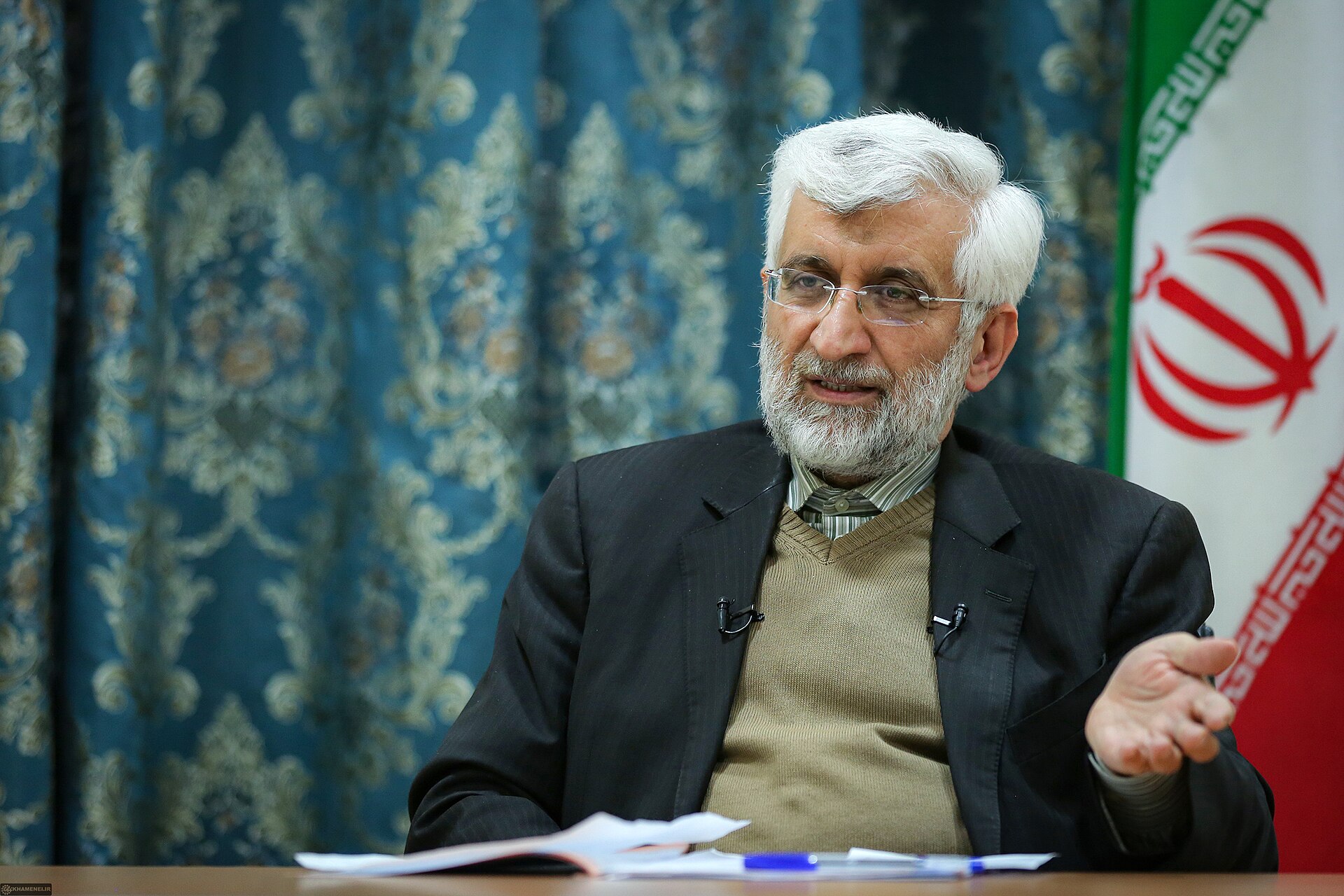
TEHRAN — Saeed Jalili, the hardline former nuclear negotiator whose six-year tenure at the head of Iran’s P5+1 delegation produced three UN Security Council sanctions resolutions and zero enrichment suspension agreements, is expected to replace Mohammad Bagher Ghalibaf as Iran’s lead interlocutor with the United States, Iran International reported on April 24, citing unnamed officials familiar with the decision.
The personnel change removes the man who sat across from Vice President JD Vance in Islamabad on April 11 — the first direct US-Iran talks since 1979 — and replaces him with a figure whose entire negotiating record consists of running out the clock while centrifuges spin. Jalili’s expected appointment means the faction that President Pezeshkian publicly accused of sabotaging the April 13 near-MoU now holds the negotiating seat, not merely a veto over it.
- The Reprimand That Ended Ghalibaf’s Role
- What Does Jalili’s Negotiating Record Actually Show?
- The Shadow Government and the Paydari Network
- Why Does the Authorization Ceiling Now Have a Name and a Chair?
- The Nuclear Wall: What Jalili’s Appointment Means for the Enrichment Gap
- What Changes for Riyadh?
- Frequently Asked Questions
The Reprimand That Ended Ghalibaf’s Role
Ghalibaf’s forced departure traces to a specific act of transgression: he attempted to include nuclear issues in the ongoing Islamabad talks with Washington. The reprimand came directly from Khamenei’s inner circle, which “ruled out discussing nuclear matters in negotiations” and sent a message blocking the delegation’s travel to Islamabad, according to Iran International’s April 24 report.
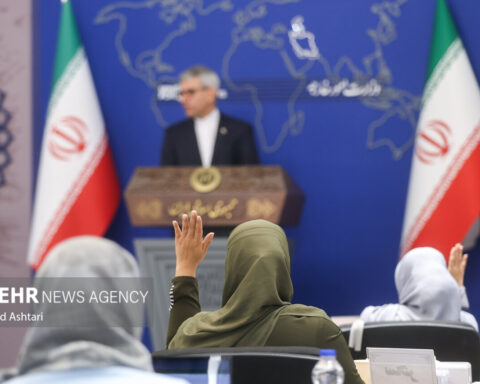
The Iranian parliament’s media office initially denied the reports as “baseless,” a denial that held for less than 24 hours before multiple outlets confirmed the departure, the Times of Israel reported on April 24.
Ghalibaf had been willing to explore a sequenced deal that placed nuclear issues in a Phase 2 discussion — a framework roughly aligned with the proposal that brought Vance to Islamabad, according to the Soufan Center’s April 20 assessment. The structure was functional: war termination first, nuclear architecture second.
The Middle East briefing 3,000+ readers start their day with.
One email. Every weekday morning. Free.
That structure is now dead. IRGC-affiliated agencies Tasnim and Fars are framing Jalili’s expected appointment in explicit terms: “The negotiations with the US are strictly to end the war, and Iran does not consider the nuclear issue to be part of the talks,” Al Jazeera reported on April 25, citing both agencies.
Ali Khezrian, an Iranian MP, told Al Jazeera that Khamenei was “opposed to any extension of negotiations” under the current threat environment. The supreme leader’s position, relayed through his inner circle rather than stated publicly, makes Ghalibaf’s attempt to broaden the agenda a direct challenge to an authority that has not been seen in public for over 50 days.
What Does Jalili’s Negotiating Record Actually Show?
Jalili, 60, served as secretary of Iran’s Supreme National Security Council (SNSC) and lead P5+1 nuclear negotiator from 2007 to 2013 under President Mahmoud Ahmadinejad, according to the Atlantic Council and the National Council of Resistance of Iran (NCRI).
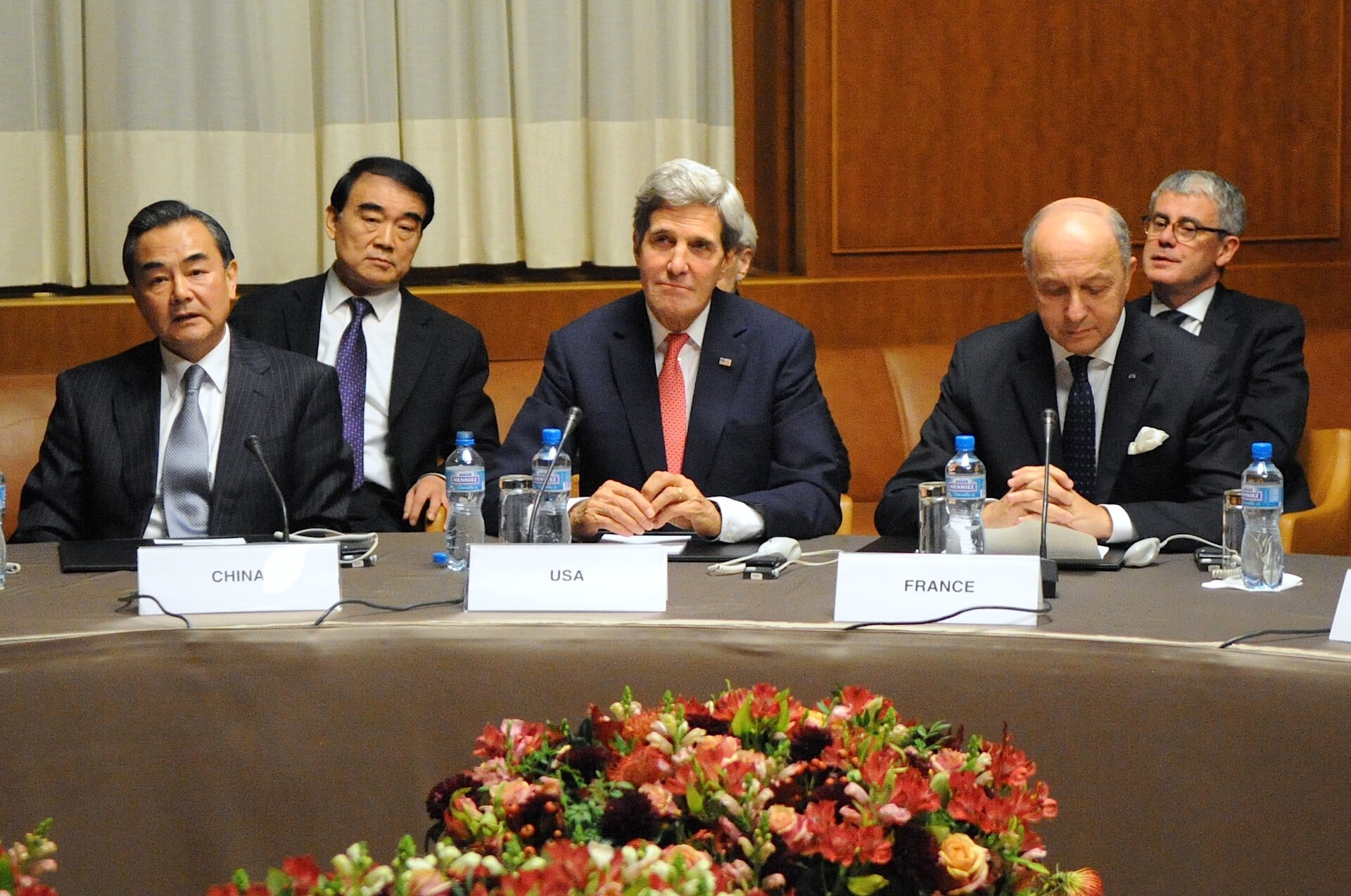
The record from those six years is specific and quantifiable. In 2007, Jalili rejected a European Union proposal for enrichment suspension. In December 2010, he “categorically rejected the P5+1’s insistence that Iran must suspend its uranium enrichment,” the NCRI documented. In 2012, he met with EU High Representative Catherine Ashton’s team; the talks produced no suspension agreement while Iran expanded centrifuge installations at Fordow.
During that same window, three UN Security Council sanctions resolutions passed against Iran: Resolution 1803 in March 2008, Resolution 1835 in September 2008, and Resolution 1929 in June 2010, according to the Arms Control Association.
Iran began enriching uranium to 20% — far above the level needed for civilian power generation — in February 2010, while Jalili ran the negotiating file. By August 2012, the International Atomic Energy Agency (IAEA) reported that Iran had increased centrifuges at Fordow and was producing 20%-enriched uranium in excess of research reactor needs.
William J. Burns, then Under Secretary of State and later CIA director, met Jalili for five and a half hours in 2008. Burns’s assessment, recorded in his memoir The Back Channel, was precise: Jalili “could be stupefyingly opaque when he wanted to avoid straight answers.” After the meeting, Burns wrote to Secretary of State Condoleezza Rice: “Today’s conversation with the Iranians clearly reminded me that we had probably not lost anything over the past few years.”
In June 2013, campaigning for the Iranian presidency, Jalili told IRGC-affiliated Fars News that Iranian uranium “should be enriched not to the level of 5 percent or 20 percent but to 100 percent enrichment,” according to the Japan Center for a Future Asia’s analysis of the Fars News transcript.
Jalili has never endorsed any nuclear deal or framework agreement. Of the 2015 Joint Comprehensive Plan of Action (JCPOA), he stated: “If the JCPOA was a good agreement, the Supreme Leader, the Parliament, and the Supreme National Security Council would not have added 28 conditions for its implementation,” the NCRI reported.
The Shadow Government and the Paydari Network
Jalili’s influence extends beyond a negotiating record. He heads the Stability Front (Paydari), described by Iran International as the “bastion of ultraconservatism” in Iranian politics, which opposed the JCPOA from the day it was signed.
During Hassan Rouhani’s presidency, Jalili assembled what he openly called a “shadow government” — “over a thousand managers and experts,” by his own count during the 2024 presidential campaign, deployed across 140 provincial trips to monitor and obstruct Rouhani’s nuclear deal policies, Iran International reported in July 2024.
The shadow government was not a metaphor. Heshmatollah Falahatpisheh, a former Iranian parliamentary official, told Iran International that Jalili’s operation “caused obstructions on FATF compliance, costing Iran significantly.” Mahmoud Vaezi, Rouhani’s former chief of staff, called the formation of a shadow government after losing an election “dangerous.”
Pezeshkian himself, during the 2024 campaign, challenged Jalili directly: “He should clarify the sources of the funds that enabled these experts to collaborate,” Iran International reported. Even Khamenei addressed the phenomenon in 2018, stating: “Parallel work alongside the government apparatus is not successful. This has been my definitive experience over the years.”
Yet the man Khamenei warned against running parallel structures is now expected to take the negotiating chair — with the formal title of Khamenei’s personal representative to the SNSC, a position the supreme leader appointed him to on July 28, 2008, and which he still holds, according to United Against Nuclear Iran (UANI) and the NCRI. That dual role gives Jalili structural authority to block any SNSC-level nuclear concession from inside the body that must approve it.
Ali Safavi of the NCRI told Fox News Digital on April 27 that Jalili “has evolved from a nuclear negotiator to an influential actor within the regime.” Of the broader factional dynamics, Safavi said: “The factions all ultimately move along a common path: the preservation of power. They differ in methods, not in objectives.”
Why Does the Authorization Ceiling Now Have a Name and a Chair?
The concept of Iran’s “authorization ceiling” — the structural limit on what any Iranian negotiator can actually concede — has defined the war’s diplomatic track since Islamabad. When Pezeshkian publicly accused SNSC secretary Ali Akbar Ahmadian’s deputy Vahidi and Khatam al-Anbiya commander Abdollahi of sabotaging the April 13 near-MoU, he confirmed what analysts had theorized: that the negotiating team operated under a ceiling set by IRGC-aligned figures who were not in the room but controlled the outcome.
Jalili’s appointment collapses the distance between the ceiling and the seat: the same figure who holds the veto now holds the chair.
Max Boot, the Jeane J. Kirkpatrick Senior Fellow at the Council on Foreign Relations, wrote in April 2026 that “the hard-line Islamic Revolutionary Guard Corps (IRGC), which has the guns (and drones and missiles), and exercises more influence, had other ideas” — referring to the faction that overrode each diplomatic opening.
The Paydari faction Jalili leads is institutionally separate from but operationally aligned with the IRGC hardliner command structure that includes Vahidi and Abdollahi. When the IRGC reversed Foreign Minister Araghchi’s declaration that Hormuz was “completely open” in April, restoring “strict management and control” within hours, the pattern was the same: civilian officials make openings; hardline structures close them.
The IRGC Navy declared “full authority to manage the Strait” on April 5 and again on April 10 while Araghchi was in Islamabad. The authorization ceiling was visible each time a diplomatic advance was followed by a military reversal.
Ghalibaf, for all his IRGC credentials — he commanded the IRGC Aerospace Force from 1997 to 2000 — had shown a willingness to test the ceiling. His “seven lies” post contradicting Trump on April 18, where he stated “Iran’s enriched uranium is not going to be transferred anywhere under any circumstances,” was hardline in content but pragmatic in structure: it preserved Iran’s domestic narrative while leaving the door open for phased talks.
Jalili has no such record of constructive ambiguity. Kourosh Ahmadi, a former Iranian diplomat, told Euronews on April 24 that “both sides are trapped in slogans they have already committed to.”
The Nuclear Wall: What Jalili’s Appointment Means for the Enrichment Gap
Iran’s current proposal, reported by Al Jazeera on April 27, separates Hormuz reopening from nuclear talks entirely, deferring nuclear discussion to a later, undefined stage. Fars News Agency, IRGC-affiliated, described the Hormuz initiative as “an initiative by Iran to clarify the regional situation,” Al Jazeera reported.
Trump convened the Situation Room on April 27 to assess Iran’s Hormuz-first proposal. The enrichment moratorium gap — Iran offering three to five years, the US demanding 20 years minimum or permanently, per the Soufan Center — was already the widest structural divide in the talks. Jalili’s appointment removes the person who was willing to at least place that divide on the table.
The SNSC had undergone a restructuring in August 2025 when Khamenei appointed Ali Larijani, a pragmatic conservative, as SNSC secretary — a move the Institute for National Security Studies (INSS) described as a shift toward a more flexible posture. Raz Zimmt, an INSS analyst, wrote at the time that “it is doubtful whether the recent changes will provide the Iranian leadership with the tools needed” to address mounting challenges without “far-reaching shifts in Iranian strategy.”
The Jalili appointment reverses that trajectory. Larijani’s pragmatism at the SNSC now coexists with Jalili’s maximalism at the negotiating table, and Washington’s interlocutor is the negotiator, not the council.
Iran International also reported that Foreign Minister Araghchi is seeking the lead negotiator role, setting up a contest between two figures with incompatible mandates: Araghchi, who was “inches away” from an MoU before the Vance walkout, according to Axios, and Jalili, who has never been inches away from any agreement in his career.
Jalili’s X posts in early April captured his posture. On April 7, responding to Trump’s threats against Iranian infrastructure, he wrote: “Yes — ‘infrastructure’ is on the verge of collapse; the infrastructure of domination and the American order.” The day before, he posted: “‘Shut up’ is not the appropriate response to Trump’s ramblings; let him speak more,” Fox News Digital and Yahoo News reported on April 27.
What Changes for Riyadh?
For Saudi Arabia, the personnel change recasts what had appeared to be a structural accident — Iran’s inability to deliver on diplomatic commitments — as a deliberate architecture. Jalili’s appointment is the clearest signal yet that the authorization ceiling was not an aberration but a standing feature of how Tehran manages the file.
Saudi Arabia’s structured ambiguity of the past week — receiving Iran’s proposal before Washington did, then sitting with every mediator at Antalya — depended in part on the premise that the Iranian negotiating team had some latitude to negotiate. Jalili’s appointment eliminates that premise.
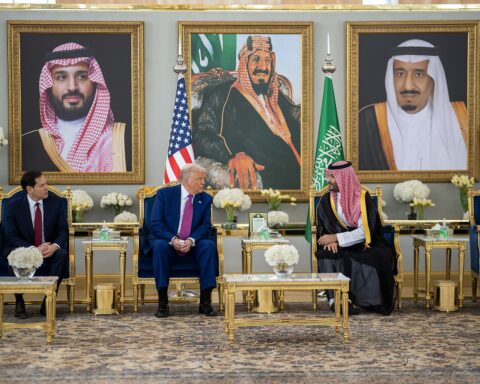
Secretary of State Rubio’s closure of the interim-deal track on Hormuz already narrowed the diplomatic aperture. The combination of Rubio’s maximalism on the American side and Jalili’s maximalism on the Iranian side leaves mediators — Pakistan, Turkey, Egypt, and increasingly Russia — trying to bridge a gap that neither principal is willing to narrow.
The double blockade at Hormuz — the US controlling the Arabian Sea entry since April 13 and the IRGC controlling the Gulf of Oman exit since March 4 — had reduced transit to 45 passages since the April 8 ceasefire, or 3.6% of the pre-war baseline.
Background: Jalili’s Institutional Pipeline
Jalili’s path to the negotiating table runs through Khamenei’s personal office. He served as director of the Office of Contemporary Studies at the Supreme Leader’s office from 2000 to 2005, according to NCRI documentation — an institutional pipeline from Khamenei’s inner circle to the SNSC negotiating seat.
He ran for the presidency three times: in 2013, when he lost to Rouhani; in 2021, when he withdrew; and in 2024, when Ghalibaf backed him before dropping out and Pezeshkian won. In the 2024 race, Jalili ran on a platform of refusing any enrichment moratorium.
The appointment, if confirmed, would make Jalili the only figure in Iranian politics who has served simultaneously as Khamenei’s personal SNSC representative, the lead nuclear negotiator, the head of the parliament’s hardline blocking faction, and the organizer of a shadow government that obstructed a sitting president’s foreign policy.
Frequently Asked Questions
Has Jalili been formally appointed, or is this still expected?
As of April 27, 2026, Iran International reports Jalili is “expected” to replace Ghalibaf. The appointment has not been formally announced. Foreign Minister Araghchi is also seeking the role, creating a contest that may take days to resolve. Iran’s parliament media office denied reports of Ghalibaf’s departure as “baseless” before multiple outlets confirmed it.
Could Araghchi get the role instead, and would that change the outlook?
Araghchi, who was described by Axios as “inches away” from a memorandum of understanding before the Vance walkout, represents the closest thing to a pragmatic track remaining in Iran’s diplomatic apparatus. If Araghchi is selected instead of Jalili, the sequenced-deal framework — war termination first, nuclear architecture second — could theoretically be revived. But Araghchi operates under the same authorization ceiling that Ghalibaf hit, and the IRGC reversed his Hormuz declaration within hours in April, suggesting that whoever holds the title may matter less than who holds the veto.
What is the Stability Front (Paydari) and why does it matter?
Paydari is the ultraconservative parliamentary faction Jalili leads, described by Iran International as the “bastion of ultraconservatism” in Iranian politics. Its institutional significance for the current talks is structural: the same faction that organized the shadow government to obstruct JCPOA implementation during Rouhani’s presidency now has its leader at the negotiating table. Paydari’s operational alignment with IRGC hardliners — Vahidi, Abdollahi — means the faction has simultaneously blocked diplomatic concessions from outside the room and will now represent Iran inside it.
Is there any remaining framework for the nuclear file, or has it been closed entirely?
Iran’s current position, as stated by IRGC-affiliated agencies Tasnim and Fars, is that nuclear issues are not part of the talks. That is not the same as a formal Iranian declaration that nuclear discussions can never occur. The 45-day phased framework reported by Axios and The National in early April always deferred nuclear architecture to Phase 2, with no agreed mechanism to initiate it. Jalili’s appointment removes the person who was willing to at least acknowledge the Phase 2 premise; it does not formally close the file, which remains open on paper and inactive in practice.
How does Jalili’s record compare to other Iranian nuclear negotiators?
Iran has had three lead nuclear negotiators since the file became internationally contested. Hassan Rouhani (2003–2005) agreed to a temporary enrichment suspension under European pressure. Jalili (2007–2013) produced zero suspension agreements across three major P5+1 rounds while Iran expanded from low-enriched uranium to 20% enrichment and installed centrifuges at Fordow. Abbas Araghchi and Mohammad Javad Zarif (2013–2015) negotiated the JCPOA, which capped enrichment at 3.67% and required Iran to reduce centrifuges by two-thirds. Of the three eras, Jalili’s is the only one in which Iran’s enrichment capacity expanded continuously without interruption throughout the negotiating period.