WASHINGTON — Secretary of State Marco Rubio on Sunday rejected Iran’s Hormuz-for-blockade offer in language no diplomatic interlocutor recovers from quickly, telling Fox News that what Tehran is proposing amounts to a protection racket dressed as a peace plan: “they say, we’ll blow you up, and you pay us.” The same afternoon Foreign Minister Abbas Araghchi was sitting opposite Vladimir Putin at the Boris Yeltsin Presidential Library in St. Petersburg, carrying a personal message from Mojtaba Khamenei — the first confirmed direct communication from Iran’s hidden Supreme Leader in the 44 days since he disappeared on February 28.
For Saudi Arabia, watching from a kingdom whose March crude output has collapsed to 7.25 million barrels a day from 10.4 million in February, Rubio’s choice of words did something the rejection itself did not: it raised the political price of any future American flexibility and converted a war cost the kingdom had been treating as temporary into a structural condition with no obvious exit.
Table of Contents
- The Quote That Closed the Window
- Why “Extortion” Is the Most Expensive Word Rubio Could Have Used
- Same Day, St. Petersburg: Araghchi Carries Mojtaba’s Message
- Does Riyadh Now Own This War?
- What Iran Has Already Built While Washington Was Talking
- The “Open for Open” Off-Ramp Rubio Implicitly Killed
- Background: The 72-Hour Sprint That Ended in Fox News Studio
- FAQ
The Quote That Closed the Window
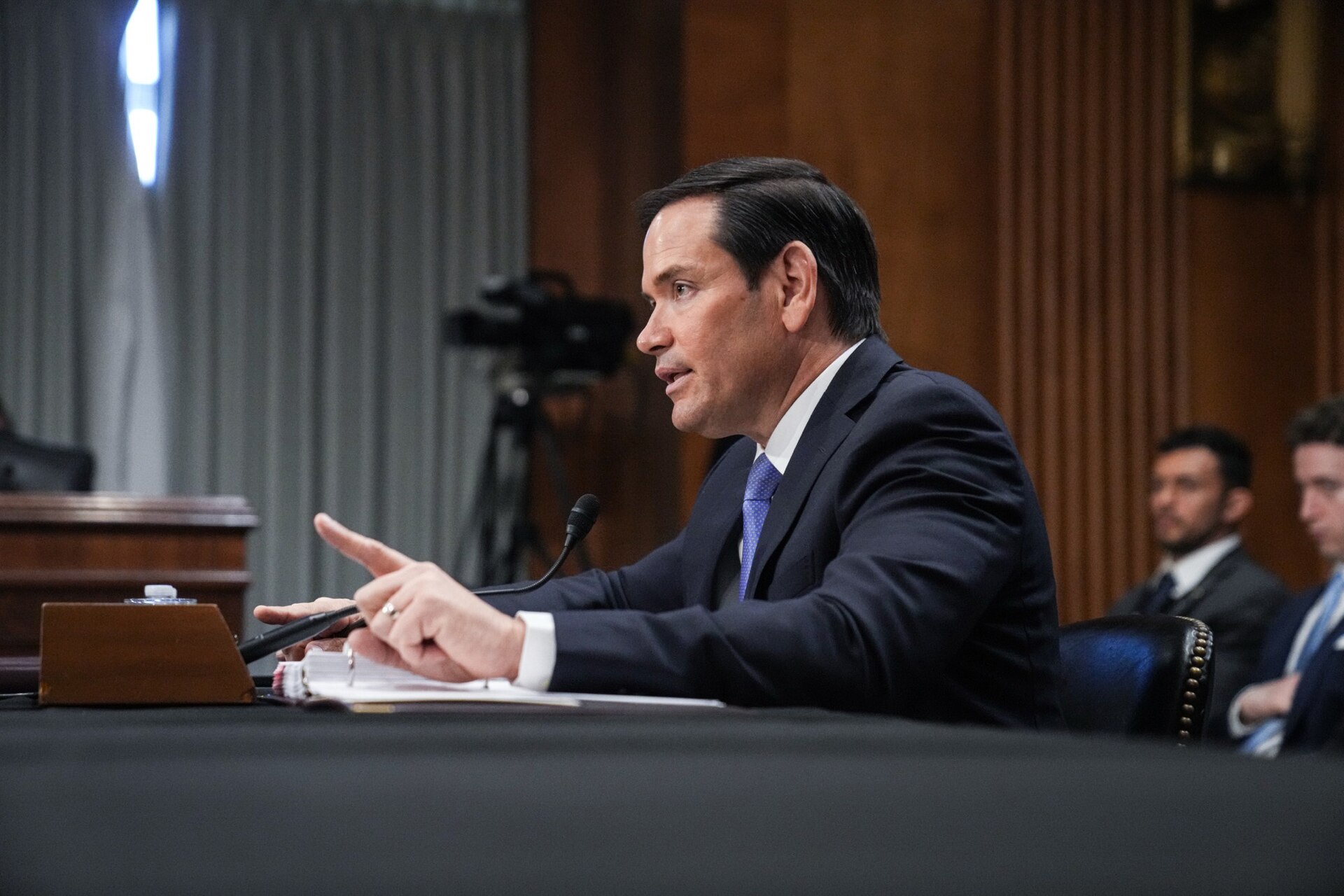
Rubio’s full Fox News Sunday formulation, delivered with the cadence of a prosecutor rather than a diplomat, was that “if what they mean by opening the straits is, yes, the straits are opened as long as you coordinate with Iran, get our permission, or we’ll blow you up, and you pay us — that’s not opening the straits; those are international waterways.” He returned to the theme a second time in the same interview, saying that Tehran “cannot normalize — nor can we tolerate them trying to normalize — a system in which the Iranians decide who gets to use an international waterway and how much you have to pay them to use it.”
The proposal Rubio was rejecting had been transmitted through Pakistani intermediaries on April 27 after Araghchi’s two trips to Islamabad in 48 hours, and Axios, PBS NewsHour, and Al Jazeera all reported the core architecture: Iran reopens Hormuz, Washington lifts the April 13 naval blockade, the war ends, the nuclear file slides into a later phase. Rubio refused the deferral, telling CBS News that any agreement must “definitively prevent them from sprinting towards a nuclear weapon” and that Tehran was “skilled at buying time” — language that closes the door not just on the proposal but on the structure of the proposal.
“They cannot normalize — nor can we tolerate them trying to normalize — a system in which the Iranians decide who gets to use an international waterway and how much you have to pay them to use it.”Marco Rubio, US Secretary of State, Fox News Sunday, April 27, 2026
The HOS Daily BriefThe Middle East briefing 3,000+ readers start their day with.
One email. Every weekday morning. Free.
Trump, asked the same day about the state of negotiations, told reporters “we have all the cards” and demanded that Iran’s stockpile of enriched uranium — Vienna’s last public IAEA reading was 440.9 kg of 60% material before access was terminated on February 28 — be surrendered as part of any final deal. White House Press Secretary Karoline Leavitt added that the President “has made his red lines very clear and will only make deals prioritizing American interests.” The negotiating posture is now public, maximalist, and rhetorically locked.
Why “Extortion” Is the Most Expensive Word Rubio Could Have Used
Diplomats spend their careers avoiding the word Rubio chose, because once a Secretary of State publicly characterizes an adversary’s offer as criminal extortion the domestic political cost of revisiting that offer rises to a level no administration absorbs cheaply. The Obama State Department made the same lexical choice with Pyongyang in 2013, denouncing North Korea’s “provocation, extortion, and reward” cycle, and the rhetorical scaffolding hardened over time into the policy of “strategic patience” — a decade in which the United States neither negotiated nor coerced, and Pyongyang’s arsenal grew from a handful of devices to an estimated fifty.
The mechanism is well understood inside the State Department’s policy planning staff: when a sitting Secretary brands a proposal extortion, any successor who later accepts a version of that proposal must explain to Congress, the editorial pages, and a domestic political opposition why the Republic is now paying ransom. Rubio knows this. The choice was deliberate. As a piece in this paper on Saturday argued, the interim-deal track on Hormuz was already closing; what Sunday’s Fox interview did was bolt it shut from the outside.
French Foreign Minister Jean-Noël Barrot offered a parallel construction in Paris the same day, warning that allowing Iranian tolls would “militarize” the straits and “take global trade hostage” — a phrase chosen, like Rubio’s, to make any future Western concession politically radioactive. Anwar Gargash, diplomatic adviser to UAE President Mohamed bin Zayed, told the same news cycle that Iran’s containment strategy had “failed miserably” and warned of decades-long threats ahead. The Western chorus is harmonised.
German Chancellor Friedrich Merz contributed the only note of frustration audible above the unified Western position, telling Berlin reporters that “the Iranians are obviously very skilled at negotiating, or rather, very skilful at not negotiating, letting the Americans travel to Islamabad and then leave again without any result.” The line, picked up by the Irish Times, lands as an unintentional indictment of the Witkoff-Kushner mission Trump cancelled on April 25 — the trip that the Situation Room had convened to debate before it was scrubbed.
Same Day, St. Petersburg: Araghchi Carries Mojtaba’s Message
While Rubio was rehearsing his lines in a Fox News studio, Araghchi was crossing the marble floor of the Boris Yeltsin Presidential Library in St. Petersburg toward a Russian President flanked by Foreign Minister Sergei Lavrov, foreign policy adviser Yury Ushakov, and — the detail that mattered — GRU intelligence chief Igor Kostyukov. The meeting lasted just over an hour, which is short for a strategic consultation and long for a courtesy call, and the choreography placed military intelligence in the room from the first handshake.
Putin’s opening, reported by the Washington Times and Tribune India, was deliberately worded for international consumption: “Please convey to the Supreme Leader my appreciation for his message and my best wishes for his good health and well-being.” That sentence performed a function Tehran has been unable to perform for itself since the war began — public confirmation that Mojtaba Khamenei, Iran’s hidden Supreme Leader, is alive, in command, and capable of issuing personal messages to foreign heads of state. The Russian President became, in a single line, Mojtaba’s proof of life.
“We see how courageously and heroically the Iranian people are fighting for their independence and sovereignty,” Putin continued, before promising that Moscow would “do everything that serves your interests, the interests of all the people of the region, so that peace can be achieved as soon as possible.” Araghchi answered with the formula Russian audiences expected, thanking “our Russian friends for their support throughout this war” and declaring “Iran’s determination to continue strategic relations and partnership with Russia under the new circumstances.”
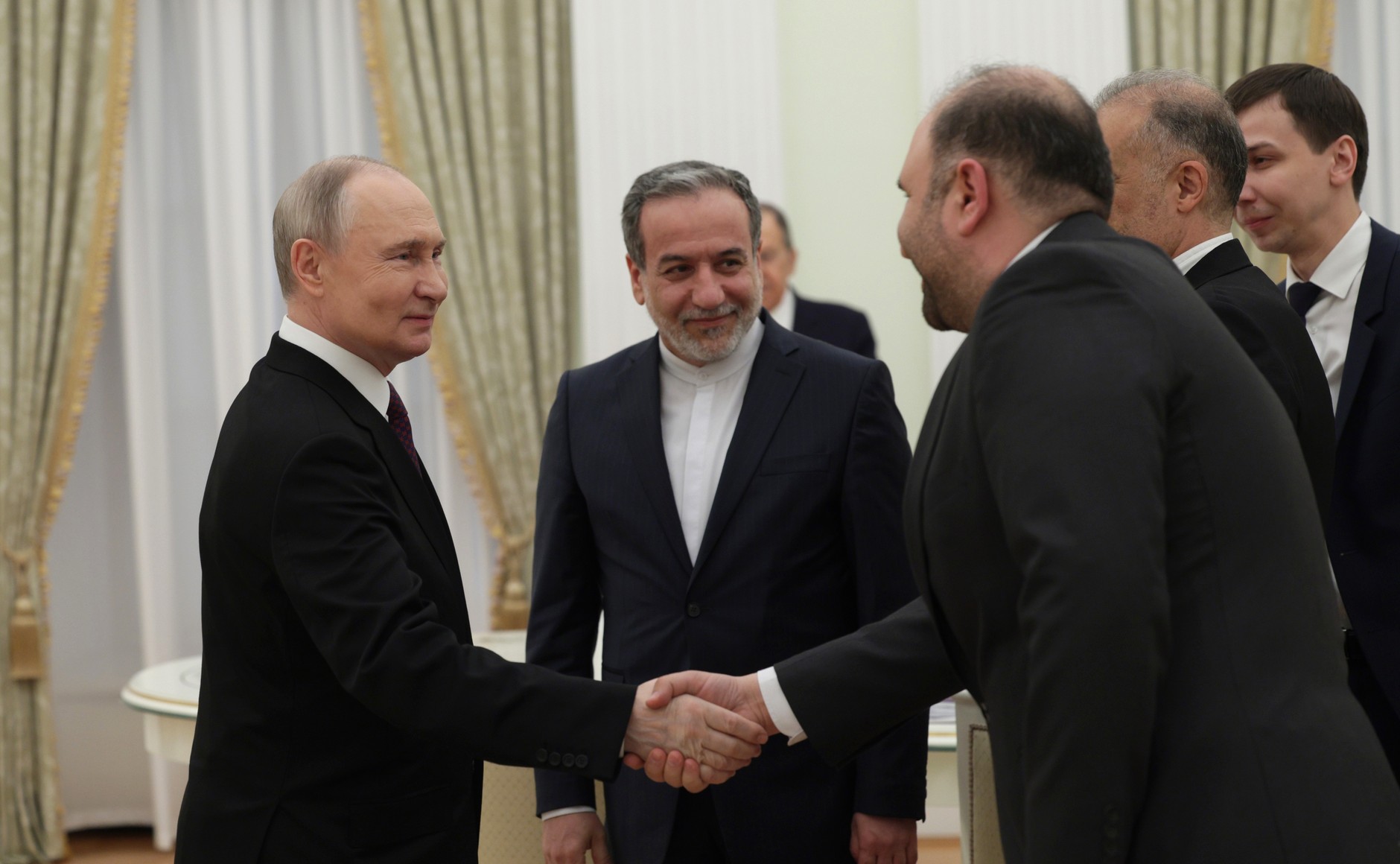
The optics carry consequences Washington cannot ignore. Araghchi’s 72-hour itinerary — two visits to Islamabad, a stop in Muscat, the St. Petersburg meeting, and phone calls to Doha, Riyadh, Cairo, and Paris — reads less like the schedule of a Foreign Minister negotiating a ceasefire and more like the schedule of a Foreign Minister reorganising Iran’s external relationships around the assumption that the American track is closed. Dania Thafer of the Gulf International Forum told Al Jazeera that “although Iranian leadership did not physically visit Qatar or Saudi Arabia, there were phone calls, and that indicates a willingness to maintain contact.” Maintain — not advance.
Inside Tehran, the reformist daily Shargh broke the official narrative on Sunday, writing that Araghchi’s regional tour revealed “clear signs of a deadlock in negotiations with Washington.” When a reformist outlet that wants the negotiations to succeed concedes the deadlock in print, the deadlock is real.
Does Riyadh Now Own This War?
Saudi Arabia walked into April with two assumptions and finished the month with neither. The first assumption was that the United States would hold a maximum pressure line until Iran cracked; that assumption is intact, but the timeline has become indefinite. The second assumption was that the war’s energy costs were a temporary wartime premium that would unwind on a ceasefire; that assumption died on Sunday afternoon, somewhere between the Fox News studio and the Yeltsin library.
The arithmetic needs no dramatic narration. Saudi March production fell to 7.25 million barrels a day, down from 10.4 million in February — the IEA called the drop “the largest disruption on record.” Yanbu’s Red Sea loading capacity under wartime conditions sits at 4 to 5.9 million barrels a day against a pre-war Hormuz throughput of 7 to 7.5 million, which is to say the kingdom has between 1.1 and 3.5 million barrels a day of crude that can be produced but not exported. The production crash analysis published earlier this month traced the structural ceiling; Sunday locked it in.
Brent surged roughly 3% to $108.36 a barrel on April 27–28 as the diplomatic hopes priced into the previous week unwound, with both Brent and WTI gaining 17% and 13% respectively over the prior seven days — the largest weekly move since the war’s onset on February 28. American gasoline reached $4.04 a gallon on Sunday, up 7 cents week-on-week, with 39 states recording increases, according to AAA; that detail belongs in this story because it is the variable Rubio’s domestic critics will reach for first when they ask why the administration walked away from a deal.
Saudi fiscal break-even, Bloomberg’s PIF-inclusive reading, sits at $108 to $111 a barrel — meaning Sunday’s Brent close sits on the floor of Riyadh’s solvency, not above it. Goldman Sachs’s war-adjusted reading puts the 2026 deficit at 6.6% of GDP against an official forecast of 3.3%, and the financing gap is now a recurring monthly conversation in the kingdom’s debt office rather than a one-time wartime adjustment. The longer Rubio’s framing holds, the longer that conversation runs.
“The biggest energy security threat in history.”Fatih Birol, Executive Director, International Energy Agency, on the Hormuz disruption
The political problem for the kingdom is that it is now a witness rather than a participant in the question that determines its solvency. Araghchi telephoned Riyadh during his 72-hour sprint but did not visit; the Saudi response was acknowledged by Thafer at the Gulf International Forum but not narrated by the Royal Court. Riyadh has neither the means to coerce a different American posture nor the latitude to break with Washington publicly, which leaves the kingdom paying the indefinite cost of a strategy it does not control.
What Iran Has Already Built While Washington Was Talking
Rubio’s rejection treated Iran’s toll regime as a hypothetical demand, but the regime is already operational. Iran’s Central Bank confirmed on April 23 that the first Hormuz transit toll deposit had arrived in cash; Hamid Reza Haji Babaei, deputy to the parliament speaker, confirmed the receipt without disclosing the amount. PressTV reported the Central Bank statement on the same day. The system Rubio is refusing to legitimize is collecting revenue.
The legal scaffolding is moving in parallel. On April 21, Vahid Ahmadi of Iran’s National Security Committee shepherded a 12-article Hormuz sovereignty law through committee stage, with provisions that include transit fees denominated in Iranian rials, a ban on vessels with Israeli or hostile-state links, and prohibition of passage for nations that do not use “Persian Gulf” — rather than “Arabian Gulf” — in shipping documentation. Full chamber debate is pending; the architecture is being codified into Iranian domestic law on a timeline that does not depend on Washington’s response.
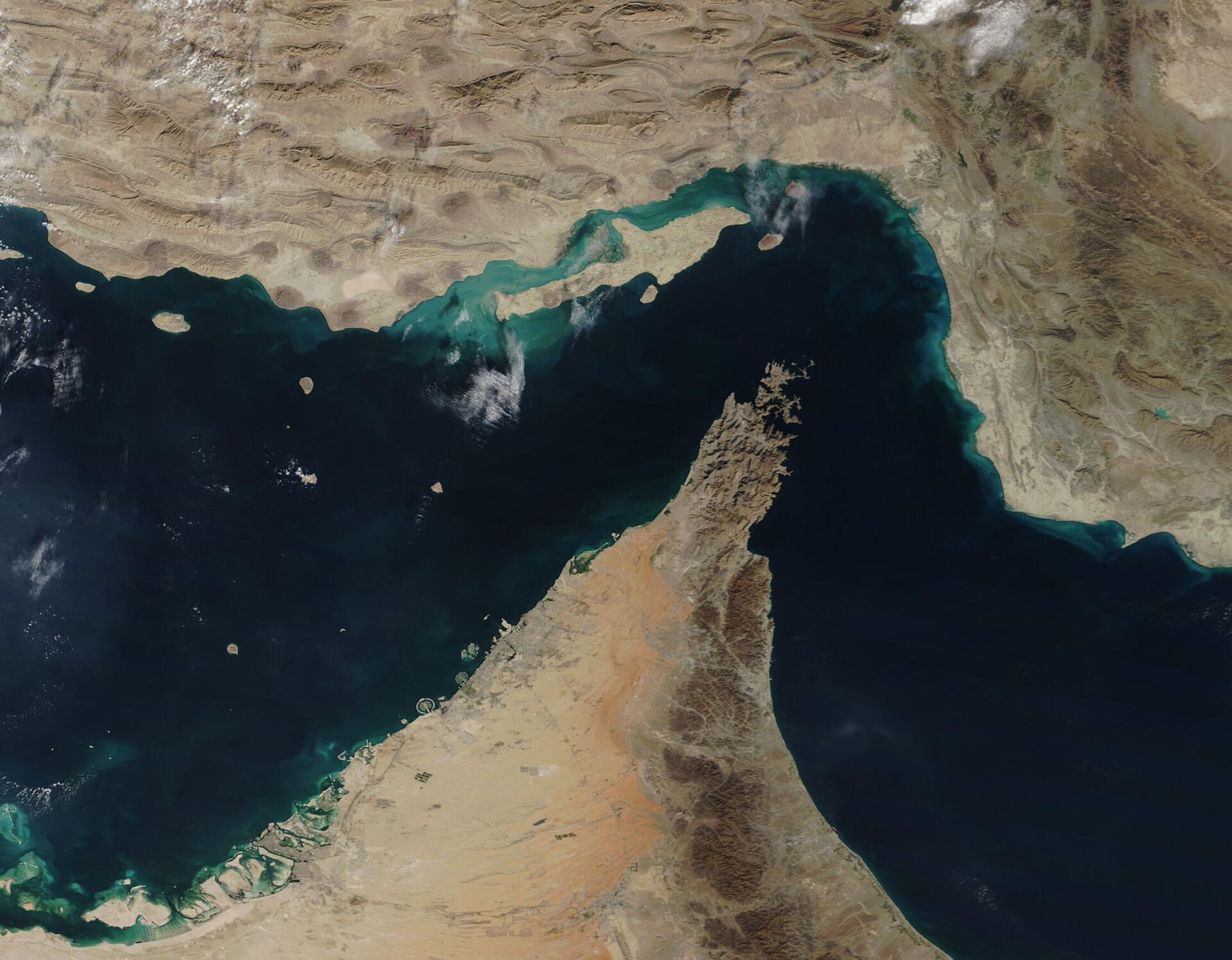
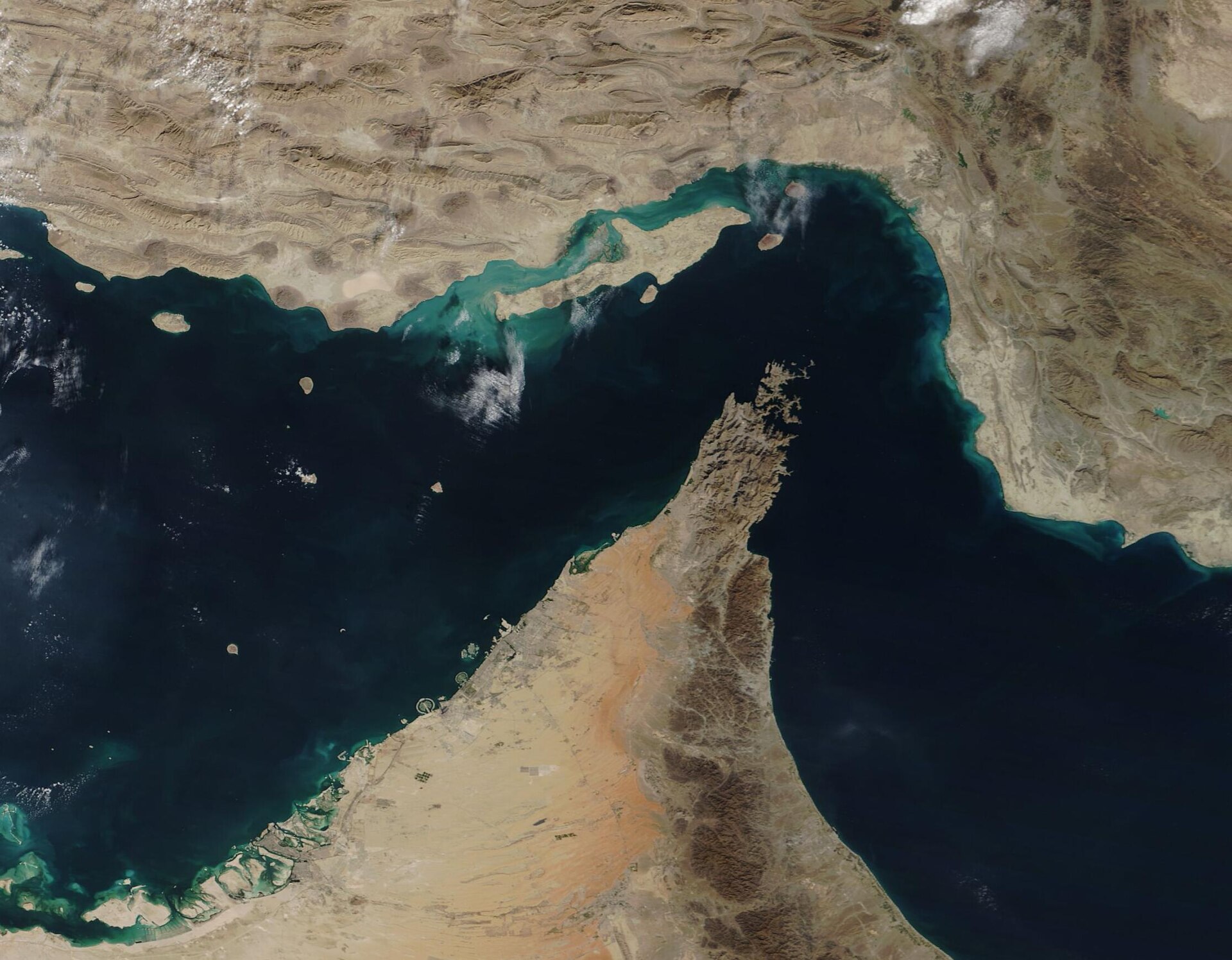
The transit data tells the story Rubio’s framing cannot. Hormuz has recorded approximately 45 transits since the April 8 ceasefire — 3.6% of pre-war volumes against a baseline of roughly 140 ships a day. CENTCOM has redirected 37 vessels since the April 13 naval blockade went into effect, a programme covered in these pages two weeks ago as coercive diplomacy by maritime instrument. The double blockade — American at the Arabian Sea entry, Iranian at the Gulf of Oman exit — is the new equilibrium we mapped on April 26; Sunday’s diplomacy did nothing to dissolve it.
Tehran’s negotiating leadership is also rotating. Saeed Jalili, the hardline former chief negotiator, is reportedly set to replace Mohammad Bagher Ghalibaf as Iran’s nuclear talks lead — a change we reported earlier this week and one that places a figure with a documented preference for prolonged negotiations as procedural attrition opposite a Secretary of State who has just publicly described the Iranian negotiating posture as time-buying. The mismatch is structurally familiar and functionally total.
The “Open for Open” Off-Ramp Rubio Implicitly Killed
Max Boot, the Jeane J. Kirkpatrick Senior Fellow at the Council on Foreign Relations, sketched in early April the only structural off-ramp that did not require either side to capitulate first: an “open for open” formula in which both blockades — the American naval cordon and the Iranian Hormuz toll regime — were lifted simultaneously, with the nuclear file pushed into a separate negotiating track. Iran’s April 27 proposal was a first-draft version of that idea, with the asymmetry that Tehran’s “opening” remained conditional on permissioning architecture.
Rubio’s two formulations on Fox News close that off-ramp not by attacking Boot’s structure but by attacking its premise. If Iranian permissioning is by definition extortion, then no version of an “open for open” deal can be accepted by Washington without the administration of the day being accused of legitimising the very regime Rubio described on Sunday. The sovereignty-claim analysis we ran ten days ago traced the asymmetry; Rubio has now made the asymmetry the sticking point.
The consequence is not that the war continues — it was always going to continue — but that the diplomatic architecture available to end it has narrowed to two paths, both of them harder than the path Rubio walked away from. Path one is Iranian capitulation on permissioning, surrender of the 440.9 kg HEU stockpile — now at 60% enrichment with IAEA access gone since February 28 — and acceptance of a revised inspection regime; that requires an Iranian decision that Tehran’s authorisation ceiling — Vahidi at SNSC, the still-hidden Khamenei father and son — has shown no willingness to make. Path two is an American capitulation on the “extortion” framing, which Rubio has now made politically expensive for Trump’s successors as well as for Trump himself.
Boot’s formula is not dead, but it is now waiting for a different Secretary of State, a different administration, or a different American political moment. Each of those is months away at the earliest.
Background: The 72-Hour Sprint That Ended in a Fox News Studio
The proposal Rubio rejected on Sunday emerged from a sequence that began with Trump’s April 25 cancellation of the Witkoff-Kushner mission to Islamabad. The President told reporters at the time that the trip had been scrubbed because the Iranian delegation had “left first,” adding the line that has now been quoted in every major Western outlet: “We offered a lot, but not enough.” Negotiations were reduced to telephone exchanges, a downgrade that Pakistani Foreign Minister Ishaq Dar’s office described in considerably more diplomatic language.
The Pakistan-mediated proposal that reached Washington’s inbox on Sunday morning was the direct product of that 72-hour itinerary, and Rubio’s Fox News interview had been scheduled before the proposal arrived; the rejection, in that sequence, was not improvised. The absence of any confirmed direct communication from the hidden Supreme Leader to any foreign head of state — for 44 days, across every ceasefire round, every Islamabad trip, every back-channel — had been the single most destabilising fact about Iran’s negotiating position. Putin’s public confirmation of Mojtaba’s message changes that, not by producing a deal but by producing a counterparty — and counterparties are what Tehran has lacked at the level Washington recognises. The address book Iran is now using has Russian phone numbers in it.
FAQ
Has Iran actually collected Hormuz tolls in cash? Yes. Iran’s Central Bank confirmed on April 23 that the first Hormuz transit toll deposit had been received in cash; the confirmation was attributed to Hamid Reza Haji Babaei, deputy to the parliament speaker, and reported by PressTV, April 23, 2026. The amount has not been disclosed.
What does UNCLOS say about transit through international straits? Article 38 of the UN Convention on the Law of the Sea guarantees freedom of transit passage through international straits used for international navigation, with no provision for transit fees imposed by littoral states. Iran is not a signatory to UNCLOS, which Tehran has cited as the legal basis for its assertion that the convention’s transit provisions do not bind it. The United States is also not a party to UNCLOS but treats the transit-passage rules as customary international law.
Who is Igor Kostyukov and why does it matter that he was in the Putin-Araghchi meeting? Kostyukov is the head of Russia’s GRU military intelligence service. His presence at a foreign ministerial meeting indicates that the conversation extended beyond diplomacy into intelligence-sharing or operational coordination; foreign-affairs meetings between Russia and Iran do not routinely include the GRU chief.
What happens to the April 8 ceasefire framework now? The framework remains nominally in force but operationally hollow. Iran’s parliament is codifying the toll regime into domestic law through a 12-article Hormuz sovereignty bill — a process that does not pause for diplomatic outcomes in Washington. With Rubio’s rejection, no successor framework has been publicly proposed by either side.
Could the US Congress override Rubio’s framing? Representative Latimer’s bipartisan bill to nullify OFAC General License U was introduced in April and remains in committee without a floor vote scheduled. Congressional action on the broader Hormuz dispute would require legislation or appropriations pressure that has not yet emerged in either chamber; the administration retains full executive authority over the naval blockade regardless of what Congress drafts.
Sunday’s exchange did not alter the military situation, but it closed the cheapest available diplomatic exit and raised the minimum political cost of any successor deal. Saudi Arabia, whose March output and fiscal break-even have arrived at the same number, absorbs that cost in real time with no lever to pull from outside the American decision.
The structural reasons why neither Rubio’s rejection nor Iran’s sequencing demand can yield to the other’s logic—and what that deadlock costs Saudi Arabia in real time—are examined in Trump’s “Not Happy” Declaration and the Sequencing Wall Neither Side Can Remove.
Beyond the sequencing deadlock lies a deeper institutional problem: even if Rubio and Araghchi found common ground on sequencing, the three men who govern Iran in Mojtaba Khamenei’s place — Taeb, Rezaei, and Ghalibaf — hold none of the Article 110 authority required to bind the IRGC to the terms. The constitutional analysis of why Iran cannot deliver what Rubio is rejecting is in Three Men, No Authority: Iran’s Troika Cannot Deliver the Hormuz Deal Saudi Arabia Needs. When Iran subsequently filed a revised three-phase proposal through Pakistan — nuclear talks deferred to Phase 3, Hormuz “management” at Phase 2 — Rubio called it “better than expected” on the nuclear dimension while Saudi Arabia’s production shortfall went structurally unaddressed: an analysis of how that gap between Washington’s nuclear priority and Riyadh’s economic crisis could produce a deal that solves the centrifuge question and nothing else.