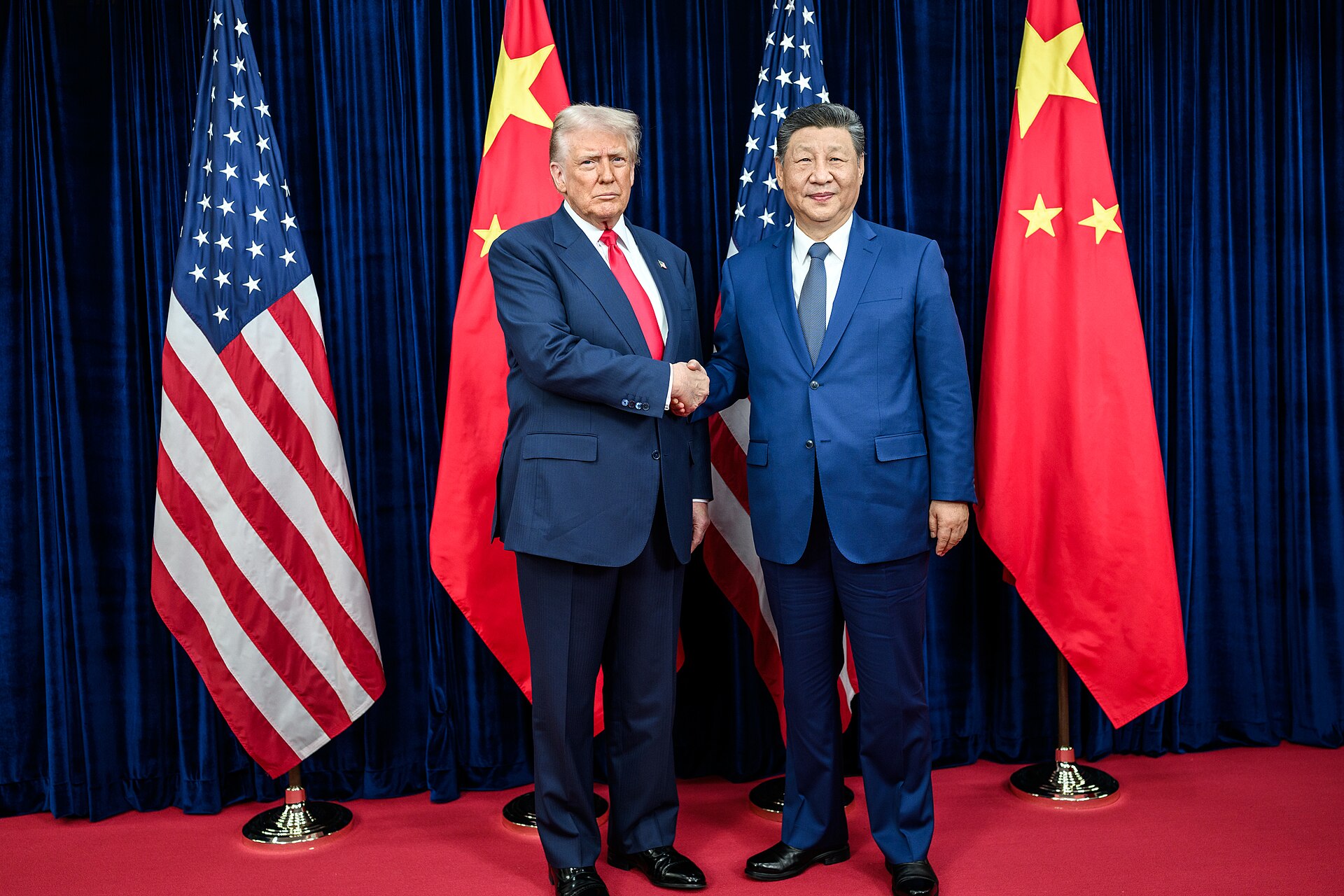
BEIJING — President Donald Trump arrives in Beijing on May 13 for a three-day state visit, with Treasury Secretary Scott Bessent confirming on CNBC May 8 that Iran and the Strait of Hormuz are the dominant items on a summit agenda that Xinhua announced May 11. The talks on May 14 and 15 mark the first U.S. presidential trip to China in nearly a decade and were previously delayed, by Washington’s own framing, because of the Iran war.
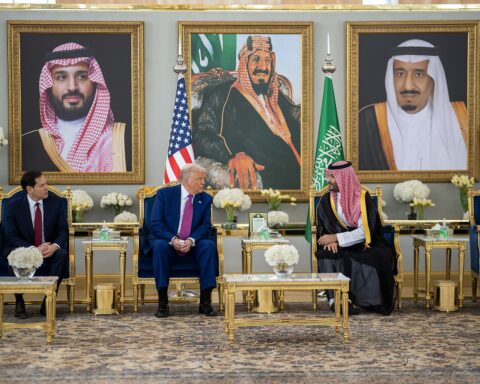
Saudi Arabia is not in the room. There is no Saudi channel into the framework that will determine whether the Strait of Hormuz reopens, on whose terms, and at what fiscal cost to the country that absorbs the disruption. Xi Jinping called Crown Prince Mohammed bin Salman on April 20 — the first time the Chinese leader publicly stated Hormuz should remain open — and there is no public evidence that conversation produced a structural seat for Riyadh in what comes next.
Table of Contents
- What Bessent confirmed is on the Beijing agenda
- Why did Iran omit Hormuz from its own Beijing readout?
- China invoked its Blocking Rules 12 days before the summit
- Where does Beijing’s leverage over Tehran actually sit?
- The Saudi exclusion problem
- What Beijing wants from the summit calendar
- Background
- FAQ
What Bessent confirmed is on the Beijing agenda
Bessent told CNBC on May 8 that Iran would be raised in Beijing, and ForeignPolicyJournal carried a more detailed confirmation on May 10: Washington is seeking Chinese pressure on Tehran to accept a ceasefire framework, alongside two related Treasury concerns — Chinese purchases of sanctioned Iranian crude, and what U.S. officials have described as possible Chinese arms shipments to Iran.
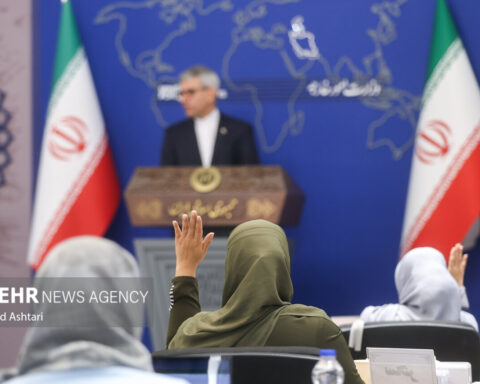
Xinhua’s own announcement on May 11 contained no equivalent framing. The state news agency described the visit in the conventional language of bilateral diplomacy. That asymmetry — Washington publicly placing Iran at the center, Beijing publicly placing it nowhere — sets the opening positions.
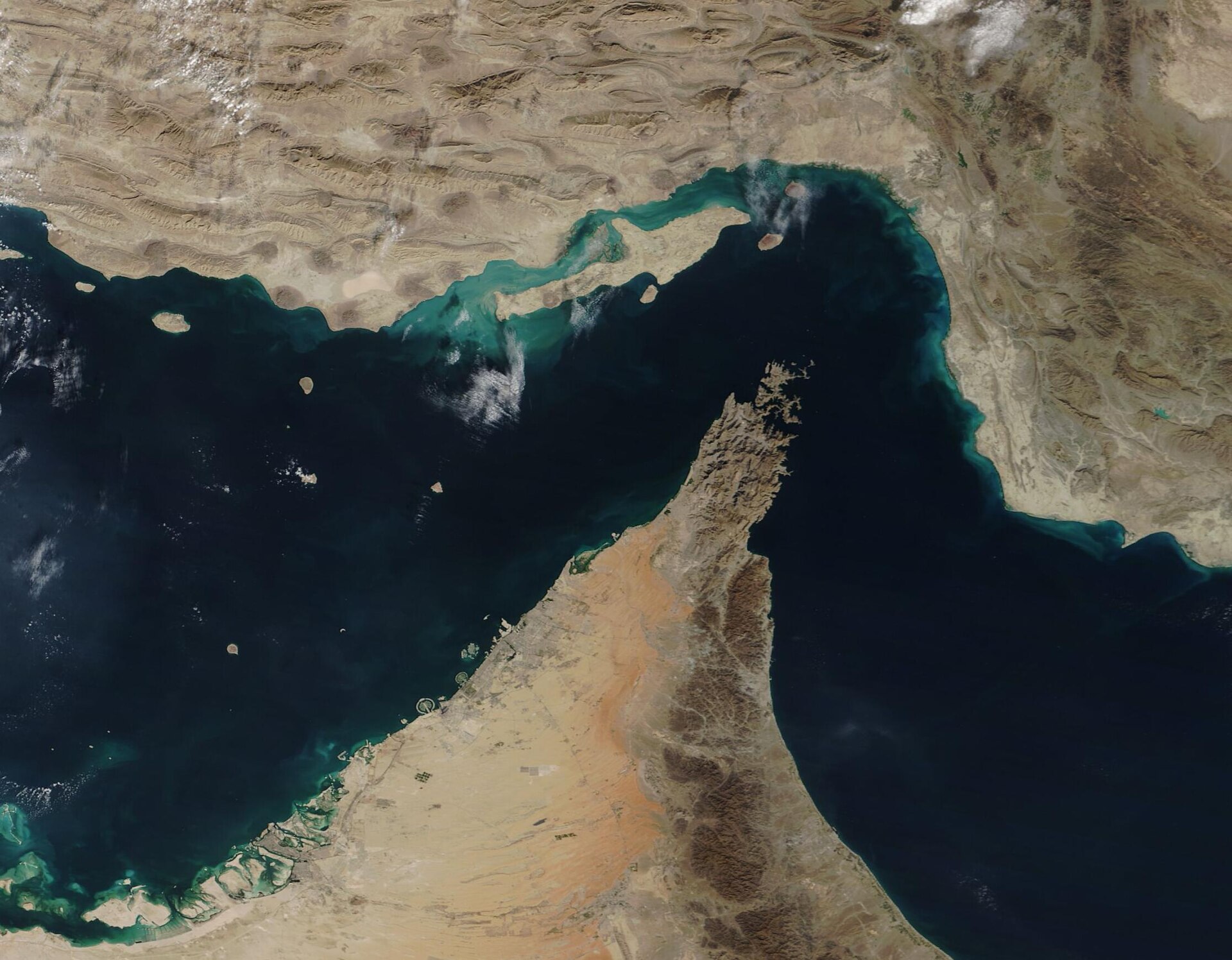
The summit’s reinstatement is itself a data point. Trump in March threatened to delay the Xi meeting if China did not move on Hormuz, per Bloomberg’s March 15 report. The summit was delayed. It has now been confirmed without any reported Chinese concession on Iranian crude purchases, the shadow fleet, or the Hormuz veto Beijing cast on April 7. Trump’s Riyadh-Beijing Sprint and the Clock Only Xi Controls mapped the timing pressure.
The Council on Foreign Relations argued in its May 2026 analysis that Trump’s military gamble on Iran “has fundamentally weakened his hand going into the summit.” Chatham House published two pieces the same week — one cautious on the procedural read, one structural: “China will benefit from the Iran war, regardless of any deal between Trump and Tehran.”
The Middle East briefing 3,000+ readers start their day with.
One email. Every weekday morning. Free.
Why did Iran omit Hormuz from its own Beijing readout?
Iranian Foreign Minister Abbas Araghchi visited Beijing on May 6 — Tehran’s first ministerial trip to China since the war began. Chinese Foreign Minister Wang Yi’s published readout, carried by the Chinese MFA on May 7, was explicit on the strait: “Regarding the Strait of Hormuz, the international community shares a common concern about restoring normal and safe passage through the strait, and China hopes that the parties involved will promptly respond to the strong call from the international community.” Wang also called for “an immediate end to the hostilities” and described “a comprehensive ceasefire” as “of utmost urgency.” The same summit schedule that brought Wang Yi to the table with Araghchi on May 6 also pulled him away from the BRICS Delhi meeting on May 14–15, where Araghchi and the Saudi and Emirati foreign ministers would convene without China’s most experienced Iran-Gulf broker in the room.
Araghchi was quoted by CNBC on May 6 saying it was “possible to resolve the issue of reopening the Strait of Hormuz as soon as possible.” That language did not appear in the readout Iran’s own foreign ministry published on its Telegram channel. The Iranian statement endorsed China’s four-point regional security proposal — peaceful coexistence, national sovereignty, international rule of law, balanced development and security, per the Washington Times of May 6 — and described it as a framework for a post-war Gulf. Hormuz reopening, as a discrete commitment, was absent.
Araghchi’s “as soon as possible” formulation was for Chinese domestic and international consumption. Iran’s Telegram readout, which is what the IRGC and the Supreme National Security Council see, omitted the substantive commitment. Tehran has, in effect, paid in language to Beijing for transit arithmetic it has not paid in action.
That is consistent with the authorization architecture Three Men Can Kill Any Iran Deal Trump Signs documented: the foreign minister does not control IRGC Navy posture in the strait, and the parliament speaker Mohammad Bagher Ghalibaf has formally linked Hormuz reopening to the U.S. naval blockade being lifted first.
China invoked its Blocking Rules 12 days before the summit
On May 2, twelve days before Trump’s arrival, China’s Ministry of Commerce issued its first-ever Order under the country’s Blocking Rules. The order names five Shandong-province teapot refineries — Hengli Petrochemical (Dalian), Shandong Jincheng, Hebei Xinhai, Shouguang Luqing, and Shandong Shengxing — and states that U.S. sanctions targeting them “shall not be recognized, enforced or complied with” inside Chinese jurisdiction. The MOFCOM action was reported by Al Jazeera on May 3 and analysed by the London firm Stephenson Harwood on May 4.
The Blocking Rules were introduced in January 2021 and had never been used. Beijing held them for five years. It deployed them in the twelve-day window before the summit.
The trigger was Treasury press release sb0472, dated April 24, which placed Hengli Petrochemical on the SDN list as “one of Tehran’s most valued customers” and stated the company “generated hundreds of millions of dollars in revenue for the Iranian military through crude oil purchases.” OFAC simultaneously moved against approximately forty shipping companies tied to Iran’s shadow fleet.
The chronology matters because it inverts the diplomatic theater. Washington is arriving in Beijing to ask for Chinese pressure on Iran. Beijing has, in advance, codified a refusal to accept U.S. secondary sanctions on Chinese refineries as a legitimate enforcement mechanism. Whatever happens at the leaders’ table on May 14 and 15, the legal architecture of how China handles Iran crude has been formally insulated from Treasury’s reach.
| Date | Action | Source |
|---|---|---|
| April 7, 2026 | China and Russia veto UN Security Council Hormuz resolution; 11 in favor | UN News; Chinese Permanent Mission |
| April 20, 2026 | Xi-MBS call; Xi publicly states Hormuz should stay open | Bloomberg; Chinese MFA |
| April 24, 2026 | OFAC sanctions Hengli Petrochemical and ~40 shipping companies | Treasury press release sb0472 |
| May 2, 2026 | MOFCOM invokes Blocking Rules for first time ever; 5 teapots covered | Al Jazeera; Stephenson Harwood |
| May 6, 2026 | Araghchi in Beijing; Wang Yi calls for Hormuz reopening; Iran Telegram omits it | Chinese MFA; CNBC; Al Jazeera |
| May 8, 2026 | Bessent confirms Iran on summit agenda | CNBC |
| May 11, 2026 | Xinhua confirms Trump state visit May 13-15 | Xinhua; Bloomberg |
| May 14-15, 2026 | Trump-Xi summit, Beijing | Xinhua |
Where does Beijing’s leverage over Tehran actually sit?
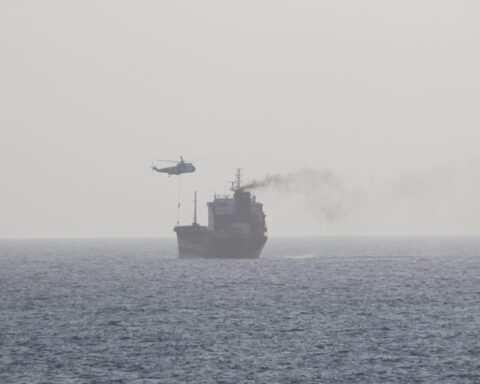
China purchases roughly 1.38 million barrels per day of Iranian crude, per Kpler tracking cited by WION News — about 12% of total Chinese crude imports in 2025. Official Chinese customs data records none of it; cargoes are relabeled as Malaysian via shadow-fleet ship-to-ship transfers documented by the Columbia Center on Global Energy Policy.
About 90% of those barrels are absorbed by independent teapot refineries in Shandong, not by Sinopec or CNPC directly. Major state-owned Chinese companies stopped buying Iranian crude in May 2019 after the OFAC sanctions snapback. Sinopec has been buying Saudi cargoes lifted from Yanbu instead, per OilPrice.com and CNBC’s April 25 reporting.
China’s state-owned majors are insulated from Iranian crude exposure and therefore insulated from secondary sanctions risk. The teapots that handle the volumes are the entities Treasury sanctioned April 24 and that MOFCOM ring-fenced May 2. The leverage Beijing holds over Tehran sits in a sector that Beijing has now declared, in law, beyond U.S. jurisdictional reach.
Iran earned approximately $9 billion in the first 40 days of the war by lifting exports to 1.85 million bpd and pricing at a premium, per The National’s April 13 reporting, and is currently sitting on roughly 190 million barrels of crude at sea — about $15 billion in deferred revenue. No other market absorbs those volumes.
The Iran International tracking of Kunlun Bank, supplemented by United Against Nuclear Iran and Atlantic Council analyses, shows the settlement mechanism runs through China’s Cross-Border Interbank Payment System using matched trade-flow offsets rather than dollar transfers. Kunlun, majority-owned by CNPC, was placed on the SDN list in 2012, removed under JCPOA in 2015, and re-designated to OFAC’s CAPTA list in 2019. The payment rails were built to survive sanctions.
That is the leverage Washington wants Beijing to apply. Cut the teapot offtake, or condition it on Iranian behavior. The Brookings and CSIS reads on the April 7 Pakistan ceasefire — which Iran accepted, briefly, before IRGC posture broke it — credited Chinese pressure as the proximate cause. The political price Beijing would charge to repeat it, at scale, is the open question of the summit.
The Saudi exclusion problem
Saudi Arabia absorbs the fiscal cost of every day the strait stays closed or constrained. Goldman Sachs’ war-adjusted deficit projection sits at 6.6% of GDP against the official 3.3% baseline. The Yanbu pipeline ceiling — 5.9 million bpd in best-case loading — sits roughly 1.1 to 1.6 million bpd below pre-war Hormuz throughput. The country has no enforcement seat at any table that matters. While Trump sat with Xi, the parallel European diplomatic track Faisal built while Trump sat with Xi — Ankara on May 6, Doha on May 9, London on May 11 — was Riyadh’s answer to that exclusion: assembling a coalition of voices that can demand Hormuz reopening without Saudi Arabia appearing self-interested.
On April 20, Xi called Crown Prince Mohammed bin Salman — the call marked the tenth anniversary of the comprehensive strategic partnership. Bloomberg and the Chinese MFA readout confirmed Xi stated Hormuz should remain open. The South China Morning Post coverage emphasized symbolic weight; there has been no follow-up reporting suggesting Riyadh secured procedural access to whatever framework Beijing and Washington are negotiating.
The Saudi response to U.S. unilateralism has been concrete. NBC News and the Times of Israel reported that Riyadh suspended U.S. basing and airspace access between May 5 and May 7 when Operation Project Freedom launched without Saudi coordination. Access was restored on May 8 after a second Trump-MBS call, terms undisclosed.
Washington needs Beijing’s pressure on Tehran. Beijing needs Hormuz open for its 37.7% share of strait-transiting oil exports — the largest single-country exposure per CSIS ChinaPower — but also needs Iran economically dependent and politically aligned. Tehran needs China’s offtake to survive the sanctions regime that funds the war. Riyadh sits outside all three legs and pays the bill for the disruption.
The Araghchi call to Riyadh on the blockade day came as Khamenei was separately briefing IRGC Khatam al-Anbiya commander Gholam Ali Abdollahi — the channel that controls IRGC Navy posture in the strait. There is no public record of a corresponding Araghchi call to Beijing.
“At the Trump-Xi Summit, China Will Have the Upper Hand.” Council on Foreign Relations, May 2026
What Beijing wants from the summit calendar
An unnamed China analyst told Fortune on May 10 that Beijing is “working backward from our midterm elections.” Any concession Trump can claim as a Hormuz win plays into the November 2026 calendar; any concession Xi grants without extracting equivalent value on Taiwan, semiconductors, or tariff architecture comes at a quantifiable political cost.
The April 7 UN veto removed the multilateral enforcement pathway. Beijing’s ambassador Fu Cong stated in the Chinese Permanent Mission’s April 8 statement that the draft resolution “failed to capture the root causes and the full picture of the conflict in a comprehensive and balanced manner.” Eleven countries voted in favor. China and Russia killed it. What remains is the bilateral U.S.-China track.
Iran’s May 10 counteroffer set the bargaining floor. Tehran demanded war reparations, full Iranian sovereignty over Hormuz, an end to all oil sanctions, the lifting of the U.S. naval blockade, and release of seized assets. Trump’s response on Truth Social: “TOTALLY UNACCEPTABLE!” Beijing has spent the previous fortnight insulating the teapots from the only Treasury instrument capable of compressing that position.
The Foundation for Defense of Democracies has framed the optics risk: any U.S. concession on Iranian oil trade in exchange for summit deliverables would, in its view, hand Tehran the survival mechanism Treasury just spent April trying to constrain. CSIS’s Jon Alterman has approached the same question from the Chinese side — “Beijing’s fears over Hormuz, its read on U.S. power, and how the conflict reshapes China’s view of a global order it relies on but can’t control.”
Background
The China-Iran 25-Year Comprehensive Strategic Partnership was signed March 27, 2021, with up to $400 billion in pledged Chinese investment. Atlantic Council tracking shows little of it has been actualized; Chinese firms have consistently declined to take secondary-sanction exposure on Iranian infrastructure. The agreement remains the headline architecture of the relationship even as the operational substance sits in teapot refinery purchase orders and Kunlun Bank settlement ledgers.
China’s storage position complicates the leverage arithmetic. Kayrros tracking as of March 2 recorded 1.39 billion barrels in Chinese reserves — roughly 120 days of net crude imports. The buffer means Beijing can absorb a calibrated Hormuz disruption longer than any other major importer. The Visual Capitalist and EnergyNow data confirm that about 50% of China’s foreign crude imports moved through Hormuz in 2025, against 36% of total supply in 2024.
The April 7 Pakistan ceasefire mediation — which Brookings credited China with pushing Iran toward — held briefly before IRGC Navy posture broke it. Beijing demonstrated capacity to move Tehran on a defined, short-duration ask. Hormuz sovereignty, missile programs, and the enrichment threshold were not on the table.
The enrichment question sits in parallel. Iran’s Enrichment Consortium Is a Sovereignty Trap tracked the consortium proposal as one of the few structural mechanisms with Chinese fingerprints — and one that Tehran has been unwilling to accept on terms that do not preserve domestic enrichment capacity. Qatar Took the Iran File documented Doha’s parallel mediation track, which sits adjacent to but separate from the Beijing channel. Iran’s Strait Authority Creates a Sanctions Trap No Deal Can Close set out why the IRGC Navy’s standing assertion of Hormuz authority survives any ceasefire text that does not address the underlying authorization architecture.
FAQ
Why was the Trump-Xi summit delayed earlier this year?
Bloomberg reported on March 15 that Trump floated delaying the Xi summit unless China moved on Hormuz. The summit was then postponed. It has now been rescheduled — for May 13 to 15 per Xinhua’s May 11 confirmation — without any publicly reported Chinese concession on Iranian crude purchases, the shadow fleet, or the April 7 UN veto. The reinstatement is itself the diplomatic data point.
How much Iranian crude moves through the Shandong teapots?
Approximately 90% of China-bound Iranian crude is handled by independent refineries in Shandong province, per OilPrice.com tracking. The five named in MOFCOM’s May 2 Blocking Rules order — Hengli (Dalian), Shandong Jincheng, Hebei Xinhai, Shouguang Luqing, and Shandong Shengxing — represent the operational layer where U.S. secondary sanctions would have to bite. The CNPC and Sinopec state-owned majors stopped direct purchases in May 2019.
What is the Chinese Blocking Rules order and why does it matter?
China’s Blocking Rules were introduced in January 2021 and grant MOFCOM authority to designate foreign sanctions as legally unenforceable inside China. The May 2 order is the first invocation in the five years the mechanism has existed. Stephenson Harwood’s analysis notes that Chinese entities operating under the order are legally prohibited from complying with the targeted U.S. sanctions on Chinese territory. The timing — twelve days before the Trump-Xi summit — frames the legal terrain Beijing wants the talks to operate within.
Does Saudi Arabia have any backchannel into the summit framework?
There is no public evidence of a structural Saudi channel into the Trump-Xi negotiation. Xi’s April 20 call with MBS was the highest-profile Chinese engagement with Riyadh on Hormuz, and Xi used it to state publicly that the strait should remain open. There has been no follow-up reporting indicating Saudi access to the Beijing framework. Riyadh’s May 5-7 suspension of U.S. basing access for Operation Project Freedom was a coercive signal directed at Washington, not a procedural seat at the Chinese table.
What did Iran demand in its May 10 counteroffer?
Per PressTV’s May 10 reporting and CNBC’s May 11 follow-up, Tehran’s conditions were: war reparations from the United States and its partners, full Iranian sovereignty over the Strait of Hormuz, an end to all oil-sector sanctions, removal of the U.S. naval blockade imposed April 13, and release of seized Iranian assets. Trump’s Truth Social response was “TOTALLY UNACCEPTABLE!” The document sets the maximalist Iranian floor that Xi is being asked to compress. Saudi Arabia’s parallel track at the UN Security Council — co-sponsoring two Hormuz resolutions designed to produce Russian and Chinese vetoes, thereby exhausting multilateral remedies and enabling post-UN coalition action — is the subject of Saudi Arabia’s Hormuz Resolution Was Designed to Fail.
The full analysis of Saudi Arabia’s structural exclusion from the Beijing framework — why MBS has no procedural channel into the Trump-Xi negotiation, and what the kingdom’s 3.15 million bpd production loss means for its leverage ceiling — is the subject of Trump-Xi Beijing Summit: Saudi Arabia Frozen Out of the Hormuz Endgame.