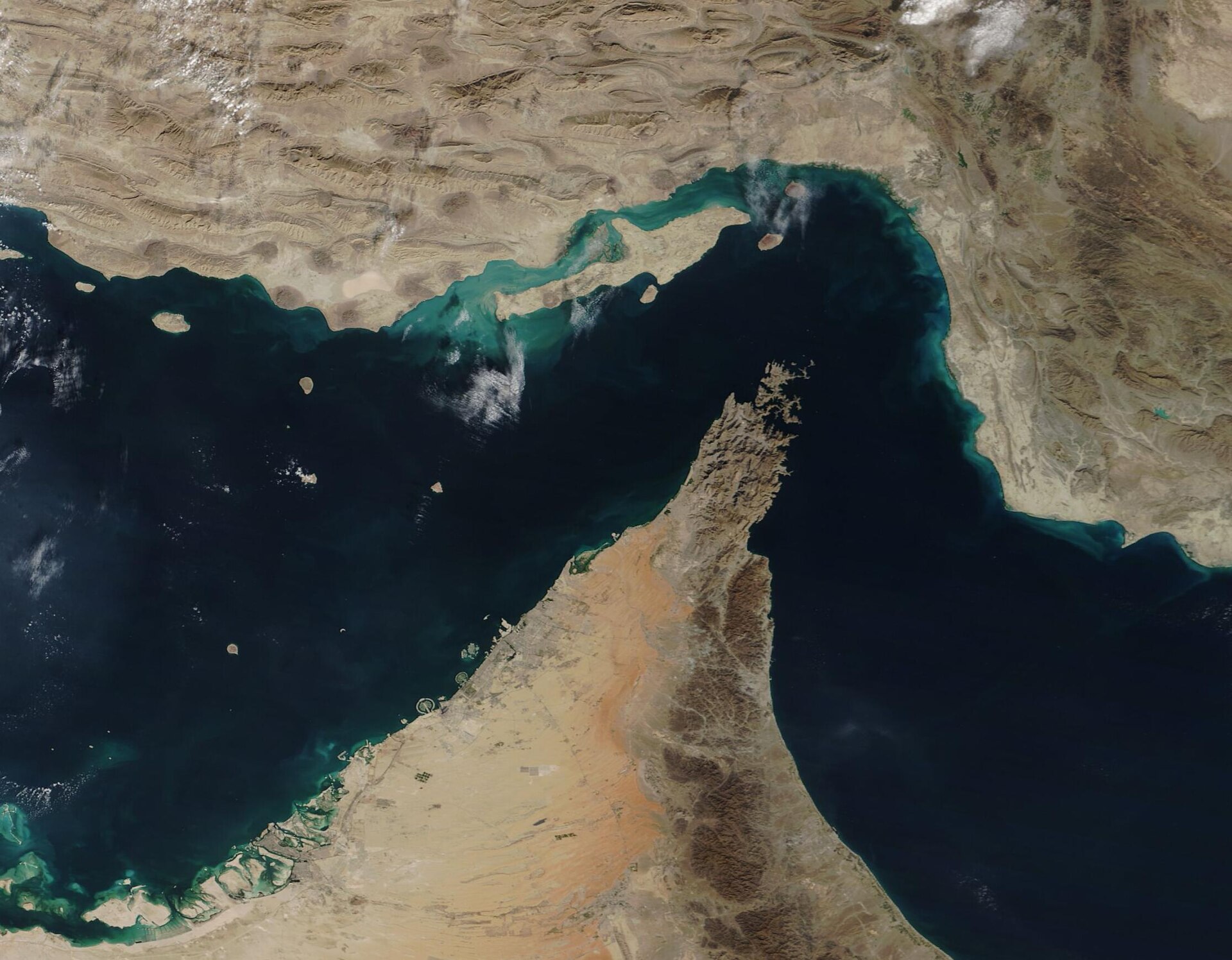
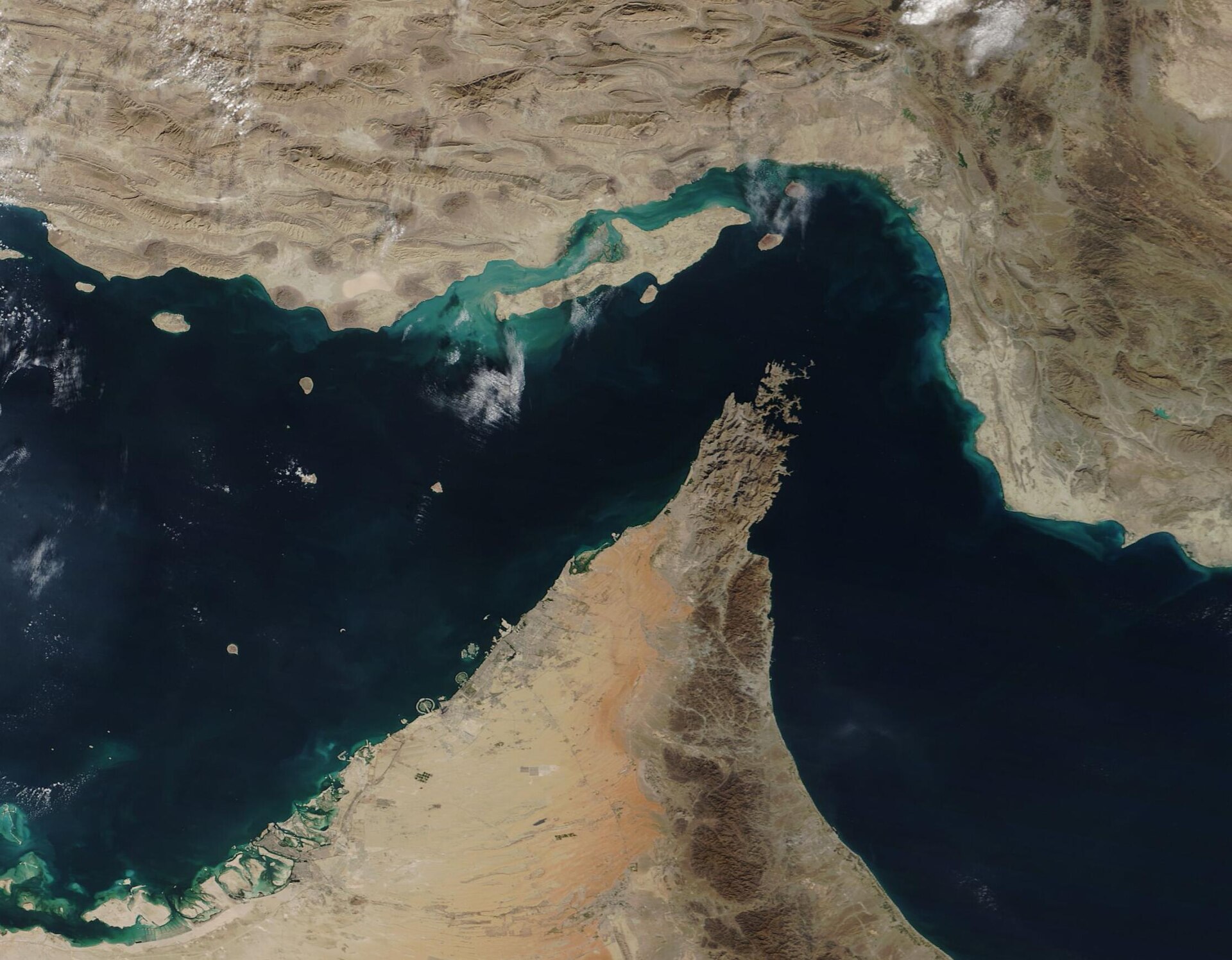
DUBAI — A vessel anchored 38 nautical miles northeast of Fujairah was boarded and seized by what the UK Maritime Trade Operations center called “unauthorised personnel” early Wednesday morning and directed toward Iranian territorial waters — at the precise hour that Donald Trump and Xi Jinping were issuing a joint statement in Beijing declaring that the Strait of Hormuz “must remain open.” Trade press outlets including Ship & Bunker attributed the boarding directly to Iranian forces, making it the third confirmed hijacking in the Gulf of Oman since the war began February 28, and the first inside the IRGC’s expanded Operational Crescent, a zone whose western boundary was extended to Fujairah itself just ten days earlier.
The seizure happened less than 24 hours after a Chinese COSCO supertanker, the Yuan Hua Hu, transited the IRGC-controlled Larak corridor toll-free in what a COSCO official told the Wall Street Journal was “a gesture from Tehran timed to Trump’s summit with Xi Jinping” — revealing a system in which vessels with Chinese state backing pass freely while others are boarded at gunpoint. On the same morning, an Indian-flagged cargo vessel carrying livestock from Berbera to Sharjah was struck by a drone or missile off Oman’s coast and sank, prompting India to call the attack “unacceptable,” and CNN reported that frustrated Trump aides described the president as “more seriously thinking of restarting combat operations in Iran.” NBC News disclosed separately that the Pentagon is internally working up the name “Sledgehammer” for a resumed campaign — a naming change that could allow the White House to reset the 60-day War Powers clock and avoid requiring Congressional reauthorization.
Table of Contents
What Happened Off Fujairah
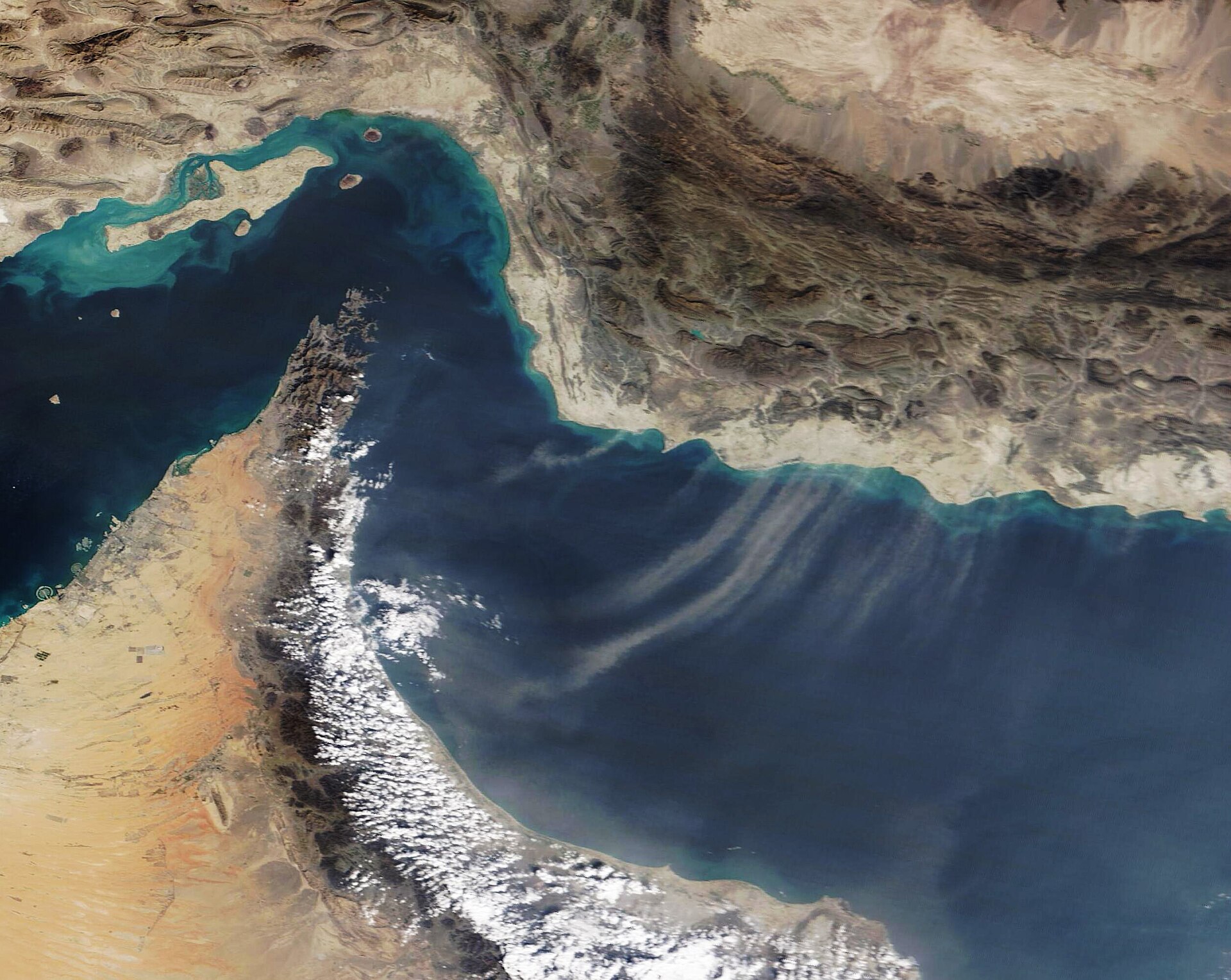
UKMTO issued its advisory at 05:45 UTC on May 14, reporting that a vessel had been “taken by unauthorised personnel whilst at anchor” and was “now bound for Iranian territorial waters.” UKMTO did not name the vessel and stated it was investigating, but Ship & Bunker’s headline — “Iranian Forces Detain Ship Anchored Off Fujairah” — provided the most direct attribution of any outlet, while Bloomberg, Reuters, and Al Arabiya all ran the story citing the UKMTO advisory without identifying the ship by name, flag, or cargo. The seizure location, 38 nautical miles from the UAE coast, sits within the UAE’s 200-nautical-mile Exclusive Economic Zone under UNCLOS but also inside the IRGC’s Operational Crescent, whose May 4 expansion explicitly extended its western boundary to Fujairah.
Windward AI reported the same morning that IRGC small craft were operating inside the northern Hormuz Corridor in “swarm-style formations” and “escort-like behavior” that disrupted commercial traffic, according to data published by WION News — the operational environment in which the boarding took place. UKMTO has now recorded 47 incidents between February 28 and May 11, including 27 attacks, 18 cases of suspicious activity, and two prior hijackings; Wednesday’s seizure would be the third, and the first conducted within Fujairah’s anchorage waters rather than in the Strait itself. Bloomberg ran the story under the headline “US Efforts to End Iran War Stumble as Ship Seized Near UAE,” framing the boarding as a direct blow to the ceasefire diplomacy that Trump had been selling in Beijing hours earlier.
Why Did China’s Tanker Pass While This Vessel Was Seized?
The answer lies in a selective-passage system that Iran has been constructing for weeks. The Yuan Hua Hu, a COSCO-owned VLCC carrying approximately two million barrels of Iraqi crude and chartered by Sinopec subsidiary Unipec, transited the Larak corridor on May 13 — the day Trump landed in Beijing — becoming the third Chinese tanker to exit the Gulf since February 28. The transit followed a pattern established through Iran’s newly declared Persian Gulf Strait Authority, which administers passage under what PressTV described as “new rules, new regulations and new protocols,” with IRGC naval forces determining which vessels qualify and which do not.
The Fujairah seizure, occurring outside the Larak corridor and targeting a vessel without Chinese state backing, demonstrates the second track of that system in operation. When Iran seized the Barbados-flagged, OFAC-sanctioned tanker Ocean Koi on May 8, IRNA reported the boarding was conducted under “a decision of the Supreme National Security Council and a judicial order,” framing it as a sovereign legal act rather than piracy — the same institutional language that underpins the Strait Authority’s broader mandate. Xi Jinping’s statement in Beijing opposing “militarisation of the Strait” and any toll regime did not address the question of who decides which ships pass, which is the only question that matters at 05:45 UTC on a Wednesday morning when IRGC boarding teams are climbing a vessel’s ladder 38 miles from Fujairah.
The Middle East briefing 3,000+ readers start their day with.
One email. Every weekday morning. Free.
The Ship That Sank Off Oman
While the Fujairah seizure was unfolding, the Indian-flagged cargo vessel MSV Haji Ali — carrying 14 crew and a livestock cargo from Berbera, Somalia to Sharjah — was struck by a drone or missile in the Sea of Oman near Limah, triggering a fire that sank the vessel, according to India Shipping News and the Jakarta Post. All 14 crew were rescued by the Oman Coast Guard, and India’s Ministry of External Affairs responded within hours with a statement that managed to condemn the attack in the strongest terms while declining to attribute it to any specific actor.
“The attack on an Indian-flagged ship off the coast of Oman yesterday is unacceptable, and we deplore the fact that commercial shipping and civilian mariners continue to be targeted,” the MEA spokesperson said, according to the Statesman — language that placed the Haji Ali incident inside a systemic pattern without triggering a bilateral confrontation with Tehran. The Haji Ali’s profile makes it an unlikely target for a deliberate IRGC operation: a small livestock carrier sailing between African and Gulf ports carries no conceivable military or political value, suggesting either an indiscriminate drone strike or a targeting error inside Iran’s declared exclusion zone. NBC News was the only major outlet to pair both incidents under a single headline, a framing that captured what the numbers show: UKMTO’s 47 incidents in 75 days amount to one maritime security event every 38 hours in waters that carry roughly 20 percent of the world’s traded oil.
Is the Ceasefire Already Dead?
Trump himself has been answering that question in public all week, with escalating directness. He told reporters on May 11 that the ceasefire was on “massive life support” after Iran’s latest response, called Iran’s proposal “totally unacceptable” and “stupid” in a CBS News interview the same day, and when Axios asked whether combat operations were over, replied: “No, I didn’t say that.” CNN reported on May 12, sourcing Trump aides, that the president was “more seriously thinking of restarting combat operations in Iran” than at any point since the April 8 ceasefire, driven by frustration that Hormuz remains functionally closed and what he perceives as an unresolvable split within Iran’s leadership between civilian negotiators and IRGC commanders who hold the actual operational authority.
“Frustrated Trump more seriously thinking of restarting combat operations in Iran” — CNN, sourcing Trump aides, May 12, 2026
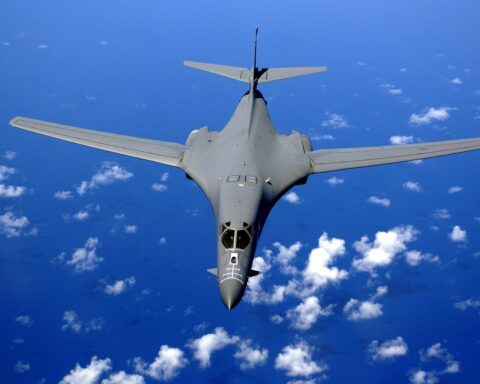
Axios reported on May 11 that Trump had received a briefing on plans for fresh military strikes, with two unnamed US officials stating they did not believe he would order action before returning from China; one option under consideration is to resume bombing and strike the remaining 25 percent of identified Iranian targets not yet hit during the 39 days of Operation Epic Fury. But the resumption calculus has a supply-side problem: in those 39 days the US burned through nearly half its stockpiles of several key munitions, according to CSIS analysis reported by Military Times, and Senator Mark Kelly of Arizona, after receiving Pentagon briefings, called the state of the arsenal “shocking,” warning that replenishment “could take years.” Euronews reported on May 13 that 30 of 33 Iranian Hormuz missile sites have been restored and that Iran retains roughly 70 percent of its pre-war missile stockpile — meaning the targets have been partially rebuilt while the munitions to re-strike them have been partially depleted.
What Does ‘Sledgehammer’ Mean for the War Powers Clock?
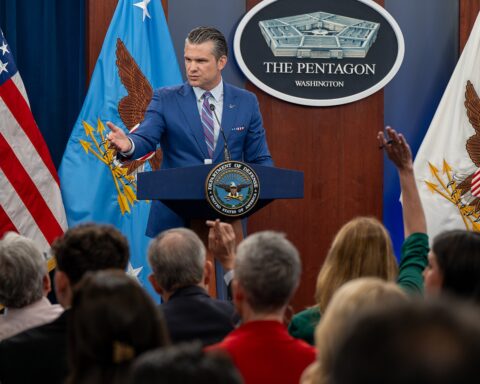
NBC News reported on May 13 that the Pentagon is internally developing the operational name “Sledgehammer” for a resumed campaign against Iran, a detail that matters far more for constitutional law than for military branding. Under the War Powers Resolution, a president must notify Congress within 48 hours of committing forces to hostilities and withdraw them within 60 days absent congressional authorization; by giving a resumed campaign a new name distinct from the original Operation Epic Fury, the White House could argue that it constitutes a new and separate military action, resetting the 60-day clock and sidestepping the need for a vote that neither chamber appears eager to hold. Defense Secretary Hegseth, who denied Senator Kelly’s characterization of munitions depletion, has not commented on the reported naming convention.
The timing of the “Sledgehammer” disclosure — one day before the Fujairah seizure, two days before Trump’s Beijing summit communiqué — reads less as a leak than as a deliberate signal to both Tehran and Congress that the military option has moved from abstract contingency to operational planning with a name, a legal strategy, and an unstruck target list. Two US officials told Axios they doubted Trump would act before returning from China.
But the IRGC’s boarding of a vessel during the summit itself — while Trump and Xi were literally declaring Hormuz open — provides precisely the kind of televised humiliation that has historically accelerated Trump’s escalatory decisions. With 1,550 vessels currently stranded in the region and 22,500 mariners trapped aboard them, according to shipping intelligence tracking services, the status quo has no natural off-ramp.
The Operational Crescent Reaches Fujairah
The geographic significance of Wednesday’s seizure extends beyond the incident itself: it is the first known boarding conducted inside the IRGC’s post-May 4 expanded Operational Crescent in waters that belong to the UAE under international law. IRGC Navy Deputy Political Director Mohammad Akbarzadeh told US News on May 12 that the zone now spans “200 to 300 nautical miles, forming what Iranian officials describe as a complete crescent, arcing from Jask in the east to Siri Island in the west,” and the May 4 expansion explicitly named Fujairah as the western anchor point, while the May 12 expansion formalized a further arc from Jask to Siri Island — completing the geographic envelope within which Iran claims operational jurisdiction over all maritime traffic regardless of flag state or EEZ boundaries.
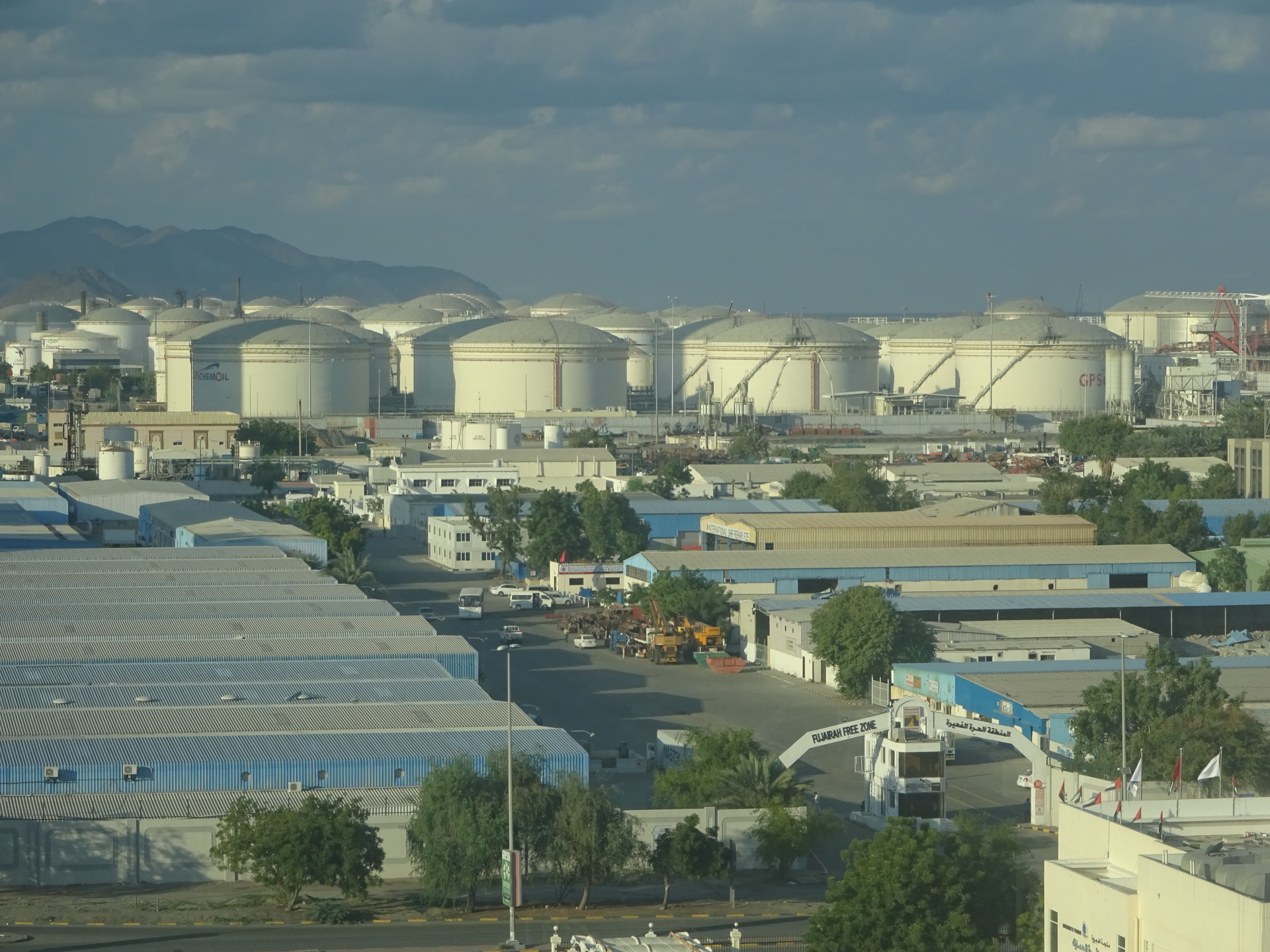
For the UAE, the threat is existential to its energy export bypass. Fujairah handles approximately 1.9 million barrels per day of crude exports, roughly 57 percent above its 2025 average, because the Habshan-Fujairah pipeline has become the UAE’s primary Hormuz workaround since the war began on February 28, according to World Oil and EnergyNow. If IRGC boarding teams can operate in Fujairah’s anchorage waters — outside the Strait, outside the Larak corridor, in the open Gulf of Oman — then the pipeline’s value as a bypass collapses, because tankers loading at Fujairah must still transit waters that the IRGC now claims as its operational domain. Brent crude sat at $106.07 per barrel on Wednesday, and Lloyd’s Joint War Committee has designated the entire Arabian Gulf a conflict zone since late February, with war risk premiums running roughly 60 times pre-crisis rates according to Windward AI analysis.
Background
Iran has a documented pattern of timing its most significant maritime seizures to diplomatic junctures involving its adversaries. The IRGC seized the UK-flagged Stena Impero in July 2019, two weeks after Gibraltar detained Iran’s Grace 1, and held it for two months as diplomatic leverage; it seized the Portugal-flagged MSC Aries in April 2024, approximately two weeks after Israel’s airstrike on the Iranian consulate in Damascus, in both cases turning a vessel into a bargaining chip calibrated to a specific political moment. In the current war, the IRGC seized both the MSC Francesca and the Epaminodas on April 22, the same day parliament speaker Ghalibaf formally linked Hormuz reopening to removal of the US blockade, and the March 24 administrative rejection of the Selen — a 6,800 dwt container feeder turned back without boarding — established the bureaucratic template for the rejection framework that has since matured into the Persian Gulf Strait Authority.
The double blockade configuration remains in effect: the US controls Arabian Sea entry from the south since April 13, while the IRGC controls Gulf of Oman exit from the north since March 4, meaning any vessel attempting passage requires approval from both sides. Only 45 transits have occurred since the April 8 ceasefire, representing 3.6 percent of the pre-war baseline, and Iran has not claimed Wednesday’s Fujairah seizure — a silence that may indicate operational sensitivity given the summit timing, or a deliberate ambiguity strategy while the vessel is moved deeper into Iranian waters. Iran’s HEU stockpile stood at 440.9 kilograms enriched to 60 percent as of the last IAEA-verified figure in June 2025; the agency’s access was withdrawn on February 28, 2026, and the current state of Iran’s nuclear program remains unverified.
Frequently Asked Questions
Has Iran officially claimed responsibility for the Fujairah seizure?
No. As of Wednesday evening, no statement from IRNA, PressTV, Tasnim, or any Iranian government body has claimed the Fujairah boarding, and UKMTO used the language “unauthorised personnel” rather than naming Iran directly. Ship & Bunker attributed the seizure to “Iranian Forces” in its headline, providing the most direct identification from any outlet. When Iran seized the Ocean Koi on May 8, IRNA explicitly stated the boarding was conducted under “a decision of the Supreme National Security Council and a judicial order” — making the silence on the Fujairah incident a notable departure from Iran’s recent practice of publicly justifying its boardings through institutional and legal language.
What typically happens to crews and vessels after an IRGC boarding?
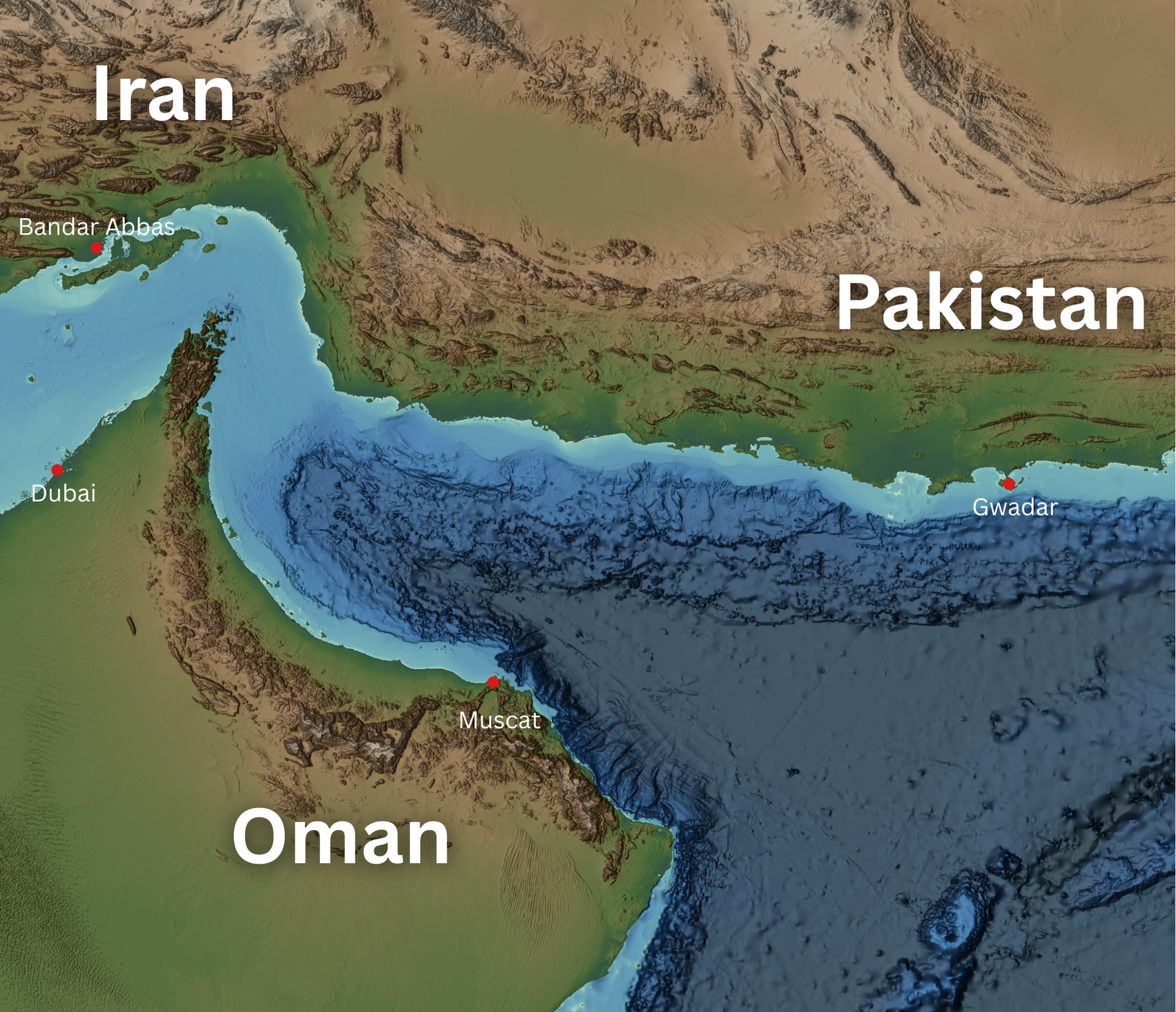
In previous seizures, Iran has held both vessel and crew for weeks to months as diplomatic leverage. The Stena Impero’s 23 crew were detained for two months in 2019; the MSC Aries crew were held for approximately six weeks in 2024 before Iran released the vessel amid backlash from the shipping industry and flag states. Vessels are typically berthed at Bandar Abbas or Qeshm Island. Release has historically required either a reciprocal concession — a detained Iranian vessel freed elsewhere — or quiet diplomatic intermediation, often through Oman. No flag state has successfully recovered a vessel through legal proceedings alone.
Does the April 8 ceasefire have a formal expiry date, and who enforces it?
The April 8 ceasefire has no embedded enforcement mechanism. Pakistan brokered the agreement and has served as the de facto relay between US and Iranian negotiators, but the arrangement contains no third-party arbitration clause and no defined consequence for violations — meaning each side has simply continued operations it deems outside the ceasefire’s scope. The Soufan Center noted there is no extension mechanism built into the text. Pakistan’s position as enforcer is further complicated by the 27th Constitutional Amendment, which places ceasefire diplomacy under Chief of Army Staff Munir’s authority rather than the elected government, making enforcement continuity dependent on a single military figure rather than an institutional framework.
What is the legal status of the seizure under international law?
The boarding occurred approximately 38 nautical miles from the UAE coast, placing it inside the UAE’s Exclusive Economic Zone under UNCLOS but well outside its 12-nautical-mile territorial waters. Under UNCLOS Articles 58 and 87, all states enjoy freedom of navigation in EEZ waters, and the boarding of a vessel at anchor by foreign armed personnel without flag-state consent would constitute either piracy under Article 101 or, if attributable to a state actor, an internationally wrongful act under the law of state responsibility. Iran’s declared Operational Crescent has no standing in international law — no state or international body has recognized the zone — but Iran’s establishment of the Persian Gulf Strait Authority and its use of SNSC judicial orders to frame previous seizures suggest it is constructing a domestic legal architecture to retroactively legitimize operations that the rest of the world classifies as illegal.
How does the Haji Ali sinking differ from the Fujairah seizure?
The two incidents, though occurring on the same day in adjacent waters, represent different operational categories. The Fujairah seizure was a boarding — a controlled act requiring planning, small-craft deployment, and a deliberate decision to direct the vessel toward Iran — while the Haji Ali sinking was a kinetic strike, likely by drone or missile, against a small Indian-flagged livestock carrier with no conceivable strategic value. India’s MEA condemned the attack without attributing it to any party, and no group has claimed responsibility. The Haji Ali’s profile — 14 crew, livestock cargo, a Berbera-to-Sharjah route serving the Gulf’s food import trade — makes it a poor candidate for a calculated IRGC operation and raises the possibility of a misidentification or an automated targeting system engaging a vessel transiting a declared exclusion zone without clearance. The combined fiscal signal from both incidents was captured the following session, when Brent crude hit $111 a barrel as markets registered that the Beijing summit had not changed IRGC operational tempo.