
HORMUZ STRAIT — Iran’s Islamic Revolutionary Guard Corps deployed more than 340 fast-attack boats across five monitored zones of the Strait of Hormuz on May 13, 2026, according to maritime intelligence firm Windward AI, while US Vice President JD Vance told reporters the same day that nuclear negotiations with Tehran were making “progress” and remained “very sensitive.”
The deployment — down from an estimated 454 craft on May 12 but far above the May 4–10 baseline of 27 to 230 boats — coincided with two fresh attacks on commercial shipping: the Indian-flagged cargo vessel Haji Ali sank off Oman on May 14 after a fire triggered by an attack, and a second unnamed vessel was seized 38 to 44 nautical miles northeast of Fujairah and redirected toward Iranian waters, according to UK Maritime Trade Operations. The simultaneity is the story. The IRGC is not escalating despite talks. It is escalating during them.
Table of Contents
The Swarm by the Numbers
Windward AI, which tracks vessel movements using satellite imagery and AIS data, recorded 342 IRGC fast-attack boats operating across five Hormuz zones on May 13, Fox News Digital reported. The previous day’s count reached approximately 454 — a figure that coincided with the near-total halt of commercial traffic through the strait, with all large-hull vessels observed stationary.
The baseline matters. Between May 4 and May 10, Windward tracked between 27 and 230 IRGC craft in the same zones. The May 12 peak represents a doubling of the upper end of that range. By Lloyd’s of London’s confirmation, zero commercial transits have occurred since May 4 — more than ten consecutive days of effective closure as of May 14.
For context, only 45 commercial transits had passed through Hormuz since the April 8 ceasefire — 3.6 percent of the pre-war baseline, according to Windward data compiled through late April. The fast-boat surge has pushed even that trickle to zero.
The boats themselves are not symbolic. Iran’s latest Heydar-110 class fast-attack craft are reportedly capable of 110 knots and carry anti-ship missiles, according to Defence Security Asia — a shift from the close-range RPG-armed Boghammars of the 1980s Tanker War to standoff missile delivery platforms operating within dispersed swarms. The IRGC’s post-1988 doctrine, identified by Jane’s as the world’s most developed small-boat swarm capability, calls for simultaneous attacks from 20 or more vectors rather than massed formations vulnerable to airpower.
The Middle East briefing 3,000+ readers start their day with.
One email. Every weekday morning. Free.
The US military has already tested the doctrine in practice. On May 7, CENTCOM reported that Iranian forces attacked three US Navy ships, and US Apache and Seahawk helicopters destroyed six Iranian small boats in response. The exchange confirmed that the swarm threat is live, not theoretical.
From Strait to Crescent: The IRGC’s New Geography
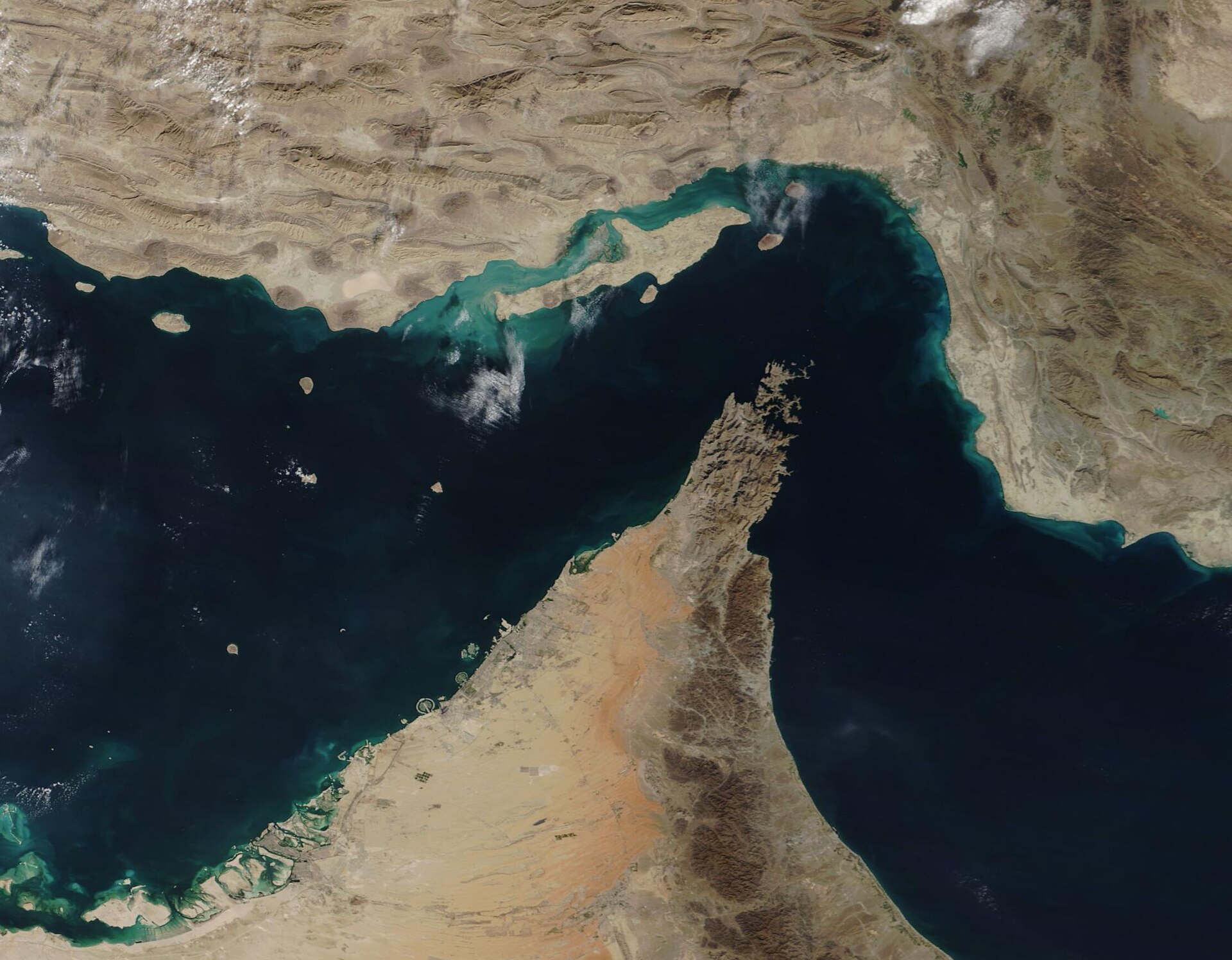
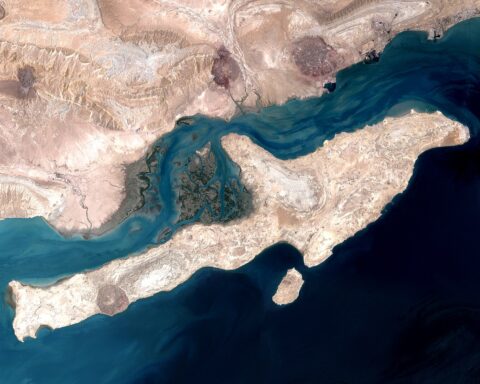
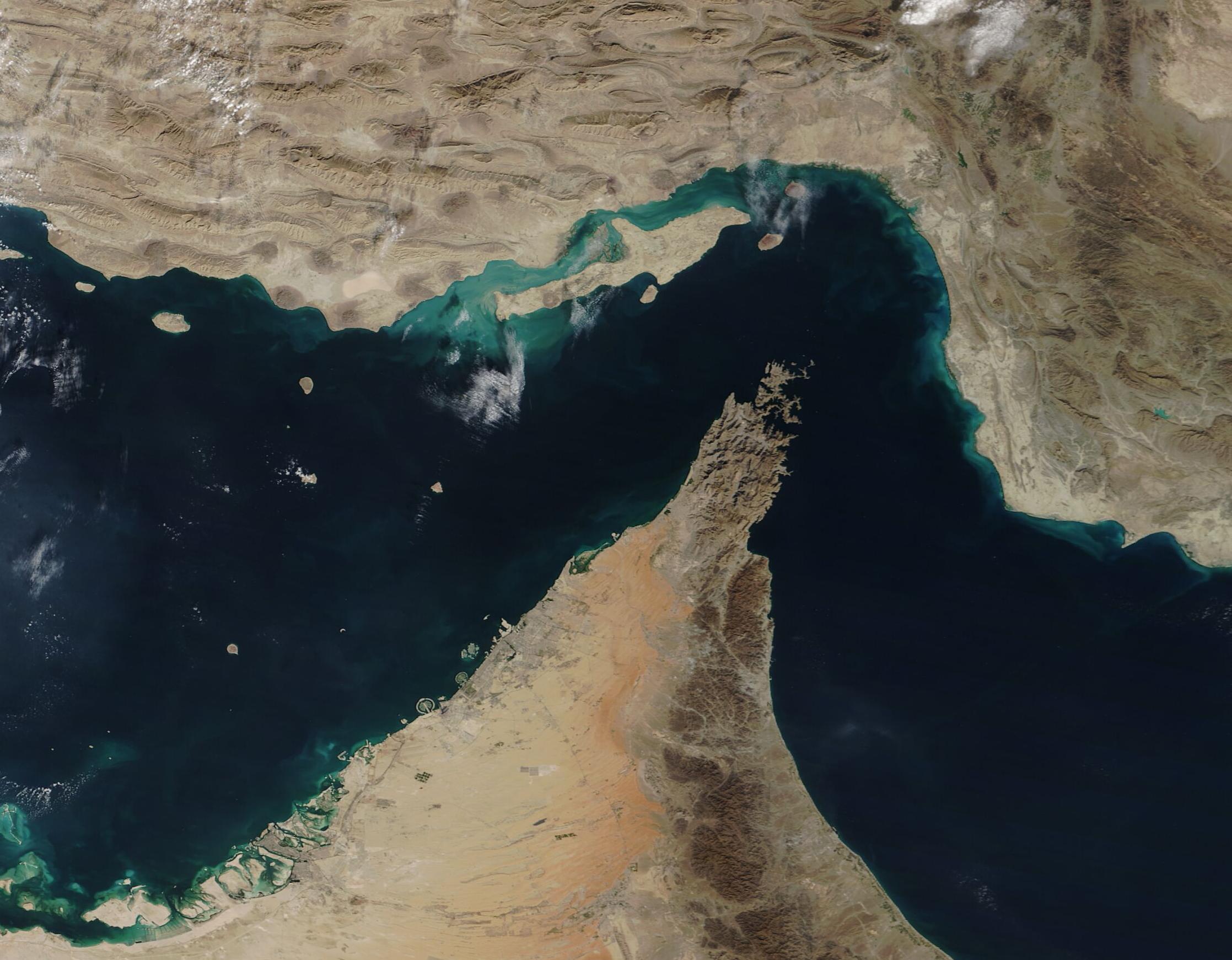
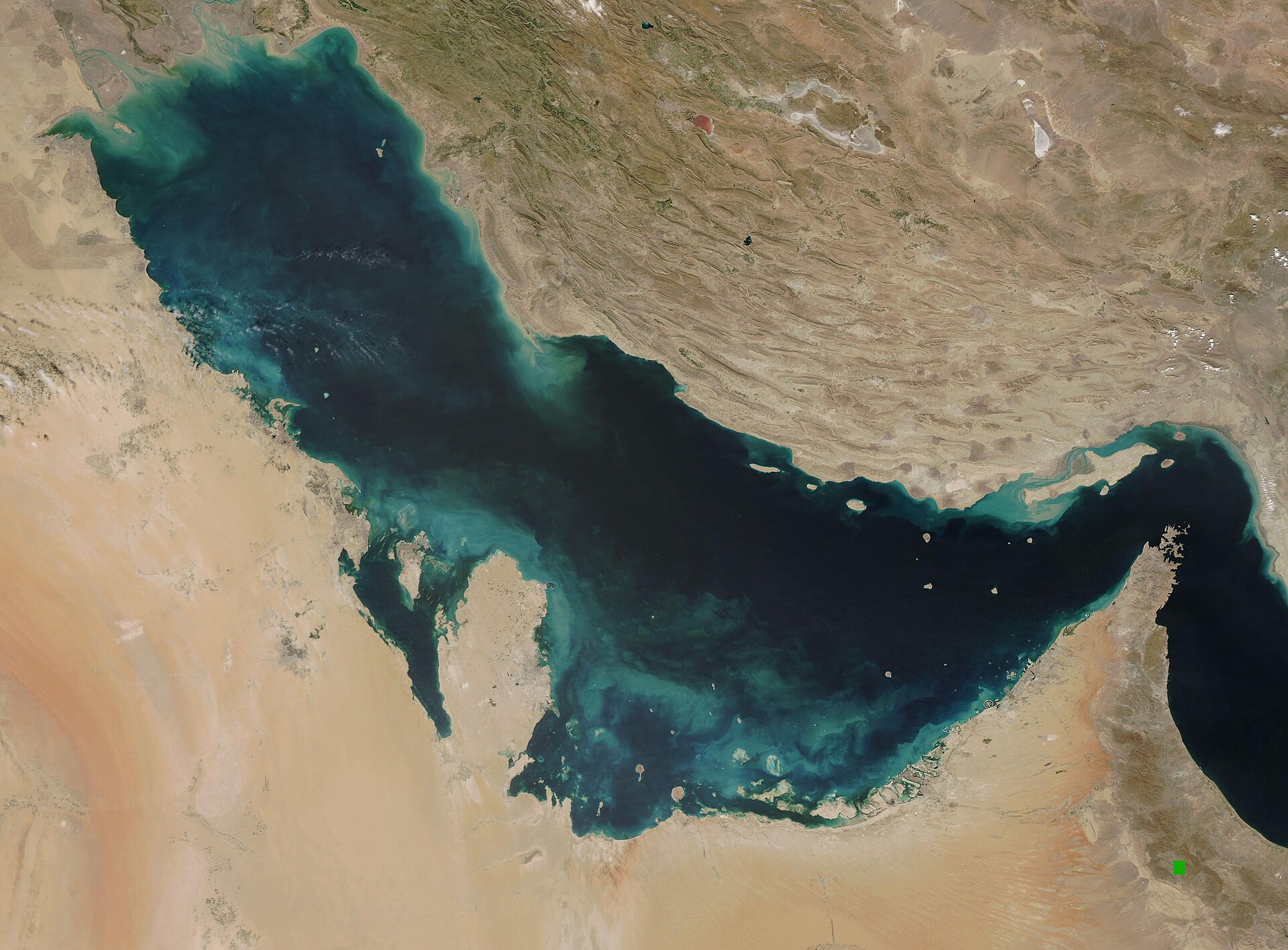
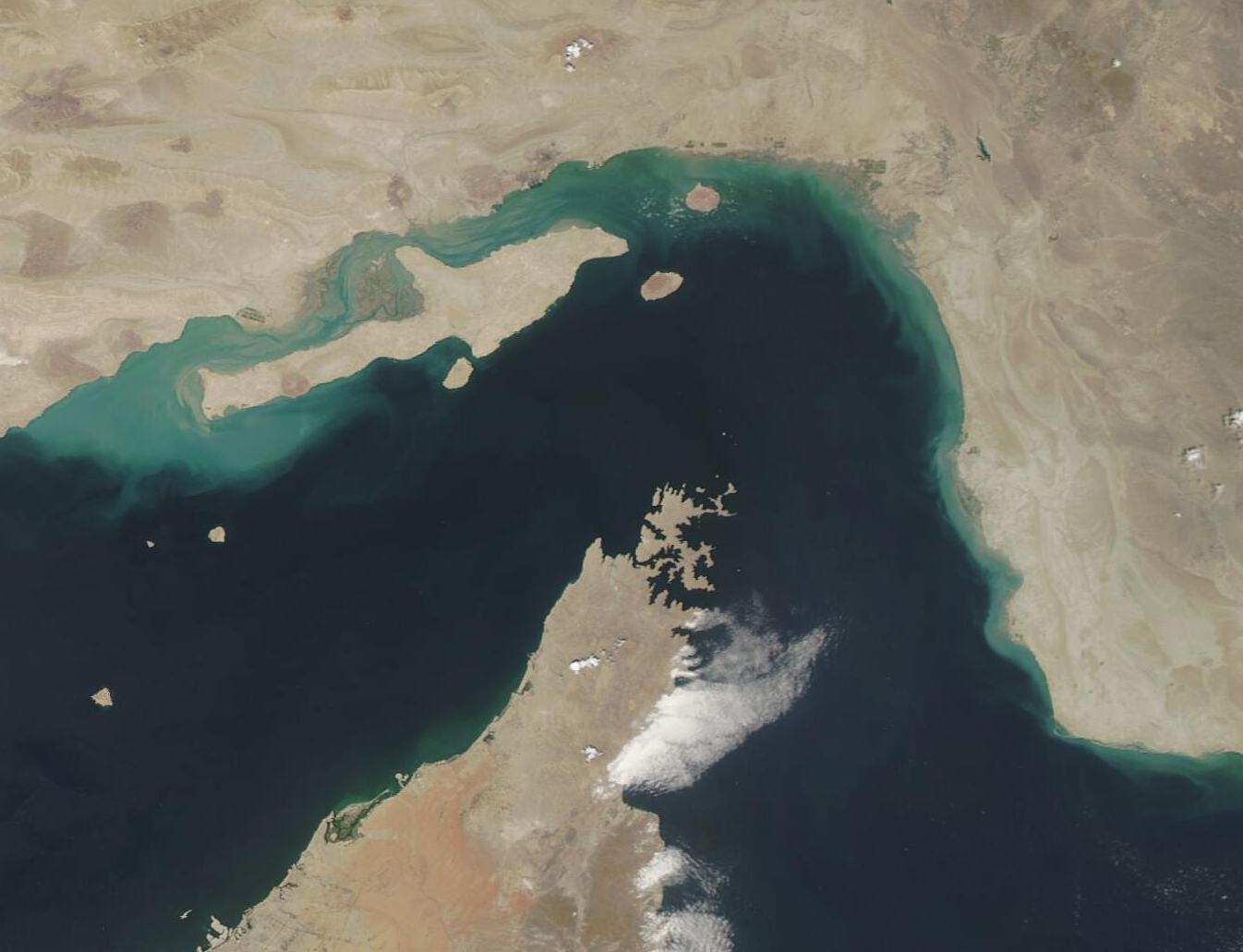
The IRGC is not merely flooding the existing strait with boats. It is redefining what “the strait” means. IRGC Navy Political Deputy Mohammad Akbarzadeh announced around May 12 that Hormuz is “no longer viewed as a narrow stretch around a handful of islands” but now constitutes “a complete crescent” stretching from Jask and Sirik on Iran’s southeastern coast to Siri Island in the Persian Gulf, according to Fars News Agency.
The IRGC’s declared operational crescent expands the zone roughly tenfold — from approximately 30 miles to 200–300 miles, with some Iranian reports citing 500 kilometers. This is not a patrol expansion. It is a territorial claim dressed in operational language, extending IRGC authority over waters that include Fujairah anchorage, where the second vessel was seized on May 14.
Iranian Army Spokesperson Mohammad Akraminia reinforced the claim from a different angle on May 10, telling Tasnim News Agency that vessels whose flag states comply with US sanctions against Iran “will definitely face difficulties passing through the Strait of Hormuz.” The statement converts Hormuz access from a navigational right into a diplomatic instrument — passage conditioned not on seamanship but on a government’s foreign policy alignment.
Is the IRGC Bargaining or Freelancing?
The central analytical question is not whether the fast-boat deployment is aggressive — it self-evidently is — but whether it serves a negotiating strategy or contradicts one. Two frameworks apply.
The first is coercive bargaining. Under this reading, the IRGC surge is deliberate pressure synchronized with negotiations, intended to demonstrate that Iran can impose costs that exceed the value of whatever deal the US is offering. The timing supports this: the boat surge peaked on May 12, the same day Pentagon Comptroller Jules Hurst told House lawmakers the war had cost $29 billion — $4 billion more than the figure cited two weeks earlier. Every day of Hormuz closure raises the price of American patience.
The second framework is the authorization ceiling — the structural gap between what Iran’s Foreign Ministry can promise and what the IRGC will actually do. This pattern has a precise evidentiary record. On April 18, the IRGC Navy broadcast on VHF Channel 16: “The Strait of Hormuz is still closed. We will open it by the order of our leader, Imam Khamenei, not by the tweets of some idiot.” That transmission came less than 36 hours after Foreign Minister Araghchi had publicly declared Hormuz “completely open.” The gap between those two statements is the authorization ceiling in real time.
Iran’s own negotiating demands suggest the ceiling is operative. A source familiar with the talks told Al Jazeera on May 12 that Iran’s negotiating team had been instructed to demand five preconditions before any nuclear discussion: a complete end to the war, lifting of all sanctions, release of frozen assets, war reparations, and formal recognition of Iran’s sovereign rights over Hormuz. The last condition — sovereignty over international waters — is a structural impossibility under the US position that Hormuz is governed by UNCLOS transit passage rights. It is not a negotiating opener. It is a precondition designed to prevent Phase 1 from beginning.
President Pezeshkian’s own words complicate the picture further. He publicly accused SNSC Secretary Vahidi and Khatam al-Anbiya commander Abdollahi on April 4 of wrecking ceasefire talks — a confession that the civilian president lacks authority over the IRGC’s operational decisions. Article 110 of Iran’s constitution gives the Supreme Leader, not the president, command over the armed forces. Khamenei has been absent from public view for more than 70 days.
Two Ships, One Day
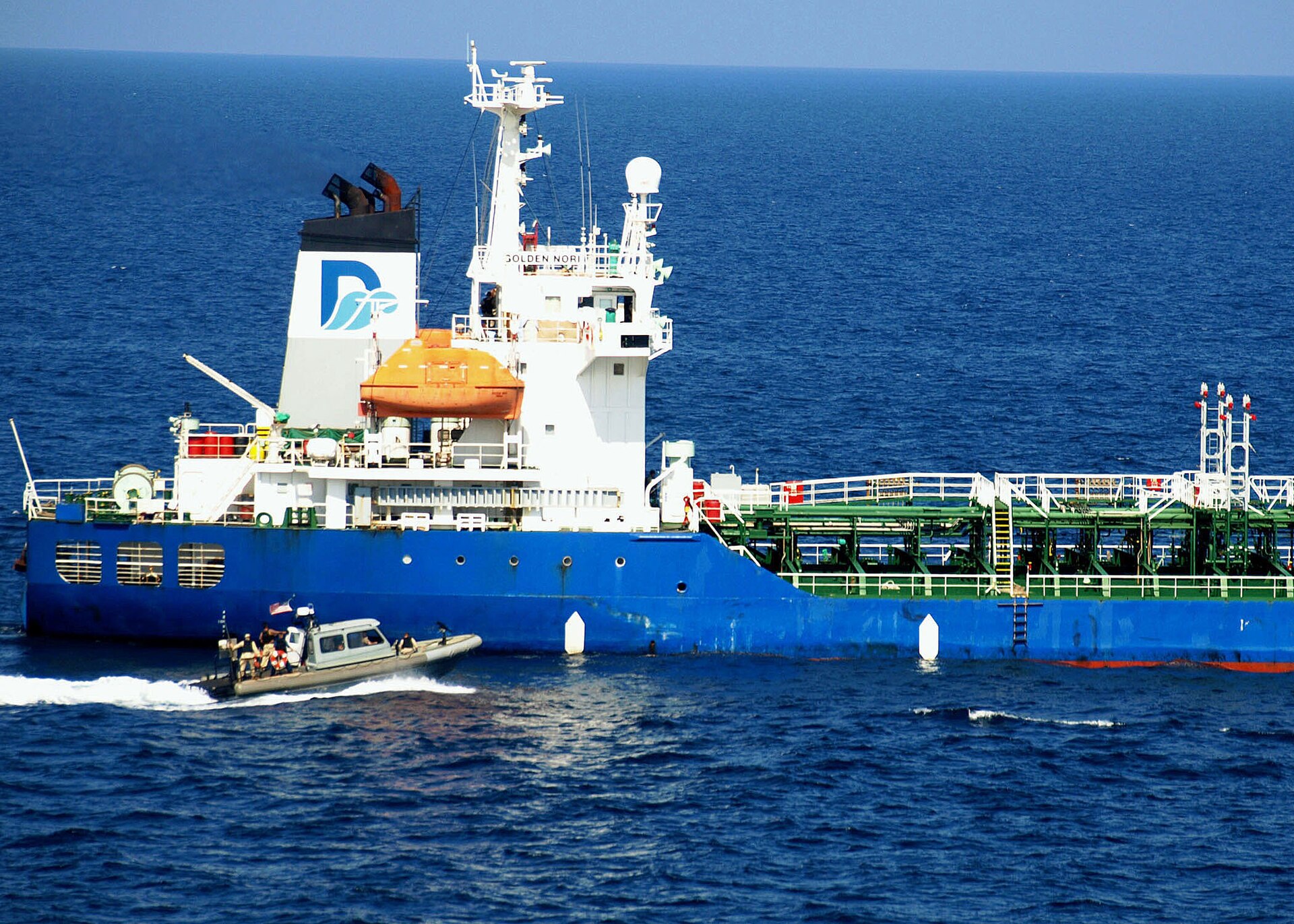
The May 14 attacks punctuated the swarm deployment with concrete violence. The Haji Ali, an Indian-flagged cargo vessel en route from Somalia to Sharjah, was struck in an attack that sparked a fire, the Associated Press and Bloomberg reported. The ship sank off the coast of Oman. All 14 Indian crew members were rescued by Oman’s coast guard.
The sinking of an Indian-flagged vessel carries particular diplomatic weight. India has maintained a careful neutrality in the conflict, and its vessels are not parties to the US sanctions regime the IRGC has cited as justification for restricting transit. The Haji Ali was not a Western-flagged tanker. It was a cargo ship sailing a routine commercial route.
Hours later, UKMTO confirmed that a second vessel anchored 38 to 44 nautical miles northeast of Fujairah had been boarded by unauthorized personnel and was being taken toward Iranian waters, NBC News and the Detroit News reported. The seizure occurred within the IRGC’s newly declared crescent zone — and within the same 24-hour window that a Trump-Xi joint statement declared Hormuz “must remain open.”
US Secretary of State Marco Rubio had already confirmed that 10 civilian sailors had died in the Hormuz conflict through early May. The Haji Ali sinking risks adding to that toll — and broadening the coalition of affected nations beyond the Gulf states and Western powers to include India, a BRICS member with 1.4 billion people and the world’s third-largest oil import dependency.
What Is Vance Actually Negotiating?
Vance’s May 13 statement was carefully constructed. “These are very sensitive negotiations,” he told reporters at the White House. “I think that we are making progress. The fundamental question is, do we make enough progress that we satisfy the president’s red line?” He confirmed speaking that morning with both Jared Kushner and Steve Witkoff, plus unnamed Arab officials.
The diplomatic architecture centers on a one-page, 14-point memorandum of understanding drafted by Witkoff and Kushner, according to Axios and the Wall Street Journal. Core terms include an enrichment moratorium of 12 to 15 years (the US proposed 20 years; Iran countered with 5 to 10), transfer of Iran’s highly enriched uranium stockpile out of the country, phased sanctions relief, and the reopening of Hormuz.
The MoU has already survived one public rejection. Trump called Iran’s latest counter-proposal “TOTALLY UNACCEPTABLE” on May 10. The next day, he described the ceasefire as “on massive life support.” Iran responded on May 11 by sending a new proposal via Pakistan, according to Pakistan Today — using the same Pakistani intermediary channel that has served as the conflict’s primary backchannel since the Islamabad talks collapsed in April.
The Trump-Xi joint statement on May 14 added a multilateral dimension. The two leaders declared that Hormuz “must remain open,” that Iran “can never have a nuclear weapon,” and that there should be no militarization or tolling of the strait, Al Jazeera and NBC News reported. Xi assured Trump that China would not supply Iran with military equipment. The statement was issued the same day the Haji Ali sank and the Fujairah vessel was seized.
Iran rejected the latest US proposal as “surrender” and called for reparations and sovereign control of Hormuz, the Times of Israel reported on May 10. The gap between the two sides is not measured in years of enrichment moratorium. It is measured in the incompatibility between UNCLOS transit passage and Iranian sovereignty claims — a gap no 14-point MoU can bridge while 342 fast-attack boats enforce an alternative legal order on the water.
Fifty Days Without a Commander
The IRGC Navy has operated without a named commander since March 30, when an Israeli precision strike at Bandar Abbas killed Admiral Ali Reza Tangsiri and intelligence chief Behnam Rezaei, according to Iran International and Al Arabiya. As of mid-May, no successor has been announced — a command vacuum of more than 50 days.
If the fast-boat surge is coercive bargaining orchestrated from above, someone is giving orders without the institutional title to do so. If it is autonomous escalation by unit-level commanders, the swarm’s behavior reflects decentralized decision-making by officers with no named authority above them and no accountability structure below.
The IRGC Navy’s declaration of “full authority to manage the Strait” on April 5 and April 10 — issued while Araghchi was in Islamabad negotiating — predates the current surge by over a month. The pattern is not new. What is new is the scale: 342 to 454 boats is not a patrol. It is a blockade force operating under a doctrinal framework designed for mass engagement.
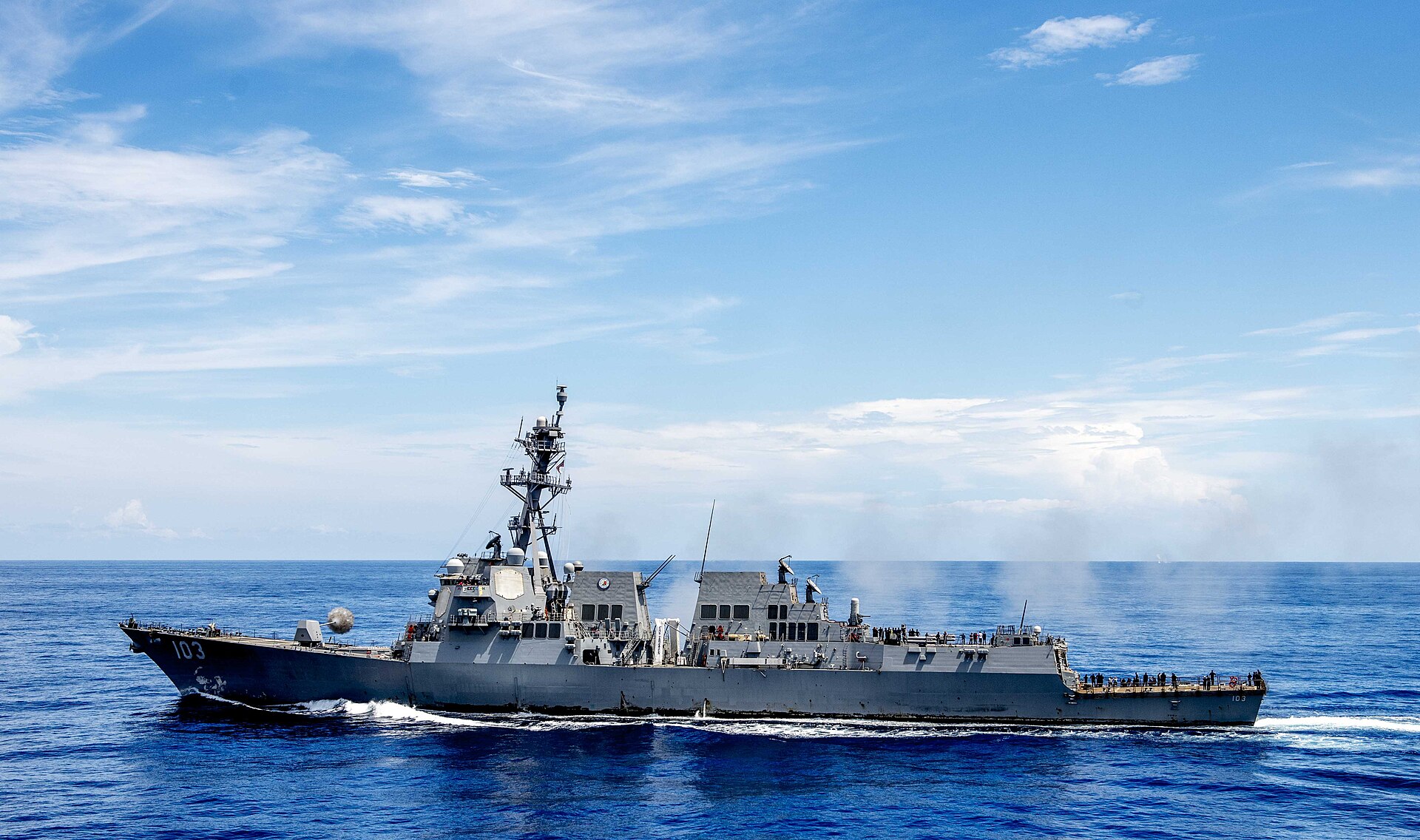
CENTCOM’s “Project Freedom” initiative, launched around May 4–5 to escort commercial vessels through Hormuz, has not broken the closure. Two US Navy destroyers — the USS Truxtun and USS Mason — transited the strait on May 5 under fire, according to Stars and Stripes. The escorts demonstrated freedom of navigation for warships. They did not restore it for tankers.
Background
The IRGC’s fast-boat swarm doctrine originated in the 1980–88 Tanker War, when Boghammar speedboats armed with RPGs and heavy machine guns attacked Gulf shipping. The US Navy’s Operation Praying Mantis in April 1988 destroyed or damaged six Iranian vessels in a single day, exposing the vulnerability of massed formations to American airpower. Iran’s doctrinal response — codified after 1988 — shifted to dispersed swarms attacking simultaneously from 20 or more vectors, exploiting island concealment, littoral shallows, and the low radar cross-section of small craft.
The current crisis began with the Iran-US war in late February 2026. Saudi Arabia participated in strikes on Iranian territory while simultaneously calling for peace. The double blockade structure — with the US controlling the Arabian Sea approach and the IRGC controlling the Gulf of Oman exit — crystallized in late April. Vessels now need approval from both sides to transit, a structural deadlock with no historical parallel outside the Cuban Missile Crisis quarantine of 1962.
The Hajj pilgrimage season, with 1.8 million pilgrims in Makkah, has added a further constraint on escalation calculus. Iran has had zero pilgrims since the war began, removing a traditional source of mutual restraint.
FAQ
How fast are IRGC fast-attack boats?
Iran’s newest Heydar-110 class boats are reported to reach 110 knots (approximately 127 mph), according to Defence Security Asia, making them among the fastest military vessels in the world. Older Boghammar-type craft operate at 40–50 knots. At 110 knots, a Heydar-class boat can close from radar detection range to weapons range against a tanker in under two minutes, leaving minimal response time for shipboard defenses or air support scrambles.
Has the US Navy attempted to escort commercial tankers through Hormuz?
CENTCOM launched “Project Freedom” around May 4–5, 2026, to provide military escorts for commercial vessels. The program has not restored commercial traffic. Insurers have declined to cover transits even with naval escort, and shipping companies have refused to send vessels into the zone without insurance. The Earnest Will tanker escort operation of 1987–88 — the last comparable US effort — required reflagging Kuwaiti tankers under the US flag, a step not yet taken in 2026.
What is Iran’s HEU stockpile status?
Iran held 440.9 kilograms of uranium enriched to 60 percent purity as of June 2025, the last date for which IAEA-verified data exists. IAEA inspectors were expelled from Iran on February 28, 2026. At 60 percent enrichment, further processing to weapons-grade (90 percent) via IR-6 centrifuge cascades would require approximately 25 days per device, according to nonproliferation analysts. Iran’s enrichment facilities at Fordow are buried under a mountain and have not been struck during the war.
How many civilian ships has Iran attacked or seized since the war began?
Secretary of State Rubio confirmed 10 civilian sailor deaths through early May 2026. The full count of seized or attacked vessels is harder to pin down: Iran’s IRGC seized the MSC Francesca (11,660 TEU container ship) and the Epaminodas (6,690 TEU) on April 22, the Selen was turned back on March 24, and the Haji Ali sank on May 14. Dozens of additional vessels have been redirected, detained, or denied transit without formal seizure.
Could Iran actually mine the Strait of Hormuz?
The IRGC published a naval chart in February–April 2026 marking the standard Hormuz shipping lanes as a “danger zone,” which maritime analysts interpreted as a de facto mining threat. The US has limited mine countermeasures capability in the region: four Avenger-class minesweepers were decommissioned from Bahrain in September 2025, leaving only two operational in the theater. A full mine clearance of the strait would cover approximately 200 square miles and require an estimated 51 days based on the 1991 Kuwait clearance benchmark.