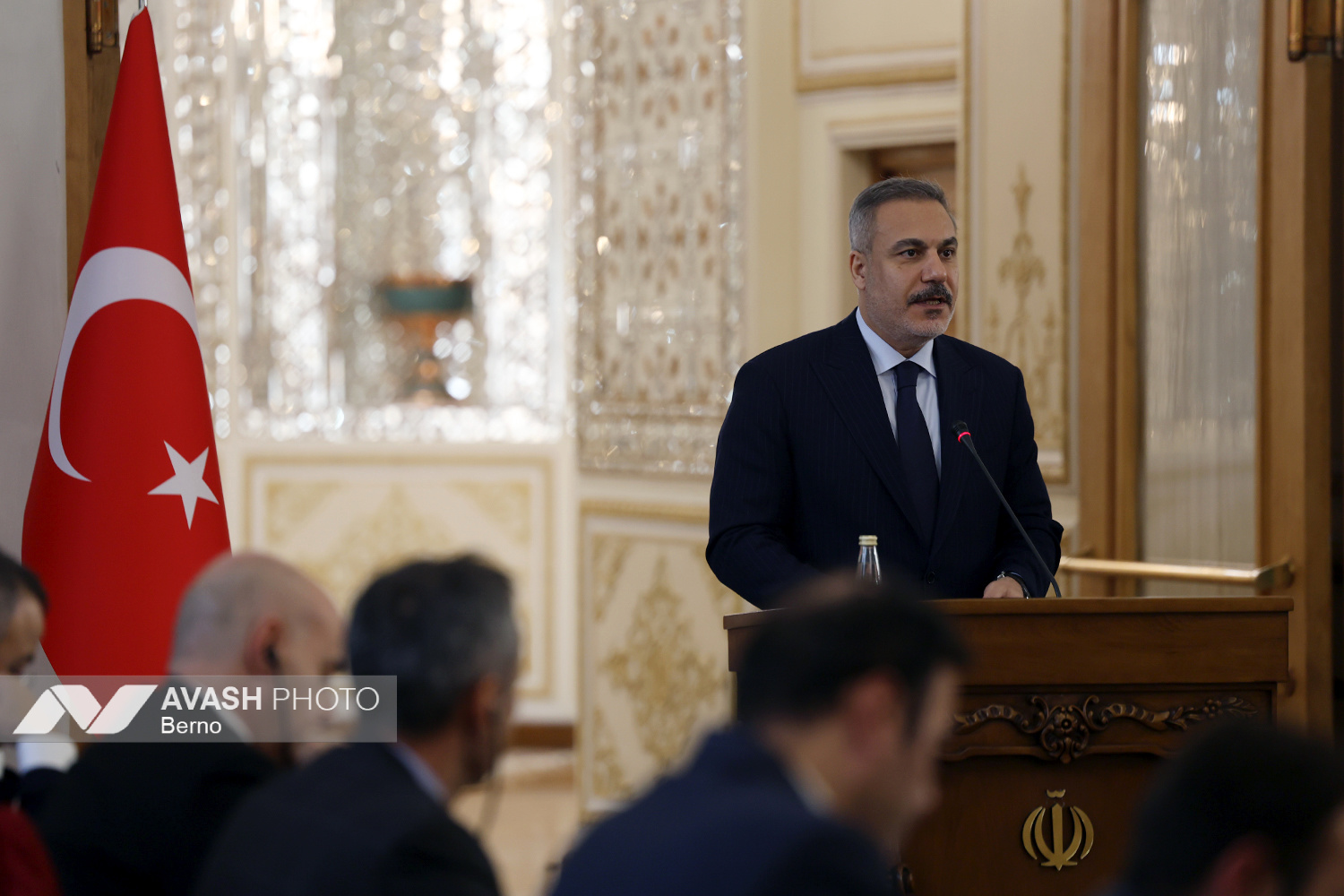
ISLAMABAD — Pakistan’s Interior Minister Mohsin Naqvi landed in Tehran on Friday for a two-day visit officially framed as peace facilitation between the United States and Iran. He arrived on the same day that Iran’s Foreign Minister Abbas Araghchi told a BRICS gathering in New Delhi that the Pakistan mediation channel is “on a very difficult course” and that Iran “cannot trust the Americans at all.” The simultaneous signals — one operational, one rhetorical — expose a mediation effort running on two contradictory tracks at once, with Pakistan sending a domestic security chief to do work that neither its foreign minister nor its national security adviser has been asked to perform.
Naqvi met Iranian Interior Minister Eskandar Momeni within hours of arriving, according to Pakistan’s Press Information Department (PID PR No. 314), and conveyed what Dawn reported as a “message of goodwill” from Prime Minister Shehbaz Sharif to President Masoud Pezeshkian. The visit is Naqvi’s second trip to Tehran in under a month — he accompanied Field Marshal Asim Munir on a three-day visit in April — and comes five days after President Trump dismissed Iran’s latest ceasefire proposal as “garbage” and declared the entire process “on massive life support.”
Contents
Why Send an Interior Minister to Do a Diplomat’s Job?
The question is not rhetorical. Naqvi’s portfolio is domestic security, counter-terrorism, border management, and narcotics interdiction. He does not negotiate treaties. He does not handle nuclear dossiers. He does not carry instructions from the Supreme National Security Council. Yet it is Naqvi — not Foreign Minister Ishaq Dar, not National Security Adviser Lt Gen (retd) Yusuf — who boards the plane to Tehran twice in 30 days while the most consequential ceasefire negotiation since the 2015 JCPOA collapses under its own contradictions.
The Express Tribune confirmed that Naqvi’s previous visit accompanied Army Chief Munir. That framing matters: when Naqvi travels with Munir, he is staff. When Naqvi travels alone to Tehran, he is a designated carrier — someone entrusted with a message or a mandate that was forged during the prior joint visit. Pakistan’s foreign ministry spokesperson Tahir Andrabi, asked about the gap between Araghchi’s pessimism and Naqvi’s presence in Tehran, insisted on May 16: “The clock on diplomacy has not stopped. The peace process is working.”
The institutional logic becomes clearer when you examine the counterpart. Naqvi’s confirmed Day 1 meeting was with Eskandar Momeni, Iran’s interior minister, whose portfolio mirrors Naqvi’s precisely: border security, law enforcement, counter-narcotics, and the logistics of religious pilgrimages. In prior meetings, Momeni’s office told Iran’s Mehr News Agency that the bilateral agenda covered “border security, the fight against terrorism, the fight against drugs, and also the issue of Arbaeen pilgrims who enter our country from Pakistan.” These are operational matters — enforcement mechanisms, not textual agreements.
Pakistan’s 27th Constitutional Amendment, passed in late 2025, restructured judicial and security authority in ways that consolidated the army chief’s role in matters of national security diplomacy. Under this framework, ceasefire facilitation is operationally Munir’s domain — not the elected government’s. An interior minister answers to the prime minister on paper but in practice, within Pakistan’s civil-military architecture, takes institutional guidance from GHQ on anything touching Iran. Naqvi in Tehran is Munir’s proxy without the optics of a uniformed officer making a second trip in rapid succession.
The Middle East briefing 3,000+ readers start their day with.
One email. Every weekday morning. Free.
Araghchi’s BRICS Statement and the China Pivot
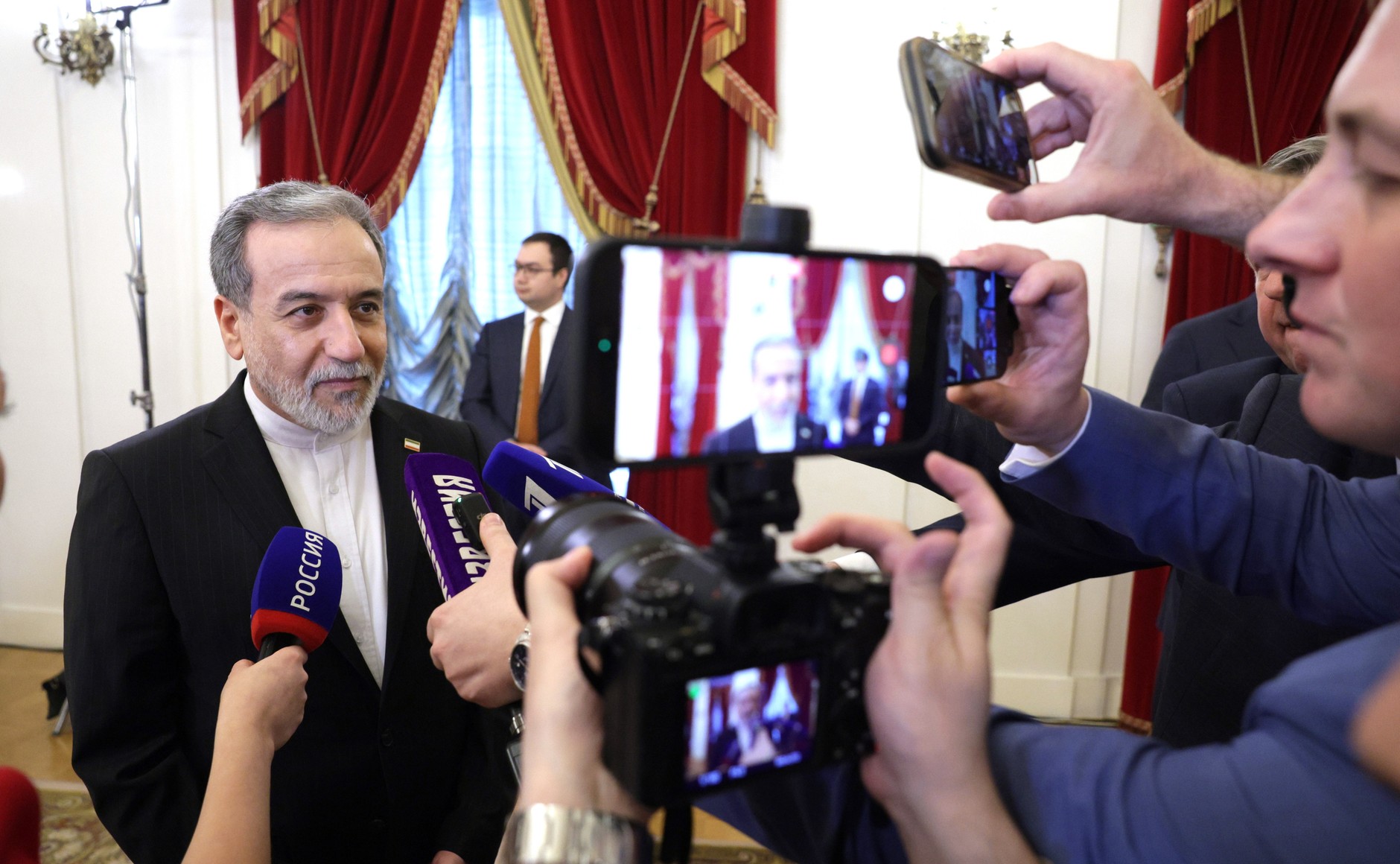
Araghchi’s statement was delivered not in Tehran and not to Pakistan — but at the BRICS Foreign Ministers’ Meeting in New Delhi on May 15, with Chinese and Russian counterparts in the room. The venue was the message. His exact words, reported by Geo.tv: “The mediation process by Pakistan has not failed yet, but it is on a very difficult course, mostly because of the Americans’ behaviour and the mistrust which exists between us.”
He then went further, as reported by India TV News: “We have every reason not to trust Americans, while they have no reason not to trust us.” And then the pivot, reported by Al Jazeera and Arab News: “We appreciate any country that has the ability to help, particularly China. China has been helpful in the past in the resumption of relations between Iran and Saudi Arabia. We are strategic partners to each other.”
The structure of the statement is deliberate. Araghchi did not say Pakistan’s mediation had failed — he said it was difficult. He did not blame Pakistan — he blamed the Americans. And he immediately offered an alternative architecture: China, backed by the precedent of the March 2023 Saudi-Iran rapprochement that Beijing brokered. This is not a rejection of Pakistan; it is a public signal that Iran is positioning a parallel track in case the Pakistan-hosted US channel collapses entirely.
The timing is not accidental. On the same day Naqvi arrives in Tehran to work the operational channel, Araghchi publicly devalues the American end of that channel from a BRICS podium. Tehran is keeping Pakistan warm while cooling Washington — using two different spokesmen, in two different cities, speaking to two different audiences. The Naqvi visit tells Islamabad: you still have access. The BRICS statement tells Beijing and Moscow: the door is open.
The Khatam al-Anbiya Channel
The structural significance of Naqvi’s visits becomes apparent only when read against what happened during Munir’s April trip. On April 16, according to WANA news agency, Pakistan Today, and Bol News, Field Marshal Munir met Major General Gholamali Abdollahi, commander of Iran’s Khatam al-Anbiya Central Headquarters — the IRGC’s operational and defense-industrial command authority. Naqvi accompanied Munir on that visit.
This was unprecedented. As the Stimson Center noted in its analysis of Pakistan’s mediation constraints: “Pakistani officials have struggled to develop a direct channel of communication with the powerful Islamic Revolutionary Guards Corps (IRGC), which is considered to be the main entity at the helm of Iranian decision-making.” Munir broke that barrier in April — or at least cracked it. The question now is whether Naqvi’s solo return indicates the channel remains open, or whether he is attempting to reopen a door that Abdollahi himself closed.
The problem is structural. Quwa Defense Analysis published a detailed assessment on April 23 concluding that Munir “was able to bring the remnants of the old IRGC to the table — e.g., the Speaker of the Iranian Parliament, Mohammad-Bagher Ghalibaf, and Foreign Minister Abbas Araghchi — but he could not deliver on the people who matter most.” The new generation of IRGC regional commanders, more hardline and with operational experience from Syria and Iraq, “did not show up at the Islamabad Talks.” Despite visiting Iran in uniform, Quwa assessed, Munir “was still unable to bring these new IRGC heads to the fore.”
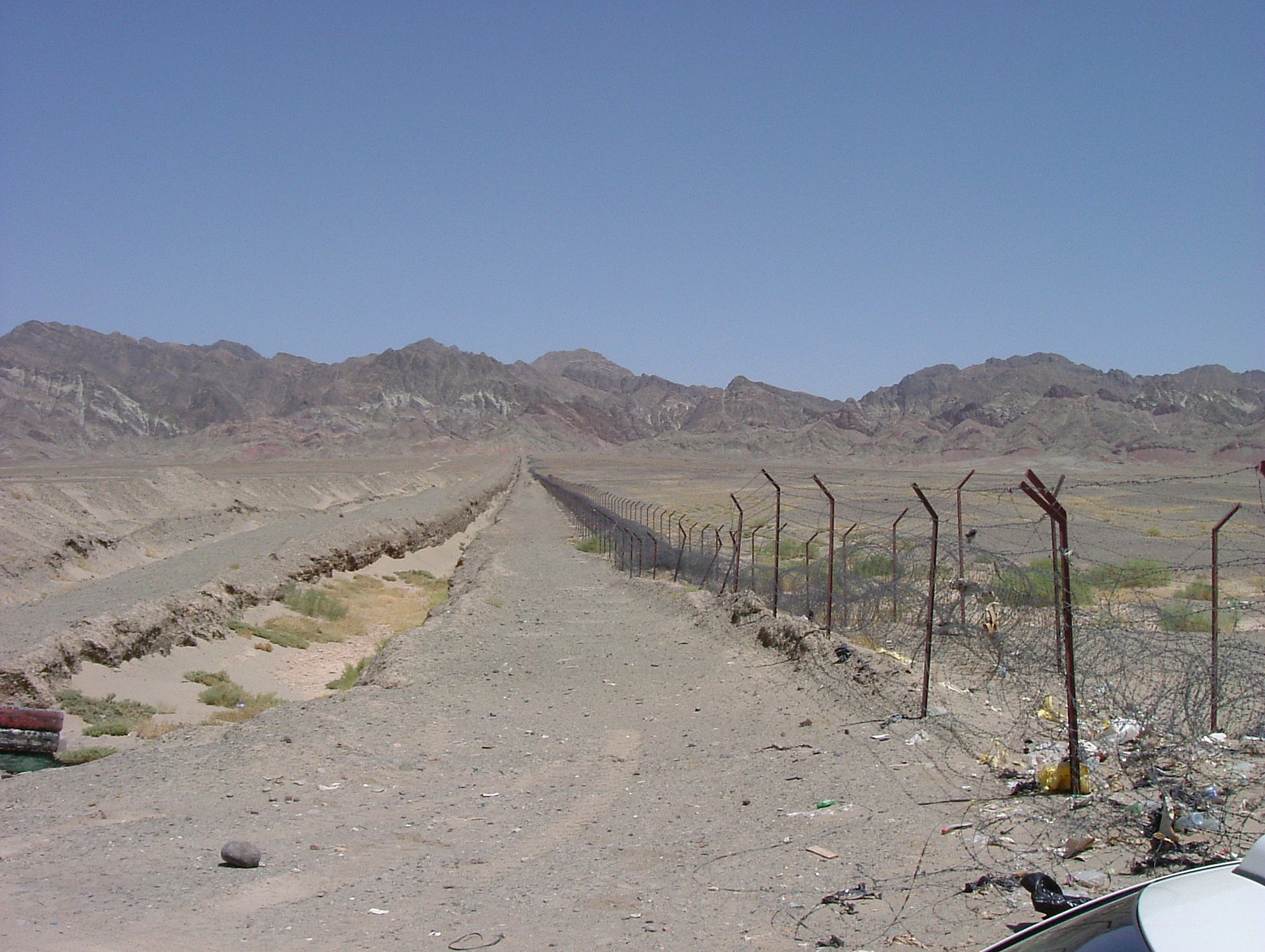
Naqvi’s counter-terrorism portfolio is theoretically the nearest entry point Pakistan possesses for reaching IRGC security organs. Border security along the ~900km Pakistan-Iran frontier — with Jaish al-Adl and Baloch separatist groups active on both sides — creates a standing operational relationship between Pakistani interior security services and their Iranian counterparts. If Pakistan is building a channel to the IRGC command tier that actually makes decisions, an interior minister offers plausible deniability that a foreign minister cannot: this is security cooperation, not diplomacy.
What Can Naqvi Offer That Foreign Minister Dar Cannot?
Foreign Minister Dar’s role in the mediation has been phone calls — confirmed by a Dar-Araghchi call on May 11. The Islamabad Talks of April 11-12, which ran approximately 21 hours before both the US and Iranian delegations left without agreement, were structured around Munir’s access and institutional credibility, not the foreign ministry’s diplomatic credentials. Pakistan is running two parallel tracks internally: a diplomatic track (FM Dar, phone calls, formal statements) and an operational track (Munir, Naqvi, Tehran visits, face-to-face meetings with IRGC principals).
What an interior minister can offer Iran is not a ceasefire text — it is an enforcement guarantee. Border security arrangements, intelligence-sharing protocols, counter-terrorism cooperation frameworks, and the logistics of managing the millions of pilgrims who transit the Pakistan-Iran corridor annually for Arbaeen. These are the currencies of trust between security services. If Iran’s decision-makers believe the civilian diplomatic track is irrelevant — and Pezeshkian himself accused IRGC commanders Vahidi and Abdollahi of wrecking the ceasefire mandate in a public confession that exposed his own inability to direct IRGC operations — then the only interlocutors Tehran’s power centres will receive are security officials who speak their institutional language.
Naqvi stated in Tehran, per Dawn: “Iran and Pakistan are partners in regional peace and stability.” The sentence is anodyne in isolation, but his confirmed Day 1 agenda — border security, counter-narcotics, Arbaeen pilgrim logistics — reflects the specific operational currencies that security services use to build institutional trust before they move to harder questions. Momeni’s office, speaking to Mehr News Agency after the meeting, listed those same items verbatim.
Pakistan’s $5 Billion Bind
Pakistan’s mediation is structurally compromised and both Tehran and Islamabad know it. A $5 billion Saudi loan to Pakistan matures in June 2026 — next month. The Saudi-Pakistan Mutual Defense Agreement (SMDA), signed September 17, 2025, makes Pakistan simultaneously Iran’s interlocutor and Saudi Arabia’s treaty defence partner. Pakistan has been Iran’s protecting power in the United States since March 1992 — hosting the Interests Section of Iran from within the Pakistani Embassy in Washington — while also accepting billions in Saudi liquidity support.
This dual position is not a bug; it is the only reason Pakistan’s mediation was ever credible to both sides. Pakistan is the one country that cannot afford to let either Tehran or Riyadh feel abandoned. But it also means Tehran has every reason to doubt Islamabad’s neutrality — and every reason to keep the channel warm anyway, because Pakistan’s structural bind gives Iran a pressure point: if the mediation fails, Pakistan faces consequences from both Saudi Arabia (loan repayment, defense treaty obligations) and the United States (which declared the ceasefire “a favour to Pakistan,” per Trump’s own framing).
The Stimson Center framed it explicitly: Pakistan’s constraints include its inability to access the IRGC commanders who actually control military operations, combined with its financial dependence on Saudi Arabia and its protecting-power obligations to Iran. Chatham House, in its April 2026 assessment, asked the right question: “What does Pakistan gain from its Iran-US diplomacy?” Pakistan’s foreign ministry spokesperson Andrabi, pressed on the same point on May 16, offered only that “the peace process is working” — an answer that neither Chatham House nor Islamabad’s creditors are likely to find sufficient when the $5 billion loan comes due in 30 days. That constraint became explicit on May 18, when Reuters and Bloomberg confirmed Pakistan’s full SMDA force activation — 8,000 troops, 16 JF-17 Block III fighters, and a Chinese HQ-9 battery deployed to King Abdulaziz Air Base — making Islamabad’s financial and military obligations to Riyadh structurally irreversible.
Where the Nuclear Track Stands
The nuclear dimension remains frozen. Iran holds approximately 440 kilograms of uranium enriched to 60% — enough, according to IAEA assessments, to reach weapons-grade concentration with approximately 564 additional separative work units of further enrichment via IR-6 cascades. Iran’s counter-proposal, reported by Tribune India and ANI, offered to dilute some of the highly enriched uranium and transfer the remainder to a third country with a return provision if the United States exits any future agreement. Washington rejected this.
Trump sent a new nuclear proposal to Iran on May 16 — the same day Naqvi arrived in Tehran — but as HOS has previously reported, it was addressed to Iran’s third security chief in four months, reflecting the institutional chaos on the Iranian side. Araghchi, at BRICS, confirmed that Russia had offered to store Iran’s enriched uranium but said it was “not on the agenda of talks for the time being” and that Iran “may consider Russia’s proposal at an appropriate time in future stages.” The language — “future stages” — signals that Iran is not treating the nuclear dossier as part of the current ceasefire track at all.
This is the gap that Naqvi’s visit cannot bridge. An interior minister can offer border cooperation, intelligence sharing, and operational trust-building. He cannot negotiate nuclear safeguards. The nuclear track requires either a direct US-Iran channel — which collapsed at the Islamabad Talks and has not been restored — or a multilateral framework that does not yet exist. Araghchi’s BRICS statement points toward the latter, with China as potential guarantor, but Beijing has not publicly accepted that role. In the meantime, the 440 kilograms of enriched uranium remain in Iranian centrifuges, IAEA inspectors have been excluded since February 28, and no new access arrangement is on the table.
Background
The Iran war, now in its 78th day following the declared end of Operation Epic Fury on May 5 (with Iran’s defence-industrial base assessed at greater than 85% degraded by CENTCOM), has produced a ceasefire architecture that depends almost entirely on Pakistan’s good offices. The Islamabad Talks of April 11-12 — the first direct US-Iran meeting since 1979, featuring a face-to-face encounter between US Vice President Vance and Iranian Parliament Speaker Ghalibaf — collapsed without agreement after approximately 21 hours.
Since those talks, the mediation has been sustained by Munir’s April visit to Tehran (where he met Abdollahi at Khatam al-Anbiya HQ), the FM Dar-Araghchi phone channel confirmed active as recently as May 11, and now Naqvi’s solo return. The ceasefire, extended once through Pakistani facilitation, remains technically in effect but has been described by both sides as fragile.
FAQ
Why is Pakistan using an interior minister for peace talks rather than its foreign minister or national security adviser?
Pakistan’s 27th Constitutional Amendment restructured security authority so that matters touching military diplomacy fall operationally under the army chief’s domain. Naqvi’s counter-terrorism and border security portfolio gives him institutional cover to meet IRGC-adjacent Iranian security officials without the visit being classified as formal diplomacy. Foreign Minister Dar handles the phone calls and public statements — his most recent confirmed call with Araghchi was May 11, five days before Naqvi boarded the plane — while Naqvi and Munir handle the face-to-face work with Iran’s actual decision-makers. The split reflects Pakistan’s civil-military architecture, not a demotion of the foreign ministry.
Has Pakistan’s mediation actually achieved anything concrete since the Islamabad Talks collapsed?
Pakistan brokered one ceasefire extension following the April 11-12 collapse. Field Marshal Munir’s April visit to Tehran produced the first confirmed Pakistan-IRGC operational command contact of the war (the meeting with Abdollahi at Khatam al-Anbiya HQ). The mediation has not produced a deal, but it has maintained the only functioning communication channel between Washington and Tehran’s security establishment — a distinction Pakistan’s foreign ministry emphasizes when challenged on the lack of results.
What did Araghchi mean by saying Pakistan’s mediation is “on a very difficult course”?
Araghchi was careful not to blame Pakistan directly. He attributed the difficulty to “the Americans’ behaviour and the mistrust which exists between us.” The statement was made at the BRICS Foreign Ministers’ Meeting in New Delhi with Chinese Foreign Minister Wang Yi and Russian Foreign Minister Lavrov present — meaning the offer of an alternative architecture was made to its intended recipients in the room, not broadcast abstractly. Read against his immediate pivot to praising China’s role in the 2023 Saudi-Iran rapprochement, the statement functions as a public marker: Iran is signalling to Beijing and Moscow that if the US-Pakistan track fails, it expects an alternative multilateral framework. The statement devalues Washington’s end of the channel without severing Pakistan’s end.
What is the significance of the $5 billion Saudi loan maturing in June 2026 for Pakistan’s mediation?
The loan creates a time constraint that neither Islamabad nor Riyadh discusses publicly. Pakistan cannot afford to antagonize Saudi Arabia — its largest creditor and SMDA defence partner — by appearing to side with Iran. But it also cannot afford for the mediation to fail, which would eliminate its primary diplomatic asset vis-à-vis both Washington and Riyadh. The June maturity date means Pakistan has approximately four weeks before its financial relationship with Saudi Arabia requires either refinancing or repayment, limiting Islamabad’s room for diplomatic manoeuvre.
Could China actually replace Pakistan as the primary mediator?
Unlikely in the near term. China brokered the 2023 Saudi-Iran rapprochement but has avoided direct involvement in the current war’s ceasefire architecture. Beijing’s preference, evidenced by its May 2026 behaviour, is to facilitate specific transactional elements (such as Hormuz transit for Chinese-contracted vessels) rather than own the entire mediation. Araghchi’s BRICS pivot is better understood as pressure on the United States — signalling that alternatives exist — than as a genuine transition of mediation responsibility from Islamabad to Beijing.