WASHINGTON — Donald Trump threatened to annihilate Iran on Saturday night and offered to lift oil sanctions on Sunday morning, and the fact that both happened within fourteen hours tells you either that the White House has lost control of its own Iran policy or that it never intended these signals to be consistent — because consistency was never the point. Iran submitted its revised ceasefire response to the United States via Pakistan on May 18, the same day both signals landed, which means Tehran decided to move before it could determine which signal was real.
That sequencing is the story. The annihilation threat, the OFAC waiver offer, and the Gulf-leader intercession that paused a Tuesday strike are not three separate events — they are a single coercive instrument, and understanding how the parts fit together requires understanding who inside each government is driving each track, and who is being dragged along.
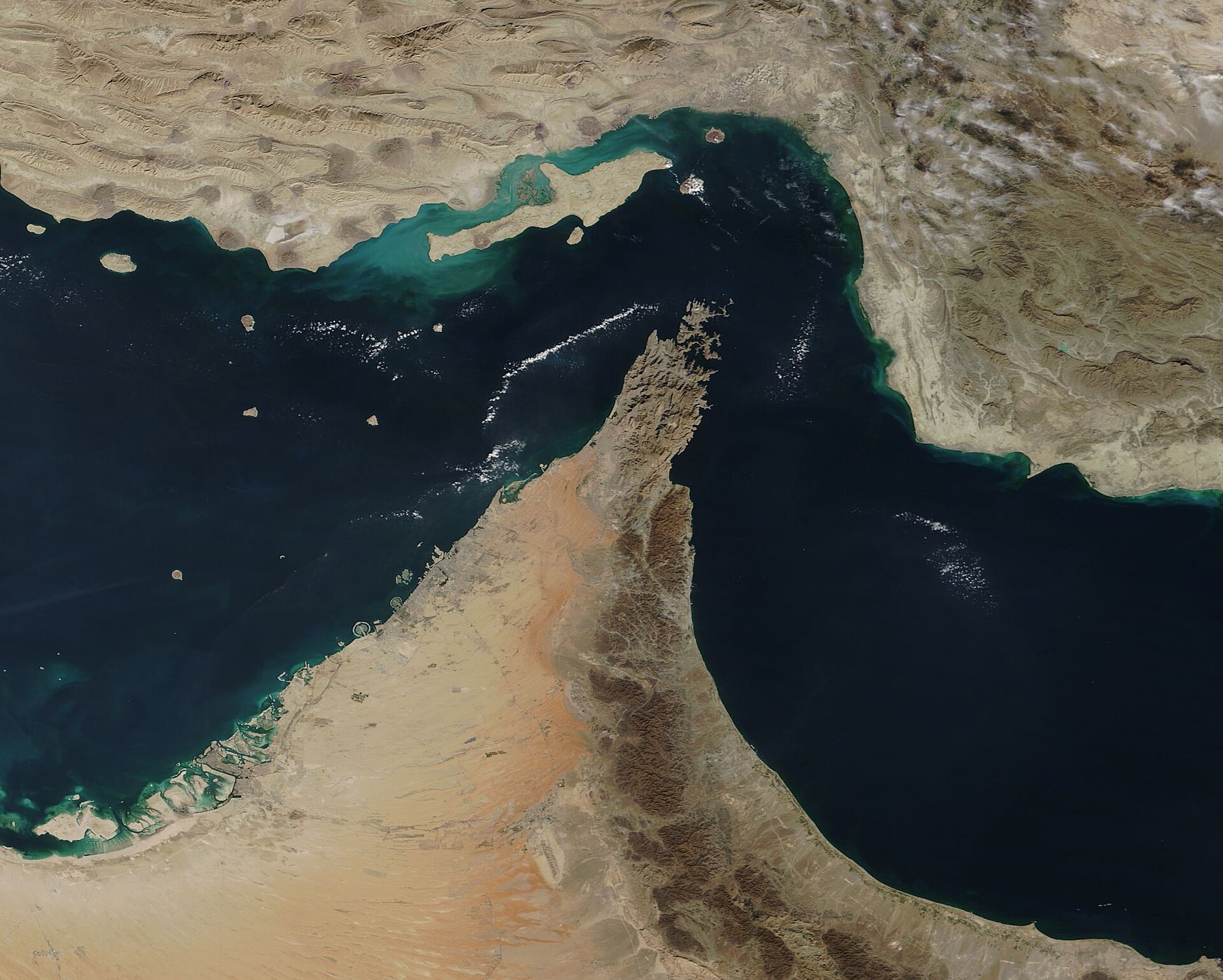
Table of Contents
- The Fourteen-Hour Sequence
- What Does the Sanctions Waiver Actually Offer Iran?
- Is the US Running Good Cop, Bad Cop — Or Is No One Running Anything?
- Why Did Iran Respond on the Same Day?
- MBS as Named Intercessor
- The Tuesday Room
- The IRGC Problem That No Waiver Solves
- Who Killed the Helsinki Pact?
- The Oil Math Behind the Pause
- Frequently Asked Questions
The Fourteen-Hour Sequence
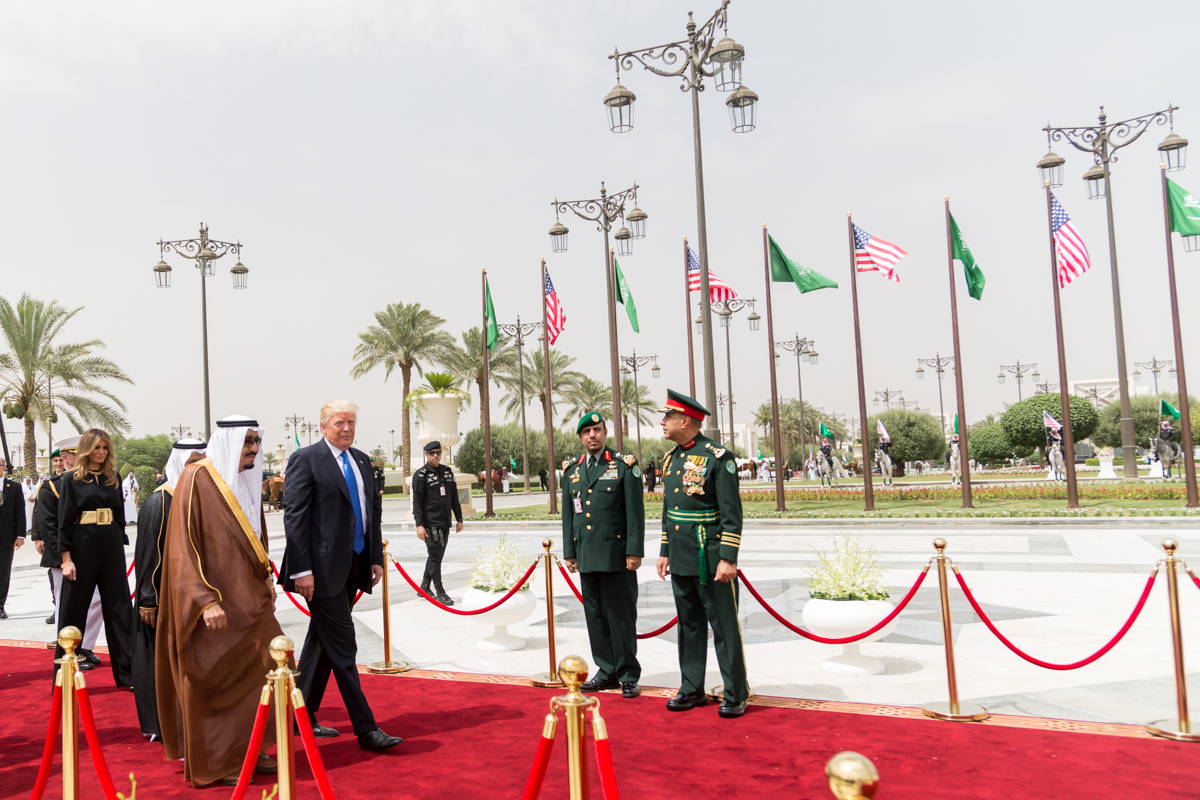
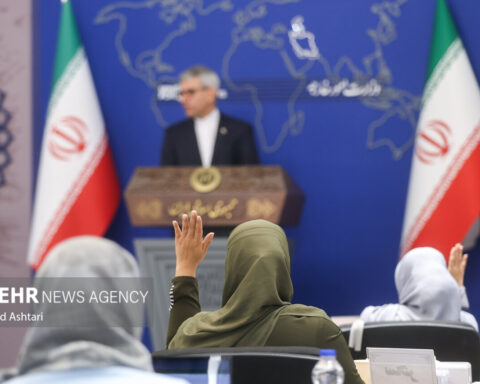
At approximately 9 p.m. Eastern on May 17, Trump posted on Truth Social: “For Iran, the clock is ticking, and they better get moving, FAST, or there won’t be anything left of them. TIME IS OF THE ESSENCE!” By the morning of May 18, three things had happened in rapid succession. Iran’s MFA spokesman Esmaeil Baghaei confirmed that Tehran had “conveyed to the American side through mediator Pakistan” a revised ceasefire response. Semi-official Tasnim News Agency, citing a source close to the negotiation team, reported that the US had proposed a temporary OFAC waiver on Iranian oil sanctions until a final agreement is achieved. And Trump announced he had called off a scheduled Tuesday strike on Iran at the request of three Gulf leaders — King Salman (via MBS), the Emir of Qatar, and the President of the UAE.
Trump’s condition for the pause was not subtle: “Be prepared for a full, large scale assault on a moment’s notice.” PBS NewsHour’s headline — “How Trump went from threatening Iran’s annihilation to agreeing to a two-week ceasefire in a day” — framed it as incoherence, which is the wrong frame. Bloomberg treated the annihilation threat and the sanctions waiver as separate stories. Al Jazeera emphasized the diplomatic channel. None asked the structural question: what if these signals are doing exactly what they are designed to do precisely because they contradict each other — and the answer depends on whether you believe the White House has one Iran policy or two.
What Does the Sanctions Waiver Actually Offer Iran?
The sanctions-waiver report, sourced to Tasnim via an unnamed negotiation-team insider, describes a temporary OFAC waiver on Iranian oil sanctions that would remain in force until a final agreement is reached. The US has not publicly confirmed the offer, and Brent crude moved nearly $10 intraday on the report alone — a market event driven by a single semi-official Iranian wire service claim that no Western government has corroborated.
To understand what the waiver would mean, you have to understand what the last one did. OFAC issued General License U on March 20, 2026, authorizing transactions involving Iranian-origin crude loaded on vessels on or before that date — a 30-day window that expired April 19 without renewal. New US sanctions specifically targeting Iranian oil sales to China were announced May 11, less than a week before the waiver report surfaced. GL U had a critical limitation: secondary sanctions on non-US participants remained in force, meaning Chinese buyers had to route purchases through intermediaries and non-dollar channels.
The Middle East briefing 3,000+ readers start their day with.
One email. Every weekday morning. Free.
If the reported new waiver lifts that restriction — and the Tasnim framing implies it does — the economic value to Tehran would be an order of magnitude greater than GL U. Direct Iranian crude sales to China, closed since the May 2019 sanctions escalation under Trump’s first term, would reopen at scale, a shift worth tens of billions of dollars annually to Tehran.
Tasnim’s framing is itself a data point. The agency reported that “the US has accepted a waiver of OFAC sanctions in the new text,” positioning the waiver as a concession extracted from Washington, not an offer extended by it. That framing serves a domestic Iranian audience: any deal must appear to have been won, not given. The IRGC-aligned media ecosystem — Tasnim, Fars, Mehr — has spent three months attacking MFA-led diplomacy as capitulation. A sanctions waiver framed as an American surrender changes the internal calculus.
Is the US Running Good Cop, Bad Cop — Or Is No One Running Anything?
The good-cop/bad-cop reading is clean: Trump’s public maximalism provides political cover for Iran’s IRGC hardliners to accept terms they could never accept under conditions that looked like negotiation. No Iranian commander can sign a deal that looks like it was reached through diplomacy — but a deal reached under credible threat of national annihilation is a different political object. The sanctions waiver, arriving simultaneously, gives Iran’s economic faction a deliverable that sidesteps the unbridgeable Phase 1 disputes: HEU surrender and Hormuz sovereignty recognition. Steve Witkoff runs the economic track. Pete Hegseth runs the military track. Both tracks converge on a single target — Tehran’s decision-making apparatus — from different angles.
Iran International described this dynamic as early as February 2026, citing analysts who saw Washington and Jerusalem playing a “good cop, bad cop” strategy. But that was before the evidence for genuine fracture became overwhelming. In late April, JD Vance demanded zero enrichment capacity from Iran during the Islamabad talks — and within 48 hours, Jared Kushner and Witkoff floated a proposal where the US would supply Iran with uranium for civilian use, directly contradicting the vice president’s stated position. The Daily Beast and CNBC both reported the split.
More telling: Iranian officials indicated they would rather negotiate with Vance — the harder-liner — than with Witkoff and Kushner, because at least Vance appeared to be speaking for a coherent position. Tehran’s negotiators were choosing their counterpart based on which American could actually deliver, not which one offered more favorable terms.
That Iranian preference is the single strongest data point against the coordinated-strategy reading. If the good-cop/bad-cop dynamic were scripted, Tehran would play along with the soft track — take the economic concessions and pocket the diplomatic cover. Instead, they want the hard-liner, because a deal with someone who cannot deliver is not a deal at all.
The fracture extends beyond the negotiating table. Axios reported on May 11 that Hegseth and National Security Advisor Mike Waltz were divided on whether to attack Iran at all — a split inside the NSC itself, not merely between diplomatic and military tracks. Fortune reported on April 21 that Trump’s own officials were whispering that his Truth Social posts about Iran “risk killing peace talks,” an extraordinary leak that only makes sense if staffers believed the posts were uncoordinated with the diplomatic track and wanted to signal that to Tehran through American media. Responsible Statecraft went further, arguing that Witkoff and Kushner had “actively sabotaged” the negotiations — not failed at them, but wrecked them deliberately.
The honest assessment: both readings are supported by evidence, and neither can be ruled out. The Arms Control Association’s judgment in April — that US negotiators were “ill-prepared for serious nuclear talks with Iran” — is consistent with fracture, not architecture. But the sequencing on May 18 is too tight to be accidental. Fourteen hours from annihilation threat to sanctions waiver to Gulf intercession to strike pause is not the rhythm of a policy process that has broken down. It is the rhythm of a pressure campaign.
Why Did Iran Respond on the Same Day?
Iran’s revised ceasefire response arrived via Pakistan on May 18 — the same day as the annihilation threat, the sanctions-waiver report, and the Gulf-intercession strike pause. The timing raises a question that neither Tehran nor Washington has answered: which signal was Iran responding to? If the revised proposal was already in transit through Pakistan’s diplomatic channels before Trump’s Truth Social post, then the timing is coincidental and the response reflects the sanctions-waiver offer, which Tasnim’s reporting suggests was part of ongoing back-channel negotiations. If the proposal was finalized or accelerated after the annihilation threat, then Trump’s maximalism worked exactly as intended.
Iran’s April 28 proposal — a 14-point document — explicitly excluded the nuclear program from Phase 1 and deferred it to Phase 2. On May 8, Iran offered partial HEU transfer to a third country, a step forward from the April position but far short of the full surrender Vance demanded. The five Phase 1 preconditions still include formal recognition of Iranian sovereignty over the Strait of Hormuz, a demand no US administration could accept without dismantling its own freedom-of-navigation legal architecture. MFA spokesman Baghaei also said on May 8 that decision-makers had chosen not to enter nuclear talks “for the time being” — a phrase that is load-bearing. It signals that the nuclear deferral is tactical, not principled, and can be reversed if the price is right.
The sanctions waiver may be that price. If the OFAC waiver removes secondary-sanctions exposure for Chinese buyers — Iran’s primary remaining crude market — then Tehran gets revenue relief without conceding anything on enrichment or Hormuz sovereignty. The waiver becomes a Phase 1 deliverable that bypasses the issues on which Phase 1 was stuck, which is either a diplomatic masterstroke or a capitulation dressed as strategy, depending on whether you believe the nuclear and Hormuz issues can actually be resolved in a Phase 2 that may never arrive.
MBS as Named Intercessor
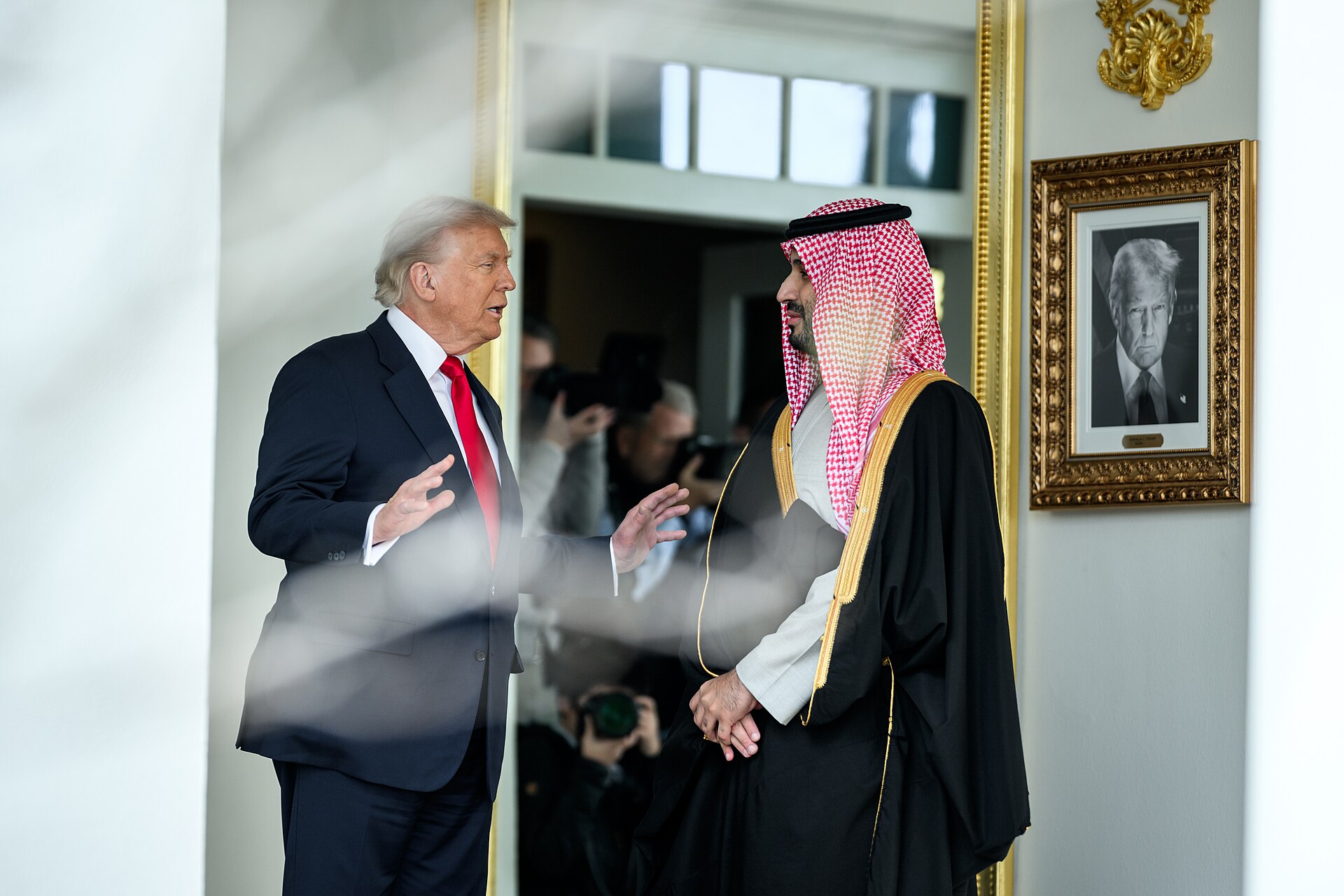
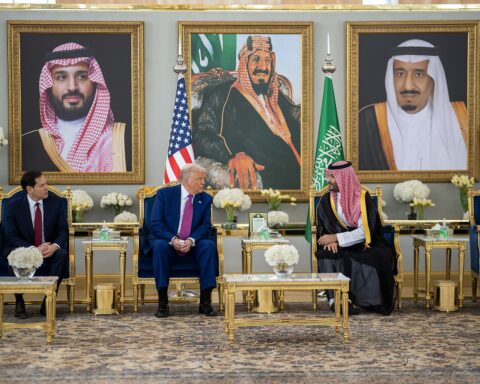
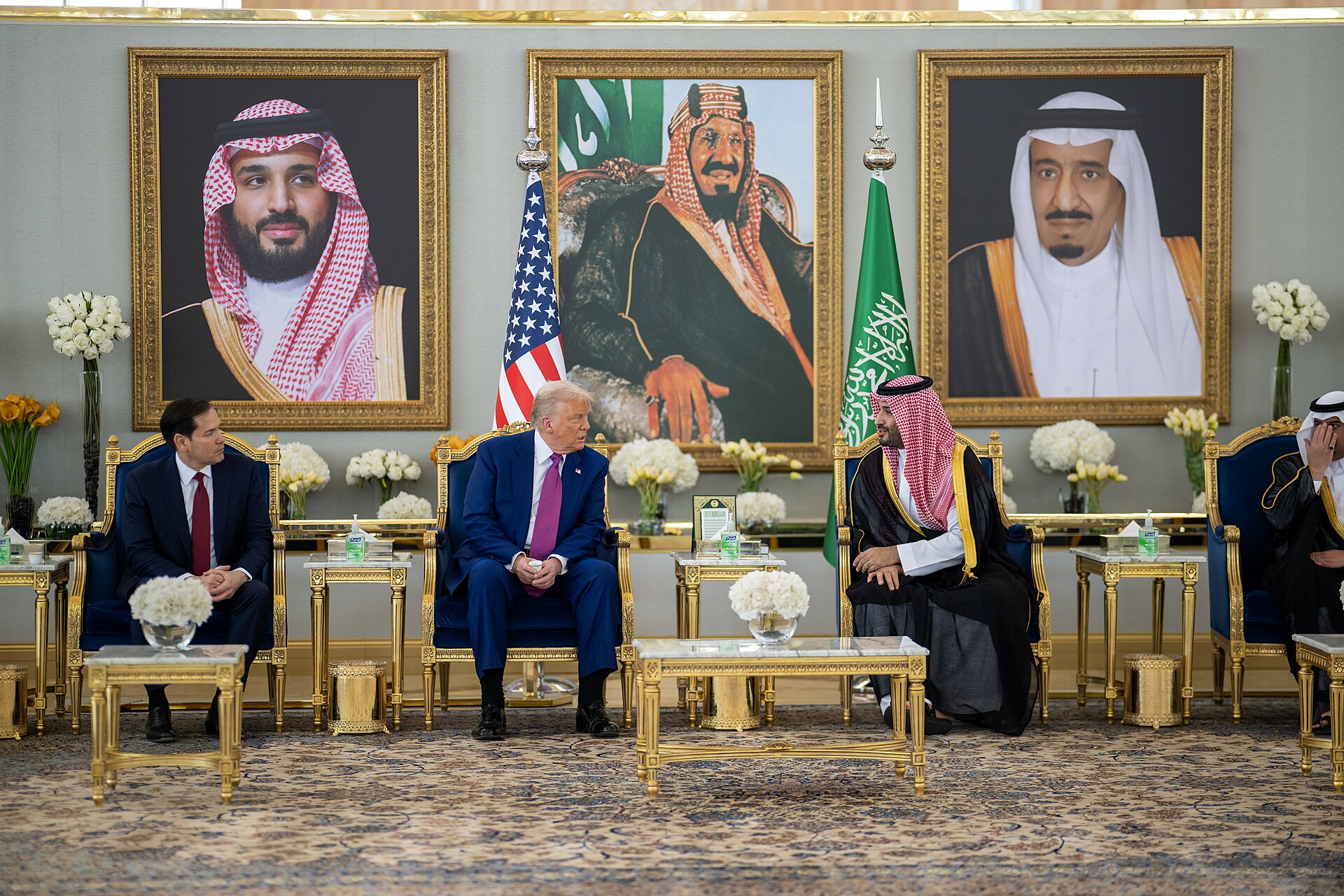
Trump’s announcement that he called off the Tuesday strike at the request of “the King of Saudi Arabia, the Emir of Qatar, and the President of the UAE” is not a diplomatic courtesy — it is a structural move that reshapes the regional politics of the war. MBS is now publicly credited with having stopped an American strike on Iran, which gives him two things simultaneously: credibility with Tehran as a leader who can restrain Washington, and influence in Washington as a leader who can deliver Gulf consensus.
The naming of all three Gulf leaders is itself a constraint mechanism. Saudi Arabia has been floating a Helsinki-style non-aggression pact since approximately May 14-15, modeled on the 1975 Helsinki Accords that stabilized Cold War Europe. European capitals have supported it. The UAE and Bahrain have blocked it — and the UAE’s position is far harder than Riyadh’s. Abu Dhabi has doubled down on ties with Israel and, according to multiple reports, previously tried to convince Gulf allies to launch joint GCC-US-Israeli strikes on Iran, a proposal the other Gulf states rejected as “not their war.” By naming MBZ alongside himself as a strike-pauser, Trump — or MBS through Trump — publicly binds Abu Dhabi to the restraint position. The UAE cannot now call for strikes on Iran without contradicting the intercession its own president reportedly endorsed.
The timing of MBS’s move is precise. Saudi FM Prince Faisal met US Syria Envoy Tom Barrack in Riyadh on May 17 — one day before the strike-pause announcement. The Helsinki pact, which would formalize mutual non-aggression between the Gulf states and Iran, cannot advance while the UAE and Bahrain block it. But if both countries are now publicly named as having endorsed a strike pause, the political cost of blocking the pact increases. MBS is using Trump’s announcement as a forcing function on his own coalition, and doing it through American media rather than Gulf diplomatic channels makes it almost impossible for MBZ to walk back without a public rupture with both Washington and Riyadh.
The risk is equally precise. If the May 19 NSC meeting orders a strike anyway, MBS’s public capital — spent on a pause that lasted less than 48 hours — will have bought nothing except the appearance of having been ignored by his most important ally.
The Tuesday Room
The NSC Situation Room meeting scheduled for Tuesday, May 19 is the hard deadline against which every other event on May 18 was calibrated. Axios reported the participants: Vice President Vance, Witkoff, Secretary of State Rubio, Secretary of Defense Hegseth, Chairman of the Joint Chiefs General Dan Caine, and CIA Director Ratcliffe. That room contains both sides of the fracture — Witkoff’s economic-deal track and Hegseth’s military-option track — and the meeting will determine whether Iran’s revised response is sufficient to delay the strike or whether the response is treated as inadequate and the strike proceeds.
The composition tells you something about the decision. Vance, who demanded zero enrichment in Islamabad, sits across from Witkoff, who offered to supply Iran with uranium. Hegseth, who warned that Iran’s missiles would enable “nuclear blackmail,” sits across from Ratcliffe, whose CIA is presumably providing the intelligence assessment of Iran’s actual nuclear timeline. Rubio, who urged the EU to reimpose Iran sanctions on April 18, is the nominal diplomatic voice. General Caine provides the military feasibility assessment. If the room is genuinely split — and the Axios and Fortune reporting both suggest it is — then the decision will be Trump’s alone, made on instinct rather than consensus.
Trump’s own language on May 18 — “Be prepared for a full, large scale assault on a moment’s notice” — is the language of a leader who has not decided. A president who had decided to strike would not announce a pause. A president who had decided against a strike would not attach that condition. The pause is a decision to defer the decision, and the deferral itself is the coercive instrument: every hour that Iran does not know whether Tuesday brings a strike or a deal is an hour in which the sanctions-waiver offer looks more attractive.
The IRGC Problem That No Waiver Solves
The sanctions waiver, if real, solves Iran’s economic faction’s problem: revenue. It does not solve the structural problem that has blocked every ceasefire since the war began — the authorization ceiling. President Pezeshkian publicly accused IRGC commanders Vahidi and Abdollahi on April 4 of wrecking the Islamabad ceasefire talks, a confession that the elected president has zero operational authority over the force that controls the Strait of Hormuz. Under Article 110 of Iran’s constitution, the IRGC answers to the Supreme Leader, not the president, and Khamenei has been functionally absent for months — with his son Mojtaba reportedly operating through audio-only channels.
The IRGC has not been idle during the diplomatic track. Euronews reported on May 13 that Iran has restored 30 of 33 missile sites along the Strait of Hormuz, and that Iran’s missile stockpile has been rebuilt to approximately 70 percent of pre-war levels. Iran’s HEU stockpile — approximately 440 kg enriched to 60 percent, per the last IAEA measurement in June 2025 before access was terminated on February 28, 2026 — remains outside any inspection regime. These are not the actions of a government preparing to make concessions; they are the actions of a military establishment preparing for the next phase regardless of what the MFA negotiates.
The authorization ceiling means that even a generous US offer — sanctions waiver, phased nuclear talks, implicit Hormuz sovereignty recognition — can be accepted by Pezeshkian’s government and vetoed by the IRGC’s operational command. Vahidi demanded that Zolghadr (who is under international sanctions) be included on the Islamabad negotiating team. He refused to include missile negotiations in any framework. The IRGC Navy declared “full authority to manage the Strait” on April 5 and again on April 10 — while Araghchi was in Islamabad nominally negotiating its reopening. Pakistan, which has served as the sole mediating channel since April, has no mechanism to enforce compliance on a force that does not answer to the government it is negotiating with.
| Issue | US Position (Vance) | US Position (Witkoff/Kushner) | Iran Position (MFA) | Iran Position (IRGC) |
|---|---|---|---|---|
| Uranium enrichment | Zero capacity | US-supplied civilian fuel | Partial HEU transfer to third country | No negotiation |
| Hormuz | Freedom of navigation | Unclear | Sovereignty recognition as Phase 1 precondition | “Full authority” declared |
| Oil sanctions | Maximum pressure | Temporary OFAC waiver | Permanent removal | Revenue for rearmament |
| Ceasefire scope | All fronts + nuclear | Phased (war first, nuclear second) | 14-point Phase 1, nuclear deferred | No ceasefire without IRGC approval |
| Timeline | Immediate compliance | Open-ended until final deal | “For the time being” deferral | Restored 30/33 missile sites |
The table illustrates the core problem: there are not two negotiating positions but four, and neither government can guarantee that its own delegation speaks for the faction that controls implementation. Witkoff cannot guarantee that Hegseth will not recommend a strike on Tuesday. Pezeshkian cannot guarantee that the IRGC will honor terms he accepts.
Who Killed the Helsinki Pact?
Saudi Arabia’s proposed Helsinki-style non-aggression framework — a regional mutual-security architecture modeled on the 1975 Helsinki Final Act — was dead before it was formally proposed, and the obituary was written by Abu Dhabi and Manama. The Financial Times and Middle East Eye reported around May 14-15 that the proposal had European support but was blocked by the UAE and Bahrain, the two Gulf states most aligned with Israel’s maximalist position on Iran. The UAE’s reasoning is structural: Abu Dhabi has invested heavily in an Israeli security relationship, and a non-aggression pact with Iran would undermine the strategic rationale for that investment.
The Helsinki framework would have required all Gulf states to commit to non-aggression toward Iran in exchange for Iranian commitments on Hormuz transit, missile deployments, and proxy operations. For Saudi Arabia, the pact would formalize a reality that already exists — Riyadh has not struck Iran directly and has channeled its war effort through export diversification, diplomatic mediation, and defensive deployments. For the UAE, the pact would foreclose the option of offensive coordination with Israel, which is the option Abu Dhabi has been building toward since February.
Trump’s public naming of MBZ as a strike-pauser raises the cost of the UAE’s position without resolving it. Abu Dhabi can argue that endorsing a pause on a specific strike is not the same as endorsing a permanent non-aggression framework — that distinction is legally correct. But the political arithmetic has shifted: the UAE must now actively advocate for strikes that its own president reportedly asked Trump to postpone. Whether that cost is sufficient to move Abu Dhabi off its maximalist position is the question the Tuesday Situation Room will begin to answer.
“Be prepared for a full, large scale assault on a moment’s notice.”
— Donald Trump, May 18, 2026, announcing the strike pause
The Oil Math Behind the Pause
Brent crude stood at $108.83 per barrel immediately before Trump’s strike-pause announcement on May 18, and the sanctions-waiver report moved it nearly $10 intraday — a swing driven by a single semi-official wire service claim. The market is pricing the waiver as real because the alternative — continued escalation toward the Tuesday strike — would push Brent past the levels that triggered the GL U waiver in March. The waiver and the threat are, from the market’s perspective, substitutes: both produce the same outcome (lower near-term supply disruption risk), just through different mechanisms.
Saudi Arabia’s production numbers frame the stakes. April output fell to 6.879 million barrels per day, down from 7.763 million bpd in March and more than 3 million bpd below the pre-war baseline. The Yanbu bypass — the East-West Pipeline that routes Saudi crude to the Red Sea, avoiding Hormuz entirely — has a practical ceiling of roughly 5.9 million bpd, meaning Saudi Arabia cannot restore pre-war export volumes without Hormuz reopening. Aramco’s Q1 2026 net income hit $32.5 billion, up 25 percent year-on-year, but that number reflects war-premium pricing on reduced volume — a revenue model that works only as long as the premium exceeds the volume loss, which Brent above $100 currently ensures.
An OFAC waiver that brings Iranian crude back to market at scale would pressure Brent downward, potentially below Saudi Arabia’s fiscal break-even — estimated at $108-111 per barrel on a PIF-inclusive basis by Bloomberg. MBS has reason to support a temporary waiver (it keeps the diplomatic track alive) and reason to fear a permanent one (it erodes the price premium that is funding Vision 2030 at reduced volumes). The waiver offer, if genuine, may be as much about testing Saudi tolerance as about testing Iranian flexibility — and MBS’s willingness to publicly intercede on the strike suggests he has calculated that the diplomatic track, even with the waiver, is less dangerous than the military alternative.
| Metric | Pre-War Baseline | March 2026 | April 2026 | Source |
|---|---|---|---|---|
| Production (M bpd) | ~10.4 | 7.763 | 6.879 | Trading Economics |
| Yanbu bypass ceiling | N/A | ~5.9M bpd | IEA / HOS estimates | |
| Brent ($/bbl) | ~$82 | ~$109 | $108.83 (May 18) | Bloomberg |
| Fiscal break-even | $108-111/bbl (PIF-inclusive) | Bloomberg | ||
| Aramco Q1 net income | $32.5B (+25% YoY) | Bloomberg, May 10 | ||
Frequently Asked Questions
What is the difference between the reported May 18 OFAC waiver and the March 2026 General License U?
The critical difference is not duration but scope. GL U was backward-looking: it covered Iranian crude already loaded on vessels by March 20 and expired April 19, designed to prevent stranded-cargo disruption, not to ease ongoing sanctions. The reported May 18 waiver would be forward-looking, tied to diplomatic progress with no fixed expiry. More importantly, GL U left secondary sanctions on non-US participants intact, which forced Chinese buyers through intermediary channels and significantly discounted Iranian oil’s value to Tehran. If the new waiver removes secondary-sanctions exposure for Chinese buyers — the clear implication of Tasnim’s framing — Iran regains direct access to its largest crude market for the first time since May 2019. The US has not publicly confirmed the offer. A confirmed waiver of that scope would also put pressure on the May 11 China-targeted sanctions, which the administration announced less than a week before the waiver report surfaced.
Could the Tuesday NSC meeting result in a strike even after the Gulf intercession?
Trump’s language — “on a moment’s notice” — explicitly preserves the strike option. The pause is conditioned on diplomatic progress, not on a fixed timeline, which means the NSC meeting participants (Vance, Witkoff, Rubio, Hegseth, General Caine, Ratcliffe) could review Iran’s revised response and judge it insufficient. The precedent from Trump’s first term is instructive: he called off a strike on Iran in June 2019 with planes already in the air, only to authorize the Soleimani strike seven months later. A pause is not a cancellation, and the internal divisions between Hegseth (military track) and Witkoff (economic track) mean the recommendation reaching Trump’s desk may itself be split.
Why would Iran prefer negotiating with Vance over Witkoff?
The Iranian preference, reported by the Daily Beast and Majalla, reflects a judgment about internal coherence rather than favorable terms. Vance’s zero-enrichment demand is harsher than Witkoff’s civilian-fuel-supply proposal, but Vance appeared to Iranian negotiators to speak for a unified position — meaning any agreement reached with him would be honored by the US government. Witkoff and Kushner, by contrast, were contradicted by Vance within 48 hours of their uranium-supply proposal, signaling to Tehran that the economic track lacked institutional backing. In practical terms, Iran would rather make painful concessions to someone who can deliver than comfortable concessions to someone who cannot.
What happens to the Hormuz sovereignty demand under a sanctions waiver?
Iran’s five Phase 1 preconditions include formal US recognition of Iranian sovereignty over the Strait of Hormuz — a demand that conflicts directly with the US freedom-of-navigation doctrine and UNCLOS transit-passage provisions. The sanctions waiver, if structured as a Phase 1 deliverable, could function as a substitute for the Hormuz recognition demand: Iran gets economic relief without the US conceding a legal principle it cannot concede. But the IRGC, which has restored 30 of 33 missile sites along Hormuz and declared “full authority” over the strait, treats Hormuz sovereignty as non-negotiable regardless of what the MFA agrees to. The waiver sidesteps the MFA’s problem without touching the IRGC’s.
What does Saudi Arabia gain from being publicly named as the country that stopped a US strike on Iran?
The naming gives MBS a dual-track credential that no Gulf state has previously held: he is now publicly credited by the US president himself as a leader who can restrain American military action, and simultaneously credited by regional audiences as a leader who can deliver Gulf consensus. For Tehran, that credential matters — it means that Saudi diplomatic back-channels carry more weight than they did when Riyadh was simply a belligerent. For Washington, it means MBS can credibly offer to deliver Gulf cover for any eventual deal. Saudi Arabia’s Helsinki pact proposal was dead on arrival partly because Riyadh had no demonstrated ability to move Washington. Trump’s announcement changes that calculus, at least provisionally. The price is MBS’s exposure: if the NSC meeting orders a strike regardless, the credential evaporates and Riyadh’s mediation role is publicly discredited. MBS has wagered his diplomatic capital on the Tuesday Situation Room producing something other than a launch order. That wager paid off in hours: the three-leader Gulf veto — with MBZ and Tamim alongside MBS — stopped the strike before the NSC convened, shifting the analysis from whether the strike runs to what MBS, MBZ, and Tamim now owe Trump for holding it back.