{“content”: “
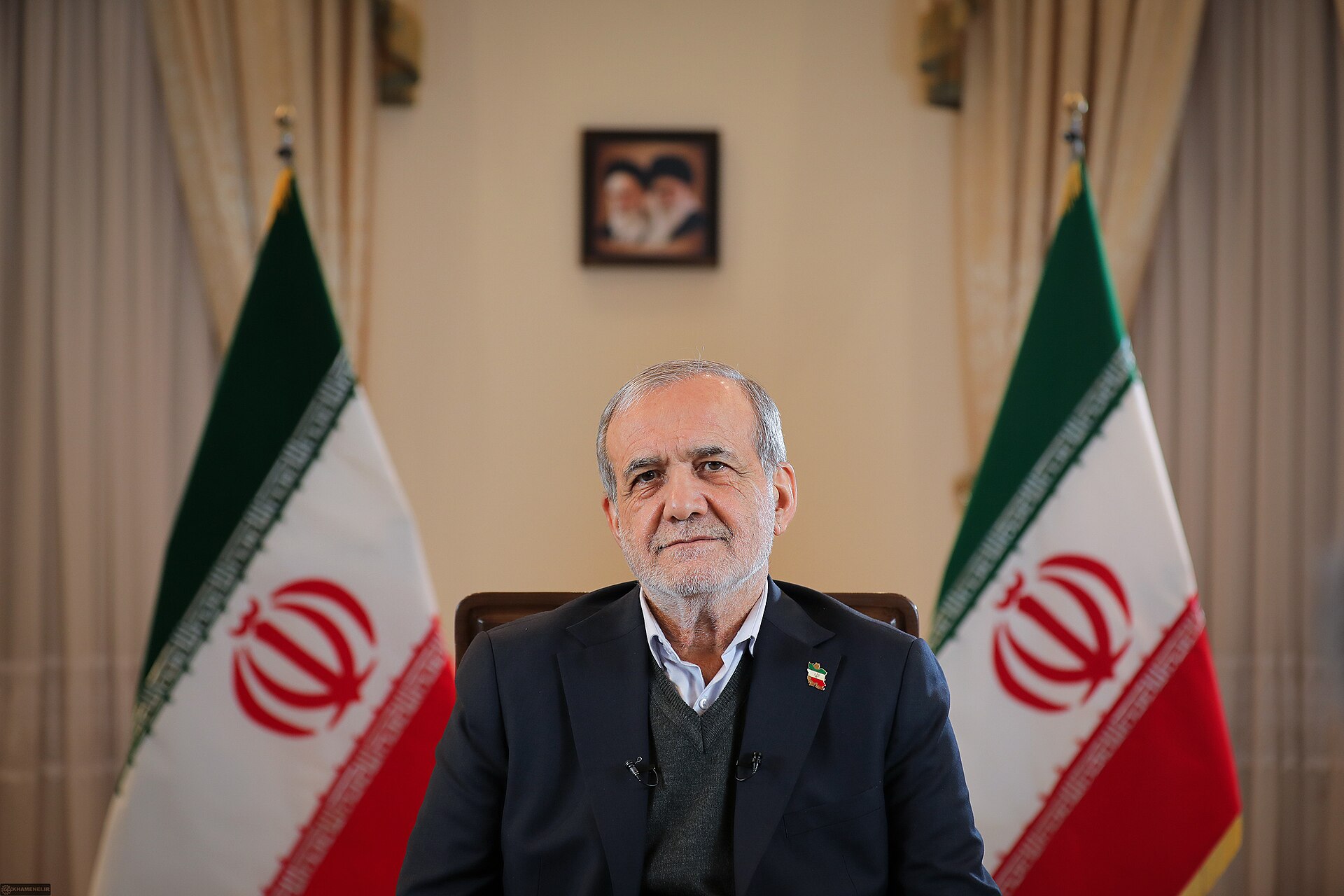
TEHRAN u2014 Iranian President Masoud Pezeshkian called IRGC strikes on the UAE “madness” on May 4, requested an urgent meeting with Supreme Leader Mojtaba Khamenei to halt the attacks, and spent 2.5 hours in a private session with Iran’s wounded and invisible leader u2014 the first confirmed in-person meeting since Mojtaba’s appointment on March 9. He emerged with the IRGC’s own demand stamped as presidential policy: no Hormuz negotiations until the United States lifts its naval blockade. For two months, Western diplomatic strategy u2014 from Islamabad to Beijing u2014 has been built on a structural assumption: that Pezeshkian wants a deal, that IRGC commander Ahmad Vahidi is the blocking force, and that if Vahidi could be sidelined, isolated, or overruled from above, the elected president could deliver. The May 7 disclosure destroyed that model.
n
The authorization ceiling that prevents Iran from accepting the 14-point MOU framework delivered on May 6 does not sit with Vahidi. It sits with Mojtaba Khamenei himself u2014 or, more precisely, with the IRGC-Mojtaba axis that put him in power and now governs through him. Three separate institutional tracks u2014 the IRGC, parliament, and now the Supreme Leader’s office channeled through Pezeshkian u2014 have converged on the identical Hormuz-first, blockade-lift precondition. That convergence is not a negotiating position. It is a system state.
n
The Middle East briefing 3,000+ readers start their day with.
One email. Every weekday morning. Free.
n
- n
- What Did Pezeshkian’s Meeting With Mojtaba Khamenei Actually Produce?
- The May 4 Baseline: From ‘Madness’ to Mandate
- Who Actually Controls Iran’s Response to the MOU?
- The Three-Track Convergence: IRGC, Parliament, and Supreme Leader
- Why Does the Blockade Precondition Destroy the 14-Point MOU Framework?
- Mojtaba’s Invisible Command: The Military Council and the Wounded Leader
- What Does This Mean for Washington, Riyadh, and Beijing?
- The Domestic Paradox: 115% Inflation and the Logic of Escalation
- Frequently Asked Questions
- n
n
n
n
n
n
n
n
n
n
n
n
n
n
What Did Pezeshkian’s Meeting With Mojtaba Khamenei Actually Produce?
n
A single sentence from Iran’s presidency, reported by the Voice of Emirates on May 7: “Any negotiation regarding the full reopening of the Strait of Hormuz requires the lifting of the naval blockade imposed by the United States.” That formulation u2014 the blockade-lift precondition u2014 is what the IRGC has demanded since CENTCOM imposed its blockade on April 13. It was not a new position for Iran’s military establishment. It was a new position for Iran’s presidency.
n
Bloomberg and Euronews led their coverage with what the meeting confirmed about Mojtaba’s physical status u2014 the first proof of life from a leader who has not appeared on video, issued an audio recording, or been photographed since succeeding his father. Al Jazeera framed it as Pezeshkian’s “attempt to push back against efforts from the United States to portray the Islamic Republic’s leadership as divided.” PressTV ran its own headline u2014 “Pezeshkian praises Leader’s humility, sincerity in first direct meeting” u2014 and did not mention the blockade precondition at all. None of these framings captured the operative development: a president who entered the room arguing against IRGC escalation left it having adopted the IRGC’s position as his own.
n
Pezeshkian’s own account was thick with atmospherics and thin on substance. “What stood out to me more than anything else in this meeting was his manner, perspective, and deeply sincere and humble behaviour,” he told PressTV, “an approach that transformed the atmosphere into one based on trust, calmness, empathy, and direct dialogue.” He provided no date for the meeting, no location, and no list of witnesses. His chief of staff and deputy for communications gave separate interviews to the state-linked ISNA agency claiming that Pezeshkian and IRGC commanders make decisions in “joint meetings” and that reports of rifts between the presidency and the Revolutionary Guards were “fake news.”
n
The denial was itself an admission. Five days before those interviews, Iran International had reported Pezeshkian calling IRGC strikes “completely irresponsible” and “madness” and requesting the very meeting he was now describing as a triumph of collegial harmony.
n
The May 4 Baseline: From ‘Madness’ to Mandate
n
The sequence is the evidence. On May 4, 2026, Iran International reported that Pezeshkian had described the IRGC’s ongoing strikes against UAE targets as “completely irresponsible” and “madness” u2014 language that exceeded anything he had used publicly in the 65 days since the war began. In the same report, he was described as having “requested an urgent meeting with Mojtaba Khamenei to press for an immediate halt to IRGC attacks.” The meeting request was not a diplomatic maneuver. It was an appeal to the only constitutional authority above the IRGC: the Supreme Leader.
n
Under Article 110 of Iran’s constitution, the Supreme Leader is the sole commander of the armed forces; the president has zero IRGC authority. Pezeshkian’s predecessors understood this as a practical constraint, working through the Supreme National Security Council and personal relationships with IRGC commanders rather than attempting direct orders. But Pezeshkian had burned those channels. His April 4 public accusation u2014 naming Vahidi and SNSC deputy Abdollahi as the ceasefire wreckers responsible for the Islamabad walkout u2014 had made the IRGC leadership his declared adversary. The Mojtaba meeting was his remaining institutional option.
n
What happened between May 4 and May 7 can be reconstructed from what changed. Before the meeting, Pezeshkian’s public posture was opposition to IRGC escalation, frustration with the military council’s isolation of the Supreme Leader, and openness to the MOU framework that Axios reported on May 6 as a 14-point, one-page document offering an end-of-war declaration and a 30-day negotiating window with gradual mutual de-escalation on Hormuz. After the meeting, Pezeshkian’s presidency issued the blockade-lift precondition u2014 a demand that requires Washington to concede its primary coercive instrument before Tehran agrees to discuss the issue that instrument was designed to resolve.
n
The inversion was total. Pezeshkian walked in asking Mojtaba to restrain the IRGC and walked out delivering the IRGC’s talking points as presidential policy. Either Mojtaba overruled him, or u2014 more consistent with the available evidence u2014 the meeting was the mechanism through which a president without military authority was brought into alignment with the military’s position.
n
n
Who Actually Controls Iran’s Response to the MOU?
n
The standard model of Iranian wartime decision-making, as understood in Washington and Riyadh for two months, placed the authorization ceiling with Ahmad Vahidi u2014 the IRGC-linked former defense minister whose deputy Zolghadr now controls the SNSC. In this model, Pezeshkian was a willing negotiating partner trapped below a military veto. The diplomatic implication: any path around Vahidi u2014 through the Supreme Leader, through Chinese mediation, through back-channel offers that gave the IRGC enough to stand down u2014 could unlock a deal.
n
The May 7 disclosure collapsed the model. Ali Vaez, the International Crisis Group’s Iran Project Director, told CNN in April that “the system is using [Mojtaba Khamenei] to get final approval for key broad decisions” and that “Mojtaba is not in a state where he can actually make critical decisions or micromanage the talks.” Time magazine’s April 21 analysis was sharper: “Although he is formally the highest authority in Iran, according to the interlocutors, Khamenei agrees rather than commands.” If Mojtaba agrees rather than commands, the question is: agrees with whom? The May 7 answer is that he agrees with the IRGC commanders who elected him, who control physical access to him through a military council, and whose position u2014 blockade-lift first u2014 is now the only position any arm of the Iranian state produces.
n
The authorization ceiling did not move. It was misidentified. Vahidi was never an independent blocking force operating against the Supreme Leader’s wishes. He was the visible expression of a position held at the apex u2014 a position that Mojtaba either shares or is unable to overrule. For diplomatic purposes, the distinction between those two possibilities does not matter. Both mean Pezeshkian cannot deliver what he does not control.
n
The Zolghadr appointment on March 25 should have signaled this earlier. When Pezeshkian was compelled by IRGC pressure to install an IRGC general as SNSC secretary, the body that formally coordinates civilian and military policy tracks passed to direct military control. Ali Larijani u2014 the former nuclear negotiator, former SNSC secretary, former parliament speaker who had served as the institutional bridge between the IRGC and Ministry of Foreign Affairs u2014 was killed in an Israeli airstrike in early March. No replacement has emerged. The bridge is down, and the road that was supposed to bypass it leads to the same checkpoint. That structural gap is now compounded by the NCRI’s latest nuclear disclosure u2014 the Rainbow Site tritium allegation u2014 which landed on the MOU deadline morning and widened the fracture between Pezeshkian’s negotiating track and the IRGC’s command ceiling.
n
The Three-Track Convergence: IRGC, Parliament, and Supreme Leader
n
The structural proof that Iran’s Hormuz-first position is a system output u2014 not a factional preference u2014 is that three separate institutional tracks produced identical demands within a six-week window. No single faction could have orchestrated that alignment across branches that do not coordinate by committee; the convergence required either shared conviction or shared command, and both point to the same conclusion.
n
The first track is the IRGC itself. Since the CENTCOM blockade began on April 13, Vahidi’s position has been consistent: the blockade is an act of war, and its removal is a precondition for any discussion of Hormuz transit. The IRGC operationalized this demand by launching the Persian Gulf Strait Authority on May 5 u2014 a bureaucratic enforcement mechanism requiring vessels to complete a 40-question “Vessel Information Declaration” form, establishing an Iranian registration system for all Hormuz transit. The PGSA launched one day before the US presented the MOU and opened its 48-hour response window, meaning Iran built the institutional infrastructure of its precondition before it had seen the document that precondition would be applied to.
n
The second track is parliament. Speaker Mohammad Bagher Ghalibaf u2014 a former IRGC Aerospace Force commander from 1997 to 2000 u2014 rejected the US negotiating framework on April 21, stating Iran “will not negotiate under threats” and calling the earlier Islamabad format “a form of surrender.” Parliament’s National Security and Foreign Policy Committee ratified a 12-article “Law on Establishing Iran’s Sovereignty over the Strait of Hormuz” by the same date. MP Vahid Ahmadi announced legislation that would impose transit tolls, ban vessels from hostile states, and authorize the confiscation of 20% of cargo from non-compliant ships. This is not a bargaining position. It is a legislative framework designed to make the Hormuz-first stance irreversible by domestic law.
n
The third track is the one disclosed on May 7: the Supreme Leader’s office, channeled through the president it has co-opted. Pezeshkian’s post-meeting demand u2014 blockade removal before Hormuz negotiations u2014 is the same output produced by the other two tracks, now carrying the constitutional weight of Article 110. Three branches, one position.
n
That convergence answers the question Washington, Riyadh, and Beijing have been asking since the MOU was delivered: is there a faction inside Iran that could accept the deal? The three-track output says no. There is a system producing a single answer through every available institutional channel, and the president who was supposed to be the exception just confirmed himself as the latest transmitter.
n
Why Does the Blockade Precondition Destroy the 14-Point MOU Framework?
n
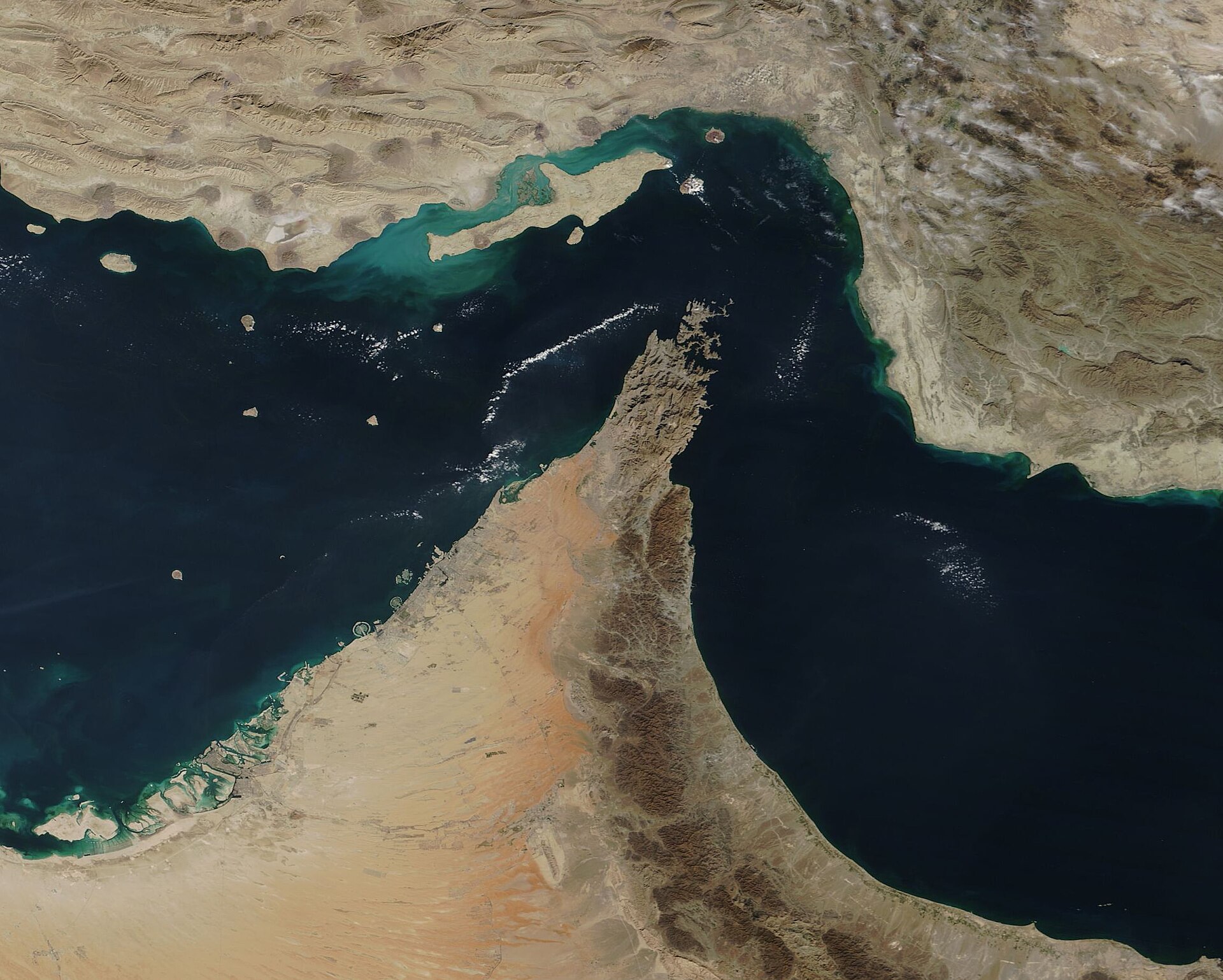
The 14-point MOU, as reported by Axios on May 6, proposes an end-of-war declaration and a 30-day negotiating window during which Hormuz restrictions and the US blockade would be “gradually lifted” u2014 a parallel de-escalation in which both sides lower pressure simultaneously over a defined period, allowing verification at each stage. The blockade-lift precondition inverts that architecture: first the US removes its blockade, then Iran discusses Hormuz. Washington would surrender its primary coercive instrument u2014 the only measure that has demonstrably constrained Iranian shipping since April 13 u2014 in exchange for a promise to begin negotiations about the issue that instrument was designed to resolve.
n
Secretary of State Marco Rubio set a response deadline of end-of-day Friday, May 8. Iran’s Foreign Ministry spokesperson rejected the concept outright: “We don’t follow anyone’s deadlines.”
n
The PGSA’s timing makes the precondition more corrosive still. Iran’s Strait Authority did not merely assert sovereignty over Hormuz transit u2014 it created an administrative apparatus that processes, approves, or rejects individual vessel passages. If the US lifts its blockade before the PGSA is dismantled, every ship transiting Hormuz would pass through Iranian bureaucratic control rather than returning to free transit under UNCLOS. The MOU’s “gradual lifting” language assumes a return to baseline. The PGSA ensures that baseline no longer exists. Lifting the blockade under these conditions would not reopen Hormuz; it would transfer operational control from CENTCOM to the IRGC’s administrative arm.
n
Araghchi’s May 6 meeting with Wang Yi in Beijing added a further layer. China called for an “immediate full ceasefire” and Hormuz reopening, and Araghchi described Iran’s position as requiring a “fair and comprehensive” deal u2014 language that treated the MOU as a starting point for negotiation rather than a document requiring a yes-or-no response. Beijing’s stated position is closer to the MOU framework than to Iran’s precondition, but China has shown no willingness to pressure Tehran toward acceptance. The diplomatic geometry has not changed since Islamabad: every potential mediator calls for a ceasefire, and none has demonstrated the capacity to deliver one.
n
n
Mojtaba’s Invisible Command: The Military Council and the Wounded Leader
n
Mojtaba Khamenei was elected Supreme Leader through the Assembly of Experts between March 3 and 9, 2026, after the IRGC generals u2014 Vahidi among them u2014 secured a two-thirds majority on the first ballot. The Irish Times reported the speed of the vote as evidence that “the guard generals had gained the upper hand.” Mojtaba u2014 a midlevel cleric without published jurisprudence or the scholarly credentials typical of senior ayatollahs u2014 owed his constitutional legitimacy to his father’s name and his operational position to the military establishment that elected him.
n
His physical condition defines the parameters of his rule. Reuters, via EADaily, reported in April that Mojtaba had undergone three leg operations and was awaiting a prosthesis, had severe facial burns making speech difficult, and required hand surgery plus a projected series of plastic surgeries. The Times of Israel cited inner-circle sources saying he “has refused to appear in video clips or audio recordings so as not to be seen by the public as ‘weak or vulnerable.’” No video footage of Mojtaba Khamenei exists since his appointment. Iranian state media has relied on AI-generated communications to maintain the appearance of an active leader, a practice CNN documented in April.
n
Iran International reported that a “military council” of senior IRGC officers now controls access to the Supreme Leader, preventing government reports from reaching him and isolating the wounded leader from the elected government. If this reporting is accurate u2014 and the May 4 sequence supports it, given that Pezeshkian had to formally request a meeting rather than simply walking into the Leader’s office u2014 then the 2.5-hour session was a managed event. Mojtaba received a president whose appeal for IRGC restraint had already been framed by the military council before Pezeshkian entered the room, and the output was the position the council held before the meeting began.
n
That assessment u2014 a Supreme Leader who agrees rather than commands u2014 takes on operational specificity here. A leader who agrees with the last briefer in the room will produce the position of whoever controls the briefing sequence. If the military council filters access, the military council sets the output. The meeting did not demonstrate that Mojtaba overruled his president. It demonstrated that the format itself u2014 a managed audience with a wounded leader, controlled by IRGC officers, producing the IRGC’s own demand through the president’s mouth u2014 is the decision-making mechanism. The system does not need to overrule the president when it can absorb him.
n
What Does This Mean for Washington, Riyadh, and Beijing?
n
Each of the three capitals pursuing diplomatic resolution with Iran has operated on a model that the May 7 disclosure invalidates. The damage is not that Iran said no u2014 deadlines have been missed before u2014 but that the institutional architecture capable of saying yes has been shown not to exist.
n
Washington’s model u2014 visible in the MOU framework, in Rubio’s Friday deadline, in the blockade architecture designed as coercive diplomacy u2014 assumed that sufficient pressure on Iran’s economy and military would create a split between pragmatists (Pezeshkian, Araghchi) and hardliners (Vahidi, the IRGC naval command), with the pragmatists eventually winning internal arguments as the external pain mounted. The May 7 output shows the pragmatist track producing the same position as the hardliner track. There is no split to exploit.
n
Riyadh’s model u2014 channeled through Saudi FM Prince Faisal’s April 13 phone call to Araghchi on blockade day, through the parallel diplomatic track running beneath the US-led framework u2014 assumed that Iran’s economic desperation would eventually force the elected government to override or circumvent IRGC positions. Saudi fiscal exposure to a prolonged blockade is severe: March production fell to 7.25 million barrels per day from 10.4 million in February u2014 a 30% collapse u2014 with Goldman Sachs projecting a 6.6% GDP war-adjusted deficit against the official 3.3% forecast. Riyadh cannot sustain this indefinitely and has been banking on Tehran’s inability to sustain it either. But Iran’s internal power balance does not respond to economic pressure the way a government accountable to its public would.
n
Beijing’s model u2014 expressed in Wang Yi’s May 6 session with Araghchi, in the broader Chinese effort to position itself as an honest broker since Islamabad u2014 assumed that Iran’s dependence on Chinese markets and financial infrastructure gave Beijing the influence to move Tehran toward acceptance of something close to the MOU. Iran took China’s meeting, used its “fair and comprehensive” language, and returned home to the same blockade-lift precondition. China’s economic relationships, like Washington’s military pressure, were absorbed without producing deviation from the system’s single output.
n
The diplomatic implication is that there is no interlocutor pathway to a deal under current conditions. Pezeshkian cannot deliver. Araghchi cannot negotiate beyond his mandate. Mojtaba will not u2014 or cannot u2014 override the IRGC that elected him and controls his access to information. The MOU’s 48-hour clock was addressed to a decision-maker who does not exist in the form the framework assumed.
n
The Domestic Paradox: 115% Inflation and the Logic of Escalation
n
The intuitive expectation u2014 shared by most Western policy models u2014 is that domestic economic collapse produces pressure for de-escalation. Iran’s food inflation has reached 115% according to the Iran Statistics Center, with Fortune reporting on May 8 that some items have experienced “100% inflation in just days.” The 2025-2026 protest wave reached more than 200 cities across all 31 provinces, the largest since 1979. Iran’s Central Bank circulated an internal memo projecting a 12-year economic recovery timeline. By any rational economic measure, Iran should be desperate for a deal.
n
The domestic pressure is producing the opposite output because the structure of Iranian power decouples economic suffering from political accountability. The people who bear the cost of escalation u2014 the urban middle class, merchants, workers u2014 have no institutional mechanism to translate their suffering into policy change. The 2025-2026 protests are not represented in the Majlis, have no IRGC sympathizers in leadership positions, and face a Supreme Leader whose own legitimacy derives entirely from the military establishment that benefits from continued crisis. Mojtaba was not elected by the Iranian public. He was elected by 88 Assembly of Experts members, themselves vetted by the Guardian Council, itself appointed by the previous Supreme Leader. The feedback loop between public pain and state policy was severed by constitutional design decades before the war.
n
The IRGC’s institutional incentives run in the opposite direction from de-escalation. The Hormuz sovereignty law, the PGSA, the vessel registration system u2014 these are not wartime measures that dissolve when the shooting stops. They are the infrastructure of a permanent IRGC revenue stream and territorial claim that can only be constructed under conditions of sustained crisis. A return to pre-war normalcy would dismantle the bureaucratic empire the IRGC has built in ten weeks of war. The longer the crisis persists, the deeper those institutional roots grow, and the harder any future deal becomes u2014 regardless of which president walks into Mojtaba’s room.
n
n
Frequently Asked Questions
n
When and where did the Pezeshkian-Mojtaba meeting take place?
n
Pezeshkian disclosed the meeting on May 7, 2026, but provided no date, location, or witness list u2014 details that are standard in any official readout of a head-of-state meeting. Given that Mojtaba has not been seen at any known government facility since his appointment and that Iran International has reported a military council controlling physical access to him, the meeting likely took place at an IRGC-secured medical or residential facility rather than at the Supreme Leader’s traditional office at Beit Rahbari in Tehran. The absence of basic logistical details reinforces the pattern of deliberate opacity that has characterized Mojtaba’s tenure, in which proof of function is offered without proof of location.
n
Could Pezeshkian resign or be removed for adopting the IRGC line?
n
Iran’s constitution provides an impeachment mechanism through the Majlis, and Ghalibaf’s parliamentary coalition has previously threatened it u2014 MP Mahmoudi warned of impeachment proceedings in April over Araghchi’s Hormuz statements. But Pezeshkian’s post-meeting alignment with the IRGC position makes impeachment less likely, not more, because he is no longer the obstacle the hardline bloc needs to remove. The greater risk to his presidency is irrelevance: a president who articulates IRGC positions without the authority to modify them is constitutionally present but operationally absent, a pattern that defined Rouhani’s final years after the US withdrawal from the JCPOA in 2018 and Khatami’s second term before that.
n
What happened to the MOU’s 48-hour deadline?
n
The Axios-reported MOU was delivered on May 6, 2026, with the 48-hour response window roughly coinciding with Rubio’s May 8 end-of-Friday deadline. By 20:00 UTC on May 8, no formal Iranian response had been confirmed. Iran’s FM spokesperson rejected the deadline concept outright. The FDD estimated US blockade costs to Iran at $435 million per day, but that figure measures damage to a civilian economy whose pain has no transmission mechanism to the IRGC commanders controlling the decision. Meanwhile, Iran’s HEU stockpile stood at 440.9 kg enriched to 60% as of the last IAEA access in June 2025, with the agency’s monitoring terminated on February 28, 2026 u2014 meaning the MOU’s nuclear provisions would be negotiated against a stockpile whose current size is unknown.
n
Has any country successfully pressured Iran to change its Hormuz position?
n
No. China holds the strongest economic influence over Iran through CNPC/Sinopec offtake agreements and the Kunlun Bank yuan channel, and Wang Yi called for “immediate full ceasefire” and Hormuz reopening on May 6 u2014 a position closer to the MOU than to Iran’s precondition. Araghchi attended the Beijing meeting, used the language of diplomatic engagement, and returned to the same blockade-lift demand. Pakistan, which hosted the Islamabad talks and holds the September 2025 Saudi Military Defense Agreement, has been sidelined since Vance’s walkout. Oman, Iran’s traditional intermediary, has not been publicly active since its transport minister rejected Hormuz tolls in April. The pattern is consistent: external pressure on any single Iranian track cannot override a three-track convergence.
n
What is Mojtaba Khamenei’s religious authority to serve as Supreme Leader?
n
The question remains unresolved within Shia jurisprudence. Mojtaba is a midlevel cleric without published jurisprudential works u2014 a resaleh, the formal treatise expected of senior religious authorities u2014 placing him below the scholarly standard set by Khomeini and Ali Khamenei, though Ali Khamenei himself faced similar criticism at his 1989 appointment. The Assembly of Experts certified Mojtaba on March 9, 2026, giving him constitutional legitimacy, but the Shia concept of marja’iyyah (source of emulation) typically requires decades of published scholarship. Grand Ayatollah Sistani in Najaf, the most senior living Shia authority, has not publicly recognized Mojtaba’s appointment u2014 a silence that carries theological weight across the Shia world even if it has no consequence under the Iranian constitution. The structural consequence of that chain was made operationally concrete on May 9, when IRGC Aerospace Force commander Mousavi issued a “missiles locked” declaration timed to close the 48-hour MOU response window: an analysis of the declaration’s timing, authorship, and institutional logic shows it was aimed not at Washington but at Pezeshkian’s own diplomatic apparatus.