
DHAHRAN — Saudi Aramco CEO Amin Nasser has given the oil market a date: if the Strait of Hormuz does not reopen by mid-June 2026, the global oil supply disruption will persist and normalization will not arrive before 2027. The statement, delivered on CNBC and to Asharq Al-Awsat on May 11, was reported as an oil-market forecast. It is better understood as the most explicit public admission by any Saudi official that the Kingdom’s fiscal trajectory, production capacity, and sovereign investment timeline now depend on decisions made in Tehran and Washington — without Riyadh’s participation.
Twenty-five days remain before that threshold passes. In those twenty-five days, Saudi Arabia cannot reopen the Strait. It cannot compel Iran’s Persian Gulf Strait Authority to disband. It cannot accelerate the stalled US-Iran talks that collapsed in Islamabad on April 12. What it can do — expand Yanbu port capacity, restore Khurais production, manage the PIF’s dwindling cash reserves — addresses symptoms rather than the cause. The cause is a chokepoint governed by another country’s navy, and a diplomatic calendar set by two capitals that have not consulted Riyadh on the terms.
Table of Contents
- What Nasser Actually Said — and What He Didn’t
- Why Does Mid-June Matter? The Three-Part Mechanism
- The East-West Pipeline at Its Ceiling
- The Fiscal Cascade: Q1 Deficit, PIF Cash, and the Breakeven Trap
- What Happens to Saudi Arabia’s OPEC+ Quota on June 7?
- Al Jaber’s Darker Timeline
- Tehran’s Decoupling: Hormuz Is Not the Nuclear File
- Wood Mackenzie’s Mid-June Dividing Line
- Can Saudi Arabia Control When Its Own Oil Market Recovers?
- Frequently Asked Questions
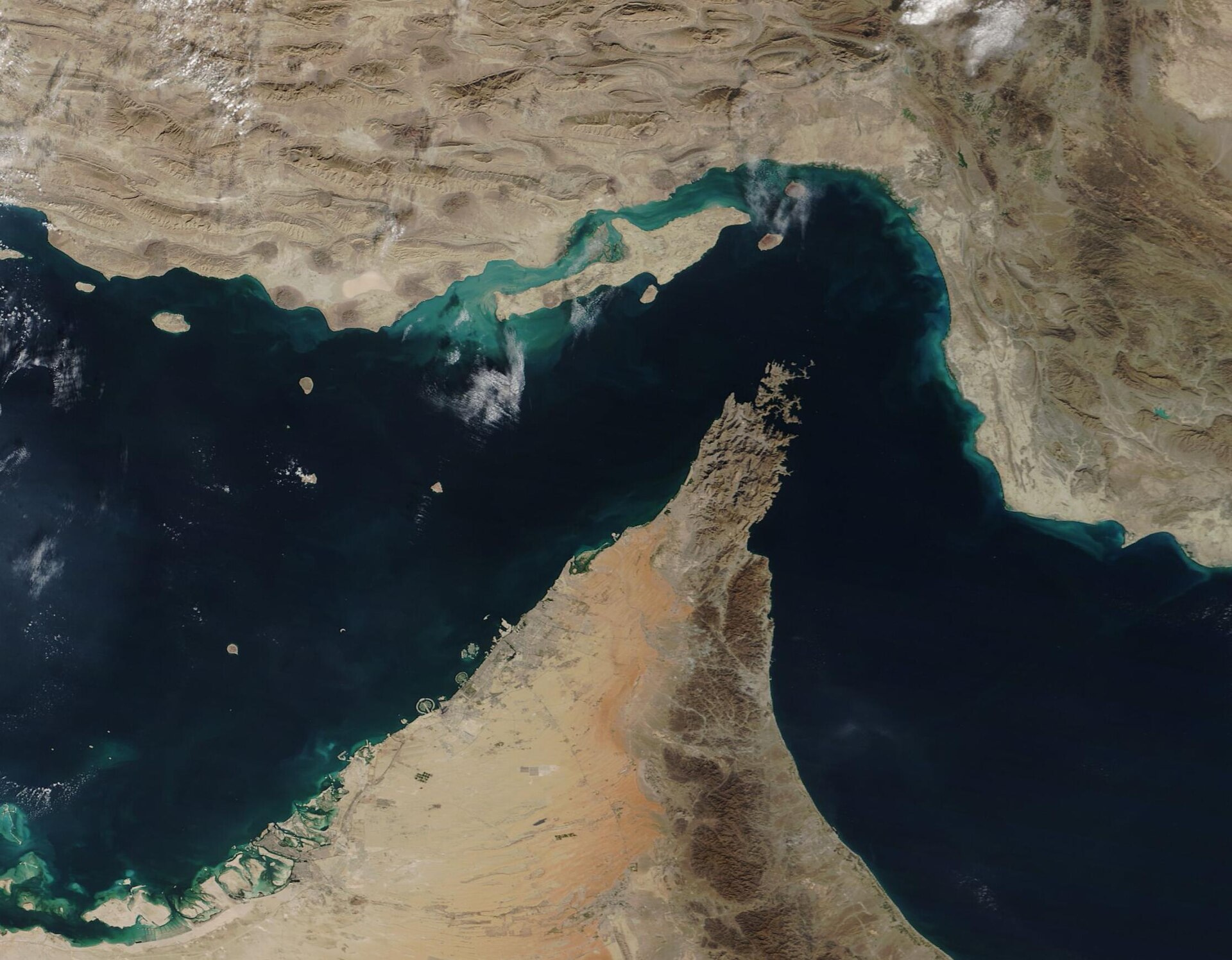
What Nasser Actually Said — and What He Didn’t
The full statement, delivered during a CNBC interview on May 11 and echoed in his remarks to Asharq Al-Awsat the same day, was carefully constructed. “If trade flows resume immediately or today through the Strait of Hormuz, it will take a few months for the oil market to rebalance,” Nasser said. “But if trade and shipping remain curtailed by more than a few weeks from today, we anticipate the supply disruption to persist, and the market to normalize only in 2027.”
The phrase “a few weeks from today” — spoken on May 11 — places the threshold at roughly the end of May or the first half of June. Nasser reinforced it: “The longer the supply disruptions continue, even for another few more weeks, it is going to take a much longer time for the oil market to rebalance and stabilize.” He was not offering a range. He was describing a cliff.
What Nasser chose not to say matters as much. He did not name a Brent price target. He did not address whether Saudi Arabia has the diplomatic leverage to influence Hormuz’s reopening. He did not disclose the cost or timeline for restoring the 300,000 barrels per day offline at Khurais. He described the oil market as experiencing “demand rationing” — explicitly rejecting the term “demand destruction,” which would imply a permanent loss of consumption. The distinction is an optimism his own timeline makes hard to sustain: demand rationing that lasts until 2027 begins to look like destruction regardless of what Aramco’s CEO calls it.
At the Q1 earnings call the day prior, Nasser also volunteered that Aramco could reach its maximum sustainable capacity of 12 million barrels per day “in under three weeks” if the Strait reopened. Aramco’s actual March production was 7.76 mbpd. The gap — more than 4 mbpd of suppressed capacity — is entirely attributable to a waterway Saudi Arabia does not control.
The Middle East briefing 3,000+ readers start their day with.
One email. Every weekday morning. Free.
Why Does Mid-June Matter? The Three-Part Mechanism
Nasser’s mid-June threshold is not arbitrary. It reflects the convergence of three independent logistical systems, each of which has its own clock.
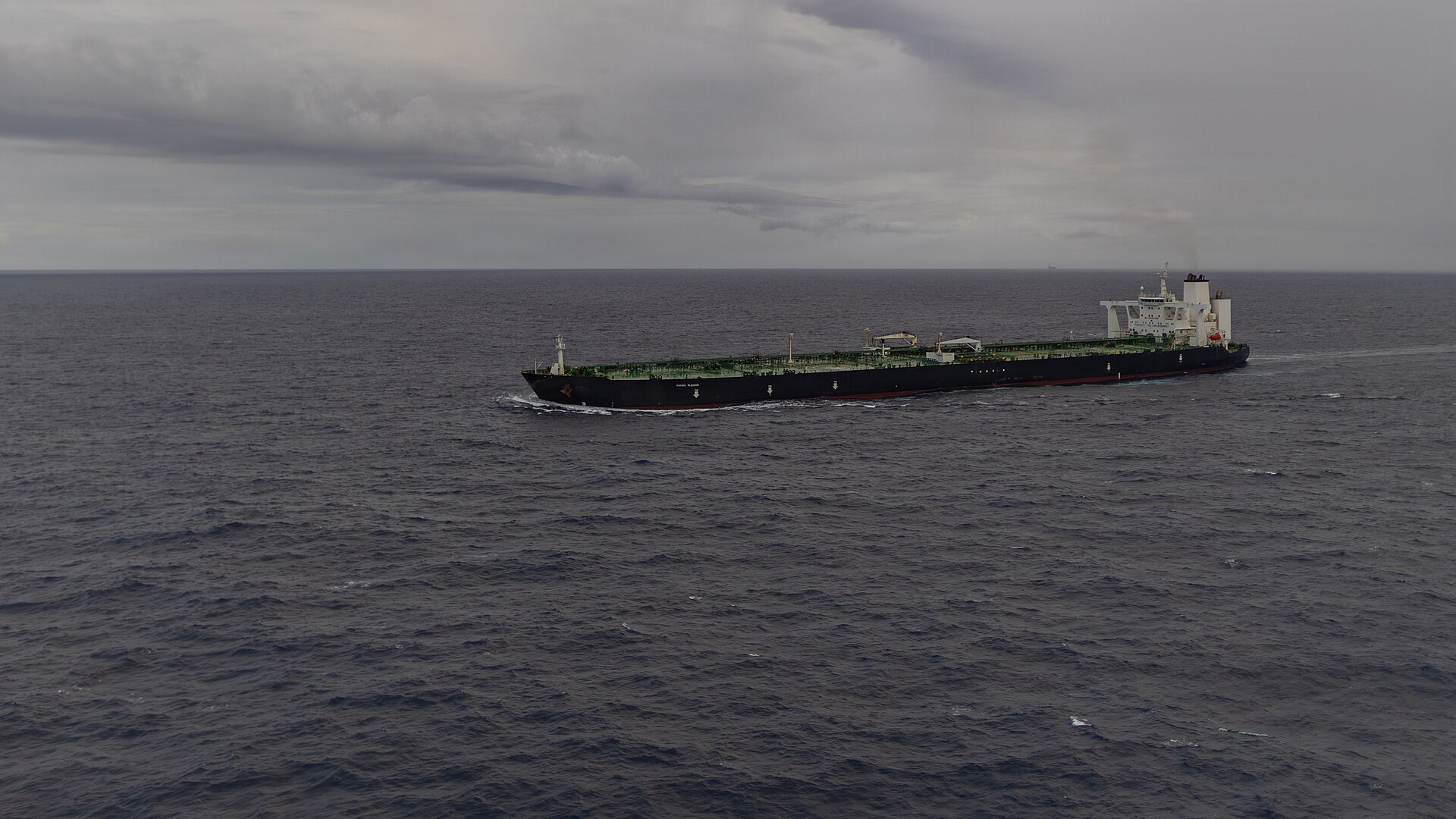
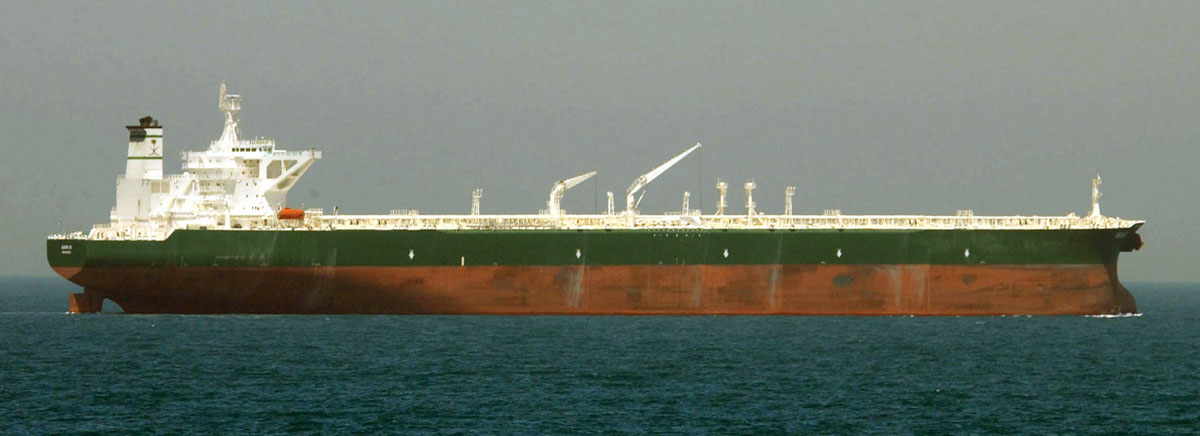
The first is tanker fleet displacement. More than 600 ships — predominantly crude and product tankers — are stranded inside the Persian Gulf as of mid-May, with approximately 240 more queued outside the Strait, according to Baird Maritime data from May 11. Vessel crossings have collapsed from roughly 70 per day before the war to 2-5 per day. Only 45 transits have been completed since April 8, representing 3.6% of the pre-war baseline.
Even if the Strait reopened tomorrow, repositioning 600-plus ships to their pre-war trade routes takes weeks. If that repositioning begins after mid-June, it collides with the Q3 Asian peak demand season — the period when Chinese, Japanese, South Korean, and Indian refineries run at maximum throughput and need crude delivered, not in transit.
The second mechanism is the LNG contract cycle. More than 80 million tonnes per year of LNG supply — roughly 20% of global capacity — remains inaccessible behind the Strait, per Wood Mackenzie analysis. Spot-market buyers who switched to alternative suppliers during the disruption have signed short- and medium-term contracts to lock in those alternatives. A Hormuz reopening after July makes it economically irrational for those buyers to unwind mid-contract. The anticipated global LNG supply wave has been delayed at least two years, with cumulative losses of approximately 120 billion cubic metres between 2026 and 2030.
The third is the Asian refinery maintenance calendar. Major refineries across East Asia conduct maintenance shutdowns in spring — April and May — when crude demand dips. Post-maintenance, refineries lock in crude supply contracts for Q3 and Q4. A Hormuz reopening after mid-June means Saudi and Gulf medium-sour grades miss the Asian restocking cycle entirely. Those contracts will already be signed with non-Gulf suppliers or based on pipeline-delivered crude.
| Metric | Pre-War | Current | Source |
|---|---|---|---|
| Daily vessel transits | ~70 | 2-5 | Nasser/CNBC, May 11; CSIS |
| Weekly oil supply loss | — | ~100M bbl | Nasser, May 11 |
| Ships stranded in Gulf | — | 600+ | Baird Maritime, May 11 |
| Ships queued outside Strait | — | ~240 | CNBC/Baird Maritime |
| Total transits since April 8 | — | 45 | CSIS; HOS tracking |
| LNG supply inaccessible | — | 80 Mt/yr (20% global) | Wood Mackenzie |
| Cumulative oil losses | — | 1.1-1.2B bbl | Nasser/Asharq Al-Awsat |
Each mechanism operates independently. Together, they create a threshold effect: the difference between a Hormuz reopening on June 10 and one on June 25 is not two weeks of delay — it is six to nine months of cascading market dislocation.
The East-West Pipeline at Its Ceiling
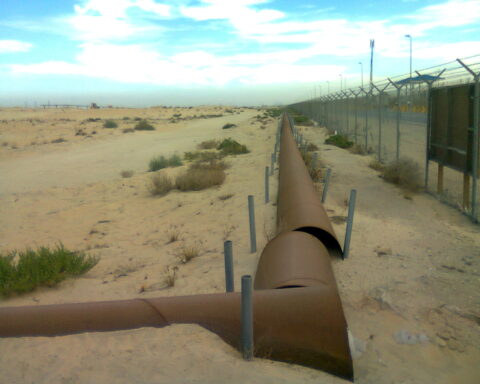
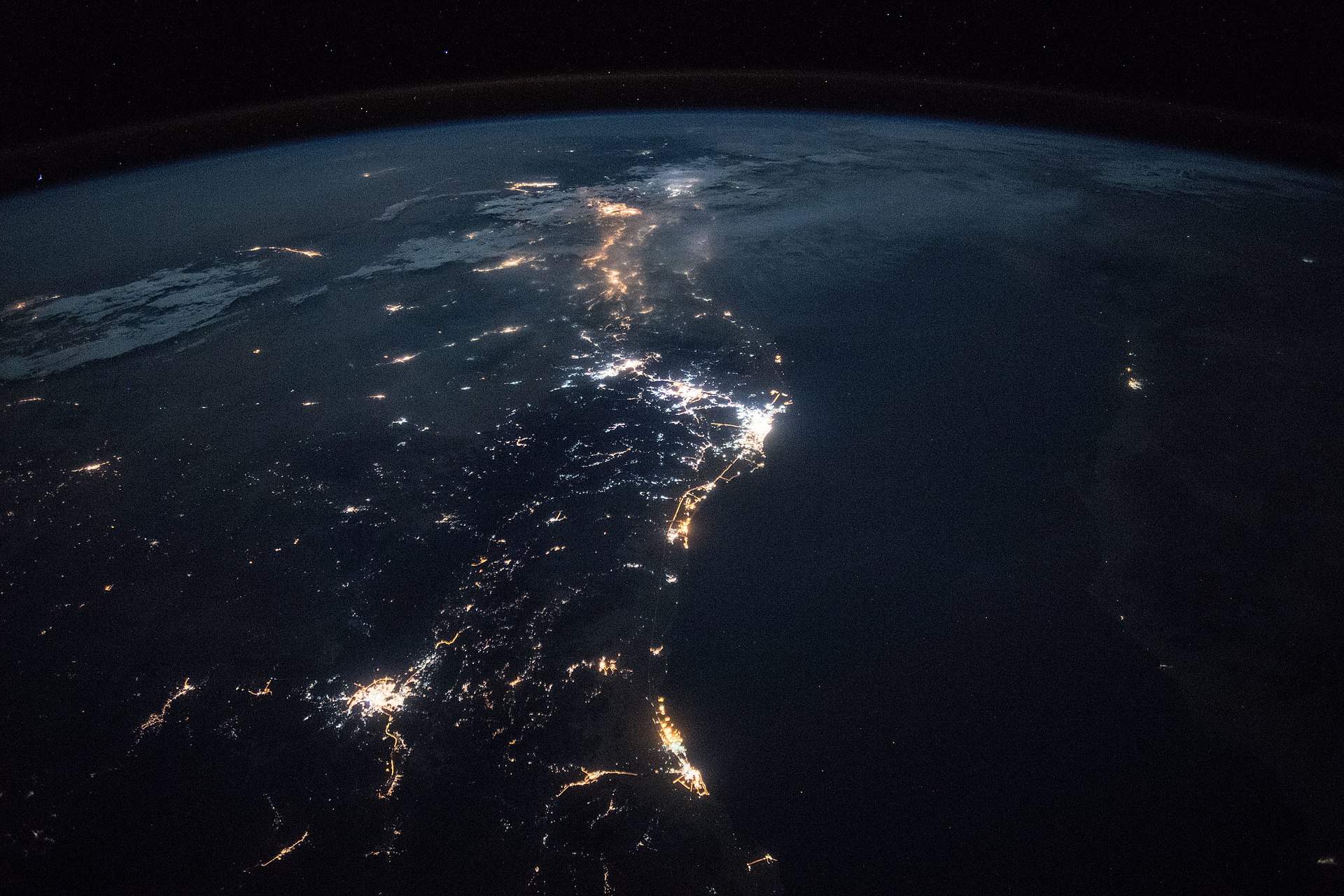
Nasser called the East-West Pipeline “a critical lifeline” at the Q1 earnings presentation on May 10. The pipeline reached its maximum capacity of 7.0 million barrels per day during Q1 — a throughput Aramco presented as proof of operational resilience. The number deserves less celebration than it received.
Yanbu, the pipeline’s Red Sea terminus, has an export ceiling of 5.0 mbpd. The 2 mbpd gap between pipeline throughput and port capacity is trapped — crude that reaches Yanbu but cannot be loaded onto tankers. Nasser acknowledged the bottleneck, stating he is “looking at ways to expand Yanbu’s five million barrel-per-day export capacity.” No timeline, no cost estimate, no engineering partner has been announced. “Looking at ways” is not a project schedule.
In Q1, Aramco’s results disclosure noted approximately 900,000 bpd of refined product exports through western terminals, an additional flow that partially compensates for the crude bottleneck. But refined products and crude serve different markets and trade at different margins. The pipeline is full. The port is the constraint. And the constraint has no disclosed fix date.
The strategic implication is blunt: even after Hormuz reopens, Saudi Arabia’s export capacity will remain structurally limited until Yanbu expansion is complete. The EIA’s $79/bbl 2027 forecast assumes a market in which Saudi production returns to pre-war levels. If Yanbu remains a 5 mbpd chokepoint, that return is physically impossible regardless of what happens at the Strait.
The Fiscal Cascade: Q1 Deficit, PIF Cash, and the Breakeven Trap
Aramco’s Q1 2026 adjusted net income was $33.6 billion, up 26% year-on-year. The headline invited the “resilience” framing Nasser used at the earnings call. The detail underneath it was less cooperative. Free cash flow fell to $18.6 billion from $19.2 billion the prior year, dragged down by a $15.8 billion increase in working capital — the cost of managing inventory, receivables, and operational disruption while the Strait remains effectively closed. The average realized crude price was $76.9 per barrel.
That $76.9 figure sits at the centre of a breakeven trap that tightens as the mid-June threshold approaches. The IMF’s fiscal breakeven for Saudi Arabia — central government only — is approximately $86.60 per barrel. Bloomberg Economics, incorporating the Public Investment Fund’s spending, puts the consolidated breakeven at roughly $94 per barrel. With full PIF capital expenditure included, the figure reaches $111 per barrel. The EIA’s May 2026 Short-Term Energy Outlook projects Brent at $89/bbl for Q4 2026, falling to a $79/bbl average in 2027. Brent’s descent below $100 this month has collapsed the distance between the EIA forecast and the IMF’s $86.60 Saudi fiscal breakeven.
The full dimension of that fiscal trap is now quantified in the GASTAT release: the Q1 GASTAT release that put a number on Hormuz’s fiscal damage shows the deficit at SAR 125.7 billion for Q1 alone — 194% of the full-year target — with private non-oil GDP growing just 0.2% QoQ in Q1 2026, exposing the gap between the headline diversification story and its fiscal underpinning.
| Metric | Price ($/bbl) | Gap vs. EIA 2027 $79 | Source |
|---|---|---|---|
| Aramco Q1 realized crude | $76.9 | — | Aramco Q1 results |
| EIA 2027 Brent average | $79 | — | EIA STEO May 2026 |
| IMF breakeven (central govt) | $86.60 | -$7.60 | IMF |
| Bloomberg (consolidated, incl. PIF) | $94 | -$15 | Bloomberg Economics |
| Full PIF capex breakeven | $111 | -$32 | Bloomberg Economics |
| Current Brent (May 22) | ~$111 | — | Market data |
If mid-June passes without Hormuz normalization, Saudi Arabia faces a year in which market-implied prices are below every plausible breakeven calculation by $7 to $32 per barrel, depending on which obligations are counted. Current Brent — around $111, elevated by the very disruption Nasser wants resolved — will not survive the disruption’s end. Wood Mackenzie’s “Quick Peace” scenario has Brent falling toward $80 by year-end and $65 in 2027. The war premium that inflates today’s price is the same premium that collapses once the Strait reopens — and the speed of that collapse determines whether Saudi Arabia’s budget survives the transition.
The Q1 budget deficit was SR125.7 billion ($33.5 billion), consuming 76% of the full-year forecast of SR165 billion ($44 billion) in a single quarter. Goldman Sachs estimates the actual 2026 deficit at 6.6% of GDP — roughly $80-90 billion, double the official projection of 3.3%. PIF cash reserves stand at approximately $15 billion, or 1.6% of the fund’s $930 billion in assets under management — the lowest ratio since 2020. The $7 billion bond sale this month adds liquidity, but it adds debt service too, and Fitch’s “GRE virtually certain” rating means every dollar PIF borrows sits on the sovereign balance sheet.
What Happens to Saudi Arabia’s OPEC+ Quota on June 7?
Saudi Arabia’s OPEC+ production quota for June is 10.291 million barrels per day. Actual March production was 7.76 mbpd — a gap of approximately 2.5 mbpd. The 188,000 bpd increase scheduled for June, agreed at the last OPEC+ meeting, was described by Bloomberg and Al Jazeera as “symbolic.” The word is generous. The increase is undeliverable. Saudi Arabia cannot pump an additional 188,000 bpd when it cannot export the crude it already produces through a Strait it does not control.
The OPEC+ Joint Ministerial Monitoring Committee meets June 7. That meeting becomes a public audit of a fiction: a quota system that measures commitments against capacity that does not physically exist. The gap between Saudi Arabia’s formal OPEC+ commitment (10.291 mbpd) and its actual output (7.76 mbpd) is larger than the entire production of Libya. It is a gap that every delegate in the room will understand and no one will name directly.
The UAE’s exit from OPEC on May 1 — freeing 1.35 mbpd of ADNOC capacity from quota constraints — compounds the awkwardness. Abu Dhabi left the cartel precisely because its production was deliverable and its competitor’s was not. The June 7 JMMC will be the first session in which Saudi Arabia defends a quota it cannot fill while its largest Gulf rival operates outside the system entirely.
A detailed breakdown of the OPEC+ quota mechanics at June 7 shows the 3.41 million barrel gap between Saudi Arabia’s paper commitment and its actual output — a discrepancy larger than Libya’s entire production.
Al Jaber’s Darker Timeline
On the same day Nasser spoke — May 11 — ADNOC CEO Sultan Al Jaber offered his own assessment to Baird Maritime. “Even if this conflict ends tomorrow,” Al Jaber said, “it will take at least four months to get back to 80 per cent of pre-conflict flows, and full flows will not return before the first or even second quarter of 2027.”
Al Jaber’s timeline is structurally more pessimistic than Nasser’s. Nasser described mid-June as the threshold beyond which 2027 normalization becomes inevitable. Al Jaber projected Q1-Q2 2027 normalization even under immediate conflict resolution — making Nasser’s mid-June window a best case, not a central estimate. The two CEOs, speaking from rival national oil companies on the same day, bracketed the range: the most optimistic plausible outcome is normalization in late 2026, and even that requires the Strait to reopen within weeks.
“This is not just an economic problem. In fact, this sets a dangerous precedent. Once you accept that a single country can hold the world’s most important waterway hostage, freedom of navigation as we know it is just finished.”— Sultan Al Jaber, CEO, ADNOC (Baird Maritime, May 11, 2026)
That remark went largely unreported outside maritime trade press. It is the sharpest public statement from any Gulf NOC executive on the structural, rather than cyclical, nature of the disruption. Nasser’s language stayed within the grammar of market rebalancing. Al Jaber’s broke from it.
Tehran’s Decoupling: Hormuz Is Not the Nuclear File
The assumption embedded in most Western coverage — that a nuclear agreement with Iran would automatically reopen the Strait of Hormuz — was explicitly contradicted on May 21. Iranian Foreign Ministry spokesperson Esmail Baghaei told Al Jazeera and CNBC that simultaneous resolution of the war, Hormuz transit, and the nuclear file is “not currently feasible.” Tehran wants Hormuz normalized first, the nuclear file deferred.
This is not a negotiating position. It is an institutional fact. The Persian Gulf Strait Authority, formally launched on May 5 with a uniformed bureaucracy, a domain name (PGSA.ir), and a transit-permit regime, represents an IRGC investment in permanence. Iran’s parliament security committee has declared PGSA control a non-negotiable ceasefire condition. The IRGC toll architecture — up to $2 million per VLCC, payable in yuan via Kunlun Bank or in Bitcoin and USDT, with exemptions for Russia, China, India, Iraq, and Pakistan — is a revenue stream the Revolutionary Guards will not voluntarily surrender.
The 1980s Tanker War, the only prior major Hormuz disruption, offers no useful precedent. Iran kept the Strait open during that conflict because it needed the waterway for its own exports. In 2026, Iran collects tolls on the transits it permits — a partial closure is more economically beneficial to Tehran than the full access that prevailed in the 1980s. As economist Nader Habibi told Al Jazeera on May 21, “There is no doubt that paying Iran is cheaper than a continuous blockade because a sitting tanker bleeds money.” But, he added, it “is not politically feasible” — US sanctions make formal compliance with IRGC tolls untenable for most shippers.
For Nasser’s mid-June deadline, the decoupling matters operationally. Even if the US-Iran Axios MOU framework — the 14-point, 12-15 year moratorium proposal reported on May 6 — were accepted tomorrow, Hormuz would remain a separate transaction. The Iran-Oman governance mechanism being drafted in Muscat treats the Strait as a bilateral question between Tehran and Muscat, not a multilateral one. Saudi Arabia is the largest economic stakeholder in the Strait’s reopening and has no diplomatic channel through which to influence it.
Wood Mackenzie’s Mid-June Dividing Line
Wood Mackenzie’s “Strait Talking” Horizons report, published in May 2026, independently corroborates Nasser’s mid-June threshold. The consultancy’s scenario architecture uses the same date as the dividing line between its two primary cases.
Under “Quick Peace” — Hormuz reopens by June — Brent falls toward $80 per barrel by year-end and slides to $65 in 2027 as displaced supply re-enters the market. Under “Summer Settlement” — the closure persists to September — the trajectory diverges sharply: a shallow global recession, with Brent reaching $200 per barrel in the worst-case path through year-end. Extended disruption produces a 10.7% contraction in Middle East regional GDP, according to Peter Martin, Wood Mackenzie’s Head of Economics. Massimo Di Odoardo, Wood Mackenzie’s VP of Gas and LNG Research, separately estimates the anticipated global LNG supply wave has been pushed back at least two years.
| Scenario | Hormuz Reopening | Brent Trajectory | GDP Impact |
|---|---|---|---|
| Quick Peace | By June 2026 | → $80 by year-end; $65 in 2027 | Moderate recovery |
| Summer Settlement | July-September 2026 | → $200 worst case | Shallow global recession |
| Extended Disruption | Beyond September | Sustained crisis pricing | Middle East GDP -10.7% |
The gap between Wood Mackenzie’s two primary scenarios is not a gradient. It is a binary: June or not-June. That a major independent consultancy arrived at the same structural threshold as Aramco’s CEO — using different analytical methods — suggests mid-June is not corporate hedging. It is a physical constraint imposed by the interaction of tanker logistics, refinery cycles, and contract calendars.
Can Saudi Arabia Control When Its Own Oil Market Recovers?
Read as a whole, Nasser’s May 11 statements form a coherent admission that Aramco’s CEO would never make explicitly: Saudi Arabia’s most consequential economic variable — the date its oil market normalizes — is determined by actors in Tehran and Washington over whom Riyadh exercises no leverage.
Tehran has structured Hormuz as a permanent institution, staffed it with uniformed IRGC personnel, and told the world it will not trade Strait access for nuclear concessions. The IRGC’s toll revenue creates a financial incentive to maintain partial closure indefinitely. Iran’s parliament has declared PGSA control non-negotiable.
Washington, meanwhile, has settled into a posture of patience. President Trump cancelled the May 19 strike option. His “no hurry” framing — visible in the Axios MOU timeline and the broader diplomatic signals — suggests the United States is willing to tolerate Hormuz disruption longer than Saudi Arabia’s fiscal position can sustain.
Carnegie’s framing — “GCC has no seat at the table” — applies with particular force to Nasser’s deadline. Saudi Arabia’s foreign minister, Prince Faisal bin Farhan, publicly praised Trump’s firmness toward Iran on May 20, five days after Trump told Sean Hannity that HEU retrieval was “not necessary, except from a public relations standpoint.” The praise was for a position Washington had already softened. The moratorium gap remains wide: Iran offers five years, the Axios MOU framework proposes twelve to fifteen, and the US has demanded twenty. None of those numbers were shaped by Saudi input.
Nasser’s statement that Aramco can reach 12 mbpd “in under three weeks” if the Strait opens is a capability claim that doubles as a confession of incapacity. The capacity exists. The 4-plus mbpd of suppressed production exists. The infrastructure is ready. Everything is ready except the one variable Aramco cannot influence: whether the Strait of Hormuz is open.
Khurais compounds the dependency. The field’s 300,000 bpd remains offline with no public restoration timeline — the Saudi Energy Ministry has said only that “the timetable for full resumption will be announced later.” Even after Hormuz reopens, Khurais restoration proceeds on its own schedule, at costs that have not been disclosed, in a price environment that may not justify acceleration. At $79 per barrel — the EIA’s 2027 forecast — the economics of accelerating Khurais repair look materially different from the economics at $111.
Vision 2030’s non-negotiable deadlines — Expo 2030 in Riyadh, the 2034 FIFA World Cup — compete for a capital expenditure envelope that is shrinking. Construction awards have already fallen from $71 billion to $30 billion. The PIF bond issuance this month provides breathing room, not a solution — and each tranche carries the sovereign’s implicit guarantee via Fitch’s GRE classification. The Kingdom is borrowing against its credit rating to fund projects whose economic rationale depends on an oil price recovery that depends on a Strait reopening that depends on decisions made in Tehran and Washington.
Nasser, speaking on May 10, said Aramco’s Q1 results “underline Saudi Aramco’s resilience and ability to navigate complex challenges.” Twenty-five days from now, the word “resilience” will either describe a crisis survived or a vocabulary item from the quarter before normalization became impossible. The calendar does not care which framing Aramco prefers.
Frequently Asked Questions
How many barrels of oil has the Hormuz disruption removed from global supply since April?
Nasser stated on May 11 that the market is losing approximately 100 million barrels per week. Cumulative losses since the effective closure in early April have reached 1.1 to 1.2 billion barrels — roughly equivalent to twelve days of total global oil consumption. The International Energy Agency’s strategic petroleum reserve coordination, activated in late April, has released approximately 60 million barrels from member-state stockpiles, offsetting less than 6% of the cumulative loss.
Could Saudi Arabia bypass Hormuz entirely using its pipeline network?
The East-West Pipeline carries 7.0 mbpd of crude to Yanbu on the Red Sea, but Yanbu’s export terminal has a loading ceiling of 5.0 mbpd. The remaining 2 mbpd reaches the port but cannot be exported. In addition, the Iraq-Saudi IPSA pipeline — which once carried 1.65 mbpd and terminates near Yanbu — has been inactive since 1990 and would require extensive rehabilitation to reactivate, a process industry sources estimate at 18-24 months minimum. No such rehabilitation has been announced.
What is the PGSA transit toll structure, and who is exempt?
The IRGC’s Persian Gulf Strait Authority charges up to $2 million per VLCC transit, equating to roughly $0.50-$1.00 per barrel. Payments are accepted in Chinese yuan via Kunlun Bank and CIPS, or in Bitcoin and USDT. Russia, China, India, Iraq, and Pakistan are listed as exempt — a list that conspicuously includes Iran’s strategic partners while excluding every Western-aligned shipping nation. Japanese and South Korean flagged vessels, which historically comprised a substantial portion of Gulf-bound tanker traffic, face the full toll plus transit-permit approval delays that shipping brokers report averaging 72-96 hours.
Has the Strait of Hormuz ever been fully closed before?
No. During the 1980-1988 Tanker War — the only prior sustained Hormuz-related conflict — Iran kept the Strait open because it needed the waterway to export its own crude. Both Iran and Iraq targeted tankers, but neither attempted to close the passage entirely. The 2026 disruption is structurally unprecedented: Iran collects revenue from the partial closure via IRGC transit tolls, removing the economic incentive that kept the Strait open in the 1980s. The shift from mutual dependency on open passage to unilateral monetization of restricted passage has no historical parallel in oil markets.
What would a $200/bbl Brent scenario mean for Saudi Arabia specifically?
Wood Mackenzie’s $200/bbl worst case — triggered by a Hormuz closure extending through summer — would generate extraordinary short-term revenue for whatever Saudi crude reaches market via Yanbu. However, the same scenario projects a 10.7% contraction in Middle East regional GDP, which would devastate the non-oil domestic economy Saudi Arabia has spent a decade trying to build. Tourism arrivals, foreign direct investment flows, and construction activity — the pillars of Vision 2030 diversification — would contract in a $200/bbl environment because the global recession that accompanies such prices suppresses demand for all of them. The windfall-and-contraction paradox is precisely the single-commodity dependency Vision 2030 was designed to escape.