
RIYADH — The 60-day US-Iran ceasefire that began April 8 is functioning as Iran’s rearmament window. On May 21, a US official told CNN that Iran has “exceeded all timelines the intelligence community had for reconstitution.” Shahed drone production has restarted. Two-thirds of Iran’s missile launchers survived initial US strikes — revised upward from the 50 percent estimate briefed to Congress in April.
Two days later, Iran’s parliament speaker Mohammad Bagher Ghalibaf told Pakistan’s army chief Asim Munir, face-to-face in Tehran, that Iran’s armed forces “have rebuilt themselves during the ceasefire period.” He was speaking to the army chief of the deal’s primary mediator — the same country bound by the Saudi Mutual Defence Agreement to defend Saudi Arabia against aggression.
Saudi Foreign Minister Prince Faisal bin Farhan endorsed this ceasefire publicly on May 20. Since then, the Saudi Ministry of Foreign Affairs has said nothing about what forty-five days of ceasefire have produced.
Table of Contents
Thirty of Thirty-Three
The US intelligence assessment reported by CNN on May 21 is granular. Iran has restored operational access to 30 of 33 missile sites along the Strait of Hormuz. Approximately 90 percent of underground missile storage and launch facilities are “partially or fully operational.” Roughly 70 percent of the prewar missile stockpile — ballistic and cruise combined — has been retained.
| Capability | Prewar Baseline | Current Status (May 2026) | Source |
|---|---|---|---|
| Missile launchers | Full inventory | ~67% survived (revised from ~50%) | CNN / Inquirer |
| Hormuz missile sites | 33 sites | 30 of 33 operational | CNN, May 21 |
| Underground facilities | Full network | ~90% partially or fully operational | CNN, May 21 |
| Missile stockpile (ballistic + cruise) | Full inventory | ~70% retained | CNN / Inquirer |
| Drone capabilities | Full capacity | ~50% intact; Shahed production restarted | CNN, May 21 |
| Full drone reconstitution | — | Estimated 6 months from war’s end | CNN, May 21 |
| IAEA access | Active (pre-Feb 28) | Blocked 86 days (as of May 25) | IAEA |
The initial damage assessment briefed to congressional leaders estimated that roughly half of Iran’s missile launchers had been destroyed. That figure has since been revised: two-thirds survived. Battle damage assessment in dispersed, underground environments is difficult, and the intelligence community has acknowledged as much. But the gap between the initial estimate and the revised figure matters for a specific reason: the distance between what was claimed destroyed and what was in fact operational defined the window in which US negotiating positions were shaped — positions that now rest on a materially different baseline.
Drone capabilities follow a parallel trajectory. CNN reported that approximately 50 percent of prewar drone capacity remains intact and that Shahed attack drone production has restarted. US intelligence estimates Iran could fully reconstitute its drone strike capability within six months of the war’s end — a timeline now beginning from a higher starting point than analysts assumed six weeks ago.
The Middle East briefing 3,000+ readers start their day with.
One email. Every weekday morning. Free.
“The Iranians have exceeded all timelines the intelligence community had for reconstitution.”
— Senior US official, CNN, May 21, 2026
If the ceasefire converts to a deal, that six-month drone reconstitution clock starts from the signing date. If it collapses and fighting resumes, it resets entirely. In either case, Iran has already used forty-five of the ceasefire’s sixty days to restart production from a 50 percent baseline.
The International Atomic Energy Agency has been blocked from accessing Iranian nuclear facilities since February 28 — 86 days as of May 25. No independent international body can verify reconstitution claims from either side. Washington publishes assessments showing Iran has reconstituted faster than expected; Tehran publishes readiness claims that independently corroborate the US assessment. Neither side has an incentive to present a picture that undermines its negotiating position. Without IAEA or third-party verification, every data point carries the weight — and the limitations — of the source that produced it.
How Did Iran Exceed Every Reconstitution Timeline?
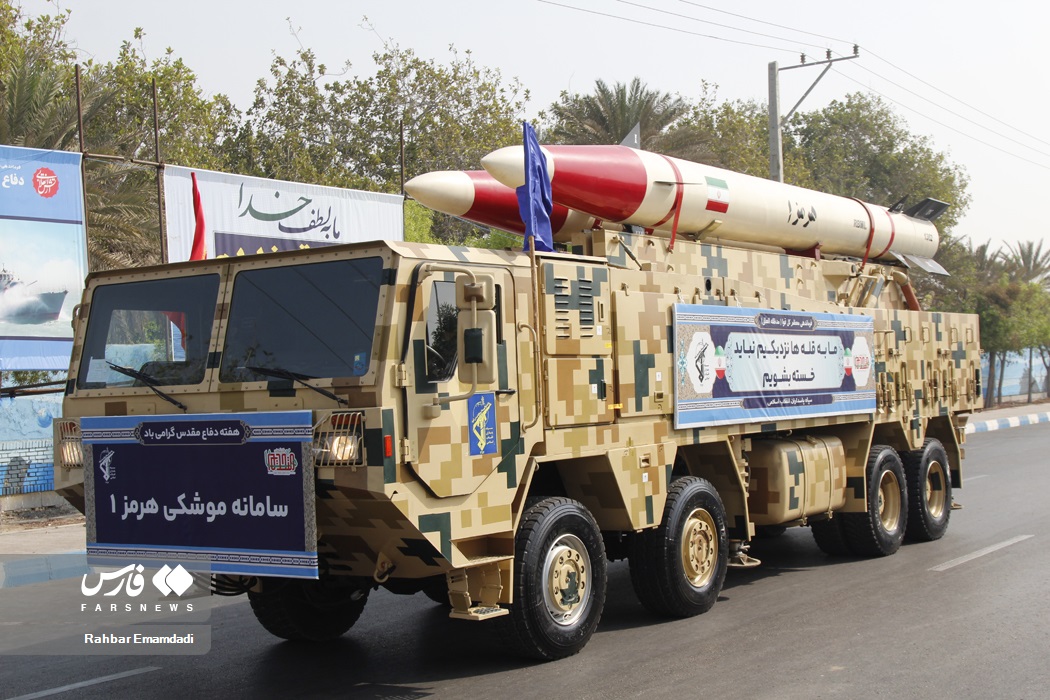
Iran’s reconstitution has outpaced US intelligence projections because of external supply lines, prewar dispersal, and the ceasefire’s own architecture. Russia and China are the primary enablers — Russia supplying Shahed drones, China supplying missile components — through channels the ceasefire did nothing to restrict.
Ukraine’s President Volodymyr Zelensky told CNN in March 2026 that Russia had “already given Iran Shahed drones to strike back at the US and its Middle Eastern allies.” CNN’s May 21 reporting confirmed US intelligence identifying Russia and China as key drivers of Iran’s faster-than-expected recovery. The ceasefire memorandum of understanding — focused on enrichment caps, freedom of navigation, and a nuclear talks timeline — contains no provisions restricting third-party arms transfers or component supply.
The two supply lines operate through distinct channels. Russia’s contribution addresses the capability Iran lost most visibly during the initial strikes: its drone fleet, which bore the brunt of first-wave engagements. China’s contribution — missile components, per the CNN assessment — supports reconstitution of higher-value ballistic and cruise systems that take longer to produce domestically. Neither supply line is restricted by the ceasefire terms, and neither appears in any of the three MOU documents reportedly in circulation.
Prewar dispersal explains the launcher survival rate. Iran’s missile infrastructure was built for survivability over decades: mobile launchers, hardened underground facilities, redundant command networks. The IRGC studied the US precision-strike playbook from Desert Storm through the 2020 Soleimani operation, and the command structure it built reflects that study. Two-thirds of launchers surviving is not a failure of US targeting but a success of Iranian dispersal doctrine.
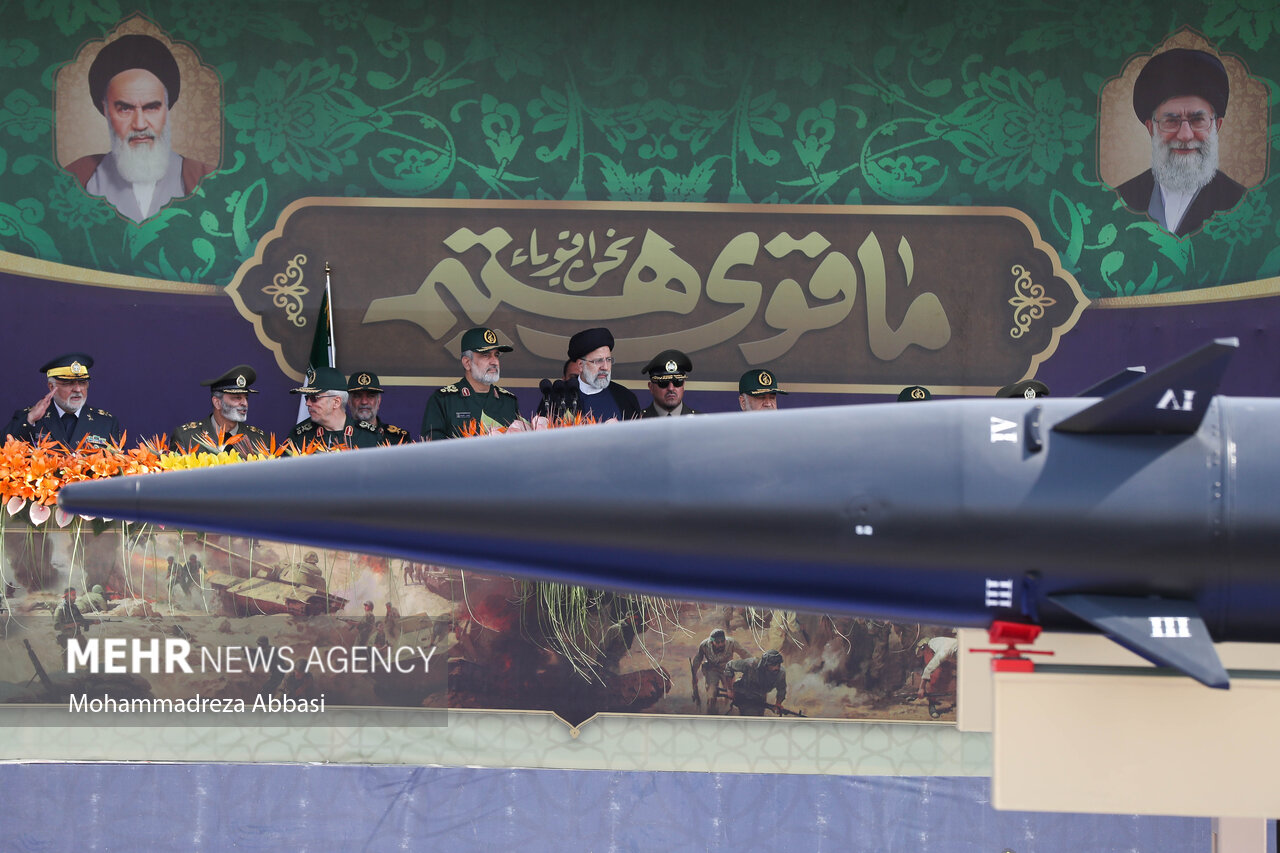
The IRGC has been explicit about the results. On May 24, PressTV published an IRGC intelligence statement declaring that Iran’s armed forces are “at their highest level of readiness and active deterrence in all missile, air, naval, land, space, and cyber dimensions.” The statement characterized CNN’s reconstitution reporting as vindicating Iranian claims that US assumptions of an “easy and quick” operation had been “proven false.”
The IRGC leadership has, according to a Euronews assessment from April, “likely secured control over not only Iran’s military response but also Iran’s negotiating position, traditionally a role reserved for political leaders.” The reconstitution effort is being directed not by the civilians negotiating the ceasefire but by the institution that would command any resumed war.
Why Did Ghalibaf Tell the Mediator First?
Ghalibaf’s statement to Munir on May 23 was not a press conference aside. It was a deliberate signal delivered to the army chief of the deal’s mediating country, face-to-face in Tehran, forty-five days into a ceasefire whose rearmament consequences had just become public.
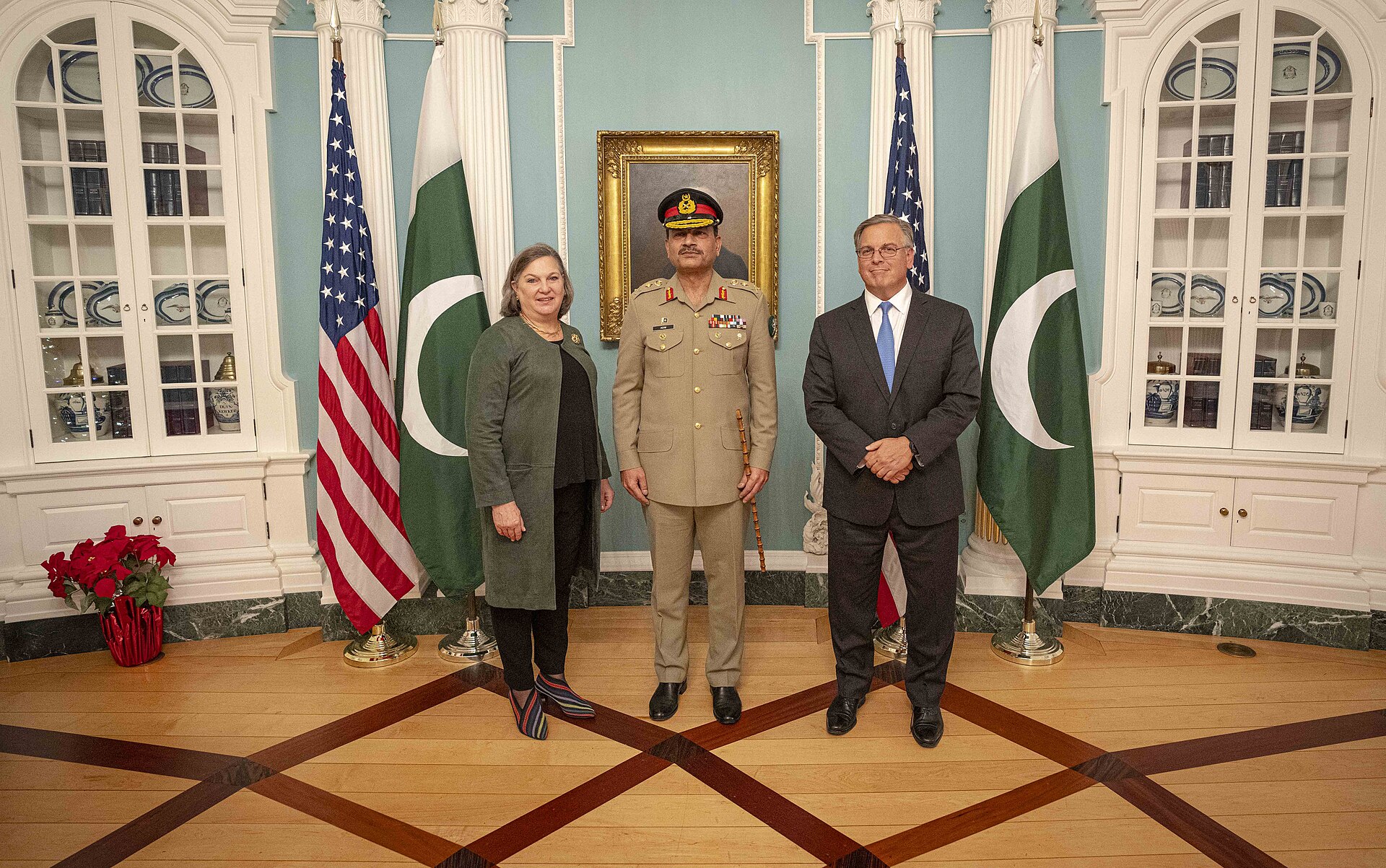
General Munir arrived in Tehran on May 22 amid reports the ceasefire was near collapse. He met President Masoud Pezeshkian and Foreign Minister Abbas Araghchi, conveying US messages that included assurances disputed issues could be resolved after the memorandum of understanding was signed. His visit — not his first to Tehran during this crisis — was part of an intensifying Pakistani shuttle diplomacy that has positioned Islamabad as the deal’s primary intermediary.
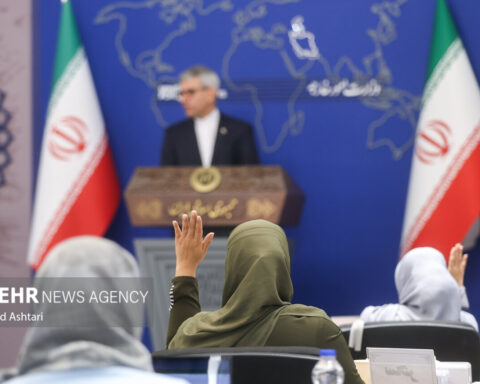
Ghalibaf met Munir on May 23 and told him Iran’s armed forces “have rebuilt themselves during the ceasefire period.” He added that if Trump “acts foolishly and restarts the war,” Iran’s response would be “more crushingly and bitterly” than anything the US had faced. The language — reported by Al Arabiya and the Times of Israel — was a claim of accomplished fact paired with a conditional threat, delivered to the one person in the room who would relay it to both Washington and Riyadh.
Munir’s itinerary on May 22-23 traced the full span of Iran’s internal divisions. He met Pezeshkian — the elected president who lacks authority over the IRGC under Article 110 of the constitution. He met Araghchi — the foreign minister conducting the diplomatic track. And he met Ghalibaf — the parliament speaker who delivered the rearmament warning. The sequence moved from political authority to diplomatic channel to military signal, and only the last meeting delivered the message with direct implications for Saudi security.
After the meeting, the Pakistani army characterized Munir’s visit as producing “encouraging progress toward a final understanding.” Pakistan received a direct, explicit rearmament warning from the country it is mediating for, and its official response was to describe the conversation as encouraging.
Pakistan Between Two Treaties
Pakistan’s position is defined by two commitments that operate, in practice, as contradictions. The Saudi Mutual Defence Agreement, signed September 17, 2025, commits Pakistan to treat aggression against Saudi Arabia as aggression against Pakistan. The mediator role Pakistan has assumed in the US-Iran talks commits it to neutrality — or at minimum, its appearance.
A former three-star Pakistani general told Al Jazeera in April that the dual role holds only if Pakistan’s involvement remains “strictly defensive and time-bound.” The moment “the theatre shifts to offensive operations, or the perception of offensive coordination emerges, the dual role collapses.” That was a theoretical warning in April. After May 23, it describes an active structural risk: Pakistan’s army chief has now personally received a detailed rearmament claim from a party whose reconstitution could, if the ceasefire fails, produce the aggression the SMDA commits Pakistan to defend against.
Pakistan mediates between the US and Iran. Pakistan is treaty-bound to defend Saudi Arabia. Iran — the country Pakistan is mediating for — told Pakistan’s army chief it has rearmed and will respond to resumed war with devastating force. Saudi Arabia — the country Pakistan is treaty-bound to protect — endorsed a ceasefire framework that US intelligence now shows enabled that rearmament. Pakistan’s official characterization of this sequence: “encouraging progress.”
The SMDA is eight months old, signed before the war, before the Persian Gulf Security Authority was established, and before Pakistan assumed its mediator role. The treaty was designed for a different threat environment. It commits Pakistan to defend Saudi Arabia against the kind of military escalation that the ceasefire Pakistan is now mediating may — according to the intelligence assessments published May 21 — be facilitating. The question of who holds final approval over the deal on the Iranian side — the Supreme Leader, the SNSC, or the IRGC command that Euronews reports now controls the negotiating position — complicates the channel further. Munir is carrying messages to a political leadership that may not hold final authority over the military apparatus he was warned about.
The 2006 Template
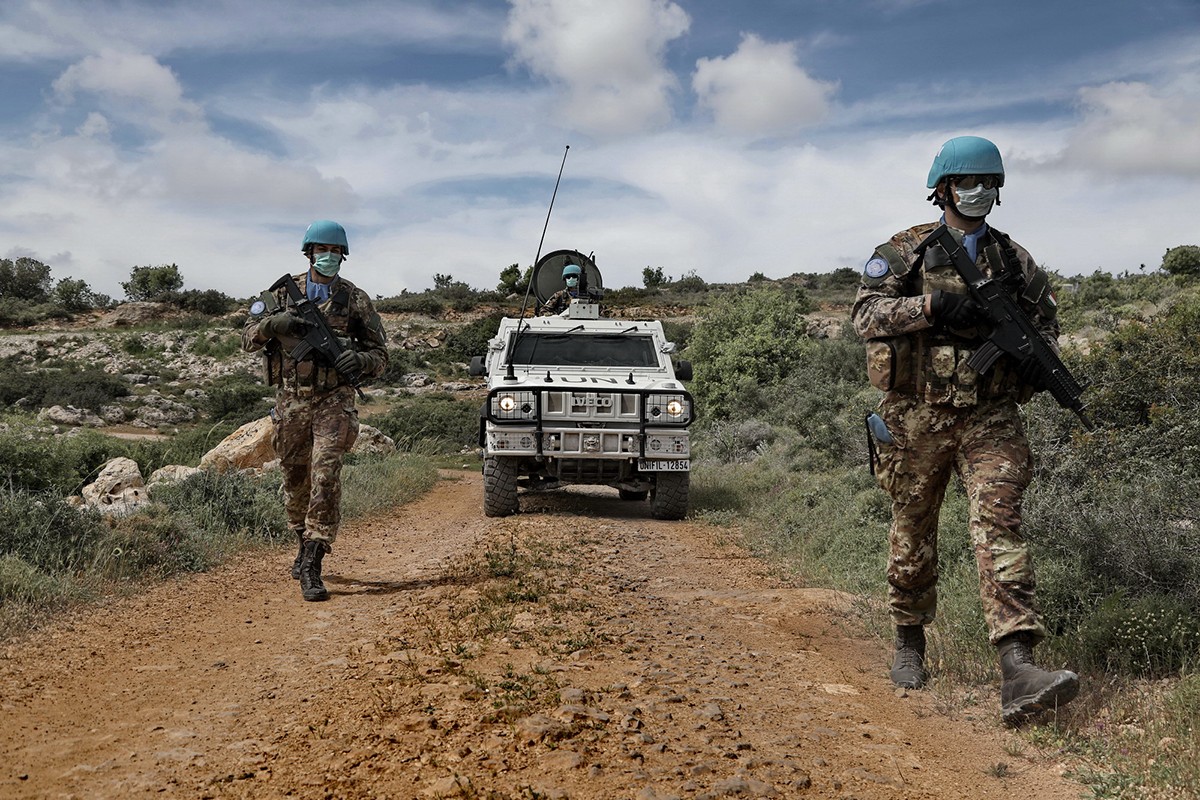
The structural parallel most relevant to the current moment is UN Security Council Resolution 1701, which ended the 2006 Lebanon war and was designed to prevent the rearmament it failed to stop.
UNSCR 1701, adopted August 11, 2006, called for the disarmament of all armed groups in Lebanon and established UNIFIL as its enforcement mechanism. Within one week of the August 14 ceasefire, Turkish authorities intercepted Iranian cargo planes carrying rocket launchers and C-802 anti-ship missiles bound for Hezbollah. Within one month, Hezbollah leader Hassan Nasrallah appeared on television and declared: “The resistance was able to rearm itself in a few days and is now stronger than it was on July 12.”
Resolution 1701 demanded disarmament but provided no mechanism to enforce it. UNIFIL lacked the mandate, the force composition, and — as Israel argued for eighteen years — the political will to interdict rearming. Hezbollah’s arsenal grew from an estimated 13,000 rockets in 2006 to between 120,000 and 200,000 by late 2024 — a tenfold increase under an active UN resolution specifically prohibiting it. By the time Israel launched operations in Lebanon, the resolution had been in effect for eighteen years and functionally inoperative for most of them.
The pattern extends beyond Lebanon. Iran accepted UNSCR 598 in 1988 to end the Iran-Iraq War — Khomeini compared the decision to “drinking poison” — and used the post-war period to begin the systematic IRGC expansion and ballistic missile development that defined its military posture for the following two decades. Hamas ceasefire cycles in Gaza followed a parallel logic: each pause in fighting was followed by tunnel construction, weapons smuggling, and capability improvements that produced a qualitatively more capable adversary in the subsequent round. The common structural feature is not deception but the absence of enforcement.
The timeline compression between the two cases is instructive. Nasrallah made his rearming claim one month after the August 14, 2006 ceasefire. Ghalibaf made his forty-five days into the current ceasefire. In both cases, the claim preceded any enforcement response — because no enforcement mechanism existed to trigger one. Turkey’s first-week interception of Iranian cargo planes in 2006 demonstrated that rearmament was detectable; it continued because detection without interdiction authority is observation, not prevention.
The current US-Iran MOU framework contains no disarmament provisions, no inspection mechanism for conventional reconstitution, and no restrictions on third-party arms transfers. Its enforcement rests on deterrence — the implicit threat of resumed US strikes. That deterrent is weaker than it was on April 8. CSIS’s “Last Rounds?” assessment from April estimates that four of seven key US munition types may have seen more than half of prewar inventory expended, with rebuilding to prewar levels requiring one to four years.
Can Riyadh Acknowledge What It Knows?
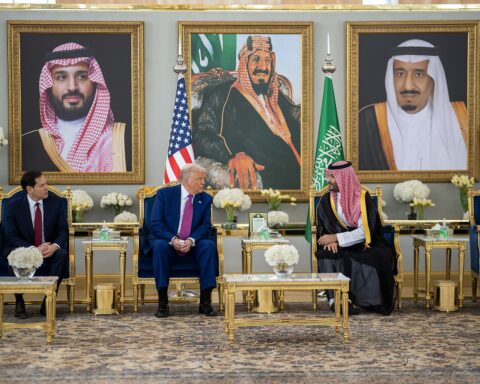
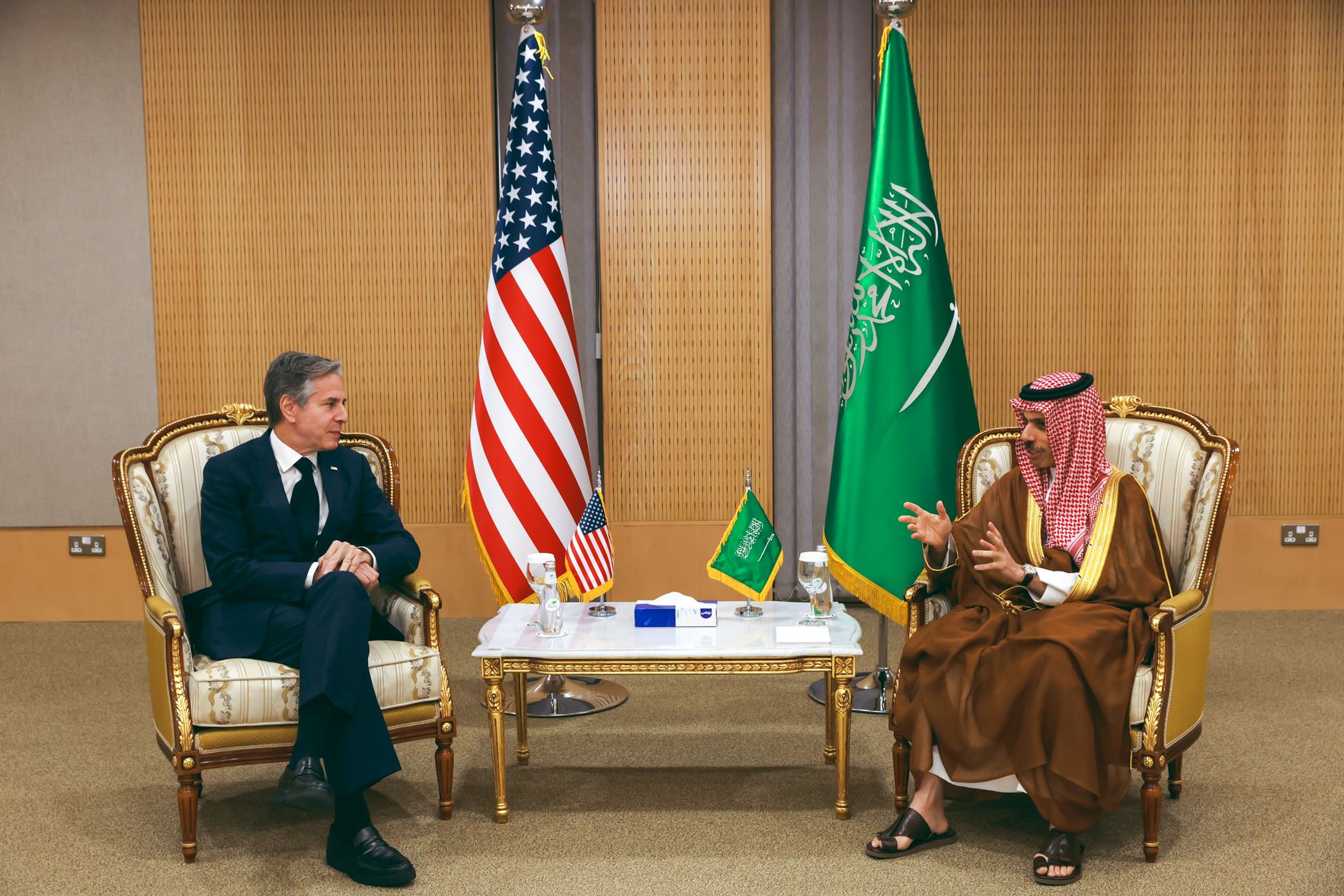
Saudi Arabia’s diplomatic bind is precise. Prince Faisal bin Farhan publicly endorsed the ceasefire framework on May 20, praising Trump’s decision to “give diplomacy a chance.” One day later, CNN published the US intelligence assessment confirming that the ceasefire has enabled Iranian reconstitution at a pace exceeding all projections. Acknowledging the intelligence requires qualifying — or withdrawing — the endorsement.
The Kingdom has been excluded from all five rounds of US-Iran negotiations and from the separate Track 2 nuclear discussions. Saudi Arabia was not present for any of the five rounds — in Islamabad, Doha, Rome, Muscat, and Geneva. It was not consulted on the MOU’s three-document architecture. It has no visibility into the Track 2 nuclear channel.
“The GCC has no seat at the table, despite its entreaties, for negotiations that will shape the bloc’s economic and security environment for years to come.”
— Carnegie Endowment for International Peace (Leber and Worby), April 2026
The $142 billion arms deal signed May 13, which includes F-35A fighters, does not change the near-term deterrence picture. The F-35As will not reach Saudi Arabia before 2029 at the earliest, according to The National and Army Recognition. The Kingdom endorsed a ceasefire whose sixty-day window is rearming the country it cannot yet independently deter — and did so three days before the intelligence confirming that rearmament became public.
The fiscal dimension sharpens the bind. Saudi Arabia reported a first-quarter deficit of $33.5 billion — 194 percent of the full-year target — and Brent crude has fallen below $100 for the first time on Iran deal optimism. The economic case for endorsing the deal is that it could reopen the Strait of Hormuz and restore oil revenue. The security case against endorsing it is that the ceasefire is rearming Iran while Saudi Arabia’s own deterrent remains years from delivery. Both arguments are simultaneously true, and Riyadh cannot make both publicly.
Bin Farhan’s May 20 statement was itself carefully limited. He praised Trump’s decision to cancel the planned strike — a process endorsement, not a content endorsement of the deal’s terms. But the distinction between endorsing the process and endorsing the outcome may not survive the intelligence assessments. If the process — the ceasefire — is enabling reconstitution, the process endorsement becomes a substantive position whether Riyadh intended it as one or not.
The Ministry of Foreign Affairs has issued no statement on the reconstitution intelligence, no qualification of the May 20 endorsement, and no indication of how it assesses the ceasefire’s military consequences. The silence has been consistent across every Saudi government channel since Bin Farhan spoke five days ago.
What Happens When the Sixty Days End?
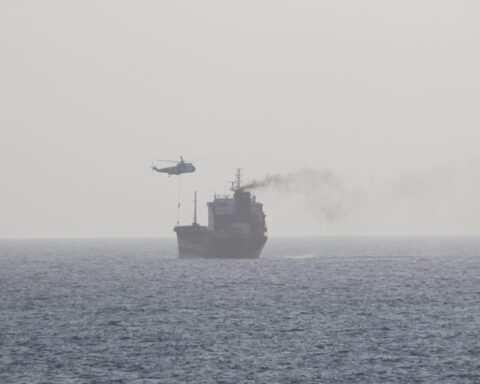
The ceasefire expires approximately June 7, the same day the OPEC+ Joint Ministerial Monitoring Committee meets. Saudi Arabia’s OPEC+ production quota stands at 10.291 million barrels per day, but actual output has been near 7.76 million — a 2.5 million barrel gap created by the Hormuz closure. Two clocks are converging, and the Kingdom is exposed on both.
If the ceasefire holds and converts into a broader agreement, Iran’s reconstitution becomes embedded within a diplomatic framework the Kingdom has already endorsed. If it collapses, the US forces stationed in the Gulf become operationally exposed at the end of a sixty-day period during which Iran rebuilt the capabilities those forces would face. The two-stage sequencing of the MOU means Saudi Arabia waits in either scenario — for a deal it had no role in drafting or for a war it has limited independent capacity to fight.
If the ceasefire collapses and the Strait remains under PGSA control, that production gap becomes structural — not a temporary disruption but a permanent ceiling below quota. If it holds and Hormuz reopens, the resulting supply surge pressures prices further below the breakeven Saudi Arabia requires to cover its deficit. The Kingdom’s fiscal position deteriorates in either scenario, but the military consequences diverge sharply, and Riyadh has no mechanism to influence which one prevails.
The US is also rebuilding during the ceasefire. CBS News has reported “long-term concerns about advanced munitions supplies.” But the timelines are asymmetric. Iran is reconstituting from dispersed surviving assets and active external resupply — a process measured in weeks. US munitions replenishment operates on industrial production timelines that CSIS measures in years.
Israel’s calculus runs on a separate clock. The Geopolitical Monitor assessed in 2026 that “Israeli strategy becomes threshold-based, with strikes more likely if intelligence suggests Iran is reconstituting air defenses around key nuclear nodes, dispersing critical enrichment equipment… restoring conversion or metallurgical steps relevant to weapon pathways.” The CNN reporting — showing 90 percent of underground facilities operational and 70 percent of missile stockpiles retained — may already cross several of those thresholds. Netanyahu convened his security cabinet over the ceasefire framework, and his objections to the Lebanon clause remain unresolved.
Ghalibaf’s May 23 statement to Munir, placed alongside the IRGC’s May 24 declaration of “highest readiness,” constitutes an open Iranian position: the ceasefire rebuilt what the strikes degraded, and resumed hostilities will be met at a higher capability level. Iran is not treating reconstitution as a covert operation. Ghalibaf’s warning to the mediator, the IRGC’s public statement, and the pattern of explicit claims amount to deliberate advertising — directed at every party that endorsed the framework under which the rebuilding was achieved.
Frequently Asked Questions
Has the United States also rearmed during the ceasefire?
Yes. CBS News has reported ongoing munitions replenishment, and the Pentagon has continued rotating assets through Gulf bases. But the replenishment timelines are structurally different. Iran is rebuilding from dispersed surviving stocks and active foreign resupply — a process measured in weeks. The US is rebuilding from factory output and congressional appropriations cycles that have not yet been accelerated to wartime production rates, meaning the one-to-four-year CSIS reconstitution window is constrained by legislative and industrial timelines, not battlefield improvisation.
Could Israel strike Iranian reconstitution sites independently before the ceasefire expires?
Israel retains the technical capability. The F-35I fleet recently received fuel tank upgrades — a $34 million contract signed May 14 — that extended the operational range required for deep Iranian strikes. The primary constraint is political: a unilateral strike during an active US-Iran negotiating window would fracture the Trump administration’s diplomatic framework. The Hajj period, with the Day of Arafah on May 26 and Eid al-Adha on May 27, creates brief additional de-escalatory pressure. The Geopolitical Monitor’s threshold analysis suggests strikes become more probable after the ceasefire expires than during it, though intelligence-driven urgency — particularly around nuclear reconstitution — could override that timeline.
What role does the IAEA play during the ceasefire?
Effectively none, at present. The IAEA has been blocked from accessing Iranian nuclear facilities since February 28, 2026 — 86 days as of May 25. Director General Rafael Grossi stated in March that there was “no structured program” of weapons development, but that assessment predated both the Austrian DSN intelligence report — which described a “well advanced” nuclear weapons programme with ballistic delivery capability — and the May 21 conventional reconstitution data. The ceasefire’s nuclear provisions, including an enrichment moratorium and a disputed commitment on highly enriched uranium, remain unverifiable until IAEA access is restored. No timeline for restoration appears in the MOU framework.
Has Iran publicly admitted to rearming during the ceasefire?
Explicitly and repeatedly. Ghalibaf told Munir on May 23 that Iran’s forces “have rebuilt themselves during the ceasefire period.” The IRGC declared on May 24 that Iran is at its “highest level of readiness” across “all missile, air, naval, land, space, and cyber dimensions.” Iran is treating reconstitution not as covert activity but as a deterrence signal. The distinction matters for analysis: covert rearmament would suggest Iran expects the ceasefire to hold and wants to rebuild quietly. Open rearmament, advertised to the mediator and in official statements, suggests Iran wants every party — the US, Pakistan, Israel, and Saudi Arabia — to understand the cost of resumed hostilities before deciding whether to resume them. Zolghadr carried that deterrence logic into the diplomatic domain on May 26, using Arafah Day to transmit a “no retreat” signal on nuclear, Hormuz, and military posture to three audiences simultaneously — as examined in Zolghadr’s “no retreat” signal on Arafah Day.