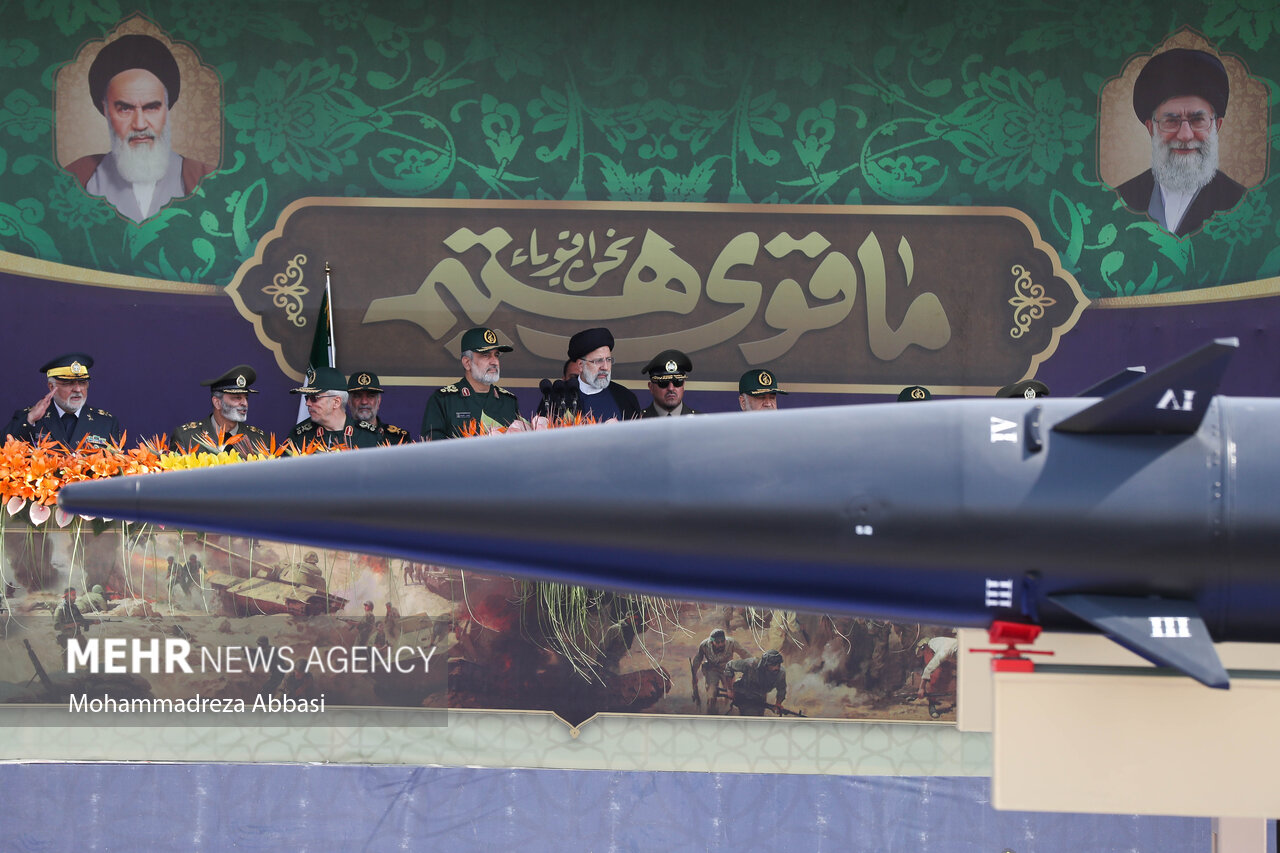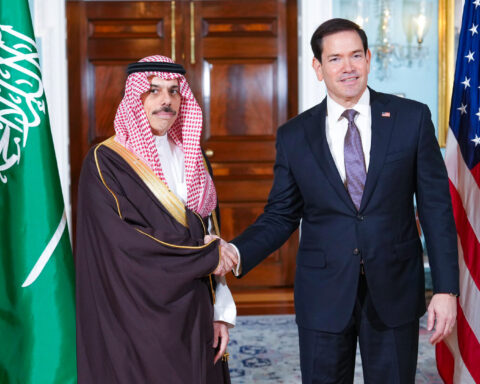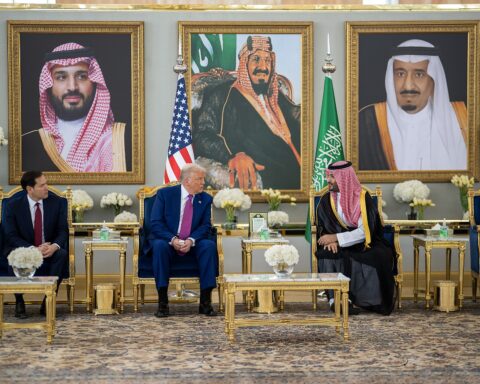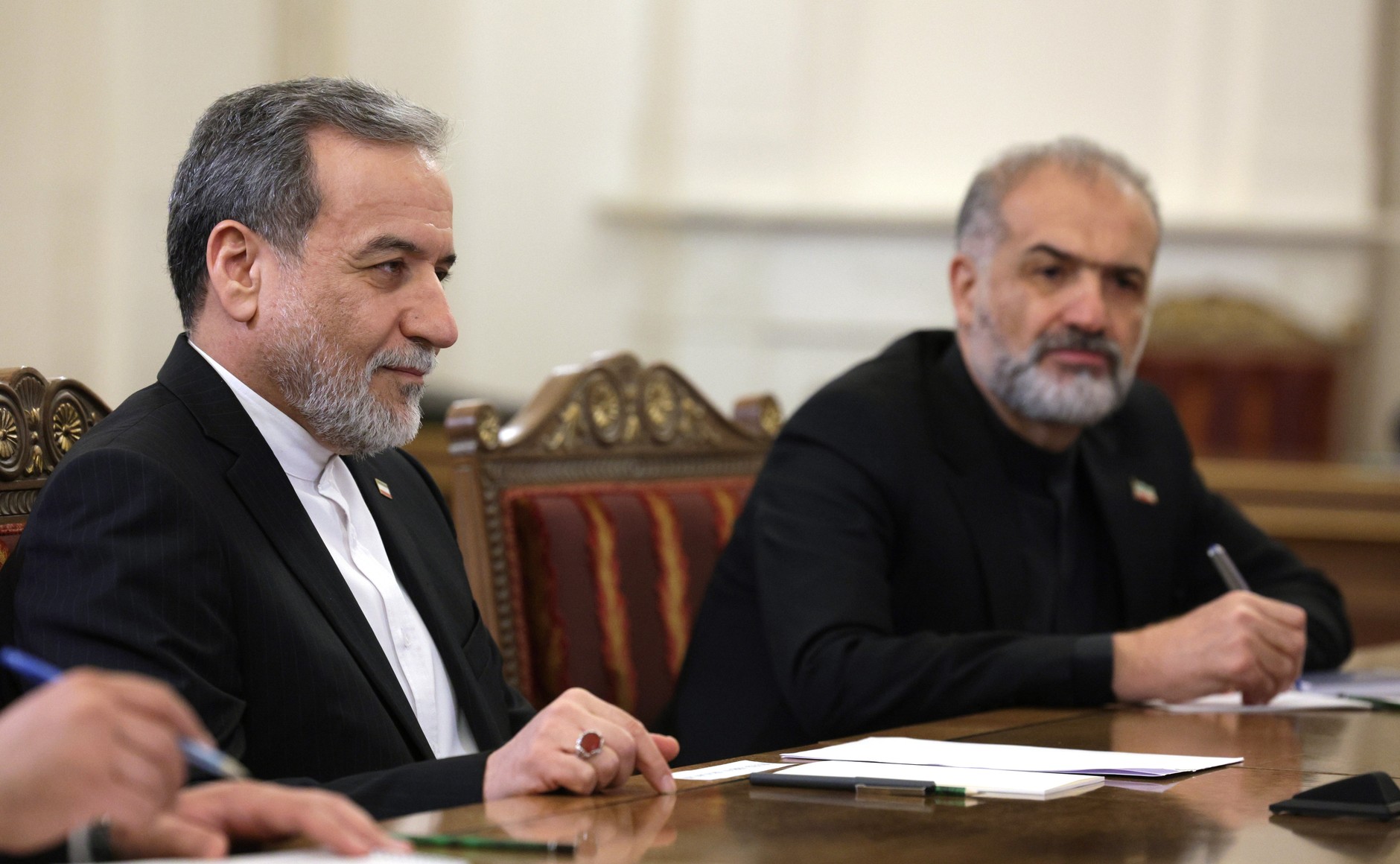

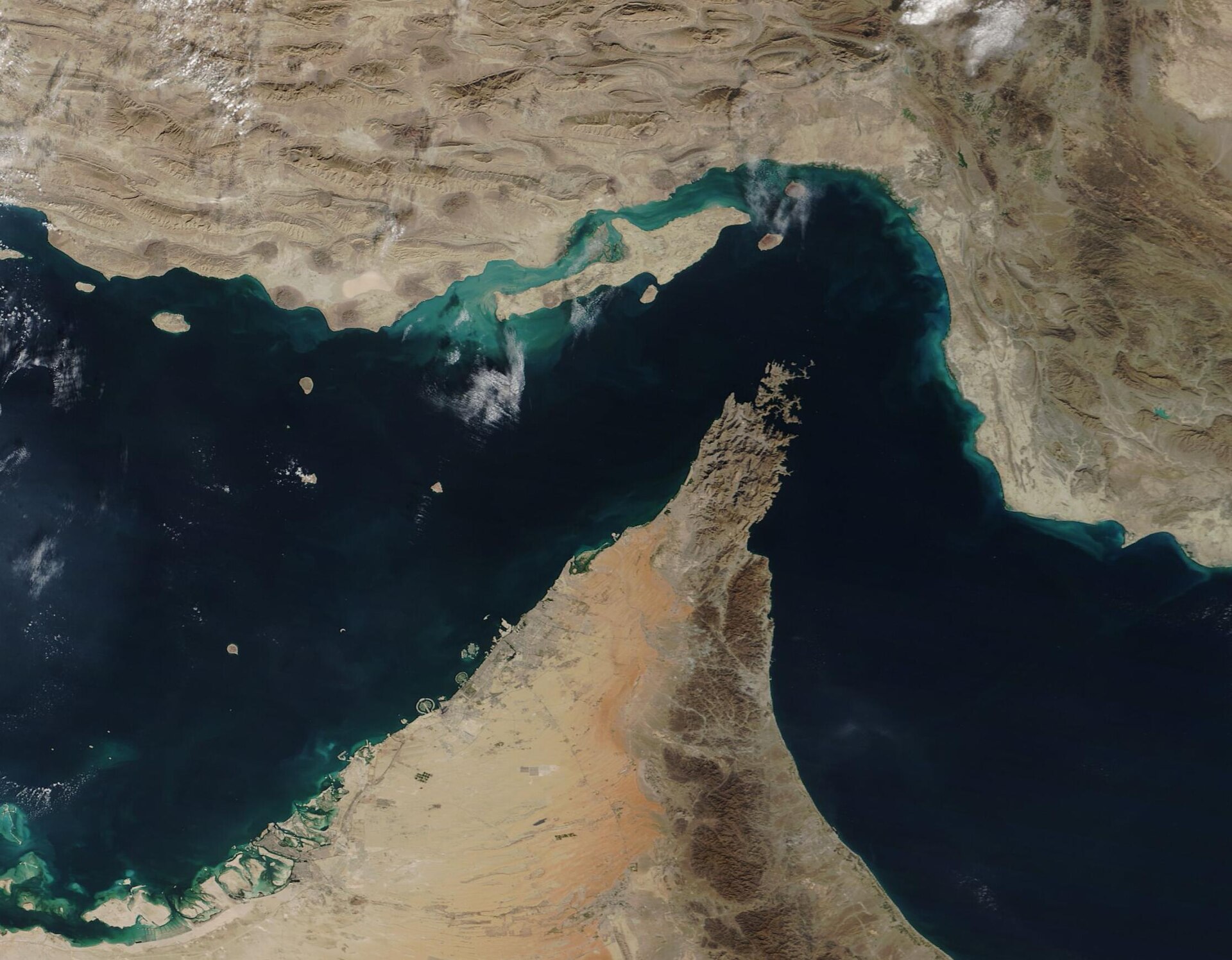
DOHA — Iran’s parliament speaker landed in Qatar on May 25 carrying a $12 billion demand for frozen assets, the same day he was re-elected speaker by 235 votes in a chamber he had not bothered to attend. Mohammad Bagher Ghalibaf brought with him foreign minister Abbas Araghchi and central bank governor Abdolnaser Hemmati — three of the Islamic Republic’s most powerful institutional figures, converging on a single Gulf capital on the eve of Arafah, with Qatar’s entire LNG export future as the unspoken collateral.
Qatar is hosting this delegation not from a position of diplomatic neutrality but from one of existential financial exposure. It holds $6 billion in Iranian assets under US Treasury supervision that it cannot release without an OFAC license, it has 10 loaded LNG tankers unable to transit the Strait of Hormuz, and the man sitting across the table from Qatar’s prime minister controls the parliamentary calendar that determines whether Iran’s sovereignty law over that strait ever receives a full chamber vote. What is being described as mediation is a negotiation in which the mediator’s own survival interests are the primary instrument of pressure.
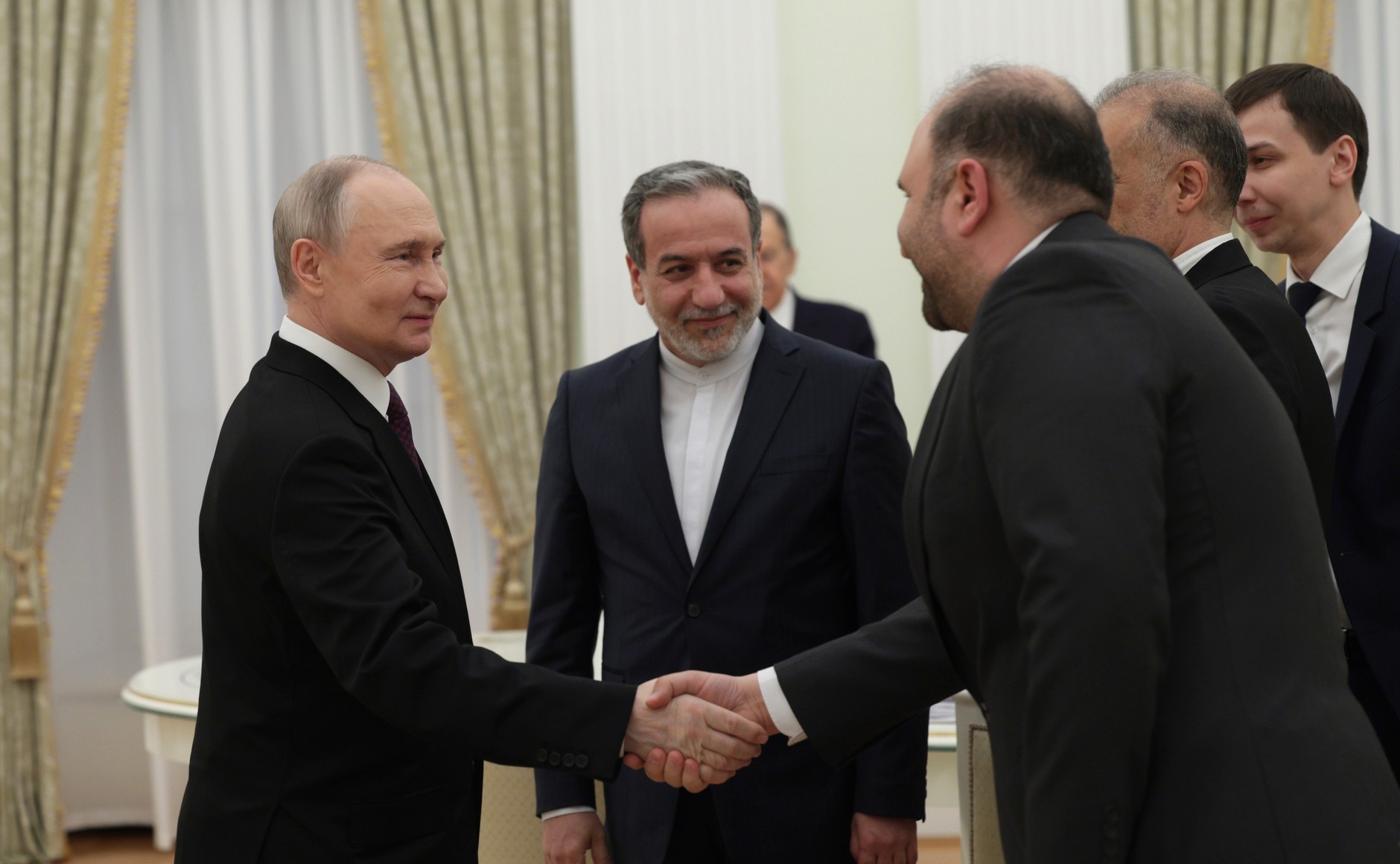
Table of Contents
- Where Did the $12 Billion Come From?
- The OFAC Trap: Why Qatar Cannot Release the Funds
- Why Did Iran Send Three of Its Most Powerful Officials Simultaneously?
- Ghalibaf’s Trifecta: Negotiator, Envoy, Ratification Gatekeeper
- Can Qatar Mediate a Deal It Is Financially Hostage To?
- Ten Tankers and a Shared Gas Field
- What Does Saudi Arabia See from Outside the Room?
- The Arafah Clock
- Washington’s Red Line and Tehran’s Counter-Offer
- Frequently Asked Questions
Where Did the $12 Billion Come From?
Iran’s $12 billion claim originates primarily from $6 billion in South Korean oil-payment arrears frozen under US sanctions and transferred to restricted Qatari accounts in September 2023 during the Biden prisoner swap. Iran’s total figure adds additional frozen tranches across Gulf financial institutions and claimed accrued interest accumulated since the United States suspended access after October 7, 2023.
The money trail begins in Seoul. Between 2019 and 2023, South Korea accumulated roughly $6 billion in unpaid oil debts to Iran, frozen by US secondary sanctions under Trump’s first-term “maximum pressure” campaign. The funds sat in restricted accounts at the Industrial Bank of Korea, unusable by Tehran, growing larger in nominal terms with each passing quarter while generating zero returns for the ostensible owner.
In September 2023, the Biden administration brokered a prisoner swap — five Americans for five Iranians — and the $6 billion was transferred to accounts in Qatar under strict OFAC supervision. The conditions were narrow: the money could only be disbursed for humanitarian purchases such as food, medicine, and medical devices, and every transaction required US Treasury sign-off. Iran could not access the principal directly, could not transfer it to Iranian institutions, and could not convert it to unrestricted cash.
Then came October 7. Within weeks, the Biden administration suspended even the restricted humanitarian access, re-freezing assets it had spent months negotiating to partially release. Iran’s position is that the money was always sovereign property owed for oil deliveries already made, that the suspension was a unilateral violation of the swap terms, and that accrued interest and additional blocked tranches push the total past $12 billion — a number no third-party auditor has verified and no Western official has accepted at face value.
The Middle East briefing 3,000+ readers start their day with.
One email. Every weekday morning. Free.
The OFAC Trap: Why Qatar Cannot Release the Funds
Qatar’s problem is not political will but legal architecture. The $6 billion in South Korean oil arrears sits in accounts at Qatar National Bank under a framework designed and supervised by the US Treasury’s Office of Foreign Assets Control. No withdrawal, transfer, or conversion can occur without an active OFAC license, and the license that once permitted humanitarian disbursements was suspended in late 2023 with no public indication it will be reissued.
This creates a structural asymmetry that Iran is exploiting with precision. Tehran’s $12 billion demand is addressed to Doha, but only Washington can satisfy it. Iran is using Qatar as a pressure transmission belt — demanding that the Qatari government lobby the US Treasury to reissue the license, while simultaneously refusing to make concessions on highly enriched uranium that might give Washington reason to comply. The Iranian approach to the HEU question has been a cycle of ambiguous assurances and institutional denials, making any US concession on frozen assets politically impossible without a verified nuclear deliverable in hand.
The OFAC architecture also means that any partial release requires Washington to accept the domestic political optics of unfreezing Iranian assets during an active conflict. President Trump told Fox News in May 2026 that he has “no intention” of handing “cash” to Tehran. Secretary of State Marco Rubio stated on May 24 that the US will either have “a good agreement or we’re going to have to deal with it another way,” and neither formulation leaves room for a pre-agreement asset release, which is precisely what Iran is demanding as a condition for continuing the conversation at all.
Qatar’s foreign ministry has not publicly commented on whether it has lobbied Washington for an OFAC license renewal, and the silence itself tells a story. Doha cannot acknowledge the demand without appearing to side with Tehran, and cannot deny it without jeopardising its role as host for a process that directly serves Qatari economic survival.
Why Did Iran Send Three of Its Most Powerful Officials Simultaneously?
Iran sent its parliament speaker, foreign minister, and central bank governor to Doha simultaneously because the $12 billion demand requires institutional coordination that no single envoy can authorise. The delegation mirrors Iran’s internal approval circuit — legislative ratification, diplomatic framework, and financial execution — with all three veto holders in one room, eliminating the relay that would ordinarily take weeks.
The composition is not diplomatic courtesy; it is institutional architecture made visible. Ghalibaf controls the Majlis, the parliamentary body that must ratify any agreement and that holds the pending PGSA sovereignty bill on its calendar. Araghchi is the foreign ministry’s direct link to the Supreme National Security Council — the body whose constitutional confirmation requirement sits between any negotiated framework and its implementation. Hemmati runs the Central Bank of Iran and would operationalise any asset release, managing the conversion of frozen accounts into usable sovereign funds.
Each of these three men represents a veto point in Iran’s internal approval process. No deal can be signed without Araghchi’s SNSC endorsement, no deal can be ratified without Ghalibaf’s parliamentary scheduling, and no financial precondition can be satisfied without Hemmati confirming receipt and convertibility. Iran brought all three veto holders to Doha at once, which means either Tehran believes a deal is close enough to warrant institutional pre-coordination, or it wants Qatar to understand exactly how many approval gates stand between the current conversation and any outcome.
The timing compounds the signal. This is the first time since the Islamabad talks collapsed in April that Ghalibaf has appeared in a direct negotiating role outside Iran. His April 11-12 session with US officials — 21 hours of direct talks that ended when Iran refused five American red lines — established him as Tehran’s preferred interlocutor for the highest-stakes conversations. That he chose Doha over Islamabad for his return to the negotiating track signals that Pakistan, the official mediator under the Axios MOU framework, has been displaced in favour of a venue where Iran holds financial power over the host.
Ghalibaf’s Trifecta: Negotiator, Envoy, Ratification Gatekeeper
Mohammad Bagher Ghalibaf holds three roles that no other figure in Iranian politics currently combines. He is Iran’s chief negotiator for the US talks, having been designated by President Pezeshkian with Khamenei’s approval. He was appointed Iran’s special envoy to China on May 17 — a role that gives him direct access to Beijing’s position on sanctions, asset freezes, and PGSA enforcement. And he is the speaker of the Majlis, re-elected for a seventh consecutive year on May 25 with 235 votes, giving him sole authority over the parliamentary calendar that determines when or whether the PGSA sovereignty bill reaches a floor vote.
This concentration of power is not accidental. Ghalibaf’s career before politics was spent entirely within the Islamic Revolutionary Guard Corps: he fought in the Iran-Iraq War in the 1980s, commanded the 5th Nasr Division, and led the IRGC Aerospace Force, the branch responsible for Iran’s ballistic missile programme. His military background is not biographical decoration — it informs the threat he carries into every negotiating room.
Our armed forces have rebuilt themselves during the ceasefire in such a way that if Trump makes the mistake of restarting the war, it will definitely be more crushing and bitter for America than the first day of the war.
— Mohammad Bagher Ghalibaf, Speaker of the Majlis, reported by Times of Israel
The envoy-to-China appointment, coming just eight days before the Doha talks, deserves more scrutiny than it has received. China is the largest buyer of Iranian oil, the primary beneficiary of PGSA toll exemptions alongside Russia, India, Iraq, and Pakistan, and the most likely source of alternative financial infrastructure if OFAC licenses are permanently withheld. Ghalibaf’s ability to invoke the China channel from inside Doha gives him a credible alternative to the Western financial system — he can signal to Qatar that if the $12 billion does not move through OFAC, Tehran has other paths, even if those paths are slower and more expensive.
The parliamentary dimension is the quietest and most consequential of the three. The PGSA sovereignty bill — formally the “Law on Establishing Iran’s Sovereignty over the Strait of Hormuz,” ratified by Iran’s National Security and Foreign Policy Committee on April 21 — has not yet received a full chamber vote, and Ghalibaf decides when that vote happens. If the bill passes, Iran’s claim over Hormuz transitions from executive assertion to statutory law, making any future concession on the strait require parliamentary repeal rather than presidential decree. By sitting in Doha while holding that vote in reserve, Ghalibaf is presenting Qatar’s prime minister with an implicit trade: cooperate on the $12 billion, and the bill stays in committee.
Can Qatar Mediate a Deal It Is Financially Hostage To?
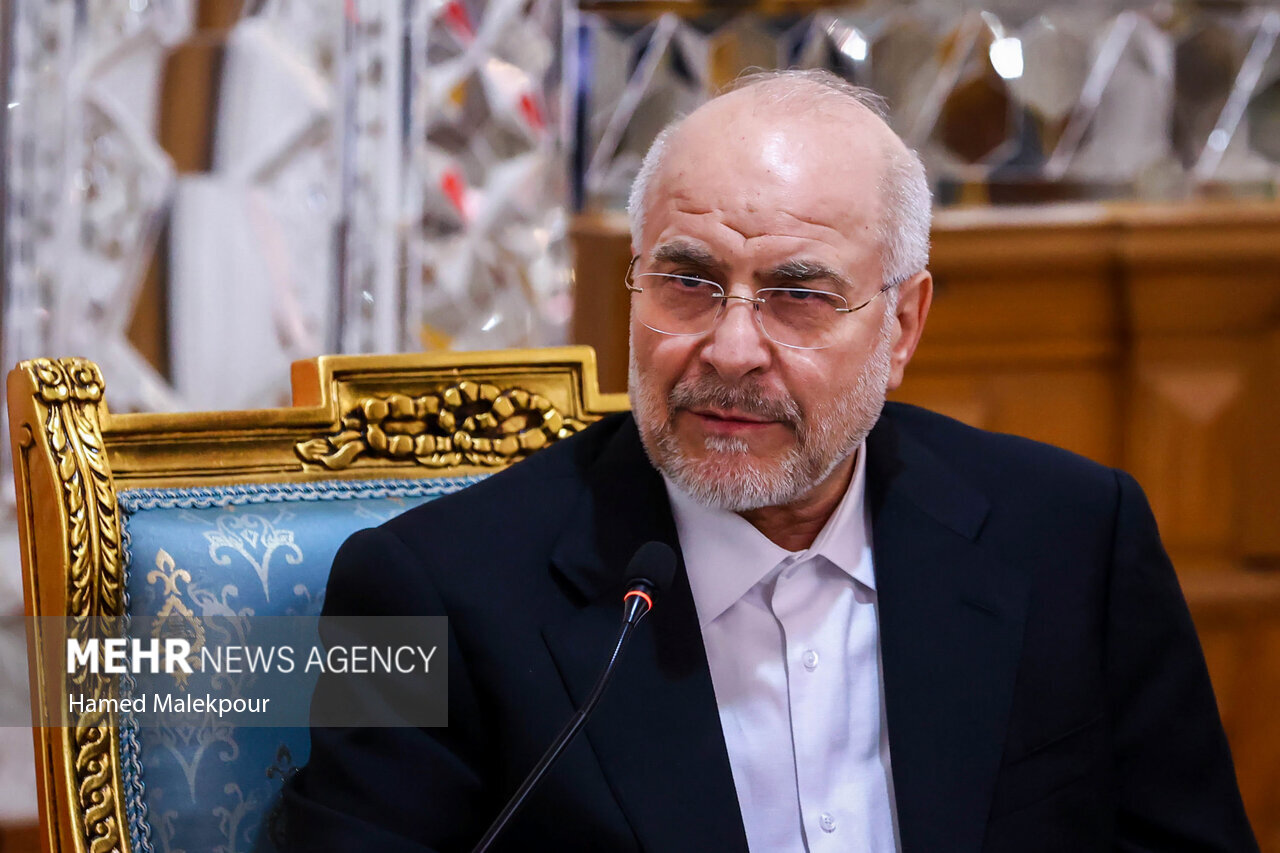
Qatar cannot mediate neutrally because it is simultaneously the financial custodian of the frozen assets Iran demands, the host of talks whose failure threatens its LNG export economy, and a state whose primary natural resource sits in a geological formation shared with Iran — making every Qatari “mediation position” structurally compromised by the country’s own stake in the outcome. The May 25 delegation converts that compromise from a background condition into the explicit operating premise of the talks.
The standard model of mediation requires the intermediary to have interests distinct from those of the parties at the table, and Qatar fails this test on three separate grounds that all operate at once. As custodian, Qatar holds funds it cannot release without US permission but faces Iranian pressure to deliver regardless. As an energy exporter, it has 10 loaded LNG tankers anchored outside the strait Iran controls. And as co-owner of the North Dome/South Pars gas field, Qatar’s economic foundation depends on a functional relationship with Iran that extends decades beyond whatever framework these talks produce.
This is not a new pattern. On May 22, Qatar co-signed a GCC protest to the International Maritime Organisation over Hormuz while simultaneously sending a negotiating team to Tehran — compartmentalised diplomacy that allowed Doha to stand with the Gulf states in public while engaging Iran in private. Qatar FM spokesperson Dr Majed al-Ansari described his country as the “punching bag” of the region on April 28, a characterisation that acquired sharper force when his government showed up in Tehran three and a half weeks later as a US-coordinated interlocutor. The Al-Udeid Air Base, Doha’s hosting of Hamas’s political bureau, the 2023 prisoner-swap custodianship, and Qatar’s constitutional mediation mandate all create overlapping obligations that make true neutrality structurally impossible.
The May 25 delegation takes this dynamic further than any previous engagement. Iran is not asking Qatar to relay messages or host meetings — it is asking Qatar to deliver $12 billion, a demand that converts the mediator into a financial participant with skin on the table. Qatar cannot say yes without US permission and cannot say no without jeopardising its tanker fleet, its gas field partnership, and its standing with a neighbour that has demonstrated willingness to strike Qatari energy infrastructure.
Ten Tankers and a Shared Gas Field
The raw numbers describe Qatar’s exposure more plainly than any diplomatic communiqué. Qatar FM spokesperson Dr Majed al-Ansari confirmed on May 24 that 10 of Qatar’s 13 loaded LNG tankers remain unable to transit the Strait of Hormuz, with the three vessels that cleared the strait doing so through a bilateral Pakistan-Iran arrangement in which Qatar was beneficiary, not negotiator.
| Metric | Figure | Source |
|---|---|---|
| Loaded LNG tankers blocked at Hormuz | 10 of 13 | Dr al-Ansari, Gulf Times, May 24 |
| First Qatari tanker clearance post-blockade | May 10 (Al Kharaitiyat) | Fortune, gCaptain |
| LNG trains damaged at Ras Laffan | 2 of 14 | Al Jazeera, March 24 |
| GTL facilities damaged | 1 | NaturalGasIntel |
| Annual capacity sidelined | 12.8 million tonnes | NaturalGasIntel |
| Estimated repair timeline | 3-5 years | NaturalGasIntel |
| National production capacity loss | ~17% | QatarEnergy force majeure |
| Force majeure declared | March 4, 2026 | Al Jazeera |
QatarEnergy declared force majeure on all LNG shipments on March 4 — a legal declaration that a company invokes only when contractual obligations become physically impossible to fulfil. The declaration covers long-term supply agreements with buyers across Asia and Europe, meaning Qatar is not merely losing revenue from blocked tankers but is accumulating contractual liabilities with every week the blockade continues. The first Qatari vessel to clear Hormuz after the March attacks, the Al Kharaitiyat, did so on May 10 through a Pakistan government-to-government deal with Iran — not through any channel Qatar had negotiated on its own behalf.
The shared North Dome/South Pars gas field adds a dimension that sits entirely outside the nuclear and Hormuz frameworks being discussed in Doha. Qatar and Iran jointly sit atop approximately 1,800 trillion cubic feet of natural gas, with Qatar’s North Dome portion generating the feedstock for the country’s entire LNG industry. There is no physical partition in the reservoir — gas migrates according to pressure differentials, meaning that if Iran accelerates extraction from South Pars, it draws down the shared resource at Qatar’s expense. This geological reality has historically kept Qatar’s Iran policy more accommodating than Saudi Arabia’s, and the $12 billion demand exploits that accommodation directly: Iran is asking for money while sitting on the same gas field, blocking the same strait, and holding the same parliamentary vote that could make the blockade permanent law.
What Does Saudi Arabia See from Outside the Room?
Saudi Arabia sees its closest GCC financial partner negotiating under Iranian coercion without any Saudi representative present. Riyadh’s last documented contact on the Qatar channel was a May 12 phone call between foreign minister bin Farhan and Qatar’s prime minister covering general ceasefire discussion, and no MOFA statement has been issued on the May 25 Doha talks — a silence consistent with a pattern the kingdom has maintained throughout the conflict.
Saudi Arabia is excluded from the Doha talks the same way it has been excluded from every round of US-Iran negotiations: not by formal prohibition but by the absence of any mechanism for its inclusion. There is no Saudi seat, no observer role, no back-channel into the room where Iran’s delegation is presenting demands to Qatar’s prime minister. The kingdom waits twice — once for the outcome of the nuclear track it cannot influence, and now for the financial track whose results may determine whether its GCC neighbour ends up funding Iranian recovery.
The financial dimension creates a new complication in the Saudi-Qatar relationship. Riyadh and Doha reconciled at the Al-Ula summit in January 2021 after a three-and-a-half-year blockade, and the relationship has been functionally cooperative since. But the Doha talks create a scenario in which Qatar’s financial interests diverge from Saudi strategic interests — if Qatar facilitates Iranian asset release, even indirectly through lobbying Washington for an OFAC license, it advances Iranian financial recovery at a moment when Saudi Arabia’s own fiscal position is deteriorating at record speed. Riyadh recorded a $33.5 billion deficit in Q1 2026, 194 percent of its full-year target, while Brent crude broke below $100 on May 25, driven in part by market optimism about the very deal being negotiated in Doha.
Saudi Arabia has benefited materially from the conditions the Iran war created — elevated oil prices, Red Sea corridor traffic, megaproject deferrals that received a wartime alibi — but cannot publicly articulate why the deal being discussed in Doha threatens those gains without admitting it profited from the conflict. As Trump’s patience on Iran stretches the timeline, that deficit deepens with each day of delay, while the kingdom has no ability to accelerate or shape the outcome.
The Arafah Clock
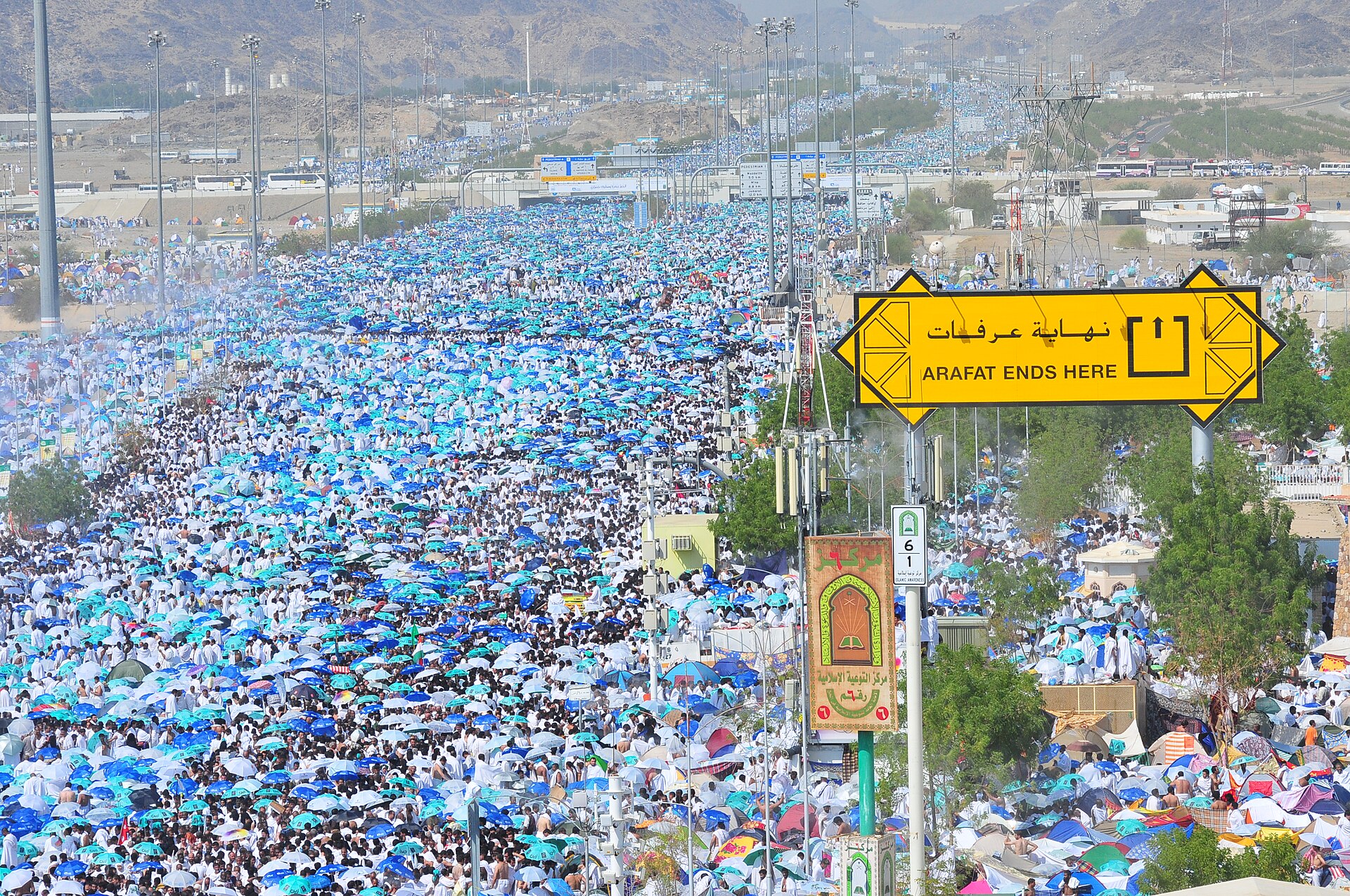
The delegation’s timing is not incidental. Iran’s three-man team arrived in Doha on May 25, the day before Arafah — the holiest day in the Islamic calendar and the culmination of Hajj — with Eid al-Adha falling on May 27. The 96-hour window spanning Tarwiyah, Arafah, and Eid has functioned throughout this conflict as a de facto no-escalation buffer, because no party can credibly threaten military action while two million pilgrims stand on the plains of Arafat.
Iran’s choice to bring high-stakes financial demands into this window is tactically precise. The Hajj calendar removes coercive counter-options from the table for approximately four days, meaning Qatar is negotiating without the implicit backup of any credible threat from any quarter. Saudi Arabia, as Hajj’s custodian, is consumed by the logistical and security management of the world’s largest annual gathering and cannot realistically divert diplomatic bandwidth to respond to whatever terms emerge from Doha. And Washington, which has historically avoided provocative Middle East actions during Hajj week, is operating under self-imposed restraint that limits its ability to counter whatever Ghalibaf tables.
Ghalibaf’s simultaneous re-election as speaker — 235 votes, seventh consecutive year — was conducted in Tehran while he was physically in Doha, meaning the Majlis ratified his domestic authority at the exact moment he was exercising it in a foreign capital. Whether this was coordinated staging or indifference to his attendance, the result serves Tehran: Ghalibaf negotiates with a mandate refreshed that morning, and the PGSA bill he controls sits one scheduling decision away from a floor vote that would convert Iran’s Hormuz claim from executive assertion to statutory law.
The Arafah window also compresses the deal timeline in Iran’s favour. If the $12 billion precondition is not addressed before Eid, the next diplomatic opening falls after the Hajj period ends and the Gulf returns to normal operating tempo — a gap during which the PGSA bill could move to a vote, the tanker blockade continues to cost Qatar revenue, and the Brent price trajectory drops further as markets price in deal optimism that the talks themselves have not yet justified.
Washington’s Red Line and Tehran’s Counter-Offer
The US position on Iranian frozen assets appears firm on the surface. Trump’s Fox News statement — no “cash” to Tehran — and Rubio’s May 24 framing leave no public space for a pre-agreement asset release. But Iran’s position is equally fixed: the $12 billion is a precondition, not a downstream benefit, and Tehran has stated through multiple channels including Fars news agency that no substantive progress on nuclear frameworks, Hormuz governance, or ceasefire terms can occur until the financial question is resolved.
We’re either going to have a good agreement or we’re going to have to deal with it another way.
— Marco Rubio, US Secretary of State, Washington Post, May 24, 2026
This structural impasse sits directly on Qatar’s shoulders. If Washington refuses to reissue the OFAC license, Qatar cannot release the funds and Iran’s precondition goes unmet. If Iran holds firm, the talks stall and Qatar absorbs the cost: continued tanker blockade, continued LNG revenue loss, continued force majeure liabilities, and the diplomatic embarrassment of hosting negotiations that produce nothing. The only exit that serves Qatari interests is a creative financial arrangement that technically satisfies Iran’s demand without a formal OFAC license — a humanitarian purchase credit, a swap through a third-party institution, or an escrow mechanism tied to compliance milestones — and the current administration has shown no willingness to acquiesce to any of them.
Iran’s foreign minister Araghchi told reporters in Doha that there is a “degree of understanding” between the parties but that an agreement is “not imminent,” a formulation designed to maintain the channel without committing to a timeline. Fars news agency claimed Washington had agreed to release part of the frozen assets, which US officials immediately denied. The gap between “degree of understanding” and “not imminent,” filtered through duelling Iranian and American information operations, suggests the talks produced enough continuity to keep the channel alive but not enough to clear the financial precondition Iran placed at the entrance.
The presence of central bank governor Hemmati in the delegation signals that Iran came prepared to discuss specific financial mechanisms — not merely the principle of asset release but the operational details of how, when, and through which channels the money would move. This level of institutional preparation, paired with the precondition framing, indicates that Tehran is serious about the money but may be willing to negotiate the form of the release even as it insists on the fact of it. Whether Qatar has the institutional capacity or the political bandwidth to broker that distinction during the Hajj window, while its own tankers sit idle and its gas field co-owner sits across the table making demands, is the question every other analysis of these talks has failed to ask.
Frequently Asked Questions
Has Qatar ever released frozen Iranian assets before?
Yes — in September 2023, Qatar facilitated the transfer of $6 billion from South Korean accounts as part of the Biden administration’s prisoner swap. Approximately $39 million was disbursed for humanitarian purchases before access was suspended in late 2023, making Qatar the only Gulf state with direct operational experience managing Iranian frozen assets under US sanctions architecture. That custodial precedent is exactly what makes Iran’s current demand to Doha structurally different from a demand made to Baghdad or Islamabad — Qatar has already demonstrated it can serve as the intermediary, which is why Iran insists it serve as the intermediary again.
What is Iran’s legal basis for claiming interest on the frozen assets?
Iran argues that the frozen funds represent sovereign receivables for oil deliveries already completed, and that the freezing party bears responsibility for opportunity cost. Iran’s Central Bank has applied a domestic statutory interest rate of approximately 18-20 percent annually to the original principal — a methodology Western legal experts dispute, noting that OFAC-supervised accounts accrue at the depository institution’s rate, which for Qatar’s restricted accounts has been near zero. The resulting gap between Iran’s claimed $12 billion and the approximately $6.04 billion actually held explains why no Western government has accepted Tehran’s figure at face value, while also explaining why Iran frames the demand as restitution rather than negotiation.
Could Iran use cryptocurrency or alternative channels to bypass the frozen asset impasse?
Iran’s PGSA toll system already accepts cryptocurrency and yuan alongside conventional currencies, and China has processed Iranian oil payments through non-SWIFT channels since 2019. However, converting $12 billion through alternative financial infrastructure would take months, create traceable flow patterns visible to US enforcement agencies, and likely trigger secondary sanctions on cooperating institutions. The demand for Qatar-held assets is specifically about accessing funds within the Western financial system — the money in Qatari accounts can be deployed into global markets immediately upon license issuance, a speed and liquidity advantage that no crypto or yuan channel can replicate at this scale.
What happens to the frozen assets if the talks fail permanently?
The $6 billion remains in OFAC-supervised Qatari accounts indefinitely, frozen in a legal limbo with no clear resolution mechanism. Under current US sanctions law, the funds cannot be returned to South Korea (the original debtor closed its obligation through the transfer), cannot be transferred to Iran (active sanctions regime), and cannot be converted to Qatari sovereign use (custodial mandate). The accounts become a permanent balance-sheet liability for the Qatari financial institutions holding them — frozen capital that generates no return, carries ongoing regulatory compliance costs, and exposes the custodian banks to reputational risk from both sides of the dispute.
What exactly is the PGSA sovereignty bill, and what changes if it passes a full Majlis vote?
The PGSA (Persian Gulf Strait Authority) sovereignty bill — formally the “Law on Establishing Iran’s Sovereignty over the Strait of Hormuz” — was ratified by Iran’s National Security and Foreign Policy Committee on April 21 but has not received a full chamber vote. In its current form it would enshrine Iran’s fee-collection authority over Hormuz transit as statutory law, requiring parliamentary repeal rather than a presidential decree to reverse. That distinction matters: a presidential deal cancelling the PGSA can be undone by the next president or overruled by the Supreme Leader; a parliamentary statute requires a majority vote to repeal, giving any future Majlis speaker — including Ghalibaf himself — a blocking position on any settlement that surrenders Hormuz revenue. The bill is also the mechanism that would convert the existing toll schedule (currently $2 million per VLCC under executive order) into a codified tariff, making it enforceable through Iran’s domestic courts and insulating it from executive trade-offs in any future nuclear agreement. Iran’s Arafah Day nuclear declaration — delivered by the SNSC secretary while Ghalibaf was still in Doha — locked that posture in the international record at the moment least susceptible to American counter-pressure, as examined in Iran’s Arafah Day nuclear declaration.
Ghalibaf’s delegation returned to Tehran on May 26 without signing any agreement. The $24 billion frozen-assets demand he brought to Doha remained unresolved, leaving the financial precondition intact as negotiations suspended on Arafah Day — as reported in Iran Left Doha Without Signing.