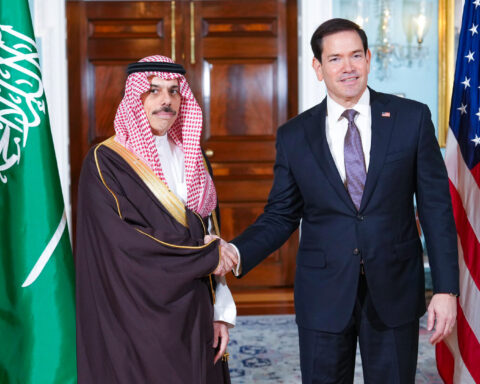
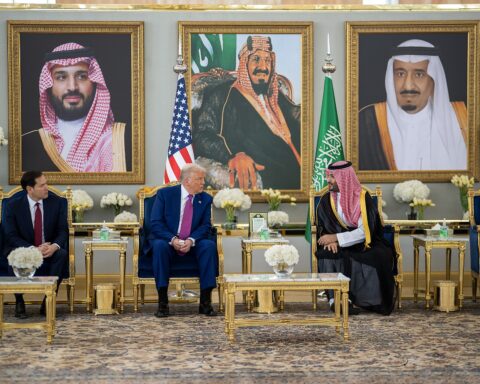
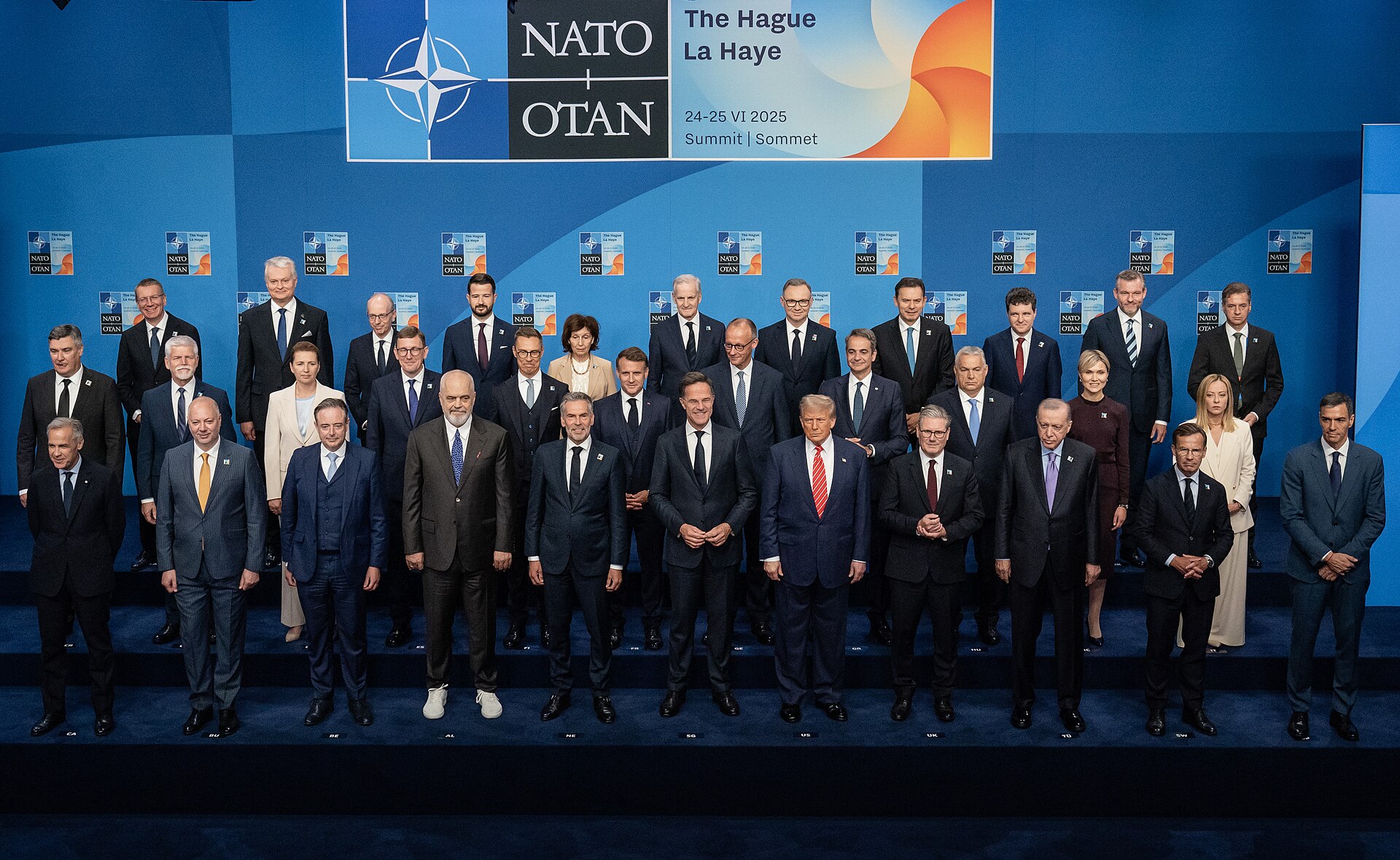
ANKARA — NATO’s Ankara summit placed Hormuz in the Alliance’s communiqué for the first time this week, calling on Iran to “fully respect freedom of navigation” in the strait, and then invited four Gulf states to discuss the waterway’s future on the sidelines. Every one of them — Bahrain, Kuwait, Qatar, the UAE — is smaller than the Gulf power left outside the room. Saudi Arabia, the country most exposed to Iran’s fee regime and the host of an American air base whose garrison Washington has already threatened to withdraw, held no seat at the table where the Alliance began rewriting the institutional framing of the strait.
The exclusion was Riyadh’s own doing. Years ago, the kingdom declined full membership in NATO’s Istanbul Cooperation Initiative — the framework that gives those four smaller Gulf states formal consultation rights with the Alliance. That decision, made when Hormuz was a shipping lane and not a legal battleground, now means Saudi Arabia cannot convert NATO’s freedom-of-navigation declaration into specific security commitments for its own tankers. President Trump arrived in Ankara demanding “loyalty” from allies in terms that expose Saudi Arabia’s Prince Sultan Air Base to the same transactional leverage he is applying to US garrisons in Germany and Poland — and the kingdom is watching both applications from a position with no institutional standing to influence either.
Table of Contents
- What Did NATO’s Ankara Declaration Actually Say About Hormuz?
- How Did Saudi Arabia End Up Outside NATO’s Gulf Architecture?
- Trump’s Loyalty Test Runs From Ramstein to Riyadh
- Who Defends Saudi Arabia’s Hormuz Shipping?
- The Al Rekayyat Strike and NATO’s Timing Gap
- Why Has No State Challenged Iran’s Hormuz Fees in Court?
- Forty-Two Days to August 18 and No Institutional Umbrella
- Frequently Asked Questions
What Did NATO’s Ankara Declaration Actually Say About Hormuz?
The Ankara summit declaration includes one sentence on the strait: “Allies reiterate that Iran must never have a nuclear weapon and call on Iran to fully respect freedom of navigation in the Strait of Hormuz.” This is communiqué call language — a formal Alliance position inscribed in the summit record, not an Article 5 trigger, not a working-group mandate, and not a commitment to deploy naval assets to the waterway.
What the declaration does is quieter and, for Tehran’s legal position, more corrosive. It puts NATO’s full membership on record treating Hormuz passage as a freedom-of-navigation question — the same framing the Alliance uses for the Black Sea, the South China Sea, and every other contested waterway where a littoral state claims authority the international community does not recognize. By categorizing Hormuz this way, the communiqué sidesteps Iran’s argument that its fees are legitimate service charges under UNCLOS Article 26(2) without engaging the merits. The service-fee distinction becomes irrelevant once the institutional frame is freedom of navigation, because you do not charge fees for transit you are obligated to provide freely.
This is the third layer of multilateral opposition Iran’s route-authority claims have accumulated since March. UN Security Council Resolution 2817, adopted on March 11 with the largest co-sponsor list in Council history, condemned Iranian interference with Hormuz navigation as “a serious threat to international peace and security.” A Franco-British multinational military mission followed in May, assembling defense ministers from across NATO and beyond to create an operational escort capability for the strait. NATO’s Ankara communiqué now adds the institutional weight of the world’s most powerful military alliance — not through force deployment but through a categorization that treats Iran’s position as something to be opposed rather than accommodated.
The communiqué does not name the Persian Gulf Security Administration, reference Iran’s fee structure, or acknowledge the MOU that governs Hormuz operations until August 18. It does not establish a NATO working group on Gulf maritime security or authorize planning for Alliance operations in the strait. Lithuania’s Deputy Foreign Minister Vytautas Leskevicius argued in a June op-ed that “NATO in Hormuz is not mission creep,” but the summit chose institutional positioning over operational commitment — a declaration of principle that will carry weight when the fee question reaches a tribunal, or when member states debate whether to bring the Franco-British mission under a NATO flag.
The Middle East briefing 3,000+ readers start their day with.
One email. Every weekday morning. Free.
How Did Saudi Arabia End Up Outside NATO’s Gulf Architecture?
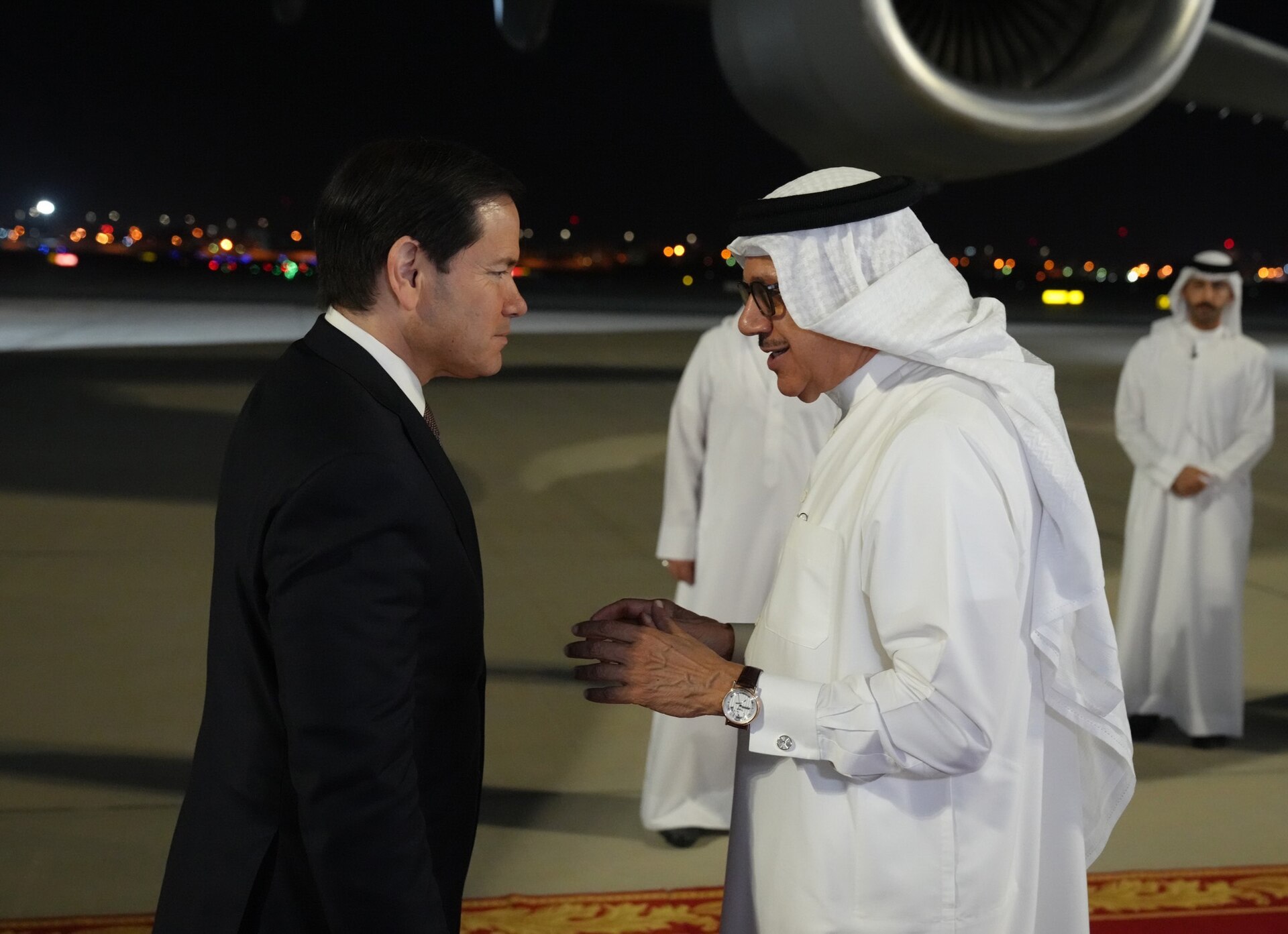
Saudi Arabia is not a member of NATO’s Istanbul Cooperation Initiative, the Alliance’s primary engagement framework for the Gulf since 2004. Bahrain, Kuwait, Qatar, and the UAE are all full ICI members, giving them formal consultation rights, automatic invitations to NATO-Gulf ministerial formats, and a structured mechanism to shape Alliance positions on regional security. Saudi Arabia and Oman participate only in what NATO describes as “selected activities” — a diplomatic formula reflecting Riyadh’s deliberate choice to keep the Alliance at arm’s length and engage bilaterally with Washington instead.
That preference made strategic sense when Saudi Arabia’s security architecture ran through a direct line to the White House and Hormuz was an open waterway. The kingdom’s defense was built around American hardware, American maintenance contracts, and American strategic guarantees delivered one-to-one. Joining a multilateral consultation framework alongside Bahrain and Kuwait — states whose entire annual defense budgets would not cover a single Saudi weapons contract — looked like a dilution of a privileged bilateral relationship, not an upgrade.
The calculation broke when two things changed at once. Iran’s Persian Gulf Security Administration turned Hormuz from a navigation question into a fee-collection regime, creating a multilateral legal problem that no bilateral military relationship can solve on its own. And Trump’s alliance-cost doctrine — the same transactional logic that produced the PSAB drawdown threat and the troop withdrawal from Germany — proved that the bilateral relationship Riyadh had relied on was itself subject to renegotiation at any moment. When NATO foreign ministers met Gulf counterparts at Ankara to discuss the strait’s future, Saudi Arabia’s absence was not a snub but a structural consequence of choices made when the strategic environment was unrecognizable from today’s.
| Instrument | Date | Participants | Saudi Arabia’s Status |
|---|---|---|---|
| UNSC Resolution 2817 | March 11, 2026 | 135 co-sponsors | Co-sponsor (no operational role) |
| Franco-British Multinational Mission | May 12, 2026 | 38 nations | Not listed |
| NATO Istanbul Cooperation Initiative | 2004–present | Bahrain, Kuwait, Qatar, UAE | Selected activities only |
| NATO Ankara Communiqué | July 7, 2026 | 32 NATO allies | No seat |
| NATO-Gulf Ministerial (Ankara) | July 7, 2026 | Bahrain, Kuwait, Qatar, UAE | Not invited |
| US-Iran Doha Talks | June–July 2026 | US, Iran (Qatar host) | No seat |
| Islamabad Track | Scheduled July 11 | US, Iran (Pakistan host) | No seat |
The table reads as a single story across seven instruments now shaping Hormuz’s future: Saudi Arabia has meaningful standing in exactly one, the Security Council resolution, and that resolution is a condemnation vote creating no operational mechanism and no consultation rights. The kingdom endorsed a declaration that Iranian interference threatens international peace — then watched every subsequent framework designed to act on that declaration form without a Saudi seat.
The pattern grows more damaging with each new instrument. The formats that carry operational weight — the multinational mission, the NATO ministerial, the bilateral talks — all exclude Riyadh, while the one instrument Saudi Arabia did join amounts to a statement of disapproval with no enforcement machinery attached. The kingdom sits in the unusual position of having co-signed the world’s most emphatic condemnation of Iran’s Hormuz interference while holding no role in any of the half-dozen frameworks created to address it. The bilateral channel with Washington reflects the same pattern: on July 10, with Islamabad talks set for the following day, Rubio met Saudi Ambassador Princess Reema rather than Foreign Minister Faisal. The July 10 Reema-Rubio meeting traces how the ambassador channel became Saudi Arabia’s primary access point to Washington as the FM-level relationship narrowed.
Trump’s Loyalty Test Runs From Ramstein to Riyadh
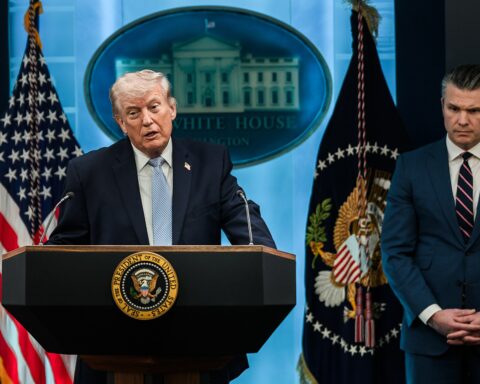
Trump arrived in Ankara with a demand that had nothing to do with Iran and everything to do with the alliance-cost model he has applied to every American military commitment since returning to office. Earlier in 2026, he raised the possibility of cutting US forces in Europe by one third after European NATO allies declined his requests to help protect Hormuz shipping during US-Israeli operations against Iran. Defense Secretary Pete Hegseth had planned to announce even steeper reductions at the summit; consultations with allied counterparts produced a six-month review of European force posture instead, which is a deferral, not a retreat. Trump then withdrew 5,000 troops from Germany after the German chancellor said Iran had “humiliated” the United States.
The pattern is the same one Saudi Arabia experienced in May, when Riyadh grounded 43 US warplanes at Prince Sultan Air Base for four days in what Washington designated Operation Project Freedom. Trump tried to reverse the grounding through a direct call to Mohammed bin Salman and failed; it took a PAC-3 resupply threat to reopen the runways. The message was identical in both directions — to Berlin and to Riyadh: American military presence on allied soil is a lease denominated in political compliance, and the landlord sets the rent.
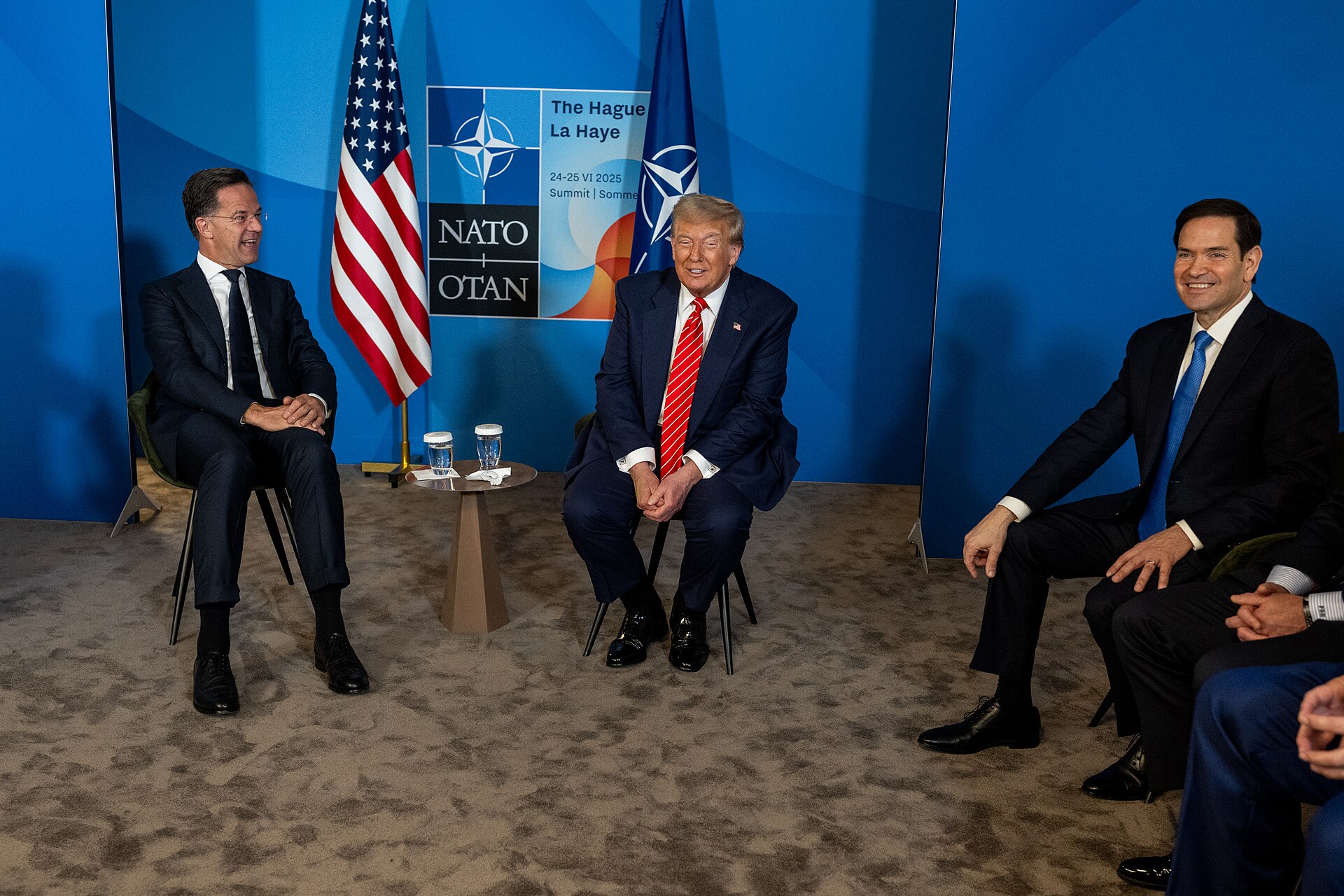
“Just be loyal. I just want their loyalty. We don’t need their money, we don’t need anything. We have the most powerful military in the world, by far, but I just want loyalty.”
Donald Trump, to NATO Secretary General Mark Rutte, Ankara, July 7, 2026
The quote strips the institutional language off alliance management — burden-sharing formulas, strategic consultation, mutual-defense commitments — and reduces the relationship to a personal transaction. For Riyadh, the implications are direct and physical. The kingdom hosts 2,300 American troops at Prince Sultan Air Base under a security framework that Washington has already threatened to downsize as punishment for insufficient cooperation. If Trump treats Germany’s 35,000-troop garrison as expendable when Berlin’s loyalty is in question, a 2,300-troop deployment on Saudi soil carries no structural protection at all.
The European and Gulf theaters are not separate problems in Trump’s cost model; they are specimens of the same pricing exercise. European allies are told to contribute to Hormuz protection or lose American troops in Europe. Saudi Arabia was told to cooperate on oil output or lose American troops at PSAB. The currency changes — Hormuz escorts in one case, OPEC+ quotas in the other — but the transactional logic is identical, and Saudi Arabia watches both applications from outside, without the institutional standing in either NATO or the US-Iran talks to influence the terms being offered.
Who Defends Saudi Arabia’s Hormuz Shipping?
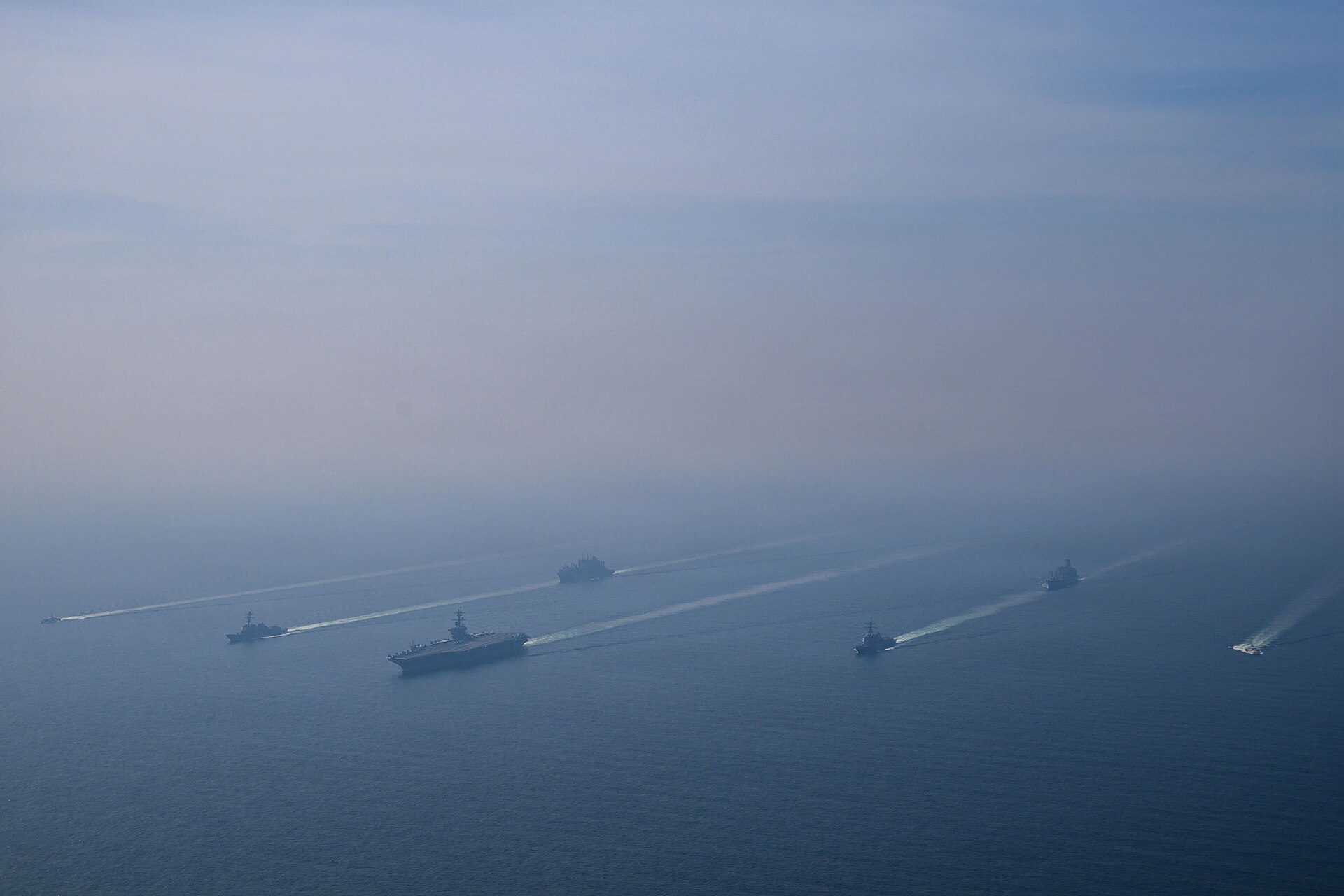
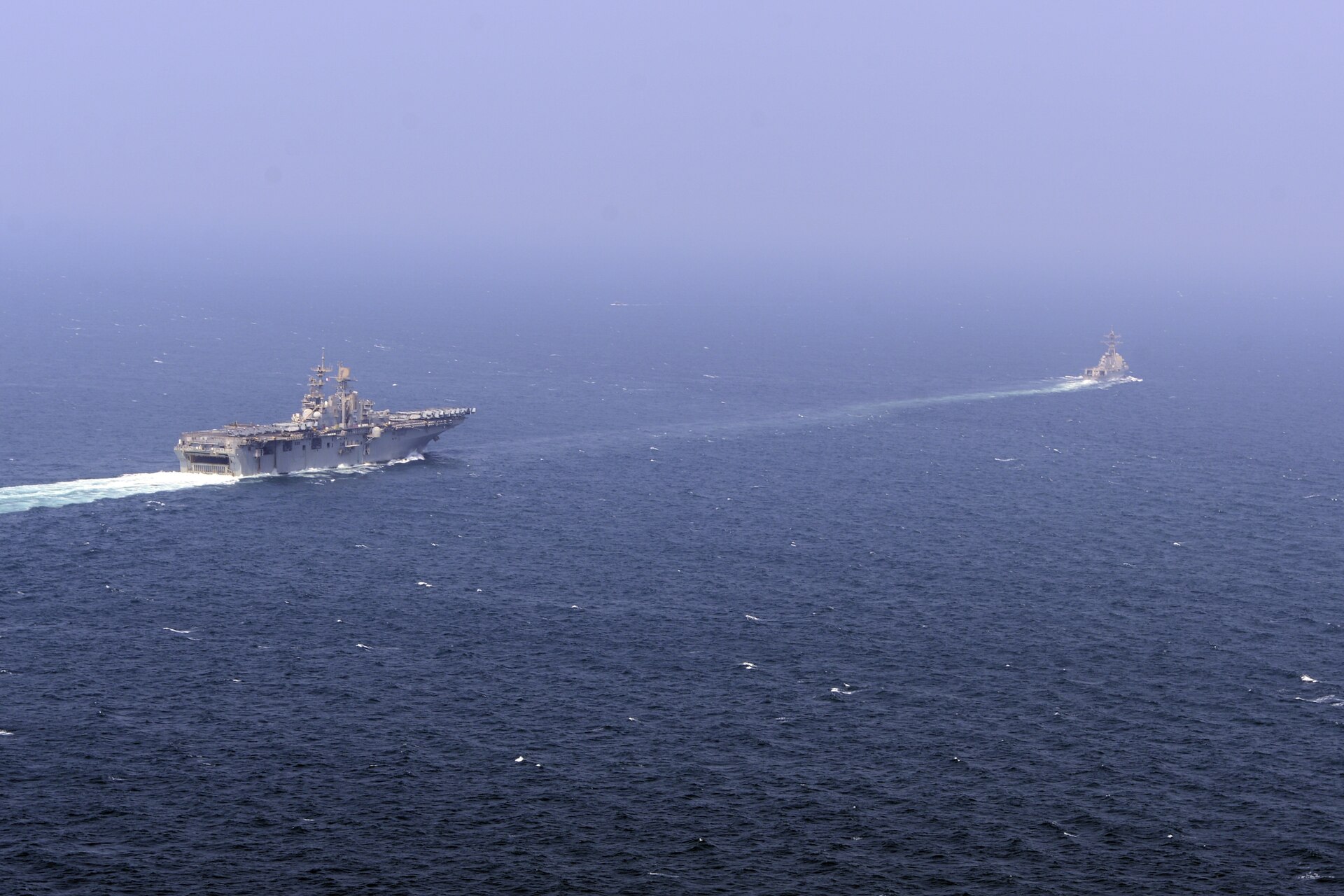
The operational answer to Iran’s route-authority enforcement is the Franco-British multinational military mission for the Strait of Hormuz, announced on May 12 with defense ministers from 38 nations in attendance and up to 19 NATO members contributing naval and air assets. The mission operates outside NATO command structures, stages from Oman’s Port of Duqm, and describes itself as strictly defensive. Saudi Arabia — whose tankers transit Hormuz carrying the crude that funds the kingdom’s entire economic model — is not among the 38 nations listed.
The gap between Saudi Arabia’s exposure and its institutional protection is measurable in hard currency. Iran’s PGSA has levied fees at a $2 million per vessel cap since mid-March, payable only in Chinese yuan, Bitcoin, or Tether — payment currencies that structurally exclude Western banking systems and ensure the act of paying itself becomes a sanctions-evasion mechanism. OFAC designated the PGSA as a Specially Designated Terrorist entity on May 27, meaning any entity that pays the fee faces US secondary sanctions. The fee suspension under the MOU expires on August 18, and no one at any negotiating table — not in Doha, not at the upcoming Islamabad round on July 11 — is authorized to extend it on Riyadh’s behalf.
The Quintet security framework Saudi Arabia assembled on July 1 with Qatar, Turkey, Pakistan, and Egypt was designed to fill part of this institutional gap, but it is a political coordination mechanism with no deployed naval capability in the strait. None of the five members have placed warships in Hormuz escort formations. Turkey, a NATO member, contributes to the Franco-British mission through the Alliance architecture that Saudi Arabia cannot access — meaning a Quintet partner is providing the operational protection Riyadh needs through a framework Riyadh chose to stay outside of.
Hormuz traffic data captures what is at stake for every unescorted vessel. Only 27 ships per day now transit the strait with AIS transponders active, down from 84 per day before the conflict — a two-thirds collapse in visible maritime traffic. An estimated 34 million barrels sit on state-fleet and dark tankers moving oil through the waterway outside conventional tracking systems, in a strait where the only organized protection framework was built by and for countries that are not Saudi Arabia.
The Al Rekayyat Strike and NATO’s Timing Gap
On the morning of July 7, while NATO leaders were gathering in Ankara to formalize the Alliance’s position on Hormuz freedom of navigation, Iran’s Islamic Revolutionary Guard Corps fired a missile into the port-side engine room of the Al Rekayyat, a Q-Flex LNG carrier owned by Qatar’s Nakilat shipping company, eight nautical miles east of Oman’s Limah headland. There were no casualties. Iran had struck a vessel belonging to the country hosting its own peace talks on the same morning NATO declared those talks’ subject matter a collective concern — a sequencing that looked less like coincidence than calibration.
Two days before the summit opened, Iranian state media had carried a threat of “decisive response” to any attempt to press NATO on Hormuz security. The communiqué’s Hormuz language, drafted before the strike was confirmed, described a problem NATO aspired to address through institutional positioning; the Al Rekayyat’s engine room showed that Iran was addressing the same problem through kinetic enforcement, on a timescale that institutional declarations cannot match.
The strike exposed Qatar’s dual vulnerability in a way no prior Hormuz incident had managed. Doha hosts the US-Iran negotiating rounds that produced the ceasefire MOU; Nakilat, wholly owned by Qatar Gas Transport Company, owns the hull Iran’s missile penetrated. Qatar was sitting at NATO’s Gulf ministerial as a full ICI member, discussing the future of the waterway, when confirmation arrived that its own ship had been hit in that waterway hours earlier. The diplomatic framework Qatar helped construct — two rounds in Doha that produced process wins but no resolution on fees — had not prevented Iran from putting a warhead through a Qatari vessel’s engine room.
For Saudi Arabia, the Al Rekayyat strike demonstrated that institutional exclusion is not an abstract governance problem but an operational vulnerability with a very specific shape. NATO’s communiqué calls on Iran to “fully respect” freedom of navigation; Iran’s IRGC response was to attack a ship in the strait on the day that communiqué was being finalized. If the Alliance’s declared position is that Hormuz passage must be free, and Iran’s operating position — as Foreign Minister Abbas Araghchi stated on June 28 — is that the strait “remains under Iranian control” under the MOU’s terms, then the gap between those positions will be closed either by force or by institutional pressure, and Saudi Arabia holds standing in neither mechanism.
Why Has No State Challenged Iran’s Hormuz Fees in Court?
No state has filed a formal legal challenge to PGSA fees at the International Court of Justice, the International Tribunal for the Law of the Sea, or any arbitration panel. As of June 2026, the burden of establishing that Iran’s fee regime is illegal under international law rests entirely on challenger states, and those states have chosen multilateral condemnation over adjudication — assembling Security Council resolutions, NATO communiqué language, and a multinational naval mission while leaving Iran’s legal theory formally untested.
That legal theory has more structural support than its opponents prefer to acknowledge. Iran signed UNCLOS in 1982 but never ratified it, and upon signature declared that transit passage — the right to traverse international straits without obstruction — is not customary international law binding on non-parties but a “package deal” applicable only among UNCLOS members. This makes Tehran a “persistent objector” to the transit-passage regime, a category recognized in principle by the International Court of Justice since the 1951 Anglo-Norwegian Fisheries case. If transit passage does not bind Iran, then ships in Hormuz exercise only the more limited right of innocent passage — a regime under which the coastal state can impose conditions, regulations, and charges for services rendered.
Iran’s Foreign Minister Abbas Araghchi drew the distinction on June 14: “Under international law, it is not possible to levy a toll on passage through the Strait of Hormuz, but charges for services provided will be collected.” The clause he invokes — Article 26(2) — sits in UNCLOS Part II, which governs territorial seas and innocent passage, not in Part III, which governs transit passage through international straits like Hormuz. Most legal scholars argue that applying Part II fee provisions to a Part III strait would gut Article 44’s prohibition on hampering transit passage, but Iran’s answer is that Part III does not bind a state that never ratified the treaty — a circularity no tribunal has been asked to resolve.
“If in fact we accepted that you can charge money to use an international waterway because it happens to be near your territorial space, well then this will spread throughout the world like a contagion.”
Marco Rubio, US Secretary of State, Manama, June 25, 2026
Rubio’s “contagion” framing identifies why the legal question extends far beyond the strait. If Iran’s fee model survives — through a favorable ruling or, more likely, through the absence of any ruling at all — every littoral state with a territorial-waters claim at a chokepoint can replicate it at the Malacca Strait, the Bab el-Mandeb, the Turkish Straits, or the Danish Straits. Iran’s strategy appears to be letting institutional opposition accumulate while the fee infrastructure keeps collecting, betting that no coalition will bear the cost and uncertainty of formal litigation when diplomatic condemnation feels sufficient. For Saudi Arabia, the result is a fee regime that every multilateral body has denounced but none has legally defeated — and Riyadh has standing in none of those bodies anyway.
Forty-Two Days to August 18 and No Institutional Umbrella
The MOU’s PGSA fee suspension expires on August 18, forty-two days from the Ankara summit. The ceasefire agreement signed on June 17 gave both sides sixty days to resolve the Hormuz fee question; twenty have passed with no resolution and no framework for reaching one. Tehran has framed the ceasefire not as a suspension of its authority over the waterway but as formal recognition of it — a reading that turns the MOU into a document confirming what the international community is organizing to oppose. And the figure with authority to extend or modify Iran’s terms — Supreme Leader Mojtaba Khamenei — has not appeared in public for over 120 days, leaving the MOU without a guarantor authorized to make binding commitments.
The August 18 deadline concentrates every structural vulnerability the kingdom faces into a single date. Saudi Arabia’s $253 million in accumulated PGSA liabilities becomes an active collection demand the moment the fee suspension lapses, with $5.5 million added for every day the strait remains under PGSA enforcement. The kingdom’s air defenses are not configured for what follows if the fee dispute escalates: 400 PAC-3 interceptors remain from an original inventory now 86 percent depleted, and Lockheed Martin’s Camden production line cannot deliver resupply before mid-2027. The $3.1 billion M-SAM-II contract with South Korea’s LIG Nex1 will not produce a single operational battery until 2028 at the earliest.
NATO’s Ankara communiqué alters what the world says about Iran’s Hormuz fee regime without altering what Saudi Arabia can do about it. The Alliance declared freedom of navigation, condemned Iran’s nuclear ambitions, and established a consultation framework with four Gulf states to translate those positions into actionable security requests — none of which was Saudi Arabia. The kingdom’s own Quintet has no warships in the strait, no air-defense integration with Western systems, and no treaty mechanism requiring any member to treat an attack on Saudi shipping as a collective obligation.
Riyadh’s path to institutional cover runs through three doors, each requiring a concession the kingdom’s strategic posture has resisted. Full ICI membership would grant consultation rights but subordinate the bilateral relationship with Washington to a multilateral format that includes Bahrain and Kuwait — states Riyadh has never treated as defense peers. Joining the Franco-British mission would provide operational vessel protection but place Saudi naval assets under a command structure led by former colonial powers in London and Paris. Seeking observer status at the US-Iran talks would acknowledge that Saudi Arabia’s Hormuz security depends on negotiations between two parties that have excluded it — a dependency the kingdom’s entire foreign-policy orientation is designed to deny.
The invitation to join the Istanbul Cooperation Initiative has been open since 2004, and Riyadh has never accepted it. Twenty-two years of deliberate distance from NATO’s multilateral architecture cost the kingdom nothing when Hormuz was open and Washington’s commitment was unconditional — and now that neither condition holds, the cost is the distance between a communiqué paragraph in Ankara and a missile hole in a tanker’s engine room eight nautical miles off the coast of Oman.
Frequently Asked Questions
What is NATO’s Istanbul Cooperation Initiative?
The ICI was launched at NATO’s 2004 Istanbul summit as a bilateral security cooperation framework for Gulf states, modeled on the Alliance’s Mediterranean Dialogue but focused on the Arabian Peninsula. It offers member states access to NATO programs in defense planning, civil emergency planning, counterterrorism training, and scientific cooperation. All six GCC states were initially invited; Bahrain, Kuwait, Qatar, and the UAE accepted full membership, while Saudi Arabia and Oman chose to participate only in selected activities — a distinction that carried little practical weight until Hormuz became a contested chokepoint requiring multilateral coordination rather than bilateral assurances.
Has NATO ever run a chokepoint escort operation?
The closest precedent is Operation Active Endeavour, NATO’s first Article 5 maritime mission, launched in the Mediterranean after September 11 and extended in 2003 to escort non-military shipping through the Strait of Gibraltar — the most direct Alliance precedent for a chokepoint escort protecting commercial vessels. Operation Ocean Shield, which ran from 2009 to 2016 off the Horn of Africa, provides the out-of-area counter-shipping precedent, though it addressed piracy rather than state-imposed fees. Neither operation confronted a littoral state claiming legal authority to charge for passage, which is why no existing Alliance template maps cleanly onto Hormuz.
Could Saudi Arabia join the Istanbul Cooperation Initiative now?
No formal barrier prevents Saudi accession — NATO’s invitation has remained open since 2004 without preconditions. Joining during an active Hormuz crisis, however, would be read as an admission that bilateral security arrangements with Washington are no longer sufficient, which carries domestic political costs for a kingdom that has defined its defense posture around the primacy of the US bilateral relationship for decades. Full membership would also require Riyadh to participate in multilateral consultations alongside states it has historically treated as junior partners in Gulf security, a format the kingdom’s diplomatic culture has consistently avoided.
What is Iran’s “persistent objector” status under international law?
A persistent objector is a state that consistently opposes a developing norm of customary international law before it crystallizes, thereby exempting itself from the norm even after it becomes binding on other states. Iran’s persistent objection to transit passage dates to the UNCLOS III negotiations of the 1970s and 1980s and was formalized in Tehran’s 1982 declaration upon signing the convention. The International Court of Justice recognized the persistent-objector doctrine in the 1951 Anglo-Norwegian Fisheries case, but no court has ever tested its application to the transit-passage provisions of a specific strait — meaning Iran’s exemption claim remains theoretically defensible but practically unproven.
What legal protections exist at other chokepoints that Hormuz lacks?
The Turkish Straits are governed by the 1936 Montreux Convention, which explicitly prohibits transit fees and has maintained free commercial passage for ninety years. The Danish Straits have been fee-free since the 1857 Treaty of Copenhagen abolished the Sound Dues that Denmark had collected for four centuries. The Strait of Malacca operates under a cooperative User States Mechanism in which Japan, South Korea, and other heavy users voluntarily fund navigational aids and safety infrastructure. Hormuz has no equivalent international treaty, no dedicated governance regime, and no cooperative funding mechanism — which is precisely why Iran’s PGSA fee model could only emerge there, in the one major chokepoint where no prior legal architecture existed to prevent it.
The US basing crisis that underlies NATO’s Hormuz engagement deepened on July 9, when Iran struck US military facilities in Jordan and Qatar within the same twenty-four hour window as the Bahrain and Kuwait strikes — hitting every functional US base in the region and forcing CENTCOM into a posture where its forward headquarters at Al Udeid had itself become a target. Iran Strikes US Bases in Four Countries Within Twenty-Four Hours.