
MANAMA — IRGC missiles and drones struck four American military bases across Kuwait and Bahrain on July 8 — the first external military attack on GCC member-state territory since Iraq invaded Kuwait in 1990 — and the Gulf Cooperation Council responded with forceful diplomatic language and zero military movement. The Sakhir Declaration, adopted seven months earlier at the 46th GCC Summit as the bloc’s closest equivalent to NATO Article 5, a pledge that “any infringement upon the sovereignty of a member state constitutes a direct threat to their collective security,” appeared in none of the official GCC or Saudi responses.
Saudi Arabia’s Ministry of Foreign Affairs issued its “strongest condemnation” and held Iran “responsible for the consequences of its continued aggression.” It invoked UNSC Resolution 2817, international law, and the principle of state sovereignty — every instrument of diplomatic protest available short of the one that required military action. No Peninsula Shield Force activation was ordered. No member state moved forces toward Kuwait or Bahrain. The collective defense framework the GCC had spent 45 years constructing and seven months advertising produced a statement and nothing else.
The gap between what the GCC promised in December and what it delivered in July is not a diplomatic misstep. It is the exposure of a structural condition the bloc has carried for its entire 45-year existence — and the most telling detail may be that Iran appears to have understood this before it fired the first missile.
Table of Contents
- What Did the GCC Actually Do After July 8?
- The Declaration That Died in Manama
- Why Did Iran Frame the Strikes as Targeting America?
- Forty-Five Years Without a Shot Fired
- The Sovereignty Paradox
- Can Saudi Arabia Defend the Gulf When It Cannot Defend Itself?
- The Cover Iran Offered and Riyadh Took
- Frequently Asked Questions
What Did the GCC Actually Do After July 8?
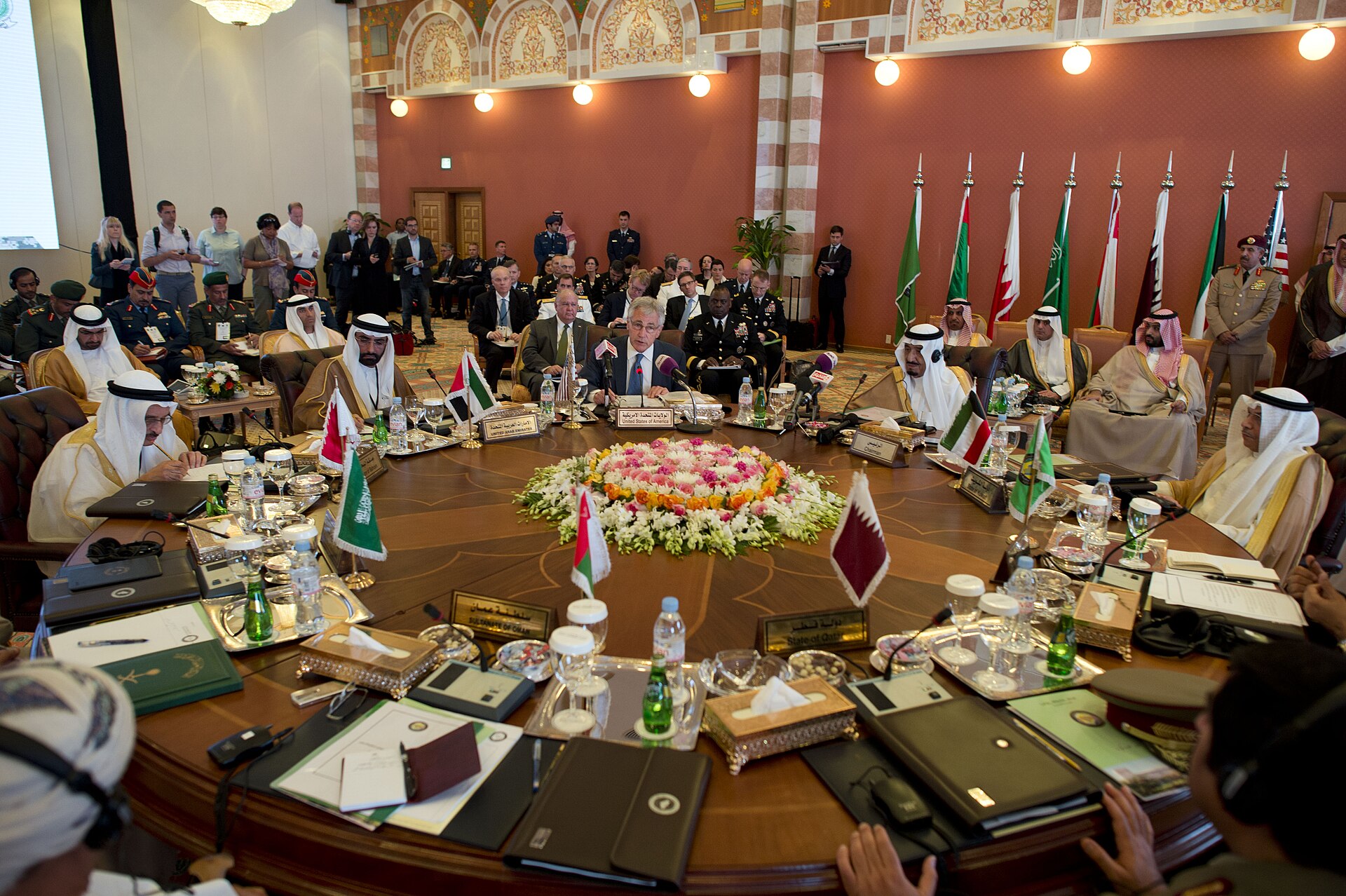
The GCC Ministerial Council condemned the strikes as “treacherous terrorist attacks” and pledged “all necessary measures,” including “the option of responding to the aggression.” Saudi Arabia held Iran responsible “for the consequences of its continued aggression.” The Sakhir Declaration went unmentioned. The Peninsula Shield Force was not activated. No GCC military assets moved in the 48 hours following the strikes.
The GCC Ministerial Council’s extraordinary session on July 8 produced a statement calibrated to convey alarm while avoiding commitment. It labeled the IRGC strikes “treacherous terrorist attacks” constituting a “direct threat to the security, stability, and safety of citizens and residents in both countries,” and pledged that member states “will take all necessary measures to defend their security and stability and to protect their territories, citizens, and residents, including the option of responding to the aggression.” The phrase “including the option” carried the operational weight — it acknowledged a military response was possible while simultaneously declining to pursue one.
The Saudi MFA statement was more revealing for what it omitted. Riyadh recognized, in writing, that the strikes constituted a “violation of state sovereignty” — the exact predicate of the Sakhir Declaration’s collective defense trigger. Having established that a member state’s sovereignty had been infringed, the MFA then declined to invoke the declaration’s central commitment: that such infringement “constitutes a direct threat to their collective security.”
The Middle East briefing 3,000+ readers start their day with.
One email. Every weekday morning. Free.
Riyadh’s choice of legal framework was itself a signal. The MFA referenced UNSC Resolution 2817, a document focused on the broader Iran-US escalation cycle, rather than the GCC’s own defense architecture. Resolution 2817 places responsibility on the Security Council. The Sakhir Declaration places it on Riyadh. The Kingdom chose the instrument that pointed away from Saudi action.
The UAE offered marginally broader language. Abu Dhabi “strongly condemns renewed hostile attacks by Iran” and expressed “full solidarity with the Kingdom of Bahrain and the State of Kuwait, and its support for all measures aimed at safeguarding their security and stability.” That phrase — “support for all measures” — left open the theoretical possibility of military action where Riyadh’s condemnation-only framing closed it. But no GCC state deployed air defense assets, moved interceptor aircraft, or offered to backfill the defensive gaps the strikes had exposed in Kuwaiti and Bahraini airspace.
The UN Security Council convened an emergency session on July 9, the latest in a series of UNSC meetings on the Iran crisis that have produced statements without enforcement mechanisms. No GCC delegation proposed a resolution with operational teeth. Forty-eight hours after 85 IRGC projectiles struck sovereign GCC territory, the bloc’s collective response amounted to three separate condemnation statements and a pledge to consider options — none of which had been exercised.
The Declaration That Died in Manama
The Sakhir Declaration was adopted on December 3, 2025, at the conclusion of the 46th GCC Summit in Bahrain’s capital. Its language broke with four decades of communiqués distinguished mainly by their refusal to commit to specifics. For the first time, a GCC summit text stated that “the security and stability of GCC states are indivisible, and that any infringement upon the sovereignty of a member state constitutes a direct threat to their collective security.” Gulf-based analysts and Western think tanks alike called it a watershed — the closest the bloc had come to a binding mutual-defense commitment, and a potential deterrent that would alter Iran’s risk assessment by raising the cost of attacking any individual member.
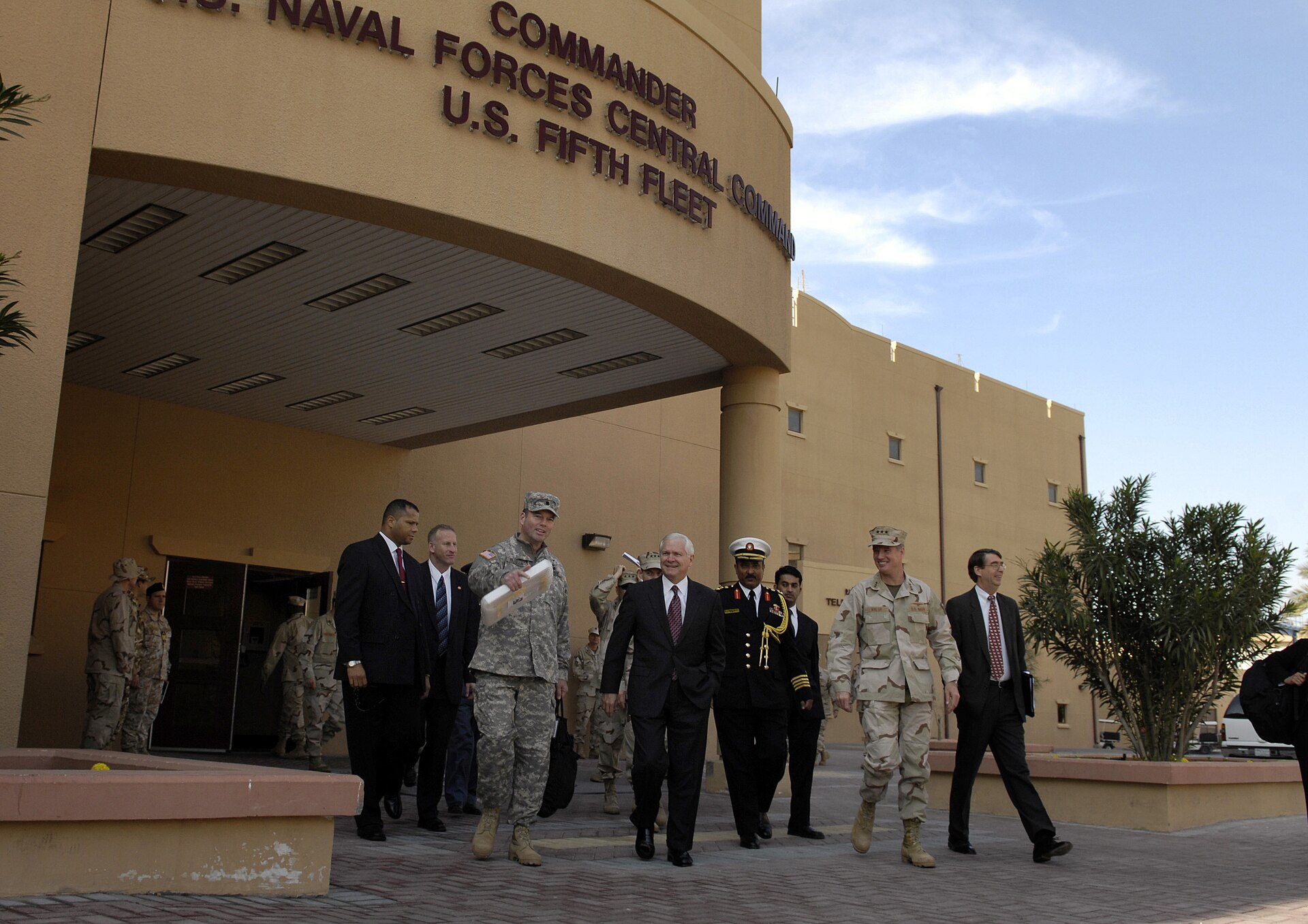
The declaration was adopted five months into the US-Iran military confrontation that had already placed every GCC member at varying degrees of exposure. Bahrain hosted the Fifth Fleet headquarters at NSA Juffair — the installation IRGC missiles struck on July 8. Kuwait hosted Camp Arifjan and Ali Al Salem Air Base, both targeted in the same attack. The Sakhir Declaration’s signatories knew which facilities were exposed, knew which member states sat in the IRGC’s target envelope, and wrote language designed to deter exactly the scenario that unfolded seven months later. When the scenario arrived, they treated the declaration as a diplomatic exercise rather than a military obligation.
The legal foundation was not new. The GCC’s 2000 Joint Defence Agreement had already established a mutual-defense mechanism modeled on NATO Article 5, complete with a Joint Defense Council and Military Committee empowered to coordinate responses to external attacks. The Sakhir Declaration was supposed to give political force to a framework that had existed on paper for 25 years. CSIS assessed in June 2026 that the declaration was “supposed to be the institutional answer” to the Gulf’s collective security deficit. Chatham House noted the same month that Gulf states were seeking assurances they “will not remain exposed to repeated pressure on their infrastructure and shipping routes,” with the Sakhir Declaration written to provide exactly that assurance.
The June 28 extraordinary ministerial meeting made the failure starker still. The 50th Extraordinary Meeting of the GCC Ministerial Council formally invoked collective defense language for the first time in the bloc’s 45-year history — and no military movement followed. When the IRGC struck ten days later, the GCC had two layers of collective defense commitments on the record: the December declaration that established the principle and the June invocation that tested the mechanism. Both proved to be exercises in language rather than defense. The declaration did not die on July 8 — it had already been dead on June 28, when its first formal invocation produced nothing and nobody in the region appeared surprised.
Why Did Iran Frame the Strikes as Targeting America?
Iran’s official channels — Tasnim, PressTV, IRNA, and Xinhua’s IRGC-sourced reporting — characterized the July 8 strikes as targeting “US military installations,” never Bahraini or Kuwaiti sovereign facilities. The framing was uniform across Persian, Arabic, and English output, giving GCC governments the legal-semantic cover to treat the strikes as a bilateral US-Iran matter rather than a collective defense trigger.
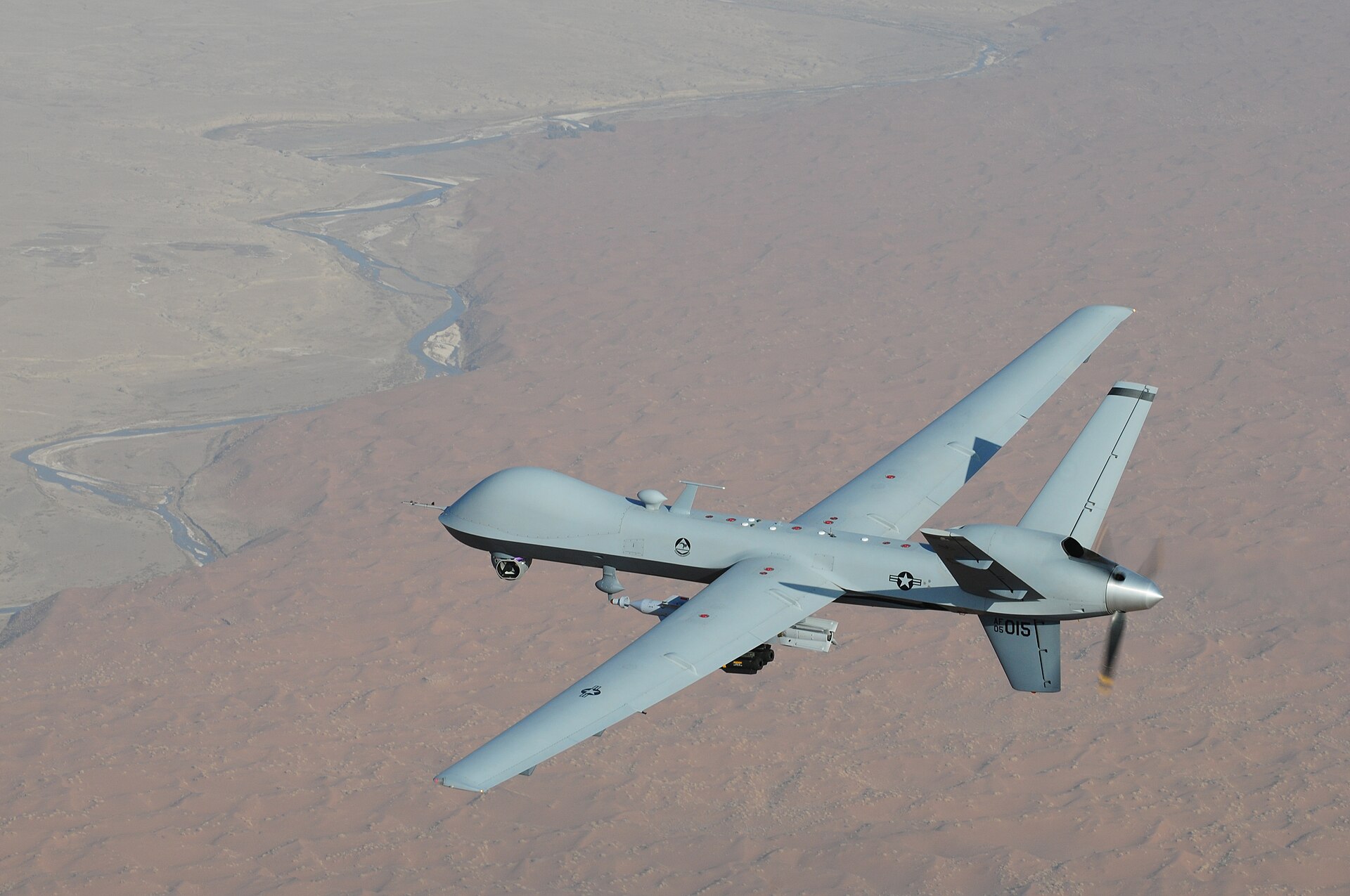
The IRGC struck 85 targets across four installations on July 8: NSA Bahrain at Juffair, headquarters of the US Fifth Fleet; Sheikh Isa Air Base in Bahrain; Camp Arifjan in Kuwait; and Ali Al Salem Air Base in Kuwait. The joint IRGC Navy and Aerospace Force operation shot down one MQ-9 Reaper drone. Bahrain’s Interior Ministry confirmed the top floor of an eight-story building near the airport was destroyed. Kuwait’s military intercepted two ballistic missiles and thirteen drones using its own air defense systems — without GCC assistance from any quarter.
Every one of these installations sits on sovereign Bahraini or Kuwaiti territory. Under any reading of the Sakhir Declaration or the 2000 Joint Defence Agreement, missiles striking Bahraini soil constitute an infringement upon a member state’s sovereignty, regardless of who operates the facility being targeted. Iran understood this — and framed the attacks in language calibrated to let the GCC avoid that conclusion.
Across Tasnim, PressTV, IRNA, and Xinhua’s IRGC-sourced reporting, Tehran characterized both strike waves as targeting “US military infrastructure” and “US military installations” — never Bahraini sovereign facilities, never Kuwaiti territory. The distinction is legally fictitious. A military strike on a facility within a sovereign state’s borders is an attack on that state regardless of whom the attacker claims to be targeting.
NSA Bahrain at Juffair is leased Bahraini territory. Camp Arifjan sits in Kuwait’s Al Ahmadi Governorate under a bilateral status-of-forces agreement. But the legal fiction was not designed to withstand scrutiny — it was designed to provide political cover, and it worked. By labeling the targets American rather than Arab, Iran gave Riyadh the semantic gap it needed to treat the attacks as a bilateral US-Iran matter rather than a collective defense trigger.
PressTV described the strikes on July 9 as “part of initial response to latest violations” — proportionate, limited, directed at Washington through its forward-deployed infrastructure. The IRGC expansion threat issued the same day maintained the framing: “Should the US repeat its acts of aggression, its crushing response will be expanded to include other American bases throughout the region.” The threat did not name Emirati, Qatari, or Saudi installations — only American bases, located on Arab soil that Iran’s official language treated as jurisdictionally invisible.
Tehran had reason to believe the framing would hold. Iran’s hardliner establishment, freshly consolidated after Khamenei’s funeral, could read the GCC’s 45-year record of collective defense non-performance as clearly as any analyst in the region. The question was never whether the Sakhir Declaration would be invoked. The question was how much semantic cover Riyadh would need not to invoke it — and Iran provided exactly enough.
Forty-Five Years Without a Shot Fired
The GCC’s collective defense record spans 45 years, and it is unmarked by a single instance of coordinated military action against an external attacker. This is not the record of an alliance that failed once under extraordinary pressure. It is the record of an organization that has never functioned as a military alliance at all.
The Peninsula Shield Force — the GCC’s joint military formation — was not deployed when Iraq invaded Kuwait in August 1990, the most straightforward case for collective defense imaginable. Military assessments found the PSF “not sufficiently developed to be deployed in defense of Kuwait.” A GCC founding member was occupied by a hostile neighbor, its sovereignty extinguished by force, and the mutual-defense framework built for that exact contingency produced no military response. A US-led coalition of 34 nations liberated Kuwait. The GCC’s contribution was to host the coalition rather than constitute one.
The PSF deployed once — in March 2011, when Saudi and Emirati forces crossed into Bahrain to suppress domestic protests during the Arab Spring. Kuwait declined to send troops. Oman refused. The one time the Peninsula Shield Force moved, it moved against civilians inside a member state rather than against an external threat, and two GCC members still would not participate even in that limited operation.
The 2017 Qatar blockade demolished whatever remained of the collective defense pretense. Saudi Arabia, the UAE, Bahrain, and Egypt severed diplomatic ties with Qatar — a fellow GCC member state — for three years, imposing land, sea, and air blockades that came closer to an act of siege than an act of alliance management. The defense framework was not merely unused; it was weaponized against a state it was built to protect. By December 2025, when the Sakhir Declaration was adopted, Saudi Arabia had reportedly struck UAE-supplied military equipment in Yemen belonging to the Southern Transitional Council — direct intra-GCC military confrontation between the bloc’s two most capable armed forces.
The Foreign Policy Research Institute assessed as early as 2014 that persistent “disagreement among member states about implementing collective military action” rendered the 2000 Joint Defence Agreement functionally decorative. The Carnegie Endowment’s April 2026 assessment that the current GCC fracture was “more severe than the 2017 Qatar blockade crisis,” with members on opposing sides of active military conflict, described an environment in which collective defense was less plausible than at any point in the bloc’s history. The Sakhir Declaration was written to change that trajectory. July 8 confirmed it had changed the vocabulary without changing the condition.
The Sovereignty Paradox
The Stimson Center published an assessment in May 2026, titled “The Sovereignty Paradox,” that identified the structural reason the Sakhir Declaration could not deliver what its language promised — two months before Iran tested the proposition with live ordnance.
“At the heart of this challenge lies a profound sovereignty paradox. The centralization of power within individual Gulf states remains fiercely guarded, and the shift from personalized statecraft to a formalized collective defense architecture demands a surrender of sovereign autonomy that decision-makers remain unwilling to make.”
The paradox is structural, not diplomatic. Saudi Arabia, the UAE, Kuwait, Bahrain, Qatar, and Oman are monarchies where security policy is the personal prerogative of the ruler — not delegated to defense ministries with independent authority, not subject to legislative review, not constrained by treaty obligations the ruler has not personally decided to honor on a given day. A binding collective defense commitment would require Mohammed bin Salman to order Saudi forces into combat because Kuwait’s emir invoked a clause in a document signed in Manama. That is not how Gulf monarchies exercise power, and every head of state in the bloc understands it.
The Stimson analysis went further, noting that when Iran accused the UAE, Bahrain, Kuwait, and Qatar of “providing logistical support for US military attacks on Iranian territory, it highlighted the acute vulnerabilities and varying levels of exposure among the member states.” Each GCC capital faces a different Iranian threat profile, hosts a different configuration of US military assets, and maintains a different bilateral relationship with Tehran. Doha hosts Al Udeid — the largest US air base in the Middle East — while maintaining the GCC’s closest diplomatic channel to Tehran. Kuwait hosts two of the four installations struck on July 8 and has historically pursued the most neutral posture toward Iran of any GCC capital. The Sakhir Declaration’s language treated these varying exposures as irrelevant — an attack on one was an attack on all. July 8 demonstrated they were determinative.
One week before the strikes, CENTCOM held a regional security dialogue with twelve nations in Bahrain — the country where missiles would land seven days later. Admiral Brad Cooper told participants: “We continue to stand shoulder to shoulder with our regional partners.” Saudi Arabia participated. The shoulder-to-shoulder posture and the Sakhir Declaration’s collective defense commitment described the same thing — solidarity under pressure — and neither survived contact with Iranian missiles.
Can Saudi Arabia Defend the Gulf When It Cannot Defend Itself?
No. Saudi Arabia’s PAC-3 Patriot inventory stands at roughly 400 rounds from a pre-war stock of 2,800, with the South Korean M-SAM-II replacement not arriving before 2028. The kingdom lacks the interceptor capacity to sustain a multi-day IRGC campaign against its own territory, let alone coordinate air defense across six member states spread over 2,672 kilometers of Gulf coastline.
The Sakhir Declaration’s non-invocation is not only a diplomatic failure. It reflects a military reality Riyadh cannot obscure with condemnation statements: the Kingdom lacks the capability to anchor a collective defense of its own airspace, let alone extend credible air defense to six member states spanning the length of the Gulf.
Saudi Arabia’s PAC-3 missile inventory stands at roughly 400 rounds, down from approximately 2,800 before the current conflict — an 86 percent depletion rate that leaves the Kingdom’s primary terminal-phase air defense asset one large IRGC strike package from exhaustion. The $3.1 billion M-SAM-II purchase from South Korea will not deliver first batteries until 2028, and the system intercepts at 15-20 kilometers altitude — above the terminal phase where IRGC Zolfaghar missiles arrive below 10 kilometers. Riyadh bought a system that fills a mid-altitude layer while the gap that matters, the final seconds of an incoming ballistic warhead’s descent, remains covered only by a PAC-3 stockpile that is nearly exhausted.
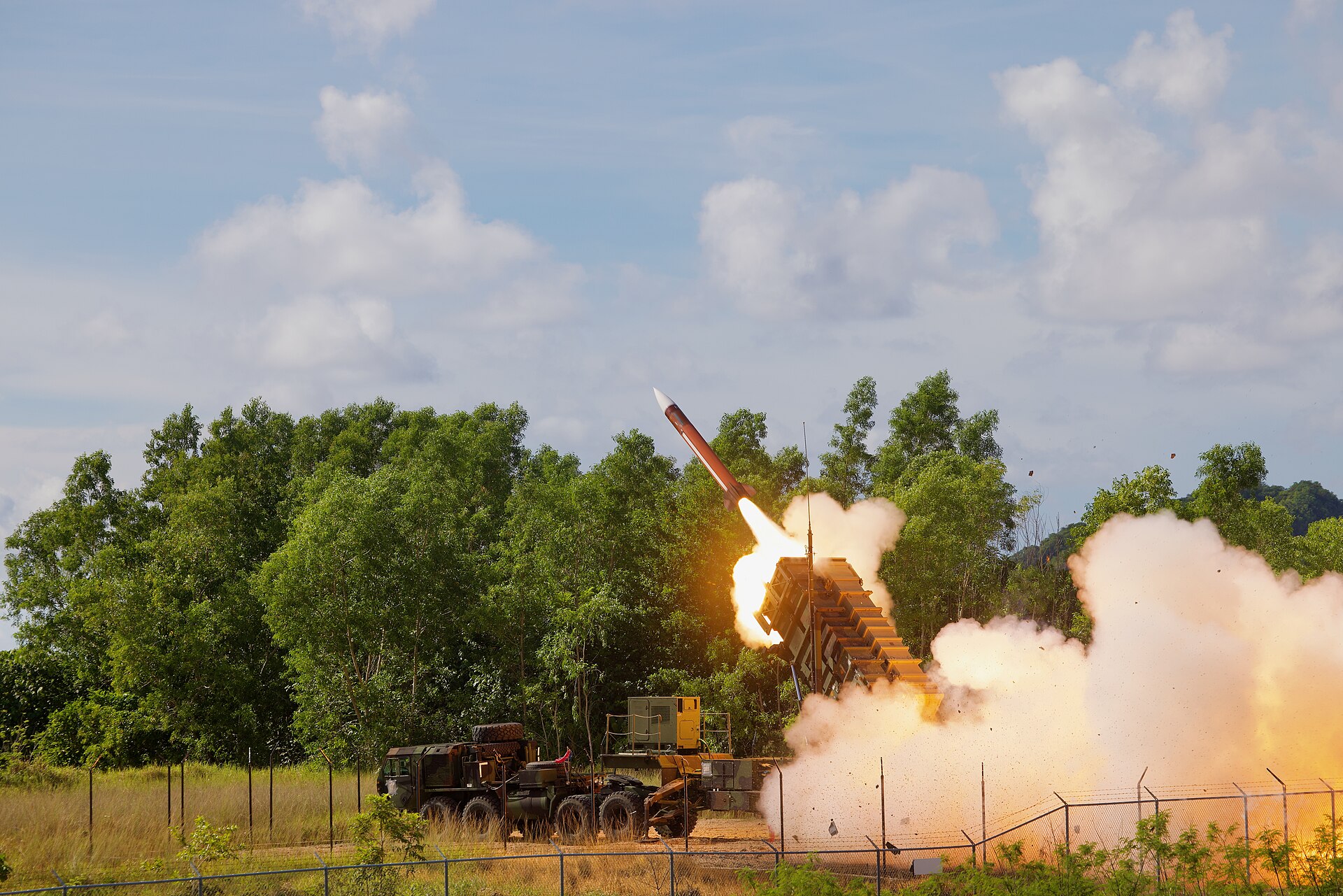
The IRGC’s July 9 expansion threat — that “crushing responses will be expanded to include other American bases throughout the region” — pointed at Prince Sultan Air Base, the primary US military installation on Saudi soil, 90 kilometers south of Riyadh. Washington has already weighed a punitive drawdown from PSAB, with IESP contractors, Link-16 maintenance crews, and PAC-3 technicians among the personnel flagged for departure. If the IRGC expands its target set to Saudi-hosted facilities, Riyadh faces strikes against installations it cannot adequately defend with depleted interceptor stocks and cannot guarantee will continue receiving American technical support.
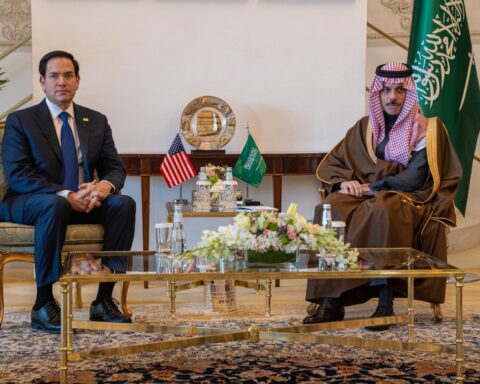
Secretary of State Marco Rubio’s early July Persian Gulf tour — covering Bahrain, Kuwait, and the UAE — excluded Saudi Arabia entirely. Washington’s chief diplomat toured the countries that would be attacked days later without considering Riyadh worth a stop. The Kingdom that signed the Sakhir Declaration as the GCC’s leading military power is simultaneously depleted in interceptors, estranged from its primary security guarantor, and unable to assure the defense of its own capital against the missile threat the IRGC has already demonstrated on GCC soil. Those are not conditions that produce a collective military response. Those are conditions that produce condemnation statements.
The estrangement from Washington is not merely a product of the July 8 strikes. MBS had privately urged Trump to pursue regime change in Iran and seize its energy infrastructure — only to ground American warplanes and obstruct the very operation he had encouraged, leaving the kingdom diplomatically isolated and militarily exposed.
The Cover Iran Offered and Riyadh Took
The most telling detail of July 8 is not what Saudi Arabia said or failed to say. It is what Iran chose to say — and what the precision of Tehran’s language reveals about how well the IRGC understands the alliance it struck.
By framing every attack as targeting “US military installations” rather than Bahraini or Kuwaiti sovereign territory, the IRGC gave Riyadh the semantic cover the Kingdom needed to treat the strikes as someone else’s war. Missiles hit GCC soil. An eight-story building near Bahrain’s airport lost its top floor. Kuwait scrambled interceptors against incoming ballistic missiles for the first time since 1991. The GCC’s leading state — the signatory whose participation gave the Sakhir Declaration whatever weight it carried — responded as though the strikes had occurred in a different hemisphere.
Iran’s leadership had reason to believe this would work. Forty-five years of precedent confirmed it. The 1990 non-deployment confirmed it. The 2017 blockade — in which the GCC turned its defense framework against one of the states it was built to protect — confirmed it most explicitly. The June 28 extraordinary meeting, which invoked collective defense for the first time in the bloc’s history and produced no military movement, confirmed it ten days before the IRGC launched. Every available data point told Tehran the same thing: the GCC’s defense commitments dissolve upon contact with actual military pressure, and the only variable is the quality of the excuse provided.
The IRGC’s expansion threat named “other American bases throughout the region” as future targets. Prince Sultan Air Base — the primary US installation on Saudi soil — holds PAC-3 batteries that are 86 percent through their pre-war ammunition stock, with American technicians who maintain them on a departure list Washington has already drafted. The Sakhir Declaration — with its promise that the security of GCC states is “indivisible” — sits in the GCC Secretariat’s archive in Riyadh, twelve kilometers from the Ministry of Foreign Affairs that drafted its condemnation of the July 8 strikes without opening it.
Frequently Asked Questions
What is the Peninsula Shield Force and has it ever deployed against an external threat?
The Peninsula Shield Force is the GCC’s joint military formation, established in 1984 with force contributions from all six member states. It was not deployed when Iraq invaded Kuwait in 1990 — the most straightforward external-attack scenario in the bloc’s history — and was assessed as insufficiently developed for the mission. Its sole deployment came in March 2011, when Saudi and Emirati contingents entered Bahrain to suppress domestic protests during the Arab Spring; Kuwait and Oman refused to participate. The PSF was not activated after the July 8, 2026 IRGC strikes on Kuwait and Bahrain. In 45 years, it has never been deployed against an external military threat to a member state.
How does the GCC’s defense mechanism differ from NATO Article 5 in practice?
The GCC’s 2000 Joint Defence Agreement mirrors NATO Article 5’s mutual-defense language and establishes a Joint Defense Council and Military Committee for coordinated responses. The structural difference is not in the legal text but in the institutional architecture behind it. NATO has invoked Article 5 once — after the September 11, 2001 attacks — and the alliance subsequently deployed forces to Afghanistan for two decades. The GCC’s equivalent has never produced a coordinated military response to an external attack despite multiple triggering events, including the 1990 invasion of Kuwait and the July 2026 strikes on Bahrain and Kuwait. NATO members operate under standing force-contribution agreements and integrated command structures. GCC defense cooperation remains subject to each ruler’s individual discretion, with no standing multinational headquarters, no pre-delegated force commitments, and no integrated air defense network.
Did any GCC member state provide military assistance to Kuwait or Bahrain after July 8?
No publicly confirmed deployment of GCC military assets — air defense systems, interceptor aircraft, naval vessels, or ground forces — to either Kuwait or Bahrain followed the July 8, 2026 strikes. Kuwait’s own air defense systems intercepted the incoming IRGC ballistic missiles and drones without reported assistance from any GCC partner. The GCC Ministerial Council’s extraordinary statement pledged “all necessary measures, including the option of responding to the aggression,” but as of July 9, no member state had announced force deployments, asset transfers, or military commitments to either affected country. Bahrain’s immediate defense was provided by US Fifth Fleet assets already stationed at NSA Juffair — the installation that had itself been struck.
Which GCC-hosted US bases could be targeted if Iran expands its strikes?
The IRGC’s July 9 expansion threat named “other American bases throughout the region” without specifying facilities. Major US military installations on GCC soil include Al Udeid Air Base in Qatar — the largest US air base in the Middle East and CENTCOM’s forward headquarters — Prince Sultan Air Base in Saudi Arabia, 90 kilometers south of Riyadh, and Al Dhafra Air Base in the UAE. Qatar’s position is particularly complex: it hosts the most consequential US installation in the region while simultaneously maintaining the GCC’s closest diplomatic relationship with Tehran, making it both the highest-value military target and the member state least likely to support collective military action against Iran.
What would it take for a GCC member state to formally activate the Sakhir Declaration?
Under the GCC’s 2000 Joint Defence Agreement, formal activation requires the affected member state to submit a request to the Joint Defense Council, which then convenes the Military Committee to formulate a recommended response; consensus among all member governments is the final precondition before any collective action can proceed. No member state has publicly confirmed whether Kuwait or Bahrain submitted such a request in the hours following the July 8 strikes. Neither the Joint Defense Council nor the Military Committee announced a session. The legal mechanism exists in full — the procedural steps that no government has publicly chosen to initiate.
Iran expanded the strike sequence on July 9, firing ten IRGC ballistic missiles at Jordan’s Muwaffaq Salti Air Base and destroying Al Udeid’s satellite communications antenna in Qatar — bringing the total to four countries hit within twenty-four hours. Neither Jordan nor Qatar invoked any collective defense mechanism. Iran Strikes US Bases in Four Countries Within Twenty-Four Hours.