ISLAMABAD — Iran has divided the next phase of US-Iran diplomacy into two separate channels — technical talks in Islamabad on July 14-15 and a principals-level third round in Doha the following week — ensuring the MOU’s most sensitive conditionality triggers are absorbed at the deputy level while Saudi Arabia is excluded from both. The bifurcation is a pacing instrument, not a scheduling convenience.
Pakistan confirmed the revised Islamabad date on July 5, shifting an earlier July 11 timeline three days rightward. Doha round 3 is expected around July 21, though no date has been officially confirmed. The week-long gap between the two tracks matters for a specific structural reason: the Islamabad technical session will address whether the United States has complied with Article 1 of the Islamabad MOU — the Lebanon ceasefire clause Iran has already declared violated — before any senior political figures convene in Doha to discuss what follows. For Riyadh, which holds no seat, no signatory status, and no observer role in either channel, the two-track design doubles the exclusion. Whatever the Islamabad technical teams determine and whatever the Doha principals negotiate will reach Saudi Arabia through secondhand channels, after the frames have been set. Oman simultaneously advanced a formal dual-corridor Hormuz proposal through the same Muscat channel, a framework that deepens Saudi Arabia’s structural exclusion by presenting the kingdom with a choice it cannot make in any direction.
Table of Contents
- The Bifurcation: Two Tracks, One Week Apart
- What Does Islamabad Settle Before Doha Opens?
- Who Decides What Compliance Means?
- Can Saudi Arabia See Into Either Room?
- The Clock That Slows by Splitting
- Pakistan’s Structural Position Inside Both Rooms
- Mojtaba’s Veto Over Both Tracks
- Does the Two-Track Structure Serve the Deal or the Deadline?
- Frequently Asked Questions
The Bifurcation: Two Tracks, One Week Apart
The date revision is itself instructive. Geo.tv reported on July 5 that Islamabad would host US-Iran technical talks on July 14-15, replacing the July 11 date that Pakistani government sources had given earlier that week. The outlet’s own URL slug — still reading “july-11” — records the live correction, an administrative artifact of a timeline that moved three days rightward without public explanation. The shift is minor in calendar terms. In structural terms, it widened the gap between the two negotiating tracks to approximately one week, giving the Islamabad technical session time to produce findings that Doha round 3 principals will inherit as established parameters.
Doha round 2, held July 1-2, previewed the design. Iran sent Deputy Foreign Minister Kazem Gharibabadi to lead its delegation — not Foreign Minister Abbas Araghchi, not Parliament Speaker and chief negotiator Mohammad Bagher Ghalibaf. The choice of delegate signaled the meeting’s intended function. Gharibabadi, whose portfolio covers legal and international affairs, is the official best suited to arguing compliance questions and documenting violations, not to making political concessions or accepting compromise frameworks.
Araghchi’s own channel to Riyadh remained open even as the diplomatic bifurcation widened. On July 7 — the same day Iran struck the Saudi tanker Wedyan sixteen nautical miles east of Khor Fakkan — Araghchi called FM Faisal to discuss “the latest developments,” preserving the bilateral channel even while Iran demonstrated it could strike Saudi state assets without consequence.
Gharibabadi told Xinhua that two sessions were held in Doha. “The first addressing the US’s violations of its obligations” under Paragraph 1, he said, with a monitoring-group emergency channel to be established. The second covered the $6 billion in frozen Qatari-held assets, producing a goods-purchase mechanism — humanitarian goods only, no cash transfers. He said the monitoring channel would be operational “by Thursday.” Ghalibaf had told state media that $12 billion of $24 billion in total frozen Iranian assets would be made available — a figure that makes the Doha round’s $6 billion goods-purchase mechanism look like a deposit, not a settlement.
The Middle East briefing 3,000+ readers start their day with.
One email. Every weekday morning. Free.
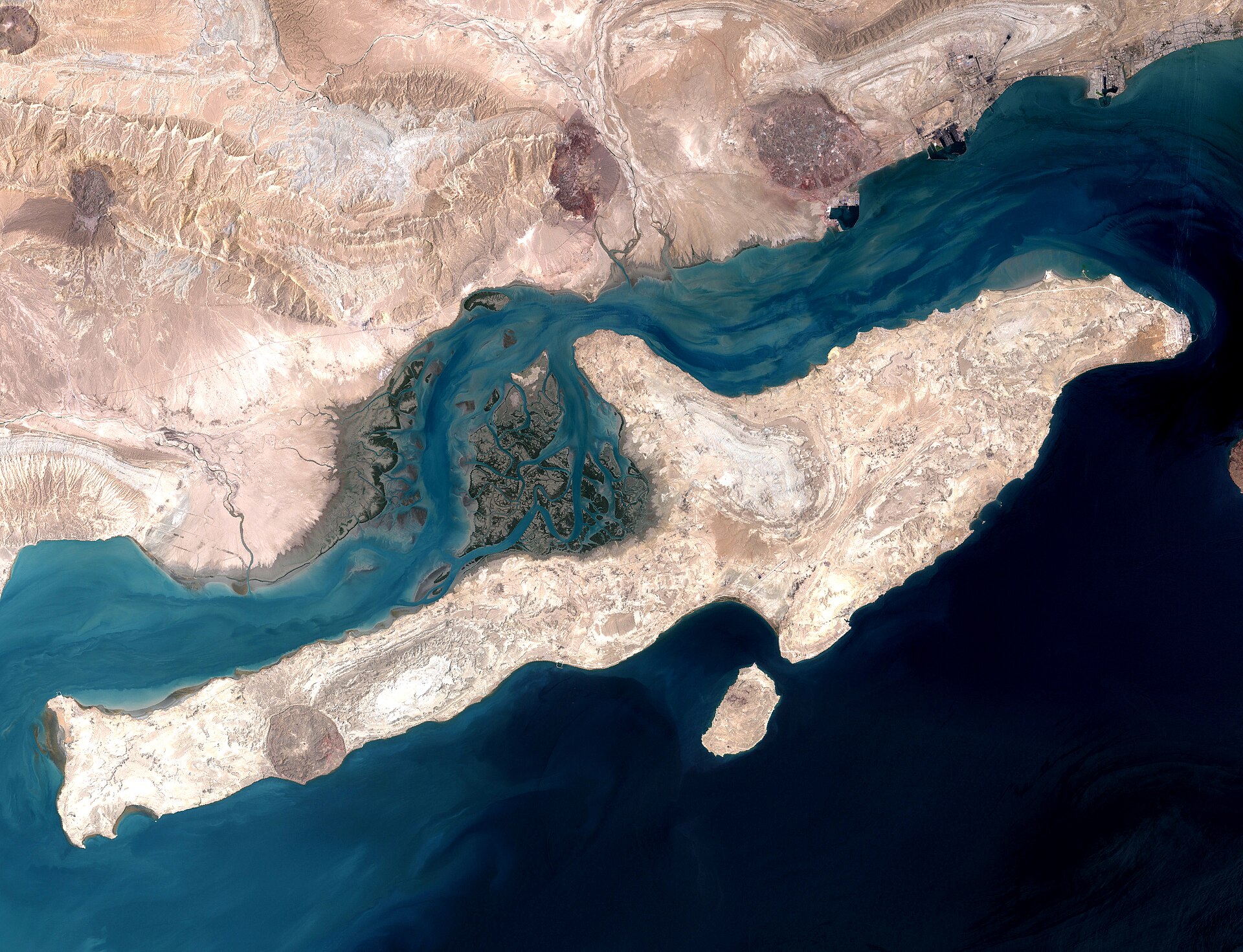
The Doha round produced two procedural wins and one substantive void. The procedural outcomes — the asset-access mechanism and the violation-reporting channel — are real but limited. The void is Hormuz. Secretary of State Marco Rubio called Iran’s fee-based framing of Strait tolls “a game of semantics — will never be acceptable.” Iran’s Persian Gulf Strait Authority charges approximately $1 per barrel through a corridor between Qeshm and Larak islands, with fee collection suspended until August 18. After that date, the auto-activation rate is $5.5 million per day. Nothing in the Doha round addressed the underlying dispute.
The two-track design separates technical findings from political accountability. Technical teams in Islamabad will absorb the questions about US compliance with Article 1 — the single most consequential gating condition in the MOU structure — while the political principals who would bear responsibility for acting on those findings arrive a week later, in a different city, at a different table.
What Does Islamabad Settle Before Doha Opens?
The Islamabad technical session is not a preliminary round. It is the proceeding that addresses the MOU’s most consequential structural question: whether the United States has begun implementing the five articles that gate all subsequent negotiations. Of those five articles, the one Iran has chosen to contest — Article 1, the Lebanon ceasefire — is the gate Iran can hold shut indefinitely by continuing to document violations.
Article 13 of the Islamabad MOU is explicit. Negotiations on the comprehensive final deal — covering nuclear status, sanctions architecture, regional security, and economic normalization — may begin only “subject to the beginning of implementation” of Articles 1, 4, 5, 10, and 11. This is not aspirational language. It is a formal precondition written into the agreement’s text, published in full on Wikisource and analyzed by the Parley Policy Institute in a June 2026 explainer.
Ghalibaf established the operative framing before Doha round 2. He told state media that Lebanon is Iran’s “first priority” and “one of our red lines,” positioning compliance with Article 1 as a prerequisite to any discussion of the nuclear track or sanctions relief. At Doha, Gharibabadi operationalized this framing by devoting the entire first session to US violations of Paragraph 1 — not as a side complaint, but as the lead agenda item. The Ghalibaf framework — structuring Iran’s MOU obligations around five articles that are predominantly US-side commitments — means Iran can present stalling as compliance monitoring.
The Carnegie Endowment for International Peace cautioned in April 2025 that technical experts “need to be involved — ideally in the room — to make any deal credible,” and observed that “breakout time may no longer be the right construct for the current negotiations.” The bifurcated structure does something adjacent but different: it places technical teams in a room whose findings determine whether the deal’s most important precondition is met, then convenes political principals a week later in a separate room to negotiate within whatever frame the technical session has established.
| Article | Subject | Status (July 6, 2026) | Compliance Arbiter |
|---|---|---|---|
| 1 | Lebanon ceasefire | Iran declares US non-compliance | None — no arbitration mechanism |
| 4 | Sanctions relief | Implementation not begun | US unilateral |
| 5 | Non-aggression commitment | No formal declaration issued | Bilateral (undefined) |
| 10 | Nuclear status quo | 121-day IAEA blackout; 440.9 kg HEU unverified | IAEA (access blocked) |
| 11 | Frozen assets | $6B goods mechanism agreed; ~$18B outstanding | Qatar-mediated |
The table exposes the structural asymmetry. Of the five gating articles, four depend on US-side action (Articles 1, 4, 5, and 11). Only Article 10 — the nuclear status quo — requires Iranian implementation, and it is functionally unverifiable because IAEA inspectors have been denied access to enrichment facilities since June 10, 2025. Iran’s position at the Islamabad technical table is that of auditor, not defendant.
Who Decides What Compliance Means?
The MOU contains no arbitration mechanism. When Iran asserts that the United States has violated Article 1’s Lebanon ceasefire provisions, no tribunal evaluates the claim, no third party adjudicates, and no binding procedure resolves the dispute. The monitoring group whose emergency channel was established at Doha round 2 can receive and transmit complaints. It cannot rule on them.
This structural gap converts every compliance question into a political assertion. Iran does not need to prove that the US has violated Article 1; it needs only to continue stating that it has. The Parley Policy Institute identified the absence of adjudication as a design feature that gives each party a functional veto over the other’s progress claims. Iran has chosen to exercise that veto on Article 1 — and at Doha round 2, it expanded the complaint docket. Gharibabadi raised US military reinforcements in West Asia and what Tehran called “threatening and interventionist” statements by US officials, a framing that converts routine military posture and diplomatic rhetoric into additional compliance violations, widening the grievance surface available at any subsequent meeting.
The Supreme National Security Council reinforced this posture with a public statement that it will monitor implementation with “complete distrust” of the American side and warned of “reciprocal action” for any violation. The IRGC followed with its own declaration: if the United States makes “excessive demands,” Iranian forces are “prepared to respond on land, at sea, in the air, and in all other arenas of hybrid warfare.” These are not negotiating positions. They are signals to a domestic audience — the Paydari faction, the 63 out of 88 Assembly of Experts members who have staked hardline positions on the MOU — that the government’s negotiating team is not operating from weakness.
On Day 20 of the ceasefire, the IRGC acted on its own declaration. A missile struck the Al Rekayyat, a Qatari state-owned LNG carrier in the Strait of Hormuz, while US negotiators were inside Doha. Iran hit its own mediator’s vessel on the same morning Khamenei’s funeral ceremonies closed. The two-track structure that this article maps — Doha for maritime issues, Islamabad for nuclear — now has a direct missile strike lodged inside its maritime track. Iran Hit the Host covers the strike and Qatar’s dual exposure as host and target.
The dual-audience function matters for the technical talks. Iran’s official framing of the Islamabad session emphasizes “implementation” rather than “negotiation” — the government presents itself as supervising US compliance, not making concessions. The monitoring channel established at Doha round 2 is being used not as a confidence-building instrument but as an offensive one: a formal mechanism for documenting the counterparty’s failures. Gharibabadi devoted the first of his two Doha sessions to exactly this exercise.
For any external party hoping to influence the compliance determination, there is no procedure to petition, no forum to present evidence, no observer seat from which to object. The compliance question will be settled, to the extent it is settled at all, by bilateral assertion in rooms where outside parties have no standing.
Can Saudi Arabia See Into Either Room?
Saudi Arabia cannot observe either the Islamabad technical talks or the Doha principals round. It is not a signatory to the MOU, not a member of the monitoring group, and not an invited observer at any session held to date. The structural exclusion is total and, absent a fundamental redesign of the negotiating format, irreversible for the duration of the 60-day clock.
Saudi Foreign Minister Prince Faisal bin Farhan met Bahraini Foreign Minister Abdullatif al-Zayani in Riyadh on July 5. Their joint statement stressed “the importance of freedom of navigation in the Arabian Gulf” and acknowledged the US-Iran negotiation track. The phrasing is instructive: stressing the importance of navigation rights is what states do when they cannot directly protect those rights at the table where they are being negotiated. The same dynamic is visible in the bilateral channel with Washington: on July 10, Rubio met Saudi Ambassador Reema rather than Foreign Minister Faisal — a downgrade from the FM-level meeting of January. An analysis of the July 10 Reema-Rubio meeting examines what the ambassador channel reveals about Saudi Arabia’s narrowing diplomatic access. The same exclusion shapes the question of who signs for Iran in the Saudi back-channel — where Mojtaba Khamenei’s 127-day absence has left the channel structurally open but constitutionally uncloseable.
The same exclusion compounds Saudi Arabia’s exposure to Trump’s threat to seize Kharg Island: with no seat at either negotiating track, Riyadh cannot influence whether Kharg becomes a permanent seizure or triggers full Hormuz closure, yet bears the full fiscal and physical risk either outcome produces. Why Saudi Arabia cannot afford the Kharg windfall maps the structural trap from which diplomatic exclusion offers no exit.
Saudi Arabia wants the war over, and at the same time fears a settlement that puts Iran’s economy back on its feet, frees it to fund its allies, gives it sway over Hormuz, and lets it back into a Levant where its grip had just loosened. So the kingdom pushes where it can… hoping to leave the final deal with the smallest loss it can manage.
— Arab Center Washington DC, “Limiting the Damage: Saudi Arabia and the Islamabad Memorandum,” 2026
The Quintet framework that Saudi Arabia helped construct — grouping itself with Qatar, Turkey, Pakistan, and Egypt — was intended to give Riyadh a voice in post-war regional architecture. In practice, only two Quintet members have direct access to the US-Iran negotiating rooms: Qatar, which hosts the principals track, and Pakistan, which hosts the technical track and serves as mediator. Turkey and Egypt sit outside. Saudi Arabia’s position within the Quintet gives it diplomatic coordination channels but no procedural standing in the talks themselves.
Oman complicates the picture further. Muscat is co-developing the PGSA’s Hormuz fee architecture with Tehran, deploying what CNBC described as “strategic ambiguity” — not openly opposing Iranian toll demands while maintaining its traditional mediator posture. For Riyadh, Oman’s positioning means that even the GCC member historically closest to Iran-related mediation is now partially inside Iran’s institutional framework on the Hormuz question.
The Faisal-Dar communication channel — Saudi Foreign Minister to Pakistani Foreign Minister Ishaq Dar — remains Riyadh’s primary indirect line into the talks. Dar briefed Faisal after Doha round 2, an arrangement that gives Saudi Arabia after-the-fact reporting but no ability to shape agendas, frame compliance questions, or challenge findings before they harden into negotiating positions. When the nuclear track opened as an explicit agenda item for the Islamabad sessions, Riyadh had no mechanism to object to its inclusion or to the terms under which it would be discussed.
The Clock That Slows by Splitting
The MOU’s 60-day clock started on June 17. As of July 6, nineteen days have elapsed. The Islamabad technical talks will occur around Day 28 or 29. Doha round 3, if it begins on July 21 as expected, will open on approximately Day 35. By the time political principals sit down for their first post-bifurcation session, more than half the clock will have run.
| MOU Day | Date | Event | Track |
|---|---|---|---|
| 1 | June 17 | MOU signed in Islamabad | — |
| 15–16 | July 1–2 | Doha round 2 | Principals |
| 18–23 | July 4–9 | Khamenei funeral observance pause | — |
| 28–29 | July 14–15 | Islamabad technical talks | Technical |
| ~35 | ~July 21 | Doha round 3 (expected) | Principals |
| ~60 | ~Aug. 15 | 60-day MOU deadline | — |
| ~63 | Aug. 18 | PGSA fee waiver expires | — |
The Arms Control Association assessed in June 2026 that the MOU is “fundamentally a non-nuclear deal” and that the 60-day timeframe is “extendable” — a characterization that matters because it describes the structural incentive accurately. Drawing out the talks, the ACA warned, risks either that “Trump loses interest” or that spoiler events disrupt the process. The absence of a snapback mechanism means that if the deadline passes without a comprehensive agreement, neither side faces automatic consequences. The MOU simply lapses.
The two-track structure interacts with this dynamic in a specific way. Each track absorbs calendar days without producing binding political decisions. Technical talks generate findings; principals meetings produce frameworks. Neither, by itself, constitutes the “beginning of implementation” that Article 13 requires. The bifurcation creates an intermediate state — discussions about compliance that are not themselves compliance — that can persist for as long as both tracks continue meeting without converging on enforceable outcomes.
The PGSA fee waiver expiration on August 18 functions as a harder deadline than the MOU’s own 60-day clock. On that date, the $5.5 million daily auto-activation rate takes effect on all tanker traffic through the Qeshm-Larak corridor. Saudi Arabia’s cumulative PGSA exposure stands at $253 million, a figure that grows daily after August 18 regardless of whether the MOU’s political negotiations have produced any agreement on Hormuz. The financial clock, unlike the diplomatic one, has enforcement built into its structure.
Pakistan’s Structural Position Inside Both Rooms
Pakistan is the only state with a structural role in both negotiating tracks. It hosts the Islamabad technical venue, co-mediates the Doha rounds alongside Qatar, and maintains direct military-to-military channels with both Iran and the United States. The Council on Foreign Relations observed in 2026 that Pakistan “achieved something many diplomats from wealthy democracies and leading global organizations had failed at for nearly five decades: producing direct talks between Washington and Tehran.”
Field Marshal Asim Munir is the individual whose position spans both tracks most completely. Munir is not a formal MOU co-signatory — Pakistan signed via Prime Minister Shehbaz Sharif — but his operational role exceeds his formal one. He attended the Khamenei funeral in Tehran as the highest-ranking Quintet military official. He maintains IRGC-level relationships that predate the current crisis. Trump cited Munir and Sharif by name when explaining the April 8 ceasefire: he agreed, Trump said, “based on conversations with Prime Minister Shehbaz Sharif and Field Marshal Asim Munir, of Pakistan.”
Hosting the technical talks gives Pakistan de facto agenda influence that pure mediation would not. A venue host controls logistics, schedule, and access — practical levers that shape what gets discussed and in what sequence. When the technical teams convene on July 14 to assess US compliance with Article 1, they will do so in a facility managed by Pakistani government services, in a city where Munir’s institutional weight is most directly felt.
For Saudi Arabia, Pakistan’s dual position is both an asset and a constraint. The Dar-Faisal channel is Riyadh’s most reliable indirect source of information about the talks. Sharif’s government has demonstrated willingness to share readouts. But sharing readouts is not the same as shaping agendas. Pakistan’s mediator role requires a degree of neutrality that precludes advocating for Saudi preferences on Hormuz fees, nuclear timelines, or sanctions sequencing. The funeral period reinforced Islamabad’s Iran-facing orientation: Sharif, Munir, and Dar all traveled to Tehran, while Saudi Arabia sent a deputy foreign minister.
Pakistan’s dual-track presence also creates an asymmetry in information flow. Islamabad’s technical teams will produce compliance findings that the Pakistani mediator carries — in some form — to Doha round 3. Whether those findings are presented raw, interpreted, or selectively communicated is a matter of Pakistani editorial judgment, not procedural mandate. No clause of the MOU specifies how technical findings transmit to the principals track, or what role the mediator plays in that transmission.
Mojtaba’s Veto Over Both Tracks
The two-track structure faces a single-point authority problem that neither track can resolve internally. Mojtaba Khamenei’s June 18 written statement granted conditional approval for the MOU in language that functions as a standing reservation: “I had a different opinion; the SNSC and Pezeshkian accepted responsibility.” He conditioned his grant of authority on safeguarding “the rights of the Resistance Front” — criteria whose boundaries no subordinate institution can adjudicate.
Under Article 176 of Iran’s constitution, all Supreme National Security Council decisions require confirmation by the Supreme Leader. The MOU contains no clause addressing counterparty incapacity or the possibility that one side’s ultimate authority might retroactively withdraw approval. Mojtaba’s conditional statement creates precisely this exposure: any concession made by Iran’s technical teams in Islamabad or its political delegation in Doha can be challenged after the fact by citing the stated reservation. The “rights of the Resistance Front” were not defined, which means every specific agreement at either track is potentially deficient against an unspecified standard.
The Gulf International Forum assessed that Mojtaba’s assumption of power “signals not a routine succession, but a deeper shift toward IRGC dominance and rule by coercion… The IRGC emerges as the core arbiter of power.” If the IRGC is the arbiter, and Mojtaba’s statement reserves him the right to overrule outcomes, then the technical teams in Islamabad and the principals in Doha are negotiating subject to an authority who has not appeared publicly in 127 days and whose specific conditions for approval remain undefined.
The parliamentary opposition to the MOU compounds the structural risk. The Paydari faction framed the agreement as a “coup” in parliamentary debate. The Assembly of Experts majority that has staked hardline positions on the MOU constitutes a domestic constituency whose objections align with Mojtaba’s stated reservations — and who can amplify the political cost of any concession made at either track.
The practical consequence for the two-track structure is that neither track can produce a durable outcome independently. An Islamabad technical finding that the US has met its Article 1 obligations may satisfy the technical teams but cannot bind Mojtaba, who can declare the finding insufficient under his Resistance Front condition. A Doha principals agreement on sanctions sequencing or Hormuz fees faces the same retroactive-challenge exposure. The bifurcation doubles the number of proceedings; it does not reduce the number of authorities who can overrule them.
Does the Two-Track Structure Serve the Deal or the Deadline?
The two-track structure benefits the party that gains from ambiguity about progress, and that party is Iran. Each track generates activity that looks like movement — technical findings, compliance reports, monitoring-channel communications — without producing binding political commitments. The structure creates a state of perpetual near-progress that absorbs calendar days without closing the gap between the MOU’s aspirational framework and a comprehensive deal.
The JCPOA precedent is instructive but misleading. The 2015 agreement used technical expert working groups embedded in a Joint Commission structure, but those groups operated within a multilateral format — the E3+3 — that applied collective pressure on both sides. The current bifurcation lacks that multilateral architecture entirely. There is no E3 bloc pressing for timelines, no Russian or Chinese co-chair with standing to demand progress, and no IAEA inspection baseline against which to measure nuclear commitments. The Carnegie Endowment’s warning that technical experts must be “in the room” was made in the context of multilateral negotiations. In a bilateral format with no external arbiter, technical teams serve the interests of whoever sets their mandate.
The ACA’s assessment that the MOU is “fundamentally a non-nuclear deal” points to a second structural problem. The Islamabad technical talks will address Article 1 (Lebanon) and potentially Article 10 (nuclear status quo) — but with 440.9 kilograms of highly enriched uranium at 60 percent enrichment unverified since June 2025, the nuclear file cannot be meaningfully advanced at the technical level. The 121-day IAEA inspection blackout has eliminated the empirical basis for nuclear compliance assessment. Technical discussions about the nuclear status quo are discussions about a status quo that neither side can independently verify.
Iran’s incentive is to maintain this ambiguity as long as the structure allows. The MOU’s 60-day clock carries no enforcement mechanism. The PGSA fee waiver — with its $5.5 million daily auto-activation on August 18 — exerts financial pressure that intensifies as the diplomatic process extends. Every day of technical-track discussion that passes without resolving the Hormuz fee dispute is a day closer to the moment when Iran’s toll-collection apparatus activates by default.
Saudi Arabia’s position in this dynamic is the most constrained of any regional stakeholder. It cannot influence the technical findings that determine whether Article 13’s gate opens. It cannot observe the principals meetings where the political response to those findings is formulated. It cannot petition the monitoring group to challenge Iran’s compliance claims. And it cannot prevent the PGSA fee activation that would impose direct financial costs on Saudi-bound tanker traffic. The Arab Center Washington DC described the kingdom’s strategy with precision: it “pushes where it can… hoping to leave the final deal with the smallest loss it can manage.”
The constraint is a consequence of decisions made before the war began. MBS privately lobbied the Trump administration for a maximalist outcome — regime change and the seizure of Iran’s energy sector — and got instead a war whose settlement architecture was designed without a Saudi seat at any table.
The 60-day clock will have reached Day 35 when Doha round 3 is expected to open. By then, the Islamabad technical teams will have established whether Article 13 opens or remains shut, and on what terms. Twenty-five days will remain — in principle. In practice, the two-track structure has already converted the MOU’s timeline from a countdown into an instrument of managed ambiguity, one that rewards the party most comfortable with delay. Qatar’s subsequent emergence as the ceasefire framework’s lead defender — and what that consolidation cost Saudi Arabia — is analysed in Qatar Holds the Ceasefire Saudi Arabia Cannot Enter.
Frequently Asked Questions
What is the PGSA and how does it interact with the MOU timeline?
The Persian Gulf Strait Authority was established on May 5, 2026, as an Iranian regulatory body administering a five-nautical-mile transit corridor between Qeshm and Larak islands in the Strait of Hormuz. It charges approximately $1 per barrel on transiting oil shipments. Iran frames these as “service fees” under UNCLOS Article 26(2), which permits charges for specific services rendered to vessels — a legal position that most maritime law scholars contest, since the transit passage regime in Part III of UNCLOS does not incorporate Article 26’s service-charge exception for international straits. The United States designated the PGSA under OFAC sanctions on May 27, 2026, complicating any negotiated resolution: even if the Doha principals agree on a fee framework, US sanctions law would need to accommodate it. Saudi Arabia’s cumulative PGSA exposure stands at approximately $253 million in accrued obligations as of early July, with daily costs of $5.5 million activating on August 18 — three days after the MOU’s own 60-day clock expires.
Has Iran’s parliament formally voted on the Islamabad MOU?
The Majlis has not held a ratification vote on the MOU, and the agreement’s domestic legal standing remains contested. The Paydari faction framed the MOU as a “coup” during floor debate, arguing that the executive branch exceeded its authority by entering a binding security agreement without Majlis ratification under Article 77 of Iran’s constitution, which requires parliamentary approval for treaties. Separately, the Majlis voted 221-0 in late 2025 to bar IAEA inspector access to bombed enrichment sites — a standalone legislative act that constrains the executive’s ability to implement Article 10 of the MOU regardless of what the Islamabad or Doha tracks produce. The MOU’s domestic legal vulnerability is distinct from its negotiating-track vulnerability: even if both tracks succeed in producing an agreement, parliamentary opposition and pre-existing legislation could block implementation.
What precedent exists for splitting nuclear diplomacy into technical and political tracks?
The 2013-2015 JCPOA negotiations used a Joint Commission structure with embedded technical working groups that reported to the E3+3 political directorate. Technical experts handled verification protocols, centrifuge specifications, and enrichment caps while political directors negotiated sanctions architecture and implementation timelines. Two structural differences distinguish the current format. First, the JCPOA process included six powers alongside the United States — France, Germany, the United Kingdom, China, and Russia — creating collective accountability for both tracks that the current bilateral format lacks. No external co-chair can demand progress or impose deadlines. Second, the JCPOA negotiations operated with an active IAEA inspection baseline: inspectors were on-site throughout and could verify Iranian compliance claims against physical evidence. The current 121-day inspection blackout means the Islamabad technical teams cannot independently verify the nuclear status quo they are notionally discussing. The approximately $300 billion reconstruction and economic development commitment in the MOU’s text also has no JCPOA precedent — the 2015 deal contained no comparable economic-development obligation.
Could Saudi Arabia request observer status at either the Islamabad or Doha tracks?
No procedural mechanism exists for adding observers to either track. The MOU was signed as a bilateral agreement between the United States and Iran, mediated by Pakistan and hosted in sequence by Pakistan (Islamabad) and Qatar (Doha). The mediator format does not accommodate observer delegations. Adding Saudi Arabia would require the consent of both signatories, and Iran has shown no willingness to expand the format. China — which Wang Yi described as supporting freedom of navigation in language given to Riyadh but withheld from Tehran — sent a sub-ministerial delegate (He Wei) to the Khamenei funeral, the same diplomatic tier as the Saudi deputy foreign minister. Beijing’s parallel interest in the talks has not translated into a seat, either. The Quintet grouping that Saudi Arabia co-leads with Qatar, Turkey, Pakistan, and Egypt was designed as a post-war regional coordination mechanism, not a negotiating-table structure, and only Qatar and Pakistan hold procedural roles. That same exclusion extends to Saudi Arabia’s plan to host a Gulf-Iran reconciliation summit — a format Riyadh controls but cannot populate with an Iranian counterpart authorized to sign anything.
What happens if the 60-day MOU clock expires without a comprehensive deal?
The MOU contains no snapback mechanism. If the 60-day clock expires around August 15 without a final agreement, neither side faces automatic penalties under the MOU’s own terms. The Arms Control Association described the timeframe as “extendable” by mutual consent, suggesting both parties anticipated the possibility. Two external deadlines impose consequences regardless of MOU status. The PGSA fee waiver expires on August 18, activating toll collection at $5.5 million per day — a financial mechanism that operates independently of the diplomatic process. And the MOU’s reconstruction and economic development commitment — approximately $300 billion, to be developed as a plan involving the US and regional partners — would lapse as a US obligation, removing what Iran has framed as a transformational component of the agreement. The ACA warned that extension carries its own risk: the process may outlast executive attention, potentially leaving Iran with a partially activated framework — some sanctions relief, continuing Hormuz tolling, no nuclear constraints — that serves Tehran’s interests better than a comprehensive deal would.
Riyadh’s most direct attempt to re-enter the principal tier came on July 11, when MBS called Trump directly — the first head-of-state contact since the war’s re-escalation — and offered a maritime navigation formula that functions simultaneously as an escort request, an operational veto, and a tacit endorsement of Iran’s Article 5 framework. The call is analyzed in MBS Told Trump What Riyadh Would Allow in the Gulf — In One Sentence.
Riyadh’s exclusion from both negotiating tracks has a parallel structural dimension: the UAE, which was not excluded from the same tracks, has simultaneously been absorbing 2,819 Iranian strikes and operating an Israeli Iron Dome battery on its soil — a military integration Saudi Arabia cannot match. How the two GCC heavyweights have diverged into entirely different wars is the subject of The UAE and Saudi Arabia Are No Longer the Same War. Pakistan’s structural elevation above Saudi Arabia in the Islamabad framework is examined in Pakistan Holds the Guarantee Saudi Arabia Cannot Buy.