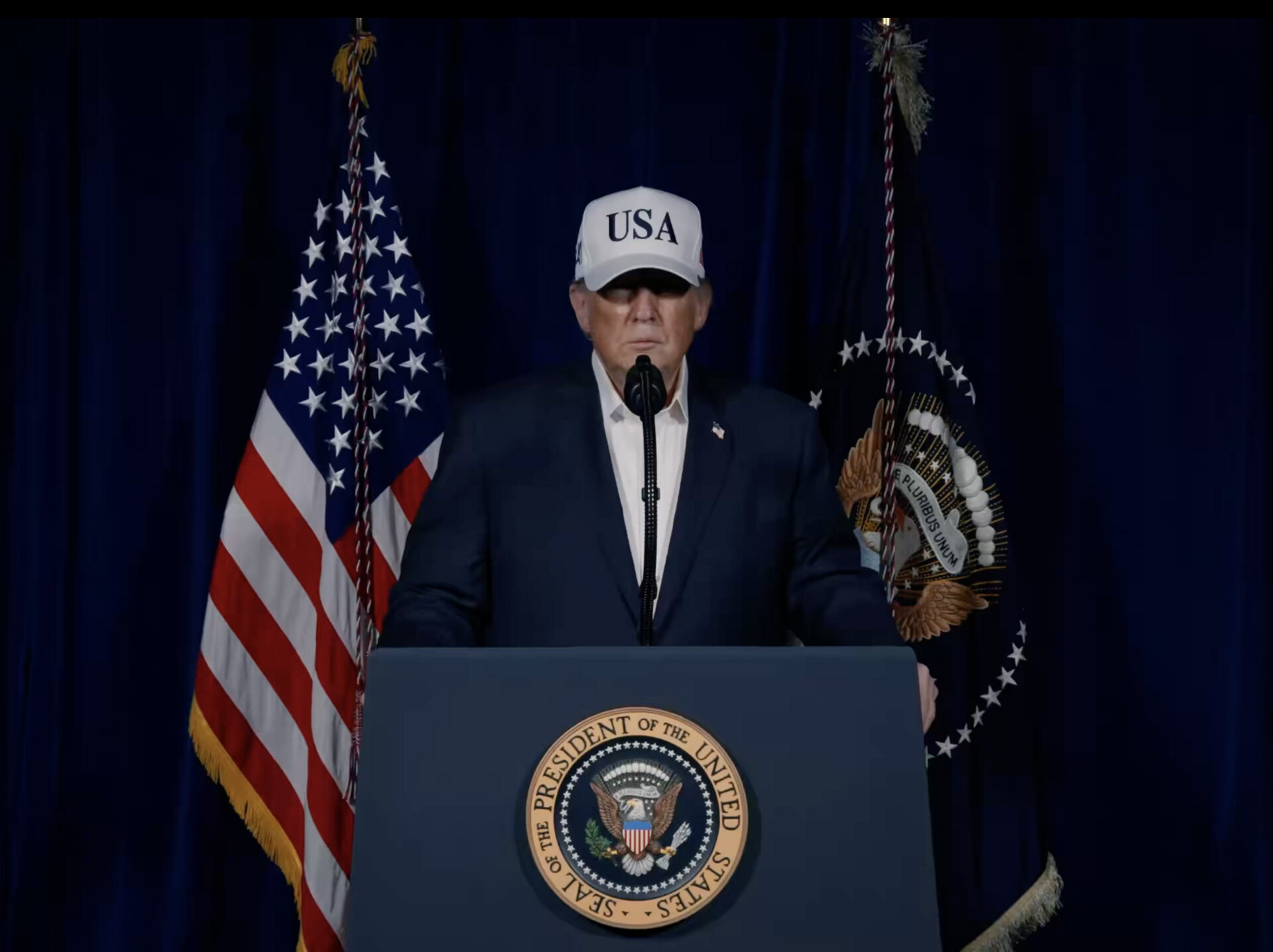

DHAHRAN — Brent crude fell 4.2 percent to $89.15 per barrel in extended trading on June 11 after President Trump declared from the Oval Office that the United States had made “a great settlement of the war with Iran,” with documents in “pretty final shape.” Saudi Arabia, which Trump listed among 12 nations that had approved “both concept and great detail” of the deal on Truth Social hours later, issued no public statement in response.
The drop — the steepest single-session decline since the war began — pushed Brent below the $94 per barrel consolidated fiscal breakeven that Bloomberg Economics calculates for Saudi Arabia when Public Investment Fund obligations are included. At current production volumes of approximately 8 million barrels per day, the spread between the June 11 closing price and the full PIF-inclusive breakeven of $108–111 per barrel represents a daily revenue shortfall of more than $150 million. The EIA’s June baseline, which assumed Hormuz would remain closed, projected Brent at $105 for June and July. Markets moved $16 per barrel below that projection in 48 hours.
Table of Contents
What Markets Priced on June 11
Brent settled the regular session at $90.38 per barrel, down roughly 3 percent, before sliding further to $89.15 in after-hours trading — the lowest level in nearly two months, according to CNBC. WTI closed at $87.61, a decline of 4.04 percent. Both benchmarks moved within minutes of Trump’s Oval Office remarks, which CBS News broadcast live.
Trump’s June 12 Truth Social post expanded the claim. He listed Saudi Arabia, the UAE, Qatar, Turkey, Pakistan, Bahrain, Kuwait, Jordan, Egypt, Israel, and others among nations that had approved the deal, a post reported by The Hill and CNBC. Saudi Arabia’s Ministry of Foreign Affairs did not respond, continuing a pattern of silence on deal-related developments that has persisted through the entire sequence of Trump’s “approver” designations.
The denial escalated on June 12 when the White House named Vice President Vance to fly to Geneva with four C-17 transport aircraft for a Sunday signing ceremony — while Fars News Agency, citing Iran’s negotiating team, declared that no MOU text had been approved and Khamenei had likely not authorized the deal.
Iran’s response was explicit and contradictory. Foreign Ministry spokesman Esmail Baghaei told NBC News that “no agreement has been finalized” and called Trump’s claims “speculative,” adding that “the Americans kept changing their positions.” Tasnim News Agency, affiliated with the IRGC, stated Iran “has not approved any text” for the memorandum of understanding and described the negotiations as “an effort to sow discord within Iran.”
The Middle East briefing 3,000+ readers start their day with.
One email. Every weekday morning. Free.
“Reports regarding an agreement are speculative, and nothing has been finalized.”
— Esmail Baghaei, Iranian Foreign Ministry spokesman, June 11 2026 (NBC News)
The 4.2 percent intraday decline approached the magnitude seen during the 2019 Trump-Iran cooling periods, when each de-escalation signal removed $4–7 per barrel of geopolitical premium from oil prices.
The Revenue Gap at $89
The severity of the fiscal impact depends on which obligations are included in the breakeven calculation.
| Measure | Breakeven ($/bbl) | Gap to Brent | Source |
|---|---|---|---|
| Central government only | $86.60 | +$2.55 | IMF |
| Consolidated (incl. PIF obligations) | $94.00 | −$4.85 | Bloomberg Economics |
| Full PIF capital expenditure | $108–111 | −$19 to −$22 | Bloomberg Economics / The Middle East Insider |
Saudi Arabia produced roughly 8 million barrels per day in June, down 23 percent from the pre-war level of 10.1 million bpd, according to CNBC and OPEC data. At that volume, every dollar per barrel below the PIF-inclusive breakeven costs the treasury approximately $8 million per day. A $19–22 shortfall produces a daily gap of $152–176 million.
The Q1 2026 deficit had already signaled the scale of the structural problem. Saudi Arabia ran a deficit of SAR 126 billion ($34 billion) in the first three months — 76 percent of the full-year target of SAR 165 billion ($44 billion), according to Al Jazeera. Goldman Sachs analyst Farouk Soussa projected the full-year deficit at 6 to 6.6 percent of GDP, or SAR 300–330 billion, roughly double the government’s published forecast.
The EIA’s June 2026 Short-Term Energy Outlook had projected Brent averaging $105 per barrel for June and July, assuming the Strait of Hormuz “remains closed to most shipping traffic in the near term.” At 8 million bpd, the $16 spread between the EIA’s Hormuz-closed projection and the June 11 close translates to approximately $128 million per day in revenue that the EIA’s model assumed Saudi Arabia would collect. That assumption expired with a single Oval Office statement.
Is Hormuz Open or Closed?
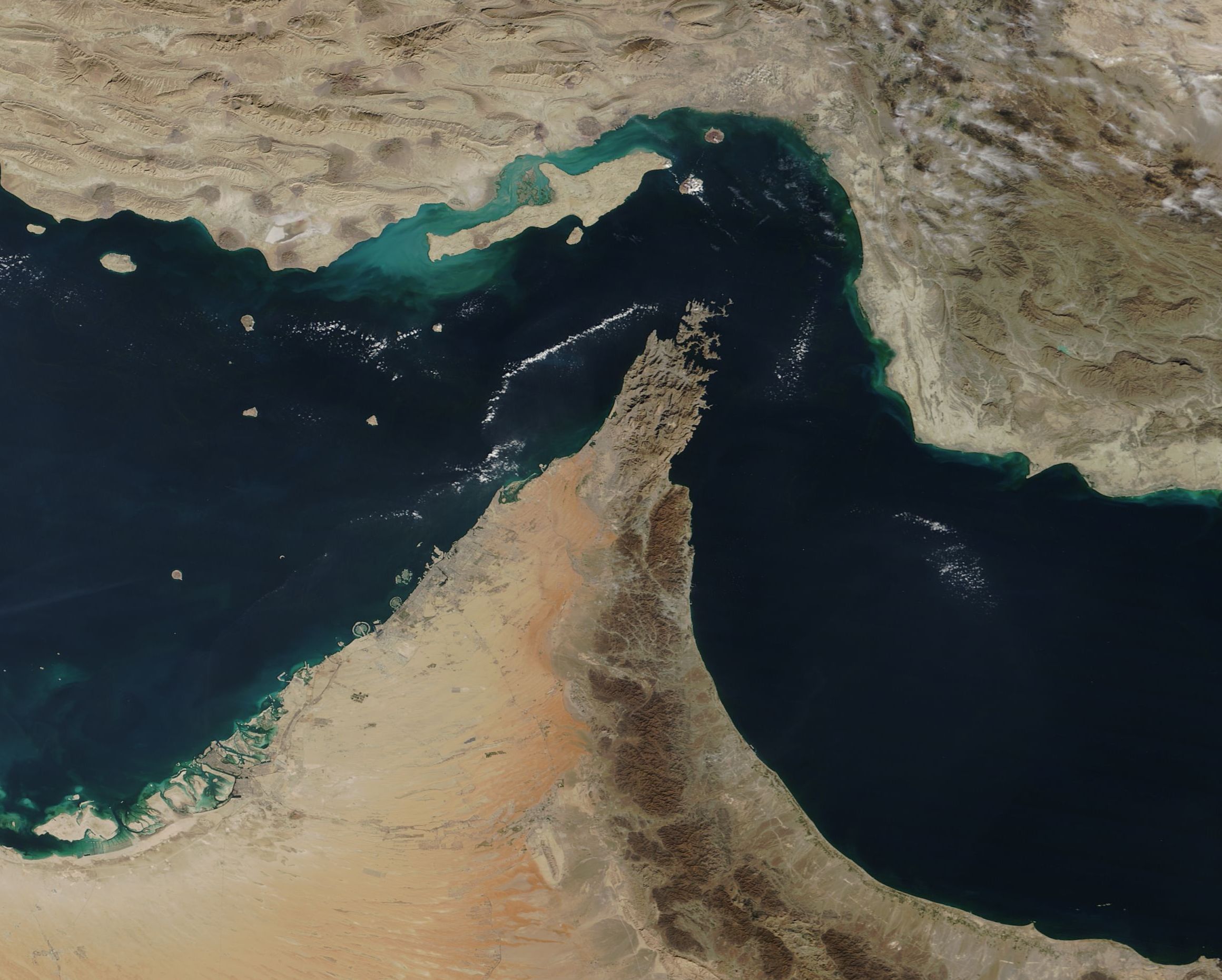
The IRGC declared the Strait of Hormuz “closed to all vessels” on June 11, in a statement carried by Business Standard: “Effective immediately, due to insecurity in the region, the Strait of Hormuz is declared closed to all vessels, including oil tankers and commercial ships. Any vessel attempting to transit the strait will be targeted.” CENTCOM contradicted the declaration the same evening. “Commercial ships are continuing to transit in and out of the Strait of Hormuz tonight,” a CENTCOM spokesperson told Al Jazeera.
Tanker data suggests the IRGC’s declaration reflects operational reality more closely than CENTCOM’s reassurance. Daily transits have fallen from 100-plus ships pre-war to fewer than 10, with only 191 vessels crossing in all of April, per CNBC’s tanker tracker. The strait has functioned as a contested waterway since the war began, regardless of formal declarations.
“Effective immediately, due to insecurity in the region, the Strait of Hormuz is declared closed to all vessels, including oil tankers and commercial ships. Any vessel attempting to transit the strait will be targeted.”
— IRGC statement, June 11 2026 (Business Standard)
The gap between the two claims defines the pricing problem. If Hormuz is functionally closed — and the tanker data supports that reading — then the geopolitical premium should hold near the EIA’s $105 baseline. If Trump’s deal narrative is credible and Hormuz reopens, the premium collapses. Markets chose the second interpretation on June 11. Tasnim’s insistence that the strait “would not return to pre-war levels of travel” did not register as a price signal.
The EIA projected Brent averaging $79 per barrel in 2027 once Hormuz flows fully resume. The June 11 close of $89.15 sits almost exactly between the closed-strait forecast of $105 and the open-strait forecast of $79. The market has priced half a deal — the half that lowers oil prices — without any physical change in the strait’s operating status.
What Happened to the Wartime Premium?
Goldman Sachs identified a counterintuitive dynamic earlier in the conflict. Despite Saudi production falling 23 percent and Hormuz choking to a fraction of pre-war traffic, “weekly oil revenue rose 10 percent relative to pre-war levels in Saudi Arabia,” analyst Farouk Soussa told gCaptain. The war-risk premium and supply disruption more than compensated for lost volume. Saudi Arabia was earning more from fewer barrels.
That arithmetic depended on Brent holding above $100. At the EIA’s $105 Hormuz-closed baseline, Saudi Arabia could sustain reduced production without fiscal catastrophe because price compensated for volume. The 10 percent revenue gain Soussa identified required the geopolitical premium to remain intact. Trump’s Oval Office statement compressed exactly that premium — enough, at $89.15, that the wartime revenue advantage disappears.
Aramco’s own pricing had already reflected weakening demand before the futures market moved. According to Argaam, the July Official Selling Price for Arab Light crude to Asia was set at a $9.50 premium over Dubai/Oman — down from $15.50 in June and $19.50 in May, a $6 per barrel reduction in a single month.
| Month | Premium ($/bbl) | MoM Change |
|---|---|---|
| May | $19.50 | — |
| June | $15.50 | −$4.00 |
| July | $9.50 | −$6.00 |
Aramco’s pricing committee would have finalized the July figure before Trump’s June 11 statement. The combined effect — a falling benchmark and a collapsing OSP premium — means Saudi per-barrel revenue is declining faster than Brent’s headline number suggests.
Insurance markets have not repriced. The Joint War Committee’s reclassification of the Gulf remains in effect. War-risk premiums on tanker coverage have not declined. The physical infrastructure of the Hormuz closure — IRGC patrol boats, the shoot-on-sight declaration, mine-laying capacity — has not changed. Only the futures market moved, and it moved on words. What the futures market did not price is the structural component that persists regardless of deal outcome: Iran’s Hormuz service fee regime, which collects approximately $1 per barrel through the PGSA on every cargo transiting the Qeshm-Larak corridor. At pre-war Saudi export volumes, that toll costs Riyadh roughly $2 billion annually — a structural drain that no deal announcement has so far required Iran to dissolve.

Seventy-Two Hours to Sadara’s Deadline
The oil price decline arrived 72 hours before the June 15 expiration of Sadara Chemical Company’s $3.7 billion debt grace period. All 26 of Sadara’s Jubail units have been offline since March. Aramco holds $2.405 billion of the debt and Dow Chemical holds $1.295 billion, with 25-plus lender banks holding the remainder. No creditor communication has been publicly reported, and neither Reuters, Bloomberg, nor the Financial Times has covered the June 15 deadline.
Aramco’s capacity to backstop Sadara depends on cash flow now under direct pressure. Aramco paid a $21.89 billion dividend on June 9, reducing post-dividend cash to $53.3 billion from $75.2 billion, per company disclosures. Free cash flow of $18.6 billion covers the dividend at a ratio of 0.85x — below 1.0 — meaning Aramco is drawing on reserves to maintain shareholder payments at current production and price levels.
A sustained Brent price near $89 compresses Aramco’s discretionary cash further. The company’s ability to absorb Sadara’s obligations, fund PIF capital calls, and maintain its dividend simultaneously narrows at price levels $19–22 below PIF-inclusive breakeven. The June 15 deadline arrives with Aramco’s balance sheet under more strain than at any point since the war began.
On June 12, Brent fell a further 3.83% to $84.35 on Trump’s ABC News deal claim — while the IRGC was simultaneously firing on Hormuz shipping. Trump says a deal could come this weekend; Sadara’s creditors need an answer Monday. Geneva Will Not Reopen Jubail analyzes why the MOU phase one has no provisions on Sadara’s debt service, Jubail’s operating status, or the Hormuz reopening timeline Aramco’s guarantors would need.
Background
The pattern of deal narratives depressing oil prices independent of physical supply conditions has precedent in both the current conflict cycle and earlier Iran negotiations. During the 2015 JCPOA talks, deal anticipation acted as a price depressant before any barrels returned to market. Brent fell from above $60 in mid-2015 to below $30 by January 2016 — driven partly by the expectation, rather than the reality, of Iranian supply coming online.
The 2019 Trump-Iran de-escalation signals followed the same mechanism. The premium returned when tensions re-escalated, but the fiscal damage during each trough was immediate: barrels sold at $58 cannot be re-sold at $65 the following week.
OPEC+ offers no structural cushion for this price environment. The UAE departed the cartel in May 2026, and the remaining members voted to raise output by 188,000 barrels per day for June, per CNBC. Al Jazeera described the increase as “symbolic” because Hormuz-constrained producers cannot physically increase throughput regardless of quota decisions — production ceilings are set by pipeline and terminal capacity, not by OPEC+ agreements. The frozen-asset negotiations at the center of Trump’s deal claim proceed without disclosed Saudi input, and the price moves against Riyadh whether the deal materializes or not.
Frequently Asked Questions
Had Saudi oil revenue actually declined during the war before this week?
No. Goldman Sachs estimated that Saudi weekly oil revenue rose 10 percent relative to pre-war levels despite a 23 percent production drop, because Brent’s war-risk premium more than compensated for lower volumes. The June 11 price collapse was the first event in the conflict to threaten that equilibrium. The threshold at which volume losses overtake price gains falls somewhere between $95 and $100 per barrel at 8 million bpd — a range Brent broke through on a single trading session.
What happens if Brent stays near $89 through year-end?
Goldman Sachs projects a full-year Saudi deficit of SAR 300–330 billion under conditions similar to the current price and production environment — roughly double the government’s published forecast of SAR 165 billion. At $89 and 8 million bpd, the state would likely require additional sovereign debt issuance or acceleration of PIF asset sales to cover the shortfall. The PIF’s cash position stood at a six-year low of $15 billion before the June 11 drop, limiting its capacity to absorb capital calls from giga-projects already under financial stress.
Could OPEC+ cut production to support prices?
The standard tool — coordinated production cuts — is structurally impaired in this cycle. Saudi Arabia is producing 8 million bpd, down from 10.1 million, not by choice but because Hormuz constraints and East-West Pipeline capacity limit export volumes. A voluntary cut from a baseline already 23 percent below capacity would reduce revenue without meaningfully tightening global supply, because the barrels Saudi Arabia cannot ship are already absent from the market. The UAE’s May departure from the cartel weakens coordination further, and the remaining OPEC+ members lack both the political cohesion and the spare capacity to execute a cut large enough to offset the evaporation of a $16 per barrel geopolitical premium.
Why did Aramco cut its OSP if the war premium was supporting revenue?
Aramco’s Official Selling Price reflects buyer-specific economics, not the global Brent benchmark. The $10 per barrel erosion from May’s $19.50 to July’s $9.50 was driven by compressed Asian refining margins, softening demand from Chinese teapot refineries that account for a growing share of marginal purchases, and the higher freight and insurance costs that Saudi crude incurs when rerouted via the Yanbu terminal and around the Cape of Good Hope rather than through Hormuz. Aramco adjusts OSPs to retain market share against competing grades — Iraqi Basrah Medium, UAE Murban, and Russian ESPO — all of which face their own Hormuz or sanctions-related logistics costs.
What is the EIA’s price forecast if a deal reopens Hormuz?
The EIA’s June 2026 Short-Term Energy Outlook projects Brent averaging $79 per barrel in 2027 under a scenario where Hormuz flows fully resume. That price would fall below the IMF’s $86.60 central-government breakeven, pushing Saudi Arabia into deficit on the narrowest fiscal measure — the one that excludes PIF spending entirely. For Saudi fiscal planning, a deal that successfully reopens Hormuz and normalizes oil trade produces a lower price environment than the current war-constrained market. At $79 per barrel, every fiscal measure — including the narrowest — shows a deficit. The war kept the price above the IMF breakeven. Peace would not.