
RIYADH — The IRGC’s universal shoot-on-sight order closing the Strait of Hormuz to all vessels was issued before Donald Trump told Fox News that the April 8 ceasefire had become “the most violated ceasefire in the history of the world.” The order that closes the strait and the declaration that ends the diplomatic framework arrived in the same 24-hour window, and Saudi Arabia had input into neither.
The Khatam al-Anbiya Central Headquarters — Iran’s highest operational command — framed the June 10–11 closure as a military response to “fresh unprovoked American attacks,” not as a diplomatic instrument. A closure held as a bargaining chip can be traded back. This one was issued in response to combat, and the only framework that might have reversed it is the one Trump declared collapsed.
Saudi Arabia was not party to the ceasefire, did not participate in the Islamabad talks that produced it, and holds no seat on the naval coalition enforcing freedom of navigation. It faces indefinite loss of roughly 2.5 million barrels per day of export capacity, a $3.7 billion Sadara Chemical debt deadline in four days, and an Aramco quarterly dividend that already exceeds free cash flow — with no diplomatic channel to any party whose actions will determine when the strait reopens. Trump’s June 11 announcement — claiming a settlement Iran denied within hours — repeated the April 8 pattern at higher structural stakes: this time Saudi Arabia had signed a GCC collective defense communiqué that morning, meaning the ceasefire-that-was-not left Riyadh bound to new obligations it cannot fulfill at oil prices its fiscal breakeven cannot survive. How the June 11 announcement compounded that trap is examined in full.
Table of Contents
- The Order That Preceded the Declaration
- What Did Saudi Arabia Lose When the Ceasefire Collapsed?
- Why Does the Collapse Remove Iran’s Incentive to Negotiate?
- How Does Indefinite Closure Break Yanbu’s Pricing Power?
- The Coalition Without a Saudi Entry Point
- Aramco’s Dividend Arithmetic
- What Happens to Sadara on June 15?
- Can Any Surviving Diplomatic Track Rebuild What Collapsed?
- Frequently Asked Questions
The Order That Preceded the Declaration
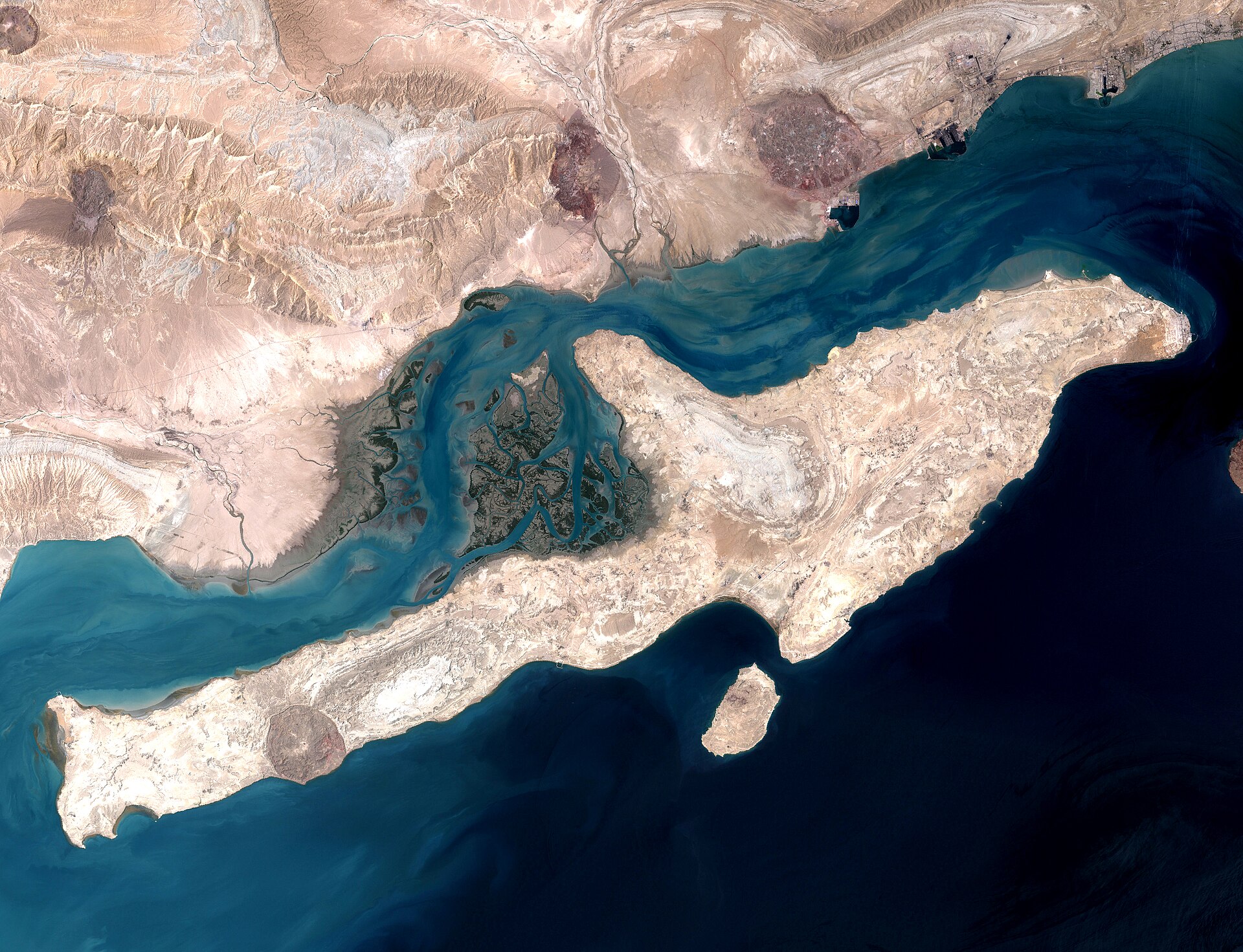
The escalation sequence that produced the universal Hormuz closure began on June 9, when an armed Iranian Shahed drone struck a US Army Apache helicopter patrolling over the Strait of Hormuz. CBS News confirmed the Shahed strike through two sources. The crew of two was rescued by a US sea drone.
US Central Command responded with self-defense strikes targeting Iranian air defenses, ground control stations, and surveillance radar sites near the strait. Trump told Fox News that 49 Tomahawk cruise missiles struck targets inside Iran, some within 40 miles of Tehran. Iran retaliated by striking US bases in three capitals — NSA Bahrain, Ali Al-Salem in Kuwait, and Al-Azraq in Jordan — wounding 15 Americans at Ali Al-Salem.
The Khatam al-Anbiya order followed. “From this moment, due to insecurity in the region, the Strait of Hormuz is declared closed to the passage of all vessels, including oil tankers and commercial ships, and any traffic will be targeted,” the statement read, per PressTV. A second warning extended the exclusion zone: “We warn that no vessel should depart from its anchorage in the Persian Gulf or the Sea of Oman. Any approach to the Strait of Hormuz will be regarded as cooperation with the enemy.”
The Middle East briefing 3,000+ readers start their day with.
One email. Every weekday morning. Free.
The June 10–11 order superseded the March 27 restriction, which applied selectively to vessels heading to US, Israeli, and allied ports. The new order is universal — every flag, every destination, every cargo type. It was issued before Trump described the ceasefire as collapsed to Fox News correspondent Trey Yingst. Iran positioned its military closure as an accomplished fact. Trump’s declaration arrived as a characterization of a condition Iran had already imposed.
Saudi Arabia made no public statement on the Apache downing, the CENTCOM retaliatory strikes, the three-capital Iranian retaliation, or the Khatam al-Anbiya order.
What Did Saudi Arabia Lose When the Ceasefire Collapsed?
Saudi Arabia lost the last diplomatic framework within which Hormuz’s reopening could theoretically be negotiated. The April 8 ceasefire was the only multilateral agreement referencing the conflict, and Gulf states had insisted on unconditional reopening of the strait as a condition for its extension. Trump’s declaration that the ceasefire has collapsed removes the forum for that insistence.
The ceasefire was brokered through Islamabad, announced by Pakistani Prime Minister Shehbaz Sharif: “Islamic Republic of Iran and the United States of America, along with their allies, have agreed to an immediate ceasefire everywhere including Lebanon and elsewhere, EFFECTIVE IMMEDIATELY.” Saudi Arabia was part of a support group alongside Pakistan, Egypt, and Turkey, but was not a direct participant in the talks. The International Crisis Group documented the distinction: the Kingdom “participated in a group also including Pakistan, Egypt and Türkiye that supported Pakistan’s brokering of the 8 April ceasefire, though these states were not directly involved in the Islamabad talks.”
The ceasefire did not reopen Hormuz. Al Jazeera reported “Shipping in Strait of Hormuz at a Standstill Despite US-Iran Ceasefire” on April 10 — two days after the announcement. Bloomberg captured the disconnect on April 14: “A Ceasefire Begins, Negotiations End and Hormuz Is Blockaded.” The same day, Vice President Vance announced the Islamabad talks’ failure after 21 hours: “The bad news is that we have not reached an agreement. And I think that’s bad news for Iran much more than it’s bad news for the U.S. … They have chosen not to accept our terms.” The US announced a naval blockade of Iranian ports within hours of Vance’s statement.
The ceasefire existed for 64 days — from April 8 to June 11. During that period, Hormuz remained closed, two additional IRGC closure orders were issued, and the selective-permit system that allowed 24 vessels through under coordination gave way to a universal shoot-on-sight posture. When Trump went on Fox News and declared it “the most violated ceasefire in the history of the world,” he removed the only framework around which new talks could organize.
Why Does the Collapse Remove Iran’s Incentive to Negotiate?
Before June 10, Iran operated a selective-permit system for Hormuz transit. PressTV reported on June 2 that 24 vessels had passed through the strait under IRGC coordination, presenting the arrangement as sovereign maritime governance rather than a blockade. The framing preserved the closure as a negotiable position — something that functions as a permit system can be expanded through diplomacy.
The Khatam al-Anbiya order collapsed that distinction. It was issued by Iran’s highest operational command “due to insecurity in the region” — explicitly as retaliation for US strikes, not as a diplomatic position to be bargained away. Kazem Gharibabadi, Iran’s Deputy Foreign Minister, reinforced the framing: “Iran does not attach any value to this political and hypocritical European move and will continue its strategy of maintaining sovereignty and exercising sovereign rights over the Strait of Hormuz.”
| March 27 Order | June 10–11 Order | |
|---|---|---|
| Issuing authority | IRGC Navy | Khatam al-Anbiya Central Headquarters |
| Scope | Vessels bound for US, Israeli, and allied ports | All vessels — every flag, destination, and cargo type |
| Framing | Maritime enforcement | Military self-defense (“due to insecurity in the region”) |
| Trigger | US alliance structure | US combat strikes on Iranian territory |
| Transit system | Selective permits — 24 vessels transited under IRGC coordination (PressTV, June 2) | “Any traffic will be targeted” (Khatam al-Anbiya, June 10–11) |
The June 10–11 order elevated the closure from a selective maritime restriction to a military posture under Iran’s highest operational command. Trump’s collapse declaration arrived after that elevation was complete. With no ceasefire to anchor future talks, Iran has no framework within which to offer the strait’s partial reopening as a concession. Newland Chase assessed before the collapse declaration that “routine Hormuz transit is unlikely to resume for the remainder of 2026.”
How Does Indefinite Closure Break Yanbu’s Pricing Power?
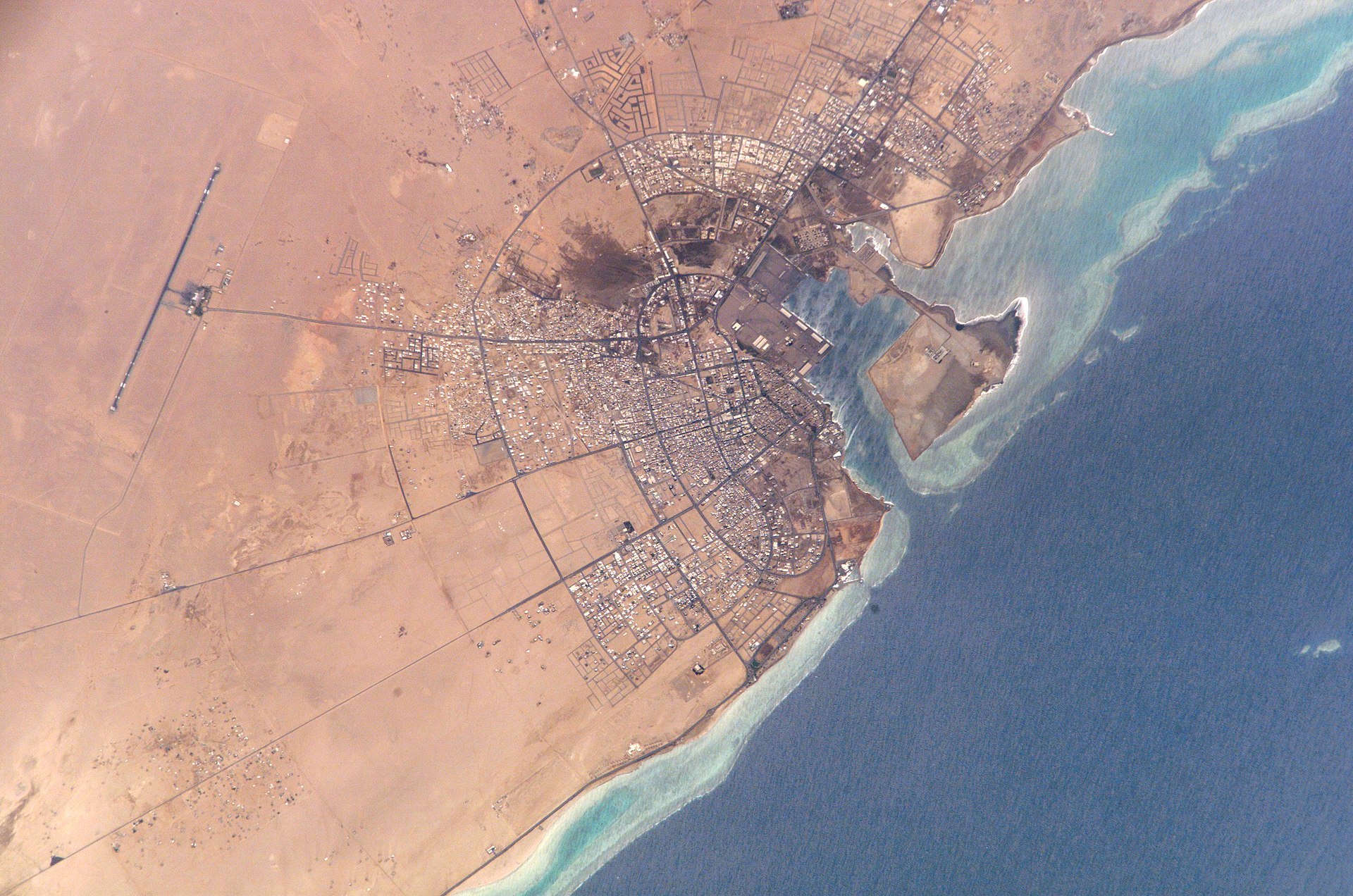
The East-West Pipeline carries 7 million barrels per day from the Eastern Province to Yanbu on the Red Sea coast, but Yanbu’s two export terminals cap sustainable throughput at 4.0–4.5 million barrels per day. The bottleneck is port loading capacity, not pipeline bandwidth, per the useluminix.com economic impact analysis from April 2026. With Hormuz closed indefinitely, roughly 2.5 million barrels per day of Saudi crude has no export route.
The pricing damage is already visible. Aramco’s Arab Light Official Selling Price for Asia stood at a record +$19.50 per barrel over Oman/Dubai for May 2026 loadings. By June, the OSP was cut to +$15.50 — still elevated, but the May premium had created an inversion: the OSP sat $20.50 per barrel above spot. Buyers were being asked to pay a premium for crude arriving through routes whose war risk insurance costs had multiplied by a factor of 4,000, according to The National. Coverage that averaged 0.25 percent of vessel value before the conflict surged to 3–8 percent — $3 million to $8 million per large tanker transit.
Asian refiners — the primary buyers of Saudi crude — can calculate the all-in cost of a Yanbu-routed cargo: the OSP premium, plus the insurance surcharge, plus the risk of Houthi disruption in the Bab el-Mandeb on the Asia-bound leg. At some premium level, alternatives from West Africa, the Americas, or the Russian Pacific fleet become cheaper despite longer transit times. Aramco’s pricing power depends on volume that Yanbu cannot physically deliver. That volume problem carries an additional structural layer: Iran’s navigational service fees — approximately $1 per barrel collected through the PGSA on every cargo transiting the Qeshm-Larak corridor — mean that every barrel Yanbu cannot carry is one that would otherwise pay Iran a toll Saudi Arabia has no mechanism to contest.
The global bypass infrastructure — every non-Hormuz route combined — can offset roughly 25 percent of normal Hormuz flows, per the same useluminix.com analysis. Yanbu is the single largest component of that 25 percent, and it is already at capacity.
The bypass itself feeds into a second chokepoint. Seventy to 75 percent of Yanbu’s Asia-bound exports — the dominant share of Saudi crude trade — must transit the Bab el-Mandeb strait, where Houthi forces have imposed a “complete and total ban” on Israeli-linked maritime navigation. Chatham House assessed in May 2026: “The Houthis are the one member of the Axis of Resistance that grew stronger over the last year, but airstrikes will not deter their attacks on Red Sea shipping or influence Tehran.”
The Coalition Without a Saudi Entry Point
When the UK and France organized a Hormuz naval coalition in April 2026, Saudi Arabia was absent. Chatham House documented the exclusion’s two-sided logic: “Riyadh chose to stay out to avoid Iranian retaliation against Yanbu and Red Sea infrastructure, and London and Paris chose to build outside the US-led Combined Maritime Forces where Saudi Arabia holds existing membership, creating a parallel institution with no Saudi entry point.”
Saudi Arabia belongs to the Combined Maritime Forces — the existing multilateral framework — but the coalition enforcing freedom of navigation in Hormuz was built outside it. At the GCC-Canada ministerial in Manama on June 11, Saudi Arabia asked Canada to help defend the strait, producing communiqué language about “ramping up international efforts to protect maritime lanes.” Canada is not a member of the UK-France coalition.
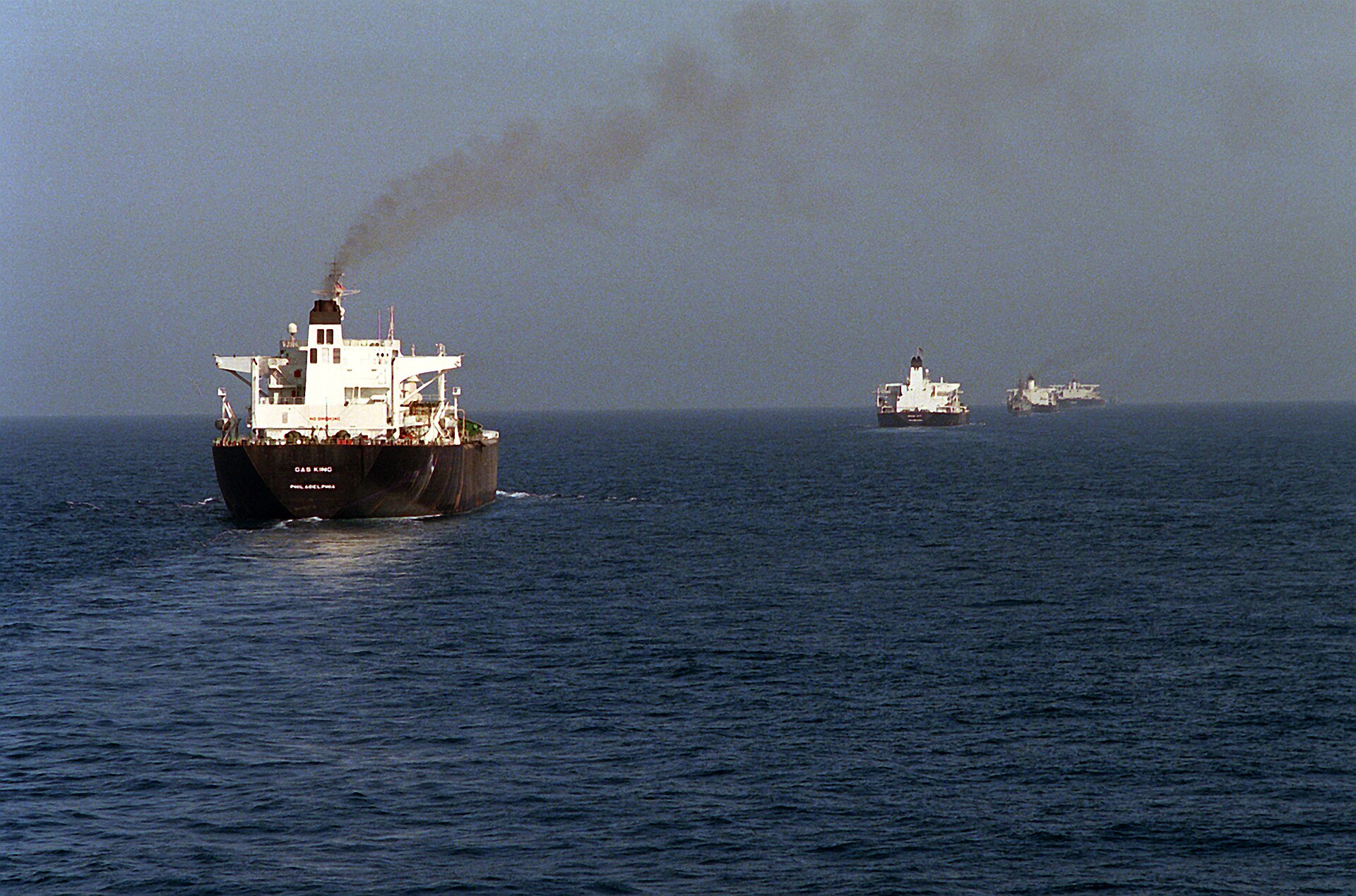
The 1987 precedent clarifies the structural constraint. Operation Earnest Will — the largest naval convoy operation since World War II — reflagged 11 Kuwaiti tankers as American to deter Iranian attacks during the tanker war. The operation required Kuwait to furnish two sea barges as mobile bases because deploying US mine-sweeping units ashore in Saudi Arabia “proved politically prohibitive.” In 1987, Iran was attacking Gulf shipping selectively — individual tankers, specific flags. The June 2026 IRGC order targets all vessels universally. Saudi Arabia still has no Status of Forces Agreement with the United States — the same structural prohibition that blocked basing 39 years ago.
Aramco’s Dividend Arithmetic
Aramco paid $21.89 billion in quarterly dividends on June 9 — against Q1 free cash flow of $18.6 billion. The coverage ratio of 0.85 was the first reported quarter in which FCF fell below the dividend. Cash reserves stood at approximately $53.3 billion after the distribution, down from $75.2 billion.
The June 9 dividend was calibrated before the universal Hormuz closure. Q2 revenue will reflect the full weight of the Yanbu bottleneck — the stranded crude above the terminal ceiling generating zero revenue — compounded by an OSP that already inverted $20.50 per barrel above spot in May and war risk premiums that added $3 million to $8 million per tanker transit. The Q1 coverage ratio of 0.85 was calculated against a partial quarter of selective closure — 24 vessels still passing under IRGC coordination, a permit system still functioning. A full quarter of universal closure, in which “any traffic will be targeted,” produces different arithmetic.
Aramco’s dividend is not a corporate decision. It is the fiscal mechanism through which the Saudi government funds its budget, services PIF’s capital commitments, and maintains the social contract that underwrites domestic stability. Cutting it requires either a royal directive or a formal revision of the Kingdom’s fiscal assumptions — a public acknowledgment that the war has broken the revenue model. No such revision has been announced.
If Aramco maintains the $21.89 billion quarterly payout through the indefinite closure, each quarter widens the gap between the dividend and the cash flow available to fund it. Goldman Sachs projected Saudi Arabia’s full-year budget deficit at SAR 300–330 billion. The Q1 deficit already stood at 76 percent of that projection.
What Happens to Sadara on June 15?
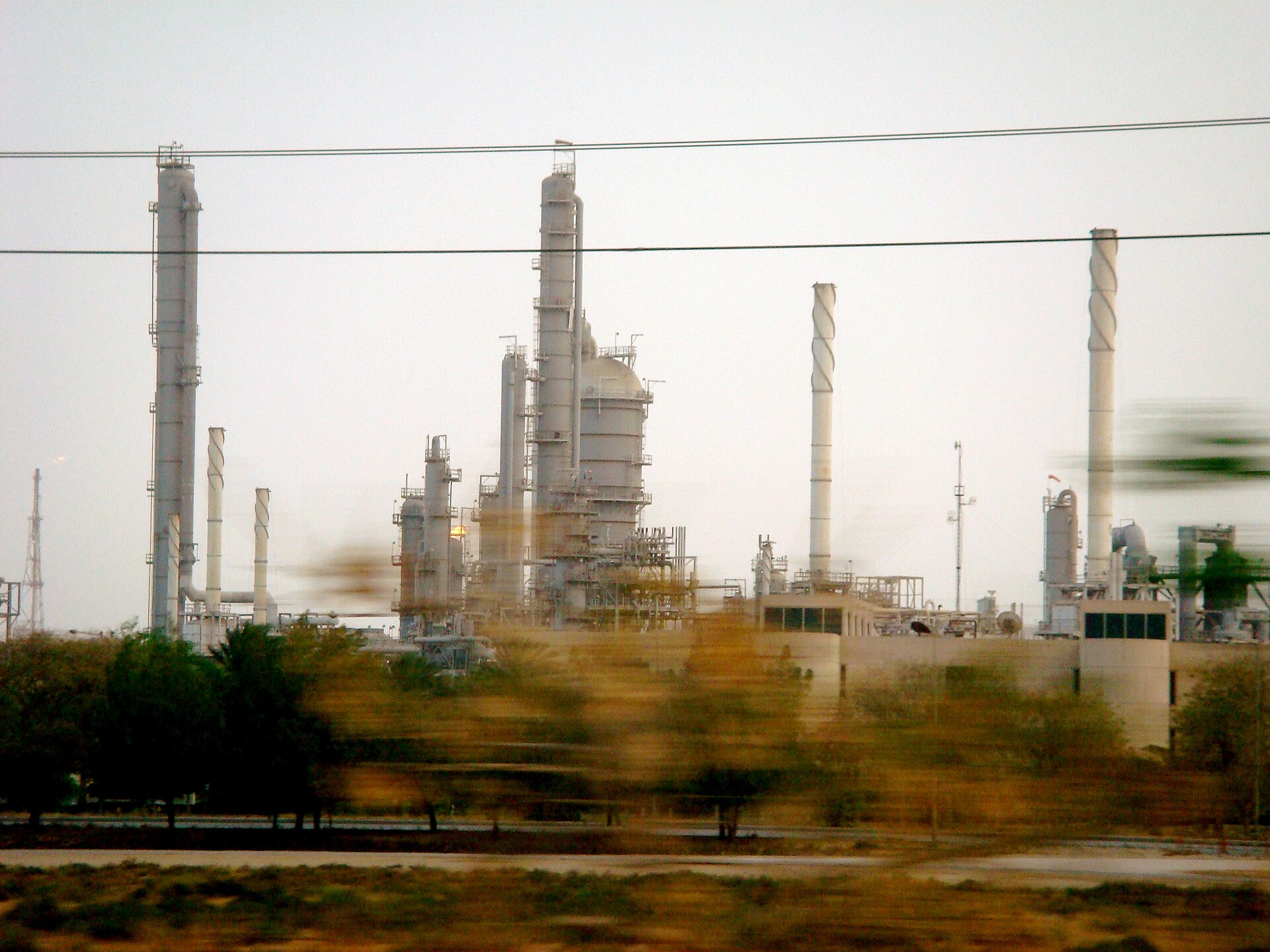
Sadara Chemical Company — the $20 billion Aramco-Dow joint venture in Jubail — has had all 26 production units offline since late March 2026 and is generating zero revenue. Its $3.7 billion in senior debt entered a grace period that expires on June 15, four days from now. Aramco guarantees $2.405 billion of that debt — 65 percent. Dow guarantees $1.295 billion.
Aramco’s public filings since April contain no language addressing the June 15 deadline — no restructuring announcement, no waiver request disclosure, no public creditor communication. The silence extends to the financial press: no Reuters, Bloomberg, or Financial Times coverage of the June 15 expiration has appeared.
| Metric | Value | Source |
|---|---|---|
| Aramco Q1 2026 free cash flow | $18.6 billion | Aramco public filing |
| Q1 2026 quarterly dividend | $21.89 billion | Aramco public filing |
| FCF-to-dividend coverage ratio | 0.85 | Calculated from filing data |
| Cash reserves (post-June 9 dividend) | ~$53.3 billion | Aramco public filing |
| Cash decline (Q4 2025 to post-dividend) | $75.2B → ~$53.3B | Aramco public filing |
| Sadara senior debt (grace expires June 15) | $3.7 billion | Aramco public filing |
| Aramco guarantee share | $2.405 billion (65%) | Aramco public filing |
| Dow guarantee share | $1.295 billion (35%) | Aramco public filing |
| Sadara production units offline | 26 of 26 | Industry reporting |
| Sadara revenue (April–June 2026) | $0 | Industry reporting |
The consortium of more than 25 banks holding Sadara’s senior debt has received no public communication from either guarantor since the units went offline. The June 15 deadline is a grace period expiration, not a maturity — the distinction matters. If the grace period lapses without extension, the debt becomes immediately callable. Aramco’s $2.405 billion guarantee and Dow’s $1.295 billion guarantee convert from contingent liabilities to current obligations.
Jubail sits on the Persian Gulf coast. Sadara’s 26 units were built to export through Hormuz — a strait now closed by universal military order. Even if creditors extend the grace period, and no public filing indicates they will, the production units cannot restart without an export route through a strait whose reopening is no longer attached to any diplomatic framework. The $2.405 billion Aramco guarantee comes due against a balance sheet that is already paying out more than it earns each quarter.
Can Any Surviving Diplomatic Track Rebuild What Collapsed?
Three diplomatic tracks existed before the ceasefire’s collapse. The Oman track served as the formal channel between Tehran and Washington. The Pakistan track functioned as an IRGC back-channel. The Qatar track operated as a parallel mediation effort. None of the three passed through Riyadh, and none survives intact.
The Oman track was threatened directly by Trump. In a May 28 Cabinet meeting, he discussed bombing Oman if it continued brokering an Iran-Oman Hormuz joint-management protocol. Treasury Secretary Bessent followed with financial threats; the Omani ambassador capitulated the same day. Iran’s Deputy Foreign Minister Gharibabadi had described the Iran-Oman draft as being in “final stages.” The Wall Street Journal reported on June 2 that the deeper US demand was for Oman to sever ties with Iran entirely. Iran suspended US message exchanges through Oman on June 1.
The Pakistan track was complicated by Pakistan’s dual role. Interior Minister Naqvi made three trips to Tehran — the most recent carrying two separate letters, one from Prime Minister Shehbaz Sharif through the civilian channel, one from Army Chief Munir directed to Mojtaba Khamenei through the military channel. But Pakistan simultaneously provides 13,000 troops to Saudi Arabia under the Saudi Military Detail Agreement, guarding Eastern Province oil infrastructure. Saudi Arabia cannot contest Pakistan’s freelance diplomacy with Tehran without jeopardizing its own security arrangements in the Eastern Province.
The Qatar track is compromised by Qatar’s financial exposure to Iran — a $6 billion credit line extended on May 25. Qatar’s June 10 Tehran delegation consulted Washington before departing, not Riyadh. The 2023 precedent is instructive: the US re-froze $6 billion in Iranian assets that Qatar had intermediated, informing Iran’s current demand — $12 billion at signing, before any freeze could be reimposed — and its refusal to accept phased release. All three mediation tracks that built the April 8 ceasefire excluded Saudi Arabia from their architecture, and all three are now either closed or compromised.
The ICG framed Saudi Arabia’s position as “trying to keep the ceasefire alive” while insisting on “unconditional reopening of the strait.” The $24 billion in frozen Iranian assets that Tehran demanded as a precondition for Hormuz’s reopening was anchored to the ceasefire framework. No alternative forum for that demand exists. Chatham House’s assessment from May remains operative: “The closure of the Strait has revealed a key vulnerability not only for trade, but also for the success of the country’s Vision 2030 strategy. Now that Hormuz has been closed once, there will always be the risk that it could happen again.”
Frequently Asked Questions
What is the Khatam al-Anbiya Central Headquarters?
Khatam al-Anbiya — “Seal of the Prophets” — is Iran’s unified operational command, established after the 1980–88 Iran-Iraq War to coordinate all service branches: the regular Army, the IRGC, and their respective air and naval components. An order issued at this level represents Iran’s highest military authority and cannot be countermanded by the IRGC Navy or any individual service branch. The previous Hormuz restrictions — the March 27 selective order — were issued by the IRGC Navy alone. The June 10–11 order’s elevation to Khatam al-Anbiya indicates a whole-of-military posture, not a single-service naval operation.
Could the US Navy reopen the Strait of Hormuz by force?
CENTCOM’s self-defense strikes following the Apache downing targeted exactly the infrastructure — air defenses, ground control stations, surveillance radar — that would need to be suppressed for a forced reopening. Iran responded by striking US bases in three countries within hours. The 1987–88 Operation Earnest Will reflagged Kuwaiti tankers as American and required sustained mine-clearing operations over 14 months. The 2026 IRGC order targets “any vessel” regardless of flag — a scope that did not exist in 1987. Saudi Arabia’s roughly 400 remaining PAC-3 MSE interceptors — 14 percent of the pre-war inventory of 2,800 — would need to cover retaliatory strikes on Gulf infrastructure during any forced reopening attempt.
What are Saudi Arabia’s options for increasing Yanbu throughput?
The bottleneck at Yanbu is port loading capacity — berth depth, loading arm count, and vessel turnaround constraints — not the East-West Pipeline, which has 2.5–3.0 million barrels per day of unused bandwidth. Expanding terminal capacity to match the pipeline’s 7 million bpd nameplate would require multi-year port construction under conditions that currently include Houthi operations in the adjacent Red Sea. No expansion project has been announced. Fortune reported the pipeline’s 7 million bpd capacity on March 28, 2026; the gap between pipeline capacity and port throughput has been a known vulnerability since the pipeline’s reactivation.
What was the April 14 US naval blockade of Iranian ports?
Hours after Vice President Vance announced the Islamabad talks’ failure on April 14, the US imposed a naval blockade on Iranian oil export terminals. The blockade targeted Iranian ports while Iran restricted Hormuz transit — creating a mutual closure in which each side blocked the other’s maritime commerce. Reopening Hormuz requires resolving both closures simultaneously: Iran’s shoot-on-sight order and the US blockade of Iranian ports. Neither side has offered to lift its restriction as a precondition for the other’s removal, and the ceasefire that might have sequenced such an exchange has been declared collapsed by the US president himself. The insurance dimension is equally intractable: war-risk premiums require 12 to 36 months of claims-free data before underwriters reduce them, meaning a ceasefire signature would not lower the per-voyage cost of moving Saudi crude for at least four quarters. The escalation extended to Trump threatening to seize Kharg Island — Iran’s primary oil export terminal — before walking back the threat hours later on Fox News.