
RIYADH — Donald Trump told Fox News on June 11 that top Iranian officials had called him directly to request a halt to U.S. strikes on Iran. Within hours, an unnamed Iranian official called the claim “false” — a “cover to evade war.” Saudi Arabia issued no statement on either assertion, and the reason is structural rather than diplomatic: the kingdom has no independent channel to either party that could confirm or deny what happened.
Whether Trump spoke with Iranian officials from the White House Situation Room or fabricated the contact for a television audience, Riyadh occupies the same position. Pakistan has mediated since April 8. Qatar flew a delegation to Tehran on June 10, one day before Trump’s claim, in coordination with Washington. Oman maintained a formal diplomatic channel until Washington threatened to destroy it. Saudi Arabia has, in the language of the ceasefire record, “called for the talks to address all issues” — observer language that no mediator or principal has treated as a claim to a seat at the table.
The day after, Trump named Saudi Arabia in a Truth Social post as one of twelve parties that had “approved” a deal — a characterization that Riyadh did not confirm, deny, or comment on in any public channel.
Table of Contents
- What Did Trump Tell Fox News About His Contact With Iran?
- Iran’s Denial and the Contact-Denial Cycle
- Thirty-Eight Claims and Counting
- Does It Matter Whether Trump’s Call to Tehran Was Real?
- What Would a Deal Require That Saudi Arabia Cannot Negotiate?
- The Qatari Delegation and the Architecture That Bypasses Riyadh
- Can Saudi Arabia Price a Ceasefire It Cannot Verify?
- Frequently Asked Questions
What Did Trump Tell Fox News About His Contact With Iran?
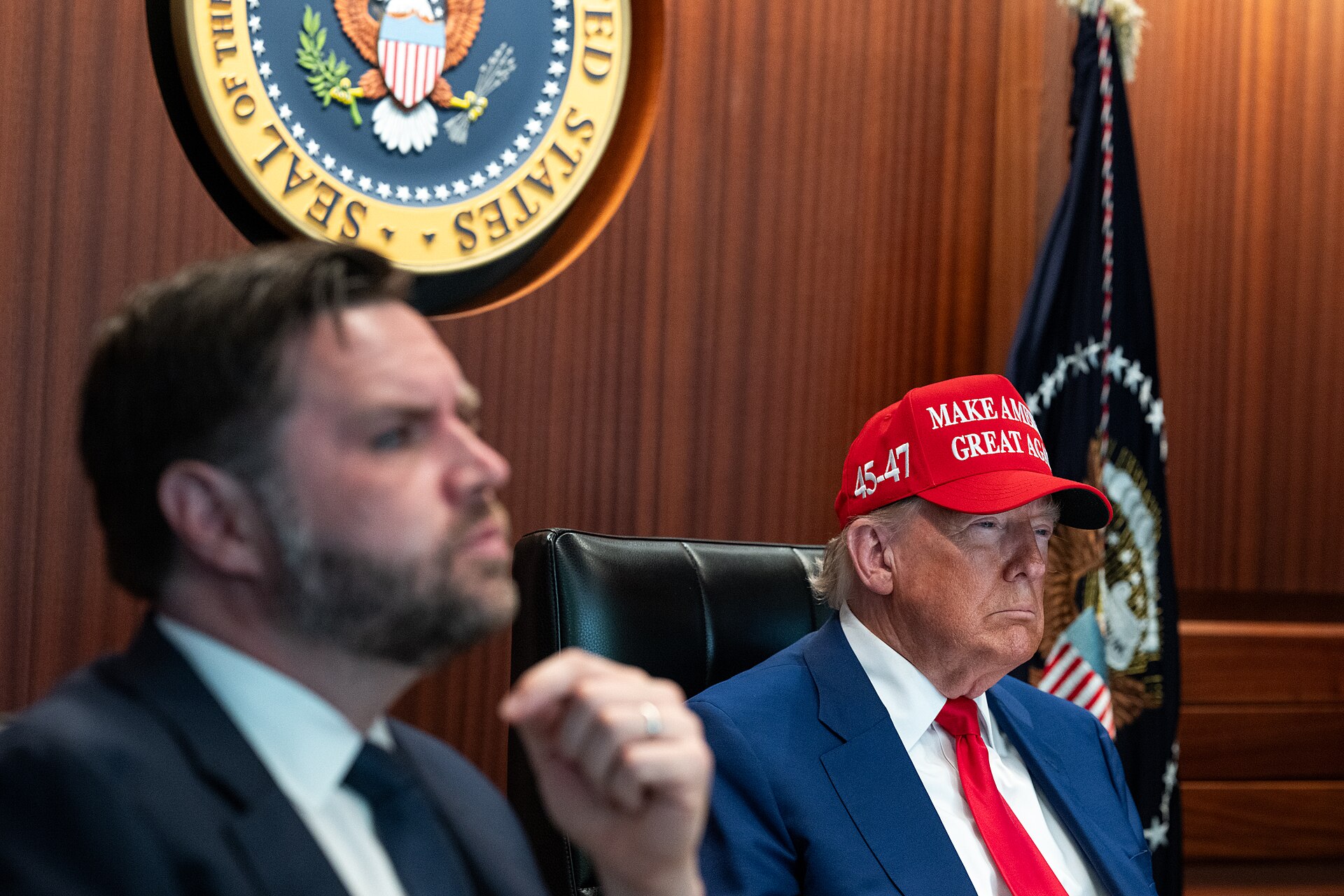
Trump told Fox News on June 11 that Iranian officials had called him directly while he sat in the White House Situation Room with Vance, Kushner, and Witkoff. He said bombing would “stop shortly.” Within hours, Tehran called the claim false. No Saudi official was present, and Riyadh issued no statement.
Trump made the assertion to Fox News chief foreign correspondent Trey Yingst and warned that if Iran did not sign a deal, “we’ll bomb the shit out of them tomorrow night.”
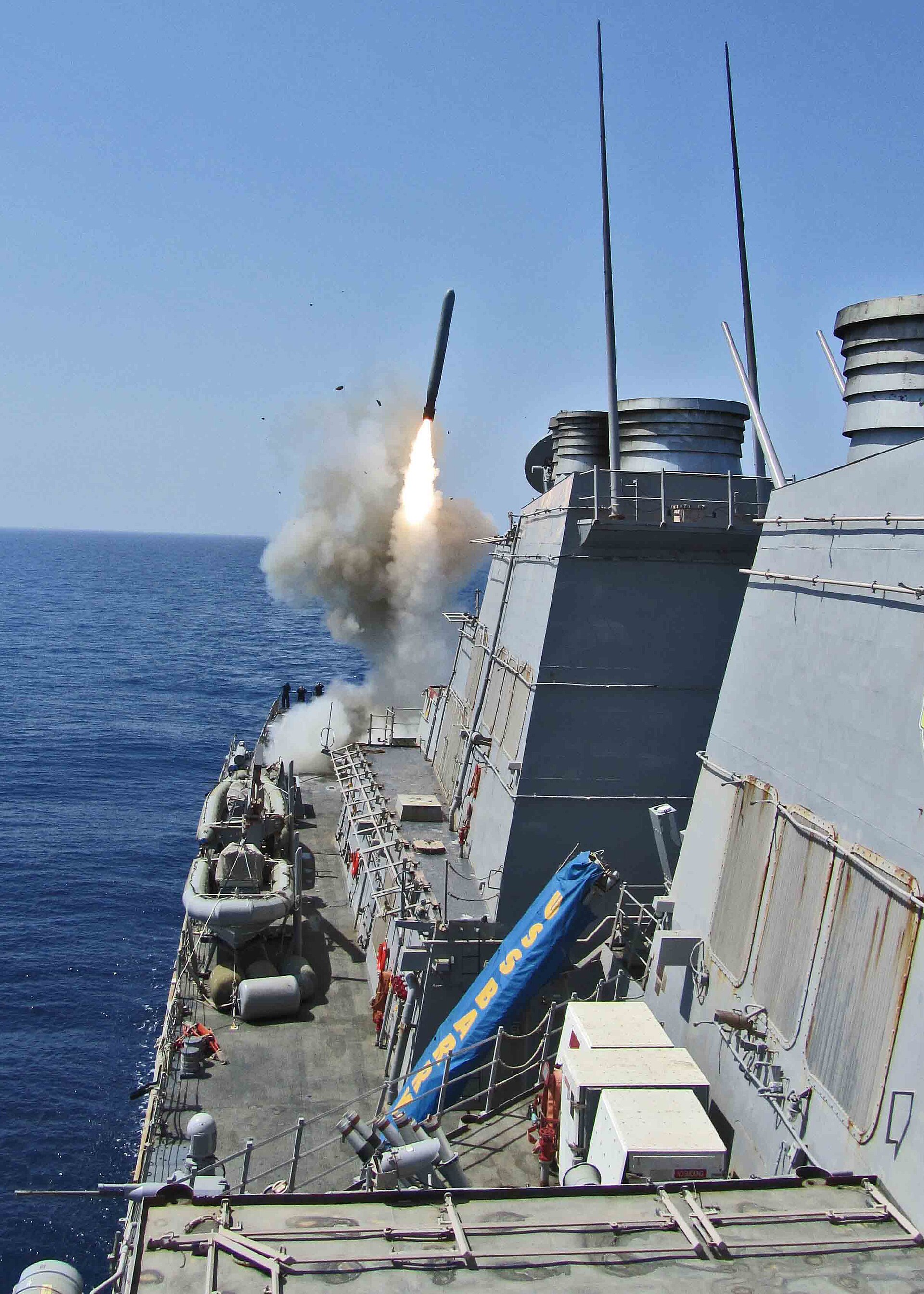
The claim arrived between rounds of live ordnance. CENTCOM had launched strikes on June 11 at 5:15 p.m. ET, targeting Iranian military surveillance capabilities, communication systems, and air defense sites across southern Iran — some as close as 40 miles from Tehran, according to CBS News. Forty-nine Tomahawk cruise missiles were fired from a guided missile destroyer. CENTCOM confirmed completion just after 9 p.m. ET.
The Middle East briefing 3,000+ readers start their day with.
One email. Every weekday morning. Free.
Trump told Yingst he had been close to ordering strikes on Iranian power plants and bridges. “We were really close to a deal, but they keep tapping us along,” he said, per the Jerusalem Post. Defense Secretary Pete Hegseth, joining the Situation Room from CENTCOM headquarters in Tampa, framed the doctrine in operational terms: “If we need to negotiate with bombs, we’ll negotiate with bombs. And we’re very good at it.” Hegseth added: “They’ve been tap-tap-tapping. Instead, they’re going to have tap, tap, tap bombs dropping on key facilities in Iran.”
The strikes were CENTCOM’s stated response to Iran’s downing of a U.S. Army Apache helicopter over the Strait of Hormuz. The helicopter’s two aviators were rescued by an unmanned drone boat — the first known operation of its kind, per NBC News.
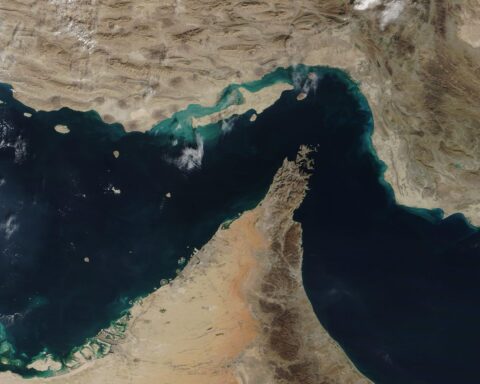
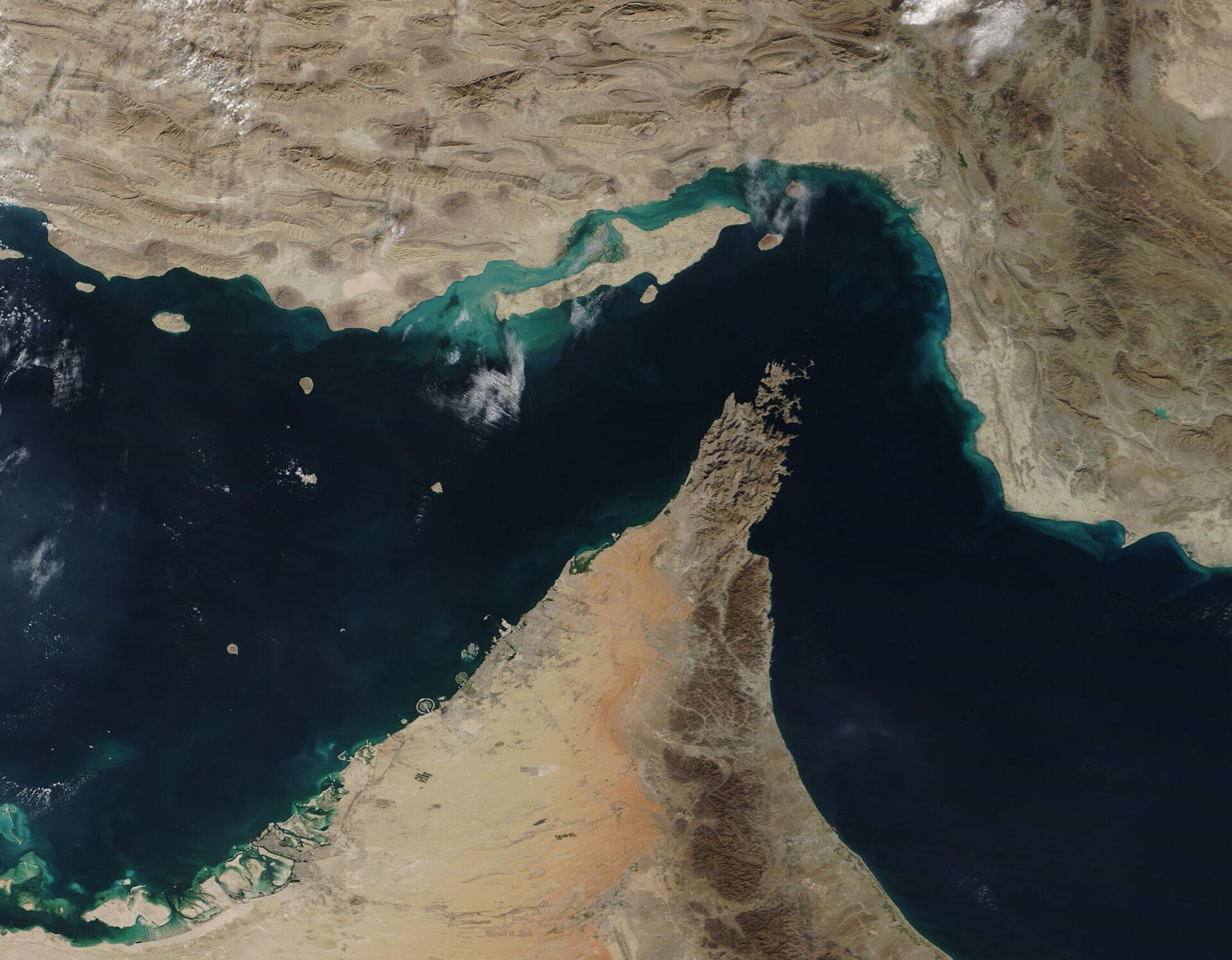
Iran’s military response came on a parallel timeline. The IRGC claimed it “hit and destroyed 18 important targets” at Ali Al Salem and Ahmad Al-Jaber air bases in Kuwait and Sheikh Isa Air Base in Bahrain, according to a statement carried by Tasnim News Agency. The Iranian Army separately targeted the U.S. Fifth Fleet headquarters in Bahrain with what it described as “various types of destructive drones.” Iran’s top joint military command then declared the Strait of Hormuz closed, warning that any vessel attempting passage would be shot at. CENTCOM posted on X that “commercial ships are continuing to transit in and out of the Strait of Hormuz tonight.”
Saudi Arabia’s Ministry of Foreign Affairs did not issue a statement on Trump’s contact claim, Iran’s denial, the CENTCOM strikes, the IRGC retaliation against GCC bases, or the Hormuz closure. The last confirmed phone call between Secretary of State Marco Rubio and Saudi Foreign Minister Prince Faisal bin Farhan was in January 2026 — five months before Trump told a Fox News correspondent he had spoken directly with Iran.
Iran’s Denial and the Contact-Denial Cycle
Iran’s response to Trump’s claim followed a script it has rehearsed at least three times since March. An unnamed senior Iranian official told the Times of Israel that “Trump’s false claim that Iranian officials contacted him is a cover to evade war with Iran.” Parliament Speaker Mohammad Bagher Qalibaf separately called reports of talks “fake news” designed to “manipulate financial and oil markets and to escape the quagmire the US and Israel are stuck in,” per Anadolu Agency. Foreign Ministry spokesman Esmail Baghaei called the claims “false and baseless.”
The language tracks a pattern that dates to the first weeks of the conflict. When Axios reported on March 16 that a direct channel between envoy Steve Witkoff and Foreign Minister Abbas Araghchi had been reactivated, Araghchi denied it on X. On April 1, he refined the argument for Al Jazeera: “US messages via Witkoff and intermediaries are not negotiations.”
My last contact with Mr. Witkoff was prior to his employer’s decision to kill diplomacy with another illegal military attack on Iran. Any claim to the contrary appears geared solely to mislead oil traders and the public.
— Abbas Araghchi, Iranian Foreign Minister, on X, March 2026
That definitional argument — that indirect messages do not constitute contact — is the structural feature of Iran’s denial posture. Even if Iranian officials sent signals that reached Trump through Qatar or Pakistan on June 10 or 11, Iran can deny “direct contact” without technically lying. Araghchi’s April formulation established the doctrinal basis for this kind of denial months before Trump made his latest claim.
| Date | U.S. Claim | Iran’s Response | Claimed Channel | Saudi Role |
|---|---|---|---|---|
| Jan. 12, 2026 | Witkoff-Araghchi call (Axios) | Not publicly contested | Direct | None |
| Mar. 16, 2026 | Channel “reactivated” (Axios) | Araghchi: “mislead oil traders” | Direct | None |
| Mar. 23, 2026 | “Messages received” — Baghaei (IRNA) | Qalibaf: “fake news to manipulate markets” | Via intermediaries | None |
| Apr. 1, 2026 | Witkoff messages reported | Araghchi: “messages are not negotiations” | Indirect / text | None |
| Jun. 11, 2026 | Trump: “spoke directly” (Fox News) | “False claim to evade war” | Claimed direct call | None |
Competing accounts muddied every iteration. A U.S. official told Axios in March that Araghchi was “lying” and had initiated contact with Witkoff by text message. Dropsite News reported the opposite: that Witkoff had sent messages to Araghchi, and Iranian officials said the foreign minister was “ignoring the White House envoy’s messages.” The contradictions are themselves the point. Neither side maintains a stable account of who is talking to whom, and no third party — least of all Saudi Arabia — has the access to adjudicate.
Iran had formally suspended all U.S. message exchanges as of June 1 — ten days before Trump’s contact claim. Any June 11 communication, if real, either reopened a channel that Tehran publicly closed or bypassed the established Witkoff-Oman-Pakistan architecture entirely.
There are structural reasons for Iran to deny contact even when it occurs. Ayatollah Khamenei’s doctrine prohibits negotiations “under pressure” — a condition met by definition while American bombs are falling on Iranian soil. The Majlis hard-liner faction that introduced the NPT withdrawal bill has framed any diplomatic concession as capitulation. The IRGC, which struck three GCC countries’ bases on the same night Trump claimed to have received a peace call, cannot simultaneously be the instrument of military resistance and the silent partner to a phone conversation requesting that resistance stop.
The pattern has a historical precedent. During the 444-day Iran hostage crisis, the Algiers Accords of January 1981 were negotiated entirely through Algerian intermediaries. Deputy Secretary of State Warren Christopher led the American side; Algerian Foreign Minister Mohammed Benyahia served as the go-between. Both governments subsequently understated the extent of their back-channel contacts. Real communication was happening while public statements depicted intransigence.
Thirty-Eight Claims and Counting
Between March 23 and June 9, 2026, Trump claimed at least 38 times that a deal with Iran was imminent, according to a tally by CNN political reporter Aaron Blake. The assertions came across Truth Social posts, White House press availabilities, Fox Business interviews, and media calls. On April 15, Trump told Fox Business: “I think it’s close to over.” On May 10, he described the April 8 Pakistan-mediated ceasefire as “on life support,” per NPR. In June, he told ABC News he expected a deal to extend the ceasefire and reopen the Strait of Hormuz “over the next week.”
The June 11 contact claim, added to Blake’s tally, would be the 39th assertion of imminent resolution in 80 days. Blake’s analysis characterized the pattern as either “delusional,” a “market-calming tactic,” or an attempt to “will a deal into existence.” The interpretations are not mutually exclusive.
The previous day, June 10, Trump had told reporters at the White House: “We’re going to be attacking them, attacking them very hard,” per Euronews. The Washington Examiner’s headline on June 11 captured the oscillation: “Trump halts Iran strikes, vows to renew bombing tomorrow if no deal reached.” The gap between “attacking them very hard” and “the bombing will stop shortly” was 24 hours.
A fabricated contact claim serves specific functions independent of its truth value. It creates asymmetric pressure on Iran: confirming the call means admitting to communication under bombardment, which violates Khamenei’s doctrine; denying it means appearing to prefer continued war over a diplomatic exit. The claim simultaneously signals to oil markets that de-escalation is possible, and to Congress — where H.Con.Res.38 passed 215–208 on June 3 as the first War Powers Resolution to clear either chamber — that the president is engaged in diplomacy, not unilateral escalation.
On Truth Social the same day, Trump wrote that Iran and Israel were “looking to do an immediate CEASEFIRE!” and that “final negotiations on ‘Peace’ are proceeding, subject to ignorance or stupidity getting in its way. The Blockade will remain in place, and in full force and effect, until a ‘Final Deal’ is reached.” The post paired a claim of imminent peace with a restatement of the naval blockade — two conditions that require the reader to hold incompatible realities simultaneously.
Does It Matter Whether Trump’s Call to Tehran Was Real?
Whether Trump’s claimed call to Tehran was real or fabricated, Saudi Arabia’s structural position is identical. The kingdom has no channel to either Washington’s Iran negotiation track or Tehran’s decision-making apparatus that would allow it to verify the contact, participate in the terms under discussion, or shape the outcome of any deal that may follow.
Consider the two scenarios. If the call was real — if an Iranian official genuinely contacted the president of the United States while Tomahawk missiles were striking targets 40 miles from Tehran — then a direct US-Iran channel exists that Riyadh was not informed of, cannot monitor, and has no representative in. The Situation Room on June 11 contained Vance, Kushner, Witkoff, and Hegseth (remotely from Tampa). No Saudi official. No GCC representative. No intermediary with a mandate from Riyadh.
If the call was fabricated — if Trump claimed direct contact to pressure Iran, calm markets, or preempt congressional opposition — then Saudi Arabia is operating in a diplomatic environment where the most powerful actor in the region generates false signals about the state of negotiations that Riyadh cannot independently verify. A fabricated claim of peace is, for a country with no Status of Forces Agreement at Prince Sultan Air Base and approximately 400 remaining PAC-3 interceptors, not a neutral event. It moves markets, shifts alliance expectations, and creates diplomatic facts that must be responded to — all before the kingdom can determine whether the underlying event occurred.
The structural void predates June 11. Pakistan assumed primary mediation responsibilities when Army Chief Asim Munir brokered the April 8 ceasefire alongside Vice President Vance, Witkoff, and Araghchi. Qatar took on a secondary mediating role on May 22, backed by a $6 billion credit line to Iran extended on May 25. Oman maintained a formal diplomatic channel until Trump threatened to bomb Muscat on May 28 for brokering an Iran-Oman Hormuz joint-management protocol. All three channels have either collapsed, shifted, or been threatened. None were Saudi to begin with.
The kingdom’s formal position in the ceasefire record is a single sentence: it “called for the talks to ‘address all issues’ that have contributed to Middle East stability ‘over the past decades.’” The language is aspirational and unbounded — the diplomatic equivalent of asking to be included without specifying in what capacity, or on whose behalf, or with what mandate. No party to the negotiations has cited this statement as creating any obligation to consult Riyadh.
The deeper problem is temporal. Even if Saudi Arabia were briefed tomorrow — if Rubio called Faisal for the first time since January — the kingdom would be entering a negotiation whose terms have already been shaped by months of Pakistan-brokered ceasefires, Qatar-facilitated shuttle diplomacy, and Oman-maintained back-channels. The exclusion is not a snapshot. It is the accumulated result of every week since March during which intermediary architecture was built around, not through, Riyadh.
MBS conveyed a message to Gulf allies in March, reported by Middle East Eye, to “avoid any steps that could inflame tensions with Iran.” A Saudi source told the outlet: “Our biggest fear now is that any escalation will be used as a pretext by Tehran to unleash its network of proxies.” The instruction was defensive and reactive — a request to other states not to make things worse. Three months later, the IRGC struck bases in Kuwait and Bahrain on the same night Trump claimed to have received a peace call from Tehran. Saudi Arabia was hit by neither the missiles nor the phone call.
What Would a Deal Require That Saudi Arabia Cannot Negotiate?
Any resolution to the current conflict will require agreements on Hormuz transit, U.S. force posture in the Gulf, sanctions architecture and frozen Iranian assets, and some framework for nuclear guarantees. Saudi Arabia has a direct stake in each component. It has a negotiating role in none of them.
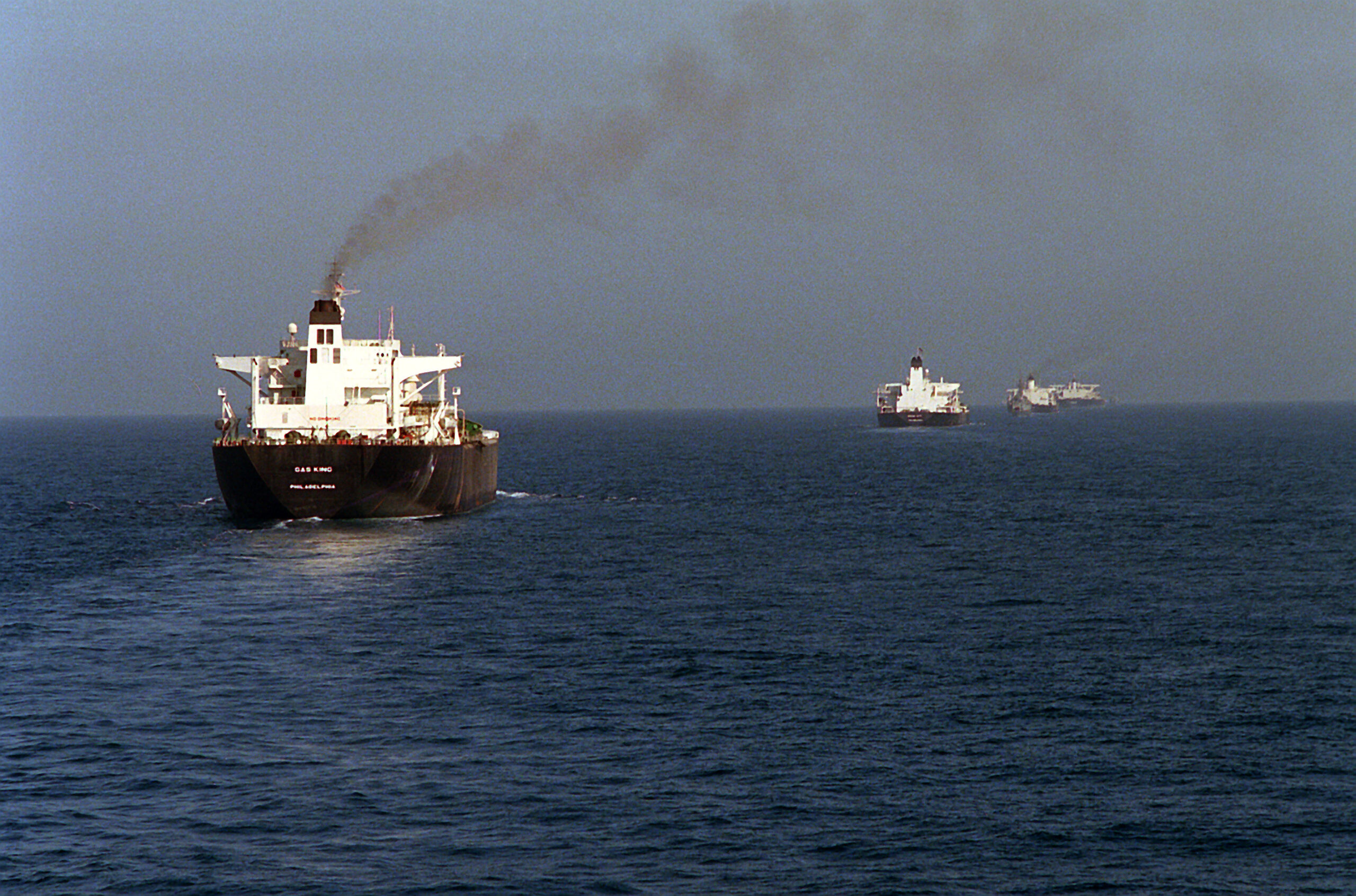
Hormuz normalization is the immediate priority. Iran’s repeated closure declarations — contested by CENTCOM but operationally consequential for insurers and shippers — have disrupted pricing and transit calculations for the roughly 85 percent of Saudi oil exports that move through the strait. The negotiation over Hormuz reopening is a bilateral US-Iran matter with Qatar serving as intermediary. Saudi Arabia’s East-West Pipeline can redirect approximately 4.5 million barrels per day to Yanbu on the Red Sea, but 70 to 75 percent of Yanbu’s Asia-bound exports transit Bab el-Mandeb, where Houthi maritime operations continue unabated. The full architecture of that exclusion — the 14-point draft MOU, the three-channel intermediary structure, and Saudi Arabia’s inability to verify whether the deal Iran disputes even exists — is documented in The Deal That Governs Saudi Waters Was Negotiated Without Saudi Arabia.
The U.S. force posture at Prince Sultan Air Base is a term that any deal will implicitly or explicitly address. Iran’s demand structure — communicated through intermediaries and in Qalibaf’s June 7 declaration that PSAB is a “legitimate target” — includes constraints on American basing in the Gulf. Saudi Arabia has no SOFA governing PSAB, no legal instrument for force-level negotiations, and no withdrawal clause in the 1977 USMTM memorandum of understanding — the only agreement governing the American military presence in the kingdom. What Washington concedes or maintains at PSAB will be determined in a US-Iran discussion that Saudi Arabia cannot join because it lacks the legal architecture to represent its own position on its own air base.
The frozen assets question is a $24 billion bilateral US-Iran matter. Iran has demanded $12 billion released at signing as a precondition for Hormuz normalization. Trump wrote on Truth Social that he “will not unfreeze before ceasefire.” Treasury Secretary Scott Bessent has drafted IEEPA directives that could either block or vest Iranian assets — a distinction between reversible freezing and permanent seizure that carries different legal consequences under the PATRIOT Act. The Saudi stake is indirect but real: sanctions relief or asset release would reshape the economic relationship between Iran and every GCC state. Riyadh cannot veto, condition, or sequence any of these decisions.
Nuclear guarantees sit in a separate but connected track. Saudi Arabia voted for the IAEA censure that invalidated the Cairo accord — the last multilateral instrument constraining Iran’s enrichment — but has taken no follow-up diplomatic action. The IAEA Board of Governors has documented 440.9 kilograms of high-enriched uranium unverified for 97 days. Whatever nuclear framework emerges will be negotiated between Washington, Tehran, and the IAEA. Riyadh’s 123 Agreement with the United States, which constrains Saudi enrichment rights, was negotiated separately and cannot be renegotiated as part of an Iran deal in which Saudi Arabia is not a party.
The Qatari Delegation and the Architecture That Bypasses Riyadh
On June 10, one day before Trump’s contact claim, a high-level Qatari delegation arrived in Tehran. Al Arabiya, citing a diplomat on condition of anonymity, reported that “following consultations with the US, Qatari negotiators traveled to Tehran in the morning to meet with the Iranians in an effort to bridge the remaining gaps.” IranWire described the visit as “coordination.” The Middle East Monitor reported talks covering “bilateral relations, regional developments, and the progress of diplomatic efforts to end the conflict.”
The Qatar channel offers the most plausible mechanism for reconciling Trump’s claim with Iran’s denial. If Qatari negotiators transmitted a message from Iranian officials — a request for de-escalation, a signal of willingness to discuss terms — Trump could characterize this as Iran “calling” him. Iran could deny any “direct” contact under Araghchi’s April 1 formulation. Both statements could be simultaneously accurate, and Saudi Arabia would have no way to determine which interpretation was closer to the facts.
Qatar’s position as intermediary is reinforced by financial architecture. Doha extended a $6 billion credit line to Tehran in May — giving it a position no other Gulf state holds: the ability to attach conditions to capital that Iran needs. Qatar consulted Washington, not Riyadh, before flying to Tehran — a sequence confirmed by the Al Arabiya report’s specific reference to “consultations with the US.” The delegation’s arrival in Tehran on June 10, the IRGC strikes on GCC bases later that day, and Trump’s contact claim on June 11 form a 48-hour sequence in which every relevant actor — Washington, Tehran, Doha, Islamabad — is visible except Riyadh.
The exclusion reflects the mediation architecture that has been in place since April. Pakistan carries the military-to-military channel through Army Chief Munir’s letters to Mojtaba Khamenei, transmitted via Interior Minister Naqvi’s repeated Tehran visits. Oman held the formal diplomatic track until Trump’s May 28 threat collapsed it. Qatar now holds the financial and shuttle diplomacy channel. Each track was established independently. None required Saudi participation to function.
Saudi Arabia’s own multilateral effort — the Saudi-Egypt-Pakistan-Turkey quadrilateral that held three ministerial sessions between March 19 and April 18 — produced zero communiqués. The International Institute for Strategic Studies described it as “institutionalised consultation.” It has not convened since April 18, and no party to the US-Iran negotiation has referenced its existence.
Can Saudi Arabia Price a Ceasefire It Cannot Verify?
The Sadara Chemical Company’s $3.7 billion debt grace period expires on June 15 — four days after Trump’s contact claim. All 26 of Sadara’s manufacturing units at Jubail have been offline since the conflict began. Aramco guarantees approximately $2.405 billion of the debt; Dow guarantees approximately $1.295 billion. More than 25 banks hold the remaining exposure. No creditor communication has been issued, and neither Reuters, Bloomberg, nor the Financial Times has reported on the June 15 deadline.
A diplomatic signal — even a genuine one — does not mechanically resolve a debt cliff. Trump’s statement that “the bombing will stop shortly” does not reopen Jubail’s petrochemical units, restore Hormuz transit insurance rates, or extend a grace period negotiated between corporate treasuries and international banks. The Sadara deadline operates on a financial calendar that does not pause for Fox News interviews.
The broader fiscal picture compounds the timing. Aramco paid a $21.89 billion dividend on June 9, drawing its cash position to approximately $53.3 billion from $75.2 billion. Free cash flow stands at $18.6 billion against dividend obligations — a coverage ratio of 0.85x. Saudi Arabia’s Q1 fiscal deficit is tracking at 76 percent of the full-year projection, with Goldman Sachs estimating a full-year deficit of SAR 300–330 billion.
The ambiguity itself has economic costs. Markets must price the probability that Trump’s contact claim is real, the probability that Iran’s denial is genuine, the probability that the Hormuz closure is operationally enforced, and the probability that any of these conditions will change before June 15. Saudi Arabia — the largest economy in the GCC, the largest oil exporter transiting Hormuz, the guarantor of $2.405 billion of Sadara’s $3.7 billion debt — cannot inform any of these probabilities because it has no independent intelligence about the state of US-Iran negotiations.
Trump told ABC News in June that he expected a deal within “the next week.” The Sadara grace period expires in four days. If both timelines are real, the debt cliff arrives before any deal can take effect. If Trump’s timeline is, like an unknowable number of the preceding 38 claims, aspirational rather than factual, the debt cliff arrives alone.
The Washington Post assessed in May that Saudi Arabia “finds itself trapped between a vengeful Iranian regime and a vacillating U.S.” The condition on June 11 is narrower and more specific. Riyadh is operating between a claim and a denial, with no instrument to determine which is true, and a $3.7 billion debt deadline that will arrive on schedule regardless of the answer.
Frequently Asked Questions
When was the last confirmed direct communication between a U.S. president and an Iranian leader?
President Obama spoke with Iranian President Hassan Rouhani by phone on September 27, 2013 — a 15-minute call that both governments publicly acknowledged at the time. It was the first direct communication between leaders of the two countries since before the 1979 revolution, and it preceded the Joint Comprehensive Plan of Action nuclear agreement. Trump’s June 11 claim, if real, would be the first direct US-Iran leader-level contact in 13 years — under conditions of active bombardment that have no precedent in the relationship’s history.
Could an indirect message through Qatar satisfy both Trump’s claim and Iran’s denial simultaneously?
Shuttle diplomacy regularly produces divergent characterizations of the same exchange. If Qatar’s June 10 delegation transmitted an Iranian signal requesting de-escalation, Trump could interpret this as Iran “calling” him, while Iran could truthfully deny any “direct” contact under Araghchi’s formulation that intermediary messages “are not negotiations.” The Algiers Accords of 1981 were negotiated through exactly this structure — Algerian intermediaries carrying messages between parties who simultaneously denied the extent of their communication. Neither Washington nor Tehran acknowledged the full scope of contacts until years after the hostages returned.
Has Saudi Arabia ever served as a mediator in US-Iran negotiations?
Saudi Arabia has not served as a primary or secondary mediator in any documented round of US-Iran negotiations since the 1979 revolution. During the JCPOA talks between 2013 and 2015, Oman hosted the initial secret US-Iran meetings that led to the multilateral framework. In the current conflict, Pakistan, Qatar, and Oman have held all three mediation tracks. Saudi Arabia’s diplomatic response has been concentrated in a Saudi-Egypt-Pakistan-Turkey quadrilateral that has produced no communiqués and whose proceedings have not been cited by any party to the US-Iran negotiations.
Saudi Arabia’s structural exclusion from active diplomatic tracks extends to multilateral forums as well. On June 12, Riyadh declined France’s G7 Evian invitation citing “prior commitments” while simultaneously hosting France’s Middle East adviser in a private bilateral — a pattern that distinguishes bilateral from multilateral engagement.
What is the operational status of the Strait of Hormuz as of June 11?
Contested. Iran’s IRGC declared the strait “closed until further notice” and warned that any vessel attempting passage “will be shot at.” CENTCOM posted on X that “commercial ships are continuing to transit in and out of the Strait of Hormuz tonight.” The operational reality depends less on military communiqués than on commercial insurance decisions made in London and Singapore — whether underwriters will cover Hormuz-transiting cargoes, at what premium, and whether tanker operators will accept the risk. Those calculations, not the competing declarations, determine whether oil moves.