{“content”: “
Every GCC Base Has an Evacuation Treaty. Saudi Arabia Has a Memo.
n
RIYADH u2014 When the State Department ordered non-essential personnel out of ten diplomatic posts across the Middle East in March 2026, every host nation but one possessed the legal architecture to manage the drawdown. Kuwait invoked its 1992 SOFA and Defense Cooperation Agreement governing 13,500 US troops. Bahrain activated its fifty-five-year-old status-of-forces agreement protecting 9,000 personnel at the Fifth Fleet’s headquarters. Jordan referenced its 2021 Defense Cooperation Agreement, which grants American forces “unimpeded access to agreed facilities and areas.” Iraq, for all its dysfunction, processed the ordered departure through its 2008 Security Agreement, a treaty that required US consultation before any change in force posture.
n
Saudi Arabia had the 1977 USMTM memorandum of understanding u2014 an administrative arrangement drafted for training advisors and foreign military sales paperwork, not for the largest US combat deployment to Prince Sultan Air Base since the 2003 Iraq invasion. Forty-three aircraft, roughly 2,300 personnel, and more than $4 billion in damage from the March 27 strike alone all sit inside a legal void that neither Washington nor Riyadh has moved to close in the hundred days since the war began.
n
The Middle East briefing 3,000+ readers start their day with.
One email. Every weekday morning. Free.
n
Table of Contents
n
- n
- The SOFA That Does Not Exist
- How Ten Posts Evacuated Under Different Laws
- What Does the 1977 USMTM MOU Actually Cover?
- Two Strikes, One AWACS, and No Treaty Response
- Why Did Iran Publicly Designate PSAB a Legitimate Target?
- Does MNNA Status Fill the SOFA Void?
- Iran’s April 7 Demand and Saudi Arabia’s Missing Instrument
- GCC Host-Nation Legal Frameworks Compared
- The 2003 PSAB Withdrawal Required No Treaty u2014 That Is the Problem
- Frequently Asked Questions
- n
n
n
n
n
n
n
n
n
n
n
n
n
n
The SOFA That Does Not Exist
n
A status-of-forces agreement is not a courtesy document. It is the instrument that determines who has criminal jurisdiction over uniformed personnel, what notification is required before a drawdown or surge, what immunities attach to military equipment, and u2014 in the event of an evacuation u2014 who owes whom what. The United States maintains SOFAs with more than a hundred countries, from the comprehensive NATO SOFA (1951) to bilateral arrangements with nations as small as Palau. The agreements vary in scope, but they share a common function: they make the presence of foreign troops a matter of law rather than a matter of mood.
n
Saudi Arabia has never signed one. The kingdom’s only governing instrument for the American military presence is the 1977 USMTM memorandum of understanding, an arrangement limited by its own terms to the administration of foreign military sales and the provision of training advisory services. USMTM personnel are classified as non-combatants under Title 22 of the US Code u2014 State Department authority, not Pentagon authority.
n
There is no jurisdictional immunity provision. There is no withdrawal notification clause. There is no annex covering the deployment, sustainment, or removal of combat forces.
n
When forty-three US aircraft arrived at PSAB in February 2026 u2014 the largest American deployment to the base since the run-up to the Iraq invasion u2014 they entered the kingdom under the same administrative umbrella that covers a Lockheed Martin field service representative helping the Royal Saudi Air Force troubleshoot an F-15SA radar. The legal instrument did not change. The mission did.
n
How Ten Posts Evacuated Under Different Laws
n
The State Department operates a two-tier evacuation framework codified in 3 FAM 3770. Authorized Departure is voluntary: the chief of mission recommends that non-essential personnel and family members leave. Ordered Departure is mandatory: the ambassador directs it, and personnel who refuse face administrative consequences. Between March 1 and March 9, 2026, ten US embassies and consulates u2014 Bahrain, Iraq, Jordan, Kuwait, Lebanon, Qatar, Saudi Arabia, the UAE, Karachi, and Adana u2014 moved through one or both tiers as IRGC strikes expanded across the region.
n
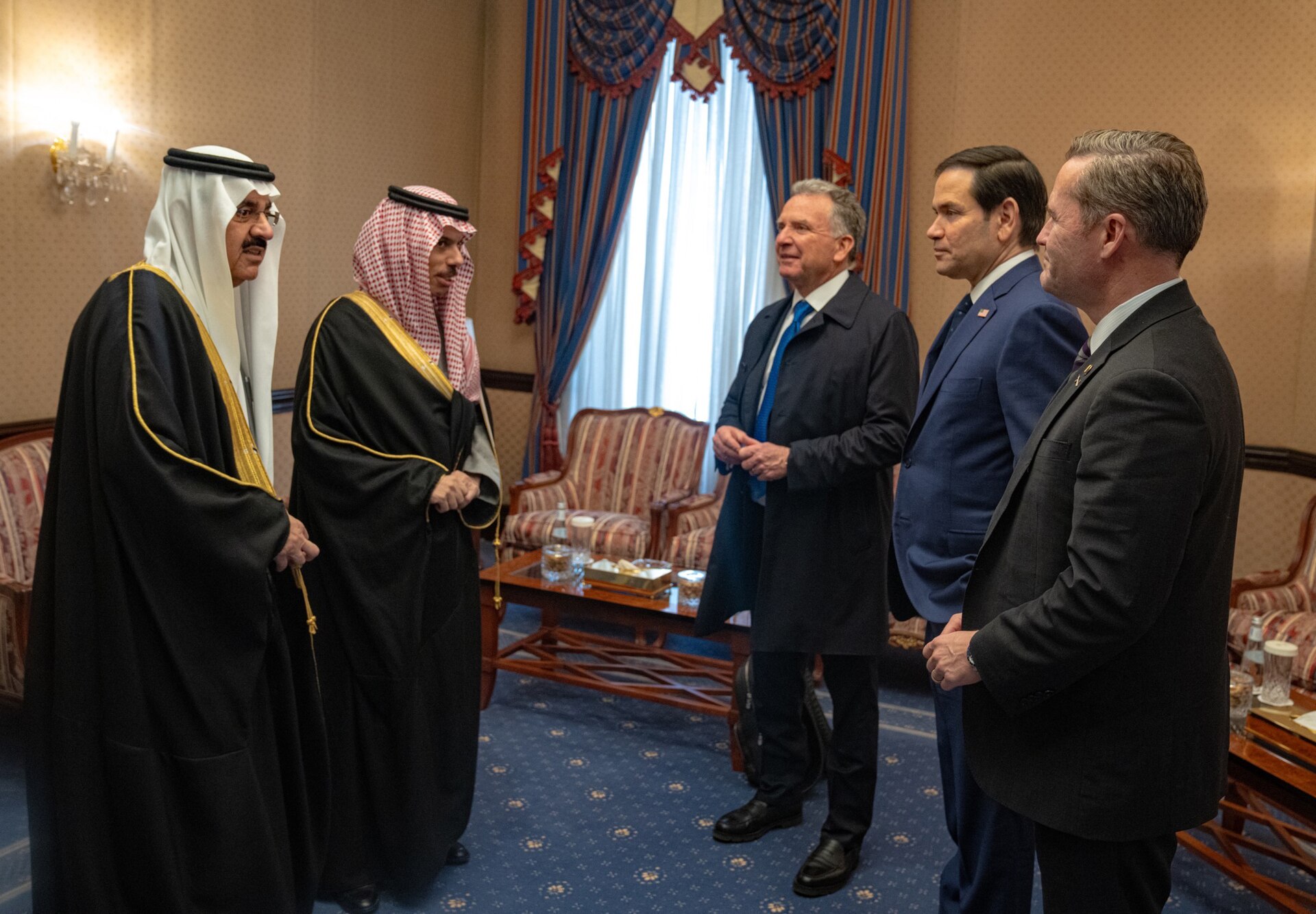
Kuwait went first: Authorized Departure on March 1, upgraded to Ordered Departure within forty-eight hours, full suspension of embassy operations by March 5. Iraq followed immediately, with US Mission Baghdad on full ordered departure by March 3. Saudi Arabia reached ordered departure for non-essential personnel around March 8, according to the US Embassy Riyadh’s own security alert, which cited “sustained missile and drone threats targeting American and diplomatic interests in the Kingdom.”
n
The critical distinction is not the speed of the drawdowns but the legal frameworks that governed them. When Kuwait suspended operations, the 1992 SOFA and DECA structured every element: which personnel remained, under whose jurisdiction, with what immunities, and through what notification channels. When Iraq processed its ordered departure, the 2008 Security Agreement u2014 the same document that had required US consultation before military operations u2014 provided the procedural scaffolding. When Saudi Arabia’s drawdown began, the only instrument available was a memorandum written for peacetime training advisors during the Carter administration.
n
n
What Does the 1977 USMTM MOU Actually Cover?
n
The United States Military Training Mission memorandum of understanding, signed in 1977, covers the administration of foreign military sales programs and the provision of training advisory services to the Saudi Ministry of Defense and Aviation. USMTM personnel operate under Title 22 USC u2014 State Department authority u2014 and are classified as non-combatants. The MOU contains no provisions for criminal jurisdiction, no framework for combat force deployments, and no withdrawal notification requirements. It is, in functional terms, a program management agreement for arms sales, not a basing arrangement.
n
This matters because every legal question that arises during a military evacuation u2014 who retains custody of classified equipment, who has jurisdiction over personnel involved in incidents during withdrawal, what happens to prepositioning agreements, what notification timeline applies u2014 requires a treaty instrument to answer. The USMTM MOU answers none of them. When the United States withdrew 4,500 troops from PSAB on August 26, 2003, no formal treaty governed the notification because no formal treaty existed. The withdrawal was a political decision communicated through diplomatic channels, not a legal process executed under treaty obligations.
n
The same asymmetry applies in reverse, and this is the dimension no competing analysis has addressed. Saudi Arabia could revoke American access to PSAB tomorrow u2014 could close the airspace, could deny landing rights, could order every US aircraft off the tarmac u2014 and no American treaty obligation would be triggered. There is no Article 5 equivalent, no consultation requirement, no dispute resolution mechanism. The entire arrangement rests on political will, and political will does not survive contact with ballistic missiles the way treaty obligations do.
n
Two Strikes, One AWACS, and No Treaty Response
n
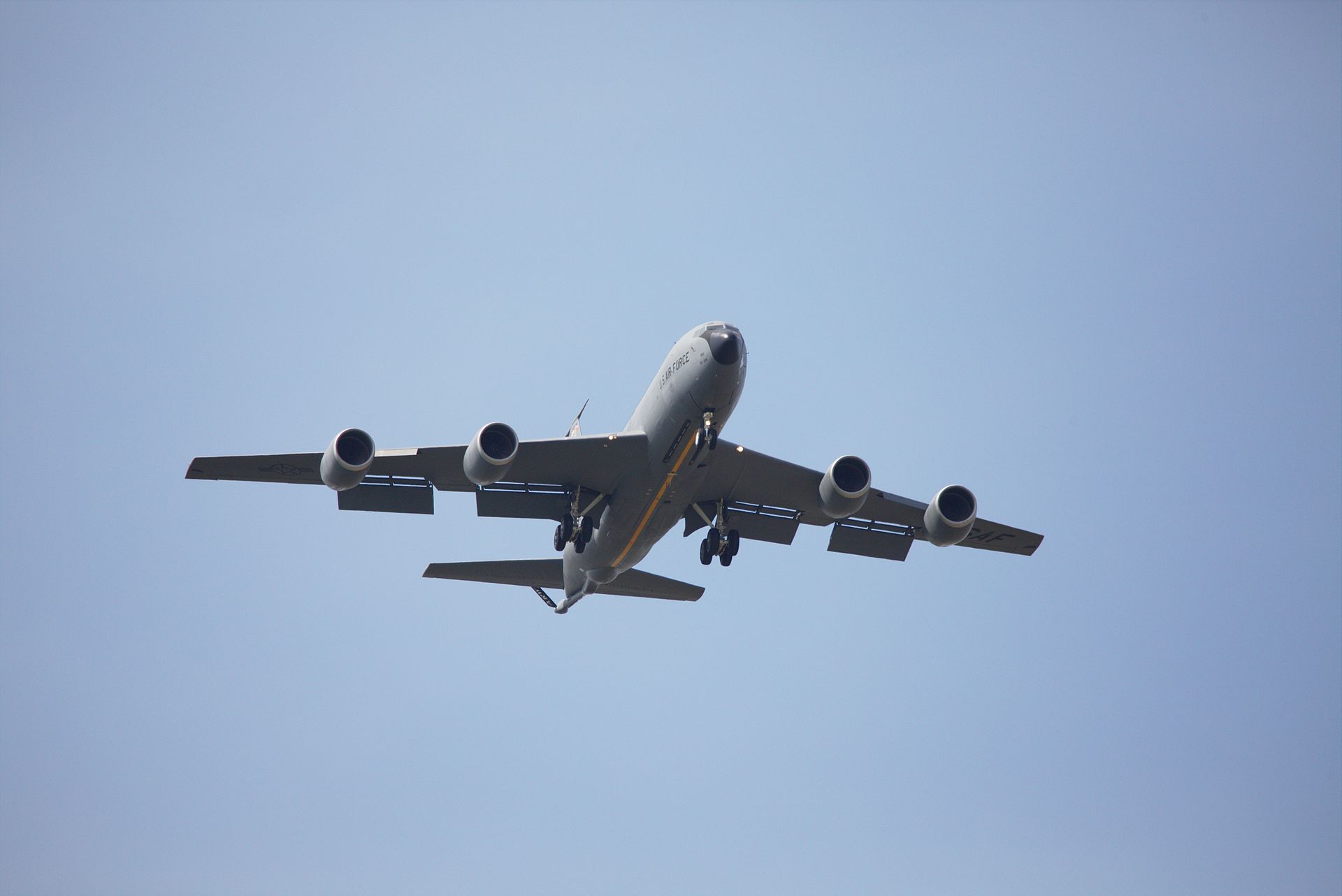
PSAB was struck twice in March 2026, and the distinction between the two attacks illustrates how exposed the base’s legal status left the American response. On March 14, the IRGC hit the base in what PressTV called its “51st wave of retaliation,” damaging at least five KC-135 Stratotankers. The Islamic Republic’s state broadcaster referred to the target not as a Saudi facility but as “the US-run al-Kharj air base” u2014 a framing that eliminated Saudi sovereignty from the sentence entirely. Two weeks later, on March 27, a package of six ballistic missiles and twenty-nine one-way attack drones destroyed an E-3G Sentry AWACS (tail number 81-0005) u2014 the first confirmed combat loss of a US Air Force AWACS in history u2014 and damaged additional KC-135s. The March 27 package alone exceeded $4 billion in damage.
n
In any SOFA-governed host nation, an attack of this magnitude would trigger treaty-defined consultation mechanisms. The host government would be legally obligated to respond through diplomatic channels specified in the agreement, to participate in damage assessment, to address questions of force protection responsibility. Kuwait, when Ali Al-Salem was struck on June 10 u2014 fifteen Americans wounded u2014 had the 1992 SOFA as its response framework. Bahrain, when NSA was hit the same day, had its 1971 agreement and 2017-renewed DCA. Jordan, when five IRGC missiles targeted Al-Azraq, had the 2021 Defense Cooperation Agreement that explicitly covered “emergency operations.”
n
Saudi Arabia had Maj. Gen. Turki Al-Malki’s statement: “Circulating reports regarding the targeting of Prince Sultan Air Base are untrue.” No elaboration, no legal framework, no treaty-defined response. When civil defense sirens sounded across Al-Kharj governorate on June 8, the Saudi MoD offered a denial and nothing else u2014 no diplomatic note, no invocation of shared defense obligations, no reference to any bilateral instrument that would structure the conversation between two governments whose shared military facility had just absorbed the most expensive single-strike damage bill of any US installation in the region.
n
Why Did Iran Publicly Designate PSAB a Legitimate Target?
n
On June 7, Iranian Parliament Speaker Mohammad Bagher Ghalibaf converted three months of operational targeting into doctrinal language. American bases and assets in the region, he declared on X, are now “legitimate targets” u2014 a designation that covers PSAB, a base already struck twice and already named by PressTV as “US-run.”
n
The declaration exploited a structural asymmetry that Iran understands precisely. Ghalibaf did not need to distinguish between American and Saudi personnel at PSAB because no treaty distinguishes between them either. In Kuwait, the SOFA creates a legal category u2014 “US forces” u2014 whose presence, jurisdiction, and protection are defined by treaty. In Saudi Arabia, the USMTM MOU creates a category called “training advisors” under State Department authority. The combat personnel operating F-15Es and maintaining Patriot batteries at PSAB in 2026 do not fit within either the MOU’s language or its legal framework, and Ghalibaf’s designation illuminated that gap for anyone paying attention.
n
As of June 11, Saudi MOFA has issued zero statements addressing Ghalibaf’s designation. Zero. The kingdom’s foreign ministry u2014 which has commented on events from Sudanese flooding to UNESCO cultural heritage u2014 has not responded to the speaker of a hostile parliament publicly designating a facility on Saudi soil as a legitimate military target. The silence is not diplomatic restraint. It is the silence of a government that possesses no legal instrument through which to respond.
The same MOFA silence persisted on June 11, when Prince Faisal signed a GCC-Canada communiqué calling for Hormuz protection on the same day Iran declared the strait a kill zone and struck two commercial vessels. The communiqué produced no legal obligation Iran was required to respect and no enforcement instrument Saudi Arabia could invoke.
n
“The naval blockade against the Iranian nation and America’s green light today to the Zionist regime turn American and regime bases and assets in the region into legitimate targets.”u2014 Mohammad Bagher Ghalibaf, Iranian Parliament Speaker, June 7, 2026
n
Does MNNA Status Fill the SOFA Void?
n
On November 18-19, 2025, the Trump administration designated Saudi Arabia a Major Non-NATO Ally u2014 a status shared by countries including Egypt, Japan, South Korea, Australia, and Kuwait. The designation unlocks preferential access to defense exports, cooperative research and development agreements, and certain stockpile loan guarantees. What it does not do is create a status-of-forces agreement, establish jurisdictional immunity for deployed personnel, or satisfy the Section 36(b) AECA emergency certification threshold that would allow rapid arms transfers without congressional review.
n
The distinction matters because MNNA designation is a procurement category, not a basing framework. Egypt has been an MNNA since 1989 and maintains a separate SOFA governing the American military presence at facilities supporting the Multinational Force and Observers in Sinai. Japan has been an MNNA since the category’s creation and maintains one of the most comprehensive SOFAs in the US alliance network. In every case, the MNNA designation supplements an existing legal framework u2014 it does not replace one. Saudi Arabia received the designation three months before the war began, and when the first missiles struck PSAB, the MNNA status provided exactly the same basing legal framework it had always provided: none.
n
DLA Piper’s November 2025 analysis of the Saudi MNNA designation noted the procurement advantages but did not identify any SOFA-equivalent provisions, because none exist within the statute. The designation lives in Section 2350a of Title 10 USC and Section 517 of the Foreign Assistance Act u2014 procurement law, not military basing law. Riyadh gained the ability to purchase certain munitions through streamlined channels; it did not gain a treaty framework for the combat forces that would fire them.
n
Iran’s April 7 Demand and Saudi Arabia’s Missing Instrument
n
On April 7, 2026, PressTV broadcast what amounted to a direct Iranian demand: Saudi Arabia and the UAE should “deny US military use of airspace, territory.” The demand was not diplomatic u2014 it came through state media, aimed at domestic and regional audiences. But its legal logic was precise, and it exploited the SOFA void with an accuracy that no Western analysis has matched.
n
If Saudi Arabia complied, no US treaty obligation would be triggered. There is no mutual defense clause to invoke, no consultation requirement to violate, no dispute resolution mechanism to activate. Riyadh could close PSAB to American forces and the bilateral relationship would absorb the decision as a political fact, not a legal breach. Washington has already threatened to bomb Oman for brokering a Hormuz protocol with Iran u2014 and Oman, unlike Saudi Arabia, at least has a formal defence relationship that structured the threat.
n
This is not theoretical. The 2003 withdrawal from PSAB required no formal diplomatic exchange, no treaty modification, no congressional notification u2014 the absence of a SOFA made departure frictionless. That same absence now makes every aspect of the wartime presence u2014 the deployment, the sustainment, the damage, the potential evacuation u2014 equally frictionless, which is to say equally unprotected.
n
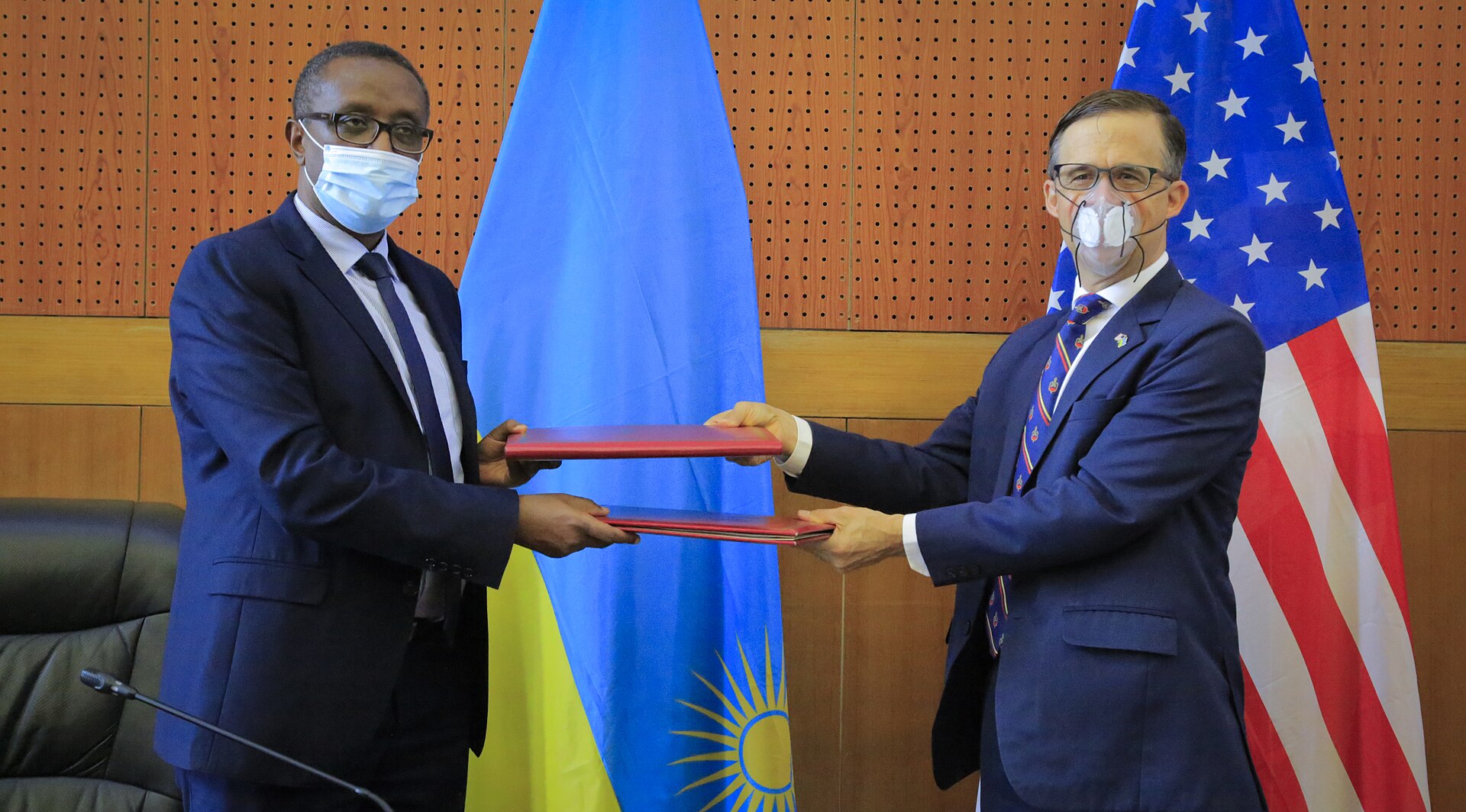
FM spokesperson Esmaeil Baqaei’s statement on June 9 u2014 “Diplomacy and the battlefield are not separate matters; rather, they run alongside and complement each other” u2014 reads differently when you understand that Saudi Arabia lacks the diplomatic instrument that would separate its battlefield exposure from its political relationship with Washington. Every other GCC host nation can point to a treaty and say: this is the framework. Saudi Arabia can point to a memorandum about training advisors and foreign military sales. The gap between those two documents is the gap between a legal relationship and an arrangement.
nn
The problem is not merely legal. On June 11, Trump told Fox News that Iranian officials had contacted him directly seeking a halt to strikes u2014 a claim Iranu2019s government immediately called false. Saudi Arabia, which has no independent channel to verify either sideu2019s account, learned about a potential US-Iran contact claim from a television broadcast. The SOFA void is also a verification void: without a standing consultative mechanism, Washington has no obligation to brief Riyadh before, during, or after negotiations that will determine whether American forces remain at PSAB.
n
n
GCC Host-Nation Legal Frameworks Compared
n
| Host Nation | US Personnel | Primary Legal Instrument | Year in Force | Criminal Jurisdiction | Withdrawal Notification |
|---|---|---|---|---|---|
| Bahrain (NSA/Fifth Fleet) | ~9,000 | SOFA (1971) + DCA (1991, renewed 2017) | 1971 | Yes u2014 defined by agreement | Yes u2014 treaty mechanism |
| Kuwait (Arifjan/Ali Al-Salem) | ~13,500 | SOFA (1992) + DECA (1992) | 1992 | Yes u2014 defined by agreement | Yes u2014 treaty mechanism |
| Qatar (Al-Udeid/CENTCOM) | ~10,000 | DCA (1992) + supplemental agreements | 1992 | Yes u2014 defined by agreement | Yes u2014 treaty mechanism |
| Jordan (Al-Azraq/Muwaffaq Salti) | ~3,000 | SOFA (1996) + ACSA (2006) + DCA (2021) | 1996 | Yes u2014 defined by agreement | Yes u2014 treaty mechanism |
| Iraq (various) | ~2,500 | Security Agreement (2008) + Strategic Framework | 2009 | Yes u2014 shared jurisdiction | Yes u2014 requires consultation |
| Saudi Arabia (PSAB) | ~2,300 | USMTM MOU (1977) u2014 training/FMS only | 1977 | No provision | No provision |
n
n
The table is not an abstraction. When three GCC bases were struck on June 10 u2014 Ali Al-Salem in Kuwait, NSA Bahrain, Al-Azraq in Jordan u2014 each host government’s obligations were defined by the treaty column above: consultation, medical evacuation coordination, force protection assessment, emergency operations clauses. The bottom row of the table tells you why Saudi Arabia’s response to the same sequence of events was governed by none of it.
n
When PSAB was struck on March 14 and March 27, when civil defense sirens wailed across Al-Kharj on June 8, when Ghalibaf designated it a legitimate target on June 7 u2014 Saudi Arabia’s response was governed by nothing. Not by treaty, not by agreement, not by any bilateral instrument that either government could invoke. The USMTM MOU, written when Jimmy Carter was president and the Shah still ruled Iran, does not contain the word “combat.” It does not contain the word “evacuation.” It does not contain the word “attack.”
n
The 2003 PSAB Withdrawal Required No Treaty u2014 That Is the Problem
n
On August 26, 2003, the United States withdrew all approximately 4,500 troops from Prince Sultan Air Base and migrated operations to Al-Udeid in Qatar. The withdrawal u2014 which ended a presence dating to Desert Shield in 1990 u2014 required no treaty consultation, no formal diplomatic exchange, no congressional notification, and no bilateral commission review. It was, in the sterile language of military bureaucracy, a force posture adjustment communicated through political channels. The entire process, from decision to departure, unfolded in weeks.
n
Every analysis of the 2003 withdrawal treats the speed and cleanliness as a feature. It was efficient. It was undramatic. It avoided the protracted base-closure negotiations that have consumed US-Japan relations over Futenma or US-Philippines relations over Subic Bay for decades. But what made the 2003 departure easy is precisely what makes the 2026 presence dangerous: the absence of a legal framework means that either side can alter the arrangement unilaterally, without process, without recourse, and without any obligation that survives the political moment.
n
The 2019 return to PSAB u2014 following the Abqaiq-Khurais attacks that September u2014 reproduced the same structural deficiency. No new SOFA was negotiated, no supplemental agreement signed. The deployment expanded from a skeletal 200-400 training personnel to a wartime footprint that would absorb more than $4 billion in damage from a single strike, and the legal instrument governing all of it remained a memorandum about foreign military sales written during the era of rotary telephones and the Vietnam War’s aftermath.
n
Iran’s foreign minister, Seyed Abbas Araghchi, understood the asymmetry when he commented on the January 2026 US withdrawal from Iraq’s Ain al-Assad: the evacuation, he said, “strengthens Iraq’s national sovereignty.” Iraq had a SOFA that structured the withdrawal. Saudi Arabia has a void that would make one structureless.
n
What June Exposed
n
The first ten days of June 2026 compressed every dimension of the SOFA void into a single sequence. On June 7, Ghalibaf designated PSAB a legitimate target. On June 8, civil defense sirens sounded in Al-Kharj and the Saudi MoD denied reports of an attack without providing any additional framework u2014 legal, diplomatic, or military u2014 for the denial. On June 10, the IRGC struck three capitals simultaneously: NSA Bahrain, Ali Al-Salem in Kuwait, and Al-Azraq in Jordan. PressTV cited Saudi Arabia in its “heavy blows” summary even where no new confirmed PSAB strike occurred u2014 maintaining the base’s status as a persistent target in Iranian operational language, part of a wider regional dynamic in which Saudi Arabia’s partners coordinate around it rather than with it.
n
Each of the three struck host nations activated treaty-defined response mechanisms. Saudi Arabia, which had absorbed more damage than all of them combined u2014 the March 27 strike alone exceeded the combined damage estimates of every other GCC base attack u2014 activated nothing, because nothing existed to activate.
n
PressTV’s consistent framing of PSAB as “a US-run al-Kharj air base” is not merely propaganda; it is a legal argument rendered in journalistic shorthand. The phrase asserts that Saudi sovereignty over the facility is nominal u2014 that the base functions as an American installation on Saudi territory without the bilateral legal architecture that would formalize, regulate, or protect that arrangement. The IRGC’s strike numbering u2014 “wave 51” for the March 14 attack, a separate designation for the March 27 AWACS package u2014 treats PSAB as a node in a systematic campaign, not as a one-off target. PressTV’s June 1 report listing “at least 20 US military sites” damaged across eight countries included PSAB without distinguishing it from bases operating under comprehensive legal frameworks. In Tehran’s operational grammar, the legal distinction does not exist because Tehran’s strategic interest lies in pretending it doesn’t.
n
n
“Diplomacy and the battlefield are not separate matters; rather, they run alongside and complement each other in safeguarding Iran’s interests and security.”u2014 Esmaeil Baqaei, Iranian FM Spokesperson, June 9, 2026
n
The Cost of Riyadh’s Silence
n
Consider what a SOFA-equipped host nation would do. When Ghalibaf’s statement landed, Kuwait could point to its 1992 DECA and demand formal US consultation on force protection enhancements for Ali Al-Salem. Bahrain could invoke its DCA’s provisions and request an accelerated Patriot deployment timeline. Jordan could activate the “unimpeded access” clause of its 2021 agreement u2014 the same clause that covers “assembly and deploy forces” and “prepositioning of equipment” u2014 and negotiate specific emergency measures. Each of these responses would be a legal act, performed within a treaty framework, creating obligations on both sides.
n
Saudi Arabia cannot do any of this. It cannot formally demand that Washington enhance PSAB’s force protection, because no agreement defines what force protection obligations Washington holds. It cannot formally request accelerated Patriot resupply, because the MNNA designation provides procurement access, not basing obligations. It cannot formally protest if Washington decides to draw down PSAB without consultation, because no consultation requirement exists.
n
The kingdom holds the most expensive and most damaged American military facility in the region, and the document governing that facility is a memorandum about training advisors that predates the Iranian Revolution. This is the kingdom that cannot sign the demarches its partners file, cannot invoke the treaties its neighbours hold, and cannot compel the resupply its air defenses require.
n
Frequently Asked Questions
n
Why hasn’t Saudi Arabia signed a SOFA with the United States?
n
The kingdom has historically treated the American military presence as an informal arrangement precisely to preserve sovereign flexibility u2014 the ability to request a withdrawal (as it effectively did in 2003) without treaty complications. The religious sensitivity of foreign troops on Saudi soil, particularly after the 1996 Khobar Towers bombing that killed nineteen US airmen and wounded 400, made any formalized basing agreement politically toxic domestically. The 1977 USMTM MOU’s narrow scope was a feature, not a bug u2014 until the February 2026 war transformed a training advisory mission into a combat deployment that the MOU was never designed to govern.
n
Could the US withdraw from PSAB without notifying Saudi Arabia?
n
Legally, yes. The 2003 withdrawal demonstrated this: the entire PSAB garrison departed over a matter of weeks with no treaty consultation process, no congressional notification requirement, and no bilateral commission review. The 1977 MOU contains no withdrawal notification clause. In practice, diplomatic communication would occur, but it would be a courtesy, not a legal obligation u2014 a distinction that matters when political relationships deteriorate under wartime pressure and the host nation has absorbed $4 billion in damage to a facility it cannot legally compel the United States to defend, repair, or restore.
n
Does the $142 billion arms deal change the SOFA situation?
n
The May 2025 arms package and MNNA designation operate entirely within procurement law. They govern what Saudi Arabia can buy and through which channels, not the legal status of foreign military personnel on Saudi soil. Israel extracted MNNA-equivalent procurement access alongside a mutual defense treaty; Saudi Arabia received the procurement access alone. The absence of a parallel basing agreement means that the arms relationship and the basing relationship exist in separate legal universes, connected only by political assumption.
n
What would a Saudi-US SOFA need to include?
n
At minimum: criminal jurisdiction provisions defining which government prosecutes offenses by US personnel (the most contentious element in every SOFA negotiation, from Japan to Germany to Iraq); force protection obligations specifying shared responsibility for base defense; withdrawal and surge notification requirements with defined timelines; immunities and privileges for military equipment and classified materials; and a dispute resolution mechanism. The 2021 US-Jordan DCA, which took four years to negotiate, provides the closest regional template u2014 and Jordan’s population is one-third of Saudi Arabia’s, its domestic political sensitivities around foreign troops comparatively manageable.
n
Has Iran explicitly referenced the absence of a Saudi SOFA?
n
Not in those legal terms, but operationally, yes. The April 7, 2026 PressTV demand that Saudi Arabia “deny US military use of airspace, territory” was calibrated to the legal reality: Iran’s strategists understand that compliance would trigger no US treaty obligation, no Article 5 equivalent, no mutual defense clause. PressTV’s consistent description of PSAB as “the US-run al-Kharj air base” u2014 stripping the Saudi prefix, foregrounding American operation u2014 is a rhetorical strategy that mirrors the legal reality. The IRGC does not need to cite the absence of a SOFA. It targets the consequences of that absence every time it fires.
The same institutional gap extends to multilateral frameworks: when the GCC invoked its collective defense clause for Kuwait and Bahrain, Saudi Arabia co-signed a commitment that did not apply to its own principal base — a structural contradiction examined in Saudi Arabia Signed the Collective Defense Clause for Kuwait. The SOFA void intersects directly with those new obligations: without a treaty framework for PSAB, Saudi Arabia cannot coordinate through US command channels to fulfill the collective defense it pledged, and Trump’s same-day ceasefire announcement — which Iran denied and the IRGC contradicted with active Hormuz enforcement — left the obligations live while removing the diplomatic architecture that might have made fulfillment possible. What Saudi Arabia owes Kuwait under a ceasefire Iran denied examines how that convergence unfolded.
n”}
PSAB remained unstruck through the June 11 operation, when the IRGC hit eighteen targets across Kuwait, Bahrain, and Jordan — the second consecutive multi-base operation that bypassed Saudi Arabia’s primary air base entirely. Trump’s June 11 threat to seize Kharg Island — Iran’s primary oil export terminal — and his rapid reversal hours later added a new dimension to the strategic uncertainty around the Gulf’s oil infrastructure.