
{“content”: “
DOHA u2014 A high-level Qatari delegation arrived in Tehran on June 10, 2026, carrying a mandate Al Arabiya’s sources described as “narrowing gaps in US-Iran talks.” The delegation consulted with American officials before departure, per the Times of Israel and the New Arab. No reporting u2014 in any language, from any outlet u2014 describes it as consulting with Saudi Arabia.
n
Two days earlier, IranWire reported that Qatari PM and Foreign Minister Mohammed bin Abdulrahman Al Thani spoke with Saudi FM Prince Faisal bin Farhan and “discussed mediation efforts between the United States and Iran.” Qatar’s MOFA confirmed the call. Saudi Arabia’s MOFA issued no statement on its substance.
The following day, Faisal signed a GCC-Canada joint communiqué calling for Hormuz protection — on the same day Iran declared the strait a kill zone and struck two vessels. The juxtaposition underscores the structural gap between Saudi diplomatic language and Iranian operational reality.
n
The Middle East briefing 3,000+ readers start their day with.
One email. Every weekday morning. Free.
The most favorable reading for Riyadh u2014 that the June 8 call constituted coordination u2014 is also the most structurally dangerous. Saudi Arabia has outsourced its last functioning Iran channel to a state it blockaded for three and a half years. A state that reconciled with Tehran within weeks of Iranian missiles striking its largest LNG facility. A state that deployed $6 billion in frozen Iranian assets with no GCC consultation. Three live mediation tracks converged on June 10 u2014 Pakistan, Oman, and Qatar u2014 with Saudi Arabia absent from each one’s mandate. The IranWire “coordination” framing rests on one foreign ministry’s readout. The other published nothing. The asymmetry sharpened further on June 12: how the UAE opened the Tehran back-channel Riyadh cannot — running through Tahnoun’s office, packaged with $10–$20 billion in released funds, and confirmed by Reuters.
n
Table of Contents
n
- n
- What Did Qatar’s Delegation Carry to Tehran?
- Three Tracks, One Timeline, Zero Saudi Instruments
- Why Is the “Coordination” Framing the Dangerous One?
- How Did Qatar Rebuild Its Iran Channel in Ten Weeks?
- The $6 Billion Qatar Deployed Without Saudi Arabia
- What Does Iran’s Readout Tell Us About Saudi Arabia’s Diplomatic Status?
- The Blockade That Created the Dependency
- Can Saudi Arabia Build an Iran Channel Without Qatar?
- Frequently Asked Questions
- n
n
n
n
n
n
n
n
n
n
n
n
n
What Did Qatar’s Delegation Carry to Tehran?
n
Iranian state media, relayed by CGTN on June 10, described the Qatari delegation as arriving to “consult on bilateral relations and regional events.” The formulation omits any reference to the United States, to nuclear negotiations, or to any Gulf Cooperation Council mandate. Tehran characterized the visit as bilateral u2014 Qatar and Iran, no implied third parties.
n
Al Arabiya English offered a sharper characterization. Citing “a diplomat” on condition of anonymity, it reported the delegation consisted of “Qatari negotiators” who traveled to Tehran “to narrow gaps in US-Iran talks.” This is the most operationally specific description of the mission’s purpose in English-language reporting. It positions Qatar as a US-Iran intermediary. Al Arabiya u2014 editorially aligned with Saudi state interests u2014 ran the story without noting that the delegation consulted Washington before departure, not Riyadh.
n
n
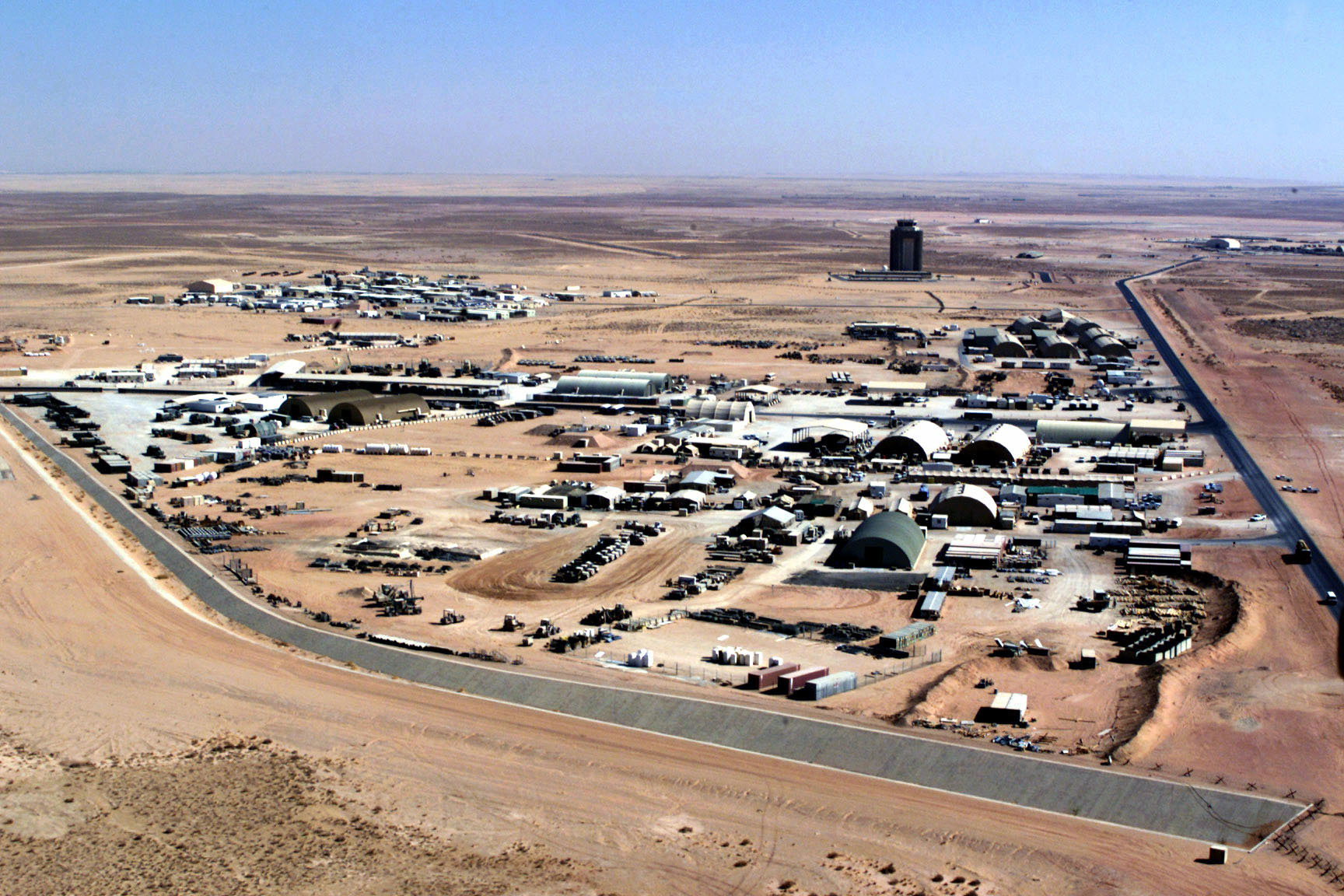
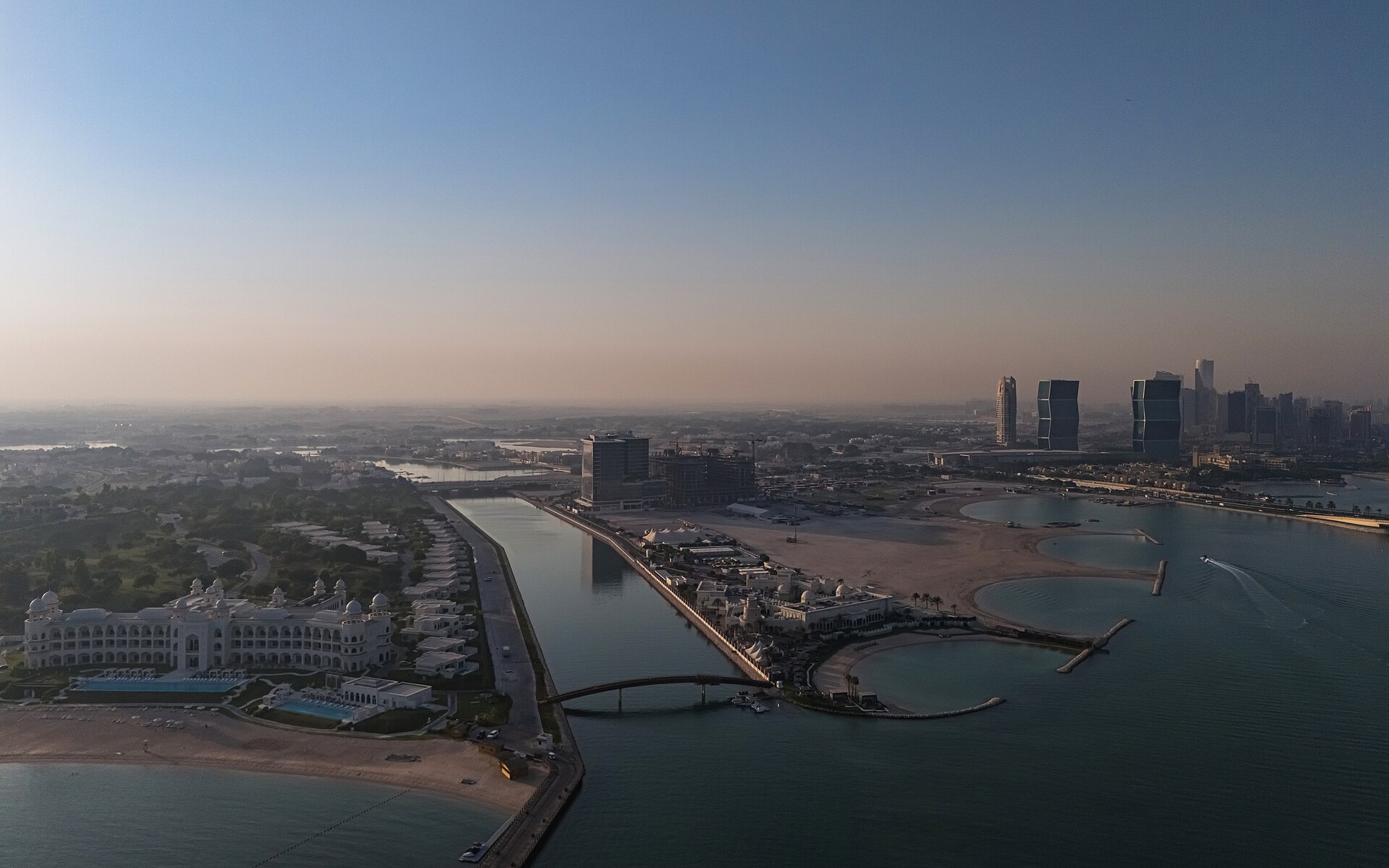
The Times of Israel and the New Arab both specified the delegation traveled “following consultations with American officials.” Neither outlet mentioned Saudi consultation. The sequencing u2014 Washington, then Tehran u2014 situates Qatar within the American negotiating apparatus. This is consistent with Qatar’s hosting of Al Udeid Air Base, CENTCOM’s forward headquarters. Doha also manages $12 billion in frozen Iranian assets u2014 a position that gives it direct financial relevance to any sanctions-relief arrangement.
n
Middle East Monitor covered the arrival as a straightforward bilateral visit u2014 “bilateral ties and regional developments” u2014 with no Saudi angle. No competing outlet in English examined the gap between “coordination” (IranWire’s framing) and “following consultations with American officials” (the Times of Israel’s framing). The two framings describe different mandates.
n
Iranian FM spokesman Esmaeil Baghaei, also speaking June 10, said the impact of recent military clashes on talks with Washington “would have to be evaluated” (CGTN, June 10, 2026). The statement preserves Tehran’s unilateral control over the negotiation’s timetable u2014 a timetable Qatar can relay but not set.
n
Three Tracks, One Timeline, Zero Saudi Instruments
n
As of June 10, three distinct mediation architectures connect Washington and Tehran. Saudi Arabia controls none of them.
n
| Track | Intermediary | June 10 Status | Saudi Role |
|---|---|---|---|
| Pakistan | Army Chief Munir / PM Shehbaz | Dual-letter architecture active; Naqvi’s 3rd Tehran visit | Cannot protest u2014 13,000 SMDA troops in Eastern Province |
| Oman | FM Badr bin Hamad Al Busaidi | Functional as courier; routed Iran’s June 9 MOU counteroffer | Channel appropriated by Washington after May 28 threat |
| Qatar | PM/FM Mohammed bin Abdulrahman | Delegation in Tehran; $6B credit line active | Two calls (June 3, June 8); no joint statement; no mandate confirmed |
| Direct | Araghchiu2013Faisal call (June 9-10) | Iran’s readout: informational, not consultative | Passive recipient of Iran’s military rationale |
n
Pakistan. Interior Minister Mohsin Naqvi made his third trip to Tehran in early June carrying two separate letters u2014 one from Prime Minister Shehbaz Sharif through the civilian/state channel, one from Army Chief General Asim Munir through what amounts to an IRGC back-channel. Tehran can activate either track independently. Saudi Arabia cannot protest the architecture because 13,000 Pakistani troops under the Saudi Military Defense Agreement guard oil infrastructure in the Eastern Province. The state that operates Riyadh’s military back-channel to the IRGC also guards Riyadh’s oil.
n
Oman. Iran submitted its June 9 counteroffer to the US MOU through Omani FM Badr bin Hamad Al Busaidi’s office. The channel remains operational. Its independence does not. President Trump’s May 28 Cabinet meeting produced a threat to “blow them up” if Oman continued brokering Iran’s Hormuz joint-management protocol. Treasury Secretary Bessent followed with direct financial pressure. The Omani Ambassador capitulated the same day. Iran still uses Muscat because the alternative is no channel at all u2014 not because it trusts Omani independence from Washington.
n
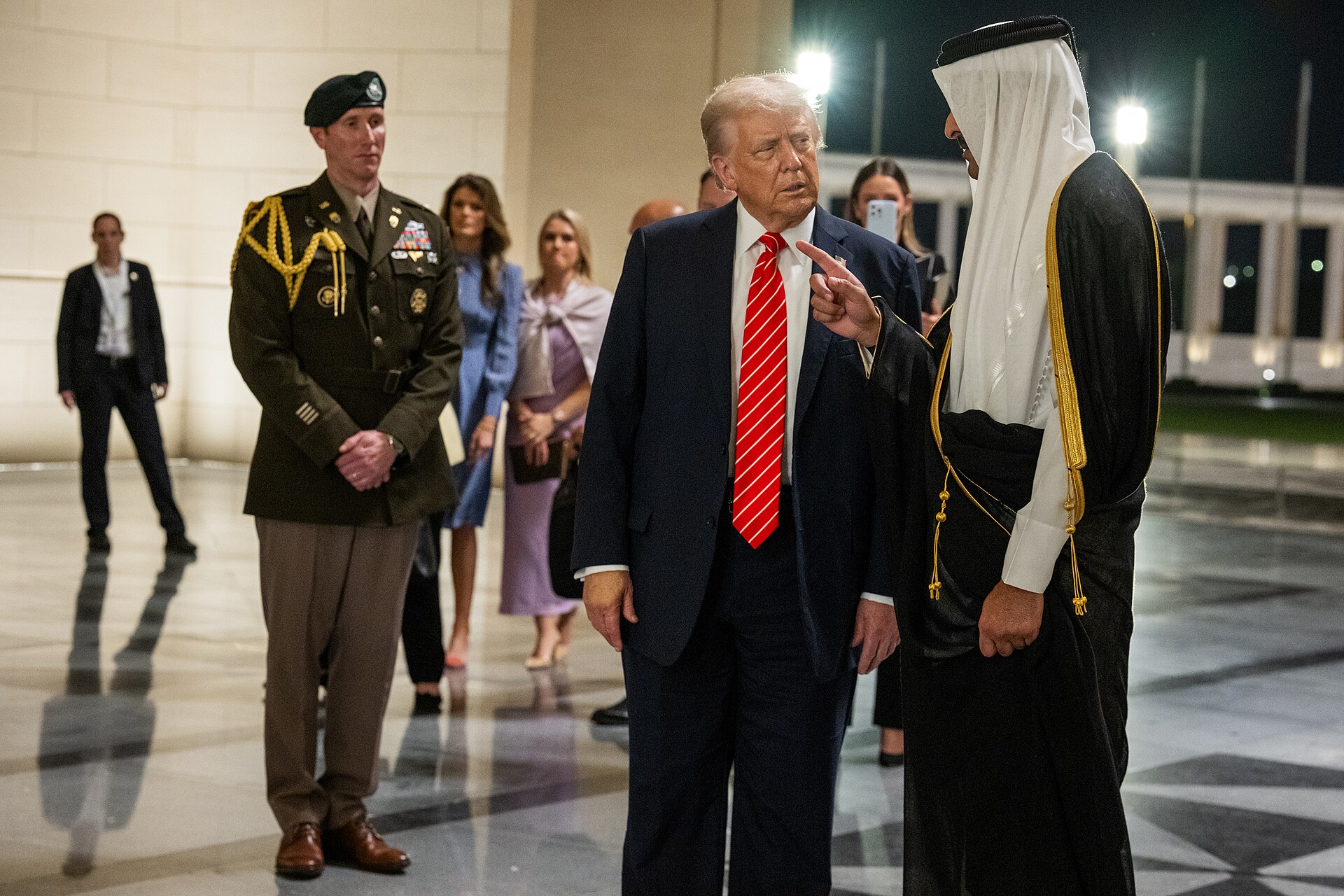
Qatar. The only track that expanded during the war. The June 10 delegation arrived after consultations with American officials. Two confirmed calls between Qatar’s FM/PM and Saudi FM Faisal u2014 June 3 and June 8, both confirmed by Qatar’s MOFA u2014 produced no joint statements on mediation. Qatar published readouts of both calls. Saudi Arabia published neither. The pattern is consistent: Qatar informs Riyadh, departs, and then acts on terms set with Washington and Tehran.
n
Direct. Iran’s FM Abbas Araghchi called Faisal bin Farhan in the June 9-10 window. Iran’s readout, reported by the Tribune India and Islam Times, framed the conversation as Tehran condemning US strikes and affirming its right to self-defense. Faisal is not described as offering proposals or conveying messages from other parties. Saudi Arabia received the call. Iran set its content.
nn
The table’s fourth row became more acute on June 11, when Trump claimed on Fox News that Iranian officials had called him directly to request a halt to US strikes u2014 a claim Tehran immediately denied. Saudi Arabia has no channel to verify Trump’s claim or Iran’s denial, and was not consulted before the assertion was made. A contact claim u2014 true or false u2014 between Washington and Tehran, broadcast on American television before any diplomatic briefing, is the logical extension of the three-track exclusion: Riyadh is not informed, it is informed by broadcast.
n
n
Why Is the “Coordination” Framing the Dangerous One?
n
IranWire’s June 8 report is the only English-language outlet to describe the Qatar-Saudi phone call as involving “coordination” on Iran mediation. The source was Qatar’s MOFA readout, which confirmed the two foreign ministers “discussed mediation efforts between Washington and Tehran” and coordinated “efforts to support mediation aimed at lowering escalation.” Saudi Arabia’s MOFA issued no corresponding statement.
n
Readout asymmetry is common in Gulf diplomacy. It matters here because the readout is doing specific work. Qatar chose to publicize the call as coordination. Riyadh’s silence could reflect disagreement with that characterization, institutional slowness, or a deliberate preference for ambiguity. What it does not project is a state that considers itself a co-equal partner in the mediation effort.
n
The structural problem runs deeper than publication optics. If Qatar-Saudi coordination is real, it means Saudi Arabia’s only remaining Iran diplomatic instrument is a state whose recent history with both Riyadh and Tehran undermines the instrument’s reliability.
n
Saudi Arabia led a blockade of Qatar from June 2017 to January 2021 u2014 three and a half years u2014 over accusations that specifically included maintaining Iran ties. The blockade’s 13 demands included downgrading those ties. Qatar rejected every demand.
n
Qatar reconciled with Iran within weeks of the March 18, 2026 Ras Laffan strike u2014 Iranian ballistic missiles that hit Qatar’s primary LNG processing hub. The PNG declaration of Iran’s military attachu00e9s lasted. The diplomatic rupture did not.
n
Qatar deployed $6 billion from Iran’s frozen-asset pool as a unilateral civilian credit line in May 2026, with no Saudi or GCC role referenced in any reporting from any outlet.
n
Al Udeid Air Base u2014 CENTCOM’s forward headquarters u2014 gives Qatar a security relationship with Washington that runs parallel to Saudi Arabia’s, not through it. Doha consults with the Pentagon independently of Riyadh.
n
A 2025 study published in Middle Eastern Studies (Tandfonline), titled “Any port in a storm: Qatar as a biased mediator,” treated Qatar’s structural conflict of interest in mediation as inherent to its model rather than a flaw in implementation. Qatar’s interest in the outcome shapes what it conveys, to whom, and when. That interest includes sanctions relief that unfreezes assets Qatar holds, Hormuz reopening that secures its LNG exports, and non-aggression guarantees for the shared North Field/South Pars reservoir.
n
The worst-case reading of the June 8 call is not that Qatar excluded Saudi Arabia. It is that Qatar included Riyadh on Qatar’s terms, in a readout Qatar published and Saudi Arabia did not. The party that controls the text, the pace, and the information flow holds the instrument. As of June 10, that party sits in Doha.
n
How Did Qatar Rebuild Its Iran Channel in Ten Weeks?
n
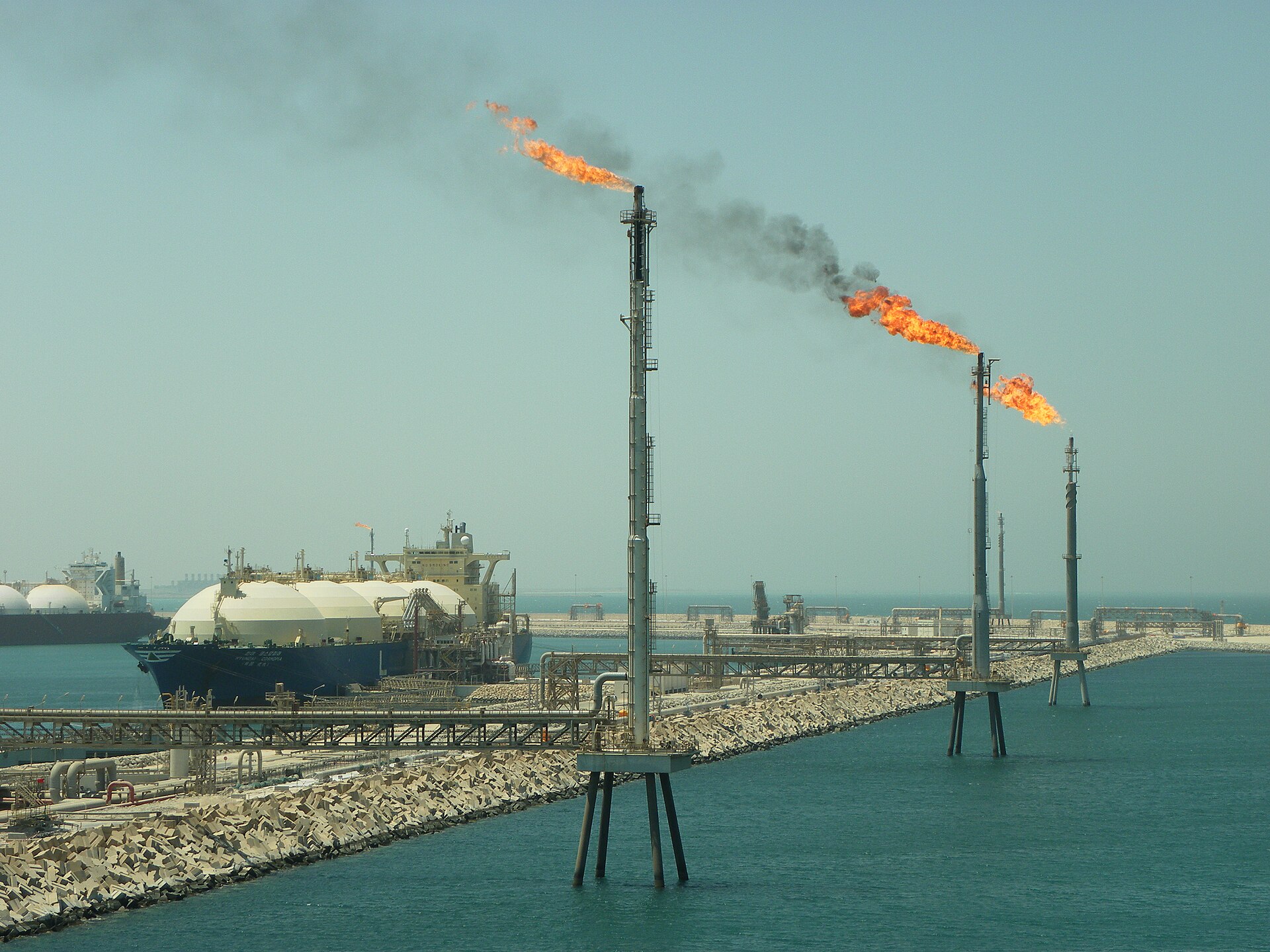
On March 18, 2026, Iran launched five ballistic missiles at Qatar’s Ras Laffan Industrial City. One struck the facility, igniting fires and causing damage Qatar Energy Minister al-Kaabi assessed at three to five years of repairs. The attack disrupted 17% of Qatar’s LNG exports u2014 a direct hit to the infrastructure that funds Doha’s fiscal model.
n
Qatar’s immediate response was bifurcated. Within 24 hours, the MOFA declared Iran’s military and security attachu00e9s persona non grata.
n
“A dangerous escalation, a flagrant violation of its sovereignty, and a direct threat to its national security.” u2014 Qatar MOFA official statement via Qatar News Agency, March 18, 2026
n
The diplomatic expulsion was unambiguous. The reconciliation that followed outpaced any GCC precedent in the current conflict.
n
By late March, MEMRI documented an apparent “return to normalcy” in Qatar-Iran relations, citing what appeared to be undisclosed Iranian guarantees against further strikes. Saudi Arabia, struck at Prince Sultan Air Base on March 27 u2014 nine days after Ras Laffan u2014 has received no equivalent guarantee and taken no punitive diplomatic action against Tehran in the 81 days since its last such action on March 21.
n
n
Reconciliation accelerated into economic partnership. On May 25, Iran dispatched the highest-level delegation sent to any Gulf state during the war: Foreign Minister Araghchi, Parliament Speaker Ghalibaf, and Central Bank Governor Hemmati. The three traveled to Doha for bilateral economic negotiations (Israel Hayom, Iran International, May 2026). The result: a $6 billion line of credit for Iran, structured as civilian-purpose purchases routed through Doha.
n
The timeline from missile strike to $6 billion credit line: approximately ten weeks. From persona non grata declaration to hosting Iran’s parliament speaker: nine. What enabled this speed was not diplomatic forgiveness but geology. Qatar and Iran share the North Field/South Pars formation, the world’s largest natural gas reservoir at approximately 50 trillion cubic meters. The field is physically contiguous u2014 production decisions on one side affect pressure dynamics on the other. Qatar’s interest in Iranian non-aggression is embedded in the rock beneath both countries’ territorial waters.
n
The $6 Billion Qatar Deployed Without Saudi Arabia
n
The $6 billion credit line finalized during the May 25 Doha meeting requires separate examination because it reveals the bilateral and independent character of Qatar’s Iran relationship.
n
The funds draw from $12 billion in Iranian assets held in Qatar, originally transferred from South Korean financial institutions under earlier sanctions-relief arrangements. Iran’s demand in the current US MOU negotiations u2014 $12 billion released at signing as a precondition for any Hormuz discussion u2014 references the same capital pool Qatar has now partially activated through a separate bilateral mechanism.
n
Qatar structured the credit line for civilian-purpose purchases routed exclusively through Doha, designed to satisfy US Treasury oversight requirements. Israel Hayom, which broke the story on May 31, and Iran International both described the framework as negotiated by Qatar alone. No reporting from any outlet references Saudi input, GCC coordination, or advance notification to Riyadh.
n
The precedent is familiar but the context is not. In 2023, Qatar facilitated a $6 billion Iranian asset unfreezing from South Korea that underpinned Gaza hostage negotiations. That arrangement was re-frozen after the October 7 attacks. The current credit line reprises the model during an active conflict in which Saudi Arabia is a target u2014 deployed by a state that claims to be coordinating with Saudi Arabia, without Saudi Arabia present when the terms were written.
n
Iran’s broader $24 billion frozen-asset demand u2014 the figure at the center of Treasury Secretary Bessent’s IEEPA directive u2014 treats the Qatar-held funds as part of the equation. Qatar’s unilateral deployment of half the assets it holds changes the arithmetic Saudi Arabia faces. Riyadh did not alter it, was not consulted on it, and learned of it from the same press reports as everyone else.
n
What Does Iran’s Readout Tell Us About Saudi Arabia’s Diplomatic Status?
n
Iran’s characterization of its own contacts with Saudi Arabia on June 9-10 is the clearest indicator of how Tehran classifies Riyadh in the current diplomatic order.
n
Araghchi called Saudi FM Faisal bin Farhan in the June 9-10 window. Iran’s readout, reported by the Tribune India and Islam Times, focused on condemning US strikes on Iranian territory and affirming Iran’s right to self-defense. The readout does not describe Faisal as offering proposals, conveying third-party messages, or mediating. Iran framed the call as informational: Tehran explaining its military rationale to a regional capital.
n
Contrast this with Iran’s treatment of Qatar in the same week. The June 10 delegation was received as a functional intermediary in US-Iran negotiations. The May 25 Doha summit u2014 Araghchi, Ghalibaf, Hemmati u2014 involved three distinct Iranian power centers: the foreign ministry, parliament, and central bank. That composition signals economic and political engagement across Iran’s decision-making apparatus. A courtesy briefing does not require three principals.
n
The operational distinction is clear. A state that receives informational calls observes the mediation. A state that receives delegations carrying negotiating mandates participates in it. Iran’s behavior draws the line on June 10: Qatar is a channel. Saudi Arabia is an audience.
n
The June 3 Qatar-Saudi FM call u2014 the first of the two confirmed in this cycle u2014 offers the same pattern from a week earlier. Qatar’s MOFA published a readout. Saudi Arabia’s did not. If both calls were genuine coordination sessions, Riyadh chose twice in eight days to let Doha control the public record of their joint diplomatic effort. If they were notification calls rather than coordination calls, the pattern explains itself: the notified party does not issue readouts because it had no input to characterize.
n
This pattern tracks with Riyadh’s broader diplomatic posture during the war. FM Faisal’s June 2-4 contacts comprised six bilateral calls u2014 none with Secretary Rubio, none with Araghchi, none with any party engaged in US-Iran negotiations. The calls were lateral: regional allies and counterparts, not principals or intermediaries. Iran’s conditional cessation framework addressed Israel and the United States by name. Saudi Arabia appeared in Iran’s operational calculations as a geography, not an interlocutor.
n
The Blockade That Created the Dependency
n
The Qatar blockade of 2017-2021 occupies a specific structural role in this analysis. It explains why Doha, and not Riyadh, holds the Iran channel in 2026.
n
On June 5, 2017, Saudi Arabia, the UAE, Bahrain, and Egypt simultaneously severed diplomatic relations with Qatar and imposed land, air, and sea restrictions. The 13 demands included closing Al Jazeera, shuttering a Turkish military base, downgrading Iran ties, and expelling Hamas’s political bureau from Doha. Qatar rejected all 13.
n
The blockade lasted three and a half years. It ended with the Al-Ula Declaration on January 5, 2021, brokered by Kuwait and the United States under the outgoing Trump administration. The declaration’s language u2014 “solidarity and stability” u2014 contained no verifiable obligations.
n
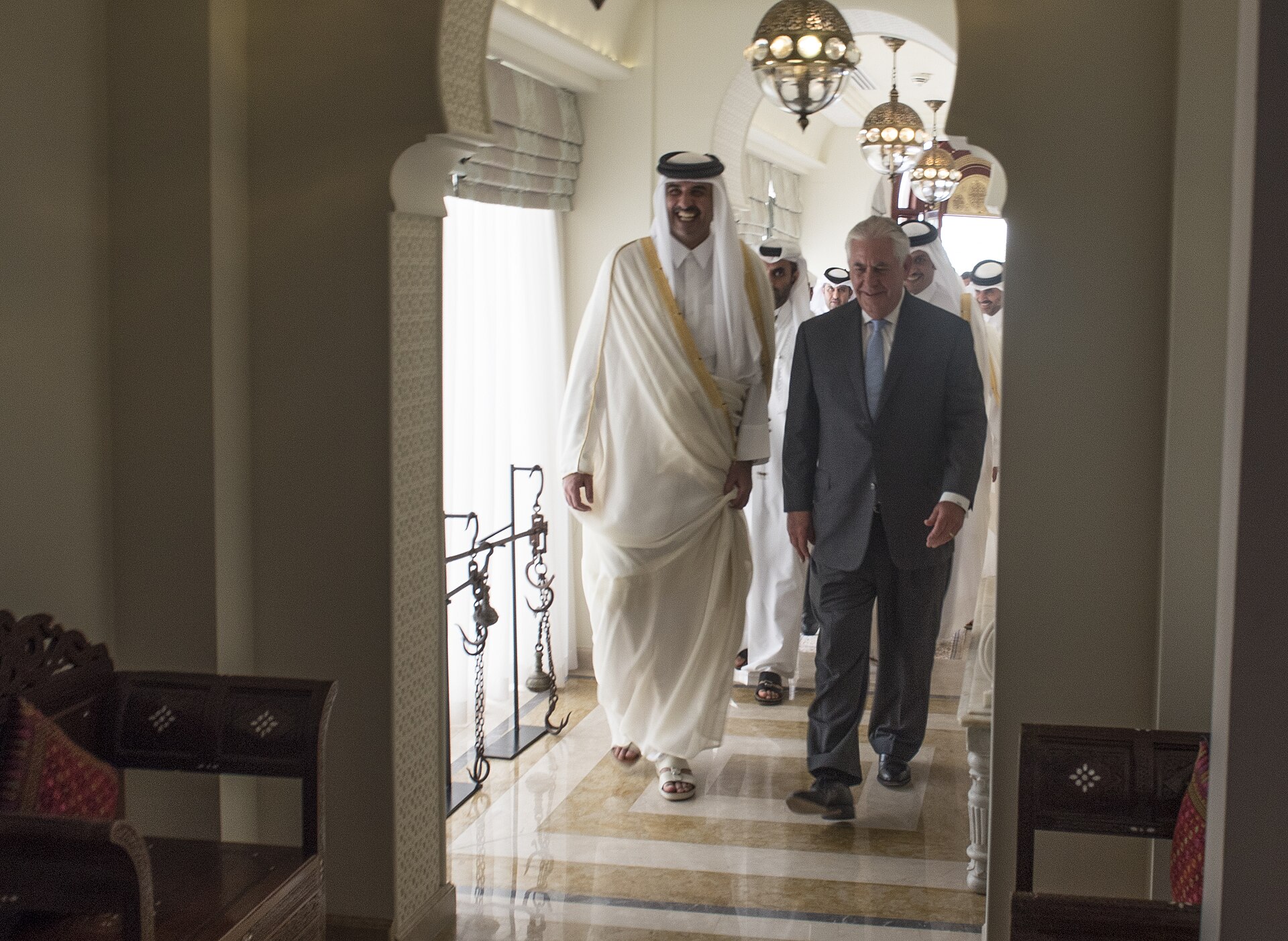
Qatar did not sever ties with Iran. It did not close the Hamas office. Al Jazeera continued broadcasting. The Turkish military base remained operational. The blockade ended on Qatar’s terms.
n
n
Saudi Arabia severed its own Iran relations in January 2016 after Iranian protesters stormed the Saudi embassy in Tehran. The trigger had been the execution of Shia cleric Nimr al-Nimr. Relations were not restored until March 2023, through Chinese-brokered talks in Beijing u2014 a seven-year gap. That gap left Riyadh with no institutional depth for Iranian engagement: no active economic commissions, no shared-resource coordination, no established communication protocols with Iran’s foreign ministry.
n
Qatar maintained all of these throughout the blockade period and after. When Iran struck Ras Laffan on March 18, 2026, Doha had a pre-existing architecture to reactivate. That architecture included ambassadorial channels, economic committees linked to North Field/South Pars coordination, and direct lines to Iran’s foreign ministry. Saudi Arabia, working from a three-year-old restoration with shallow institutional roots, had a formal channel and little else.
n
The causal chain is direct. Saudi Arabia’s blockade was designed to force Qatar to sever ties with Iran. Qatar refused. That refusal preserved the diplomatic architecture that makes Doha the GCC’s sole functioning Iran intermediary during a war Riyadh did not choose, cannot end, and u2014 as of June 10, 2026 u2014 cannot mediate.
n
Can Saudi Arabia Build an Iran Channel Without Qatar?
n
The constraints are specific and they compound.
n
The Pakistan track operates through an intermediary with its own interests. General Munir’s letter to Mojtaba Khamenei was a Pakistani initiative, not a Saudi commission. Pakistan maintains its own bilateral relationship with Iran, its own domestic constraints u2014 Balochistan, sectarian balance, IMF conditionality u2014 and its own ambition to position itself as an indispensable regional broker. The 13,000 SMDA troops in Saudi Arabia’s Eastern Province give Islamabad structural influence over Riyadh that makes the inverse u2014 Saudi direction of Pakistan’s Iran channel u2014 implausible.
n
The Oman track has been functionally absorbed by Washington. After Trump’s May 28 Cabinet threat and Bessent’s Treasury pressure, Muscat serves American purposes on American terms. Saudi Arabia cannot redirect a channel the United States has already captured.
n
A direct Saudi-Iran channel would require institutional architecture that does not exist at the depth wartime mediation demands. The March 2023 Chinese-brokered restoration produced ambassadors and formal mechanisms, but no working back-channel to the IRGC’s decision-making apparatus u2014 and the IRGC does not route wartime decisions through foreign ministries. The Hajj bilateral mechanism expired on June 9 with the last Iranian pilgrims’ departure. No replacement forum has been announced.
n
Saudi Arabia’s last punitive diplomatic action against Iran u2014 March 21, 2026 u2014 preceded the Qatar delegation by 81 days. In that interval, Riyadh has not expelled Iranian diplomats, recalled its own ambassador, filed a UN protest, or imposed bilateral sanctions. FM Faisal’s public silence on Iran and Houthi operations has exceeded ten consecutive days as of June 10.
n
Saudi Arabia lacks the components Qatar possesses. It has no shared economic asset comparable to North Field/South Pars that creates mutual geological dependency with Tehran. No military base-hosting arrangement with Washington that parallels Al Udeid. No frozen-asset pool granting direct relevance to sanctions-relief sequencing. And no institutional history of continuous Iran engagement that survived the 2016-2023 break. The June 10 delegation departed for Tehran after consultations with Washington. No Saudi permission was sought, needed, or u2014 based on all available reporting u2014 offered.
n
Frequently Asked Questions
n
Does Saudi Arabia have any direct communication line with Iran?
n
Saudi Arabia and Iran restored diplomatic relations in March 2023 through Chinese-brokered talks, and ambassadors were exchanged. Iran’s FM Araghchi called Saudi FM Faisal in the June 9-10 window. Iran’s readout framed the call as informational u2014 Tehran explaining its military rationale u2014 rather than consultative. The formal channel exists but does not operate at the level wartime decision-making requires, which routes through the IRGC rather than through foreign ministries. China, which brokered the 2023 restoration, has not been publicly active in the 2026 mediation architecture.
n
Has Qatar served as a mediator in previous conflicts?
n
Qatar brokered the November 2023 Gaza ceasefire and hostage-release deal through its relationship with Hamas’s political bureau, based in Doha since 2006. Qatar also hosted the Taliban’s political office from 2013 onward, facilitating US-Taliban negotiations. A 2025 study in Middle Eastern Studies (Tandfonline), titled “Any port in a storm: Qatar as a biased mediator,” characterized Doha’s approach as one in which the mediator’s interests in the outcome are structural, not incidental. The Iran track in 2026 replicates this pattern: Qatar holds frozen assets ($12 billion), hosts American military infrastructure (Al Udeid), and shares a natural gas reservoir with Tehran.
n
Why did Saudi Arabia blockade Qatar in 2017?
n
Saudi Arabia, the UAE, Bahrain, and Egypt launched the blockade on June 5, 2017, citing Qatar’s relationships with Iran, the Muslim Brotherhood, and Hamas, and Al Jazeera’s editorial line. The coalition issued 13 demands; Qatar rejected all. The blockade ended January 5, 2021, with the Al-Ula Declaration, which imposed no verifiable obligations on Doha. The 3.5-year blockade inadvertently preserved Qatar’s Iran channel u2014 the one Saudi Arabia tried to sever u2014 while Saudi Arabia’s own Iran ties remained broken from 2016 to 2023.
n
What economic interests drive Qatar’s Iran engagement during the war?
n
Qatar and Iran share the North Field/South Pars formation u2014 approximately 50 trillion cubic meters of natural gas, the world’s largest reservoir. Qatar’s LNG exports transit the Strait of Hormuz, making reopening a direct fiscal interest. Despite Iran striking Ras Laffan on March 18, 2026 and disrupting 17% of LNG exports, Qatar extended Iran a $6 billion credit line by May 25. The reconciliation speed u2014 five weeks from missile strike to restored relations u2014 reflects a calculation that permanent antagonism with the state sharing your primary revenue-generating geological asset costs more than accommodation.
n
What is the IranWire “coordination” claim based on?
n
IranWire reported on June 8, 2026, that Qatar’s PM/FM and Saudi FM discussed “mediation efforts between the United States and Iran” during a phone call. The sole named source is Qatar’s MOFA readout. Saudi Arabia’s MOFA issued no public statement on the call’s substance. No other outlet used the term “coordination” to describe the Qatar-Saudi relationship on Iran mediation. The gap between Qatar’s publication and Saudi Arabia’s silence is the central analytical question: whether the call constituted genuine coordination or post-hoc notification framed as partnership.
The GCC structural gaps that leave Saudi Arabia outside every active diplomatic track are mirrored in its collective defense posture: the 167th ministerial invocation covered Kuwait and Bahrain, not PSAB — a parallel examined in Saudi Arabia Signed the Collective Defense Clause for Kuwait.
That pattern held at the G7 level too. On June 12, the same day Riyadh was named in Trump’s Truth Social post as a deal “approver,” Saudi Arabia formally declined France’s G7 Evian invitation while hosting France’s Middle East adviser in a bilateral meeting — signalling the same format preference that defines its position on Iran mediation.
n”}