MANAMA — The GCC told Kuwait and Bahrain on June 11 that “any attack against one of them is an attack against them all” — the first time in the bloc’s 45-year history that explicit collective defense language has appeared in a ministerial communiqué. What the 167th Ministerial Council does not address, and what no GCC instrument has addressed in the 76 days since it happened, is Prince Sultan Air Base — where an IRGC strike on March 27 destroyed a US E-3G AWACS in the first confirmed combat loss of that aircraft in history, wounded American service members, and inflicted over $4 billion in damage to a facility on Saudi sovereign territory. Saudi Foreign Minister Prince Faisal bin Farhan flew to Manama to co-sign the communiqué. The asymmetry is structural, not diplomatic: Saudi Arabia has no Status of Forces Agreement for the US military presence at PSAB, which leaves the base in a treaty vacuum that the GCC’s Joint Defense Agreement — designed without automatic triggers and contingent on each member state’s political decision — cannot cover.
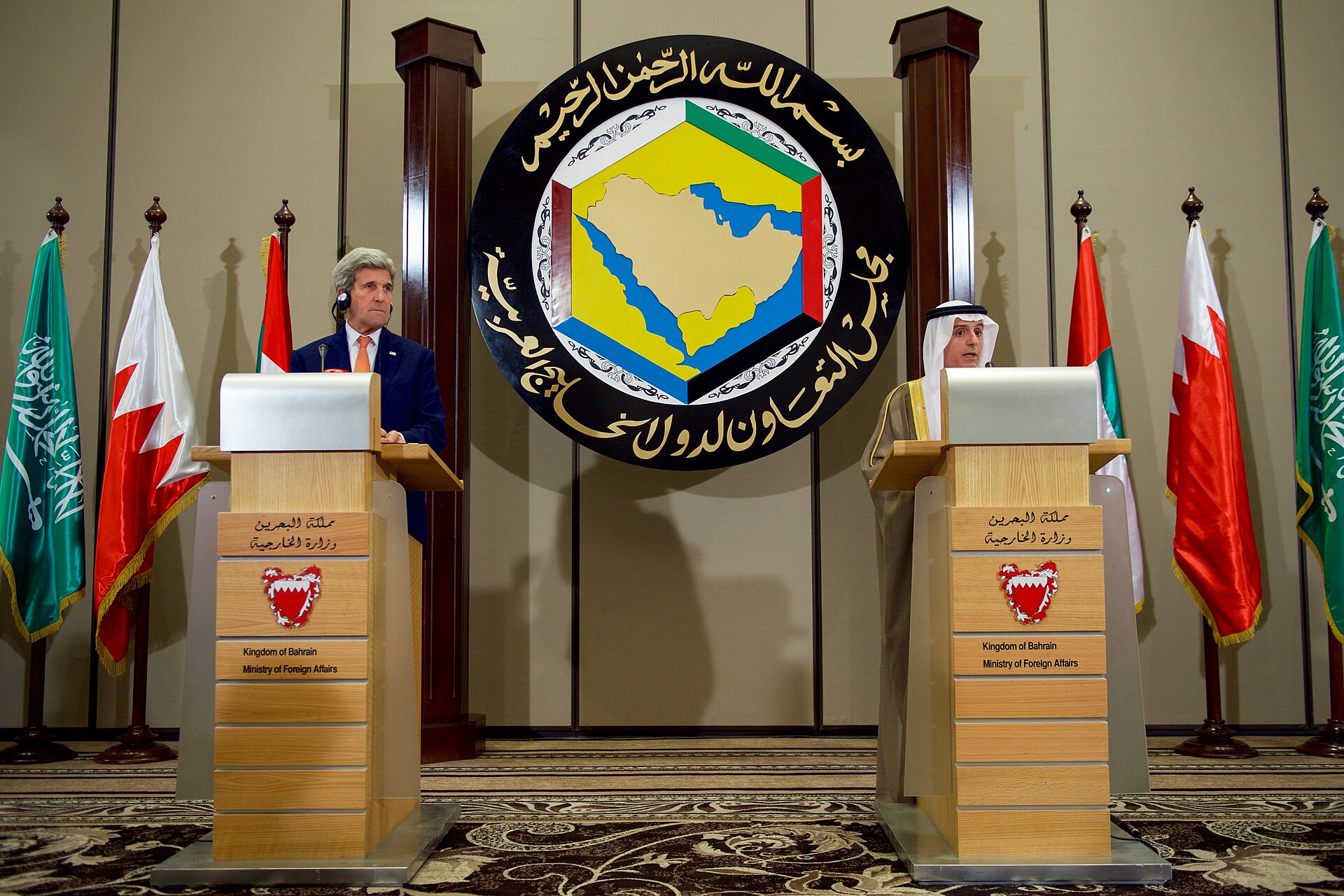
Table of Contents
- What the 167th Ministerial Actually Said
- March 27 and the Silence That Followed
- How Does the GCC Joint Defense Agreement Work?
- Why Did Kuwait and Bahrain Receive Collective Defense but Not Saudi Arabia?
- How Did Iran Erase Saudi Ownership of Its Own Air Base?
- What Did the September 2025 Qatar Activation Accomplish?
- The Peninsula Shield Force at Forty-Five
- Who Defends the State That Hosts the Secretariat?
- Frequently Asked Questions
What the 167th Ministerial Actually Said
The communiqué language matters because the GCC has spent four and a half decades avoiding precisely this formulation. “The security of the GCC states is indivisible,” the 167th Ministerial Council declared from Manama on June 11, “and any attack against one of them is an attack against them all.” The Council affirmed “the established and legitimate right of its states to defend themselves, individually and collectively, and to respond to this aggression by all legitimate means, in accordance with Article 51 of the Charter of the United Nations.” For NATO, this would be boilerplate; for an organization that has never deployed its own military force against an external attack on a member state, it reads like a constitutional shift.
“The security of the GCC states is indivisible, and any attack against one of them is an attack against them all.”
167th GCC Ministerial Council communiqué, Manama, June 11, 2026
The strikes that triggered the declaration came on June 10, when the IRGC hit 18 targets across two waves — Ali Al-Salem and Ahmed Al-Jaber air bases in Kuwait, Sheikh Isa Air Base in Bahrain hosting the US Fifth Fleet, and Al-Azraq in Jordan, the fourth country struck in a single night’s operations. Fifteen Americans were wounded at Ali Al-Salem alone. Kuwait expelled Iranian diplomats within hours, and Bahrain activated bilateral treaty mechanisms before the ministerial had even convened — sovereign responses that drew on the same legal instruments which made collective defense invocation possible.
Prince Faisal arrived in Manama to co-sign the communiqué and issued Saudi Arabia’s own statement affirming “full solidarity with Bahrain, Kuwait, and Jordan, and its support for all measures taken by these nations to safeguard their sovereignty.” The communiqué addressed Tehran with language sharper than any previous GCC text: “Aggression does not build relations, and intimidation does not create stability.” Both statements share a feature more revealing than anything they contain — neither mentions March 27, neither names Prince Sultan Air Base, and neither extends the “attack on one” formulation retroactively to the costliest base strike of the entire conflict.
The Middle East briefing 3,000+ readers start their day with.
One email. Every weekday morning. Free.
March 27 and the Silence That Followed
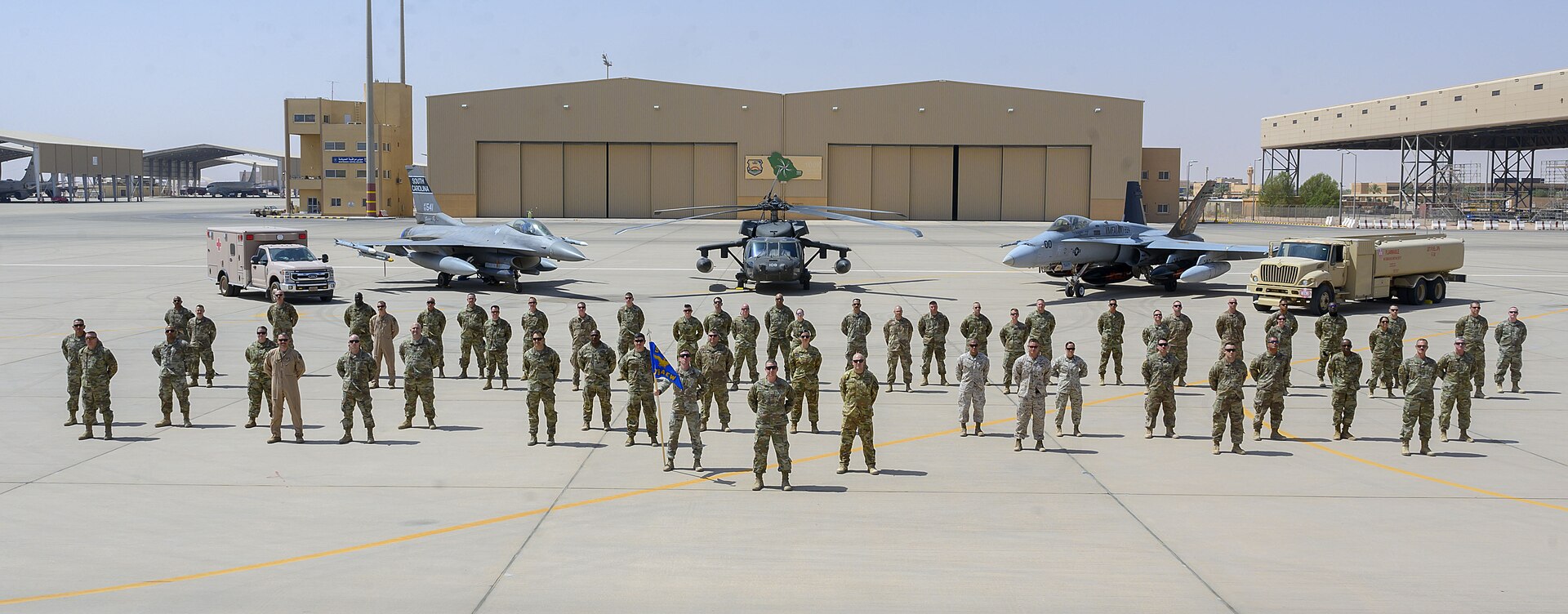
On March 27, the IRGC struck Prince Sultan Air Base outside al-Kharj with six ballistic missiles and 29 one-way attack drones in an operation PressTV designated “True Promise 4, Wave 84.” The attack destroyed E-3G AWACS tail number 81-0005 — an aircraft in USAF service since 1977, whose loss was the first confirmed combat destruction of an American AWACS in the platform’s five-decade operational history — and damaged multiple KC-135R Stratotanker refueling aircraft that had been parked on the apron. At least 12 to 15 American service members were wounded, according to Defence Security Asia and Air and Space Forces Magazine. By any available metric — cost, strategic impact, the prestige of the system destroyed — PSAB on March 27 was the single most damaging base strike against any GCC member in this conflict.
The GCC’s institutional response was silence. No extraordinary ministerial session was convened. No collective defense statement was issued naming the base or the date. The 50th Extraordinary GCC Ministerial — held on March 1, twenty-six days before the strike — had addressed Iranian aggression in general terms, affirming “the solidarity of all GCC countries in addressing Iranian attacks and defending their sovereignty, security, and national interests,” but the session predated the PSAB attack and its language stopped well short of the “attack on one is attack on all” formulation that appeared in the June 11 communiqué.
Saudi Arabia’s own Ministry of Foreign Affairs issued no public statement addressing the PSAB attack for over eight days, a silence made more conspicuous by what followed for other states under similar circumstances. Kuwait’s same-day diplomatic expulsions after June 10 and Bahrain’s rapid treaty activations demonstrated what sovereign response looks like when a state has the legal architecture to support one. Two smaller GCC members, struck less severely, generated more institutional and bilateral activity in 24 hours than Saudi Arabia managed in eleven weeks.
How Does the GCC Joint Defense Agreement Work?
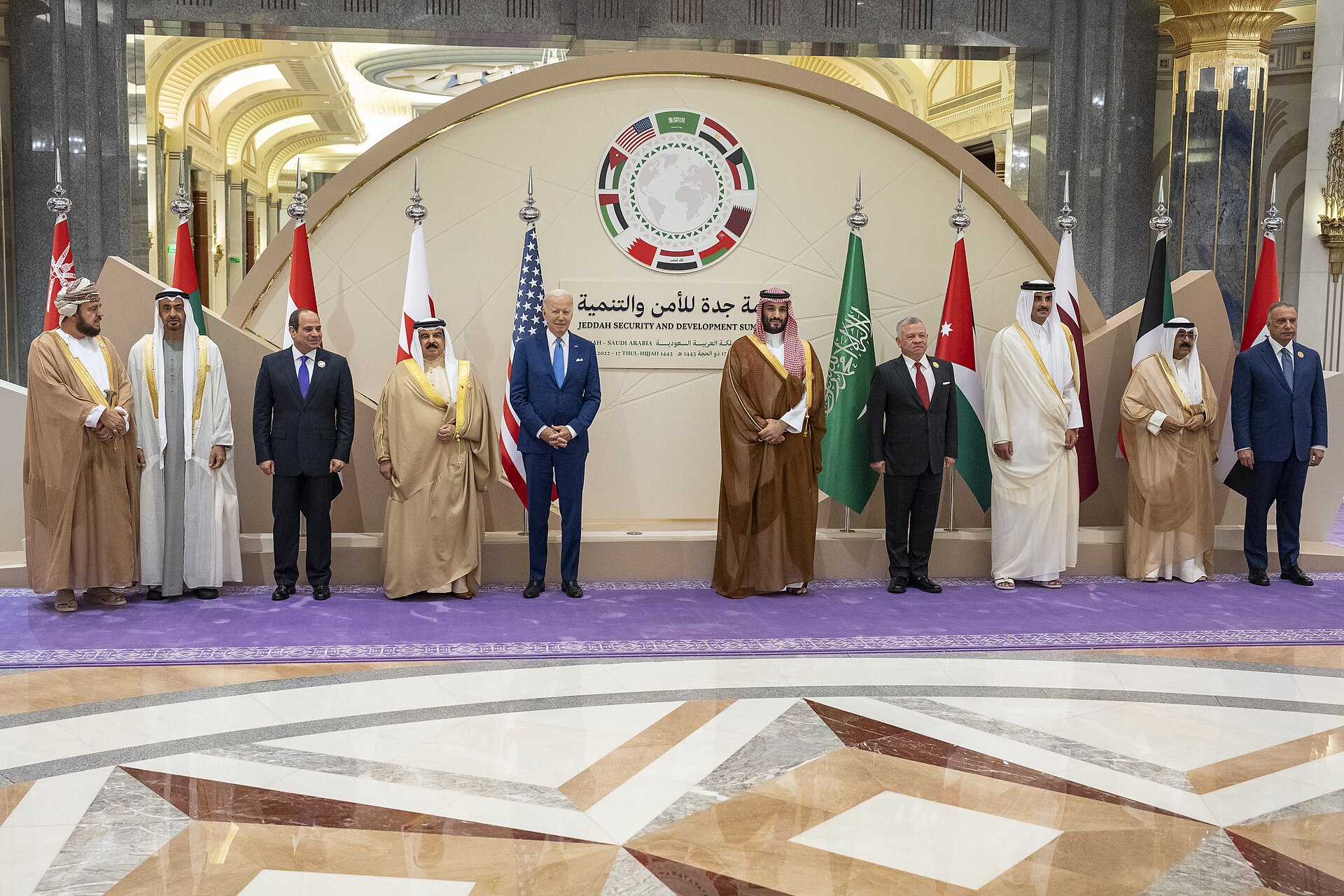
The GCC Joint Defense Agreement, signed at the December 2000 summit and ratified by Qatar in 2001, contains 12 articles modeled loosely on NATO’s Article 5: an attack on one member constitutes an attack on all. Unlike NATO, the agreement has no automatic trigger for mobilization, and activation remains contingent on each member state’s individual political decision.
The GCC’s collective security architecture sits on three separate instruments that were never built to interlock with one another. The founding Charter, signed in Abu Dhabi on May 25, 1981, set out coordination objectives in Article 4 but did not mention defense — an omission reflecting the Gulf states’ preference, at the time and since, for bilateral security relationships with Washington over collective regional commitments. The Peninsula Shield Force, created in 1984, has existed for 45 years without a single deployment against an external attack on a member state. The Joint Defense Agreement, ratified two decades after the Charter as a separate bolt-on instrument, has never had its full text publicly released in English; most Western analysis relies on the Congressional Research Service’s Report RS20831 from February 2001, which assessed the treaty obligation as “unlikely to include automatic triggers for mobilization.”
That assessment has proved durable across 25 years and multiple conflicts. Houthi missiles and drones struck Saudi Arabia hundreds of times during the Yemen war without triggering collective defense language from the GCC; the IRGC struck all six member states simultaneously on February 28 without producing the “attack on one” formulation; and the same diplomatic architecture that was supposed to undergird the agreement’s commitments failed to produce a dedicated session when PSAB was struck on March 27. The June 11 communiqué’s invocation of collective defense language for the first time is a genuine institutional novelty — which makes the absence of any equivalent for Saudi Arabia that much harder to overlook.
| Attack Event | Date | Target State | GCC Institutional Response | “Attack on One” Language |
|---|---|---|---|---|
| Houthi strikes on Saudi Arabia | 2015–2022 | Saudi Arabia | General solidarity statements | Not used |
| Israel strikes Hamas offices, Doha | Sep 9, 2025 | Qatar | JDA “activated” (first declared use) | Not used |
| Iran strikes all 6 GCC states | Feb 28, 2026 | All members | 50th Extraordinary Ministerial (Mar 1) | Not used |
| Iran strikes PSAB | Mar 27, 2026 | Saudi Arabia | No session convened | Not used |
| Iran strikes Kuwait, Bahrain, Jordan | Jun 10, 2026 | Kuwait, Bahrain | 167th Ministerial (Jun 11) | Yes — first in GCC history |
Sources: GCC Secretariat; SPA; Arab Center DC; Arab News; Gulf Times; Al Jazeera
Why Did Kuwait and Bahrain Receive Collective Defense but Not Saudi Arabia?
Kuwait and Bahrain both maintain Status of Forces Agreements that define the legal basis for US military installations on their territory, giving each government a formal treaty instrument for claiming sovereign victim status when those installations are struck. Saudi Arabia has no equivalent for Prince Sultan Air Base — its only bilateral framework is a 1977 USMTM Memorandum of Understanding that carries no SOFA provisions and does not establish the legal jurisdiction or host-nation authority that a SOFA provides.
The distinction produced two entirely different institutional outcomes within the same conflict and the same week. When Iran struck Ali Al-Salem on June 10, Kuwait’s SOFA gave the government standing to declare that Kuwait itself — not merely the United States — had been attacked as a sovereign state hosting a foreign military presence under formal legal arrangements. That standing gave the GCC a clean legal basis for collective response under the Joint Defense Agreement. Kuwait expelled two Iranian diplomats the same day, an assertion of sovereign agency that required no ambiguity about whose territory had been violated, and Bahrain’s Fifth Fleet presence at NSA Bahrain, operating under equally formal bilateral instruments, allowed Manama to activate its own treaty mechanisms before the GCC ministerial had even convened.
Saudi Arabia’s position is structurally different. The 1977 USMTM Memorandum of Understanding is not a SOFA. It does not define legal jurisdiction over American personnel or equipment at PSAB, and it does not create the host-nation framework that would give Riyadh standing to invoke GCC collective defense on the grounds that its sovereign territory was attacked in a legally cognizable way. When the IRGC struck the base and Iran’s state media designated it “US-run,” Saudi Arabia’s treaty architecture offered no mechanism to formally dispute the characterization and no institutional hook on which to hang a collective defense claim.
Ali Bakir, a defense analyst and professor at Qatar University, assessed the broader situation for the Gulf International Forum with precision: “Collective coordination among Gulf states remains limited at best and operationally non-existent beyond the public statement.” The Carnegie Endowment for International Peace warned in April 2026 that if Saudi Arabia and the UAE pursued divergent security strategies — Riyadh prioritizing diplomacy while Abu Dhabi deepened ties with Israel — the two largest GCC members risked a “bidding war for scarce U.S. air defense stockpiles” that “could drive prices up for both.” The communiqué in Manama advances the rhetoric; the architecture behind it has not moved.
How Did Iran Erase Saudi Ownership of Its Own Air Base?
Iran’s IRGC and state media consistently designated Prince Sultan Air Base as “the US-run al-Kharj air base,” removing Saudi Arabia from the target description entirely. By framing every PSAB strike as an operation against American military assets rather than Saudi sovereign territory, Tehran foreclosed any Saudi claim to victim status that might have compelled a GCC collective defense response — and did so using a characterization that Saudi Arabia’s own treaty void makes difficult to rebut.
PressTV’s headline conventions trace the erasure with mechanical consistency across every wave of the campaign. “IRGC strikes US-run al-Kharj air base in wave 51 of retaliation” ran on March 14; “IRGC missiles target US refueling planes at Al-Kharj Base” ran on March 27, the day the AWACS was destroyed. In the IRGC’s own operational communications, al-Kharj was described as “the origin of aggressions against the Islamic homeland” and “key hub for US aggressors’ deployments” — an institutional lexicon that treats the base as American property on borrowed ground, with Saudi Arabia absent from every sovereign designation. The consistency is not incidental; it is an operational doctrine applied to language as deliberately as the IRGC applies it to targeting.
The framing is strategically coherent in a way that Riyadh’s treaty void makes exceptionally difficult to contest. When Iran struck Ali Al-Salem on June 10, PressTV deployed identical language — “the US Ali Al-Salem airbase in Kuwait” — but the outcome diverged, because Kuwait’s SOFA anchors the American presence in Kuwaiti law and allowed the government to assert, within hours, that the strike constituted an attack on Kuwait itself. Saudi Arabia’s structural position denied it the same response. Iran did not invent the ambiguity about whose base PSAB is; Iran exploited an ambiguity that already existed in the bilateral framework, and the GCC’s collective defense architecture proved unable to resolve it.
The practical consequence extends beyond PSAB. Iran has developed what amounts to a selective-sovereignty doctrine for striking GCC territory — choosing which member states can claim victim status under the Joint Defense Agreement based not on Iranian military sophistication but on the specific legal gaps within each target state’s treaty architecture. Kuwait, Bahrain, and Qatar can reassert sovereignty when struck, because they signed the instruments that sovereignty requires. Saudi Arabia, the state that hosts the GCC Secretariat and co-authored the Joint Defense Agreement, did not sign the instrument that would have made the agreement apply to its own largest base.
What Did the September 2025 Qatar Activation Accomplish?
When Israel struck Hamas offices in Doha on September 9, 2025, the GCC declared the Joint Defense Agreement “activated” for the first time — enhancing intelligence exchange, sharing real-time air situation data, and accelerating a regional ballistic missile early warning system. Arab Center DC assessed the outcome with a bluntness the GCC’s own communiqués have never matched: the activation was “nothing more than an expression of solidarity” and constituted “only a symbolic gesture.”
“It’s nothing more than an expression of solidarity when there is an aggression against one of the GCC states.”
Arab Center DC, “Israel’s Attack on Qatar and the Failure of GCC Defense Cooperation,” September 2025
The September 2025 episode remains the GCC’s only prior formal invocation of the Joint Defense Agreement, and the gap between what “activation” was announced to produce and what it delivered in practice is instructive for reading the June 11 communiqué. The stated deliverables — intelligence sharing, air situation data, early warning acceleration — are capabilities that either existed in rudimentary form through bilateral US-GCC arrangements or required years of procurement and integration to build from scratch. Nine months after the declared activation, the GCC’s operational coordination during the June 10 strikes appeared to rely on the same bilateral US relationships that predated September 2025, not on any new GCC-internal architecture that the “activation” produced.
The June 11 communiqué escalates the rhetoric beyond the Qatar precedent — “attack on one is attack on all” is a harder formulation than anything September 2025 generated — but the GCC announced no new operational mechanism alongside it, no alteration to the Peninsula Shield Force’s mandate, and no joint procurement initiative that would give the language material weight. The IISS, in its March 2026 analysis of Iranian strikes on the GCC, called for “a united defense architecture of Gulf states with genuine collective leadership,” a recommendation that presupposes the current architecture has neither — which, after 76 days of institutional silence on PSAB and nine months of post-“activation” stasis, is a difficult conclusion to contest.
The Peninsula Shield Force at Forty-Five
The Peninsula Shield Force was established in 1984, four years into the Iran-Iraq War and three years after the GCC Charter was signed, as the bloc’s dedicated joint military formation. In 45 years, it has never been deployed against an external attack on a GCC member state. Its single operational deployment — to Bahrain in March 2011, to help Manama confront an internal protest movement — was directed at a domestic crisis, not a foreign military threat, and generated political controversy within the GCC that took years to dissipate.
The force is headquartered at King Khalid Military City in Hafr al-Batin, Saudi Arabia — inside the territory of the member state that the GCC’s collective defense communiqué failed to cover. It maintains an estimated strength of approximately 40,000 personnel, drawn from brigade-sized contributions by each member state, and has conducted joint exercises over the decades. But the exercises have focused on conventional ground and air operations, and the force has never been operationally tested against the kind of combined ballistic missile, cruise missile, and drone salvos that define the current conflict with Iran — a threat profile measured not in battalion engagements but in interceptor magazines.
The February 28 simultaneous strikes on all six GCC states, the March 27 PSAB attack, and the June 10 Kuwait-Bahrain-Jordan strikes collectively represent the most sustained conventional military assault on GCC territory in the organization’s history. The Peninsula Shield Force has played no documented role in any phase of the response, and the June 11 communiqué does not mention it by name. The same Manama session that produced the “attack on one” language also hosted a bilateral GCC-Canada security meeting, a pairing that suggests the bloc is shopping externally for partnerships its own 45-year-old internal formation has never been called upon to provide.
Who Defends the State That Hosts the Secretariat?
The GCC Secretariat sits in Riyadh, 75 kilometres from Prince Sultan Air Base. Saudi Arabia hosts the administrative infrastructure of the organization that just issued its first explicit collective defense language — for Kuwait and Bahrain — while producing nothing equivalent for Saudi Arabia itself. The Kingdom pays the largest share of the GCC’s operating budget and has provided the Secretariat’s physical premises since 1981, an arrangement the current conflict has not disrupted and no member has publicly questioned.
Whether the June 11 communiqué produces anything beyond what September 2025’s “activation” yielded depends on institutional reforms that the GCC has discussed for a quarter-century without undertaking. The three-layer architecture — Charter, Peninsula Shield Force, Joint Defense Agreement — was assembled across two decades by states that treated collective defense as a rhetorical commitment rather than an operational one, and the current conflict has tested that architecture against sustained, large-scale conventional attack for the first time in its history. The results have not been encouraging. Bakir’s assessment that GCC coordination is “operationally non-existent beyond the public statement” remains the most concise available verdict on an institution that has produced a steady escalation in communiqué language without any corresponding escalation in collective capability.
The structural gap is Saudi Arabia’s to close, and closing it carries costs that Riyadh has avoided for nearly fifty years. A Status of Forces Agreement for PSAB would give the Kingdom the treaty basis to invoke collective defense the next time the base is struck, but it would also formalize the American military presence on Saudi soil in terms that every Saudi government since the 1977 USMTM MOU has deliberately refused to accept — for domestic political reasons that predate this conflict by decades and will outlast it. The March 27 attack, with its destroyed AWACS, its wounded American service members, and its total absence from the GCC’s collective defense record, is the first event that concretely tests whether the domestic political cost of a SOFA still exceeds the strategic cost of operating without one.
Prince Faisal flew to Manama on June 11, signed a communiqué declaring that an attack on one GCC state is an attack on all, and flew back to Riyadh — the city that houses the GCC Secretariat, 75 kilometres from the air base that Iran struck on March 27. The communiqué will be filed in that Secretariat alongside every ministerial record since 1981, in an institutional archive that contains no equivalent document for the largest base strike of the war. What makes June 11 qualitatively different from every prior GCC communiqué is that within hours of signing, Trump declared the war concluded in a deal Iran denied — leaving Saudi Arabia bound to collective defense obligations it cannot fulfill, at oil prices its fiscal breakeven cannot absorb, with the IRGC shoot-on-sight order the ceasefire was supposed to dissolve still fully in force. What Saudi Arabia owes Kuwait under a ceasefire Iran denied is the question the communiqué created and the announcement left unanswered.
Frequently Asked Questions
Has the full text of the GCC Joint Defense Agreement been publicly released?
The full 12-article text has never been published in English, and the Arabic original — deposited with the GCC Secretariat in Riyadh after Qatar’s ratification in 2001 — is not available through the Secretariat’s public digital library or online document archive. The most substantive English-language analysis remains the Congressional Research Service’s Report RS20831, published February 28, 2001, which draws on diplomatic reporting and official statements rather than a direct textual review. Academic analyses published by the Washington Institute for Near East Policy and in Middle Eastern Studies have supplemented the CRS assessment, but all rely on secondary characterizations of the agreement’s provisions rather than the primary instrument itself.
Could Saudi Arabia retroactively request a collective defense invocation for the March 27 PSAB strike?
Any GCC member state can request an extraordinary ministerial session under the Charter’s procedural rules, and there is no formal statute of limitations governing the Joint Defense Agreement’s invocation for a specific attack. In practice, the 76-day gap since March 27 — during which no member raised the issue at any documented GCC session, including the 167th Ministerial in Manama — has established a de facto precedent treating PSAB as a bilateral US-Saudi matter rather than a GCC collective security event. Retroactive invocation would also require Saudi Arabia to address the underlying SOFA question, since the same structural void that prevented invocation in March would obstruct any late claim.
How does the GCC’s June 11 language compare to NATO Article 5?
NATO Article 5 states that an armed attack against one ally “shall be considered an attack against them all” and obliges each member to take “such action as it deems necessary, including the use of armed force.” The GCC’s June 11 formulation mirrors the first clause almost verbatim but appends a critical qualifier — “in accordance with Article 51 of the Charter of the United Nations” — conditioning the collective response on UN self-defense provisions rather than establishing an independent treaty obligation. NATO also maintains an institutional trigger through the North Atlantic Council, formally invoked exactly once, on September 12, 2001; the GCC has no equivalent procedural mechanism for converting its communiqué language into binding operational commitments, which is why the CRS assessed the GCC obligation as “unlikely to include automatic triggers” a quarter-century before the June 11 communiqué tested the proposition.
Has the Peninsula Shield Force ever trained against ballistic missile threats?
The Peninsula Shield Force has conducted the “Peninsula Shield” joint exercise series over its 45-year history, but these have focused on conventional ground and air scenarios rather than integrated ballistic missile defense, which remains the exclusive domain of bilateral US-GCC arrangements and each state’s national air defense command. The February-to-June 2026 Iranian campaign — involving combined salvos of ballistic missiles, cruise missiles, and one-way attack drones — represents a threat profile the force was not designed, equipped, or trained to counter, and no GCC joint procurement initiative has been announced to address the gap. Integrated missile defense across the Gulf remains a bilateral function of each member’s relationship with the United States, which means the June 11 communiqué’s collective defense language has no collective missile defense architecture behind it.
On June 11, the IRGC confirmed the pattern that clause was designed to address: eighteen targets struck across Kuwait, Bahrain, and Jordan — and none in Saudi Arabia, for the second consecutive multi-base operation. Simultaneously, the 14-point US-Iran draft MOU governing Hormuz reopening was being assembled through three intermediary channels — Oman, Pakistan, and Qatar — without Saudi Arabia in any of them. The deal that would govern the strait Saudi Arabia depends on for crude exports was negotiated without Saudi Arabia’s participation in any channel. Hours later, Trump’s Truth Social post named Saudi Arabia as one of twelve parties that had “approved” a deal it was never party to — an attribution Riyadh has not contested, confirmed, or addressed.
The same distinction between multilateral and bilateral engagement applied four days later: on June 12, Saudi Arabia declined France’s G7 Evian invitation while simultaneously receiving France’s Middle East adviser in Riyadh for a private bilateral — format selection over collective forum accountability. That same bilateral instinct produced the one confirmed Saudi diplomatic act of June 11: while GCC partners absorbed missile strikes, MBS directed the resumption of Lebanese exports to the kingdom — Saudi diplomatic agency applied to the one Arab relationship where Riyadh still controls the terms.