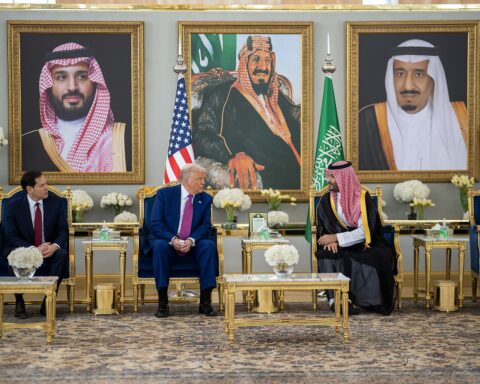
DOHA — On Day 13 of the Iran-US memorandum of understanding’s 60-day Phase 2 window, three delegations arrived in Qatar holding three incompatible accounts of why they were there. The 14-point text contains no mechanism to determine which account is operative, and the clock runs through all of them.
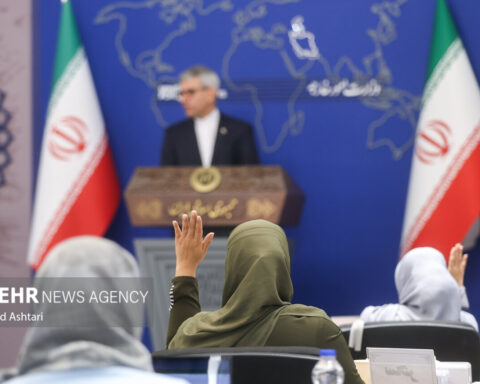
The White House said Iran had requested a meeting. President Donald Trump characterized the Doha session as addressing “the denuclearization of Iran.” Iran’s Foreign Ministry spokesperson, Esmaeil Baghaei, stated on June 30 that “we have no negotiation meetings at any level with the American side” — describing Iran’s delegation as present solely to implement Clause 11, the provision governing frozen Iranian assets.
Iranian President Masoud Pezeshkian, speaking the day before, declared that $6 billion of $12 billion in Iranian resources held in Qatar “will be released and returned to the country.” The United States denied any release had been agreed. Qatar said nothing.
Saudi Arabia, which holds no seat at the Doha talks and bears $5.5 million per day in PGSA exposure, had its foreign minister in Beijing.
Table of Contents
What Does Iran Say the Meeting Is About?
Iran’s Foreign Ministry stated on June 30 that no negotiations with the United States are scheduled at any level. Baghaei described Iran’s delegation as present in Doha solely to follow up on Clause 11 — the MOU provision governing frozen assets — and invoked Clause 13 to explain why formal final-agreement talks cannot yet begin.
Baghaei was specific in separating Iran’s travel from the American delegation’s: “The fact that US representatives are travelling to Qatar has no connection with the trip of the Iranian delegation, which is being undertaken to follow up on the implementation of the provisions of the memorandum of understanding, including Article 11.”
The Middle East briefing 3,000+ readers start their day with.
One email. Every weekday morning. Free.
Clause 11 states that the United States “undertakes to make fully available for use the frozen or restricted funds and assets of the Islamic Republic of Iran upon the implementation of this MOU.” Two conditions are embedded in the text: release occurs only upon full implementation, and the procedures for release must be “mutually agreed” during negotiations. Iran’s position is that its delegation came to Doha to audit whether the US has begun implementing these conditions — not to negotiate a final deal.
Baghaei reinforced this reading with Clause 13, the MOU’s sequencing provision: “We have not yet entered the negotiation phase for the final agreement.” Under Clause 13, negotiations on remaining provisions begin only “after signing the MOU and subject to the beginning of implementation of paragraphs 1, 4, 5, 10 and 11 of the MOU, and the continuing implementation of these measures.” Independent legal analysis from Herbert Smith Freehills Kramer and ORF’s Middle East program confirms that Iran’s reading of this provision is textually defensible.
Iran’s delegation in Doha was, by its own account, not negotiating. It was following up on frozen assets — a framing that recasts the session from a negotiation to an implementation audit and places the burden on Washington to demonstrate that it has begun releasing funds before broader talks can proceed. The MOU names no third party empowered to rule on whether that burden has been met.
The American Version
The White House offered a categorically different account. Press Secretary Karoline Leavitt stated on June 29 that “Iran has requested a meeting this week, so Special Envoy Steve Witkoff and Jared Kushner will be flying to Doha for high-level meetings this week as we continue to discuss the memorandum of understanding.”
Trump’s Truth Social post the same day was more direct: “IRAN HAS REQUESTED A MEETING. IT WILL TAKE PLACE TOMORROW IN DOHA!” He described the subject as “the denuclearization of Iran” — a characterization that places the talks squarely within the nuclear file, not Clause 11 implementation.
The factual gap between the two accounts extends beyond diplomatic hedging. Baghaei said no meetings were scheduled at any level with the American side. Leavitt said Iran had requested a meeting. Trump said the meeting would take place the following day. Even the question of who initiated the session is in dispute: Iran denied requesting anything, while the White House described the meeting as an Iranian request.
For the White House, an Iranian request signals that diplomatic pressure is producing results. For Iran’s Foreign Ministry, denying the request signals that no concession on the nuclear file has been offered. The MOU text provides no mechanism to adjudicate between the two accounts.
On frozen assets, the distance was equally wide. Vice President JD Vance, speaking on CBS Mornings, addressed the $24 billion figure raised in aggregate by Iranian officials: it “just doesn’t appear anywhere in any of the texts that we’ve talked about with the Iranians.” A senior US official stated that “this is a pay-for-performance deal and no frozen funds will be released without the Iranians implementing their commitments.”
The White House position was that nothing had been released, nothing had been agreed to, and any future release was conditional on Iranian implementation. Iran’s position — articulated at the presidential level — was that $6 billion had already been agreed upon and that “necessary follow-ups are being carried out.” Both accounts rested on the same 14-point text.
Where Did the $6 Billion Come From?
Pezeshkian’s June 29 claim carried a specific figure and a named custodian: “$6 billion out of the total $12 billion of Iranian resources in Qatar will be released and returned to the country, and necessary follow-ups are being carried out.” He described the Iran-US MOU as “a great victory for the Iranian people.”
The $12 billion figure had surfaced a week earlier. Parliamentary speaker Mohammad Bagher Ghalibaf stated on June 22 — during or immediately after the Lake Lucerne talks in Switzerland — that “we agreed in Switzerland to release $12 billion of frozen Iranian assets,” consisting of two tranches of $6 billion. Ghalibaf separately rejected US claims that unfrozen assets must be spent on American goods. Both Iranian and American delegations operated at Lake Lucerne simultaneously.
The US never confirmed the $12 billion figure. Neither side triggered a formal dispute, because the MOU contains no mechanism for one.
The $6 billion Pezeshkian claimed from Qatar almost certainly traces to the same pool of funds involved in the 2023 Biden-era prisoner exchange. Under that arrangement, Iranian oil sale revenues held in South Korean accounts were transferred to Qatari-held accounts, restricted to humanitarian use under US Treasury oversight. The full $6 billion was never disbursed. After Hamas attacked Israel on October 7, 2023, the US re-froze the accounts. Pezeshkian’s language — “released and returned to the country” — describes an unrestricted transfer, which either represents a renegotiation of the original humanitarian-only terms or a unilateral recharacterization of them.
| Claim | Source | Date | US Response | Qatar Response |
|---|---|---|---|---|
| $6B release from Qatar | President Pezeshkian | June 29, 2026 | Denied — no funds released | No comment |
| $12B agreed at Lake Lucerne (two $6B tranches) | Speaker Ghalibaf | June 22, 2026 | “Doesn’t appear in texts” — Vance | No comment |
| $24B total (aggregate Iranian claims) | Iranian officials (combined) | June 2026 | “No such figure” — Vance, CBS | No comment |
| $6B humanitarian transfer (2023 precedent) | Biden administration | September 2023 | Re-frozen after October 7, 2023 | No comment |
The domestic pressure behind Iran’s asset claims is measurable. Tehran-based economist Saeed Leilaz estimated annual inflation at 77% in the month to May 21, 2026 — the highest since World War II. The IMF’s April 2026 World Economic Outlook projected Iran’s economy contracting 6.1%, with an inflation rate of 68.9%. Pezeshkian’s “great victory” language was calibrated for an audience enduring wartime economic collapse.
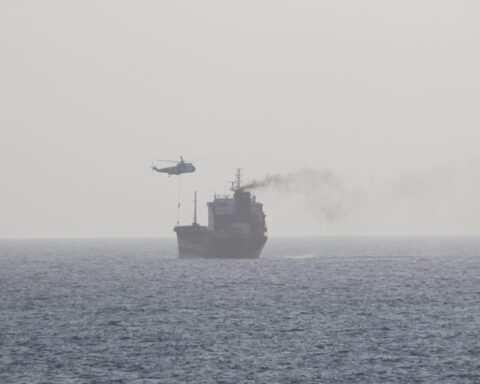
Qatar’s silence on the $6 billion claim is its own signal. The country named as custodian of the funds, host of the June 30 talks, and mediator between the parties has not acknowledged any transfer, any custodial agreement, or any release. This silence persists during the same period in which an Iranian-launched drone struck a tanker loaded with Qatari crude oil in the Strait of Hormuz — making Qatar simultaneously the venue, the mediator, the alleged custodian, and a party whose commercial shipping has been attacked by one of the sides it mediates between.
“We have not yet entered the negotiation phase for the final agreement.” — Esmaeil Baghaei, Iran Foreign Ministry spokesperson, June 30, 2026
Why Does the MOU Have No Public Record?
The 14-point MOU text — published in full by the Arab Center Washington DC, CNN, and NPR — contains no provision requiring the parties to issue a joint statement of agreed facts, disputed claims, or implementation milestones after any meeting. This absence is what allows three incompatible positions to coexist without any party being in formal violation of the agreement.
Prior agreements of comparable scope included such mechanisms. The 2015 JCPOA established a Joint Commission as a dispute resolution body and required reporting to the UN Security Council under Resolution 2231. The 2013 Geneva Interim Agreement included a Joint Plan of Action with defined deliverables and review dates. The Minsk Agreements — which failed in nearly every other dimension — operated under an OSCE monitoring mission that documented 320,130 ceasefire violations by 2016, producing a shared factual record even when both parties chose to ignore it.
The 2026 MOU has none of these features. No joint commission. No monitoring body with reporting authority. No requirement that the parties agree on what occurred in a given meeting before leaving the room. The Lake Lucerne talks on June 22-23, where Ghalibaf declared $12 billion agreed and the US said nothing, produced no joint communiqué. Doha on June 30 will produce none.
Applied to the frozen assets dispute, this means Pezeshkian’s $6 billion claim and Vance’s denial occupy equal standing within the MOU’s own framework. Neither party is required to produce evidence that a sum was agreed or not agreed. Neither is obligated to submit competing accounts to an arbiter. The meeting records, if they exist, remain in each delegation’s possession — unshared, unreconciled, and legally irrelevant to the MOU’s ticking clock.
The mutual-violation episode of June 28-29 already demonstrated what this design permits. Both sides broke the MOU’s terms. An oral stand-down — brokered by Qatar’s Emir Tamim, never reduced to writing — restored the agreement without amendment. The MOU survived contradictions that would have terminated a treaty with an enforcement body.
CSIS Middle East Program Director Mona Yacoubian has assessed that the MOU “kicks negotiations on harder issues down the road and leaves key questions unanswered.” Chatham House noted that more comprehensive sanctions relief “is contingent on the final accord” — an accord that Clause 13 prevents from being negotiated until Iran certifies that early implementation has begun.
How Does Clause 13 Block Negotiations?
Under Clause 13, final negotiations on remaining MOU provisions — including the nuclear file — begin only after implementation of Clauses 1, 4, 5, 10, and 11 has started and is continuing. The practical effect is a sequencing gate: Iran receives economic concessions before hard nuclear bargaining begins.
Trump’s characterization of Doha as “denuclearization” talks collides with this provision. If Iran has not certified that the specified early clauses are being implemented, the parties cannot negotiate a final deal under the text’s own terms. Iran’s position — Baghaei stated it explicitly — is that the Phase 2 window is for implementation follow-up, not final negotiations. The US position is that the meetings concern the full MOU, nuclear dimension included.
The sequencing creates a circular dependency on the frozen assets question specifically. Clause 11 is one of the early clauses whose implementation must begin before final talks can start. If Iran and the US cannot agree on whether any assets have been released — and they publicly hold opposite positions — then the precondition for nuclear talks is itself in dispute. The MOU provides no arbiter to break this loop.
Iran has employed this kind of sequencing before. The 2013 Geneva Interim Agreement gave Iran limited sanctions relief and access to frozen assets in exchange for enrichment caps, all before comprehensive JCPOA talks opened. The precedent that economic deliverables precede nuclear rollback was established a decade ago and has shaped every subsequent Iranian negotiating position.
The sequencing also defines what “progress” can mean during the remaining 47 days. Meetings in Doha or Geneva can produce understandings, but they cannot produce a final agreement until Iran certifies that the Clause 13 preconditions are met. The PGSA structure that runs parallel to the diplomatic track operates independently of whether that certification arrives.
Majlis Speaker Ghalibaf later made the Clause 13 sequencing explicit on July 3, publicly naming Articles 1, 4, 5, 10, and 11 as the five implementation gates that must open before any final-agreement talks can proceed. Iran MOU compliance as Ghalibaf defines it places four of those five gates under US performance obligations with no named arbiter — structurally ensuring that the certification Clause 13 requires will remain in dispute for the duration of the MOU clock.
The 97-Day Verification Blackout
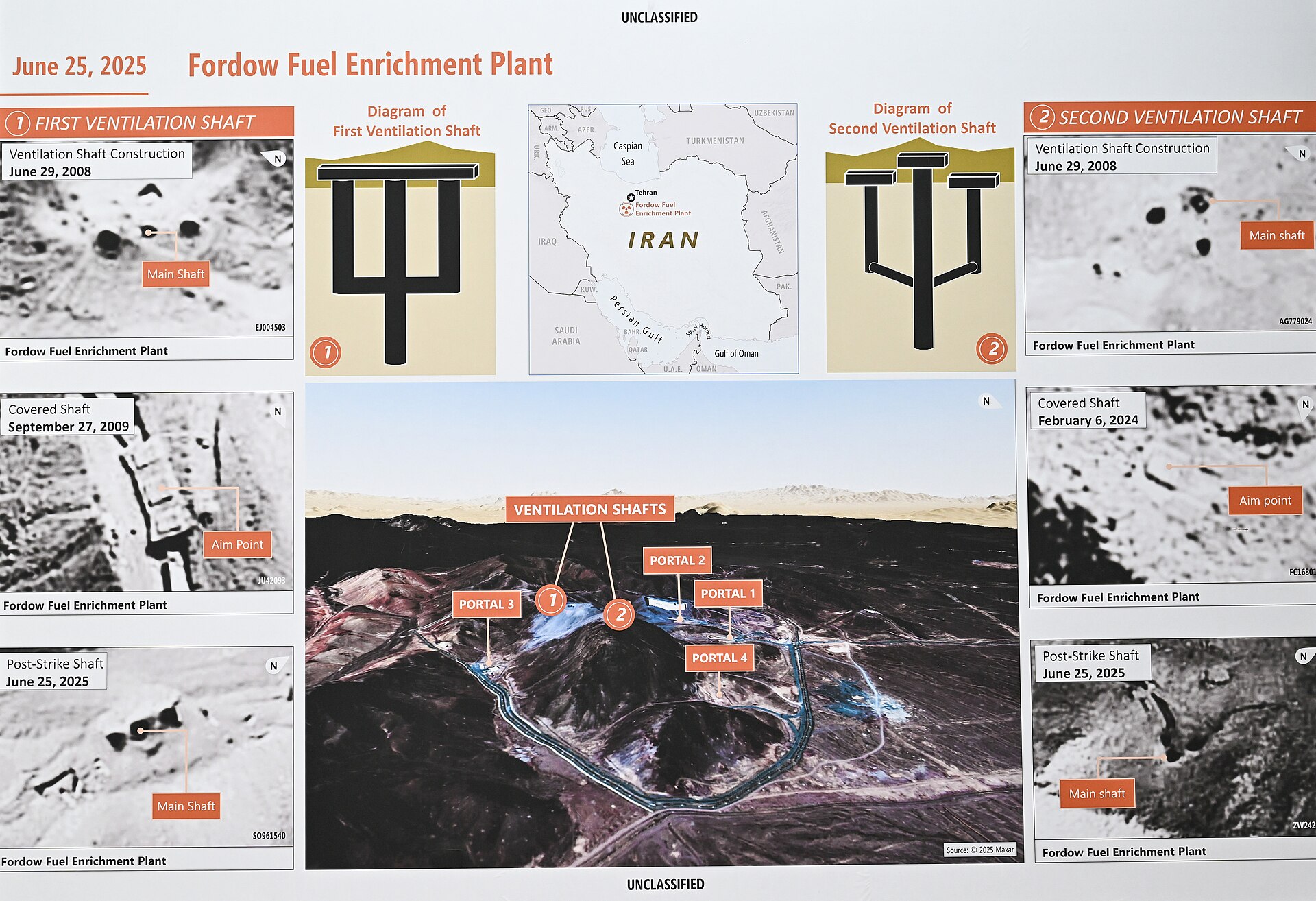
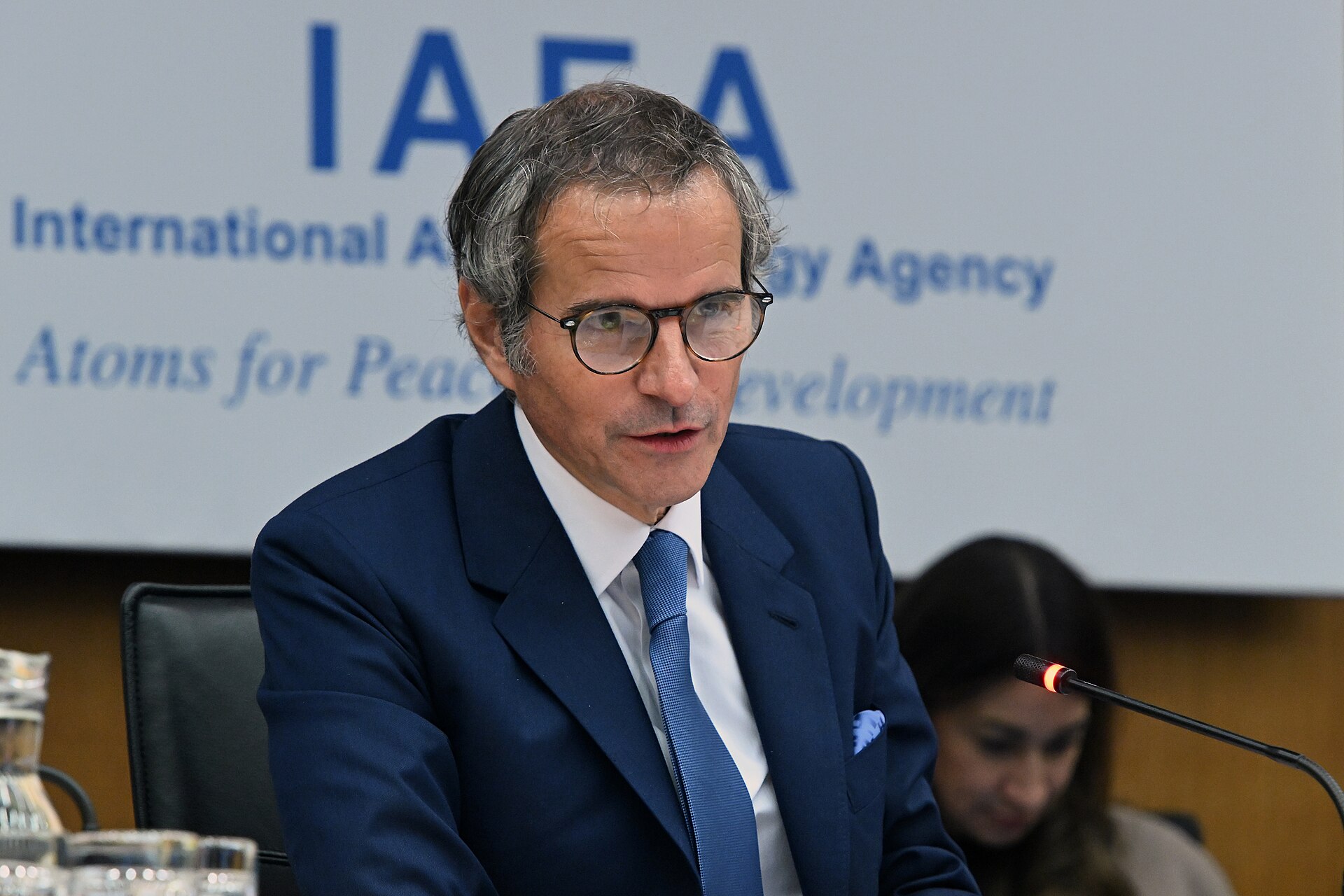
While Doha debated frozen assets and the purpose of its own meeting, a separate clock was running. The IAEA has had zero inspector access to any Iranian nuclear facility for 97 days as of the June 2026 Board of Governors session. Director General Rafael Grossi’s June 4 report confirmed that 440.9 kilograms of uranium enriched to 60% U-235 has been unverified since June 10, 2025 — more than twelve months.
The IAEA’s standard verification interval for highly enriched uranium under comprehensive safeguards is 30 days. Iran has exceeded this by more than twelve consecutive intervals. The IAEA Board’s February 2026 report (GOV/2026/8) documented this verification gap as predating the MOU — meaning the agreement’s drafters were aware of the access problem when they wrote Point 8’s downblending requirement.
MOU Point No. 8 is the only provision that explicitly references the IAEA. It addresses HEU downblending — the conversion of Iran’s 60%-enriched stockpile to lower enrichment levels. Downblending requires IAEA verification to confirm that material has been converted. Without inspector access, Point 8 cannot be implemented and cannot be verified as having been implemented. That condition has been in place since before the MOU was signed and is now embedded within its structure.
Deputy Foreign Minister Gharibabadi stated on June 25 that inspector access “will be reviewed only within framework of final agreement” — meaning after sanctions are terminated. On the same day as the Doha talks, Gharibabadi formally extended that bar to all 20 declared nuclear sites, confirming no IAEA entry until a final deal is concluded and all sanctions are terminated. Tasnim News Agency separately denied that any Iranian official had confirmed IAEA entry. Grossi, speaking at the Japan National Press Club in Tokyo on June 26, warned of a “war of statements” between the US and Iran over inspection access.
The connection to Clause 13 is structural. If IAEA access is a final-agreement matter — as Iran maintains — and if final-agreement talks cannot begin until early clauses are implemented — as Clause 13 states — then the 440.9 kg of unverified HEU remains unverified for the duration of the Phase 2 window and beyond. The verification gap that predated the MOU is now the verification gap that the MOU’s own sequencing perpetuates.
What Does Saudi Arabia See from Outside the Room?
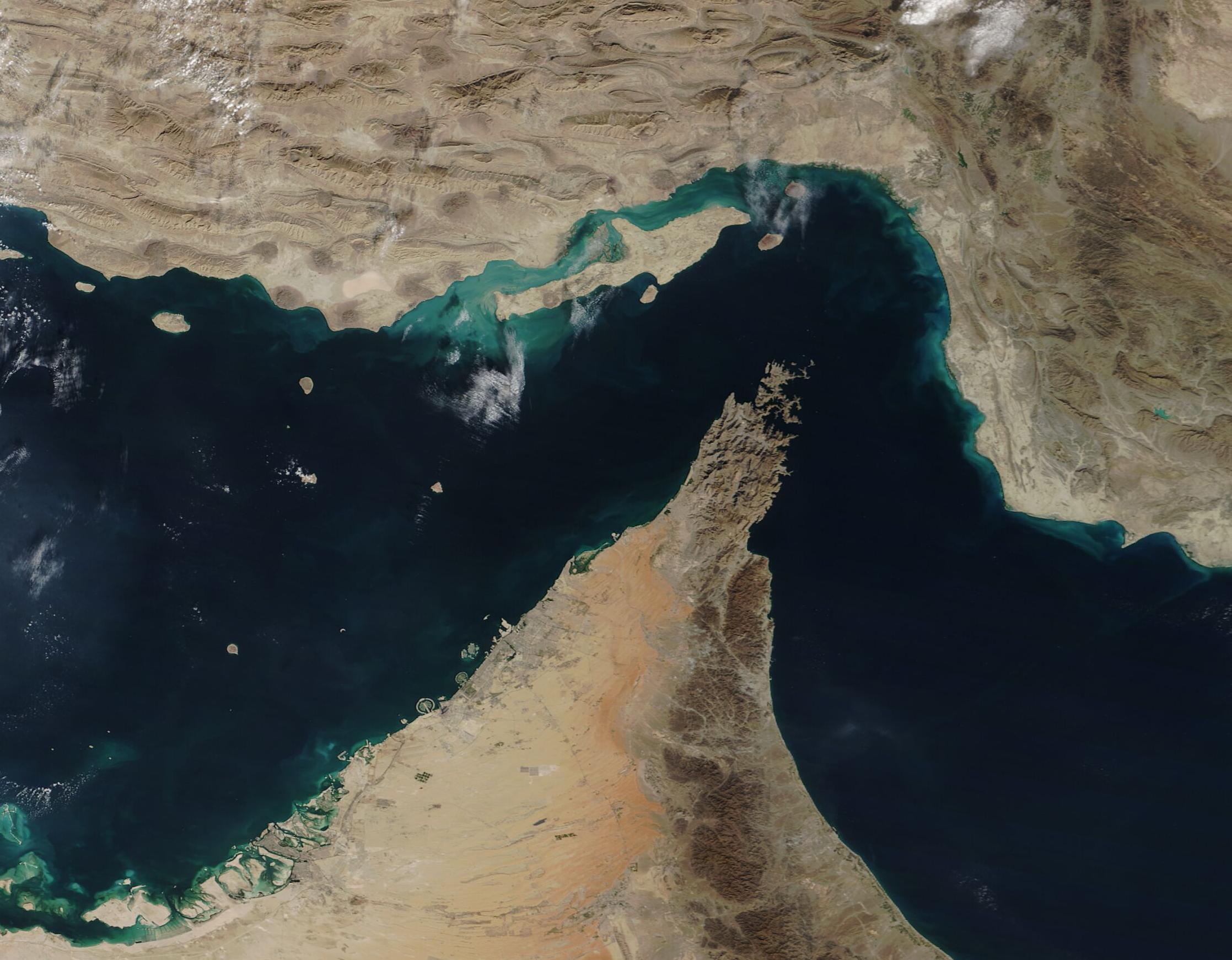
Saudi Arabia holds no seat at the Doha talks, the Geneva nuclear track, or the IRGC-CENTCOM deconfliction cell at Al Udeid in Qatar. Prince Faisal bin Farhan’s only confirmed statement on the nuclear track is four words delivered at an ECFR event in Vienna on June 18: “verification is key.” The Stimson Center has documented the kingdom’s absence from all three elements of the Iran-US diplomatic architecture — the mediator role, the conditional gates governing Phase 2 progression, and the final-agreement negotiations. Each element governs a dimension of Saudi exposure: Doha determines frozen asset timelines, Geneva determines the nuclear outcome, and the Al Udeid cell determines military deconfliction in waters through which Saudi oil transits.
Saudi Arabia cannot contest which version of the Doha meeting is operative. It cannot invoke the MOU’s nonexistent dispute mechanism. It cannot challenge Pezeshkian’s $6 billion claim through any channel the agreement defines. And it cannot attend the sessions where these questions would, in principle, be resolved — because it was never given a seat.
The financial exposure from this exclusion is specific. Saudi Arabia’s implied cost from the PGSA runs at $5.5 million per day during the Phase 2 window, or approximately $2 billion annualized. On Day 61 — approximately August 16-17 — the PGSA’s $1-per-barrel transit fee reverts by default, requiring no affirmative action from Iran and no negotiation in any forum where Saudi Arabia is present.
| Metric | Figure | Source |
|---|---|---|
| Saudi PGSA daily exposure | $5.5 million | PGSA fee schedule |
| Saudi fiscal breakeven (Brent) | $108–111/barrel | IMF / Saudi MoF |
| Brent crude, late June 2026 | ~$72–75/barrel | ICE Futures |
| Saudi daily revenue gap at current prices | ~$160–175 million | PGSA / IMF modeled estimate |
| MOU Phase 2 days remaining (as of June 30) | 47 | MOU text |
| Day 61 PGSA fee reversion | $1/barrel (automatic) | PGSA rulebook |
The fiscal compression documented in Saudi Arabia’s Q1 results — a $33.5 billion deficit against a $44 billion full-year target — runs concurrent with the Doha exclusion. The parties in Doha are determining the terms under which that gap either narrows or persists. Saudi Arabia is not in that room.
Day 13 of 60
The MOU’s Phase 2 clock started on approximately June 17, 2026. June 30 is Day 13. Day 61 falls around August 16-17. On that date, absent a completed final agreement, the PGSA’s $1-per-barrel transit fee activates without requiring any Iranian decision, announcement, or new authorization.
Between Day 13 and Day 61, the Doha channel can produce meetings, statements, and claims of progress. But unless the parties agree on what has been agreed — and the MOU provides no mechanism requiring them to do so — the meaning of “progress” is itself a contested term. No joint communiqué mechanism exists. No public ledger of concessions. No named arbiter to certify that an implementation milestone has been reached.
The pattern from Day 13 — competing accounts of the same meeting, with no procedure to reconcile them — was also present at the Lake Lucerne talks on Day 5 and 6 of Phase 2. Ghalibaf announced $12 billion agreed. The US said nothing. No joint record was produced. The MOU’s structural design generates this outcome at each meeting, not only at this one.
The three positions that emerged on June 30 — denuclearization talks, Clause 11 compliance review, and $6 billion already agreed — are the predictable output of a 14-point agreement drafted without a public record requirement. The omission of a joint communiqué clause produced a document that accommodates three versions of the same meeting simultaneously, for as long as the 60-day clock permits. Forty-seven days remain. The text does not define a next review point. The following day, the July 1 Doha talks confirmed working groups but left the reported $3 billion frozen-asset figure unconfirmed by Washington — the same pattern of competing accounts extended by 24 hours.
The host government provided its own account of June 30 later that day. Qatar’s foreign ministry confirmed that no high-level Iran meeting was planned in Doha — a fourth version of the same day’s events, from the country that controlled the venue. Pezeshkian’s own account of the MOU’s meaning was delivered not in Doha but in Qom: hours before the AoE statement landed, he told the Society of Seminary Teachers the agreement had been conducted in full coordination with the Supreme Leader — a claim that collapsed within hours when 62 of 88 Assembly members declared it a strategic mistake.
Frequently Asked Questions
What are Iran’s total frozen assets worldwide?
Estimates range from $80 billion to $100 billion, held across accounts in South Korea, Japan, Iraq, China, India, and other jurisdictions, according to CSIS and Al Jazeera reporting from April-June 2026. The $6 billion Pezeshkian referenced in Qatar and the $12 billion Ghalibaf cited at Lake Lucerne represent small fractions of this total. Release of the broader frozen pool would require either specific US presidential waivers or the completion of a final agreement under the MOU — which Clause 13 currently prevents from being negotiated.
What is the PGSA and how is it structured?
The Persian Gulf Shipping Authority was established by Iran on May 5, 2026 — 43 days before the MOU was signed. Its formal rulebook requires transiting vessels to submit a 40-category pre-clearance form, route through the designated Larak corridor near Qeshm Island, and comply with Iranian-defined transit windows. During the 60-day Phase 2 window, no fee is charged. After Day 61 (approximately August 16-17), a $1-per-barrel transit fee activates by default. The PGSA has never been dissolved, suspended, or modified by the MOU. Iran has separately pre-published liability disclaimers on social media before each military action in the Strait of Hormuz.
How does the 2026 MOU compare to the JCPOA on dispute resolution?
The JCPOA established a Joint Commission comprising Iran and the P5+1, with a defined escalation pathway: disputes unresolved within 15 days could be referred to foreign ministers, then to an Advisory Board, and finally to the UN Security Council under Resolution 2231. The 2026 MOU contains no equivalent mechanism at any level — no commission, no advisory board, no escalation timeline, and no external body authorized to adjudicate competing claims. The IISS assessed that the MOU “almost certainly” fails to address GCC security concerns. The JCPOA’s own sunset clauses expired in October 2023 with no replacement framework, a gap the 2026 MOU inherited rather than resolved.
Has Iran used this kind of sequencing provision before?
The 2013 Geneva Interim Agreement employed the same structure: Iran received access to $4.2 billion in frozen assets over six months in exchange for capping enrichment at 5% and converting part of its 20%-enriched stockpile, all before comprehensive JCPOA negotiations opened. The Obama administration’s $1.7 billion settlement in January 2016 illustrated a related pattern: US officials described it as a distinct legal claim settlement, while Iranian officials characterized it as an upfront payment linked to the nuclear deal. The total frozen assets unlocked under the JCPOA was never jointly agreed — US conservative estimates ranged from $29 to $32 billion, while Iranian and opposition maximalist claims reached $100 to $150 billion. No joint communiqué established the operative figure then, and none does now. The same ambiguity applies to Hormuz: the MOU’s fee-waiver expires on Day 60, and no mechanism names who holds veto authority over commercial transit after that date — an analysis of the IRGC’s toll-sovereignty claim and what happens on Day 61 is here.
The IAEA access dispute that sits at the core of the Doha definitional impasse acquired a new dimension on July 2: Iran’s parliament speaker Ghalibaf declared IAEA inspection of bombed sites “false”, citing domestic law as a barrier that exists independently of what the MOU’s Point 8 framework requires — adding a legislative lock to a diplomatic dispute the Doha channel has no mechanism to resolve.