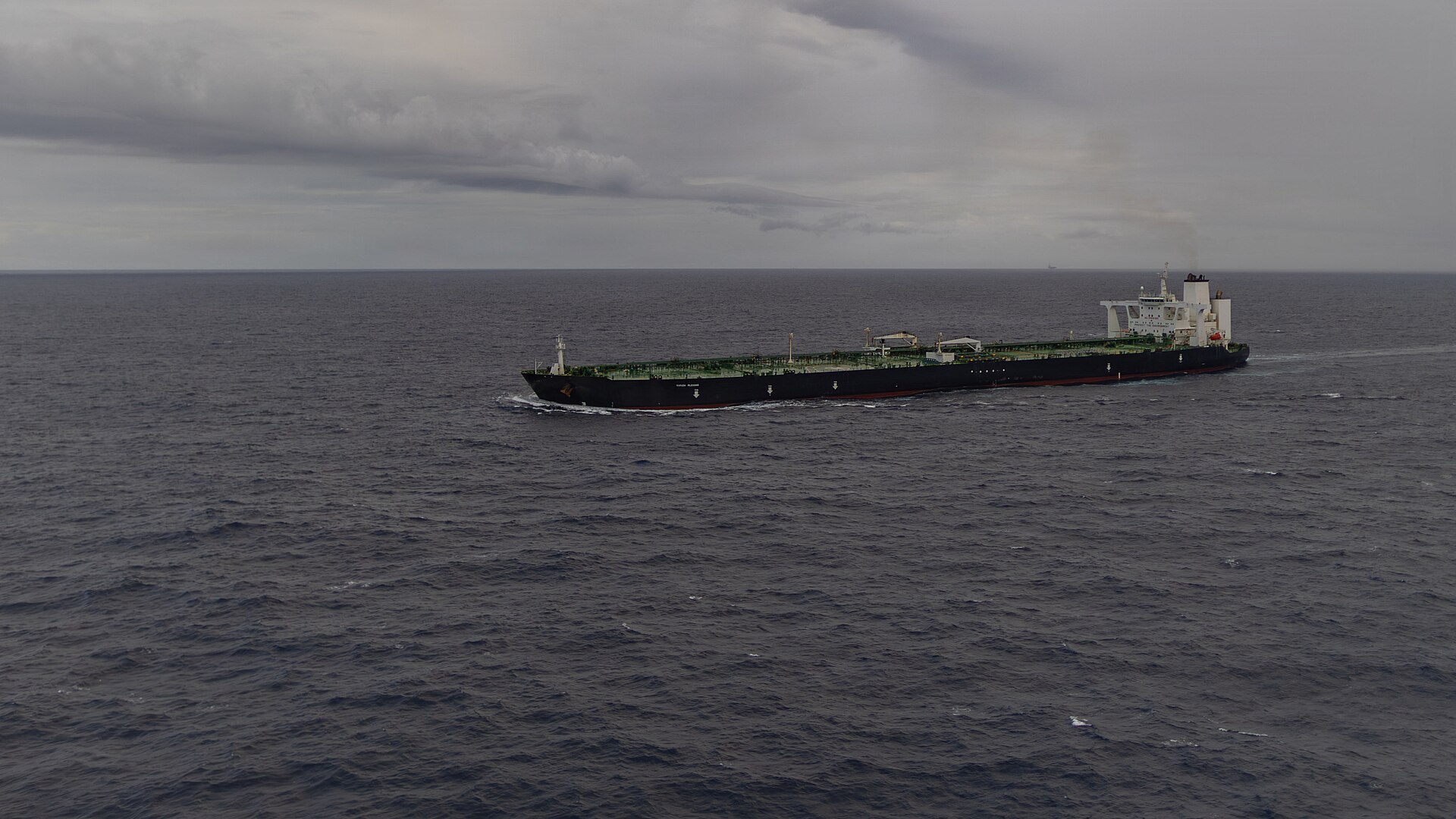
RIYADH — On July 7, 2026, an Iran-attributed strike hit the Saudi-flagged supertanker Wedyan sixteen nautical miles east of Khor Fakkan, punching through the port side of a 319,990-deadweight-ton VLCC operated by Bahri — the state-controlled National Shipping Company of Saudi Arabia — while the vessel carried a full crude cargo out of the Strait of Hormuz. Within the same twenty-four-hour window, Iranian Foreign Minister Abbas Araghchi placed a call to Saudi Foreign Minister Faisal bin Farhan to discuss “the latest developments,” and posted publicly that “negotiations on a final deal will not commence if threats continue.” Saudi Arabia’s Foreign Ministry condemned the strike “in the strongest terms,” stated it holds Iran “fully responsible for the attacks and all resulting damage and consequences,” cited a violation of UNSC Resolution 2817, and called on Iran to “immediately cease all actions that threaten regional security, international maritime navigation and global energy supplies.” No military response was announced, threatened, or contemplated.
The Wedyan strike is not evidence that Tehran has abandoned Riyadh as a partner for post-war diplomacy — it is evidence that Iran believes it can damage Saudi state commercial assets and preserve the bilateral channel, because Saudi Arabia possesses no retaliatory instrument that improves its position. Bahri confirmed the tanker remained “seaworthy,” cargo secure, zero casualties; the diplomatic line survived with it. That calibration — damage without death, coercion without rupture — defines Iran’s two-track posture, and every day Riyadh absorbs it without consequence confirms that Tehran calibrated correctly.
Contents
- What Happened Sixteen Nautical Miles East of Khor Fakkan?
- Why Did Araghchi Call Faisal the Same Day?
- The Flag-Based Targeting Iran Perfected in 1984
- What Can Saudi Arabia Actually Do?
- How Did the Insurance Market Price Riyadh’s Silence?
- Day Twenty-Three of a Ceasefire That Does Not Cover Riyadh
- Zero Casualties Was the Point
- Frequently Asked Questions
What Happened Sixteen Nautical Miles East of Khor Fakkan?
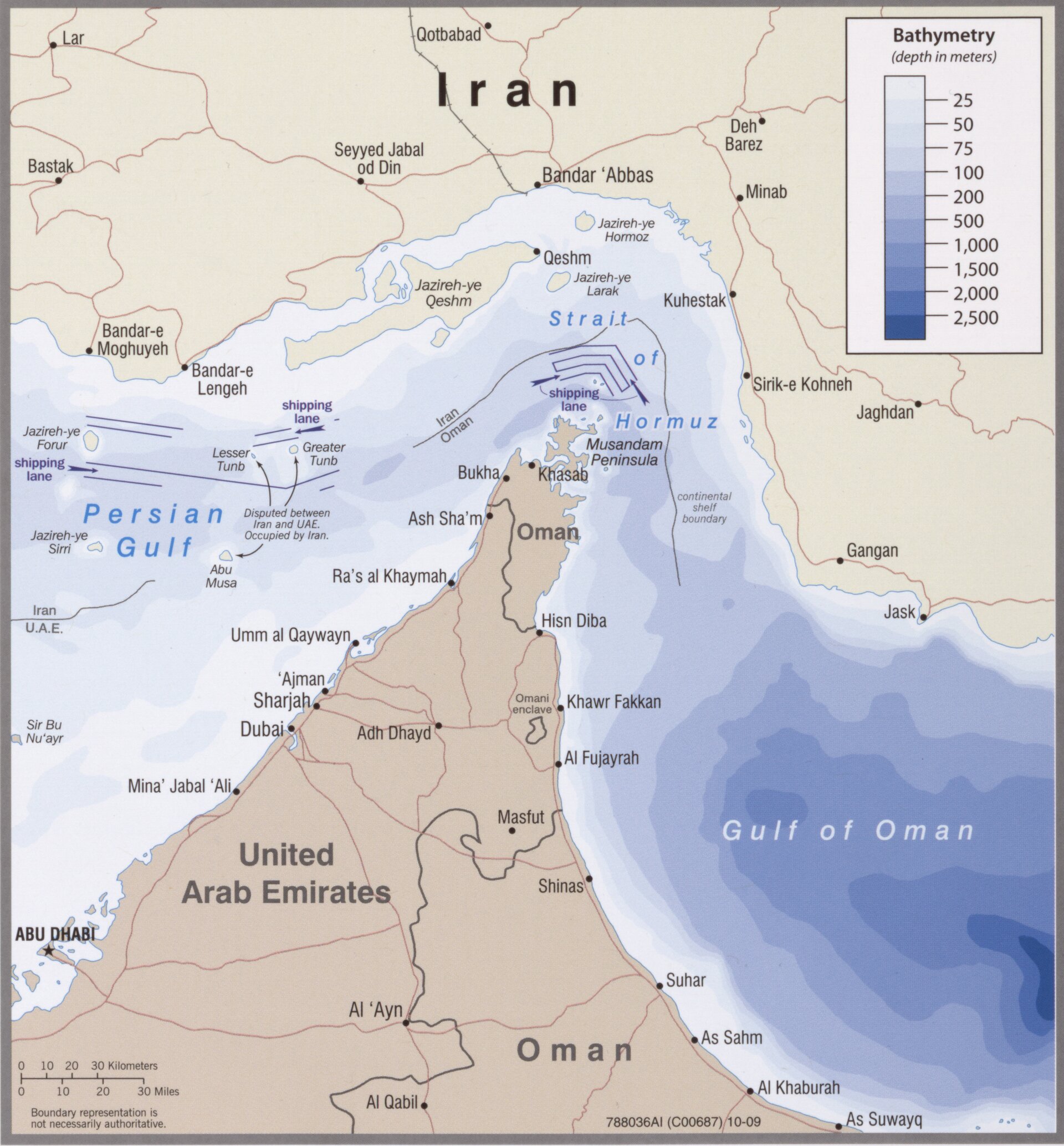
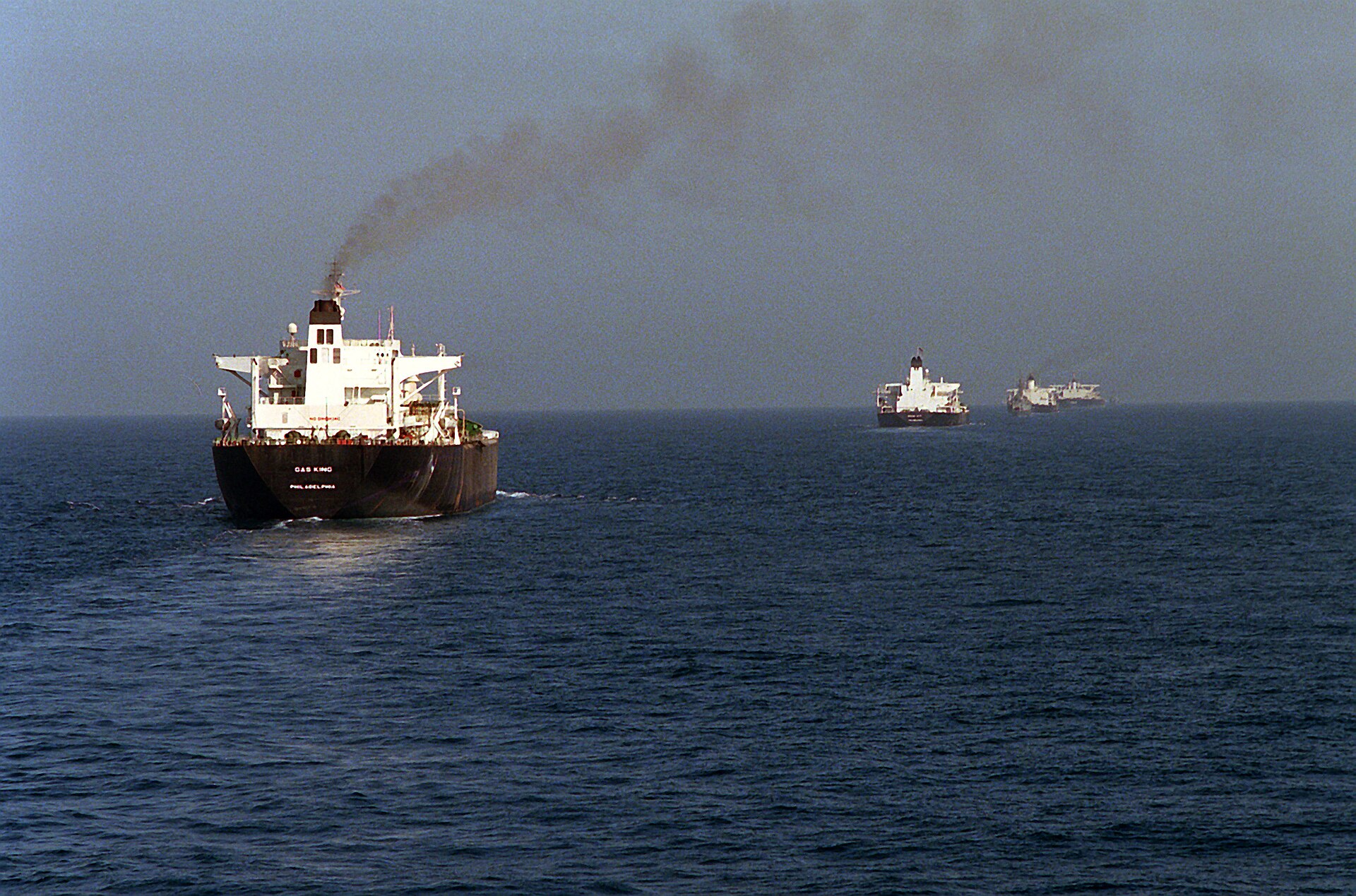
The Wedyan was exiting the Strait of Hormuz, heading south toward the Gulf of Oman, when it was struck on the port side at a position sixteen nautical miles east of Khor Fakkan, in waters adjacent to the UAE coast. UK Maritime Trade Operations confirmed the hit and noted the vessel “likely suffered structural harm,” while Bahri’s official statement — issued the following day — maintained the tanker was “seaworthy,” that its cargo of crude oil was secure, and that no crew members were injured or killed. The careful language obscured a material fact: a state-owned Saudi VLCC, one of the largest vessel classes afloat and carrying roughly two million barrels of crude, had been struck by an Iranian weapon while transiting the world’s most strategically sensitive waterway, and the Kingdom’s response was a press release.
The Wedyan was not struck in isolation. Iran hit at least three commercial vessels on July 7: the Wedyan, the Qatari-flagged LNG tanker Al Rekayyat — which suffered an engine-room fire severe enough to require full crew evacuation — and, according to maritime trade sources, the Liberian-flagged M/T Cyprus Prosperity. IRNA, Iran’s state news agency, framed the attacks as enforcement of a legitimate route-authorization regime, stating the vessels had been struck for “attempting illegal passage through the Strait of Hormuz” without prior Iranian coordination — a doctrinal claim the IRGC had telegraphed on June 25, when it declared that “declaring routes in the Strait of Hormuz without coordination with Iran is unacceptable and poses a threat to public safety.”
| Vessel | Flag | Type | DWT | Reported Damage | Casualties |
|---|---|---|---|---|---|
| Wedyan | Saudi Arabia | VLCC | 319,990 | Port-side hull breach; “seaworthy” per Bahri | None |
| Al Rekayyat | Qatar | LNG carrier | Undisclosed | Engine-room fire; crew evacuated | None reported |
| Cyprus Prosperity | Liberia | Product tanker | Undisclosed | Struck (details limited) | Unknown |
Sources: UKMTO, Al Jazeera, gCaptain, Bahri corporate statement, July 7-8, 2026.
The Middle East briefing 3,000+ readers start their day with.
One email. Every weekday morning. Free.
The GCC Secretary-General, Jasem Mohamed Albudaiwi, called the Wedyan targeting “a criminal Iranian act and a dangerous escalation threatening international navigation security and energy supplies” and “a flagrant violation of international law” — language that positioned the organization for condemnation without positioning any member state for response. By July 8, the Insurance Journal reported Hormuz shipping had effectively halted, with carriers withdrawing rather than absorbing the new premium. Iran had not closed the strait; it had made the strait so expensive and so dangerous that the market closed it on its own.
Why Did Araghchi Call Faisal the Same Day?
The call is the tell: on the same day that Iranian forces struck a vessel owned by the Saudi state, Iran’s foreign minister maintained direct diplomatic contact with his Saudi counterpart — to discuss, per Asharq Al-Awsat’s reporting, “the latest developments” — and posted publicly that negotiations required a cessation of threats, placing the onus on Washington rather than Riyadh. This is not bureaucratic compartmentalization between the IRGC and the foreign ministry; it is the two-track posture operating as designed. Tehran’s coercive strategy depends on maintaining a channel to Riyadh precisely because the channel’s survival demonstrates that Saudi Arabia cannot afford to sever it, and every day the line remains open after a Saudi asset is struck confirms Iran’s assessment of the power balance.
The Stimson Center’s 2026 analysis identified Iran’s campaign as reflecting “Thomas Schelling’s concept of risk strategy — the deliberate manipulation of shared danger to exploit the risk that parties may inadvertently escalate conflict.” The manipulation is not the strike itself but the combination of strike and diplomatic outreach, which forces Riyadh into a choice it cannot win: respond militarily and lose the channel — which Riyadh needs more than Tehran does, because Saudi Arabia is locked out of every active mediation track — or absorb the strike and keep talking, which validates Iran’s assumption that Saudi commercial assets sit below the retaliation threshold. Riyadh chose absorption, as it has after every Iranian strike on Saudi assets since September 2019, because the structural conditions that produced the choice have not changed.
The contrast with Iran’s handling of Qatar sharpens the picture. When Doha accused Tehran of striking the Al Rekayyat, Iranian Foreign Ministry spokesman Esmaeil Baghaei responded that Qatar’s accusations were “questionable and contrary to the principle of good neighborliness” — a denial soft enough to preserve the relationship while rejecting accountability. No comparable outreach toward Riyadh on the Wedyan was necessary, because Saudi Arabia’s condemnation, delivered through the Foreign Ministry press apparatus rather than through direct diplomatic confrontation, signaled that the Saudis would absorb the strike within the existing channel framework. Iran modulates its messaging to match each bilateral relationship, and the Wedyan demonstrated that Saudi Arabia’s bilateral can tolerate a direct hit on a state-owned vessel.
The Arab Center DC’s assessment — that official Saudi discourse has been “consistently de-escalatory in tone, with Ministry of Foreign Affairs statements calling for restraint, urging a return to negotiations, and emphasising the Kingdom’s commitment to regional stability” — reads less like a strategic posture than a description of constraint. Riyadh is de-escalatory because it has no escalatory option that does not make its position worse, and Araghchi’s willingness to call Faisal on the same day his military struck Faisal’s government’s tanker is the clearest possible signal that Tehran has reached the same conclusion.
The Flag-Based Targeting Iran Perfected in 1984
Between 1984 and 1988, Iran attacked 168 commercial vessels in the Persian Gulf — Iraq attacked 283 — in what became the Tanker War, the maritime dimension of the Iran-Iraq conflict. Iran’s targeting logic was not random: it struck tankers carrying Kuwaiti and Saudi crude, or flagged to Kuwait and Saudi Arabia, because those states were financing Iraq’s war effort. The flag was the message, and the message was specific — states that underwrite wars against Iran will pay in commercial assets. Kuwait’s vulnerability grew severe enough that the United States reflagged eleven Kuwaiti tankers under the Stars and Stripes in 1987 — Operation Earnest Will — and escorted them through the Gulf with US Navy warships, a commitment that led to direct US-Iran naval engagement and the destruction of Iranian oil platforms.
The Wedyan strike reproduces this doctrine with updated precision. The July 7 attack sequence hit a Saudi-flagged VLCC, a Qatari-flagged LNG tanker, and a Liberian-flagged product tanker — a spread across Gulf state flags and a flag of convenience, calibrated to demonstrate reach while concentrating political consequences on Riyadh and Doha. Bahri is not a private shipping company; it is a Saudi state entity, partially owned by the Public Investment Fund, and the Wedyan was carrying Saudi crude out of the world’s most contested waterway. Striking it is the functional equivalent of striking a government asset, and Iran’s four-decade doctrine treats it as such.
The maritime doctrine is inseparable from the land-based pattern that preceded it. Iran’s 2012 Shamoon cyberattack on Saudi Aramco wiped data from approximately 30,000 workstations — and Saudi Arabia did not retaliate. The September 2019 Abqaiq-Khurais drone and cruise missile attack temporarily halved Saudi crude output, and Saudi Arabia did not retaliate. In 2026, Iranian drones struck Saudi refinery infrastructure and reduced output by approximately 10 percent according to JP Morgan estimates, and Saudi Arabia did not retaliate. Each incident expanded the envelope of what Iran can strike without consequence, and each Saudi non-response confirmed the expansion; the Wedyan is the first Saudi-flagged state-owned vessel struck in the current conflict, and Riyadh’s response followed the pattern without deviation.
The 1984 precedent reveals what comes next — or rather, what will not come. Flag-based targeting escalated in the 1980s until external intervention altered the cost: US reflagging, US Navy escorts, and US strikes on Iranian naval assets forced Tehran to recalculate. No comparable intervention is available in 2026. The US-Iran MOU constrains American military action through Day 60; Washington is weighing drawdown from Prince Sultan Air Base, not escalation; the US retains the capacity to strike Iran but cannot do so from Saudi territory; and no Gulf state has requested reflagging or escort operations. The 1984 playbook was interrupted because an external power raised the cost of Iranian targeting; in 2026, no one is raising the cost.
What Can Saudi Arabia Actually Do?
Condemn, file insurance claims, and wait — Saudi Arabia’s retaliatory toolkit against Iran is either irrelevant, depleted, or aimed at Washington rather than Tehran, and every option that might affect Iran carries a cost that exceeds the Wedyan’s structural damage. A military response would require capabilities that Saudi Arabia has depleted at an unsustainable rate: approximately 400 PAC-3 interceptor rounds remain from a pre-war inventory of 2,800, with no resupply expected before mid-2027, and Washington has conditioned interceptor delivery on Saudi concessions that MBS has so far refused. The Kingdom’s only demonstrated coercive act in 2026 — grounding 43 US warplanes at Prince Sultan Air Base during Operation Project Freedom in May — was directed at the United States, not Iran.
The financial instruments are real but non-retaliatory. Saudi Arabia’s PGSA exposure stands at $253 million, accumulating at $5.5 million per day toward automatic activation on August 18 — a liability Riyadh cannot negotiate away, cannot weaponize against Tehran, and cannot avoid. The Kingdom’s Q1 2026 budget deficit of SAR 125.7 billion (~$33.5 billion) is the largest in nearly eight years, Aramco’s free cash flow covers only 0.85 times its dividend obligation, and the IMF fiscal breakeven sits at $86.60 per barrel against Brent crude trading between $72 and $77 at the time of the Wedyan strike. Saudi Arabia is not choosing restraint from a position of surplus; it is absorbing strikes while running a structural deficit that the strikes themselves are widening, because every Hormuz disruption drives insurance costs and depresses OSPs that fall disproportionately on Gulf exporters.
The threshold MBS reportedly set — desalination plants and electricity networks, according to the CS Monitor in April 2026 — is revealing not for what it protects but for what it concedes. Tankers, refineries, pipeline infrastructure, military bases, and every other category of Saudi asset below that line are, by implication, accepted costs of a conflict Riyadh did not initiate and cannot end. Iran has spent 2026 mapping the distance between what it strikes and what triggers Saudi response, and the Wedyan — a state-owned VLCC carrying state crude through a contested strait — sits well within the zone of impunity that four decades of Saudi non-retaliation have established.
The diplomatic channel itself functions as a constraint. Saudi Arabia needs the Araghchi-Faisal line because it is excluded from the MOU, excluded from the Doha track, excluded from the Islamabad track, and holds no signatory, guarantor, or observer role in any active negotiation. Severing the bilateral line to punish the Wedyan strike would remove Riyadh’s last point of direct contact with Tehran at the moment when every other avenue of Saudi influence over the war’s outcome has collapsed. Iran understands this, which is why Araghchi called.
How Did the Insurance Market Price Riyadh’s Silence?
Marcus Baker, the global head of marine at Marsh, stated that war-risk premiums for Hormuz transit had risen “to anywhere between 2% and 6% of the value of a vessel from a fraction of a percent in pre-conflict times.” For a $100 million tanker — the approximate insured value of a VLCC like the Wedyan — that translates to $2 million to $6 million per single transit, a cost that falls not on Iran but on the cargo owner, the charterer, the insurer, and the consumer who buys the barrel. At earlier peak rates — reaching 10 percent of hull value in the weeks following the first US-Iran exchange — a single loaded VLCC passage carried a $10 million war-risk premium; even at Baker’s current range, the transit cost now runs to $2–6 million per voyage.
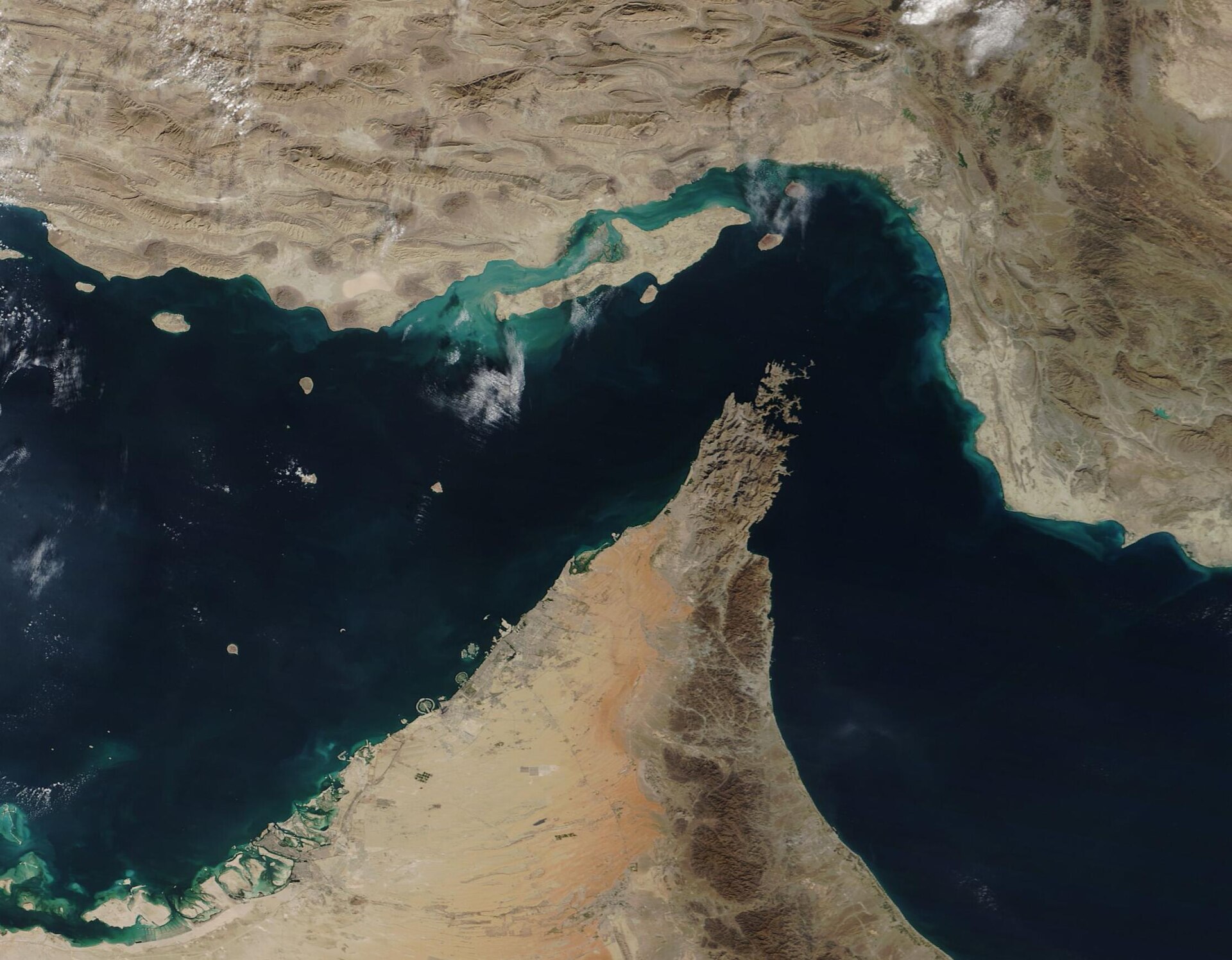
The market response was immediate and total. Hormuz shipping traffic “virtually ground to a halt” on July 8, one day after the triple strike, with “few observable journeys” recorded — a commercial shutdown that Iran achieved without a single naval vessel or a formal blockade declaration. This is the mechanism that makes the Wedyan strike effective independent of its physical damage: Iran does not need to close the Strait of Hormuz by force if it can make transiting the strait so expensive that commercial operators stop voluntarily. The 27 AIS-visible ships per day now crossing Hormuz — down from a pre-crisis baseline of 84 — represent not a blockade but a risk-adjusted market equilibrium in which every barrel that moves carries a war premium and every barrel that stays put is a Saudi revenue loss.
Saudi Arabia’s fiscal position transforms the insurance cost into something far worse than a commercial inconvenience. The Kingdom exports roughly 5 million barrels per day through the strait, and each transit now carries a premium that did not exist eighteen months ago. Arab Light Official Selling Prices have fallen $6 per barrel from their May peak, costing approximately $900 million per month in forgone revenue on a 5-million-barrel-per-day export base. The insurance premium does not appear in the headline Brent price, but it appears in the netback Aramco receives and the fiscal revenue the Saudi treasury collects — and it compounds with every strike Iran executes and Saudi Arabia absorbs. The insurance market priced the collapse of Saudi deterrence before the Foreign Ministry acknowledged it.
Day Twenty-Three of a Ceasefire That Does Not Cover Riyadh
The US-Iran MOU, signed on June 17, was on Day 23 of its 60-day window when the Wedyan was struck. The agreement constrains American and Iranian military escalation within defined parameters — but Saudi Arabia is not a signatory, not a guarantor, not an observer, and not protected by its terms. The ceasefire, such as it is, governs the US-Iran military relationship; it does not govern Iranian coercion of Gulf shipping, Iranian strikes on Gulf commercial infrastructure, or Iranian enforcement of a unilateral route-authorization regime in the Strait of Hormuz. Riyadh occupies a structural gap: the MOU reduces the likelihood of a US military response to Iranian aggression against Gulf states while doing nothing to reduce the aggression itself.
This is not an oversight; it reflects the negotiating priorities of the MOU’s two signatories, neither of whom placed Saudi commercial security on the agenda. The July 11 Islamabad round, if it convenes, will address sanctions, frozen funds, and nuclear issues — not Bahri tankers, not Hormuz transit fees, and not the PGSA’s August 18 activation. Iran split the negotiation into two tracks and locked Riyadh out of both, ensuring that the Kingdom’s commercial exposure cannot be raised by the parties who are actually negotiating. Saudi Arabia’s $253 million PGSA exposure — accumulating at $5.5 million per day — is a financial liability generated by the war the MOU aims to end, but the MOU contains no mechanism for addressing it, and the PGSA will activate whether or not the MOU produces a final deal, whether or not the Islamabad round convenes, and whether or not Iran strikes another Saudi tanker before August 18.
Saudi Arabia did not invoke the Sakhir Declaration when Iran fired ballistic missiles at US bases across four countries. It did not invoke anything when Iran struck a civilian tanker carrying Saudi crude. The pattern is not inconsistency — it is the absence of any instrument Saudi Arabia can invoke that would produce a consequence Tehran would register. The Wedyan’s hull will be repaired; the deficit, the depleted interceptors, the severed mediation channels, and the $5.5 million accumulating daily toward August 18 will not.
Zero Casualties Was the Point
The Wedyan’s crew walked away uninjured — no fatalities, no names in the casualty reports that would force MBS past the threshold he set in April and into a military response that every available indicator suggests Saudi Arabia cannot sustain. Iran struck a 319,990-deadweight-ton VLCC carrying Saudi crude through the world’s most important chokepoint, and it did so with enough precision to damage the hull, spike the insurance market, halt Hormuz traffic for a day, and leave every crew member alive. The zero-casualty outcome was not an accident of imprecise targeting; it was the product of a calibration Iran has refined across forty years of flag-based commercial coercion — from the 1984 Tanker War through the 2012 Shamoon cyberattack to the 2019 Abqaiq strike and now to the Wedyan — in which each cycle expanded the range of Saudi assets Iran can strike without triggering a response Riyadh is capable of delivering. The Araghchi-Faisal call confirmed what the zero casualties made possible: the channel survived because the crew survived, and the crew survived because the channel’s survival was the operational objective. Riyadh condemned the strike in the strongest terms available to a government that cannot enforce any of them, and the Wedyan — seaworthy, cargo secure, hull scarred, zero dead — continued into the Gulf of Oman, carrying Saudi crude through a chokepoint that Iran taxes with weapons and Saudi Arabia pays for with silence.
Frequently Asked Questions
Is the Wedyan still operational?
Bahri confirmed on July 8 that the Wedyan remained “seaworthy” with its cargo secure. UKMTO noted the vessel “likely suffered structural harm,” indicating damage that was real but not disabling. VLCCs of the Wedyan’s class (319,990 DWT) are constructed with double hulls and segregated ballast tanks that allow continued operation after localized hull breaches, provided no cargo tank is compromised. Bahri has not publicly disclosed whether the Wedyan has entered drydock for repairs or returned to commercial service.
Has Saudi Arabia ever retaliated militarily against an Iranian strike on Saudi assets?
No. Iran struck the Abqaiq processing facility and the Khurais oil field with drones and cruise missiles in September 2019, temporarily taking approximately 5.7 million barrels per day of Saudi crude output offline, and Saudi Arabia did not respond with force. In 2026, Iranian drones struck Saudi refinery infrastructure, reducing output by approximately 10 percent according to JP Morgan. Saudi Arabia again did not retaliate. The Wedyan extends this pattern to maritime assets, and the retaliation threshold MBS reportedly set — desalination plants and electricity networks — has never been tested because Iran has not targeted those specific categories.
Could the US reflag Saudi tankers as it did for Kuwait in 1987?
Operation Earnest Will (1987-88) reflagged eleven Kuwaiti tankers under the US flag and assigned US Navy escorts through the Gulf. A comparable operation in 2026 is theoretically available but practically foreclosed: the US-Iran MOU constrains US military action through Day 60, US force posture in the Gulf is contracting rather than expanding, and no Saudi or US official has publicly discussed reflagging. The approximately 2,300 US troops at Prince Sultan Air Base face potential drawdown rather than reinforcement.
How large is Bahri’s fleet and what is its total Hormuz exposure?
Bahri operates one of the largest tanker fleets in the Middle East, with approximately 90 vessels including VLCCs, chemical tankers, and multipurpose cargo ships. The company is partially owned by the Public Investment Fund and Saudi Aramco, making it functionally a state-controlled entity. Virtually all of Bahri’s crude tanker operations transit the Strait of Hormuz, meaning the war-risk premium increase to 2-6 percent of hull value now applies across the fleet on every loaded voyage — a cost exposure that scales with fleet size in a way no single-vessel insurance claim captures.