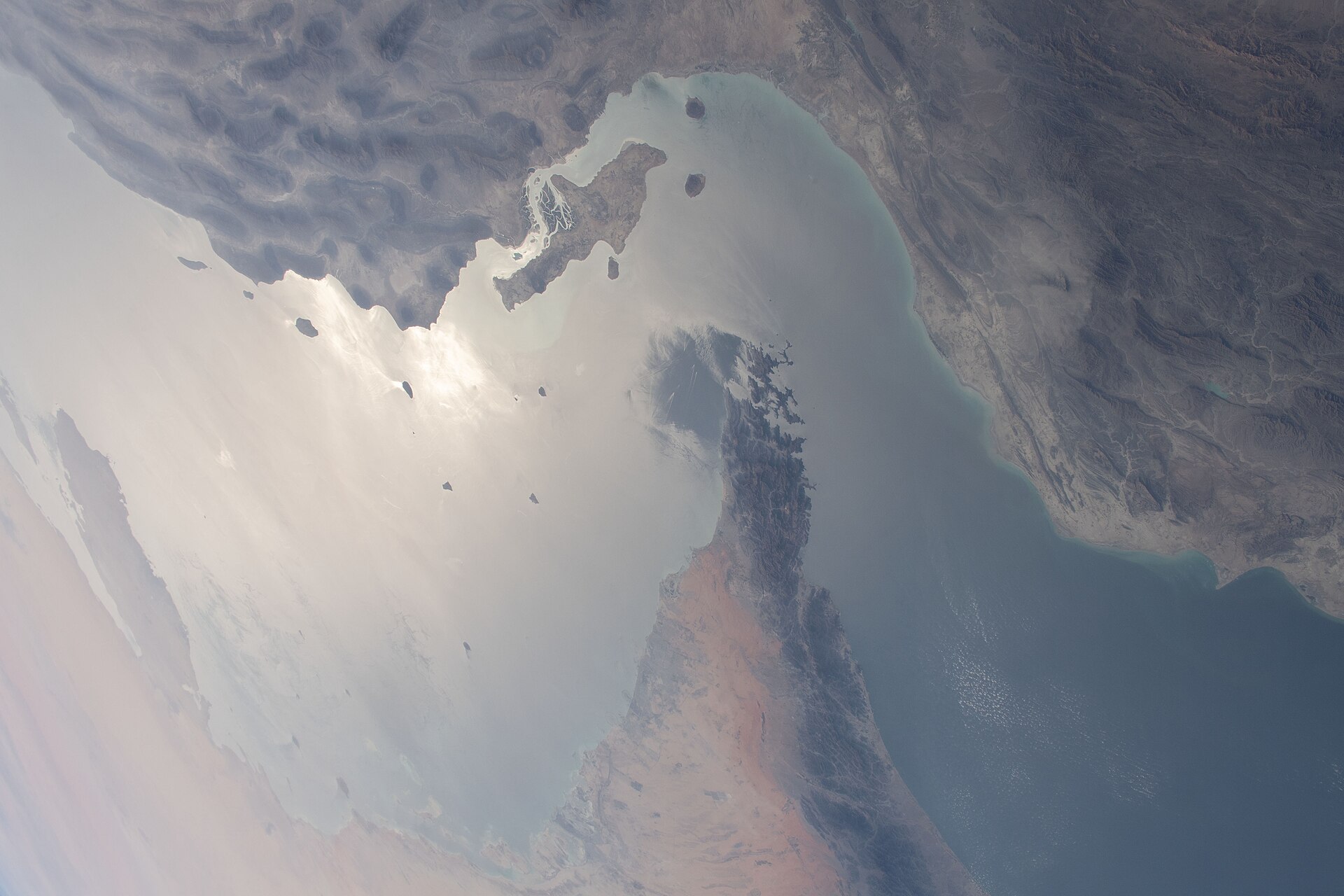

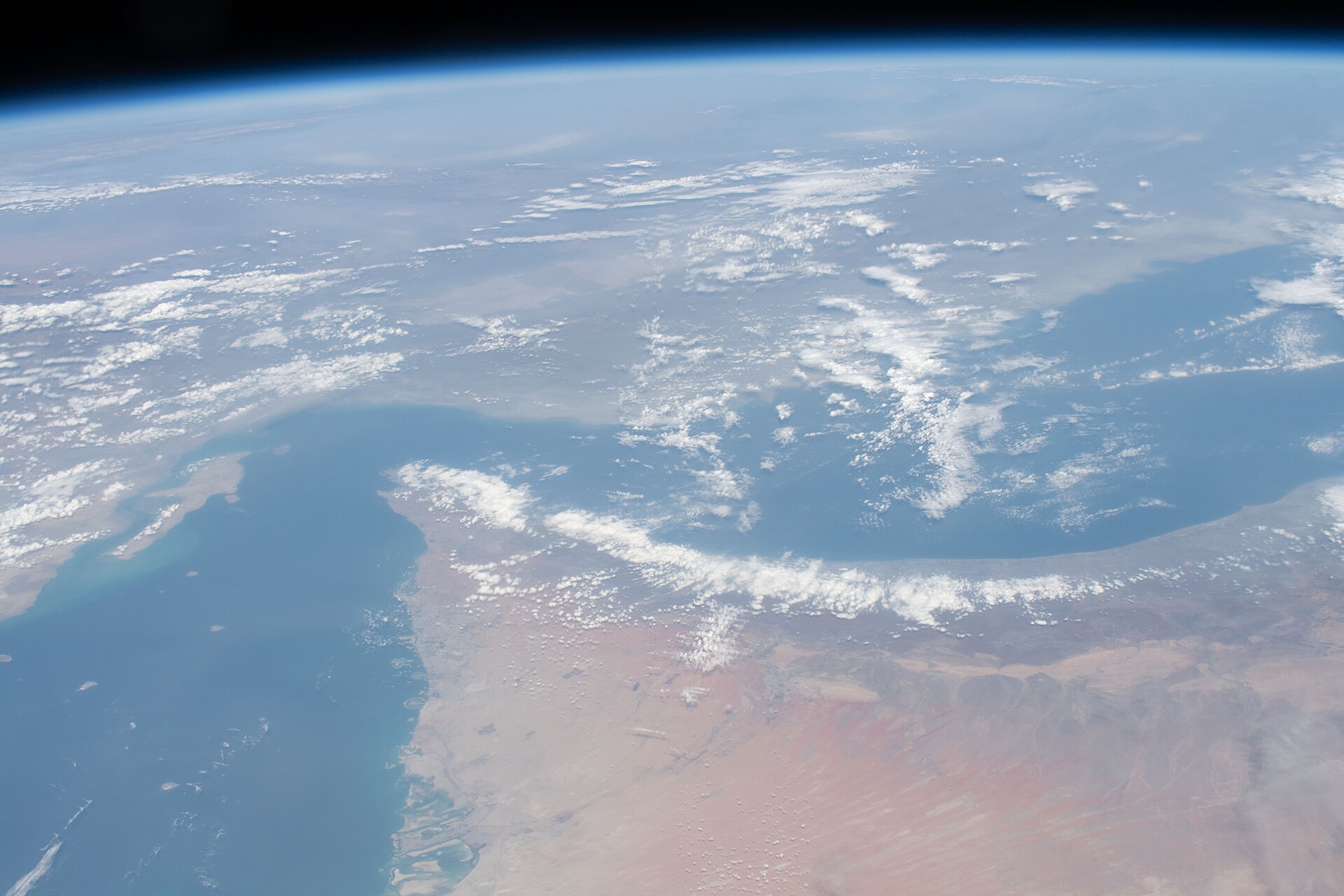
WASHINGTON — The dual IRGC strikes on commercial vessels in the Strait of Hormuz on July 7 present the Trump administration with a retaliation question that turns less on firepower than on geography. The United States can reach Iranian coastal infrastructure. It needs Prince Sultan Air Base to sustain the air campaign. And Saudi Arabia has already demonstrated, during the grounding of US warplanes in May 2026, that PSAB access is conditional — not guaranteed.
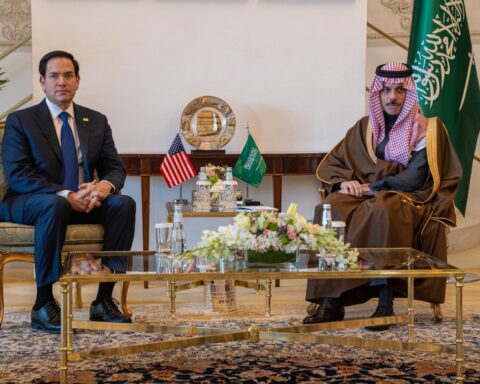
Crown Prince Mohammed bin Salman warned President Trump during the Project Freedom crisis that the operation risked “dragging Saudi territory into direct Iranian retaliation.” Twenty days into a fragile Islamabad MOU, with round three of negotiations 96 hours away and fewer than 400 PAC-3 interceptors standing between Riyadh and the next Iranian salvo, that objection has only grown sharper. The question facing Washington is not whether it can hit Iran. It is whether the base it needs will open its gates — and what the kingdom demands in return for accepting the risk.
Table of Contents
- What Did Iran Strike on July 7?
- Why Can’t Washington Retaliate Without Riyadh?
- The Four Days That Rewrote Basing Access
- What Would MBS Do If Washington Asks Again?
- Can the Pentagon Bypass Saudi Arabia Entirely?
- What Happens to Saudi Air Defense If the US Leaves PSAB?
- Ninety-Six Hours to Islamabad
- Frequently Asked Questions
What Did Iran Strike on July 7?
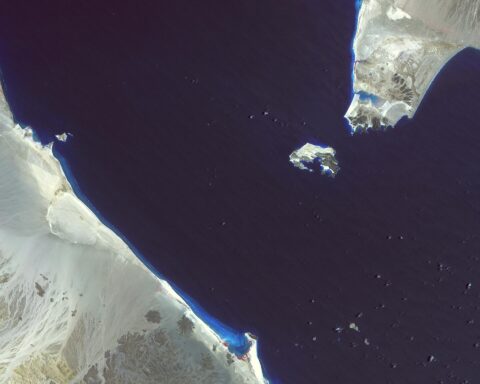
The IRGC struck two commercial vessels transiting the Omani-IMO safety corridor east of Limah, Oman, on the night of July 7 — Day 20 of the Islamabad MOU’s sixty-day toll-free Hormuz window. The first target was Al Rekayyat, a Qatar-flagged Q-Flex LNG tanker owned by Nakilat, hit on the port side at the engine room approximately eight nautical miles east of Oman’s Limah headland, according to Bloomberg. A second commercial vessel was struck the same night in the same corridor, UK Maritime Trade Operations confirmed. All crew on both ships survived.
The IRGC framed both strikes as enforcement, not escalation. IRINN reported that Al Rekayyat had “ignored Iranian warnings against transiting through the Omani route.” Tehran’s position, issued publicly on June 25, treats Hormuz transit-lane designation as a sovereign Iranian prerogative — not an International Maritime Organization or UNCLOS matter.
“The only authorised routes for crossing the Strait of Hormuz are the routes announced by the Islamic Republic of Iran. Vessel traffic outside these routes is highly dangerous and prohibited.”IRGC official statement, June 25, 2026 (Al Jazeera)
Iran considers the Oman-IMO corridor legally invalid because Oman “announced a new route without informing or coordinating with the Islamic Republic,” according to Al Jazeera’s reporting of the June 25 statement. The July 7 strikes did not emerge from a vacuum. Between July 2 and 3, at least eight commercial vessels using the same IMO-Oman safety corridor were forced to reverse course under IRGC threat, according to STL News and Crisis Group.
The Middle East briefing 3,000+ readers start their day with.
One email. Every weekday morning. Free.
The dual targeting on Day 20 of 60 signals that Iran treats the MOU’s toll-free window as a diplomatic instrument, not a restraint on operational enforcement of its route-authority doctrine. The chair of the Iranian parliament’s national security commission, Azizi, framed the strikes as “not a violation of the ceasefire” but rather “ceasefire management.” Trump called the attacks “a very foolish violation of our ceasefire agreement” but announced no kinetic response, with Islamabad round three — where the nuclear program formally enters the agenda — scheduled for July 11.
Why Can’t Washington Retaliate Without Riyadh?
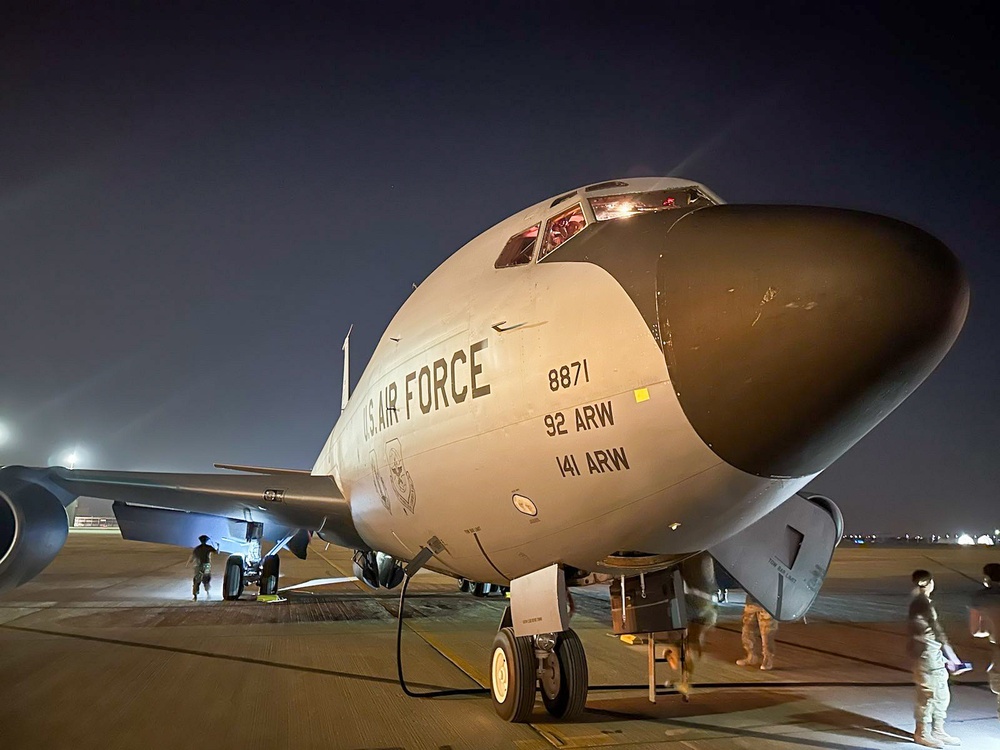
Prince Sultan Air Base hosts the KC-135 tanker fleet and Link-16 battle management infrastructure that sustain any US air campaign over the Strait of Hormuz. Without PSAB’s aerial refueling capacity, carrier-based strike packages lose the endurance to operate against defended Iranian coastal targets for more than single-pass sorties. The base provides the logistics backbone that converts American firepower into sustained air operations.
PSAB sits 90 kilometers southeast of Riyadh and houses the core of CENTCOM’s Gulf air architecture: KC-135 Stratotankers for aerial refueling, the surviving E-3G Sentry AWACS fleet for airborne command and control, and Link-16 battle management nodes that integrate coalition targeting data. Approximately 2,300 US military personnel operate from the base alongside IESP maintenance contractors, THAAD battery operators, and PAC-3 fire-unit crews. CENTCOM maintains more than 15,000 troops and over 200 aircraft and warships across the wider Gulf theater, but the distribution matters more than the aggregate. The tankers, the AWACS, and the targeting integration sit at PSAB.
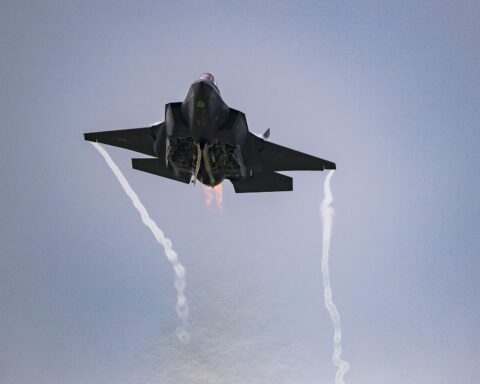
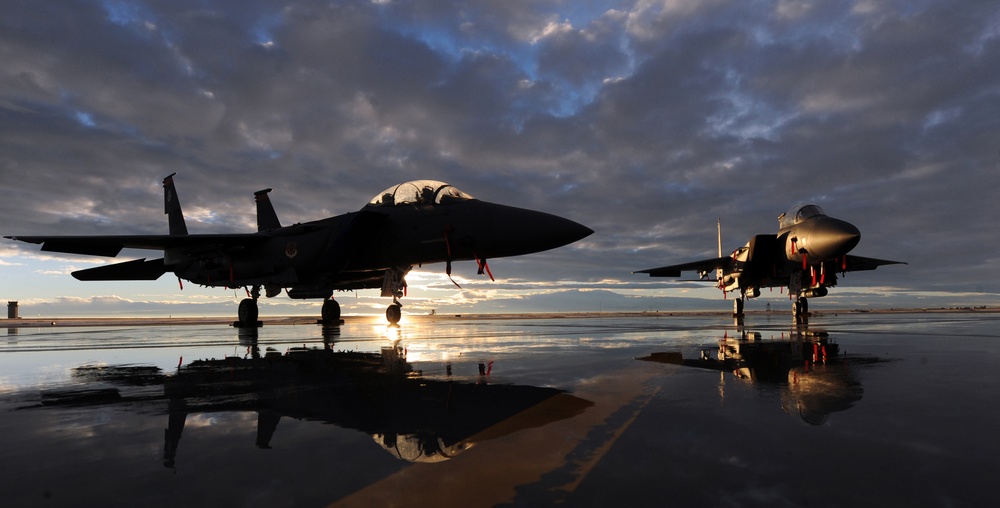
Strike fighters — whether F-15Es from land bases, F-35As, or F/A-18E/Fs from carrier decks — require tanker support to reach Iranian targets along the southern coast and sustain station time over them. Qeshm Island missile batteries, IRGC Navy fast-attack craft bases at Bandar Abbas, and command infrastructure on Abu Musa all lie within range of carrier-launched aircraft. But operating over these targets through defended airspace, with Iranian coastal radars, Noor and Khalij Fars anti-ship cruise missiles, and fast-attack swarms in the corridor below, requires multiple aerial refueling cycles per sortie. PSAB’s tanker fleet makes that operationally possible.
One of PSAB’s E-3G Sentry AWACS aircraft — tail number 81-0005, valued at approximately $500 million and one of only sixteen in the entire US Air Force inventory — was effectively destroyed by an Iranian ballistic missile on March 27. The loss reduced a fleet the service cannot reconstitute on any timeline relevant to this conflict. The surviving Sentries provide the airborne battle management that deconflicts coalition aircraft, tracks IRGC surface movements, and coordinates targeting across the Strait’s dense operational environment. Without them, coordination falls to less capable shipborne radar and satellite links — adequate for single strikes, insufficient for a sustained campaign.
The Four Days That Rewrote Basing Access
On May 4, 2026, President Trump announced Operation Project Freedom — a Hormuz escort operation deploying more than 100 aircraft and 15,000 personnel — without advance consultation with Riyadh or Kuwait City. Both countries closed their airspace and denied basing access within hours.
At PSAB, Saudi authorities grounded 43 US warplanes for four consecutive days. The escort operation, designed to reassert freedom of navigation against the IRGC’s Hormuz blockade, stalled on the runway before a single sortie launched. Trump called MBS directly to demand the resumption of flight operations. The call produced no agreement. A second call did — but only after Washington threatened to withhold PAC-3 interceptor resupply, a lever that carried weight because Saudi Arabia’s stockpile had already fallen below 500 rounds from an original inventory of approximately 2,800.
MBS’s objection was not anti-American posturing or a negotiating tactic. He told Trump the operation was “not well thought-out” and that it would risk pulling Saudi territory into direct Iranian targeting, according to Business Standard and HOS reporting. The argument drew on evidence that was weeks old. Iranian ballistic missiles had struck PSAB on March 14–16, damaging five KC-135 Stratotankers, and again on March 27, destroying the E-3G Sentry. Saudi Arabia had absorbed more than 575 drone strikes before reluctantly opening King Fahd Air Base in Taif to US operations in late March — including a single-day record of approximately 100 incoming drones on March 17, according to Iran International.
The grounding established a precedent that decades of Gulf basing arrangements had never produced: a treaty ally revoking US military access during an active conflict, in real time, as deliberate policy. The 1976/1977 Status of Forces Agreement that nominally governs American forces at PSAB — already contested by Saudi officials as legally void or severely constrained — offered Washington no mechanism to override the host government’s decision. For four days, the most capable air force on earth sat grounded 90 kilometers from its own capital because the host said no.
What Would MBS Do If Washington Asks Again?
MBS faces the same calculation that drove the May grounding, now sharpened by the MOU’s fragile diplomatic track and a PAC-3 interceptor inventory that has continued to erode. Cooperating with US strikes risks Iranian retaliation Saudi air defenses cannot absorb. Refusing risks a US withdrawal that removes the personnel who maintain those same defenses. Neither option offers Riyadh an exit on its own terms.
Saudi Arabia’s PAC-3 stockpile has fallen to approximately 400 rounds — 14 percent of its pre-war total of 2,800, an 86 percent depletion rate across five months of conflict. Lockheed Martin’s Camden, Arkansas production line turns out 620 PAC-3 MSE rounds annually for all global customers; the first dedicated Saudi resupply shipment is not expected before mid-2027, according to HOS and defense industry reporting. If PSAB is used as a staging base for retaliatory strikes against IRGC Hormuz infrastructure, Iranian targeting of the base is not a scenario requiring simulation. It happened in March. PSAB’s own operations center knows the blast radius.
The Islamabad MOU constrains the decision from a second direction. Saudi Arabia holds no seat at the US-Iran table — it is neither signatory, observer, nor mediating party. But it is the Gulf state with the most to lose if the talks collapse. The Persian Gulf Security Architecture fee, suspended for the MOU window, carries a Saudi liability of $253 million and reactivates at $5.5 million per day on August 18. Round three — where Iran’s nuclear program formally enters the agenda — convenes in four days.
If Riyadh permits retaliatory strikes from PSAB, the MOU almost certainly dies. Acting President Ghalibaf warned on July 3 via ISNA that “if the US and Zionist regime fail to fulfil commitments, Iran will resume proportionate actions” — citing the Lebanon clause as a stated MOU breach. Strikes launched from Saudi soil would hand Tehran’s hardliners the pretext the conditional compliance framework has been waiting for.
If Riyadh refuses, it preserves the diplomatic track but deepens the rupture with Washington at a moment when the Pentagon is already weighing a punitive drawdown of PSAB personnel. The Wall Street Journal reported on July 1 that planning had begun for the removal of IESP contractors, Link-16 operators, and THAAD maintenance crews. Either path costs Riyadh something it cannot manufacture domestically or procure on any timeline that matches the threat.
Can the Pentagon Bypass Saudi Arabia Entirely?
Four alternative strike platforms — carrier groups in the Arabian Sea, submarine-launched Tomahawks, B-2 bombers from Diego Garcia, and land-based aircraft from Qatar, Kuwait, or Oman — can deliver ordnance to Iranian targets. None provides the sustained sortie rate, aerial refueling, or airborne battle management that a multi-day campaign against hardened Iranian coastal defenses demands.
| Platform | Location | Capability | Operational Constraint |
|---|---|---|---|
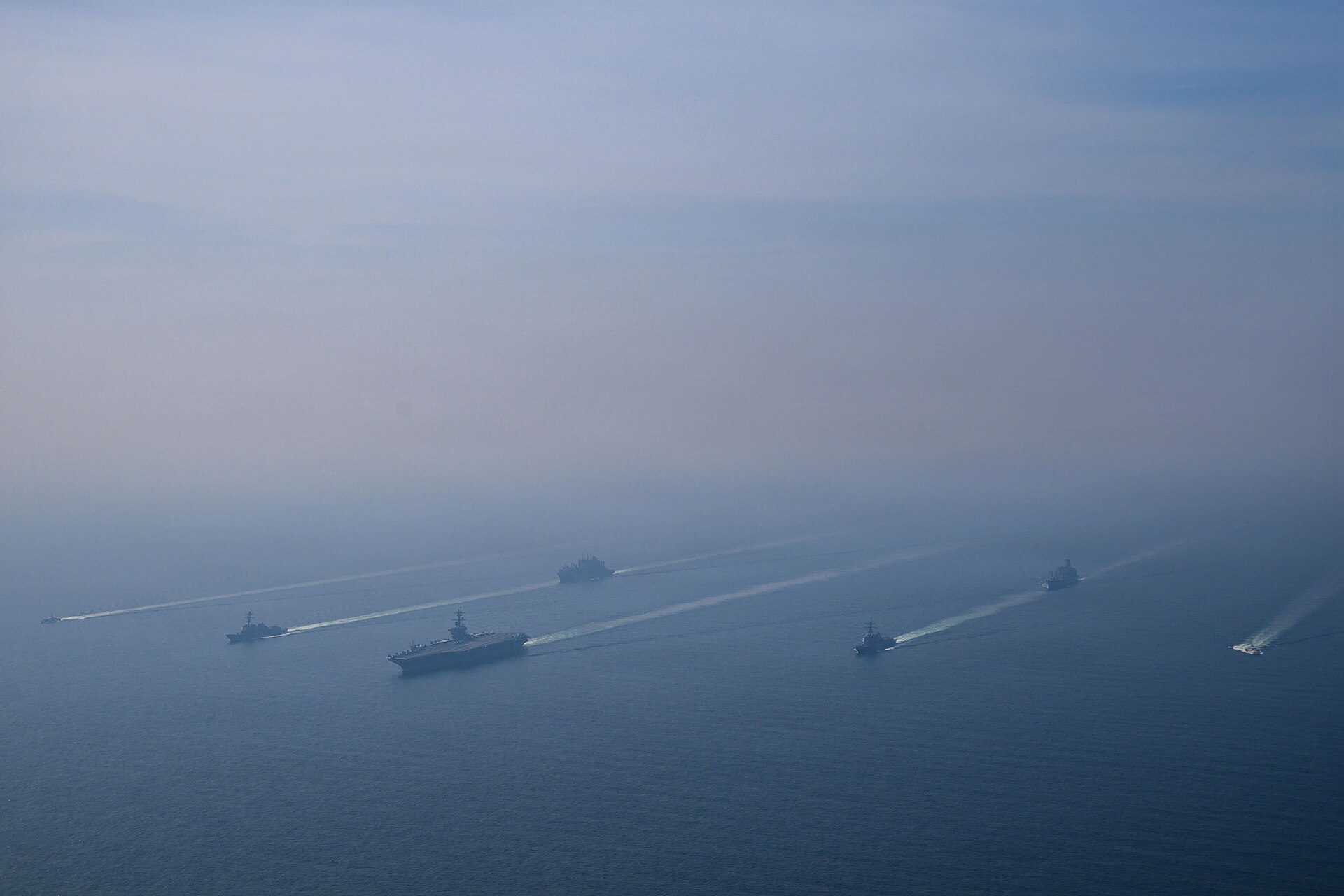
| Carrier strike group | Arabian Sea / Gulf of Oman | F/A-18E/F sorties, Tomahawk cruise missiles | Sortie rate drops sharply without land-based tanker support; carrier itself vulnerable to IRGC anti-ship cruise missiles (Noor, Khalij Fars) |
| Ohio-class SSGN | Gulf of Oman | Up to 154 Tomahawk land-attack missiles per hull | One-shot magazine with no at-sea reload; ineffective against mobile launchers and fast-attack craft |
| B-2 Spirit (6 deployed) | Diego Garcia (~4,600 km) | 16 × 2,000-lb JDAM or 2 × GBU-57 MOP per sortie | Round-trip exceeds 10 hours; 1–2 sorties per day per airframe; viable only against fixed hardened and underground targets |
| Al Udeid, Qatar | ~200 km from Strait | KC-135s, F-15Es, ISR platforms | Qatar is double-exposed as Doha talks host and Nakilat fleet owner; unlikely to authorize strikes that invite IRGC retaliation against Qatari territory |
| Ali Al Salem, Kuwait | ~700 km from Strait | F-16s, logistics hub | Kuwait denied access during Project Freedom; base struck by IRGC missiles after June 27 US retaliation on Qeshm |
| Al Dhafra, UAE | ~350 km from Strait | F-35As, KC-10 tankers | UAE had 2 of 10 air-defense batteries operational at time of Iranian attacks; defensive pull-back posture since February |
| Oman (Thumrait / Masirah) | ~450–800 km from Strait | P-8 maritime patrol, logistics staging | Oman’s neutrality posture and active Hormuz co-architecture role with Iran make combat basing politically untenable |
Each alternative carries a version of the same problem. Carrier-based aviation can deliver a first-night strike package, but without PSAB’s tankers, fighter endurance over the target area drops below the threshold needed to suppress mobile IRGC launchers that relocate between salvos. Submarine-launched Tomahawks offer precision against fixed targets — Qeshm Island batteries, Bandar Abbas port infrastructure — but their magazines do not reload at sea. Once fired, the submarines must return to port or a tender. B-2s from Diego Garcia can reach underground facilities that no other platform can penetrate, but each airframe is limited to one or two sorties per day by the round-trip distance.
The June 27 US strikes on Qeshm Island — Washington’s most recent kinetic action against Iran — exposed the limits of operating without PSAB at full capacity. The operation hit visible coastal infrastructure but left the IRGC’s underground missile storage, mobile launcher fleet, and fast-attack craft dispersal network intact. Iran restored 30 of 33 IRGC missile sites along the Hormuz coast to operational status within approximately 40 days of the ceasefire — a 91 percent reconstitution rate that contradicted Admiral Brad Cooper’s May 14 congressional testimony claiming 85 percent of Iran’s missile and drone industrial base had been destroyed.
“The US achieved significant tactical damage to Iran’s visible military infrastructure but could not reach underground infrastructure, eliminate the Strait of Hormuz threat, suppress proxy networks, drain reconstitution capacity, or produce the political outcome it sought.”CSIS Burke Chair assessment, 2026
The Qeshm operation validated MBS’s stated concern. The IRGC responded by firing missiles and drones at Ali Al Salem air base in Kuwait and the US Fifth Fleet headquarters in Bahrain. Both host nations absorbed damage to military infrastructure. Tehran’s public messaging explicitly tied the retaliation to each country’s role in facilitating the American operation. Host nations that facilitate US strikes absorb Iranian strikes in return — and every Gulf capital now understands the exchange rate.
A former CENTCOM commander has publicly argued that the US should relocate Gulf basing entirely to Israel to reduce dependence on Gulf partners, according to Middle East Eye. The proposal acknowledges the structural problem without resolving it. Israel sits roughly 2,000 kilometers from the Strait of Hormuz. Strike packages from Nevatim Air Base would require the same aerial refueling chain that PSAB provides — and Israeli overflight of Saudi airspace would introduce a political constraint at least as severe as the one it aims to eliminate.
What Happens to Saudi Air Defense If the US Leaves PSAB?
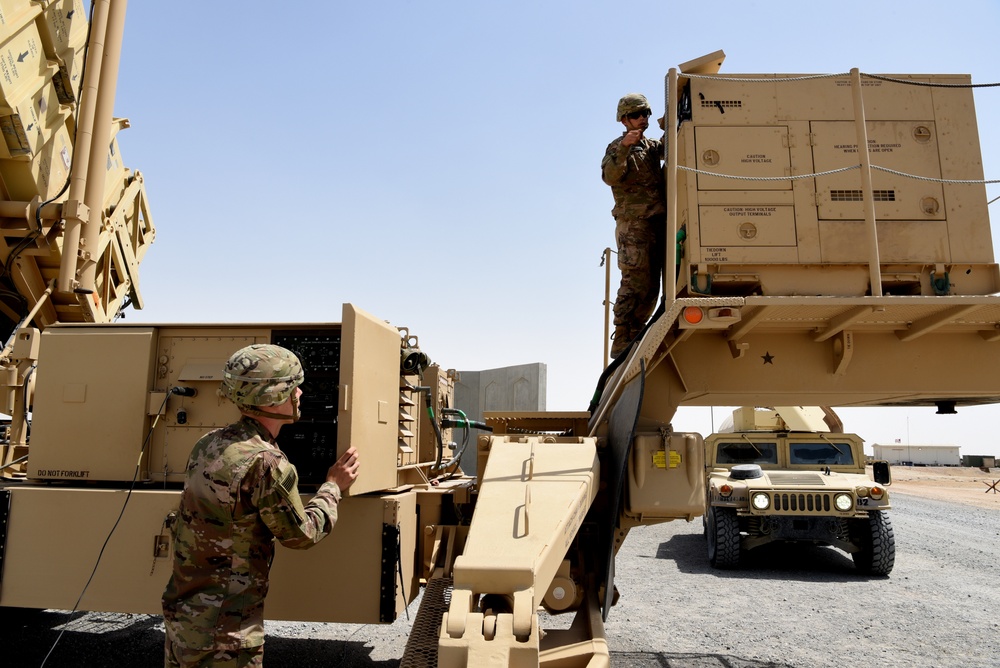
Saudi Arabia’s air-defense network depends on US-operated Patriot batteries, THAAD maintenance crews, and Link-16 integration that all run through PSAB. The kingdom’s interceptor shortage and the multi-year delivery timeline for its Korean replacement system mean Riyadh cannot compensate for a US departure with anything currently on order or in production.
The $3.1 billion M-SAM-II contract with South Korea’s LIG Nex1, signed as a hedge against this dependency, intercepts incoming threats at 15 to 20 kilometers altitude. The IRGC’s Zolfaghar ballistic missiles arrive in their terminal phase below 10 kilometers — the engagement envelope where only PAC-3 operates. The M-SAM-II fills a gap in Saudi Arabia’s mid-tier defense but does not address the terminal-phase vulnerability that matters most against Iranian ballistic strikes. LIG Nex1’s production line runs at 300 rounds per year, and first deliveries to Riyadh are not expected before 2028, according to Janes.
The dependency extends beyond interceptor hardware. Link-16 — the encrypted tactical data network that fuses Saudi, American, and coalition sensor feeds into a shared targeting picture — requires US-operated ground stations and specialist maintainers at PSAB. THAAD batteries provide upper-tier coverage against the longer-range Iranian missiles that arc above PAC-3’s engagement ceiling. IESP contractors maintain the Patriot fire units that constitute the last line of defense. When the Pentagon models a PSAB drawdown, it is not removing a symbolic garrison. It is disconnecting the maintenance layer beneath Saudi Arabia’s entire integrated air-defense architecture.
The resulting paradox is structural, not rhetorical. If Saudi Arabia cooperates with US retaliatory strikes, it invites Iranian salvos that the remaining interceptor inventory cannot sustain across multiple attack waves. If it refuses, it accelerates the departure of the American personnel who keep those batteries operational. MBS cannot resolve this by purchasing hardware. The M-SAM-II arrives in 2028. The PAC-3 resupply arrives in mid-2027. The next Iranian salvo could arrive before either.
Ninety-Six Hours to Islamabad
The July 7 strikes land 96 hours before Islamabad round three, the session where the nuclear track formally enters the negotiating agenda. Sanctions relief, frozen Iranian assets, and enrichment limits are all scheduled for discussion on July 11, according to Al Hadath and Al Arabiya reporting. The timing is not incidental. Tehran has treated the MOU’s toll-free window as a period for enforcement demonstrations, not as a restraint on IRGC operations in the Strait.
The July 7 strike also targeted a Saudi asset directly: the Bahri-operated VLCC Wedyan was hit sixteen nautical miles east of Khor Fakkan with no US military response, confirming that Iranian coercion of Saudi commercial tonnage carries no military cost so long as PSAB access remains conditional.
Secretary of State Rubio called Iran’s Hormuz “service fee” framing — Tehran’s legal theory under UNCLOS Article 26(2) — “a game of semantics” that would “never be acceptable.” The formulation has not changed. But the diplomatic track has survived three IRGC provocations since the MOU was signed on June 17: the route-authority ultimatum on June 25, the first vessel strike on June 27, and the dual targeting on July 7. Each time, Washington chose the table over the target list.
Iranian officials have told international media that Iran considers the Strait a “golden card” and is “not going back to the status before the war.” The MOU’s $300 billion reconstruction framework, reported by Axios and Al Jazeera as part of the June 17 agreement, represents the long-term incentive. The IRGC’s route-authority enforcement represents the daily reminder of what non-agreement looks like. Both operate simultaneously, and Tehran sees no contradiction between them.
For Saudi Arabia, the arithmetic is direct. Forty-two days remain before the PGSA fee window closes on August 18. If the MOU collapses — because Washington retaliates kinetically, because Tehran’s hardliners find their pretext in Ghalibaf’s conditional compliance framework, or because Islamabad round three fails to produce enough progress to sustain momentum — Saudi Arabia’s PGSA exposure reactivates and compounds daily. Riyadh has every structural incentive to urge Washington toward restraint and keep the talks alive.
Whether Washington listens depends on what happens in the Strait over the next four days. If another vessel burns east of Limah before the Islamabad delegation convenes, the domestic political cost of diplomatic patience may exceed even the operational cost of striking without full basing access. The coercion gap that has defined the coalition’s Hormuz posture since February would then close — not because the gap was bridged, but because it became politically unsustainable to leave open.
For MBS, the next 96 hours carry a different kind of pressure. He must signal enough cooperation with Washington to preserve the alliance and the PAC-3 resupply pipeline, while withholding enough to avoid becoming Tehran’s next example of what happens to Gulf states that host American strikes. The crown prince has managed this balance before — opening Taif while denying PSAB, absorbing hundreds of drone strikes while refusing to authorize offensive sorties. Islamabad round three convenes on July 11. The IRGC’s coastal batteries on Qeshm remain operational. PSAB’s gates remain closed to offensive sorties.
Frequently Asked Questions
Has the US launched strikes against Iran from Saudi Arabia during this conflict?
Yes. During the opening phase of Operation Epic Fury in late February and early March 2026, F-15E Strike Eagles flew combat sorties from PSAB directly into Iranian airspace as part of the initial campaign against IRGC targets. Those missions contributed to the retaliatory calculus that produced Iran’s March 14–16 strikes on PSAB’s tanker fleet and the March 27 destruction of the E-3G Sentry — establishing the cause-and-effect chain that now defines MBS’s reluctance. The PSAB combat record is precisely what makes Saudi Arabia unwilling to permit a second round of offensive operations from the base.
What is the legal basis for US forces at Prince Sultan Air Base?
The American military presence rests on the 1976/1977 bilateral Status of Forces Agreement between Washington and Riyadh, an agreement Saudi officials have argued since at least 2024 is either legally void or so severely narrowed by subsequent diplomatic exchanges that it no longer authorizes the scope of operations the Pentagon conducts. No revised SOFA has been negotiated or signed. The legal ambiguity gave Riyadh the political cover to ground warplanes during Project Freedom without formally abrogating the alliance — a gray zone neither side has forced to resolution because both benefit from its flexibility.
Could Pakistan’s forces at King Abdulaziz Air Base substitute for PSAB capabilities?
Pakistan deployed approximately 8,000 troops and a JF-17 Thunder squadron to King Abdulaziz Air Base under a bilateral security agreement signed in May 2026, according to the International Institute for Strategic Studies. These forces are configured for Saudi territorial defense — point protection of critical infrastructure against drone and cruise-missile attack. They carry no mandate, capability, or political authorization for power projection against Iranian targets. Islamabad, which is simultaneously hosting the US-Iran negotiations, cannot credibly serve as a launchpad for strikes against the country whose nuclear program it is helping to mediate.
What would Iran likely target inside Saudi Arabia if PSAB were used for retaliatory strikes?
Iran’s March 2026 targeting pattern provides the template. The IRGC prioritized PSAB’s high-value, difficult-to-replace platforms — the E-3G AWACS fleet, the KC-135 tanker line, and runway infrastructure — rather than personnel housing or support facilities. A second round of strikes would likely follow the same logic, targeting the remaining tankers and any forward-deployed strike aircraft, since destroying aerial refueling capacity achieves the same result as closing the base outright. IRGC targeting doctrine, as demonstrated in the Ali Al Salem and Bahrain Fifth Fleet strikes after Qeshm, focuses on operational degradation rather than mass casualties. The Sakhir Declaration’s collective defense clause went uninvoked when those same IRGC strikes landed on GCC sovereign territory xe2x80x94 Bahrain and Kuwait absorbed the July 8 attack without a single allied interceptor moving to assist.
Iran has now removed the ambiguity about which bases it will target when PSAB is not available. On July 9, the IRGC fired ten ballistic missiles at Jordan’s Muwaffaq Salti Air Base — the same facility cited as a potential relocation point for US forces — while Iran’s regular army destroyed a satellite communications antenna at Al Udeid in Qatar, completing a four-country strike sequence. Iran Strikes US Bases in Four Countries Within Twenty-Four Hours. The same strike wave brought the IRGC’s retaliation threat against all remaining American bases after a US projectile struck the perimeter of the Bushehr Nuclear Power Plant — the first reactor to enter the declared target package.