WASHINGTON — Iran’s Islamic Revolutionary Guard Corps fired ballistic missiles at US military bases in Jordan, Kuwait, Bahrain, and Qatar on July 12, the widest simultaneous targeting package since the war began in February. For the third consecutive multi-country retaliatory wave, every missile flew past Saudi Arabia without stopping.
The IRGC claimed direct hits on Prince Hassan Air Base in Jordan, Camp Arifjan and Ali Al Salem Air Base in Kuwait, NSA Bahrain at Juffair and Sheikh Isa Air Base, and Al Udeid Air Base in Qatar. The United States responded within hours, launching its third round of strikes since July 7 against 140 Iranian military targets, bringing the total to over 300 sites hit across three rounds in six days.
Table of Contents
The July 12 Strikes
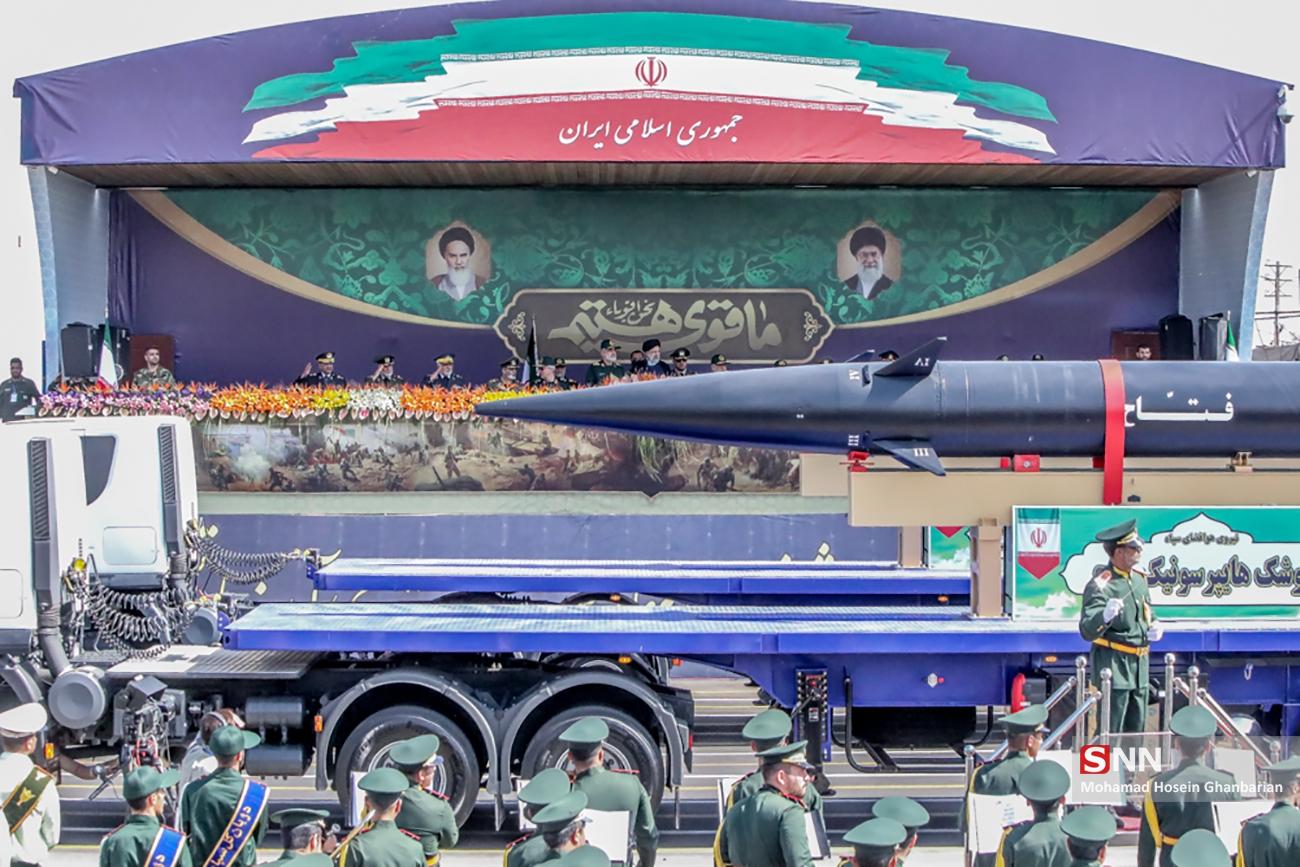
The IRGC’s public relations office released its strike communiqué under the heading “Bring it on” — a deliberate provocation signalling that the exchange was far from over. The statement claimed Iranian missiles “demolished the command and control center and the MQ-9 drone hangars” at Prince Hassan Air Base in Jordan, though the US has not confirmed the extent of damage at any targeted facility. A second-phase claim addressed Al Udeid Air Base in Qatar, where the IRGC said it “destroyed the base’s fighter aircraft maintenance and repair center as well as its command-and-control center.” Al Udeid houses the Combined Air Operations Center — the nerve centre for US air campaigns across the Middle East — and was struck three days earlier on July 9, when Iran’s regular army destroyed a $15 million AN/GSC-52B(V5) satellite communications dish manufactured by L3Harris.
The trigger for the latest exchange was an IRGC attack on the M/V GFS Galaxy, a Cyprus-flagged container ship transiting the Strait of Hormuz on July 12. One crew member remains missing; the vessel suffered an onboard fire and what CENTCOM described as significant engine room damage. The attack came on the same day Iran had been given a US deadline to issue a public statement acknowledging the Strait open to navigation — a deadline it ignored while its foreign minister sat in Muscat pledging commitment to diplomacy.
Three Waves, Same Gap
The Saudi exclusion is now a pattern, not an incident. On June 11, the IRGC struck 18 targets across Kuwait and Bahrain — no Saudi targets. On July 9, Iran fired on Jordan, Kuwait, Bahrain, and Qatar in the widest package to that date — no Saudi targets. On July 12, the same four countries absorbed Iranian missiles for the second time in four days, and Saudi territory was again off the list.
This is not because Iran cannot reach Saudi Arabia or has never done so. The IRGC struck Prince Sultan Air Base on March 27, destroying a $270 million E-3G Sentry airborne early warning aircraft in what remains the single most expensive piece of US military equipment lost in the war. But since Saudi Arabia’s Operation Project Freedom grounded 43 US warplanes at PSAB in May, Iran has not sent another missile toward Saudi soil.
The Middle East briefing 3,000+ readers start their day with.
One email. Every weekday morning. Free.
The operational logic is visible in its outline: Saudi Arabia publicly confirmed it will not allow its territory or airspace to be used against Iran, and Iran has reciprocated by removing Saudi targets from the retaliatory packages aimed at the American military presence. Iranian officials have called Saudi Arabia a “brotherly nation” without explaining the distinction in operational terms. The result is that Riyadh occupies a space no other Gulf capital can claim — neither part of the US strike architecture nor part of Iran’s target set.
US Response: Round Three
CENTCOM launched its third round of strikes at 7:15 p.m. ET on July 12, hitting 140 Iranian military targets including IRGC air defence systems, command and control networks, coastal radar sites, anti-ship missile capabilities, and naval assets. The weapons package drew on land- and sea-based fighter aircraft, drones, naval vessels, and precision munitions across a single evening.
The stated objective was to “degrade Iran’s ability to attack civilian mariners and commercial vessels freely transiting the strait,” according to CENTCOM’s official release. Across three rounds — beginning July 7 after the reimposition of GL X1 oil sanctions, escalating July 8-9, and culminating July 12 — the US has struck over 300 Iranian targets, concentrating on the coastal infrastructure that allows the IRGC Navy to threaten Hormuz traffic.
The scale represents a qualitative shift from the earlier phases of the war, when US strikes focused on discrete retaliatory packages against specific IRGC units. Three hundred targets in six days is a degradation campaign, not a signalling exercise — an attempt to physically remove Iran’s capacity to threaten maritime traffic rather than to deter future attacks through proportional pain. The Pentagon’s target selection reflects that distinction: coastal radar installations and anti-ship missile batteries are infrastructure, not personnel, and destroying them is meant to open the Strait regardless of whether Tehran decides to cooperate.
Yet the IRGC’s July 12 response — striking four countries within hours of absorbing 140 hits — suggests the degradation has not yet reached the threshold where Iran’s retaliatory capacity breaks down. The ballistic missile inventory that allows Iran to reach US bases across the Gulf is separate from the coastal systems the US is degrading, meaning Washington can hollow out Iran’s anti-shipping capability without touching the arsenal aimed at American troops in Jordan, Kuwait, Bahrain, and Qatar.
Hormuz Closed Until Further Notice
Following the July 12 US strikes, the IRGC formally declared the Strait of Hormuz “closed until further notice,” citing “unlawful intervention of foreign powers.” The declaration formalised a reality already visible in the data: zero vessels over 10,000 deadweight tonnes with AIS transponders active have transited Hormuz since July 7, against a normal daily flow of approximately 88 ships. The strait that carries roughly 20 percent of the world’s oil consumption is operationally shut.
The closure declaration landed while Iranian Foreign Minister Abbas Araghchi sat in Muscat with Omani FM Busaidi, where both sides “expressed desire to return to MOU conditions.” Iran’s top diplomat discussed reopening the Strait in an Omani conference room while Iran’s military declared it permanently shut from an IRGC operations centre. Araghchi attacked the US rather than his own military: “Iran has so far kept its word, unlike the so-called US Treasury Secretary who is violating Para 9 of the MoU,” he told reporters, referencing the GL X1 sanctions reimposed July 7 that Iran considers a US breach of the ceasefire framework.
“Iran has so far kept its word, unlike the so-called US Treasury Secretary who is violating Para 9 of the MoU.”
— Abbas Araghchi, Iranian Foreign Minister, Muscat, July 12, 2026
The contradiction between the diplomatic track and the military track no longer requires inference. Araghchi pledged commitment to diplomacy the same morning the IRGC attacked a cargo ship in the Strait, and the same evening the IRGC launched ballistic missiles at four countries. Either Araghchi cannot speak for the IRGC, or the diplomatic messaging is cover for operations that will continue regardless. Neither reading offers a path back to the MOU’s terms.
Saudi Arabia Between Two Absences
Saudi Arabia occupies a position in this war that has no clean analogue. It is not protected by US deterrence it can rely on: the 43 warplanes grounded at PSAB remain grounded, the PAC-3 interceptor stock that keeps Saudi cities defended sits at approximately 400 missiles from an original inventory of 2,800 — an 86 percent depletion — and the M-SAM-II system purchased from South Korea has an altitude gap against the Zolfaghar missile’s terminal phase that no software patch can close.
Nor is Saudi Arabia targeted by an adversary it can bargain with. Iran’s exclusion of Saudi territory from the post-MOU strike packages is a unilateral Iranian decision that Riyadh did not negotiate, cannot formalise, and has no mechanism to enforce. It persists because Iran finds it useful — Saudi non-participation in the American strike architecture is worth more to Tehran than Saudi territory as a target set. The moment that calculation shifts, the exclusion ends.
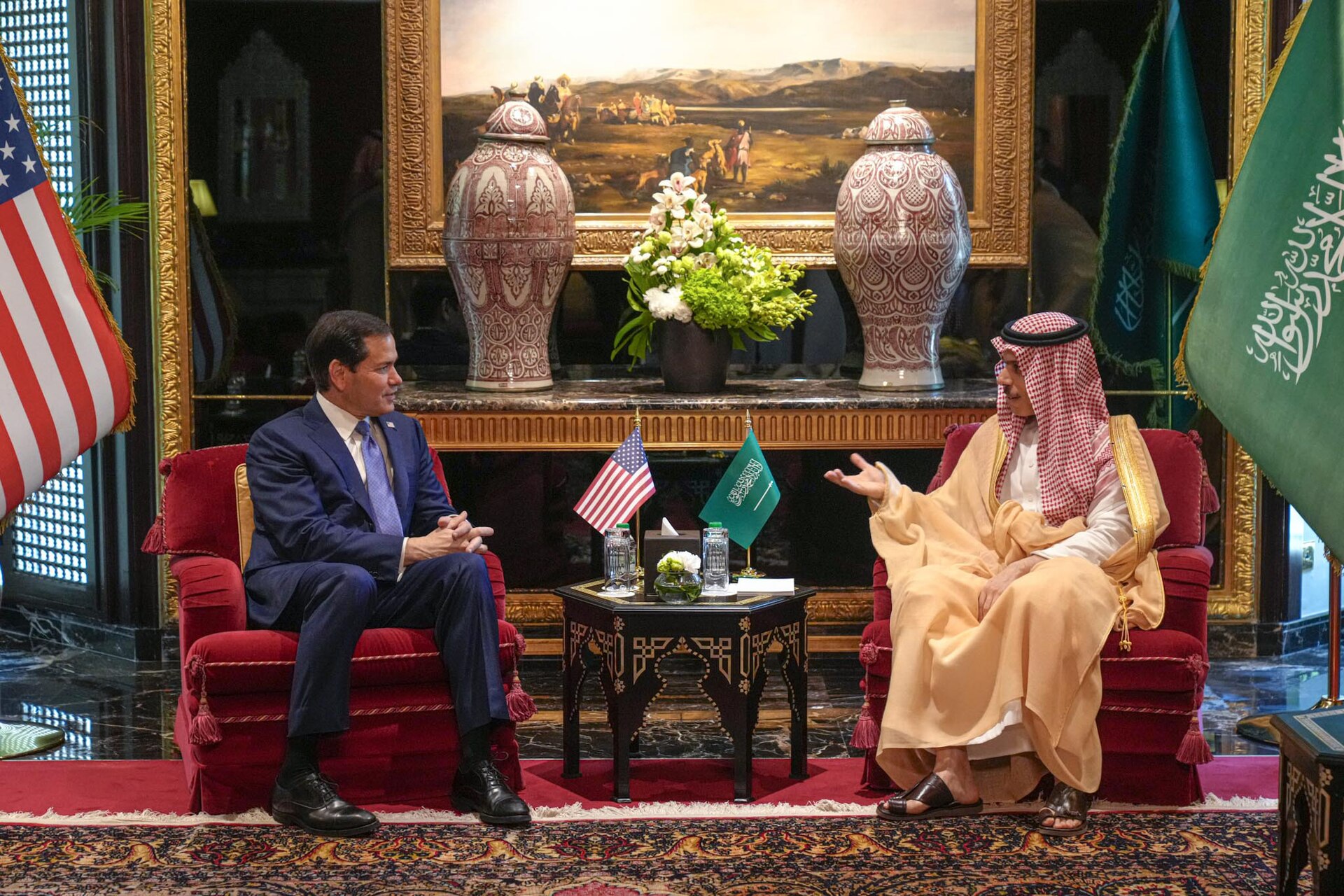
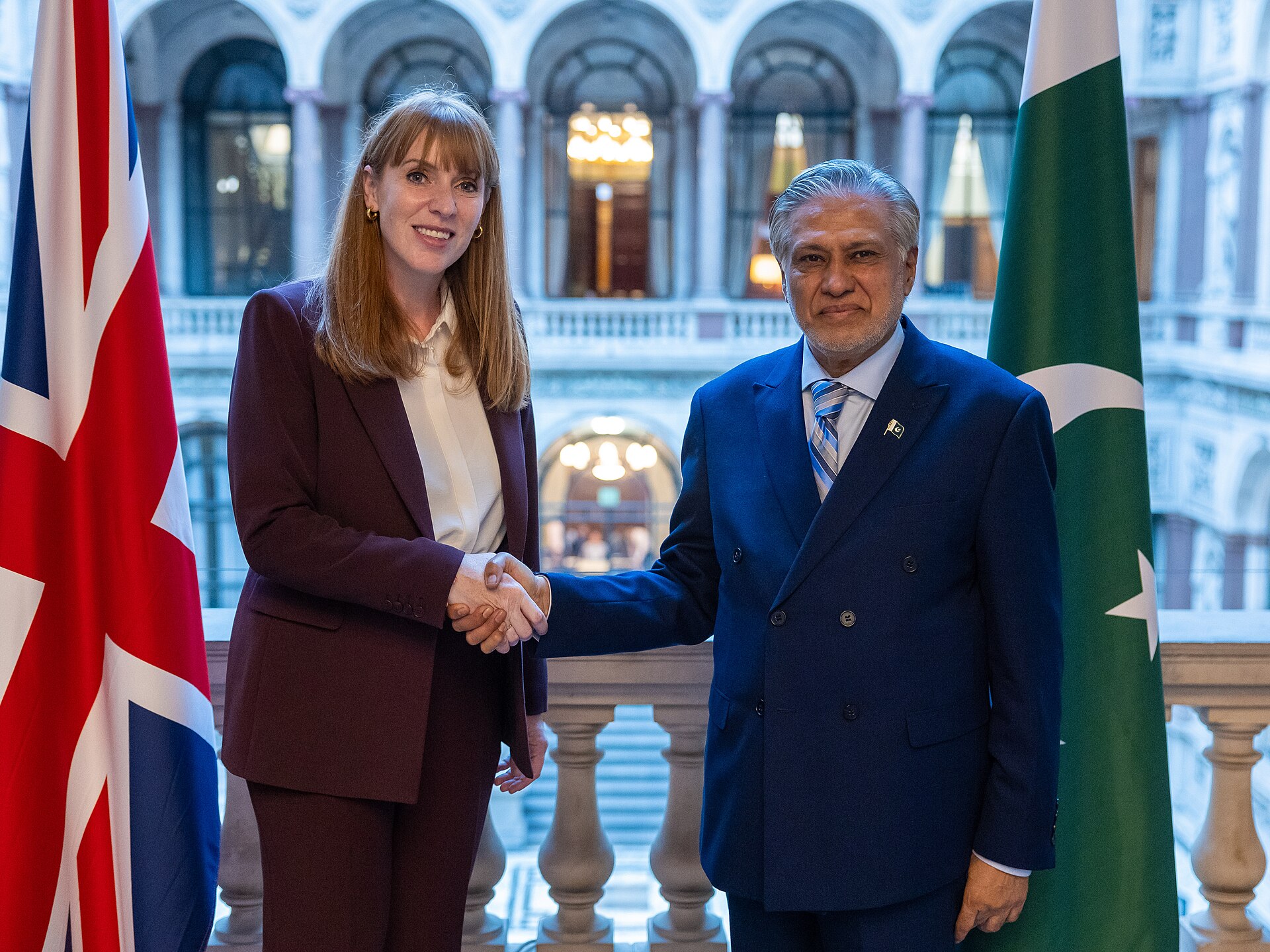
Prince Faisal bin Farhan called Pakistani FM Ishaq Dar on July 11-12, with both agreeing that renewed conflict “served no one’s interest” and calling for dialogue. But Riyadh has no seat at either the Doha or Islamabad negotiating tracks, no signatory role in the MOU, and no observer status in the nuclear discussions that Iran has explicitly excluded it from. Faisal can call for dialogue, but the dialogue happens without him in the room.
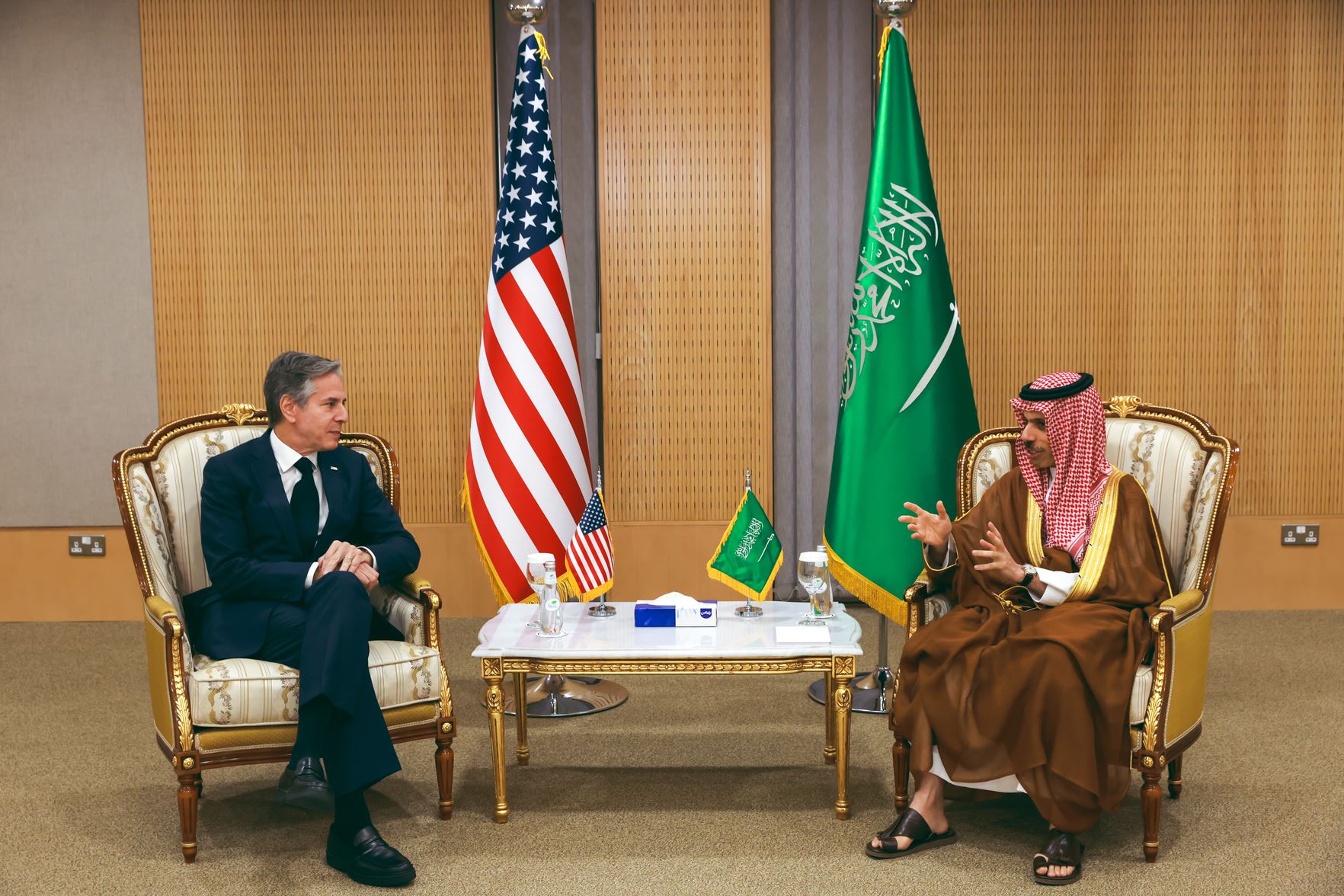
Dar, for his part, called for “maximum restraint” and allowing “mediation efforts the necessary time and space” — the standard language of a host country watching its scheduled talks collapse in real time. Pakistan was due to host the third round of direct US-Iran talks in Islamabad on July 14-15, with the nuclear file on the agenda for the first time under the MOU framework. Whether those talks survive July 12 is now the central question.
The MOU in Ruins
The Memorandum of Understanding signed June 17 in Doha was built on two reciprocal constraints: Iran would keep Hormuz open and cease attacks on commercial shipping, and the US would impose no new sanctions and make no new force deployments. Both constraints are now shattered. The US reimposed GL X1 oil sanctions on July 7, sanctioned 14 individuals linked to Iran’s supreme leader structure the same day, and has since launched over 300 strikes against Iranian military targets. Iran has declared Hormuz closed, attacked a commercial vessel, and launched ballistic missiles at US bases in four countries.
The MOU’s 60-day window expires approximately August 16. The Persian Gulf Security Assessment — the separate financial mechanism governing Hormuz transit fees — has accumulated $253 million in outstanding obligations at $5.5 million per day, with a payment deadline of August 18. Both frameworks assumed a baseline of mutual restraint that no longer exists. Para 9 of the MOU, which bars new US sanctions or force deployments, has been violated by every round of strikes CENTCOM has launched since July 7.
Iran’s position is that the US broke the MOU first with GL X1. Washington’s position is that Iran’s continued attacks on commercial shipping voided the agreement before sanctions were reimposed. The legal question is academic; the operational reality is that both sides are engaged in a sustained military exchange that neither the MOU nor any other diplomatic instrument currently constrains.
What Survives in Islamabad?
The Islamabad round — scheduled July 14-15 with the nuclear file on the agenda for the first time under the MOU framework — was already fragile before July 12. Iran’s lead negotiator remains unclear: Mojtaba Khamenei has not appeared publicly in over 127 days, creating a signing authority vacuum over any binding commitment Iran might make. Saeed Jalili was expected to lead the delegation, but Jalili’s authority to commit on the nuclear file — as opposed to the commercial and diplomatic tracks — has never been confirmed.
The nuclear dimension adds a layer that did not exist in the Doha rounds. Iran holds 440.9 kilograms of high-enriched uranium and has maintained a 121-day IAEA inspection blackout. Islamabad’s agenda was to include sanctions relief, frozen funds, and nuclear issues — the most ambitious scope since the MOU was signed. Whether any of that survives an evening in which both sides struck each other’s military infrastructure across half the region is a question no one in Islamabad, Tehran, or Washington has yet answered publicly.
For Saudi Arabia, a collapse of the Islamabad round removes the last near-term mechanism through which the war might de-escalate without Riyadh’s involvement. The kingdom cannot end a war it is not formally part of, cannot bargain with an adversary that has chosen to ignore it, and cannot rely on a protector whose 43 warplanes have sat idle on Saudi tarmac for two months. The PGSA deadline arrives August 18 regardless of whether anyone is left at a table to negotiate the terms.
Three consecutive strike waves have bypassed Saudi Arabia, each time leaving Riyadh as the most consequential uninvited observer of a conflict it has no institutional standing to resolve. The IRGC will fire again when it chooses; the question the kingdom has not answered is what tools, if any, it retains to influence a trajectory being set entirely without it.
Frequently Asked Questions
Who are the named US and Iranian negotiators for the Islamabad round?
Iran’s delegation is expected to be led by Saeed Jalili, who served as chief nuclear negotiator under Ahmadinejad and heads the Supreme National Security Council’s strategic committee. The US side has been represented by senior State Department and NSC officials in the Doha rounds; specific Islamabad nominees had not been publicly confirmed by July 12. Jalili’s mandate does not formally extend to binding nuclear commitments without Supreme Leader sign-off.
What does MOU Para 9 actually say?
Para 9 of the June 17 Doha MOU prohibits the United States from imposing new sanctions targeting Iran’s energy sector or expanding its military footprint in the Gulf for the duration of the 60-day framework. Iran cites it as the basis for its claim that GL X1’s reimposition on July 7 constitutes a prior material breach that legally preceded — and therefore justifies — its own subsequent violations of the agreement’s shipping and Hormuz provisions.
How many crew are aboard the GFS Galaxy and what flag-state protections apply?
The GFS Galaxy carried a crew of 22 at the time of the July 12 attack, according to maritime tracking sources. As a Cyprus-flagged vessel, it falls under EU flag-state jurisdiction; Cyprus has invoked Article 42.2 of UNCLOS, which prohibits attacks on vessels in innocent passage through international straits. One crew member remains missing; the remaining 21 were evacuated by a US Navy vessel operating in the Strait at the time of the attack.
What were PAC-3 inventories in other Gulf states at war-start versus now?
At the war’s February outbreak, Kuwait held approximately 480 PAC-3 missiles, Bahrain 320, and Qatar 560, according to IISS estimates. All three have drawn down inventories through the successive strike waves; Kuwait and Qatar have not published updated depletion figures. The UAE, which has not been targeted, maintains the region’s only fully-stocked PAC-3 inventory alongside its THAAD battery, which Riyadh does not possess.
What happens to PGSA obligations if the MOU formally collapses?
The Persian Gulf Security Assessment was structured as a legally separate instrument from the MOU, with its own enforcement mechanism and August 18 payment deadline. Legal analysts briefed on its terms told regional media in late June that PGSA obligations survive MOU termination — the $253 million outstanding does not disappear if the ceasefire framework collapses. Iran would retain the right to impose corridor closure pending payment regardless of the diplomatic track’s status.