
RIYADH — On October 7, two administration officials told The Atlantic that the White House had asked the Pentagon to develop options for strikes against Iran before the November 3 midterm elections — and less than twenty-four hours later, Donald Trump posted on Truth Social that the United States “will not be attacking Iran at any time prior to the Midterm Elections,” calling the negotiations “productive.” In the space between those two positions — one classified, one public, separated by a single news cycle on Day 223 of the war — the country hosting the second EU-GCC Summit in fifteen days learned that its principal security guarantor sets the war clock not by threat levels in the Gulf but by polling data in swing districts, and that “peace and security,” the first item on the summit agenda Riyadh designed, now depends on a timeline Riyadh does not control.
Table of Contents
- Twenty-Four Hours from Pentagon to Truth Social
- What Did the Reversal Actually Change?
- The Summit Riyadh Cannot Reschedule
- Can a Security Summit Survive When Its Host’s Shield Runs on a News Cycle?
- How Does Tehran Read the Pause?
- The European Dilemma
- What Comes After November 3?
- Fifteen Days and No Script
Twenty-Four Hours from Pentagon to Truth Social
The speed of the reversal is the story, and the internal logic that preceded it makes the about-face more revealing, not less. On October 3 — five days before he reversed — Trump told reporters that “the only question is whether it will be the easy way or the hard way,” a formulation his own officials echoed on October 7 when one of them told The Hill that “Iran has been decimated, and things will go one of two ways; the easy way or the hard way.” That same day, The Atlantic reported that the White House had asked the Pentagon to develop pre-midterm strike options and that US Central Command had been tasked with preparing the packages, but the advocates of those strikes acknowledged — even among themselves — that military action “would not by themselves bring Iran to the negotiating table, restore safe passage through the Strait of Hormuz or lower gasoline prices before Election Day.”
The rationale, stripped of its national-security framing, was electoral: it “would make the president look like he got a win,” according to the same Atlantic report, a sentence that deserves to be read in full because it is not a critic’s characterization but the assessment of the people who wanted the strikes authorized. The Pentagon was not asked to prepare options because the military situation demanded escalation, or because a diplomatic window was closing, or because an ally had requested action — it was asked because a subset of the administration believed that pre-midterm bombing would improve the party’s position in November, a calculation that collapses the distinction between theater command and campaign headquarters.
“It would make the president look like he got a win.” — Internal rationale for pre-midterm Iran strike options, as reported by The Atlantic, October 7, 2026
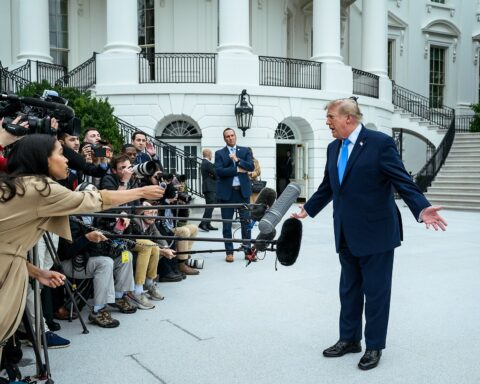
Then, less than twenty-four hours later, Trump posted the reversal on Truth Social: “We are having productive discussions with the Islamic Republic of Iran. We will not be attacking Iran at any time prior to the Midterm Elections to be held in the United States on November 3rd.” The blockade of Iranian ports, he specified, “will remain in full force and effect” — a qualification that deserved more scrutiny than it received, because it meant the reversal was specifically kinetic (no bombs before November) rather than economic (the strangulation of Iranian exports continues uninterrupted, Hormuz remains closed, and the war’s architecture is unchanged). Axios, reporting on the same internal deliberations, noted that post-midterm plans put “basically everything on the table,” from limited strikes to large-scale attacks on Iran’s energy sector, which meant the October 8 post was not a decision against war but a deferral of the question of which kind of war until after Americans had voted.
When Time magazine asked whether renewed bombing of Iran was possible after the midterms, Trump answered with a single word — “possible” — that functions simultaneously as a threat to Tehran and a hedge for his own party, leaving every government between Muscat and Kuwait City to parse one syllable for its operational half-life. The Pentagon, which twenty-four hours earlier had been told to prepare strike packages, now holds plans in bureaucratic suspension: funded, staffed, rehearsed, and explicitly deferred until a date chosen not by combatant commanders but by campaign strategists counting days until November 3.
The Middle East briefing 3,000+ readers start their day with.
One email. Every weekday morning. Free.
What Did the Reversal Actually Change?
The reversal removed kinetic strikes from the pre-November 3 toolkit while leaving the naval blockade, post-midterm strike options, and Iran’s Hormuz closure intact. What changed is not the military balance but the information environment: every government in the Gulf now knows the American war clock runs on electoral time, and every foreign ministry can plan around a twenty-five-day window in which Washington has publicly announced it will not escalate kinetically.
This is not the first time Trump has reversed on Iran strikes — in August 2026, he called off a planned escalation after Crown Prince Mohammed bin Salman privately urged the White House to prioritize dialogue, and before the war began, Saudi Defense Minister Khalid bin Salman had argued to Washington that not confronting Iran militarily would embolden the regime, a position Riyadh quietly abandoned when the confrontation arrived and the missiles began hitting the Kingdom. But the October reversal is qualitatively different because Trump did not frame the pause in terms of alliance management, strategic restraint, or diplomatic progress — he framed it explicitly around the November 3 midterm elections, by name, with a date, converting what might have been interpreted as prudent de-escalation into an admission that military planning in the Gulf follows the congressional campaign calendar.
The Center for Strategic and International Studies anticipated precisely this bind in its analysis earlier in the war, observing that “U.S. policymakers faced a credibility trap” in which “threats of further escalation had to be balanced against the risk of deepening a conflict that domestic audiences may not support, and bluffing risks convincing Iranians that U.S. red lines are not real.” The reversal does not resolve that trap — it names it in terms impossible for either Tehran or Riyadh to ignore, because a deadline that runs on electoral logic rather than military logic tells every actor in the region that the next twenty-five days are operationally predictable and that the period after November 3 is not.
“U.S. policymakers faced a credibility trap: threats of further escalation had to be balanced against the risk of deepening a conflict that domestic audiences may not support, and bluffing risks convincing Iranians that U.S. red lines are not real.” — Center for Strategic and International Studies, 2026
What remains unchanged is the physical reality of the war: Hormuz is closed, the US naval blockade continues, Iranian ports are under economic siege, and Saudi Arabia absorbed a Houthi missile strike on King Khalid International Airport on the same day Trump posted his reversal — one killed, eight wounded, a coincidence of timing that no official in Riyadh chose to address publicly. The Stimson Center framed the wider contradiction in terms that Riyadh’s summit planners may wish they had considered earlier: “The 2026 war with Iran exposed a key contradiction in the longstanding U.S.-Gulf bargain of deterrence and military presence.” That contradiction is no longer analytical — after October 8, it is calendrical, pegged to a date that every voter registration database in America already knows.
The Summit Riyadh Cannot Reschedule
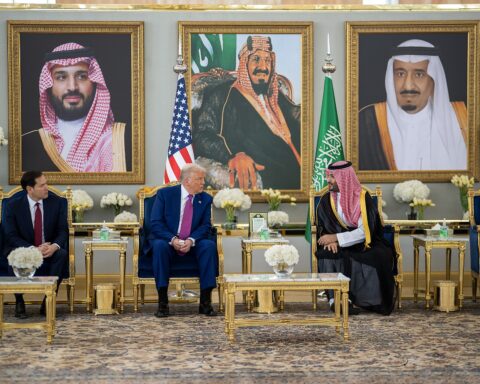
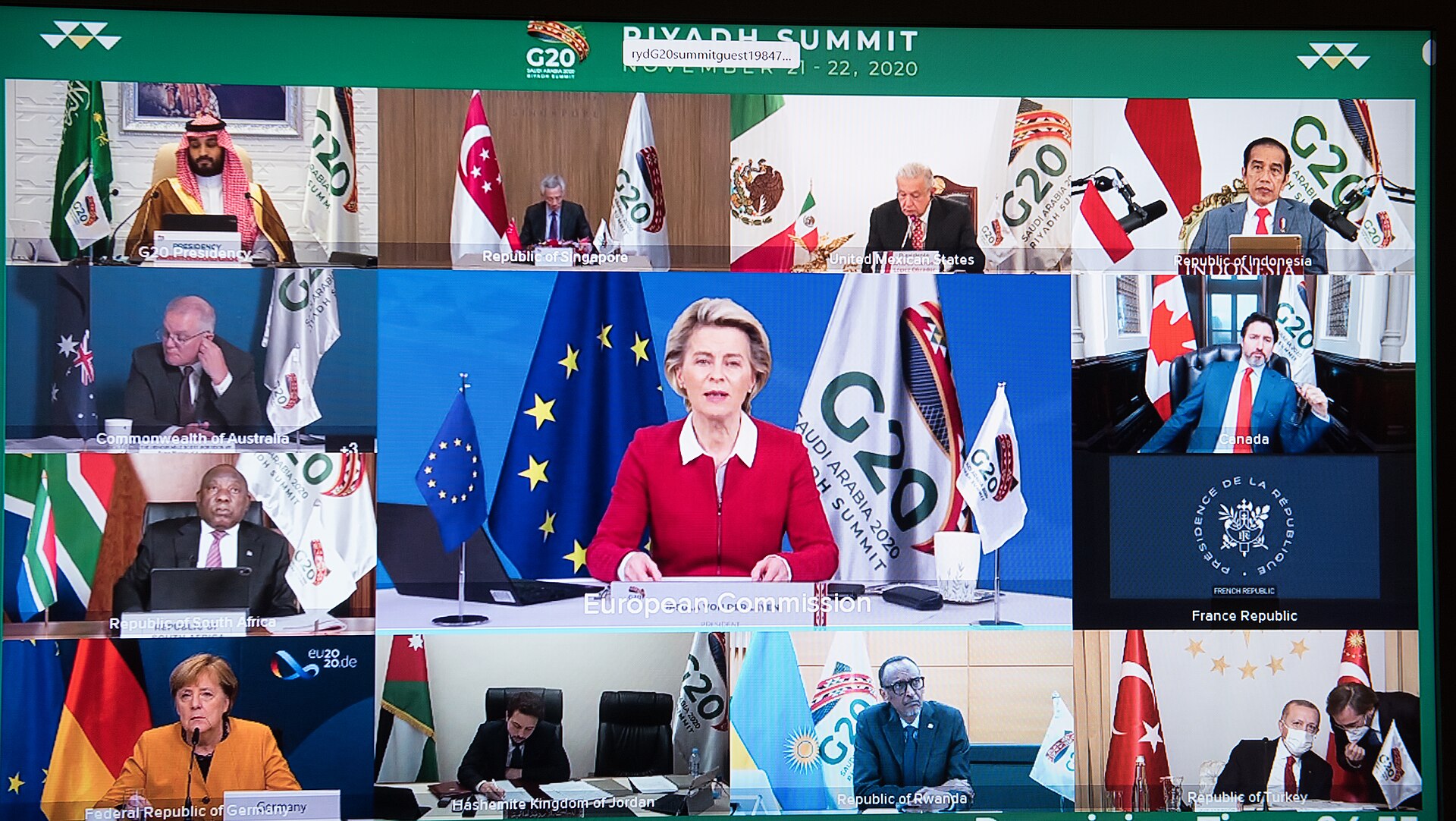
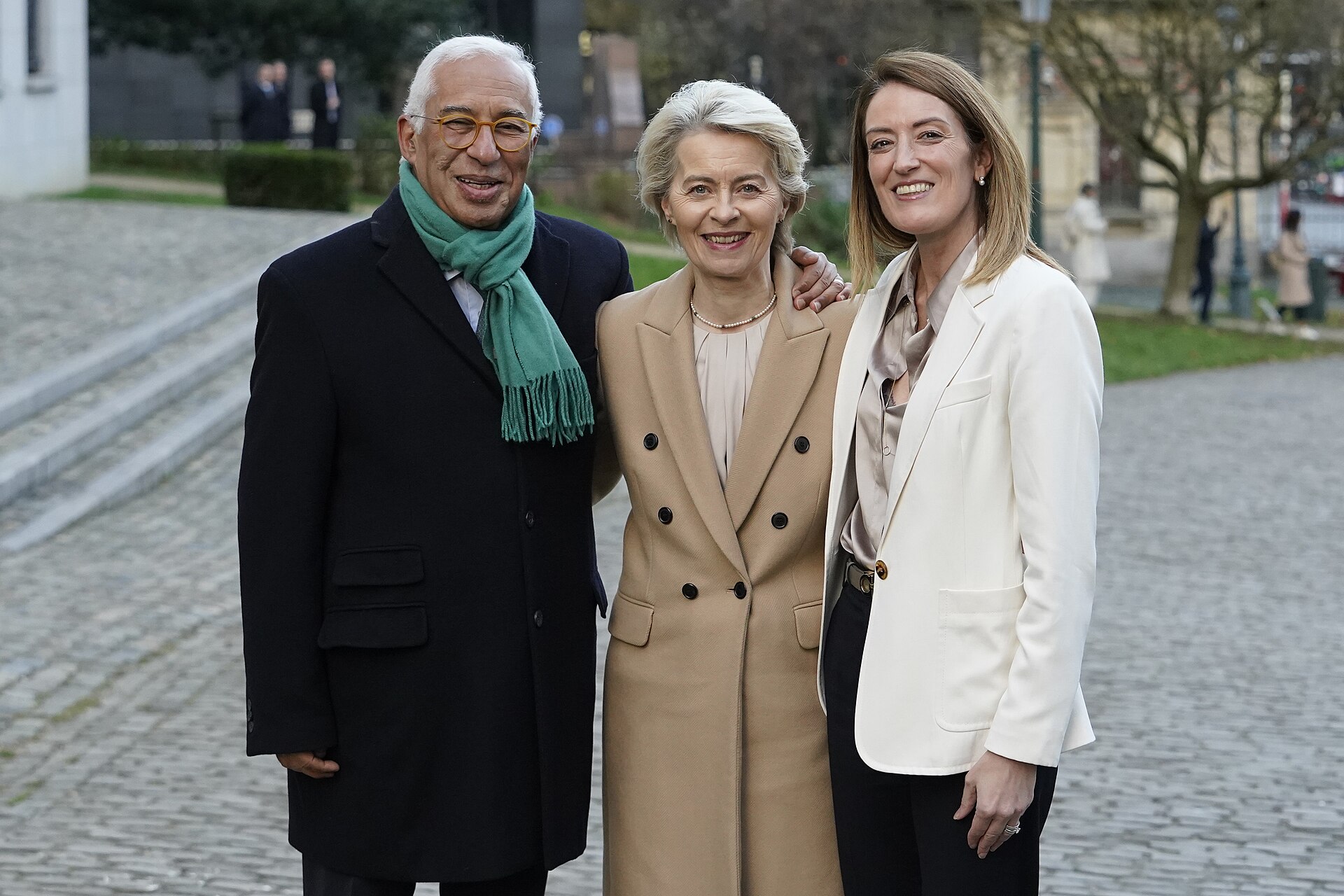
The second EU-GCC Summit is scheduled for October 24 in Riyadh — fifteen days after Trump’s reversal and ten days before the midterm elections whose calendar now governs American military planning in the Gulf. European Council President António Costa will co-chair the session; Commission President Ursula von der Leyen will attend; all twenty-seven EU heads of state and government are expected alongside six GCC heads of state, making it the largest gathering of foreign leaders in Saudi Arabia since the 2023 Arab-Islamic Summit that preceded the current war by three years. The published agenda places “peace and security” first, followed by connectivity, trade, economic cooperation, energy, and mobility — an ordering that Riyadh presumably designed when it still assumed its principal ally’s security commitments would remain stable for the duration of a summit preparation cycle.
The first EU-GCC Summit, held in Brussels in October 2024, produced communiqué language on trade facilitation, energy transition, and counterterrorism financing but nothing resembling a mutual security commitment — understandable at a time when the Gulf’s threat environment, while never simple, was not generating daily NOTAM closures and interceptor expenditures measured in hundreds. The Riyadh summit was designed to build on Brussels by upgrading the partnership: EUR 165.6 billion in bilateral goods trade in 2025 (EUR 110 billion in EU exports to the Gulf, EUR 55.6 billion in imports), plus emerging cooperation on artificial intelligence, digital infrastructure, and critical-mineral supply chains, gave both sides material to announce. What neither side planned for was the summit arriving in a context where the host’s ally has publicly subordinated Gulf security decisions to a domestic electoral timetable.
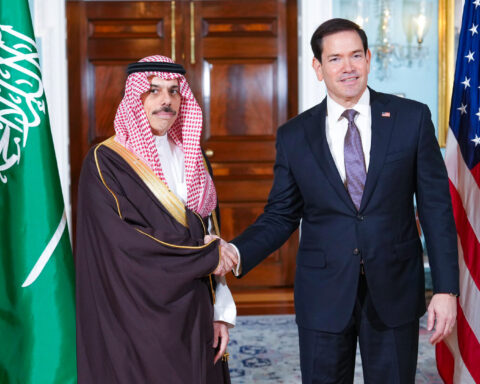
When Saudi Foreign Minister Faisal bin Farhan told the September BRICS Summit that “Saudi Arabia’s security, territorial integrity, and resources are inviolable” and that “Saudi Arabia and other GCC states will not accept targeting of their territories or vital facilities, under any pretext or justification,” he was asserting sovereignty in terms designed to carry into the EU-GCC Summit as a statement of capacity — a message he had already delivered in Washington without receiving the answer Riyadh needed. Ten days after that assertion, the country whose answer matters most announced that the answer depends on which party wins suburban House seats in Pennsylvania and Arizona.
Can a Security Summit Survive When Its Host’s Shield Runs on a News Cycle?
The summit will proceed — cancellation would cost Riyadh more than awkwardness, and the trade and investment pipeline that twenty-seven EU leaders are flying to discuss has its own gravity independent of the security file. But the summit’s security deliverables are now constrained by a credibility gap that Saudi Arabia did not create and cannot close on its own, and every European leader arriving in the Kingdom knows that the American commitment to Gulf security reversed direction in less time than it takes a diplomatic cable to clear.
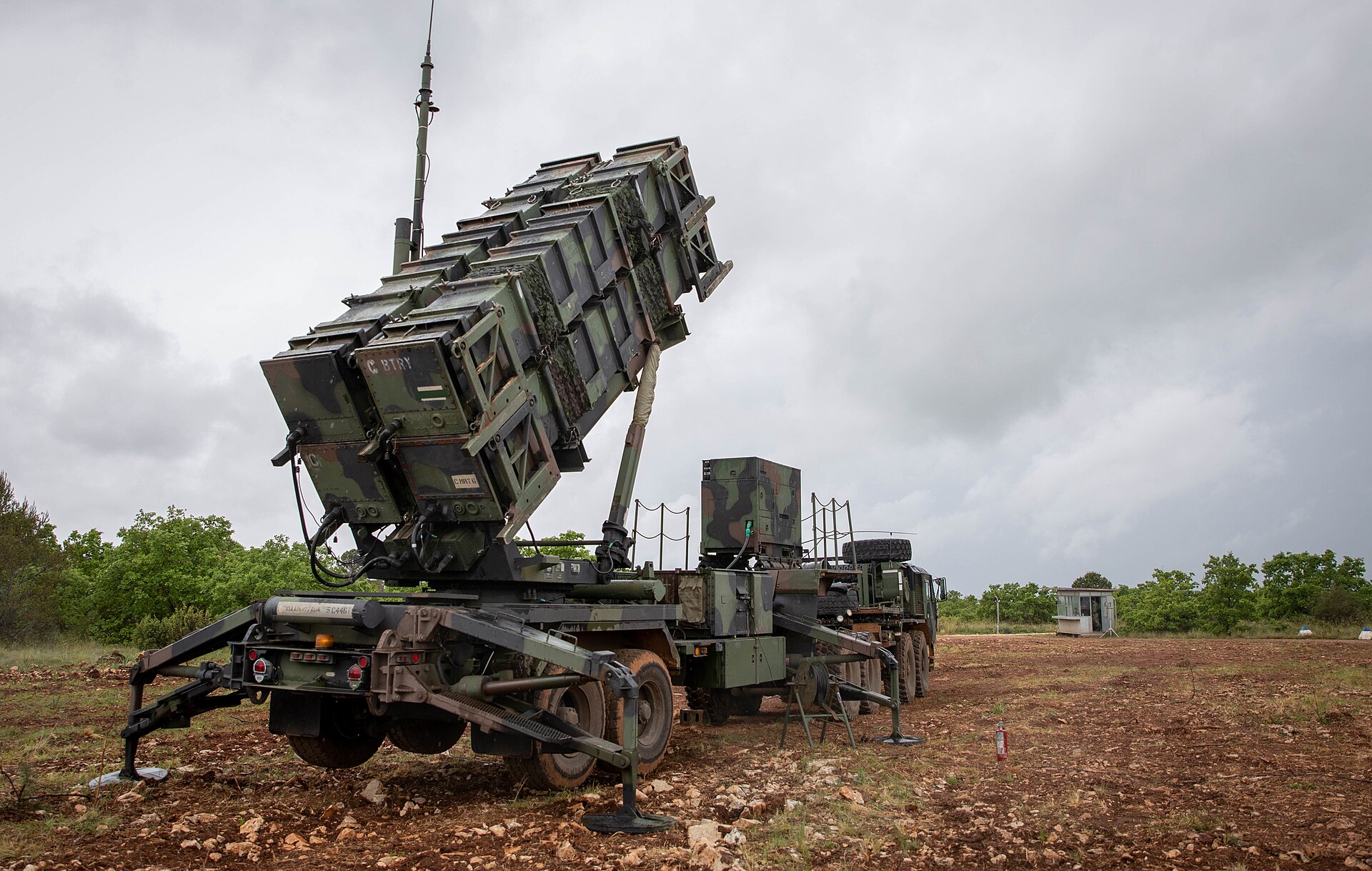
The gap between Faisal’s declaration of inviolability and the Kingdom’s actual defensive capacity is not rhetorical but mathematical. Of the 2,800 PAC-3 interceptors deployed to the Gulf theater at the war’s outset, approximately 400 remain — an 86 percent depletion rate over 223 days — and Secretary Rubio reaffirmed the US commitment to the Kingdom’s shield in terms that the October 8 reversal has rendered operationally ambiguous. The CSIS assessment from July put the broader inventory picture in starker terms: total Patriot stocks had fallen below 1,000 rounds and THAAD reserves to approximately 250, conditions that “force greater selectivity” in what gets defended and what does not — a euphemism for triage that becomes acutely relevant when the country controlling resupply has publicly announced that its military decisions follow a campaign calendar. The question of who closes the kill chain when Washington demurs was live before October 8; after the reversal, it acquired a specific expiration date — the kill chain runs on a clock set to November 3, and what happens after that is, in Trump’s own word, “possible.”
France deployed air-defense systems to the UAE early in the war, establishing a precedent for European security engagement in the Gulf that the summit’s agenda drafters can reference without irony. But the Gulf Research Centre’s assessment cuts through the symbolism: GCC states “have no expectations that EU member states can serve as a replacement for the US security role.” France sent troops to Yanbu, and that bilateral commitment is operationally real — French military personnel are on Saudi soil defending Saudi infrastructure — but it is bilateral, not multilateral, not scalable to theater-wide air defense, and not a substitute for the CENTCOM architecture whose commander’s orders now carry an asterisk that reads “subject to change after November 3.”
The summit can produce trade agreements, energy memoranda, AI investment frameworks, and connectivity protocols — deliverables that have value independent of the security file and that both Riyadh and Brussels will be eager to announce. What it cannot produce is the deliverable Riyadh needs most: a credible, stable security commitment from its principal ally that does not oscillate with the American news cycle, a commitment that would allow Faisal’s “inviolable” to function as operational description rather than diplomatic aspiration.
How Does Tehran Read the Pause?
Iran reads the reversal as confirmation that its strategy of absorbing strikes while keeping Hormuz closed and running the clock toward the midterms is producing results. The twenty-five-day window between the reversal and November 3 reduces Tehran’s escalation risk to its lowest level since the war began, and the Seven-Day Plan — reopening the strait in exchange for the US lifting its naval blockade, waiving secondary sanctions, and releasing approximately $12 billion in frozen Iranian assets — remains the only diplomatic off-ramp with backing from Iran’s political and military establishments.
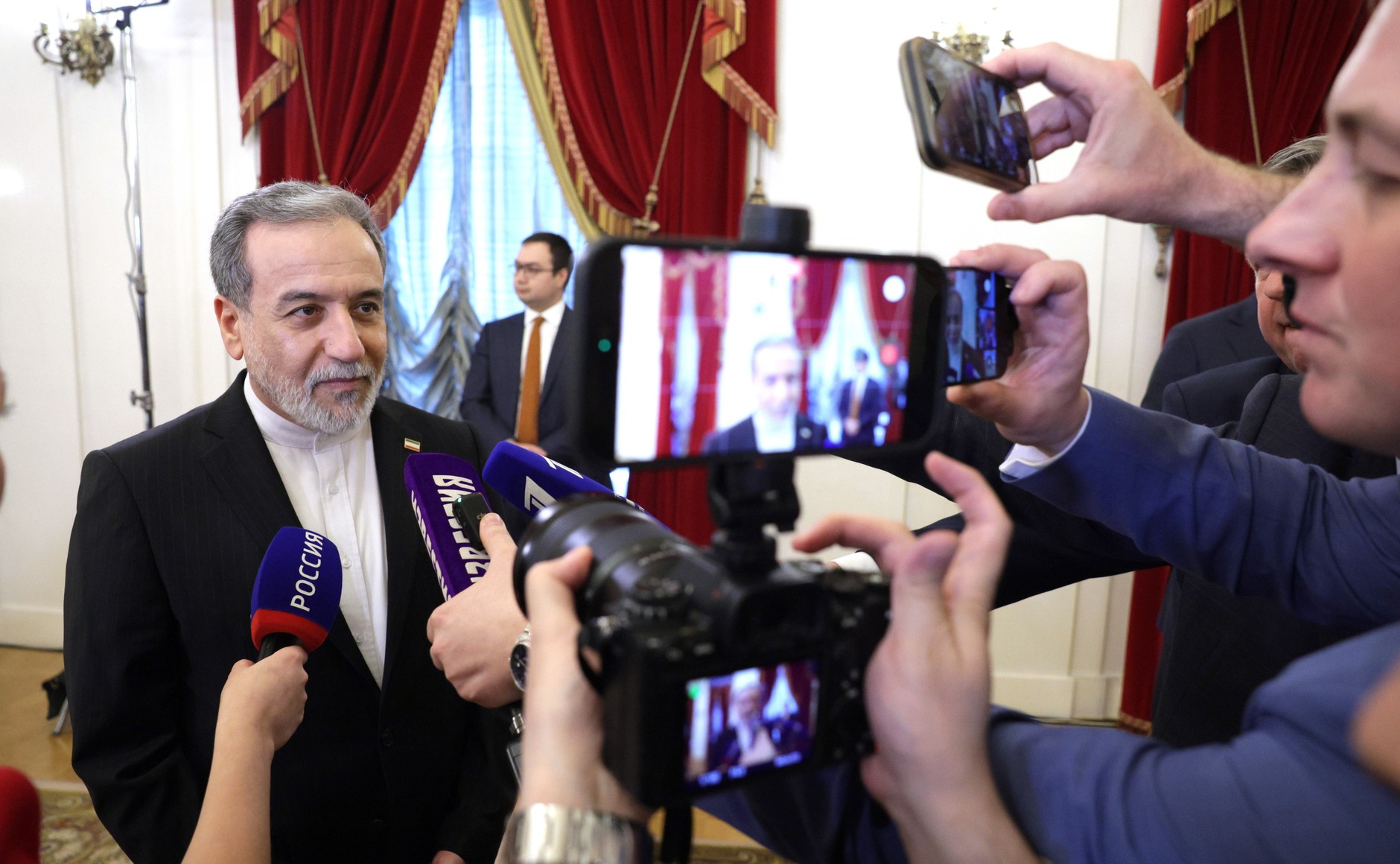
Iranian Foreign Minister Abbas Araghchi told Tasnim News Agency on October 8 that “the negotiation process is still ongoing and messages are being exchanged through mediators,” a statement calibrated to present Tehran as the reasonable interlocutor in a conflict where the opposing side just admitted its military planning runs on a campaign schedule. Iran’s parliament speaker was more direct in early October, stating that the Strait of Hormuz “is going to remain closed until the United States accepts Tehran’s seven-day plan” — a formula under which Iran would reopen the strait within seven days of Washington lifting the blockade, waiving sanctions, and unfreezing the assets. Araghchi had already established in September that there would be “zero compromise on Iran’s nuclear program,” which means the Seven-Day Plan addresses the strait and the sanctions but leaves the enrichment question — the one Trump cited in February as justification for the war — entirely off the table.
The paradox for Riyadh is that Trump’s reversal, presumably intended to preserve coercive pressure by combining the continued blockade with the looming threat of post-midterm escalation, may have achieved the opposite by confirming to Tehran that the pressure is softening under domestic political weight. Sixty percent of Americans — including one in four Republicans — now disapprove of Trump’s handling of the Iran situation, according to CBS and NBC polling in the same October 8-9 window, and gasoline prices have risen sharply enough that the cost of living, not the war itself, has become voters’ stated top concern in both surveys. The twenty-nine days that remained to end the war on terms favorable to the Kingdom when that timeline was last assessed have now contracted to twenty-five, and the arithmetic has not improved — the public announcement that strikes are off until November makes the remaining days less coercive because Tehran can plan around a deadline Washington itself disclosed.
From Tehran’s operational perspective, the reversal creates an environment in which the Seven-Day Plan grows more attractive to Washington with every passing day, because each day Hormuz remains closed is a day gasoline prices stay elevated, a day Republican incumbents face another constituent complaint about the cost of filling a tank, and a day the midterm arithmetic deteriorates for a president who has conceded — in writing, on a platform named Truth Social — that military decisions in the Gulf must accommodate electoral ones in Ohio. The longer the pause holds, the harder it becomes for Washington to resume strikes without reopening the same domestic political wound that produced the pause, which is precisely the dynamic Tehran designed its Seven-Day Plan to exploit.
The European Dilemma
The twenty-seven EU leaders preparing to fly to Riyadh face a problem they did not anticipate when the summit was confirmed: they have been asked to participate in a security dialogue premised on regional stability, hosted by a country whose military shield depends on an ally that adjusts its war posture based on congressional election forecasts. The National News reported on October 8 — the same day as Trump’s Truth Social post — that “the physical presence of the EU’s 27 leaders in Riyadh for the EU-GCC Summit on October 24 is likely to represent an important signal of support to Saudi Arabia,” a framing that was presumably finalized before the reversal made “support” a more complicated word than the headline writers intended.
Europe’s security contribution to the Gulf is real but bounded by design, not by default. France deployed SAMP/T batteries to the UAE and stationed military personnel at Yanbu; Italy contributed additional air-defense units to the Emirati theater — decisions made bilaterally by sovereign governments, not through EU common-security-and-defense-policy mechanisms, and operating under CENTCOM coordination that itself depends on the US military posture Trump has made electorally contingent. The bilateral trade relationship, the AI and clean-energy investment pipeline, the critical-mineral supply-chain agreements being prepared for signature — these are the summit’s achievable deliverables, and none require the host’s security architecture to be credible in order to be signed. But the agenda puts “peace and security” first, and Riyadh designed it that way because the Kingdom wanted the summit to affirm its standing as the Gulf’s strategic anchor, not merely its largest market.
Human Rights Watch added a layer of complexity with exquisite timing on October 7 — the same day The Atlantic published the Pentagon strike-options story — by writing to EU leaders urging them to raise the death penalty in Saudi Arabia, political prisoners including EU citizens detained in Bahrain, and labour-rights concerns tied to the Kingdom’s 2034 FIFA World Cup hosting. The letter is procedurally routine (HRW writes one before every major EU engagement with Gulf states), but its positioning between the strike-options report and the reversal means European leaders will arrive in Riyadh managing a three-front question: how to discuss security with a host whose protector is unreliable, how to expand trade with a partner under human-rights scrutiny from domestic constituencies, and how to issue a communiqué that survives the ten days between the summit’s close and the midterm elections that will determine whether “basically everything” returns to the Pentagon’s active table.
What Comes After November 3?
The Pentagon has already prepared post-midterm strike options — including large-scale attacks on Iran’s energy sector — and Trump told Time magazine that renewed bombing is “possible.” The summit falls on October 24 — ten days before the midterms and roughly three weeks before the earliest plausible post-election strike window. Any security framework agreed in Riyadh could be overtaken by resumed American airstrikes before the communiqué’s ink has dried in Brussels, Berlin, and Paris.
The political arithmetic reinforces the instability rather than resolving it. The war is “weighing heavily on Trump’s fellow Republicans as they seek to preserve their narrow legislative majorities” in November, according to France24, a dynamic that makes the pre-midterm pause legible as campaign management but the post-midterm period illegible as strategy. If Republicans lose seats and the war is assessed as a contributing factor, Trump faces pressure to find an exit — and the Seven-Day Plan, which he has thus far rejected, becomes the path of least resistance toward lower gasoline prices and a foreign-policy narrative that can be reframed as a deal. If Republicans hold their majorities, the administration may interpret the result as evidence that the war did not cost them at the ballot box — and the strike packages CENTCOM prepared in early October will still be current, rehearsed, and sitting on the defense secretary’s desk.
For Saudi Arabia, the ten-day gap between the summit and the midterms is the most operationally treacherous window, because anything agreed on October 24 — communiqué language on Gulf security, a framework for EU-GCC defense dialogue, a signal of strategic partnership with European capitals — could be rendered irrelevant by a resumption of US strikes that triggers Iranian retaliation against the very infrastructure the summit was designed to protect. Trump has reversed course before and then received the schedule on his own terms, and the pattern that runs from February through August through October is not strategic ambiguity in the classical sense but something more corrosive — strategic volatility, in which the same president who orders strike options on a Monday rules them out on a Tuesday and calls them “possible” by Thursday, while the country that depends on his decisions is left to build a fifteen-day summit agenda around a variable it cannot predict even twenty-four hours forward.
Fifteen Days and No Script
Saudi Arabia has not issued a public response to the October 8 reversal — consistent with an established practice of declining to comment on US operational decisions, a practice that has served Riyadh well when the decisions in question were stable enough to benefit from diplomatic silence. But the silence carries a different weight when twenty-seven European heads of state are arriving in fifteen days, because they will not have the luxury of leaving the question unasked: what does the host’s security architecture look like when the country holding the interceptor inventory announces that its war-and-peace decisions run on a congressional election schedule?
Faisal bin Farhan’s “inviolable” works as a sovereignty assertion, and it may work as positioning at BRICS, where the audience is sympathetic and the stakes are communiqué language rather than interceptor resupply rates. It does not work as a description of operational reality — not when the country holding the resupply lever announced, in public, on a social media platform, that the lever’s position depends on November 3. The distance between the word “inviolable” and the number 400 — approximately 2,400 expended interceptors’ worth of distance — is the distance the summit cannot bridge, because bridging it would require either an American commitment that transcends domestic electoral politics or a European security architecture that does not yet exist and that the Gulf Research Centre has already assessed as beyond EU capacity or intention.
The fifteen days between the reversal and the summit are not a preparation window but an exposure window — a period in which every actor operates on a different timeline toward the same event: Tehran reading the pause as vindication of a strategy that is working, Brussels reading the agenda as economic opportunity bracketed by security risk it cannot mitigate, Washington reading the calendar as a countdown not to a summit but to an election. Riyadh sits at the center, hosting all of them, unable to synchronize any of them, and when twenty-seven European leaders sit across from six Gulf monarchs on October 24, the question before them will not be what Saudi Arabia proposes for Gulf security — it will be what Saudi Arabia can guarantee about its own ally’s next move, and the honest answer, after October 8, is that Riyadh cannot guarantee the position of its principal partner from one Truth Social post to the next.
Frequently Asked Questions
Has Trump reversed military decisions on Iran before the October 2026 episode?
In June 2019, Trump called off planned strikes on Iran with ten minutes to spare after receiving an estimate of 150 civilian casualties he deemed disproportionate to Iran’s downing of a US surveillance drone over the Strait of Hormuz. In August 2026 — five months into the current war — he called off a planned escalation after Crown Prince Mohammed bin Salman privately urged Washington to prioritize dialogue over continued airstrikes, and Trump cited requests from Saudi Arabia and other Middle Eastern countries as factors in the decision. The October 2026 reversal is distinct from both precedents because Trump tied the pause explicitly and publicly to a domestic election date rather than framing it as proportionality (2019) or alliance management (August 2026), and because the August reversal included a partial easing of the naval blockade that the October one specifically excludes.
What was agreed at the first EU-GCC Summit in Brussels in 2024?
The inaugural EU-GCC leaders’ summit, held in Brussels in October 2024, produced a joint communiqué covering trade facilitation, energy transition cooperation, counterterrorism financing, and people-to-people exchanges, but no binding mutual security commitments emerged from the meeting. The summit formalized ministerial-level dialogue mechanisms and established working groups on clean energy, digital connectivity, and labour mobility that are expected to present progress reports at the Riyadh follow-up. Diplomats described the Brussels meeting as a “normalization of the format” — establishing that EU and GCC leaders could meet at the heads-of-state level — with the substantive defense and security discussions deferred for the second summit, which is now complicated by the October reversal and the ongoing war.
What is Iran’s Seven-Day Plan for reopening the Strait of Hormuz?
Proposed by Tehran through Qatari mediators in late September 2026, the Seven-Day Plan would see Iran reopen the Strait of Hormuz within seven calendar days of three conditions being met simultaneously: the United States lifting its naval blockade of all Iranian ports, Washington issuing executive waivers for secondary sanctions on Iranian oil exports, and the release of approximately $12 billion in frozen Iranian assets held primarily in South Korean and Japanese central banks under US Treasury sanctions designations. The plan does not address Iran’s nuclear enrichment program, its ballistic missile development, or its relationship with Houthi forces in Yemen — exclusions that the administration has cited as grounds for rejecting earlier negotiating frameworks. Iran’s parliament speaker stated in early October that the strait would “remain closed” until Washington accepted the proposal in full, with no partial implementation or phased approach.
Could the EU provide air defense to Saudi Arabia independently of the US?
France deployed SAMP/T (Mamba) surface-to-air missile batteries to the UAE and stationed military personnel at Yanbu in western Saudi Arabia early in the 2026 war; Italy contributed additional SAMP/T units to the Emirati theater. These deployments were national decisions by individual EU member states, not common EU defense actions, and they operate under US CENTCOM tactical coordination for deconfliction and targeting. EU member states collectively lack the integrated command-and-control architecture, satellite-based early-warning coverage, intelligence-sharing protocols, and interceptor production capacity to sustain a Gulf-wide air-defense posture without American coordination — annual European PAC-3-equivalent production is estimated at fewer than 100 interceptors, compared with Gulf-theater consumption rates that have exceeded 10 rounds per day during major Iranian strike campaigns.
How have oil markets reacted to Trump’s October 8 reversal?
NBC News reported that Trump’s pledge not to strike Iran before the midterms “failed to soothe oil markets,” with Brent crude remaining above $90 per barrel despite the announced pause in kinetic operations. The sustained price elevation reflects the reality that the oil market’s primary concern is the continued closure of the Strait of Hormuz — through which roughly 20 percent of global oil supply transited before the war — rather than the kinetic air campaign against Iranian military and nuclear infrastructure. The blockade’s continuation, combined with Iran’s stated refusal to reopen Hormuz without full acceptance of its Seven-Day Plan, means the supply disruption driving prices is the one variable Trump specifically excluded from his reversal: the “full force and effect” naval blockade persists regardless of the election calendar, and traders are pricing the strait’s reopening timeline, not the bombing timeline.