RIYADH — The 25th World Petroleum Congress opens in Riyadh on October 11 under conditions that contradict every premise of its hosting. A Houthi ballistic missile destroyed a Saudia Airbus A320 at the gate at King Khalid International Airport on October 8, ten airlines have suspended service to the Saudi capital, and the Strait of Hormuz is running at under five percent of pre-war tanker traffic.
Saudi Arabia won the WPC bid years ago as a flagship demonstration that the Kingdom could host — and lead — the global energy order from its own capital. Three Saudi nationals died in the October 8 strike, which cancelled nearly half of Riyadh’s departures that day, according to CNBC and Arabian Business. Senior executives at several major energy firms have already relocated to Doha and the UAE, and at least one energy minister has confirmed he will attend by video only.
The conference expects 25,000 delegates, 100 energy ministers, and 500 CEOs, according to WPC Energy. The gap between that projection and the actual registration count will measure something the programme cannot: whether the world still treats Riyadh as a place to do business or a place to avoid.
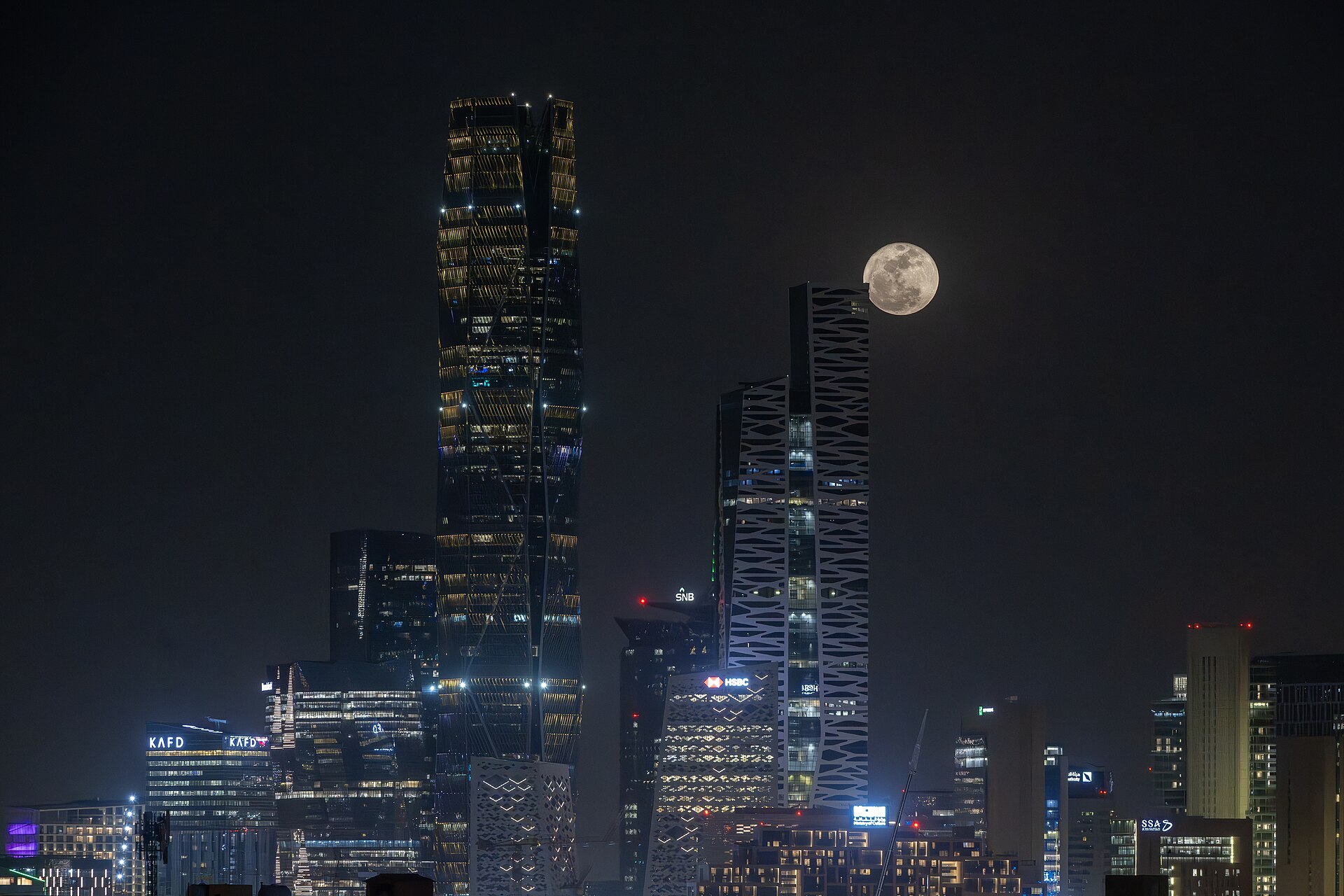
Table of Contents
- What Was the World Petroleum Congress Meant to Prove?
- The Missile That Rewrote the Conference
- How Many Delegates Can Reach Riyadh?
- The Pipeline That Holds the Conference Together
- Can Hormuz Reopen Before the Congress Closes?
- The IRGC Expanded Beyond the Strait
- What Does Aramco’s Discount Signal to the Delegates?
- The Conference Riyadh Cannot Cancel
- Frequently Asked Questions
What Was the World Petroleum Congress Meant to Prove?
The WPC was designed to prove that Riyadh could function as the permanent capital of the global energy industry — not merely as its largest supplier, but as the city where oil ministers, CEOs, and heads of state convened to set the industry’s direction. The 25th Congress is the first in the event’s ninety-year history to be held in Saudi Arabia, and the Kingdom bid for it as a centrepiece of the Vision 2030 programme.
Vision 2030 was built on a core proposition: that Saudi economic credibility could be decoupled from Saudi security vulnerability. The Kingdom would diversify its revenue base, attract foreign investment, host global events, and project the image of a modern, stable commercial hub — even as the region around it remained volatile. WPC 2026, opening at the Riyadh Front Exhibition and Conference Centre with 800 speakers across more than thirty sessions on artificial intelligence, critical minerals, carbon capture, and energy transition, was the most ambitious test of that proposition to date.
The speaker roster reads like a board meeting of the global oil industry. BP CEO Meg O’Neill, ExxonMobil Chairman Darren Woods, Shell CEO Wael Sawan, TotalEnergies CEO Patrick Pouyanne, and Aramco CEO Amin Nasser are all listed alongside Saudi Energy Minister Prince Abdulaziz bin Salman, according to WPC Energy and Trade Arabia. Saudi Arabia’s broader diversification effort depended on events like this one to demonstrate that the Kingdom was open, investable, and safe.
The Middle East briefing 3,000+ readers start their day with.
One email. Every weekday morning. Free.
CSIS assessed in September 2026 that the Iran war “has exposed the Kingdom to the vulnerabilities of regional conflict, prompting Riyadh to rethink its security partnerships, energy strategy, and Vision 2030 ambitions.” The assessment captured the strategic reality. WPC was the event where that rethink was supposed to remain invisible — a conference hall in which the war stayed outside, where Saudi Arabia could talk about hydrogen, AI, and carbon capture while its eastern sea lane remained closed and its western export port ran at capacity.
The war did not stay outside.
The Missile That Rewrote the Conference
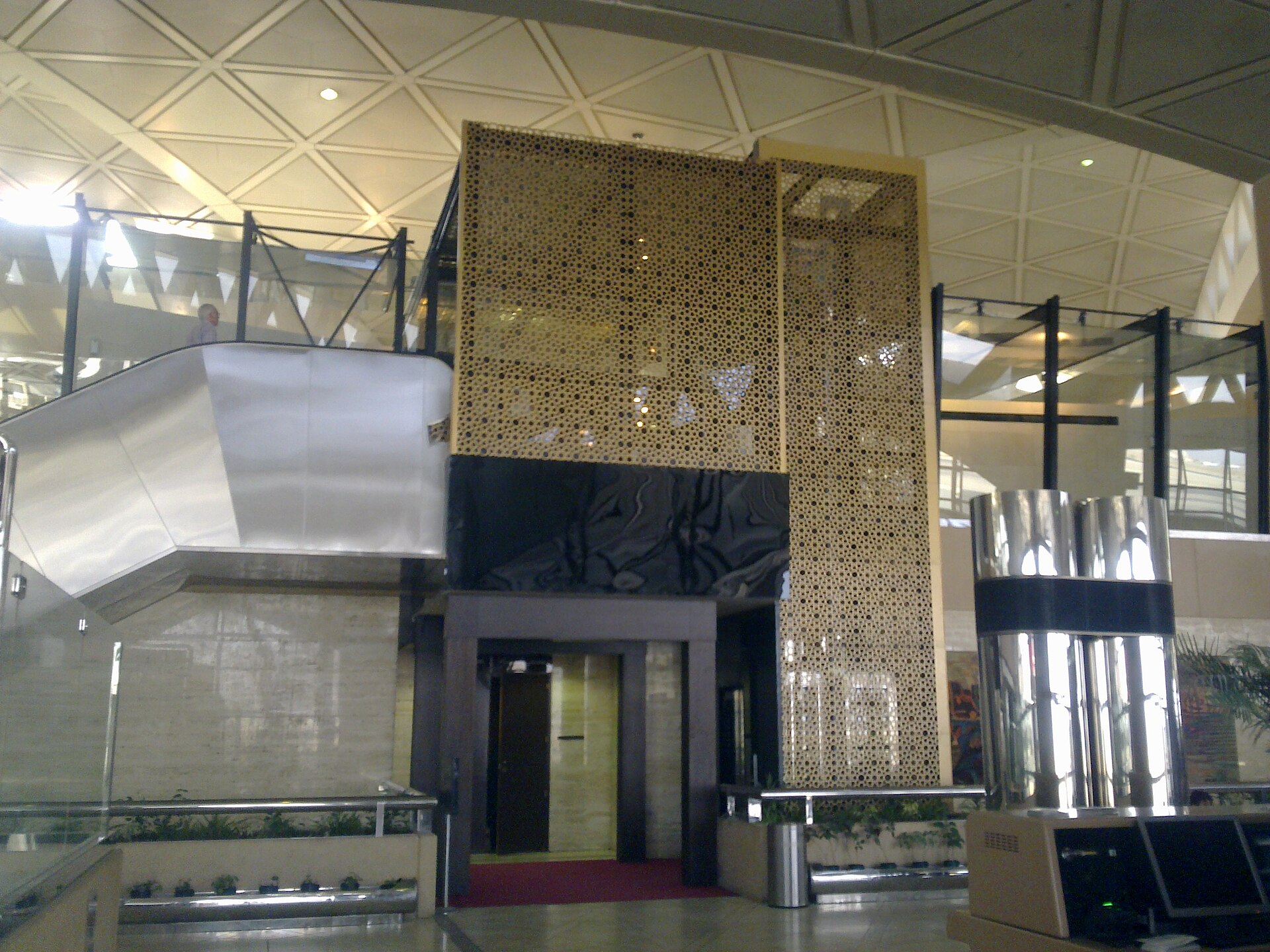
On October 8 — three days before the Congress opening — Houthi forces struck King Khalid International Airport in two waves. The first hit airport facilities. The second destroyed a Saudia Airbus A320 parked at the gate, killing three Saudi nationals. Among the dead was Captain Hamoud Ali Alkalthami, a Saudia pilot on duty, according to CNBC and The Washington Post.
The attack was not an isolated strike. The Houthis simultaneously hit Najran airport and Khamis Mushait airbase in what they described as a multi-axis operation targeting Saudi aviation infrastructure, per Al Jazeera. The Houthis claimed two cruise missiles struck King Khalid Airport and framed the destruction of a commercial aircraft as deliberate — a statement of capability aimed directly at the airlines whose routes feed Riyadh’s conference economy.
The airport had been struck before. The 2020 drone and missile attacks caused disruption but no aircraft losses. The October 8 strike was categorically different: the first to destroy a commercial aircraft at the gate and kill airport personnel, including a pilot on duty. The distinction matters because the coalition had previously stated the airport’s defences were functional. The burning A320 on the tarmac contradicted that statement in a way no press release could reverse.
Saudi Arabia had historically sustained fewer direct attacks during the Iran war than Bahrain, Qatar, Kuwait, and the UAE. The October 8 escalation broke that pattern. Semafor described the moment on October 9 as “Saudi Arabia’s toughest moment of war” — a characterisation rooted not in the military damage alone but in the timing. The strike hit the primary international arrival point three days before the Kingdom’s largest planned gathering of the year. For the airline risk committees that had been weighing Riyadh service, the burning aircraft settled the debate.
Major General Turki al-Malki, the Saudi coalition spokesperson, said “Houthi attacks on civilians and civilian infrastructure will be met with a firm response,” per CNBC. The response may come. The flights did not.
How Many Delegates Can Reach Riyadh?
At least ten international airlines suspended Riyadh service after the October 8 strike, with resumption dates ranging from October 9 to November 3. Italy’s energy minister, Gilberto Pichetto Fratin, confirmed he would not attend in person and would participate via video link — the first confirmed ministerial no-show, according to Bloomberg and Reuters.
| Airline | Suspension Through | Notes |
|---|---|---|
| British Airways | November 3 | Reduced daily frequency on resumption |
| Air France | October 24 | Full suspension |
| Lufthansa Group | October 16 | Covers Lufthansa, Swiss, Austrian |
| ITA Airways | October 16 | Full suspension |
| Philippine Airlines | October 11 | Resumes on WPC opening day |
| Air India | October 9–10 | Under daily review |
| IndiGo | October 9–10 | Under daily review |
| Akasa Air | October 9–10 | Under daily review |
Sources: The National News, Timeout Riyadh, TravelTourister (October 2026).
The timing is surgically precise in its damage. British Airways — the primary carrier between London and Riyadh — will not resume until three weeks after WPC closes. Lufthansa Group’s suspension covers three European carriers under a single decision. Philippine Airlines’ October 11 resumption falls on the Congress’s opening day, leaving zero margin for pre-conference arrival.
Several Western governments have issued travel advisories against Saudi Arabia. The US government now requires special approval for officials to use King Khalid Airport, according to Semafor. The advisory apparatus surrounding the airport effectively creates a two-tier attendance structure: Gulf-based delegates who can drive in, and international delegates who must fly through airspace that was contested seventy-two hours ago.
Semafor framed the attendance decision on October 9 as a binary: “Security teams are undoubtedly assessing what level of risk is tolerable for the titans of the global economy.” The report added that “staying away could offend the kingdom” — a calculation that applies equally to energy ministers, Fortune 500 CEOs, and the sovereign wealth fund managers whose capital commitments anchor Vision 2030. Some executives have already relocated to Doha and the UAE in advance of both WPC and the Future Investment Initiative later this month.
The corporate risk calculus runs deeper than travel advisories. Insurance underwriters have already repriced war-risk coverage for Saudi Arabian aviation routes. Airlines that resume service will pass those costs to passengers — or absorb them as a loss. For a conference designed to attract commercial partnerships, the price of the flight ticket is now a line item shaped by the probability of a second missile strike.
The Pipeline That Holds the Conference Together
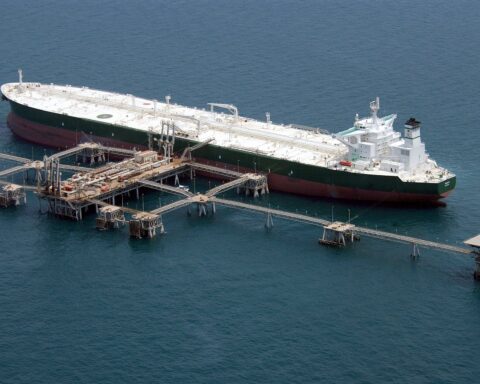
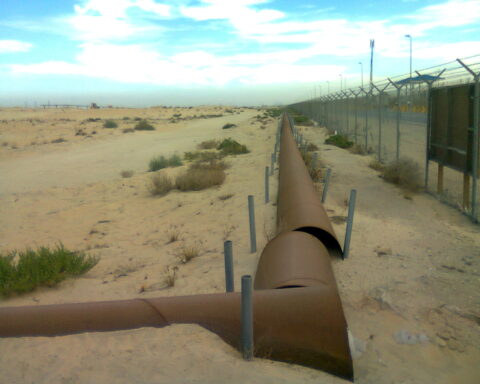
The East-West Petroline — built decades ago as a strategic bypass for the Strait of Hormuz — is now the single piece of infrastructure preventing a full Saudi export crisis. It is operating at approximately 5.8 million barrels per day against a rated capacity of 7 million bpd, routing crude from the Eastern Province to Yanbu on the Red Sea coast, according to Argus Media and Al Jazeera.
Oil prices could have hit $200 a barrel if not for the East-West pipeline.
Amin Nasser, CEO, Saudi Aramco — The National News, October 5, 2026
That figure — intended to demonstrate the pipeline’s strategic value — also reveals the system’s fragility. The pipeline has spare capacity. The terminal does not.
| Infrastructure | Rated Capacity (bpd) | Current Throughput (bpd) | Constraint |
|---|---|---|---|
| East-West Petroline | 7.0 million | ~5.8 million | Operating near maximum |
| Yanbu loading terminals | ~4.0 million | ~4.0 million | At maximum — binding constraint |
| Structural export gap | — | ~1.8 million | Crude arrives but cannot load |
Source: Argus Media, Al Jazeera (October 2026).
Yanbu’s effective loading capacity is approximately 4 million barrels per day. The pipeline delivers 5.8 million. The difference — roughly 1.8 million bpd — represents crude that reaches the Red Sea coast but cannot board a tanker at the rate it arrives. This bottleneck exists independent of the war, but the Hormuz closure has made it the binding constraint on Saudi export volume.
The structural gap means that even with Yanbu absorbing the export load the Houthis have already targeted, Saudi Arabia cannot physically replace the full volume that once moved through the Strait. Every barrel above Yanbu’s loading capacity sits in storage or moves at a discount to buyers willing to accept slower delivery schedules.
The conference programme lists sessions on “Energy Security in a Changing World” and “The Role of Infrastructure in Energy Transitions.” The delegates sitting in those sessions will be aware of a piece of infrastructure one thousand kilometres west of them that is running at maximum capacity and still falling short. The East-West Pipeline was Saudi Arabia’s insurance policy against a Hormuz closure. It was not designed to function as the primary export artery for the world’s largest oil exporter. Seven months into the closure, that is exactly what it has become — and it is not enough.
Can Hormuz Reopen Before the Congress Closes?
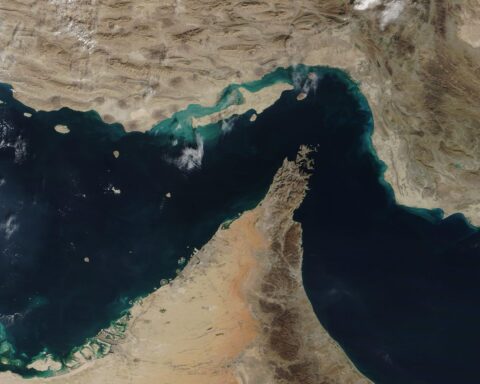
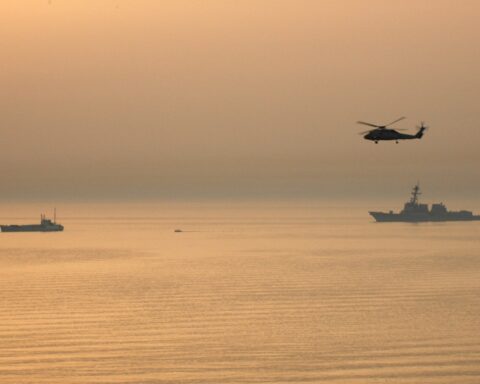
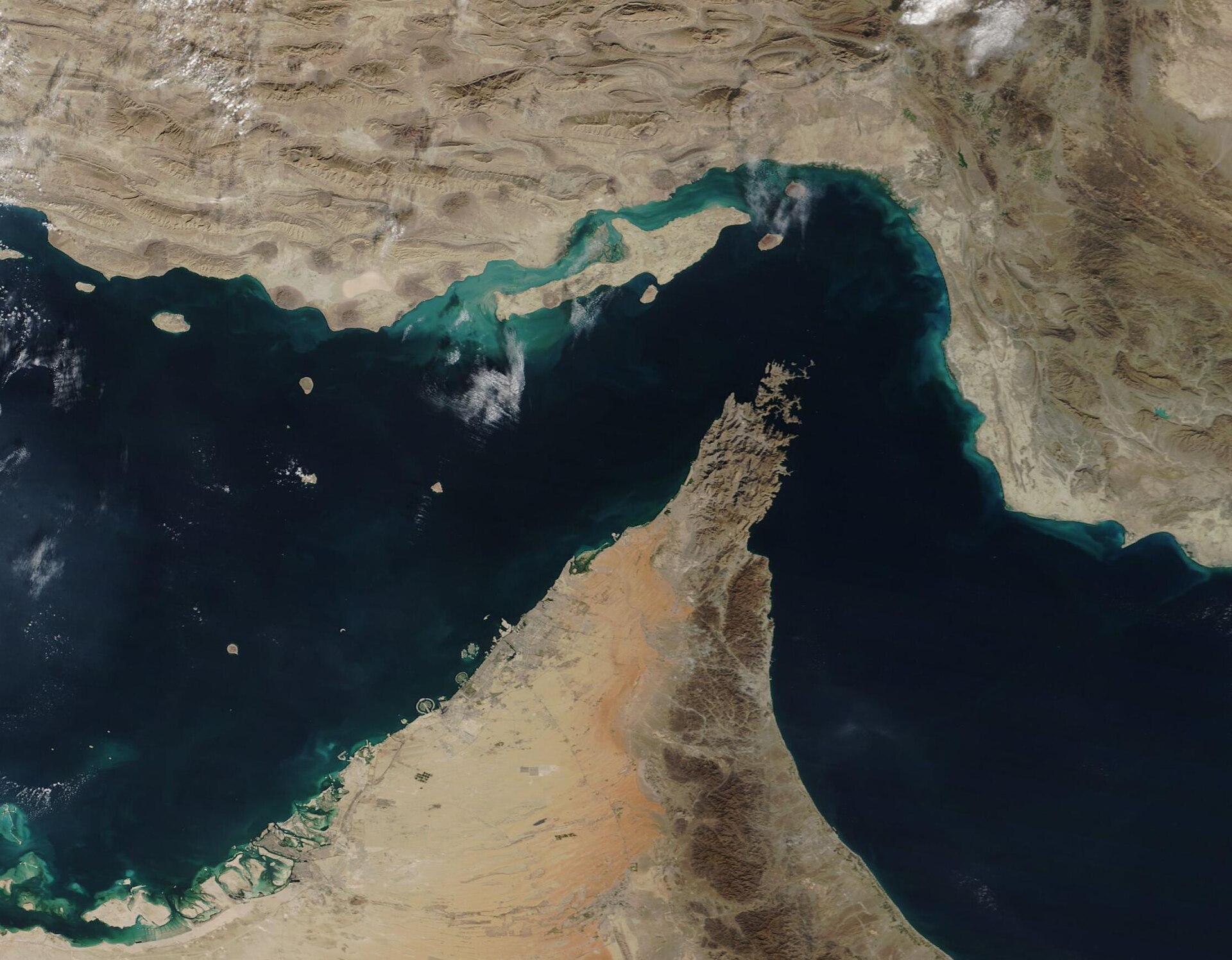
No. The Strait of Hormuz recorded only four tanker transits on October 4, against a pre-war baseline of approximately eighty-five per day — roughly 4.7 percent of normal volume. As of October 9, 206 AIS-visible vessels were holding position outside the watch box, according to Straits.live. No diplomatic framework exists to change this within the five-day Congress window.
Iran’s Parliament Speaker Mohammad Baqer Qalibaf has issued seven conditions for Hormuz reopening, anchored in the June Islamabad MOU. The conditions require US compliance with the agreement’s nuclear-related provisions before Iran will restore passage. Qalibaf warned against “wasting time” and said Tehran “will not reopen the strait until the conditions under the June agreement are fulfilled,” according to Morocco World News and Benzinga.
The American response has not moved the framework forward. Iranian Foreign Ministry spokesperson Esmaeil Baghaei said Washington’s latest positions “largely reflected its previous positions, particularly regarding Iran’s nuclear program,” and that restoring Hormuz security requires “clear steps” from Washington, according to Benzinga and Haaretz. The diplomatic language on both sides is frozen. Neither party is describing movement.
The closure began on February 28, 2026 — Day 223 as of October 8. The strait carried roughly twenty percent of global oil supply before the war. The war’s timeline has already exceeded every initial projection, and the seven-condition framework offers no mechanism for partial reopening. Hormuz is binary: closed or open. For the duration of WPC, it remains closed.
The seven conditions themselves reflect Iran’s strategic patience. Each condition is anchored in the Islamabad MOU — a document Washington has not formally endorsed and whose nuclear provisions remain the central point of disagreement. Qalibaf’s framework is not a negotiating position designed to be met during a five-day energy conference. It is a statement of terms designed to outlast one.
Even if a back-channel breakthrough emerged on opening day — a scenario no source currently supports — physical resumption of tanker traffic through a strait that has been mined, patrolled, and blockaded for over seven months would require weeks of mine-clearance, insurance reassessment, and port-state inspections. Reopening is measured in months, not sessions.
The IRGC Expanded Beyond the Strait
The Hormuz closure is no longer the only maritime threat to Saudi exports. On October 9, the IRGC Navy struck the LPG tanker NV Sunshine in the Strait, causing a major engine-room fire after the vessel attempted passage. The IRGC explicitly warned it would pursue “illegal” transits beyond Hormuz into the broader Gulf, according to Mehr News Agency and Türkiye Today.
The language is deliberate. Iranian state media frames Saudi Arabia’s Yanbu rerouting and Oman ship-to-ship transfers as illegitimate — meaning no alternative route, including the Red Sea approaches and the Oman offshore transfer points that some tanker operators have used to circumvent the closure, is considered safe by the IRGC. The designation “illegal route” applies not only to the strait itself but to any Gulf transit Tehran has not sanctioned.
For the delegates gathering at WPC, this expansion reshapes the security calculus around every contract discussed. Saudi Arabia’s defensive architecture was designed around fixed threats — missile defence at known facilities, CENTCOM patrols along defined sea lanes. The IRGC’s October 9 statement declares that no lane is defined and no transit is guaranteed. Saudi crude on the water is a target regardless of which coast it leaves from or which command structure authorises its protection.
The Houthi threat to Bab al-Mandeb — the Red Sea’s southern chokepoint — runs parallel. If both Hormuz and Bab al-Mandeb are actively contested, Saudi Arabia’s export geography narrows to pipeline-to-port capacity alone. That capacity, as the Yanbu bottleneck demonstrates, is already insufficient to carry the full export load.
The delegates attending WPC will negotiate offtake contracts and infrastructure partnerships under the assumption that Saudi oil can reach their refineries. The IRGC’s expanded threat doctrine puts that assumption under direct pressure. A tanker loaded at Yanbu must still transit the Red Sea. A tanker loaded at Ras Tanura — if Hormuz reopens — must cross a strait the IRGC has spent seven months learning to control. Neither route offers the security that a long-term supply contract requires.
What Does Aramco’s Discount Signal to the Delegates?
Aramco set its November official selling price for Asian buyers at an average discount of $5.24 per barrel against the Oman/Dubai benchmark, with Arab Heavy at $7.35 below — the steepest pricing since the 2020 COVID crash, according to AGBI. The discount tells Asian refiners what the Congress podium will not: Saudi crude is harder to deliver and Riyadh is paying to keep buyers committed.
The pricing sits in direct tension with Nasser’s $200-per-barrel claim. If the East-West Pipeline is worth that much to global oil stability, the crude flowing through it should command a premium. Instead, Aramco is offering its lowest price in six years because the logistics of Red Sea loading, Yanbu congestion, elevated war-risk insurance premiums, and extended voyage times for tankers avoiding the Gulf have made Saudi barrels less competitive than their quality warrants.
Chatham House assessed in May 2026 that the Hormuz closure is “forcing Saudi Arabia to permanently reassess its energy export architecture and strategic geography.” The November OSP confirms that reassessment is not theoretical. Saudi Arabia is discounting now to maintain the buyer relationships that Vision 2030 counts on for long-term revenue stability — relationships that will be physically present, or conspicuously absent, at WPC.
The discount also carries a temporal signal. Aramco sets its OSPs monthly, and the November pricing was released in early October — before the airport strike, before the Italian minister’s withdrawal, before the IRGC’s expanded Gulf threat. The price already reflected a market struggling with constrained sea lanes and uncertain delivery schedules. The events of October 8–9 have added a new layer of risk that the December OSP will price but the November figure does not yet capture.
Prince Abdulaziz bin Salman will address the Congress as the head of an energy ministry that has just set the lowest price for its flagship product in six years. The OSP was published before he takes the podium. The audience will have read the number before they hear the speech. In a room full of traders, the discount is the keynote.
The Conference Riyadh Cannot Cancel
Cancellation would be worse than a thin attendance list. Postponing or relocating WPC would confirm what the Houthi missile and the Hormuz closure have implied: that Riyadh is not safe enough to host the industry it supplies. Every element of the Vision 2030 proposition — foreign direct investment, tourism, entertainment, sport, conference diplomacy — depends on the premise that the Kingdom is open for business. Cancelling the first WPC ever held in Saudi Arabia would retire that premise in front of the global energy press.
The alternative — holding the Congress with reduced attendance — carries a more legible cost. If the five supermajor CEOs listed as speakers appear, the event functions as planned. If one or more withdraw or shift to video, the gaps become the narrative. Every empty chair in the plenary hall competes with every talking point on the programme. The diplomatic contradictions Riyadh is already managing with Washington would sharpen further under a visible attendance deficit at the Kingdom’s own flagship event.
The real measurement will come from the rooms that are not on camera. WPC’s value to Saudi Arabia was never the plenary sessions — it was the bilateral meetings, the offtake negotiations, the corridor handshakes between Saudi diplomats and their counterparts that signal alignment on supply contracts, joint ventures, and technology partnerships. Those meetings require physical presence. Video links do not produce signed deals.
A ninety-year-old institution chose Riyadh to make a statement about where the energy world is headed. The war has turned that statement into a question — one the Houthis posed with a cruise missile and the Strait of Hormuz answers at under five percent capacity. The reply arrives on October 11. It will not come from the keynote address. It will come from the registration desk.
Frequently Asked Questions
Has the World Petroleum Congress ever been cancelled or relocated?
The WPC has been held since 1933 with interruptions only during the Second World War. Recent hosts include Istanbul (2017), Houston (2021), and Calgary (2023). No edition has ever been relocated after a host city was confirmed. The Riyadh Congress is the first to open during an active military conflict involving the host nation, making it historically unprecedented in the event’s nine-decade run. The next Congress is scheduled for 2029 in Rio de Janeiro.
Can delegates reach Riyadh through alternative airports?
Jeddah’s King Abdulaziz International Airport and Dammam’s King Fahd International Airport remain operational and have not faced the same airline suspension cascade. Some regional carriers are routing delegates through these cities with ground transfer to the capital — a drive of approximately four hours from Jeddah or three and a half hours from Dammam. Bahrain-to-Riyadh overland crossings via the King Fahd Causeway offer a fourth route for delegates arriving through Gulf hubs.
What share of seaborne oil trade depends on the Strait of Hormuz?
The US Energy Information Administration estimated that in 2023, approximately 16.7 million barrels per day of crude oil and condensate transited Hormuz — roughly thirty-five percent of all seaborne-traded petroleum globally. LNG traffic adds a parallel dimension: approximately twenty percent of global liquefied natural gas trade also passes through the strait. The closure has therefore disrupted not only crude oil markets but also gas supply chains to Japan, South Korea, and India.
What happens to Saudi Arabia’s FII conference if WPC attendance is low?
The Future Investment Initiative — often called “Davos in the Desert” — is scheduled for later in October 2026 in Riyadh. FII attendance patterns have served as a barometer of investor confidence in the Kingdom since the conference’s inaugural edition in 2017. A weak WPC turnout would compound pressure on FII organisers, particularly since finance-sector participants track energy-sector attendance as a leading indicator of Saudi risk appetite among global corporates.