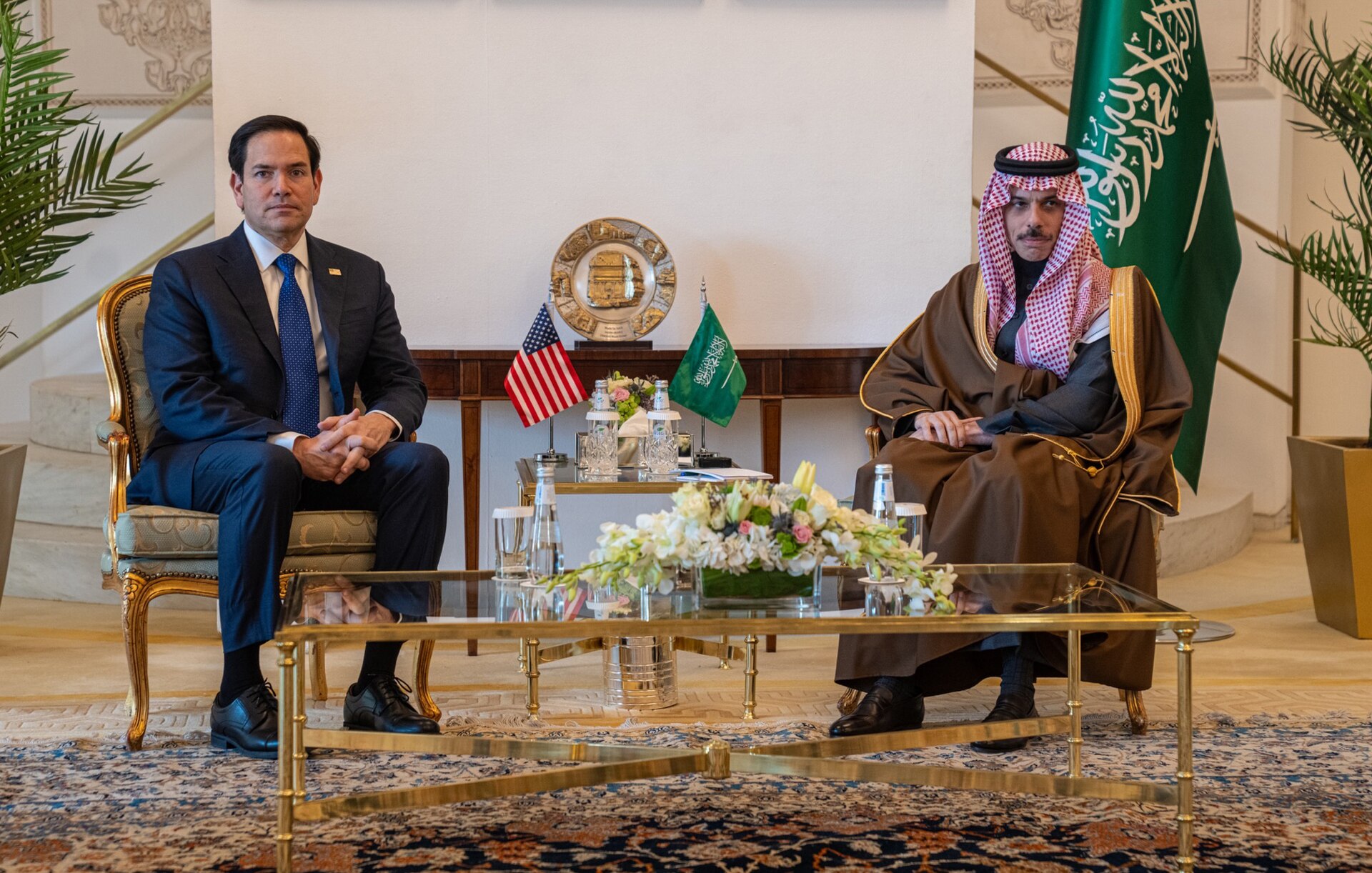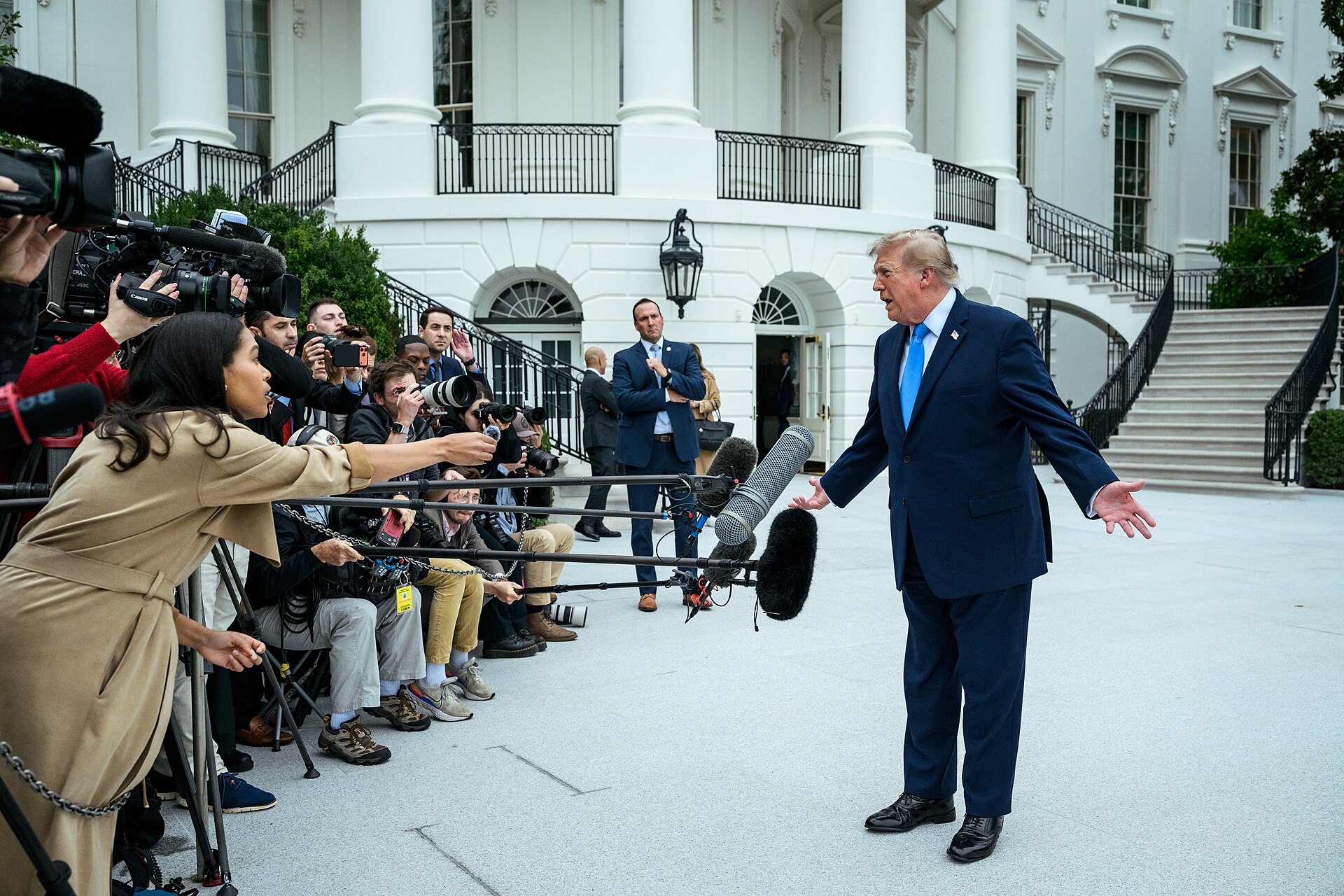

WASHINGTON — Donald Trump stood inside a Maryland shipyard on October 6 and framed the war with Iran as something to be finished on a schedule. “We have to finish it up — finish it the nice way or the not-so-nice way,” he said at Anduril Industries’ Sparrows Point facility, where a $3.7 billion investment will build the largest American naval shipyard since World War II. One day earlier, Saudi Arabia had convened an emergency session in Riyadh to activate the Makkah Joint Defence Agreement for the first time — a mechanism requiring sixty days to deploy Pakistani and Turkish forces to the Kingdom. Trump’s midterm-linked timeline gives the war roughly twenty-nine days. The alliance Riyadh activated requires sixty days to reach operational readiness. Only one of those clocks belongs to someone who gets a say in when the war ends.
The risk for Saudi Arabia is not that Trump’s endgame fails. It is that it succeeds — on terms that reopen Hormuz, freeze the conflict, and remove every American incentive to address the problems the war created for the Kingdom: a $65.3 billion fiscal deficit, Houthi forces still positioned along the Red Sea coast, an untested regional defence pact, and no mutual defence treaty with the United States.
Table of Contents
- ‘Finish It the Nice Way or the Not-So-Nice Way’
- What Does Victory Look Like When Nobody Knows Who Runs Iran?
- Two Clocks Running Against Each Other
- The Table Saudi Arabia Was Never Invited To
- How Much Does Exclusion Cost Per Quarter?
- The Enrichment Deadlock Riyadh Cannot Break
- Can Hormuz Reopen Without Resolving What It Exposed?
- No Treaty, No Obligation, No Mechanism
- What Remains After the Americans Declare Victory?
- Frequently Asked Questions
‘Finish It the Nice Way or the Not-So-Nice Way’
The Anduril event was not a war briefing. It was a domestic-industry showcase — a US Navy contract worth up to $2.9 billion, a facility Trump framed as proof that American manufacturing had returned. The war-termination language came in a press exchange, delivered between boasts about shipbuilding capacity and an observation about the difficulty of identifying who leads Iran.
“Their leaders are gone, their second group of leaders are gone, and the biggest problem I have is nobody knows who the hell is running the country,” Trump told reporters. He described the war as “essentially almost over.”
This was not the first time he anchored the timeline to the electoral calendar. On September 9, Trump said: “I think war is going to end immediately after the election because they can’t hold out any longer.” His framing has been consistent across both statements — the war ends when it becomes politically convenient, on a schedule set in Washington. The November 3 midterm is twenty-nine days away.
Vice President JD Vance reinforced the posture in a Reuters interview published the same day. “We’re not going to trade words for actions,” Vance said, demanding Iran make a “meaningful” reduction in enrichment capacity before any agreement. “If you don’t want a nuclear weapon, then why do you need 60% enriched fuel? And if you want to show commitment to not building a nuclear weapon, don’t build highly enriched fuel. That’s a very basic threshold issue.”
The Middle East briefing 3,000+ readers start their day with.
One email. Every weekday morning. Free.
The threshold is specific. Who negotiates it, who verifies compliance, and whether any authority in Tehran can deliver it received no mention in the interview.
What Does Victory Look Like When Nobody Knows Who Runs Iran?
Victory, as Trump describes it, requires a counterparty that can negotiate, commit, and enforce. Iran’s Supreme Leader Ali Khamenei was killed on February 28, the opening day of the US-Israeli strikes. His successor and son, Mojtaba Khamenei, has not appeared publicly since sustaining injuries in the same attack. The US intelligence community assesses the regime as “intact, but largely degraded,” with the IRGC operating as the de facto governing authority under fragmented command.
Director of National Intelligence Tulsi Gabbard told Congress that Mojtaba was “very seriously injured” and that Iranian decision-making “is not clear.” In practice, the IRGC under Major General Ahmad Vahidi has assumed the dominant role — not through constitutional succession but through the collapse of alternatives. The Soufan Center described the resulting command structure as “fragmented, decentralised.” Iran’s elected president, Masoud Pezeshkian, has said publicly that “negotiations have no meaning with an enemy that repeatedly resorts to assassination, sanctions, pressure and threats.” Parliament Speaker Mohammad Bagher Ghalibaf has cited the June Islamabad MOU — a framework the US effectively abandoned — as the basis for seven conditions Iran requires before reopening Hormuz.
Any agreement the US reaches with this configuration faces an enforcement problem unrelated to American military capability. The question is not whether Washington can compel a signature but whether anyone on the Iranian side commands the authority to deliver compliance across the actors who would need to comply — the IRGC’s regional commands, the Houthi leadership in Sana’a, Hezbollah’s post-war remnant. CSIS observed in its 2026 assessment that “the Trump administration has not defined what victory would look like, though it has articulated wide-reaching goals ranging from ending Iran’s nuclear program to opening the Strait of Hormuz to regime change.” Those goals require a functional counterparty. The US intelligence community’s own testimony is that no one clearly occupies that role.
Two Clocks Running Against Each Other
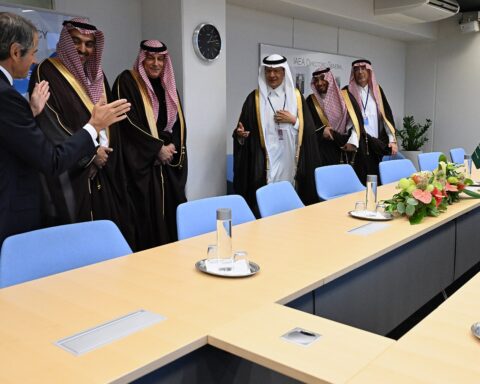
The MJDA activation on October 5 was presented in Riyadh as a strategic milestone. The pact’s Supreme Defence Council — convened for the first time since the agreement was signed — appointed a retired Pakistani lieutenant general as secretary general and authorised rapid deployment of Pakistani and Turkish forces to the Kingdom. Both countries committed troops. Neither has committed them to combat.
As of the activation, only Saudi forces are engaged in active operations. Pakistani and Turkish contingents occupy supportive roles. The pact’s deployment timeline — sixty days from activation to operational readiness — places full capability around early December 2026.
The readiness gap extends beyond deployment speed. The MJDA’s Supreme Defence Council directed its first-ever session on October 5; it has never directed a joint military operation. Command relationships between Saudi, Pakistani, and Turkish forces — operating under different doctrines, different rules of engagement, and different domestic political mandates — are untested under fire. Pakistan’s deployment carries parliamentary constraints. Turkey’s carries NATO coordination requirements that intersect with the same American command structure the MJDA was partially designed to supplement.
Trump’s Anduril remarks came twenty-four hours later. His September 9 statement had already linked war termination to November 3. The arithmetic is straightforward: the MJDA needs sixty days; Trump has signalled twenty-nine. If the US declares the conflict functionally over in early November — through a ceasefire, a freeze, or a drawdown timed to the midterm — the alliance Saudi Arabia activated on October 5 will not have completed deployment before the war it was built for is declared finished by the power that launched it.
The two timelines were never coordinated. Trump’s September 9 statement pre-dated the MJDA activation by twenty-six days. Riyadh activated the pact knowing the American president had already told his electorate the war would end “right after” the midterms. The sixty-day clock started anyway.
The Table Saudi Arabia Was Never Invited To
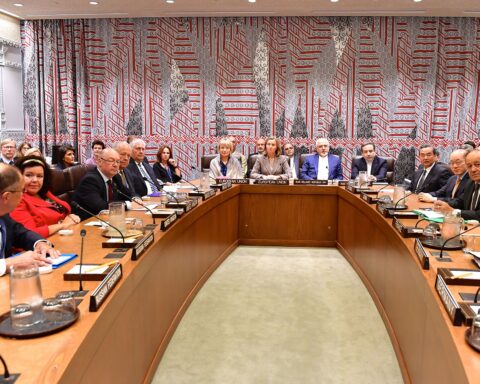
The pattern has a decade of precedent. In 2015, the P5+1 negotiations that produced the JCPOA included no Gulf Cooperation Council member at the table. Oman facilitated the secret back-channel between Washington and Tehran without informing Riyadh. Saudi Arabia, the UAE, and Bahrain objected publicly — not to the existence of a nuclear deal, but to the exclusion of Iranian ballistic missiles and regional proxy networks from its terms. A decade later, those same two categories constitute the primary military threats to Saudi territory.
The deal’s architects assured Gulf capitals at the time that proxy networks and ballistic missiles would be addressed in subsequent negotiations. Those negotiations never took place. Resolution 2231, the UN Security Council’s endorsement of the JCPOA, placed limited restrictions on Iranian missile development that Iran contested and the Council did not enforce. When the Trump administration withdrew from the JCPOA in 2018, none of the categories Saudi Arabia had raised in 2015 had been addressed through any diplomatic framework.
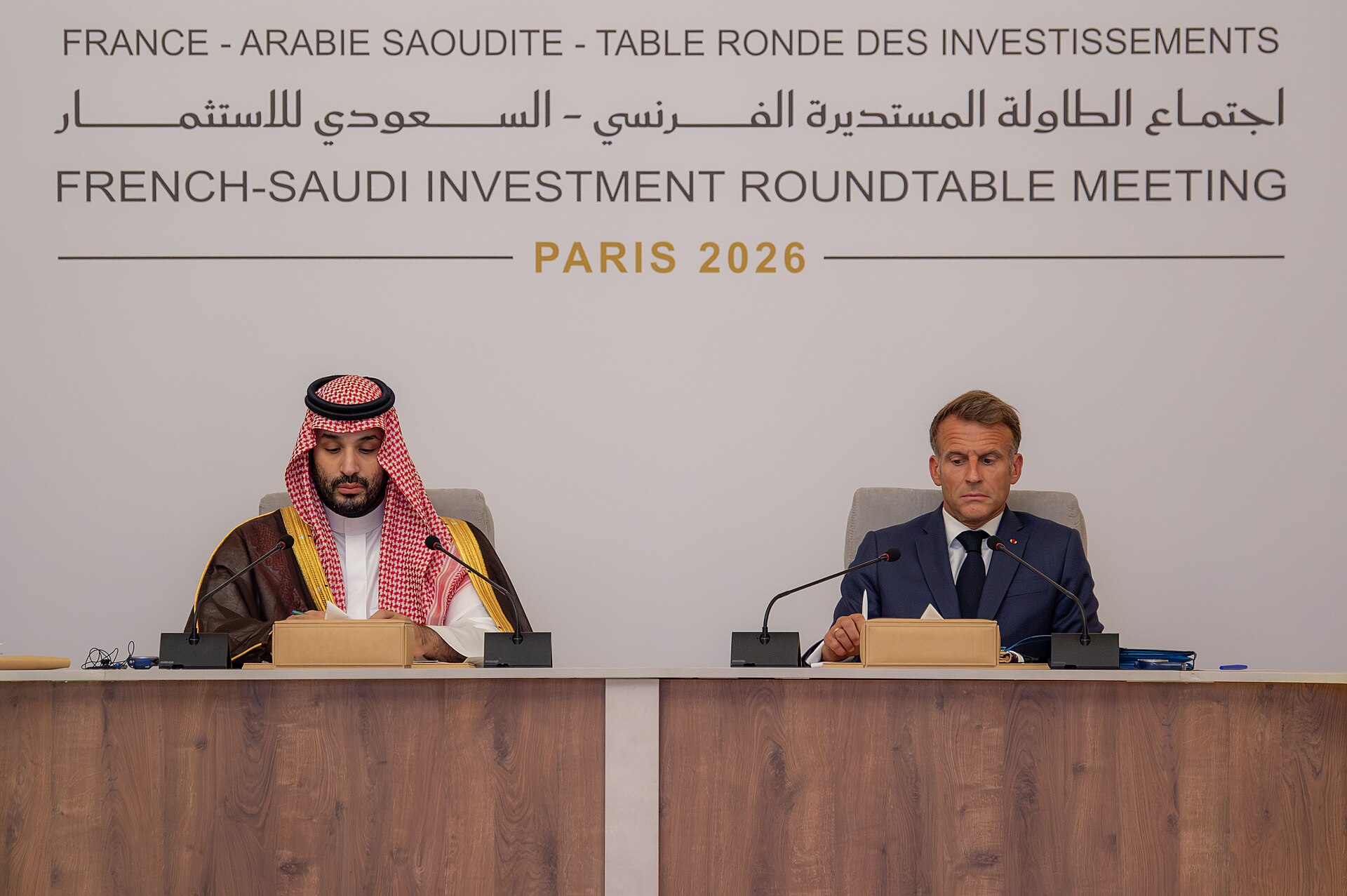
The Abraham Accords in 2020 followed similar geometry. Saudi Arabia was widely described as the ultimate prize of the normalisation framework. The terms were drafted and signed without Saudi participation.
The Islamabad MOU of June 18, 2026, repeated the structure with sharper consequences. Pakistan mediated between the United States and Iran. The resulting framework addressed nuclear enrichment thresholds, a sequenced Hormuz reopening timeline, and ceasefire parameters. It included no provision covering Houthi operational capacity, Saudi territorial defence, or the status of missile forces positioned within range of Saudi cities and energy infrastructure. Saudi Arabia was not a signatory, not a participant, and — according to reporting by the Washington Post and the Arab Center — not consulted on the terms.
By September 2026, one diplomatic channel remained: a high-level multilateral Gulf-Iran meeting planned through Oman. Riyadh cancelled it under pressure from Houthi and Iraqi militia escalation, per the Washington Post’s September 14 report. The cancellation left Saudi Arabia in the position Foreign Policy described on September 24: MBS “called Trump twice after the East-West pipeline was hit, asking the United States to bomb the Houthis to slow their advancement, but the White House declined.”
Three times in eleven years, the United States has constructed or endorsed a framework governing Gulf security with Iran. Saudi Arabia has not co-authored any of them.
How Much Does Exclusion Cost Per Quarter?
Saudi Arabia’s Q1 2026 deficit reached $33.5 billion — SR125.7 billion — the largest quarterly shortfall since 2018. The full-year deficit has been revised to $65.3 billion, up from an original projection of $44 billion, driven by a GDP contraction of 3.6 percent where the government had forecast growth of 4.6 percent. The incremental cost of the war above the pre-war budget was running at $6 to $8 billion per month by mid-2026.
| Indicator | Pre-War Projection | Revised / Actual | Source |
|---|---|---|---|
| Full-year fiscal deficit | $44 billion | $65.3 billion | Ministry of Finance |
| GDP growth | +4.6% | -3.6% | General Authority for Statistics |
| Q1 deficit | — | $33.5 billion (SR125.7B) | Ministry of Finance |
| Q2 GDP (year-on-year) | — | -4.7% | General Authority for Statistics |
| Q2 oil activity (year-on-year) | — | -24.8% | General Authority for Statistics |
| Defence spending (Q1 change) | — | +26% | Ministry of Finance |
| Incremental war cost | — | $6–8 billion/month | Arab Center DC |
| Aramco dividend cut | — | $38.8 billion | Aramco |
| NEOM terminations (2026–2030) | — | $16 billion | Vision 2030 analysis |
Defence expenditure surged 26 percent in Q1 alone. Aramco slashed its dividend by $38.8 billion. NEOM contract terminations will cost an estimated $16 billion through 2030. New consultancy contracts across government have been frozen unless approved by the Ministry of Finance. Q2 oil activity contracted 24.8 percent year-on-year.
Aramco CEO Amin Nasser, speaking at the Energy Intelligence Forum in London on October 5, estimated that fewer than six billion barrels of commercial inventories remain from an original ten billion. “Until Hormuz fully re-opens and confidence returns,” Nasser said, “the crude reality is that pressure at both ends of the barrel will intensify.” Rebuilding global stocks, by his estimate, will take up to two years after reopening.
The Enrichment Deadlock Riyadh Cannot Break
The US-Iran negotiating gap is specific and structural. Vance’s October 6 demand — that Iran reduce its 60 percent enrichment before any agreement — reverses the sequence Iran insists upon. Foreign Minister Abbas Araghchi presented three conditions at the September UN General Assembly: lift the US naval blockade, waive oil sanctions, and include Lebanon and Yemen in any ceasefire framework. President Pezeshkian offered a full Hormuz reopening within seven days in exchange for those conditions plus the release of $12 billion in frozen Iranian assets. Trump rejected the package.
The deadlock is over sequencing, and neither party’s opening position addresses Saudi Arabia’s concerns. The US demand centres on enrichment. Iran’s centres on sanctions and naval presence. Houthi force disposition, missile positioning along the Red Sea and Yemeni border, and Saudi territorial defence appear in neither set of conditions. Under the 2015 JCPOA, the categories Saudi Arabia most objected to — proxy militias and ballistic missiles — were excluded from the final text. The same categories are absent from the 2026 negotiating positions of both Washington and Tehran.
Vance’s Reuters interview was revealing in its omissions. He framed enrichment as a “basic threshold issue” and treated the Gulf conflict as a subset of the nuclear file — a pressure tool that can be retired once enrichment is settled. He did not mention Yemen, the Houthis, Saudi air-defence shortfalls, or the MJDA.
Can Hormuz Reopen Without Resolving What It Exposed?
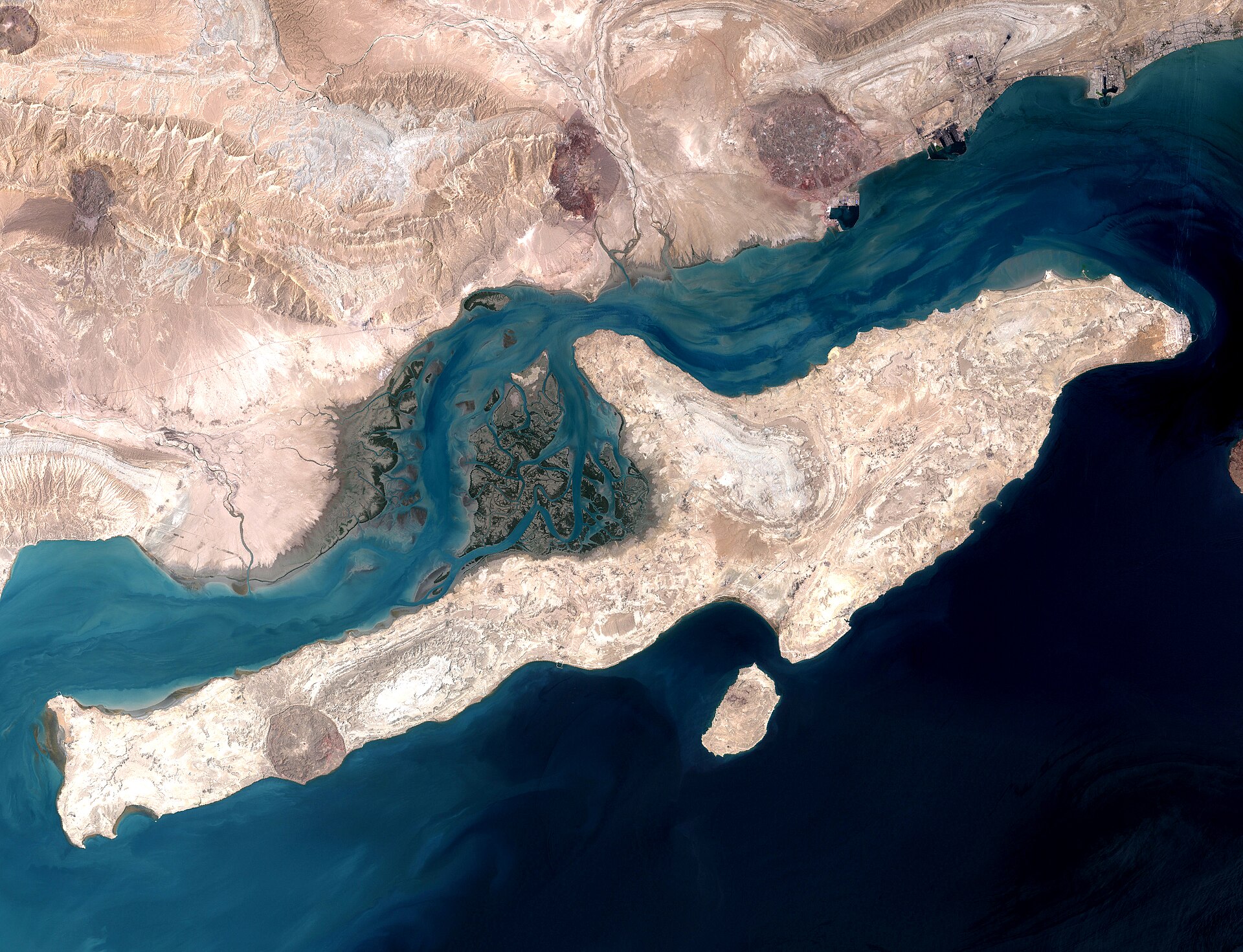
Reopening the Strait of Hormuz solves the transit problem. Saudi Arabia’s energy export infrastructure still operates without a credible external defence guarantee against sustained attack, and the November 2025 Strategic Defense Agreement did not provide one.
Ghalibaf has stated that Hormuz remains closed until the US meets seven conditions derived from the June MOU. Araghchi’s three public demands — lift the blockade, waive sanctions, include Yemen and Lebanon in ceasefire terms — appear to constitute the negotiable subset. The remaining conditions, which Ghalibaf has referenced without fully detailing, reportedly involve ceasefire verification mechanisms and the disposition of Iranian military assets struck during the US campaign.
Iran frames these conditions as sequential: the US lifts the blockade first, then Iran opens the strait, then nuclear talks proceed. The US reverses the order — no sanctions relief or blockade removal without prior nuclear action. This sequencing gap is the structural deadlock as of early October 2026. Trump’s language about the war being “almost over” describes a political outcome he intends to create, not a negotiated agreement either side has accepted.
Even under Iran’s own optimistic scenario — the seven-day reopening Pezeshkian offered and Trump rejected — recovery would take years. Nasser’s London estimate of two years to rebuild commercial stocks places Saudi revenue normalisation no earlier than 2028.
Saudi Arabia’s pipeline diversification — the East-West corridor and the Yanbu export terminus — was designed for precisely this contingency. The pipeline was struck. According to Foreign Policy, MBS called Trump twice requesting US action against the Houthi forces responsible. The White House declined both times.
No Treaty, No Obligation, No Mechanism
Saudi Arabia has never held a formal mutual defence treaty with the United States. The November 2025 Strategic Defense Agreement, signed during MBS’s Washington visit, conferred “major non-NATO ally” status and unlocked new weapons sales. It did not include a mutual defence clause — no equivalent of NATO’s Article 5, no binding US commitment to treat an attack on the Kingdom as an attack requiring American military response. The Majalla and The Conversation both reported at the time that the agreement fell short of a congressionally ratified treaty.
Before the war, the absence was a diplomatic talking point. During the war, it became an operational fact. When Iranian missiles struck Saudi territory — Prince Sultan Air Base, Abha, critical infrastructure along the Red Sea coast — the US response was governed by political judgement, not legal obligation. MBS’s direct requests for action against Houthi positions, per Foreign Policy’s September 24 reporting, were declined at the White House level.
A US-declared ceasefire would not create the treaty. It would close the window in which one might have been negotiated. The war gave Saudi Arabia the strongest case for a binding American defence commitment in the Kingdom’s history: active Iranian strikes on Saudi soil, documented gaps in Saudi air defence, US forces already deployed in-theatre. Congressional ratification of a mutual defence treaty requires sixty-seven Senate votes. Neither the administration nor Riyadh has proposed one.
What Remains After the Americans Declare Victory?
A US-declared endgame would crystallise rather than resolve every structural Saudi problem. Houthi forces retain operational capacity along the Red Sea coast, the MJDA has never been tested in operations, the fiscal deficit has consumed reserves and suspended programmes, and no formal defence treaty binds Washington to Riyadh.
The Houthi threat is the most operationally immediate of the unresolved problems. Houthi forces struck the East-West pipeline — Saudi Arabia’s primary export alternative to Hormuz — and Saudi airspace has been violated repeatedly from Yemeni territory throughout the war. A US-Iran ceasefire addressing enrichment and reopening the strait would not, by its stated terms, require the Houthis to disarm, withdraw from positions along the Saudi border, or cease attacks on Saudi infrastructure. The Houthis are not a party to the Islamabad MOU or any current negotiating track. Their operational relationship with the IRGC is well-documented, but their compliance with any agreement Tehran signs is not guaranteed — less so now, given the IRGC’s own fragmented command.
The MJDA’s operational readiness remains incomplete. Only Saudi forces are combat-engaged; Pakistani and Turkish contingents will not finish deploying until December at the earliest. The pact’s command structure — established for the first time at the October 5 emergency session — has no operational record. Funding commitments beyond the initial deployment phase remain undefined.
The war’s fiscal costs are structural, not cyclical. Even if Hormuz reopens and oil revenues recover over the following two years, the monthly incremental military spending has already consumed reserves and triggered programme cancellations — NEOM contract terminations, the Aramco dividend cut, frozen consultancy contracts across government — that a return to pre-war oil prices does not reverse.
The Islamabad MOU — the only US-Iran framework that reached document stage — excluded Saudi security concerns from its terms. Neither Washington’s conditions nor Tehran’s address Houthi disarmament, missile repositioning, or Saudi territorial defence.
The Atlantic Council’s William Wechsler described the trajectory as “a misguided war” compounded by “a deeply flawed ceasefire agreement.” Michael O’Hanlon at Brookings assessed that Trump “blundered in getting into a war with unrealistic expectations.” Both analyses were published in Washington. Neither addressed how Saudi Arabia exits the consequences of a war in which it holds no seat at the talks and no treaty-bound claim on American engagement after the fighting stops.
Frequently Asked Questions
What is the Makkah Joint Defence Agreement and which countries belong to it?
The MJDA is a multilateral defence pact among Muslim-majority states, with Saudi Arabia, Pakistan, and Turkey as its principal military contributors. Before the October 5 emergency activation, the pact had three structural gaps that had persisted since its signing: no standing force, no unified command structure, and no defined activation trigger. All three were addressed simultaneously at the Riyadh session — the first time the Supreme Defence Council had ever convened. The sixty-day deployment timeline runs from that activation date. The MJDA is distinct from the GCC’s Peninsula Shield Force, which comprises only Gulf Cooperation Council member states and does not include Pakistan or Turkey.
Has the United States ever signed a mutual defence treaty with a Gulf Arab state?
No. The closest frameworks are bilateral defence cooperation agreements that fall short of treaty-level mutual defence obligations. Kuwait holds a 1991 defence cooperation arrangement covering access and pre-positioning but no Article 5-equivalent commitment. Qatar hosts CENTCOM’s forward headquarters at Al Udeid Air Base under a separate agreement. Bahrain was designated a major non-NATO ally in 2002. The broadest historical US commitment to Gulf security is the Carter Doctrine, announced by President Jimmy Carter in his January 1980 State of the Union address, which declared the US would use military force to defend its interests in the Persian Gulf. That declaration was a unilateral presidential statement, not a treaty ratified by the Senate with any specific Gulf state. Saudi Arabia’s November 2025 Strategic Defense Agreement is the most expansive bilateral framework to date but does not include a binding mutual defence article.
What conditions has Iran set for reopening the Strait of Hormuz?
Iran has publicly cited seven conditions, though only three have been fully specified by Foreign Minister Araghchi at the UN General Assembly: lifting the US naval blockade around Iran, waiving US oil sanctions, and including Lebanon and Yemen in any ceasefire framework. President Pezeshkian added a fourth in his reopening proposal — the release of $12 billion in frozen Iranian assets. Parliament Speaker Ghalibaf has stated that all seven derive from the June Islamabad MOU but has not publicly detailed the remaining conditions in full. Reporting suggests they involve ceasefire enforcement and verification mechanisms, the disposition of Iranian military infrastructure destroyed during the US campaign, and guarantees against future strikes on Iranian territory — conditions the US has not engaged with in its public negotiating posture.
What is the significance of Iran enriching uranium to 60 percent?
Under the 2015 JCPOA, Iran was limited to enriching uranium to 3.67 percent — sufficient for civilian power generation but far below any weapons-relevant threshold. Iran escalated to 60 percent enrichment after the US withdrawal from the JCPOA and subsequent breakdowns in diplomatic engagement. Weapons-grade uranium is generally defined as 90 percent or above. The technical gap between 60 and 90 percent is considerably smaller in centrifuge time and infrastructure requirements than the gap between 3.67 and 60 percent, which is why Vance described 60 percent as a “basic threshold issue” requiring reduction before any deal. At current enrichment levels, IAEA assessments indicate Iran possesses the technical capacity to produce enough weapons-grade material for a device in a timeframe measured in weeks rather than months.