
TEHRAN — On the morning of July 22, 2026, Iran’s Foreign Ministry spokesperson Esmaeil Baghaei told reporters that “diplomacy also knows its duties well and spares no effort,” while the IRGC Navy’s three-phase Wave 23 operation — codenamed Nasr 2 — simultaneously struck drone hangars at Al-Sakhir Air Base in Bahrain, Task Force 59 preparation facilities at Port Salman, and US special forces infrastructure at Camp Arifjan in Kuwait. Neither event contradicted the other, and the Iranian government made no effort to pretend otherwise. Baghaei’s statement, delivered with the same cadence one might use to announce a trade delegation’s itinerary, was the explicit articulation of a posture that Western analysts keep treating as paradox when Iran itself treats it as doctrine: the ceasefire proposal and the missile salvo are not competing impulses but load-bearing columns of the same negotiating architecture, and Saudi Arabia — excluded from every mediation track and bleeding crude revenue from both chokepoints simultaneously — is the party that absorbs the structural cost of both.
Table of Contents
- Baghaei’s Dual Statement and the Doctrine It Made Explicit
- Wave 23: Three Phases, Two Countries, One Morning
- Who Actually Authored the 10-Day Ceasefire Proposal?
- The Middle Corridor: Navigation Guarantee or Licensing System?
- Why Is Bab al-Mandeb Absent From Every Ceasefire Proposal?
- Saudi Crude Loadings and the Collapse of Rerouting Redundancy
- How Did Saudi Arabia Lose Its Seat at All Three Mediation Tables?
- CENTCOM’s Punitive Strikes and the Escalation Cost
- The Structural Logic of Coercive Diplomacy
- Frequently Asked Questions
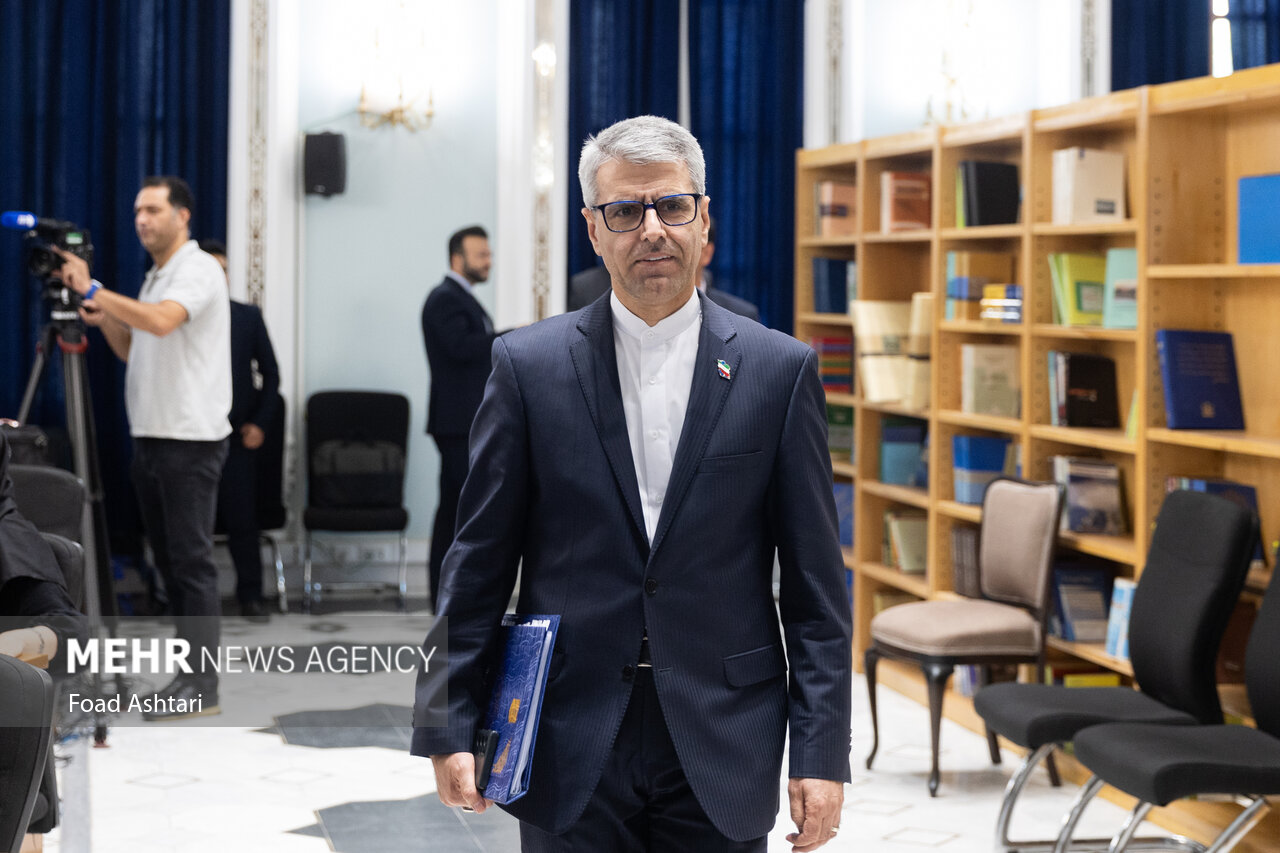
Baghaei’s Dual Statement and the Doctrine It Made Explicit
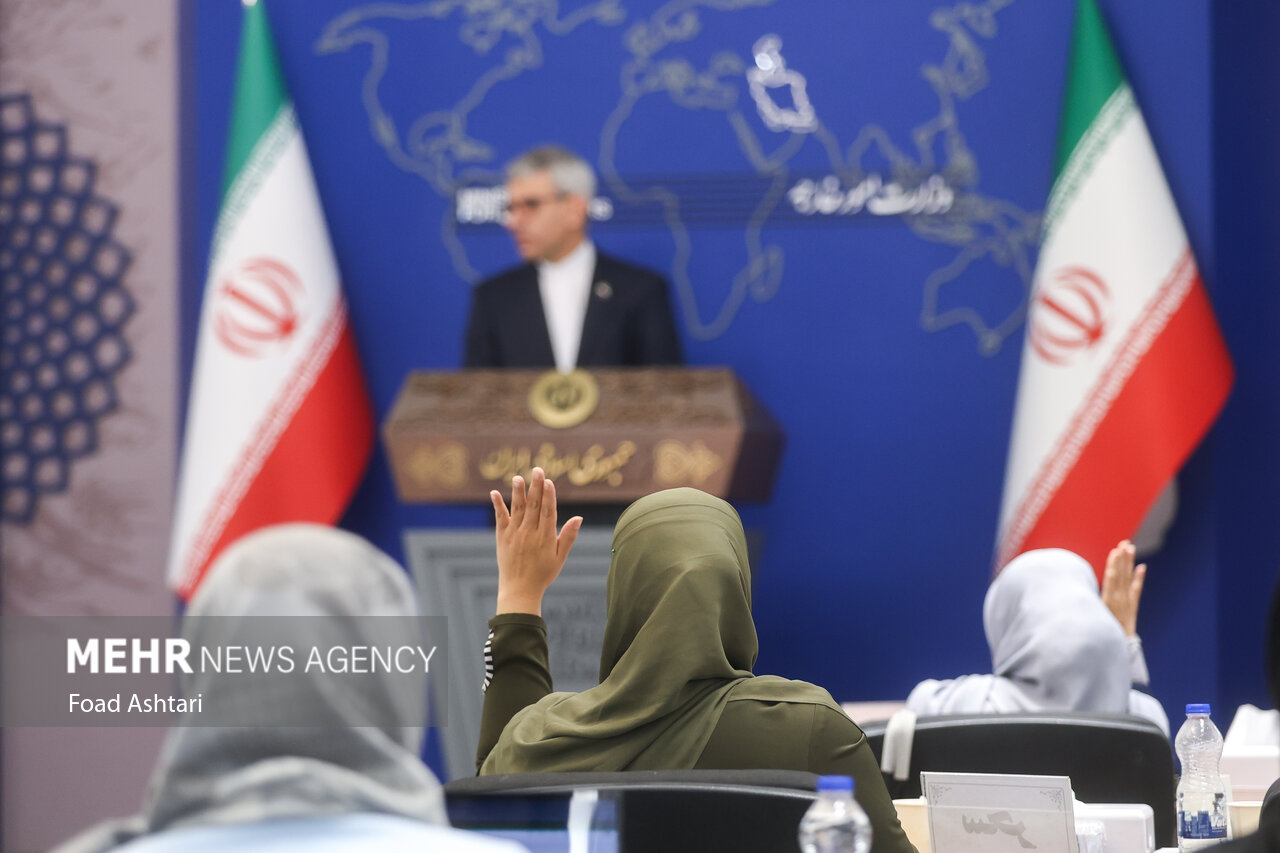
The sentence that Baghaei delivered on July 22 was not a slip, not a contradiction papered over by a spokesman under pressure, and not the kind of muddled messaging that emerges when a government’s military and diplomatic wings fail to coordinate — it was, on the contrary, the most candid description of Iranian strategic doctrine that any official has offered since the conflict began. “While our armed forces are responding with strength and power and destroying the source and origin of American aggression,” Baghaei said, “diplomacy also knows its duties well and spares no effort.” The conjunction is doing all the work: while, not despite, not after, not instead of. The armed forces respond and diplomacy operates simultaneously, and the spokesman presented this as self-evident rather than as something requiring explanation or justification.
PressTV, Iran’s English-language state broadcaster, had already laid the intellectual groundwork for this posture months earlier. In a May 28, 2026 editorial titled “Strategic Imperative: Iran’s Dual Approach Blends Military Readiness with Assertive Diplomacy,” PressTV’s own framing described Iran as pursuing “diplomacy from a position of strength, keeping armed forces on maximum alert to confront any new aggression, as military readiness and powerful negotiation work in tandem.” This is not a posture that Iran stumbled into under the pressure of twenty-three waves of escalation — it is a doctrine that Iran’s state media narrated, endorsed, and broadcast to its domestic audience before the July 22 statement made it explicit to the international press corps. The dual track is not ambiguity; it is, by Iran’s own published account, the architecture through which Tehran believes it extracts maximum concessions from adversaries who would otherwise have no reason to negotiate.
What makes Baghaei’s formulation particularly pointed is its implicit audience. The statement was not directed at Iranian citizens, who have consumed this framing for months through IRNA and PressTV, but at the mediators in Doha, Islamabad-Geneva, and Muscat, and at the unnamed Trump administration officials who told the Jerusalem Post that Iran’s 10-day ceasefire proposal was “absurd” and “illogical.” Baghaei was answering them directly: Iran sees no tension between launching Wave 23 and proposing a ceasefire because the ceasefire proposal’s value to Iran depends entirely on the continued demonstration that the alternative to accepting it is more waves. Remove the kinetic pressure and the proposal loses its coercive weight; remove the proposal and the kinetic campaign loses its diplomatic off-ramp, inviting the kind of full-scale US response that Trump has repeatedly threatened.
Wave 23: Three Phases, Two Countries, One Morning
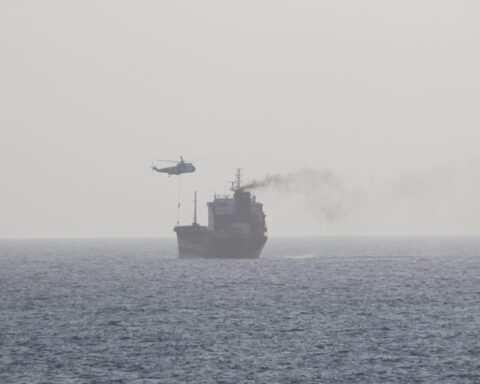
The IRGC Navy’s Operation Nasr 2 was not a single strike but a coordinated three-phase action that hit targets across two Gulf states in what the IRGC’s public relations department described as a simultaneous operation — the first time in the conflict that the IRGC Navy has claimed a multi-country, multi-phase naval strike package executed in a single window. Phase 1 destroyed drone maintenance and repair hangars at Al-Sakhir Air Base in Bahrain, a facility that has served as a hub for US unmanned systems operations across the central Gulf. Phase 2 struck Task Force 59 vessel preparation hangars at Port Salman, also in Bahrain, inflicting what PressTV described as “heavy damage” to the infrastructure that supports the US Navy’s experimental unmanned surface vessel programme. Phase 3 hit facilities for US special naval commando forces at Camp Arifjan in Kuwait, where the IRGC claimed the target was destroyed by fire.
The geographic spread of the operation is the message that matters more than any individual target’s destruction. Wave 22, which preceded it by hours, had already struck across Bahrain, Kuwait, and Jordan — killing three US service members at Muwaffaq Salti Air Base in Jordan, including Sergeant Angel S. Rampersad, aged 28, from New York, First Lieutenant Tyler Feehan, aged 25, from Hawaii, and Private First Class Isabella Gonzales, aged 19, from Texas. Wave 23 deepened the footprint, adding Camp Arifjan’s special operations infrastructure and Port Salman’s Task Force 59 facilities to a target set that now spans four countries and encompasses air, naval, and ground force assets. The IRGC’s public statement named all three targets with conspicuous precision, identifying not just the bases but the specific types of facilities struck — a level of operational disclosure that serves no military purpose and exists entirely as a signalling exercise directed at Washington and at the Gulf states hosting those installations.
The Middle East briefing 3,000+ readers start their day with.
One email. Every weekday morning. Free.
The CSIS report “Iran’s War Strategy: Don’t Calibrate — Escalate,” published in 2026, documents the pattern that Wave 23 extends: Iran has abandoned the calibrated, proportional retaliation framework that characterised its earlier military posture and replaced it with a doctrine of rapid escalation that expands the geographic and asset scope of each successive wave, raising the cost of continued US military action relative to the standing ceasefire offer. The Carnegie Endowment’s “Iran Rewrites Its War Strategy” corroborates this shift, tracing the transition from a posture of measured response to a multi-domain pressure campaign that treats every US installation in the Gulf as a potential target, not for the purpose of winning a conventional war Iran cannot win, but for the purpose of making the war expensive enough that a negotiated settlement — on Iranian terms — becomes the cheaper option for Washington.
Who Actually Authored the 10-Day Ceasefire Proposal?
Iran secretly wrote the 10-day ceasefire proposal that mediators were presenting as a neutral framework, according to a Jerusalem Post and i24NEWS exclusive published July 21-22. Tehran then publicly disclaimed authorship, attributing the proposal to third parties — allowing it to control the terms while avoiding the optics of suing for peace at the same moment it launched Wave 23.
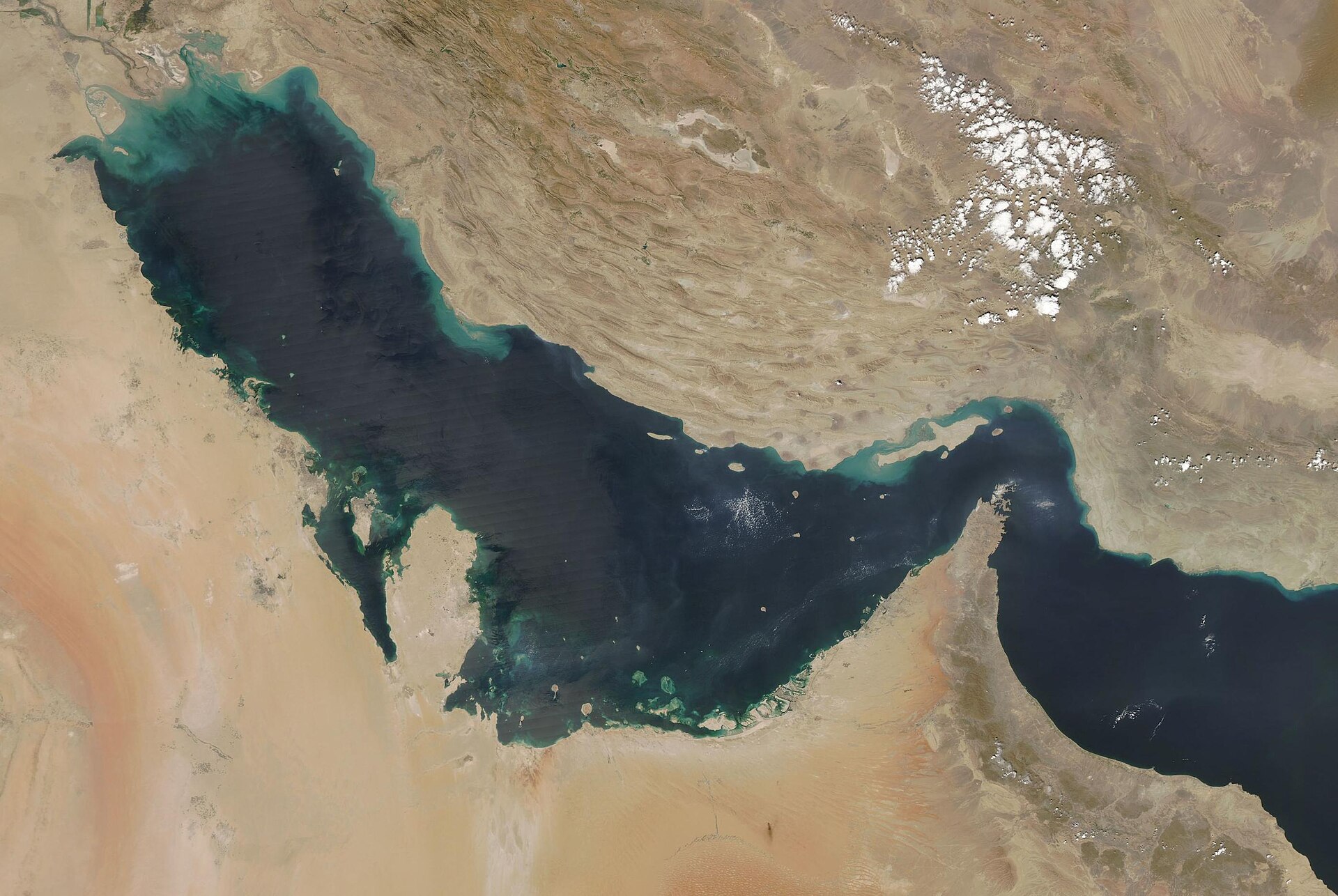
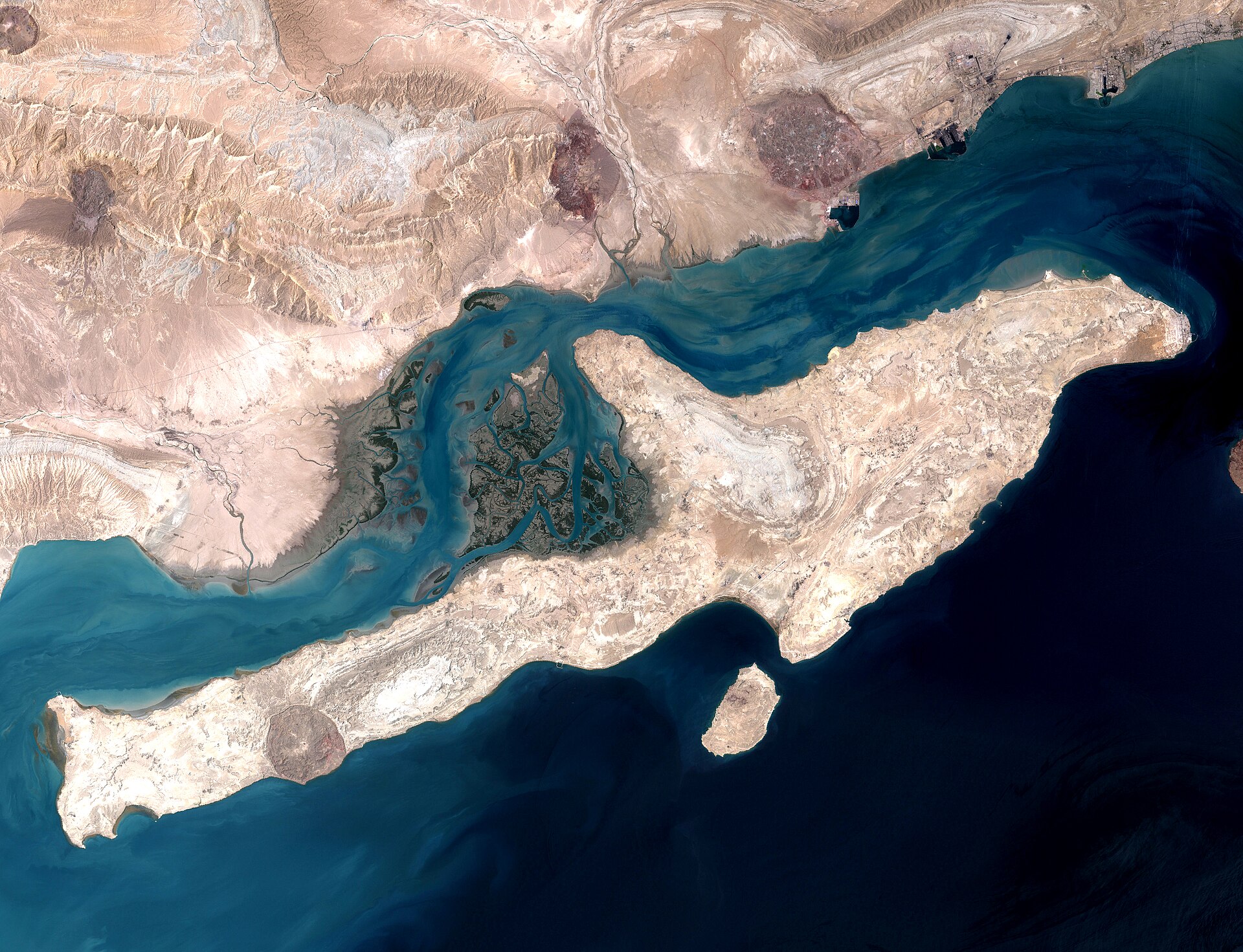
The Jerusalem Post and i24NEWS broke the exclusive on July 21-22 that Iran had secretly authored the 10-day ceasefire proposal that mediators in Doha and elsewhere were presenting as a neutral framework — a piece of intelligence that transforms the reading of the entire negotiation from a story about third-party mediation into a story about Iranian self-dealing wrapped in multilateral packaging. The proposal rests on three pillars: an immediate suspension of hostilities, full restoration of international shipping through Hormuz, and the establishment of a “middle corridor” — a five-mile-wide navigable gap between Qeshm and Larak islands, flanked by Iranian shores on both sides, through which approved commercial vessels would transit under Iranian-designated rules, Iranian-set fees, and an IMO joint fund that Tehran proposed as a legitimating multilateral wrapper.
Baghaei’s public performance around the proposal’s authorship was itself an act of diplomatic architecture. Rather than claiming credit for the ceasefire framework — which would have positioned Iran as suing for peace, a posture incompatible with the IRGC’s escalation tempo — Baghaei inverted the authorship, publicly attributing the proposal to mediators and positioning Iran as the party graciously willing to consider terms that others had brought forward. The Jerusalem Post’s sourcing identified this as deliberate strategic misdirection: Iran authored the proposal precisely to control its terms, then publicly disclaimed authorship to avoid the domestic and regional optics of a regime that launches Wave 23 in the morning and asks for a ceasefire in the afternoon. The misdirection allowed both postures to coexist — which is, of course, exactly the dual-track doctrine that Baghaei articulated in his own statement.
The US response to the proposal has been dismissive but not closed. Unnamed Trump administration officials described the 10-day timeframe as “absurd” and the overall framework as “illogical,” insisting that any ceasefire must be longer and must treat Hormuz navigation as a precondition, not a negotiating item. Trump himself, according to the Jerusalem Post, is weighing whether to accept a modified version or to launch a full-scale campaign in coordination with Israel, a decision that the three Muwaffaq Salti deaths and the cumulative 16 US service member fatalities across the conflict have made politically charged in a way that favours escalation over compromise.
The Middle Corridor: Navigation Guarantee or Licensing System?
Iran’s proposed middle corridor is a licensing system, not a navigation guarantee. Both Qeshm and Larak islands are Iranian territory; any vessel using the corridor would transit under Iranian-designated rules, Iranian-set fees, and IRGC Navy oversight. The IMO joint fund provides multilateral branding for what is operationally a unilateral Iranian tollbooth with no free-transit alternative.
The five-mile-wide channel between Qeshm and Larak islands that sits at the centre of Iran’s ceasefire proposal is not a navigation guarantee in any conventional maritime law sense — it is a navigation licensing system designed to convert Iran’s current wartime blockade capacity into a permanent peacetime revenue and control mechanism. The corridor’s geometry is the first clue: both Qeshm and Larak are Iranian islands, the surrounding waters are Iranian territorial waters, and any vessel transiting the corridor would pass through a channel in which IRGC Navy contact is required, transit rules are Iranian-designated, and fees are Iranian-set. The IMO joint fund that Iran has proposed as part of the framework provides the institutional cover that distinguishes this from a unilateral toll regime, but the operational reality — Iranian patrol craft on both flanks, Iranian rules governing which vessels are “approved,” and an Iranian fee schedule — would give Tehran permanent gatekeeping authority over the world’s most critical oil transit chokepoint.
The Stimson Center’s 2026 analysis concluded that Iran “does not intend to restore pre-war unrestricted transit but instead seeks a mechanism with Oman to impose ‘service charges’ on transiting vessels,” framing Hormuz control as a permanent post-war political economy instrument rather than a temporary wartime measure. The Quincy Institute’s Responsible Statecraft reached a parallel conclusion, noting that Iran “exits war in control of its nuclear materials with a new bargaining chip: the ability to halt shipping through the Strait of Hormuz.” Both assessments treat the corridor proposal not as a compromise but as an attempt to lock in wartime gains through the language of peacetime governance, and both note that the IMO’s own parallel framework — developed in cooperation with Oman — envisions a different two-route structure with a southern corridor through Omani territorial waters offering genuine free navigation, a design Iran has conspicuously not endorsed.
The distinction between the two frameworks is the distinction between a strait that the international community governs and a strait that Iran administers. Oman’s version preserves a free-transit southern route through Omani waters alongside a pre-clearance northern route through Iranian waters — a dual-corridor structure that maintains competitive pressure on fees and prevents any single state from monopolising transit authority. Iran’s version eliminates the free-transit option entirely, routing all traffic through a single Iranian-flanked channel and wrapping the toll mechanism in IMO branding. For Saudi Arabia, which relies on Hormuz for its eastern crude exports and on the Yanbu Red Sea terminal for westbound cargoes, and whose domestic economy depends on import flows through both chokepoints, the difference between these two frameworks is the difference between a navigable strait and an Iranian tollbooth.
Why Is Bab al-Mandeb Absent From Every Ceasefire Proposal?
Because Iran can publicly disavow the Houthi blockade enforcing it. All three mediation tracks address Hormuz exclusively. Bab al-Mandeb — where Saudi crude loadings fell 36 per cent in two weeks — is enforced by a proxy Iran can claim is independent, preserving it as a pressure instrument that survives any deal covering only the strait Iran directly controls.
The most consequential structural feature of every mediation track currently active — Doha, Islamabad-Geneva, and Muscat — and of the Iran-authored 10-day ceasefire proposal is not what they contain but what they omit. All three tracks and the proposal itself address Hormuz exclusively, framing the crisis as a US-Iran confrontation over the Persian Gulf’s eastern chokepoint. Bab al-Mandeb — the western chokepoint at the southern end of the Red Sea, through which Saudi crude bound for European and Asian markets must pass, and which the Houthis have declared a maritime blockade zone against Saudi shipping — appears in none of them. The omission is not accidental and is not an oversight born of diplomatic complexity; it is a structural feature of Iran’s negotiating position, because Bab al-Mandeb is enforced by a proxy that Iran can publicly disavow even as it privately sustains, and keeping it outside the ceasefire framework preserves it as a pressure instrument that survives any deal.
The Jordan-Qatar joint diplomatic initiative of July 22 illustrates the contours of the gap. Jordan’s Foreign Minister Ayman Safadi and Qatar’s Prime Minister and Foreign Minister Sheikh Mohammed bin Abdulrahman Al Thani called for an immediate ceasefire and a comprehensive resolution “guaranteeing freedom of navigation in the Strait of Hormuz,” per Jordan’s Petra News Agency — language that explicitly names Hormuz and says nothing about Bab al-Mandeb, even though Jordan itself has absorbed Iranian missile strikes at Muwaffaq Salti. The diplomatic vocabulary of the crisis has been shaped by Iran’s framing: the war is about Hormuz, the ceasefire is about Hormuz, and the Saudi export crisis that is actually being driven by the Houthi Bab al-Mandeb blockade exists in a separate rhetorical compartment that no mediator has yet connected to the ceasefire architecture.
For Riyadh, the omission is economically devastating. Saudi crude loadings through the Red Sea corridor fell 36 per cent in two weeks, dropping to 6.1 million barrels per day, according to The National. More than 3 million barrels per day of Saudi crude destined for Asian buyers through the Red Sea could be forced onto Cape of Good Hope reroutes, adding approximately two weeks of transit time and inflating freight and insurance costs. The East-West Pipeline, which was designed to bypass Hormuz by moving up to 5 million barrels per day from eastern fields to the Red Sea terminal at Yanbu, has had its strategic logic voided by the Houthi blockade — the bypass route and the primary route are now both contested simultaneously, and there is no third option. A ceasefire that reopens Hormuz but leaves Bab al-Mandeb under Houthi blockade solves Iran’s problem (demonstrating it can restore the strait it controls) while leaving Saudi Arabia’s problem (export access to global markets) entirely unresolved.
Saudi Crude Loadings and the Collapse of Rerouting Redundancy
The numbers tell a story that no diplomatic communique has yet acknowledged. Saudi seaborne crude exports have declined approximately 14 per cent year-on-year, averaging roughly 5.11 million barrels per day since the Hormuz disruptions began, according to Defence Security Asia and Northeastern University analysis. Saudi Arabia’s 2024 crude petroleum export revenue was $187 billion, a figure that establishes the economic scale of even marginal export disruptions — a 14 per cent sustained decline, if projected forward, represents tens of billions in lost revenue against a national budget that was already running a deficit before the crisis. The PGSA, which provides Gulf security access at a cost of $5.5 million per day with $253 million outstanding and an August 18 deadline, adds a direct fiscal drain on top of the revenue loss, and there is no indication that the current mediation tracks will produce a resolution before that deadline arrives.
The simultaneous contestation of both chokepoints has destroyed what was, until this crisis, Saudi Arabia’s foundational strategic assumption: that Hormuz and Bab al-Mandeb represented independent risks that could be managed through redundancy, with the East-West Pipeline and the Yanbu terminal providing an alternative route if Hormuz were ever closed, and Hormuz itself providing an alternative if Red Sea shipping were ever disrupted. That assumption required the two chokepoints to be contested by different actors with different timelines — a condition that held for decades and collapsed within weeks when Iran’s direct operations closed Hormuz to unrestricted transit while its Houthi proxy declared a maritime blockade at Bab al-Mandeb. The 85 IRGC naval craft maintaining a record presence at Hormuz and the Houthi naval forces enforcing the Red Sea blockade may report to different command structures, but they serve a single strategic purpose, and the ceasefire architecture — which addresses only the chokepoint under Iran’s direct control — is designed to preserve the one under proxy control.
PressTV’s own coverage of the export collapse reveals the rhetorical framework through which Iran manages the optics. On July 21, PressTV reported that “Saudi oil exports hit record low as US war on Iran disrupts shipping in Persian Gulf, Red Sea” — a framing that attributes Saudi economic pain not to Iranian military action or Houthi blockade enforcement but to “US war on Iran,” positioning Washington as the cause and Riyadh as the victim of American rather than Iranian policy. The framing is not merely propagandistic; it serves a diplomatic function by reinforcing the narrative that Iran’s military operations are defensive responses to US aggression, that the Houthi blockade is a separate and unrelated development, and that Saudi Arabia’s export crisis is collateral damage from a conflict it did not start — a narrative that, if accepted by mediators, justifies excluding Bab al-Mandeb from the ceasefire framework on the grounds that it is a different conflict with different parties.
How Did Saudi Arabia Lose Its Seat at All Three Mediation Tables?
Because each track rests on bilateral relationships Saudi Arabia was never part of. Qatar kept talking after absorbing an IRGC strike. Pakistan’s Iran channel predates the crisis. Oman borders the strait. Saudi Arabia meets none of those conditions, so all three tracks — Doha, Islamabad-Geneva, Muscat — function without it, and Riyadh’s Bab al-Mandeb demand has no advocate.
Three separate mediation tracks are currently active — Doha, where Qatar has positioned itself as the primary interlocutor between Tehran and Washington; Islamabad-Geneva, where Pakistan’s channel with Iran provides a framework that predates the current crisis; and Muscat, where Oman’s longstanding role as a Gulf intermediary and its own proposed dual-corridor Hormuz framework give it a structural stake in the outcome — and Saudi Arabia holds zero seats at any of them. Riyadh’s access to ceasefire information comes through Pakistan’s secondary channel only, a position that gives the kingdom awareness of developments without any ability to shape them, insert conditions, or raise the Bab al-Mandeb omission that represents its most acute strategic interest.
The exclusion did not happen in a single diplomatic rupture but accumulated through a series of positioning failures and structural disadvantages that have compounded across the crisis. Qatar’s mediation role was earned through sustained engagement with Araghchi and through Doha’s willingness to absorb an IRGC strike on Al Udeid — a willingness to continue talking while being hit that gave Qatar credibility with both sides. Pakistan’s channel with Iran operates through the Islamabad MOU framework, a bilateral relationship that predates Saudi involvement and in which Riyadh was never a principal. Oman’s role as Hormuz co-manager — its territorial waters provide the alternative southern corridor — gives Muscat structural relevance that no amount of Saudi diplomatic effort could replicate because Saudi Arabia does not border the strait. Each track has its own logic, its own interlocutors, and its own bilateral relationships with Iran, and none of them requires Saudi participation to function — a dynamic already visible in India’s parallel attempts to broker a resolution without meaningful Saudi involvement.
The consequence is that Riyadh’s most pressing demand — the inclusion of Bab al-Mandeb in any ceasefire framework — has no advocate at any table. Qatar’s interest is Hormuz. Pakistan’s is the US-Iran relationship and the MOU it helped negotiate. Oman’s is Hormuz corridor governance. None of them has a direct stake in Bab al-Mandeb, and none has an incentive to insert a demand that would require Iran to either acknowledge its influence over the Houthis or accept responsibility for a blockade it publicly attributes to an independent Yemeni decision.
Saudi Arabia cannot afford the war or influence the peace, and that formulation is not metaphor but a literal description of a government that is simultaneously losing export revenue through two contested chokepoints and receiving ceasefire updates through a secondary Pakistani channel. Riyadh has no mechanism to insert the demand — Bab al-Mandeb’s inclusion — that would make any resulting agreement address its actual economic emergency rather than the Hormuz question that preoccupies every party with a seat.
CENTCOM’s Punitive Strikes and the Escalation Cost
CENTCOM’s punitive strikes on July 22, which US officials explicitly linked to the deaths of Rampersad, Feehan, and Gonzales at Muwaffaq Salti, represent the American side of the escalation-diplomacy equation — and they serve Iran’s dual-track framework as much as they serve Washington’s deterrence posture, because each American retaliatory strike reinforces the IRNA narrative that Iran’s military operations are defensive responses to ongoing US aggression. The IRNA framing, distributed via GlobalSecurity.org on July 20, presented Iranian regular army missile and drone attacks on US bases as explicitly “defensive” — a response to US violation of the Islamabad MOU rather than offensive escalation — signalling to mediators that Iran is reacting and can stop reacting if the US stops “violating,” and to the Iranian public that the campaign is protective rather than adventurist.
Trump’s statement that Iran would pay “many times over” for the Muwaffaq Salti deaths, and the administration’s active consideration of whether to accept a modified ceasefire or launch a full-scale campaign in coordination with Israel, place the US at a decision point that Iran’s dual-track doctrine is specifically designed to exploit. The ceasefire proposal — authored by Iran, presented through mediators, dismissed by some Trump officials as “absurd” — exists to make rejection politically costly: if the US refuses a ceasefire and escalates, Iran points to its proposal as evidence of good faith destroyed by American aggression, and the 16 cumulative US service member deaths become a domestic political liability for an administration that chose escalation over a deal that was on the table. If the US accepts a modified version, Iran achieves its strategic objective of institutionalising Hormuz control through the middle corridor mechanism while keeping Bab al-Mandeb outside the framework. The dual track does not require both outcomes to succeed — it requires that both remain plausible, which is exactly the condition that Baghaei’s statement and Wave 23’s timing are designed to sustain: the ceasefire proposal gives Iran cover against the charge that it is the party foreclosing peaceful alternatives, while the operational tempo ensures that foreclosing it carries a rising cost.
The Structural Logic of Coercive Diplomacy
Iran’s July 22 posture is not without precedent, and treating it as paradoxical rather than strategic reflects a misunderstanding of how coercive diplomacy has operated in every major Iranian negotiation of the past two decades. The 2015 JCPOA is the foundational case: economic sanctions — the kinetic-equivalent pressure instrument of that era — ran simultaneously with multilateral negotiations, and Iran’s enrichment activity did not stop during talks but continued as the weight on the diplomatic scale. The structure of 2026 is recognisably the same architecture transposed from the economic to the military domain, with missile salvos replacing enrichment continuation as the coercive input and the middle corridor replacing enrichment caps as the concession under negotiation. In both cases, the pressure instrument and the diplomatic process operate simultaneously because the pressure instrument is what makes the diplomatic process produce results.
The 2019 Stena Impero seizure offers an even more direct operational precedent. Iran seized the UK-flagged tanker in the Strait of Hormuz while simultaneously offering to negotiate the release and the broader maritime security framework — running maritime coercion and diplomatic engagement in parallel, extracting concessions, and then resetting. The Horn Review, published in February 2026, traces this pattern from 2012 through the current crisis, noting that “until 2026, this leverage remained below the threshold of outright interdiction, relying on vessel seizures, sabotage, and ship harassments.” What changed in 2026 was not the strategy but the scale: the seizures and harassment escalated into full naval operations and outright interdiction, the diplomatic track expanded from bilateral prisoner exchanges into a multi-party ceasefire architecture, and the dual-track posture that had previously operated below the threshold of international attention became the defining feature of a conflict that has killed 16 Americans and disrupted global energy markets.
Iran’s July 22 posture satisfies the conditions for coercive diplomacy with a precision that suggests deliberate calibration rather than improvised escalation. Wave 23 demonstrates continued capacity — three phases, two countries, simultaneous execution — while the ceasefire proposal demonstrates Iran’s preference for a settlement that institutionalises its Hormuz control rather than risking a full-scale US-Israeli campaign that could strip it by force. The proposal is not an olive branch; it is the instrument through which Iran attempts to convert temporary wartime gains into permanent strategic architecture, and the military operations that accompany it are the mechanism that keeps the proposal’s terms on the table rather than in the bin.
| Date | Diplomatic Track | Kinetic Track | Strategic Function |
|---|---|---|---|
| July 20 | 10-day ceasefire proposal circulated via mediators (Iran-authored, per JPost/i24NEWS) | IRNA frames regular army strikes as “defensive” — response to US MOU violations | Establish Iran as reactive party; ceasefire proposal provides rejection-cost |
| July 21 | Baghaei statement: “diplomacy knows its duties well” | Wave 22 strikes Bahrain, Kuwait, Jordan — 3 US KIA at Muwaffaq Salti | Simultaneous demonstration of capacity and willingness to negotiate |
| July 22 | Jordan FM + Qatar PM/FM call for immediate ceasefire and Hormuz freedom of navigation | Wave 23 / Nasr 2: three-phase IRGC Navy strike on Bahrain (Al-Sakhir, Port Salman) and Kuwait (Camp Arifjan) | Each kinetic escalation raises rejection cost of ceasefire; each ceasefire keeps US from full-scale mandate |
| July 22 | US officials call proposal “absurd” — but Trump weighs acceptance vs. full-scale campaign | CENTCOM punitive strikes citing Muwaffaq Salti KIA | US retaliatory strikes feed IRNA “defensive” narrative; ceasefire rejection carries domestic political cost |
The table above illustrates not a sequence of events but a system in which each component reinforces the others. Iran’s ceasefire proposal prevents the US from claiming an unambiguous mandate for full-scale escalation; Iran’s kinetic operations prevent the US from dismissing the ceasefire as a stalling tactic it can safely ignore; and the IRGC’s public claim of Wave 23’s three-phase simultaneity signals to Washington that the operational tempo will continue — and possibly accelerate — until the ceasefire’s terms are engaged with rather than dismissed. Saudi Arabia appears nowhere in this system except as the party whose oil exports decline while the dual track plays out above its head, excluded from every table at which the terms of its own economic survival are being written, absorbing the costs of a war it did not start and a ceasefire architecture whose most damaging omission — Bab al-Mandeb — no mediator with a seat has any incentive to raise.
The same July 22 on which Baghaei endorsed diplomacy and Wave 23 launched, the Trump administration signed the US-Saudi 123 nuclear cooperation agreement granting Saudi Arabia enrichment access without normalization conditions — a decision that handed Iran a charge of hypocrisy it does not need to exaggerate: the country being bombed for its enrichment program watched its regional adversary receive enrichment rights on the same day the bombs fell.
Frequently Asked Questions
What is Iran’s “middle corridor” proposal for the Strait of Hormuz and how does it differ from the Omani plan?
Iran’s middle corridor is a proposed five-mile-wide channel between Qeshm and Larak islands — both Iranian territory — through which all commercial vessels would transit under Iranian-designated rules and fee schedules, with an IMO joint fund providing multilateral cover. Oman’s alternative proposes a dual-corridor system: a free-navigation southern route through Omani territorial waters and a pre-clearance northern route through Iranian waters, preserving competitive pressure on fees. The practical difference is that Iran’s version creates a single, Iranian-administered transit point with no free-navigation alternative, while Oman’s version maintains a free route that limits any single state’s control. Lloyd’s of London and major reinsurers have signalled that war-risk premiums — currently at approximately 2 per cent of hull value, or eight times pre-crisis levels — would remain elevated under any corridor structure that does not guarantee unrestricted free transit, meaning even a ceasefire could leave shipping costs far above pre-conflict baselines.
Why did Iran secretly author the ceasefire proposal rather than presenting it publicly?
Public authorship would have positioned Tehran as suing for peace, a posture incompatible with the IRGC’s 23-wave escalation campaign and with Baghaei’s explicit doctrine of simultaneous military force and diplomacy. By channelling the proposal through Qatari, Pakistani, and Omani mediators and then publicly treating it as a third-party initiative, Iran maintained its self-image as a party willing to consider reasonable proposals rather than one that needs to propose them. The misdirection also allowed Iran to test US receptiveness without the domestic political cost of a public rejection — if Washington had accepted, Iran could have revealed authorship as evidence of diplomatic competence; since Washington dismissed it as “absurd,” Iran’s anonymity preserves the option of submitting a modified version without the perception of having been rebuffed. The approach mirrors the JCPOA back-channel structure of 2013, when Oman hosted secret US-Iran talks months before public P5+1 negotiations acknowledged their existence.
How many US service members have been killed across all waves of the Iran conflict?
The cumulative toll stands at 16 US service members killed since the conflict began, with the three most recent deaths occurring at Muwaffaq Salti Air Base in Jordan during Wave 22: Sergeant Angel S. Rampersad (28, New York), First Lieutenant Tyler Feehan (25, Hawaii), and Private First Class Isabella Gonzales (19, Texas). CENTCOM’s punitive strikes on July 22 were explicitly linked to these deaths. By comparison, the 2023 Tower 22 drone attack in Jordan, which killed three US soldiers and preceded the current escalation cycle, triggered a major US retaliatory campaign across Iraq and Syria — suggesting that 16 cumulative deaths in 2026 have already crossed the political threshold at which continued restraint becomes harder for any administration to sustain, particularly one that has framed Iran as owing a price “many times over.”
What is the PGSA and why does the August 18 deadline matter for Saudi Arabia?
The Persian Gulf Security Arrangement (PGSA) is a framework governing US military access and operations in the Gulf, costing $5.5 million per day with $253 million in outstanding obligations as of mid-July 2026. The August 18 deadline represents a payment and renewal threshold that arrives approximately 27 days from the current date — well before any of the three mediation tracks is likely to produce a ceasefire agreement. If Saudi Arabia faces the August 18 deadline without a resolution, it must either pay the outstanding balance to maintain security access during an active conflict in which its own military cannot independently guarantee Gulf transit, or face the consequences of a lapsed arrangement. The deadline creates a fiscal pinch point that compounds the revenue decline from blocked exports: Riyadh is simultaneously earning less from oil sales and paying more for the security framework that is failing to protect those sales.
Has Iran used simultaneous military and diplomatic pressure before the 2026 conflict?
Iran’s dual-track posture has direct precedents stretching back at least to 2012. The July 2019 seizure of the UK-flagged Stena Impero in the Strait of Hormuz is the most operationally analogous case: Iran seized the tanker while simultaneously offering diplomatic negotiations on maritime security, maintained both the coercive and diplomatic tracks in parallel, extracted concessions (the tanker’s release was part of a broader de-escalation package), and then reset. During the JCPOA negotiations from 2013 to 2015, Iran continued enrichment activities throughout multilateral talks, using the ongoing programme as the weight on the scale that made sanctions relief valuable enough to offer. The Horn Review traces the escalation of this pattern: before 2026, the coercive element consisted of vessel seizures, sabotage, and harassment — below the threshold of outright interdiction. The 2026 transition to full naval operations and multi-country IRGC strike packages represents a scale change, not a strategy change.