JEDDAH — King Salman bin Abdulaziz Al Saud, ninety years old and largely absent from daily governance, chaired a cabinet meeting on September 22 and condemned what was reported as the Houthi militia’s “attempt to repeat its targeting of Makkah.” On September 16 the Saudi-led coalition said it had shot down a Houthi drone heading for Mecca, a claim the Houthis called a lie. The coalition had accused the Houthis of firing Burkan-1 missiles toward Mecca in October 2016 and July 2017.
One day later, Saudi Arabia marked its 96th National Day. Nationwide fireworks and drone shows were postponed until further notice.
Table of Contents
What Did King Salman’s Cabinet Statement Signal?
King Salman’s September 22 condemnation came from the Custodian of the Two Holy Mosques — a title that exists for exactly this kind of crisis. By condemning an attempt to target Makkah rather than a military incident on a border, the king spoke to the Organisation of Islamic Cooperation’s fifty-seven member states as much as to Saudi citizens. It is the vocabulary of custodianship, addressed outward.
Mohammed bin Salman has led day-to-day government for years. King Salman’s public role has narrowed to formal ceremonies and the occasional royal decree. For the king to use a cabinet session to condemn a single military event is a departure from the pattern of the past several years.
The king also commended the role of the military and security sectors in defending the nation, according to Khaleej Times.
The Custodian Title Is a Wartime Instrument
King Fahd adopted the title Custodian of the Two Holy Mosques — Khadim al-Haramayn al-Sharifayn — in 1986, replacing “His Majesty.” The context was not ceremonial. The 1979 seizure of the Grand Mosque by Juhayman al-Otaybi had shattered the assumption that Saudi control of the holy sites was self-evident. The Iranian Revolution, months earlier, had produced a state that explicitly challenged Sunni custodianship of Mecca and Medina. Both still shadowed Fahd’s reign when he adopted the title.
The Middle East briefing 3,000+ readers start their day with.
One email. Every weekday morning. Free.
The title has since passed to every Saudi king — Abdullah, Salman — not as an honorific but as the foundational claim of the Al Saud’s right to rule. Other monarchies derive legitimacy from lineage, constitutional settlement, or popular assent. The Saudi monarchy derives it, in large part, from physical stewardship of Islam’s two holiest cities. A drone that enters Mecca’s restricted airspace does not merely breach a no-fly zone. It strikes at the premise of the state.
The premise has been tested before, and the test always produces the same institutional reflex. In 1987, a year after Fahd adopted the title, Iranian pilgrims clashed with Saudi security forces during the Hajj — more than 400 were killed. The 2019 Abqaiq-Khurais drone and missile strike hit the core of Saudi oil processing but did not trigger the Custodian frame because the targets were industrial, not sacred. Mecca is different. The moment a projectile approaches the Haram, the Saudi state’s entire legitimacy apparatus activates — not as a military chain of command but as a theological one.
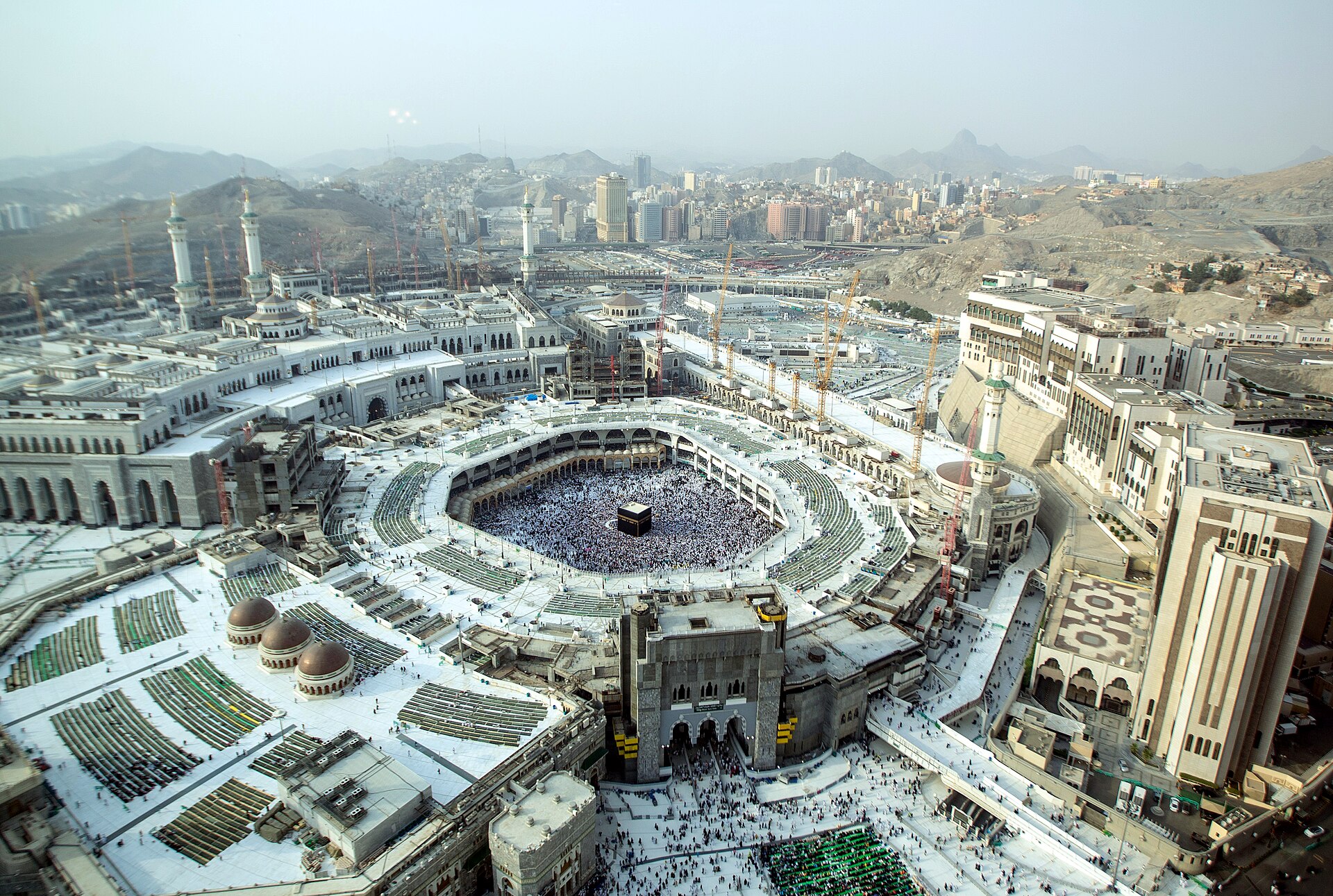
This is why King Salman’s condemnation on September 22 centred on Makkah rather than Saudi sovereignty or territorial integrity. The Custodian frame bypasses the nation-state register. It addresses the ummah. When Saudi Arabia is excluded from ceasefire negotiations and unable to prevent Houthi strikes on the Jazan refinery, the title offers a form of authority that does not depend on military performance or diplomatic access. It depends on geography — on the fact that Mecca is in Saudi Arabia and nowhere else.
The Hajj season had already ended without a major security incident. The September drone arrived after the pilgrims had left, but the timing reinforced the threat: if a drone could head for Mecca in September, it could do so during Hajj, when pilgrims fill the Haram. The custodianship claim and the security obligation are inseparable.
Why Did King Salman Wait Six Days to Speak?
The coalition reported the drone interception on September 16. King Salman’s cabinet statement came on September 22 — six days later. The gap was not bureaucratic. September 22 was the eve of Saudi National Day and fell during the UN General Assembly’s high-level week in New York. The condemnation landed at the moment of maximum international audience.
The immediate operational response had been handled already. The coalition announced the interception on September 16, accusing the Houthis of targeting Makkah.
What required time was the diplomatic framing. King Salman’s personal statement came last, addressed to the widest possible audience.
| Date | Event |
|---|---|
| September 16 | Coalition says it shot down a Houthi drone heading for Mecca; Houthis call the claim a lie |
| September 22 | King Salman, chairing the cabinet, condemns the Houthi attempt to target Makkah |
| September 23 | Saudi Arabia’s 96th National Day; fireworks and drone shows in nine cities postponed |
The coalition’s account was public on September 16. The king spoke on the sixth day, during UNGA week.
National Day Under Live Threat
Saudi Arabia’s 96th National Day fell on September 23. Authorities postponed all National Day fireworks and drone shows in nine cities — including Riyadh, Jeddah and Madinah — until further notice.
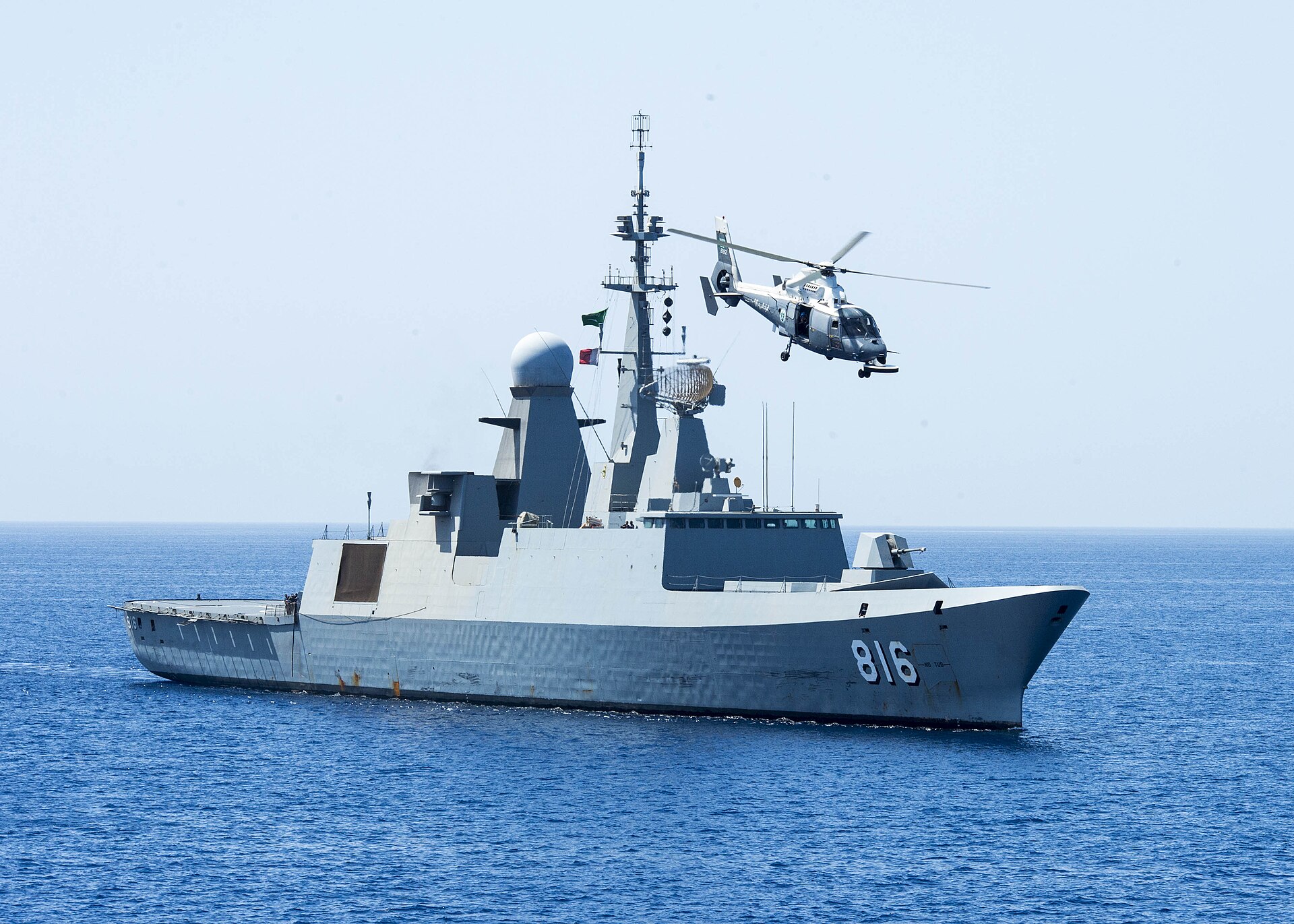
The preceding weeks had not been celebratory. The coalition said Houthi missiles and drones injured at least 73 civilians across four southern cities on September 9, and 13 more in Khamis Mushait, Abha and Taif on September 14. The broader war had already damaged energy infrastructure, disrupted Hormuz shipping, and drawn Iranian strikes on US facilities across the Gulf.
National Day came a week after the coalition reported the Mecca interception. The sequence — interception, cabinet condemnation, National Day — collapsed a defensive crisis and a national celebration into a single week.
The decision to postpone the fireworks and drone shows was itself a communication. Washington’s security posture had shifted repeatedly in the preceding months; now the Kingdom’s own celebrations bent to the threat.
Why the Custodian Claim Needs Consensus
The Custodian claim depends on consensus. King Salman can frame the drone as a violation of Islamic sanctity, but the claim acquires diplomatic force only when other Muslim-majority states endorse the framing.
The Houthi Denial
Hazem al-Assad, of the Houthi politburo, wrote on X: “The claims about targeting Makkah are a worn-out lie that has been used before and no longer fools anyone.”
The phrase “used before” recalls October 2016 and July 2017, when Burkan-1 ballistic missiles were intercepted on trajectories the coalition said were aimed at Mecca; the Houthis said they had targeted Jeddah’s airport and King Fahad Air Base instead. The 2026 denial follows the same template: acknowledge nothing, accuse Saudi Arabia of fabrication. The difference is the delivery system. A ballistic missile follows a trackable arc — launch site, apogee, trajectory toward intercept point. A drone flies lower, slower, on a programmable flight path. Its intended target is harder to establish from radar data alone, which leaves room to question the evidence.
The Houthis are Zaydi Shia who themselves revere the Kaaba as sacred — their denial carries a religious dimension that Sunni-Shia framing alone does not capture. Al-Assad’s phrase “no longer fools anyone” signals acute awareness that the Mecca accusation carries reputational damage no amount of diplomatic positioning can easily reverse.
The 1986 Parallel
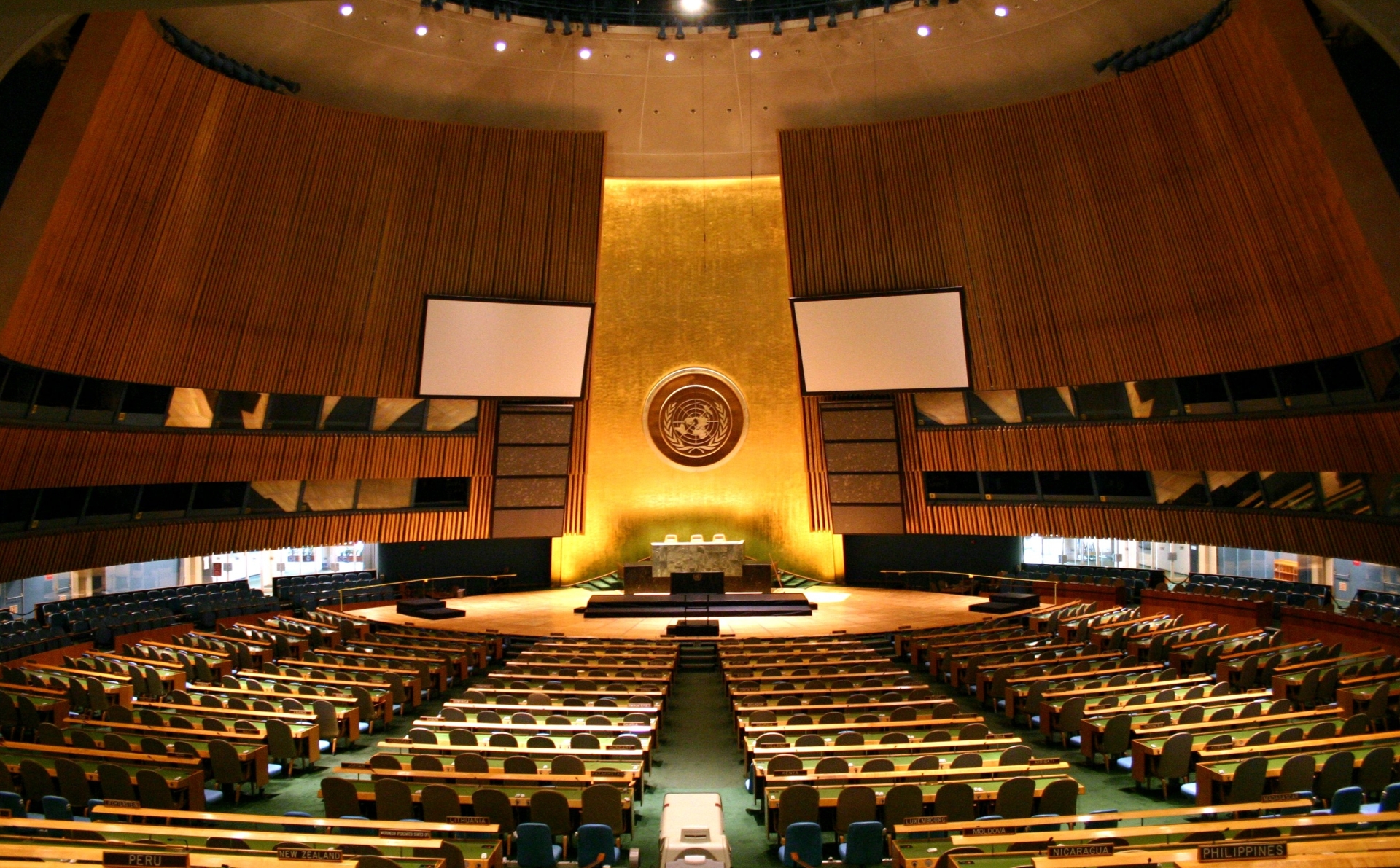
When King Fahd adopted the Custodian title in 1986, the House of Saud was facing an existential legitimacy challenge from Iran. Fahd’s response was to rest the dynasty’s claim to rule on its role as physical protector of Islam’s holiest places — any threat to those places became, by definition, a threat to the entire Muslim community.
The parallel to September 2026 runs close. Saudi Arabia again faces a threat to Mecca from an Iranian-aligned force. The Kingdom is again diplomatically constrained — in 1986 by a hostile revolutionary Iran and a Cold War–absorbed Washington; in 2026 by a US-Iran negotiating track that does not include Riyadh. And the king again reaches for the Custodian frame to convert a position of military vulnerability into a claim for international solidarity. The instrument is forty years old. The conditions it was built for have returned.
The difference is that Fahd moved pre-emptively. He adopted the title before Iran could act on Khomeini’s rhetoric about the holy sites. King Salman is ninety, rarely heard from, and speaking after the drone has already been intercepted. The Custodian claim in 2026 is reactive. It recovers lost ground rather than establishing new ground.
In 2016 and 2017, Houthi missiles toward Mecca produced coalition outrage. By July 2017 MBS, newly appointed crown prince, was consolidating power and directing the coalition campaign in Yemen. Nearly a decade later, a king who has delegated nearly all governing responsibility chose the Mecca drone as the occasion for personal intervention, in a conflict that has stretched across thirteen nights of US strikes on Iran and months of Houthi escalation against Saudi energy infrastructure.
Frequently Asked Questions
When was the last Houthi attack on Mecca before 2026?
July 2017. A Burkan-1 ballistic missile was intercepted on a trajectory the coalition said was aimed at Mecca, as one had been in October 2016. The Houthis said they had aimed at King Fahad Air Base.
What is the Custodian of the Two Holy Mosques title and when was it adopted?
Khadim al-Haramayn al-Sharifayn was formally adopted by King Fahd in 1986, replacing the honorific “His Majesty” as the primary form of address for the Saudi monarch. It has passed to every subsequent king. The title carries no constitutional power beyond what the monarch already holds, but it reframes the basis of legitimacy from dynastic inheritance to religious stewardship.
What is Riyadh Air?
Riyadh Air is Saudi Arabia’s second flag carrier, launched under Vision 2030 as a competitor to Saudia and a signal of the Kingdom’s aviation ambitions. The airline was announced in 2023 and began commercial flights in October 2025.
Has the OIC ever taken enforcement action following its condemnations of Houthi attacks on Saudi Arabia?
No. The OIC’s condemnatory resolutions carry no enforcement mechanism. Member states can condemn, suspend, or expel — the Houthi movement is not an OIC member, so no formal sanction applies. The practical consequence of OIC condemnations is diplomatic: they deny legitimacy, frame the attacker as violating Islamic norms, and provide political cover for bilateral state responses. Saudi Arabia’s ability to convert OIC condemnations into coalition action has varied; the 2019 Abqaiq-Khurais condemnations produced no military response from OIC partners.
Editor’s note, October 12, 2026: An earlier version of this article quoted King Salman as calling the attempted Houthi strike on Mecca “a disgraceful crime” that “provokes the sentiments of Muslims worldwide,” and its headline said he spoke for 57 capitals; we could not verify that wording, and reports say he condemned the Houthi militia’s “attempt to repeat its targeting of Makkah.” The earlier version also wrongly said the 2017 missile was the first Houthi attempt on Mecca (the coalition reported an earlier one in October 2016), reported deaths and injuries in Taif from the September drone that no source gives, said Riyadh Air made its first public appearance on National Day when it began commercial flights in October 2025, described a National Day military programme and a Jeddah airshow we could not confirm while omitting that National Day fireworks and drone shows were postponed, and reported a joint Saudi, Egyptian, Pakistani and Turkish statement at the UN General Assembly that we could not find. It also included statements attributed to the OIC, GCC, Muslim World League, Iran’s foreign ministry spokesman and a Houthi military spokesman that we could not verify. These have been corrected or removed, and the headline has been changed.